
Back to Journals » Journal of Multidisciplinary Healthcare » Volume 19
Impact of Multidisciplinary Doctor–Nurse–Therapist Rounds on Perioperative Outcomes in Cervical Spondylotic Myelopathy: A Retrospective Comparative Study
Authors Hu J, Tang J, Xie W, Lu Q
Received 21 March 2026
Accepted for publication 21 June 2026
Published 10 July 2026 Volume 2026:19 610950
DOI https://doi.org/10.2147/JMDH.S610950
Checked for plagiarism Yes
Review by Single anonymous peer review
Peer reviewer comments 2
Editor who approved publication: Dr Jacqueline Dunbar-Jacob
Jinfeng Hu,1,* Jin Tang,2,* Wei Xie,2,* Qilin Lu2,*
1Department of Orthopedics, Wuhan University Renmin Hospital, Wuhan, Hubei, 430060, People’s Republic of China; 2Department of Minimally Invasive Spinal Surgery, The Affiliated Hospital of Wuhan Sports University, Wuhan, Hubei, 430079, People’s Republic of China
*These authors contributed equally to this work
Correspondence: Jinfeng Hu, Email [email protected] Wei Xie, Email [email protected]
Objective: This retrospective study aims to compare the efficacy of doctor-nurse therapist integrated rounds versus traditional rounds during the perioperative period of cervical spondylotic myelopathy (CSM).
Methods: A total of 95 patients with CSM, treated between April 2018 and April 2021, were divided into a test group and a control group. The study compared preoperative and postoperative cervical Japanese Orthopaedic Association (JOA) scores, Neck Disability Index (NDI) scores, postoperative complications, and satisfaction levels among doctors, nurses, therapists, and patients.
Results: There were no significant differences in JOA and NDI scores between the two groups (P> 0.05). A statistically significant difference in JOA and NDI scores was observed pre- and post-surgery (P< 0.05). The test group exhibited a lower incidence of postoperative complications compared to the control group (P< 0.05). Additionally, satisfaction levels among healthcare professionals, including doctors, nurses, and therapists, were higher in the test group than in the control group (P< 0.05). Notably, patient satisfaction was significantly greater in the test group compared to the control group (P< 0.01).
Conclusion: Integrated roundsIntegrated doctor-nurse-therapist rounds significantly reduce postoperative complications and improve satisfaction among healthcare providers and patients in CSM surgery, but they do not lead to superior functional recovery (JOA/NDI). This model is recommended for improving perioperative safety and patient-provider experience.
Keywords: doctor-nurse-therapist integrated rounds, cervical spondylotic myelopathy, CSM, perioperative period, satisfaction
Introduction
In recent years, the ongoing advancements in the medical and healthcare sectors have been accompanied by a rise in medical disputes. Physicians and nurses, as primary agents of diagnostic and therapeutic activities, function in a complementary and interdependent manner. Moreover, the collaborative efforts between doctors and nurses significantly influence medical quality, healthcare relationships, patient health outcomes, and patient satisfaction.1,2 Following the Ministry of Health’s initiative to promote quality nursing services, numerous hospitals have implemented integrated doctor-nurse morning rounds.
Cervical spondylotic myelopathy (CSM) is frequently encountered in clinical settings, representing 5%-10% of all cases of cervical spondylosis.3 The etiology of CSM is primarily attributed to cervical disc degeneration and subsequent pathological changes that exert pressure on or irritate the spinal cord. This compression results in spinal cord dysfunction, characterized by clinical manifestations such as unilateral or bilateral limb weakness, sensory disturbances including numbness, gait abnormalities, a sensation of constriction around the chest and waist, and in severe cases, quadriplegia. Additionally, CSM can lead to urinary and fecal incontinence, significantly impairing patients’ occupational and daily activities.Upon diagnosis, it is imperative to perform surgery promptly to alleviate spinal cord compression and to safeguard and enhance spinal cord function. Anterior cervical discectomy and fusion (ACDF) or anterior cervical corpectomy and fusion (ACCF) are frequently employed techniques for the treatment of CSM, both of which have demonstrated favorable safety profiles and clinical outcomes.4 Nevertheless, these procedures are technically challenging and are associated with a significant risk of complications, particularly in elderly patients. Should complications arise, they may pose a substantial threat to the patient’s life.
Over the last few years, there has been a growing focus on the relationship between interprofessional teamwork and patient safety, particularly concerning the roles, performance, and communication within surgical teams. Notably, the communication dynamics of surgical teams have garnered significant attention.5–7 Furthermore, postoperative rehabilitation and outcomes have a direct impact on the future quality of life for patients,8 underscoring the critical importance of perioperative nursing and rehabilitation in the context of CSM. Perioperative rehabilitation literature demonstrates that ERAS pathways and early postoperative physiotherapy improve functional outcomes and reduce complications in CSM patients.9 Evidence from interprofessional collaboration models indicates that structured interdisciplinary rounds enhance team communication and patient safety.10 Therefore, we selected patients diagnosed with CSM in our department who underwent ACDF or ACCF to participate in an integrated doctor-nurse-therapist round. This initiative aimed to investigate the feasibility and effectiveness of this clinical approach. The pertinent data have been compiled and are presented as follows.
Methods and Data
General Data
This was a retrospective comparative study conducted at a single tertiary hospital. All patients diagnosed with CSM who underwent ACDF or ACCF between April 2018 and April 2021 were included. Allocation was based on the timing of implementation: from April 2018 to March 2020, the department used traditional rounds (control group, n=43); from April 2020 to April 2021, the integrated doctor-nurse-therapist rounds were implemented (test group, n=52). This was a before-after cohort design, not a randomized trial.Statistical analysis revealed no significant difference between the two groups (P>0.05), as detailed in Table 1.
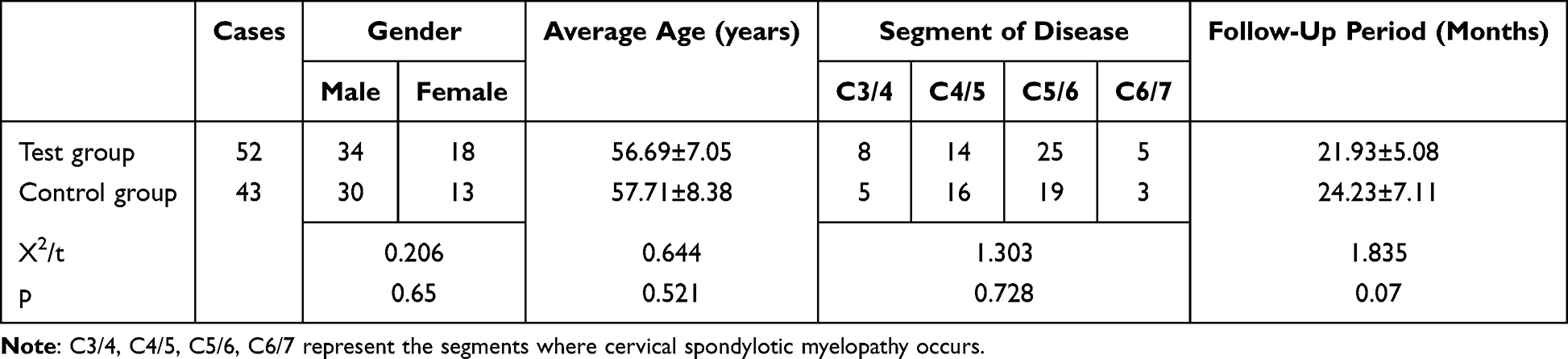 |
Table 1 General Data |
Inclusion Criteria
(1) The diagnosis of CSM was confirmed based on the patient’s medical history, symptoms, and imaging examinations;
(2) Each patient met the criteria for anterior surgical intervention, either ACDF or ACCF;
(3) There were no apparent surgical contraindications.
(4) The patient and their family demonstrated excellent compliance and a willingness to cooperate with the treatment and follow-up.
Exclusion Criteria
(1) The patient was deemed unsuitable for anterior surgery;
(2) Individuals with severe cardio-vascular or cerebrovascular conditions, or other systemic diseases, who are unable to tolerate surgery;
(3) The patient and their family exhibited low compliance and were hesitant to cooperate with the treatment and follow-up.
Methods
Control Group
The ward round was conducted in the traditional morning format. Following the general practitioners’ daily meeting at 8:00 AM, the medical and nursing teams performed separate rounds. The entire cohort of patients was visited by physicians, who were accompanied by their team leaders. Bedside handovers for all patients in the ward were conducted by the primary nurse and the night nurse, under the supervision of the head nurse. Each professional group—doctors, nurses, and therapists—executed their respective roles and responsibilities.After completing their rounds, the physicians engaged in deliberations concerning complex cases and issued medical directives. These specialized medical directives were communicated verbally to either the primary or auxiliary nurse, who subsequently relayed them to the primary nurse. The primary nurse then executed the prescribed treatments, administered medications, provided fundamental and specialized nursing care, and offered health guidance in accordance with the medical directives. Concurrently, the therapist implemented the rehabilitation plan as per the medical directives.On the day of discharge, the primary nurse provided the patient with health guidance and administered a satisfaction survey.
Test Group
The ward round was conducted using an integrated doctor-nurse-therapist approach. The specific implementation methods were as follows:
- The integrated team comprised the attending physician, head nurse, primary nurse, and therapist.
- Following the patient’s hospitalization, the head nurse, primary nurse, and therapist accompanied the attending physician to conduct the initial integrated round involving the doctor, nurse, and therapist. During this round, the primary nurse measured the patient’s vital signs, while the attending physician obtained the medical history and performed a physical examination. Subsequently, the primary nurse provided the patient with pertinent health education. The attending physician then informed the patient about the necessary auxiliary and laboratory examinations. The primary nurse provided the patient with essential information regarding the necessary precautions for the examination and offered guidance on dietary management during hospitalization. This facilitated the patient’s acclimatization to the hospital environment and promoted cooperation with subsequent treatments. During the initial assessment, primary nurses were able to gain a thorough understanding of the patient’s condition, enabling them to formulate and implement a comprehensive nursing plan. Concurrently, the therapist developed a detailed rehabilitation plan. (3) Following the completion of the relevant examination by the patient, the attending physician communicated the diagnosis and proposed treatment plan. The primary nurse then assisted the patient in enhancing preoperative preparation, including tracheoesophageal movement exercises, respiratory training, and posture training, as well as organizing postoperative materials. (4) On the day preceding the surgery, the attending physician provided the patient with a comprehensive explanation of the surgical procedure, necessary preoperative preparations, and potential postoperative complications. Additionally, the attending physician issued the pertinent preoperative medical orders.On the day of the surgical procedure, the attending physician and the primary nurse facilitated a range of preoperative preparations, including ensuring the patient abstained from drinking and fasting, as well as the insertion of a catheter. They also provided support to alleviate the patient’s preoperative anxiety and assisted in mental preparation for the surgery. (5) A comprehensive round was conducted by the physician, nurse, and therapist. Upon the patient’s return to the ward, the attending physician meticulously assessed the patient’s postoperative condition and issued the necessary postoperative medical orders.The primary nurse monitored the patient’s vital signs, wound drainage, and sensorimotor function of the limbs. In addressing postoperative pain and other discomforts, the primary nurse is responsible for timely pain assessment, administering analgesics as prescribed by the physician, and engaging in frequent communication with the patient to foster a comfortable emotional state, thereby mitigating pain exacerbation due to psychological stress. Additionally, the primary nurse assisted the patient with positional changes. The therapist offered guidance to the patient and their family regarding the implementation of the current rehabilitation plan. (6) During the postoperative integrated rounds involving the physician, nurse, and therapist, the primary nurse provided a comprehensive report on the patient’s diet, sleep patterns, pain levels, and functional exercises from the previous day. Based on the nurse’s observations and the patient’s reported symptoms, the attending physician made necessary adjustments to the medication regimen for the day. The therapist then assessed and communicated the patient’s current rehabilitation status and outlined the rehabilitation plan. Subsequently, the physician evaluated the patient’s overall condition to determine their ability to ambulate. Upon the patient’s initial mobilization from bed, the attending nurse and therapist accompanied and monitored the patient for symptoms indicative of orthostatic hypotension, including dizziness and pallor. The progression of activity was systematically structured, beginning with sitting, followed by standing, slow ambulation, and a gradual increase in activity levels. (7) On the day of discharge, a multidisciplinary team comprising the attending physician, head nurse, primary nurse, and therapist conducted an extensive discharge consultation, collectively offering comprehensive guidance to the patient. ①The patient is advised to maintain the use of a neck brace for a duration of 2–3 months post-discharge to mitigate any activities involving neck flexion, extension, or rotation.② Should the wound exhibit indications of redness, swelling, pain, seepage, or if the patient encounters severe neck pain, dysphagia, or infarction, immediate return to the hospital is warranted. ③ The patient should persist with functional exercises and attend follow-up examinations at 1 month, 3 months, 6 months, 12 months, and 24 months post-operation. ④ The individual may resume work six months post-operation, but it is imperative to avoid prolonged static positioning of the neck. It is advised to mobilize the neck every hour during extended periods of desk work.
Standardization and Fidelity
All integrated rounds followed a written protocols (see Supplementary Material). Fidelity was checked weekly by the head nurse using a checklist; adherence was >95% throughout the study period.
Observation Index
(1) Preoperative and postoperative JOA and NDI
The Japanese Orthopaedic Association (JOA) scores and Neck Disability Index (NDI) were assessed and compared between the two groups at preoperative baseline, 1 week post-operation, 3 months post-operation, 6 months post-operation, and 12 months post-operation. The JOA total score ranges from 0 to 17, with lower scores signifying increased dysfunction.The total score of NDI ranges from 0 to 50, with higher scores indicating more dysfunction.
(2) Postoperative complications
Postoperative complications, including cervical hematoma, wound infection, pressure injury, pendant pneumonia, deep venous thrombosis (DVT), urinary infection, aspiration, and asphyxia, among others, were observed and compared.
(3) Satisfaction
Upon discharge, the satisfaction levels of the attending physician, primary nurse, therapist, and patients in the two groups were assessed and compared. The satisfaction of the attending physician (referred to as “doctor’s satisfaction”) was measured using the Nurse-Physician Collaboration Scale (NPCS).11 The NPCS comprised 27 items, each rated on a 5-point Likert scale (1 = never, 2 = rarely, 3 = sometimes, 4 = often, 5 = always). The total possible score ranged from 27 to 135, with higher scores reflecting greater satisfaction.
Primary nurse satisfaction, referred to as “nurse satisfaction,” was assessed using the Minnesota Satisfaction Questionnaire Scale (MSQS),12 which consisted of 20 items rated on a 5-point Likert scale (1 = completely disagree, 2 = disagree, 3 = uncertain, 4 = agree, 5 = completely agree). The total possible score for the MSQS ranged from 20 to 100, with higher scores indicating greater satisfaction.
The therapists’ job satisfaction was assessed using the Job Descriptive Index (JDI).13 The JDI comprises 25 items encompassing five dimensions: satisfaction with coworkers, supervisors, the nature of the work itself, remuneration, and opportunities for promotion. Responses are scored as yes=1, no=−1, and cannot decide=0. The aggregate score ranges from 0 to 25, with higher scores denoting greater levels of satisfaction.
The patient’s satisfaction was assessed using the North American Spine Society Patient Satisfaction (NASSPS) scale.14 “Satisfied patients” were categorized as those who scored 1 (indicating that the treatment met their expectations) or 2 (indicating that although the improvement was less than anticipated, they would still opt for the same treatment given the same outcome). Conversely, “unsatisfied patients” were identified as those who scored 3 (indicating that the improvement was less than anticipated and they would not choose the same treatment for the same outcome) or 4 (indicating no improvement or a worsening condition post-treatment). Lower scores on this scale corresponded to higher levels of patient satisfaction.
Statistical Analysis
Data were analyzed using SPSS 26.0 and R 4.2. Continuous data were presented as mean ± standard deviation ( ) and compared using the t-test. Categorical data were analyzed using the chi-square test. A p-value of less than 0.05 was considered statistically significant, while a p-value of less than 0.01 was deemed highly significant.
For repeated JOA and NDI measures, linear mixed-effects models were fitted with fixed effects for group, time, and group×time, and random intercept for patients. For complications, Fisher’s exact test was used, and odds ratios with 95% confidence intervals were calculated. Sensitivity analysis: Propensity score matching (caliper=0.2) was performed to adjust for age, sex, surgical procedure (ACDF/ACCF), number of operated levels, and preoperative JOA. A two-sided p<0.05 was considered significant.
Results
Preoperative and Postoperative JOA and NDI
No significant differences in JOA and NDI scores were observed between the two groups both preoperatively and postoperatively (p > 0.05), indicating comparable postoperative recovery outcomes for the test and control groups. However, significant improvements in JOA and NDI scores were noted within each group at various time points, with the exception of the 6-month and 12-month postoperative intervals (p < 0.01), suggesting overall postoperative improvement relative to baseline. At the 6-month and 12-month postoperative marks, no significant differences were detected between the groups (p > 0.05),indicating that postoperative recovery remained stable at the six-month mark (p > 0.05). Detailed information is provided in Table 2 and Figure 1, while additional data are presented in Table 3 and Figure 2.
 |
Table 2 Comparison of the Preoperative and Postoperative JOA Scores Between the Two Groups |
 |
Table 3 Comparison of the Preoperative and Postoperative NDIbetween the Two Groups |
 |
Figure 1 The Japanese Orthopaedic Association (JOA) of the two groups at each time point. |
 |
Figure 2 The NDI of the two groups at each time point. |
Postoperative Complications
In the test group, there was one case of deep vein thrombosis (DVT), whereas the control group experienced one case of cervical hematoma, three cases of pressure injury, and three cases of DVT. Notably, neither group exhibited complications such as wound infection, pneumonia, urinary infection, aspiration, or asphyxia. The incidence of postoperative complications was significantly lower in the test group compared to the control group, with a statistically significant difference observed (p < 0.05). Detailed information regarding this difference is presented in Table 4.
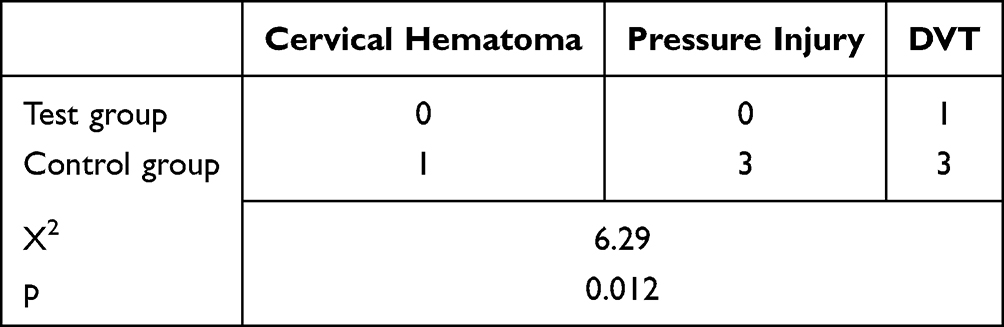 |
Table 4 Comparison of the Postoperative Complications Between the Two Groups |
Satisfaction
The satisfaction levels of doctors in the test group were significantly higher compared to those in the control group (p < 0.05). Additionally, the satisfaction levels of nurses, therapists, and patients in the test group were markedly higher than those in the control group (p < 0.01). Detailed results are presented in Table 5.
 |
Table 5 Comparison of the Satisfaction Between the Two Groups |
Discussion
CSM is increasingly manifesting in younger populations and frequently necessitates surgical intervention. Patients commonly endure a spectrum of physical impairments and psychological stress, underscoring the critical importance of perioperative management.15
The integration of doctors, nurses, and therapists into a cohesive and stable diagnostic and treatment team, known as doctor-nurse-therapist integration, has been proposed as a strategy to enhance patient outcomes.16 This multidisciplinary team collaborates to deliver comprehensive medical services to patients. Integrated rounds, involving the attending physician, primary nurse, and therapist, are conducted jointly to facilitate cohesive decision-making and shared accountability for medical, nursing, and rehabilitative interventions. This collaborative approach is designed to elevate the quality of care across medical, nursing, and rehabilitative domains, while also fostering enhanced cooperation and service standards within the healthcare system.
This retrospective comparative study found that integrated doctor-nurse-therapist rounds significantly reduced postoperative complications and improved satisfaction among healthcare providers and patients compared to traditional rounds, but did not improve functional outcomes (JOA/NDI) in CSM patients undergoing ACDF/ACCF. These findings have important implications for perioperative care organization. It can reduce the incidence of postoperative complications and enhance the overall quality of medical care.
Complication reduction is the most robust finding. The integrated rounds likely reduced complications through several mechanisms: (1) More frequent and coordinated bedside assessments allowed earlier detection of DVT signs, pressure injury risks, and other issues; (2) Unified preoperative education and discharge planning improved patient compliance; (3) The therapist’s early involvement enabled safe, progressive mobilization, possibly reducing DVT and pressure ulcers.
Satisfaction improvements are consistent with prior interprofessional collaboration studies13,14. Nurses and therapists reported higher satisfaction, likely due to better role recognition and reduced contradictory instructions. Patient satisfaction increased, possibly because of consistent messages from the team and perceived attentiveness. However, patient satisfaction is subject to expectation bias; we cannot exclude that patients in the test group might have been aware of the “new” model and responded more favorably.
Lack of functional benefit requires careful interpretation. JOA and NDI scores improved substantially in both groups, reflecting the natural recovery after surgical decompression. The absence of a between-group difference suggests that the rounding model does not influence neurological recovery, which is primarily determined by the adequacy of decompression, preoperative severity, and intrinsic spinal cord plasticity.17 One recent study on interdisciplinary rounds in spine surgery similarly reported improved safety and satisfaction but no functional advantage.18 Therefore, our null finding should not be seen as a failure of the model but as a boundary of its effect.
Our findings align with ERAS literature9 where multimodal, coordinated care reduces complications but has inconsistent effects on functional scores. The novelty of our study lies in quantifying the specific contribution of integrated rounding independent of other ERAS elements.
Limitation
The limitations of this study are as follows: (1) This study is a retrospective observational study, which may introduce partial selection bias; (2) The sample size is limited, necessitating further research with larger sample sizes to bolster the reliability of the findings; (3) The study was conducted in a single hospital, which may limit the generalizability of the results; (4) No measurement of cost-effectiveness and implementation feasibility.
Conclusion
Compared with traditional rounds, the integrated doctor-nurse-therapist rounding model significantly reduced postoperative complications and improved satisfaction among healthcare providers and patients in this CSM cohort undergoing ACDF/ACCF. However, it did not lead to superior functional recovery (JOA/NDI). Thus, the model may be considered for enhancing perioperative safety and patient-provider experience, but not as a means to improve neurological outcomes. Future prospective, multicenter studies with standardized protocols, blinding, and cost-effectiveness analyses are needed.
Data Sharing Statement
The datasets used and/or analyzed during the current study are available from the corresponding author (Wei Xie) on reasonable request.
Ethics Approval and Consent to Participate
The present study was approved by the Ethics Committee of the Affiliated Hospital of Wuhan Sports University (Wuhan, China; permit no. HB6721320) and complied with the Declaration of Helsinki. Informed consent to participate in the study was obtained from the participants.
Patient Consent for Publication
The patient provided written informed consent for the publication of his/her data.
Author Contributions
All authors made a significant contribution to the work reported, whether that is in the conception, study design, execution, acquisition of data, analysis and interpretation, or in all these areas; took part in drafting, revising or critically reviewing the article; gave final approval of the version to be published; have agreed on the journal to which the article has been submitted; and agree to be accountable for all aspects of the work.
Funding
This study was supported by the grants from the Scientific Research Grant of Health and Family Planning Commission of Wuhan Municipality (No. WZ20C37).
Disclosure
The authors declare that they have no competing interests in this work.
References
1. House S, Havens D. Nurses’ and Physicians’. Perceptions of Nurse-Physician Collaboration: A Systematic Review. J Nurs Adm. 2017;47(3):165–10.
2. Zhong H, Liang A, Luo H, et al. Application analysis of multidisciplinary diagnosis and treatment nursing mode based on doctor-nurse-integration for stroke patients undergoing emergency intervention surgery. Emerg Med Int. 2022;2022:6299676. doi:10.1155/2022/6299676
3. Zhang Y, Grant RA, Shivakumar MK, et al. Genome-wide association analysis across 16,956 patients identifies a novel genetic association between bmp6, nipal1, cnga1 and spondylosis. Spine. 2021;46(11):E625–E631. doi:10.1097/BRS.0000000000003880
4. Chen Z, Liu B, Dong J, et al. A comparison of the anterior approach and the posterior approach in treating multilevel cervical myelopathy: a meta-analysis. Clin Spine Surg. 2017;30(2):65–76. doi:10.1097/BSD.0000000000000398
5. Sillero AS, Buil N. Neus buil. enhancing interprofessional collaboration in perioperative setting from the qualitative perspectives of physicians and nurses. Int J Environ Res Public Health. 2021;18(20):10775. doi:10.3390/ijerph182010775
6. Wei W, Niu Y, Xiaohua G, et al. Core competencies for nurses in Chinese intensive care units: a cross-sectional study. Nurs Crit Care. 2019;24(5):276–282. doi:10.1111/nicc.12398
7. Collette AE, Wann K, Nevin ML, et al. An exploration of nurse-physician perceptions of collaborative behaviour. Interprof Care. 2017;31(4):470–478. doi:10.1080/13561820.2017.1301411
8. Farooq MN, Mohseni-Bandpei MA, Gilani SA, Hafeez A. Urdu version of the neck disability index: a reliability and validity study. BMC Musculoskelet Disord. 2017;18(1):149. doi:10.1186/s12891-017-1469-5
9. Xia Q, Huaxi L, Jiang L, et al. A meta-analysis of the implementation of enhanced recovery after surgery pathways in anterior cervical spine surgery for degenerative cervical spine diseases. Eur Spine J. 2024;33(2):1283–1291. doi:10.1007/s00586-023-08105-5
10. Levesque M-J, Etherington C, Lalonde M, et al. Interventions to facilitate interprofessional collaboration in the operating theatre: a scoping review. J Perioper Pract. 2024;34(1–2):6–19. doi:10.1177/17504589221137978
11. Migotto S, Costa GG, Ambrosi E, et al. Gender issues in physician-nurse collaboration in healthcare teams: findings from a cross-sectional study. J Nurs Manag. 2019;27(8):1773–1783. doi:10.1111/jonm.12872
12. Liu W, Zhao S, Shi L, et al. Workplace violence, job satisfaction, burnout, perceived organisational support and their effects on turnover intention among Chinese nurses in tertiary hospitals: a cross-sectional study. BMJ Open. 2018;8(6):e019525. doi:10.1136/bmjopen-2017-019525
13. Puhanić P, Erić S, Talapko J, et al. Job satisfaction and burnout in croatian physiotherapists. Healthcare. 2022;10(5):905. doi:10.3390/healthcare10050905
14. Hamilton T, Macki M, Seok Yoon O, et al. The association of patient education level with outcomes after elective lumbar surgery: a michigan spine surgery improvement collaborative study. J Neurosurg Spine. 2021;1–9.
15. Surgery Editorial Board of Chinese Journal of. The experts consensus on the surgical treatment and perioperative management of cervical spondylosis (2018). Chin J Surg. 2018;56(12):881–884.
16. Zhang J, Xiao-Ying H, Hong Y, et al. Construction and application of tuberculosis medical and nursing integration cooperation model. Public Health Nurs. 2023;40(1):97–104. doi:10.1111/phn.13135
17. Wen M, Wen Y; Orthopedics and traumatology professional committe of the chinese association of integrative medicine. Clinical guidelines for diagnosis and treatment of cervical spondylotic myelopathy with the integrated traditional chinese and western medicine (2023). China J Orthop Trauma. 2024;37(1):
18. Sethi R, Louie P, Bansal A. Monthly multidisciplinary complex spine conference: a cost-analysis utilizing time-driven activity-based costing. Spine Deform. 2024;12(2):433–442. doi:10.1007/s43390-023-00798-4
 © 2026 The Author(s). This work is published and licensed by Dove Medical Press Limited. The
full terms of this license are available at https://www.dovepress.com/terms
and incorporate the Creative Commons Attribution
- Non Commercial (unported, 4.0) License.
By accessing the work you hereby accept the Terms. Non-commercial uses of the work are permitted
without any further permission from Dove Medical Press Limited, provided the work is properly
attributed. For permission for commercial use of this work, please see paragraphs 4.2 and 5 of our Terms.
© 2026 The Author(s). This work is published and licensed by Dove Medical Press Limited. The
full terms of this license are available at https://www.dovepress.com/terms
and incorporate the Creative Commons Attribution
- Non Commercial (unported, 4.0) License.
By accessing the work you hereby accept the Terms. Non-commercial uses of the work are permitted
without any further permission from Dove Medical Press Limited, provided the work is properly
attributed. For permission for commercial use of this work, please see paragraphs 4.2 and 5 of our Terms.