
Back to Journals » Nature and Science of Sleep » Volume 18

Health Sciences Students’ Knowledge and Attitudes Toward Snoring: A Cross-Sectional Study in Jeddah, Saudi Arabia
Authors Alshamrani SA  , Alrogaib SA , Alharthi RM, Alharthi NA , Khan MA , Kumar RS
Received 18 November 2025
Accepted for publication 8 May 2026
Published 20 May 2026 Volume 2026:18 575295
DOI https://doi.org/10.2147/NSS.S575295
Checked for plagiarism Yes
Review by Single anonymous peer review
Peer reviewer comments 2
Editor who approved publication: Professor Valentina Alfonsi
Shahd Ali Alshamrani,1– 3 Sara Abdullah Alrogaib,1– 3 Rema Mohammed Alharthi,1– 3 Norah Abdullah Alharthi,1– 3 Muhammad Anwar Khan,2– 4 Raju Suresh Kumar5
1Department of Respiratory Therapy, College of Applied Medical Sciences, King Saud bin Abdulaziz University for Health Sciences, Jeddah, Saudi Arabia; 2King Abdullah International Medical Research Centre (KAIMRC), Jeddah, Saudi Arabia; 3Ministry of the National Guard -Health Affairs, Jeddah, Saudi Arabia; 4Department of Medical Education, College of Medicine, King Saud bin Abdulaziz University for Health Sciences, Jeddah, Saudi Arabia; 5 Division of Basic Medical Sciences, College of Medicine, Dhofar University, Salalah, Oman
Correspondence: Raju Suresh Kumar, Division of Basic Medical Sciences, College of Medicine, Dhofar University, P.O. Box: 2509, Salalah, Oman, Email [email protected]
Objective: Snoring is a sound produced by the vibrations of upper airway soft tissues due to partial airway obstruction during sleep. It is often linked to sleep-disordered breathing and may suggest underlying conditions such as obstructive sleep apnea. As future healthcare professionals, health sciences students should possess adequate knowledge and appropriate attitudes regarding snoring and its clinical implications. This study aimed to assess health sciences students’ knowledge and attitudes toward snoring.
Methods: A descriptive cross-sectional study was conducted among 760 health sciences students from three universities in Jeddah, Saudi Arabia. Participants were recruited using quota sampling and completed a validated, self-administered questionnaire assessing demographic characteristics, knowledge, and attitudes regarding snoring. Data were analyzed using descriptive statistics and inferential tests. Independent t-tests and one-way ANOVA were used to compare mean scores between groups, with statistical significance set at p < 0.05. Likert-scale responses were coded from 1 to 5, and mean scores were calculated. Given the large sample size, Likert responses were treated as approximately continuous variables and analyzed using parametric tests.
Results: Most participants reported that snoring disrupts sleep (75.5%) and is more common among males (73.3%). Female students demonstrated significantly greater agreement that snoring can worsen nasal symptoms (p = 0.005). Differences in knowledge and attitudes were observed across academic disciplines, with students from the anesthesia technology program demonstrating a stronger understanding of several snoring-related concepts.
Across all disciplines, most participants disagreed with the statement that continuous positive airway pressure (CPAP) increases snoring (p < 0.001).
Conclusion: Health sciences students demonstrated varying levels of knowledge and attitudes toward snoring, with notable differences by gender and academic discipline. These findings highlighted the importance of incorporating targeted educational strategies within health sciences curricula to enhance awareness and support early recognition of snoring-related health conditions.
Keywords: hypertension, marfan syndrome, sleep apnea, sleep, snoring
Introduction
Snoring is a sound produced by the vibrations of the upper airway structures, including the pharynx, soft palate, and uvula, during sleep.1 Habitual snoring (HS) is commonly defined as snoring occurring on three or more nights per week.2 Epidemiological data from Saudi Arabia indicate that approximately 40% of individuals report snoring, with 23% meeting the criteria for HS and 16.6% experiencing moderate snoring severity.2 Additionally, several demographic and clinical factors have been associated with an increased likelihood of habitual snoring (HS), including ageing, male gender, family history of snoring, consanguinity, daytime sleepiness, obstructive sleep apnea (OSA), water-pipe smoking, and hypertension. Environmental factors may also contribute to snoring by increasing airway irritation or obstruction, including exposure to indoor dampness and air pollution.3,4
A study in Jordan found a significant correlation between male students who snore and low-grade point averages (GPAs).5
Beyond demographic and environmental determinants, snoring has been associated with several health conditions across multiple physiological systems. Previous studies have reported that habitual snoring is linked with various clinical and cardiovascular risk factors, including hypertension and other health-related conditions. 2 Air pollution exposure and its potential impact on cardiopulmonary health have also been reported in the region, including in Jeddah, Saudi Arabia.4 Research in the field of dental sciences has established a direct correlation between snoring and various medical conditions, including headaches, gastroesophageal reflux disease (GERD), and obstructive sleep apnea (OSA).6 Furthermore, snoring may serve as an indicator of obstructive airway disorders, including asthma and chronic obstructive pulmonary disease (COPD).7 Additionally, aortic enlargement observed in individuals with Marfan syndrome, a hereditary disorder that impacts the protein responsible for the formation of healthy connective tissue, has been shown to be associated with self-reported instances of snoring.8,9 Metabolic-associated fatty liver disease (MAFLD) is a chronic liver disease that occurs due to metabolic abnormalities.10 Recent studies suggest that snoring may be independently associated with MAFLD. Moreover, snoring has been directly associated with nasal symptoms, including wheezing, nasal discharge, and obstruction.11 Dyslipidemia, which refers to abnormalities in fat levels, including high-density lipoproteins (HDL), triglycerides, cholesterol, and low-density lipoprotein (LDL-C), has been found to correlate with snoring.12 Therapeutic interventions for snoring, such as oral appliances, have been recommended to reduce the potential of dyslipidemia caused by sleep snoring.13 Continuous positive airway pressure (CPAP) is a device that provides positive pressure to a patient’s airways at each respiratory cycle phase.14 Previous research has shown that CPAP significantly reduces snoring and daytime sleepiness, while also enhancing mood and health-related quality of life.15
Given these associations, understanding snoring and its clinical implications is essential. As future healthcare providers, health science students should have a thorough understanding of snoring and its clinical significance, as it can serve as an early warning sign for serious health issues. Despite its importance, there is limited scientific research on students’ knowledge and attitudes toward snoring. Our previous study focused on the awareness, knowledge, and attitudes of health sciences students regarding sleep quality and its effects on brain function.16 While that study provided important insights into general sleep behaviors and cognitive outcomes, it did not specifically investigate snoring as a distinct sleep-related symptom or explore students’ understanding of its associated clinical conditions.
The current study was designed to build on our prior work by focusing specifically on snoring, its prevalence, determinants, and health implications, and to provide new evidence in an area that has not yet been explored in this population and remains an important gap in the literature.
This study aimed to evaluate health sciences students’ knowledge and attitudes toward snoring and to identify demographic differences by gender and academic discipline. The results support the development of targeted educational interventions and enhance early recognition of health conditions associated with snoring.
Methods
Knowledge was measured by students’ understanding of the causes, risk factors, and health impacts of snoring, assessed through multiple-choice questions. Attitudes were measured using a 5-point Likert scale and referred to students’ beliefs and perceptions of snoring as a health concern. This descriptive cross-sectional study was conducted in the Respiratory Therapy (RT) department at the College of Applied Medical Sciences (CAMS) at King Saud bin Abdulaziz University for Health Sciences (KSAU-HS) in Jeddah, Saudi Arabia. The study population comprised male and female health sciences students from three universities in Jeddah, Saudi Arabia. The students were enrolled in various colleges, including the College of Science and Health Professions (COSHP), the College of Medicine (COM), the College of Nursing (CON), the College of Dentistry (COD), the College of Pharmacy (COP), and the College of Applied Medical Sciences (CAMS).
The Inclusion Criteria
The study included male and female health sciences students from three health sciences universities in Jeddah, Saudi Arabia, and excluded those who refused to provide consent to participate.
Sampling Technique and Sample Size
The sample size was calculated using Raosoft® software, available at www.raosoft.com/samplesize.html. We determined the required sample size at a 95% confidence level, assuming a prevalence of 40.1% and a margin of error of 5%. Consequently, the minimum sample size required was 356. The study period was between September and November 2024. A non-probability quota sampling technique was used in this study. This study used a validated self-administered questionnaire. The participants provided informed consent before completing the online questionnaire, which was then collected and analyzed. The data were extracted from an online questionnaire (Supplementary File 1) comprising three sections.
Section 1 included four questions on the demographic characteristics of health sciences students.
Section 2 contained eight questions about the attitudes and perspectives of health sciences students towards snoring.
Section 3 included seventeen questions about health sciences students’ knowledge of the connection between snoring and various health conditions.
Most of the responses in the questionnaire for sections two and three were on the Likert scale, which consisted of five points for each of the following responses: strongly agree, agree, neutral, disagree, and strongly disagree.
Validity and Reliability of the Questionnaire
The validity and reliability of the questionnaire were assessed using the following methods: Content Validity, in which independent subject-matter experts reviewed the questionnaire to ensure it adequately covered the intended topics. Face Validity: Experts in medical education evaluated the questionnaire to confirm its appropriateness and clarity. Reliability: A pilot study was conducted with 36 participants not included in the primary research. Their responses were used to calculate Cronbach’s alpha, which was 0.9. The questionnaire included both positive- and negative-worded items to minimise acquiescence bias and encourage respondents to focus on the content of the questions rather than repeatedly selecting the same response option. The negative-worded items were scored using reverse scoring. After data collection, the scores for these reverse-scored items were adjusted to match the scoring format of the other items in the questionnaire.
Variables: Students’ attitudes and knowledge were dependent variables. Independent variables included gender, college, and academic year.
Data Management and Analysis Plan
Data were collected using Google Forms and exported to Microsoft Excel before being analyzed using SPSS version 20.0 (IBM Corp., Armonk, NY, USA). Descriptive statistics were calculated for demographic variables and questionnaire responses. Frequencies and percentages were used to summarize categorical variables. Responses to Likert-scale items were coded numerically (1 = strongly disagree, 2 = disagree, 3 = neutral, 4 = agree, and 5 = strongly agree). For negatively worded items, reverse scoring was applied before analysis. Mean scores and standard deviations were calculated to summarize participants’ responses.
Inferential statistical analyses were conducted to examine differences between groups. Independent t-tests were used to compare mean Likert scores between male and female participants. One-way analysis of variance (ANOVA) was used to compare mean scores across different health science disciplines. Given the large sample size, Likert-scale responses were treated as approximately continuous variables, which is a commonly accepted approach in survey-based research. A p-value < 0.05 was considered statistically significant.
Ethics Approval and Consent to Participate
The Institutional Review Board (IRB) of the King Abdullah International Medical Research Centre (KAIMRC), Jeddah, Saudi Arabia, approved the research proposal, questionnaire, and informed consent forms under study reference number NRJ24/044/8 and IRB Approval No. 0000036224, dated August 15, 2024. All methods were conducted in accordance with the Declaration of Helsinki and the relevant guidelines and regulations of KAIMRC. To ensure confidentiality, no identifying information, such as participant names or IDs, was collected. All data were securely stored in password-protected files, accessible only to the principal investigator.
Participation in this study was voluntary, with informed consent obtained from all participants before they completed the survey. It was distributed anonymously via QR codes. The first page of the online questionnaire explained the study’s purpose, estimated completion time, and ensured confidentiality. Participants could decline without consequences, and completing the survey served as their informed consent.
Results
A total of 760 health sciences students (n = 760), comprising 492 females (64.7%) and 268 males (35.3%), participated in this study.
Attitudes and Knowledge of Health Sciences Students Regarding Snoring
The questionnaire used to evaluate the health sciences students’ attitudes about sleep and snoring is presented in Figure 1. Of the 760 participants, 25.3% reported sleeping 5 to 6 hours, while 0.3% slept less than 2 hours. The majority (61.9%) considered snoring shameful. Most participants (75.5%) believed that snoring disturbed sleep, with 78.4% finding snoring sounds bothersome and only 7.8% unaffected. Furthermore, 18.9% had experienced breathing interruptions (apnea), 24.7% were unaware of it, and 56.3% reported no experience. When asked whether snoring could affect sleep quality, 54 participants (7.1%) disagreed, while 581 participants (76.5%) agreed. Similarly, 9.3% of participants disagreed that frequent snoring required medical attention, but 72.3% agreed. Regarding the relationship between snoring and lack of concentration, 39.7% of participants were neutral, 30.4% disagreed, and 29.9% agreed.
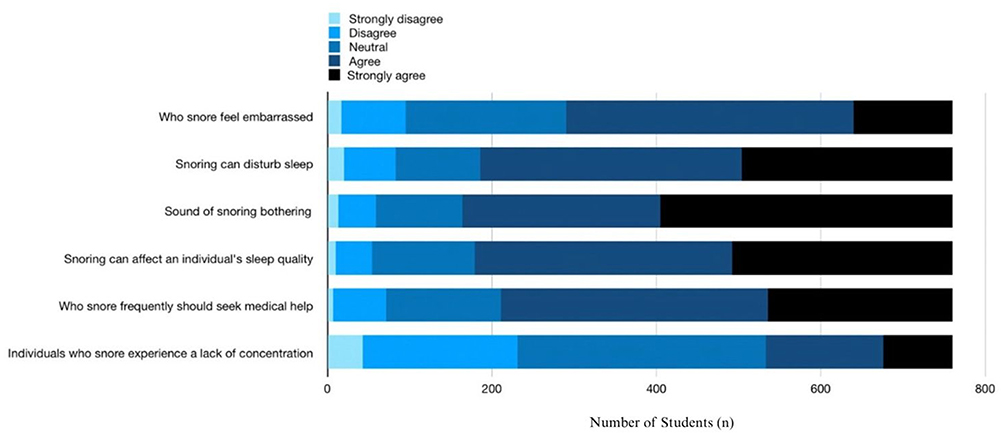 |
Figure 1 Attitudes of health sciences students toward sleep and snoring. |
The questions used to evaluate students’ knowledge of snoring are presented in Table 1. A total of 450 (59.3%) agreed that the tendency of habitual snoring increased with age. A substantial proportion of participants (294; 38.7%) expressed neutral responses, while 252 (33.2%) disagreed about the association between consanguineous marriage and habitual snoring. Additionally, 393 (51.8%) agreed that daytime sleepiness was associated with snoring. Many respondents believed that water-pipe smoking was a significant risk factor for habitual snoring, with 539 (70.9%) agreeing. Nevertheless, 304 (40%) respondents were neutral about the association between habitual snoring and an increased risk of medical conditions such as hypertension. Notably, 557 (73.3%) agreed that snoring was more prevalent among males. Furthermore, 459 (60.4%) participants agreed that sleep deprivation was related to snoring. However, 344 (45.3%) participants were neutral about the increased likelihood of GERD among people who snored. In addition, 264 (34.7%) of the students were neutral about the association between headaches and habitual snoring. Most participants (513, 67.5%) agreed that there was an association between self-reported snoring and aortic enlargement in Marfan syndrome. Approximately 440 (57.9%) were neutral regarding whether snoring was a risk factor for dyslipidemia. Moreover, 438 (57.6%) were neutral about whether paying attention to snoring could potentially aid in the early detection of Metabolic-associated fatty liver disease (MAFLD). Snoring can be influenced by environmental factors such as air pollution and indoor humidity, with 533 (70.2%) agreeing. The likelihood of experiencing symptoms such as nasal congestion and sneezing increased with snoring; 525 (69.1%) agreed. Regarding the negative questions, the participants demonstrated a weak understanding of the statement “family history does not affect habitual snoring,” with 310 (40.8%) agreeing. Similarly, 356 (46.8%) students were neutral about the statement “habitual snoring is the least common symptom of OSA”. Likewise, 426 (56.1%) respondents expressed neutrality regarding the statement “using CPAP may increase snoring”.
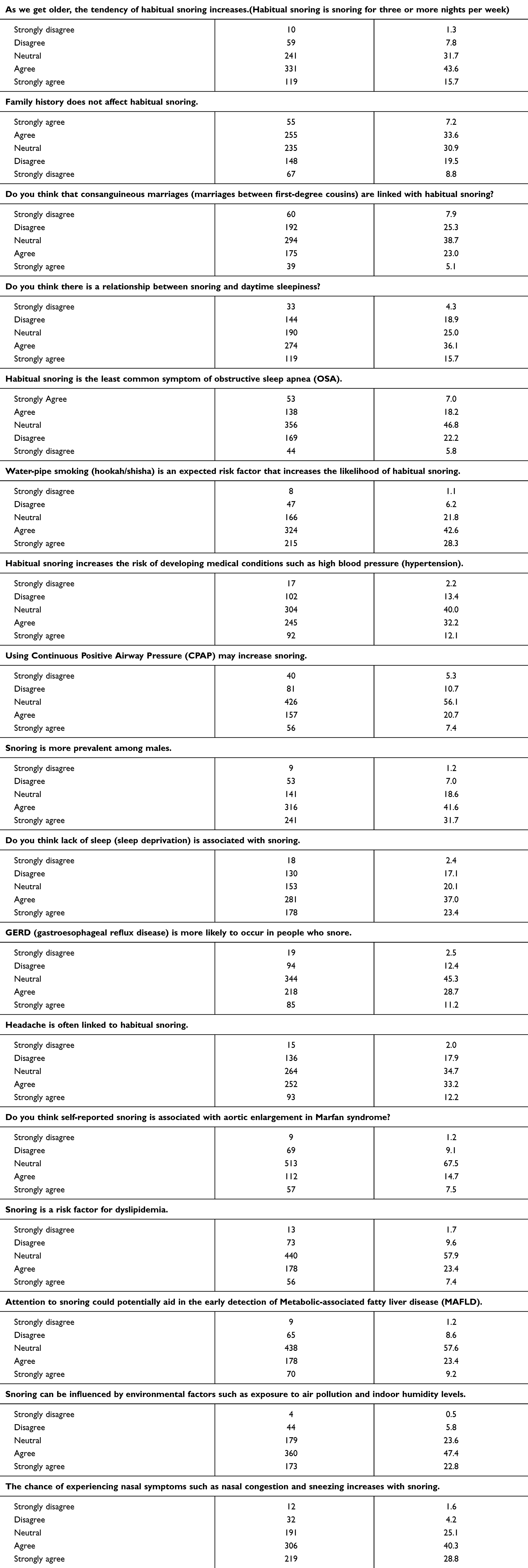 |
Table 1 Summary of Participants’ Knowledge of Snoring-Related Questions |
Exploring Gender Differences in Participants’ Attitudes and Knowledge
The comparison of gender attitudes towards snoring revealed significant differences. Figure 2 illustrates the gender differences in knowledge and attitudes toward snoring. An independent t-test was performed to compare the mean scores of males and females in the attitudes and knowledge sections. Females demonstrated stronger agreement (M = 3.73, SD = 0.87) that people who snore felt embarrassed (p < 0.001), whereas males showed comparatively lower agreement (M = 3.44, SD = 1.03).
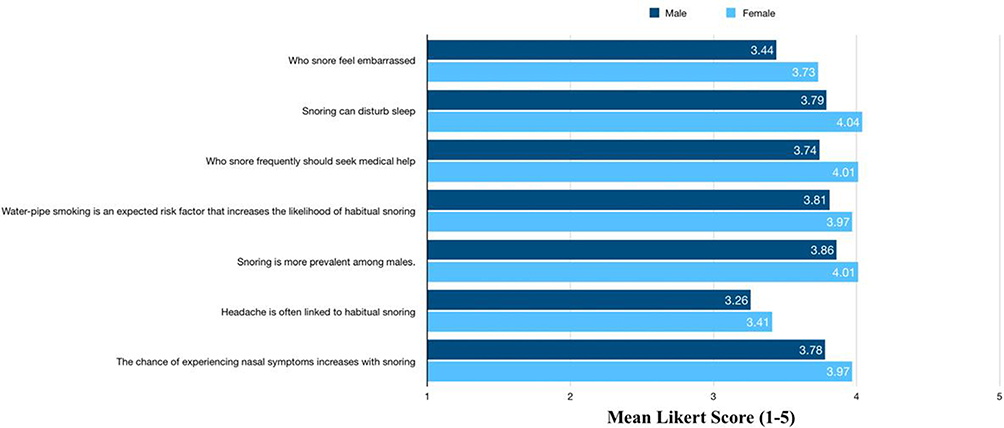 |
Figure 2 Gender differences in attitudes and knowledge regarding snoring. |
Additionally, females demonstrated stronger agreement (M = 4.04, SD = 0.96) that snoring disturbed sleep compared to males (M = 3.79, SD = 1.10) (p = 0.002). No significant gender differences (p = 0.193) were observed in responses to the question about whether the snoring sound is bothersome. Males and females were not aware of whether they had experienced sleep interruptions, with females (M = 2.04, SD = 0.66) and males (M = 2.09, SD = 0.66) showing no significant difference (p = 0.389). Females (M = 4.08, SD = 0.89) showed higher agreement than males (M = 3.94, SD = 1.00) that snoring negatively affects sleep quality; however, this difference was not statistically significant (p = 0.051).
Additionally, females were more likely to believe that seeking medical help for frequent snoring is necessary (M = 4.01, SD = 0.93) compared to males (M = 3.74, SD = 0.96) (p < 0.001). In contrast, males and females were neutral regarding the association between snoring and a lack of concentration, with females (M = 3.06, SD = 1.05) and males (M = 3.03, SD = 1.06) (p = 0.715).
Regarding participants’ knowledge, no gender differences were observed in responses related to the association between age and habitual snoring.
Additionally, both males and females shared a neutral view that family history does not influence habitual snoring. However, females (M = 2.85, SD = 1.08) did not differ significantly from males (M = 2.97, SD = 1.08) (p = 0.134).
Both males and females showed neutral responses regarding whether consanguineous marriage is linked with habitual snoring, with females (M = 2.95, SD = 1.00) and males (M = 2.87, SD = 1.01) showing no significant difference (p = 0.281). Males and females showed neutral responses regarding the relationship between snoring and daytime sleepiness, with females (M = 3.42, SD = 1.07) and males (M = 3.35, SD = 1.14) (p = 0.349).
Regarding the negative statement that habitual snoring is the least common symptom of OSA, no significant difference was observed between males (M = 2.95, SD = 0.89) and females (M = 3.05, SD = 0.99) (p = 0.128). Females were more likely to associate water-pipe smoking with an increased risk of habitual snoring (M= 3.97, SD= 0.86) compared to males (M= 3.81, SD= 1.00) (p = 0.028).
In addition, both males and females were neutral about the link between habitual snoring and medical conditions, with males (M = 3.42, SD = 0.93) and females (M = 3.37, SD = 0.94) (p = 0.483). Both males and females showed neutral responses to the negative statement “Using CPAP may increase snoring,” with no significant difference between males (M = 3.11, SD = 0.91) and females (M = 3.16, SD = 0.88) (p = 0.493). Both males and females demonstrated notable agreement that snoring was more prevalent among males; however, females showed higher agreement (M = 4.01, SD = 0.92) compared to males (M = 3.86, SD = 0.98) (p = 0.041). Regarding the association between sleep deprivation and snoring, males and females did not show significant differences in their understanding (p = 0.582). Both males and females were neutral about the fact that GERD was more prevalent in individuals who snored, with females (M = 3.37, SD = 0.93) and males (M = 3.28, SD = 0.90) (p = 0.179).
Female participants showed significantly higher agreement (M = 3.41, SD = 0.94) than male participants (M = 3.26, SD = 1.03) regarding the association between habitual snoring and headache (p = 0.036).
Similarly, there was no significant gender difference in the perception that self-reported snoring was associated with aortic enlargement in Marfan syndrome, with females (M = 3.21, SD = 0.74) and males (M = 3.14, SD = 0.76) showing comparable responses (p = 0.261).
Both males and females showed neutral responses regarding whether snoring was a risk factor for dyslipidemia, with no significant difference between females (M = 3.27, SD = 0.80) and males (M = 3.21, SD = 0.78) (p = 0.278). Likewise, males and females showed neutral responses regarding whether attention to snoring could aid in the early detection of MAFLD, with females (M = 3.34, SD = 0.82) and males (M = 3.26, SD = 0.76) showing no significant difference (p = 0.178). No gender differences in knowledge levels were observed in responses to the question regarding environmental factors that influenced snoring (p = 0.344). Female students showed stronger agreement (M= 3.97, SD= 0.90) regarding the likelihood that snoring increased nasal symptoms, whereas males showed less agreement (M= 3.78, SD= 0.93) (p= 0.005).
Exploring Knowledge and Attitudes Across Different Health Specialties
The ANOVA test was administered to compare knowledge and attitudes between health sciences specialities. (Figures 3 and 4) The significant questions highlighted differences in attitudes and knowledge regarding snoring among participants from various health specialities. The Emergency Medical Services (EMS) discipline strongly agreed with the association between snoring and embarrassment (M = 4.05, SD = 0.59), a finding more pronounced than in other specialties. Participants from the Anesthesia Technology discipline consistently indicated that snoring could affect sleep (M = 4.29, SD = 0.49), whereas those from the Occupational Therapy discipline showed the lowest agreement (M = 3.54, SD = 1.17). The Cardiovascular Technology discipline reported the strongest agreement regarding how bothersome snoring sounds were (M = 4.77, SD = 0.44), while the Occupational Therapy discipline exhibited the lowest agreement (M = 3.82, SD = 1.02). Participants from both Radiological Science (M = 2.20, SD = 0.65) and Cardiovascular Technology (M = 1.92, SD = 0.49) specialities showed low agreement regarding the association between snoring and sleep apnea. Participants in the Anesthesia Technology discipline showed high agreement that snoring affected sleep quality (M = 4.71, SD = 0.49). Most respondents in the Anesthesia Technology discipline agreed that people who snored frequently should seek medical help (M = 4.43, SD = 0.53), while those in Physiotherapy scored the lowest (M = 3.56, SD = 1.01). Participants from the RT discipline exhibited neutrality, indicating that individuals who snored experienced a lack of concentration (M = 3.39, SD = 1.09), whereas in Anesthesia Technology, strong disagreement was prevalent (M = 2.43, SD = 1.27). In the knowledge section, Anesthesia Technology students showed the highest agreement that there was an association between snoring and aging (M=3.86, SD=0.690), while Physiotherapy students were neutral about the association (M=3, SD=1.414). Most of the disciplines disagreed that family history influences habitual snoring. Nevertheless, Anesthesia Technology students strongly disagreed (M=2.14, SD=1.069). Participants from the Anesthesia Technology discipline strongly disagreed that consanguineous marriages were linked with habitual snoring (M= 2.14, SD=1.215). Similarly, most other disciplines did not support this association. The Anesthesia Technology discipline showed strong agreement with the association between snoring and daytime sleepiness (M = 4.14, SD = 1.069), but Physiotherapy discipline participants expressed considerable disagreement (M = 2.44, SD = 1.014). Students from the Clinical Nutrition discipline strongly agreed that snoring is the least common symptom of obstructive sleep apnea (M = 3.67, SD = 0.816). In contrast, participants in the Anesthesia Technology discipline showed a contrasting level of disagreement (M = 2.43, SD = 1.134). Agreement that Water-pipe smoking (hookah/shisha) is an expected risk factor that increases the likelihood of habitual snoring is significantly higher in the Clinical Laboratory Sciences discipline (M = 4.20, SD = 0.735) among other disciplines. RT discipline showed the strongest agreement on snoring, which increases the risk of medical conditions such as high blood pressure (M = 3.64, SD = 0.940). In contrast, the Anesthesia Technology discipline expressed neutrality (M = 2.86, SD = 1.215). All disciplines disagreed with the statement “Using CPAP may increase snoring”, whereas the Anesthesia Technology discipline reported the highest level of disagreement (M = 1.71, SD = 0.756). Respondents from the Occupational Therapy discipline significantly agreed that snoring is more prevalent among males (M = 4.21, SD = 0.568), while those from the Anesthesia Technology discipline were neutral (M = 3.29, SD = 1.254). Participants in the Cardiovascular Technology discipline reported firm agreement with the association between sleep deprivation and snoring (M = 3.85, SD = 1.068), while those in the Clinical Nutrition discipline expressed neutrality (M = 2.83, SD = 1.472). The association between GERD and snoring was rated highly by Cardiovascular Technology discipline participants (M = 3.77, SD = 0.599), whereas Anesthesia Technology discipline showed neutrality (M = 2.71, SD = 0.951). RT students exhibited the strongest agreement on the association between headache and snoring (M = 3.70, SD = 0.916), in stark contrast to Clinical Nutrition (M = 2.33, SD = 0.516) and Physiotherapy (M = 2.33, SD = 0.866), where disagreement prevailed. Responses to the relationship between snoring and Marfan syndrome varied across disciplines. Participants in the Cardiovascular Technology discipline displayed neutral responses (M = 3.46, SD = 0.776), whereas participants in the Clinical Nutrition discipline showed disagreement (M = 2.5, SD = 1.049).
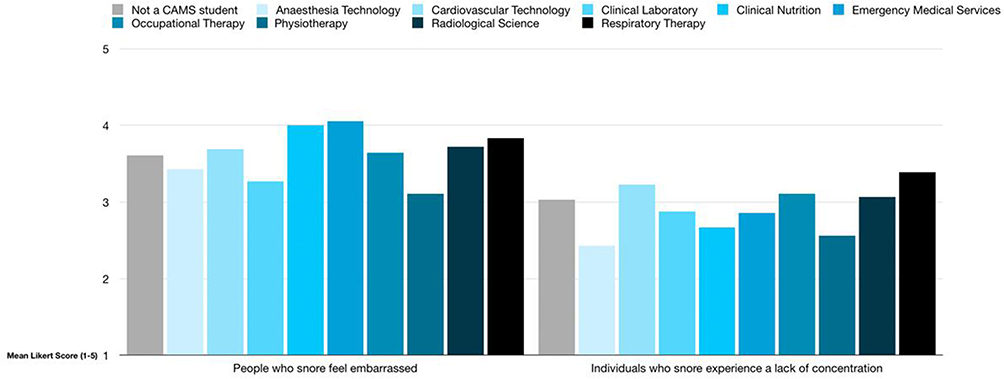 |
Figure 3 Differences in attitudes toward snoring across health science disciplines. |
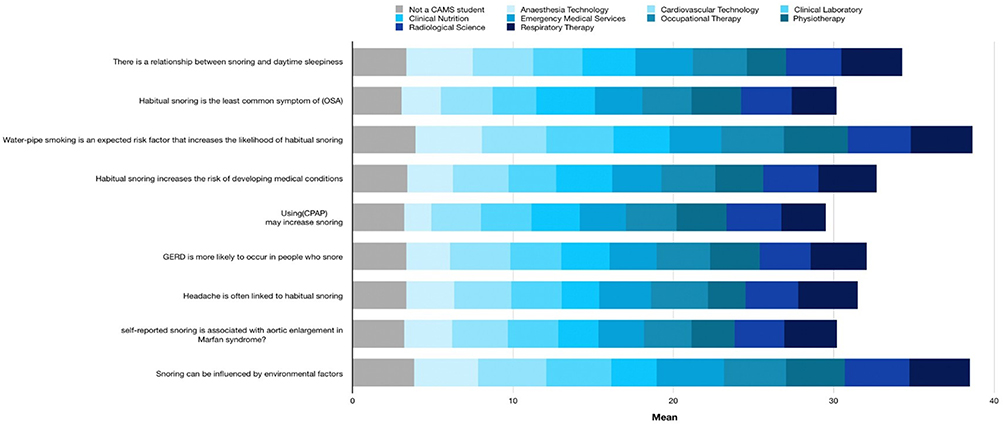 |
Figure 4 Differences in knowledge regarding snoring across health science disciplines. |
Radiological Science discipline showed neutrality for the association between dyslipidemia and snoring (M = 3.43, SD = 0.750). Participants across specialities generally showed neutral responses regarding whether attention to snoring could aid in the early detection of MAFLD.
Cardiovascular Technology students agreed most strongly with the association between snoring and environmental factors such as air pollution (M = 4.23, SD = 0.832), whereas Clinical Nutrition discipline students were neutral (M = 2.83, SD = 1.169).
The association between nasal symptoms and snoring was rated highest by the Radiological Science discipline (M = 4.24, SD = 0.705), whereas the Physiotherapy discipline showed neutral responses (M = 3.22, SD = 0.833).
Discussion
This study assessed the knowledge and attitudes of health sciences students toward snoring and its clinical implications. The findings indicated that students generally recognized snoring as a health concern; however, gaps remain in their understanding of its associations with several medical conditions.
Snoring is a common manifestation of upper airway obstruction during sleep and is associated with several clinical conditions.1 Thus, health sciences students need to possess adequate knowledge about this condition. Numerous studies have investigated the causes, risk factors, and detection of snoring.17–19 Nevertheless, no current studies have assessed health sciences students’ knowledge and attitudes towards snoring, highlighting a significant gap that needs to be addressed.
Health Sciences Students’ Attitudes and Knowledge Towards Snoring
The average nightly sleep duration for participants in this study was 5–6 hours, which is below the optimal range of 7–9 hours.20 This finding may reflect the demanding academic workload commonly experienced by health sciences students. Many participants reported that snoring was bothersome, consistent with previous research showing that snoring can disturb bed partners’ sleep.21 A considerable number of participants also believed that snoring disrupts sleep.
Most participants recognized that snoring can negatively affect sleep quality and should be considered a health concern requiring medical attention.
Health sciences students demonstrated a solid understanding of the connection between waterpipe smoking and snoring. Many participants recognized that snoring is more prevalent among males. This higher occurrence in men could be attributed to anatomical differences in the upper airway and large neck circumferences, which are approximately 17% to 18% larger than those of women.2,22
A considerable proportion of respondents selected neutral responses for several knowledge questions, particularly those related to conditions such as GERD, dyslipidemia, and MAFLD. This pattern may have reflected uncertainty or limited familiarity with the broader systemic implications of snoring among students. It is also possible that some of these associations receive limited emphasis in undergraduate health sciences curricula.
Gender Differences in Health Sciences Students’ Attitudes and Knowledge Towards Snoring
Gender differences were observed in attitudes toward snoring. Females were more likely to believe that snorers experience shame and that snoring disrupts sleep. They also perceived that frequent snoring requires medical attention. Female participants demonstrated greater awareness of the connection between water-pipe smoking and snoring. Female students were more likely to recognize that snoring is more common among males. Additionally, more female participants associated headaches with snoring. Although the link between snoring and headaches is not fully understood, a previous study suggested that respiratory event-related arousals (RERAs) caused by snoring may contribute to headache onset.6
In this study, female participants reported that snoring increases the likelihood of experiencing nasal symptoms, such as nasal congestion and sneezing, compared to male participants.
While snoring is recognized as a risk factor for developing these nasal symptoms, the underlying mechanism remains unclear. According to Värendh et al, one possible explanation is that some individuals who snored tend to breathe through their mouths despite being able to breathe normally through their noses.11 Prolonged periods of low nasal breathing may lead to airway obstruction. Another potential explanation is the development of an inflammatory response in the nasal passages and airways of snorers.11
In this study, female health sciences students demonstrated higher levels of knowledge in selected areas compared to their male counterparts. This difference may reflect greater health awareness or stronger engagement with health-related topics reported among female students in previous educational studies. Similar gender differences, where females outperformed males, have been reported in other studies on various topics from Canada and Saudi Arabia.23,24
Variations in Attitudes and Knowledge Regarding Snoring Among Students from Different Health Sciences Disciplines
Differences in attitudes toward snoring were also observed across health sciences disciplines. EMS students showed stronger agreement that individuals who snored may feel embarrassed.
Since snoring can result from natural processes like soft palate vibration and nasal obstruction, it is essential to understand the significance of snoring in recognizing certain health conditions.1,11 RT students in this study believed that snorers may experience reduced concentration, which could negatively affect their academic performance, aligning with results from another study.5
When comparing knowledge across health sciences disciplines, anesthesia students demonstrated a significantly higher level of understanding than their peers in other disciplines. This was especially evident in their comprehension of the connections between snoring, daytime sleepiness, OSA, and CPAP therapy, as these topics were included in their curriculum.
The relationship between snoring and daytime sleepiness remains incompletely understood. However, one possible explanation is that narrowing the upper airway, which causes snoring, increases the effort required for breathing. This increased effort can lead to fatigue and daytime sleepiness.25
Snoring is among the most common symptoms of obstructive sleep apnea.1 The primary treatment option is positive airway pressure (PAP), such as CPAP, which is considered the first-line therapy for moderate to severe OSA.26
Clinical laboratory sciences students demonstrated a greater understanding of the link between snoring and water-pipe smoking than their health sciences peers. A study from Saudi Arabia suggests that waterpipe smoking requires high intra-pharyngeal pressure, which could lead to the long-term weakening of the pharyngeal muscles.2 In contrast, RT students demonstrated better understanding of HTN than their peers. Research indicates that snoring is an independent predictor of HTN in both men and women. This suggests that snoring may have a causal role in the development of hypertension.27 Snoring can occur alongside heartburn during sleep, often linked to GERD. A recent study by Sowho M et al investigated the relationship between snoring and aortic size.9 The findings indicated that the percentage of breath taken during snoring is strongly linked to the presence of OSA and the enlargement of the aortic root diameter. As a result, objective snoring assessments could significantly improve the identification of patients with Marfan syndrome and those at increased risk of severe aortic disease.9 Students in cardiovascular technology showed a better understanding of GERD, Marfan syndrome, and the environmental factors related to snoring. This increased awareness may have stemmed from their curriculum, which includes cardiovascular system topics aligned with their specialisation. As a result, these students are likely to be more knowledgeable about GERD, Marfan syndrome, and environmental influences on snoring than students in other health science disciplines. Exposure to damp indoor conditions may cause airway inflammation, potentially leading to snoring.28 A previous study linked the association between snoring and air pollution to the connection between Ozone (O3) levels and OSA, suggesting that an increase in O3 levels could lead to an exacerbation of OSA through an increase in apnea-hypopnea index (AHI).3,29
Limitations
The study focused on students from three universities in Jeddah, Saudi Arabia, which may not fully represent health sciences students across Saudi Arabia. Although the sample size was adequate, the study was limited to students from three universities in Jeddah, which may restrict the generalizability of the findings to other regions. Furthermore, the use of a questionnaire-based survey may introduce selection bias, potentially affecting the representativeness of the findings. Finally, the study relied on self-reported data, which may be susceptible to response bias and could affect response accuracy.
Future Research
Future studies should implement random sampling methods to improve the generalizability of the findings and include a larger, more diverse student population from various regions. Longitudinal studies could examine how health sciences education affects students’ knowledge and attitudes over time. Additionally, objective measures, such as assessments of clinical expertise in snoring or practical skills, could provide valuable insights into students’ preparedness to address snoring and related conditions in clinical practice.
Conclusion
This study highlighted the importance of assessing health sciences students’ knowledge and attitudes regarding snoring. The findings revealed significant gender-based differences, with females demonstrating a more comprehensive understanding in certain areas. Students in anesthesia technology outperformed their peers, reflecting a greater understanding of snoring-related concepts. A multifaceted approach was considered necessary to enhance student learning and facilitate the early identification of clinical complications associated with snoring. Preparing students to identify and manage snoring and its related clinical consequences effectively requires promoting their knowledge and attitudes by incorporating focused educational interventions within health sciences programs, such as specialized courses, curriculum modules, or awareness campaigns. Such strategies may improve awareness, facilitate early recognition of snoring-related conditions, and ultimately enhance patient care.
Data Sharing Statement
The data from this study can be requested from the corresponding author, RSK, upon reasonable request.
Acknowledgments
The authors would like to express their gratitude to the participants of this study and extend their thanks to the administration of King Saud bin Abdulaziz University for Health Sciences (KSAU-HS) and the King Abdullah International Medical Research Centre (KAIMRC) in Jeddah, Saudi Arabia, for their invaluable support throughout the duration of the study.
Author Contributions
Author contributions are as follows:
RSK; Conceptualization, Data curation, Funding acquisition, Investigation, Methodology, Project administration, Resources, Software, Supervision, Validation, Visualisation, Writing – original draft, Writing – review & editing
SHAA; Data curation, Investigation, Resources, Validation, Visualisation, Writing – original draft, Writing – review & editing
SAAA; Data curation, Investigation, Resources, Validation, Visualisation, Writing – original draft, Writing – review & editing
RMA; Data curation, Investigation, Resources, Validation, Visualisation, Writing – original draft, Writing – review & editing
NAA; Data curation, Investigation, Resources, Validation, Visualisation,Writing – original draft, Writing – review & editing
MAK; Data curation, Formal analysis, Investigation, Methodology, Resources, Software, Supervision, Validation, Visualisation, Writing – original draft, Writing – review & editing
All authors took part in drafting, revising or critically reviewing the article; gave final approval of the version to be published; have agreed on the journal to which the article has been submitted; and agree to be accountable for all aspects of the work.
Funding
No funding was received for conducting this study.
Disclosure
The authors state there are no conflicts of interest that may have affected the results or interpretation of the findings.
References
1. Kim SG, Cho SW, Rhee CS, Kim JW. How to objectively measure snoring: a systematic review. Sleep Breath. 2024;28(1):1–14. doi:10.1007/s11325-023-02865-6
2. Wali SO, Abaalkhail BA. Prevalence and predictors of habitual snoring in a sample of Saudi middle-aged adults. Saudi Med J. 2015;36(8):920–927. doi:10.15537/smj.2015.8.11848
3. Silverforsen D, Theorell-Haglöw J, Ljunggren M, et al. Snoring and environmental exposure: results from the Swedish GA2LEN study. BMJ Open. 2021;11(6):e044911. doi:10.1136/bmjopen-2020-044911
4. Alahmadi NA, Alzahrani R, Bshnaq AG, et al. General public knowledge, attitude, and practice regarding the impact of air pollution and cardiopulmonary diseases in Jeddah, Saudi Arabia. Cureus. 2023;15(11):e39876. doi:10.7759/cureus.39876
5. Khassawneh BY, Alkhatib LL, Ibnian AM, Khader YS. The association of snoring and risk of obstructive sleep apnea with poor academic performance among university students. Sleep Breath. 2018;22(3):831–836. doi:10.1007/s11325-018-1665-z
6. Huang Z, Zhou N, Chattrattrai T, et al. Associations between snoring and dental sleep conditions: a systematic review. J Oral Rehabil. 2023;50(5):416–428. doi:10.1111/joor.13422
7. Alchakaki A, Riehani A, Shikh-Hamdon M, Mina N, Badr MS, Sankari A. Expiratory snoring predicts obstructive pulmonary disease in patients with sleep-disordered breathing. Ann Am Thorac Soc. 2016;13(1):86–92. doi:10.1513/AnnalsATS.201507-413OC
8. Zeigler SM, Sloan B, Jones JA. Pathophysiology and pathogenesis of Marfan syndrome. Adv Exp Med Biol. 2021;1348:185–206.
9. Sowho M, Potocki M, Sgambati F, Neptune E. Snoring and aortic dimension in Marfan syndrome. Sleep Biol Rhythms. 2023;21(1):33–37. doi:10.1007/s41105-022-00413-5
10. Wang Y, Shen R, Ge J. Association between self-reported snoring and metabolic-associated fatty liver disease: a cross-sectional analysis of NHANES 2017–2018. Sleep Med. 2023;101:414–420. doi:10.1016/j.sleep.2022.11.029
11. Värendh M, Janson C, Bengtsson C, et al. Nasal symptoms increase the risk of snoring, and snoring increases the risk of nasal symptoms: a longitudinal population study. Sleep Breath. 2021;25(4):1851–1857. doi:10.1007/s11325-020-02287-8
12. Pappan N, Awosika AO, Rehman A. Dyslipidemia. In: StatPearls. Treasure Island (FL): StatPearls Publishing; 2025.
13. Tian Y, Li D, Mu H, Wei S, Guo D. Positive correlation between snoring and dyslipidemia in adults: results from NHANES. Lipids Health Dis. 2023;22(1):73. doi:10.1186/s12944-023-01839-7
14. Cairo JM. Mosby’s Respiratory Care Equipment.
15. McEvoy RD, Antic NA, Heeley E, et al. CPAP for prevention of cardiovascular events in obstructive sleep apnea. N Engl J Med. 2016;375(10):919–931. doi:10.1056/NEJMoa1606599
16. Alharthi R, Alamri R, Alqarni W, Khan MA, Kumar RS. Health sciences students’ knowledge, attitudes, and awareness of the effects of sleep quality on the brain: a cross-sectional study. J Clin Diagn Res. 2024;18(6):CC05–CC12.
17. Chiang JK, Lin YC, Lin CW, Ting CS, Chiang YY, Kao YH. Validation of snoring detection using a smartphone app. Sleep Breath. 2022;26(1):81–87. doi:10.1007/s11325-021-02359-3
18. Wang B, Zhao J, Fu L, et al. Effect of snoring on pregnant women and fetal outcomes: a cross-sectional study. Sleep Breath. 2024;28(6):2431–2436. doi:10.1007/s11325-024-03098-x
19. Bashir AO, Elimam MA, Elimam MA, Adam I. Snoring is associated with hypertension and diabetes mellitus among adults in North Sudan: a cross-sectional study. BMC Public Health. 2024;24(1):974. doi:10.1186/s12889-024-18505-x
20. Hirshkowitz M, Whiton K, Albert SM, et al. National Sleep Foundation’s sleep time duration recommendations: methodology and results summary. Sleep Health. 2015;1(1):40–43. doi:10.1016/j.sleh.2014.12.010
21. Norton PG, Dunn EV, Haight JS. Snoring in adults: some epidemiologic aspects. Can Med Assoc J. 1983;128(6):674–675.
22. Amir O, Shemer K, Roziner I, Primov-Fever A. Physical and visual characteristics of the neck predicting gender perception. Plast Reconstr Surg Glob Open. 2019;7(12):e2573. doi:10.1097/GOX.0000000000002573
23. Dubuc MM, Aubertin-Leheudre M, Karelis AD. Gender differences in academic performance of high school students: the relationship with cardiorespiratory fitness, muscle endurance, and test anxiety. Int J Prev Med. 2020;11:201. doi:10.4103/ijpvm.IJPVM_258_18
24. Aljefree NM, Almoraie NM, Althaiban MA, Hanbazaza MA, Wazzan HA, Shatwan IM. Gender differences in knowledge, attitudes, and practices with respect to type 1 diabetes among Saudi public-school teachers. BMC Public Health. 2023;23(1):118. doi:10.1186/s12889-023-15043-w
25. Orjatsalo M, Toppila J, Heimola M, et al. Snoring was related to self-reported daytime sleepiness and tiredness in young adults performing compulsory conscript service. J Clin Sleep Med. 2023;19(2):243–251. doi:10.5664/jcsm.10294
26. Mickelson SA. Oral appliances for snoring and obstructive sleep apnea. Otolaryngol Clin North Am. 2020;53(3):397–407. doi:10.1016/j.otc.2020.02.004
27. Niu Y, Sui X, He Y, et al. Association between self-reported snoring and hypertension: a systematic review and meta-analysis. Sleep Med. 2021;88:140–148. doi:10.1016/j.sleep.2021.10.016
28. Wang J, Janson C, Lindberg E, et al. Dampness and mold at home and at work and onset of insomnia symptoms, snoring, and excessive daytime sleepiness. Environ Int. 2020;139:105691. doi:10.1016/j.envint.2020.105691
29. Weinreich G, Wessendorf TE, Pundt N, et al. Association of short-term ozone and temperature with sleep-disordered breathing. Eur Respir J. 2015;46(5):1361–1369. doi:10.1183/13993003.02255-2014
 © 2026 The Author(s). This work is published and licensed by Dove Medical Press Limited. The
full terms of this license are available at https://www.dovepress.com/terms
and incorporate the Creative Commons Attribution
- Non Commercial (unported, 4.0) License.
By accessing the work you hereby accept the Terms. Non-commercial uses of the work are permitted
without any further permission from Dove Medical Press Limited, provided the work is properly
attributed. For permission for commercial use of this work, please see paragraphs 4.2 and 5 of our Terms.
© 2026 The Author(s). This work is published and licensed by Dove Medical Press Limited. The
full terms of this license are available at https://www.dovepress.com/terms
and incorporate the Creative Commons Attribution
- Non Commercial (unported, 4.0) License.
By accessing the work you hereby accept the Terms. Non-commercial uses of the work are permitted
without any further permission from Dove Medical Press Limited, provided the work is properly
attributed. For permission for commercial use of this work, please see paragraphs 4.2 and 5 of our Terms.
Recommended articles
Association of Chronotype with Hypertension and Metabolic Parameters in Middle-Aged and Older Adults: A Cross-Sectional Study
Hu MJ, Hu WW, Yao B, Dong XM, Wang XL, Su D, Song GQ, Zhang YL
Nature and Science of Sleep 2025, 17:1985-1995
Published Date: 27 August 2025