
Back to Journals » Journal of Multidisciplinary Healthcare » Volume 18
Global Trends and Collaborative Networks in Crush Syndrome: A Bibliometric Analysis From 2000 to 2025
Received 12 March 2025
Accepted for publication 11 August 2025
Published 4 September 2025 Volume 2025:18 Pages 5489—5503
DOI https://doi.org/10.2147/JMDH.S527923
Checked for plagiarism Yes
Review by Single anonymous peer review
Peer reviewer comments 2
Editor who approved publication: Dr Scott Fraser
Fan Song, Ding Long, Xiaoling Wu
Department of Intensive Care Unit, The Central Hospital of Wuhan, Tongji Medical College, Huazhong University of Science and Technology, Wuhan, People’s Republic of China
Correspondence: Ding Long, Email [email protected]
Background: Crush syndrome (CS) is a severe, potentially fatal condition resulting from prolonged muscle compression, most commonly observed following disasters such as earthquakes and large-scale traumatic events. Despite its clinical significance, there has been a lack of comprehensive bibliometric analysis exploring global research trends, collaboration networks, and emerging topics in CS research.
Methods: A comprehensive literature search was conducted in the Web of Science Core Collection to identify publications on CS from 2000 to 2025. Bibliometric analysis was performed using VOSviewer, CiteSpace, and the R package “Bibliometrix” to visualize co-authorship networks, institutional collaborations, and keyword co-occurrence patterns. Only English-language articles were included. Data were analyzed for publication trends, country and institutional contributions, leading authors and journals, and evolving research themes.
Results: A total of 745 publications were included, demonstrating a consistent annual increase in research output. The United States, China, and Turkey were the most productive countries. Ghent University and Istanbul University were the leading institutions. Sever MS was identified as a major contributor to the field. Injury-International Journal of the Care of the Injured emerged as the most contributed journal. The most frequent research topics were acute kidney injury, disaster-related management, and pediatric aspects. Keyword and citation burst analysis revealed a historical focus on disaster epidemiology, with recent trends shifting toward clinical complications such as acute compartment syndrome and nerve-related conditions, as well as mechanistic studies including ferroptosis.
Conclusion: This bibliometric analysis provides a comprehensive overview of global CS research, highlighting evolving hotspots, emerging themes, and key contributors. These findings may inform future research directions and support improved clinical management of CS.
Keywords: crush syndrome, bibliometric analysis, collaborative networks, trauma medicine, intensive care unit
Introduction
Crush syndrome (CS) is a severe clinical condition resulting from prolonged compression of muscle tissue, typically occurring after major natural disasters, industrial accidents, or extended periods of immobilization.1 It is characterized by the rupture and necrosis of muscle fibers, leading to the systemic release of cellular degradation products, and is commonly associated with significant morbidity and mortality.2,3 Clinically, CS manifests with life-threatening complications, most notably acute renal failure, hyperkalemia, metabolic acidosis, and myoglobinuria.4 Prognosis is influenced by the severity of injury, the timeliness of intervention, and individual patient factors, with certain biomarkers such as the neutrophil-to-lymphocyte ratio (NLR), lymphocyte-to-monocyte ratio (LMR), and platelet-to-lymphocyte ratio (PLR) holding potential prognostic value.5 Beyond its clinical impact, CS imposes a substantial burden on healthcare systems due to the need for intensive emergency, inpatient, and surgical resources, often resulting in considerable healthcare costs. Psychologically, both patients and their families may experience prolonged stress and reduced quality of life, while society as a whole faces increased instability and disruption in the aftermath of mass-casualty events.6
Epidemiologically, the incidence of crush syndrome varies according to the context and geographic region. In the aftermath of major earthquakes, for example, the proportion of trauma victims developing CS may range from 2% to 15%, and catastrophic events such as the Marmara (Turkey) and Hanshin-Awaji (Japan) earthquakes have resulted in thousands of cases occurring simultaneously.4,6 Risk factors include the duration and magnitude of tissue compression, the mass of affected muscle, and delays in rescue and medical intervention. While CS can arise from isolated incidents such as industrial accidents or prolonged immobilization, the majority of cases are linked to large-scale disasters—particularly in regions with high seismic activity or limited emergency response capacity.
From a clinical pathophysiology perspective, CS begins with sustained muscle compression causing ischemia and subsequent cellular death. The breakdown of myocytes results in the release of intracellular constituents—most notably myoglobin, potassium, phosphate, and creatine kinase—into the systemic circulation. Myoglobin, in particular, can precipitate acute kidney injury (AKI) by inducing renal tubular obstruction and exerting direct nephrotoxic effects, especially under conditions of hypovolemia and acidosis.4 Hyperkalemia may provoke fatal cardiac arrhythmias, while other metabolic disturbances further complicate management. Prompt recognition and intervention are therefore essential to prevent multi-organ failure.
Early recognition, diagnosis, and intervention are critical in mitigating symptoms and improving outcomes in CS.7 Current evidence-based management emphasizes rapid removal of the compressive force, aggressive fluid resuscitation, correction of electrolyte imbalances, and dialysis support as needed.8,9 Notably, urine alkalization is no longer routinely recommended in clinical guidelines, reflecting updated evidence regarding its efficacy and safety. Nevertheless, despite timely and effective treatment, some patients may develop long-term sequelae or succumb to the consequences of delayed or severe disease progression.10 Given the evolving clinical landscape and the emergence of novel therapeutic and diagnostic approaches, ongoing assessment of research trends is essential to optimize patient care and outcomes.
Bibliometric analysis utilizes mathematical and statistical methods to systematically examine the global body of literature on a specific topic, providing a detailed overview of research categories, co-authorship patterns, keyword frequency, and highly cited journals.11–13 The application of bibliometric indicators has become increasingly important, as the field of CS continues to evolve in response to recent large-scale disasters and advancements in critical care. Such analyses enable the identification of research gaps, emerging themes, and collaborative networks—thereby guiding evidence-based policy and setting priorities for future research. Given the significant clinical and scientific implications of CS, a comprehensive bibliometric analysis of global research trends and collaborative networks from 2000 to 2025 is particularly timely and relevant. This approach offers a thorough overview of the evolving research landscape, highlights key contributors and institutions, identifies emerging topics and knowledge gaps, and provides valuable insights that can inform and advance innovation in the management and intervention strategies for CS.
Material and Methods
Literature Search and Data Compilation
A thorough literature search was conducted using the Web of Science Core Collection (WoSCC), focusing on CS.14 The search covered studies published from January 2000 to June 2025. We employed a detailed search strategy to identify relevant articles, which is outlined as follows: (TS=“crush syndrome*”) OR (TS=“bywaters syndrome”) OR (TS=“bywaters’ syndrome”) OR (TS=“traumatic rhabdomyolysis*”) OR ((TS=(trauma OR crush OR injur* OR mechanical OR physical)) AND (TS=rhabdomyolysis)). The search was conducted on a single day (June 27, 2025) to avoid potential discrepancies due to database updates.
Following the initial database search, a total of 1,797 records were identified. After screening titles and abstracts, 530 records were excluded due to irrelevance to CS. Of the 1267 full-text articles assessed for eligibility, 522 were further excluded due to being reviews, meeting abstracts, editorials, letters, early access publications, or non-English articles. Ultimately, 745 articles met all criteria and were included in the final bibliometric analysis (Figure 1). Data extraction included full records and cited references in plain text format, capturing publication metrics, authors, institutions, countries, keywords, and journals for comprehensive bibliometric analysis.
 |
Figure 1 Flowchart of the literature screening process. |
Statistical Analysis and Visualization
The extracted data underwent descriptive and performance analysis using R package “Bibliometrix” (version 4.3.3) to quantify total publications, average citations per publication, and the geographic and institutional distribution of research output. Bibliometric impact metrics such as the H-index, to evaluate the research influence and productivity of authors and institutions.15,16
Visualization of collaboration networks and keyword co-occurrence was conducted using VOSviewer (version 1.6.20). VOSviewer enabled the creation of visual networks illustrating co-authorship, institutional collaborations, and co-citation patterns. In these networks, node size represented publication volume or citation impact, while color-coded clusters indicated thematic or collaborative groupings. The thickness of lines between nodes depicted the strength of collaborative or citation relationships, highlighting prominent researchers, institutions, and interconnected research efforts within the field.
CiteSpace (version 6.3.R1) was used to track and analyze keyword trends over time, particularly focusing on identifying citation bursts and evolving research fronts in CS from 2000 to 2025. These analytical tools provided a comprehensive perspective on global research trends, identifying key authors, institutions, and countries, as well as thematic gaps and emerging topics in CS research.
Results
Overview of Publication Status
The flowchart of data screening was shown in Figure 1. The number of publications and associated metrics reflected the evolving interest in this research field. The total publications from 2000 to 2025 had reached 745, with a consistent annual growth rate of 2.59%.
The trend in publication count, illustrated in Figure 2, indicated a consistent upward trend in the number of publications on this topic. There were 70 articles published in 2024 and 36 in 2025 (as of the time of analysis), both of which surpassed the publication counts of previous years, reflecting the ongoing growth in research output.
 |
Figure 2 Annual number of publications. |
Analysis of Leading Countries and Institutions
The distribution of publications and citations among leading countries and institutions illustrated the depth and collaborative nature of research in this field. In the country analysis, the USA, with a total publication rank of 1 and 355 total publications, led in terms of research output on CS. China, with a total publication rank of 2 and 351 publications, and Turkey, with a total publication rank of 3 and 261 publications, followed closely behind. The USA led in citation impact, ranking first with 4,036 citations, averaging 29.7 citations per publication. Turkey ranked second with 1,762 citations and an average of 27.5 citations per article, while China ranked third with 1,432 citations, averaging 11.8 citations per publication. Despite a lower publication volume, Belgium demonstrated a high average of 52.9 citations per publication, highlighting the scholarly influence of these nations in the field of CS (Table 1).
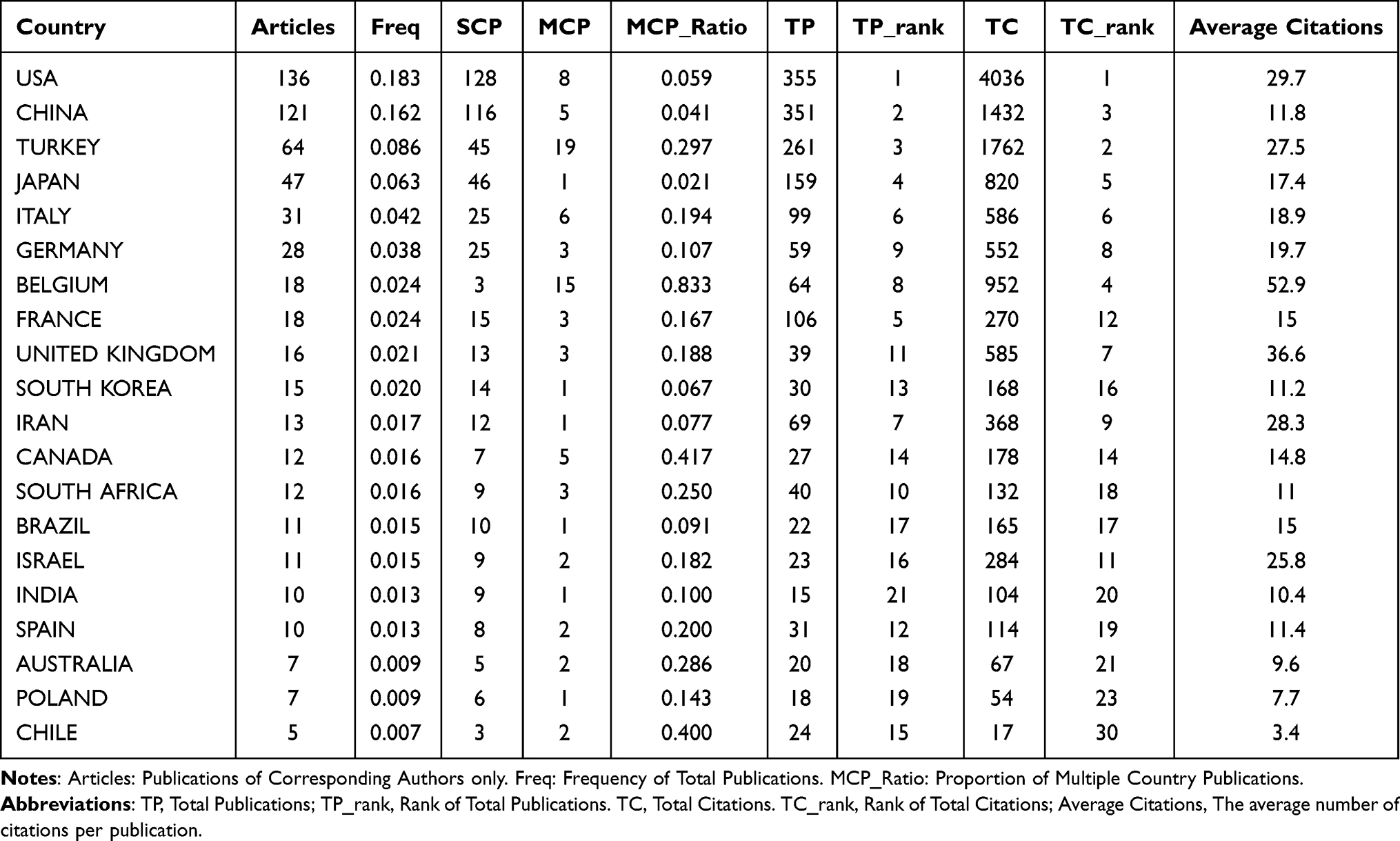 |
Table 1 Publication and Citation Profiles of Leading Countries |
The MCP (Multiple Country Publications) for the Turkey (19), Belgium (15), and USA (8) underscored their leading roles in international research collaborations (Table 1 and Figure 3a). This information is further illustrated in Figure 3b. The USA, as the central hub in the network, played a leadership role in international collaborations, establishing extensive connections with Canada, Mexico, and Chile, underscoring its pivotal position in global research partnerships. In terms of total link strength, the Belgium ranked first with total link strength of 61, followed by USA with 53 and Turkey with 47.
 |
Figure 3 Analysis of leading countries and institutions. (A). Distribution of corresponding author’s publications by country. (B). Visualization map depicting the collaboration among different countries. (C). Top ten institutions by article count and rank. (D). Visualization map depicting the collaboration among different institutions. |
Institutional analysis identified Istanbul University as the top contributor with 72 articles, followed by Ghent University (51) and University of Health Sciences Turkey (33) (Figure 3c). Among the 99 institutions engaged in international collaborations with at least two articles (Figure 3d), Cerrahpasa Medical School in Istanbul University and Marmara University School of Medicine led with the highest number of collaborative links with other countries, total link strength of 63. This was followed by Uludag University with a total link strength of 47.
Analysis of Authors and Co-Cited Authors
A total of 3,732 authors had significantly contributed to this research field. In the bibliometric analysis as presented in Table 2, Sever MS (H index: 15) leads with 19 publications that have accumulated 1,600 total citations, achieving the 1st rank in total citations. Vanholder R (H index: 15) follows with 18 publications and 1,487 total citations, securing the 2nd rank in total citations. EREK E (H index: 14), with 16 publications, had garnered 1429 total citations, placing him at the 4th rank in total citations.
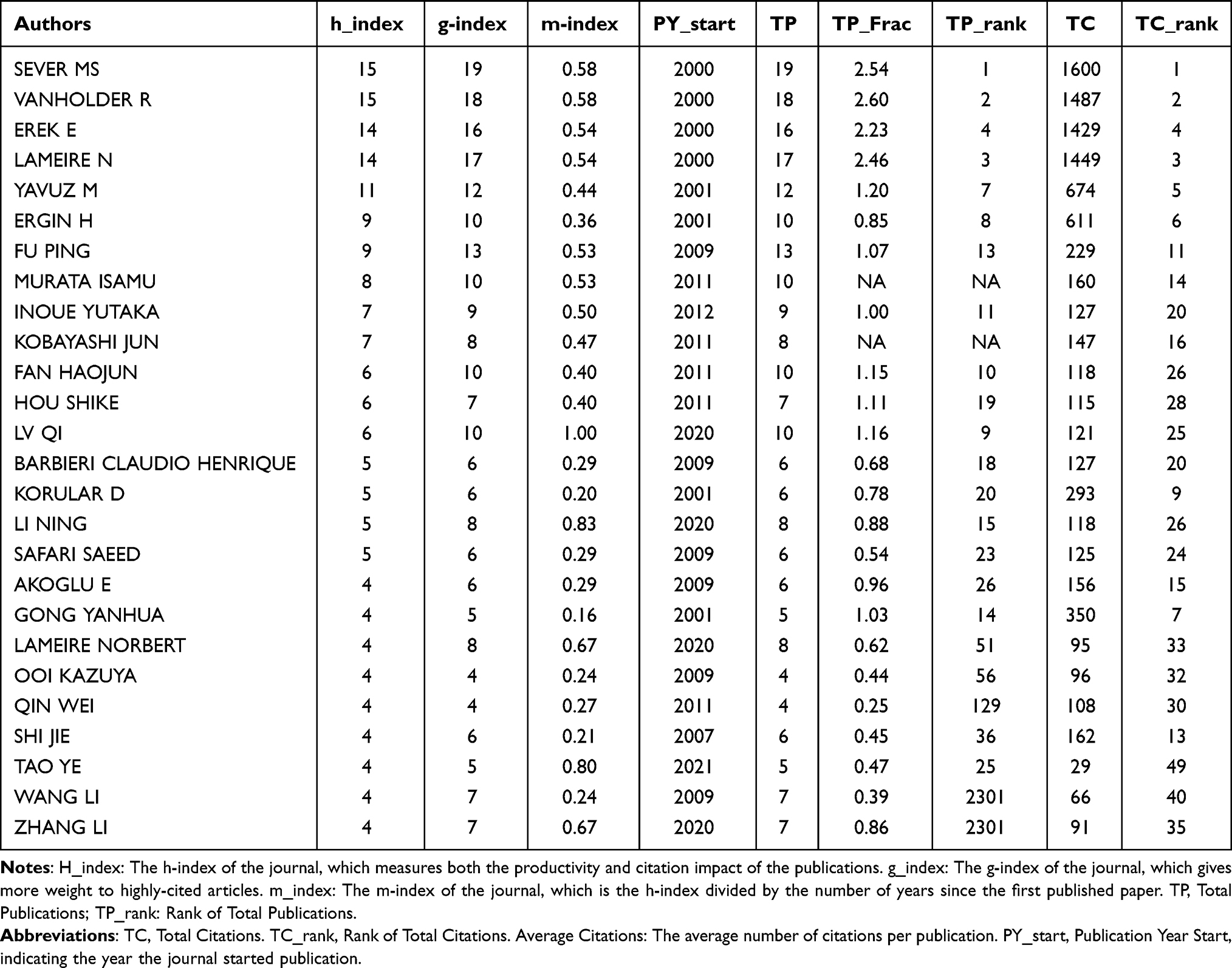 |
Table 2 Publication and Citation Profiles of High-Impact Authors |
The co-authorship network, displayed in Figure 4, revealed the collaborative structure among these influential authors. This network was divided into distinct clusters, each representing a specific research focus. The blue cluster, with Zhang Li at its core (total link strength=49), concentrated on systemic diseases and therapeutic approaches, demonstrating robust collaborative ties with other prominent figures in the field. The green cluster, under the leadership of Fan Haojun (total link strength=53), was particularly engaged in immunological studies and related interventions. The red cluster, centered around Gong Yanhua (total link strength=61), also focused on clinical applications and the advancement of novel therapeutic methods, showing a strong collaborative presence in the field. These clusters reflected the collaborative nature of the field and the specialization of authors within subdomains.
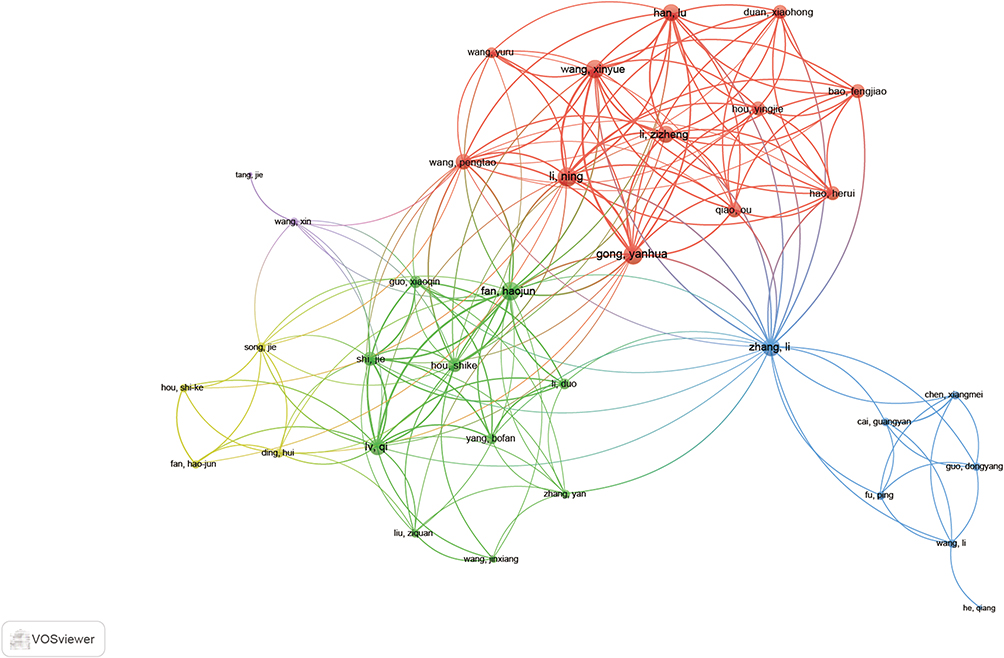 |
Figure 4 Visualization map depicting the collaboration among different authors. |
Analysis of Journals and Co-Cited Journals
The articles had been published across a diverse range of 386 journals. The top-ranked journals by H-index in the field of CS research, as detailed in Table 3, are Injury-International Journal of the Care of the Injured, Nephrology Dialysis Transplantation, and Journal of Trauma and Acute Care Surgery. Injury-International Journal of the Care of the Injured, with an H-index of 11, stood out for its significant contribution to the field with 15 total publications and 264 total citations. Similarly, Nephrology Dialysis Transplantation, with the same H-index of 11, had a substantial impact, reflected in its 15 total publications and 448 total citations. Journal of Trauma and Acute Care Surgery, with the same H-index of 9, contributed to the interdisciplinary nature of this research area with 12 publications. These journals’ high h-indices underscored their role as key platforms for publishing influential work on CS.
 |
Table 3 Bibliometric Indicators of High-Impact Journals |
The co-occurrence networks of journals encompassed 68 journals with a minimum of three occurrences (Figure 5a). Within these networks, the three pivotal journals with the highest total link strength were Nephrology Dialysis Transplantation with 194, Kidney International with 171, and Journal of Trauma- Injury Infection and Critical Care with 142. The coupling networks of journals included 68 journals with at least three couplings (Figure 5b). The three key journals with the highest total link strength in the coupling networks were Nephrology Dialysis Transplantation with 5,186, Journal of Trauma-Injury Infection and Critical Care with 3,512, and Kidney International with 3,334.
 |
Figure 5 Analysis of journals. (A). Co-occurrence Networks. (B). Coupling Networks. |
Analysis of Co-Occurrence Keywords and Burst Terms
As illustrated in Figure 6a, the co-occurrence network reveals several prominent clusters, each representing a distinct thematic focus within the field: Core Clinical and Pathophysiological Terms: The most frequently occurring keywords include “acute renal failure” (occurrences: 187, total link strength: 648), “rhabdomyolysis” (118, 355), and “injury” (76, 233). These terms anchor the network, reflecting ongoing research attention to the core clinical manifestations and pathophysiological mechanisms of CS. Management and Outcomes: Terms such as “management” (108, 457), “mortality” (40, 173), and “failure” (39, 133) highlight the field’s strong emphasis on therapeutic strategies, patient outcomes, and critical care management. Disaster and Earthquake-Related Focus: Keywords like “victims” (91, 420), “Marmara earthquake” (61, 279), “Hanshin-Awaji earthquake” (27, 139), and “disaster” (28, 119) underscore a sustained interest in mass-casualty events, particularly earthquake-induced CS, and the associated challenges in large-scale emergency response. Complications and Related Syndromes: Concepts such as “traumatic rhabdomyolysis” (36, 171), “dialysis” (17, 96), and “pathogenesis” (20, 97) indicate a focus on complications, mechanistic studies, and treatment approaches for severe cases. Figure 6 Continued. Figure 6 Analysis of co-occurrence keywords and burst terms. (A). Visual analysis of keyword co-occurrence network analysis. (B). Temporal evolution of co-occurrence keywords. (C). Top 20 keywords with the strongest citation bursts.

The overlay visualization (Figure 6b) demonstrates the temporal evolution of research topics. Early research, concentrated around 2010 and before, focused on disaster-related keywords (eg, “Hanshin-Awaji earthquake” “Marmara earthquake” “traumatic rhabdomyolysis”), reflecting the influence of major earthquake events on the field’s development. In more recent years, there is a marked shift toward management, outcomes (eg, “mortality” “management” “acute kidney injury”), and pediatric considerations (eg, “children”), indicating diversification and maturation of research priorities.
The burst keyword analysis (Figure 6c) identifies terms with the strongest citation bursts, signifying periods of intense research interest: Early Bursts (2000–2010): Keywords such as “traumatic rhabdomyolysis” (strength: 13.01, 2000–2006), “Hanshin-Awaji earthquake” (12.45, 2000–2005), and “dialysis” (4.19, 2000–2003) dominated early research, reflecting the field’s origins in disaster nephrology and acute care. Transitional and Ongoing Bursts: Terms like “diagnosis” (5.21, 2015–2016), “oxidative stress” (3.11, 2016–2020), and “acute kidney injury” (11.65, 2017–2022) exhibit strong bursts in the past decade, emphasizing a growing focus on mechanistic insights, advanced diagnostics, and renal complications. Recent and Emerging Topics (2022–2025): The latest bursts include “emergency department” (3.02, 2022–2025), “activation” (3.02, 2022–2025), “children” (3.2, 2023–2025), “disaster” (3.03, 2023–2025), and “victims” (2.92, 2023–2025). This shift suggests increasing attention to acute care logistics, pediatric populations, and victim-centered disaster response in recent CS research.
Discussion
This bibliometric analysis provides a comprehensive overview of the research landscape in CS from 2000 to 2025, focusing on publication trends, authorship, international collaboration, keyword analysis, and emerging research areas. Our findings demonstrate a clear upward trajectory in publication output, with a steady annual growth rate and increasing international collaboration.
The present analysis confirms that the USA, China, and Turkey are the leading contributors to CS research. The USA maintains the highest overall impact, as evidenced by both citation metrics and its central role in international collaborations. This prominence is likely due to well-established research infrastructure, significant funding resources, and a tradition of medical leadership.17 China’s research volume reflects its expanding investment in science and technology, while Turkey’s notable output is closely linked to frequent earthquake events and a longstanding focus on disaster medicine. Notably, our data show that the surge in publications in 2023 is strongly associated with Turkish contributions following the Kahramanmaraş earthquake, which generated a significant number of new studies addressing the management and outcomes of CS in disaster settings. CS, most often resulting from traumatic rhabdomyolysis after mass disasters, remains a major clinical challenge. AKI is the most severe and life-threatening complication of CS.18 Recent studies, particularly from China, have advanced our understanding of the molecular mechanisms underlying CS-associated AKI, including the role of ferroptosis—a regulated form of cell death characterized by lipid peroxidation and iron overload—as a promising therapeutic target.19
Among individual researchers, Dr. Sever MS of Turkey stands out as a global authority; his extensive work in disaster medicine has emphasized the importance of rapid intervention, including airway protection, fluid resuscitation, and aggressive management of complications, all of which are vital to reducing the high mortality rate (approximately 20%) associated with CS.20,21 These findings underscore the ongoing need for preparedness, prevention strategies, and continuous research and training in disaster and emergency medicine.
At the institutional level, the University of Health Sciences Turkey and Ghent University are among the most prolific contributors, both regionally and internationally. The prominence of the University of Health Sciences Turkey reflects the country’s ongoing commitment to disaster preparedness due to geographic vulnerability.20–23 Importantly, the significant contribution from Belgium is largely attributable to the leadership of Professor Raymond Vanholder of Ghent University, who is Chair of the Renal Disaster Relief Task Force (RDRTF) of the International Society of Nephrology. His leadership and scientific activity have played a central role in shaping Belgium’s output in this field.23,24 The strong networks and output from these institutions illustrate the influence of both local disaster burden and global research collaboration on shaping the CS research landscape.
Key journals such as Injury-International Journal of the Care of the Injured, Nephrology Dialysis Transplantation, and Kidney International serve as primary publication platforms for influential CS research. The pattern of research output and collaboration is shaped by a combination of socio-economic factors, research capacity, and the particular public health challenges unique to each country and institution.
Keyword Analysis and Emerging Trends
Thematic clustering of high-frequency keywords reveals that the field’s core focus remains on acute renal failure, rhabdomyolysis, and injury, alongside expanding interest in management strategies, disaster response, and patient outcomes. Early research in CS was dominated by disaster-related themes (eg, “traumatic rhabdomyolysis”, “Hanshin-Awaji earthquake”, and “dialysis”), reflecting the influence of major earthquakes and mass-casualty events on the field’s development. Ongoing citation bursts for terms such as “victims”, “Marmara earthquake”, and “Armenian earthquake” further underscore the central role of disaster medicine in shaping CS research.
Over the past decade, the research focus has shifted toward more specific clinical and mechanistic topics. AKI has emerged as a critical research hotspot, highlighted by a sustained citation burst from 2017 to 2022. AKI in CS is closely related to the process of rhabdomyolysis and the nephrotoxic effects of myoglobin released from damaged muscle tissue. This pathophysiological cascade, characterized by systemic inflammation, oxidative stress, and regulated cell death (including ferroptosis), has prompted growing interest in underlying mechanisms and novel therapeutic strategies.19,25
Another emerging topic is acute compartment syndrome (ACS), which frequently arises from crush injuries and requires rapid diagnosis and intervention to prevent irreversible muscle and nerve damage.26,27 ACS of the hand, for example—commonly triggered by crush injuries or prolonged pressure—necessitates prompt surgical intervention to preserve function. Recent clinical reports reinforce the importance of vigilance and timely management to reduce morbidity.28–30
Recent years have also seen increasing attention to pediatric populations, as reflected by the prominence of the keyword “children” in recent citation bursts. The unique physiology and vulnerability of children necessitate dedicated treatment protocols and disaster preparedness plans. Disasters disproportionately impact pediatric kidney injury outcomes due to disrupted infrastructure, highlighting the importance of education and planning for clinicians and families.21,22,31,32
Additionally, research trends indicate ongoing efforts to optimize acute care logistics, triage, and victim-centered management during mass-casualty incidents, as seen in bursts for “emergency department” “disaster” and “victims.” While not a primary feature of CS, recent research has also explored double crush syndrome and related nerve compression pathologies, reflecting increased awareness of secondary musculoskeletal and neurological complications in trauma survivors.33,34
This evolution in research themes parallels wider trends observed in emergency medicine and disaster research. Recent bibliometric analyses have highlighted the growing contribution of emergency physicians and the expanding research focus on injury, trauma, and disaster epidemiology across the field, situating CS research within a dynamic and multidisciplinary context.35–38
In summary, the evolution of keyword and citation burst trends in CS research demonstrates a transition from disaster-driven epidemiological studies to a multifaceted focus on clinical complications (particularly AKI and ACS), mechanistic research, pediatric care, and acute management strategies. This progression reflects the field’s adaptation to emerging clinical challenges and the growing importance of translational and patient-centered research.
Significance and Limitations
This bibliometric study provides researchers with a clearer understanding of current research hotspots, influential authors, and leading institutions in CS. By identifying prominent journals and emerging trends, this analysis helps researchers locate relevant sources, track the evolution of key topics, and identify potential collaborators. Insights from keyword and citation burst analysis enable a focus on areas of increasing academic and clinical interest, facilitating the identification of new developments that could influence future studies and clinical practice. However, this study has several limitations. First, it was limited to a single database (WoSCC), which may have resulted in the exclusion of relevant studies indexed elsewhere. Second, only articles published in English were included, potentially leading to the omission of important research published in other languages. Third, the exclusion of book chapters, editorials, and non-peer-reviewed materials may have resulted in the loss of valuable perspectives. Finally, keyword analysis may miss emerging terms that lack consistent use across publications, limiting the ability to fully capture evolving research trends.
Conclusion
This study employed bibliometric methods, including co-authorship and co-citation analyses, to systematically evaluate the research landscape of CS from 2000 to 2025. The analysis identified several key research hotspots—most notably acute kidney injury—while highlighting that recent frontiers have increasingly emphasized complications such as acute compartment syndrome and nerve-related conditions. There is also a notable and growing focus on pediatric aspects, reflecting the heightened attention to the unique challenges encountered in managing CS in children. These findings underscore the critical importance of disaster preparedness, rapid intervention, and multidisciplinary collaboration for improving outcomes among CS patients. Looking ahead, future research in CS is expected to concentrate on advances in molecular pathophysiology, particularly the exploration of ferroptosis and other regulated cell death pathways as potential therapeutic targets, as well as the development and validation of early diagnostic biomarkers and risk stratification tools. Innovations in acute management protocols, including personalized approaches for high-risk populations such as children and the elderly, are also anticipated to be at the forefront of investigation. Furthermore, there is a growing need for research on long-term outcomes and rehabilitation for CS survivors, as well as the integration of digital health technologies and telemedicine in disaster response and CS management. Expanding bibliometric analyses to compare CS research trends with those in other fields of emergency and disaster medicine may further inform policy and resource allocation. Collectively, this study provides foundational insights into the current research landscape and prospective directions for CS, offering valuable guidance for clinicians, researchers, and health policymakers aiming to enhance both the clinical management and scientific understanding of crush syndrome.
Abbreviations
CS, Crush syndrome; NLR, Neutrophil-to-lymphocyte ratio; LMR, Lymphocyte-to-monocyte ratio; PLR, Platelet-to-lymphocyte ratio.
Data Sharing Statement
All data generated or analysed during this study are included in this published article.
Author Contributions
All authors made a significant contribution to the work reported, whether that is in the conception, study design, execution, acquisition of data, analysis and interpretation, or in all these areas; took part in drafting, revising or critically reviewing the article; gave final approval of the version to be published; have agreed on the journal to which the article has been submitted; and agree to be accountable for all aspects of the work.
Funding
There is no funding to report.
Disclosure
The authors declare that they have no competing interests in this work.
References
1. Liu Y, Yu M, Chen L, et al. Systemic review of animal models used in the study of crush syndrome. Shock. 2022;57(4):469–478. doi:10.1097/SHK.0000000000001911
2. Cervellin G, Comelli I, Benatti M, Sanchis-Gomar F, Bassi A, Lippi G. Non-traumatic rhabdomyolysis: background, laboratory features, and acute clinical management. Clin Biochem. 2017;50(12):656–662. doi:10.1016/j.clinbiochem.2017.02.016
3. Chavez LO, Leon M, Einav S, Varon J. Beyond muscle destruction: a systematic review of rhabdomyolysis for clinical practice. Crit Care. 2016;20(1):135. doi:10.1186/s13054-016-1314-5
4. Usuda D, Shimozawa S, Takami H, et al. Crush syndrome: a review for prehospital providers and emergency clinicians. J Transl Med. 2023;21(1):584. doi:10.1186/s12967-023-04416-9
5. Türktan M, Doğan Ö, Gök MG, et al. Mortality risk factors for crush syndrome after an earthquake in Türkiye: do systemic inflammatory parameters play any role? Ulus Travma Acil Cerrahi Derg. 2024;30(8):588–595. doi:10.14744/tjtes.2024.09637
6. Abu-Zidan FM, Jawas A, Idris K, Cevik AA. Surgical and critical care management of earthquake musculoskeletal injuries and crush syndrome: a collective review. Turk J Emerg Med. 2024;24(2):67–79. doi:10.4103/tjem.tjem_11_24
7. Luo Y, Liu C, Li D, et al. Progress in the diagnostic and predictive evaluation of crush syndrome. Diagnostics. 2023;13(19).
8. Buitendag JJP, Patel MQ, Variawa S, et al. Venous bicarbonate and creatine kinase as diagnostic and prognostic tools in the setting of acute traumatic rhabdomyolysis. S Afr Med J. 2021;111(4):333–337. doi:10.7196/SAMJ.2021.v111i4.14915
9. Köroğlu M, Karakaplan M, Barakat M, et al. Predictive factors for acute kidney injury and amputation in crush injuries from the Kahramanmaraş earthquakes. Ulus Travma Acil Cerrahi Derg. 2024;30(7):500–509. doi:10.14744/tjtes.2024.06228
10. Lee Y, Ju X, Cui J, et al. Mitochondrial dysfunction precedes hippocampal IL-1β transcription and cognitive impairments after low-dose lipopolysaccharide injection in aged mice. Heliyon. 2024;10(7):e28974. doi:10.1016/j.heliyon.2024.e28974
11. Li D, Yu D, Li Y, Yang R. A bibliometric analysis of PROTAC from 2001 to 2021. Eur J Med Chem. 2022;244:114838. doi:10.1016/j.ejmech.2022.114838
12. Ye L, Liang R, Liu X, Li J, Yue J, Zhang X. Frailty and sarcopenia: a bibliometric analysis of their association and potential targets for intervention. Ageing Res Rev. 2023;92:102111. doi:10.1016/j.arr.2023.102111
13. Zhang L, Zheng H, Jiang ST, et al. Worldwide research trends on tumor burden and immunotherapy: a bibliometric analysis. Int J Surg. 2024;110(3):1699–1710. doi:10.1097/JS9.0000000000001022
14. Singh VK, Singh P, Karmakar M, Leta J, Mayr P. The journal coverage of Web of Science, Scopus and Dimensions: a comparative analysis. Scientometrics. 2021;126(6):5113–5142. doi:10.1007/s11192-021-03948-5
15. Bertoli-Barsotti L, Lando T. A theoretical model of the relationship between the h-index and other simple citation indicators. Scientometrics. 2017;111(3):1415–1448. doi:10.1007/s11192-017-2351-9
16. Hirsch JE. An index to quantify an individual’s scientific research output. Proc Natl Acad Sci U S A. 2005;102(46):16569–16572. doi:10.1073/pnas.0507655102
17. Oxford JT, Cornell KA, Romero JJ, et al. Center of biomedical research excellence in matrix biology: building research infrastructure, supporting young researchers, and fostering collaboration. Int J Mol Sci. 2020;21(6):2141. doi:10.3390/ijms21062141
18. Long B, Liang SY, Gottlieb M. Crush injury and syndrome: a review for emergency clinicians. Am J Emerg Med. 2023;69:180–187. doi:10.1016/j.ajem.2023.04.029
19. Qiao O, Wang X, Wang Y, Li N, Gong Y. Ferroptosis in acute kidney injury following crush syndrome: a novel target for treatment. J Adv Res. 2023;54:211–222. doi:10.1016/j.jare.2023.01.016
20. Sever MS, Kati YA, Ozkaya U. Destructive disasters, trauma, crush syndrome, and beyond. Acta orthopaedica et traumatologica turcica. 2023;57(6):305–314. doi:10.5152/j.aott.2023.23147
21. Sever MS, Luyckx V, Tonelli M, et al. Disasters and kidney care: pitfalls and solutions. Nat Rev Nephrol. 2023;19(10):672–686. doi:10.1038/s41581-023-00743-8
22. Sever MS, Sever L, Vanholder R. Disasters, children and the kidneys. Pediatr Nephrol. 2020;35(8):1381–1393. doi:10.1007/s00467-019-04310-x
23. Sever MS, Vanholder R, Lameire N. Acute kidney injury in active wars and other man-made disasters. Semin Nephrol. 2020;40(4):341–353. doi:10.1016/j.semnephrol.2020.06.001
24. Vanholder R, Sukru Sever M, Lameire N. Kidney problems in disaster situations. Nephrol Ther. 2021;17S:S27–S36.
25. Wang PT, Li N, Wang XY, et al. RIG-I, a novel DAMPs sensor for myoglobin activates NF-κB/caspase-3 signaling in CS-AKI model. Mil Med Res. 2021;8(1):37. doi:10.1186/s40779-021-00333-4
26. Janssen N, van Onna MA, Hoogbergen MM. Acute idiopathic thenar and hypothenar compartment syndrome. Am J Emerg Med. 2021;47:
27. Williams DW, Dyer GSM, von Keudell A, Zhang D. Surgical demographics of acute hand compartment syndrome. Hand. 2023;18(7):1177–1182. doi:10.1177/15589447221084012
28. Oak NR, Abrams RA. Compartment syndrome of the hand. Orthop Clin North Am. 2016;47(3):609–616. doi:10.1016/j.ocl.2016.03.006
29. Rodriguez J, Suneja N, von Keudell A, Zhang D. Surgical demographics of acute thigh compartment syndrome. Injury. 2022;53(10):3481–3485. doi:10.1016/j.injury.2022.07.035
30. Williams DW, Dyer GSM, von Keudell A, Zhang D. Characteristics and outcomes of patients who undergo fasciotomies for upper arm compartment syndrome. Eur J Orthop Surg Traumatol. 2023;33(6):2291–2296. doi:10.1007/s00590-022-03416-7
31. Gibney RT, Sever MS, Vanholder RC. Disaster nephrology: crush injury and beyond. Kidney Int. 2014;85(5):1049–1057. doi:10.1038/ki.2013.392
32. Lameire N, Sever MS, Van Biesen W, Vanholder R. Role of the international and national renal organizations in natural disasters: strategies for renal rescue. Semin Nephrol. 2020;40(4):393–407. doi:10.1016/j.semnephrol.2020.06.007
33. Kim DH, Shin SJ, Park JY, Lee SH. Correction: double entrapment neuropathy of the ulnar nerve at the elbow and the wrist: double crush syndrome? BMC Musculoskelet Disord. 2024;25(1):615. doi:10.1186/s12891-024-07690-w
34. Werner RA. Electrodiagnostic evaluation of carpal tunnel syndrome and ulnar neuropathies. Pm r. 2013;5(5 Suppl):S14–21. doi:10.1016/j.pmrj.2013.03.027
35. Farrokhi M, Forouzanfar MM, Hashemi B, Nazari SS. Research trends in the field of emergency medicine; a comparative bibliometric analysis on. Publications Across J Quartiles Arch Acad Emerg Med. 2025;13(1):e22.
36. Biçakçi N, Biçakçi S. Footprint of emergency medicine physicians in disaster medicine publications: a bibliometric analysis. Prehosp Disaster Med. 2024;39(1):13–19. doi:10.1017/S1049023X23006738
37. Liu T, Li Y, Li J, Fan H, Cao C. Temporal trend and research focus of injury burden from 1998 to 2022: a bibliometric analysis. J Multidiscip Healthc. 2023;16:1869–1882. doi:10.2147/JMDH.S414859
38. Liu T, Liu X, Li Y, Liu S, Cao C. Evolving trends and research hotspots in disaster epidemiology from 1985 to 2020: a bibliometric analysis. Front Public Health. 2021;9:720787. doi:10.3389/fpubh.2021.720787
 © 2025 The Author(s). This work is published and licensed by Dove Medical Press Limited. The
full terms of this license are available at https://www.dovepress.com/terms
and incorporate the Creative Commons Attribution
- Non Commercial (unported, 4.0) License.
By accessing the work you hereby accept the Terms. Non-commercial uses of the work are permitted
without any further permission from Dove Medical Press Limited, provided the work is properly
attributed. For permission for commercial use of this work, please see paragraphs 4.2 and 5 of our Terms.
© 2025 The Author(s). This work is published and licensed by Dove Medical Press Limited. The
full terms of this license are available at https://www.dovepress.com/terms
and incorporate the Creative Commons Attribution
- Non Commercial (unported, 4.0) License.
By accessing the work you hereby accept the Terms. Non-commercial uses of the work are permitted
without any further permission from Dove Medical Press Limited, provided the work is properly
attributed. For permission for commercial use of this work, please see paragraphs 4.2 and 5 of our Terms.