
Back to Journals » International Journal of Chronic Obstructive Pulmonary Disease » Volume 20
Five-Year Survival and Associated Factors in COPD Patients in Colombia: A Retrospective Cohort Study
Authors Faizal-Gomez CK  , Tuta-Quintero E, Lozano-Forero A , Solano-Velandia MC, Bastidas A, Vargas V, Poveda V, Yepes S , Maestre D, Borjas LS, Novoa KD, Mera JS, Bautista MC, De Arco-Porras JV, Mariño Rodríguez M
Received 12 May 2025
Accepted for publication 2 October 2025
Published 21 October 2025 Volume 2025:20 Pages 3437—3449
DOI https://doi.org/10.2147/COPD.S539806
Checked for plagiarism Yes
Review by Single anonymous peer review
Peer reviewer comments 3
Editor who approved publication: Dr Jill Ohar
Charbel Kamil Faizal-Gomez,1 Eduardo Tuta-Quintero,1,2 Alejandra Lozano-Forero,1 Maria Camila Solano-Velandia,1 Alirio Bastidas,1 Valentina Vargas,1,2 Viviana Poveda,1,2 Susana Yepes,1 Daniel Maestre,1 Lina Sugey Borjas,1 Karol Daniela Novoa,1 Jhoan Steven Mera,1 Maria Camila Bautista,1 Juana Valentina De Arco-Porras,1 Mateo Mariño Rodríguez1
1School of Medicine, Universidad de La Sabana, Chía, Colombia; 2Department of Internal Medicine, Universidad de La Sabana, Chía, Colombia
Correspondence: Alirio Bastidas, School of Medicine, Universidad de La Sabana, Universidad de La Sabana, Km 7Autonorte de Bogota, Chía, Cundinamarca, 250001, Colombia, Email [email protected]
Background: Chronic obstructive pulmonary disease (COPD) is a heterogeneous inflammatory respiratory disorder characterized by persistent respiratory symptoms that negatively impact quality of life, reduce survival, and increase the risk of cardiovascular events. It is one of the leading causes of global morbidity and mortality.
Methods: A retrospective cohort study was conducted in patients with a confirmed diagnosis of COPD based on spirometry (FEV1/FVC < 0.7), who received care between 2005 and 2020. Adults over 40 years of age were included. Clinical, sociodemographic, and treatment-related variables were collected. Five-year survival was estimated using Kaplan-Meier curves and stratified by age, sex, comorbidities, use of oxygen therapy, FEV1 ≤ 35%, and GOLD 2025 classification. The Log rank test was used to compare survival differences.
Results: A total of 350 COPD patients were included; the mean age was 75.3 years (SD 11.77); 82.3% were over 65 years old and 56.6% were male. Five-year survival was 89.7%. No differences were observed between sexes (p = 0.558). Survival was lower in those over 65 years (87.9% vs 98.5%; p = 0.015), in patients with heart failure (78.4% vs 91.1%; p = 0.014), those using oxygen therapy (82.2% vs 94.6%; p = 0.002), and those with FEV1 ≤ 35% (88.8% vs 96.5%; p = 0.035). A trend toward lower survival was found in GOLD group E (84.9%) compared to GOLD A (93.3%) and B (87.7%) (p = 0.186).
Conclusion: The five-year survival rate in this cohort was 89.7%. Lower survival was observed in patients over 65 years of age, with heart failure, on home oxygen therapy, and with FEV1 ≤ 35%. A trend toward lower survival was identified in the GOLD group E.
Keywords: COPD, survival, comorbidities, FEV1, oxygen therapy, GOLD
Introduction
Chronic obstructive pulmonary disease (COPD) is a heterogeneous inflammatory respiratory disorder characterized by persistent symptoms such as dyspnea, chronic cough, and sputum production, resulting from structural and functional abnormalities of the airways and/or alveoli, which lead to chronic and progressive airflow limitation.1 In addition to impairing quality of life, COPD is associated with reduced survival and an increased incidence of major cardiovascular events, including acute myocardial infarction and stroke.2
Globally, COPD contributes to a sustained increase in disability-adjusted life years (DALYs) and ranks as the third leading cause of death, accounting for over 3 million deaths annually.3 In Latin America, the prevalence among individuals over 40 years of age ranges from 6% to 19%, according to the PLATINO study. The predominant risk factors identified include smoking, advanced age, male sex, and low educational attainment.4
Five-year survival rates in COPD vary widely depending on disease severity and patient characteristics. For example, a multicenter registry in Japan reported an overall five-year survival rate of 85.4%, which dropped to 66.1% among patients with very severe COPD (FEV₁ < 30% predicted).5 Similarly, the COCOMICS study found that patients with FEV₁ ≥ 70% had a survival rate of 89%, compared to 46% in those with FEV₁ ≤ 35%, highlighting the prognostic value of FEV₁.6 Additionally, among patients requiring intensive care unit (ICU) admission due to severe exacerbation, five-year survival can decrease to as low as 24.1%.7 Demographic factors such as male sex (HR 1.67; 95% CI: 1.42–1.97) and age > 65 years (HR 2.51; 95% CI: 1.89–3.32) have also been shown to negatively impact survival.8
Despite international evidence, long-term survival studies in COPD remain scarce in Colombia and the broader Latin American region. Identifying prognostic factors specific to the Colombian population is clinically relevant, as it may reveal differences related to genetic background, environmental exposures, and access to healthcare services that are not fully captured in studies from high-income countries.5–7 Moreover, these findings could provide valuable information for tailoring clinical management strategies, guiding resource allocation, and informing public health policies aimed at reducing morbidity and mortality associated with COPD in Colombia.1,5–7 Therefore, the aim of this study is to determine the factors associated with mortality and five-year survival in patients diagnosed with COPD in Colombia.
Methods
A retrospective cohort study was conducted on individuals treated at the Clínica Universidad de La Sabana in Chía, Colombia, from 2005 to 2020, aimed at estimating five-year survival in patients with COPD.
Eligibility Criteria
Patients over 40 years of age with a diagnosis of COPD, defined as a post-bronchodilator FEV₁/FVC ratio < 0.7 measured by spirometry according to the criteria of the Global Initiative for Chronic Obstructive Lung Disease (GOLD),9 were included. Patients were excluded if they lacked follow-up information on five-year survival, had no spirometry record or did not meet the spirometric criteria for COPD, or had a history of chronic pulmonary diseases other than COPD.
Variables and Data Collection
Sociodemographic variables, medical history, smoking and/or exposure to environmental pollutants, number of exacerbations, the COPD Assessment Test (CAT),10 and disease classification according to GOLD criteria9 were analyzed. Exacerbations were defined as acute worsening of respiratory symptoms requiring treatment with systemic corticosteroids and/or antibiotics, and were captured through review of hospital records and outpatient clinic charts; self-reported exacerbations without clinical documentation were not included. For the ABE classification, only patients with complete data on CAT score and documented exacerbations in the previous year were included. Data were also collected on vaccination history and inhaled therapy, including short-acting beta-agonists (SABA), long-acting beta-agonists (LABA), short-acting muscarinic antagonists (SAMA), and long-acting muscarinic antagonists (LAMA). The outcome variable was five-year survival, defined as the time from diagnosis to death from any cause at the end of the follow-up period.
Patient classification according to GOLD 2023 was based on symptom burden and exacerbation history. Patients were assigned to Group E if they had either ≥2 moderate exacerbations or at least one exacerbation requiring hospitalization during the previous year.
Data collection was conducted using a database extracted directly from electronic medical records and diagnostic test results. Patients’ survival status was verified through the national health resource administrator (ADRES), the official registry of health affiliation and mortality in Colombia. From this source, only the occurrence and date of death were obtained and used to determine survival status. Multiple strategies were implemented to reduce potential sources of bias. To minimize selection bias, specific eligibility criteria were defined. To prevent transcription errors, data were reviewed by at least two members of the research team; in case of discrepancies, a third reviewer intervened to resolve the conflict and make the final decision. Additionally, all variables were clearly defined, and data collectors were trained in advance.
Sample Size
All participants treated during the study period who met the eligibility criteria were included.
Statistical Analysis
Data collection was conducted using Research Electronic Data Capture (REDCap) software.11 Quantitative variables were summarized using measures of central tendency and dispersion: means and standard deviations (SD) for normally distributed variables, and medians with interquartile ranges for non-normally distributed variables. Normality was assessed using the Shapiro–Wilk test. For bivariate analysis, Student’s t-test or the Mann–Whitney U-test was used for quantitative variables, and the chi-squared test or Fisher’s exact test for categorical variables. Five-year survival was evaluated using life tables and Kaplan–Meier curves.12 Survival curves were stratified by GOLD stage,9 sex, age > 65 years, congestive heart failure, oxygen therapy, and FEV₁ ≤ 35%, and compared using the Log rank test.13 A p-value < 0.05 was considered statistically significant. No imputation was performed for missing data; only complete cases for the variables of interest were included in the analysis. Statistical analyses were performed using STATA version 17.0.14
Results
General Characteristics of the Population
A total of 350 patients diagnosed with COPD were included (Figure 1). The mean age was 75.3 years (SD 11.77); 82.3% (288/350) were older than 65 years, and 56.6% (198/350) were male (Table 1). Overall mortality was 10.3% (36/350), significantly higher among older patients (81.2 vs 74.6 years; p < 0.001) and those with congestive heart failure (22.2% vs 9.2%; p = 0.016). The median number of exacerbations was 2.4 (IQR 1–3) events per patient. Of the 350 patients included in the study, 25.7% (90/350) could not be classified into GOLD groups A/B/E due to the absence of either CAT score or documented exacerbations in the previous year. These patients were retained in the overall analyses but excluded from stratified comparisons according to GOLD classification.
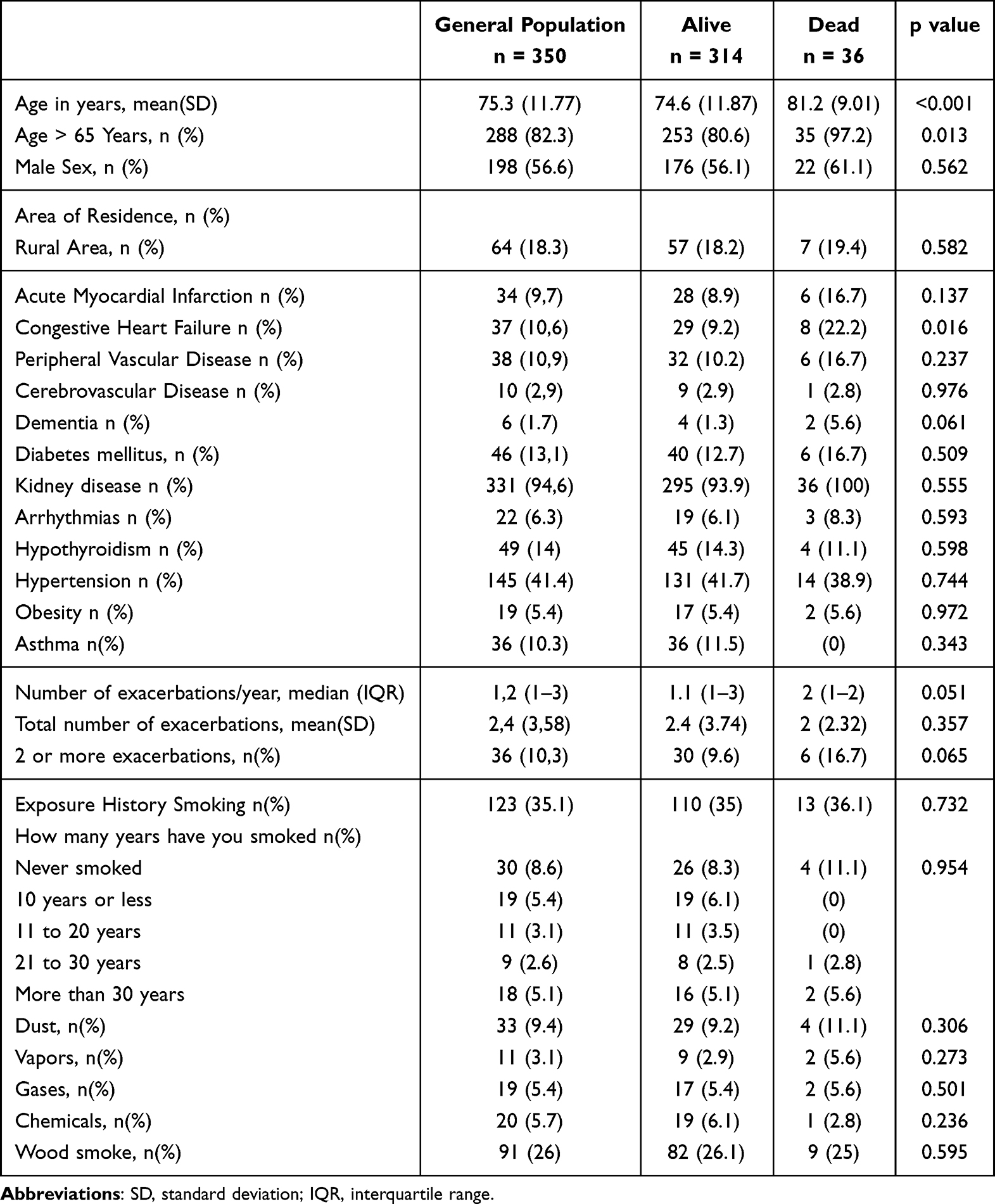 |
Table 1 General Characteristics of the Population |
 |
Figure 1 Flowchart of admission. |
Disease Classification
According to the GOLD 2025 classification, 25.4% (89/350) were categorized as Group A, 18.6% (65/350) as Group B, and 30.3% (106/350) as Group E (Table 2). A higher proportion of deceased patients were classified as Group E compared with survivors (44.4% vs 28.7%, p = 0.125). The median CAT score in the general population was 6 points (IQR 1–10); among deceased patients, it was 8 (IQR 4–15) versus 5 (IQR 1–10) in survivors (p = 0.081). In the overall population, 10.3% (36/350) experienced two or more exacerbations, with a trend toward higher frequency among deceased patients (16.7%, 6/36 vs 9.6%, 30/314) (p = 0.065). Additionally, 4.3% (15/350) of patients had an FEV₁ ≤ 35%, which was significantly more common in deceased patients (11.1%, 4/36) compared to survivors (3.5%, 11/314) (p = 0.033).
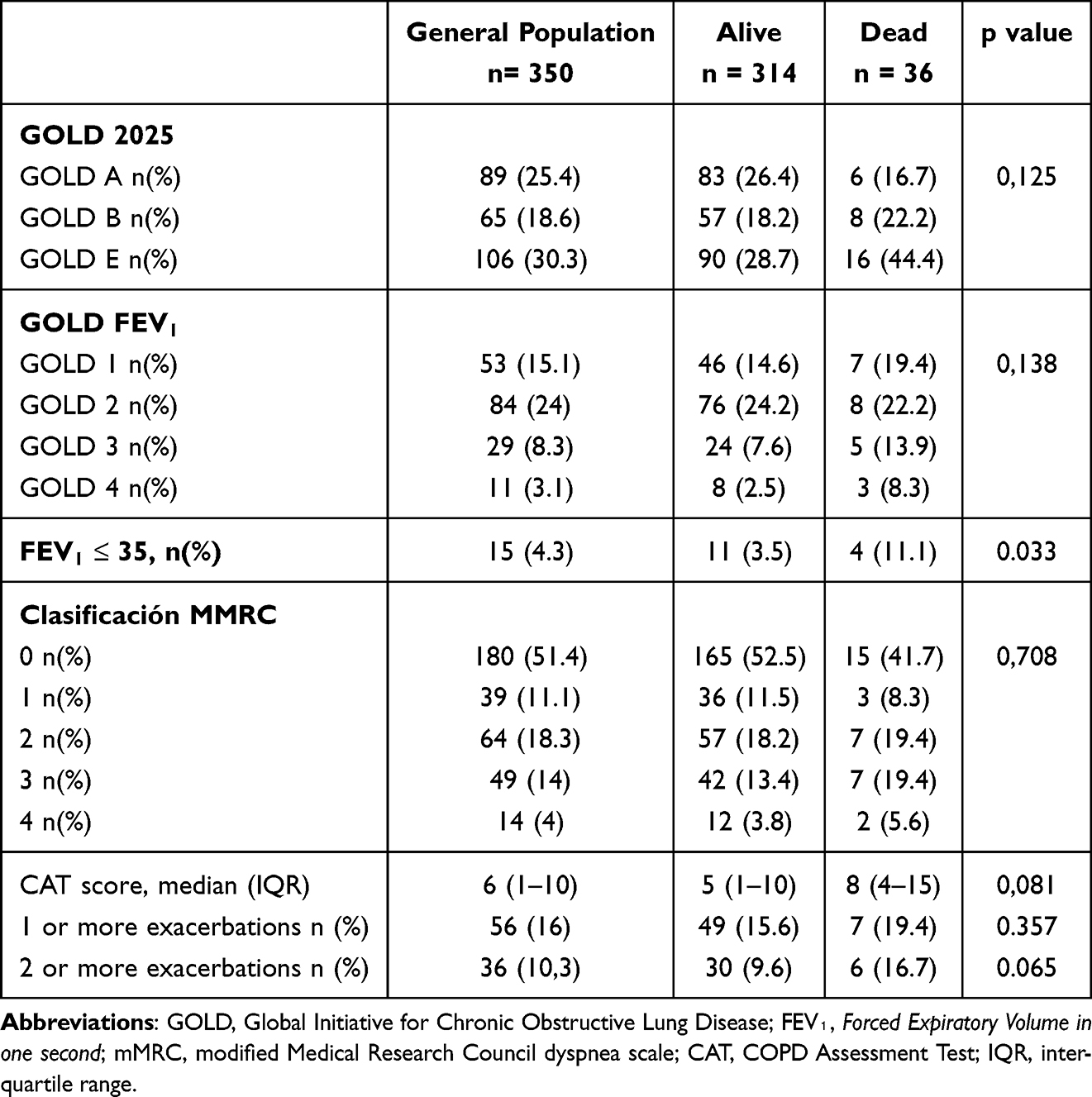 |
Table 2 GOLD Classification, Functional Class and Exacerbations |
Treatment and Vaccination
Regarding treatment, 33.1% (116/350) of patients were using SABA and 32% (112/350) were using SAMA. The use of oxygen therapy was more frequent among deceased patients (44.4% vs 23.6%; p = 0.002), with a higher number of prescribed daily hours (20.8 vs 17 hours; p < 0.001) (Table 3).
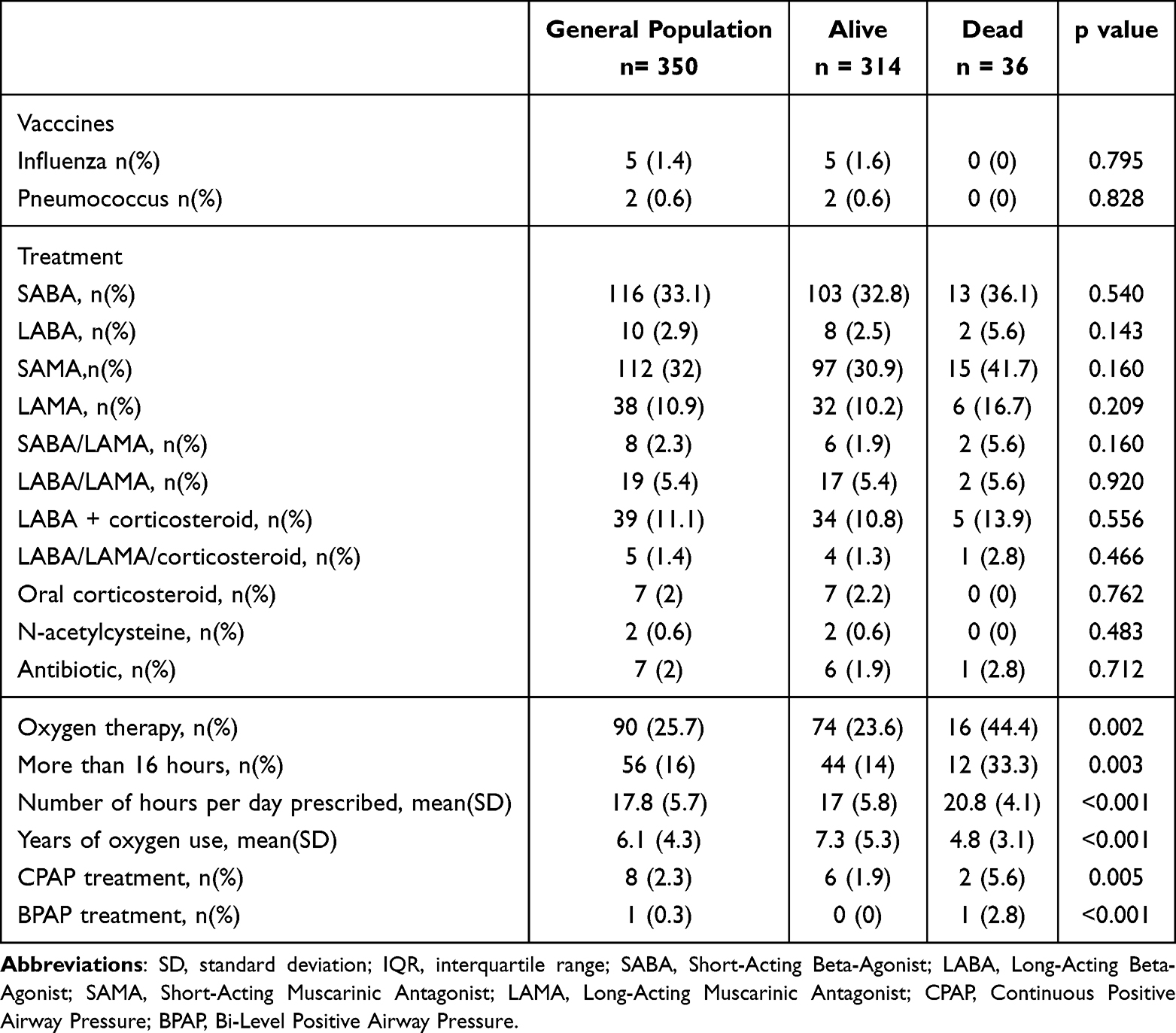 |
Table 3 Vaccines, Inhalers and Oxygen Therapy |
Five-Year Survival
The five-year survival rate was 89.7% in the overall population (Figure 2), with no difference between men (88.9%) and women (90.8%) (p = 0.558) (Figure 3). Survival was lower in patients >65 years (87.9% vs 98.5%, p = 0.015) (Figure 4), those with congestive heart failure (78.4% vs 91.1%, p = 0.014) (Figure 5), FEV₁ ≤ 35% (88.8% vs 96.5%, p = 0.035) (Figure 6), and those receiving oxygen therapy (82.2% vs 94.6%, p = 0.002) (Figure 7), but did not differ across GOLD groups A (93.3%), B (87.7%), and E (84.9%) (p = 0.186) (Figure 8).
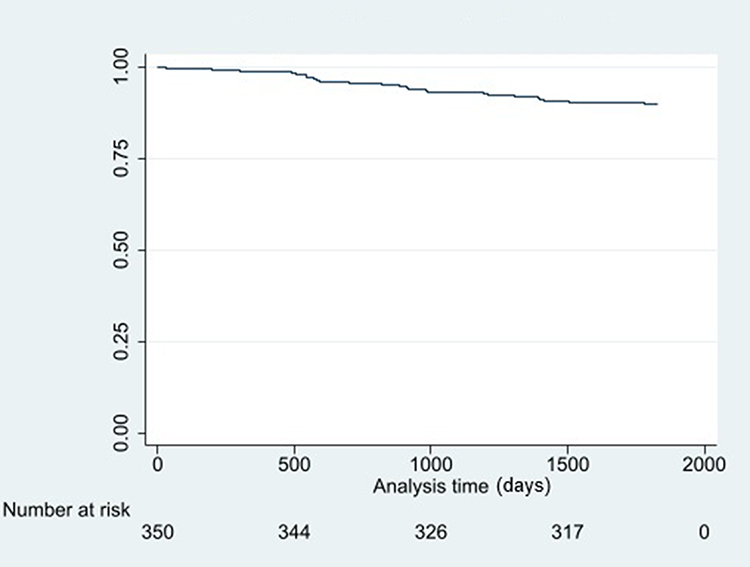 |
Figure 2 Overall survival. |
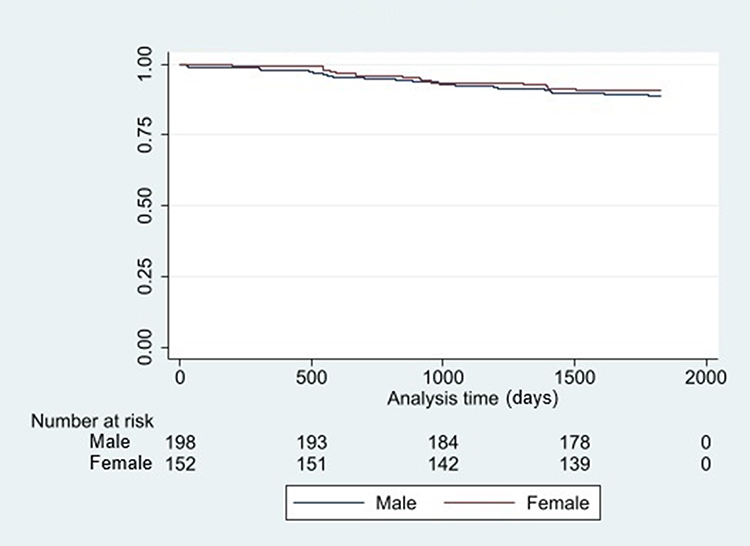 |
Figure 3 Survival stratified by sex. |
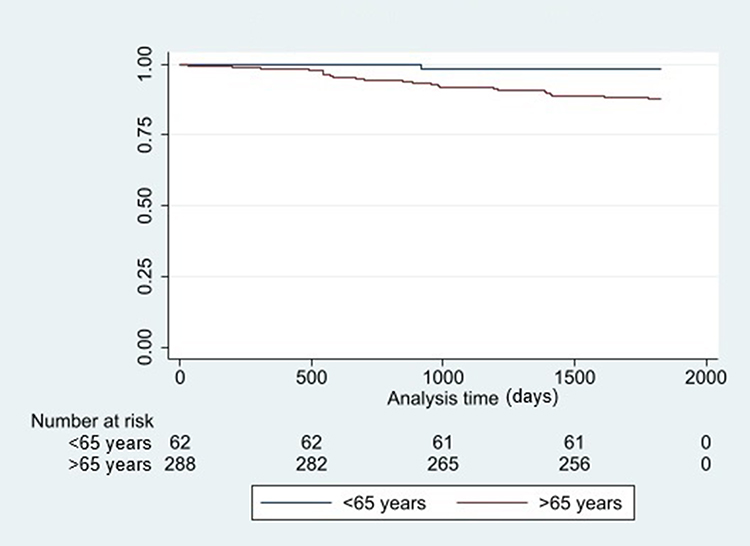 |
Figure 4 Survival stratified by age. |
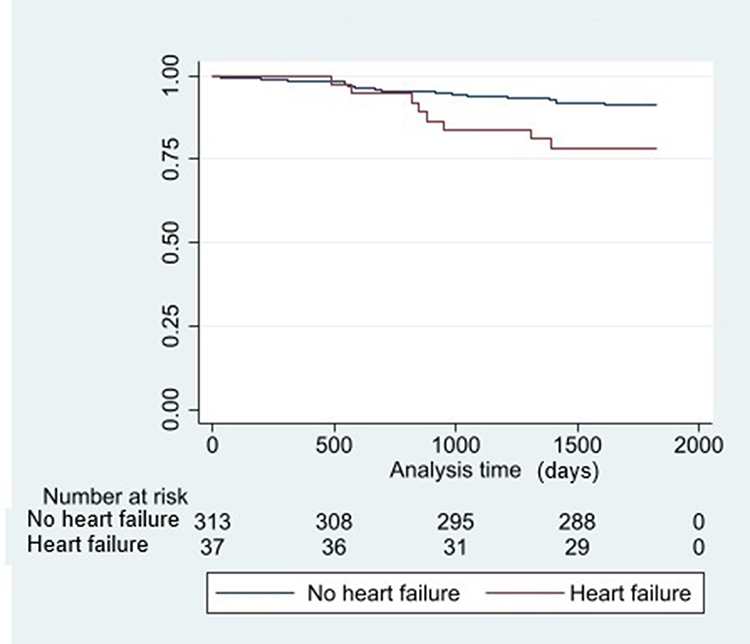 |
Figure 5 Survival stratified by heart failure. |
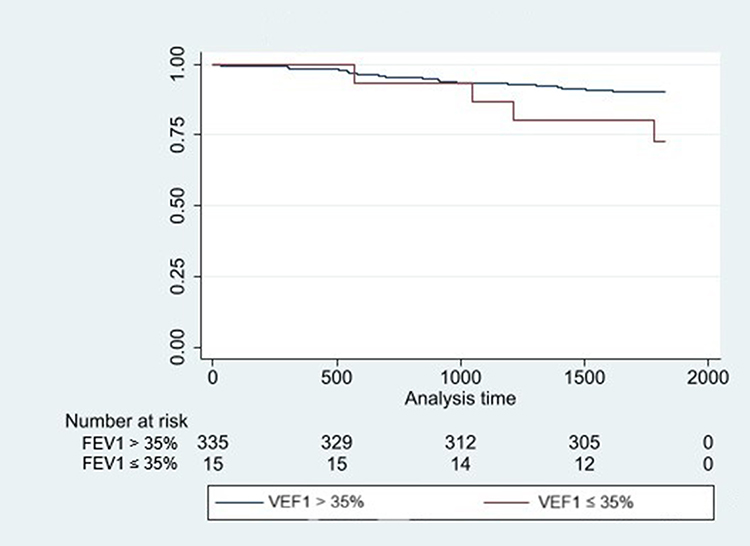 |
Figure 6 Survival stratified by Forced Expiratory Volume in one second. |
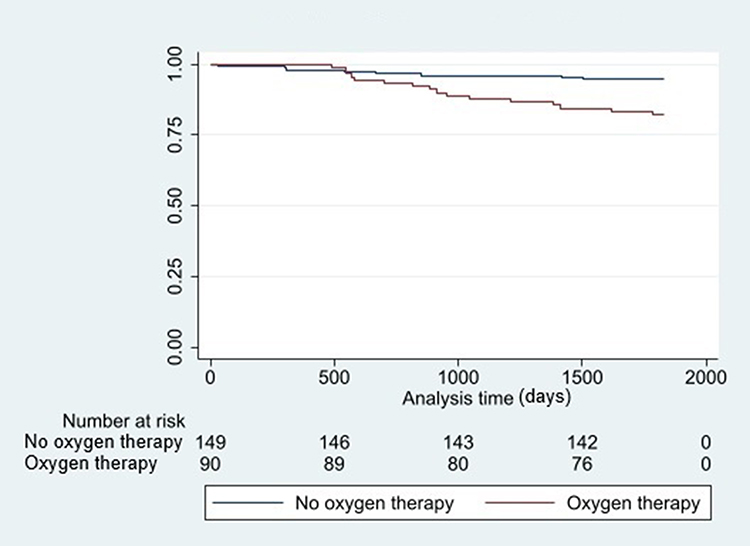 |
Figure 7 Survival stratified by oxygen therapy. |
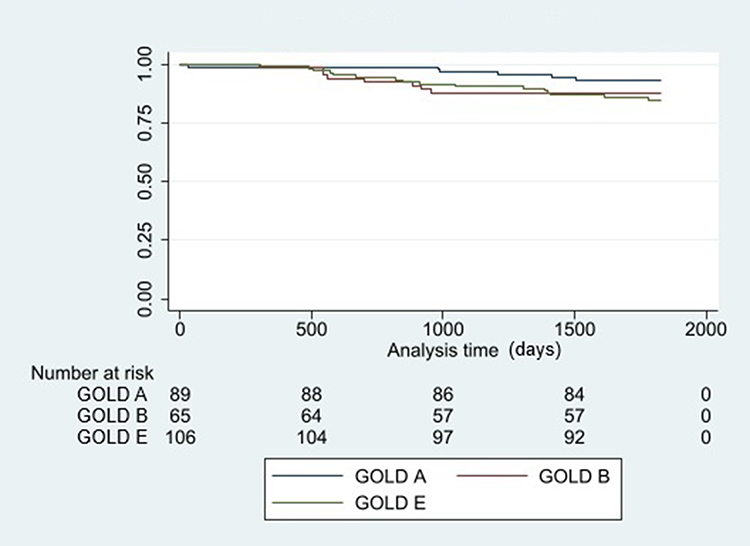 |
Figure 8 Survival stratified by GOLD classification. |
Discussion
In this study, five-year survival was evaluated in a cohort of patients diagnosed with COPD treated at a referral center in Colombia. Our findings show an overall survival rate of 89.7%, with no significant differences between men and women. However, a significant decrease in survival was observed among patients older than 65 years, those diagnosed with congestive heart failure, those receiving oxygen therapy, and those with FEV₁ ≤ 35%. Although no statistically significant differences in survival were found between GOLD groups A, B, and E, a trend toward lower survival was observed in patients classified as group E. These results reinforce the importance of age, cardiovascular comorbidities, and clinical severity of COPD as key determinants of long-term survival.15,16
The five-year survival rate observed in our cohort was 89.7%, which appears slightly higher than that reported in international studies. For instance, Takano et al,5 in a Japanese multicenter registry, reported five-year survival rates ranging from 93.6% in mild–moderate COPD to 66.1% in very severe disease. Likewise, Almagro et al,6 in the Spanish COCOMICS cohort, found survival rates of 89% for patients with preserved lung function and only 46% for those with FEV₁ ≤ 35%. These differences may be partially explained by variations in the baseline severity and age distribution across populations. Our cohort included a significant proportion of patients with moderate airflow limitation, which may have contributed to the relatively higher survival. Nevertheless, the consistent prognostic role of advanced age, cardiovascular comorbidities, and reduced lung function across studies underscores their universal relevance.
The relatively high five-year survival rate observed in our cohort (89.7%) may be influenced by several factors.5–8 Being conducted in a university referral center, patients likely received specialized care and closer follow-up, which could improve outcomes.5,6 Additionally, the most severe cases may be underrepresented, and survivor bias may have contributed, as patients retained in long-term follow-up are more likely to be included. Differences in mortality registration and reporting practices in Colombia compared to other countries may also play a role.5–7
In our study, advanced age was a predictor of poorer prognosis in COPD, a finding consistent with prior reports. Divo et al17 demonstrated that age ≥ 65 years independently increased mortality risk after adjusting for comorbidities and pulmonary function. Beyond chronological aging, mechanisms such as frailty, sarcopenia, reduced physiological reserve, and impaired immune function likely contribute to worse outcomes. Older patients also accumulate more comorbidities, particularly cardiovascular and metabolic disorders, which synergistically worsen the clinical course of COPD.18–20 This highlights the need for integrated management strategies in elderly patients that go beyond pulmonary care.
Congestive heart failure (CHF) was another major predictor of mortality in our cohort. This is consistent with Shah et al,16 who showed that CHF nearly doubled long-term mortality risk in COPD, and with the meta-analysis by Sá-Sousa et al,21 which confirmed a significant increase in mortality. The strong interaction between COPD and CHF can be explained by overlapping inflammatory and vascular mechanisms, including systemic inflammation, endothelial dysfunction, oxidative stress, and chronic hypoxemia, all of which exacerbate cardiovascular damage.22–24 This reinforces the clinical need for early detection and optimal treatment of CHF in patients with COPD.
The association between oxygen therapy and reduced survival observed in our study is also aligned with prior evidence. Although oxygen therapy remains a cornerstone for symptomatic relief and hypoxemia management, its use often reflects advanced disease. Lacasse et al25 reported no survival benefit in patients with moderate hypoxemia, while Uemasu et al26 showed worse outcomes in patients with severe hypoxemia and cardiovascular comorbidities. From a pathophysiological standpoint, chronic hypoxemia promotes pulmonary hypertension and right ventricular overload, processes that are not reversed by oxygen supplementation.27,28 Thus, oxygen therapy may be better interpreted as a marker of disease severity rather than a direct determinant of mortality.
Reduced survival in patients with FEV₁ ≤ 35% further confirms the prognostic importance of advanced airflow limitation. This finding is consistent with the COCOMICS study6 and the Japanese cohort,5 both of which documented significantly higher mortality in patients with severe obstruction. FEV₁ reflects the extent of airway remodeling and chronic hyperinflation, which predispose to exacerbations, systemic inflammation, and right ventricular dysfunction.23,24 Its strong predictive value highlights the role of spirometry not only for diagnosis but also for long-term risk stratification.
Finally, the ABE classification proposed in the 2024 GOLD initiative provides a practical framework for disease management. Although our study showed only a non-significant trend toward reduced survival in group E, prior research suggests its moderate predictive ability. Waijen-Smit et al29 reported limited discrimination (AUC 0.61), which slightly improved when exacerbations were considered, while Cronin et al30 emphasized that exacerbations accelerate disease progression and increase mortality risk. This underscores the importance of incorporating exacerbation history into clinical decision-making.
An apparent inconsistency was observed between the relatively mild clinical profile of the cohort and the high prescription rate of long-term oxygen therapy. This discrepancy may reflect local prescribing practices, in which oxygen is sometimes maintained after acute exacerbations or prescribed based on clinical judgment rather than standardized reassessment of hypoxemia.31–33 Additionally, comorbidities such as CHF or pulmonary hypertension may have contributed to the need for oxygen in some patients.31–33 These factors may partly explain the observed mismatch and should be considered when interpreting the findings.
Taken together, our findings confirm the prognostic relevance of established risk factors for mortality in COPD—advanced age, comorbid cardiovascular disease, hypoxemia, and severe airflow limitation—while providing novel data from a Colombian cohort.25,27,31–33 Beyond their biological implications, these results have public health relevance: identifying high-risk groups may guide resource allocation in the Colombian healthcare system, where COPD remains a leading cause of morbidity and mortality. Strengthening integrated care models, optimizing cardiovascular comorbidity control, and ensuring equitable access to therapies such as oxygen may help improve long-term outcomes in this population.
Limitations
Among the study limitations is its retrospective design based on medical records, which may involve omissions. However, the inclusion of patients based on clear COPD diagnostic criteria limits potential information bias. As this research was conducted at a single center, generalizability may be limited. Nevertheless, the sample size supports the robustness of the findings. A key limitation of this study is that the cohort may not fully represent patients with more severe forms of COPD. The median CAT score was below the symptomatic threshold, only a minority of patients experienced ≥2 exacerbations per year, and less than 5% had severe airflow obstruction. These findings suggest that the population analyzed was skewed toward milder disease, which may partly explain the relatively high survival rates reported. Consequently, caution is needed when extrapolating these results to populations with more advanced COPD.
A significant underreporting was identified in variables such as vaccination status and the use of positive pressure devices, which may lead to limited or misleading interpretations; therefore, future studies should incorporate more rigorous data collection on these aspects. Additionally, cause-specific mortality could not be assessed, as the survival data source (ADRES) only provides the date of death without specifying the underlying cause, which limits interpretation regarding COPD-related versus non-COPD-related mortality. Due to the relatively low number of deaths during the observation period, it was not possible to adjust a multivariate Cox regression model to estimate adjusted hazard ratios. Hence, the associations described should be interpreted with caution. Multicenter local studies are recommended to provide a more comprehensive understanding of survival in COPD patients, including detailed assessments of treatment adherence and vaccination coverage.
Conclusion
The overall observed survival was 89.7%, with no significant differences between men and women. However, a significant reduction in survival was identified in patients over 65 years old, those with congestive heart failure, those receiving oxygen therapy, and those with FEV₁ ≤ 35%. A trend toward lower survival was also observed in patients classified in group E. These findings underscore the importance of early identification and management of high-risk patients to optimize outcomes. Moreover, they provide valuable evidence for informing clinical decision-making and guiding public health strategies in Colombia, where data on long-term COPD survival remain scarce, thereby supporting more efficient allocation of healthcare resources and the design of interventions aimed at reducing COPD-related morbidity and mortality.
Data Sharing Statement
The datasets used and/or analyzed during the current study are available from the corresponding author upon reasonable request.
Ethics Approval and Consent to Participate
The study was conducted in accordance with the principles of the current Helsinki Declaration, as well as local, regional, and international regulations pertaining to clinical research, including Colombian Law on Biomedical Research. Ethical approval was obtained from the Medical Ethics Committee of the Clínica Universidad de La Sabana (approval number 11052025). Prior to participating in the study, all participants provided written informed consent, and the confidentiality of their data was strictly maintained throughout the study.
Acknowledgments
The authors are most thankful for the Universidad de La Sabana.
Author Contributions
All authors made a significant contribution to the work reported, whether that is in the conception, study design, execution, acquisition of data, analysis and interpretation, or in all these areas; took part in drafting, revising or critically reviewing the article; gave final approval of the version to be published; have agreed on the journal to which the article has been submitted; and agree to be accountable for all aspects of the work.
Funding
This work was supported by Universidad de la Sabana Grant MEDESP-44-2025.
Disclosure
The authors declare no competing interests.
References
1. Celli B, Fabbri L, Criner G, et al. Definition and nomenclature of chronic obstructive pulmonary disease: time for its revision. Am J Respir Crit Care Med. 2022;206(11):1317–1325. doi:10.1164/rccm.202204-0671PP
2. Maclagan LC, Croxford R, Chu A, et al. Quantifying COPD as a risk factor for cardiac disease in a primary prevention cohort. Eur Respir J. 2023;62(2):2202364. doi:10.1183/13993003.02364-2022
3. Varmaghani M, Dehghani M, Heidari E, et al. Global prevalence of chronic obstructive pulmonary disease: systematic review and meta-analysis. East Mediterr Health J. 2019;25(1):47–57. doi:10.26719/emhj.18.014
4. Menezes AMB, Perez-Padilla R, Jardim JB, et al. Chronic obstructive pulmonary disease in five Latin American cities (the PLATINO study): a prevalence study. Lancet Lond Engl. 2005;366(9500):1875–1881. doi:10.1016/S0140-6736(05)67632-5
5. Takano T, Tsubouchi K, Hamada N, et al. Update of prognosis and characteristics of chronic obstructive pulmonary disease in a real-world setting: a 5-year follow-up analysis of a multi-institutional registry. BMC Pulm Med. 2024;24(1):556. doi:10.1186/s12890-024-03347-5
6. Almagro P, Martinez-Camblor P, Soriano JB, et al. Finding the best thresholds of FEV1 and dyspnea to predict 5-year survival in COPD patients: the COCOMICS study. PLoS One. 2014;9(2):e89866. doi:10.1371/journal.pone.0089866
7. Ai-Ping C, Lee KH, Lim TK. In-hospital and 5-year mortality of patients treated in the ICU for acute exacerbation of COPD: a retrospective study. Chest. 2005;128(2):518–524. doi:10.1378/chest.128.2.518
8. Gargano LP, Zuppo I de F, do NMMG, et al. Survival analysis of COPD patients in a 13-Year nationwide cohort study of the brazilian national health system. Front Big Data. 2022;4. doi:10.3389/fdata.2021.788268
9. Global initiative for chronic obstructive lung disease - GOLD. 2025 GOLD Report.
10. Jones PW, Harding G, Berry P, et al. Development and first validation of the COPD assessment test. Eur Respir J septiembre de. 2009;34(3):648–654. doi:10.1183/09031936.00102509
11. Harris P, Taylor R, Minor B, et al. REDCap consortium: building an international community of software platform partners. J Biomed Inform. 2019;95:103208. doi:10.1016/j.jbi.2019.103208
12. Hosmer D, Lemeshow S. Applied Logistic Regression. En New York, New York: John Wiley & Sons, Inc; 2000:162.
13. Mantel N. Evaluation of survival data and two new rank order statistics arising in its consideration. Cancer Chemother Rep. 1966;50(3):163–170.
14. StataCorp. Stata: Release 17. Statistical Software. College Station, TX: StataCorp LLC; 2021.
15. Khalid K, Padda J, Komissarov A, et al. The coexistence of chronic obstructive pulmonary disease and heart failure. Cureus. 2021;13(8):e17387. doi:10.7759/cureus.17387
16. Shah SA, Nwaru BI, Sheikh A, et al. Development and validation of a multivariable mortality risk prediction model for COPD in primary care. Npj Prim Care Respir Med. 2022;32(1):1–7. doi:10.1038/s41533-021-00262-8
17. Divo M, Cote C, de Torres JP, et al. Comorbidities and risk of mortality in patients with chronic obstructive pulmonary disease. Am J Respir Crit Care Med. 2012;186(2):155–161. doi:10.1164/rccm.201201-0034OC
18. Swallow EB, Reyes D, Hopkinson NS, et al. Quadriceps strength predicts mortality in patients with moderate to severe chronic obstructive pulmonary disease. Thorax. 2007;62(2):115–120. doi:10.1136/thx.2006.062026
19. Mannino DM, Thorn D, Swensen A, et al. Prevalence and outcomes of diabetes, hypertension and cardiovascular disease in COPD. Eur Respir J. 2008;32(4):962–969. doi:10.1183/09031936.00012408
20. Lahousse L, Ziere G, Verlinden VJA, et al. Risk of frailty in elderly With COPD: a population-based study. J Gerontol a Biol Sci Med Sci. 2016;71(5):689–695. doi:10.1093/gerona/glv154
21. Sá-Sousa A, Rodrigues C, Jácome C, et al. Cardiovascular risk in patients with chronic obstructive pulmonary disease: a systematic review. J Clin Med. 2024;13(17):5173. doi:10.3390/jcm13175173
22. Rutten FH, Cramer MJM, Lammers JWJ, Grobbee DE, Hoes AW. Heart failure and chronic obstructive pulmonary disease: an ignored combination? Eur J Heart Fail. 2006;8(7):706–711. doi:10.1016/j.ejheart.2006.01.010
23. Agustí A. Systemic effects of chronic obstructive pulmonary disease: what we know and what we don’t know (but should). Proc Am Thorac Soc. 2007;4(7):522–525. doi:10.1513/pats.200701-004FM
24. Weitzenblum E, Chaouat A. Cor pulmonale. Chron Respir Dis. 2009;6(3):177–185. doi:10.1177/1479972309104664
25. Lacasse Y, Casaburi R, Sliwinski P, et al. Home oxygen for moderate hypoxaemia in chronic obstructive pulmonary disease: a systematic review and meta-analysis. Lancet Respir Med noviembre de. 2022;10(11):1029–1037. doi:10.1016/S2213-2600(22)00179-5
26. Uemasu K, Sato S, Muro S, et al. Annual decline in arterial blood oxygen predicts development of chronic respiratory failure in COPD with mild hypoxaemia: a 6-year follow-up study. Respirology. 2019;24(3):262–269. doi:10.1111/resp.13402
27. Khor YH, Renzoni EA, Visca D, McDonald CF, Goh NSL. Oxygen therapy in COPD and interstitial lung disease: navigating the knowns and unknowns. ERJ Open Res. 2019;5(3):00118–2019. doi:10.1183/23120541.00118-2019
28. Sun L, Chang YF, Wang YF, et al. Prognostic value of oxygen inhalation therapy for simple nocturnal hypoxemia in COPD: a meta-analysis. Front Pharmacol. 2023;14.
29. Waeijen-Smit K, Peerlings DEM, Jörres RA, et al. GOLD COPD exacerbation history categories and disease outcomes. JAMA Netw Open. 2024;7(12):e2445488. doi:10.1001/jamanetworkopen.2024.45488
30. Cronin E, Cushen B. Diagnosis and management of comorbid disease in COPD. Breathe. 2025;21(1):240099. doi:10.1183/20734735.0099-2024
31. Ekström M, Andersson A, Papadopoulos S, et al. Long-term oxygen therapy for 24 or 15 hours per day in severe hypoxemia. N Engl J Med. 2024;391(11):977–988. doi:10.1056/NEJMoa2402638
32. Soumagne T, Maltais F, Corbeil F, et al. Short-term oxygen therapy outcomes in COPD. Int J Chron Obstruct Pulmon Dis. 2022;17:1685–1693. doi:10.2147/COPD.S366795
33. Albert RK, Au DH, Blackford AL, et al. A randomized trial of long-term oxygen for COPD with moderate desaturation. N Engl J Med. 2016;375(17):1617–1627.
 © 2025 The Author(s). This work is published and licensed by Dove Medical Press Limited. The
full terms of this license are available at https://www.dovepress.com/terms
and incorporate the Creative Commons Attribution
- Non Commercial (unported, 4.0) License.
By accessing the work you hereby accept the Terms. Non-commercial uses of the work are permitted
without any further permission from Dove Medical Press Limited, provided the work is properly
attributed. For permission for commercial use of this work, please see paragraphs 4.2 and 5 of our Terms.
© 2025 The Author(s). This work is published and licensed by Dove Medical Press Limited. The
full terms of this license are available at https://www.dovepress.com/terms
and incorporate the Creative Commons Attribution
- Non Commercial (unported, 4.0) License.
By accessing the work you hereby accept the Terms. Non-commercial uses of the work are permitted
without any further permission from Dove Medical Press Limited, provided the work is properly
attributed. For permission for commercial use of this work, please see paragraphs 4.2 and 5 of our Terms.