
Back to Journals » Clinical Ophthalmology » Volume 19
Factors Associated with Willingness for Corneal Donation in the Western Region of Saudi Arabia
Authors Showail M, Aljuhani R 
Received 12 August 2025
Accepted for publication 1 December 2025
Published 10 December 2025 Volume 2025:19 Pages 4525—4534
DOI https://doi.org/10.2147/OPTH.S547289
Checked for plagiarism Yes
Review by Single anonymous peer review
Peer reviewer comments 5
Editor who approved publication: Dr John Miller
Mahmood Showail,1 Renad Aljuhani2
1Department of Ophthalmology, King Abdulaziz University Hospital, Jeddah, Saudi Arabia; 2Faculty of Medicine, King Abdulaziz University, Jeddah, Saudi Arabia
Correspondence: Renad Aljuhani, Email [email protected]
Background: Corneal transplantation is a surgical procedure where damaged cornea is replaced with a cadaveric corneal tissue, which helps to restore the vision in people with corneal blindness. Limited availability of corneal tissue compared to the increasing burden of corneal blindness remains a critical challenge. We aim to evaluate the public knowledge, awareness, and attitudes towards corneal transplants in the Western region of Saudi Arabia.
Methods: We conducted an electronic cross-sectional survey distributed using social media platforms (Twitter and Telegram) targeting residents of the western region of Saudi Arabia during the period from October 2021– January 2022.
Results: Out of total participants, 136 (24%) were willing to donate their corneas, while 302 (53.3%) have not decided yet. A multinomial logistic regression analysis identified several factors influencing willingness to donate corneas. Awareness of the registration process significantly increased willingness (p = 0.008). Participants who believed organ donation is religiously prohibited were significantly more likely to refuse or being uncertain about donation (p < 0.001 and p = 0.038, respectively). Family objection was significantly associated with refusal of donation (p = 0.027). Younger age was associated with greater uncertainty (p = 0.015). Health care providers were the preferred source of information regarding corneal donation in 52.8% of participants. No significant associations were found with gender, nationality, or education.
Conclusion: Several social, cultural, and personal factors collectively influence the decision to donate corneal tissue. Community awareness campaigns led by healthcare providers that address social influences, clarify religious beliefs, and provide information about the registration process may help enhance public willingness to donate.
Keywords: corneal donation, corneal transplant, awareness, willingness
Introduction
Cornea is the outermost layer of the eye, it refracts the light that is entering the eye into the lens which helps in the focusing power and works as a physical barrier against harmful objects and germs.1 Corneal blindness can occur if any alteration affects the normal corneal transparency causing corneal scarring, it is the third most common cause of blindness globally and it affects nearly 12.7 million people around the world who required a transplant.2
A global systematic review reported from 37 countries revealed that the most common causes of corneal blindness were keratoconus and keratitis (encompassing infectious and non-infectious causes).3
Corneal diseases (such as keratoconus and bullous keratopathy) are a major concern in Saudi Arabia. Multiple regional articles investigated the regional prevalence of keratoconus. Althomali et al reported a prevalence of 8.59%, Al-Amri found a prevalence of 18.7%, Abuallut et al documented 21.72%, while Khattak et al reported a prevalence of 2.75%.4–7 Locally reported data represents a high number compared to previously reported data worldwide, Kennedy et al published a paper on the epidemiology of keratoconus in the population of Minnesota, United States of America (USA). The overall prevalence was 0.05%.8 Furthermore, a large-scale study from the database of the Netherlands’ mandatory health insurance showed an estimated prevalence of keratoconus in the general population to be around 0.27%.9
Corneal transplantation is the oldest and most common form of solid-tissue transplantation in humans. It is a surgical procedure where damaged cornea is replaced with a cadaveric corneal tissue, which helps to restore the visual function.10
The imbalance between the global burden of corneal blindness and the limited access to corneal transplantation remains a major public health concern. A study done among 157 countries found that there is a severe imbalance between the corneal demand and supply globally, the ratio of the available corneas was 1 in 70.11
Corneal donation has multiple barriers limiting the donation rate, such as awareness of the community, availability of a presumed consent system, and religious and cultural aspects.12
Corneal donation and transplantation program under the Saudi Center for Organ Transplantation (SCOT) started in 1983. Between 1983 and 2020, a total of 715 corneas were recovered locally from deceased donors, while 33,728 corneas were imported from abroad, primarily from the United States. In 2020, only four corneas were locally recovered from two deceased donors, whereas 612 corneas were imported to meet clinical demand.13 Furthermore, a public study showed that a number of 16,800 corneas have been imported to King Khaled Eye Specialist Hospital alone during the last 10 years, which roughly cost 179.760 million Saudi Riyals.11,14
Limited data address the public awareness and attitude toward corneal donation. In 2017, a study was done among 1292 participants of the Saudi population, found that only 4.3% of the participants believed that they had sufficient knowledge about corneal donation, and 66.3% of the participants had not decided whether to donate their corneas or not.14
Moreover, a study was done in 2016 among the western population, stating that only 2.9% of the population had good knowledge about corneal donation.15
The Saudi Center for Organ Transplantation (SCOT) has played a central role by developing coordinated systems with hospitals and transplant centers to facilitate procurement and transplantation activities. In addition, efforts have focused on increasing public education, professional engagement, and logistical coordination.16,17
Following the humanitarian initiative of King Salman and Crown Prince Mohammed bin Salman, who registered in the national organ donation program under SCOT, and after the subsequent national campaign encouraging citizens to register as donors, this study aims to evaluate public knowledge, awareness, and attitudes toward eye donation and corneal transplantation in the Western region of Saudi Arabia.18
Understanding the knowledge, awareness, and attitudes of the public towards Eye Donation and Corneal Transplants in Saudi Arabia is required to overcome the shortage of available corneal tissue. Hence, increasing public awareness is a fundamental step to create a national eye bank that accepts local grafts.
Methodology
Design and Respondents
This questionnaire-based cross-sectional study design in which 567 participants were included.
The sample size was calculated using the RASOFT online sample size calculator. Considering an adult population (≥14 years) of 11,666,744 in the western region of Saudi Arabia, with a 5% margin of error, 95% confidence level, and an expected response distribution of 50%, the minimum required sample size was 385. A total of 567 participants were included in the study, exceeding the required number.19,20
Participants were recruited using a convenience sampling method. The questionnaire was distributed using social media platforms (Twitter and Telegram), targeting people from the western region of Saudi Arabia (Makkah, Jeddah, Al-Madinah and Al-Taif cities) during the period from October 2021 – January 2022.
Research Instruments
A pre-validated questionnaire was referenced from Latifa F. Alanazi et al. The original instrument underwent a review by a panel of ophthalmologists, optometrists, nurses, and statisticians to ensure content validity. Furthermore, it was pre-tested on 25 participants to assess readability and clarity, demonstrating an area under the curve (AUC-ROC) of 0.83 (p < 0.001, 95% CI: 0.80–0.86).14
The Implemented questionnaire consisted of two main sections. The first section collected demographic information, including age, gender, occupation or field of study, educational level, nationality, and city of residence. The second section assessed participants’ knowledge, motives, barriers, and willingness. The knowledge domain comprised five items: two assessing objective factual knowledge and three evaluating participants’ self-perceived knowledge. The motives and barriers domain included three items exploring potential influencing factors. The final part assessed participants’ willingness to donate their own or their relatives’ corneas and to promote donation awareness among others. To examine the association between knowledge and willingness, self-perceived knowledge was categorized based on whether participants believed they possessed sufficient knowledge or not. Supplementary Figure 1.
To limit potential bias, each participant was allowed to submit one response per device to prevent duplicate submissions. Additionally, voluntary and anonymous participation was ensured to minimize social desirability bias.
Data Collection and Analysis
Data were collected through an online sheet designed by Google Forms and entered using Microsoft Excel (Microsoft Corporation, Redmond, Washington, USA) then analyzed using the Statistical Package for Social Sciences (SPSS) 21.0 (IBM Inc., Chicago, Illinois, USA). Results were presented in mean and standard deviation for continuous variables, while frequencies and percentages for categorical variables. A multinomial logistic regression analysis was performed to examine factors associated with willingness to donate corneas. Respondents’ self-assessed willingness to donate was the dependent variable and was categorized into three groups: “Yes”, “No”, and “I do not know”, where “Yes” was the reference category. The model included demographic characteristics, knowledge-related variables, attitudes, and perceived barriers. The significance level was considered as less than or equal to 0.05.
Ethical Approval
Ethical approval was obtained from the institutional ethical committee of King Abdulaziz University (Reference No 469–21). The study was conducted following the Declaration of Helsinki. Informed consent was obtained in written before the data collection, participants were informed about the purpose of the study and ensured that all information will be kept confidential and used for research purposes only. There was no personal identifier information in the questionnaire. Participants who signed the consent form were permitted to proceed with the questionnaire, while those who declined were excluded from the study and did not answer any further questions.
Results
Demographics
A total of 567 participants were included in this study, of which 235 (41.4%) were male while females represented the majority 332 (58.6%). The mean age of participants was 25.69 ± 9.32 years. When categorized according to age groups, the majority were 20–29 years 240 (42.3%), and the next largest group was ≤20 years 179 (31.5%). Considering the educational level of participants, more than half of participants 447 (78.8%) had bachelor’s degrees. Majority of respondents were from the non-medical field 474 (83.6%), as shown in Table 1. Several multiple-choice questions were used to measure participants’ awareness, knowledge, and attitudes toward corneal donation in addition to factors that prevent or motivate them to donate. The yielded results are shown in Table 2.
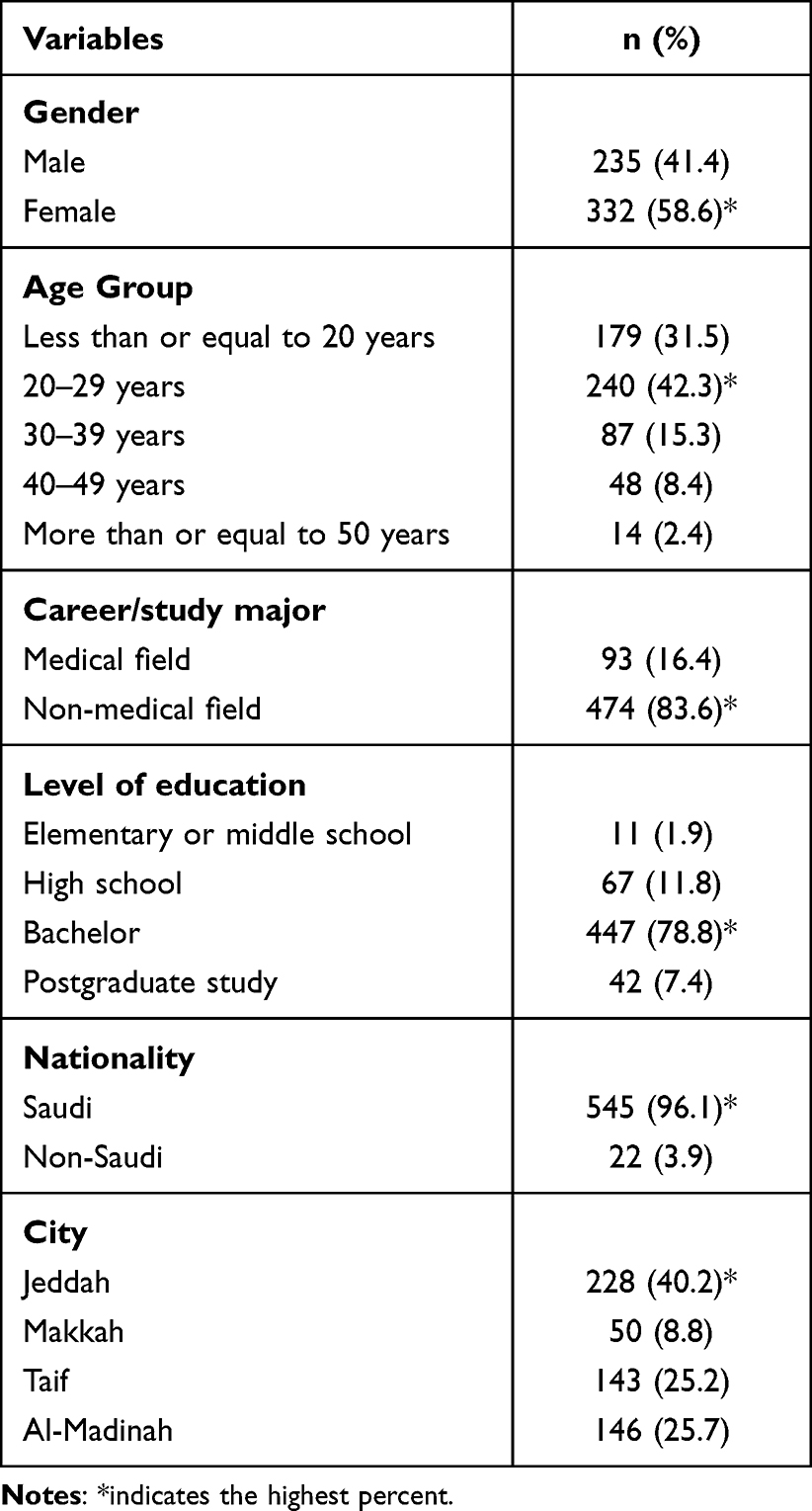 |
Table 1 Sociodemographic Variables (N = 567) |
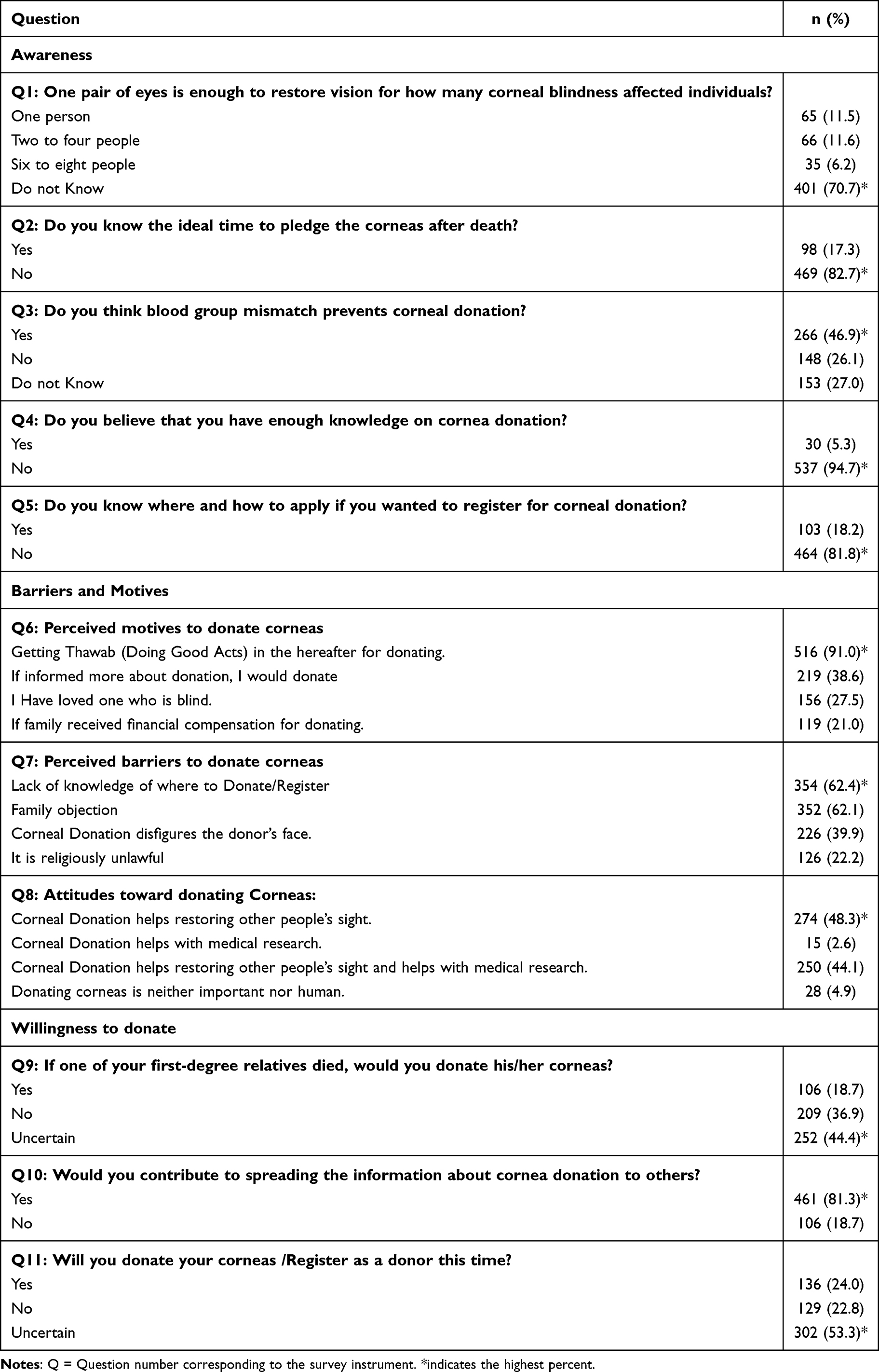 |
Table 2 Key Survey Questions on Corneal Donation Knowledge and Willingness (N = 567) |
Awareness and Knowledge
Majority demonstrated limited awareness when asked about their knowledge of corneal donation. Most respondents 401 (70.7%) did not know how many individuals could benefit from one pair of donated eyes. Similarly, 469 (82.7%) participants were unaware of the ideal time to pledge corneas after death. In addition, nearly half of the participants 266 (46.9%) incorrectly believed that blood group mismatch prevents corneal donation. When testing participants perceived adequacy of their knowledge on corneal donation, 537 (94.7%) answered no, as they do not have sufficient information. Furthermore, 464 (81.8%) participants did not know how and where to register as a corneal donor.
Motives and Barriers
The participants were asked to select all obstacles that discourage them from donating their corneas. A multiple-response dichotomy analysis was used to analyze the answers. Among all responses, 354 (62.4%) participants agreed that the greatest perceived barrier was a lack of knowledge of where to donate/register, followed by family objection in 352 (62.1%) (Figure 1). In addition, participants were asked to select all motivators that encouraged them to donate their corneas. About 516 (91.0%) participants agreed that the top motive was the religious belief of doing good acts. Figure 2
 |
Figure 1 Percentages of participants’ perceived barriers to Corneal Donation. Bar chart depicting the percentages of participants perceived barriers to corneal donation. The most frequently reported barriers were lack of knowledge of where to donate or register (62.4%), and family objection (62.1%), followed by the belief that corneal donation disfigures the donor’s face (39.9%) and the perception that it is religiously unlawful (22.2%). |
 |
Figure 2 Percentages of participants’ perceived motives for Corneal Donation. Bar chart illustrating participants perceived motives for donating corneas. The most common motive was gaining religious merit (Thawab) for the hereafter (91.0%), followed by willingness to donate if better informed about the process (38.6%), having a loved one who is blind (27.5%), and financial compensation for the family (21%). |
Furthermore, 219 (38.6%) participants stated that if they were informed more about the donation, they would be more willing to donate their corneas. Additionally, participants were asked to select their previously accessed source of information and the preferred source to receive information about corneal donation. Although social networks were the most frequently used source, participants preferred to receive information from doctors or health care workers. Figure 3
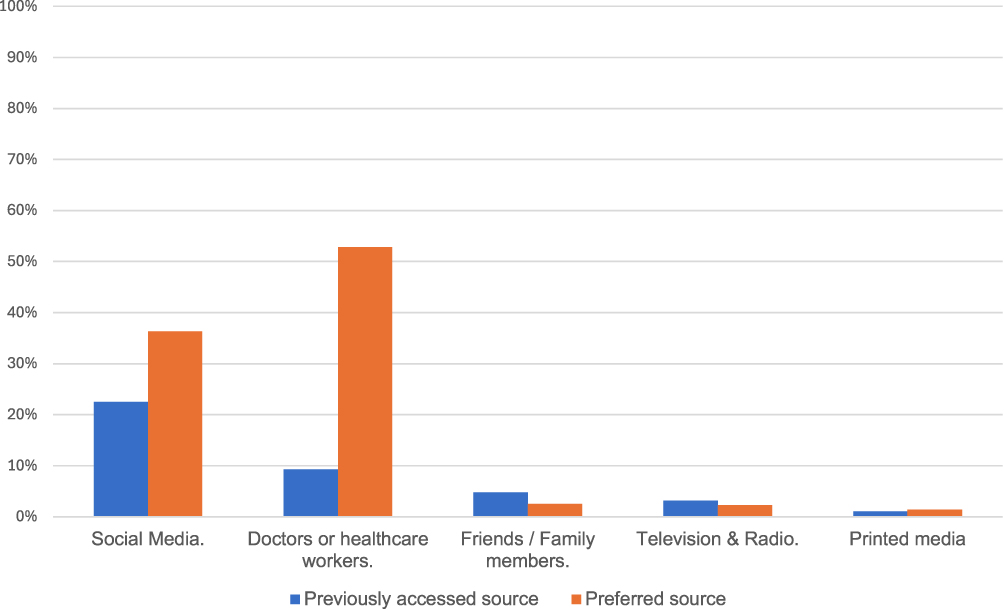 |
Figure 3 Comparison between participants’ preferred and previously accessed sources of information about corneal donation. Bar chart showing that while social media was the most frequently accessed source, doctors and health care workers were the most preferred. Other sources, including friends/family, television/radio, and printed media, were accessed or preferred less frequently. |
Attitudes
Participants’ attitude was measured using a multiple-choice question allowing them to choose any combination of responses applied to them, and a multiple-response dichotomy analysis was used to identify the results. A total of 274 (48.3%) participants stated that restoring blind people’s sight is their primary reason to donate, while 250 (44.1%) mentioned restoring other people’s sight and helping medical research is an important reason to donate. On the other hand, 28 (4.9%) stated that corneal donation is neither important nor serving humanity. When testing the willingness to donate, 302 (53.3%) participants did not decide about donating their corneas, while 136 (24.0%) agreed. Similarly, when asked about intentions to donate their first-degree relative’s corneas, 252 (44.4%) had not yet decided Table 2.
Factors Associated with Willingness
A multinomial logistic regression analysis was applied to test the factors influencing willingness to donate. The overall model demonstrated statistical significance, χ2(86) = 332.30, p < 0.001, with a nagelkerke R2 of 0.511, indicating moderate predictive ability.
In the context of knowledge, there was no significant association between participants’ perceived adequacy of their knowledge and their willingness to donate, as it did not significantly decrease the odds of refusal (OR = 0.65, 95% CI: 0.18–2.41, p = 0.519). On the other hand, participants who were aware of the donation registration process were more willing to donate, their odds of refusing were reduced by 72% compared to those who did not know (OR = 0.28; 95% CI: 0.12–0.72; p = 0.008).
In terms of career field, participants coming from a non-medical background were 304% more likely to refuse donation compared to those within the medical field (OR = 4.04; 95% CI: 1.65–9.88; p = 0.002). Moreover, they were 293% more likely to be uncertain rather than willing to donate (OR = 3.93; 95% CI: 2.05–7.55; p < 0.001).
Considering religious and societal factors, religious objection was associated with a 495% increase in the odds of refusing donation (OR = 5.95; 95% CI: 2.31–15.29; p < 0.001). Additionally, it’s associated with participants being 143% more likely to expressing uncertainty rather than willingness to donate (OR = 2.43; 95% CI: 1.05–5.60; p = 0.038). Furthermore, family objection was associated with a 127% increase in the odds of refusal (OR = 2.27; 95% CI: 1.10–4.70; p = 0.027).
In terms of age, younger participants were significantly more likely to be uncertain about corneal donation, each additional year of age was associated with a 4.3% decrease in the odds of being uncertain compared to willingness (OR = 0.957; 95% CI: 0.924–0.992; p = 0.015). Willingness to donate was not significantly influenced by gender, nationality, and level of education (all p > 0.05).
Discussion
Considering the increasing demand for corneal transplants in Saudi Arabia, understanding the factors influencing the public’s decision to donate is crucial to addressing this need.
Our present study found that 136 (24%) were willing to donate their corneas, while 302 (53.3%) had not decided yet. Previous local studies reported that 16.2% and 61.5% of participants, respectively, were willing to donate their corneas.14,15 Compared to data reported in China, Australia, and Singapore, the percentage of participants who were willing to donate their corneas were 175 (40.7%), 137 (59%), and 155 (31%), respectively.21–23
Most participants 537 (94.7%) indicated that they lacked sufficient knowledge. On the other hand, no significant association was found between participants’ perceived knowledge adequacy and willingness to donate (p = 0.519). This outcome is contrary to that of Paraz et al, who found that participants with good knowledge were 1.71 times more likely to donate their corneas compared to participants with poor knowledge (p = 0.04).21 This discrepancy could be attributed to the use of self-perceived knowledge, which may not reflect actual understanding. Limited exposure to accurate or detailed information may have led participants to overestimate their understanding.
M. Lawlor et al reported that lack of knowledge is not necessarily a predictor of unwillingness to donate. They observed that even well-informed individuals, including donation coordinators and medical professionals, may have reservations regarding donating particular organs.24,25
Our analysis showed that participants coming from a non-medical background were more likely to refuse donation compared to those within the medical field (p = 0.002). This finding aligns with the study by Latifa F. Alanazi et al study.14
We found no significant association between subjects’ age and their willingness to donate (p = 0.121). However, younger participants were significantly more likely to be uncertain about their decision (p = 0.015). This finding contrasts with previous studies in Germany and Singapore which found that older age was associated with greater willingness to donate than younger age groups.21,26
Religious beliefs play a crucial role in donation decisions. We found that religious objections were significantly associated with refusal and with increased uncertainty about donation (p < 0.001 and p = 0.038, respectively). On the other hand, the biggest motive for donation was the religious belief of performing good deeds to gain spiritual reward (thawab), which is consistent with a local study.14 These results highlight the vital role of religious leaders in promoting awareness and positively influencing public attitudes toward corneal donation.
Our analysis showed that family objection was significantly associated with refusal of donation (p = 0.027). Michelle J. Irving et al systemic analysis found that decisions about organ donation are significantly influenced by religious beliefs, family and cultural factors, as well as individual knowledge.27
The most frequently reported obstacles to becoming a donor were a lack of knowledge about where to register. This finding aligns with previous studies reporting that insufficient information about the registration was the main cause for indecision regarding donation.14,21
Social media was the most frequently reported source of prior knowledge 128 (22.5%); nevertheless, the majority of participants 300 (52.8%) preferred health care professionals as their primary and most trusted source of information. These findings highlight the importance of health care professionals in promoting ocular donation. The literature on improving organ donation consent rates highlights that effective communication between health providers and families of brain-dead patients is critical to obtaining consent for organ donation.28
Our study found no significant association between gender, educational level, and willingness to donate. Previous findings on the influence of gender and education were inconclusive, emphasizing that multiple complex factors shape public attitudes toward organ donation.25,29–32
The current study has a few potential limitations to consider. The assessment of knowledge was self-reported by the participant rather than objective testing, which could introduce a response bias. Convenience sampling which could led to selection bias and limited the generalizability of the findings. In addition, data were collected using online questionnaires, and differences in understanding the questions may occur. For future research, representative samples from all regions (Center, North, South, and East) in Saudi Arabia are recommended.
The present findings provide insight into the multidimensional factors influencing the decision to donate corneal tissue. Knowledge adequacy, social and religious beliefs, career background, and awareness of the registration process all played an important role in shaping participants’ willingness to donate. Health care providers were recognized as the most trusted source of information regarding corneal donation. Therefore, community awareness campaigns led by health care professionals focusing on accurate information about religious perspectives, social influences, and the registration and retrieval process may substantially enhance donation rates and help meet the growing demand for corneal tissue in Saudi Arabia.
Data Sharing Statement
The data supporting the findings of this study are available on request from the corresponding author [Renad Aljuhani]. The data consist of anonymized questionnaire responses and are available for academic purposes upon request.
Funding
No funding was received for this research.
Disclosure
The authors declare that there is no conflict of interest regarding the publication of this article.
References
1. Willoughby CE, Ponzin D, Ferrari S, Lobo A, Landau K, Omidi Y. Anatomy and physiology of the human eye: effects of mucopolysaccharidoses disease on structure and function – a review. Clin Exp Ophthalmol. 2010;38(s1):2–11. doi:10.1111/j.1442-9071.2010.02363.x
2. Resnikoff S, Pascolini D, Etya’ale D, et al. Global data on visual impairment in the year 2002. Bull World Health Organ. 2004;82:844–851.
3. Yin XT, Tajfirouz DA, Stuart PM. Murine corneal transplantation: a model to study the most common form of solid organ transplantation. J Vis Exp. 2014;17:51830.
4. Khattak A, Altalhi A, Alotaibi AB, Khattak AM. Prevalence of keratoconus in the young eastern population of Saudi Arabia. Cureus. 2024;16(3):e55692. doi:10.7759/cureus.55692
5. Althomali TA, Al-Qurashi IM, Al-Thagafi SM, Mohammed A, Almalki M. Prevalence of keratoconus among patients seeking laser vision correction in Taif area of Saudi Arabia. Saudi J Ophthalmol. 2018;32(2):114–118. doi:10.1016/j.sjopt.2017.11.003
6. Al-Amri AM. Prevalence of keratoconus in a refractive surgery population. J Ophthalmol. 2018;2018:1–5. doi:10.1155/2018/5983530
7. Abuallut I, Ageeli A, Shami M, et al. Keratoconus detected by corneal topography in patients seeking refractive surgery in Jazan region, Saudi Arabia: a retrospective cross-sectional study. Ann Med Surg. 2022;79:103790
8. Kennedy RH, Bourne WM, Dyer JA. A 48-year clinical and epidemiologic study of keratoconus. Am J Ophthalmol. 1986;101(3):267–273. doi:10.1016/0002-9394(86)90817-2
9. Keratoconus: Epidemiology, Treatment Effects and Economic Evaluation = Keratoconus: Epidemiologie, Behandeleffecten En Economische Evaluatie. Enschede: Gildeprint; 2017.
10. Chong EM, Dana MR. Graft failure IV Immunologic mechanisms of corneal transplant rejection. Int Ophthalmol. 2008;28(3):209–222. doi:10.1007/s10792-007-9099-9
11. Gain P, Jullienne R, He Z, et al. Global survey of corneal transplantation and eye banking. JAMA Ophthalmol. 2016;134(2):167. doi:10.1001/jamaophthalmol.2015.4776
12. Ting DSJ, Potts J, Jones M, Lawther T, Armitage WJ, Figueiredo FC. Impact of telephone consent and potential for eye donation in the UK: the Newcastle eye centre study. Eye. 2016;30(3):342–348. doi:10.1038/eye.2015.216
13. Saudi Center for Organ Transplantation. Annual Report for Organ Transplantation in Kingdom of Saudi Arabia [Internet]. 2020. Available from: https://www.scot.gov.sa/sites/default/files/2023-05/SCOT%20Annual%20Report%202020%20Full.pptx_.pdf.
14. Alanazi LF, Aldossari SH, Gogandy MA, Althubaiti GA, Alanazi BF, Alfawaz AM. Attitude, beliefs and awareness towards corneal donation in Saudi Arabia. Saudi J Ophthalmol. 2019;33(2):121–129. doi:10.1016/j.sjopt.2019.02.003
15. Bugis A, Almaghrabi A, Ali A, Alem S, Siddiqui M. Knowledge and attitudes regarding eye donation and corneal transplants in Saudi Arabia: a cross-sectional study. Age. 2018;20(70):18–27.
16. Shaheen FAM, Souqiyyeh MZ. Current status of renal transplantation in the Kingdom of Saudi Arabia. Transplant Proc. 2004;36(1):125–127. doi:10.1016/j.transproceed.2003.11.037
17. Shaheen FAM, Souqiyyeh MZ. Increasing organ donation rates from Muslim donors: lessons from a successful model. Transplant Proc. 2004;36(7):1878–1880. doi:10.1016/j.transproceed.2004.08.090
18. Saudi Press Agency. Custodian of the Two Holy Mosques and HRH the Crown Prince enroll in organ donation program. 2021 May 12,; Available from: https://www.spa.gov.sa/2227653?lang=en&newsid=2227653.
19. Sample Size Calculator [Internet]. 2025. (Raosoft, Inc). Available from: http://www.raosoft.com/samplesize.html.
20. General Authority for Statistics. Population by Detailed Age; 2025.
21. Paraz CMA, Truong HTT, Sai DK, Cajucom-Uy HY, Chan CLL, Kassim SM. Knowledge and attitudes toward corneal donation among Singaporean youth: a cross-sectional study. Eye Vis. 2016;3(1):17. doi:10.1186/s40662-016-0049-3
22. Wang X, Jin L, Wang J, et al. Attitudes and knowledge concerning corneal donation in a population-based sample of Urban Chinese adults. Cornea. 2016;35(10):1362–1367. doi:10.1097/ICO.0000000000000943
23. Hyde MK, White KM. Young Australian adults’ knowledge and beliefs about organ donation. Prog Transpl. 2007;17(3):220–227.
24. Kent B, Owens RG. Conflicting attitudes to corneal and organ donation: a study of nurses’ attitudes to organ donation. Int J Nurs Stud. 1995;32(5):484–492.
25. Lawlor M, Kerridge I, Ankeny R, Dobbins TA, Billson F. Specific unwillingness to donate eyes: the impact of disfigurement, knowledge and procurement on corneal donation. Am J Transplant. 2010;10(3):657–663. doi:10.1111/j.1600-6143.2009.02986.x
26. Uhlig CE, Koch R, Promesberger J, et al. Attitudes toward postmortem cornea donation in Germany: a multicenter survey. Graefes Arch Clin Exp Ophthalmol. 2014;252(12):1955–1962. doi:10.1007/s00417-014-2796-y
27. Tong A, Jan S, Cass A, et al. Factors that influence the decision to be an organ donor: a systematic review of the qualitative literature. Nephrol Dial Transpl. 2012;27(6):2526–33.
28. Morgan SE, Miller JK. Beyond the organ donor card: the effect of knowledge, attitudes, and values on willingness to communicate about organ donation to family members. Health Commun. 2002;14(1):121–134. doi:10.1207/S15327027HC1401_6
29. Dave A, Patel NV, Acharya M, et al. Awareness regarding eye donation among staff of a tertiary eye care hospital in North India. Int Ophthalmol. 2020;40(3):649–658. doi:10.1007/s10792-019-01225-2
30. Boulware EL, Ratner LE, Cooper LA, Sosa JA, Laveist TA, Powe NR. Race and gender differences in willingness to donate blood and cadaveric organs: understanding disparities in donor behavior. Med Care. 2002;40(2):85–95. doi:10.1097/00005650-200202000-00003
31. Gupta A, Jain S, Jain T, Gupta K. Awareness and perception regarding eye donation in students of a nursing college in Bangalore. Indian J Community Med. 2009;34(2):122. doi:10.4103/0970-0218.51235
32. Bhandary S, Khanna R, Rao K, Rao L, Lingam K, Binu V. Eye donation - awareness and willingness among attendants of patients at various clinics in Melaka, Malaysia. Indian J Ophthalmol. 2011;59(1):41. doi:10.4103/0301-4738.73727
 © 2025 The Author(s). This work is published and licensed by Dove Medical Press Limited. The
full terms of this license are available at https://www.dovepress.com/terms
and incorporate the Creative Commons Attribution
- Non Commercial (unported, 4.0) License.
By accessing the work you hereby accept the Terms. Non-commercial uses of the work are permitted
without any further permission from Dove Medical Press Limited, provided the work is properly
attributed. For permission for commercial use of this work, please see paragraphs 4.2 and 5 of our Terms.
© 2025 The Author(s). This work is published and licensed by Dove Medical Press Limited. The
full terms of this license are available at https://www.dovepress.com/terms
and incorporate the Creative Commons Attribution
- Non Commercial (unported, 4.0) License.
By accessing the work you hereby accept the Terms. Non-commercial uses of the work are permitted
without any further permission from Dove Medical Press Limited, provided the work is properly
attributed. For permission for commercial use of this work, please see paragraphs 4.2 and 5 of our Terms.