
Back to Journals » Diabetes, Metabolic Syndrome and Obesity » Volume 18
Exploring the Self-Efficacy of Patients with Type 2 Diabetes Mellitus: A Cross-Sectional Assessment Focusing on a Low-Income, Less-Educated Community of Quetta City, Pakistan
Authors Saleem F, Haider S, Iqbal Q  , Raziq A, Farooqui M, Bashaar M
Received 7 March 2025
Accepted for publication 18 June 2025
Published 23 June 2025 Volume 2025:18 Pages 1985—1998
DOI https://doi.org/10.2147/DMSO.S524502
Checked for plagiarism Yes
Review by Single anonymous peer review
Peer reviewer comments 2
Editor who approved publication: Prof. Dr. Ernesto Maddaloni
Fahad Saleem,1 Sajjad Haider,2 Qaiser Iqbal,2 Abdul Raziq,3 Maryam Farooqui,4 Mohammad Bashaar5
1Faculty of Pharmacy, Universiti Malaya, Kuala Lumpur, Malaysia; 2Department of Pharmacy, University of Balochistan, Quetta, Pakistan; 3Department of Statistics, University of Balochistan, Quetta, Pakistan; 4School of Pharmaceutical Sciences, Universiti Sains Malaysia, Penang, Malaysia; 5SMART Afghan Training & Consultancy, Kabul, Afghanistan
Correspondence: Mohammad Bashaar, SMART Afghan International Trainings & Consultancy, Kabul, Afghanistan, Tel +93788233865, Email [email protected]
Purpose: Self-efficacy is an individual’s belief in their ability to perform a specific task or achieve a desired outcome successfully. Self-efficacy plays a significant role in developing health sensibility in chronic patients. Within this context, low income and lack of education are important social determinants of health, overwhelmingly affecting overall well-being and health outcomes. We therefore conducted this study to establish the self-efficacy profile and identify the predictors of self-efficacy in a low-income, less-educated cohort of diabetes patients in Quetta city, Pakistan.
Patients and Methods: A cross-sectional study was conducted among established Type 2 Diabetes patients approaching Sandeman Provincial Hospital, Quetta, from January 2024 to December 2024. In addition to the demographics, the validated Urdu version of the Diabetes Management Self-Efficacy Scale (DMSES) was used to assess diabetes patients’ self-efficacy in managing Type 2 Diabetes Mellitus (T2DM). Self-efficacy was measured as proposed by the developers. The chi-square test identified the relationships, and significant associations were interpreted through Cramér’s phi where applicable. Binary logistic linear regression was used to highlight the predictors of self-efficacy. For all analyses, p< 0.05 was considered significant.
Results: In this study, 6951 patients were enrolled. Three thousand and eighty-seven (44.5%) patients were above 47 years of age, and males (58%) dominated the cohort. Fine thousand one hundred and forty-three (74%) patients had uncontrolled blood glucose levels (> 199 mg/dl), while 81.5% had HbA1c values > 6.5%. Poor self-efficacy was reported for the entire scale and the five domains of the DMSES (≤ 10). Six out of the twelve (income, education, duration of disease, treatment module, fasting blood sugar, and HbA1c) independent variables were significantly associated with self-efficacy, with a &phis;c of ≤ 0.495. The strongest predictor of self-efficacy reported by the regression model was education, with an odds ratio of 2.250, indicating an increase in self-efficacy to 2.250 times while controlling for all other factors in the model.
Conclusion: The overall self-efficacy of our study population was low. Income, education, duration of disease, treatment module, fasting blood glucose, and HbA1c were significantly associated with self-efficacy. Our results underscore the importance of education as a predictor of self-efficacy among T2DM patients. Enhancing self-efficacy through improved education must be taken into consideration in diabetes management plans.
Keywords: self-efficacy, diabetes, low-income, less-educated, Pakistan
Introduction
Diabetes is a global public health concern and is approaching epidemic proportions. This disease is a serious burden to healthcare systems and adversely affects the socio-economic development of nations.1 Globally, 537 million adults (20–79 years) are reported to have diabetes, and this number is predicted to be 643 million by 2030 and 783 million by 2045, provided that no intervention is offered or adopted.2 While significant progress has been made in promoting population health and extending life expectancy in recent decades, diabetes still has the second greatest negative effect on reducing global health-adjusted life expectancy worldwide.3
Within this context, diabetes is highly prevalent in developing countries, and the International Diabetes Federation (IDF) reported that 3 in 4 adults with diabetes live in low- and middle-income countries.2 In line with what is being discussed, the IDF projected that >19 million adults in Pakistan had diabetes, with a prevalence of 26.7%.4 This prevalence is 148% higher than that previously reported in 2019.5 As per the claims of the Health Policy Watch, Pakistan has the world’s highest diabetes prevalence, and the country still lacks a focus on preventing the disease.6 Notably, 8.5 million of these 19 million patients are undiagnosed and hence are at risk of developing unexpected micro- and macrovascular complications.5 The increased prevalence of diabetes results in intensified healthcare costs to societies and places undue stress on suffering families, hence adversely affecting the overall quality of life of individuals, families, and communities.4
In addition to the negative effects of diabetes on multiple body organs, the disease also affects major aspects of life (social, mental, and financial). Consequently, treatment efficacy and diabetes-related management depend equally on conventional treatment, acceptance of healthy behaviours, and lifestyle modifications.7 In summary, diabetic patients are responsible for adequate control and long-term management of their disease.8,9 Although debatable, we strongly believe that among all the factors contributing to diabetes management, self-efficacy plays an important role in the success of the control and management of diabetes.10,11 Self-efficacy is an important framework capable of predicting patients’ perceptions of and behaviour toward self-care in diabetes treatment. It must be explored frequently in clinical and nonclinical settings.7,12
The concept of self-efficacy or self-efficacy theory was proposed by Albert Bandura in 1977. According to Bandura, self-efficacy is an individual’s belief in capabilities and abilities to control their functioning.13 The theory explains that people subsequently act only when their belief in doing the task is established. Until then, they tend to avoid change because of the fear of failure.13 In short, self-efficacy is the main predictor of behavior change, and a high level of behavioral change is correlated with high efficacy.13 Since the introduction of self-efficacy in literature, this concept has been frequently employed in the social and medical sciences.14,15 The relationship between self-efficacy and the self-management of chronic diseases is well-established.16–19 Increased self-efficacy levels in diabetic patients were linked to glycemic control in a study reported in Iran.7 Furthermore, in a multicenter study from Thailand, Hurst et al concluded that enhancing patients’ self-efficacy can substantially improve diabetes self-management and blood glucose control.20 Another study from five countries reported that self-efficacy was closely associated with self-regulation and inversely related to anxiety and depression.21
The importance of self-efficacy in effective diabetes self-management has been extensively reported and is mutually accepted.22–24 In addition, we believe that self-efficacy is an appropriate framework for understanding and predicting the behavior and commitments of patients to self-care in the management of diabetes that too is supported by literature.25,26 To further strengthen this belief, the research team conducted a thorough literature review focusing on self-efficacy and related variables among diabetes patients. A study from Iran highlighted that promoting the role of self-efficacy in diabetes management is an effective strategy for enhancing resilience and decreasing diabetes-related distress.26 Self-efficacy in diabetes management was again reported as the single most important determinant of disease control by Amer et al.27 Jiang et al, conducted a secondary analysis using data from a multicenter randomized controlled trial and concluded that enhancing the self-efficacy of diabetes patients directly influenced improvements in self-management behaviors.28 Another study from South Korea identified self-efficacy as an important factor for improving self-care in patients with diabetes. The study further recommended systematic programs for enhancing self-efficacy among diabetes patients.29
Correlating self-efficacy and diabetic patients in Pakistan, the “Diabetes Conversation Map” proposed by Qasim et al highlighted that an improvement in self-efficacy of diabetes patients can result in improved outcomes.30 Another study conducted in Karachi city, Pakistan, concluded that self-efficacy was significantly related to glycemic control in patients with diabetes.31 Few other studies have focused on self-efficacy as part of interventions, but primary self-efficacy assessments have not been identified. Nonetheless, all mentioned studies were reported from metropolitan areas of Pakistan with relatively high incomes and educational backgrounds. Today, it is known that non-communicable diseases such as diabetes are frequently reported by communities with poor or underlying socio-economic structures;32–34 hence, community dwellers of such societies are reported to face major issues in managing their disease. This is true when parallel management, such as self-management, lifestyle modifications, and blood glucose monitoring, is considered.35,36 Our literature review identified sparse information on self-efficacy for treating Type 2 Diabetes Mellitus (T2DM) in a community with a low sociodemographic background in Pakistan. Given the importance of self-efficacy in diabetes management and the paucity of information in mind, the current study was conducted. This study aimed to establish a self-efficacy profile and identify the predictors of self-efficacy in patients with T2DM belonging to a low-income and less-educated community in Quetta city, Pakistan. Parallel to this assessment, the current study is also expected to provide a blueprint for healthcare practitioners, diabetes educators, and policymakers to rethink their approaches while addressing issues related to diabetes management. As self-efficacy has broad implications across various domains of treatment and management, it influences the patients’ overall well-being.16 Once broadly understood, self-efficacy can help healthcare practitioners and collaborative care personnel develop tailored interventions, personal development programs, and goal-setting strategies for patients with diabetes.24 This will ensure treatment adherence, self-management behaviors, and overall health outcomes.
Materials and Methods
Study Settings
We conducted this study at the Sandeman Provincial Hospital (SPH), Quetta. Quetta is the provincial capital and largest city in Balochistan Province. It is the only city in the province offering necessities such as health services, education, business, and trade. Therefore, Quetta city is the epicenter for people around Balochistan, especially while they cater to their healthcare services.
Patients with T2DM visit the General Medicine Outpatient Department of SPH for consultation and were contacted for data collection. The reason for selecting this institute was obvious for many reasons. Established in 1939, SPH is the largest public health institute in Quetta city and is used by most population.37 Furthermore, SPH is a tertiary care and teaching hospital with minimal consultation fees. The institute is located in the city center; hence, approaching it is easy, thus making it the most accessible healthcare institute in the province.37
Study Design and Sampling
This was a questionnaire-based, cross-sectional analysis. We aimed to generate a good representative sample of diabetic patients, so we adopted a time-based sampling technique.38 Data was collected for one year (from January 2024 until December 2024). A non-probability sampling method (convenience sampling) was used, and all T2DM patients visiting SPH for their routine calculations were targeted for data collection.
Inclusion and Exclusion Criteria
Patients with a confirmed diagnosis of T2DM for the last six months attending the general medicine ward of SPH were approached by the first author. Respondents who needed aid in understanding the research tool, were not willing to take part, had mental disorders, or were immigrants from other countries were excluded from the study.
Study Instrument
The Diabetes Management Self-Efficacy Scale (DMSES) was used to assess the self-efficacy of patients with diabetes. Developed by Bijl et al in 1999, the DMSES is a 20-item questionnaire that measures an individual’s efficacy in diabetes self-management activities.39 All items are rated on a 5-point Likert scale from strongly disagree to strongly agree. The scale is further divided into five subscales: the specific nutrition factor, general nutrition factor, blood glucose control factor, physical activity and weight control factor, and medical control factor. The DMSES uses a numerical scale, with higher scores indicating greater levels of self-efficacy.39 The DMSES, as reported by Lee et al, is the most appropriate tool for assessing self-efficacy in diabetes patients and has shown promising results in practice and research.40 Additionally, being validated in many languages and environments, the DMSES is the choice of instrument for researchers all over the world.40
We used the Urdu version of DMSES (U-DMSES) for the current study. Riaz et al validated the DMSES in Urdu (the national language of Pakistan) and concluded that the translated version was psychometrically accepted in areas where Urdu is a communal communication.41 Permission to use the U-DMSES was obtained via Email communication. Nevertheless, we conducted a pilot study with 30 patients to ensure reliability and validity (α = 0.87, participants’ views on the U-DMSES were considered, and no reservation was observed). The DMSES was rated as acceptable, as the patients in the pilot study showed no concern or confusion.
Study Variables
The study included ten demographic variables: age, gender, income, education, marital status, residency, occupation, duration of diabetes, treatment module, and family history of diabetes. Two biochemical parameters were also assessed. Glycosylated haemoglobin (HbA1c) was analysed with Siemens Healthineers DCA® Analyzers using Siemens DCA systems Haemoglobin A1c reagent kit.42 Fasting blood glucose was assessed by using A6 Semi-Automatic Biochemistry Analyzer.43 The variables were later compared with the five factors of self-efficacy (specific nutrition factor, general nutrition factor, blood glucose control factor, physical activity and weight control factor, and medical control factor).
Statistical Analysis
The data was coded and analyzed via SPSS v 26.44 The Kolmogorov–Smirnov test was used for normality assessment, and nonparametric tests were used accordingly. Frequencies and percentages were used to explain the demographic variables. Self-efficacy was measured as proposed by the developers.39 The chi-square test examined the significant associations, and the associations were further interpreted through Cramér’s phi. Binary logistic linear regression was later used to highlight the predictors of self-efficacy. For all analyses, p<0.05 was considered significant.
Results
Summary of Demographic Information
From January–December 2024, 8254 T2DM patients were approached. Out of 8254 patients, 1303 did not meet the inclusion criteria, and data were available from 6951 patients.
As presented in Table 1, most of the respondents (44.4%) were above 47 years of age, and males dominated the cohort (58%). In terms of education, 43.2% had secondary education, and 54.1% were married. One hundred forty-six had a rural residency, and 47.1% earned Pakistan Rupees < 20,000 (< 72 US$)0 per month. Nearly 36% had a history of diabetes for more than 5 years, 55.2% were using oral hypoglycemic agents, and 71.3% had a family history of T2DM.
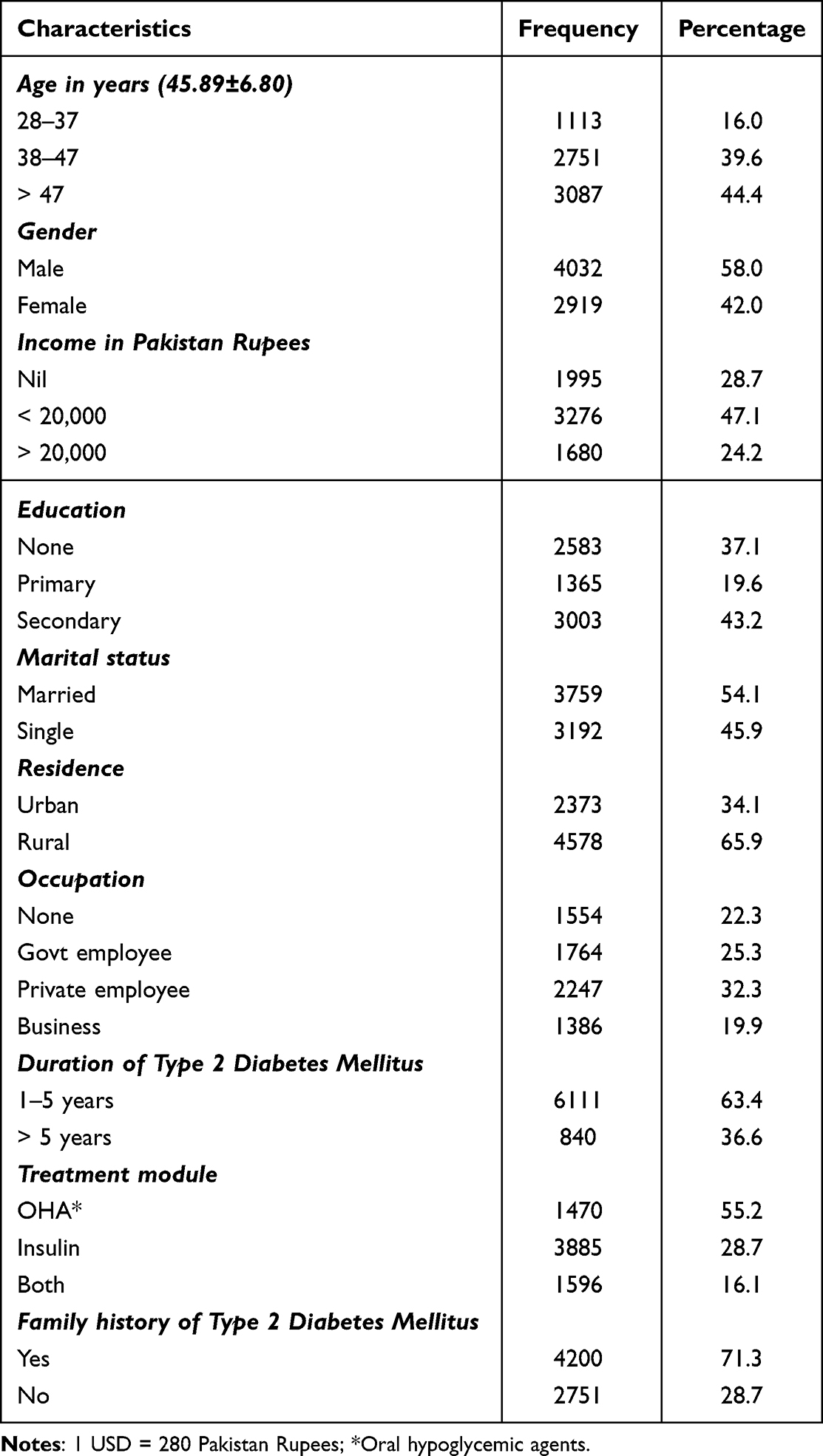 |
Table 1 Demographic and Disease-Related Characteristics of the Study Respondents (n = 6951) |
Blood Glucose and Glycated Hemoglobin Profile
The blood glucose profile is presented in Table 2. A random blood glucose test revealed that 5143 (74.0%) patients had uncontrolled blood glucose levels. Only 1258 (18.1%) had controlled blood glucose levels, whereas 7.9% had impaired tolerance.
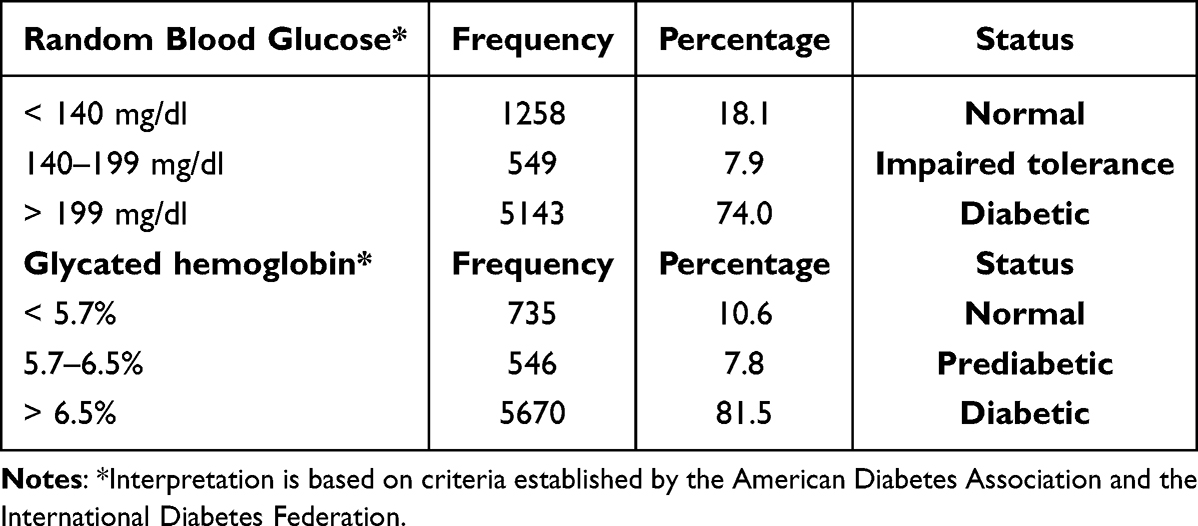 |
Table 2 Blood Glucose and Glycated Hemoglobin Profiles (n = 6951) |
In addition to fasting blood glucose, HbA1c, a surrogate marker of diabetes, was also considered. As expected from the results of random testing, 10.6% had normal values of HbA1c, whereas 81.5% had HbA1c values greater than 6.5% and hence had continuously higher and uncontrolled blood glucose.
Assessment of Self-Efficacy in Patients with Diabetes
The mean self-efficacy value for the total scale was 9.25 (standard deviation 3.85). As proposed by the authors, higher values represent improved self-efficacy and vice versa.39 Based on the observed mean values, poor self-efficacy toward T2DM was reported among the current study participants. The domain-wise assessment of self-efficacy is subsequently discussed.
Diabetes Self-Efficacy (Specific Nutritional Factor)
The responses to diabetes self-efficacy (a specific nutritional factor) are presented in Table 3. In accordance with the scoring criteria of developers,39 poor self-efficacy was observed among all the items. The respondents were relatively unable to follow a healthy eating plan away from home, both ceremonies and parties and when under stress.
 |
Table 3 Diabetes Self-Efficacy (Specific Nutritional Factor) |
Diabetes Self-Efficacy (a General Nutritional Factor)
Although moderate self-efficacy was reported for two items of the DMSES, the respondents had problems choosing different foods and maintaining a healthy eating plan, as shown in Table 4. Overall, low self-efficacy among the study participants was again reported for general nutritional factors.
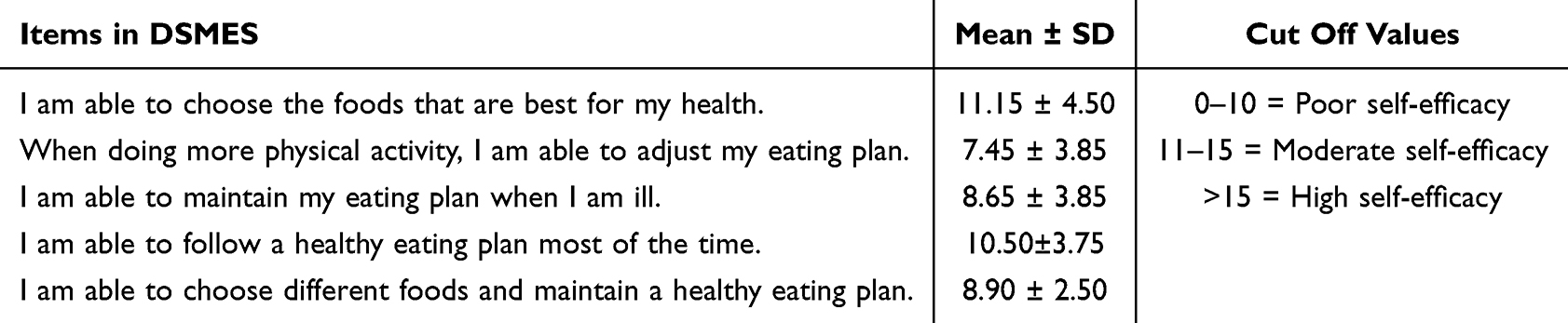 |
Table 4 Diabetes Self-Efficacy (General Nutrition Factor) |
Diabetes Self-Efficacy (Blood Glucose Control Factor)
Low self-efficacy was observed when the respondents were asked about their blood glucose levels when needed. This was followed by low self-efficacy in decreasing blood glucose levels when the levels were too high and vice versa. In terms of medicine management during illness, poor self-efficacy was again observed (Table 5).
 |
Table 5 Diabetes Self-Efficacy (Blood Glucose Control Factor) |
Diabetes Self-Efficacy (Physical Activity and Weight Control Factor)
While controlling and maintaining body weight and physical exercise, poor self-efficacy was reported among the study respondents. However, the respondents stated that they are involved in physical activity if advised by their physicians. Moderate self-efficacy was reported for this item, as shown in Table 6.
 |
Table 6 Diabetes Self-Efficacy (Physical Activity and Weight Control Factor) |
Diabetes Self-Efficacy (Medical Control Factor)
The respondents in the current study reported poor self-efficacy in taking the medications as prescribed. However, moderate self-efficacy was reported when patients were asked about regularly visiting their physicians, as shown in Table 7.
 |
Table 7 Diabetes Self-Efficacy (Medical Control Factor) |
Associations Between Demographic Variables and Self-Efficacy
The chi-square test was used to identify associations between demographic variables and the domain of the DMSES. Income, education, duration of T2DM, treatment module, random blood glucose, and HbA1c were significantly associated with all five domains of self-efficacy, with moderate correlations (Φc = 0.354–0.495). In addition, no significant associations were reported among other demographic variables and self-efficacy (Table 8).
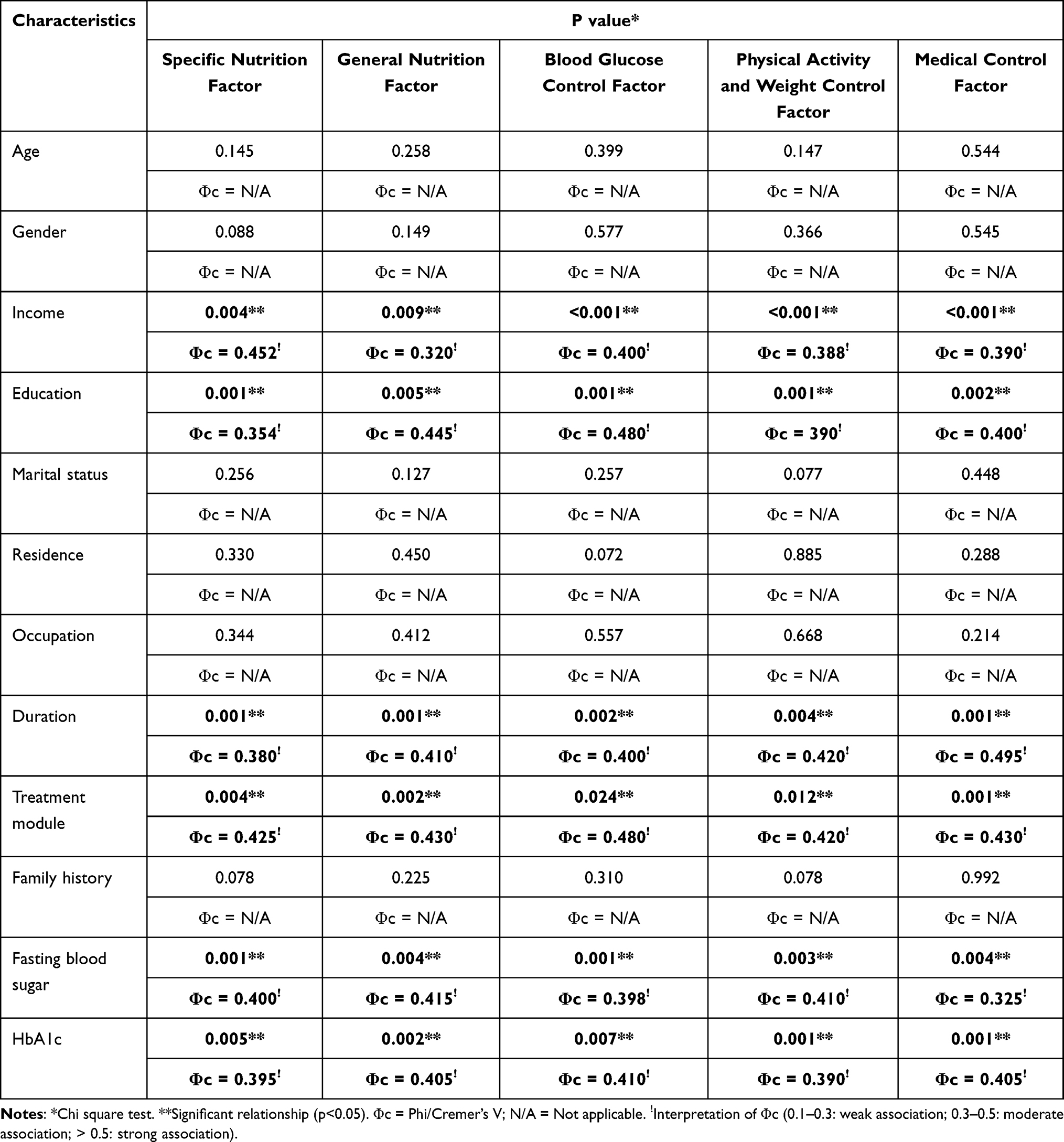 |
Table 8 Association Between Demographic Variables and Self-Efficacy Domains |
Predictors of Self-Efficacy
Binary logistic regression was performed to assess the impact of independent factors on self-efficacy. The model contained ten independent variables. The full model containing all the predictors was statistically significant (p < 0.001), indicating that the model was able to distinguish between respondents who had good self-efficacy and those who had poor self-efficacy. The model explained between 30.5% (Cox and Snell R square) and 45.8% (Nagelkerke R squared) of the variance in self-efficacy and correctly classified 65% of the cases. The strongest predictor of self-efficacy was education, with an odds ratio of 2.250. This indicated that respondents’ improved education can increase self-efficacy by 2.250 times when all other factors are controlled for in the model.
Discussion
According to Zhu et al, patients with high self-efficacy have an increased ability to manage chronic diseases. Additionally, high-ranked self-efficacy also develops a sense of control over their lives.45 Accordingly, Chirico et al, in their meta-analytic review, concluded that highly efficacious people demonstrate less anxiety and better adjustment in stressful situations.46 Promisingly, self-efficacy for patients with chronic conditions can improve with new interventions that confirm efficient disease management.19 Therefore, based on the available literature and the importance of self-efficacy, we believe that it would be imperative to assess the self-efficacy of patients with diabetes in a resource-deprived setting and to recommend possible solutions for improving self-efficacy levels.
Poor self-efficacy among diabetes patients was reported in the current study, and mixed results are observed in literature. Inadequate self-efficacy in diabetes patients was reported in various studies around the globe.27,47–49 On the contrary, acceptable self-efficacy among diabetes patients was also observed.50–52 Possible reasons for these differences in self-efficacy levels among diabetes patients are linked to various factors, including socio-demographic characteristics, diabetes-related factors, individual characteristics, and tools used to assess self-efficacy.53 Consequently, it is not wise to link the self-efficacy of diabetes patients with a single factor, and it must be reviewed extensively while conducting studies of such a nature. Continuing with our arguments, several variables (income, education, duration of T2DM, treatment module, random blood glucose, and HbA1c) were significantly associated with self-efficacy in the current study. These associations are in line with what is reported in other studies. Azar et al, in a study from Iran, reported that education and income were significantly associated with self-efficacy in a diabetic cohort.54 Ojewale et al from Southwestern Nigeria again reported a significant association between education and self-efficacy.51 Similarly, disease duration was significantly associated with self-efficacy in a study reported from the Netherlands.55 Where education and income were significantly associated with self-efficacy, a study in Nepal reported no association between self-efficacy and duration of disease.56 A possible reason for this conflicting result is linked to the diverse group of people and the duration of the disease when compared to the present study. In line with our study results, self-efficacy was significantly correlated with random blood glucose and HbA1c.22,57–59
Correlating self-efficacy in diabetes patients of Pakistan, assessments of self-efficacy, the related components, and predictive relationship are not yet reported. This attribute of the current study hereby makes it the pioneer study of the country. Within this context, Tanveer and Batool assessed the predictive relationship between self-efficacy and quality of life using the General Self-Efficacy Scale (GEFS) and the WHOQoL-Brief Health and Lifestyle Questionnaire, respectively.60 The authors reported a significant positive correlation between the two variables; however, independent assessments of self-efficacy and its components were not performed. The authors reported only mean values of self-efficacy (27.46) that predicted poor self-efficacy (based on GEFS scoring criteria) among elderly individuals in Pakistan, which is comparable to the results of the current study.60 Similarly, Bilal and Kausar investigated the effects of temporal decisions and diabetes management self-efficacy on medication adherence. However, although significant correlations were observed, the authors failed to provide data on independent domains of self-efficacy.61 Finally, the same was observed in a study reported from Islamabad, where the authors failed to provide individualized data on self-efficacy and its domains.62 In conclusion, we performed an extensive literature review and were unable to find studies reporting self-efficacy, its domains, and predictors from Pakistan.
The binary logistic regression highlighted education as a significant predictor of self-efficacy. The results of the current study are comparable to those reported from other parts of the world. A study conducted in Taiwan indicated that a senior high school level or above education was a significant predictor of self-efficacy; however, the study focused primarily on self-efficacy in administering insulin and did not measure overall self-efficacy.63 Lee et al, in 2016, concluded that education was related to self-efficacy and that an additional point increase in education was linked with a 0.45-point increase in self-efficacy.64 Similarly, where moderate self-efficacy was reported among chronic patients in Iran, age, education, and income were reported to be significant predictors of self-efficacy.65 Another study from Nigeria again rated educational level as a predictor of self-efficacy and concluded that high self-efficacy in individuals with diabetes results in better glucose control.51 Higher self-efficacy scores were once again associated with male sex, younger age, and higher education.66 In conclusion, the relationship between education and self-efficacy has been well-developed in literature and supports the current study’s findings.
While the impact of education on health is well documented, the explanation for this impact is poorly understood.67 Nevertheless, the relationship between education and health is complicated and depends on multiple factors.68 Health determinants such as self-efficacy and preventive measures are strongly linked with education, promoting self-care, positive choices, and overall well-being.69 Compared with the educational status of the Pakistani population, the Ministry of Federal Education and Professional Training reported an adult literacy rate of 62.3% in 2021, with an estimated 60 million being illiterate in the country.70 Additionally, the Pakistan Institute of Development Economics stated that, compared with its neighboring countries, Pakistan has failed to improve key educational indicators such as literacy rates, enrolment ratios, and expenditures on education.71 Possible reasons for these shortfalls are related to the shortage of schools (for every 13 primary schools, there is only one middle school), the unavailability of teachers (approximately 50% of primary schools in Balochistan Province have only one teacher), and poor expenditures on education (2.4% of GDP) by the authorities. Under such drastic conditions, it is apparent that the general population, as well as patients, are least knowledgeable about prophylactic measures, adoption of healthy lifestyles, and self-management of diseases that eventually shape self-efficacy. This is also apparent from our results, where poor self-efficacy was observed while a healthy eating plan was chosen, blood glucose was checked, and the prescribed medications were taken.
Keeping the statistics regarding the educational status of the Pakistani population in mind, it would be unwise to imagine that the educational conditions would improve soon. Nevertheless, it would be radical to sit idle and wait for an improvement in educational status and, hence, an improvement in self-efficacy. To take immediate holistic measures, we propose improving the health literacy of the diabetic population by incorporating the postulates of the health belief model (HBM). Our proposal for incorporating HBM to improve health literacy is reasonably upfront and holds significant merits. This incorporation has already provided productive results from studies of the same nature72–74 but has yet to be reported from Pakistan. However, the cultural pertinence and ability to address complex health behaviors influenced by environmental factors must be considered before incorporating the model. Despite these limitations, HBM-based educational packages have significantly improved patient outcomes, supporting our proposal.75 In summary, a possible solution for improving self-efficacy among diabetes patients is the introduction of diabetes self-management education and support (DSMES) in the healthcare system of Pakistan based on the HBM. Patients learn how to take best care of themselves through this integrated model. The program will also help with disease management and self-efficacy, empowering patients while dealing with chronic diseases such as T2DM.76 Ernawati et al, in their systematic literature review on diabetes self-management education (DSME), concluded that in addition to self-care, DSME also improved the clinical status and quality of life of T2DM patients.77 A systematic review of DSME interventions reported from the Asian Western Pacific region also mentioned the use of DSME to improve clinical and psychosocial outcomes.78 However, the HBM-based DSMES program has not been reported in Pakistani healthcare settings, and the reasons are multifactorial. Within this context, Ansari et al highlighted that healthcare professionals must play their part in developing self-management skills and emphasizing patients’ understanding of the disease and its challenges and associated complications.79 We completely agree with the findings of Ansari et al, as it is high time for healthcare professionals to start involving diabetes patients in self-management through a model-based approach. Diabetes requires lifelong management and behavioral modifications along with self-management. Additionally, diabetic patients require assistance building self-efficacy, which is possible only by involving physicians, pharmacists, and nurses in a collaborative care model. With diabetes approaching alarming proportions in Pakistan and with poor educational backgrounds, an appropriate solution for improving self-efficacy is to involve patients in decision-making and self-management of T2DM. This will assist patients in developing an optimistic view of life and facilitate them in adjusting to the disease effectively and efficiently.
Limitations
The study reports data from a low-income, less-educated community attending a public healthcare institute in Quetta city, Pakistan. Generalizing these results to the entire low-income, less educated diabetic population of the country is irrational. Likewise, self-efficacy was assessed through a patient-reported measure, and actual practices (for example, checking blood glucose, management of foot care, etc) were missed out because of several research-related constraints. To overcome these limitations, we recommend a comprehensive study focusing on public and private healthcare institutions with an exclusive emphasis on on-hand activities and demonstrations related to self-efficacy in diabetes management.
Conclusion
The overall self-efficacy of our study population was low. Significant associations between self-efficacy and various variables were observed; educational status was identified as a predictor of self-efficacy among those. Enhancing self-efficacy through enhanced education must be considered in diabetes management plans. The present study’s findings also provide a theoretical basis for governments, public health agencies, and healthcare professionals to develop effective educational-based policies and interventions to improve self-efficacy, which will result in improved disease management.
Data Sharing Statement
The datasets used and/or analyzed during the current study are available from the corresponding author upon reasonable request.
Ethics Declarations
This study was carried out in accordance with the Declaration of Helsinki. The Institutional Review Board of the Department of Pharmacy, University of Balochistan, Quetta, approved the study [FoP&HS/IRB/45/22]. All participants provided written informed consent to participate in the study and written informed consent for this publication.
Acknowledgments
We are thankful to the patients and healthcare professionals stationed at the medicine ward of SPH for their assistance during the data collection and curation process.
Disclosure
The authors declare that they have no known competing financial interests or personal relationships that could have appeared to influence the work reported in this paper.
References
1. World Health Organization. Diabetes. Available from: https://www.who.int/news-room/fact-sheets/detail/diabetes.
2. International Diabetes Federation. IDF diabetes atlas. Available from: https://diabetesatlas.org/.
3. Chen H, Chen G, Zheng X, Guo Y. Contribution of specific diseases and injuries to changes in health adjusted life expectancy in 187 countries from 1990 to 2013: retrospective observational study. Br Med J. 2019;364. doi:10.1136/bmj.l969
4. International Diabetes Federation. Pakistan. Available from: https://idf.org/our-network/regions-and-members/middle-east-and-north-africa/members/pakistan/.
5. International Diabetes Federation. IDF diabetes atlas. Available from: https://diabetesatlas.org/upload/resources/material/20200302_133351_IDFATLAS9e-final-web.pdf.
6. Health Policy Watch. Pakistan has the world’s highest diabetes prevalence – and lacks focus on prevention. Available from: https://healthpolicy-watch.news/pakistan-has-the-worlds-highest-diabetes-prevalence-and-lacks-focus-on-prevention/#:~:text=World’s%20highest%20prevalence%20of%20diabetes&text=Pakistan%20has%20the%20world’s%20highest%20adult%20prevalence%20rate.fourth%20highest%20in%20global%20rankings.
7. Dehghan H, Charkazi A, Kouchaki GM, et al. General self-efficacy and diabetes management self-efficacy of diabetic patients referred to diabetes clinic of Aq Qala, North of Iran. J Diabetes Metab Disord. 2017;16(1):8. doi:10.1186/s40200-016-0285-z
8. Wermeling M, Thiele-Manjali U, Koschack J, Lucius-Hoene G, Himmel W. Type 2 diabetes patients’ perspectives on lifestyle counselling and weight management in general practice: a qualitative study. BMC Fam Pract. 2014;15(1):97. doi:10.1186/1471-2296-15-97
9. Shrivastava SR, Shrivastava PS, Ramasamy J. Role of self-care in management of diabetes mellitus. J Diabetes Metab Disord. 2013;12(1):14. doi:10.1186/2251-6581-12-14
10. Mohebi S, Azadbakht L, Feizi A, Sharifirad G, Kargar M. Review the key role of self-efficacy in diabetes care. J Educ Health Promot. 2013;2(1):36. doi:10.4103/2277-9531.115827
11. Sarkar U, Fisher L, Schillinger D. Is self-efficacy associated with diabetes self-management across race/ethnicity and health literacy?. Diabetes Care. 2006;29(4):823–829. doi:10.2337/diacare.29.04.06.dc05-1615
12. Krichbaum K, Aarestad V, Buethe M. Exploring the connection between self-efficacy and effective diabetes self-management. Diabetes Educ. 2003;29(4):653–662. doi:10.1177/014572170302900411
13. Bandura A. Self-efficacy: toward a unifying theory of behavioral change. Psychol Rev. 1977;84(2):191–215. doi:10.1037/0033-295X.84.2.191
14. Morton L, Ferguson M, Baty F. Improving wellbeing and self-efficacy by social prescription. Public Health. 2015;3(129):286–289. doi:10.1016/j.puhe.2014.12.011
15. Leahy‐Warren P, McCarthy G, Corcoran P. First‐time mothers: social support, maternal parental self‐efficacy and postnatal depression. J Clin Nurs. 2012;21(3‐4):388–397. doi:10.1111/j.1365-2702.2011.03701.x
16. Chan SWC. Chronic disease management, self-efficacy and quality of life. J Nurs Res. 2021;29(1):e129. doi:10.1097/JNR.0000000000000422
17. Wang R, Zhou C, Wu Y, et al. Patient empowerment and self‐management behaviour of chronic disease patients: a moderated mediation model of self‐efficacy and health locus of control. J Adv Nurs. 2022;78(4):1055–1065. doi:10.1111/jan.15077
18. Ebrahimi Belil F, Alhani F, Ebadi A, Kazemnejad A. Self-efficacy of people with chronic conditions: a qualitative directed content analysis. J Clin Med. 2018;7(11):411. doi:10.3390/jcm7110411
19. Farley H. Promoting self‐efficacy in patients with chronic disease beyond traditional education: a literature review. Nurs Open. 2020;7(1):30–41. doi:10.1002/nop2.382
20. Hurst CP, Rakkapao N, Hay K. Impact of diabetes self-management, diabetes management self-efficacy and diabetes knowledge on glycemic control in people with type 2 diabetes (T2D): a multi-center study in Thailand. PLoS One. 2020;15(12):e0244692. doi:10.1371/journal.pone.0244692
21. Luszczynska A, Scholz U, Schwarzer R. The general self-efficacy scale: multicultural validation studies. J Psychol. 2005;139(5):439–457. doi:10.3200/JRLP.139.5.439-457
22. Alshaikh AA, Al-Qahtani FS, Alqahtani SAM, et al. Exploring the self-efficacy of patients with diabetes: its role as a predictor of diabetes management and well-being. Front Endocrinol. 2024;15:1347396. doi:10.3389/fendo.2024.1347396
23. Juarez LD, Presley CA, Howell CR, Agne AA, Cherrington AL. The mediating role of self-efficacy in the association between diabetes education and support and self-care management. Health Educ Behav. 2022;49(4):689–696. doi:10.1177/10901981211008819
24. Jiang X, Wang J, Lu Y, Jiang H, Li M. Self-efficacy-focused education in persons with diabetes: a systematic review and meta-analysis. Psychol Res Behav Manag. 2019;12:67–79. doi:10.2147/PRBM.S192571
25. Qin W, Blanchette JE, Yoon M. Self-efficacy and diabetes self-management in middle-aged and older adults in the United States: a systematic review. Diabetes Spectr. 2020;33(4):315–323. doi:10.2337/ds19-0051
26. Parviniannasab AM, Faramarzian Z, Hosseini SA, Hamidizadeh S, Bijani M. The effect of social support, diabetes management self-efficacy, and diabetes distress on resilience among patients with type 2 diabetes: a moderated mediation analysis. BMC Public Health. 2024;24(1):477. doi:10.1186/s12889-024-18022-x
27. Amer FA, Mohamed MS, Elbur AI, Abdelaziz SI, Elrayah ZA. Influence of self-efficacy management on adherence to self-care activities and treatment outcome among diabetes mellitus type 2. Pharm Pract. 2018;16(4):1274. doi:10.18549/PharmPract.2018.04.1274
28. Jiang X, Jiang H, Li M. The role of self-efficacy enhancement in improving self-management behavior for type 2 diabetes mellitus patients. Diabetes Metab Syndr Obes. 2024;17:3131–3138. doi:10.2147/DMSO.S460864
29. Seo K. The effects of self-efficacy and self-stigma on self-care in people with diabetes. J Korean Acad Community Health Nurs. 2021;32(1):86–94. doi:10.12799/jkachn.2021.32.1.86
30. Qasim R, Masih S, Yousafzai MT, et al. Diabetes conversation map-a novel tool for diabetes management self-efficacy among type 2 diabetes patients in Pakistan: a randomized controlled trial. BMC Endocr Disord. 2020;20(1):88. doi:10.1186/s12902-020-00572-x
31. Sayeed KA, Qayyum A, Jamshed F, et al. Impact of diabetes-related self-management on glycemic control in type II diabetes mellitus. Cureus. 2020;12(4):e7845. doi:10.7759/cureus.7845
32. Isamail N, Said R, Ismail NW, Haron SA. Non-communicable diseases impact low-income households in Malaysia. Malays J Med Sci. 2024;31(1):124–139. doi:10.21315/mjms2024.31.1.11
33. World Health Organization. Noncommunicable diseases. Available from: https://www.who.int/news-room/fact-sheets/detail/noncommunicable-diseases.
34. Williams J, Allen L, Wickramasinghe K, Mikkelsen B, Roberts N, Townsend N. A systematic review of associations between non-communicable diseases and socioeconomic status within low-and lower-middle-income countries. J Glob Health. 2018;8(2):020409. doi:10.7189/jogh.08.020409
35. Craig A, Mtintsilana A, Mapanga W, Dlamini SN, Norris SA. Socioeconomic position, perceived weight, lifestyle risk, and multimorbidity in young adults aged 18 to 35 years: a multi-country study. BMC Public Health. 2023;23(1):1360. doi:10.1186/s12889-023-16234-1
36. Keetile M, Navaneetham K, Letamo G, Rakgoasi SD. Socioeconomic inequalities in non-communicable disease risk factors in Botswana: a cross-sectional study. BMC Public Health. 2019;19(1):1060. doi:10.1186/s12889-019-7405-x
37. Shahzad F, Saleem F, Iqbal Q, et al. A cross-sectional assessment of health literacy among hypertensive community of Quetta City, Pakistan. Biomed J Sci Tech Res. 2018;11(4):8685–8693.
38. Suresh K, Thomas SV, Suresh G. Design, data analysis and sampling techniques for clinical research. Ann Indian Acad Neurol. 2011;14(4):287–290. doi:10.4103/0972-2327.91951
39. JVd B, Poelgeest‐Eeltink A, Shortridge‐Baggett L. The psychometric properties of the diabetes management self‐efficacy scale for patients with type 2 diabetes mellitus. J Adv Nurs. 1999;30(2):352–359. doi:10.1046/j.1365-2648.1999.01077.x
40. Lee J, Lee EH, Chae D. Self‐efficacy instruments for type 2 diabetes self‐care: a systematic review of measurement properties. J Adv Nurs. 2020;76(8):2046–2059. doi:10.1111/jan.14411
41. Riaz S, Haq NU, Nasim A, Sadiq YS, Tahir M. Translation and validation of Diabetes Management Self-Efficacy Questionnaire (DMSES) into urdu language. Int J Pharm Biol Sci. 2017;6(6):244–1254.
42. Siemens. DCA HbA1c Reagent Kit. Available from: https://www.siemens-healthineers.com/en-us/diabetes/reagents/dca-hba1c-reagent.
43. LabMedica Expo. Biochemistry analyzer. Available from: https://mobile.es.trademed.com/categories/703/8534/Centr%C3%ADfugas/Biochemistry-Analyzer.html.
44. IBM SPSS Statistics for Windows, Version 26.0. IBM. 2019.
45. Zhu J, Ebert L, Liu X, Wei D, Chan SW-C. Mobile breast cancer e-support program for Chinese women with breast cancer undergoing chemotherapy (part 2): multicenter randomized controlled trial. JMIR mHealth uHealth. 2018;6(4):e104. doi:10.2196/mhealth.9438
46. Chirico A, Lucidi F, Merluzzi T, et al. A meta-analytic review of the relationship of cancer coping self-efficacy with distress and quality of life. Oncotarget. 2017;8(22):36800–36811. doi:10.18632/oncotarget.15758
47. Priya S, Kirubai D. Perceived self-efficacy towards diabetes self-management among patients with type 2 diabetes mellitus. Int J Adv Nurs Manag. 2022;10(3):163–167.
48. Madran DM, Jassim AH. Self-efficacy among type 2 diabetic patients. Pak J Med Health Sci. 2022;16(3):886. doi:10.53350/pjmhs22163886
49. Amelia R, Ariga R, Sari M, Savira M. Self-efficacy in type 2 diabetes mellitus patients and the relationship with the quality of life in Medan city. J Phys Conf Ser. 2018;1116:052003. doi:10.1088/1742-6596/1116/5/052003
50. Ataya J, Soqia J, Albani N, et al. The role of self-efficacy in managing type 2 diabetes and emotional well-being: a cross sectional study. BMC Public Health. 2024;24(1):3471. doi:10.1186/s12889-024-21050-2
51. Ojewale LY, Okoye EA, Ani OB. Diabetes self-efficacy and associated factors among people living with diabetes in Ibadan, Southwestern Nigeria. Eur J Med Health Sci. 2021;3(6):105–110.
52. Oluma A, Abadiga M, Mosisa G, Fekadu G, Turi E. Perceived self-efficacy and associated factors among adult patients with type 2 diabetes mellitus at public hospitals of Western Ethiopia, 2020. Patient Prefer Adherence. 2020;14:1689–1698. doi:10.2147/PPA.S275887
53. Barnett A. Self-Efficacy. In: Maggino F, editor. Encyclopedia of Quality of Life and Well-Being Research. Cham: Springer; 2023:6235–6238.
54. Khalili Azar K, Mirzaei A, Babapour A-R, Fathnezhad-Kazemi A. The mediating effect of self-efficacy on the relationship between social support and medication adherence in adults with type 2 diabetes. SAGE Open Med. 2024;12:20503121231221446. doi:10.1177/20503121231221446
55. Bos-Touwen I, Schuurmans M, Monninkhof EM, et al. Patient and disease characteristics associated with activation for self-management in patients with diabetes, chronic obstructive pulmonary disease, chronic heart failure and chronic renal disease: a cross-sectional survey study. PLoS One. 2015;10(5):e0126400. doi:10.1371/journal.pone.0126400
56. Shakya D. Self-efficacy among patients with chronic diseases and its associated factors. J Kathmandu Med Coll. 2018;7(3):82–88. doi:10.3126/jkmc.v7i3.22675
57. Aseela S, Santhi S, Anish T, Mahadevan S. Diabetes self-efficacy on glycemic control and well-being of patients with type 2 diabetes mellitus: an analytical cross-sectional study. Cureus. 2024;16(7):e64005. doi:10.7759/cureus.64005
58. Tharek Z, Ramli AS, Whitford DL, et al. Relationship between self-efficacy, self-care behaviour and glycaemic control among patients with type 2 diabetes mellitus in the Malaysian primary care setting. BMC Fam Pract. 2018;19(1):39. doi:10.1186/s12875-018-0725-6
59. Mishali M, Omer H, Heymann A. The importance of measuring self-efficacy in patients with diabetes. Family Pract. 2011;28(1):82–87. doi:10.1093/fampra/cmq086
60. Tanveer S, Batool SS. Biopsychosocial determinants of quality of life among elderly in Pakistan. Pak J Soc Clin Psychol. 2019;17(2):19–26.
61. Bilal A, Kausar R. Consideration of future consequences, diabetes management self-efficacy and medication adherence of individuals with type 2 diabetes. Pak J Prof Psychol. 2020;11(1):17–26.
62. Khurshid M, Ismail M, Hassan A, Iqbal S, Mirza S. Relationship between self-acceptance and self efficacy among liver cancer Pakistani female patients. ASEAN J Psychiatry. 2021;22(8):1–5.
63. Huang M-C, Hung C-H, Huang Y-W, Yang S-C. Predictors of self-efficacy in administering insulin injection. Clin Nurs Res. 2021;30(2):120–126. doi:10.1177/1054773819858484
64. Lee E-H, Lee YW, Moon SH. A structural equation model linking health literacy to self-efficacy, self-care activities, and health-related quality of life in patients with type 2 diabetes. Asian Nurs Res. 2016;10(1):82–87. doi:10.1016/j.anr.2016.01.005
65. Hatef M, Sharif Nia H, Mousavinasab N, Esmaeili R, Shafipour V. Self-efficacy and prediction of associated factors in patients with chronic diseases. J Mazandaran Univ Med Sci. 2018;28(162):86–94.
66. Padgett DK. Correlates of self-efficacy beliefs among patients with non-insulin dependent diabetes mellitus in Zagreb, Yugoslavia. Patient Educ Couns. 1991;18(2):139–147. doi:10.1016/0738-3991(91)90006-Q
67. Raghupathi V, Raghupathi W. The influence of education on health: an empirical assessment of OECD countries for the period 1995–2015. Arch Public Health. 2020;78(1):1–18. doi:10.1186/s13690-020-00402-5
68. Cutler DM, Lleras-Muney A. Education and health: evaluating theories and evidence. In: National Bureau of Economic Research. Cambridge, Mass; USA. 2006.
69. Feinstein L, Sabates R, Anderson TM, Sorhaindo A, Hammond C. What are the Effects of Education on Health. France: OECD Paris; 2006:171–354.
70. Ministry of Federal Education and Professional Training. Adult literacy. Available from: http://mofept.gov.pk/ProjectDetail/NjQ4ZTg2NjItOWM2NC00Y2IxLTkzMDgtMjU2OTFhMjA4NzNh#:~:text=The%20current%20literacy%20rate%20of,is%20illiterate%20in%20the%20country.
71. Pakistan Institute of Development Economics. State of education in Pakistan. Available from: https://pide.org.pk/blog/state-of-education-in-pakistan-2/.
72. Shabibi P, Zavareh MSA, Sayehmiri K, et al. Effect of educational intervention based on the health belief model on promoting self-care behaviors of type-2 diabetes patients. Electron Physician. 2017;9(12):5960–5968. doi:10.19082/5960
73. Kh J, Zareban I, Alizadeh-Siuki H, Izadirad H. The impact of educational intervention based on health belief model on promoting self-care behaviors in patients with smear-positive pulmonary TB. Mater Sociomed. 2014;2(2):229–233.
74. Hazavehei S, Sharifirad G, Mohabi S. The effect of educational program based on health belief model on diabetic foot care. Int J Diabetes Dev Countries. 2007;27(1):18. doi:10.4103/0973-3930.34753
75. Kam BS, Lee SY. Integrating the health belief model into health education programs in a clinical setting. World J Clin Cases. 2024;12(33):6660–6663. doi:10.12998/wjcc.v12.i33.6660
76. Centers for Disease Control and Prevention. Education and support. Available from: https://www.cdc.gov/diabetes/managing/education.html#:~:text=Learning%20how%20to%20control%20your,you%20manage%20your%20diabetes%20better.
77. Ernawati U, Wihastuti TA, Utami YW. Effectiveness of diabetes self-management education (DSME) in type 2 diabetes mellitus (T2DM) patients: systematic literature review. J Public Health Res. 2021;10(2):2240. doi:10.4081/jphr.2021.2240
78. Mohamed A, Staite E, Ismail K, Winkley K. A systematic review of diabetes self‐management education interventions for people with type 2 diabetes mellitus in the Asian Western Pacific (AWP) region. Nurs Open. 2019;6(4):1424–1437. doi:10.1002/nop2.340
79. Ansari RM, Harris MF, Hosseinzadeh H, Zwar N. Experiences of diabetes self-management: a focus group study among the middle-aged population of rural Pakistan with type 2 diabetes. Diabetology. 2022;3(1):17–29. doi:10.3390/diabetology3010002
 © 2025 The Author(s). This work is published and licensed by Dove Medical Press Limited. The
full terms of this license are available at https://www.dovepress.com/terms
and incorporate the Creative Commons Attribution
- Non Commercial (unported, 4.0) License.
By accessing the work you hereby accept the Terms. Non-commercial uses of the work are permitted
without any further permission from Dove Medical Press Limited, provided the work is properly
attributed. For permission for commercial use of this work, please see paragraphs 4.2 and 5 of our Terms.
© 2025 The Author(s). This work is published and licensed by Dove Medical Press Limited. The
full terms of this license are available at https://www.dovepress.com/terms
and incorporate the Creative Commons Attribution
- Non Commercial (unported, 4.0) License.
By accessing the work you hereby accept the Terms. Non-commercial uses of the work are permitted
without any further permission from Dove Medical Press Limited, provided the work is properly
attributed. For permission for commercial use of this work, please see paragraphs 4.2 and 5 of our Terms.