
Back to Journals » Diabetes, Metabolic Syndrome and Obesity » Volume 18
Exploring the Real-World Effectiveness of Empagliflozin and Linagliptin Fixed-Dose Combination in Type 2 Diabetes Patients of Bangladesh: A Prospective Multi-Center Observational Study
Authors Sharifuzzaman M  , Paul AK, Akteruzzaman M, Bhuiyan SH, Haider R, Sharker S, Sultana D, Alam KM, Abu Zafar S, Kashem MA, Abu Zahid M, Islam AN, Abedin MZ , Anar F, Hasan MF, Selim S , Islam S , Ahammed A, Hosen M, Qureshi NK , Hossain MA, Begum A, Afrooz F, Kobir AM, Akter F , Mustafa SJ, Rahman MM, Saifuddin M
Received 22 May 2025
Accepted for publication 9 October 2025
Published 4 December 2025 Volume 2025:18 Pages 4465—4482
DOI https://doi.org/10.2147/DMSO.S542107
Checked for plagiarism Yes
Review by Single anonymous peer review
Peer reviewer comments 2
Editor who approved publication: Dr Halis Akturk
Mirza Sharifuzzaman,1 Ajit Kumar Paul,2 Md Akteruzzaman,3 SN Haider Bhuiyan,4 Rezaul Haider,5 Shoma Sharker,6 Dahlia Sultana,7 Khondoker Monirul Alam,8 Sikandar Abu Zafar,9 Md Abul Kashem,10 Md Abu Zahid,11 AFM Nazmul Islam,12 Md Zainal Abedin,13 Fouzia Anar,14 Md Farucul Hasan,8 Shahjada Selim,15 Sunjida Islam,16 Afsar Ahammed,1 Mobarak Hosen,17 Nazmul Kabir Qureshi,16 Mohammad Afjal Hossain,18 Aysha Begum,19 Farhana Afrooz,20 ASM Musa Kobir,21 Farhana Akter,22 Sadia Jabeen Mustafa,23 Md Motiur Rahman,24 M Saifuddin1
1Dhaka Medical College, Dhaka, Bangladesh; 2Moinamoti Medical College, Comilla, Bangladesh; 3Khulna Diabetic Hospital, Khulna, Bangladesh; 4Bhuiyan Medical Hall, Noakhali, Bangladesh; 5Chattagram Diabetes General Hospital, Chittagong, Bangladesh; 6Sylhet Women’s Medical College, Sylhet, Bangladesh; 7Sir Salimullah Medical College, Dhaka, Bangladesh; 8Rangpur Medical College Hospital, Rangpur, Bangladesh; 9Feni Diabetes Hospital, Feni, Bangladesh; 10Sylhet MAG Osmani Medical College, Sylhet, Bangladesh; 11Rangpur Medical College, Rangpur, Bangladesh; 12North East Medical College, Sylhet, Bangladesh; 13District Hospital, Sadar, Lalmonirhat, Bangladesh; 14Bangladesh Institute of Health Science General Hospital, Dhaka, Bangladesh; 15Bangabandhu Sheikh Mujib Medical University, Dhaka, Bangladesh; 16National Healthcare Network, Dhaka, Bangladesh; 17Shaheed Tajuddin Ahmad Medical College Hospital, Gazipur, Bangladesh; 18US Bangla Medical College, Narayanganj, Bangladesh; 19Upazila Health Complex, Keraniganj, Dhaka, Bangladesh; 20United Medical College and Hospital, Dhaka, Bangladesh; 21Kushtia General Hospital, Kushtia, Bangladesh; 22Chittagong Medical College, Chittagong, Bangladesh; 23BIRDEM General Hospital, Dhaka, Bangladesh; 24Rajshahi Medical College Hospital, Rajshahi, Bangladesh
Correspondence: Mirza Sharifuzzaman, Department of Endocrinology, Dhaka Medical College Hospital, Dhaka, 1000, Bangladesh, Email [email protected]
Purpose: The fixed-dose combination (FDC) of empagliflozin and linagliptin is a promising treatment for type 2 diabetes mellitus (T2DM), but real-world data from Bangladesh is limited. This study aimed to assess the effectiveness and safety of empagliflozin 10 mg/linagliptin 5 mg [Empa/Lina (10/5)] FDC among T2DM patients at real-world settings in Bangladesh.
Patients and Methods: This prospective, multicenter, observational study enrolled 822 adults with T2DM across Bangladesh. Patients receiving Empa/Lina (10/5) FDC either alone or with other antidiabetic medications at practice were enrolled. Glycemic control, body mass index (BMI), blood pressure, and adverse events were assessed over three months.
Results: Mean HbA1c decreased significantly from baseline to three months in both the Empa/Lina (10/5) FDC alone group (9.13% to 8.18%, p< 0.001) and the FDC plus other antidiabetics group (10.20% to 8.12%, p< 0.001). Fasting and post-prandial blood glucose levels also improved significantly (p< 0.001). BMI decreased from 26.81 kg/m2 to 25.90 kg/m2 (p=0.008). Systolic and diastolic blood pressure reduced by 11.09 mmHg and 4.41 mmHg, respectively (p< 0.001). The estimated glomerular filtration rate remained stable. Improvements were consistent across patient subgroups with various comorbidities. Adverse events were infrequent, with hypoglycemia (10.95%), genital mycotic infection (3.04%), and urinary tract infections (2.80%) being the most common.
Conclusion: Empa/Lina (10/5) FDC demonstrated significant improvements in glycemic control, BMI, and blood pressure with a favorable safety profile in Bangladeshi patients with T2DM. These real-world findings support its use as an effective treatment option in this population.
Keywords: type 2 diabetes mellitus, empagliflozin, linagliptin, fixed-dose combination, Bangladesh
Introduction
Diabetes mellitus is the most common form of metabolic disease in the world. The global prevalence of diabetes, including in Bangladesh,1 continues to rise at an alarming rate. Impaired pancreatic β-cell activity and insulin resistance in organs such as the liver, skeletal muscle, and adipose tissue lead to type 2 diabetes mellitus (T2DM).2–5 Around 422 million persons experienced DM-related issues in 2014, and 1.5 million fatalities were recorded in 2012.6,7 More than any other major region in the world, South East Asia has seen a significant increase in the prevalence of diabetes.8 According to published research, type 2 diabetes accounts for 90–95% of all diagnosed cases in this region.9,10 The predicted incidence of diabetes among adults in Bangladesh was 9.7% in 2011, which is estimated to affect 13.7 million people by 2045.1,8 In 2016, diabetes was responsible for 3% of all fatalities in Bangladesh, while it afflicted 8% of the total population (12.88 million people).
The standard pharmacotherapy of T2DM calls for starting with monotherapy (typically metformin) unless there are contraindications or intolerance, and then adding other single agents sequentially if the desired level of glycemic control is not achieved or maintained after three months.11 However, when glycated hemoglobin (HbA1c) at admission is significantly above the limit, one therapeutic option is to begin with combination therapy as the first line of treatment. The American Diabetes Association (ADA) and the European Association for the Study of Diabetes (EASD) have collaborated on a position statement that recommends initiating treatment with combination therapy in patients who have a baseline HbA1c ≥9% and who are less likely to achieve treatment goals when using monotherapy alone.5 Rapid reduction in HbA1c, avoiding prolonged hyperglycemic state and deleterious consequences of glucotoxicity, and avoiding maximal doses of monotherapy (which may amplify harmful effects associated with that monotherapy) are all potential benefits of combination therapy.5
To treat type 2 diabetes, doctors recommend empagliflozin, a highly specific SGLT2 inhibitor.2 In people with type 2 diabetes, empagliflozin decreases the amount of glucose reabsorbed by the kidneys. This results in greater amounts of glucose excreted in the urine and lower blood sugar levels without insulin.5 In a Phase 3 trial, empagliflozin was reported to be well-tolerated and had little chance of hypoglycemia in patients with T2DM. It decreased HbA1c, fasting plasma glucose (FPG), weight, and blood pressure (BP) compared to the placebo.4 The improvements in HbA1c, FPG, and body weight seen with empagliflozin were maintained up to week 76 in a double-blind extension of this trial.3
Linagliptin is another powerful, potent, and specific dipeptidyl peptidase-4 (DPP-4) inhibitor12 widely used for treating T2DM patients. Linagliptin promotes insulin release, suppresses glucagon secretion, and stops the inactivation of incretin peptides like glucagon-like peptide-1 (GLP-1).13 In participants with type 2 diabetes who participated in a phase 3 trial, linagliptin 5mg as monotherapy for 12 weeks augmented glycemic control without leading to weight gain. The treatment was also well endured and posed a minimal risk of hypoglycemia.14 In trial extension, the effects of linagliptin on lowering HbA1c were found to be maintained up to week 102.2
However, multiple medications for various patient populations used to treat diabetes mellitus can result in an overwhelming pill burden and medication non-adherence. The availability of a dual sodium-glucose co-transporter 2/dipeptidyl peptidase‐4 inhibitor combination in a fixed dose or single‐tablet combination (STC) represents a new therapeutic option for patients with type 2 diabetes. The Food and Drug Administration (FDA) approved the combination of empagliflozin and linagliptin STC to treat T2DM patients.5 Although combination agents of these two medications are becoming popular in clinical practice, the effects of combination therapy on β-cells remain unknown.15
Clinical trials are frequently constrained in terms of length, patient count, and baseline traits. Moreover, the outcomes of the interventions may not be replicated in the real-world environment. Data on the safety and effectiveness of empagliflozin and linagliptin fixed-dose combination usage in real-world settings are very scarce in Bangladesh. Therefore, the purpose of this study was to evaluate the effectiveness and safety of a fixed-dose combination of empagliflozin (10 mg) and linagliptin (5mg) in patients with T2DM who were prescribed and taking it in practice in the country.
Materials and Methods
Study Design, Population, and Site
This prospective observational study was conducted among adult (≥ 18 years) patients diagnosed with type 2 diabetes mellitus in the outdoors of 20 tertiary care hospitals and 10 consultancy centers covering all eight divisions of Bangladesh. Patients attending the outpatient clinic for management or consultation were considered eligible if they had HbA1c >7.5%, an estimated glomerular filtration rate (eGFR) >25 mL/min/1.73 m2, were prescribed a fixed-dose combination (FDC) of empagliflozin and linagliptin (10mg/5mg) by the consulting physician, and provided informed consent to participate. Patients were excluded if they had a history of severe hypoglycemia or severe hypovolemia within six months prior to enrollment; any episode of diabetic ketoacidosis, recurrent urinary tract infections, acute coronary syndrome, stroke, or transient ischemic attack within the preceding four weeks; decompensated liver cirrhosis or end-stage renal disease (eGFR <25 mL/min/1.73 m2); known hypersensitivity to empagliflozin, linagliptin, or both; pregnancy or lactation; significant psychiatric or cognitive impairment; or required emergency admission due to any critical illness. Patients were followed up at 1.5 months (±7 days) and 3 months (±7 days) after enrollment”.
Sample Size and Sampling Method
The sample size was estimated using G*Power Version 3.1.9.4. Considering the level of significance (α) of 95%, power (β) of 80%, and an expected effect size of 10%, the sample size was calculated to be 620. To account for the random sampling error due to the multi-center design, it was multiplied by a design effect of 1.5, finally yielding a sample size of 930. Assuming a 10% attrition rate, it came to be 930+10% = 1023. However, a total of 1200 patients could be approached during the stipulated time, and 952 patients gave their consent to participate. Out of 952, 130 patients were excluded due to variations in fixed-dose combinations prescribed at baseline and at 1.5 months follow-up, including- patients who were prescribed with Empa/Lina (10/5) FDC at baseline, and then switched to (25/5mg) FDC during the follow-up (n=36), or who were started with Empa/Lina (10/5) FDC single daily dose, but the dose was either doubled (n=39) or halved (n=55) during the follow-up. No patients were lost from follow-up (Figure 1).
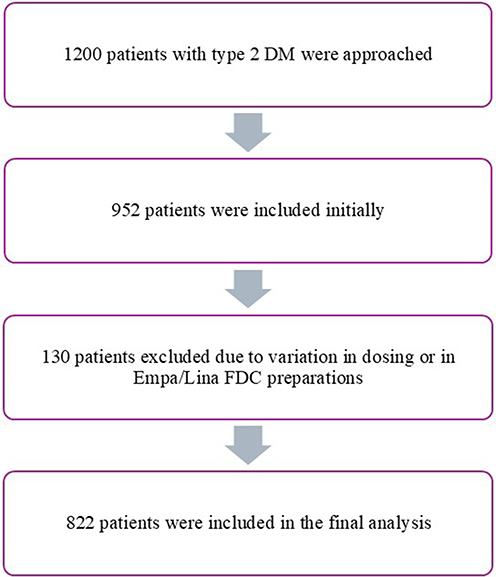 |
Figure 1 Flow-chart of patient selection. |
Data Collection Method
Data was collected in a semi-structured case record form. When a patient came to the outpatient department or consultancy centers, he/she was screened, evaluated, and approached by the trained data collectors (all graduates) as per the inclusion criteria. The study rationale and objectives were described to potential participants in a language appropriate for them, and those who gave consent were enrolled. At baseline, data on patients’ demographic characteristics, height, medical history (the duration of T2DM, diabetic complications, and comorbidities), and treatment history were collected. Every patient undergoes measurements of weight and blood pressure on their visits. Also, the glycemic tests, including FBS, PPBS, and HbA1c, are routinely done for these patients at practice. Assessment of serum fasting lipid profile, creatinine, and estimated glomerular filtration rate (eGFR) may be undertaken on a case-by-case basis at the discretion of the prescribing specialist. Hence, patients’ weight, systolic and diastolic blood pressure, HbA1c, fasting blood glucose (FBG), post-prandial blood glucose (PPBG), fasting lipid profile, serum creatinine, and e-GFR level were taken from their medical records at baseline and during follow-up visits. All adverse events (AEs) observed during the follow-up period in patients who received at least one dosage of the study drug were recorded.
Study Treatment
Empagliflozin plus linagliptin is the first‐in‐class dual inhibitor combination therapy (SGLT2 plus DPP‐4), recently approved by the US Food and Drug Administration (FDA). The fixed-dose combination (FDC) of empagliflozin and linagliptin is available in two strengths: empagliflozin 10 mg/linagliptin 5 mg, and empagliflozin 25 mg/linagliptin 5 mg. This study observed the effect of Empa/Lina (10/5) FDC single daily dosing on the glycemic profile of patients, over a period of three months (+7 days) from the baseline.
Outcomes
The primary outcome of the study was the changes in fasting blood sugar (FBS), post-prandial blood sugar (PPBS) two hours after breakfast, and glycated hemoglobin levels (HbA1c). The mid-point changes (ie, at 1.5 months) in the fasting and post-prandial blood sugar were also observed. Secondary outcomes included changes in BMI, blood pressure, lipid profile, and eGFR. The safety outcomes included any incidence of common adverse events (AEs) associated with the FDC, including hypoglycemia, urinary tract infection, and genital fungal infection. Serious AEs were defined as events that result in death or need for critical care, hospitalization, or disability.
Statistical Analysis
All categorical variables were presented using frequency (percentage), and all continuous variables were presented using mean (standard deviation [SD]) or median (interquartile range [IQR]). The normality of the continuous data was tested using the histogram normal curve and Shapiro–Wilk test. An available case analysis approach was taken to deal with missing values. Bivariate analysis between two categorical variables was done using Chi-square or Fisher’s exact test, and between a continuous variable and a categorical variable with two categories using the Welch-two samples test if the data is parametric or using the Wilcoxon rank sum test if the data is non-parametric. The changes in glycemic profiles (FBS and PPBS) were assessed using repeated measures analysis of variance (ANOVA) across three time points, and in HbA1c was assessed using a paired-sample t-test between two time points. Table 1 describes the statistical tests used for the analysis with more details. A p-value of <0.05 was considered significant for all statistical analyses. All analyses were done, and graphs were generated using R Studio Version 2024.04.2 and Microsoft Excel 365.
 |
Table 1 Statistical Analyses Used in This Study |
Ethical Considerations
The study was approved by the ethical review committee of Dhaka Medical College Hospital (Memo No. ERC-DMC/ECC/2023/93). Informed written consent was taken from the patients before participation. All procedures were conducted following the latest guidelines laid out in the Declaration of Helsinki.
Results
Baseline Characteristics of Patients
Socio-Demographic Characteristics
A total of 822 patients with type 2 diabetes were included in the study. The median age was 52 years (SD: 12; IQR: 43–60), with 53.17% being male. Approximately 41.98% resided in urban areas, 37.79% in rural areas, and 20.23% in semi-urban areas. The most common education levels were graduation (21.13%), higher secondary (21.28%), and primary education (20.09%). The predominant occupations were housewife (41.23%) and business (22.62%). The median monthly income was 40,000 BDT (IQR: 25,000–60,000). The median duration of diabetes was 7 years (IQR: 4–10.5). A significantly higher proportion of patients who were receiving other anti-diabetic medications alongside empagliflozin (10mg) and linagliptin (5mg) fixed-dose combination, were doing business (p=0.028), had higher median monthly family income (p<0.001) and had a higher median duration of diabetes (years) (p=0.005) (Table 2).
 |
Table 2 Sociodemographic Characteristics of Patients |
Baseline Clinical Profile of Patients
The mean body mass index (BMI) of the patients was 26.8 (SD: 4.2) kg/m2. It was significantly higher among those who required other antidiabetic medications besides Empa/Lina (p<0.001). The mean systolic and diastolic blood pressures were 137.9 mmHg (SD 18.3) and 82.9 mmHg (SD 8.9), respectively. The combination therapy group had higher systolic blood pressure (138.5 vs 134.8 mmHg, p=0.009), while diastolic blood pressure showed no significant difference (p=0.153). Hypertension was the most prevalent comorbidity (58.88%), followed by dyslipidemia (35.04%) and chronic kidney disease (16.91%). Among diabetes-related complications, neuropathy was most common (28.83%), followed by retinopathy (15.45%) and nephropathy (10.46%). A significantly higher proportion of patients with stroke, chronic kidney disease, retinopathy, neuropathy, nephropathy, and diabetic foot needed other antidiabetic medications besides Empa/Lina (p<0.05). On the other hand, a significantly lower number of patients with hypertension, and dyslipidemia required other medications (p<0.05). However, medications did not differ by the presence of COPD, bronchial asthma, coronary artery disease and dermopathy (Table 3).
 |
Table 3 Clinical Profile of Patients at Baseline |
Baseline Investigation Profile
Glycemic control parameters showed mean fasting blood sugar of 11.9 mmol/L (SD 3.8), post-prandial blood sugar of 16.6 mmol/L (SD 4.9), and HbA1c of 10.1% (SD 2.3) at baseline. Kidney function was assessed with a median serum creatinine of 1.10 mg/dL (IQR 0.90–1.30) and median eGFR of 71 (IQR 56–80). The lipid profile showed median total cholesterol of 210 mg/dL (IQR 182–248), LDL of 120 mg/dL (IQR 90–157), HDL of 40 mg/dL (IQR 34–47), and triglycerides of 238 mg/dL (IQR 165–323). Notably, patients receiving Empa/Lina (10/5) with other antidiabetic medications (n=438) demonstrated significantly poorer glycemic control compared to those on Empa/Lina (5/10) alone (n=384). Glycemic parameters were significantly higher in the combination group: fasting blood sugar (12.5 vs 10.9 mmol/L, p<0.001), post-prandial blood sugar (17.1 vs 15.9 mmol/L, p=0.002), and HbA1c levels (10.5% vs 9.5%, p<0.001). However, kidney function parameters and lipid profiles were similar between the two groups (Table 4).
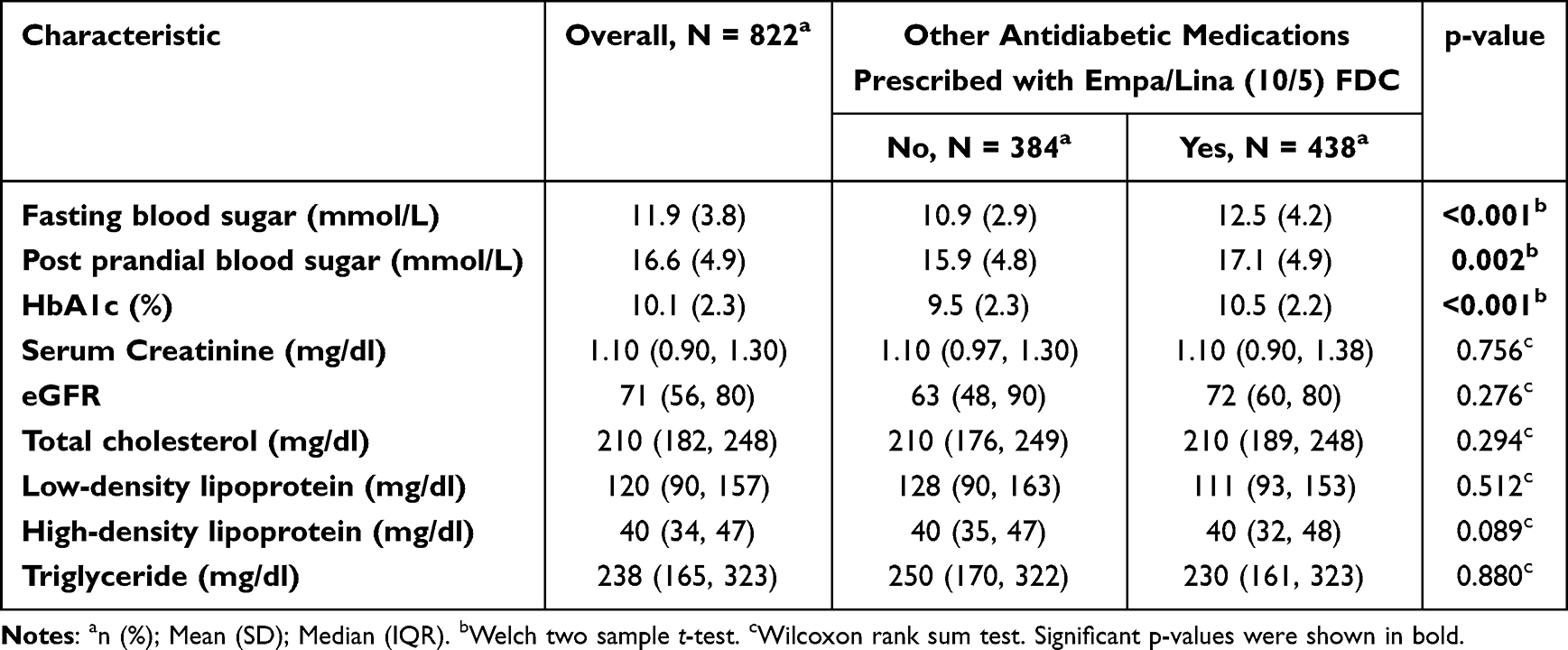 |
Table 4 Investigation Profile of Patients at Baseline |
Baseline Treatment Profile
At baseline before Empa/Lina (10/5) was started, 38.69% of patients were on insulin therapy. Metformin was the most commonly prescribed oral antidiabetic (44.89%), followed by gliclazide (17.88%) and glimepiride (13.02%). SGLT2 inhibitors were prescribed to 13.26% of patients (Table 5).
 |
Table 5 Ongoing Treatment Pattern of Patients Before the Prescription of Empa/Lina (10/5) FDC |
Changes in Glycemic Profile from Baseline to Endline
Figure 2 shows that the mean FBS, PPBS, and HbA1c levels considerably decreased from baseline to endline at 3 months for all patients.
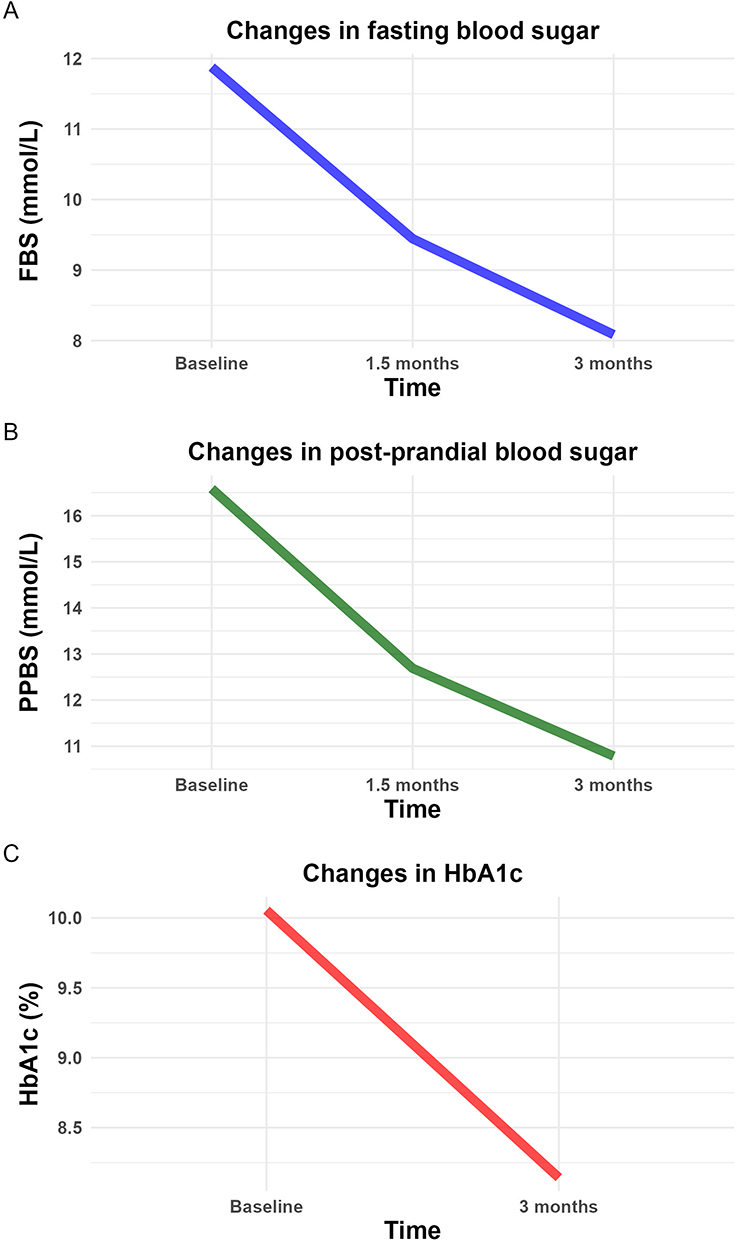 |
Figure 2 Changes in mean FBS (A), PPBS (B) and HbA1c (C) levels from baseline to endline (3 months). Abbreviations: FBS, Fasting Blood Sugar; PPBS, Post Prandial Blood Sugar. |
For patients on Empa/Lina (10/5) FDC alone, the mean FBS decreased from 10.36 mmol/L at baseline to 8.16 mmol/L at the endline (p<0.001). Mean PPBS decreased from 14.84 mmol/L to 11.11 mmol/L (p<0.001) and mean HbA1c decreased from 9.13% to 8.18% (p<0.001). While for patients on empagliflozin/linagliptin FDC plus other antidiabetics, the mean FBS decreased from 12.08 mmol/L to 8.05 mmol/L (p<0.001), the mean PPBS decreased from 16.87 mmol/L to 10.59 mmol/L (p<0.001), and the mean HbA1c decreased from 10.20% to 8.12% (p<0.001). See Table 6 for details.
 |
Table 6 Changes in Glycemic Profile from Baseline to End of Study by Treatment Groups |
From baseline to endline, DM patients who were only on Empa/Lina (10/5) FDC experienced 2.2 mg/dl, 3.73 mg/dl, and 0.95% reduction in FBS, PPBS, and HbA1c, respectively. In patients taking other antidiabetics in addition to Empa/Lina (10/5) FDC, the reductions were 4.03 mg/dl, 6.31mg/dl and 2.08% respectively (Figure 3).
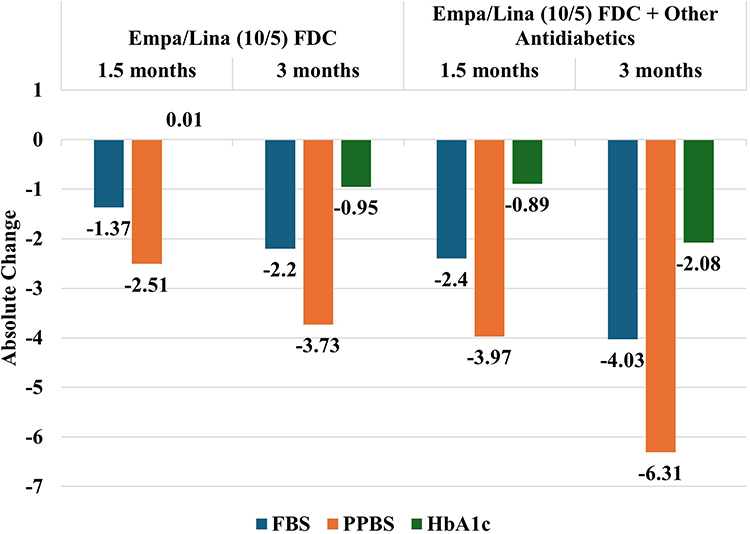 |
Figure 3 Absolute reductions in FBS (mg/dl), PPBS (mg/dl), HbA1c (%) from baseline to endline (3 months) among diabetic patients taking only Empa/Lina (10/5) FDC or Empa/Lina (10/5) FDC plus other antidiabetics. Abbreviations: FBS, Fasting Blood Sugar; PPBS, Post Prandial Blood Sugar. |
Significant improvements in FBS, PPBS, and HbA1c were observed across all subgroups of patients with various comorbidities (hypertension, stroke, coronary artery disease, chronic kidney disease, and dyslipidemia) and complications (retinopathy, neuropathy, nephropathy, dermopathy, and diabetic foot) over the three time points (p<0.001 for all comparisons) (Table 7 and 8).
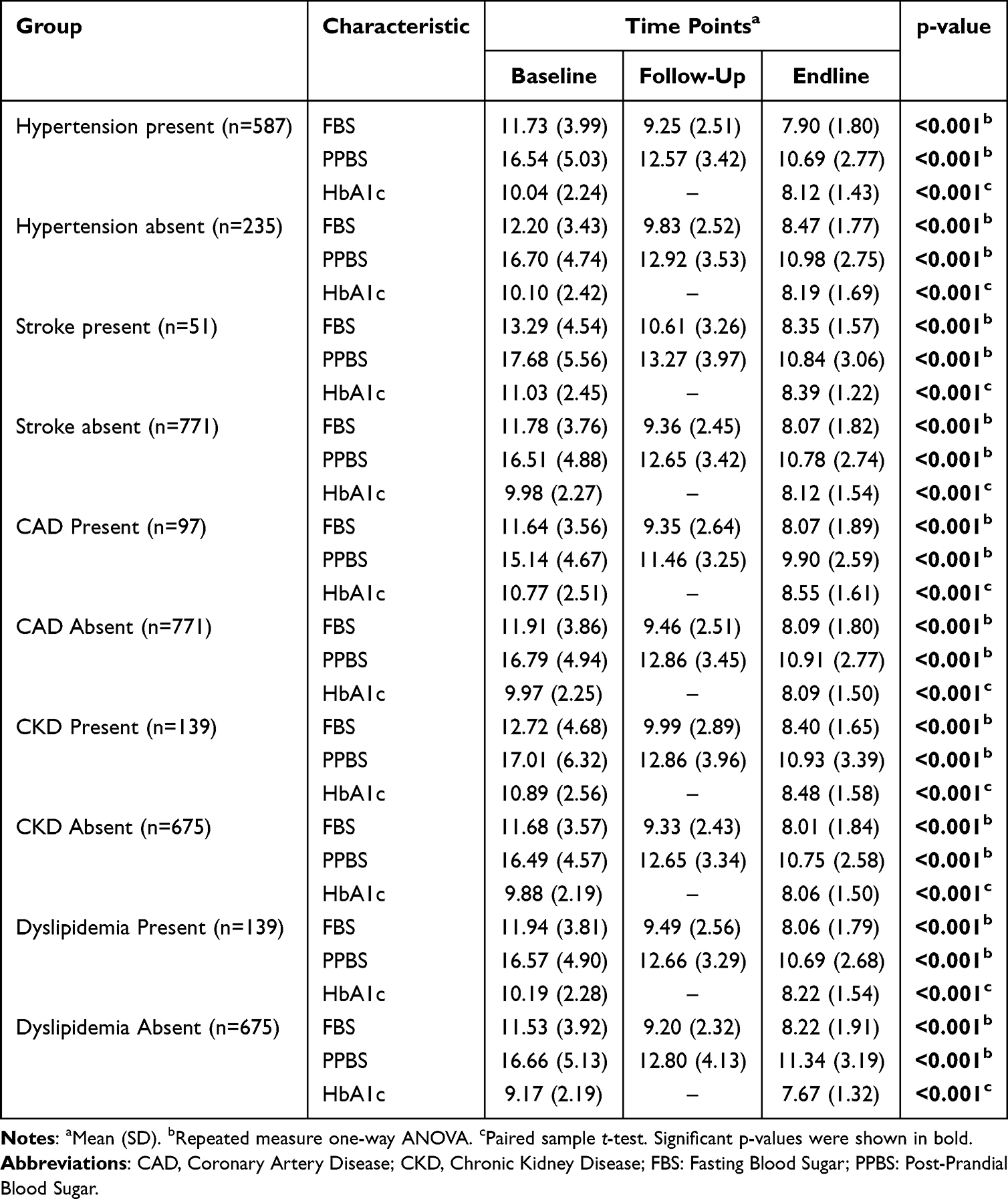 |
Table 7 Changes in Glycemic Profile Over Time by Comorbidities |
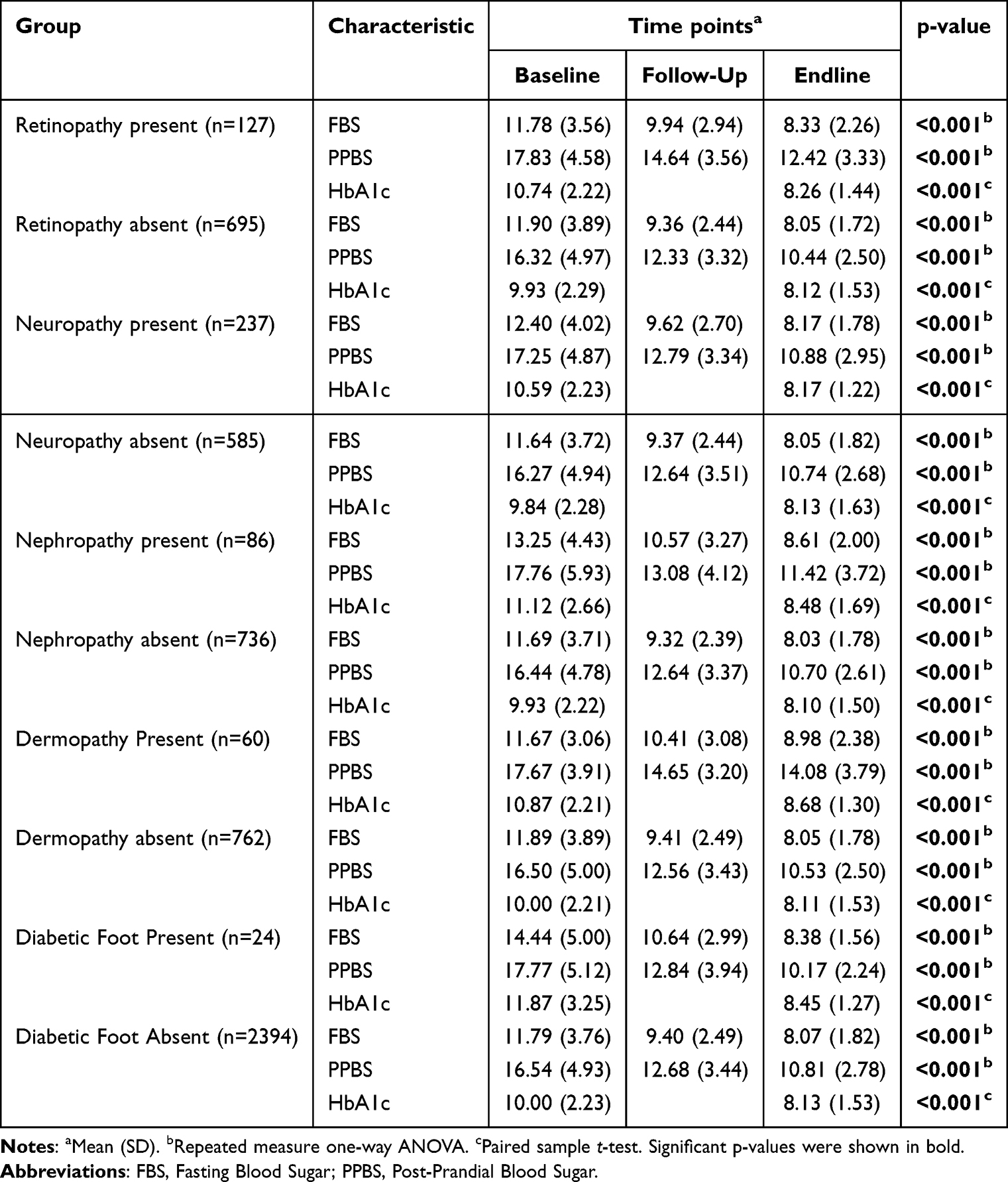 |
Table 8 Changes in Glycemic Profile Over Time by Diabetic Complications |
Changes in Body Mass Index, Blood Pressure, Estimated GFR and Lipid Profile
Table 9 illustrates changes in body mass index (BMI), estimated glomerular filtration rate (eGFR), and blood pressure over the 3-month study period. BMI decreased significantly from 26.81 kg/ m2 at baseline to 25.90 kg/m2 in 3 months (p=0.008). eGFR remained stable, with no significant change from baseline (70.40 mL/min/1.73m2) to 3 months (71.18 mL/min/1.73m^2) (p=0.922). Both systolic and diastolic blood pressure showed significant reductions. Systolic blood pressure decreased from 136.95 mmHg at baseline to 125.86 mmHg at 3 months (p<0.001), while diastolic blood pressure reduced from 82.94 mmHg to 78.53 mmHg (p<0.001) over the same period.
 |
Table 9 Changes in Blood Pressure, Body Mass Index, and Estimated GFR |
Table 10 shows that between baseline and endline, 478 patients did not require any anti-hypertensive drug ever, 256 had their anti-hypertensives either omitted or reduced at follow-up or at endline, and 88 patients were on anti-hypertensives. The mean SBP and DBP were significantly reduced from baseline to endline, irrespective of whether anti-hypertensive treatment was required or not.
 |
Table 10 Changes in Blood Pressure in Relation to Anti-Hypertensive Prescription |
From baseline, DM patients who were only on Empa/Lina (10/5) FDC experienced respectively 1.9 kg and 2.25 kg reductions at follow-up and endline, and in patients taking other antidiabetics in addition to Empa/Lina (10/5) FDC the weight increased 0.65 kg at follow-up and decreased 0.49 kg at endline (Figure 4).
 |
Figure 4 Absolute reductions in weight (kg) from baseline to follow-up (1.5 months) and endline (3 months) among diabetic patients taking only Empa/Lina (10/5) FDC or Empa/Lina (10/5) FDC plus other antidiabetics. |
In patients taking only Empa/Lina (10/5) FDC (10/5), the mean eGFR increased at follow-up and then decreased at endline. While in patients taking Empa/Lina (10/5) FDC plus other anti-diabetics, the mean eGFR increased at follow-up and decreased at endline (Figure 5).
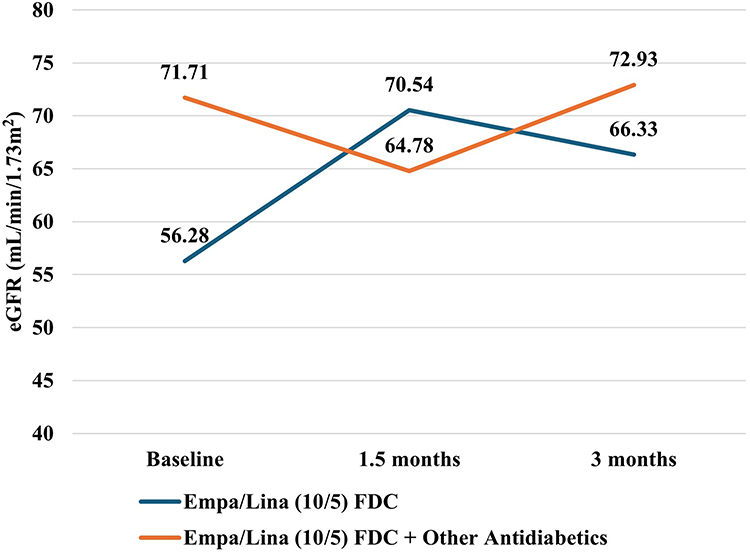 |
Figure 5 Mean eGFR at baseline, follow-up (1.5 months), and endline (3 months) among diabetic patients taking only Empa/Lina (10/5) FDC or Empa/Lina (10/5) FDC plus other antidiabetics. |
The average values of TC and LDL steadily decreased from baseline to endline in patients taking only Empa/Lina (10/5) FDC. However, HDL and TG levels showed an initial increase during the follow-up and a decrease at the endline. The average values of TC and TG showed an increase in patients taking Empa/Lina (10/5) FDC plus other antidiabetics. However, LDL showed a steady decrease, and HDL followed an initial decrease at baseline followed by an increase at endline (Figure 6).
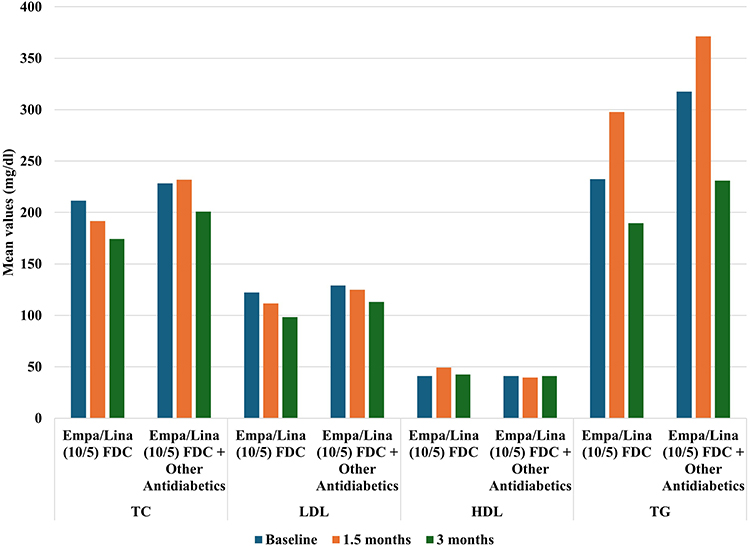 |
Figure 6 Mean total cholesterol (TC), low-density lipoprotein (LDL), high-density lipoprotein (HDL) and Triglyceride (TG) levels at baseline, follow-up (1.5 months) and endline (3 months) among diabetic patients taking only Empa/Lina (10/5) FDC or Empa/Lina (10/5) FDC plus other antidiabetics. |
Adverse Events
Only 2.8% of patients experienced urinary tract infections, 3.04% had genital mycotic infections, 10.95% had hypoglycemia, and eight patients (0.97%) had episodes of severe hypoglycemia leading to hospitalization (Table 11). The majority of urinary tract infections, and severe hypoglycemia episodes occurred in those who were prescribed Empa/Lina (10/5) FDC only.
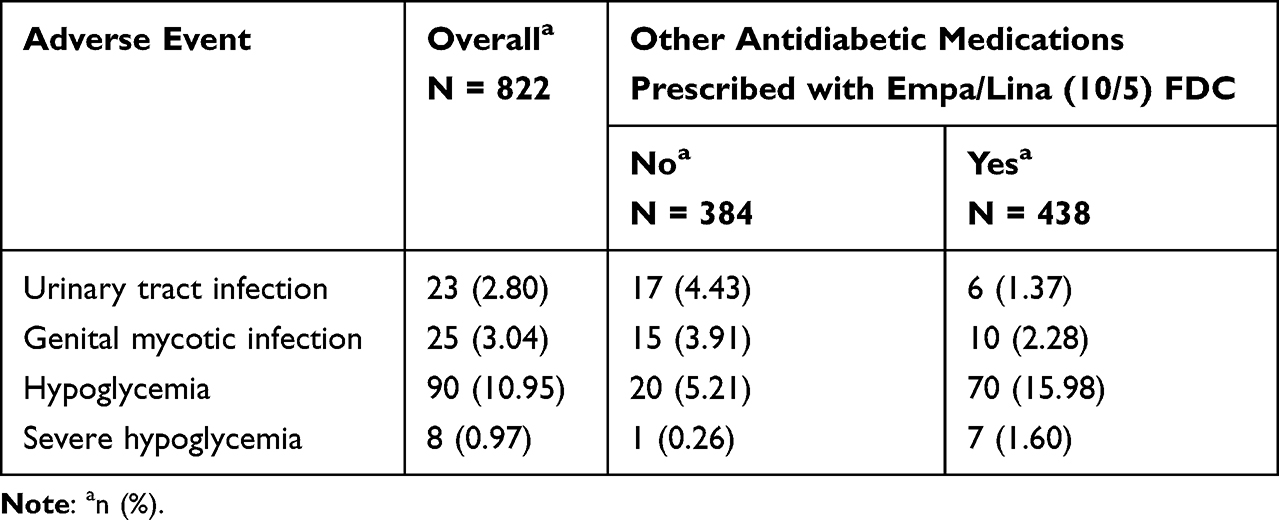 |
Table 11 Adverse Events Following Empa/Lina (10/5) FDC Treatment |
Discussion
This prospective, multi-center, observational study provides valuable real-world evidence on the effectiveness and safety of the fixed-dose combination (FDC) of empagliflozin 10 mg and linagliptin 5 mg in patients with type 2 diabetes mellitus (T2DM) in Bangladesh. The findings demonstrated significant improvements in glycemic control across various patient subgroups, with a favorable safety profile over 3 months.
Glycemic Control
We observed substantial reductions in fasting blood sugar (FBS), post-prandial blood sugar (PPBS), and HbA1c levels from baseline to the 3-month endpoint. These improvements were consistent across patients receiving Empa/Lina (10/5) FDC alone and those receiving it in combination with other antidiabetic medications. For patients on the FDC alone, mean HbA1c decreased from 9.13% to 8.18%, while for those on combination therapy with other antidiabetic drugs, it decreased from 10.20% to 8.12%. These results align with previous clinical trials and real-world studies on empagliflozin/linagliptin FDC, supporting its efficacy in improving glycemic control.3,16–20 The magnitude of HbA1c reduction observed in our study (approximately 1% for FDC alone and 2% for combination therapy) is clinically noteworthy and comparable to findings from other studies. For instance, a meta-analysis by Katsiki et al reported HbA1c reductions ranging from 0.4% to 1.04% with Empa/Lina (10/5) FDC.3 The slightly higher reductions seen in our study, particularly in the combination therapy group, may be attributed to better compliance of our patients with the treatment. The absolute changes in FBS and PPBS between baseline and endline were also noteworthy, with patients only on the FDC showing, respectively, 2.2 mmol/l and 3.73 mmol/l reduction and patients on FDC plus other antidiabetics showing a 4.03 mmol/l and 6.31 mmol/l reduction. The latter group had a higher baseline FBS and PPBS level, explaining the other antidiabetics provided along with Empa/Lina (10/5) FDC, as well as the higher reduction in absolute blood sugar values. The change in fasting plasma glucose was also higher compared to the pooled reduction of 1.6 mmol/l noted in the meta-analysis by Katsiki et al.3 However, it should be noted that Katsiki et al reported the change over a period of 24 weeks, while our study observed the changes over a period of 12 weeks. A longer duration of the follow-up may show a reduced change at later time-points, which, as observed by Vigersky et al,21 can be improved by continuous real-time monitoring. Nevertheless, patients on Empa/Lina (10/5) FDC with other antidiabetic medications showing greater absolute reductions in glycemic parameters compared to those on FDC alone suggest that the Empa/Lina (10/5mg) FDC can effectively complement existing diabetes management regimens, providing additional glycemic benefits in patients with more challenging glycemic control.
Comorbidities and Complications
Our study population had a high prevalence of comorbidities, including hypertension (58.88%), dyslipidemia (35.04%), and chronic kidney disease (16.91%). Despite these comorbidities, significant improvements in glycemic control were observed across all subgroups of patients with various comorbidities. This finding is particularly important as it demonstrates the effectiveness of Empa/Lina (10/5mg) FDC in a real-world setting where patients often present with multiple comorbidities. The improvements in glycemic control among patients with CKD are noteworthy, given the challenges of diabetes management in this population. Previous studies22 have shown that empagliflozin can be used safely in patients with reduced renal function and may even provide a renoprotective effect. Even linagliptin may give renoprotection through reduced proteinuria.23 Our findings support the use of Empa/Lina (10/5) FDC in patients with comorbid chronic kidney disease, though further research is needed to evaluate long-term renal outcomes.
We noted that patients with complications are likely to have higher glycemic levels compared to those without complications. However, irrespective of the presence of any complication, patients showed a significant improvement in FBS, PPBS, and HbA1c levels from baseline to endline of the study. The Empa/Lina (10/5) FDC has been proven to exert renal and cardiac benefits in patients who are taking it.3 The blood sugar-lowering effect of this combination among patients with complications may, to some extent, explain that effect.
Parallel Beneficial Changes
The significant reduction in weight and, therefore, BMI over the 3-month period aligns with the known effects of SGLT2 inhibitors like empagliflozin, likely due to caloric loss associated with increased urinary glucose excretion. Similarly, Althobaiti et al observed a reduction in body weight in type 2 DM patients in 12-week prospective observational study of Empa/Lina FDC.24 This clinically meaningful weight loss may contribute to improved cardiovascular risk profiles in patients with type 2 DM. Like Althobaiti et al24 we did not find an improvement in renal function in our patients. However, the stability of eGFR throughout the study period is reassuring, suggesting that the Empa/Lina (10/5) FDC did not negatively impact renal function in the short term, which is particularly important given the high prevalence of chronic kidney disease in our study population. Patients who were given Empa/Lina (10/5) FDC in addition to other antibiotics had poorer glycemic control and higher levels of complications and were found to have a lower absolute reduction in weight compared to patients who were only taking Empa/Lina (10/5) FDC. This could imply that the weight-reducing effects of Empa/Lina (10/5) FDC might be subverted by the cross-cutting influences of co-prescription of other anti-diabetic medications with weight-increasing effects, and the probable presence of non-compliance, or higher insulin resistance in these patient groups.
In contrast to previous studies,2,16,24 we found a significant reduction in both systolic and diastolic blood pressure among our patients. Although the fixed-dose combination of empagliflozin and linagliptin did not show a significantly higher reduction in blood pressure when they are used with other anti-diabetic agents compared to when they are used alone,3 these blood pressure-lowering effects could have substantial clinical implications for cardiovascular risk reduction. The observed improvements in blood pressure without a significant change in eGFR suggest that the Empa/Lina (10/5) FDC may offer cardiovascular benefits without compromising renal function, which is particularly relevant for patients with diabetes who often have concomitant hypertension and are at increased risk for both cardiovascular and renal complications.
Our study also found reductions in mean total and LDL cholesterol levels in patients getting Empa/Lina (10/5) FDC over the follow-up period, which is contrary to the findings by Rau et al, who noted a net small increase in LDL cholesterol among diabetic patients on empagliflozin.25 However, similar to our study, previously Inagaki et al19 found a net reduction in mean TC and LDL levels among patients taking the fixed dose formulation. But the changes varied widely on an individual level. Hence, the link between Empa/Lina (10/5) FDC and cholesterol level reductions could not be inferred.
Safety Profile
The safety profile of Empa/Lina (10/5) FDC in our study was favorable, with low rates of adverse events. Only 2.8% of patients experienced urinary tract infections, and 3.04% had genital mycotic infections. These rates are lower than those reported in some clinical trials,14 and comparable to others,19 which may be due to differences in monitoring and reporting practices in real-world settings. The low incidence of adverse events supports the tolerability of this combination therapy in a diverse patient population. Katsiki et al3 in their systematic review and meta-analysis noted that the Empa/Lina FDC produces a lower frequency of adverse events, including genital fungal infection, urinary tract infection, and hypoglycemia, compared to single agent preparations. Notably, there were no reported cases of severe hypoglycemia or diabetic ketoacidosis, which are potential concerns with SGLT2 inhibitor therapy. This aligns with the established safety profile of empagliflozin and linagliptin and suggests that the combination may be associated with a low risk of these serious adverse events.
Clinical Implications
The findings of this study have several important clinical implications for the management of T2DM in Bangladesh and similar settings:
- Effectiveness in a diverse population: The study demonstrates the efficacy of Empagliflozin/Linagliptin (10/5 mg) FDC across a wide range of patients, including those with various comorbidities and complications. This supports its use as a versatile treatment option in real-world clinical practice in Bangladesh.
- Complementary therapy: The greater glycemic improvements observed in patients receiving the FDC alongside other antidiabetic medications suggest that it can be effectively used as an add-on therapy for patients not achieving glycemic targets with current regimens.
- Simplified treatment regimen: The use of a fixed-dose combination can potentially improve medication adherence by reducing pill burden, which is particularly beneficial in a setting where complex treatment regimens may be challenging to manage.
- Favorable side effects: The Empagliflozin/Linagliptin (10/5 mg) FDC demonstrated favorable effects on body weight and blood pressure while maintaining stable renal function over a 3-month period. These findings, combined with the glycemic improvements noted earlier, support the use of this combination therapy as a multifaceted approach to managing type 2 diabetes and its associated cardiovascular risk factors in real-world clinical practice.
- Safety in real-world use: The low incidence of adverse events observed in this study provides reassurance regarding the safety of Empagliflozin/Linagliptin (10/5 mg) FDC in routine clinical practice.
Limitations and Future Directions
While this study provides valuable insights, it has some limitations. The 3-month follow-up period, while sufficient to demonstrate short-term efficacy, does not allow for assessment of long-term outcomes or durability of effect. Future studies with longer follow-up periods are needed to evaluate the sustained effectiveness and safety of Empa/Lina (10/5) FDC FDC. The impact of variations in FDC preparation like using Empa/Lina 25/5 mg FDC preparation could not be observed in this study. Additionally, the observational nature of the study precludes causal inferences and may be subject to confounding factors. The effects on body weight and blood pressure were observed over a relatively short 3-month period. Hence, longer-term studies would be valuable to assess the durability of these effects and to explore potential mechanisms. Additionally, future research could investigate whether these improvements in BMI and blood pressure translate to meaningful reductions in cardiovascular events and mortality in the Bangladeshi population. Further research is also needed to explore the impact of Empa/Lina (10/5) FDC on the quality of life in the Bangladeshi population with type 2 DM.
Conclusion
This real-world study demonstrates that the fixed-dose combination of empagliflozin and linagliptin is effective in improving glycemic control in Bangladeshi patients with T2DM, including those with various comorbidities or complications. The favorable safety profile and significant reductions in HbA1c, FBS, and PPBS support its use as both monotherapy and in combination with other antidiabetic medications. The combination drug may potentially lower blood pressure and weight as well. These findings provide important evidence for clinicians managing T2DM in Bangladesh and similar settings, offering a promising treatment option for achieving glycemic targets in a diverse patient population.
Acknowledgment
The authors acknowledge Md. Mahbubur Rahman, Manager, and Farhana Afrose, Senior Executive, Marketing Division, The ACME Laboratories Ltd., for coordinating with the funding agency. Although this study was funded by the ACME Laboratories Ltd, the sponsor had no role in the study design, data collection, data analysis, manuscript preparation, or decision to publish.
Disclosure
The authors declare no conflicts of interest in this work.
References
1. Akter S, Rahman MM, Abe SK, Sultana P. Prevalence of diabetes and prediabetes and their risk factors among Bangladeshi adults: a nationwide survey. Bull World Health Organ. 2014;92(3):204–213A. doi:10.2471/blt.13.128371
2. Lewin A, DeFronzo RA, Patel S, et al. Initial combination of empagliflozin and linagliptin in subjects with type 2 diabetes. Diabetes Care. 2015;38(3):394–402. doi:10.2337/dc14-2365
3. Katsiki N, Ofori-Asenso R, Ferrannini E, Mazidi M. Fixed-dose combination of empagliflozin and linagliptin for the treatment of patients with type 2 diabetes mellitus: a systematic review and meta-analysis. Diabetes Obes Metab. 2020;22(6):1001–1005. doi:10.1111/dom.13989
4. Kovil R, Saboo B, Shah K, et al. Single-pill combination of empagliflozin and linagliptin in real world indian type 2 diabetes patient (GRID). J Assoc Physicians India. 2020;68(10):53–55. PMID: 32978926.
5. Woo V. Empagliflozin/linagliptin single-tablet combination: first-in-class treatment option. Int J Clin Pract. 2015;69(12):1427–1437. doi:10.1111/ijcp.12720
6. World Health Organization. Global report on diabetes. WHO. Availabe from: https://www.who.int/publications/i/item/9789241565257.
7. Zhou B, Lu Y, Hajifathalian K, et al. Worldwide trends in diabetes since 1980: a pooled analysis of 751 population-based studies with 4·4 million participants. Lancet. 2016;387(10027):1513–1530. doi:10.1016/S0140-6736(16)00618-8
8. Cho NH, Shaw JE, Karuranga S, et al. IDF diabetes atlas: global estimates of diabetes prevalence for 2017 and projections for 2045. Diabet Res Clin Pract. 2018;138:271–281. doi:10.1016/j.diabres.2018.02.023
9. Hussain A, Vaaler S, Sayeed MA, Mahtab H, Ali SMK, Khan AKA. Type 2 diabetes and impaired fasting blood glucose in rural Bangladesh: a population-based study. Eur J Public Health. 2007;17(3):291–296. doi:10.1093/eurpub/ckl235
10. Solanki N, Virk AK, Gupta BP, Singh J. Prevalence and risk factors of diabetes mellitus among adults residing in field practice area of a teaching hospital in Punjab. Heal J Indian Assoc Prev Soc Med. 2015;6:57–62.
11. Davidson MB, Peters AL. An overview of metformin in the treatment of type 2 diabetes mellitus. Am J Med. 1997;102(1):99–110. doi:10.1016/s0002-9343(96)00353-1
12. Forst T, Uhlig-Laske B, Ring A, et al. Linagliptin (BI 1356), a potent and selective DPP-4 inhibitor, is safe and efficacious in combination with metformin in patients with inadequately controlled type 2 diabetes. Diabet Med. 2010;27(12):1409–1419. doi:10.1111/j.1464-5491.2010.03131.x
13. Brown DX, Evans M. Choosing between GLP-1 receptor agonists and DPP-4 inhibitors: a pharmacological perspective. J Nutr Metab. 2012;2012:381713. doi:10.1155/2012/381713
14. DeFronzo RA, Lee C, Kohler S. Safety and tolerability of combinations of empagliflozin and linagliptin in patients with type 2 diabetes: pooled data from two randomized controlled trials. Adv Ther. 2018;35(7):1009–1022. doi:10.1007/s12325-018-0724-y
15. Fushimi Y, Obata A, Sanada J, et al. Early combination therapy of empagliflozin and linagliptin exerts beneficial effects on pancreatic β cells in diabetic db/db mice. Sci Rep. 2021;11(1):16120. doi:10.1038/s41598-021-94896-w
16. Gupta A, Malhotra P, Jamwal V, Khalse M. A retrospective analysis of fixed combination of empagliflozin and linagliptin in addition to the existing treatment for its clinical effectiveness in adults with type 2 diabetes: a real-world clinical experience. J Assoc Physicians India. 2021;69(7):11–12.
17. Kaku K, Haneda M, Tanaka Y, et al. Linagliptin as add-on to empagliflozin in a fixed-dose combination in Japanese patients with type 2 diabetes: glycaemic efficacy and safety profile in a two-part, randomized, placebo-controlled trial. Diabetes Obes Metab. 2019;21(1):136–145. doi:10.1111/dom.13496
18. DeFronzo RA, Lewin A, Patel S, et al. Combination of empagliflozin and linagliptin as second-line therapy in subjects with type 2 diabetes inadequately controlled on metformin. Diabetes Care. 2015;38(3):384–393. doi:10.2337/dc14-2364
19. Inagaki N, Nishimoto T, Nishiya Y, Nitta D. Safety and effectiveness of empagliflozin and linagliptin fixed-dose combination therapy in Japanese patients with type 2 diabetes: final results of a one-year post-marketing surveillance study. Expert Opin Drug Saf. 2023;22(2):153–163. doi:10.1080/14740338.2022.2107200
20. Triplitt C, Solis-Herrera C, Cersosimo E, Abdul-Ghani M, Defronzo RA. Empagliflozin and linagliptin combination therapy for treatment of patients with type 2 diabetes mellitus. Expert Opin Pharmacother. 2015;16(18):2819–2833. doi:10.1517/14656566.2015.1114098
21. Vigersky RA, Fonda SJ, Chellappa M, Walker MS, Ehrhardt NM. Short- and long-term effects of real-time continuous glucose monitoring in patients with type 2 diabetes. Diabetes Care. 2012;35(1):32–38. doi:10.2337/dc11-1438
22. Chen X, Delić D, Cao Y, et al. Renoprotective effects of empagliflozin are linked to activation of the tubuloglomerular feedback mechanism and blunting of the complement system. Am J Physiol Physiol. 2023;324(4):C951–C962. doi:10.1152/ajpcell.00528.2022
23. Moeinzadeh F, Iraj B, Mortazavi M, Ramezani P. The renoprotective effect of linagliptin in type 2 diabetic patients with severely increased albuminuria. Iran J Kidney Dis. 2021;15(5):344–350. doi:10.52547/ijkd.6110
24. Althobaiti FM, Alsanosi SM, Falemban AH, et al. Efficacy and safety of empagliflozin in type 2 diabetes mellitus saudi patients as add-on to antidiabetic therapy: a prospective, open-label, observational study. J Clin Med. 2022;11(16):1–13. doi:10.3390/jcm11164769
25. Rau M, Thiele K, Korbinian Hartmann NU, et al. Effects of empagliflozin on lipoprotein subfractions in patients with type 2 diabetes: data from a randomized, placebo-controlled study. Atherosclerosis. 2021;330:8–13. doi:10.1016/j.atherosclerosis.2021.06.915
 © 2025 The Author(s). This work is published and licensed by Dove Medical Press Limited. The
full terms of this license are available at https://www.dovepress.com/terms
and incorporate the Creative Commons Attribution
- Non Commercial (unported, 4.0) License.
By accessing the work you hereby accept the Terms. Non-commercial uses of the work are permitted
without any further permission from Dove Medical Press Limited, provided the work is properly
attributed. For permission for commercial use of this work, please see paragraphs 4.2 and 5 of our Terms.
© 2025 The Author(s). This work is published and licensed by Dove Medical Press Limited. The
full terms of this license are available at https://www.dovepress.com/terms
and incorporate the Creative Commons Attribution
- Non Commercial (unported, 4.0) License.
By accessing the work you hereby accept the Terms. Non-commercial uses of the work are permitted
without any further permission from Dove Medical Press Limited, provided the work is properly
attributed. For permission for commercial use of this work, please see paragraphs 4.2 and 5 of our Terms.