
Back to Journals » Drug Design, Development and Therapy » Volume 20
Exploring the Antibacterial Properties of Acmella Species: A Systematic Literature Review
Authors Shuid AN, Mohd Nawi SFA, Kamarudin SN, Shuid AN, Abdul Malik MM, Abu Hanipah NF, Miptah HN, Naina Mohamed I
Received 23 April 2025
Accepted for publication 17 October 2025
Published 8 January 2026 Volume 2026:20 536279
DOI https://doi.org/10.2147/DDDT.S536279
Checked for plagiarism Yes
Review by Single anonymous peer review
Peer reviewer comments 2
Editor who approved publication: Dr Solomon Tadesse Zeleke
Ahmad Nazrun Shuid,1 Siti Farah Alwani Mohd Nawi,2 Siti Norsyafika Kamarudin,1 Ahmad Naqib Shuid,3 Mohd Maaruf Abdul Malik,4 Noor Fahitah Abu Hanipah,1 Hayatul Najaa Miptah,5 Isa Naina Mohamed6
1Department of Pharmacology, Faculty of Medicine, Universiti Teknologi MARA, Sungai Buloh Campus, Jalan Hospital, Sungai Buloh, Selangor Darul Ehsan, 47000, Malaysia; 2Department of Medical Microbiology and Parasitology, Faculty of Medicine, Universiti Teknologi MARA, Sungai Buloh Campus, Jalan Hospital, Sungai Buloh, Selangor Darul Ehsan, 47000, Malaysia; 3Advanced Medical and Dental Institute, Universiti Sains Malaysia, Bertam, Kepala Batas, Penang, 13200, Malaysia; 4Centre of Preclinical Science Studies, Faculty of Dentistry, Universiti Teknologi MARA, Sungai Buloh Campus, Jalan Hospital, Sungai Buloh, Selangor, 47000, Malaysia; 5Department of Primary Care Medicine, Faculty of Medicine, Universiti Teknologi MARA, Sungai Buloh Campus, Jalan Hospital, Sungai Buloh, Selangor Darul Ehsan, 47000, Malaysia; 6Department of Pharmacology, Faculty of Medicine, Universiti Kebangsaan Malaysia, Jalan Yaacob Latif, Cheras, Kuala Lumpur, 56000, Malaysia
Correspondence: Isa Naina Mohamed, Department of Pharmacology, Faculty of Medicine, Universiti Kebangsaan Malaysia, Jalan Yaacob Latif, Cheras, Kuala Lumpur, 56000, Malaysia, Email [email protected]
Abstract: The increasing prevalence of antibiotic-resistant bacteria has intensified the search for alternative antimicrobial agents, with plant-derived extracts emerging as promising candidates. The Acmella genus, known for its rich array of bioactive compounds, has been explored for its antibacterial potential; however, a comprehensive synthesis of the available evidence remains limited. This systematic review aims to evaluate the antibacterial properties of Acmella genus plant extracts by analysing studies retrieved from the Scopus, PubMed, and Web of Science databases. An advanced search identified 111 relevant articles, of which 14 met the inclusion criteria after a rigorous screening process. The selected studies predominantly investigated Acmella oleracea (syn. Spilanthes acmella), along with Acmella ciliata, Acmella caulirhiza, Acmella paniculata, and Acmella uliginosa. Ethanol and methanol were the primary solvents used for extraction, with methanolic extracts generally demonstrating superior antibacterial efficacy. Antibacterial activity was assessed using in vitro methodologies, including minimum inhibitory concentration (MIC), minimum bactericidal concentration (MBC), disc diffusion, and agar well diffusion assays. The results revealed significant inhibitory effects against Gram-positive bacteria such as Streptococcus mutans and Staphylococcus aureus, as well as Gram-negative bacteria like Escherichia coli and Pseudomonas aeruginosa. Notably, some studies reported biofilm inhibition properties, highlighting the potential of Acmella extracts in managing persistent infections. While these findings underscore the therapeutic promise of Acmella-derived compounds in oral health and wound care, the absence of in vivo and clinical studies limits their translational applicability. Future research should focus on isolating active compounds, evaluating their pharmacokinetics, and exploring synergistic effects with conventional antibiotics to enhance efficacy and minimize resistance development.
Keywords: Acmella genus, plant extracts, antibacterial activity, infection, antibiotic resistance
Introduction
There has been a gradual decline in antibiotic discovery, contributing to antibiotic resistance crisis. Aljeldah (2022)1 reported that antibiotic resistance is advancing faster than solutions, leaving the world with few options for treating infections. This situation has become one of the major causes of morbidity and mortality worldwide. According to the 2024 WHO Bacterial Priority Pathogens List (WHO BPPL), Pseudomonas aeruginosa, Enterococcus species, Acinetobacter baumannii, Staphylococcus aureus, Escherichia coli, Salmonella, Shigella, and Klebsiella species are among the 24 pathogens identified as highly resistant to antibiotics. There is a critical need to intensify efforts in antibiotic development to address the escalating threat of antibiotic resistance.2
Antibiotics, or antibacterial agents, are substances that specifically inhibit the growth of or kill bacteria. Most antibacterial agents currently used in clinical practice are derived from microorganisms such as bacteria and fungi. Some plant-derived compounds have also been successfully developed into antimicrobial agents with activity against bacteria, viruses, fungi, and parasites. Notable examples include quinine, artemisinin, and berberine. However, the number of antibacterial agents derived from plants remains limited.3–5
Natural plant-derived antimicrobial compounds hold promise as potential substitutes for traditional antibiotics. These compounds, found in various parts of the plant—including roots, stems, leaves, flowers, fruits, and seeds—have demonstrated significant inhibitory effects on bacterial growth.6
Plants from the Acmella genus are known to contain a variety of active compounds, including alkylamides, phenols, flavonoids, and tannins, which may contribute to their bactericidal properties.7,8 Several species within the Acmella genus, such as Acmella oleracea (synonymous with Spilanthes acmella), are believed to possess antimicrobial activity and are traditionally used in some cultures to treat bacterial infections. Active compounds such as spilanthol have been shown to be effective against various bacteria, including Staphylococcus aureus and Escherichia coli.9
Acmella oleracea, Acmella uliginosa, Acmella caulirhiza, and Acmella paniculata are all members of the Acmella genus within the family Asteraceae, commonly referred to as the daisy or sunflower family. These plants are typically herbaceous and perennial and are commonly found in tropical and subtropical regions. They usually bear yellow or orange flower heads that resemble daisies. Depending on cultural and regional naming conventions, they are also known as the toothache plant, buzz button, or paracress.10
Many plants from the Acmella genus are used in traditional medicine for their anti-inflammatory, antibacterial, and analgesic properties. The primary compounds of interest include spilanthol, along with other alkylamides and flavonoids, which are believed to contribute to their medicinal effects.11–14
Although these plants are all related through the Acmella genus, the species within this group are sometimes classified under different scientific names. The confusion surrounding the classification and nomenclature of herbal plants stems from several factors, including taxonomic revisions, regional and cultural variations in common names, morphological diversity, and the lack of a standardized classification system.15,16
This study aimed to conduct a systematic review of published literature to evaluate the antibacterial activities of extracts from plants within the Acmella genus, as supported by scientific evidence. To avoid taxonomic confusion, all species were collectively referred to as Acmella genus plants throughout the review. In the search for relevant journal articles, the keyword “Acmella” was used to retrieve publications related to various species, including Acmella oleracea, Spilanthes acmella, Acmella uliginosa, Acmella paniculata, and Acmella caulirhiza.
Materials and Methods
Search Strategy
The search strategy was developed using the PICO framework (Population, Intervention, Comparison, and Outcome) to structure the research question effectively. The goal was to identify relevant studies investigating the antibacterial actions of plants from the Acmella genus plants.
The search strategy was conducted in accordance with the Meta-Analysis and Systematic Reviews of Observational Studies (MOOSE) guideline17 and the Preferred Reporting Items for Systematic Review and Meta-Analysis Protocols (PRISMA-P).18
A systematic review of the literature was conducted from December 2024 to February 2025 across Scopus, PubMed, and Web of Science databases using Medical Subjects Headings (MeSH) indexes and keyword searches. The string used included the entry term “Acmella”, which was searched in combination (AND) with the terms “infection” OR “antimicrobial” OR “antibacterial*” The query “LIMIT-TO (DOCTYPE, ‘ar’)” was used to limit retrieve only original studies. The same combination of terms was used for all the databases. The search was limited to articles published within the past 10 years (2015–2025).
Inclusion Criteria
- Articles with available abstracts
- Peer-reviewed journal articles
- Studies reporting the antibacterial activities of plants from the Acmella genus
Exclusion Criteria
- Non-English language articles (due to limited resources for translation)
- Review articles or meta-analyses without primary data
- Letters, editorials, or case studies
Selection Criteria
This systematic review included all published articles that evaluated the antibacterial activity of Acmella genus plants, including Spilanthes acmella, Acmella oleracea, Acmella paniculata, Acmella uliginosa, and Acmella caulirhiza. All eligible studies were selected based on the PICOS criteria (Population, Intervention, Comparison/Comparator, Outcomes, and Study design)19 (Table 1).
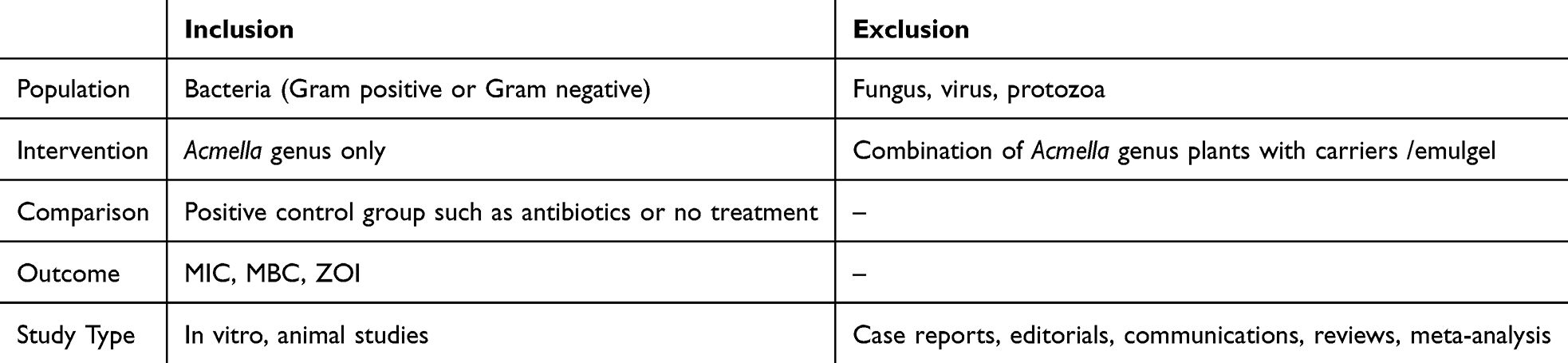 |
Table 1 PIPOC Framework |
Articles included in the review were selected in three phases. First, the titles of all retrieved articles were screened, and any that did not meet the inclusion criteria were excluded. Duplicate entries were also removed during this phase. Second, the abstracts of the remaining articles were reviewed and excluded if they did not satisfy the inclusion criteria. In the final phase, the full texts of the remaining articles were obtained and thoroughly assessed to exclude any that did not meet the inclusion criteria.
At least two reviewers (SNK and NFAH) independently carried out the screening process. Before proceeding to the data extraction phase, the inclusion of each article in the review was confirmed through agreement between the two reviewers. Any disagreements were resolved by consultation with a third reviewer (INM).
Data Extraction
Data extraction was performed in a standardized manner using a data collection form by SNK and ANQS. The extracted data included: (1) authors; (2) plant species and dosage; (3) study design and sample size; (4) study objectives; (5) parameters assessed; (6) key findings; and (7) conclusions. All extracted data were tabulated to facilitate comparative analysis.
Quality Assessment
ANS and INM assessed the quality of the included studies to ensure reliability using the SciRAP (Scientific Risk Assessment Portal) tool for in vitro studies. Studies rated as low quality were either excluded or had their limitations explicitly acknowledged in this review.
Data Synthesis
Data synthesis was conducted using a narrative synthesis approach. Key information extracted from the included studies is presented in a summary table (Table 2). This table summarizes important data in a clear and organized manner, enabling quick comparison and assessment of the characteristics, methodologies, and findings of the reviewed studies.
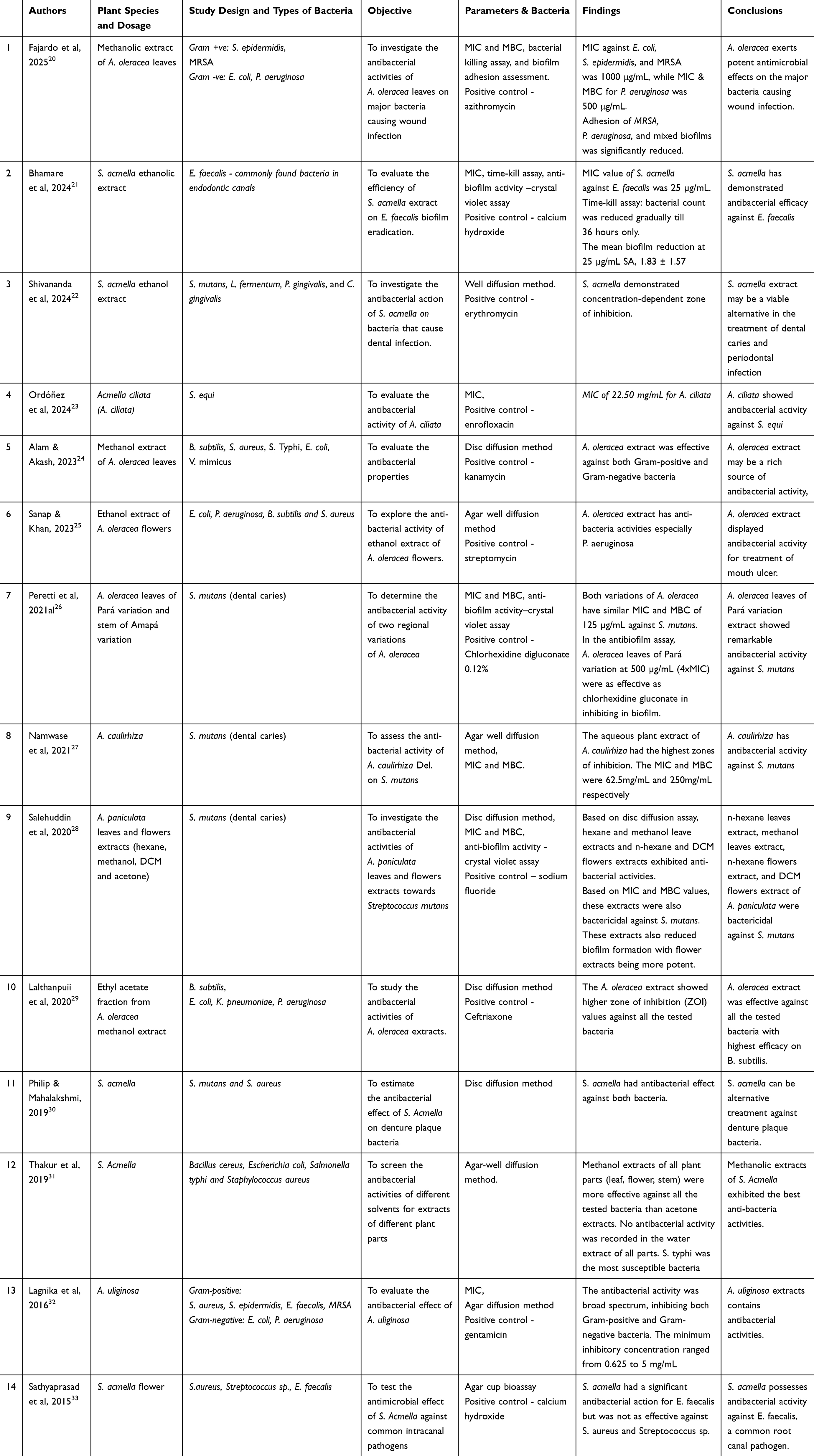 |
Table 2 Summary Table for the 14 Studies Selected |
Handling Missing Data
For studies with missing or incomplete data, attempts were made to contact the corresponding authors for clarification or additional information. If no response was received, the study was either excluded or analyzed based solely on the available data.
Ethical Considerations
Although this systematic review did not involve direct experimentation on humans or animals, ethical research standards were upheld. All included studies were peer-reviewed publications that had obtained ethical approval for their respective experiments or clinical trials.
Results
The literature search across Scopus, PubMed, and Web of Science databases identified 111 relevant articles. After removing duplicates, 91 articles remained for abstract screening. Two reviewers (SNK and NFAH) independently assessed the titles and abstracts of all articles based on the inclusion and exclusion criteria. Any disagreements regarding article selection were resolved through discussion, with final decisions made by a third reviewer (INM). A total of 19 articles were retrieved for full-text assessment. Upon further scrutiny, five articles were excluded because either antibacterial activity was not the primary focus or the Acmella genus plant extract was combined with nanocarriers or emulgels, making it difficult to determine whether the extract contributed to the observed antibacterial effects. All selected articles were assessed for quality using the SciRAP tool and were deemed reliable and relevant. Ultimately, 14 articles were included in this review.19–21,23,31,33–41 A flowchart outlining the selection process, including reasons for exclusion, is presented in Figure 1.
 |
Figure 1 Flow diagram of the proposed searching study. |
Types of Plants
The antibacterial potential of Acmella has been investigated across multiple species, reflecting the genus’s ethnomedicinal importance and diverse phytochemical composition. Researchers have primarily focused on A. oleracea and its synonymous species Spilanthes acmella, while a smaller number of studies extended the scope to other less-studied species such as A. ciliata, A. caulirhiza, A. paniculata, and A. uliginosa. The primary objective of the included studies was to evaluate the antibacterial activity of Acmella genus plant extracts. Five of the fourteen studies investigated the antibacterial properties of the leaves, stems, or flowers of Acmella oleracea. Another five studies examined Spilanthes acmella, which is taxonomically synonymous with A. oleracea. The remaining studies focused on other Acmella species, including A. ciliata, A. caulirhiza, A. paniculata, and A. uliginosa. In the study by Thakur et al,31 the methanolic extract of S. acmella demonstrated superior antibacterial activity compared to acetone or aqueous extracts.
Types of Bacteria
Given the clinical significance of bacterial infections, especially in dentistry and wound care, studies have tested Acmella extracts against a wide spectrum of Gram-positive and Gram-negative bacteria. The extracts were tested against various types of bacteria. In most studies, the bacterial strains were either commercially obtained or sourced from laboratory stock cultures. An exception was the study by Ordonez et al23 which isolated Streptococcus equi from the pus of lymphadenitis in guinea pigs.
Seven of the studies evaluated the extracts against bacteria associated with dental infections. Streptococcus mutans was the primary bacterium tested, along with Staphylococcus aureus, Enterococcus faecalis, and other Streptococcus species.
Two of the studies, Fajardo et al20 and Ordonez et al,23 tested the extracts against major bacteria responsible for wound infections and lymphadenitis, respectively. The remaining studies evaluated the extracts against common bacterial strains, primarily Staphylococcus aureus as a representative Gram-positive bacterium, and Escherichia coli and Pseudomonas aeruginosa as representative Gram-negative bacteria.
Methods
The methodological approaches to evaluate both bacteriostatic and bactericidal effects varied across studies, with diffusion assays used for preliminary screening and MIC/MBC determinations providing quantitative insights into efficacy. All the included studies were conducted in vitro; no animal or in vivo studies were identified. Half of the studies performed minimum inhibitory concentration (MIC) testing to determine the lowest concentration of Acmella plant extract that inhibits bacterial growth, indicating bacteriostatic activity. Several studies also reported minimum bactericidal concentration (MBC) values, which assess the extract’s ability to kill bacteria, indicating bactericidal activity. An extract is considered bactericidal if the MBC value is less than or equal to four times the MIC value, whereas bacteriostatic activity is indicated when the MBC value exceeds four times the MIC value.42
Many of the included studies employed disc diffusion or agar well diffusion assays as preliminary screening methods to assess the antibacterial activity of Acmella plant extracts by measuring the zone of inhibition. Other methods used included bacterial killing assays and anti-biofilm activity tests. A biofilm is a complex, structured community of microorganisms that adhere to a surface and are encased in a matrix of extracellular polymeric substances. Biofilms can form on various surfaces, including dental plaques. Four studies26,42–44 evaluated the anti-biofilm activity of Acmella extracts in the context of wound and dental infections.
The antibacterial effects of the extracts were compared to positive controls, which included antibiotics such as erythromycin, enrofloxacin, streptomycin, gentamicin, ceftriaxone, and kanamycin, as well as antiseptics and chemicals such as chlorhexidine digluconate, sodium fluoride, and calcium hydroxide.
Antibacterial Actions
Across the included studies, Acmella extracts demonstrated consistent antibacterial effects, although potency varied depending on the species tested, extraction method, and bacterial strain. The results highlighted promising activity against oral pathogens, wound-infecting bacteria, and several clinically relevant Gram-positive and Gram-negative organisms. Streptococcus mutans, Enterococcus faecalis, and Staphylococcus aureus are common bacteria associated with dental infections. Most of the studies related to dental pathogens tested the antibacterial activity of Acmella plant extracts against S. mutans. Well diffusion assays demonstrated the antibacterial effects of Spilanthes acmella, Acmella oleracea, Acmella caulirhiza, and Acmella paniculata against S. mutans.
Only two of these studies conducted MIC and MBC assays, and both reported that Acmella plant extracts exhibited bactericidal activity against S. mutans.
Regarding other dental pathogens, Bharmare et al21 and Sathyaprasad et al33 found that S. acmella inhibited the growth of E. faecalis.
In the study by Fajardo et al,20 on bacteria associated with wound infections, Acmella oleracea demonstrated bacteriostatic effects against Staphylococcus epidermidis, methicillin-resistant Staphylococcus aureus (MRSA), and Escherichia coli, but exhibited bactericidal activity against Pseudomonas aeruginosa. In another study, Ordonez et al23 reported that Acmella ciliata inhibited the growth of Streptococcus equi, which was isolated from the pus of lymphadenitis.
Five studies investigated Acmella extracts against common bacterial infections. All employed disc diffusion or agar well diffusion methods, which provide qualitative or semi-quantitative assessments of antibacterial activity. Only one study40 conducted MIC testing. In all studies, Acmella plant extracts produced measurable zones of inhibition against both Gram-positive and Gram-negative bacteria. Specifically, A. uliginosa extract in the study by Lagnikan et al32 recorded MIC values ranging from 0.625 to 5 mg/mL against the tested bacterial strains.
Discussion
A bacterial infection occurs when bacteria invade and multiply within the body. Such infections are typically treated with antibiotics or antibacterial agents, medications designed to kill bacteria or inhibit their growth. However, due to the decline in the discovery of new antibacterial agents and the rising threat of antibiotic resistance, there is an increasing need to explore alternative sources, such as plant extracts, with potential antibacterial properties.34
The Acmella genus comprises approximately 50 species, although the exact number may vary slightly depending on taxonomic revisions.24,25 This review identified studies reporting antibacterial activity in six Acmella species. The evaluation of Acmella plant extracts for antibacterial efficacy has revealed promising antimicrobial properties, particularly against bacterial strains associated with dental and wound infections. A comprehensive literature search using the Scopus, PubMed, and Web of Science databases identified 14 eligible studies that provided valuable insights into the antibacterial potential of various Acmella species. The research predominantly focused on Acmella oleracea, often regarded as synonymous with Spilanthes acmella, while additional studies examined Acmella ciliata, Acmella caulirhiza, Acmella paniculata, and Acmella uliginosa.
Extraction of bioactive compounds primarily involved the use of ethanol or methanol as solvents, with methanolic extracts demonstrating superior antibacterial efficacy, as reported by Thakur et al,31 This finding aligns with those of Truong et al,35 and Ibrahim et al,36 who also observed enhanced antimicrobial activity in methanolic extracts of medicinal plants, likely due to the higher solubility of phytochemicals in polar solvents.
A broad spectrum of bacterial strains was tested, with particular emphasis on pathogens associated with dental and wound infections. Most studies on dental infections referred to Spilanthes acmella as the Acmella genus plant extract, while one study used Acmella oleracea. Since both are commonly known as the “toothache plant,” it is not surprising that numerous studies have explored their potential in dental-related treatments.
According to reputable botanical databases such as Plants of the World Online (Kew Science) and the Global Biodiversity Information Facility (GBIF), the species previously classified as Spilanthes acmella has been reclassified as Acmella oleracea. This reclassification reflects advancements in botanical taxonomy and an improved understanding of phylogenetic relationships within the Asteraceae family. Consequently, results reported for Spilanthes acmella and Acmella oleracea can be interpreted collectively, as they refer to the same plant species.
Streptococcus mutans, a principal contributor to dental caries, was extensively examined, with studies by Bharmare et al,21 and Sathyaprasad et al33 confirming the bactericidal effects of Acmella extracts against this pathogen. Additional research also demonstrated inhibitory activity against Enterococcus faecalis, another key bacterium involved in endodontic infections. The effectiveness of Acmella extracts against dental pathogens is consistent with findings by Adamczak et al,37 and Huang et al,38 who reported similar antibacterial effects from plant-based extracts containing bioactive alkaloids and flavonoids. These findings suggest that Acmella-derived phytochemicals may serve as potential adjuncts in oral healthcare products.
Regarding wound infections, Acmella oleracea exhibited bacteriostatic effects against Staphylococcus epidermidis, methicillin-resistant Staphylococcus aureus (MRSA), and Escherichia coli, while demonstrating bactericidal activity against Pseudomonas aeruginosa, as reported by Fajardo et al.20 These findings are consistent with those of Ordonez et al,23 who reported that Acmella ciliata effectively inhibited Streptococcus equi isolated from lymphadenitis pus. These results support earlier studies by Farhadi et al,39 and Suriyapom et al,40 which demonstrated the efficacy of plant-derived extracts in controlling wound-related bacterial infections through mechanisms such as disruption of bacterial cell membranes and inhibition of bacterial adhesion. The biofilm-inhibitory potential of Acmella extracts further underscores their value in managing persistent infections, as biofilms are major contributors to bacterial resistance and chronic wound complications.
Methodologically, the included studies primarily employed in vitro assays such as minimum inhibitory concentration (MIC), minimum bactericidal concentration (MBC), disc diffusion, and agar well diffusion techniques. MIC and MBC analyses were conducted in approximately half of the reviewed studies, confirming the bactericidal or bacteriostatic properties of Acmella extracts, depending on the bacterial species tested. These findings are consistent with the work of Nascimento et al41 and Morgana et al,42 who emphasized the significance of these methodologies in evaluating the antimicrobial efficacy of plant-derived compounds.
The antibacterial activity of Acmella extracts was frequently compared to that of conventional antibiotics such as erythromycin, enrofloxacin, streptomycin, and gentamicin, as well as antiseptics like chlorhexidine digluconate and sodium fluoride. Although the zones of inhibition varied across studies, the overall trend indicated that Acmella extracts exhibited notable antimicrobial effects, albeit often at higher concentrations than standard antibiotics. This observation aligns with findings by Khameneh et al,43 and Eloff et al,44 who reported that plant-based antimicrobials may require higher dosages to achieve comparable effects but offer significant advantages, including lower toxicity and a reduced likelihood of promoting antibiotic resistance. Given the escalating global concern over antibiotic-resistant bacterial strains, the exploration of alternative antimicrobial agents derived from medicinal plants is of increasing importance.
Plants of the Acmella genus contain a variety of phytochemicals, with the alkylamide spilanthol and other compounds believed to contribute to their antibacterial activity. The antimicrobial properties of Acmella oleracea are likely associated with the presence of alkylamides such as spilanthol, as well as the phenolic metabolite vanillic acid. These bioactive molecules have been shown to disrupt microbial cell membranes, ultimately leading to cell rupture.26,45
The collective findings highlight the potential of Acmella genus plant extracts in combating bacterial infections, particularly in applications related to oral health and wound care. However, the exclusive reliance on in vitro studies represents a significant limitation, as in vivo and clinical investigations are necessary to validate both the therapeutic efficacy and safety profiles of these extracts.
The precise mechanisms underlying the antimicrobial activity of Acmella species remain undetermined and warrant further investigation. Future research should prioritize pharmacokinetic and toxicological evaluations, along with formulation strategies aimed at improving the bioavailability and stability of Acmella-derived bioactive compounds. Bio-guided fractionation approaches are also essential for isolating and characterizing the specific compounds responsible for the observed antibacterial effects.
In addition, evaluating the safety and efficacy of these compounds in vivo is crucial to assess their potential for clinical application. The possible synergistic interactions between Acmella extracts and conventional antibiotics merit further exploration, as such combinations may enhance antibacterial efficacy while reducing the risk of adverse effects and resistance development.
Conclusion
Acmella genus plant extracts exhibit notable antibacterial potential, particularly against pathogens implicated in oral and wound infections. Although in vitro studies have demonstrated their efficacy, further in vivo and clinical investigations are essential to confirm their therapeutic applicability. Future research should prioritize the isolation and characterization of active compounds, elucidation of their precise mechanisms of action, pharmacokinetic and toxicological assessments, and formulation strategies to enhance bioavailability. Additionally, exploring synergistic interactions with conventional antibiotics may further improve antibacterial efficacy and support the development of novel adjunct therapies.
Author Contributions
All authors made a significant contribution to the work reported, whether that is in the conception, study design, execution, acquisition of data, analysis and interpretation, or in all these areas; took part in drafting, revising or critically reviewing the article; gave final approval of the version to be published; have agreed on the journal to which the article has been submitted; and agree to be accountable for all aspects of the work.
Funding
This study was conducted without any external financial support.
Disclosure
The authors report no conflicts of interest.
References
1. Aljeldah MM. Antimicrobial resistance and its spread is a global threat. Antibiotics.MDPI. 2022;11(8). doi:10.3390/antibiotics11081082
2. Hutchings M, Truman A, Wilkinson B. Antibiotics: past, present and future. Curr Opin Microbiol. 2019;51:72–13. doi:10.1016/j.mib.2019.10.008
3. Pacyga K, Pacyga P, Topola E, Viscardi S, Duda-Madej A. Bioactive compounds from plant origin as natural antimicrobial agents for the treatment of wound infections. Int J Mol Sci. 2024;25(4). doi:10.3390/ijms25042100
4. Woo S, Marquez L, Crandall WJ, Risener CJ, Quave CL. Recent advances in the discovery of plant-derived antimicrobial natural products to combat antimicrobial resistant pathogens: insights from 2018–2022. Nat Prod Rep. 2023;40(7):1271–1290. doi:10.1039/D2NP00090C
5. Yarmolinsky L, Nakonechny F, Haddis T, Khalfin B, Dahan A, Ben-Shabat S. Natural antimicrobial compounds as promising preservatives: a look at an old problem from new perspectives. Molecules. 2024;29(24):5830. doi:10.3390/molecules29245830
6. Newman DJ, Cragg GM. Natural products as sources of new drugs over the nearly four decades from 01/1981 to 09/2019. J Nat Prod. 2020;83(3):770–803. doi:10.1021/acs.jnatprod.9b01285
7. Solanki GS. Biodiversity Conservation: Strategies and Applications. South Eastern Book Agencies; 2018.
8. Savic S, Petrovic S, Savic S, Cekic N. Identification and photostability of N-alkylamides from Acmella oleracea extract. J Pharm Biomed Anal. 2021;195:113819. doi:10.1016/j.jpba.2020.113819
9. Jahan F, Lawrence R, Kumar V, Junaid M. Evaluation of antimicrobial activity of plant extracts on antibiotic-susceptible and resistant Staphylococcus aureus strains. J Chem Pharm Res. 2011;3(4):777–789.
10. Spinozzi E, Ferrati M, Baldassarri C, et al. A review of the chemistry and biological activities of Acmella oleracea (“jambù”, Asteraceae), with a view to the development of bioinsecticides and acaricides. Plants. 2022;11(20):2721. doi:10.3390/plants11202721
11. Monroe D, Luo R, Tran K, et al. BENTHAM SCIENCE send orders for reprints to [email protected] LC-HRMS and NMR analysis of Lyophilized Acmella oleracea Capitula, leaves and stems. Nat Prod J. 2016;6:116–125.
12. Tiwari K. An updated review on medicinal herb genus Spilanthes. J Chinese Integrative Med. 2011;9(11):1170–1178. doi:10.3736/jcim20111103
13. Wagner H, Breu W, Willer F, Wierer M, Remiger P, Schwenker G. In vitro inhibition of arachidonate metabolism by some alkamides and prenylated phenols. Planta Med. 1989;55(06):566–567. doi:10.1055/s-2006-962097
14. Wu LC, Fan NC, Lin MH, et al. Anti-inflammatory effect of spilanthol from Spilanthes acmella on murine macrophage by down-regulating LPS-induced inflammatory mediators. J Agric Food Chem. 2008;56(7):2341–2349. doi:10.1021/jf073057e
15. Heywood V, Brummitt, Culham A, Seberg O. The New Encyclopedia of Trees. 2007.
16. Spencer R, Cross R, Lumley P. Plant Names. CSIRO Publishing; 2019. doi:10.1071/9780643097162
17. Stroup DF. Meta-analysis of observational studies in epidemiology. A proposal for reporting. JAMA. 2000;283(15):2008. doi:10.1001/jama.283.15.2008
18. Shamseer L, Moher D, Clarke M, et al. Preferred reporting items for systematic review and meta-analysis protocols (prisma-p) 2015: elaboration and explanation. BMJ. 2015:349. doi:10.1136/bmj.g7647
19. Methley AM, Campbell S, Chew-Graham C, McNally R, Cheraghi-Sohi S. PICO, PICOS and SPIDER: a comparison study of specificity and sensitivity in three search tools for qualitative systematic reviews. BMC Health Serv Res. 2014;14(1). doi:10.1186/s12913-014-0579-0
20. Fajardo JB, Vianna MH, Polo AB, et al. Insights into the bioactive potential of the Amazonian species Acmella oleracea leaves extract: a focus on wound healing applications. J Ethnopharmacol. 2025:337. doi:10.1016/j.jep.2024.118866
21. Bhamare SA, Dahake PT, Kale YJ, Dadpe MV, Kendre SB. Effect of herbal extract of Spilanthes acmella and cinnamon oil on Enterococcus faecalis biofilm eradication: an in vitro study. Int J Clin Pediatr Dent. 2024;17(9):1004–1013. doi:10.5005/jp-journals-10005-2922
22. Shivananda S, Doddawad VG, Bhuyan L, Shetty A, Pushpa VH. Assessment of the antibacterial activity of Spilanthes acmella against bacteria associated with dental caries and periodontal disease: an in-vitro microbiological study. J Pure Appl Microbiol. 2024;18(1):476–482. doi:10.22207/JPAM.18.1.31
23. Ordóñez YF, Miranda E, López MF, Ordóñez PE. Antibacterial activity of plant extracts against Streptococcus equi subsp. zooepidemicus isolates from Guinea pigs with lymphadenitis in Ecuador. Heliyon. 2024;10(3):e25226. doi:10.1016/j.heliyon.2024.e25226
24. Alam MM, Akash SR. In vitro pharmacological activities of methanol extract of Acmella oleracea leaves: a variety grown in Dhaka, Bangladesh. Preprint posted online April 11, 2023. doi:10.20944/preprints202304.0179.v1
25. Sanap N, Khan T. Phytochemical screening, antibacterial, antioxidant and anti-inflammatory activity of Acmella oleracea flowers. Indian Drugs. 2023;60(6):42–49. doi:10.53879/id.60.06.13657
26. Peretti P, Rodrigues ET, de Souza Junior BM, et al. Spilanthol content of Acmella oleracea subtypes and their bactericide and antibiofilm activities against Streptococcus mutans. S Afr J Bot. 2021;143:17–24. doi:10.1016/j.sajb.2021.08.001
27. Namwase H, Najjuka F, Bbosa G. Anti-bacterial activity of Corchorus olitorius L. and Acmella caulirhiza Del. on Streptococcus mutans, a cariogenic bacterium. Afr Health Sci. 2021;21(4):1685–1691. doi:10.4314/ahs.v21i4.23
28. Salehuddin NSB, Hanafiah RBM, Ghafar SAA. Antibacterial activity of acmella paniculata extracts against Streptococcus mutans. Int J Res Pharm Sci. 2020;11(4):5735–5740. doi:10.26452/ijrps.v11i4.3218
29. Lalthanpuii PB, Laldinpuii ZT, Lalhmangaihzuala S, et al. Chemical profiling of alkylamides from the “herbal Botox”, Acmella oleracea, cultivated in Mizoram and their pharmacological potentials. J Environ Biol. 2020;41(4):845–850. doi:10.22438/jeb/4(SI)/MS_1910
30. Philip JM, Mahalakshmi K. Antimicrobial effect of three Indian medicinal plant extracts on denture plaque candida VL - 11 JO - ER. Drug Invention Today. 2019;1(3):575–577.
31. Thakur S, Sagar A, Prakash V. Studies on antibacterial and antioxidant activity of different extracts of Spilanthes acmella L. MDPI. 2019;19.
32. Lagnika L, Amoussa AMO, Adjileye RAA, Laleye A, Sanni A. Antimicrobial, antioxidant, toxicity and phytochemical assessment of extracts from Acmella uliginosa, a leafy-vegetable consumed in Bénin, West Africa. BMC Complement Altern Med. 2016;16(1). doi:10.1186/s12906-016-1014-3
33. Sathyaprasad S, Jose BK, Sharath Chandra H. Antimicrobial and antifungal efficacy of Spilanthes acmella as an intracanal medicament in comparison to calcium hydroxide: an in vitro study. Indian J Dent Res. 2015;26(5):528–532. doi:10.4103/0970-9290.172081
34. Iskandar K, Murugaiyan J, Hammoudi Halat D, et al. Antibiotic discovery and resistance: the chase and the race. Antibiotics. 2022;11(2):182. doi:10.3390/antibiotics11020182
35. Truong DH, Nguyen DH, Ta NTA, Bui AV, Do TH, Nguyen HC. Evaluation of the use of different solvents for phytochemical constituents, antioxidants, and in vitro anti-inflammatory activities of Severinia buxifolia. J Food Qual. 2019;2019:1–9. doi:10.1155/2019/8178294
36. Ibrahim D, Sheh Hong L, Kuppan N. Antimicrobial activity of crude methanolic extract from Phyllanthus niruri. Nat Prod Commun. 2013;8. doi:10.1177/1934578X1300800422
37. Adamczak A, Ożarowski M, Karpiński TM. Antibacterial activity of some flavonoids and organic acids widely distributed in Plants. J Clin Med. 2019;9(1):109. doi:10.3390/jcm9010109
38. Huang W, Wang Y, Tian W, et al. Biosynthesis investigations of terpenoid, alkaloid, and flavonoid antimicrobial agents derived from medicinal plants. Antibiotics. 2022;11(10):1380. doi:10.3390/antibiotics11101380
39. Farhadi F, Khameneh B, Iranshahi M, Iranshahy M. Antibacterial activity of flavonoids and their structure–activity relationship: an update review. Phytother Res. 2019;33(1):13–40. doi:10.1002/ptr.6208
40. Suriyaprom S, Ngamsaard P, Intachaisri V, et al. Inhibition of oral pathogenic bacteria, suppression of bacterial adhesion and invasion on human squamous carcinoma cell line (HSC-4 cells), and antioxidant activity of plant extracts from Acanthaceae family. Plants. 2024;13(18):2622. doi:10.3390/plants13182622
41. Nascimento GGF, Locatelli J, Freitas PC, Silva GL. Antibacterial activity of plant extracts and phytochemicals on antibiotic-resistant bacteria. Braz J Microbiol. 2000;31(4). doi:10.1590/S1517-83822000000400003
42. Mogana R, Adhikari A, Tzar MN, Ramliza R, Wiart C. Antibacterial activities of the extracts, fractions and isolated compounds from Canarium patentinervium Miq. against bacterial clinical isolates. BMC Complement Med Ther. 2020;20(1):55. doi:10.1186/s12906-020-2837-5
43. Khameneh B, Iranshahy M, Soheili V, Fazly Bazzaz BS. Review on plant antimicrobials: a mechanistic viewpoint. Antimicrob Resist Infect Control. 2019;8(1):118. doi:10.1186/s13756-019-0559-6
44. Eloff JN. Avoiding pitfalls in determining antimicrobial activity of plant extracts and publishing the results. BMC Complement Altern Med. 2019;19(1):106. doi:10.1186/s12906-019-2519-3
45. Fabri RL, Freitas JCO, Lemos ASO, et al. Spilanthol as a promising antifungal alkylamide for the treatment of vulvovaginal candidiasis. Med Mycol. 2021;59(12):1210–1224. doi:10.1093/mmy/myab054
 © 2026 The Author(s). This work is published and licensed by Dove Medical Press Limited. The
full terms of this license are available at https://www.dovepress.com/terms
and incorporate the Creative Commons Attribution
- Non Commercial (unported, 4.0) License.
By accessing the work you hereby accept the Terms. Non-commercial uses of the work are permitted
without any further permission from Dove Medical Press Limited, provided the work is properly
attributed. For permission for commercial use of this work, please see paragraphs 4.2 and 5 of our Terms.
© 2026 The Author(s). This work is published and licensed by Dove Medical Press Limited. The
full terms of this license are available at https://www.dovepress.com/terms
and incorporate the Creative Commons Attribution
- Non Commercial (unported, 4.0) License.
By accessing the work you hereby accept the Terms. Non-commercial uses of the work are permitted
without any further permission from Dove Medical Press Limited, provided the work is properly
attributed. For permission for commercial use of this work, please see paragraphs 4.2 and 5 of our Terms.
Recommended articles
In vitro Evaluation of the Antibacterial Activity of the Combination of Avibactam and β-Lactams Against Highly Virulent Carbapenem-Resistant Klebsiella pneumoniae
Chang J, Peng X, Wang X, Zhang Z
Infection and Drug Resistance 2025, 18:2137-2152
Published Date: 26 April 2025