
Back to Journals » Risk Management and Healthcare Policy » Volume 18
Exploring Determinants of Well-Being Among International Students: A Basis for Health Policy and Risk Management in Higher Education
Authors Indrayathi PA  , Kovács E, Januraga PP , Pradnyani PE, Rahyuda I, Kolozsvári LR
Received 14 April 2025
Accepted for publication 28 July 2025
Published 18 October 2025 Volume 2025:18 Pages 3359—3370
DOI https://doi.org/10.2147/RMHP.S534448
Checked for plagiarism Yes
Review by Single anonymous peer review
Peer reviewer comments 2
Editor who approved publication: Dr Gulsum Kaya
Putu Ayu Indrayathi,1,2,* Eszter Kovács,1,3,* Pande Putu Januraga,2 Putu Erma Pradnyani,4 Irma Rahyuda,5 László Róbert Kolozsvári1,3
1Doctoral School of Health Sciences, University of Debrecen, Debrecen, Hungary; 2Department of Public Health and Preventive Medicine, Udayana University, Denpasar, Bali, Indonesia; 3Department of Family and Occupational Medicine, University of Debrecen, Debrecen, Hungary; 4Department of Public Health, Faculty of Medicine, Universitas Pembangunan Nasional Veteran, Jakarta, Indonesia; 5Department of Diploma IV Tourism, Udayana University, Denpasar, Bali, Indonesia
*These authors contributed equally to this work
Correspondence: Putu Ayu Indrayathi, Department of Family and Occupational Medicine, University of Debrecen, Debrecen, Hungary, Email [email protected]
Purpose: Studying abroad represents a significant risk factor for diminished health and well-being due to cultural, environmental, and psychosocial challenges. This study aimed to explore international students’ perceptions of well-being and examine the factors contributing to their well-being while living and studying abroad.
Methods: We used an exploratory sequential mixed-methods study design. The first part of the research involved a qualitative study conducted through in-depth interviews and focus group discussions. We analyzed the data using thematic analysis. We used the results from the first stage to develop the quantitative part of the study. Multiple regression was used to analyze the factors contributing to international students’ perceived well-being.
Results: The qualitative study identified four main factors: academic life, health, social connectedness, and environmental factors. The quantitative study found that faculty and student status significantly affected well-being.
Conclusion: Universities and those managing international student affairs should develop pre-arrival plans for incoming students, considering their diverse backgrounds and perspectives on well-being. Student well-being positively influences academic results by enhancing cognitive function, motivation, social engagement, and resilience while reducing risks of stress, burnout, and dropout rates.
Keywords: health, well-being, international student, higher education
Introduction
Studying abroad has increasingly gained popularity among students in higher education. The United Nations Educational, Scientific, and Cultural Organisation (UNESCO) reported that the number of students enrolled in tertiary education overseas increased from 2 million to 6.36 million between 2000 and 2020. This significant growth reflects a global trend towards academic mobility and international education.1 Hungary has become a sought-after destination for international students seeking to pursue their studies. Data from the OECD regarding international student mobility indicate that the number of international students in Hungary exceeds the OECD average.2 Following the introduction of the Stipendium Hungaricum Scholarship (a government scholarship programme) in 2013, the number of foreign students has increased dramatically. In the academic year 2022/2023, international students reached nearly 36,200. These students come from various countries, predominantly Germany, China, Romania, Iran, Serbia, Slovakia, Ukraine, Turkey, Nigeria, and Norway.3 The majority of these foreign students are enrolled at the University of Debrecen, University of Pécs, University of Szeged, Eötvös Loránd University, and Semmelweis University. International students have made significant cultural, social, and economic contributions to Hungary. Studying abroad offers benefits; however, it also presents potential drawbacks and adverse effects, including an increased risk of poor mental health, cultural and language barriers, financial stress, and academic pressures.4–6 Literature indicates that, due to the transition to a new environment, international students are vulnerable to experiencing varying degrees of physical and psychological adjustment.7–11 These unique challenges might significantly impact international students’ overall well-being and health.
Existing studies focusing on international students have primarily concentrated on acculturation or stress and their coping strategies, mainly emphasising adverse adjustment outcomes, such as stress or depressive symptoms, which can impact their well-being.12,13 Well-being is a complex concept, multifaceted, and affected by various factors, such as personality, lifestyle, life events, income, demographic characteristics, and social support.13–16 Multiple studies define well-being as positive emotions like happiness, the absence of negative emotions such as anxiety and depression, a connection with others, and a high level of life satisfaction.
Studying abroad or transitioning to university may enhance or diminish an individual’s well-being. This is mainly influenced by external factors, such as the new environment, and internal factors, such as one’s ability to cope with challenges and the availability of social support. Furthermore, substantial research indicates that well-being is linked to academic achievements.17–20 Students who experience high levels of well-being, such as lower stress and positive emotional states, are better able to focus their attention and maintain concentration in class. Students who feel encouraged, comfortable, and emotionally balanced are more likely to find personal value in their academic assignments. Promoting well-being will lead to improved academic achievement, which in turn will reinforce students’ well-being.20,21
Currently, there is a limited amount of empirical research on the health and well-being of international students. The well-being of students studying away from home in non-English-speaking countries has not been thoroughly examined and evaluated. Therefore, it is essential for the host country, particularly policymakers, educators, and social workers, to understand how international students live and to find better ways to enhance their quality of life and well-being while studying abroad. Understanding the impact of well-being on health is crucial for developing supportive strategies to help international students thrive. Addressing their well-being could improve their quality of life and well-being while studying abroad.15,18,21–23 Importantly, the transition to a foreign academic and social environment can be regarded as a health-related risk factor. International students are often exposed to psychological strain, cultural dissonance, and systemic barriers, which may elevate the risk of poor mental health, social isolation, and limited access to health services.16,18,24 This study thus aims to explore and identify factors related to the health and well-being of international students.
Methods
Study Design
Our study not only aims to measure the degree of international students’ health and well-being and identify the influential factors but also seeks to provide an understanding of students’ perceptions and insights regarding their health and well-being. A mixed-methods research approach is employed in this study to grasp the complexity of the issue under investigation. Consequently, both qualitative and quantitative research methods were utilised in the study. Combining these research approaches offers a comprehensive view of participants’ perspectives.25 This research employs an exploratory sequential mixed methods design, in which the collection and analysis of qualitative data are carried out before the quantitative data.26–28
Setting and Population
The research was conducted at Hungary’s University of Debrecen (UD). Approximately 7,000 international students from over 120 countries are enrolled across all levels and degrees.29
Qualitative Stage
Data Collection
During this phase, in-depth interviews (IDIs) and focus group discussions (FGDs) were used for data collection. The data collection process occurred from 14 August to 20 September 2022. All interviews were conducted in English; conversations were audio-recorded, and detailed notes were taken with the participant’s consent. The guideline followed an open-question format, allowing for flexibility based on participants’ responses (Supplementary 1). Prior to the actual data collection, the guideline was pre-tested on students of various genders and nationalities. This step was essential for assessing the language and guiding questions.
Study Participants
Participants were recruited purposively, considering the maximum variation among international students in UD, such as gender, age, nationality, and faculties. Because of the principle of saturation, no minimum sample size is needed.30,31 The whole process was audio recorded, and each participant was provided with informed consent. The study ensured the confidentiality and anonymity of the study participants throughout the research process. Participants informed consent included publication of anonymized responses/direct quotes.
Data Analysis
Data from FGDs and in-depth interviews were transcribed verbatim. All interviews were transcribed using a third-party transcription service, subject to appropriate confidentiality provisions. Two authors (PAI and IR) reviewed and checked the transcripts for accuracy and completeness. The data were then analyzed inductively using thematic analysis, where the researchers identified pattern themes.
Thematic analysis steps include interview transcription, familiarisation of data, open coding of the entire data, axial coding (identifying the association of codes and integrating associated codes into a thematic category), and selective coding (selecting and integrating categories into main themes).25 Strategies to increase the trustworthiness of the research findings included triangulation of data sources and peer debriefing with experts in health and well-being.27,28 NVivo 12 Plus software was utilised in the data analysis process.
Quantitative Stage
Data Collection
A cross-sectional survey was conducted from 15 November 2022 to 8 March 2023, employing a self-administered questionnaire among international students at the University of Debrecen (UD) in Hungary. Located in Hungary’s second-largest city, Debrecen, UD is one of the largest higher education institutions in the country, comprising 13 faculties and offering over 100 undergraduate, postgraduate, and research programmes.29 The survey was developed in a hybrid format, utilising Google Forms for the online component and an offline survey. This combined data collection method was selected because UD is a multi-campus university.29,32–34 Thus, employing a mixture of methods for data collection was anticipated to enhance outreach to international students. The online survey was distributed to international students via social media platforms, while the offline survey was circulated through the researchers’ networks and the University Centre in each faculty.
Study Measures
The self-administered questionnaire was developed based on findings from a qualitative study and refined after consultations with relevant experts in health and well-being, who provided input on its content and delivery formats. This was followed by a pilot test involving 30 international students from diverse backgrounds, including gender, age, nationality, and academic level. The questionnaire comprised two sections; the first section contained nine questions regarding socio-demographic profiles, such as gender, age, nationality, marital status, level of study, faculty, student status, sponsorship, and religion. The second section included 25 statements reflecting the four main themes identified in the qualitative study results: academic life, health, social life, and environment (Supplementary 2). Each item was assessed using a 5-point Likert-type scale (1 = strongly disagree to 5 = strongly agree). The questionnaire was subsequently analysed for validity and reliability, with revisions made as necessary. The results of the Pearson correlation statistical test (r count > r table or ir-cor exceeding 0.3) and Cronbach’s alpha (>0.6) indicate that the instrument is valid, reliable, and ready for distribution.
Sample Size
The population of the study comprised international students at all levels at the University of Debrecen. The sample size was calculated using the Raosoft online calculator, with a 95% confidence level, a 5% margin of error, and a 50% response distribution. Thus, the minimum sample size was estimated to be 363. Students were recruited using the convenience sampling method. The eligibility criteria for participating in this study are set as follows: international students at the University of Debrecen aged 18 years or older, having active student status at the University of Debrecen, and residing in Debrecen for a minimum of three months.
Data Analysis
All data were edited and cleaned for analysis. Descriptive statistics were used to obtain variable distributions (ie, frequencies, percentages, means, and standard deviations). We applied a bivariate test to determine crude associations between independent and dependent variables; we nominated candidate variables with p-values < 0.25. A multiple linear regression analysis was performed to determine which independent variables were associated with the dependent variable. Results were considered significant based on p-values < 0.05. All data analyses were conducted using STATA 12.0.
Ethical Consideration
On April 20, 2022, the Faculty of Medicine Ethics Committee of the University of Debrecen approved this study under the code (DE RKEB/IKEB) 6047–2022. This study followed the principles outlined in the Declaration of Helsinki. The study ensured the confidentiality and anonymity of the study participants throughout the research process, from data collection to publication. Furthermore, there is no risk to study participants. Indirect benefits may significantly boost access and utilization of appropriate healthcare services. Moreover, participation in both qualitative and quantitative studies was voluntary. Audio-recorded interviews and transcribed data were encrypted and stored securely for the purpose of the qualitative study.
Results
Qualitative Results
There were sixteen international students involved in this strand. The interviews and FGDs lasted approximately 50–90 minutes. There were eight males and eight females, mostly (12 students) from Asia, three of them from Africa, and one participant from Latin America. They are studying in master’s and doctoral programs. Nine of them are studying in non-health-related faculties, and seven students are from health-related faculties. We identified four main themes and associated subthemes concerning international students’ well-being while living and studying in Hungary (Figure 1). From data analysis, study participants emphasised that well-being is multi-dimensional. Health and well-being were not simple cases of remaining physically healthy but were linked heavily to balancing mental, social, study environment, and language issues.
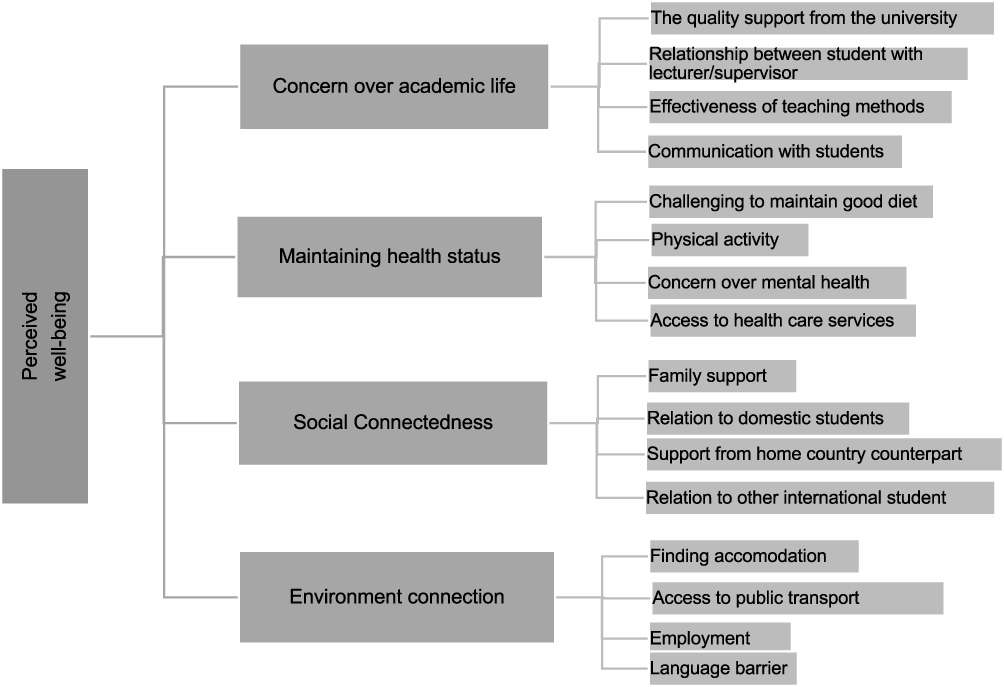 |
Figure 1 Main Themes and Sub-themes Represent Well-being Aspects According to Study Participants. |
Concern Over Academic Life
Most study participants pointed out that their initial concern for studying abroad was to gain a better education. They expect that the university will provide them with high-quality support during their study, effective teaching methods, the university maintain good communication with students considering the diverse backgrounds and cultures of the students, and students have a good relationship with the lecturer and/or supervisor.
There is a better system than my country, you know my country right?. because the infrastructure, the economy and the state situation here are better than mine. That’s why I expected that the education system would be much better than in my country (Informant 8_IDI)
So, it would be important for people to have a group discussion with a counsellor in the faculty every few semesters to discuss the study progress of Us (Informant 1_IDI)
Not only concern on a subject that I take but also my cooperation with my professor (supervisor) will affect my well-being as an international student(FGD 1_M1)
Maintaining Health Status
Several participants pointed out that as they are Muslim, it is somehow difficult for them to maintain their diet, especially in finding halal food. The other students said the variety of vegetables and fish is relatively limited compared to their home countries. Apart from physical health, most students have concerns about their mental health status.
The food is different from our food, that is the problem. Is not only a problem with the food because our country is different. But religion also, because we are Muslim, sometimes difficult to find halal food because we are Muslim, especially for my son (Informant 8_IDI)
And well-being as a student in Debrecen for me is completely physical and mental, not only physical but also mental….and the same mental means academically means that we can go well academically can bring well-being.(FGD 1_F1)
If you have a problem it’s like any stage when you have a mental health counsellor and education counsellor… mental health student must be checked regularly (Informant 1_IDI)
Social Connectedness
According to study participants, maintaining a sense of connectedness with others could improve their well-being. A sense of support from family, friends, and others in the community can significantly impact their well-being. People are, by nature, social creatures, so social connections are essential to survive in a faraway land.
But also about my mental health, if I’m ready to like what I’m studying, if I’m in good relationships with other international students and local students as well (FGD 2_M1)
It gonna be like just like physical health can also be mental health and anything regarding social contact with people (Informant 4_IDI)
For me, it is a bit difficult to make friends with local students. I want to have Hungarian friends, but it seems difficult (Informant 7_IDI)
Connection to Host Country Environment
International students participating in the study also noted that their environment is potentially linked to their well-being. Several issues emerged during the interviews and FGDs, including problems finding accommodation, access to public transport, and difficulties in securing a job to meet their needs due to limited scholarships, alongside language barriers that, to some extent, made them feel as though they did not belong to society. Additionally, they faced challenges in finding a school for their children due to the language barrier.
For me, the most significant problem is the language. If we don’t know the language, there are many things we cannot do and do not belong in the community (Informant 2_IDI)
The first time we arrived, we stayed in the hotel for the first time… we tried to find accommodation, which was not very easy. You ask for accommodation, and they say okay, you’re married, and then you have kids. How old are those kids? And with the kids, it is not easy to find accommodation because they are always concerned about how old your kids are and how much the cost is to their home (Informant 6_IDI)
It is very easy for you to access groceries. And the transportation is also okay (Informant 5_IDI)
The result of the qualitative study was then used to develop a questionnaire for the quantitative research. The questionnaire consists of 25 statements (Supplementary 2) that incorporate the four main themes of academic life (six statements), maintaining health status (eight statements), social connectedness (five statements), and environmental connection (six statements).
Quantitative Results
In this phase, 437 students initially consented to participate; 35 responses that did not meet the eligibility criteria or were incomplete were excluded from the analysis.
According to Table 1, the 402 international students who participated in the study had an average age of 23 years, with nearly equal numbers of men and women. Most (51%) were of Asian descent, and 46.5% were at the bachelor’s level of study. Most were unmarried (78.8%), and a significant portion identified as Muslim (43%). Most students were in their first year (41%) and came from non-health faculties (55.5%). International students are nearly equally represented in terms of sponsorship, scholarships, and self-funding.
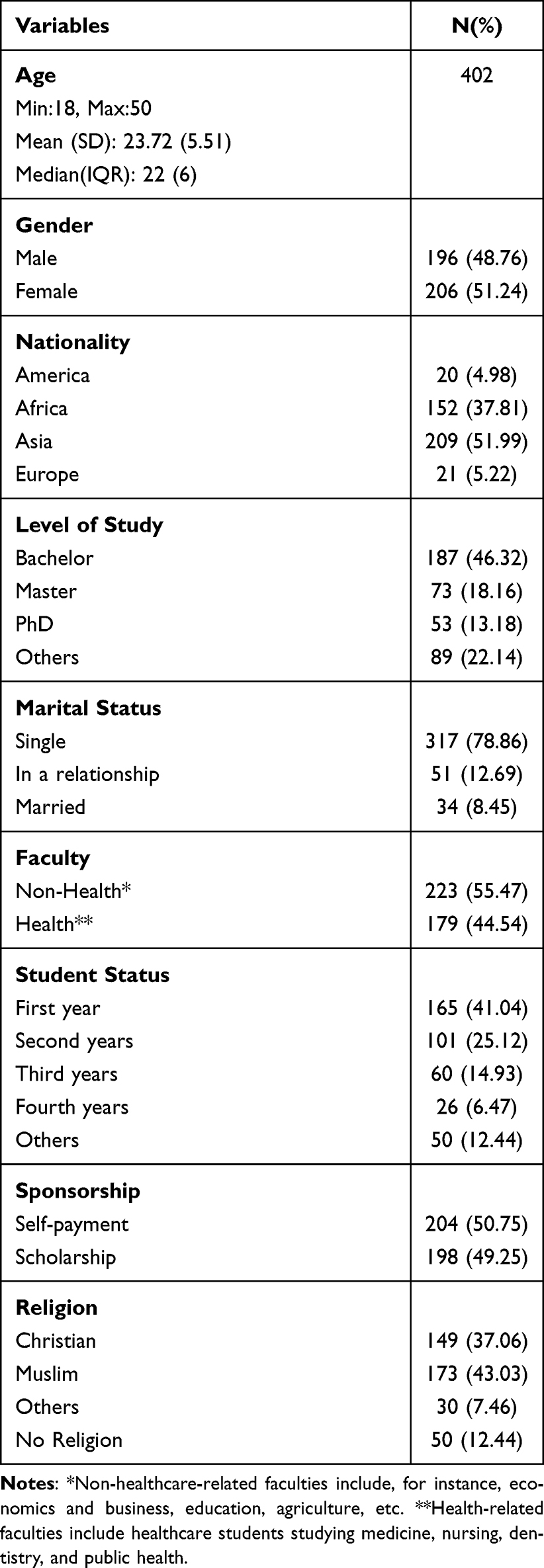 |
Table 1 International Students Socio-Demographic Characteristics |
Table 2 presents the descriptive results of the indicators of perceived well-being among international students. The findings reveal that the academic life indicator, comprising six statements, has a minimum score of 6 and a maximum of 30, with a median value of 24 and an average of 23.21. The median value of 24 suggests that all respondents agree that their academic life is in good condition. Regarding health status, which consists of eight statements, the minimum score is 8 and the maximum is 40, with a median value of 32 and an average of 31.36. This indicates that all respondents concur that their health status is good and pleasant. The social connectedness indicator, comprising five statements, has a minimum score of 5 and a maximum of 25, with a median value of 20 and an average of 19.52, suggesting that all respondents agree that the social connectedness of participants is relatively good. Lastly, concerning connection to the environment, which includes six statements, there is a minimum score of 6 and a maximum of 30, with a median value of 22 and an average of 22.02, indicating that all respondents agree that their connection to the environment is relatively straightforward.
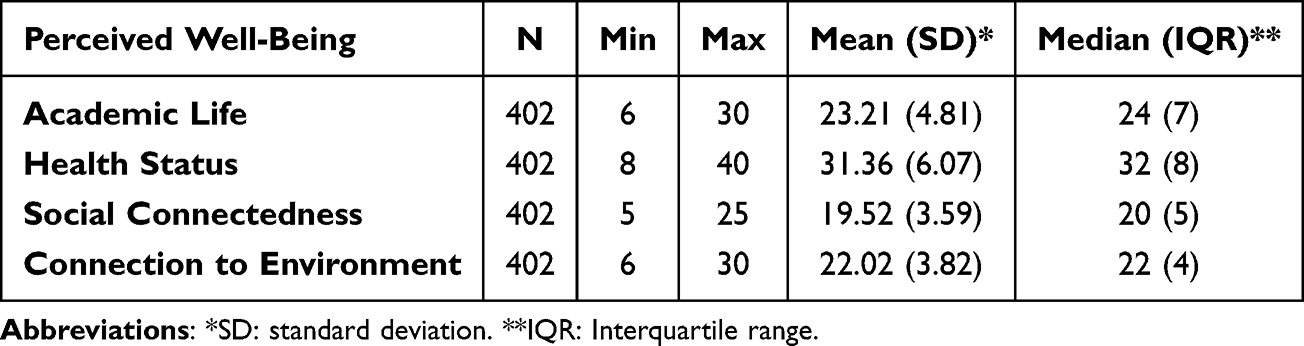 |
Table 2 The Mean Score of the Perceived Well-Being of International Students |
According to Table 3, the results of the bivariate analysis indicate that gender, nationality, and student status are significantly related to well-being (p < 0.05). From Multivariate Analysis using a limit of p < 0.25, when the variables of gender, nationality, student status, faculty, and sponsorship are included in the analysis, only faculty and student status significantly affect well-being (in bold). Multivariate results also show that respondents from non-health faculties have four times the chance of experiencing an increase in well-being compared to respondents in the health-related faculty. Additionally, students in the third year have a lower possibility of experiencing an increase in well-being compared to first-year students.
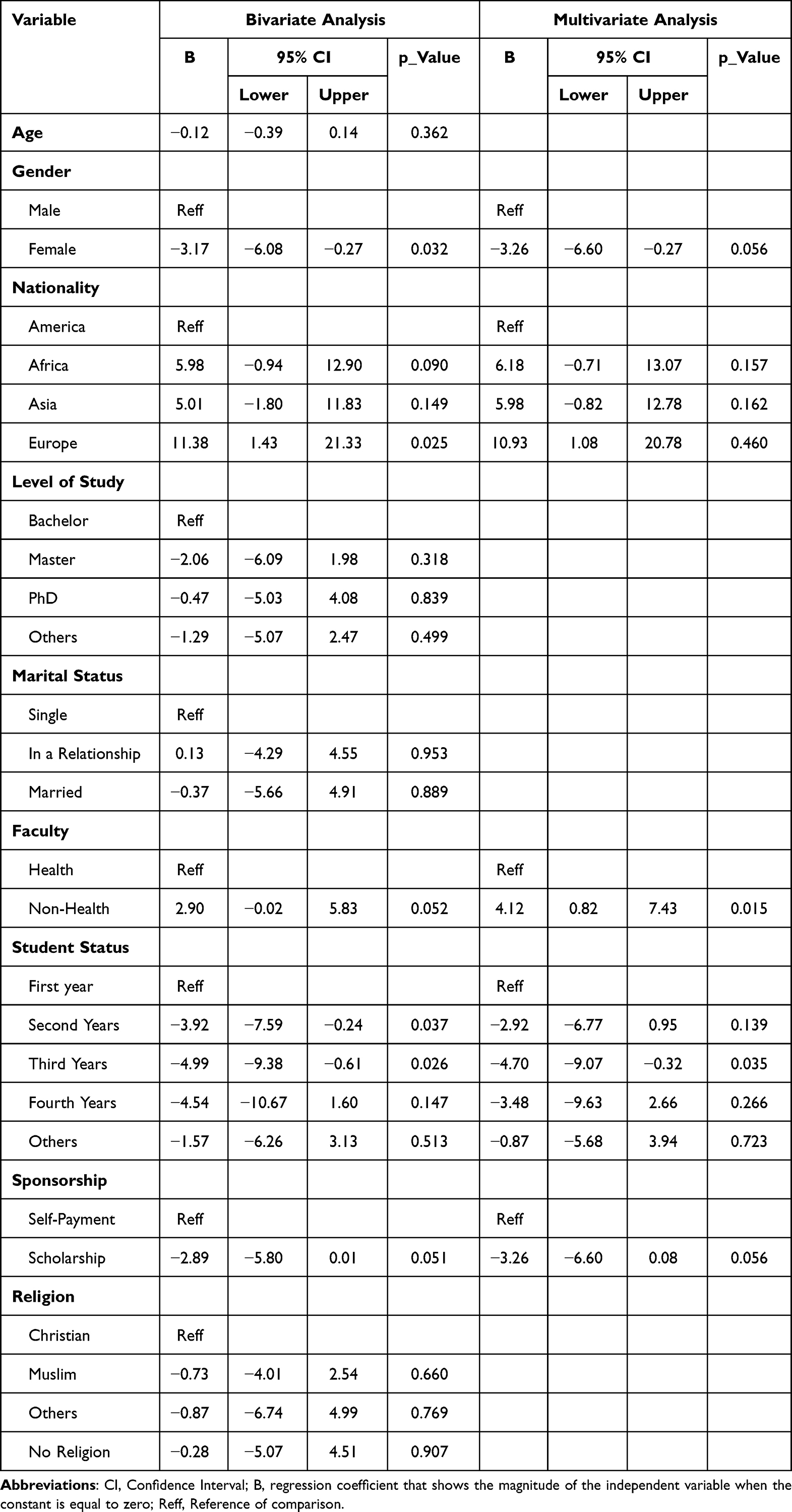 |
Table 3 Factors Affecting International Students’ Perception of Well-Being |
Discussion
The influx of international students has increased significantly. This study explores and identifies factors related to the health and well-being of international students. The results illuminate and enhance our understanding of the experiences of being an international student in a non-English-speaking country. They further enable higher education institutions to comprehend the challenges and risk factors that international students face regarding their health and well-being. Based on qualitative findings, we discovered that study participants referred to well-being as multi-dimensional. This aligns with a study conducted in the Netherlands, where higher education students mentioned various factors influencing their well-being.23
Participants in our study noted that well-being encompasses not only academic concerns but also maintaining good physical and mental health, social connections, and environmental factors. The desire for a better education is a pivotal factor that influences students’ decisions to study abroad. Academic well-being, including academic life, environment, support, and adjustment, impacts international students’ academic achievement.13,35 It is essential that the university, along with academic staff, psychologists, and other professionals, supports and assists students in adapting to new environments and realities, helping them manage transition stress and shock, which may lead to academic procrastination.36–40 Studies found that enhancing student well-being contributes to improved academic performance, which subsequently reinforces their overall well-being.17–21 Therefore, adapting to a university environment is crucial for success in higher education.
Adapting to the host country’s environment can lead to acculturative stress, potentially resulting in anxiety and depression.6,7 Students’ mental health is regarded as crucial for the quality of education. Depression is the most prevalent mental health issue among international students as they transition to a new foreign environment, where intercultural contacts may induce stress.41–43 They must adapt to navigate potential conflicts.5,15,16,41 Acculturative stress can manifest as mental health symptoms. One factor that may shield international students from such adverse effects is social support.16,42,43 It has been suggested that social connectedness is a fundamental component of social support.43–45 International students with a vast network of friends in the host country are likely to feel more satisfied and socially connected.43 Moreover, enhancing social support from specific groups, such as friends or family, can empower students and contribute to improved mental health outcomes.43,45 Supportive social relationships are pivotal, and fostering a sense of belonging requires connection and acceptance.16,46
Furthermore, our quantitative study found that international students reported relatively good conditions for their well-being. However, students from non-health-related faculties have greater opportunities to experience enhanced well-being than their counterparts in health-related faculties. This may be because health-related courses are generally more stressful than other programmes.47–49 Some studies have indicated that nursing and medical students encounter higher stress levels during their professional stages.49,50 Stress can lead to adverse effects on learning, such as burnout,47,51 as well as suicidal thoughts and suicide among medical students.47
The quantitative study also found that study participants in their third year have a diminished chance of experiencing an increase in well-being compared to first-year students. This phenomenon may be attributed to the heightened stress experienced by final-year students. Several studies have suggested that depression levels peak during a student’s final year of study.52,53 Alarmingly high rates of anxiety and depression are observed among final-year students in Canada, as they will lose access to campus-based mental health services upon graduation while simultaneously facing numerous new stressors arising from significant life transitions.53
Our results have several practical implications for actors involved in international student affairs. They could assist policymakers, educators, and those involved in international student affairs in identifying relevant and potentially effective measures for each facet of international students’ well-being. While this study yielded valuable findings, it also had limitations. Our sample consisted of international students from a single institution, which may limit the generalisability of the results. The quantitative study was self-reported, which may have led to respondent bias. Moreover, a convenience sample may also lead to potential selection bias, as well as participant participation bias. Future research could replicate these findings across different institutions. It should consider incorporating a broader range of perspectives, such as those of institutional representatives and other stakeholders in international student affairs, to provide a more comprehensive understanding of the situations and well-being of international students.
Conclusion
Studying abroad, while offering significant academic and cultural benefits, also poses a potential risk to the health and well-being of international students. The compounded effects of relocation stress, language barriers, academic pressure, and limited support systems can contribute to mental health deterioration and adjustment difficulties. These findings highlight the need to incorporate risk management strategies at the institutional level to address vulnerabilities associated with international mobility proactively. International students perceived well-being as multi-dimensional. It encompasses their academic life, health, social connections, and environmental concerns.
Furthermore, the quantitative study revealed that, when analysing the factors of gender, nationality, student status, faculty, and sponsorship, only faculty and student status had a significant impact on well-being. Consequently, international students from non-health faculties are more likely to experience an increase in well-being than their counterparts from health-related faculties. Senior students are less likely to see an increase in well-being than first-year students. Therefore, it would be prudent for universities and those involved in international student affairs to develop enhanced plans from pre-arrival, considering the diversity of international students’ socio-demographic characteristics. Peer support from students from the same country or those who have previously completed the same course can improve the well-being of international students. Future research could reinforce these conclusions by adopting longitudinal designs to track changes in well-being over time, incorporating a more diverse and representative sample to enhance generalizability, and refining the measurement of well-being domains.
Acknowledgments
We want to thank all the participants in our study.
Disclosure
The authors have no conflict of interest to declare in this work.
References
1. Gutema DM, Pant S, Nikou S. Exploring key themes and trends in international student mobility research —A systematic literature review. J Appl Res Higher Educ. 2024;16(3):843–861. doi:10.1108/JARHE-05-2023-0195
2. OECD. International student mobility. Available from: https://www.oecd.org/en/data/indicators/international-student-mobility.html.
3. Daily News Hungary. Hungary Is Home to Almost 35,600 International Students. May 28. 2022.
4. Wang F, Wang Y. International Student Mobility and Internationalization of Higher Education in Hungary and China. J Comparative Int Higher Educ. 2022;14(2):3572. doi:10.32674/jcihe.v14i2.3572
5. Larcombe W, Ryan T, Baik C. Are international students relatively resilient? Comparing international and domestic students’ levels of self-compassion, mental health and wellbeing. Higher Educn Re and Develop. 2024;43(2):362–376. doi:10.1080/07294360.2023.2234315
6. Huang L, Kern ML, Oades LG. Strengthening university student wellbeing: language and perceptions of Chinese international students. Int J Environ Res Public Health. 2020;17(15):1–18. doi:10.3390/ijerph17155538
7. Mofatteh M. Risk factors associated with stress, anxiety, and depression among university undergraduate students. AIMS Public Health. 2021;8(1):36–65. doi:10.3934/publichealth.2021004
8. Deng Y, Cherian J, Khan NUN, et al. Family and Academic Stress and Their Impact on Students’ Depression Level and Academic Performance. Front Psychiatry. 2022;13. doi:10.3389/fpsyt.2022.869337
9. Soneta M, Kondo A, Abuliezi R, Kimura A. International Students’ Experience With Health Care in Japan. Sage Open. 2021;11(2). doi:10.1177/21582440211009211
10. Lee D, Guirguis L. International students and their accessibility to on-campus healthcare services. Spectrum. 2021;(7). doi:10.29173/spectrum104
11. Erturk S, Nguyen Luu LA. Adaptation of Turkish international students in Hungary and the United States: a comparative case study. Int J Intercultural Relations. 2022;86:1–13. doi:10.1016/j.ijintrel.2021.10.006
12. Umami A, Paulik E, Molnár R. International medical students’ acculturation and self-rated health status in Hungary: a cross-sectional study. BMC Public Health. 2022;22(1). doi:10.1186/s12889-022-14334-y
13. Hofhuis J, van Egmond MC, Lutz FE, von Reventlow K, Rohmann A. The effect of social network sites on international students’ acculturation, adaptation, and wellbeing. Front Commun. 2023;8:1186527. doi:10.3389/fcomm.2023.1186527
14. Hausler M, Strecker C, Huber A, Brenner M, Höge T, Höfer S. Distinguishing relational aspects of character strengths with subjective and psychological well-being. Front Psychol. 2017;8(JUL). doi:10.3389/fpsyg.2017.01159
15. Hernández-Torrano D, Ibrayeva L, Sparks J, et al. Mental Health and Well-Being of University Students: a Bibliometric Mapping of the Literature. Front Psychol. 2020;11. doi:10.3389/fpsyg.2020.01226
16. Girmay M, Singh GK. Social Isolation, Loneliness, and Mental and Emotional Well-being among International Students in the United States. Int J Transl Med Res Public Health. 2019;3(2):75–82. doi:10.21106/ijtmrph.82
17. Ayyash-Abdo H, Sánchez-Ruiz MJ. Subjective wellbeing and its relationship with academic achievement and multilinguality among Lebanese university students. International J Psychol. 2012;47(3):192–202. doi:10.1080/00207594.2011.614616
18. Tahir S, Tahir Z, Asghar A, et al. A Holistic Approach to Student Well-being: balancing Health and Academic Success for Students Living Abroad. Social Lens. 2025;1(2). doi:10.69971/sl.1.2.2024.13
19. El Ansari W, Stock C. Is the health and well-being of university students associated with their academic performance? Cross sectional findings from the United Kingdom. Int J Environ Res Public Health. 2010;7(2):509–527. doi:10.3390/ijerph7020509
20. Bortes C, Ragnarsson S, Strandh M, Petersen S. The Bidirectional Relationship Between Subjective Well-Being and Academic Achievement in Adolescence. J Youth Adolesc. 2021;50(5):992–1002. doi:10.1007/s10964-021-01413-3
21. Kaya M, Erdem C. Students’ Well-Being and Academic Achievement: a Meta-Analysis Study. Child Indic Res. 2021;14(5):1743–1767. doi:10.1007/s12187-021-09821-4
22. Udah H, Francis A. Vulnerability and Well-Being: international Students’ Experience in North Queensland, Australia. J Comparative Int Higher Educ. 2022;14(5):171–196. doi:10.32674/jcihe.v14i5.3942
23. Douwes R, Metselaar J, Pijnenborg GHM, Boonstra N, Sermeno R. Well-being of students in higher education: the importance of a student perspective. Cogent Educat. 2023;10(1). doi:10.1080/2331186X.2023.2190697
24. Skromanis S, Cooling N, Rodgers B, et al. Health and well-being of international university students, and comparison with domestic students, in Tasmania, Australia. Int J Environ Res Public Health. 2018;15(6):1147. doi:10.3390/ijerph15061147
25. Braun V, Clarke V. Using thematic analysis in psychology. Qual Res Psychol. 2006;3(2):77–101. doi:10.1191/1478088706qp063oa
26. Fetters MD, Curry LA, Creswell JW. Achieving integration in mixed methods designs - Principles and practices. Health Serv Res. 2013;48(6 PART2):2134–2156. doi:10.1111/1475-6773.12117
27. Curry LA, Krumholz HM, O’Cathain A, Clark VLP, Cherlin E, Bradley EH. Mixed methods in biomedical and health services research. Circ Cardiovasc Qual Outcomes. 2013;6(1):119–123. doi:10.1161/CIRCOUTCOMES.112.967885
28. Vedel I, Kaur N, Hong QN, et al. Why and how to use mixed methods in primary health care research. Fam Pract. 2018;36(3):365–368. doi:10.1093/fampra/cmy127
29. University of Debrecen. University of Debrecen Facts and Figure. Available from: https://www.edu.unideb.hu/p/facts-and-figures.
30. Conneeley AL. Methodological Issues in Qualitative Research for the Researcher/Practitioner. Br J Occup Ther. 2002;65(4):185–190. doi:10.1177/030802260206500406
31. Hesse-Biber S. Qualitative approaches to mixed methods practice. Qual Inq. 2010;16(6):455–468. doi:10.1177/1077800410364611
32. University of Debrecen. University of Debrecen Szolnok Campus. Available from: https://szolnokcampus.unideb.hu/.
33. University of Debrecen. Faculty of Health Sciences. Available from: https://edu.unideb.hu/p/faculty-of-health.
34. University of Debrecen. Faculty of Education for Children and Special Educational Needs. Available from: https://edu.unideb.hu/p/faculty-of-child-and-adult-education.
35. Chen D, Yang X. Striving and Thriving in a Foreign Culture: a Mixed Method Approach on Adult International Students’ Experience in U.S.A. J Educ Train Stud. 2014;2(3):46–58. doi:10.11114/jets.v2i3.353
36. Yerken A, Nguyen Luu LA. A stepping stone to the “West”: academic adaptation of international students from post-Soviet countries in Hungary. Int J Intercultural Relations. 2022;89:183–194. doi:10.1016/j.ijintrel.2022.06.005
37. Alharbi E, Smith A. Studying-away Strategies: a Three-wave Longitudinal Study of the Wellbeing of International Students in the United Kingdom. Eur Educ Res. 2019;2(1):59–77. doi:10.31757/euer.215
38. Dagnew B, Dagne H. Year of study as predictor of loneliness among students of University of Gondar. BMC Res Notes. 2019;12(1). doi:10.1186/s13104-019-4274-4
39. Lowinger RJ, Kuo BCH, Song HA, et al. Predictors of academic procrastination in asian international college students. J Stud Aff Res Pract. 2016;53(1):90–104. doi:10.1080/19496591.2016.1110036
40. Li J, Wang Y, Liu X, Xu Y, Cui T. Academic adaptation among international students from East Asian countries: a consensual qualitative research. J Int Stud. 2018;8(1):194–214. doi:10.5281/zenodo.1134289
41. Levecque K, Anseel F, De Beuckelaer A, Van der Heyden J, Gisle L. Work organization and mental health problems in PhD students. Res Policy. 2017;46(4):868–879. doi:10.1016/j.respol.2017.02.008
42. Zwaan Hogeschool Arnhem M, Misirlis N, Zwaan M, Sotiriou A, Weber D. International students’ loneliness, depression and stress levels in COVID-19 crisis: the role of social media and the host university. J Contemporary Educ. 2020;4(2):20–25. doi:10.5281/zenodo.4256624
43. Hoang Nguyen M, Le TT, Meirmanov S. Depression, Acculturative Stress and Social Connectedness among International University Students in Japan: prevalence and correlation. Sustainability. 2018;1:1. doi:10.20944/preprints201812.0283.v1
44. Hurem A, Rowan L, Grootenboer P. The Link between Social Wellbeing, Belonging, and Connectedness of International Students in Australian High Schools. Front Educ. 2021;6:681956. doi:10.3389/feduc.2021.681956
45. Roohafza HR, Afshar H, Keshteli AH, et al. What’s the Role of Perceived Social Support and Coping Styles in Depression and Anxiety? 2014.
46. Thomas L, Orme E, Kerrigan F. Student Loneliness: the Role of Social Media Through Life Transitions. Comput Educ. 2020;146:103754. doi:10.1016/j.compedu.2019.103754
47. Terebessy A, Czeglédi E, Balla BC, Horváth F, Balázs P. Medical students’ health behaviour and self-reported mental health status by their country of origin: a cross-sectional study. BMC Psychiatry. 2016;16(1). doi:10.1186/s12888-016-0884-8
48. Dahlin M, Nilsson C, Stotzer E, Runeson B. Mental distress, alcohol use and help-seeking among medical and business students: a cross-sectional comparative study. BMC Med Educ. 2011;11(1). doi:10.1186/1472-6920-11-92
49. Franzen J, Jermann F, Ghisletta P, Rudaz S, Bondolfi G, Tran NT. Psychological distress and well-being among students of health disciplines: the importance of academic satisfaction. Int J Environ Res Public Health. 2021;18(4):1–9. doi:10.3390/ijerph18042151
50. Öner Altiok BÜ H. The Stress Sources of Nursing Students*. Educl Sciences: Theory & Practice. 2013;13(2):760–766.
51. Gusy B, Lesener T, Wolter C. Time Pressure and Health-Related Loss of Productivity in University Students: the Mediating Role of Exhaustion. Front Public Health. 2021;9:653440. doi:10.3389/fpubh.2021.653440
52. Bewick B, Koutsopouloub G, Miles J, Slaad E, Barkham M. Changes in undergraduate students’ psychological well-being as they progress through university. Stud Higher Educ. 2010;35(6):633–645. doi:10.1080/03075070903216643
53. Magier MJ, Law M, Pennisi S, et al. Final-year university students’ mental health and access to support as they prepared to graduate. Cogent Mental Health. 2023;2(1):1–38. doi:10.1080/28324765.2023.2252918
 © 2025 The Author(s). This work is published and licensed by Dove Medical Press Limited. The
full terms of this license are available at https://www.dovepress.com/terms
and incorporate the Creative Commons Attribution
- Non Commercial (unported, 4.0) License.
By accessing the work you hereby accept the Terms. Non-commercial uses of the work are permitted
without any further permission from Dove Medical Press Limited, provided the work is properly
attributed. For permission for commercial use of this work, please see paragraphs 4.2 and 5 of our Terms.
© 2025 The Author(s). This work is published and licensed by Dove Medical Press Limited. The
full terms of this license are available at https://www.dovepress.com/terms
and incorporate the Creative Commons Attribution
- Non Commercial (unported, 4.0) License.
By accessing the work you hereby accept the Terms. Non-commercial uses of the work are permitted
without any further permission from Dove Medical Press Limited, provided the work is properly
attributed. For permission for commercial use of this work, please see paragraphs 4.2 and 5 of our Terms.