
Back to Journals » Advances in Medical Education and Practice » Volume 17
Evaluation of a Hybrid Case-Based Learning and Small-Group Teaching Model Using Artificial Intelligence–Assisted Case Generation: An Innovative Dental Education Study
Authors Malpe Gopal S  , Venkatesh Murthy S, B R S, Patil V , Shetty T, Ramnarayan K
Received 24 December 2025
Accepted for publication 30 March 2026
Published 27 April 2026 Volume 2026:17 591344
DOI https://doi.org/10.2147/AMEP.S591344
Checked for plagiarism Yes
Review by Single anonymous peer review
Peer reviewer comments 3
Editor who approved publication: Dr Md Anwarul Azim Majumder
Sushmitha Malpe Gopal,1,* Shashidhar Venkatesh Murthy,2,3,* ShanthaKumari B R,1 Vathsala Patil,4 Tanvi Shetty,1 Komattil Ramnarayan5,6
1Division of Pathology, Department of Basic Medical Sciences, Manipal Academy of Higher Education, Manipal, Karnataka, India; 2Department of Anatomy and Pathology, College of Medicine and Dentistry, James Cook University, Townsville, Queensland, Australia; 3Kasturba Medical College, Manipal Academy of Higher Education, Manipal, Karnataka, India; 4Department of Oral Medicine and Radiology, Manipal College of Dental Sciences, Manipal Academy of Higher Education, Manipal, Karnataka, India; 5Sikkim Manipal University, Gangtok, Sikkim, India; 6Manipal Academy of Higher Education, Manipal, Karnataka, India
*These authors contributed equally to this work
Correspondence: Sushmitha Malpe Gopal, Division of Pathology, Department of Basic Medical Sciences, Manipal Academy of Higher Education, Manipal, Karnataka, India, 576104, Email [email protected]
Purpose: The present study aims to incorporate an active learning pedagogy model that is both educator-friendly and cost-effective, to enhance the effectiveness of basic medical science teaching in the undergraduate dental curriculum.
Methods: This is an exploratory educational study that focuses on students’ perceptions of the hybrid case-based learning and small-group teaching approach, along with student and faculty feedback on the use of artificial intelligence in case generation. The data was analyzed using descriptive statistics and thematic coding.
Results: Students reported overwhelmingly positive perceptions of enhanced subject knowledge, clinical reasoning, and examination preparedness, while fostering collaborative learning under the facilitation of subject experts. Faculty reported highly positive perceptions of using artificial intelligence to generate case vignettes that align with the learning objectives, while also highlighting the significance of human oversight.
Conclusion: The integration of innovative AI-generated, faculty-validated case study materials delivered through small-group facilitated learning was well received by both students and educators, as evidenced by their feedback. This approach supports active learning, enhances higher-order cognition, strengthens practical applicability, and augments learner engagement, offering a feasible, cost-effective pedagogical model for teaching basic medical sciences in the dental curriculum.
Keywords: artificial intelligence, active learning, case-based learning, collaborative learning, expert validation
Introduction
Basic dental education is defined as “Teaching and learning of dentists to prevent, diagnose and treat oral diseases and meet the dental needs and demands of individual patients and public” by the Fédération Dentaire Internationale. The dental curriculum integrates basic medical sciences with preclinical and clinical training to establish a sound academic foundation.1 Dental students are required to complete the core basic science courses during the initial years of training or along with specialized dental disciplines.2 Most dental institutions recognize basic sciences as an essential component of dental education, with general pathology serving as a cornerstone of preclinical learning by introducing students to the fundamental understanding of human disease processes.3 Hematology, a key branch of pathology, is associated with several oral manifestations, underscoring its clinical relevance in dentistry.4 A strong foundation in basic science concepts enhances diagnostic accuracy, particularly while dealing with complex clinical cases. To achieve comprehensive dental education, teachers employ diverse instructional strategies to strengthen student engagement and learning outcomes.5
Learning in dental education occurs through both passive and active processes. Traditional didactic lecture-based teaching is passive learning, while active learning involves students in gathering, processing, and applying information.6 Active learning aligns with adult learning principles such as self-direction, experiential learning, problem orientation, mentorship, and intrinsic motivation. Active learning is promoted in health professions education through instructional models such as problem-based learning, case-based learning, flipped classrooms, team-based learning, and group discussions.7 Case-based learning (CBL), a well-established pedagogical approach also known as case study teaching and case method learning, originated in business and legal education in the late nineteenth century. CBL was later adopted in health professionals’ education by the Harvard Medical School in the early twentieth century, including pathology teaching by James Lorrain Smith, the first full-time pathology professor at the University of Edinburgh in 1912.8–10 CBL is defined as an inquiry-driven learning experience that uses real or simulated patient cases to facilitate clinical reasoning under faculty guidance and well-defined learning objectives.11 The key element to CBL as an active learner-centered pedagogy is a well-designed case scenario, which is multidisciplinary, thought-provoking, with relevant clinical images and radiographs, thereby bridging basic sciences with clinical practice. Evidence from dental education programs worldwide consistently demonstrates that CBL fosters deep learning and long-term retention of analytical and diagnostic knowledge, thereby promoting student competencies that align with their future professional practice.8,9,12
Nevertheless, implementation of CBL poses several challenges such as substantial preparation time, the need for facilitator training and development of standardized and diverse case materials, particularly in large cohorts.13 Recent advances in Artificial Intelligence (AI) offer a promising solution to these challenges by enabling rapid generation of a wide range of structured case scenarios, allowing subject area experts to focus on content relevance and factual accuracy.14 AI is increasingly influencing health professions education, reshaping traditional medical education models.15,16 AI, conceptualized by English mathematician Alan Turing in 1950, refers to machine-based systems capable of performing tasks that require human intelligence, such as language processing, visual perception, speech recognition, and decision-making.17–19 Large language models (LLMs), particularly those based on the Generative Pre-trained Transformer (GPT) architecture, have demonstrated significant potential in enhancing knowledge acquisition, clinical decision-making, and skills training in medical education.20–23 Building on these advances, LLM-based chatbots have emerged as interactive tools that emulate human communication by responding to user queries, thereby attracting growing scholarly curiosity.24,25 Among these, ChatGPT is a large language model developed by OpenAI that generates human-like text responses from user input using the GPT architecture.26,27 In health professions education, ChatGPT has emerged as an innovative tool for clinical simulation, generating realistic, thought-provoking case scenarios that support the development of clinical reasoning and decision-making skills.21,28–30 Effective use of ChatGPT requires well-designed, dialogue-based prompts to ensure educational relevance and accuracy.31–33 The advantage of ChatGPT-4o is that it can perform real-time web searches, which increases the scientific verifiability of a topic.28 These AI-generated study materials have demonstrated potential to improve educational outcomes, knowledge retention, and clinical decision-making when combined with human expert oversight.20,34 The major concerns regarding AI include over-reliance on AI-generated content, unethical use, and the potential for biased decision-making and discriminatory outcomes.35,36
CBL uses a guided approach to support student discussions with regular attention to relevant questions, which can be conducted either in large or small groups.37 Incorporating CBL activities in small groups helps deepen understanding of the subject and enhances peer discussions, fostering a collaborative learning experience. The small group structure of CBL promotes a less stressful, more participatory learning environment, leading students to prefer this model over the newer team-based learning approach.38,39 Small group teaching (SGT) is a well-established pedagogical method in medical education. It is defined as a facilitated learning process in which 5–10 students work collaboratively to achieve defined educational objectives.40,41 SGT has been a hallmark of reorienting educational strategies in medical school, fostering collaborative and cooperative peer interaction and learning, and improving retention as they prepare future healthcare professionals to work effectively in interprofessional teams, while instilling lifelong learning behavior.42–45 The student engagement, also called the learning engagement, is essential in SGT, which reflects the cognitive, emotional, and behavioral aspects of students’ involvement in learning activities.42 Within this approach, the educator functions primarily as a facilitator rather than a traditional knowledge provider, which is essential to effective learning.8,45
Most studies have examined CBL and SGT independently in basic medical education, with strong evidence supporting their individual pedagogical effectiveness. However, there is a gap in using CBL as a teaching strategy in preclinical subjects, largely because it poses several challenges in preparing case vignettes. These challenges can now be addressed by innovative AI-assisted case generation, followed by human oversight to ensure the appropriateness and accuracy of the generated content before student use. A hybrid approach combining CBL in small-group teaching is the most effective way to enhance learner engagement, according to the literature. This prompted the present study to explore the combined effectiveness of a hybrid CBL-SGT model for teaching general pathology to undergraduate dental students, leveraging AI to generate diverse cases. Accordingly, this study aims to evaluate students’ perceptions of this hybrid model. It also aims to evaluate the students’ and faculty perceptions of AI-generated learning materials. The findings of this study catalyze the integration of a cost-effective, educator-supportive, active-learning pedagogy into the dental curriculum to enhance higher-order cognition and practical applicability among future dental professionals.
Materials and Methods
Sampling and Participants
Of the 97 enrolled students in the class, 72 who attended the CBL-SGT activity were included in the study. A minimum sample size of 61 was calculated using the Raosoft® Sample Size Calculator (Raosoft Inc.) with a 5% margin of error, a 95% confidence interval, and a 50% response rate, based on a previous study.37
The study was conducted among students of Manipal College of Dental Sciences, Manipal Academy of Higher Education Manipal. Hematology, a component of general pathology, is taught in the second year of the Bachelor of Dental Surgery (BDS) curriculum through didactic lectures supplemented by practical and self-directed learning sessions. The second-year undergraduate dental students during the third semester of the 2025 academic year participated in this study. They had completed the hematology syllabus as per the curriculum and had never experienced case-based learning as a small-group activity in hematology.
CBL-SGT Content and Structure
The CBL-SGT activity was conducted as an exploratory educational study during a practical session in the multidisciplinary laboratory. Figure 1 illustrates the workflow of the CBL-SGT activity. All 72 students were divided into small groups of 7–8 members to minimize potential bias. The session was facilitated by the first author and assisted by another faculty member, both with postgraduate qualifications in pathology and vast experience in conducting small-group teaching. The pre-activity reading material consisted of handouts distributed following hematology theory lectures. The session began with a 15-minute introduction, during which the facilitator explained the activity and clarified students’ doubts. Following this, four case scenarios, each followed by four descriptive questions, were distributed to the student groups. The case scenarios, questions, and answers were created by the faculty involved in teaching hematology using the AI tool. Students were given 60 minutes to collaboratively discuss cases, apply the knowledge they had acquired from the didactic lectures, and justify their responses within their groups. Subsequently, representatives from each group presented their answers, which led to inter-group discussions that lasted approximately 40 minutes. During this process, faculty clarified doubts and guided students towards appropriate conclusions. After the activity, a validated questionnaire was shared online with students outside the scheduled session to assess their perceptions of this hybrid approach and AI-assisted content. A validated questionnaire was also shared online with the faculty to assess their perceptions of AI-generated content.
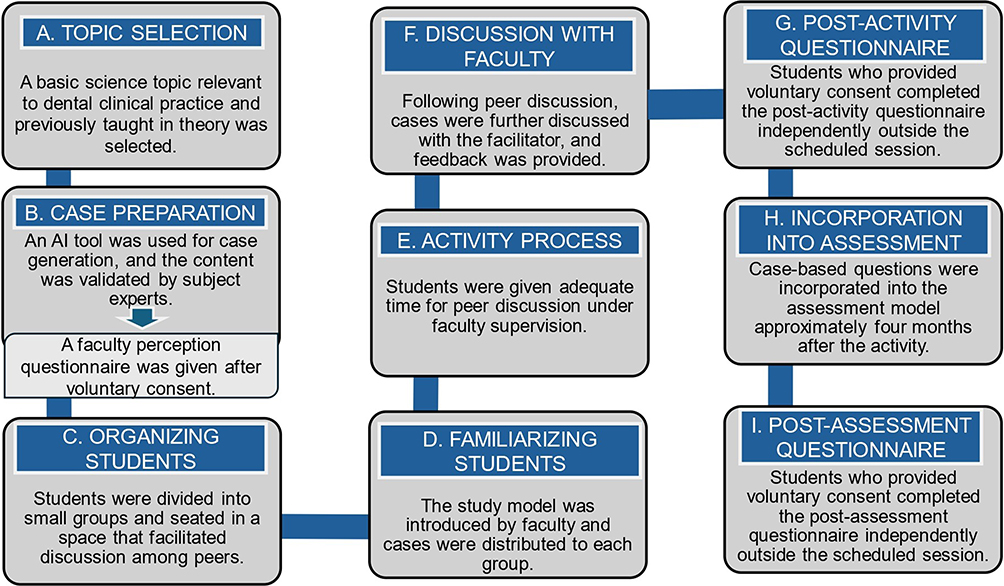 |
Figure 1 Workflow of the CBL-SGT activity. |
This was followed by an application exercise approximately four months later, during which case-based questions were incorporated into student assessment. Following the assessment, students completed a validated online questionnaire independently, outside the assessment session, to provide feedback on how the CBL-SGT session influenced their examination performance.
Figure 2 illustrates the process of AI-assisted case content generation. The AI tool ChatGPT-4o was used, as it was the most updated version available at the time of the study. The process involved three stages: generation, assessment, and modification. Case generation primarily depended on the prompt used, while assessment and modification ensured content relevance and factual accuracy.
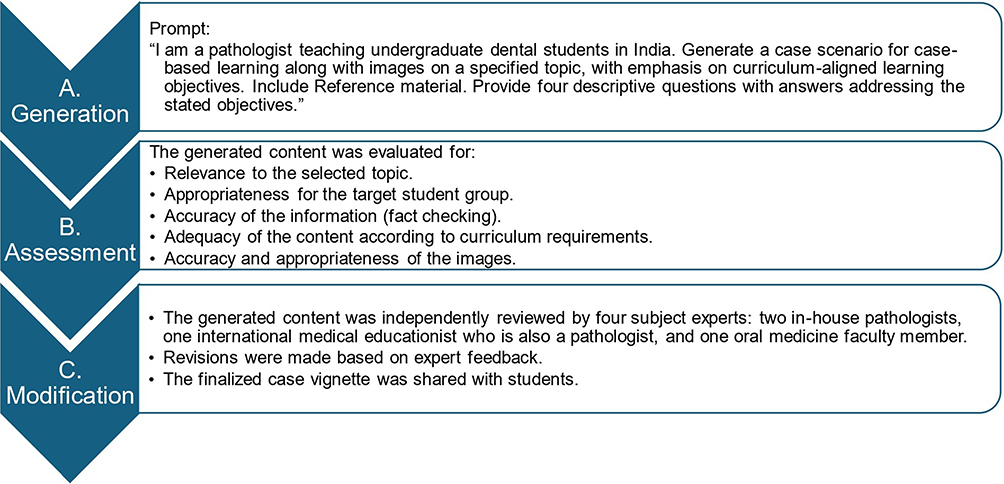 |
Figure 2 The process of AI-assisted case content generation. |
Data Collection and Analysis
A validated questionnaire consisting of 12 questions with predetermined response options rated on a five-point Likert scale and 1 reflective question was shared with students after the CBL-SGT activity to assess their perceptions of this model. A validated post-assessment questionnaire comprising 6 closed-ended questions on a five-point Likert scale, one binary question, and one optional open-ended question was shared with students to assess the effectiveness of this model during the examination. A validated questionnaire was also shared with faculty, consisting of four closed-ended questions with a 5-point Likert scale and one open-ended question regarding the efficacy of AI in generating content. The questionnaires underwent rigorous content validation by two pathologists with extensive experience in medical education, one of whom is an international faculty member, and by two subject experts who were not part of the study, as per the institutional guidelines. The questionnaires were distributed via online Google Form, with students and faculty providing informed consent before participation. Cronbach’s alpha was used to assess the reliability of the questionnaires. The coefficient was 0.95 for both the post-activity and post-assessment questionnaires, indicating excellent internal consistency. The value was 0.86 for the faculty feedback questionnaire, demonstrating good internal consistency and reliability of the questionnaire items. Descriptive statistics were used to analyze quantitative data using SPSS software version 16.0 (SPSS Inc.) for Windows, and thematic analysis using Braun and Clarke’s six-phase framework was used to code qualitative data.46
Ethical Approval
The present study was approved by the Kasturba Medical College and Kasturba Hospital Institutional Ethics Committee with ethical approval code IEC1: 102/2025. This was a questionnaire-based study, and informed online consent was obtained from the students and faculty involved before their participation. The participants’ informed consent included publication of anonymized responses and direct quotes.
Results
Seventy-two students present on the day of the CBL-SGT activity participated in the study, of whom 70 students completed the post-activity questionnaire (97% response rate). Mean scores ranged from 4.01 to 4.26 across all domains on a 5-point Likert scale. Of the 70 students who participated in the CBL-SGT activity, 52 students (74% response rate) completed the post-examination questionnaire. Mean scores ranged from 4.08 to 4.19 across all domains of the post-examination questionnaire based on a 5-point Likert scale. Four faculty members involved in developing the cases completed the faculty questionnaire (100% response rate). Mean scores among faculty ranged from 3.5 to 4.25, with familiarity with AI tools showing comparatively lower mean scores.
The first domain evaluated students’ perceptions of the study material used in the CBL-SGT activity using post-session questions 1 and 2 (Table 1). Most students agreed that the case vignettes were clinically relevant and effectively linked hematology concepts to dental practice and that the end-of-case questions were of high quality. Faculty perceptions of the study material used in this CBL-SGT learning activity were also positive (Table 2). Most faculty members reported favorable perceptions of the accuracy of AI-generated content. They indicated that the case scenario and end-of-case questions and answers were pertinent and of good quality. Faculty responses to the open-ended question “What is your opinion about AI-generated case studies?” were thematically coded (Box 1). The themes identified were innovation and time efficiency, content authenticity, and the importance of human oversight.
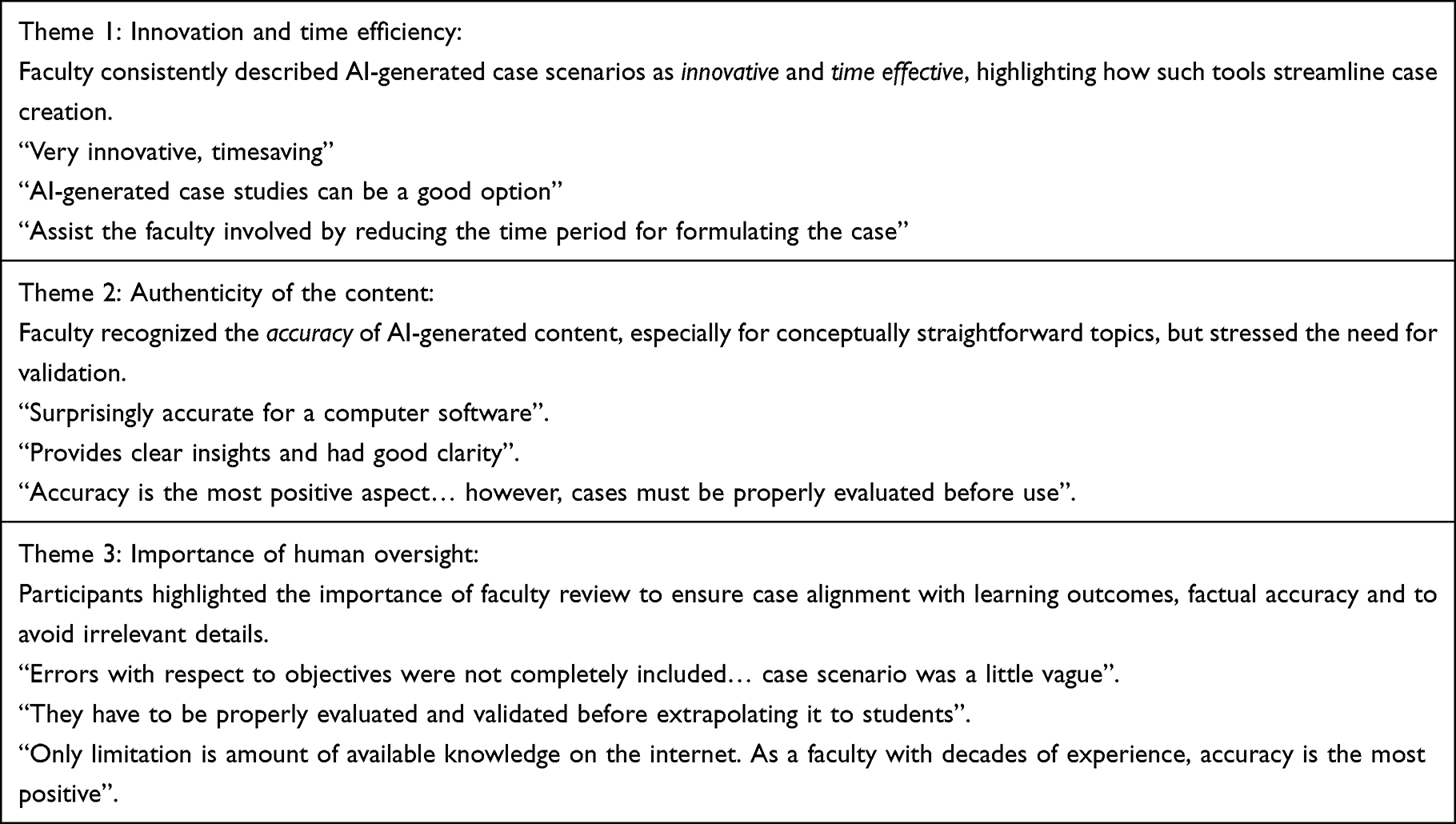 |
Box 1 Thematic Analysis on Faculty Feedback on the Open-Ended Question, “What Is Your Opinion About AI-Generated Case Studies?” |
 |
Table 1 Students’ Perception of the Study Material Used for CBL-SGT Learning in Hematology |
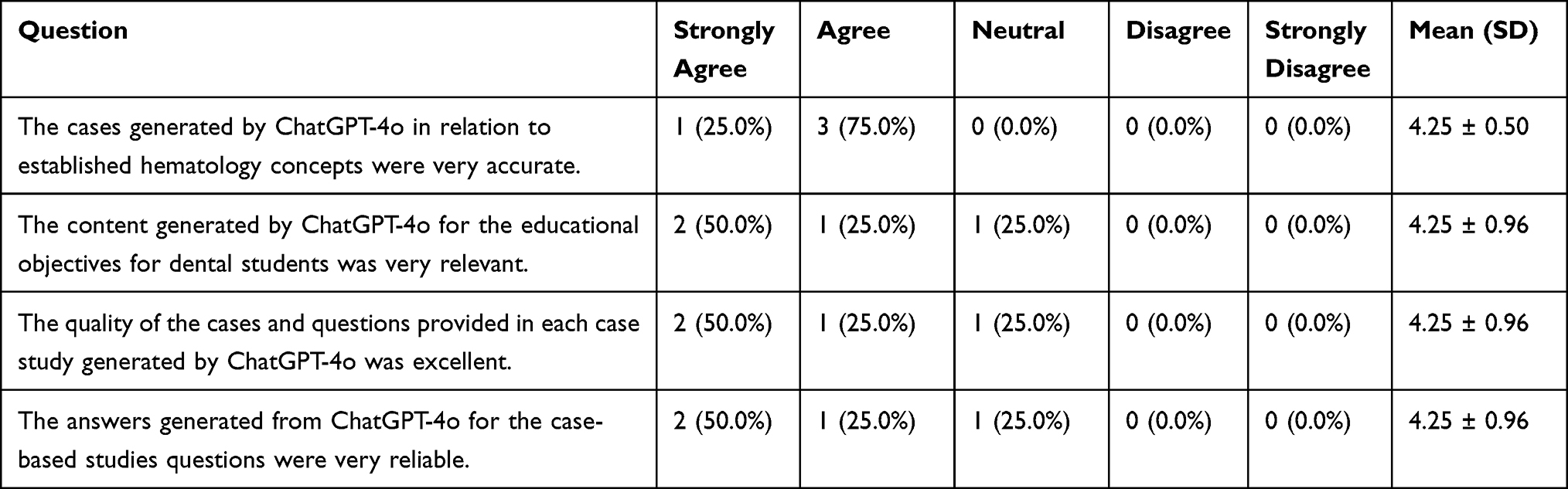 |
Table 2 Faculty Perception of the Study Material Used for the CBL-SGT Learning in Hematology |
The second domain evaluated students perceived efficacy of the CBL-SGT session using post-activity questions 4, 5, 7, and 11 (Table 3). Most students agreed that they understood hematology concepts presented in the cases very well and that participation in this hybrid session encouraged critical thinking and problem-solving. Comparably, students indicated that this study enhanced their comprehension of hematology concepts and that they would likely apply the knowledge gained in future clinical practice.
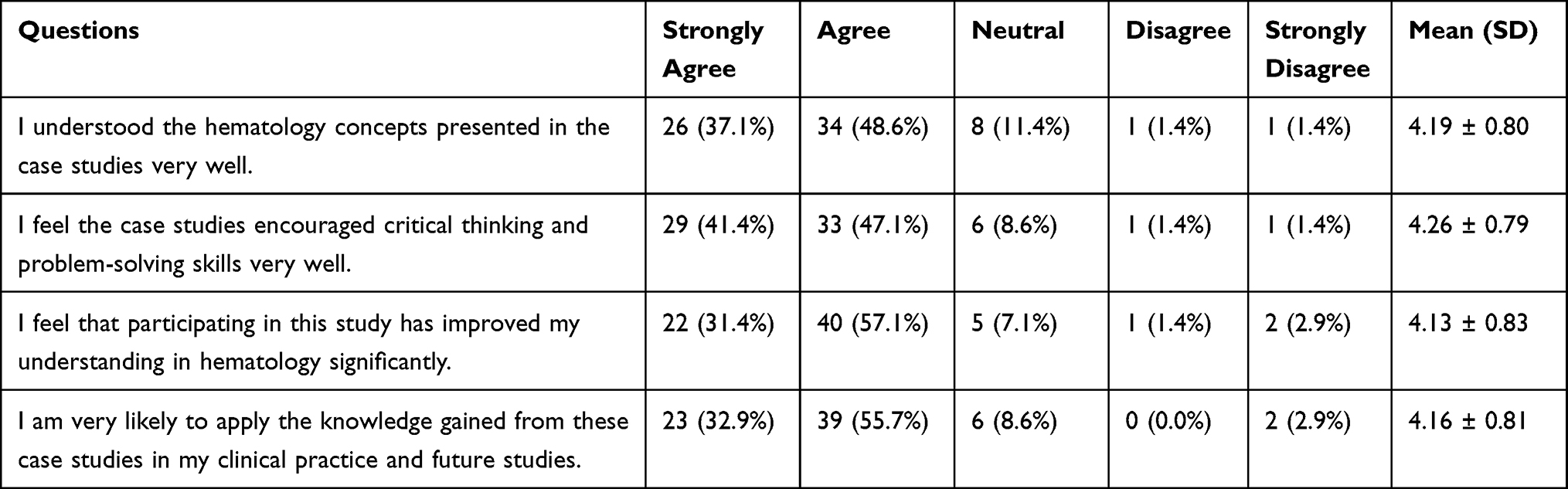 |
Table 3 Students’ Perception of the Effectiveness of the CBL-SGT Learning in Hematology |
The third domain evaluated students’ perceptions of the impact of CBL-SGT on exam preparation and performance using the post-assessment questions 1, 2, and 3 (Table 4). Students reported that participation in this hybrid model increased their confidence and improved their performance on assessments, including the ability to apply theoretical knowledge in viva and practical evaluations.
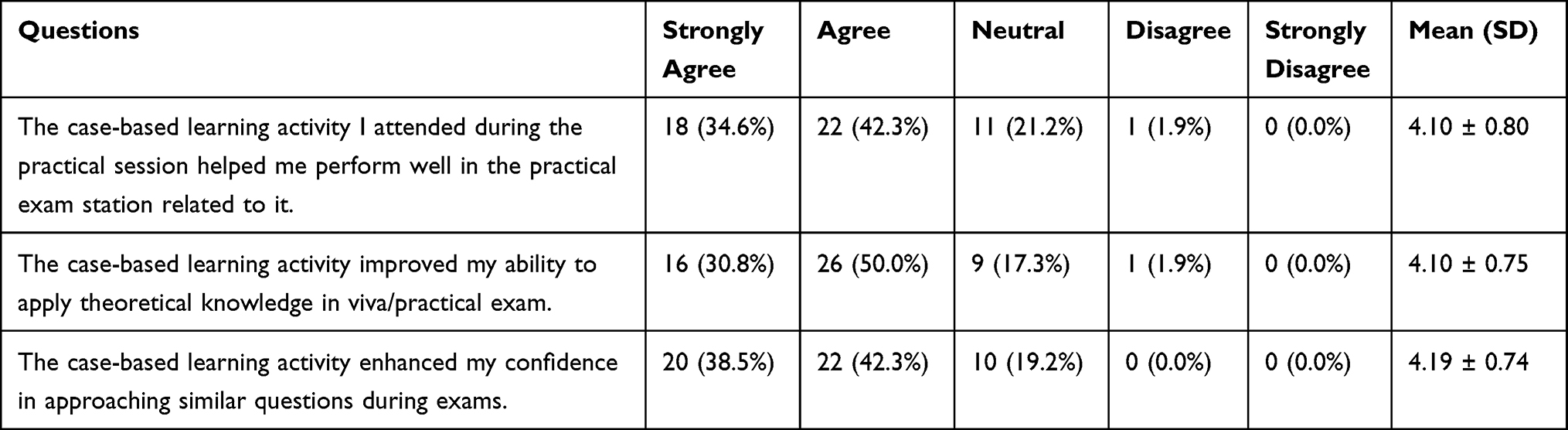 |
Table 4 Students’ Perception of the Impact of CBL-SGT on Exam Preparation and Performance |
The fourth domain evaluated students’ perceptions of team interaction during the CBL-SGT session using post-activity question 6 and after-assessment question 4 (Table 5). Most students reported an excellent experience collaborating with peers during group discussions and indicated that these discussions improved their clinical reasoning and problem-solving.
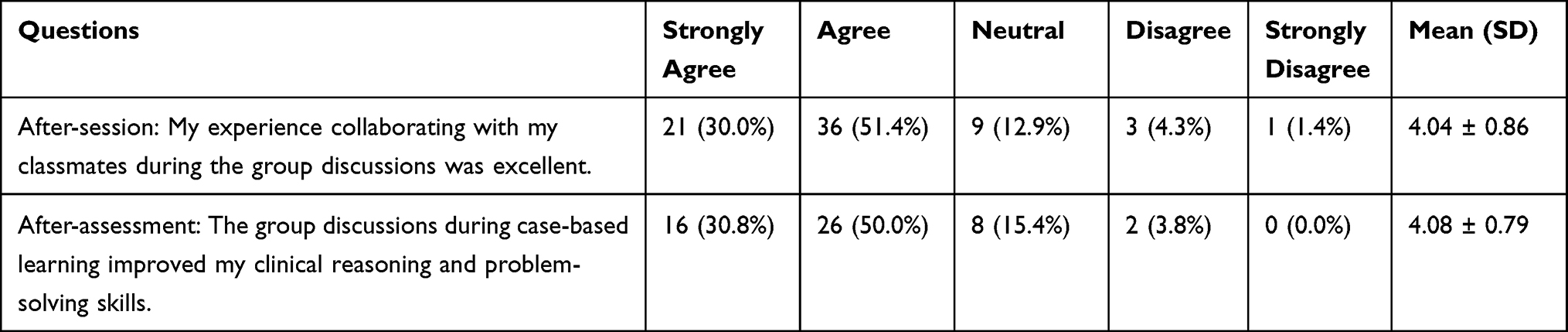 |
Table 5 Students’ Perception of the Team Interaction of the CBL-SGT Learning in Hematology |
The fifth domain evaluated students’ perceptions of their engagement in the CBL-SGT learning using post-activity questions 8 and 9, and post-assessment questions 5 and 6 (Table 6). Most students reported that the session offered a better learning experience than traditional lectures and that they were actively engaged during group discussions. Post-assessment reflections further reinforced this pattern, stating that they were actively involved and motivated during these sessions and that their engagement was associated with their performance in viva and practical examinations.
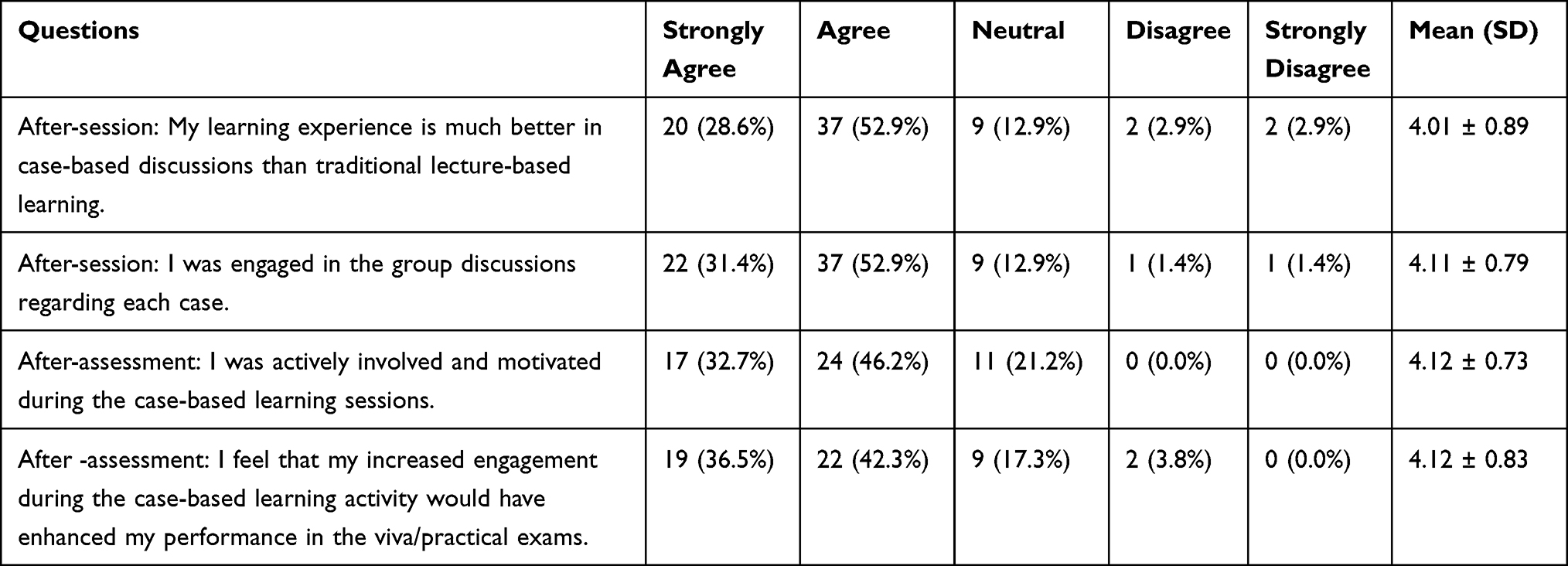 |
Table 6 Students’ Perception of Engagement During CBL-SGT Learning in Hematology |
The sixth domain evaluated students’ perceptions of faculty facilitation during the CBL-SGT activity using after-session questions 3 and 10 (Table 7). Most of the students agreed that the facilitators’ instructions were clear and that faculty feedback helped them recognize their strengths and shortcomings in hematology. One student commented, “The faculty are best at their job”.
 |
Table 7 Students’ Perception Towards the Faculty of the CBL-SGT Learning in Hematology |
The seventh domain assessed students’ views on the continuation and expansion of the CBL-SGT approach using after-session question 12 and after-assessment question 7 (Table 8). The 5-point Likert scale used in after-session question 12 collapsed into three categories for ease of interpretation. The majority of students reported that they would like to participate in similar sessions in the future, and a higher proportion of students suggested incorporating this approach into other subjects.
 |
Table 8 Students’ Feedback on the Continuation and Expansion of CBL-SGT Learning in Hematology |
The students’ responses to the open-ended question “Is there any additional feedback/comment that will help us enhance your learning experience?” were thematically coded (Box 2). The themes identified included positive learning experiences, curriculum integration, and refinement strategies. One student commented, “No benefit”. Overall, the qualitative data was consistent with the quantitative findings.
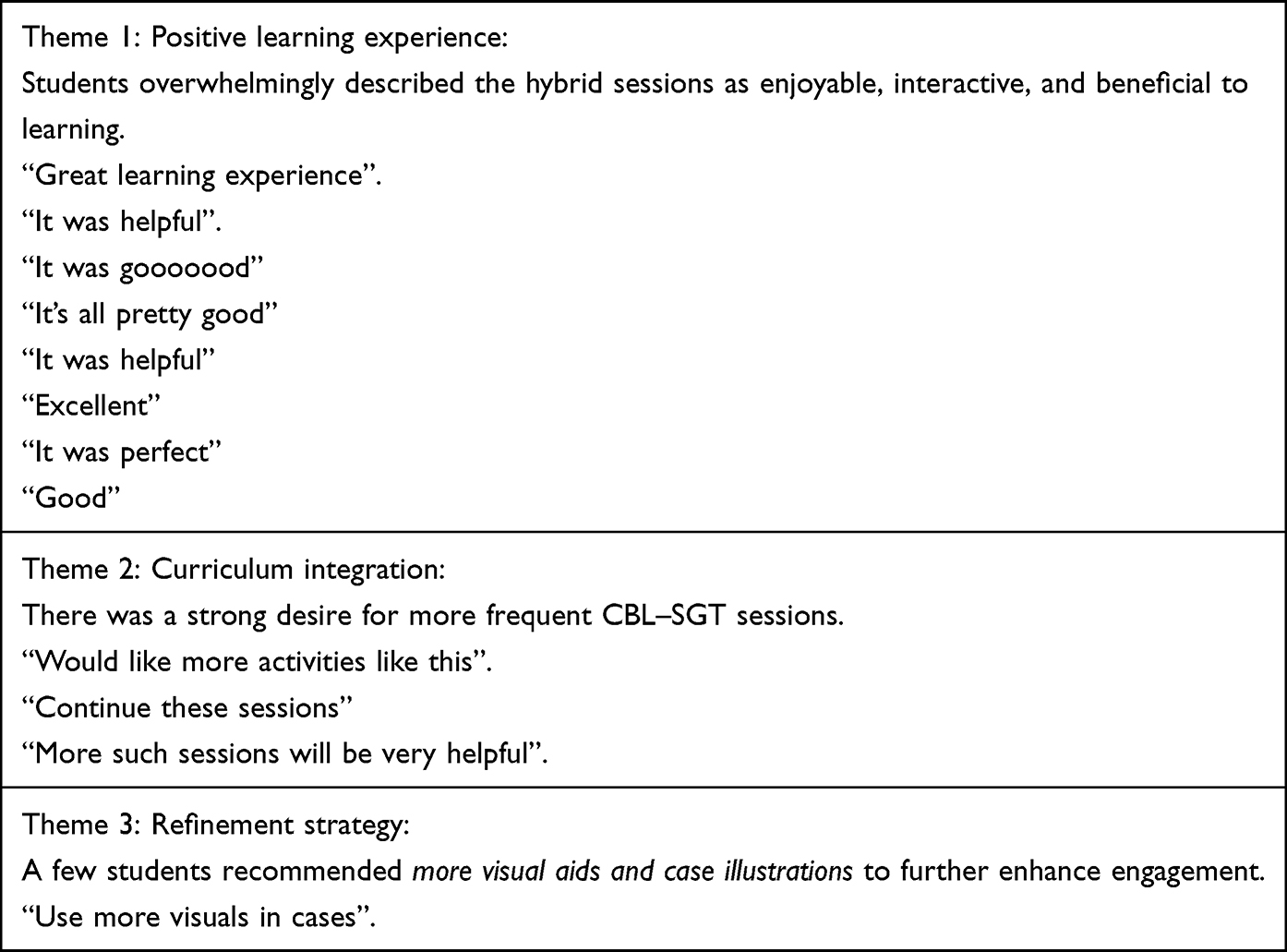 |
Box 2 Thematic Analysis of Students’ Qualitative Feedback on the Open-Ended Question, “Is There Any Additional Feedback/Comment That Will Help Us Enhance Your Learning Experience?” |
An optional open-ended question requesting after-assessment comments or feedback was answered only by eight students. Qualitative analysis would not be meaningful here, considering the low response rate. However, the comments are mentioned here: five students responded, “no comments”, one described the activity as great, another viewed ChatGPT as a useful academic tool and one student mentioned that the activity enhanced overall knowledge of the subject but did not significantly help in the examination.
Across all domains, mean Likert scores ranged from 4.01 ± 0.89 to 4.26 ± 0.79.
Discussion
The emerging experimental learning methods widely applied in dental education include case-based learning, problem-based learning, team-based learning, and the flipped classroom.47 The present study explored a hybrid educational approach integrating CBL with SGT, supported by AI-generated and faculty-validated instructional material, for teaching hematology to second-year undergraduate dental students.
CBL serves as an essential element for integrating discipline-specific contextualization in foundational sciences, unifying the basic sciences with clinical practice and helping students understand the relevance of theoretical knowledge rather than learning isolated facts.48 CBL was chosen as the pedagogy tool based on substantial literature supporting its superiority as an inquiry-based, student-centered active learning method.38 The three phases in case-based learning include preparation, discussion, and reflection.49 The challenges in dental education require a multifaceted approach involving the implementation of new technologies along with curriculum and faculty development changes.1 Hence, AI integration was adopted to assist faculty in designing effective case scenarios that ensure evaluation of knowledge, aptitude, and reasoning in clinical decision-making. To enhance the effectiveness of CBL, it was implemented in small student groups. The findings of this study indicate positive perceptions of this pedagogical model among the students and faculty. The outcome of this hybrid CBL-SGT study resonates with the ongoing worldwide shift toward active, student-centered, group learning methods in health professions education.50
The process of case generation largely depends on a well-structured prompt and the AI tool used. The content of the prompt determines the quality and relevance of the generated case scenarios. It guides ChatGPT to create realistic, contextually appropriate content that assesses higher-order thinking skills in students. Prompts with a goal-oriented approach ensure they are constructed correctly and aligned with the desired outcome. Prompts can be optimized by tweaking these curated prompts to improve the efficiency of the generated content.51,52 ChatGPT-4o was used as an AI tool for case generation, as it has demonstrated the ability to generate medical content based on previous studies.53 However, there is limited data available on which AI tool is most suitable for generating high-quality case scenarios; therefore, the use of the most recent and updated AI tool is recommended.
The first domain examined stakeholders’ perceptions of the instructional materials used in the activity. Well-constructed case scenarios are based on a conceptual framework comprising the attributes of relevance, realism, learner engagement, challenges and instructional, and incorporates patients’ medical, dental, psychological, socioeconomic, and cultural contexts. Such comprehensive case design enhances learners’ critical thinking, supports holistic patient-centered decision-making, and strengthens their ability to apply fundamental dental science concepts effectively in real clinical situations.8,54 However, developing high-quality case scenarios can require substantial faculty time and effort.13,38 Evidence regarding AI-assisted case generation in dental education remains limited; hence, this study explored the use of an AI tool to generate case-based learning materials. ChatGPT-4o was utilized for this study based on its enhanced language understanding and highest diagnostic accuracy.55–58 The faculty described AI as a useful assistant and affirmed the relevance of AI-generated case content while emphasizing the need for mandatory scrutiny by experts. This echoes findings from previous studies stating that human oversight is absolutely necessary to ensure the credibility of generated text since AI can produce incorrect results due to data bias, faulty models, lack of knowledge innovation and creativity, which can jeopardize the reliability of the scientific findings.16,59 Students and faculty responses regarding the AI-generated content were strongly positive, consistent with the above literature highlighting AI as a supportive tool in educational content creation. Students emphasized the need for more visual aid in the case scenarios, suggesting that enhanced visual integration could further strengthen engagement, and could be implemented in the future by incorporating more advanced AI tools.
The second domain focused on students’ perception of the educational value of the study. Students reported that the activity helped them understand hematology concepts and encouraged analytical thinking. These student perceptions are consistent with the recent literature highlighting the superiority of CBL in conceptual integration and clinical judgement, promoting meaningful learning in health sciences education.60–63 Collectively, these perceived learner benefits, along with further incorporation of objective learning measures, can reinforce the effectiveness of CBL-SGT as a learner-centered approach.
The third domain addressed students’ perceptions related to assessment preparedness and performance. Students indicated that participation in the hybrid sessions supported their ability to bridge theoretical knowledge with clinical application, which aligns with other studies that focus on using CBL to strengthen students’ deep understanding, critical thinking, retention, and higher-order cognitive skills.64–67 This study also showed a favorable view of enhanced confidence during examinations among students, a finding also reflected in the literature, with Khattak et al stating that critical thinking ability and self-confidence are positively correlated67,68 Self-reported perceptions by students indicated that the CBL-SGT approach helped them perform well in their assessments, which aligns with previous literature.66,67,69,70
The fourth domain focused on collaborative learning experience within the small-group format. Students reported positive perceptions of peer interactions during small-group discussions, which is supported by the previous studies that highlight that small-group teaching actively engages learners, encourages their participation, and enhances collaborative learning, fostering lifelong learning skills and exploring their hidden capacities of self-reliance, self-directed learning and directed self-learning.44,45,71,72 Students also reported that group discussions improved their clinical reasoning and problem-solving skills, corroborating the existing literature.72–75
The fifth domain reflected students’ perception of their engagement during the CBL-SGT activity. Most respondents indicated that the hybrid sessions rendered a more engaging learning experience than traditional didactic lectures. The students’ positive perception of their active involvement in group discussions fostered intrinsic motivation, aligning with the adult learning principle that emphasizes self-directed learning. Post-assessment reflections further reinforce this pattern, and many believed that their engagement contributed to examination performance. These results align with previous literature, which highlight that structured case discussions enhance learner involvement, and increase competency scores, reflecting better academic performance and clinical practice.8,54,69,72,73,76
The sixth domain explored students’ perceptions of faculty facilitation during the hybrid CBL-SGT pedagogy exercise. Participants reported that facilitators provided clear instructions and constructive feedback that supported learning, consistent with the previous studies.8,45 The role of instructors in enhancing class discussion is more critical by creating intriguing cases, having good communicative skills, clarifying concepts, and encouraging analytical reasoning.9,49,62,77 The qualitative comment by the students regarding the faculty being the best aligns with the literature, which also mentions the need for trained faculty members to teach in small-group active learning settings, to adopt a more encompassing, context-sensitive approach that considers the complexity of student engagement.42
The seventh domain explored students’ feedback on the continuation and expansion of similar sessions. The quality of feedback further reinforced this need, with students describing the sessions as enjoyable, interactive, and highly beneficial, and explicitly requesting more opportunities for this type of learning. The favourable perception-based responses increased from post-activity to post-assessment feedback, reflecting the positive effect on examination performance, however one student mentioned that this study did not significantly aid him in the examination but enhanced overall knowledge of the subject. These findings align with the existing literature, which demonstrate that CBL promotes theoretical understanding, deepens clinical reasoning and improves learner engagement.60,69,78
The strengths of this study include high positive perception rates among both students and faculty across all domains, providing a comprehensive evaluation of the study and using validated questionnaires with excellent internal reliability. The integration of AI-assistance in case generation is an innovation, followed by expert validation adds practical scalability. The overwhelmingly favourable responses make this collaborative higher order cognitive pedagogy with clinical applicability appropriate for further evaluation using objective performance measures.
Cronbach’s alpha value of 0.95 demonstrates excellent internal consistency of the questionnaire, although very high values may occasionally indicate possible item redundancy.
The study has several limitations. This was a single institution study, which may limit generalizability to other academic settings. The duration was relatively short, and hence long-term benefits could not be assessed. The absence of a control group prevented direct comparison with a lecture-only group or a medium/large group, limiting causal inference. The intervention focused on hematology topics, and the findings were based solely on self-reported perceptions. Sampling based on attendance may have introduced potential selection bias. Faculty feedback was obtained from four faculty members, which may limit generalizability. The uniformly high Likert scores raise the possibility of ceiling effects and social desirability bias. The study also did not include an assessment of clinical performance in real patient care settings.
Of the 70 students who participated in the CBL-SGT activity, 52 completed the post-examination questionnaire, whereas the calculated sample size requirement was 61. This reduction in the sample size may be attributed to non-responses after the examination, as participation was voluntary and conducted outside the scheduled assessment session.
Conclusion
The findings of this study suggest that the hybrid CBL-SGT approach supported by AI-assisted case generation was feasible and acceptable within the undergraduate dental curriculum. Students expressed high levels of satisfaction with this learning approach, and students and faculty reported positive perceptions regarding the AI-assisted case generation while faculty also highlighted the significance of expert review. The integration of structured CBL–SGT sessions supported by diverse case vignettes generated by AI with strong human oversight may therefore represent a practical strategy for enhancing interactive learning experiences in hematology. This learner-centered, interactive approach complements traditional lectures, strengthening foundational learning and preparing students for clinical training.
Future work could involve making the case generation process more structured and visually appealing by utilizing advanced AI tools to enhance student engagement and problem-solving. This approach can be expanded through controlled, multi-institutional studies, along with further incorporation of objective-based outcomes to enrich students’ learning experience and support sustained knowledge retention.
Abbreviations
CBL, case-based learning; AI, artificial intelligence; LLM, large language model; GPT, generative pre-trained transformer; BDS, Bachelor of Dental Surgery; SD, standard deviation; CBL-SGT, case-based learning-small-group teaching.
Data Sharing Statement
The data that support the findings of this study are available upon request from the corresponding author. The data is not publicly available to maintain participant confidentiality.
Acknowledgments
The authors would like to thank the students who participated in this study.
Author Contributions
All authors made a significant contribution to the work reported, whether that is in the conception, study design, execution, acquisition of data, analysis and interpretation, or in all these areas; took part in drafting, revising and critically reviewing the article; gave final approval of the version to be published; have agreed on the journal to which the article has been submitted; and agreed to be accountable for all aspects of the work.
Funding
This research received no external funding.
Disclosure
The authors report no conflicts of interest in this work.
References
1. Annamma LM, Varma SR, Abuttayem H, et al. Current challenges in dental education- a scoping review. BMC Med Educ. 2024;24(1):1523. doi:10.1186/s12909-024-06545-1
2. Kristensen AT, Thune NH, Khan Q, Utheim TP, Sehic A. The importance of basic sciences in dental education. Dent J. 2024;12(12):382. doi:10.3390/dj12120382
3. Al-Saghbini M, Fayyad M, Gharaibeh L. Pathology as a basic medical subject: its relevance and application during clinical practice in Jordanian MD programs, interns’ and residents’ perspectives. Adv Med Educ Pract. 2024;15:627–15. doi:10.2147/AMEP.S446158
4. Silva CAD, Santana CLD, Andrade RDCDV, Fraga TDLE, Prado FO. Evaluation of dentistry students’ knowledge on hematologic disorders. RGO-Revista Gaúcha de Odontologia. 2016;64(3):287–292. doi:10.1590/1981-863720160003000073145
5. Yuetqi L, Lin GSS, Mamat RB, Noorani TY. Student’s perception of hybrid team-based and case-based learning in undergraduate endodontics education. BMC Oral Health. 2025;25(1):43. doi:10.1186/s12903-024-05354-8
6. Frost SH. Academic Advising for Student Success: A System of Shared Responsibility. School of Education and Human Development, the George Washington University; 1991.
7. Perez A, Green J, Moharrami M, et al. Active learning in undergraduate classroom dental education- a scoping review. PLoS One. 2023;18(10):e0293206. doi:10.1371/journal.pone.0293206
8. Dong H, Guo C, Zhou L, et al. Effectiveness of case-based learning in Chinese dental education: a systematic review and meta-analysis. BMJ Open. 2022;12(2):e048497. doi:10.1136/bmjopen-2020-048497
9. Mostafa DAA, Allery LA. Dental Interns’ Attitudes toward case-based learning (CBL). A qualitative study. 2015.
10. Thistlethwaite JE, Davies D, Ekeocha S, et al. The effectiveness of case-based learning in health professional education. A BEME systematic review: BEME Guide No. 23. Med Teach. 2012;34(6):e421–e444. doi:10.3109/0142159X.2012.680939
11. Tegginamani AS, Vanishree HS. The benefits and limits of Case-Based Learning (CBL): a concise review. J Multidiscip Dent Res. 2024;10(2):74–80. doi:10.38138/JMDR/v10i2.26
12. Shigli K, Aswini Y, Fulari D, Sankeshwari B, Huddar D, Vikneshan M. Case-based learning: a study to ascertain the effectiveness in enhancing the knowledge among interns of an Indian dental institute. J Indian Prosthodont Soc. 2017;17(1):29. doi:10.4103/0972-4052.194945
13. Wei H, Dai Y, Yuan K, et al. AI-powered problem- and case-based learning in medical and dental education: a systematic review and meta-analysis. Int Dent J. 2025;75(4):100858. doi:10.1016/j.identj.2025.100858
14. Zuckerman M, Flood R, Tan RJB, et al. ChatGPT for assessment writing. Med Teach. 2023;45(11):1224–1227. doi:10.1080/0142159X.2023.2249239
15. Arbelaez Ossa L, Rost M, Lorenzini G, Shaw DM, Elger BS. A smarter perspective: learning with and from AI-cases. Artif Intell Med. 2023;135:102458. doi:10.1016/j.artmed.2022.102458
16. Li L, Zhang W, Zhang K, et al. The role of generative AI tools in case-based learning and teaching evaluation of medical biochemistry. BMC Med Educ. 2025;25(1):1185. doi:10.1186/s12909-025-07567-z
17. Saghiri MA, Vakhnovetsky J, Samadi E, Amanabi M, Morgano SM. C.E. Credit. Innovating dental education with artificial intelligence. J Calif Dent Assoc. 2023;51(1):2217692. doi:10.1080/19424396.2023.2217692
18. Kaul V, Enslin S, Gross SA. History of artificial intelligence in medicine. Gastrointest Endosc. 2020;92(4):807–812. doi:10.1016/j.gie.2020.06.040
19. Kung TH, Cheatham M, Medenilla A, et al. Performance of ChatGPT on USMLE: potential for AI-assisted medical education using large language models. PLOS Digit Health. 2023;2(2):e0000198. doi:10.1371/journal.pdig.0000198
20. Baxmann M, Kárpáti K, Baráth Z. The potentials and challenges of integrating generative artificial intelligence (AI) in dental and orthodontic education: a systematic review. BMC Oral Health. 2025;25(1):905. doi:10.1186/s12903-025-06070-7
21. Kim TW. Application of artificial intelligence chatbots, including ChatGPT, in education, scholarly work, programming, and content generation and its prospects: a narrative review. J Educ Eval Health Prof. 2023;20:38. doi:10.3352/jeehp.2023.20.38
22. Rahad K, Martin K, Amugo I, et al. ChatGPT to enhance learning in dental education at a historically black medical college. In Review. 2023. doi:10.21203/rs.3.rs-3546693/v2
23. Van Dis EAM, Bollen J, Zuidema W, Van Rooij R, Bockting CL. ChatGPT: five priorities for research. Nature. 2023;614(7947):224–226. doi:10.1038/d41586-023-00288-7
24. Wójcik D, Adamiak O, Czerepak G, Tokarczuk O, Szalewski L. A comparative analysis of the performance of chatGPT4, gemini and claude for the polish medical final diploma exam and medical-dental verification exam. Medical Education. 2024. doi:10.1101/2024.07.29.24311077
25. Mahale S, Patel Z. Comparative analysis of AI chatbots: efficiency across key parameters. 2023;9(10):40–50.
26. Thurzo A, Strunga M, Urban R, Surovková J, Afrashtehfar KI. Impact of artificial intelligence on dental education: a review and guide for curriculum update. Educ Sci. 2023;13(2):150. doi:10.3390/educsci13020150
27. Cross J, Robinson R, Devaraju S, et al. Transforming medical education: assessing the integration of ChatGPT into faculty workflows at a caribbean medical school. Cureus. 2023. doi:10.7759/cureus.41399
28. Balel Y, Zogo A, Yıldız S, Tanyeri H. Can ChatGPT-4o provide new systematic review ideas to oral and maxillofacial surgeons?. J Stomatol Oral Maxillofac Surg. 2024;125(5):101979. doi:10.1016/j.jormas.2024.101979
29. Peralta Ramirez AA, Trujillo López S, Navarro Armendariz GA, De La Torre Othón SA, Sierra Cervantes MR, Medina Aguirre JA. Clinical simulation with chatgpt: a revolution in medical education? J CME. 2025;14(1):2525615. doi:10.1080/28338073.2025.2525615
30. Pradana M, Elisa HP, Syarifuddin S. Discussing ChatGPT in education: a literature review and bibliometric analysis. Cogent Educ. 2023;10(2):2243134. doi:10.1080/2331186X.2023.2243134
31. Belaldavar C, Angadi PV. Knowledge and attitudes regarding use of Chat GPT in dentistry among dental students and dental professionals. Ann Dent Spec. 2024;12(1):14–20. doi:10.51847/E49ika828D
32. Khan RA, Jawaid M, Khan AR, Sajjad M. ChatGPT - reshaping medical education and clinical management. Pak J Med Sci. 2023;39(2). doi:10.12669/pjms.39.2.7653
33. Wilson T, Lee KKW. How I do it: using ChatGPT to create clinical scenarios for surgical learning and oral boards preparation. J Surg Educ. 2024;81(11):1623–1631. doi:10.1016/j.jsurg.2024.07.030
34. Bakkum MJ, Hartjes MG, Piët JD, et al. Using artificial intelligence to create diverse and inclusive medical case vignettes for education. Br J Clin Pharmacol. 2024;90(3):640–648. doi:10.1111/bcp.15977
35. Delikoura I, Fung YR, Hui P. From superficial outputs to superficial learning: risks of large language models in education. arXiv. 2025;
36. Arriazu R. The daunting challenge of artificial intelligence in education: a systematic literature review. J E-Learn Knowl Soc. 2025;21(1). doi:10.20368/1971-8829/1135992
37. Lin GSS, Tan WW, Foong CC. A new attempt of applying hybrid team-based and case-based learning approach in dental materials science: does it work?. Eur J Dent Educ. 2023;27(4):956–962. doi:10.1111/eje.12887
38. Haley CM, Brown B, Koerber A, Nicholas CL, Belcher A. Comparing case-based with team-based learning: dental students’ satisfaction, level of learning, and resources needed. J Dent Educ. 2020;84(4):486–494. doi:10.21815/JDE.019.190
39. Sedlák M, Šašinka Č, Stachoň Z, Chmelík J, Doležal M. Collaborative and individual learning of geography in immersive virtual reality: an effectiveness study. PLoS One. 2022;17(10):e0276267. doi:10.1371/journal.pone.0276267
40. Burgess A, Van Diggele C, Roberts C, Mellis C. Facilitating small group learning in the health professions. BMC Med Educ. 2020;20(S2):457. doi:10.1186/s12909-020-02282-3
41. Meo SA. Basic steps in establishing effective small group teaching sessions in medical schools. Pak J Med Sci. 2013;29(4). doi:10.12669/pjms.294.3609
42. Grijpma JW, Ramdas S, Broeksma L, Meeter M, Kusurkar RA, De La Croix A. Learning from the experts: stimulating student engagement in small-group active learning. Perspect Med Educ. 2024;13(1). doi:10.5334/pme.1245
43. Zechariah S, Ansa BE, Johnson SW, Gates AM, Leo GD. Interprofessional education and collaboration in healthcare: an exploratory study of the perspectives of medical students in the United States. Healthcare. 2019;7(4):117. doi:10.3390/healthcare7040117
44. Ketchan S, Parmar K, Porter C. Exploring the impact of small group teaching and case-based learning on optometry students’ binocular vision clinical knowledge. Br Ir Orthopt J. 2025;21:88–94. doi:10.22599/bioj.486
45. Mir MM, Jeelani M, Alshahrani M. A practical approach for successful small group teaching in medical schools with student centered curricula. J Adv Med Educ Prof. 2019;7(3). doi:10.30476/jamp.2019.74911
46. Ahmed SK, Mohammed RA, Nashwan AJ, et al. Using thematic analysis in qualitative research. J Med Surg Public Health. 2025;6:100198. doi:10.1016/j.glmedi.2025.100198
47. Pang X, Li L, Liu X, Wang Y, Yang B. Application of emerging teaching models in dental education: a systematic review and meta-analysis. Int Dent J. 2024;74(6):1185–1196. doi:10.1016/j.identj.2024.05.016
48. Brauer DG, Ferguson KJ. The integrated curriculum in medical education: AMEE guide no. 96. Med Teach. 2015;37(4):312–322. doi:10.3109/0142159X.2014.970998
49. Kanathila H, Patil S, Patwardhan KS, Jadhav S. Enhancing dental education through case-based learning - an overview. J Oral Res Rev. 2025;17(2):183–188. doi:10.4103/jorr.jorr_25_25
50. Grover S, Sood N, Chaudhary A. Reforming pathology teaching in medical college by peer-assisted learning and student-oriented interest building activities: a pilot study. Educ Health. 2017;30(2):126. doi:10.4103/efh.EfH_267_16
51. Al Shuraiqi S, Aal Abdulsalam A, Masters K, Zidoum H, AlZaabi A. Automatic generation of Medical Case-Based Multiple-Choice Questions (MCQs): a review of methodologies, applications, evaluation, and future directions. Big Data Cogn Comput. 2024;8(10):139. doi:10.3390/bdcc8100139
52. Robertson J, Ferreira C, Botha E, Oosthuizen K. Game changers: a generative AI prompt protocol to enhance human-AI knowledge co-construction. Bus Horiz. 2024;67:499–510. doi:10.1016/j.bushor.2024.04.008
53. Kaya M, Sonmez E, Halici A, Yildirim H, Coskun A. Comparison of AI-generated and clinician-designed multiple-choice questions in emergency medicine exam: a psychometric analysis. BMC Med Educ. 2025;25(1):949. doi:10.1186/s12909-025-07528-6
54. Kim S, Phillips WR, Pinsky L, Brock D, Phillips K, Keary J. A conceptual framework for developing teaching cases: a review and synthesis of the literature across disciplines. Med Educ. 2006;40(9):867–876. doi:10.1111/j.1365-2929.2006.02544.x
55. Öncü S, Torun F, Ülkü HH. AI-powered standardised patients: evaluating ChatGPT-4o’s impact on clinical case management in intern physicians. BMC Med Educ. 2025;25(1):278. doi:10.1186/s12909-025-06877-6
56. Zhong W, Liu Y, Liu Y, et al. Performance of ChatGPT-4o and four open-source large language models in generating diagnoses based on china’s rare disease catalog: comparative study. J Med Internet Res. 2025;27:e69929–e69929. doi:10.2196/69929
57. Higashitsuji A, Otsuka T, Watanabe K. Impact of ChatGPT on case creation efficiency and learning quality in case-based learning for undergraduate nursing students. Teach Learn Nurs. 2025;20(1):e159–e166. doi:10.1016/j.teln.2024.10.002
58. Scherr R, Halaseh FF, Spina A, Andalib S, Rivera R. ChatGPT interactive medical simulations for early clinical education: case study. JMIR Med Educ. 2023;9:e49877. doi:10.2196/49877
59. Ye Y, Sarkar S, Bhaskar A, Tomlinson B, Monteiro O. Using ChatGPT in a clinical setting: a case report. MedComm – Future Med. 2023;2(2):e51. doi:10.1002/mef2.51
60. Cen XY, Hua Y, Niu S, Yu T. Application of case-based learning in medical student education: a meta-analysis. Eur Rev Med Pharmacol Sci. 2021;25:8.
61. Di Carlofelice M, Cope J. Undergraduate hematology – a more integrated approach. Adv Med Educ Pract. 2016;7:643–644. doi:10.2147/AMEP.S123032
62. Garvey MT, O’Sullivan M, Blake M. Multidisciplinary case-based learning for undergraduate students. Eur J Dent Educ. 2000;4(4):165–168. doi:10.1034/j.1600-0579.2000.040404.x
63. Zhang SL, Ren SJ, Zhu DM, et al. Which novel teaching strategy is most recommended in medical education? A systematic review and network meta-analysis. BMC Med Educ. 2024;24:1342. doi:10.1186/s12909-024-06291-4
64. Maia D, Andrade R, Afonso J, Costa P, Valente C, Espregueira-Mendes J. Academic performance and perceptions of undergraduate medical students in case-based learning compared to other teaching strategies: a systematic review with meta-analysis. Educ Sci. 2023;13(3):238. doi:10.3390/educsci13030238
65. Sartania N, Sneddon S, Boyle JG, McQuarrie E, De Koning HP. Increasing collaborative discussion in case-based learning improves student engagement and knowledge acquisition. Med Sci Educ. 2022;32(5):1055–1064. doi:10.1007/s40670-022-01614-w
66. Singh G, Singh S, Khan MA. Making community medicine click: case-based learning through students’ perspectives. Eur J Cardiovasc Med. 2025;15(8):84–88.
67. Tsekhmister Y. Effectiveness of case-based learning in medical and pharmacy education: a meta-analysis. Electron J Gen Med. 2023;20(5):em515. doi:10.29333/ejgm/13315
68. Khattak O, Alruwaili NG, Alarjan LMM, et al. Evaluating case-based learning to enhance dental student performance in cavity preparation: a pilot study. Cureus. 2024. doi:10.7759/cureus.69222
69. Chen M, Li X, Liu Q, et al. The effectiveness of case-based learning compared with lecture-based learning in pharmacy education: a systematic review and meta-analysis. BMC Med Educ. 2025;25(1):1342. doi:10.1186/s12909-025-07927-9
70. Jones D, Oh SL. Correlation between student performances on case-based constructed-response formative assessment and summative assessment. J Med Educ Curric Dev. 2024;11:23821205241239496. doi:10.1177/23821205241239496
71. Son HK. The effects of simulation problem-based learning on the empathy, attitudes toward caring for the elderly, and team efficacy of undergraduate health profession students. Int J Environ Res PublicHealth. 2021;18(18):9658. doi:10.3390/ijerph18189658
72. Hunt T, Jones TA, Carney PA. Peer-assisted learning in dental students’ patient case evaluations: an assessment of reciprocal learning. J Dent Educ. 2020;84(3):343–349. doi:10.21815/JDE.019.182
73. Bi M, Zhao Z, Yang J, Wang Y. Comparison of case-based learning and traditional method in teaching postgraduate students of medical oncology. Med Teach. 2019;41(10):1124–1128. doi:10.1080/0142159X.2019.1617414
74. Haider AK, Rehman J, Ali SK. Comparative study of the effect of two small group discussion teaching methods (Tutorial vs Jigsaw) on academic motivation and achievement of undergraduate dental students – a preliminary study. BMC Med Educ. 2025;25(1):660. doi:10.1186/s12909-025-07244-1
75. Rodríguez-Triviño CY, Pérez-Mendoza L, Rincón-Guio C. Cooperative and collaborative learning: an innovation in teaching medical physiology. J Educ Soc Res. 2022;12(5):43. doi:10.36941/jesr-2022-0121
76. Khalil A, Iqbal Q, Afreen Z, Afreen A, Afzal J, Malik A. Perception of the effectiveness of self-directed learning in small groups among final-year dental students at watim dental college. Found Univ J Dent. 2024;4(2):66–72. doi:10.33897/fujd.v4i2.412
77. Bayona JA, Durán WF. A meta-analysis of the influence of case method and lecture teaching on cognitive and affective learning outcomes. Int J Manag Educ. 2024;22(1):100935. doi:10.1016/j.ijme.2024.100935
78. Gasim MS, Ibrahim MH, Abushama WA, Hamed IM, Ali IA. Medical students’ perceptions towards implementing case-based learning in the clinical teaching and clerkship training. BMC Med Educ. 2024;24(1):200. doi:10.1186/s12909-024-05183-x
 © 2026 The Author(s). This work is published and licensed by Dove Medical Press Limited. The
full terms of this license are available at https://www.dovepress.com/terms
and incorporate the Creative Commons Attribution
- Non Commercial (unported, 4.0) License.
By accessing the work you hereby accept the Terms. Non-commercial uses of the work are permitted
without any further permission from Dove Medical Press Limited, provided the work is properly
attributed. For permission for commercial use of this work, please see paragraphs 4.2 and 5 of our Terms.
© 2026 The Author(s). This work is published and licensed by Dove Medical Press Limited. The
full terms of this license are available at https://www.dovepress.com/terms
and incorporate the Creative Commons Attribution
- Non Commercial (unported, 4.0) License.
By accessing the work you hereby accept the Terms. Non-commercial uses of the work are permitted
without any further permission from Dove Medical Press Limited, provided the work is properly
attributed. For permission for commercial use of this work, please see paragraphs 4.2 and 5 of our Terms.