
Back to Journals » Clinical, Cosmetic and Investigational Dermatology » Volume 19
Enhanced Efficacy of Post-Procedural Skin Care: A Double-Blind, Randomized, Vehicle-Controlled, Split-Face Clinical Study Assessing a Novel Neuropeptide Serum Following Botulinum Toxin Injection
Authors Lupin M  , Brieva P, Dayeh NR, White S
Received 9 December 2025
Accepted for publication 9 May 2026
Published 10 June 2026 Volume 2026:19 581831
DOI https://doi.org/10.2147/CCID.S581831
Checked for plagiarism Yes
Review by Single anonymous peer review
Peer reviewer comments 3
Editor who approved publication: Dr Monica K. Li
Mark Lupin,1,2 Patricia Brieva,3 Nour R Dayeh,3 Stacy White3
1Cosmedica The Laser Centre, Victoria, BC, Canada; 2MedSpa, Victoria, BC, Canada; 3SkinCeuticals, New York, NY, USA
Correspondence: Stacy White, Email [email protected]
Introduction: Botulinum toxins type-A (BTX-A) including onabotulinumtoxinA (Botox Cosmetic®), abobotulinumtoxin A (Dysport®), and incobotulinumtoxinA (Xeomin®) have regulatory approval and are widely used as a highly effective non-surgical treatment for dynamic facial wrinkles. BTX-A injections have become a mainstay in aesthetic medicine due to their minimally invasive nature, predictable results, and relatively low risk of complications.
Purpose: Optimizing post-BXT-A skincare is crucial for maximizing results and overall skin health. This randomized double-blind vehicle-controlled, split-face study investigated a novel neuropeptide serum designed to complement BTX-A injections in a post-procedural setting.
Methods: This is a 10-week, split-face, double-blind, vehicle-controlled randomized study designed to assess the efficacy and tolerability of a topical neuropeptide serum compared to vehicle control as pre- and post-procedural skincare around onabotulinumtoxinA injections in subjects with mild-to-moderate facial lines, facial wrinkles, and rough skin. At pre-treatment, subjects applied either neuropeptide serum or vehicle to one-half of the face randomized in conjunction with moisturizer, cleanser and sunscreen for 14 days. At baseline, subjects received on-label onabotulinumtoxinA injections for glabella and lateral canthal lines, post-injection subjects continued their randomized skincare regimen. Clinical efficacy live grading was assessed at pre-treatment, baseline, weeks 2, 4 and 8. Tolerance and subject self-assessments were conducted during the study.
Results: The novel neuropeptide serum demonstrated statistically significant improvement (p < 0.05) compared to vehicle in 18 facial attributes assessed by the clinical dermatologist, including forehead wrinkles, global fine lines, smoothness and radiance at 8 weeks post BTX-A injection. Additionally, no tolerability concerns were observed by either the investigator or subjects. Compared to vehicle, the neuropeptides serum’s statistical benefits can be seen as early as 2 weeks prior to BTX-A injection.
Conclusion: The study demonstrated that the neuropeptide serum is an effective complementary product that can be used with BTX-A treatments to achieve enhanced results.
Keywords: botulinum toxins type-A, neuropeptide serum, aesthetic medicine, adjunctive therapy, skincare
Introduction
The number of nonsurgical cosmetic dermatology procedures continues to increase globally each year. According to a 2024 survey of aesthetic physicians, over 9.8 million botulinum toxin type A injections were performed in the United States to improve fine lines in women and men.1 The global market for botulinum toxins, valued at USD 5.9 billion in 2022, is projected to reach USD 11.1 billion by 2030.2 This growth reflects BTX-A’s increasing popularity and integration into mainstream cosmetic practices worldwide.
Botulinum toxins type A (BTX-A) have revolutionized non-surgical aesthetic treatments for dynamic facial wrinkles. These wrinkles, formed by repeated muscle contractions during expressions like frowning or smiling, are effectively addressed by BTX-A’s targeted mechanism of action. When focally injected, BTX-A temporarily inhibits acetylcholine mediated-muscle contraction by inhibiting the release of acetylcholine at the neuromuscular junction and consequently decreases contraction of post-synaptic targeted muscles, reducing their activity and smoothing the overlying skin. While all BTX-A’s reduce muscle contraction using this mechanism of action, the world regulatory agencies have established that botulinum toxin products are not interchangeable due to they differ in formulation, manufacturing, potency and dosing requiring non-convertible units.3–5 This minimally invasive procedure offers predictable results with a relatively low risk of complications, contributing to its widespread adoption in aesthetic medicine.
While BTX-A effectively addresses dynamic wrinkles, it is not indicated to address key skin quality attributes including radiance, discoloration, elasticity and firmness. Another limitation of BTX-A injections, they are not approved to safely treat nasalis fanning, undereye wrinkles, perioral wrinkles or marionette lines, therefore optimizing post-procedure skincare is essential for maximizing BTX-A outcomes and maintaining overall skin health.6,7 Finally, the injection process, while minimally invasive, can induce stress on the skin.8 Proper post-procedure care mitigates potential adverse effects such as bruising, swelling, and irritation; while also continuing to decrease facial wrinkles where BTX-A injection is not indicated.9 Moreover, incorporating targeted skincare ingredients can potentially amplify and extend BTX-A’s wrinkle-reducing effects. Ingredients known to promote collagen production, improve skin texture and hydration, and address other signs of aging, like radiance and fine lines, can complement BTX-A injection by targeting aspects of skin health that botulinum toxins alone may not fully address.6,7 The neuropeptide serum (PTiOX) contains 5 key active ingredients: 2% dipeptide diaminobutryoyl, 2% acetyl hexapeptide-8, 5% niacinamide, 5% PHA, and 1% laminaria extract that work in combination to reduce facial wrinkles and improve radiance. Studies have shown dipeptide diaminobutryoyl and acetyl hexapeptide-8 can reduce contraction lines, while niacinamide and PHA are shown to improve skin radiance and texture.10,11
This synergistic approach recognizes that comprehensive facial rejuvenation often requires a multifaceted strategy for example, while BTX-A addresses dynamic wrinkles, it does not directly impact static wrinkles (present even when the face is at rest) or skin quality issues like dryness or uneven tone. This is where post-procedure skincare plays a vital role.
This study investigates the efficacy and tolerability of a novel neuropeptide serum designed to enhance the benefits of BTX-A injections in a pre- and post-procedural setting. The serum’s formulation incorporates ingredients intended to support skin recovery, minimize adverse effects, and potentially boost the longevity and overall aesthetic impact of the BTX-A aesthetic treatments.
Methods
This study employed a double-blind, randomized, vehicle-controlled, split-face design to assess the efficacy and tolerability of a topical neuropeptide serum compared to vehicle control as pre- and post-procedural skincare around onabotulinumtoxin A (Botox Cosmetic®) injections.
The study received approval from an independent ethics review board (Veritas IRB) and conducted in accordance with the Declaration of Helsinki. Participants provided written informed consent, including permission for the use of photographs where applicable.
Study Population
Forty subjects were enrolled (female and male) between the ages of 37 and 70, with Fitzpatrick skin types I–VI (I–II: n = 21, III–VI: n = 19, and presenting with mild to moderate facial wrinkles (as determined by a modified Griffiths score of 3–6). Of the 40 subjects enrolled, 36 progressed through all study visits and completed the protocol, the exclusion criteria were listed in Table S1).
Intervention
Two weeks prior to the onabotulinumtoxin A procedure at baseline (Day −14), subjects were provided with blinded study products, including a cleanser (SkinCeuticals Soothing Cleanser), a moisturizer (SkinCeuticals Daily Moisture), and a sunscreen (SkinCeuticals Physical Fusion), and both neuropeptide serum and a vehicle control. Subjects were instructed to apply twice daily the randomized treatment (PTiOX or vehicle) to their assigned half of their face along with twice daily full-face cleanser and moisturizer. Additionally, subjects were directed to apply to the full-face sunscreen once in the morning and thereafter as needed. Concomitant skincare products were disallowed unless deemed necessary by the investigator. This regimen continued for the duration of the 10-week study. On Day 0 (procedure day), subjects received on-label onabotulinumtoxin A injections for lateral canthal lines (crow’s feet) and glabellar lines (frown lines) based on the investigator’s clinical judgment.
Assessments
Investigator Efficacy Assessments
A dermatologist assessed lines/wrinkles (crow’s feet, frown lines, forehead wrinkles, under-eye wrinkles, nasalis fanning wrinkles, cheek folds, nasolabial folds, oral commissures, global fine lines, marionette lines, global wrinkles) and skin quality (pore appearance, smoothness, elasticity, discoloration, radiance, firmness, overall healthy appearance) using the modified Griffiths scale (0–9, with half-point increments). Assessments occurred at Day −14 (baseline), Day 0 (pre-procedure), Week 2, Week 4, and Week 8 (Table 1).
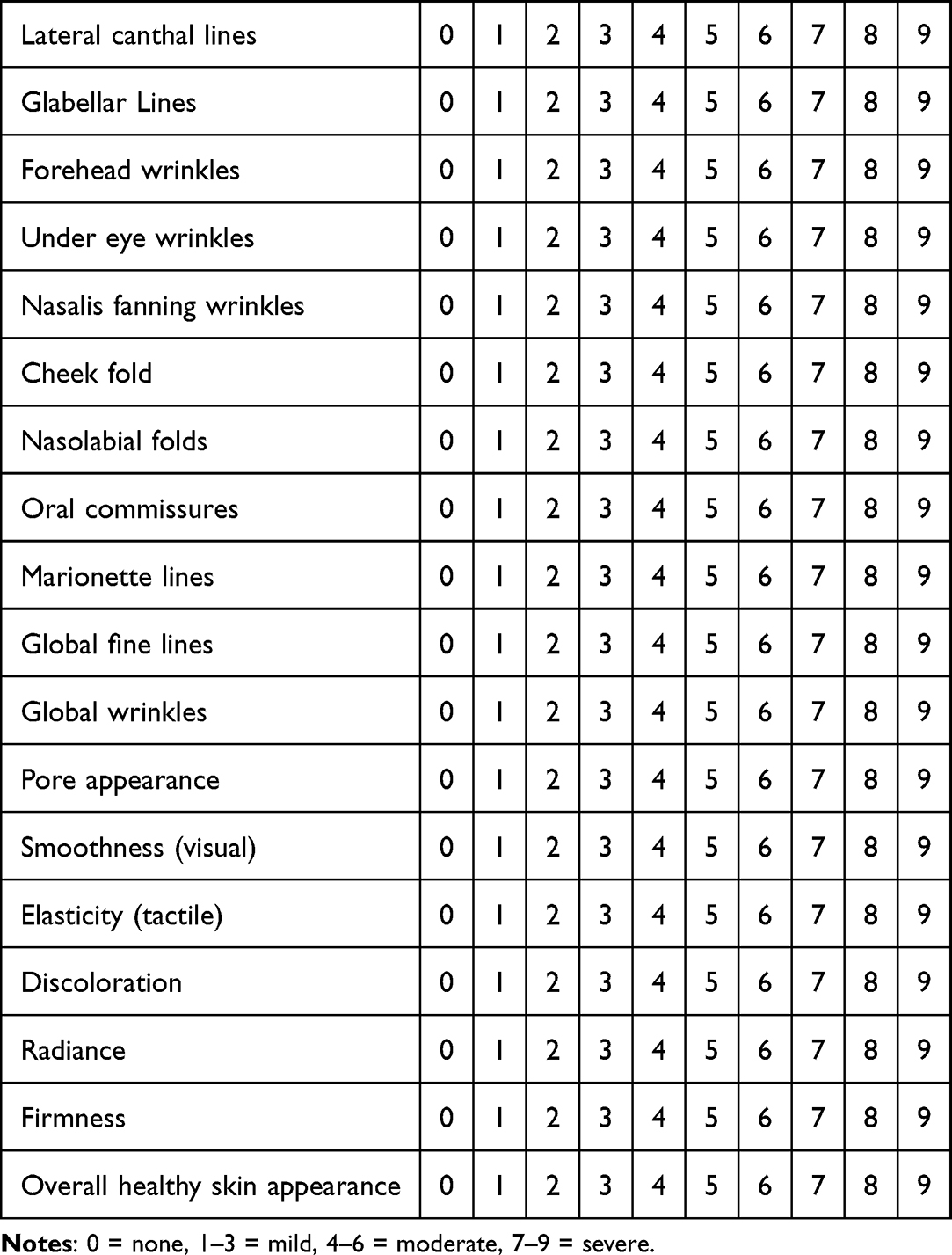 |
Table 1 Investigator Efficacy Assessment |
Subject Self-Assessments
Subjects completed 9-point efficacy questionnaires (1 = Disagree Completely to 9 = Agree Completely) (Table 2) and 4-point tolerability scales (0 = none, 1 = mild, 2 = moderate, 3 = severe) for burning, stinging, and itching at the same time points as investigator assessments (Table 3).
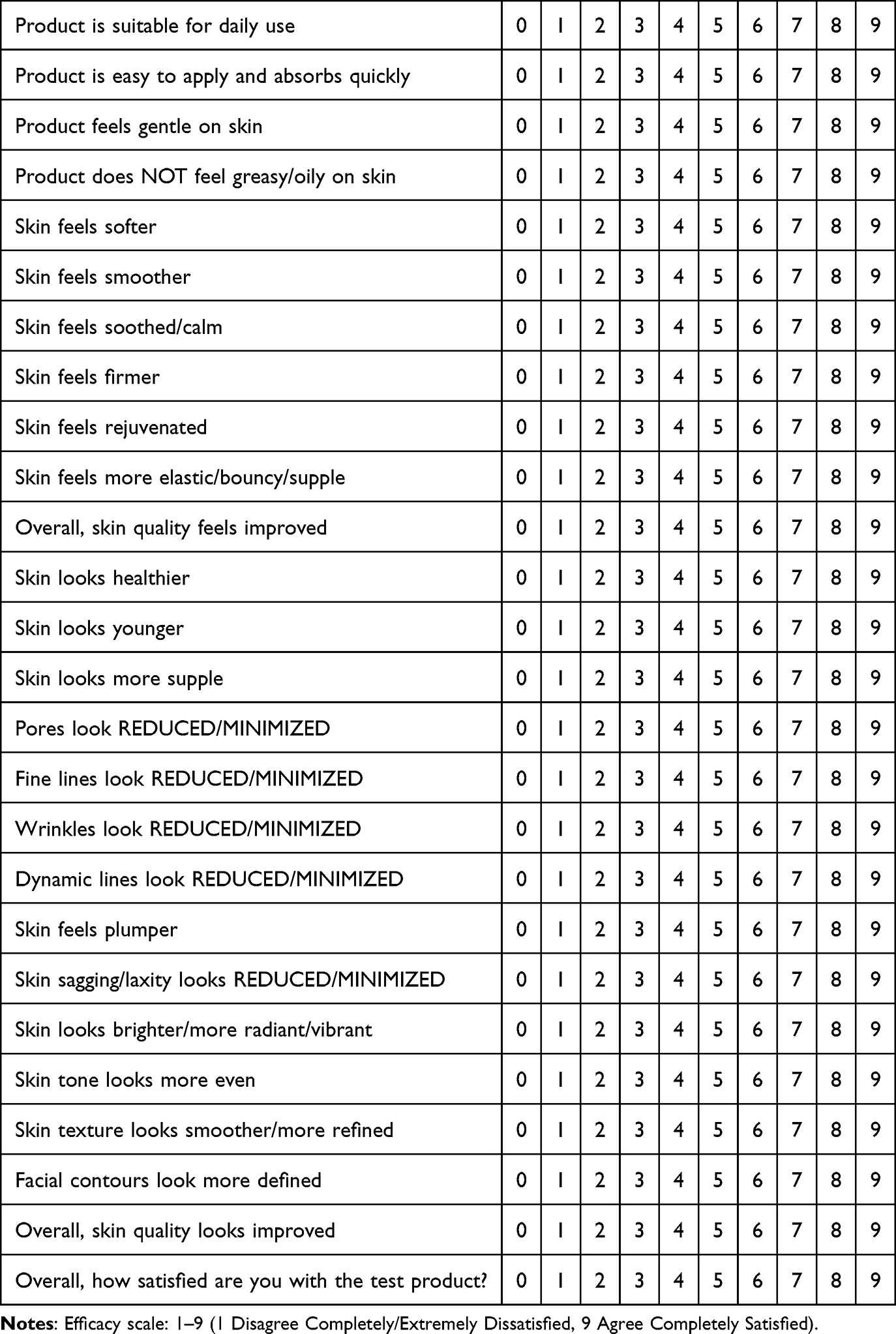 |
Table 2 Subject Self-Assessment Questionnaire for Efficacy |
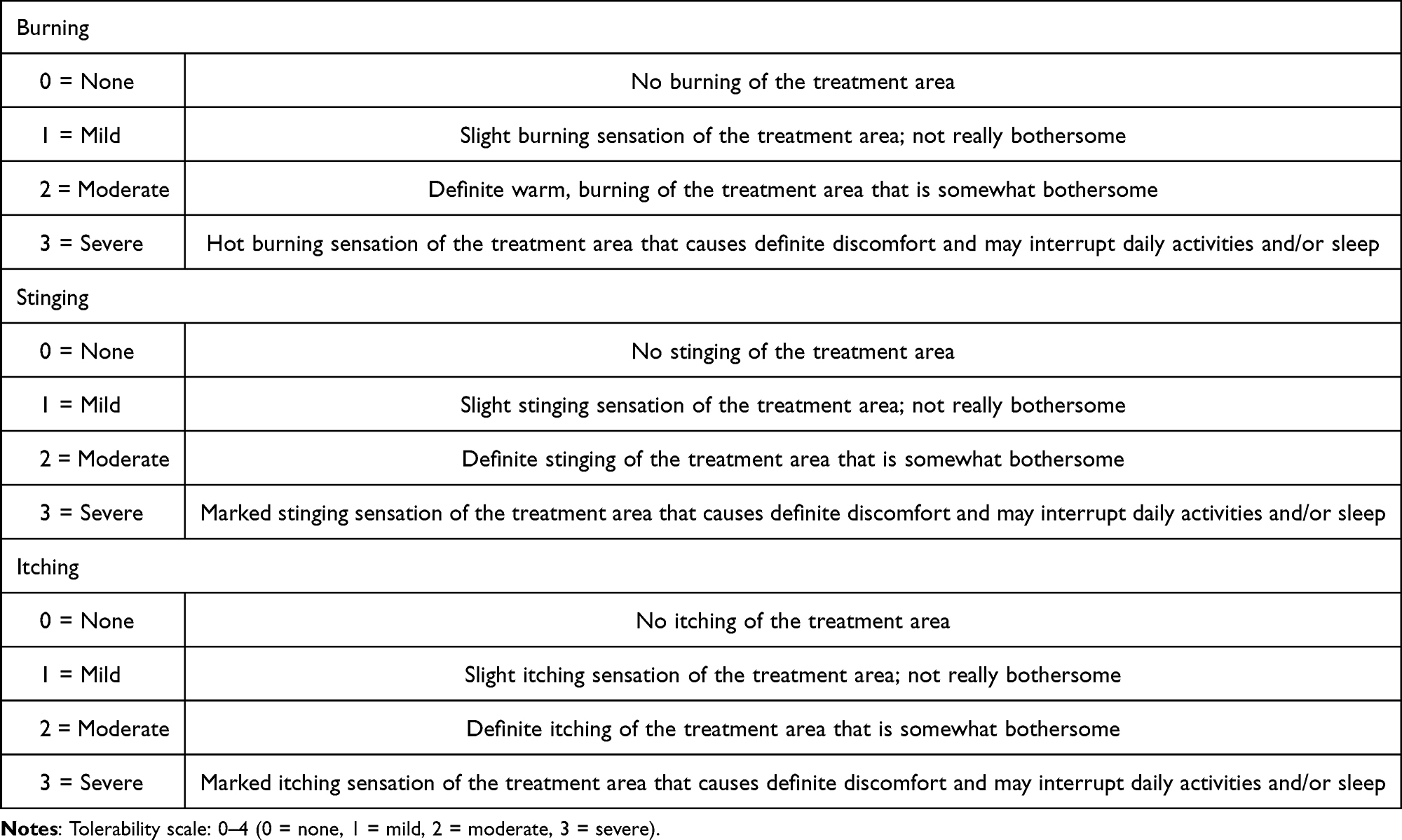 |
Table 3 Subject Tolerability |
Investigator Tolerability
The investigator assessed erythema, dryness, and scaling (0–3 scale) at the same time points.
Photography
Standardized photos were taken at each visit using a VISIA CR 4.3 camera to document changes. Subject identity was blinded in photos.
Compliance Diaries
Subjects recorded daily product use.
Statistical Analysis
Descriptive statistics (means, standard deviations, percentages) were used. Paired t-tests (p < 0.05 significant) analyzed neuropeptide serum vs vehicle. Data outside a ±4-day window were excluded.
Results
Efficacy
The investigation topical serum demonstrated statistically significant improvements in both investigator-assessed and subject-reported outcomes compared to the vehicle control. These statistically greater improvements shown by neuropeptide serum compared to the control were evident across a range of 18 wrinkle and skin quality parameters by week 8 after onabotulinumtoxin A injection.
Investigator Assessments
At 8 weeks post-procedure, the neuropeptide serum demonstrated statistically significant improvements versus baseline across all assessed domains of lines/wrinkles and skin quality attributes; including those wrinkles not treated with onabotulinumtoxin A. For instance, neuropeptide serum treatment resulted in a 60.6% improvement in lateral canthal lines (crow’s feet) compared to 53.2% in the control group (p < 0.05). Similarly, glabellar lines (frown lines) improved by 56.7% with neuropeptide serum compared to 50.7% with the vehicle (p < 0.05) (Figure 1). Furthermore, in areas not treated with onabotulinumtoxin A, neuropeptide serum resulted in greater statistically significant improvements compared to control in forehead wrinkles (42.0% vs 27.3%, p < 0.05), and under-eye wrinkles (44.7% vs 24.8%, p < 0.05) (Figure 2). In addition, neuropeptide serum treatment resulted in a 50.5% improvement in smoothness compared to 22.4% in the control group, and an improvement of 56.7% in radiance versus 29.9.% in the control group (Figure 3).
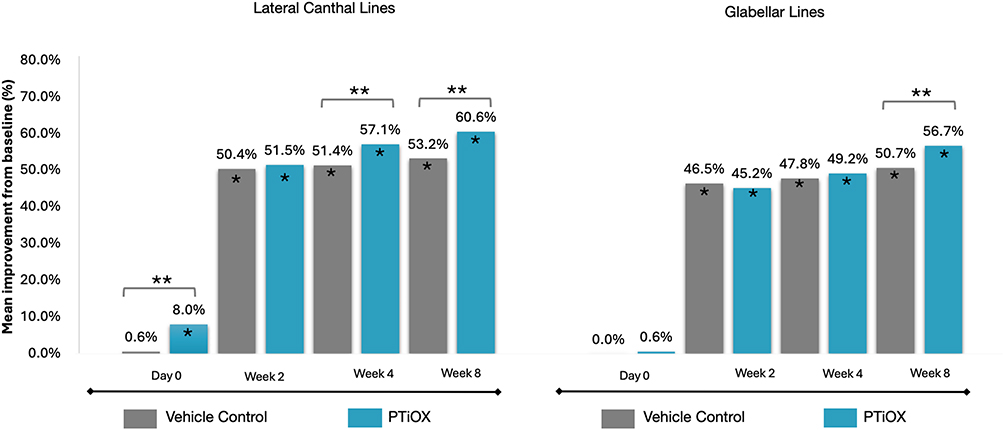 |
Figure 1 Investigator assessment of the main improvement from baseline in lateral canthal lines and glabellar lines for neuropeptide serum-treated group (blue) versus control group (grey). Neuropeptide serum treatment resulted in a 60.6% improvement in lateral canthal lines (crow’s feet) compared to 53.2% in the control group (p < 0.05). Similarly, glabellar lines (frown lines) improved by 56.7% with neuropeptide serum compared to 50.7% with the control group (p < 0.05). *p = <0.05 vs Respective Baseline; **p = <0.05 vs Vehicle Control. |
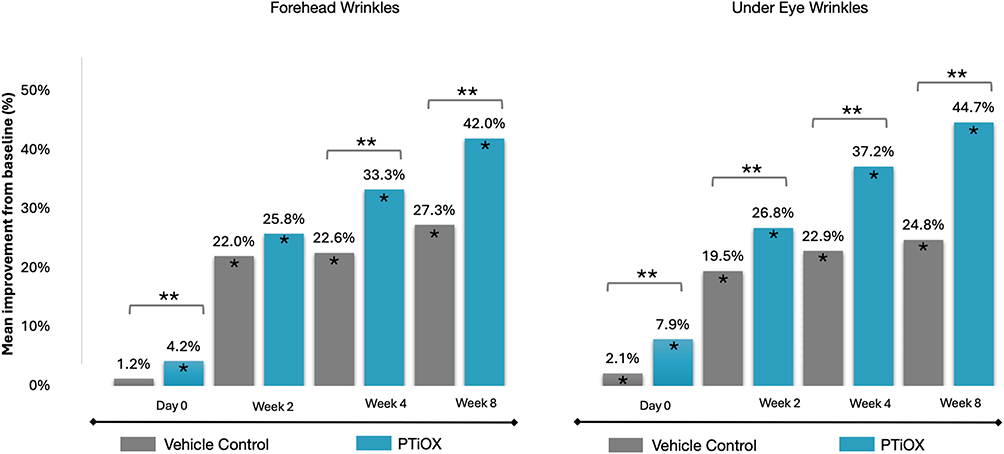 |
Figure 2 Investigator assessment of the main improvement from baseline in forehead wrinkles and under eye wrinkles for neuropeptide serum-treated group (blue) versus control group (grey). Neuropeptide serum resulted in greater statistically significant improvements in forehead wrinkles (42.0% vs 27.3%, p < 0.05), and under-eye wrinkles (44.7% vs 24.8%, p < 0.05). *p = <0.05 vs Respective Baseline; **p = <0.05 vs Vehicle Control. |
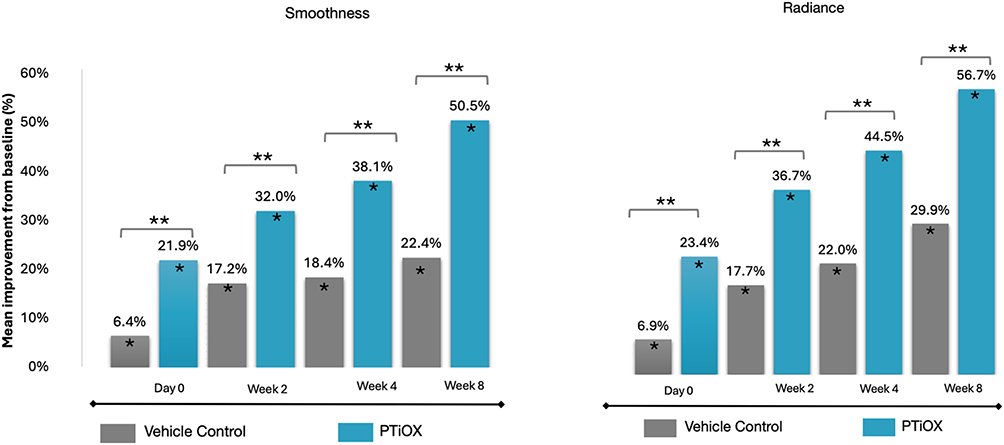 |
Figure 3 Investigator assessment of the main improvement from baseline in smoothness and radiance for neuropeptide serum-treated group (blue) versus control group (grey). Neuropeptide serum treatment resulted in a 50.5% improvement in smoothness compared to 22.4% in the control group, and an improvement of 56.7% in radiance versus 29.9.6% in the control group. *p = <0.05 vs Respective Baseline; **p = <0.05 vs Vehicle Control. |
Notably, as early as 2 weeks post-injection procedure, neuropeptide serum compared to vehicle significantly enhanced skin quality, demonstrating maximum improvements at 8 weeks in pore appearance (38.0% vs 22.2%, p < 0.05), elasticity (28.2% vs 11.3%, p < 0.05), firmness (25.6% vs 11.0%, p < 0.05), and overall healthy skin appearance (37.8% vs 18.5%, p < 0.05). Importantly, several of these benefits were observed as early as Day 0 prior to injection procedure, neuropeptide serum compared to vehicle in smoothness (21.9% vs 6.4%) and radiance (23.4% vs 6.9%); indicating a relatively rapid onset of action for the neuropeptide serum.
Tolerability
Investigator and Subject Assessments
Both investigator and subject tolerability assessments indicated that the neuropeptide serum was well-tolerated. There were no statistically significant differences in the incidence or severity of adverse events, including erythema, burning, stinging, and itching, between the neuropeptide serum and vehicle groups at any time point. However, neuropeptide serum demonstrated significantly less dryness and scaling compared to the vehicle as early as week 2 post-injection procedure (p < 0.05). This suggests that neuropeptide serum may even offer some advantages in terms of mitigating certain potential side effects associated with post-procedural skin sensitivity.
Discussion
This study provides evidence for the efficacy and tolerability of neuropeptide serum as a post-procedural skincare adjunct following BTX-A injection procedure. Compared to vehicle control, the statistically significant improvements observed for the neuropeptide serum across a wide range of investigator-assessed wrinkle and skin quality parameters suggest that the neuropeptide serum not only complements the wrinkle-reducing effects of BTX-A aesthetic injections but also provides broader benefits for overall skin health and appearance.
Although the FDA and other regulatory agencies have established that the approved botulinum toxin formulations are not interchangeable, we are aware of a single study evaluating the efficacy of a topical containing Waglerin-1, a synthetic peptide shown in studies to reduce contraction wrinkles post-procedure following botulinum toxin injection, with Xeomin® (incobotulinumtoxinA).12 The primary outcome was improvement in wrinkles and texture; at 3 and 6 months as assessed by Antera 3D®. In this randomized, double-blind, controlled study involving 100 women with moderate-to-severe crow’s feet, subjects treated with the topical formulation (TF) showed significantly greater improvements in wrinkles and skin texture at 6 months compared with the placebo group. The study did not meet its primary endpoint because at 3 months post-injection there was no statistically significant difference between subjects in the TF group compared to placebo group in improvement of wrinkles and texture; (22.57 ± 1.69 vs 24.59 ± 1.3), texture (17.96 ± 1.79 vs 24.2 ± 1.23). In comparison, our study met all primary and secondary endpoints. Further limitations of Araco et al compared to the current study are exclusion of male subjects, an important demographic of the aesthetic patient population, narrow assessment of only global wrinkles and texture, and no efficacy and safety assessment of the Waglerin-1 peptide containing topical formulation prior to botulinum toxin infection. In contrast, our comprehensive study assessed 18 key facial attributes including 11 common facial wrinkles (eg oral commissures, cheek folds, and undereye lines) and 7 skin quality attributes (eg radiance, discoloration, and firmness) botulinum toxins are not indicated to improve. Therefore, regardless of the non-interchangeability of approved BTX-As, more comprehensive clinical studies are needed to address how topicals can enhance post-procedural skincare following botulinum toxin injection.
To that end, in the current study, the observed reduction in lateral canthal lines (crow’s feet) and glabellar lines (frown lines) with the novel neuropeptide serum aligns with the primary goal of all regulatory approved BTX-A treatments in these facial areas. However, the additional improvements in areas not injected with BTX-A, such as forehead wrinkles, under-eye wrinkles, and nasalis fanning wrinkles, suggest that the neuropeptide serum may offer more comprehensive rejuvenation than the BTX-A alone. This is a significant advantage for patients seeking more holistic facial rejuvenation; especially in facial areas where BTX-A injections are not approved.
Furthermore, the improvements in skin quality attributes, such as pore appearance, smoothness, elasticity, radiance, and firmness, are highly relevant for aesthetic practice. These parameters contribute significantly to a youthful and healthy complexion, and the observed enhancements with neuropeptide serum offer a valuable addition to the benefits of BTX-A injections.
The favorable tolerability profile of this neuropeptide serum is equally important for clinical practice. The lack of significant differences in adverse events between neuropeptide serum and vehicle, coupled with the observed reduction in dryness and scaling with neuropeptide serum, suggests that this serum can be safely incorporated into post-procedural skincare regimens without increasing the risk of irritation or other complications. This is particularly relevant for patients with sensitive skin or those prone to post-procedure dryness.
Limitations
A limitation of this study is the duration of observations post-BTX-A injections at 8 weeks. It would be interesting to extend the study duration beyond 8 weeks post-BTX-A injection procedure to better elucidate if perceived duration of benefit of BTX-A injections might be enhanced and/or higher patient satisfaction with the combination of BTX-A and neuropeptide serum might be achieved and sustained. This would speak to long term efficacy and durability of the treatment effects.
Conclusion
This clinical study demonstrated the efficacy and tolerability of a neuropeptide serum in post-procedural skincare following BTX-A injections. The neuropeptide serum provided statistically significant improvements in a comprehensive range of investigator-assessed wrinkle parameters and skin quality attributes, surpassing the benefits observed with the vehicle control. These findings highlight the potential of the neuropeptide serum to not only enhance the cosmetic outcomes of BTX-A treatments but also contribute to broader improvements in skin health and appearance. The study confirmed the tolerability profile of the neuropeptide serum, with no increased risk of adverse events compared to the vehicle and further demonstrated a reduction in dryness and scaling.
This study underscores the importance of comprehensive post-procedure skincare in aesthetic practices. While procedures like BTX-A injections effectively address dynamic wrinkles, incorporating adjunctive skincare like the neuropeptide serum can further optimize results by targeting multiple aspects of skin aging and quality. Furthermore, appropriate post-procedure care can play a crucial role in mitigating potential side effects such as dryness and scaling, contributing to a more comfortable and positive patient experience. The findings support the integration of the neuropeptide serum into post-BTX-A injection procedure skincare regimen.
Disclosure
ML received funding by Skinceuticals to conduct the research presented in the manuscript. ND, PB and SW are employees of L’Oreal. The authors report no other conflicts of interest in this work.
References
1. American Society of Plastic Surgeons. ASPS Procedural Statistics Release. American Society of Plastic Surgeons. Available from: https://www.plasticsurgery.org/plastic-surgery-statistics.
2. Verified Market Research. Botulinum toxin market size by product (BOTOX Cosmetic/Vistabel, Dysport/Azzalure, Xeomin/Bocouture, others), by application (therapeutic, aesthetics), by geographic scope & forecast. Available from: https://www.verifiedmarketresearch.com/report/botulinum-toxin-market/.
3. AbbVie Inc. BOTOX (onabotulinumtoxinA) prescribing information. Available from: https://www.rxabbvie.com/pdf/botox_pi.pdf.
4. Biocodex Inc. DIACOMIT (stiripentol) prescribing information. Available from: https://www.diacomit.com/wp-content/uploads/2022/10/DIACOMIT_US_PI_2022.pdf.
5. U.S. Food and Drug Administration. Xeomin (incobotulinumtoxinA) prescribing information. Available from: https://www.accessdata.fda.gov/drugsatfda_docs/label/2024/125360s099lbl.pdf.
6. Ganceviciene R, Liakou AI, Theodoridis A, Makrantonaki E, Zouboulis CC. Skin anti-aging strategies. Dermatoendocrinol. 2012;4(3):308–9. doi:10.4161/derm.22804
7. Rodan K, Fields K, Majewski G, Falla T. Skincare bootcamp: the evolving role of skincare. Plast Reconstr Surg Glob Open. 2016;4(12 Suppl Anatomy and Safety in Cosmetic Medicine: Cosmetic Bootcamp):e1152. doi:10.1097/GOX.0000000000001152
8. Huang CF, Wang CC, Hu S. Minimizing pain during botulinum toxin injection. J Formos Med Assoc. 2018;117(1):34–39. doi:10.1016/j.jfma.2017.02.014
9. Carruthers A, Carruthers J. Botulinum toxin type A: history and current cosmetic use in the upper face. Semin Cutan Med Surg. 2001;20(2):71–84. doi:10.1053/sder.2001.25138
10. Blanes-Mira C, Clemente J, Jodas G, et al. A synthetic hexapeptide (Argireline) with antiwrinkle activity. Int J Cosmet Sci. 2002;24(5):303–310. doi:10.1046/j.1467-2494.2002.00153.x
11. Lungu C, Considine E, Zahir S, Ponsati B, Arrastia S, Hallett M. Pilot study of topical acetyl hexapeptide-8 in the treatment for blepharospasm in patients receiving botulinum toxin therapy. Eur J Neurol. 2013;20(3):515–518. doi:10.1111/ene.12009
12. Araco A, Francesco A. Prospective randomized clinical study of a new topical formulation for face wrinkle reduction and dermal regeneration. J Cosmet Dermatol. 2021;20(9):2832–2840. doi:10.1111/jocd.13937
 © 2026 The Author(s). This work is published and licensed by Dove Medical Press Limited. The
full terms of this license are available at https://www.dovepress.com/terms
and incorporate the Creative Commons Attribution
- Non Commercial (unported, 4.0) License.
By accessing the work you hereby accept the Terms. Non-commercial uses of the work are permitted
without any further permission from Dove Medical Press Limited, provided the work is properly
attributed. For permission for commercial use of this work, please see paragraphs 4.2 and 5 of our Terms.
© 2026 The Author(s). This work is published and licensed by Dove Medical Press Limited. The
full terms of this license are available at https://www.dovepress.com/terms
and incorporate the Creative Commons Attribution
- Non Commercial (unported, 4.0) License.
By accessing the work you hereby accept the Terms. Non-commercial uses of the work are permitted
without any further permission from Dove Medical Press Limited, provided the work is properly
attributed. For permission for commercial use of this work, please see paragraphs 4.2 and 5 of our Terms.