
Back to Journals » International Journal of Women's Health » Volume 18
Effectiveness of Simulation-Based Gynecologic Endoscopy Training: A Systematic Review Comparing Objective Technical Skill Performance
Authors Rachman IA, Tulandi T, Pradjatmo H, Sunarno S, Yudhistira MY, Wijaya R, Waruwu MM
Received 7 January 2026
Accepted for publication 2 July 2026
Published 17 July 2026 Volume 2026:18 594332
DOI https://doi.org/10.2147/IJWH.S594332
Checked for plagiarism Yes
Review by Single anonymous peer review
Peer reviewer comments 2
Editor who approved publication: Dr Everett Magann
Ichnandy Arief Rachman,1 Togas Tulandi,2 Heru Pradjatmo,3 Sunarno Sunarno,4 Muhammad Yurizar Yudhistira,5 Ronny Wijaya,4 Memory Motivanisman Waruwu4
1Doctoral Program of Faculty of Medicine, Public Health, and Nursing; Gadjah Mada University, Yogyakarta, Indonesia; 2Department of Obstetrics and Gynecology; McGill University, Montreal, Canada; 3Department Obstetrics and Gynecology; Sardjito National Referral Hospital/Gadjah Mada University, Yogyakarta, Indonesia; 4Department of Nuclear Engineering and Physical Engineering; Gadjah Mada University, Yogyakarta, Indonesia; 5Faculty of Medicine; Sebelas Maret University, Surakarta, Indonesia
Correspondence: Ichnandy Arief Rachman, Doctoral Program of Faculty of Medicine, Public Health, and Nursing; Gadjah Mada University, Jalan Farmako; Sleman, Yogyakarta, 55281, Indonesia, Email [email protected]; [email protected]
Purpose: Simulation-based training may accelerate the learning curve in a controlled environment, with potential benefits including improved technical performance, procedural efficiency, and patient safety. This systematic review evaluated the effectiveness of simulation-based training, using standardized assessment measures, in gynecologic endoscopy.
Methods: We conducted an electronic database search of PubMed, Scopus and ScienceDirect from inception to November 2024. The study was designed, conducted, and reported in accordance with the Preferred Reporting Items for Systematic Reviews and Meta-Analyses (PRISMA) 2020 guidelines. Eligible studies provided data on participant characteristics, simulation modality, training duration, intervention, and standardized assessment measures for simulation-based gynecologic endoscopy training. Risk of bias was assessed using the Joanna Briggs Institute tool.
Results: Nine studies involving 342 participants were included, comprising 206 trainees in intervention–control comparisons and 136 participants in proficiency-level comparisons. Simulation modalities included box trainers, virtual reality simulators, and high-fidelity models, with training durations ranging from 90 minutes to 12 months. Overall, simulation-based training and higher proficiency levels were associated with superior objective technical performance in gynecologic endoscopy.
Conclusion: This systematic review demonstrates that simulation-based training is associated with improved objective technical performance as measured by standardized assessment tools in gynecologic endoscopy.
Keywords: endoscopy, gynecologic, global rating scales, laparoscopy, simulation training
Introduction
Minimally invasive gynecologic surgery (MIGS) has expanded globally, driven largely by high-income countries (HICs), with its development well established before 2014 and contributions from 1888 institutions across 97 countries over the past decade.1 As procedural volumes increase, large-scale studies from HICs continue to report persistent perioperative complication rates, including 3.1% in Japan based on a two-year nationwide study and 11.2% in gynecologic laparoscopic procedures in the United States over a six-year period.2,3 The risk of complications depends on patient characteristics, comorbidities, and surgeon expertise.2,4,5 In contrast, despite these advances, FIGO reports that adoption in low- and middle-income countries (LMICs) remains limited, with only 0.2–14.7% of gynecologic surgeries performed minimally invasively, largely due to constraints in training opportunities, mentorship, and safe skill acquisition.6
Consequently, an increasing priority in surgical education is the ability to accurately monitor the technical progression and to provide reliable certification for independent practice.7,8 Traditionally, surgical skills were taught using an apprenticeship-based model; however, increasing procedural complexity and concerns regarding patient safety have highlighted the limitations of this approach.9,10 Expanding simulation-based training, strengthening faculty development, and allocating protected operating room time have therefore emerged as key strategies to address current barriers in MIGS training. These approaches align with FIGO and ACOG recommendations emphasizing equitable access to safe surgical care, sustainable capacity-building, and long-term skill development, particularly in low-resource settings.11,12
Comprehensive gynecologic endoscopy training programs worldwide are built upon three core modalities: dry box simulation, animal-based workshops, and supervised live patient surgery.13 Simulation-based training offers several advantages, including portability, learner autonomy, and opportunities for targeted practice through focused repetition, goal setting, immediate feedback, and objective performance evaluation.14,15
Over the past five years, seven systematic reviews and meta-analyses have examined laparoscopic training, primarily focusing on simulation curriculum frameworks and types of simulation modalities.16–22 Recent reviews by Vitale et al and Orejuela et al further demonstrated that simulation-based training improves hysteroscopic and gynecologic surgical skill acquisition, operative performance, and technical competence.23,24 However, evidence remains limited regarding whether simulation-based training translates into objectively measurable improvements in technical competence using standardized assessment tools.
None have evaluated simulation-based training using standardized outcome measures such as the Objective Structured Assessment of Technical Skills (OSATS) and the Global Operative Assessment of Laparoscopic Skills (GOALS) across different proficiency levels or intervention groups. Therefore, this systematic review aimed to evaluate the effectiveness of simulation-based training in gynecologic endoscopy using standardized assessment measures.
Materials and Methods
The study was designed, performed, and analyzed in accordance with the Preferred Reporting Items for Systematic Reviews and Meta-Analyses (PRISMA) 202025 and it was registered on the International Prospective Register of Systematic Reviews (PROSPERO) (CRD42024559372).
Search Strategy and Selection Process
We conducted an electronic literature search in PubMed, ScienceDirect, and Scopus from January 2000 to November 2024 using free-text terms, Boolean operators, and Medical Subject Headings (MeSH) terms (Table 1). Only original research articles published in English were included. Literature screening was conducted independently by five reviewers (IAJ, TT, S, HP, and MYY), and any disagreements related to study inclusion or exclusion were resolved through discussion among all authors based on the predefined eligibility criteria.
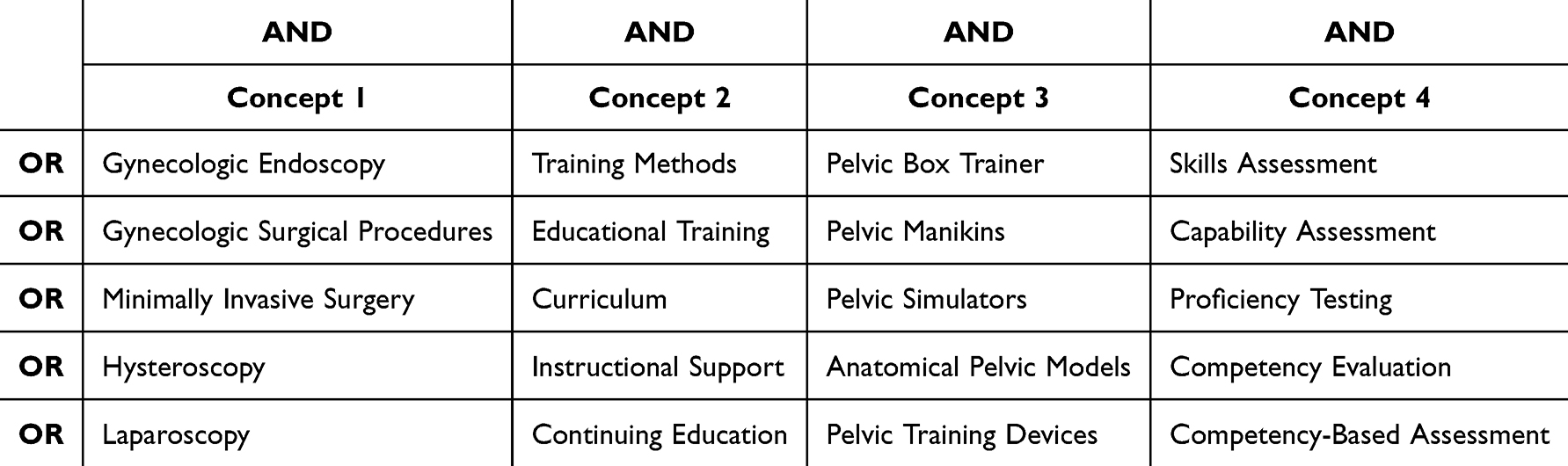 |
Table 1 Search Strategy |
Study Eligibility
The initial screening and study selection were performed based on article titles and abstracts, followed by full-text assessment of potentially eligible studies. Eligibility criteria were defined according to the PICOS framework. Population (P): medical students, obstetrics and gynecology residents, obstetricians and gynecologists, and trainees undergoing minimally invasive gynecologic surgery training. Intervention (I): simulation-based gynecologic endoscopy training using box trainers or other physical simulators designed to replicate gynecologic endoscopic procedures and techniques. Comparison (C): comparison between different simulation-based training approaches, intervention groups, or baseline and post-training assessments when applicable. Outcomes (O): technical skill performance evaluated using standardized assessment tools,26,27 including the OSATS28 and GOALS.29 As this review was designed as a qualitative systematic review, no pooled aggregate effect size analysis was planned. Studies (S): original research articles including prospective studies, randomized controlled trials, non-randomized controlled trials, multicenter studies, single-center studies, and descriptive observational studies published in English. Studies involving healthcare professionals unrelated to minimally invasive gynecologic surgery training, as well as opinion articles, abstracts, editorials, case reports, case series, reviews, correspondence, and commentaries, were excluded. Studies with incomplete data or duplicate records were also excluded.
GOALS and OSATS both use structured scoring systems to assess technical skills in minimally invasive surgery. For GOALS, each of the five domains—depth perception, bimanual dexterity, efficiency, tissue handling, and autonomy—is typically scored on a Likert scale from 1 to 5. The minimum total score is 5 (if all domains score 1), and the maximum is 25 (if all domains score 5). Similarly, OSATS combines two components: a task-specific checklist and a global rating scale (GRS). The checklist evaluates essential steps in a procedure, with each step typically scored as 0 (not performed) or 1 (performed correctly), and the total possible score depends on the number of steps in the task. The GRS evaluates broader aspects such as tissue handling, time efficiency, and procedural flow, with each domain usually scored from 1 to 5. With seven domains, the GRS minimum score is 7, and the maximum is 35. When the checklist and GRS are combined, the total score reflects both the procedural accuracy and overall performance, with maximum scores varying based on the complexity of the task.26–29
Study Risk of Bias Assessment
Quality of studies was evaluated using the Joanna Briggs Institute (JBI) Critical Appraisal tools.30–33 According to the JBI methodology, studies are not automatically excluded solely based on a high risk of bias assessment. In this review, studies with predominantly “No” or “Unclear” responses across key JBI critical appraisal domains were considered to have a high risk of bias.
Data Collection
Five reviewers (IAJ, TT, S, HP, and MYY) independently screened all titles and abstracts based on the predefined eligibility criteria. Studies unrelated to simulation-based gynecologic endoscopy training or those not reporting standardized technical skill assessment outcomes were excluded during the initial screening process. Data extraction was performed using the PICOS framework. Extracted study characteristics included the first author’s name, publication year, study location, sample size, and study design. Population data included participant characteristics and baseline surgical proficiency. Intervention data included the type of gynecologic endoscopy simulator or box trainer, training duration, and simulation tasks performed. Comparison data included intervention and control groups or pre- and post-training assessments when applicable. Outcome measures included technical skill performance assessed using standardized scoring systems, particularly the OSATS and the GOALS. Outcome data were extracted as percentages or mean ± standard deviation, when available.
Results
The PRISMA flow diagram (Figure 1) outlines the study selection process. The initial search across three databases yielded 2771 articles (PubMed: 115, Scopus: 2166, and ScienceDirect: 490). After duplicate removal using Rayyan.ai®, 644 articles remained for title and abstract screening. Following full-text assessment based on the predefined eligibility criteria, 9 studies were included in the qualitative synthesis. A total of five studies fulfilled all criteria (Table 2), while the remaining studies had minor methodological limitations, including unclear follow-up duration, confounding factors, or assessor blinding. However, no studies demonstrated critical methodological deficiencies requiring exclusion.4,34–41
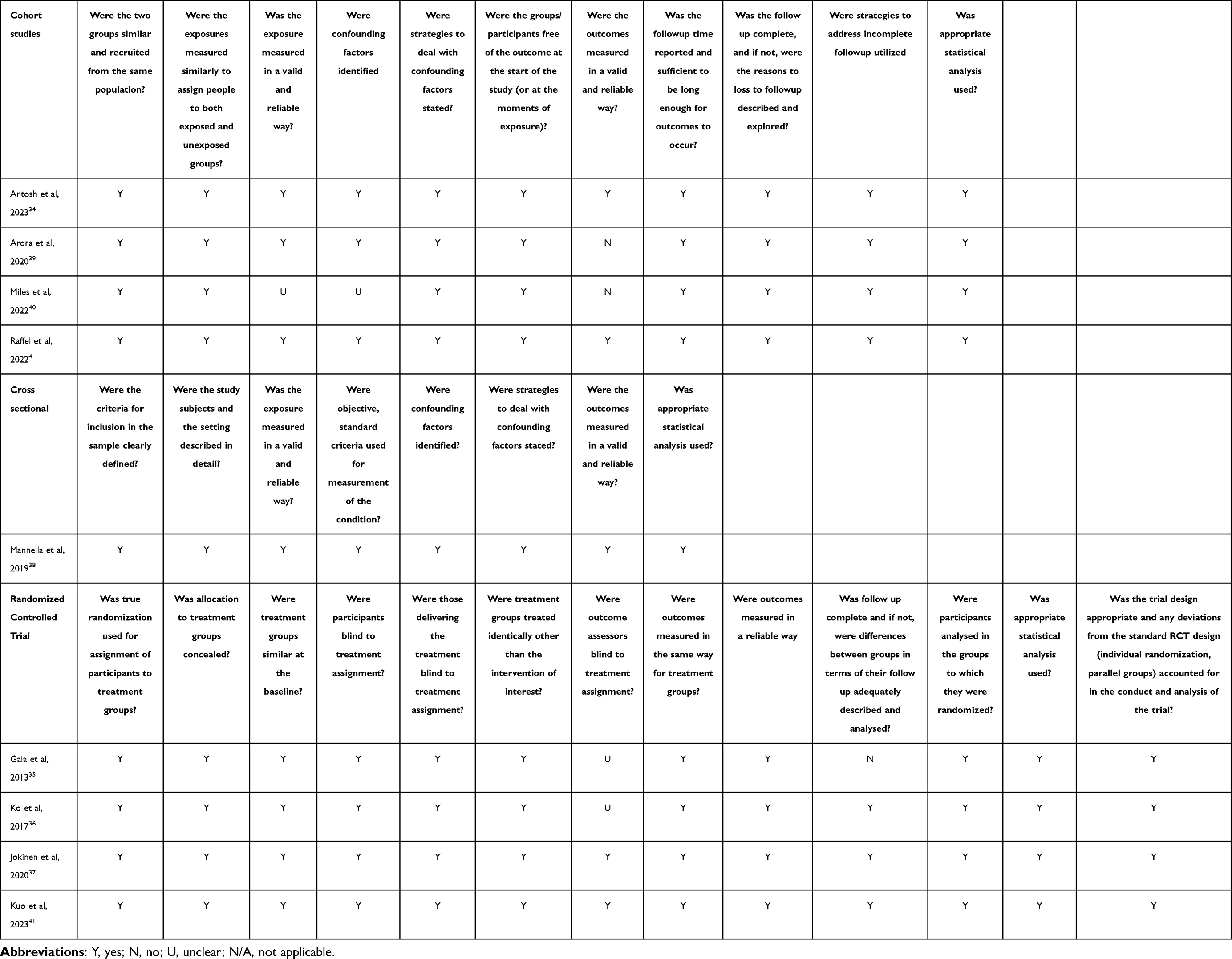 |
Table 2 JBI Critical Appraisal |
 |
Figure 1 PRISMA flowchart. |
This study classified participants using two complementary approaches. Classification A divided participants into a control group (no simulator training) and an intervention group (received simulator training) across all proficiency levels. Classification B stratified participants by baseline proficiency, categorizing them as novice (medical students or obstetrics and gynecology residents) or competent/proficient (minimally invasive gynecologic surgery fellowship trainees or attending obstetrician–gynecologists). The two classification approaches were designed to address different analytical objectives and were applied as mutually exclusive categories within this review, with no overlap between groups. As this review was conducted as a qualitative systematic review rather than a quantitative meta-analysis, no formal subgroup analysis or pooled comparative framework was planned. The classification system was intended to facilitate structured descriptive synthesis and improve interpretation of participant heterogeneity across the included studies.
The characteristics of the included studies are summarized in Table 3. The studies consisted of five cohort studies, one cross-sectional study, and four randomized controlled trials conducted across Asia (Hong Kong and Taiwan), Europe (Finland and Italy), and the United States. A total of 342 participants were included. Based on intervention exposure, 106 participants were categorized into the control group (without simulator training), whereas 100 participants underwent simulator-based training. Based on baseline proficiency, 74 participants were classified as novice and 62 as competent or proficient.
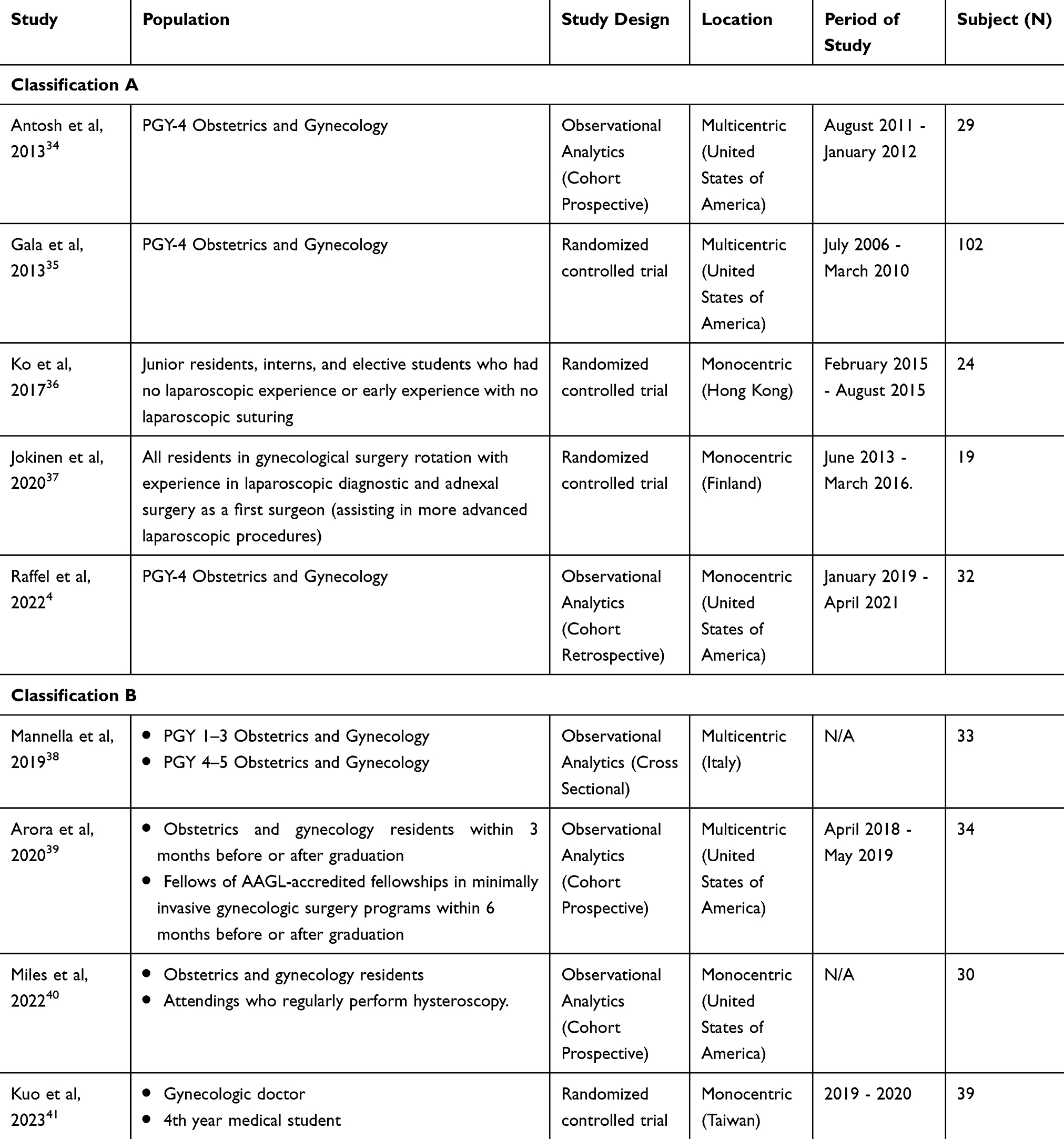 |
Table 3 Characteristic of Study |
Simulation Training Modalities
The simulators utilized in these studies ranged from laparoscopic box trainers to virtual reality (VR) systems and biological models. For example, Antosh et al (2013) employed the TASKit laparoscopic box trainer (Ethicon Endo-Surgery, Inc).,34 while Jokinen et al (2020) used the LAP Mentor VR simulator (Simbionix Corporation).37 Some studies incorporated innovative models, such as the high-fidelity biological Gynesim model39 or the Origami Box Folding Exercise (OBFE).41 Other simulators included the Zoe Gynecologic Skills Trainer (Gaumard, Miami, FL) for hysteroscopy simulation40 and FLS box trainers from institutions like the Hong Kong Jockey Club Innovative Learning Centre for Medicine41 and Limbs and Things (Savannah, Georgia)4 (Table 4).
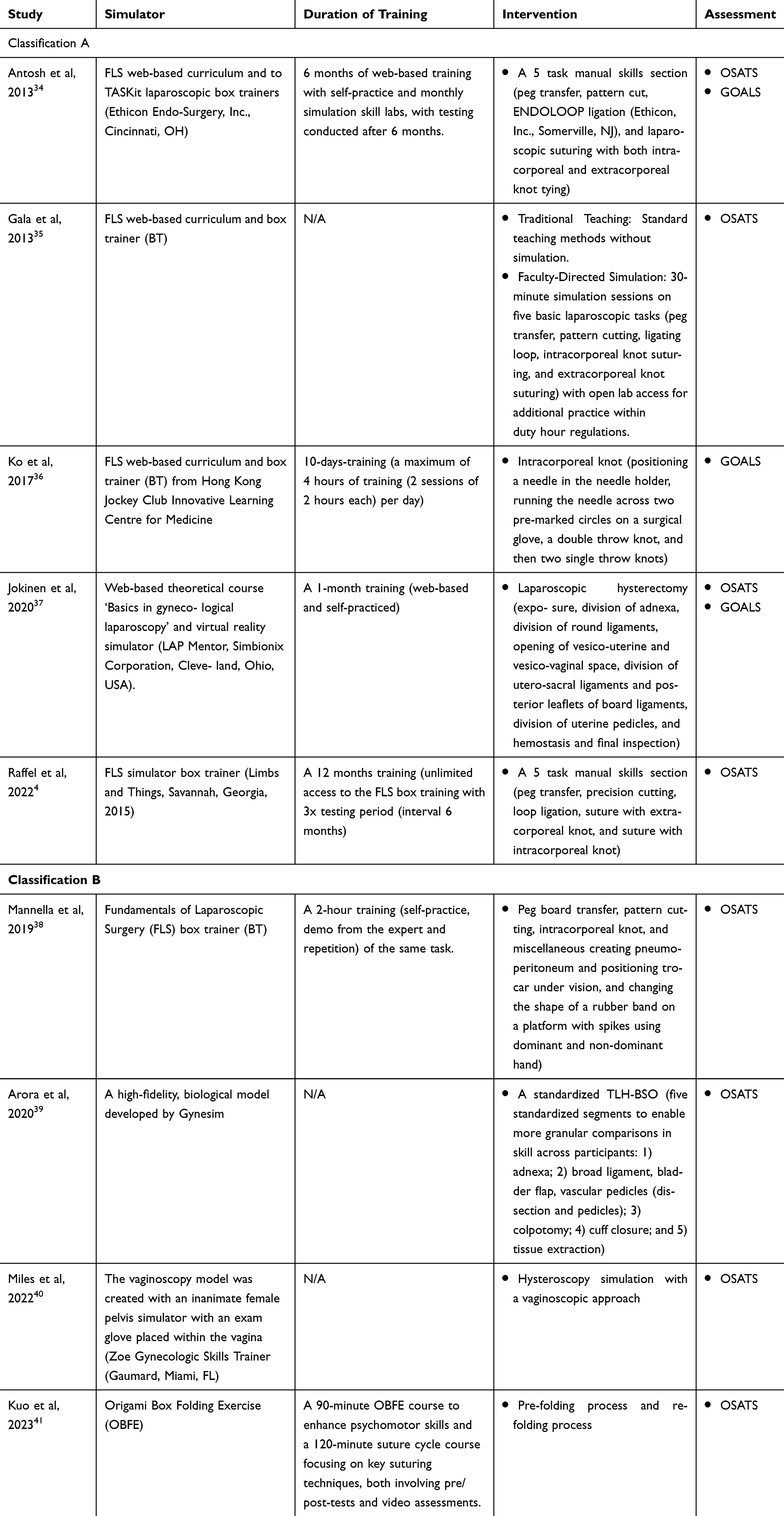 |
Table 4 Characteristic of Training Simulation |
Training Duration and Intervention
Training durations varied significantly across studies. Long-term regimens, such as the 12-month unlimited access program described by Raffel et al (2022), were contrasted with shorter courses, including the 90-minute OBFE session reported by Kuo et al (2023) and the 2-hour task-specific training by Mannella et al (2019). Interventions included specific laparoscopic tasks such as peg transfers, pattern cutting, ligating loops, and intracorporeal and extracorporeal suturing.34,35 More advanced simulations, like total laparoscopic hysterectomy (TLH-BSO), were standardized into segments for granular skill assessment.39 Other tasks focused on psychomotor skill refinement41 or comprehensive laparoscopic hysterectomy training37 (Table 4).
Training Outcome
Outcomes were typically assessed using standardized evaluation tools such as the OSATS and GOALS. In Classification A, studies focused on PGY-4 OB-GYN residents. Antosh et al (2013) showed higher OSATS (29 ± 9 vs 23 ± 6) and GOALS (16 ± 5 vs 13 ± 3) scores for the simulation group. Similarly, Gala et al (2013) reported improved GOALS (30.5 ± 2.69 vs 28 ± 4.84), and Jokinen et al (2020) found significant gains in OSATS (20 ± 3.3 vs 16 ± 2.8) and GOALS (17 ± 3.1 vs 11.2 ± 2.4). Ko et al (2017) noted modest OSATS improvements (8.2 ± 2.1 vs 7.6 ± 1.7), while Raffel et al (2022) reported slight GOALS differences (12.2 vs 11). In Classification B, studies included participants with varying experience. Mannella et al (2019) reported higher OSATS for senior residents (12.7 vs 10.34), while Arora et al (2020) showed fellows outperformed residents (27 ± 4.52 vs 24 ± 4.39). Miles et al (2022) found attending surgeons scored better than residents (26.1 ± 2.4 vs 22.5 ± 3.7), and Kuo et al (2023) highlighted significant psychomotor skill gains for attending surgeons (16.38 ± 7.63 vs 5.93 ± 6.35) (Table 5).
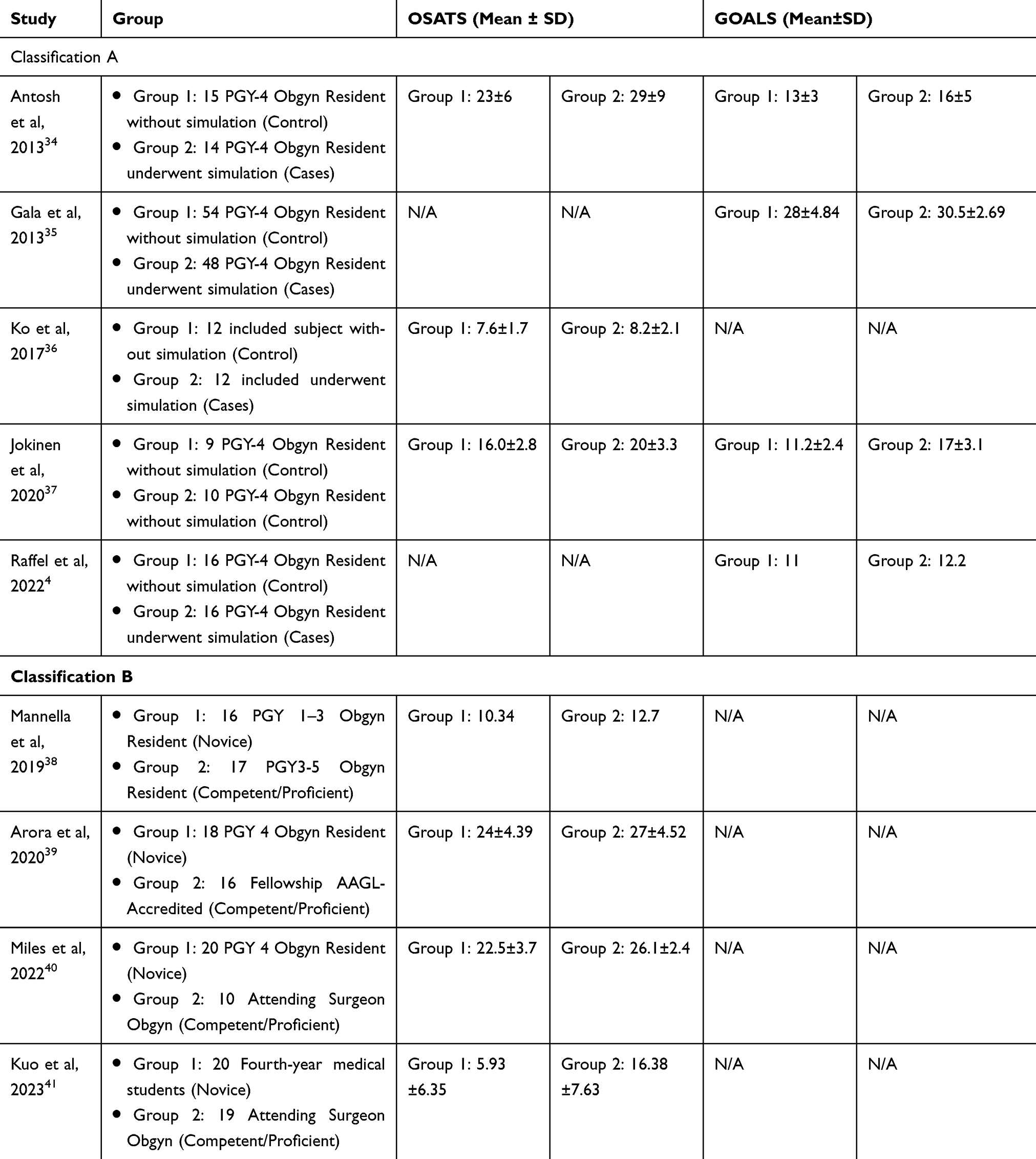 |
Table 5 Training Outcome |
Discussion
Simulation-based training (SBT) is a cornerstone of contemporary medical education, providing realistic learning environments that enable the safe acquisition of technical and non-technical skills through deliberate, repetitive practice supported by direct observation and feedback.42,43 In line with Asia Pacific Association for Gynecologic Endoscopy (APAGE) recommendations, gynecologic endoscopy training is commonly structured around a progressive triad comprising dry box simulation, animal workshop simulation, and live patient surgery. Within this framework, fundamental laparoscopic skills are initially developed in a simulated environment, refined using anatomically realistic animal models, and ultimately translated into supervised clinical practice with strict adherence to ethical principles and patient safety.13 The present review primarily focuses on the effectiveness of dry box simulation as the foundational component of this training continuum.
Simulation Training Modalities
This study includes wide range of simulators such as laparoscopic box trainers, virtual reality and biological models. Both box trainers and VR simulators were superior to no training in improving psychomotor skills such as camera navigation, hand–eye coordination, depth perception, and instrument handling.4,34–41 Recent systematic review report no significant differences between VR simulators and box trainers.16,18,21 Nevertheless, box trainers are generally favored for mastering foundational skills such as suturing and knot tying, whereas VR simulators appear more effective for procedure-specific training and early-stage skill acquisition.19 Despite the immersive advantages of VR simulation, high costs remain a major barrier to widespread implementation, particularly in resource-limited settings. In contrast, box trainers are more cost-effective and have been shown to better enhance depth perception and hand–eye coordination.44–46 Feenstra further indicate that digital tools outperform no training but yield outcomes comparable to conventional laboratory-based training, while also revealing persistent gaps in the assessment of non-technical skills and methodological rigor.17 Emerging evidence on ergonomics and haptic feedback suggests that both VR and box trainers reduce physical workload; however, box trainers may offer more natural tactile feedback and steeper learning curves for core psychomotor skills.22
Training Duration and Intervention
Training duration and structure varied substantially across the included studies, ranging from long-term, unrestricted access programs to short, task-focused interventions. Extended regimens, such as a 12-month unlimited access simulation program, were contrasted with brief courses including a 90-minute structured exercise session and 2-hour task-specific training modules. Despite this heterogeneity, improvements in laparoscopic performance were consistently observed across different training durations.4,34–41
Interventions commonly incorporated core laparoscopic tasks, including peg transfer, pattern cutting, loop ligation, and intracorporeal and extracorporeal suturing, which are fundamental for psychomotor skill acquisition.8 More advanced simulations standardized complex procedures—such as total laparoscopic hysterectomy—into discrete components, allowing granular assessment of technical performance.47 Other interventions emphasized targeted psychomotor refinement or comprehensive procedural training, supporting the effectiveness of both basic and advanced simulation tasks when embedded within a structured curriculum.4,34–41
Curriculum-oriented reviews consistently emphasize the importance of deliberate practice, characterized by clearly defined goals, focused and repetitive training, structured feedback, and sustained learner motivation.45 Compared with the traditional Halstedian apprenticeship model—which is increasingly constrained by work-hour limitations and patient safety concerns—simulation-based training provides a safer, more standardized approach, particularly suited to minimally invasive surgery where video-based feedback facilitates reflective learning and objective skill assessment.20
Training Outcome
This study demonstrated that simulation-based training consistently improved technical performance when evaluated using standardized assessment tools, particularly OSATS and GOALS, across different study classifications and proficiency levels.4,34–41 In Classification A, simulation-trained participants achieved higher OSATS and GOALS scores compared with controls, indicating superior operative performance following structured simulator exposure.4,34–37 In Classification B, where participants were stratified by baseline experience, simulation-based training benefited both novice and experienced surgeons. Senior residents, fellows, and attending surgeons consistently outperformed less experienced counterparts on objective assessments, reflecting the role of simulation not only in foundational skill acquisition but also in skill refinement at advanced proficiency levels. Importantly, improvements in psychomotor performance among experienced surgeons highlight the utility of simulation beyond early training, supporting its role as a longitudinal educational tool within competency-based surgical curricula.38,39,41
Our study has several limitations, including heterogeneity in training duration, simulation modalities, participant classifications, and follow-up periods across the included studies. These variations limited direct comparison between studies and prevented identification of the most effective simulator or training approach, particularly for implementation in low-resource settings. In addition, observer bias may have influenced performance assessments despite the use of standardized evaluation tools. The strengths of this review include the use of validated assessment instruments, such as OSATS and GOALS, and the inclusion of studies evaluating participants across different proficiency levels and training interventions. Furthermore, the review provides a comprehensive overview of simulation-based gynecologic endoscopy training and its impact on technical skill acquisition.
Conclusion
This systematic review demonstrates that simulation-based training is an effective educational strategy for improving laparoscopic performance in gynecologic endoscopy when evaluated using standardized assessment tools such as OSATS and GOALS. Dry box simulators would appear to enhance fundamental psychomotor skills, task efficiency, and objective technical performance across different levels of surgical proficiency. These findings support the role of structured, curriculum-based simulation as a scalable approach to skill acquisition and progression, especially in settings with limited operative exposure. Incorporating standardized outcome measures into simulation training frameworks may facilitate more objective benchmarking of competence and contribute to safer translation of skills into clinical practice.
Acknowledgments
This study has been registered on the International Prospective Register of Systematic Reviews (PROSPERO) (CRD42024559372).
Funding
This study received no funding.
Disclosure
All authors report no conflicts of interest in this work.
References
1. Wu T, Nie K, Gao Y, et al. Research trends and hotspots in minimally invasive gynecologic surgery: a bibliometric and visualization analysis. Int J Women’s Health. 2025;17:3331–14. doi:10.2147/IJWH.S522821
2. Taniguchi F, Wada-Hiraike O, Hirata T, et al. A nationwide survey on gynecologic endoscopic surgery in Japan, 2014–2016. J Obstetrics Gynaecol Res. 2018;44(11):2067–2076. PubMed PMID: 30125428. doi:10.1111/jog.13774
3. Andiman SE, Bui AH, Ascher-Walsh C, Wright JD, Xu X. Perioperative complications, readmissions, and hospital costs in conventional versus robotic-assisted laparoscopic hysterectomy with concurrent sacrocolpopexy. Am J Obstet Gynecol. 2021;224(6):S765–6. doi:10.1016/j.ajog.2021.04.058
4. Raffel RA, Fogel J, Itzhak P. Laparoscopic simulation training for residents in obstetrics and gynecology over 12 months. Gynecol Minim Invasive Ther. 2022;11(3):159–163. doi:10.4103/gmit.gmit_85_21
5. Toyoshima M, Akira S, Kumakiri J, et al. Guidelines for endoscopic surgery in obstetrics and gynecology 2024 by japan society of gynecologic and obstetric endoscopy and minimally invasive therapy: a secondary publication based on the Japanese edition. Gynecol Minim Invasive Ther. 2025;14(3):201–206. doi:10.4103/gmit.GMIT-D-25-00031
6. FIGO (International Federation Gynecology and Obstetrics). Statement Minimal Access Gynecological Surgery. [Internet]. 2019. Available from: www.figo.org.
7. Lee CL, Huang KG, Chang CC. Establish the certification system of gynecologic endoscopists. Gynecol Minim Invasive Ther. 2022;11(3):139–140. doi:10.4103/gmit.gmit_75_22
8. Kuroda H, Chikazawa K, Kuroiwa K, et al. Origami crane training improves laparoscopic surgical skills for gynecological surgery. Gynecol Minim Invasive Ther. 2025;14(4):331–336. doi:10.4103/gmit.gmit_60_24
9. Terzi H, Biler A, Demirtas O, Guler OT, Peker N, Kale A. Total laparoscopic hysterectomy: analysis of the surgical learning curve in benign conditions. Int J Surg. 2016;35:51–57. PubMed PMID: 27633451. doi:10.1016/j.ijsu.2016.09.010
10. Mavrova R, Radosa JC, Wagenpfeil G, Hamza A, Solomayer E-F, Juhasz-Böss I. Learning curves for laparoscopic hysterectomy after implementation of minimally invasive surgery. Int J Gynecol Obstet. 2016;134(2):225–230. PubMed PMID: 27233815. doi:10.1016/j.ijgo.2016.01.017
11. ACOG. Committee on Ethics Ethical Considerations for Performing Gynecologic Surgery in Low-Resource Settings Abroad; 2018.
12. Hucker R. International Federation of Gynecology and Obstetrics https://www.figo.org/@FIGOHQ FIGO Statement [Internet]. 2022. Available from: https://www.figo.org/resources/figo-statements/disparities-in-.
13. Gonzalez GPC, Huang KG, Mercado MEV, Paredes JSA, Lee CL. Comprehensive overview of surgical skill training strategies in the APAGE international gynecologic endoscopy fellowship. Gynecol Minim Invasive Ther. 2025;14(1):3–7. doi:10.4103/gmit.gmit_52_24
14. Chudnoff SG, Liu CS, Levie MD, Bernstein P, Banks EH. Efficacy of a novel educational curriculum using a simulation laboratory on resident performance of hysteroscopic sterilization. Fertil Steril. 2010;94(4):1521–1524. PubMed PMID: 19782357. doi:10.1016/j.fertnstert.2009.08.008
15. Everett EN, Forstein DA, Bliss S, et al. To the point: the expanding role of simulation in obstetrics and gynecology medical student education. Am J Obstetrics Gynecol. 2019:129–141. PubMed PMID: 30696555. doi:10.1016/j.ajog.2018.10.029
16. Jin C, Dai L, Wang T. The application of virtual reality in the training of laparoscopic surgery: a systematic review and meta-analysis. Int J Surg. 2021. PubMed PMID: 33307244. doi:10.1016/j.ijsu.2020.11.022.
17. Feenstra TM, van der Storm SL, Barsom EZ, Bonjer JH, Nieveen van Dijkum EJM, Schijven MP. Whichhow, and what? Using digital tools to train surgical skills; a systematic review and meta-analysis. Surg Open Sci V. 2023:100–110. PubMed PMID: 37830074. doi:10.1016/j.sopen.2023.10.002
18. Tan J, Karim MR, Tamanna R, Kim S, Patel B. Comparing learning outcomes of virtual reality (VR) simulators using haptic feedback versus box trainer (BT) in laparoscopic training: a systematic review and meta-analysis. Cureus. 2025. doi:10.7759/cureus.78910
19. Sherpa NY, El MA, Askalany AN, Abdalla M. Comparative study to determine the proper sequence of simulation training, pelvic trainer versus virtual reality simulator: a pilot study. Middle East Fertil Soc J. 2024;29(1). doi:10.1186/s43043-024-00168-8
20. Wickramasinghe D, Vincent J. The use of deliberate practice in simulation-based surgical training for laparoscopic surgery – a systematic review. BMC Med Educ. 2025;25(1). PubMed PMID: 40660230. doi:10.1186/s12909-025-07613-w
21. Selva Raj DR, Kumar S, Nallathamby K, Raj K, Hristova M. A systematic review of the learning curves of novices and trainees to achieve proficiency in laparoscopic skills: virtual reality simulator versus box trainer. Cureus. 2024. doi:10.7759/cureus.72923
22. Karim MR, Kim S, Islam R, Kong A, Patel B. Ergonomics in laparoscopic box training and virtual reality (VR) simulations: a systematic review. Cureus. 2024. doi:10.7759/cureus.76107
23. Orejuela FJ, Aschkenazi SO, Howard DL, et al. Gynecologic surgical skill acquisition through simulation with outcomes at the time of surgery: a systematic review and meta-analysis. Am J Clin Exp Obstet Gynecol. 2022:29.e1–29.e24. PubMed PMID: 35120886. doi:10.1016/j.ajog.2022.01.031
24. Vitale SG, Carugno J, Saponara S, et al. What is the impact of simulation on the learning of hysteroscopic skills by residents and medical students? A systematic review. Minimally Invasive Ther Allied Technol. 2024:373–386. PubMed PMID: 39360756. doi:10.1080/13645706.2024.2409269
25. Page MJ, McKenzie JE, Bossuyt PM, et al. The PRISMA 2020 statement: an updated guideline for reporting systematic reviews. BMJ. 2021. PubMed PMID: 33782057. doi:10.1136/bmj.n71
26. Bharathan R, Setchell T, Miskry T, Darzi A, Aggarwal R. Gynecologic endoscopy skills training and assessment: review. J Minimally Invasive Gynecol. 2014:28–43. PubMed PMID: 23933352. doi:10.1016/j.jmig.2013.07.016
27. Hennings L, Sorensen J, Strandbygaard J. Tools for measuring technical skills during gynaecologic surgery: a scoping review. BMC Med Educ. 2020;21:402. doi:10.22541/au.159103599.99565023
28. Digital J, Commons JD. The objective structured assessment of technical skills and the ACGME competencies [Internet]. 2006. Available from: https://jdc.jefferson.edu/obgynfp/1.
29. Gumbs AA, Hogle NJ, Fowler DL. Evaluation of resident laparoscopic performance using global operative assessment of laparoscopic skills. J Am Coll Surg. 2007;204(2):308–313. PubMed PMID: 17254935. doi:10.1016/j.jamcollsurg.2006.11.010
30. The Joanna Briggs Institute Critical Appraisal tools for use in JBI Systematic reviews. Revised Checklist for RCTs_updated_1. 2023.
31. The Joanna Briggs Institute. Critical Appraisal tools for use in JBI Systematic reviews. Checklist for Cohort Studies [Internet]. 2023. Available from: http://joannabriggs.org/research/critical-appraisal-tools.htmlwww.joannabriggs.org.
32. The Joanna Briggs Institute Critical Appraisal tools for use in JBI Systematic reviews. Checklist_for_Analytical_Cross_Sectional_Studies. 2023.
33. The Joanna Briggs Institute Critical Appraisal tools for use in JBI Systematic reviews. Checklist_for_Case_Control_Studies. 2023.
34. Antosh DD, Auguste T, George EA, et al. Blinded assessment of operative performance after fundamentals of laparoscopic surgery in gynecology training. J Minim Invasive Gynecol. 2013;20(3):353–359. PubMed PMID: 23352581. doi:10.1016/j.jmig.2012.12.004
35. Gala R, Orejuela F, Gerten K, et al. Effect of validated skills simulation on operating room performance in obstetrics and gynecology residents: a randomized controlled trial. Obstetrics Gynecol. 2013;121(3):578–584. PubMed PMID: 23635621. doi:10.1097/AOG.0b013e318283578b
36. J Ko, Cheung VYT, Pun TC, Tung WK. A randomized controlled trial comparing trainee-directed virtual reality simulation training and box trainer on the acquisition of laparoscopic suturing skills. J Obstet Gynaecol Canada. 2018;40(3):310–316. PubMed PMID: 28964657. doi:10.1016/j.jogc.2017.07.010
37. Jokinen E, Mikkola TS, Härkki P. Simulator training and residents’ first laparoscopic hysterectomy: a randomized controlled trial. Surg Endosc. 2020;34(11):4874–4882. PubMed PMID: 31768724. doi:10.1007/s00464-019-07270-3
38. Mannella P, Malacarne E, Giannini A, et al. Simulation as tool for evaluating and improving technical skills in laparoscopic gynecological surgery. BMC Surg. 2019;19(1). PubMed PMID: 31619236. doi:10.1186/s12893-019-0610-9.
39. Arora C, Menzies A, Han ES, et al. Comparing surgical experience and skill using a high-fidelity, total laparoscopic hysterectomy model. Obstetrics Gynecol. 2020;136(1):97–108. PubMed PMID: 32541295. doi:10.1097/AOG.0000000000003897
40. Miles N, Evans S, Treat R, Beran B. A low-fidelity model for office-based hysteroscopy with a vaginoscopic approach. J Minim Invasive Gynecol. 2022;29(12):1352–1356. doi:10.1016/j.jmig.2022.09.059
41. Kuo HH, Yen CF, Chou HH, et al. Origami box folding exercise: a laparoscopic box simulation training and assessment method in facilitating laparoscopic psychomotor skills with minimal preparation. Taiwan J Obstet Gynecol. 2023;62(1):31–39. PubMed PMID: 36720546. doi:10.1016/j.tjog.2022.08.015
42. Elendu C, Amaechi DC, Okatta AU, et al. The impact of simulation-based training in medical education: a review. Medicine. 2024:e38813. PubMed PMID: 38968472. doi:10.1097/MD.0000000000038813
43. Shore EM, Lefebvre GG, Grantcharov TP. Gynecology resident laparoscopy training: present and future. Am J Obstet Gynecol. 2015;212(3):298–301.e1. PubMed PMID: 25068561. doi:10.1016/j.ajog.2014.07.039
44. Karaman E, Şahin HG. The effectiveness of laparoscopic training box on learning curve in gynecology residents. East J Med. 2021;26(4):595–599. doi:10.5505/ejm.2021.59455
45. Torres-de la Roche LA, Leicher L, Steljes I, et al. Training and qualification in gynecological minimal access surgery: a systematic review. Best Pract Res Clin Obstet Gynaecol. 2019:2–11. PubMed PMID: 30857979. doi:10.1016/j.bpobgyn.2019.01.016
46. Tica VI, Tica AA, De Wilde RL. The future in standards of care for gynecologic laparoscopic surgery to improve training and education. J Clin Med. 2022. doi:10.3390/jcm11082192
47. Wright KN, Truong M, Siedhoff MT. Residency training in gynecologic surgery: where do we go from here? J Gynecol Surg. 2022;38(6):375–378. doi:10.1089/gyn.2021.0179
 © 2026 The Author(s). This work is published and licensed by Dove Medical Press Limited. The
full terms of this license are available at https://www.dovepress.com/terms
and incorporate the Creative Commons Attribution
- Non Commercial (unported, 4.0) License.
By accessing the work you hereby accept the Terms. Non-commercial uses of the work are permitted
without any further permission from Dove Medical Press Limited, provided the work is properly
attributed. For permission for commercial use of this work, please see paragraphs 4.2 and 5 of our Terms.
© 2026 The Author(s). This work is published and licensed by Dove Medical Press Limited. The
full terms of this license are available at https://www.dovepress.com/terms
and incorporate the Creative Commons Attribution
- Non Commercial (unported, 4.0) License.
By accessing the work you hereby accept the Terms. Non-commercial uses of the work are permitted
without any further permission from Dove Medical Press Limited, provided the work is properly
attributed. For permission for commercial use of this work, please see paragraphs 4.2 and 5 of our Terms.
Recommended articles

VR Simulation-Based vs Traditional Apprenticeship Training in Gynecological Laparoscopy: A Comparative Survey of Residents’ Expectations, Skills Acquisition, and Training Structure
Sierant A, Bijok J, Pirozynski M
Advances in Medical Education and Practice 2026, 17:570702
Published Date: 7 March 2026