
Back to Journals » Risk Management and Healthcare Policy » Volume 19
Effectiveness of a Knowledge-Oriented Educational Intervention on Air Pollution Health Protection Among Primary School Students: A Pilot Pre-Post Study
Authors Lv Y, Jia Y, Jing J, Liu R, Wu L, Shi B, Sun S, Zhang X, Jin Y, Yang X, Zhang M  , Peng H
Received 19 November 2025
Accepted for publication 10 February 2026
Published 17 February 2026 Volume 2026:19 582924
DOI https://doi.org/10.2147/RMHP.S582924
Checked for plagiarism Yes
Review by Single anonymous peer review
Peer reviewer comments 2
Editor who approved publication: Dr Keon-Hyung Lee
Yuankai Lv,1,2,* Yuting Jia,1,* Jiexiang Jing,1,* Renping Liu,2 Lei Wu,3 Bing Shi,2 Su Sun,2 Xueyang Zhang,1 Yibing Jin,1 Xiangdong Yang,1 Mingzhi Zhang,1 Hao Peng1,4
1Department of Epidemiology, School of Public Health, MOE Key Laboratory of Geriatric Diseases and Immunology, Suzhou Medical College of Soochow University, Suzhou, People’s Republic of China; 2Department of Public Health, Suzhou Industrial Park Center for Disease Control and Prevention, Suzhou, People’s Republic of China; 3Department of Maternal and Child Health, Suzhou Industrial Park Center for Disease Control and Prevention, Suzhou, People’s Republic of China; 4Department of Neurology, Taixing Second People’s Hospital, Suzhou Medical College of Soochow University, Taizhou, People’s Republic of China
*These authors contributed equally to this work
Correspondence: Hao Peng, Department of Neurology, Taixing Second People’s Hospital, Suzhou Medical College of Soochow University, Taizhou, 225400, People’s Republic of China, Email [email protected] Mingzhi Zhang, Department of Epidemiology, School of Public Health, MOE Key Laboratory of Geriatric Diseases and Immunology, Suzhou Medical College of Soochow University, Suzhou, 215123, People’s Republic of China, Email [email protected]
Background: Air pollution remains a major global public health challenge, and reducing its harmful health effects is urgent, particularly for children. The objective of this study was to evaluate the preliminary effectiveness of knowledge-oriented education on the knowledge, attitudes, and practices (KAP) of air pollution health protection (APHP) in primary school students.
Methods: We conducted a single-arm pre-post intervention study by enrolling 635 primary school students. A two-month knowledge-oriented education intervention was performed through health lectures, educational videos, and the distribution of educational materials. A structured questionnaire was used to assess the KAP of air pollution before and after the intervention.
Results: After the intervention, the capability of air pollution protection was significantly improved as suggested by the significantly increased total score of KAP from 83.90± 8.75 to 92.28± 4.75, as well as its components including knowledge (20.45± 3.13 vs 23.20± 2.16), attitudes (31.60± 4.03 vs 34.54± 2.09), and practices (31.84± 4.89 vs 34.52± 2.67) (all P< 0.05). These increments seemed to be more apparent in students who did not live with their parents and those whose mothers had a higher education level.
Conclusion: Our pilot study found that KAP of APHP was significantly improved by knowledge-oriented education in primary school students and provided preliminary evidence for its potential effectiveness in the improvement of APHP. A well-designed randomized trial is warranted to demonstrate this effectiveness.
Keywords: knowledge-oriented education, air pollution, primary school students, health protection
Introduction
Air pollution has become a major global public health concern, posing a substantial health risk.1–4 According to air quality data from cities worldwide in 2022, air pollution affected 83% of high-income cities and 99% of low-income cities whose air quality exceeded the recommended level by the World Health Organization (WHO).5 Almost all of the global population (99%) is exposed to air pollution.6 The average life expectancy in Europe continues to shorten by about 2.2 years and an estimated 4.2 million people worldwide die each year as a result of air pollution.7,8 Therefore, air pollution health protection (APHP) is important for people’s health but how to effectively promote this critical skill is still controversial.
Background
Environmental education is considered a critical tool for countering air pollution and can promote intrinsic motivation for APHP.9 Researchers believe that developing ecologically friendly motivations during childhood may have lifelong effects, due to their plasticity in behaviors.10 Knowledge, attitude, and practice (KAP) theory posits that the accumulation of knowledge serves as the foundation for attitude change, which in turn facilitates behavioral transformation.11 This theory is frequently applied in questionnaire design to assess the current status of KAP among specific populations in a given region, and to develop intervention measures based on the results to promote the formation of positive behaviors.12 Several studies have emphasized the role of knowledge-based education, such as special lectures, distribution of promotional brochures, and broadcasting health education-related materials, in enhancing public and secondary school students’ KAP toward APHP.13–16 However, whether knowledge-oriented education would improve KAP regarding the environmental health protection for primary school students is unclear, because the respiratory systems of primary school students are particularly susceptible to air pollution.17,18 Effective educational interventions can help primary school students establish correct health awareness and cultivate good health behavior habits, which will have a long-term positive impact on their health. Therefore, we conducted a pilot study by comparing KAP regarding APHP before and after a knowledge-oriented education intervention in 635 students from two primary schools in Suzhou Industrial Park. Suzhou Industrial Park stands as one of the earliest new town projects in China to employ urban design tools for guiding its development.19 The annual average concentrations of PM2.5 across various functional zones within the industrial park ranged from 25.9 to 27.5 μg/m3, significantly outperforming China’s Grade I ambient air quality standard (10µg/m3), yet still five times the annual average concentration limit recommended by the World Health Organization (5µg/m3).20,21 This pilot study will provide preliminary data for the design of a randomized clinical trial in the future to effectively improve the APHP.
Methods
Study Participants and Design
The study design and selection of participants are illustrated in Figure 1. In brief, two primary schools that had not previously benefited from knowledge-oriented education interventions were selected in the industrial park, Suzhou, China. Considering the comprehension ability, the students from the third to the fifth grades at the two selected schools were chosen for inclusion. Using a class-based cluster random sampling approach, 666 students from the 15 randomly selected classes were invited to participate in our study. After the collection of written informed consent from their parents, a two-month duration, knowledge-oriented education intervention was implemented from December 2023 to January 2024. The KAP of APHP was assessed repeatedly before and after the intervention. This study was approved by the Ethics Committee of Soochow University and conducted in accordance with the Declaration of Helsinki. Finally, 635 students who completed both the pre- and post-intervention assessments were included in the current study.
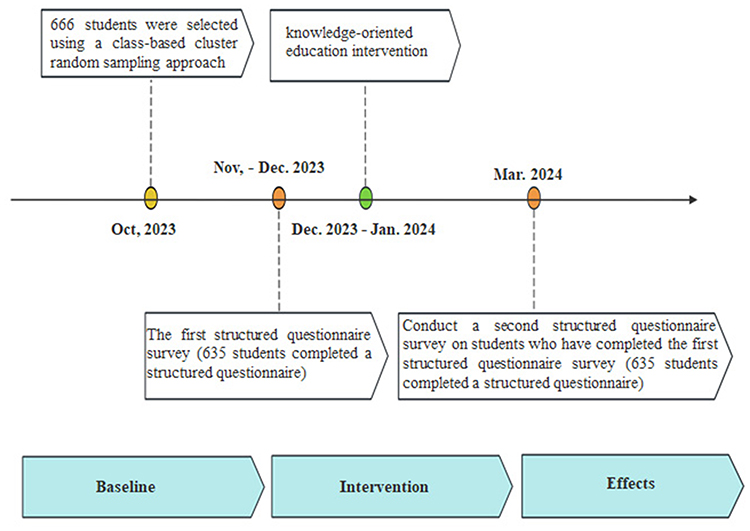 |
Figure 1 A flow chart illustrating the study design and selection of study participants. A total of 666 students from 15 randomly selected classes were invited to participate in our study. After a two-month intervention, 635 students completed and provided pre- and post-intervention assessments of knowledge, attitudes, and practices of air pollution health protection. |
Knowledge-Oriented Education Interventions
Obtaining strong knowledge and skills about the air environment through learning in schools is essential to consider the wider implications of pollution.22 Due to the pronounced relationship between environmental knowledge and behavior,23 students need to actively receive knowledge, which can gradually develop healthy attitudes and practices, thereby improving APHP.
In the present study, a two-month knowledge-oriented education intervention was performed through health lectures, educational videos, and the distribution of educational materials (Figure 2).24 Specific interventions involved the following:
- Cognitive intervention (week 1): In the first week, we focused on cognitive intervention. This was implemented through face-to-face communication with students in the school. A 45-minute air pollution-themed lecture was held for all classes and delivered by one lecturer, who was responsible for presenting the core knowledge about air pollution. Two to three teaching assistants were present during each lecture. Their roles included managing the classroom order, ensuring students’ active participation, and answering students’ simple questions on the spot to enhance the learning effect.
- Media-based intervention (throughout the two months): The vivid 10-minute short videos related to knowledge on health protection against air pollution and broadcast in the activity room cycle exhibition. The topics of videos were updated weekly.
- Environmental intervention (throughout the two months): The use of school promotional bulletin boards, permanent posters and display boards, and brochures, to create an environment for popularizing the science of health protection in heavily polluted weather. The design principles of the promotional materials were concise, vivid, scientific, and language popularization, in line with the cognitive and receptive level of elementary school students.
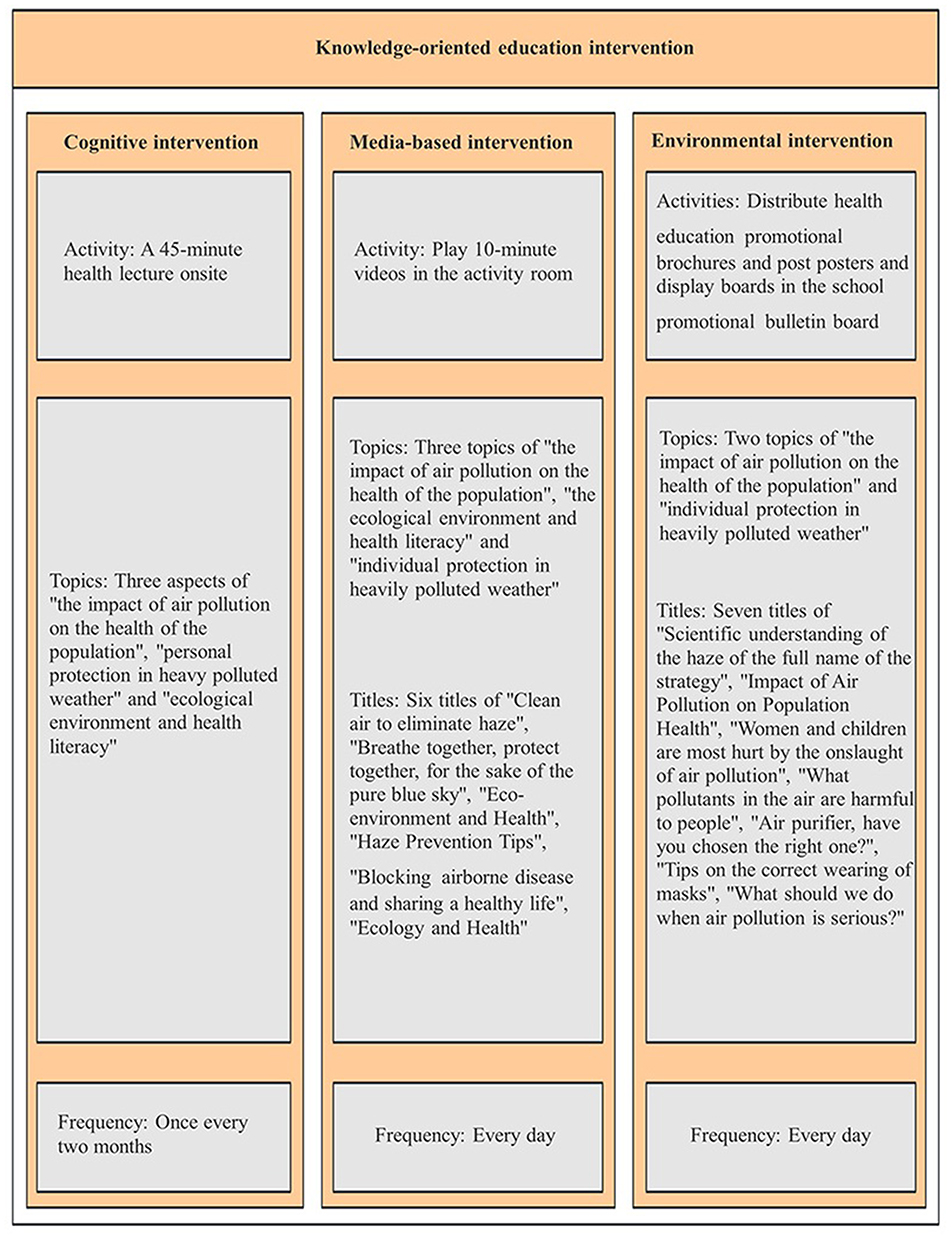 |
Figure 2 Knowledge-oriented education intervention. |
Assessment of KAP of Air Pollution Health Protection
The outcome of the intervention was the KAP of APHP, which was assessed using a structured questionnaire administered by trained staff before and after the intervention. The design of the survey questionnaire is based on the “Survey Questionnaire on the Health Protection Effectiveness of Air Pollution in Primary School Students” compiled by the Environmental and Health-Related Product Safety Institute of the China Center for Disease Control and Prevention.25 Parents or guardians assisted students in completing the basic information of the survey subjects, while the survey subjects independently completed the awareness of air pollution protection knowledge. The pre-and post-intervention questionnaire surveys were carried out in November 2023 and March 2024, respectively.
The answers to each question in the questionnaire were scored quantitatively. The full score of KAP was 27, 36, and 37, respectively. The total score was the sum of the scores of these three components, with the full score of 100.
Statistical Analysis
The baseline characteristics of study participants were presented in means and percentages, as appropriate. The average level of KAP of air pollution (assessed by the total score of the questionnaire and each component) before and after the intervention was compared using the paired t-test. To uncover potential modifications, stratification analysis was additionally conducted in subgroups based on gender, grade, living with parents (Yes/No), and parents’ educational level (High School or below vs Bachelor vs Master or above). All statistical analyses were performed using R 4.3.2, and a 2-tailed P value less than 0.05 was considered statistically significant.
Results
Baseline Characteristics of Study Participants
A total of 635 students including 331 males and 304 females completed the pre-and post-intervention questionnaire surveys, with a follow-up rate of 95%. The general information of the participants is presented in Table 1. The average age of the students was 9±1years. Of them, 30.39%, 22.68%, and 46.93% were from the third, fourth, and fifth grades, respectively. The majority of students, 616 (97.01%), lived with their parents, most of whom had a college or higher education, with 467 (73.54%) and 132 (20.79%) respectively.
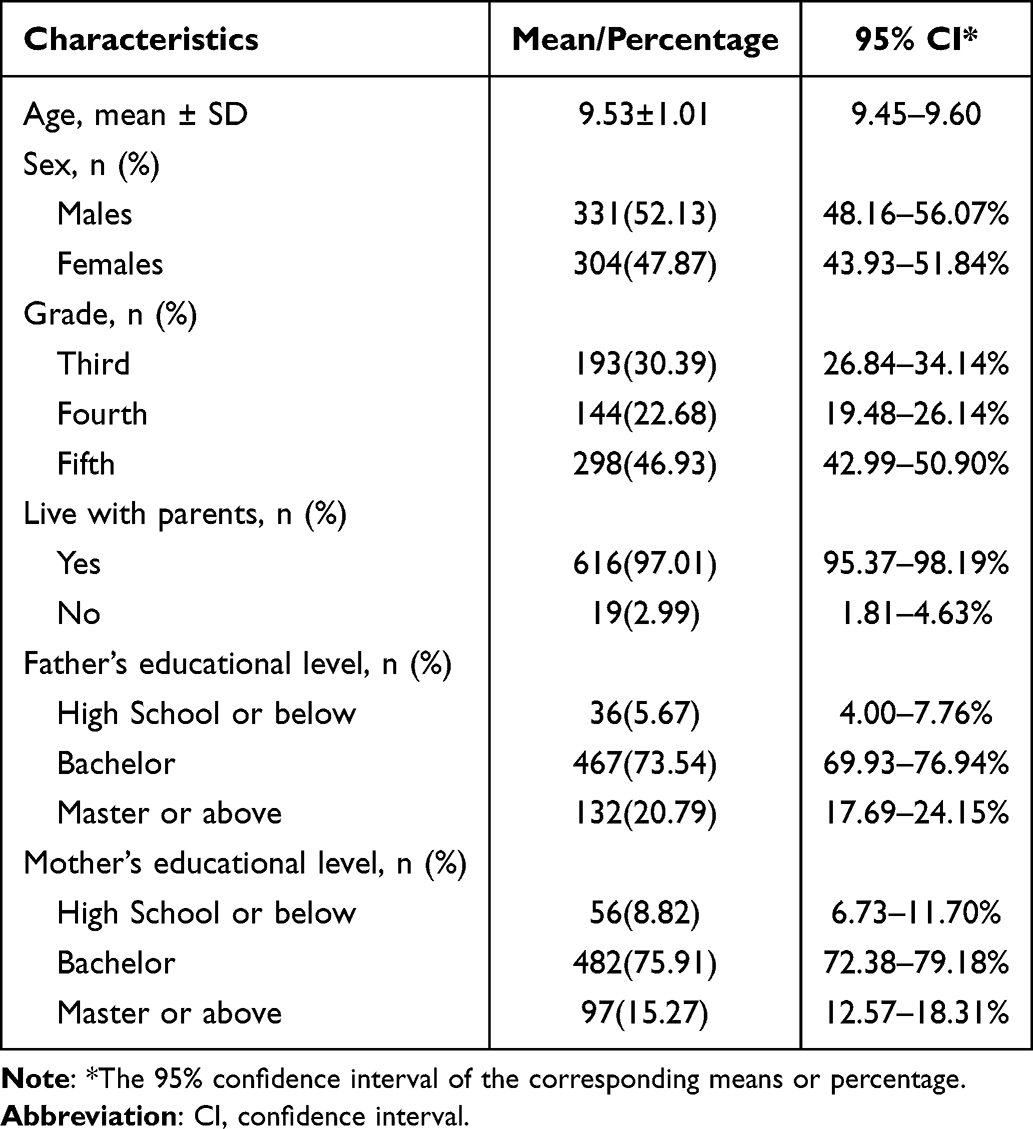 |
Table 1 Baseline Characteristics of Study Participants |
Effect of Knowledge-Oriented Education on KAP of Air Pollution Health Protection
The mean total score before and after the intervention was 83.90±8.75 and 92.28±4.75, respectively, with a significant difference (Table 2, P < 0.01). Of these students, 93.54% experienced an increase in total score. There was no decrease in the total score of the participants after the intervention (Figure 3). Similar results were observed for each component (Table 2, P < 0.01). A fraction of 64.72%, 67.09%, and 59.53% of the students experienced an increase in the component of knowledge, attitude, and practices, respectively (Figure 3).
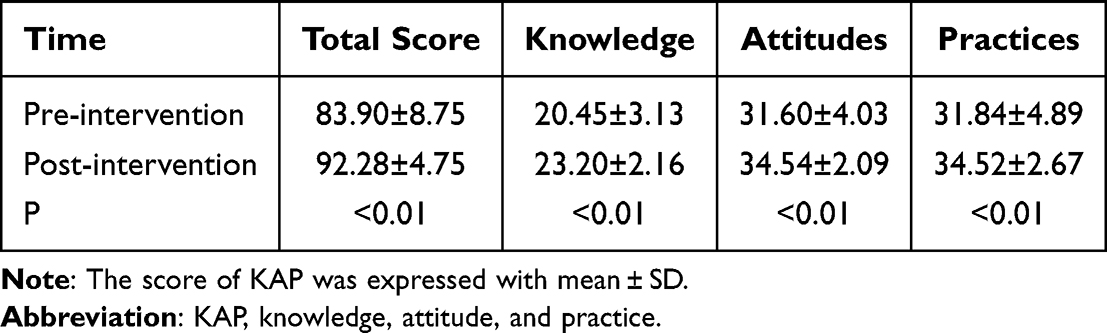 |
Table 2 The Score for KAP of Air Pollution Health Protection Before and After Intervention |
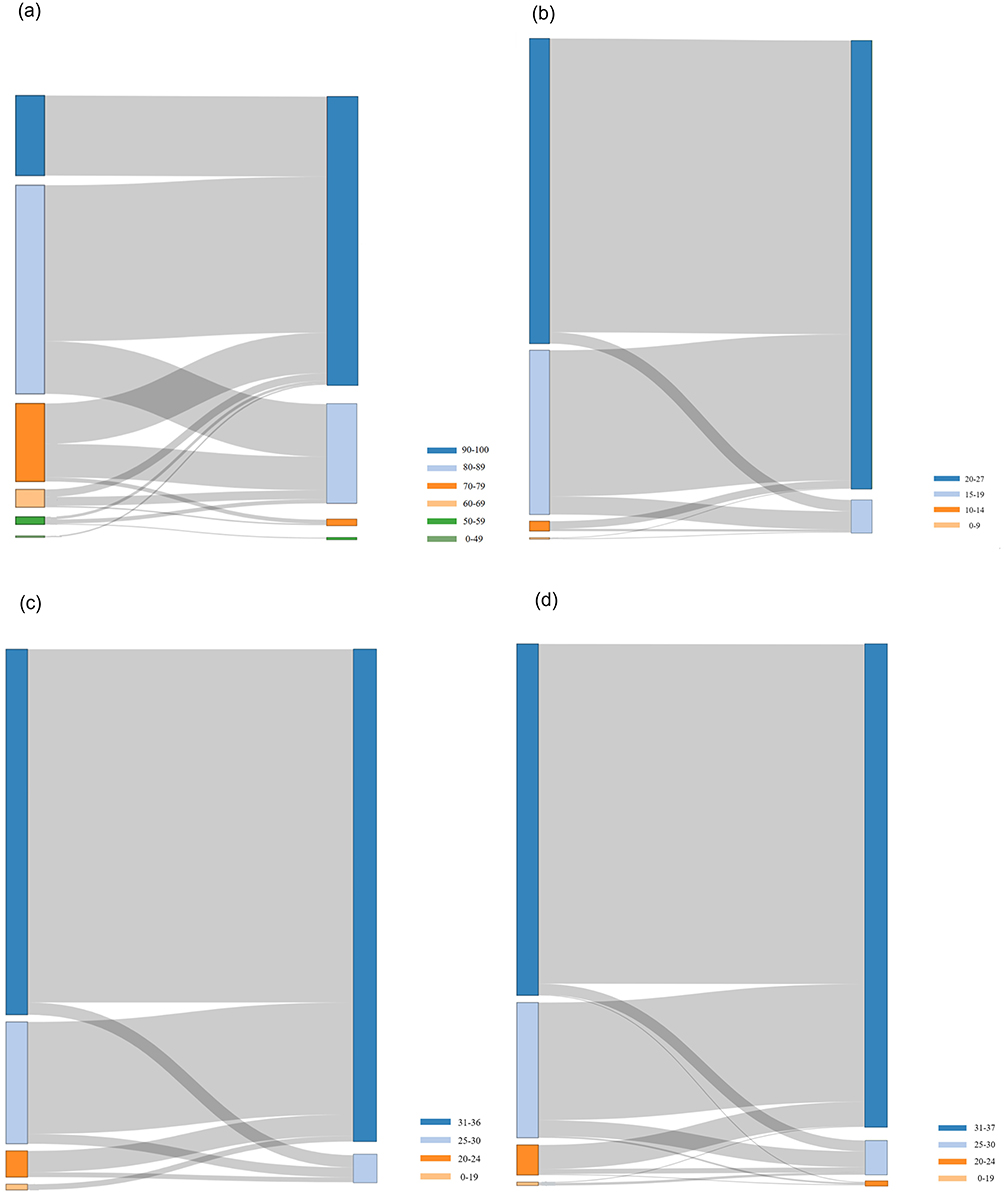 |
Figure 3 Sankey diagrams showing the pre- and post-intervention changes in the score of KAP and its components. A fraction of 93.54%, 64.72%, 67.09%, and 59.53% of the students experienced an increase in the total score (a) of KAP and its component of knowledge (b), attitude (c), and practices (d), respectively. |
Results of Subgroup Analyses
Subgroup analysis found that the total score increased after intervention for participants in all subgroups. Notably, the magnitude of the increment significantly differed among subgroups by living with parents and the parent’s educational level (Table 3). Students who did not live with their parents and whose mothers had a higher education level experienced more improvement in the total score.
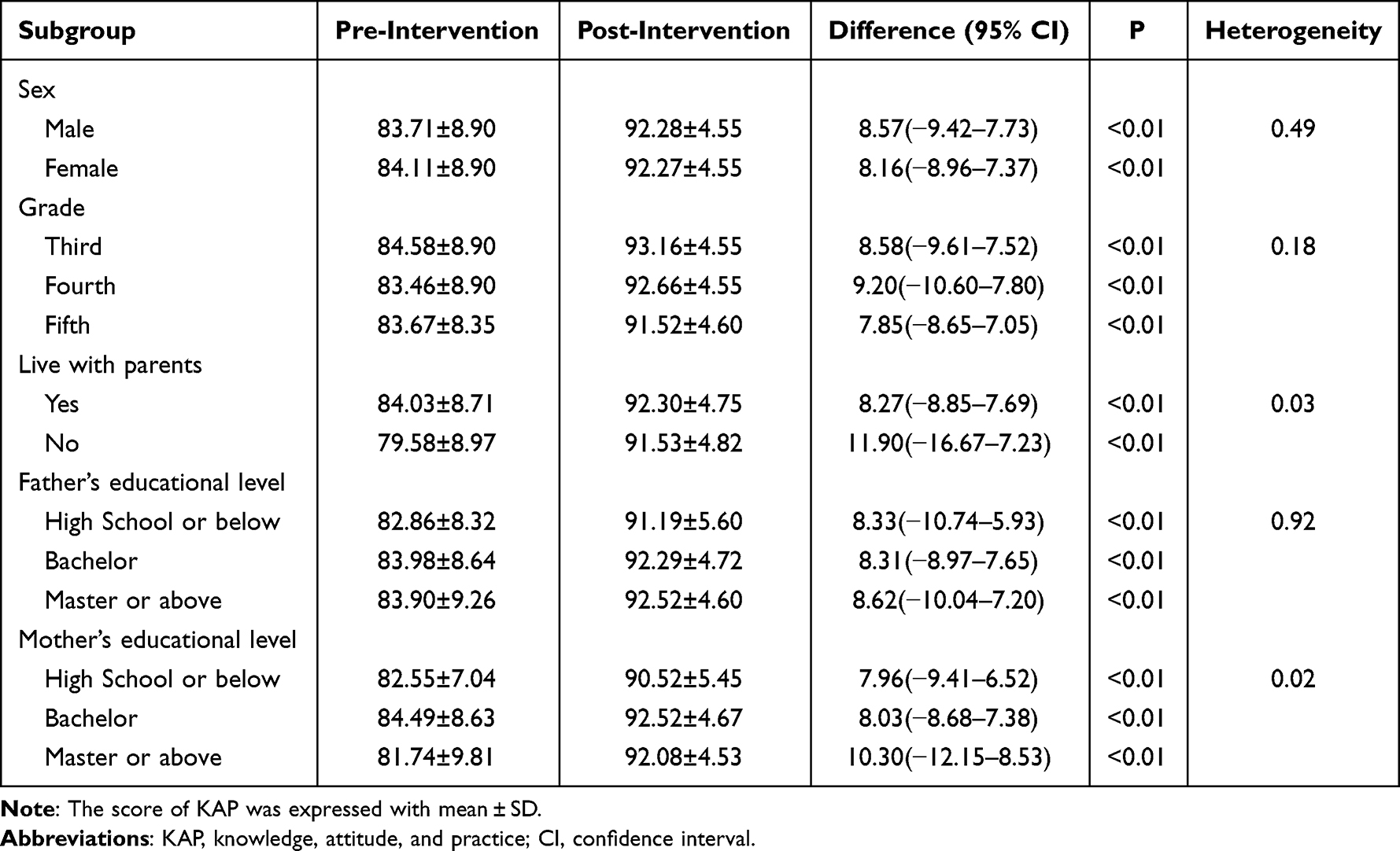 |
Table 3 The Score for KAP of Air Pollution Health Protection Before and After Intervention in Prespecified Subgroups |
Discussion
We conducted a single-arm pre-post intervention study to explore the effectiveness of knowledge-oriented education on the KAP of APHP for primary students. After a two-month intervention, the scores repeatedly assessed by a structured questionnaire significantly increased and the increment was much more pronounced in students who did not live with their parents and whose mothers received a higher education. Our findings prompted that knowledge-oriented education has an impact on improving KAP of APHP for primary students.
Our study findings are consistent with previous studies demonstrating an improvement in student health through interventions in schools.14,16,26–29 However, in previous studies, interventions were mostly protective equipment and complex and diverse interactive activities, such as online WeChat, competition activities, and serious games. Studies have found that the intervention measures of knowledge-oriented education are also effective in improving the health knowledge, attitudes, and behaviors of middle and high school students. Schools are places where children receive education, making it easier for them to acquire various knowledge and change negative behaviors. Implementing plans in schools can attract students’ attention, promote their mastery of knowledge about air pollution and health protection, and thus encourage their actions in this regard.30 Therefore, the effectiveness of low-input knowledge-oriented education interventions may have been underestimated. In schools, interventions that focus solely on knowledge-oriented education may also achieve the effect of improving KAP of APHP.
Like previous studies,14,16 our research results also showed that the increase in scores for practices was smaller than the improvement in knowledge and attitudes. That may be attributed to the fact that changes in practices typically require longer-term interventions compared to knowledge and attitude gains. It was suggested that future interventions will require more long-term approaches, as well as reinforcement of the transition from knowledge and attitudes acquisition to practices. Schools have the best opportunity to improve or help them develop practices in future interventions.31
Air pollution is affecting children, who are more vulnerable to the short- and long-term consequences of high levels of air pollution. Air pollution affects various physiological human functions, including affects various physiological human functions, including the respiratory system, the cardiovascular system, thrombosis and mental imbalances.32–35 In the absence of intervention, air pollution will soon raise morbidity and death.36 Primary school is the golden period of physical and psychological development of students, but also the key period of cultivating good behavior habits, although the self-restraint is poor, the plasticity is strong.37 The interventions should start from an early age in children, particularly the measures for transferring knowledge to behavior change, and improving pupils’ practices or helping them develop good habits.15,30
Our study provides valuable insights into the potential of knowledge-oriented education interventions in schools for improving students’ KAP of APHP. Schools may serve as key settings for the implementation of air pollution prevention strategies. Educational authorities and public health agencies could collaborate to develop comprehensive prevention programs that integrate knowledge-based education into the school curriculum.38 These programs can include regular air pollution awareness campaigns and hands-on activities such as air quality monitoring projects. By doing so, students can gain a deeper understanding of the health risks associated with air pollution and learn practical ways to protect themselves. Health education activities can be tailored to different age groups and learning levels of students, using a variety of teaching methods such as lectures, group discussions, and multimedia presentations to further enhance students’ interest and engagement in learning about air pollution and taking preventive actions.
There was a statistically significant difference among the subgroups living with parents. Family education is related to improving understanding of air pollution,39 so the intervention effect may be more significant for students who do not live with their parents. The subgroup analysis also revealed that within the subgroup of mothers’ education level, the degree of increase in the total score after the intervention gradually rose with the improvement of mothers’ education level. Kiuru et al examined the role of parental education level in students’ reading fluency in grade 4. The study found that parental education level was one of the control variables that influenced students’ reading fluency.40 Furthermore, Vázquez-Cano et al conducted a study across three countries to analyze the impact of parents’ academic qualifications on students’ reading efficacy. The results indicated that when mothers had a medium or high level of education, students tended to perform better in reading compared to when only the father had achieved a similar level of education. This suggested that the mother’s education level may have a significant influence on students’ academic abilities,41 thereby affecting the effectiveness of knowledge-oriented education interventions on students.
Several limitations should be acknowledged in our study. First, we had not evaluated the impact of interventions implemented for primary school students on their parents. Specifically, in terms of knowledge and attitudes, whether the improvement in students’ knowledge and attitudes after knowledge-oriented education interventions in school can enhance parents’ knowledge and attitudes, and in turn, parents influence and improve students’ knowledge and attitudes, encourage them to develop practices, thus forming a virtuous cycle. Second, in the study design, we did not group intervention measures according to the activities, thereby rendering it challenging to assess the impact of diverse activities. Third, this was a single-arm, open-label study. This design could be influenced by confounding factors and biases. The results will only show the differences before and after the intervention and the feasibility of the intervention. Although the sample size is not small and we observed a significant increment in KAP total score (regardless of its individual components) after intervention, strong evidence of the effectiveness of knowledge-oriented education on KAP of APHP needs to be demonstrated by randomized controlled trials in the future. Fourth, potential confounding factors have not been extensively collected in our pilot study and the interpretation of our results should be of caution. To enhance the generalizability of our results, studies should be conducted in diverse settings with larger and more representative samples and over a longer period to assess the sustainability of the intervention’s effects.
Conclusions
Our pilot study found that the KAP of APHP was significantly improved by knowledge-oriented education in primary school students after a short term of intervention, with greater gains in knowledge and attitudes than in practice. In light of our findings, knowledge-oriented education may be an effective program to improve the ability to cope with air pollution for elementary school students. A well-designed randomized trial is warranted to demonstrate this effectiveness.
Abbreviations
WHO, World Health Organization; SD, Standard deviation; MD, Mean difference; 95% CI, 95% Confidence Interval.
Data Sharing Statement
The datasets used and analyzed during the current study are available from the corresponding author (Hao Peng: [email protected]) on reasonable request.
Ethics Approval and Consent to Participate
This study was approved by the Ethics Committee of Soochow University.
Informed consent to participate in the study was acquired from the parents or legal guardians of all participants prior to the administration of the questionnaire.
Acknowledgments
We are deeply appreciative of the participants in this study, and would like to thank all staff of the department of Maternal and Child Health Center for Disease Prevention and Control of Suzhou Industrial Park Center for their support and assistance.
Funding
This study was supported by the Suzhou Municipal Science and Technology Bureau [NO. SKY2023036, SKY2023041, and SS202009], Suzhou Health Personnel Training Project [GSWS2021066 and KJXW2020073], Jiangsu Province Maternal and Child Health Research Project [F201830 and F202027], and a Project Funded by the Priority Academic Program Development of Jiangsu Higher Education Institutions.
Disclosure
The authors declare no competing interests in this work.
References
1. Bourbeau J, Doiron D, Biswas S, et al. Ambient air pollution and dysanapsis: associations with lung function and chronic obstructive pulmonary disease in the canadian cohort obstructive lung disease study. Am J Respir Crit Care Med. 2022;206(1):44–10. doi:10.1164/rccm.202106-1439OC
2. Guo LH, Zeeshan M, Huang GF, et al. Influence of air pollution exposures on cardiometabolic risk factors: a review. Curr Environ Health Rep. 2023;10(4):501–507.
3. Juginović A, Vuković M, Aranza I, et al. Health impacts of air pollution exposure from 1990 to 2019 in 43 European countries. Sci Rep. 2021;11(1):22516. doi:10.1038/s41598-021-01802-5
4. Wang Y, Wu Y, Zheng F, et al. Health threat of PM(2.5)-bound trace elements exposure on asthma hospital admission: a time-stratified case-crossover study. Environ Int. 2022;170:107604. doi:10.1016/j.envint.2022.107604
5. WHO. Improving the capacity of countries to report on air quality in cities: users’ guide to the repository of United Nations tools. 2023; Available from: https://iris.who.int/handle/10665/373134.
6. WHO. 7 million premature deaths annually linked to air pollution. 2014; Available from: https://www.who.int/news/item/25-03-2014-7-million-premature-deaths-annually-linked-to-air-pollution.
7. Lelieveld J, Klingmüller K, Pozzer A, et al. Cardiovascular disease burden from ambient air pollution in Europe reassessed using novel hazard ratio functions. Eur Heart J. 2019;40(20):1590–1596. doi:10.1093/eurheartj/ehz135
8. WHO. Air Pollution. 2023; Available from: https://www.who.int/health-topics/air-pollution#tab=tab_1.
9. Otto S, Pensini P. Nature-based environmental education of children: environmental knowledge and connectedness to nature, together, are related to ecological behaviour. Global Environ Change. 2017;47:88–94. doi:10.1016/j.gloenvcha.2017.09.009
10. Hodder RK, O’Brien KM, Al-Gobari M, et al. Interventions implemented through sporting organisations for promoting healthy behaviour or improving health outcomes. Cochrane Database Syst Rev. 2025;1(1):Cd012170. doi:10.1002/14651858.CD012170.pub2
11. Habib MA, Alam MR, Rahman T, et al. Knowledge, attitudes, and practices (KAP) of nutrition among school teachers in Bangladesh: a cross-sectional study. PLoS One. 2023;18(3):e0283530. doi:10.1371/journal.pone.0283530
12. Jinmei HE. Research on global environmental air quality standards and future prospects for chinese standards. Environ Sci Res. 2024;14:1897–1910.
13. Al-Shidi HK, Ambusaidi AK, Sulaiman H. Public awareness, perceptions and attitudes on air pollution and its health effects in Muscat, Oman. J Air Waste Manag Assoc. 2021;71(9):1159–1174. doi:10.1080/10962247.2021.1930287
14. Feng Xia, Ye Ping, Zhang, Hong. Evaluation of health literacy intervention effectiveness for middle school students. Chin J School Health. 2012;33(10):1265–1267.
15. Venuto R, Pappalardo R, Genovese C, et al. Indoor air pollution: an Italian Knowledge, Attitude and Practice (KAP) study among the general population. Ann Ig. 2024;36(6):683–694. doi:10.7416/ai.2024.2640
16. Wang L, Ji Y, Gong J. et al. Evaluation of the effect of health literacy interven-tion on high school students in Jiading District. Chin J Sch Health. 2013;34(09):1051–1052.
17. Zhang X, Peng J, Yan X, et al. The impact of atmospheric fine particle pollution on pulmonary function of primary school students. Chin J Sch Health. 2021;42(1):135–138. doi:10.16835/j.cnki.1000-9817.2021.01.033
18. Marín D, Calle N, Arango V, et al. Knowledge, attitudes and practices about air pollution and its health effects in 6th to 11th-grade students in Colombia: a cross-sectional study. Front Public Health. 2024;12:1390780. doi:10.3389/fpubh.2024.1390780
19. Zhongjie L. Suzhou Industrial Park: 30 years of Transformation as a Model New City. Vol. 3. Era Architecture; 2024:6–13.
20. Committee SIPM. The Report on the Ecological Environment Status of Suzhou Industrial Park Has Been Released. Suzhou Industrial Park Management Committee; 2025.
21. Organization WH. WHO Global Air Quality Guidelines. Particulate Matter (PM2.5 and PM10), Ozone, Nitrogen Dioxide, Sulfur Dioxide and Carbon Monoxide. World Health Organization; 2021.
22. Mohammed FS, Ozdamli F. A systematic literature review of soft skills in information technology education. Behav Sci. 2024;14(10):894. doi:10.3390/bs14100894
23. Sobeck J, Smith-Darden J, Gartner D, et al. Antibiotic knowledge, beliefs, and behaviors: testing competing hypotheses using an urban community sample. Health Commun. 2022;37(7):862–871. doi:10.1080/10410236.2021.1875557
24. China, N.H.C.o.t.P.s.R.o. Guidelines for health protection of populations exposed to air pollution (haze). 2019; Available from: https://www.nhc.gov.cn/jkj/c100063/201912/5c56252f49644deb8a39e2a1a20c90d8.shtml.
25. Yu Yinghong YQ, Juan X. Research progress on health literacy of Chinese residents. Prevention Contr Chronic Dis China. 2021;29(7):530–534.
26. Chiang YC, Li X, Lee C-Y, et al. Protective equipment and health education program could benefit students from dust pollution. Air Qual Atmos Health. 2021;14(3):371–380. doi:10.1007/s11869-020-00942-3
27. Lili H, Yan J, Jianlin Z. Effectiveness study of interactive intervention on health literacy among fourth-grade students in Changning District, Shanghai. Shanghai J Preventive Med. 2024;36(4):382–385.
28. Peng L, Wang H, He Fang, et al. Evaluation of intervention effect on health literacy of junior middle school students in Chongqing. Chin J Sch Health. 2018;39(1):26–28. doi:10.16835/j.cnki.1000-9817.2018.01.008
29. Relvas T, Mariano P, Almeida SM, Santana P. A serious game for raising air pollution perception in children. J Computers Educ. 2025;12(1):133–163.
30. Li Y, Sun B, Yang C, et al. Effectiveness evaluation of a primary school-based intervention against heatwaves in China. Int J Environ Res Public Health. 2022;19(5):2532.
31. Sheffield PE, Landrigan PJ. Global climate change and children’s health: threats and strategies for prevention. Environ Health Perspect. 2011;119(3):291–298. doi:10.1289/ehp.1002233
32. Franchini M, Guida A, Tufano A, et al. Air pollution, vascular disease and thrombosis: linking clinical data and pathogenic mechanisms. J Thromb Haemost. 2012;10(12):2438–2451. doi:10.1111/jth.12006
33. Miller MR, Newby DE. Air pollution and cardiovascular disease: car sick. Cardiovasc Res. 2020;116(2):279–294. doi:10.1093/cvr/cvz228
34. Viegi G, Baldacci S, Maio S, et al. Health effects of air pollution: a Southern European perspective. Chin Med J. 2020;133(13):1568–1574. doi:10.1097/CM9.0000000000000869
35. Wang JX, Liu XQ. Climate change, ambient air pollution, and students’ mental health. World J Psychiatry. 2024;14(2):204–209. doi:10.5498/wjp.v14.i2.204
36. Mlambo C, Ngonisa P, Ntshangase B, et al. Air pollution and health in Africa: the burden falls on children. Economies. 2023;11(7):196. doi:10.3390/economies11070196
37. Cao Zhijuan WS, Shuangxiao Q. Health literacy of primary school parents in Shanghai. Chin J SchHealth. 2018;39(4):498–500,505.
38. Wei J. Reflections on integrating environmental education into environmental courses in China. Creat Educ Stud. 2025;13(5):477–484. doi:10.12677/ces.2025.135366
39. Bauomy ES, Mohamed Gad El-Bastwese R, Ali Hamed Mohamed H, El-Gilany AH, Nabeh Taref N. Effectiveness of home-based educational intervention on community perception of indoor air pollution. Egypt J Health Care. 2022;13:
40. Kiuru N, Lerkkanen M-K, Niemi P, et al. The role of reading disability risk and environmental protective factors in students’ reading fluency in grade 4. Reading Res Quart. 2013;48(4):349–368. doi:10.1002/rrq.53
41. Vázquez-Cano E, De la Calle-Cabrera AM, Hervás-Gómez C, López-Meneses E. Socio-family context and its influence on students’ pisa reading performance scores: evidence from three countries in three Continents. Educ Sci. 2020;20:50–62.
 © 2026 The Author(s). This work is published and licensed by Dove Medical Press Limited. The
full terms of this license are available at https://www.dovepress.com/terms
and incorporate the Creative Commons Attribution
- Non Commercial (unported, 4.0) License.
By accessing the work you hereby accept the Terms. Non-commercial uses of the work are permitted
without any further permission from Dove Medical Press Limited, provided the work is properly
attributed. For permission for commercial use of this work, please see paragraphs 4.2 and 5 of our Terms.
© 2026 The Author(s). This work is published and licensed by Dove Medical Press Limited. The
full terms of this license are available at https://www.dovepress.com/terms
and incorporate the Creative Commons Attribution
- Non Commercial (unported, 4.0) License.
By accessing the work you hereby accept the Terms. Non-commercial uses of the work are permitted
without any further permission from Dove Medical Press Limited, provided the work is properly
attributed. For permission for commercial use of this work, please see paragraphs 4.2 and 5 of our Terms.