
Back to Journals » Drug Design, Development and Therapy » Volume 20
Effect of Preoperative Esketamine Nebulized Inhalation on Cough Reflex, Sedation, and Postoperative Sore Throat in Extubation of Surgical Patients: A Prospective, Double-Blind, Randomized Controlled Trial
Authors Zhang ZQ, Yang R  , Li JJ, Wang J , Chen SG, Mei B, Hu SH
Received 12 November 2025
Accepted for publication 2 March 2026
Published 6 March 2026 Volume 2026:20 580872
DOI https://doi.org/10.2147/DDDT.S580872
Checked for plagiarism Yes
Review by Single anonymous peer review
Peer reviewer comments 2
Editor who approved publication: Dr Muzammal Hussain
Zheng-Qin Zhang,1,2,* Rui Yang,2,* Jing-Jing Li,2 Jiang Wang,2 Shan-Gui Chen,2 Bin Mei,2 Shao-Hua Hu1,3
1School of Nursing, Anhui Medical University, Hefei, Anhui, People’s Republic of China; 2Department of Anesthesiology, The First Affiliated Hospital of Anhui Medical University, Hefei, Anhui, People’s Republic of China; 3Department of Nursing, The First Affiliated Hospital of Anhui Medical University, Hefei, Anhui, People’s Republic of China
*These authors contributed equally to this work
Correspondence: Bin Mei, Department of Anesthesiology, The First Affiliated Hospital of Anhui Medical University, Hefei, Anhui, People’s Republic of China, Tel +86-0551-62922344, Fax +86 0551 62923704, Email [email protected] Shao-Hua Hu, Department of Nursing, The First Affiliated Hospital of Anhui Medical University, Hefei, Anhui, 230022, People’s Republic of China, Tel +86-0551-62922005, Fax +86 0551 62923704, Email [email protected]
Purpose: This study aims to explore the effect of preoperative esketamine nebulized inhalation on cough reflex during extubation for surgical patients who received general anesthesia.
Patients and methods: A total of 84 patients scheduled for thoracolumbar spine surgery were included in the study. All patients were randomly divided into two groups. Patients in the experimental group (Group K) received 5 mL of esketamine solution (50 mg esketamine + 3 mL of saline) by nebulized inhalation for 15 minutes. Patients in the control group (Group S) received an equal volume of saline as placebo. The incidence and intensity of the cough reflex were evaluated. The Riker Sedation-Agitation Scale score, Ramsay sedation score, and Monitoring of sore throat following surgery were performed at 0, 2, 4, 6, 12, and 24 hours post-surgery.
Results: The incidence of cough reflex was lower in Group K (31.0%) than in Group S (71.4%), and cough intensity was milder in Group K than in Group S (P< 0.001). The Ramsay sedation scale score post-extubation was higher in Group K than in Group S (P=0.002). The incidence and severity of postoperative sore throat in Group K were lower than in Group S at 2, 4, 6, 12, and 24 hours following extubation (all P< 0.05).
Conclusion: Preoperative esketamine nebulized inhalation has a potential inhibitory effect on the cough reflex during extubation for patients who received general anesthesia via tracheal intubation.
Keywords: esketamine, nebulized inhalation, cough reflex, tracheal extubation
Introduction
Coughing serves as a protective reflex of the respiratory system, commonly triggered by mechanical or chemical stimuli that activate the peripheral sensory nerve endings under the mucous membranes of the pharynx, larynx, and trachea.1 Signals are transmitted to the brainstem’s cough center through the vagus nerve. Once integrated, the outgoing signals are dispatched to the effectors, triggering the cough reflex.2 However, the cough reflex induced by tracheal extubation following general anesthesia is one of the most frequent undesirable phenomena in clinical practice.3,4 It causes intense discomfort to patients and increases the risk of adverse events, such as blood leakage from surgical incision, airway spasm, and hemodynamic instability.5,6 In thoracolumbar surgeries, these complications may lead to postoperative bleeding, acute upper airway obstruction, and an increased risk of reoperation.7,8
Approaches to suppress the cough reflex during extubation have included both medication and non-medication techniques, which have met with varying success. Non-medication techniques included gargling with 4 mg azunol diluted in 100 mL tap water, gargling with 0.5 g of licorice in 30 mL of water, or using licorice lozenges.9 However, there is currently insufficient evidence to determine whether these measures offer comparable or superior effectiveness in reducing coughing during extubation compared to other interventions. In contrast, several medications have demonstrated more defined efficacy. For instance, intravenous lidocaine has been shown to significantly reduce cough at extubation.10 A continuous infusion of 0.2μg/kg/min remifentanil during the peri-extubation period can effectively suppress stress and cough reflexes.11 BIS-guided sedation with dexmedetomidine and propofol reduces the cough reflex caused by suctioning or extubation during the recovery from general anesthesia.12 However, these drug-based treatments come with certain side effects. For instance, intravenous injection of lidocaine may prolong the extubation and recovery time, while remifentanil may lead to respiratory depression and delayed awakening.13 A network meta-analysis comparing various intervention measures (including lidocaine, dexmedetomidine, fentanyl, and remifentanil) concluded that dexmedetomidine was the most effective in reducing the incidence of severe cough during extubation. However, it may cause some side effects, such as prolonged sedation or bradycardia.14
As N-methyl-D-aspartate (NMDA) receptor antagonists, ketamine and esketamine are used in anesthetic practice and possess unique properties that may effectively suppress cough. Evidence suggests that NMDA receptor antagonists not only play a critical role in regulating the cough reflex but also exert a direct relaxant effect on airway smooth muscles.15 Moreover, compared with other drugs, they can also reduce remifentanil-induced hyperalgesia by inhibiting NMDA receptors, thereby decreasing postoperative pain and opioid consumption.16 However, ketamine’s psychomimetic side effects have limited its widespread clinical use. Esketamine, the right-handed enantiomer of ketamine, exhibits comparable pharmacological properties. Studies have shown that esketamine has approximately two to four times stronger affinity for NMDA receptors than ketamine.17 Moreover, esketamine is metabolized more quickly than ketamine and has minimal side effects.18,19 Although several studies have suggested using mouth rinsing as the administration method, we chose to use the nebulization method instead. In a study involving healthy volunteers, no respiratory adverse events occurred during or after esketamine inhalation.20 Nebulized inhalation ensures that the drug is evenly and effectively distributed throughout the throat area and reaches the starting point of the respiratory tract. Moreover, inhalation can avoid the problem of individual differences caused by mouth rinsing, and it also eliminates the discomfort caused by the taste of the drug.21 Applying ketamine locally helps protect against airway inflammation through interference with Ca++ and relaxing airway smooth muscle.22
In our study, we aimed to examine the effect of preoperative esketamine nebulized inhalation on the cough reflex during tracheal extubation in patients undergoing thoracolumbar spine surgery. We hypothesized that this intervention would successfully inhibit the cough reflex during tracheal extubation.
Methods
The underlying protocol follows the CONSORT Checklist (S1 checklist)
Study Design
This prospective, double-blind, randomized controlled trial was conducted in accordance with the CONSORT guidelines and received approval from the Ethics Committee of the First Affiliated Hospital of Anhui Medical University (PJ2024-03-99). Written informed consent was provided by the patients or their relatives before the study was conducted. This study was registered in the Chinese Clinical Trial Registry (ChiCTR2400086812). The study adhered to the intention-to-treat principle for the primary outcome analysis, including all randomized patients. Patients with major protocol deviations were to be withdrawn, and the events along with their data were recorded and assessed by the investigators.
Study Participants
The research involved patients between 18 and 65 years old with American Society of Anesthesiologists (ASA) I-III, who were scheduled for thoracolumbar spine surgery. Patients who underwent thoracolumbar spine surgery were more likely cough during the recovery period compared to those who underwent supine surgery, as secretions accumulated in the pharynx and tracheal tube after prolonged periods of prone position.23 The exclusion criteria were the absence of informed consent; mental or language barriers; existing severe cardiovascular disease, severe respiratory disease, and throat disease; abnormal lung function; allergy or contraindication to esketamine; and preoperative opioid use.
Randomization and Blinding
In this phase, all patients were randomly assigned to either the esketamine nebulized inhalation group (Group K) or the normal saline nebulized inhalation group (Group S) using block randomization. The random sequence was computer-generated by an anesthesiologist not involved in the study and concealed in opaque, sealed envelopes by a second independent anesthesiologist. The nurse who opened the envelopes in the medication preparation room and prepared the corresponding nebulization solutions took no part in subsequent patient assessments. To ensure the integrity of the double-blind design, the esketamine and placebo (normal saline) solutions were made indistinguishable in appearance. Consequently, all patients, anesthesiologists, surgeons, and postoperative follow-up staff remained blinded to group assignment throughout the study.
Anesthesia Protocol
On the surgery day, all patients were transferred to the pre-anesthesia preparation room. A 50 mg dose of esketamine was chosen based on pre-experiment, where a 75 mg dose caused significant hypertension in patients. According to group allocation, the nurse prepared 5 mL of nebulization solution for each patient. Patients in Group S received 5 mL of normal saline, while those in Group K received 50 mg of esketamine (2 mL) diluted with 3.0 mL of normal saline to a total volume of 5 mL. Patients in both groups received the nebulized solution using the same device: a mask connected to a wall-mounted oxygen source (8 L, 50 psi) for a duration of 15 min.
Following completion of nebulization, all patients were transferred to the operating room for standardized anesthesia management and routine monitoring. This includes invasive arterial pressure, heart rate (HR), electrocardiogram (ECG), peripheral oxygen saturation (SpO2), body temperature, and bispectral index (BIS). Anesthesia was induced intravenously with midazolam (0.05 mg/kg), propofol (0.2 mg/kg), sufentanil (0.5 µg/kg), and cisatracurium (0.2–0.4 mg/kg). After 3 min, tracheal intubation was performed by an independent anesthesiologist with over a decade of experience, who was blinded to group allocation. The depth of catheter insertion was calculated transorally, and the distance from the tip of the tracheal tube to the upper incisors was measured at approximately 23 cm for men and 21 cm for women. After tracheal intubation, all patients underwent volume-controlled ventilation using an anesthesia machine. A balloon pressure gauge was used to check whether the tracheal catheter sleeve pressure was maintained at 25 cmH2O. Propofol 4–8 mg/kg/h and remifentanil 0.1–0.3 μg/kg/min were continuously infused to maintain the BIS value at 40–60. Muscle relaxation is maintained through intermittent doses of cisatracurium. Furthermore, blood pressure and heart rate (HR) were maintained at the basic value of ±20% during the operation.
Postoperative Management
After surgery, patients were transferred to the post-anesthesia care unit (PACU). Before tracheal extubation, neuromuscular blockade was neutralized with atropine (0.5 mg) and neostigmine (1 mg). The criteria for removing the endotracheal tube include the patient’s ability to follow simple instructions, recovery of swallowing and cough reflexes, a spontaneous breathing rate between 12 and 20 breaths/min, tidal volume > 6mL/kg, SpO2 above 95% for five minutes, and stable hemodynamics.24,25 The extubation procedure was performed by a team of uniformly trained anesthesia nurses under the anesthesiologist’s guidance, adhering to a standardized protocol (pre-oxygenation with 100% oxygen, suctioning of the airway as needed, placement of a bite block and positioning of the patient appropriately, antagonism of neuromuscular blockade, confirmation of regular spontaneous breathing and adequate ventilation, application of positive pressure at the end of expiration, followed by deflation of the endotracheal tube cuff and removal of the tube, immediate administration of 100% oxygen post-extubation, with assessment of airway patency and adequacy of ventilation). If a severe and persistent cough reflex occurred during emergence, intravenous lidocaine (1 mg/kg) was administered; the tracheal tube cuff was then slowly deflated and the tube removed. Patients were discharged from the PACU upon achieving an Aldrete score of 9. All outcome assessments and data collection followed a standardized protocol and were performed by three staff members (anesthesiologist, nurse, and assistant) who were blinded to group allocation and involved in different stages of the process. All surgical procedures were performed by the same team.
Data Collection
The primary outcome was the incidence of cough reflex. The secondary outcomes included cough intensity within 5 min of extubation, which was defined as follows: 0, no cough; 1, minimal (single) cough; 2, moderate (≤5 s) cough; and 3, severe (>5 s) cough (bucking).26 The degree of emergence agitation was evaluated using the Riker Sedation-Agitation Scale score: 1 (unwakeable) to 7 (dangerous restlessness).27 Meanwhile, the sedation levels were assessed using the Ramsay sedation scale (RSS), with scores ranging from 1 (anxious and agitated) to 6 (no response to stimuli).28 During the extubation procedure, the nurses in the PACU gathered the outcomes that were previously mentioned. The mean arterial pressure (MAP) and heart rate (HR) were collected by the anesthesiologist in the pre-anesthesia preparation room, the operating room, and the PACU at the following time points: before nebulized inhalation (T0), at the end of nebulized inhalation (T1), after the completion of anesthesia induction (T2), upon PACU admission (T3), immediately after extubation (T4), 10 min after extubation (T5), and discharged from the PACU (T6). Postoperative sore throat (POST) was evaluated by a research assistant using a numeric rating scale from 0 (no sore throat) to 10 (worst imaginable pain).29 The assessment time points were 0, 2, 4, 6, 12, and 24 hours after extubation. According to previous literature,30 this study also focused on the adverse reactions associated with esketamine, including confusion, hallucinations, nausea and vomiting. The postoperative complications mentioned above were collected by a study assistant in the ward during the first three days after surgery and upon discharge.
Sample Size Calculation
In a former study,31 the incidence of cough reflex in recovery without intervention was 66.7%, and esketamine nebulization was thought to reduce such incidence to 35% and the α of 0.05, with 36 patients needed in each group (with the power of 0.80). Considering the potential dropout during postoperative follow-up and refusing to continue participating in the study, the required sample size was increased to 42 patients per group.
Statistical Analysis
All statistical analyses were performed with SPSS software (version 16.0; IBM Corp). In this study, continuous data with normal distribution were shown as mean ± standard deviation and compared between the groups with independent samples t-test. Continuous data that do not conform to the normal distribution are expressed as median and range, and the differences between the two groups are examined by Mann–Whitney U-test. Categorical variables were outlined as percentages or numbers, and comparisons between groups were done with chi-squared (χ2-test) or Fisher’s exact tests. Repeated measures analysis of variance was used to compare data at multiple time points between the two groups. P < 0.05 was considered to be statistically significant.
Results
Out of 123 consecutive patients in this study, 84 met the criteria and were enrolled. The remaining 39 were excluded (27 did not meet the inclusion criteria, 10 refused to participate, and 2 were unable to consent). These 84 patients were randomly allocated to the esketamine group (n = 42) or the normal saline group (n = 42). All randomized patients received the intervention and were included in the final intention-to-treat analysis. Throughout the study and follow-up, no patient was lost to follow-up or withdrew due to a protocol deviation (Figure 1). The baseline characteristics did not differ between the groups (Table 1). Furthermore, esketamine-related adverse reactions were not reported in Group K. The incidence of cough reflex in Group K patients was lower than that in Group S (P < 0.001). When comparing the intensity of the cough reflex between the two groups, it was evident that Group K had more patients with milder symptoms. (P<0.001) (Table 2). No difference was detected in the MAP and HR between the groups (Table 3).
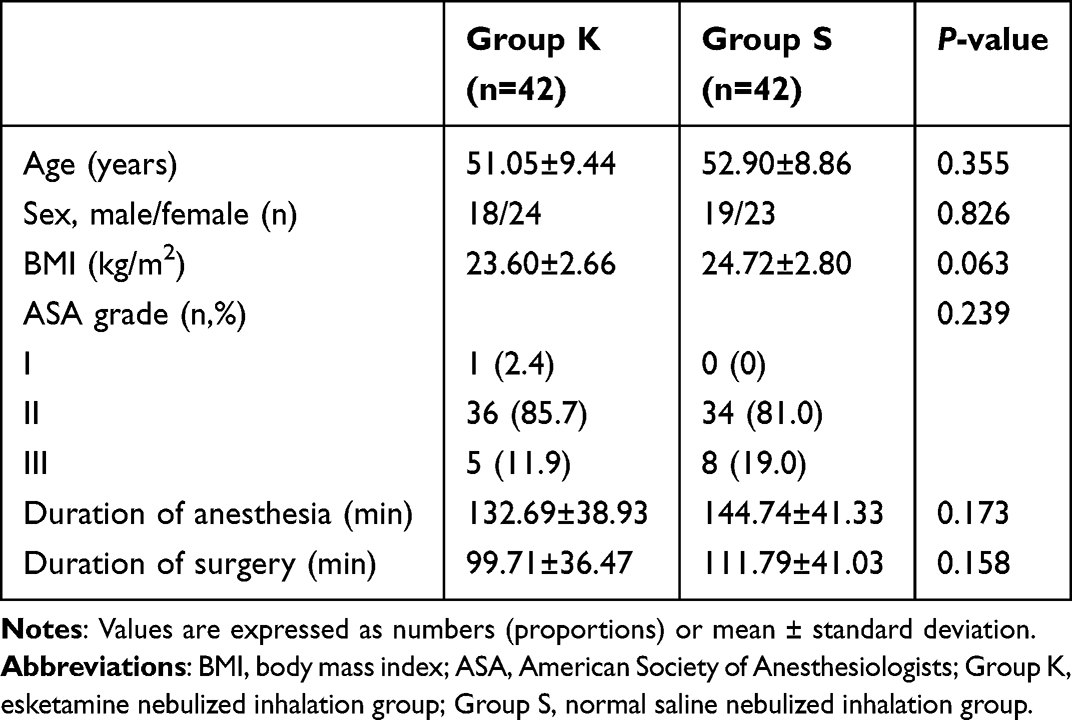 |
Table 1 Patients’ Baseline Variables |
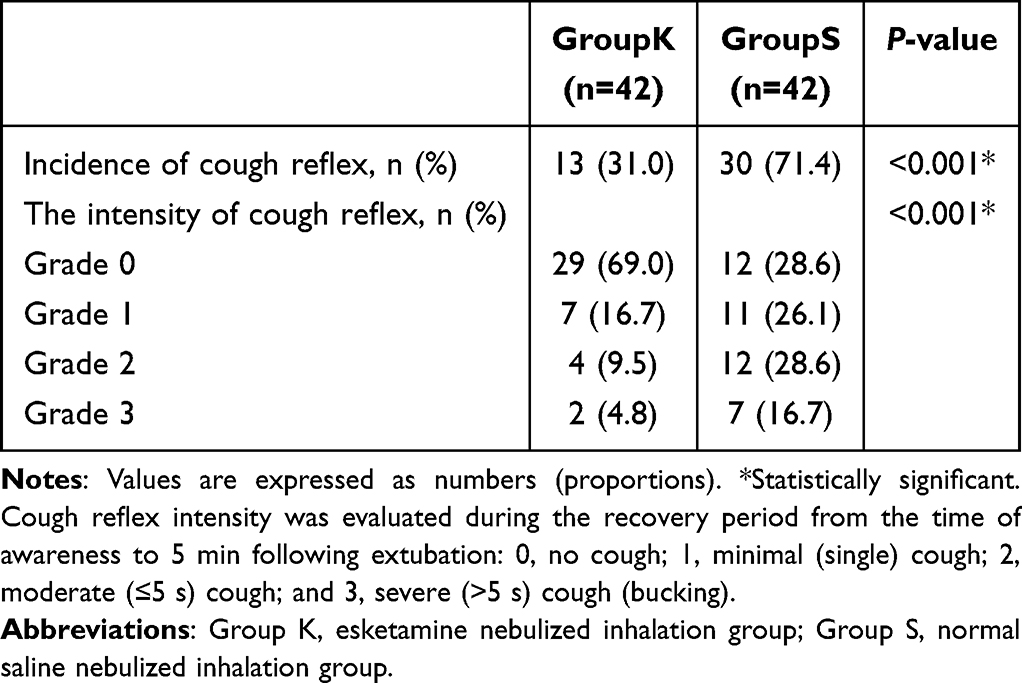 |
Table 2 Incidence and Grade of Cough Reflex During Extubation |
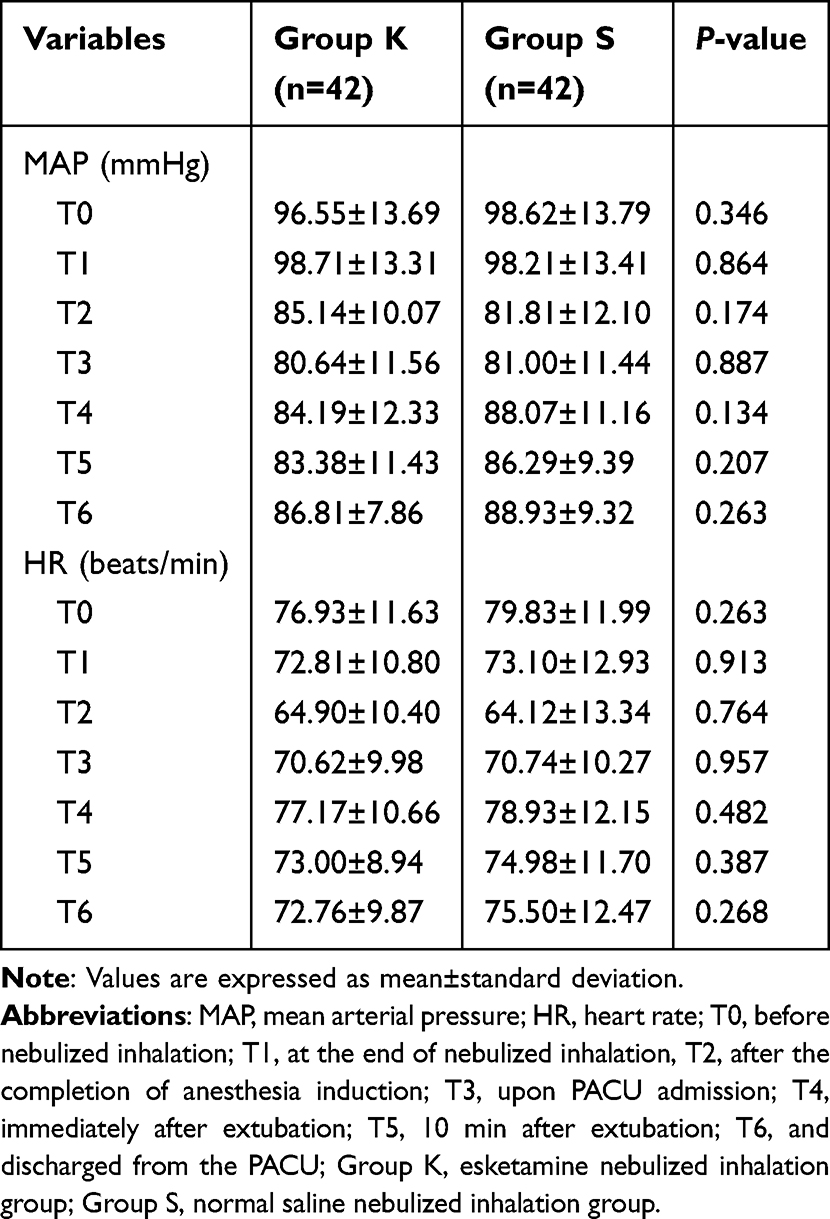 |
Table 3 Change in MAP and HR Before and After Treatment |
 |
Figure 1 The clinical procedures in the study adhered to the CONSORT flow. |
Moreover, the Riker Sedation-Agitation Scale scores did not differ between the groups (P > 0.05). The RSS score post-extubation was higher in Group K than in Group S (P = 0.002). As shown in Table 4, compared with Group S, the incidence of POST reported by patients in Group K was lower at 2, 4, 6, 12, and 24 hours following extubation (all P<0.05). At 2, 4, 6, 12, and 24 hours after extubation, the severity of POST reported by patients in Group K was lower than that in Group S (all P<0.05).
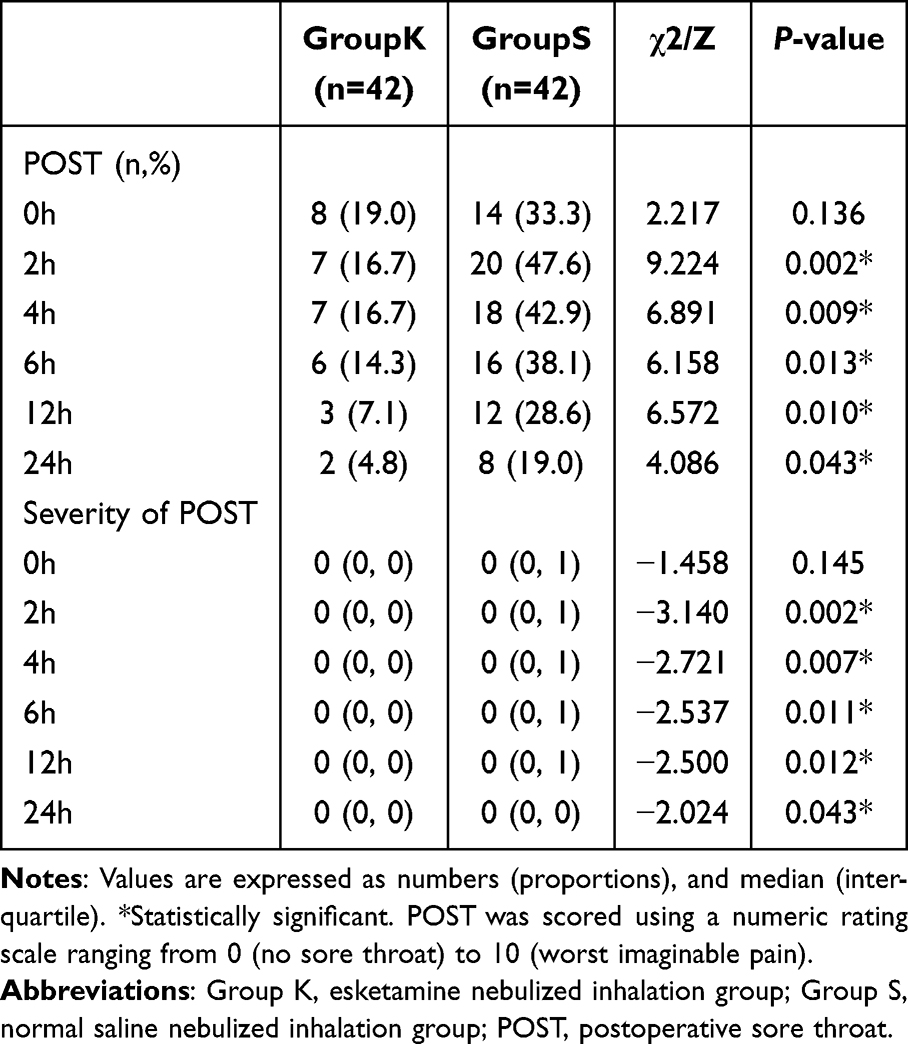 |
Table 4 Incidence and Severity of Postoperative Sore Throat (POST) |
Discussion
This study demonstrated that preoperative esketamine nebulized inhalation effectively alleviated cough reflex in extubation of surgical patients and did not cause adverse reactions. It also reduced the incidence and severity of POST.
Among the surgical population, the incidence of cough reflex during extubation ranges from 40% to 96%, which can cause intense discomfort to patients and may lead to serious adverse effects,4,8 particularly in patients who are susceptible to complications from elevated intracranial or intraocular pressure. The cough reflex can be triggered by mechanical or chemical stimuli that activate sensory receptors in the respiratory tract.32 Numerous studies have investigated strategies to mitigate the cough reflex during the postoperative extubation period. However, each approach has its unique benefits and drawbacks. Research indicated that a low dose of dexmedetomidine did not adequately suppress the cough reflex during extubation after surgery,33 while doses over 0.5 μg/kg led to a notably longer extubation period.34 Intravenous remifentanil can reduce the incidence of cough reflex during extubation, but it may lead to prolonged recovery time and extubation time.35 The protective effect of topically applied lidocaine gel may be counteracted by the potential adverse effects of additives or preservatives contained in the formulation.36 In addition, research showed that 0.5 mg/kg of ketamine could decrease the incidence of cough reflex during extubation for patients receiving laparoscopic surgery,37 but ketamine can increase sympathetic activity, nausea and vomiting, and may lead to psychotomimetic reactions.38 Esketamine, the right-handed isomer of ketamine, which is a noncompetitive NMDA receptor blocker, has been newly introduced in China. Esketamine shares its mechanism of action with ketamine, yet it exhibits a stronger affinity for NMDA receptors and minimal side effects. Chen et al found that a subanesthetic dose of esketamine lowered the EC50 of remifentanil to inhibit the cough reflex during extubation.39
Esketamine given intravenously has been noted to produce unwanted effects like psychotomimetic reactions,40 vivid dreaming, and elevated blood pressure.30 Nebulized inhalation of ketamine represents a new route for administering the substance.20 This route allows quick absorption, fast onset of action, and high bioavailability.25 Up to now, no research has observed the potential effect of esketamine nebulized inhalation.
During the process of designing this experiment, no relevant studies on esketamine nebulized inhalation and cough reflex during extubation are available in the existing literature. In our initial testing phase, we assessed two concentration gradients and observed that a 75 mg dose of nebulized esketamine resulted in marked hypertension. Therefore, 50mg of esketamine was used in this study. Reported side effects of esketamine include fluctuations in elevated hemodynamics,30 and psychomimetic reactions.40 In this study, no differences in the MAP and HR were observed between the groups at each time point (Table 3), and no associated psychiatric adverse effects occurred during the postoperative follow-up. Therefore, the intervention measures adopted in this study were considered to be safe.
Current studies suggest that esketamine exerts different effects on receptors and channels.30 The effectiveness of preoperative esketamine nebulized inhalation in reducing cough reflex at extubation can be explained by the following mechanisms: First, it reduces the sensitivity of airway reflexes by inhibiting central sensitization and neurotransmitter release.39,41 Second, preoperative nebulized inhalation enables the drug to directly act on the airway mucosa to form an effective barrier and may inhibit cough reflex triggered by mechanical stimuli through local anesthetic effects. Third, esketamine can also directly act on airway smooth muscle to dilate bronchioles through voltage-dependent L-type calcium channels.42 Further studies are warranted to evaluate the specific mechanisms constituting the basis for the esketamine nebulized inhalation effect against the cough reflex.
In the present study, the RSS score post-extubation was higher in the esketamine group than in the normal saline group. This could be explained by the analgesic, sedative, and cough-suppressant effects of esketamine, which increased the patient’s threshold for adverse stimuli. However, the Riker Sedation-Agitation Scale scores were similar between groups.
POST is a common issue following general anesthesia during the postoperative phase.43 It can provoke significant postoperative morbidity and patient dissatisfaction. The mechanism of POST may be related to the pressure of an endotracheal tube on a tracheal wall, causing airway inflammation, tracheal mucosal traumatization, vocal cord hematoma, mucosal dehydration, or laryngeal edema.44,45 Therefore, esketamine nebulized inhalation can alleviate local inflammation and exert peripheral analgesic effects, reducing the incidence of POST and postoperative pain scores.43,46,47
This study has several limitations. First, we did not evaluate the effect of other doses of esketamine on the incidence of cough reflex during extubation. Further studies are warranted to outline the optimal clinically effective dose for alleviating cough reflex during extubation. Second, as ketamine has been gradually replaced by esketamine in China,48 no ketamine treatment group was established in this study. Finally, this research was carried out at a single center. Further studies at different institutions are warranted to evaluate the effect of esketamine nebulized inhalation on cough reflex during extubation.
Conclusion
This study demonstrates that preoperative esketamine nebulized inhalation is an effective and safe option for reducing the incidence and intensity of cough reflex during tracheal extubation.
Data Sharing Statement
The datasets used or analyzed during the current study are available from the corresponding author upon reasonable request.
Ethics Approval
The study was approved by the Ethics Committee of the First Affiliated Hospital of Anhui Medical University (PJ2024-03-99) and registered with the Chinese Clinical Trial Registry (ChiCTR2400086812). All patients provided written informed consent.
Acknowledgments
We thank all the patients, doctors, and nurses who participated in this study.
Funding
There is no funding to report.
Disclosure
The authors report no conflicts of interest in this work.
References
1. Tanoubi I, Sun JN, Drolet P, et al. Replacing a double-lumen tube with a single-lumen tube or a laryngeal mask airway device to reduce coughing at emergence after thoracic surgery: a randomized controlled single-blind trial. Can J Anaesth. 2015;62(9):988–10. doi:10.1007/s12630-015-0403-2
2. Wang X, Zhu G, Tan J, et al. Effects of continuous and slow tracheal tube cuff deflation on cough reflex during extubation in noncardiac surgery patients: a randomised clinical trial. BMC Anesthesiol. 2023;23(1):45. doi:10.1186/s12871-023-02003-5
3. Estebe JP, Gentili M, Le Corre P, et al. Alkalinization of intracuff lidocaine: efficacy and safety. Anesth Analg. 2005;101(5):1536–1541. doi:10.1213/01.ANE.0000180995.24211.89
4. Tazeh-Kand NF, Eslami B, Mohammadian K. Inhaled fluticasone propionate reduces postoperative sore throat, cough, and hoarseness. Anesth Analg. 2010;111(4):895–898. doi:10.1213/ANE.0b013e3181c8a5a2
5. Irwin RS. Complications of cough: ACCP evidence-based clinical practice guidelines. Chest. 2006;129(1Suppl):54S–58S. doi:10.1378/chest.129.1_suppl.54S
6. Sykes DL, Morice AH. The cough reflex: the janus of respiratory medicine. Front Physiol. 2021;12:684080. doi:10.3389/fphys.2021.684080
7. Ozden MG, Bakan N, Kocoglu H. The effect of extubation in prone position on emergence and recovery in lumbar spinal surgery. J Neurosurg Sci. 2023;67(2):185–190. doi:10.23736/S0390-5616.20.05007-9
8. Purohit A, Kumar M, Kumar N, et al. Comparison between dexmedetomidine and lidocaine for attenuation of cough response during tracheal extubation: a systematic review and meta-analysis. Indian J Anaesth. 2024;68(5):415–425. doi:10.4103/ija.ija_790_23
9. Senol Celik S, Chalkias A, Sariköse S, et al. Effect of peri-intubation non-pharmacological interventions on postoperative laryngeal symptoms: a systematic review with meta-analysis and meta-regression. Intensive and Critical Care Nursing. 2024;84:103728. doi:10.1016/j.iccn.2024.103728
10. Yang SS, Wang NN, Postonogova T, et al. Intravenous lidocaine to prevent postoperative airway complications in adults: a systematic review and meta-analysis. Br J Anaesth. 2020;124(3):314–323. doi:10.1016/j.bja.2019.11.033
11. Zhao G, Yin X, Li Y, et al. Continuous postoperative infusion of remifentanil inhibits the stress responses to tracheal extubation of patients under general anesthesia. J Pain Res. 2017;10:933–939. doi:10.2147/JPR.S123423
12. Zhang E, Zhao X, An X, et al. BIS-guided sedation prevents the cough reaction of patients under general anaesthesia caused by extubation: a randomized controlled trial. J Anesth Analg Crit Care. 2023;3(1):5. doi:10.1186/s44158-023-00088-5
13. Gong Z, Wu Y, Yang D, et al. Effectiveness of different pharmacological or non-pharmacological interventions on preventing coughing during extubation: a protocol for a systematic review and network meta-analysis. BMJ Open. 2024;14(11):e081592. doi:10.1136/bmjopen-2023-081592
14. Tung A, Fergusson NA, Ng N, et al. Medications to reduce emergence coughing after general anaesthesia with tracheal intubation: a systematic review and network meta-analysis. Br J Anaesth. 2020;124(4):480–495. doi:10.1016/j.bja.2019.12.041
15. Hung KC, Yu TS, Hsu CW, et al. Efficacy and safety of ketamine and esketamine for preventing opioid-induced cough: a systematic review and meta-analysis of randomized controlled trials. Syst Rev. 2025;14(1):131. doi:10.1186/s13643-025-02886-0
16. Bornemann-Cimenti H, Wejbora M, Michaeli K, et al. The effects of minimal-dose versus low-dose S-ketamine on opioid consumption, hyperalgesia, and postoperative delirium: a triple-blinded, randomized, active- and placebo-controlled clinical trial. Minerva Anestesiol. 2016;82(10):1069–1076.
17. Li X, Xiang P, Liang J, et al. Global trends and hotspots in esketamine research: a bibliometric analysis of past and estimation of future trends. Drug Des Devel Ther. 2022;16:1131–1142. doi:10.2147/DDDT.S356284
18. Wang X, Lin C, Lan L, et al. Perioperative intravenous S-ketamine for acute postoperative pain in adults: a systematic review and meta-analysis. J Clin Anesth. 2021;68:110071. doi:10.1016/j.jclinane.2020.110071
19. Wang J, Huang J, Yang S, et al. Pharmacokinetics and safety of esketamine in Chinese patients undergoing painless gastroscopy in comparison with ketamine: a randomized, open-label clinical study. Drug Des Devel Ther. 2019;13:4135–4144. doi:10.2147/DDDT.S224553
20. Jonkman K, Duma A, Olofsen E, et al. Pharmacokinetics and bioavailability of inhaled esketamine in healthy volunteers. Anesthesiology. 2017;127(4):675–683. doi:10.1097/ALN.0000000000001798
21. Rajan S, Malayil GJ, Varghese R, et al. Comparison of usefulness of ketamine and magnesium sulfate nebulizations for attenuating postoperative sore throat, hoarseness of voice, and cough. Anesth Essays Res. 2017;11(2):287–293. doi:10.4103/0259-1162.181427
22. Shekhar S, Gupta A, Gunjan G, et al. Comparison of nebulized ketamine and ketamine with clonidine in postoperative sore throat. Anesth Essays Res. 2019;13(2):313–316. doi:10.4103/aer.AER_19_19
23. Hohlrieder M, Tiefenthaler W, Klaus H, et al. Effect of total intravenous anaesthesia and balanced anaesthesia on the frequency of coughing during emergence from the anaesthesia. Br J Anaesth. 2007;99(4):587–591. doi:10.1093/bja/aem203
24. Popat M, Mitchell V, Patel A, et al; Difficult Airway Society Extubation Guidelines Group. Difficult airway society guidelines for the management of tracheal extubation. Anaesthesia. 2012;67(3):318–340. doi:10.1111/j.1365-2044.2012.07075.x
25. Wang K, Wei B, Wang X, et al. Effects of dexmedetomidine combined with lidocaine topical administration on cough reflex during extubation in thyroidectomy patients: a randomized clinical trial. Anesth Analg. 2025;141(4):818–827. doi:10.1213/ANE.0000000000007560
26. Wang F, Zhong H, Xie X, et al. Effect of intratracheal dexmedetomidine administration on recovery from general anaesthesia after gynaecological laparoscopic surgery: a randomised double-blinded study. BMJ Open. 2018;8(4):e020614. doi:10.1136/bmjopen-2017-020614
27. Khan BA, Guzman O, Campbell NL, et al. Comparison and agreement between the richmond agitation-sedation scale and the riker sedation-agitation scale in evaluating patients’ eligibility for delirium assessment in the ICU. Chest. 2012;142(1):48–54. doi:10.1378/chest.11-2100
28. Heavner MS, Gorman EF, Linn DD, et al. Systematic review and meta-analysis of the correlation between bispectral index (BIS) and clinical sedation scales: toward defining the role of BIS in critically ill patients. Pharmacotherapy. 2022;42(8):667–676. doi:10.1002/phar.2712
29. Liang J, Liu J, Qiu Z, et al. Effect of esketamine gargle on postoperative sore throat in patients undergoing double-lumen endobronchial intubation: a randomised controlled trial. Drug Des Devel Ther. 2023;17:3139–3149. doi:10.2147/DDDT.S430077
30. Zhang XX, Zhang NX, Liu DX, et al. Research advances in the clinical application of esketamine. Ibrain. 2022;8(1):55–67. doi:10.1002/ibra.12019
31. Hu S, Li Y, Wang S, et al. Effects of intravenous infusion of lidocaine and dexmedetomidine on inhibiting cough during the tracheal extubation period after thyroid surgery. BMC Anesthesiol. 2019;19(1):66. doi:10.1186/s12871-019-0739-1
32. D’Aragon F, Beaudet N, Gagnon V, et al. The effects of lidocaine spray and intracuff alkalinized lidocaine on the occurrence of cough at extubation: a double-blind randomized controlled trial. Can J Anaesth. 2013;60(4):370–376. doi:10.1007/s12630-013-9896-8
33. Aouad MT, Zeeni C, Al Nawwar R, et al. Dexmedetomidine for improved quality of emergence from general anesthesia: a dose-finding study. Anesth Analg. 2019;129(6):1504–1511. doi:10.1213/ANE.0000000000002763
34. Seo KH, Kim YI, Kim YS. Optimal dose of dexmedetomidine for attenuating cardiovascular response during emergence in patients undergoing total laparoscopic hysterectomy. J Int Med Res. 2014;42(5):1139–1149. doi:10.1177/0300060514531925
35. Fan X, Cai H, Pan B, et al. Comparison of dexmedetomidine and remifentanil on reducing coughing during emergence from anesthesia with tracheal intubation: a meta-analysis. Front Pharmacol. 2022;13:993239. doi:10.3389/fphar.2022.993239
36. Liao AH, Yeoh SR, Lin YC, et al. Lidocaine lubricants for intubation-related complications: a systematic review and meta-analysis. Les lubrifiants à base de lidocaïne pour la prévention des complications liées à l’intubation: une revue systématique et méta-analyse. Can J Anaesth. 2019;66(10):1221–1239. doi:10.1007/s12630-019-01408-6
37. Mohammad Khalil A, Makram Botros J, Boules ML, et al. Reliable and rapid smooth extubation after “ketamine-propfol mixture” for induction of general anesthesia in laparoscopic drilling of polycystic ovary: a randomized, double-blind, comparative study. Anesth Pain Med. 2021;11(2):e113919. doi:10.5812/aapm.113919
38. Strayer RJ, Nelson LS. Adverse events associated with ketamine for procedural sedation in adults. Am J Emerg Med. 2008;26(9):985–1028. doi:10.1016/j.ajem.2007.12.005
39. Chen S, Lin L, Zhou Q, et al. Effect of esketamine on the EC50 of remifentanil for suppression of choking cough during extubation. iScience. 2025;28(5):112392. doi:10.1016/j.isci.2025.112392
40. Chen Y, Chen J, Wang Q, et al. Safety and tolerability of esketamine in propofol based sedation for endoscopic variceal ligation with or without injection sclerotherapy: randomized controlled trial. Dig Endosc. 2023;35(7):845–854. doi:10.1111/den.14539
41. Qian J, Peng Y, Mao Y, et al. Inhibitory effect of low-dose esketamine on cough induced by sufentanil during the induction of anesthesia and postoperative impact on mental health status: a prospective, single-center, randomized controlled trial. BMC Anesthesiol. 2024;24(1):471. doi:10.1186/s12871-024-02864-4
42. Goyal S, Agrawal A. Ketamine in status asthmaticus: a review. Indian J Crit Care Med. 2013;17(3):154–161. doi:10.4103/0972-5229.117048
43. Canbay O, Celebi N, Sahin A, et al. Ketamine gargle for attenuating postoperative sore throat. Br J Anaesth. 2008;100(4):490–493. doi:10.1093/bja/aen023
44. Ning M, Zhong W, Li J, et al. Comparison between I-gel® and endotracheal intubation in terms of the incidence of postoperative sore throat following thyroid surgery: a randomized observational trial. Am J Transl Res. 2022;14(1):373–380.
45. Ali S, Khan A, Ashfaq AD. Comparison of two different sizes of endotracheal tracheal tube for postoperative sore throat in breast cancer patients undergoing surgeries. Cureus. 2021;13(1):e12896. doi:10.7759/cureus.12896
46. Zhu MM, Zhou QH, Zhu MH, et al. Effects of nebulized ketamine on allergen-induced airway hyperresponsiveness and inflammation in actively sensitized Brown-Norway rats. J Inflamm. 2007;4(1):10. doi:10.1186/1476-9255-4-10
47. Thomas D, Bejoy R, Zabrin N, et al. Preoperative ketamine nebulization attenuates the incidence and severity of postoperative sore throat: a randomized controlled clinical trial. Saudi J Anaesth. 2018;12(3):440–445. doi:10.4103/sja.SJA_47_18
48. Fu D, Wang D, Li W, et al. Pretreatment with Low-dose esketamine for reduction of propofol injection pain: a randomized controlled trial. Pain Res Manag. 2022;2022:4289905. doi:10.1155/2022/4289905
 © 2026 The Author(s). This work is published and licensed by Dove Medical Press Limited. The
full terms of this license are available at https://www.dovepress.com/terms
and incorporate the Creative Commons Attribution
- Non Commercial (unported, 4.0) License.
By accessing the work you hereby accept the Terms. Non-commercial uses of the work are permitted
without any further permission from Dove Medical Press Limited, provided the work is properly
attributed. For permission for commercial use of this work, please see paragraphs 4.2 and 5 of our Terms.
© 2026 The Author(s). This work is published and licensed by Dove Medical Press Limited. The
full terms of this license are available at https://www.dovepress.com/terms
and incorporate the Creative Commons Attribution
- Non Commercial (unported, 4.0) License.
By accessing the work you hereby accept the Terms. Non-commercial uses of the work are permitted
without any further permission from Dove Medical Press Limited, provided the work is properly
attributed. For permission for commercial use of this work, please see paragraphs 4.2 and 5 of our Terms.