
Back to Journals » Risk Management and Healthcare Policy » Volume 18
Development, Implementation, and Outcomes of Web-Based Interventions for Family Caregivers of Individuals with Dementia: A Scoping Review
Authors Wu J  , Zhao Z, Ma Y, Liu T, Xiao M, Wang J
Received 27 May 2025
Accepted for publication 5 November 2025
Published 25 November 2025 Volume 2025:18 Pages 3739—3753
DOI https://doi.org/10.2147/RMHP.S542980
Checked for plagiarism Yes
Review by Single anonymous peer review
Peer reviewer comments 2
Editor who approved publication: Dr Gulsum Kaya
Jie Wu, Zihan Zhao, Yingzhuo Ma, Tong Liu, Mingzhao Xiao, Jun Wang
Department of Nursing, The First Affiliated Hospital of Chongqing Medical University, Chongqing, People’s Republic of China
Correspondence: Jun Wang, The First Affiliated Hospital of Chongqing Medical University, 1 Youyi Road, Yuzhong District, Chongqing, People’s Republic of China, Email [email protected]
Purpose: This scoping review aims to summarize the landscape of web-based interventions for family caregivers of individuals with dementia, with a specific focus on their design, implementation approaches, and outcomes.
Methods: This scoping review followed Arksey and O’Malley’s five-stage framework and conducted a comprehensive literature search of publications up to October 1, 2025. Six databases were systematically searched, with relevant studies collected and cataloged. The analysis focused on the theoretical foundations, development, content, and implementation of interventions, as well as intervention outcomes. Descriptive statistics were employed for data analysis.
Results: A total of 41 studies met the inclusion criteria, representing 37 unique web-based interventions. Half of the studies were conducted in the United States and the Netherlands. Over 80% (80.5%) of the interventions were delivered via websites, with a smaller proportion (19.5%) provided through applications. The interventions typically featured components including providing information and care skills guidance (85.4%), peer support (41.5%), contact with professionals (43.9%), decision support (39.0%), psychological support (90.2%), and self-care guidance (90.2%). Although a substantial portion of interventions demonstrated notable improvements in caregiver burden and stress within the intervention groups, differences between the intervention and control groups were often not substantial. Additionally, approximately two-thirds (68.3%) of the interventions lacked theoretical guidance in their development and implementation.
Conclusion: The scoping review indicates that existing web-based interventions have potential benefits in supporting family caregivers of individuals with dementia, but there are notable gaps in personalization, theoretical guidance, and strategies to enhance adherence. Future studies should focus on strengthening the theoretical frameworks that guide intervention design and implementation, improving adherence strategies, and exploring more flexible and personalized online tools to reduce caregiver burden and stress, thereby enhancing the effectiveness and scalability of these interventions.
Keywords: dementia, web-based intervention, caregiver, scoping review
Introduction
Dementia is a syndrome characterized by a significant decline in cognitive functions, such as memory, thinking, problem-solving, and language abilities, caused by brain damage or disease.1 Currently, the global population of individuals with dementia exceeds 55 million, with an annual increase of 10 million new cases.1 Projections indicate that this number will reach 152 million by 2050.2 The implications for the worldwide healthcare systems are sobering, not only due to the rise in incidence but also the rising cost of care for each individual.3 Dementia is one of the costliest conditions to society and annual healthcare and long-term care payments for a person with dementia are almost three times as great as payments for a person without dementia.2 By 2030, the national cost of care for people with dementia, if left unchecked, will increase to $1.1 trillion.2 The study also indicates that 70% of the lifetime care costs for people with dementia, including unpaid caregiving, medication, and food expenses, are borne by informal caregivers.4 Moreover, caregiving costs increase by 18% annually in line with disease progression.5 Existing cost estimates may also underestimate the impact of caring for people with dementia on caregivers’ health and productivity.6
Family caregivers of individuals with dementia face significant health and work challenges, as most individuals with dementia live at home under the care of spouses or adult children.7 Without professional expertise, caregivers often struggle with the increasing demands of managing dementia’s complexity and progression.8,9 Prolonged caregiving exacerbates physical and psychological burdens,10 severely impacting caregivers’ quality of life across multiple dimensions, including financial strain, social isolation, depression,11 career setbacks, sleep disturbances, and weakened relationships.2,8,12 These interconnected challenges place caregivers at continuous risk of substantial declines in overall well-being.
To address the dual needs of dementia care and caregiver support, various interventions have been implemented, including psychoeducation, cognitive-behavioral therapy, mindfulness, multimodal approaches, and support groups.13 Psychoeducation is the most common method, yet most interventions remain limited to in-person or group settings.14 Such formats face challenges like venue constraints, time limitations, caregiver stigma, and cultural differences, leading to high dropout rates.15 Additionally, resource scarcity in remote areas and high costs hinder the accessibility and sustainability of these programs.16,17 With the rise of internet technology, web-based interventions have emerged as a flexible, cost-effective alternative, offering broader coverage and improved access to support and education for family caregivers.
Web-based interventions are delivered through internet platforms, such as websites, online courses, social media, or health-specific apps, excluding video calls or conferencing.18 While early studies on such interventions for caregivers were limited, significant progress has been made over the past decade. Current studies focus on three key areas: ①Systematic reviews: Evaluating the content and outcomes of interventions, particularly their effectiveness.1,19 ② Exploring the characteristics of caregivers and care recipients, various intervention formats (eg, websites, apps, e-books, live broadcasts), and assessing feasibility, acceptability, and health benefits.19–23 ③Outcomes related to feasibility and acceptability: Highlighting how these interventions alleviate caregiver depression, stress, and burden, thereby improving the quality of life for both caregivers and individuals with dementia.20,24 Although evidence supports the effectiveness of web-based interventions, gaps remain in understanding their development and implementation.25 Systematic reviews often prioritize outcome measures, such as mental health or caregiver burden, while neglecting critical factors like adherence management, technical feasibility, and user experience.
Theory-based interventions often yield better outcomes, as they provide structured guidance for both intervention design and implementation. In behavioral and caregiving studies, theoretical frameworks such as the Stress Process Model26, the Transactional Model of Stress and Coping27 and Social Cognitive Theory28 have been widely applied to guide intervention development, clarify mechanisms of change, and tailor strategies to caregivers’ specific needs. Furthermore, applying theoretical frameworks to inform implementation decisions—including the selection of strategies and the adaptation of intervention design—can facilitate the adoption of evidence-based interventions in healthcare settings.29 However, the extent to which such theoretical frameworks have been incorporated into the design of web-based interventions for caregivers of people with dementia remains unclear.30–32
Although considerable progress has been made in developing web-based interventions for caregivers of people with dementia, much of the existing literature has focused primarily on evaluating outcomes, with relatively limited attention to how these interventions are designed, implemented, and theoretically grounded. To address this gap, the present scoping review systematically summarizes (1) the application of theoretical frameworks in intervention design and key platform features; (2) essential implementation elements, including content, duration, adherence management, and dropout rates; and (3) the feasibility and effectiveness of interventions based on reported methods, indicators, and findings. By synthesizing these aspects, the review aims to provide both theoretical and practical guidance for the development of effective and sustainable web-based interventions for caregivers of people with dementia.
Methods
We followed Arksey and O’Malley’s methodological framework for conducting scoping reviews.33
Stage 1: Identifying the Study Question
The overall study objective of this study is to summarize and describe web-based interventions for family caregivers of individuals with dementia, as well as how to develop, implement, and evaluate these interventions.
To answer the purpose of this study, the specific study questions are:
- How does theory guide the intervention (development, implementation and evaluation)?
- How are web-based interventions for family caregivers of individuals with dementia provided and implemented?
- What is the impact of these interventions on key caregiver outcomes, specifically on levels of caregiver burden, depression, and anxiety?
Stage 2: Identifying Relevant Studies
Electronic database searches were conducted in October 2025 using PubMed, CINAHL, PsycINFO, Embase, and Web of Science with no date restriction placed on the study. The databases selected were comprehensive and covered a broad range of disciplines. The search included a combination of Medical Subject Heading (MeSH) terms and free text keywords relating to dementia, caregiver, and web-based interventions. The search strategy of each database is shown in Supplementary Table 1. Reference lists of relevant review articles were also searched to identify additional eligible studies.
Stage 3: Study Selection
To align with the study objectives, we included randomized controlled trials (RCTs), controlled clinical trials (CCTs), pre-post studies, and mixed-methods studies in our review.
Inclusion criteria were: 1) studies published in English; 2) focused on family caregivers of older adults with Alzheimer’s or related dementias; and 3) digital interventions delivered via internet-based modalities, either as single- or multi-component programs.
Exclusion criteria included: 1) unpublished dissertations and literature without full texts; 2) review articles, theses, and conference abstracts; 3) interventions without a clearly designed web-based program (eg, those relying only on web counselling, video calls, VR, or Email communications); and 4) qualitative studies focusing only on conceptual discussions or methodological issues without describing the implementation or evaluation of specific interventions were excluded.
During the screening process, studies that only described the design of an intervention were temporarily retained. We then systematically searched all publications by the first and corresponding authors to identify papers reporting the implementation or outcomes of the same intervention. When multiple papers reported the same intervention, we included the most comprehensive one. For the finally included studies, we further checked whether the authors had published articles outlining the theoretical framework of the intervention and extracted relevant information. If no such publications were found, the intervention was considered as lacking an explicitly reported theoretical basis.
All retrieved studies were imported into EndNote X9 to remove duplicates. Two independent reviewers (J.W. and Z.Z.) screened titles and abstracts based on eligibility criteria, including studies that met criteria or required further review. Full texts of potentially eligible studies were reviewed for final inclusion, with discrepancies resolved through consultation with additional team members.
Stage 4: Charting the Data
Two authors developed and tested a data extraction form using Microsoft Excel. They independently extracted data from the included studies, with the results compared for consistency and verified by a third reviewer. Discrepancies were resolved through discussion among all three reviewers. Extracted data included the author, publication year, country, study type, theoretical foundation, intervention content, implementation details, usage, and outcomes.
Stage 5: Collating, Summarizing, and Reporting the Results
A descriptive analysis of the frequency and percentage of key characteristics was conducted. Two researchers independently extracted study data into tables for accuracy, followed by the first author’s final synthesis and analysis to ensure comprehensive and reliable results.
Results
A total of 41 studies met the inclusion criteria and were included in this review. 35 studies were identified through database searches, and 6 additional studies were sourced from reference lists of relevant articles. The included studies are summarized in Table 1. Figure 1 presents the process of article screening and eligibility.
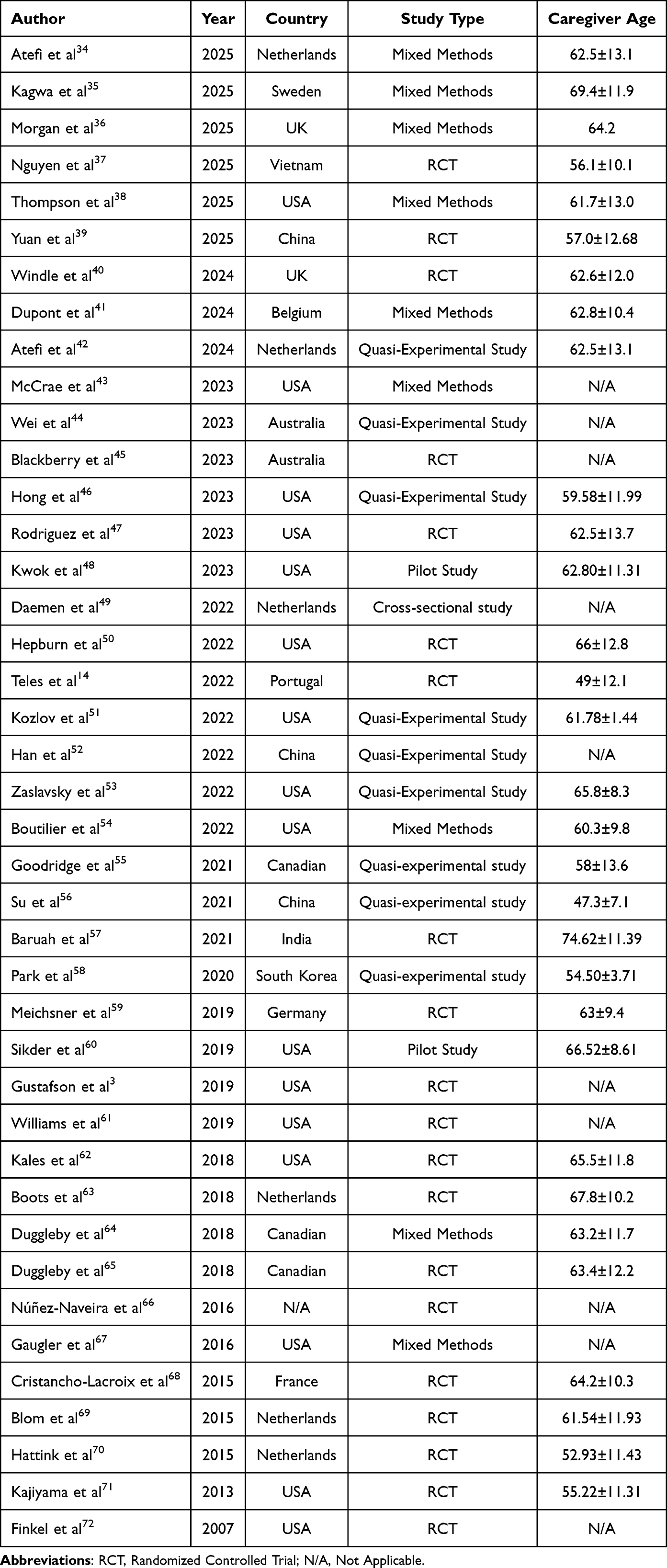 |
Table 1 Summary of Key Characteristics of Included Publications |
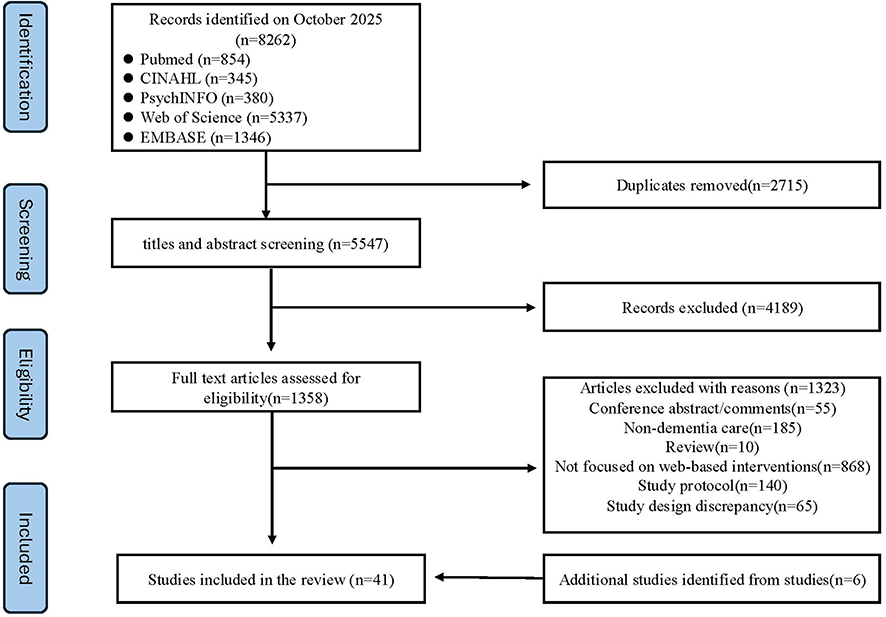 |
Figure 1 PRISMA flowchart. |
Key Characteristics of the Included Literature
In total, 41 publications representing 37 unique web-based interventions were included in our review. The United States had the highest number of studies (n=16; 39.0%), followed by the Netherlands (n=6; 14.6%). The included studies were published between 2007 and 2025, with a notable increase in publications observed from 2022 onward. Overall, nearly half of the studies employed a randomized controlled trial (RCT) design (n = 20, 48.8%), followed by mixed-methods studies (n = 9, 22.0%) and Quasi-Experimental studies (n = 9, 22.0%). The mean age of caregivers varied across the included studies, ranging from 47.3 to 74.6 years.
Table 1 provides a short overview of the included studies. The table in Supplementary Table 2 provides detailed information on the study characteristics and outcomes.
RQ1: Use of Implementation Theories, Models, and Frameworks
Out of the 41 intervention programs, only 12 (12/41; 29.3%) explicitly stated that development, implementation, and evaluation were guided by an implementation framework. Among these, two programs41,73 applied the Medical Research Council’s (MRC) framework for complex interventions, with one integrating a web-based decision support intervention for planning development and evaluation.41 Three studies based intervention content development and effectiveness analysis on the stress process model, social cognitive theory, and stress and coping theory.37,50,70 Additionally, frameworks and theories such as the Ottawa Decision Support Framework (ODSF),67 Kale’s framework for the causes and management of Behavioural and psychological symptoms of dementia (BPSD), Bandura’s self-efficacy theory,63 and Meles’s transitions theory64 were also employed in the development and implementation of intervention content.
Despite other projects not explicitly mentioning any theories, models, or frameworks for developing or evaluating programs, some implicit models could be identified. For example, the Data Integration and Computational Evidence (DICE™) approach62 was used to provide more personalized programs. One internet-based intervention adapted from a face-to-face program utilized a quality improvement framework50 to ensure the effectiveness of the intervention.
RQ2: Web-Based Interventions for Family Caregivers of Individuals with Dementia Provided and Implemented
Content of Online Interventions
The content and implementation of online interventions were detailed in 34 intervention plans. Existing online intervention platforms were primarily delivered through websites (n=33) or apps (n=8). Additionally, three studies targeting Chinese participants utilized the WeChat platform. Most interventions (n=29) included more than one component (eg, combining education with peer support), while a few (n=11) provided only educational materials.
The main components of the interventions included: a) providing Information and care skills guidance (n=35): This covered knowledge about dementia, caregiving skills and intelligent guidance, and information on available resources. b) peer support (n=17): Provided support information from other caregivers or platforms that facilitated interaction among caregivers. c) contact with professionals (n=18): Enabled caregivers to directly contact professionals during the study or provide contact information for professionals. d) decision support (n=16): Offered decision support through communication with experts or online platforms. e) psychological support (n=37): Divided into self-guided and professionally guided support. Self-guided support involved caregivers completing relevant modules, while professionally guided support entailed interactions with professionals. f) self-care guidance (n=37): Included stress coping techniques, respite care, and other self-care advice. Figure 2 presents the frequency distribution of web-based intervention content. Additionally, there was one online intervention that targeted sleep problems in dementia caregiving. Educational support was provided in either a static or an interactive form. In the static form, information was most frequently provided through website links or online information manuals (n = 15), whereas interactive formats mainly involved unstructured conversations between caregivers and providers (n = 23) or personalized feedback (n = 3). Free conversations took place via website forums, message boards, or email, while personalized feedback was created after professional evaluation, which required substantial time from both caregivers and professionals. The “We Care” study46 used a computer algorithm to generate personalized intervention prescriptions.
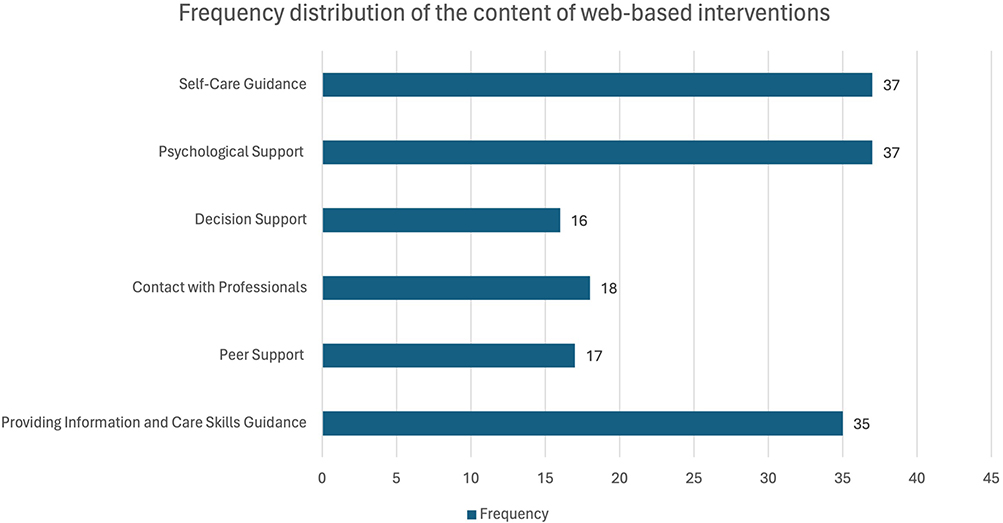 |
Figure 2 Frequency distribution of the content of web-based interventions. |
Implementation of Interventions
In the randomized controlled trials (RCTs), intervention durations ranged from 4 to 24 weeks. Most studies (n = 8) implemented a 12-week intervention, while a few had durations of 8 weeks (n = 3) or 24 weeks (n = 3). Data collection was typically conducted at baseline and post-intervention, and only four studies included follow-up assessments extending to 20, 24, or 32 weeks. Mixed methods studies generally adopted an 8-week intervention, with only one incorporating long-term follow-up.
Two-thirds of the online interventions did not restrict caregivers’ access to the intervention content, allowing participants to schedule their learning time. Only a few (n=5) required participants to complete the modules in sequence. In other cases, the order of intervention content was determined by the provider. For example, in the intervention by Meichsner.59 The content was arranged by therapists based on the participants’ initial goals and adjusted according to weekly feedback (details of the intervention content and delivery mechanisms are reported in Supplementary Table 2).
Compliance Management
Of the 41 online interventions, the majority did not implement compliance management measures. Only 12 interventions utilized automated reminders, sent weekly via Email or phone, to encourage participants to check or use the content. Sikder60 provided twice-daily reminders. Additionally, two studies employed passive reminders when researchers noticed prolonged inactivity or incomplete modules.
Cost
Only one study addressed cost-effectiveness, mentioning that the Verily Connect model45 had an average one-time start-up cost of AUD 21,000. Other studies did not discuss cost-effectiveness.
Attrition Rates
Twenty-nine studies reported attrition rates, defined as the difference between the number of participants at baseline and the final study report, regardless of the studies’ own definitions of attrition or whether immediate post-intervention and/or follow-up evaluations were included. Attrition rates in the included studies ranged from 3% to 69.4%, with a median of 26.7%. Regarding predictors of dropout, the results were inconsistent. Some studies could not identify any predictors, while others found that lack of time, admission to nursing homes, or death were common reasons for participants’ withdrawal. Goodridge55 suggested that the frequent distribution of three-page questionnaires led to sample attrition among caregivers. Boots63 found no baseline differences between completers and non-completers. Blom69 noted that caregivers living in the same household as the care recipient were more likely to complete the study.
RQ3: Web-Based Intervention Effects on Caregiver Outcomes
Regarding the measurement of indicators related to online intervention platforms (ie, usability, feasibility, acceptability, and satisfaction), this review focused on the survey methods used to evaluate these indicators rather than on the frequency of each. For these four indicators, researchers preferred using self-made scales, qualitative interviews, or a combination of both. For instance, Dupont et al41 used the System Usability Scale (SUS) to investigate usability, while qualitative interviews were used to examine feasibility and satisfaction. More than half of the publications (26/41, 63.4%) reported caregiver user experience-related measures (eg, satisfaction and feasibility) regarding online interventions. Overall, satisfaction studies were positive, with occasional suggestions for improvement, but caregivers generally felt satisfied with the interventions, such as the ease of use of the website, the comprehensibility of the content, or the intervention content itself.
Health and Social Outcomes
Burden (n=28; 68.3%) and depression (n=26; 63.4%) were the most frequently investigated outcomes. Other commonly explored outcomes included stress (n = 14; 34.1%), anxiety (n = 13; 31.7%), quality of life (n = 6; 14.6%), and both self-efficacy and social support (each n = 5; 12.2%). All studies used validated measurement tools. Complete study results are shown in Supplementary Table 2. The following summarizes the main findings related to the three most investigated outcomes: burden, depression, and stress.
Caregiver Burden
Among the 28 studies measuring burden, the majority (n=19) used the Zarit Burden Scale. The studies generally reported no significant improvement in caregiver burden compared to the control group. However, most studies did report a reduction in caregiver burden within the intervention group before and after the intervention. For example, in Daemen’s RCT,49 it was noted that although there was no significant difference between the groups, there was a significant improvement in burden within the intervention group. One study reported no significant difference in burden scores among the three groups over time, although the burden did decrease over time.
Depression
For the measurement of depressive symptoms, the Center for Epidemiologic Studies Depression Scale (CES-D) and the Hospital Anxiety and Depression Scale (HADS-D) were commonly used assessment tools, with 15 studies (n=15/26) employing these scales. However, there were no consistent conclusions on how the interventions affected depressive symptoms. Some studies reported a significant reduction in depression scores compared to the control group,50,69 while others found no significant change in depressive symptoms between the groups, or the differences were not statistically significant.
Stress
In the reviewed literature, the most used scale for stress measurement was the Perceived Stress Scale (PSS), used in 6 studies (n=6/11). In other studies, tools such as the NPI-Q, DASS-21, and salivary cortisol levels were used to measure stress. Like the previous outcomes, we observed that while there was a significant difference in the intervention group before and after the intervention, there was no significant difference between the groups.
Discussion
In this scoping review, we identified 41 scientific publications on online interventions for family caregivers of individuals with dementia, published between 2007 and 2025. Most interventions delivered education and psychological support via online platforms, but only a minority were guided by implementation theories. Although caregivers generally reported high satisfaction with these programs, the evidence regarding their effectiveness in reducing burden, depression, or stress was mixed.
The Nature and Scope of the Literature
Our extensive study revealed a growing body of literature on dementia caregiving, particularly over the past decade, as internet use has expanded. The United States and the Netherlands lead in publications, benefiting from supportive policies, advanced healthcare systems, and technological resources. In contrast, low- and middle-income countries (LMICs) face significant challenges, with dementia care costs accounting for 65% of total expenditures, compared to 40% in wealthier nations, due to weaker healthcare infrastructure and limited resources.74,75 Caregivers in LMICs are therefore at greater risk and require targeted support. The WHO Global Strategy on Digital Health 2020–202576 emphasizes the need for population-specific intervention designs, stakeholder engagement, training, feedback mechanisms, and awareness of tangible benefits. Future studies should focus on effectively implementing these strategies. The inclusion of experimental studies, such as randomized controlled trials and mixed-methods studies, highlights the inherent challenges of online interventions for older adults. Generating robust experimental evidence is essential to address practical challenges and improve the effectiveness and applicability of these interventions.77
Theories Used in the Studies
The findings of this study revealed that more than half of the online interventions lacked theoretical guidance. This phenomenon was not unique to the dementia field. An evaluation of interventions for people with chronic neurological diseases and their caregivers found that nearly 60% of the studies did not mention any theoretical framework. Our results aligned with another review of family caregivers of individuals with dementia interventions, which found that only one-third of the studies utilized theory to guide their interventions.78 The study suggested that theory-based interventions may more effectively enhance the sustainability of interventions,32,79 optimize intervention design, shorten development time, identify conditions necessary for success, and improve the replicability and accumulation of knowledge.80 The ability of theory to clearly define intervention components and mechanisms, enhance understandability, evaluability, and replicability, promote systematic knowledge accumulation and dissemination, and provide clear causal logic to circumvent common errors and inefficiencies can be credited for these outcomes.80,81 The theories identified in the included literature could be categorized into two aspects: intervention strategies and the development of online intervention platforms. From the perspective of intervention strategies, the stress and coping model was the most used theory. This was because caregiving for people with dementia involved coping with various stressors, such as care dependency and neuropsychiatric symptoms.82 When faced with these stressors, individuals typically underwent primary and secondary appraisals to determine whether their coping resources could meet the demands. Interventions guided by the stress and coping theory were structured around the sequence of “appraisal-coping-reappraisal”, aiming to subtly guide caregivers in developing problem-solving approaches. This structured method not only provided systematic coping strategies but also cultivated caregivers’ ability to adapt their strategies flexibly in different situations, thereby enhancing their confidence and effectiveness in managing caregiving challenges.26,83 From the perspective of online intervention platform design, most platforms were not strictly developed based on a specific theoretical framework. However, during the development process, user-centered design and iterative development or the MRC framework for complex intervention development and evaluation (MRC)84 were often employed to ensure platform suitability and user satisfaction.85 Currently, there is limited study on the theoretical design of intervention content and the development of online platforms. In the future, focusing on the theoretical frameworks related to online interventions is warranted for further study.
Online Interventions for Family Caregivers of Individuals with Dementia
The study revealed significant differences in the technological platforms used for online interventions across different countries. For instance, studies conducted in the United States and Europe predominantly employs website links or standalone apps, likely due to the continued prominence of Email as a primary communication tool in professional and academic settings. Users in these regions were accustomed to receiving and accessing online intervention resources via email.86 In contrast, studies in China tend to favour WeChat mini programs, with WeChat being the most widely used social platform, valued for its ease of use, low development costs, and high efficiency. These differences may be closely related to cultural practices, the digital network environment, and the technological habits prevalent in each country. Variations in intervention formats reflect distinct cultural preferences for online interaction and technology application, indicating that cultural differences may substantially influence the design, dissemination, and acceptance of interventions. The I-support initiative, launched by the World Health Organization to provide self-guided education and support for informal family caregivers of individuals with dementia, has been adopted in countries such as Portugal,87 Australia,88 India,57 the Netherlands,89 and Switzerland90 to meet the linguistic and cultural requirements of each region. However, addressing cultural discrepancies effectively remains a pressing challenge. Future research should explore the impact of cultural sensitivity on the efficacy of interventions, alongside the challenges and strategies in designing cross-cultural interventions. Overall, although the modes of online interventions are relatively uniform, the content of online interventions in the field of support for family caregivers of individuals with dementia is quite diverse. It includes six aspects: providing information and caregiving skills guidance, peer support, contact with professionals, decision support, psychological support, and self-care guidance. Studies have found that multi-component interventions are more effective than single-component ones.91 The result of this study also aligns with the literature’s recommendations for multi-component interventions. The majority (over 70%) of the interventions provide comprehensive support, such as interaction with professionals and peer support, in addition to information and caregiving skills guidance. A minority only provide caregiving information. This is a positive trend. However, caregivers seem to desire more personalized information and skills guidance. Existing online interventions have rarely achieved this, or personalized customization still requires human decision-making.92–95 For example, Williams’s61 study required caregivers to upload videos, and experts formulated intervention measures based on the videos. Kales62 used algorithms to provide personalized support to caregivers but required them to spend time answering relevant questions. With the advent of advanced artificial intelligence such as big data algorithms and ChatGPT, future studies can explore the feasibility of integrating these technologies into online interventions to achieve personalized customization.
The advantages of online interventions lie in their flexibility and convenience,96 as they are not restricted by time and space. Most studies did not limit caregivers’ access to content, aiming for caregivers to freely choose what to learn. A few studies strictly followed a sequence of open modules, imitating the frequency of face-to-face treatment. However, it is unclear whether these two intervention sequences affect outcomes. Given the association between adherence and outcomes, it is necessary to develop and evaluate methods to improve intervention adherence.97,98 This review and the literature suggest that frequent automatic reminders via Email or text messages are one method to enhance adherence. Comparative studies on various strategies are needed to determine the most effective adherence management techniques.
Attrition is a common issue in online intervention studies. One review pointed out that the average dropout rate for online interventions is 35%, ranging from 2% to 83%,99 like the dropout rates reported in our review. Several studies have attributed this to the lengthy and time-consuming nature of online course models.100 However, in reviewing attrition rates, we found differences in evaluation times among studies. Some studies assessed immediately after the intervention ended, while others not only assessed immediately post-intervention but also conducted follow-up evaluations (eg, three months later).14 This design variation could impact the reported attrition rates and intervention effects. Follow-up evaluations might more accurately reflect the effectiveness and reliability of interventions,101 but high attrition rates could lead to an underestimation of the actual effects of the intervention.102 Future studies could consider conducting a systematic review of attrition rates in studies related to online interventions for dementia family caregivers, analysing the impact of different evaluation time points and designs on attrition rates and intervention effects. Furthermore, it is essential to explore the possible reasons for attrition at different times, such as participant motivation and support measures during follow-up, to provide effective strategies for reducing attrition.
The Impact of These Interventions on Caregivers
Our study indicates that caregivers generally feel satisfied with the interventions and benefit from the support provided, suggesting that the design and content of existing online interventions align well with the actual needs of caregivers. However, a minority of caregivers reported difficulties with website navigation due to unfamiliarity14 and found the intervention content insufficiently in-depth,68 expressing a desire for more specific and personalized caregiving advice. Regarding caregiver health outcomes, our results are consistent with those of related systematic reviews on the topic.20,103 The findings on the impact of online interventions on improving the health of family caregivers of individuals with dementia are mixed. There is evidence suggesting that online interventions have potential benefits in reducing depression and anxiety among caregivers,104 but more study is needed to substantiate these benefits compared to face-to-face interventions. The initial purpose of developing online interventions was to expand the reach of these interventions, allowing more caregivers to access essential knowledge. Existing studies primarily focus on the effectiveness of online interventions, but there is a lack of attention on how to enhance their adoption and coverage.105 Future studies should explore how to provide more straightforward and user-friendly online interventions and how to develop appropriate intervention plans based on the current state of mobile networks in remote areas. Addressing these issues will help achieve the initial goal of online interventions, enabling more caregivers to benefit.
Limitations
This scoping review has several limitations that should be acknowledged. First, the identification of the theoretical foundation of each intervention was based on information available in published papers. Although we systematically searched additional publications by the first and corresponding authors and traced intervention design papers, some theoretical foundations described in unpublished sources (eg, project proposals or internal reports) might have been missed. Second, only studies published in English were included, which may have excluded relevant evidence from non-English publications. Third, while data charting was conducted rigorously and verified by multiple reviewers, the process of categorizing intervention content and theoretical frameworks still involved a degree of subjective interpretation. Finally, given the rapidly evolving nature of digital interventions, some recently developed or unpublished programs might not have been captured despite the comprehensive search strategy.
Conclusions
This scoping review analyzes web-based interventions for caregivers of individuals with dementia, highlighting their diverse components, such as information, psychological and peer support, and professional contact. While these interventions offer flexibility and convenience, challenges like high attrition rates and inconsistent adherence remain. The review emphasizes integrating theoretical frameworks to improve effectiveness and sustainability, along with optimizing content for personalization and expanding access, particularly in low- and middle-income countries. Standardizing validated outcome measures is crucial for assessing caregiver well-being and guiding the development of effective, user-friendly digital support systems.
Funding
This study was funded by the Chongqing Social Science Planning Doctoral Research Program (2024BS047), Joint project of Chongqing Health Commission and Science and Technology Bureau(2025QNXM051), Key Nursing Research Project of the First Affiliated Hospital of Chongqing Medical University (HLPY2025-01), and 2024 University-Level Major Educational and Teaching Reform Research Project of Chongqing Medical University (JY20240202).
Disclosure
The authors report no conflicts of interest in this work.
References
1. Zhao Y, Feng H, Hu M, et al. Web-based interventions to improve mental health in home caregivers of people with dementia: meta-analysis. J Med Internet Res. 2019;21(5):e13415. doi:10.2196/13415
2. 2022 Alzheimer’s disease facts and figures. 2022.
3. Gustafson DH, Gustafson DH, Cody OJ, Chih MY, Johnston DC, Asthana S. Pilot test of a computer-based system to help family caregivers of dementia patients. J Alzheimers Dis. 2019;70(2):541–552. doi:10.3233/JAD-190052
4. Jutkowitz E, Kane RL, Gaugler JE, MacLehose RF, Dowd B, Kuntz KM. Societal and family lifetime cost of dementia: implications for policy. J Am Geriatr Soc. 2017;65(10):2169–2175. doi:10.1111/jgs.15043
5. Rattinger GB, Schwartz S, Mullins CD, et al. Dementia severity and the longitudinal costs of informal care in the cache county population. Alzheimers Dement. 2015;11(8):946–954. doi:10.1016/j.jalz.2014.11.004
6. Winston Wong P. Economic burden of alzheimer disease and managed care considerations. 2020;26.
7. Boots LMM, De Vugt ME, Van Knippenberg RJM, Kempen GIJM, Verhey FRJ. A systematic review of internet‐based supportive interventions for caregivers of patients with dementia. Int J Geriatric Psych. 2014;29(4):331–344. doi:10.1002/gps.4016
8. Qiu D, Hu M, Yu Y, Tang B, Xiao S. Acceptability of psychosocial interventions for dementia caregivers: a systematic review. BMC Psychiatry. 2019;19(1):23. doi:10.1186/s12888-018-1976-4
9. Jhang KM, Wang WF, Chang HF, Chang MC, Wu HH. Characteristics predicting a high caregiver burden in patients with vascular cognitive impairment: using the apriori algorithm to delineate the caring scenario. Risk Manag Healthc Policy. 2021;14:1335–1351. doi:10.2147/rmhp.S297204
10. Jhang KM, Liao GC, Wang WF, Tung YC, Yen SW, Wu HH. Caregivers’ burden on patients with dementia having multiple chronic diseases. Risk Manag Healthc Policy. 2024;17:1151–1163. doi:10.2147/rmhp.S454796
11. Chang CC, Wang WF, Li YY, et al. Using the apriori algorithm to explore caregivers’ depression by the combination of the patients with dementia and their caregivers. Risk Manag Healthc Policy. 2021;14:2953–2963. doi:10.2147/rmhp.S316361
12. McCurry SM, Logsdon RG, Teri L, Vitiello MV. Sleep disturbances in caregivers of persons with dementia: contributing factors and treatment implications. Sleep Med Rev. 2007;11(2):143–153. doi:10.1016/j.smrv.2006.09.002
13. Sun Y, Ji M, Leng M, Li X, Zhang X, Wang Z. Comparative efficacy of 11 non-pharmacological interventions on depression, anxiety, quality of life, and caregiver burden for informal caregivers of people with dementia: a systematic review and network meta-analysis. Int J Nurs Studies. 2022;129:104204. doi:10.1016/j.ijnurstu.2022.104204
14. Teles S, Ferreira A, Paul C. Feasibility of an online training and support program for dementia carers: results from a mixed-methods pilot randomized controlled trial. BMC Geriatr. 2022;22(1):173. doi:10.1186/s12877-022-02831-z
15. Birkenhäger-Gillesse EG, Achterberg WP, Janus SIM, Zuidema SU. Caregiver dementia training in caregiver-patient dyads: process evaluation of a randomized controlled study. Int J Geriatric Psych. 2021;36(1):127–135. doi:10.1002/gps.5404
16. Kenning C, Daker-White G, Blakemore A, Panagioti M, Waheed W. Barriers and facilitators in accessing dementia care by ethnic minority groups: a meta-synthesis of qualitative studies. BMC Psychiatry. 2017;17(1):316. doi:10.1186/s12888-017-1474-0
17. Kishita N, Hammond L, Dietrich CM, Mioshi E. Which interventions work for dementia family carers?: an updated systematic review of randomized controlled trials of carer interventions. Int Psychogeriatrics. 2018;30(11):1679–1696. doi:10.1017/S1041610218000947
18. Andersson G, Titov N, Dear BF, Rozental A, Carlbring P. Internet-delivered psychological treatments: from innovation to implementation. World Psychiatry. 2019;18(1):20–28. doi:10.1002/wps.20610
19. de-Moraes-Ribeiro FE, Moreno-Cámara S, da-Silva-Domingues H, Palomino-Moral PÁ, del-Pino-Casado R. Effectiveness of internet-based or mobile app interventions for family caregivers of older adults with dementia: a systematic review. Healthcare. 2024;12(15):1494. doi:10.3390/healthcare12151494
20. Leng M, Zhao Y, Xiao H, Li C, Wang Z. Internet-based supportive interventions for family caregivers of people with dementia: systematic review and meta-analysis. J Med Internet Res. 2020;22(9):e19468. doi:10.2196/19468
21. Ottaviani AC, Monteiro DQ, Oliveira D, et al. Usability and acceptability of internet-based interventions for family carers of people living with dementia: systematic review. Aging Mental Health. 2022;26(10):1922–1932. doi:10.1080/13607863.2021.1975095
22. Yousaf K, Mehmood Z, Saba T, et al. Mobile-health applications for the efficient delivery of health care facility to people with dementia (PwD) and support to their carers: a survey. Biomed Res Int. 2019;2019:7151475. doi:10.1155/2019/7151475
23. Zhu EM, Buljac-Samardzic M, Ahaus K, Sevdalis N, Huijsman R. Implementation and dissemination of home- and community-based interventions for informal caregivers of people living with dementia: a systematic scoping review. Implement Sci. 2023;18(1):60. doi:10.1186/s13012-023-01314-y
24. Ottaviani AC, Monteiro DQ, Ferreira Campos CR, et al. ISupport-Brasil: preliminary results of the usability and acceptability assessment by caregivers of people who have dementia. Front Med. 2022;9(981748). doi:10.3389/fmed.2022.981748
25. Murray E, Hekler EB, Andersson G, et al. Evaluating digital health interventions: key questions and approaches. Am J Prev Med. 2016;51(5):843–851. doi:10.1016/j.amepre.2016.06.008
26. Wang J, Chen H, Yang L, et al. Effectiveness of the stress process model-based program in dementia caregiving (DeCare-SPM) for family caregivers: a study protocol for a randomized controlled trial. J Multidiscip Healthc. 2023;16:3507–3519. doi:10.2147/jmdh.S438342
27. Roberto KA, McCann BR, Savla J, Blieszner R. Family caregivers’ management of behavioral expressions of dementia. Gerontologist. 2024;64(6). doi:10.1093/geront/gnae020
28. Balasubramanian I, Poco LC, Andres EB, Chaudhry I, Ostbye T, Malhotra C. Caregiver coping mediates the relationship between caregivers’ understanding of dementia as terminal and their distress. Alzheimers Dement. 2024;20(9):6606–6614. doi:10.1002/alz.14102
29. Ridde V, Pérez D, Robert E. Using implementation science theories and frameworks in global health. BMJ Glob Health. 2020;5(4):e002269. doi:10.1136/bmjgh-2019-002269
30. Michie S, Abraham C, Whittington C, McAteer J, Gupta S. Effective techniques in healthy eating and physical activity interventions: a meta-regression. Health Psychol. 2009;28(6):690–701. doi:10.1037/a0016136
31. Olander EK, Fletcher H, Williams S, Atkinson L, Turner A, French DP. What are the most effective techniques in changing obese individuals’ physical activity self-efficacy and behaviour: a systematic review and meta-analysis. Int J Behavioral Nutrition Physical Activity. 2013;10:29. doi:10.1186/1479-5868-10-29
32. Webb TL, Joseph J, Yardley L, Michie S. Using the internet to promote health behavior change: a systematic review and meta-analysis of the impact of theoretical basis, use of behavior change techniques, and mode of delivery on efficacy. J Med Internet Res. 2010;12(1):e4. doi:10.2196/jmir.1376
33. Arksey H, O’Malley L. Scoping studies: towards a methodological framework. Int J Soc Res Methodol. 2005;8(1):19–32. doi:10.1080/1364557032000119616
34. Atefi GL, van Knippenberg RJM, Bartels SL, et al. Preliminary efficacy of an online intervention based on acceptance and commitment therapy for family caregivers of people with dementia: a feasibility study. Cogn Behav Ther. 2025:1–22. doi:10.1080/16506073.2025.2477600
35. Kagwa AS, Longhini J, Islam MN, et al. Professional support through a tailor-made mobile app to reduce stress and depressive symptoms among family caregivers of people with dementia: mixed methods pilot study. JMIR Form Res. 2025;9:e75113. doi:10.2196/75113
36. Naunton Morgan B, Windle G, Lamers C. iSupport for rare dementias: a mixed-methods non-randomised feasibility study of an online self-help programme for carers. Pilot Feasibility Stud. 2025;11(1):58. doi:10.1186/s40814-025-01639-z
37. Nguyen TTT, LDT V, Truong KT, et al. Smartphone app-based psychoeducation for caregivers of people with dementia in vietnam: a pilot randomized controlled trial. Clin Interv Aging. 2025;20:1647–1660. doi:10.2147/cia.S551994
38. Thompson AD, Terrill AL, Caserta M, et al. Assessing the time for living and caring (TLC) study: mixed-methods feasibility study of a web-based caregiver intervention to improve respite. JMIR Aging. 2025;2025. doi:10.2196/71792
39. Yuan S, Zhang J, Wang Z, Wang H, Xia M. Supporting informal dementia caregivers through an isupport web-based primary health care intervention: hybrid effectiveness-implementation mixed methods study. J Med Internet Res. 2025;27:e77688. doi:10.2196/77688
40. Windle G, Flynn G, Hoare Z, et al. Evaluating the effects of the World Health Organization’s online intervention ‘iSupport’ to reduce depression and distress in dementia carers: a multi-centre six-month randomised controlled trial in the UK. Lancet Reg Health Eur. 2025;48:101125. doi:10.1016/j.lanepe.2024.101125
41. Dupont C, Smets T, Monnet F, et al. A website to support people with dementia and their family caregivers in advance care planning: results of a mixed-method evaluation study. Patient Educ Couns. 2024;127:108357. doi:10.1016/j.pec.2024.108357
42. Atefi GL, Van Knippenberg RJM, Bartels SL, et al. A web-based intervention based on acceptance and commitment therapy for family caregivers of people with dementia: mixed methods feasibility study. JMIR Aging. 2024;7(e53489):e53489. doi:10.2196/53489
43. McCrae CS, Curtis AF, Stearns MA, et al. Development and initial evaluation of web-based cognitive behavioral therapy for insomnia in rural family caregivers of people with dementia (NiteCAPP): mixed methods study. JMIR Aging. 2023;6:e45859. doi:10.2196/45859
44. Wei G, Piguet O, Kumfor F. A psychosocial intervention for carers of individuals diagnosed with dementia in social isolation. Dement Geriatr Cogn Dis Extra. 2023;13(1):48–56. doi:10.1159/000535207
45. Blackberry I, Rasekaba T, Morgan D, et al. Virtual dementia-friendly communities (Verily connect) stepped-wedge cluster-randomised controlled trial: improving dementia caregiver wellbeing in rural Australia. Geriatrics. 2023;8(5):85. doi:10.3390/geriatrics8050085
46. Hong YA, Shen K, Han HR, et al. A wechat-based intervention, wellness enhancement for caregivers (WECARE), for Chinese American dementia caregivers: pilot assessment of feasibility, acceptability, and preliminary efficacy. JMIR Aging. 2023;6:e42972. doi:10.2196/42972
47. Rodriguez MJ, Kercher VM, Jordan EJ, et al. Technology caregiver intervention for Alzheimer’s disease (I-CARE): feasibility and preliminary efficacy of Brain CareNotes. J Am Geriatr Soc. 2023;71(12):3836–3847. doi:10.1111/jgs.18591
48. Kwok I, Lattie EG, Yang D, et al. Acceptability and feasibility of a socially enhanced, self-guided, positive emotion regulation intervention for caregivers of individuals with dementia: pilot intervention study. JMIR Aging. 2023;6:e46269. doi:10.2196/46269
49. Daemen M, Bruinsma J, Bakker C, et al. A cross-sectional evaluation of the Dutch RHAPSODY program: online information and support for caregivers of persons with young-onset dementia. Internet Interventions. 2022;28:100530. doi:10.1016/j.invent.2022.100530
50. Hepburn K, Nocera J, Higgins M, et al. Results of a randomized trial testing the efficacy of tele-savvy, an online synchronous/asynchronous psychoeducation program for family caregivers of persons living with dementia. Gerontologist. 2022;62(4):616–628. doi:10.1093/geront/gnab029
51. Kozlov E, McDarby M, Pagano I, Llaneza D, Owen J, Duberstein P. The feasibility, acceptability, and preliminary efficacy of an mHealth mindfulness therapy for caregivers of adults with cognitive impairment. Aging Mental Health. 2022;26(10):1963–1970. doi:10.1080/13607863.2021.1963949
52. Han J, Guo G, Hong L. Impact of professionally facilitated peer support for family carers of people with dementia in a WeChat virtual community. J Telemed Telecare. 2022;28(1):68–76. doi:10.1177/1357633X20910830
53. Zaslavsky O, Kaneshiro J, Chu F, Teng A, Domoto-Reilly K, Chen AT. Virtual intervention for caregivers of persons with Lewy body dementia: pilot quasi-experimental single-arm study. JMIR Form Res. 2022;6(7):e37108. doi:10.2196/37108
54. Boutilier JJ, Loganathar P, Linden A, et al. A web-based platform (CareVirtue) to support caregivers of people living with alzheimer disease and related dementias: mixed methods feasibility study. JMIR Aging. 2022;5(3):e36975. doi:10.2196/36975
55. Goodridge D, Reis N, Neiser J, et al. An app-based mindfulness-based self-compassion program to support caregivers of people with dementia: participatory feasibility study. JMIR Aging. 2021;4(4):e28652. doi:10.2196/28652
56. Su Z, Bentley BL, McDonnell D, et al. 6G and artificial intelligence technologies for dementia care: literature review and practical analysis. J Med Internet Res. 2022;24(4):e30503. doi:10.2196/30503
57. Baruah U, Loganathan S, Shivakumar P, et al. Adaptation of an online training and support program for caregivers of people with dementia to Indian cultural setting. Asian J Psych. 2021;59:102624. doi:10.1016/j.ajp.2021.102624
58. Park E, Park H, Kim EK. The effect of a comprehensive mobile application program for family caregivers of home‐dwelling patients with dementia: a preliminary research. Japan J Nurs Sci. 2020;17(4):e12343. doi:10.1111/jjns.12343
59. Meichsner F, Theurer C, Wilz G. Acceptance and treatment effects of an internet-delivered cognitive-behavioral intervention for family caregivers of people with dementia: a randomized-controlled trial. J Clin Psychol. 2019;75(4):594–613. doi:10.1002/jclp.22739
60. Sikder AT, Yang FC, Schafer R, Dowling GA, Traeger L, Jain FA. Mentalizing imagery therapy mobile app to enhance the mood of family dementia caregivers: feasibility and limited efficacy testing. JMIR Aging. 2019;2(1):e12850. doi:10.2196/12850
61. Williams KN, Perkhounkova Y, Shaw CA, Hein M, Vidoni ED, Coleman CK. Supporting family caregivers with technology for dementia home care: a randomized controlled trial. Innovation Aging. 2019;3(3):igz037. doi:10.1093/geroni/igz037
62. Kales HC, Gitlin LN, Stanislawski B, et al. Effect of the WeCareAdvisor on family caregiver outcomes in dementia: a pilot randomized controlled trial. BMC Geriatr. 2018;18(1):113. doi:10.1186/s12877-018-0801-8
63. Boots LMM, de Vugt ME, Kempen GIJM, Verhey FRJ. Effectiveness of a blended care self-management program for caregivers of people with early-stage dementia (partner in balance): randomized controlled trial. J Medical Internet Res. 2018;20(7):e10017. doi:10.2196/10017
64. Duggleby W, Jovel Ruiz K, Ploeg J, et al. Mixed-methods single-arm repeated measures study evaluating the feasibility of a web-based intervention to support family carers of persons with dementia in long-term care facilities. Pilot Feasibility Studies. 2018;4:165. doi:10.1186/s40814-018-0356-7
65. Duggleby W, Ploeg J, McAiney C, et al. Web-based intervention for family carers of persons with dementia and multiple chronic conditions (My tools 4 care): pragmatic randomized controlled trial. J Medical Internet Res. 2018;20(6):e10484. doi:10.2196/10484
66. Núñez-Naveira L, Alonso-Búa B, de Labra C, et al. UnderstAID, an ICT platform to help informal caregivers of people with dementia: a pilot randomized controlled study. Biomed Res Int. 2016;2016(5726465):1–13. doi:10.1155/2016/5726465
67. Gaugler JE, Reese M, Tanler R. Care to plan: an online tool that offers tailored support to dementia caregivers. Gerontologist. 2016;56(6):1161–1174. doi:10.1093/geront/gnv150
68. Cristancho-Lacroix V, Wrobel J, Cantegreil-Kallen I, Dub T, Rouquette A, Rigaud A-S. A web-based psychoeducational program for informal caregivers of patients with alzheimer’s disease: a pilot randomized controlled trial. J Medical Internet Res. 2015;17(5):e117. doi:10.2196/jmir.3717
69. Blom MM, Zarit SH, Groot Zwaaftink RBM, Cuijpers P, Pot AM. Effectiveness of an internet intervention for family caregivers of people with dementia: results of a randomized controlled trial. PLoS One. 2015;10(2):e0116622. doi:10.1371/journal.pone.0116622
70. Hattink B, Meiland F, van der Roest H, et al. Web-based STAR E-Learning course increases empathy and understanding in dementia caregivers: results from a randomized controlled trial in the Netherlands and the United Kingdom. J Med Internet Res. 2015;17(10):e241. doi:10.2196/jmir.4025
71. Kajiyama B, Thompson LW, Eto-Iwase T, et al. Exploring the effectiveness of an internet-based program for reducing caregiver distress using the iCare stress management e-Training program. Aging Mental Health. 2013;17(5):544–554. doi:10.1080/13607863.2013.775641
72. Finkel S, Czaja SJ, Martinovich Z, Harris C, Pezzuto D, Schulz R. E-Care: a telecommunications technology intervention for family caregivers of dementia patients. Am J Geriatric Psychiatry. 2007;15(5):443–448. doi:10.1097/JGP.0b013e3180437d87
73. Neal DP, Ettema TP, Zwan MD, et al. FindMyApps compared with usual tablet use to promote social health of community-dwelling people with mild dementia and their informal caregivers: a randomised controlled trial. EClinicalMedicine. 2023;63:102169. doi:10.1016/j.eclinm.2023.102169
74. Kabore SS, Ngangue P, Soubeiga D, et al. Barriers and facilitators for the sustainability of digital health interventions in low and middle-income countries: a systematic review. Front Digit Health. 2022;4:1014375. doi:10.3389/fdgth.2022.1014375
75. Thrush A, Hyder AA. The neglected burden of caregiving in low- and middle-income countries. Disabil Health J. 2014;7(3):262–272. doi:10.1016/j.dhjo.2014.01.003
76. Global strategy on digital health 2020-2025 %U. Available from: https://www.who.int/publications/i/item/9789240020924.
77. Peters MD, Godfrey CM, Khalil H, McInerney P, Parker D, Soares CB. Guidance for conducting systematic scoping reviews. Int J Evid Based Healthc. 2015;13(3):141–146. doi:10.1097/XEB.0000000000000050
78. Gitlin LN, Marx K, Stanley IH, Hodgson N. Translating evidence-based dementia caregiving interventions into practice: state-of-the-science and next steps. Gerontologist. 2015;55(2):210–226. doi:10.1093/geront/gnu123
79. Walsh KA, Timmons S, Byrne S, Browne J, Mc Sharry J. Identifying behavior change techniques for inclusion in a complex intervention targeting antipsychotic prescribing to nursing home residents with dementia. Translational Behavioral Med. 2021;11(2):470–483. doi:10.1093/tbm/ibaa053
80. Davidoff F, Dixon-Woods M, Leviton L, Michie S. Demystifying theory and its use in improvement. BMJ Qual Saf. 2015;24(3):228–238. doi:10.1136/bmjqs-2014-003627
81. O’Cathain A, Croot L, Sworn K, et al. Taxonomy of approaches to developing interventions to improve health: a systematic methods overview. Pilot Feasibility Stud. 2019;5:41. doi:10.1186/s40814-019-0425-6
82. Kanemoto H, Sato S, Satake Y, et al. Impact of behavioral and psychological symptoms on caregiver burden in patients with dementia with Lewy bodies. Front Psychiatry. 2021;12:753864. doi:10.3389/fpsyt.2021.753864
83. Magteppong W, Yamarat K. The effects of the modified transtheoretical theory of stress and coping (TTSC) program on dementia caregivers’ knowledge, burden, and quality of life. Int J Environ Res Public Health. 2021;18(24):13231. doi:10.3390/ijerph182413231
84. Craig P, Dieppe P, Macintyre S, Michie S, Nazareth I, Petticrew M. Developing and evaluating complex interventions: the new medical research council guidance. BMJ. 2008;336(7640):337. doi:10.1136/bmj.39456.470880.80
85. Yardley L, Morrison L, Bradbury K, Muller I. The person-based approach to intervention development: application to digital health-related behavior change interventions. J Med Internet Res. 2015;17(1):e30. doi:10.2196/jmir.4055
86. Zhang S, Costa S. A survey study of young generation’s mobile phone usage and security concerns. 2016 17th international conference on parallel and distributed computing, applications and technologies (PDCAT)2016. p.321–324.
87. Teles S, Napolskij MS, Paul C, Ferreira A, Seeher K. Training and support for caregivers of people with dementia: the process of culturally adapting the World Health Organization iSupport programme to Portugal. Dementia. 2021;20(2):672–697. doi:10.1177/1471301220910333
88. Xiao LD, McKechnie S, Jeffers L, et al. Stakeholders’ perspectives on adapting the world health organization isupport for dementia in Australia. Dementia. 2021;20(5):1536–1552. doi:10.1177/1471301220954675
89. Pinto-Bruno AC, Pot AM, Kleiboer A, Droes RM, van Straten A. An online minimally guided intervention to support family and other unpaid carers of people with dementia: protocol for a randomized controlled trial. JMIR Res Protoc. 2019;8(10):e14106. doi:10.2196/14106
90. Fiordelli M, Albanese E. Preparing the ground for the adaptation of iSupport in Switzerland. Alzheimer’s Dementia. 2020;16(S7):e038915. doi:10.1002/alz.038915
91. Gitlin LN, Burgio LD, Mahoney D, et al. Effect of multicomponent interventions on caregiver burden and depression: the REACH multisite initiative at 6-month follow-up. Psychol Aging. 2003;18(3):361–374. doi:10.1037/0882-7974.18.3.361
92. Chiu T, Marziali E, Colantonio A, et al. Internet-based caregiver support for Chinese Canadians taking care of a family member with Alzheimer disease and related dementia. Canadian J Aging. 2009;28(4):323–336. doi:10.1017/S0714980809990158
93. Hattink BJ, Meiland FJ, Overmars-Marx T, et al. The electronic, personalizable Rosetta system for dementia care: exploring the user-friendliness, usefulness and impact. Disabil Rehabil Assist Technol. 2016;11(1):61–71. doi:10.3109/17483107.2014.932022
94. Pagan-Ortiz ME, Cortes DE, Rudloff N, Weitzman P, Levkoff S. Use of an online community to provide support to caregivers of people with dementia. J Gerontol Soc Work. 2014;57(6–7):694–709. doi:10.1080/01634372.2014.901998
95. van der Roest HG, Meiland FJM, Jonker C, Dröes R-M. User evaluation of the DEMentia-specific Digital Interactive Social Chart (DEM-DISC). A pilot study among informal carers on its impact, user friendliness and, usefulness. Aging Mental Health. 2010;14(4):461–470. doi:10.1080/13607860903311741
96. Heynsbergh N, Heckel L, Botti M, Livingston PM. Feasibility, useability and acceptability of technology-based interventions for informal cancer carers: a systematic review. BMC Cancer. 2018;18(1):244. doi:10.1186/s12885-018-4160-9
97. Yang Y, Boulton E, Todd C. Measurement of adherence to mhealth physical activity interventions and exploration of the factors that affect the adherence: scoping review and proposed framework. J Med Internet Res. 2022;24(6):e30817. doi:10.2196/30817
98. Brocklehurst SP, Morse AR, Cruwys T, et al. Investigating the effectiveness of technology-based distal interventions for postpartum depression and anxiety: systematic review and meta-analysis. J Med Internet Res. 2024;26:e53236. doi:10.2196/53236
99. Melville KM, Casey LM, Kavanagh DJ. Dropout from internet-based treatment for psychological disorders. Br J Clin Psychol. 2010;49(Pt 4):455–471. doi:10.1348/014466509X472138
100. Christensen H, Griffiths KM, Farrer L. Adherence in internet interventions for anxiety and depression: systematic review. J Medical Internet Res. 2009;11(2):e13. doi:10.2196/jmir.1194
101. Carlton EF, Ice E, Barbaro RP, et al. Recall of clinical trial participation and attrition rates in survivors of acute respiratory distress syndrome. J Crit Care. 2021;64:160–164. doi:10.1016/j.jcrc.2021.04.006
102. Driscoll KA, Killian M, Johnson SB, Silverstein JH, Deeb LC. Predictors of study completion and withdrawal in a randomized clinical trial of a pediatric diabetes adherence intervention. Contemporary Clin Trials. 2009;30(3):212–220. doi:10.1016/j.cct.2009.01.008
103. Wasilewski MB, Stinson JN, Cameron JI. Web-based health interventions for family caregivers of elderly individuals: a scoping review. Int J Med Inform. 2017;103:109–138. doi:10.1016/j.ijmedinf.2017.04.009
104. Leng M, Sun Y, Li C, Han S, Wang Z. Usability evaluation of a knowledge graph-based dementia care intelligent recommender system: mixed methods study. J Med Internet Res. 2023;25:e45788. doi:10.2196/45788
105. Alkmim MB, Minelli Figueira R, Soriano Marcolino M, et al. Improving patient access to specialized health care: the telehealth network of Minas Gerais, Brazil. Bulletin of the World Health Organization. 2012;90(5):373–378. doi:10.2471/BLT.11.099408
 © 2025 The Author(s). This work is published and licensed by Dove Medical Press Limited. The
full terms of this license are available at https://www.dovepress.com/terms
and incorporate the Creative Commons Attribution
- Non Commercial (unported, 4.0) License.
By accessing the work you hereby accept the Terms. Non-commercial uses of the work are permitted
without any further permission from Dove Medical Press Limited, provided the work is properly
attributed. For permission for commercial use of this work, please see paragraphs 4.2 and 5 of our Terms.
© 2025 The Author(s). This work is published and licensed by Dove Medical Press Limited. The
full terms of this license are available at https://www.dovepress.com/terms
and incorporate the Creative Commons Attribution
- Non Commercial (unported, 4.0) License.
By accessing the work you hereby accept the Terms. Non-commercial uses of the work are permitted
without any further permission from Dove Medical Press Limited, provided the work is properly
attributed. For permission for commercial use of this work, please see paragraphs 4.2 and 5 of our Terms.
Recommended articles

Adapting “Listen N Talk”: Developing a Personalized Communication App with Culturally and Linguistically Diverse Residents in Aged Care
Richards M, Honner K, Smith JL, Ji E, Seeckun BA, Stevens CJ, Jones C
Clinical Interventions in Aging 2025, 20:259-271
Published Date: 4 March 2025