
Back to Journals » Integrated Pharmacy Research and Practice » Volume 13
Determinants of Patient Satisfaction with Discharge Pharmacy Services at a Tertiary Care Center in Jeddah, KSA
Authors Alzahrani AM, Rambo R, Alotain F, Naeem A, Alzhrani RM, Albaradi MA, Althubiani S, Sharaf SE, Alwadie AF, Alzahrani MS, AlSebaih NT, Ainosah RH, Alzahrani YA 
Received 4 July 2024
Accepted for publication 5 September 2024
Published 18 September 2024 Volume 2024:13 Pages 155—164
DOI https://doi.org/10.2147/IPRP.S477216
Checked for plagiarism Yes
Review by Single anonymous peer review
Peer reviewer comments 2
Editor who approved publication: Professor Walid Al-Qerem
Abdullah M Alzahrani,1– 3,* Razan Rambo,1– 3 Fahad Alotain,1– 3 Anjum Naeem,1– 3 Rami M Alzhrani,4 Mohammad A Albaradi,1– 3 Shoeb Althubiani,1– 3 Shahd E Sharaf,1– 3 Ali F Alwadie,1– 3 Mohammad S Alzahrani,5 Noor T AlSebaih,6 Randa H Ainosah,7 Yahya A Alzahrani7,*
1Pharmaceutical Care Department, Ministry of National Guard—Health Affairs, Jeddah, 22384, Saudi Arabia; 2King Abdullah International Medical Research Center, Jeddah, 21423, Saudi Arabia; 3College of Medicine, King Saud Bin Abdulaziz University for Health Sciences, Jeddah, 22384, Saudi Arabia; 4Department of Pharmaceutics and Industrial Pharmacy, College of Pharmacy, Taif University, Taif, 21944, Saudi Arabia; 5Department of Clinical Pharmacy, College of Pharmacy, Taif University, Taif, 21944, Saudi Arabia; 6Pharmaceutical Care Department, King Fahad Armed Forces Hospital, Jeddah, 23311, Saudi Arabia; 7Department of Pharmacy, East Jeddah Hospital, Ministry of Health, Jeddah, 23816, Saudi Arabia
*These authors contributed equally to this work
Correspondence: Yahya A Alzahrani, Department of Pharmacy, East Jeddah Hospital, Ministry of Health, Jeddah, 23816, Saudi Arabia, Tel +966557700178, Email [email protected]
Purpose: Patient satisfaction with pharmacy services, particularly in outpatient and discharge pharmacy settings, has become a vital metric for assessing medical quality. However, there’s limited research on patient satisfaction in discharge pharmacy services in the Kingdom of Saudi Arabia (KSA). This study aims to systematically investigate and delineate the various patient-related and non-patient-related factors that significantly impact patient satisfaction in the realm of discharge pharmacy services.
Patients and Methods: This cross-sectional study was conducted over three months at King Abdulaziz Medical City in Jeddah (KAMC-J). The sample size was determined using a single population proportion formula, which resulted in a required sample size of 384 patients. A validated questionnaire with a five-point Likert scale evaluated satisfaction from “Strongly Dissatisfied” (1 point) to “Very Satisfied” (5 points) has been used. Data collectors underwent training and obtained written consent from participants, with questionnaire completion taking 5– 10 minutes face to face.
Results: The study encompassed 437 participants, primarily male (59%) with a college education (45.3%), residing mostly in Jeddah (67.3%). Notably, 84.4% were not healthcare providers, and most visited the pharmacy every six months (44.6%). The patient satisfaction survey revealed high scores for counseling understanding, pharmacist courtesy, and the way the pharmacist answered questions (4.94± 0.31, 4.94± 0.27, 4.94± 0.32; respectively), but lower for understanding possible side effects (4.30± 1.30) and pharmacy location (4.57± 0.99). In logistic regression, visits lasting 10– 15 minutes, and less than 10 minutes were significantly (p< 0.05) associated with increased odds of patient satisfaction (OR=6.39, OR=9.45; respectively) Moreover, the medium length hospital stay was associated with decreased odds of patient satisfaction (OR=0.31, p=0.026).
Conclusion: In conclusion, the study determined a significant proportion of patients are satisfied with discharge pharmacy services at KAMC-J, with the length of consultation and hospital stay being pivotal to their satisfaction. Addressing these factors, alongside optimizing pharmacist-patient communication and pharmacy service efficiency, can substantially elevate the quality of pharmaceutical care and patient experience.
Keywords: King Abdulaziz medical city, KAMC-J, Discharge pharmacy, Patient Satisfaction, Counseling Services, Pharmacist-Patient Relationship, Pharmacy Location and Environment
Introduction
The pharmaceutical profession’s focus has shifted away from technical, product-oriented functions and toward patient-centered, health-related counseling, information, and professional services.1,2 This shift, led to a change in the pharmacist’s role to identify, resolve and prevent drug-related problems.3
Patient counseling is one of the basic services offered by hospital pharmacists to promote the patient’s well-being in treatment. However, the oversight of the patient’s viewpoint when assessing clinical care quality can lead to failures in treatment and waste of resources.4 The literature has shown that patient education and counseling is a promising strategy to improve patient adherence.5
Non-adherence to the medication has been recognized as a challenge that primary care providers are increasingly facing in practice, and pharmacist assistance is welcomed.6 To effectively increase patient compliance with drugs, patient counseling was designed to encourage patients to comply with their prescriptions, as patients believe that pharmacists are the primary source of drug education. As a result, pharmacists have great opportunities to remedy drug refusal through patient communication, education, and support.7–9 Furthermore, patient attitudes and satisfaction with pharmacy services are crucial, as it has been reported that an increase in patient satisfaction substantially improves patient adherence to medications and, as a result, treatment outcomes.
Patient satisfaction is recognized as an important outcome measurement for the assessment of medical quality.10 Patient satisfaction is defined as “the degree of the patient’s positive feeling toward the service according to his experience and expectations”.11 It is one of the most important standards for determining and evaluating the quality of the health system.
Many reports assess patients’ satisfaction with community pharmacy services,12,13 ambulatory pharmacy,14–17 and medical services locally and throughout the world. In developed countries such as the United States, the United Kingdom, and Canada, people expressed a positive opinion about community pharmacy services.14 Recently, a study has been carried out to explore the level of satisfaction among patients attending outpatient pharmacies of two tertiary care hospitals in Saudi Arabia. The results demonstrated very good overall satisfaction scores with outpatient pharmacy services. The result showed that the professionalism and attitude of the pharmacists towards the respondents resulted in a high level of satisfaction for the respondents. They claimed that these results were found to be better than those reported in the literature in many domains.16
Numerous factors influence patient satisfaction with outpatient pharmacy services, including pharmacy settings, waiting time, confidentiality during counseling, communication skills, delivery procedures, availability, and medication storage. However, there is a broad other factor that can influence patient satisfaction that is not applicable to be included in an ambulatory setting, such as patient length of stay and overall patient satisfaction with hospital stay.
The current body of literature presents a notable paucity of comprehensive data essential for evaluating the myriad factors influencing patient satisfaction within the context of discharged pharmacy services in the Kingdom of Saudi Arabia. This deficiency is particularly concerning given the critical role that patient satisfaction plays in both enhancing the overall quality of healthcare delivery and in fostering positive patient outcomes. Consequently, the primary objective of this research is to systematically investigate and delineate the various patient-related and non-patient-related factors that significantly impact patient satisfaction in the realm of discharge pharmacy services. The hypothesis underpinning this study posits that a thorough understanding and subsequent identification of these determinants will substantially aid healthcare institutions in their ongoing efforts to refine and elevate the caliber of the care they provide.
Materials and Methods
Study Place, Design, Setting, and Ethical Consideration
This study was conducted over three months (July-September 2023) at King Abdulaziz Medical City in Jeddah (KAMC-J) - an 800-bed tertiary care hospital, to evaluate patient satisfaction with the discharge pharmacy services. The hospital provides a wide range of medical services and specialties. It houses a specialized diabetic center, surgical wards, oncology, pediatrics, ICU, and burn units. The hospital’s pharmaceutical department provides a full spectrum of services, including inpatient, outpatient, and emergency services with full clinical pharmacy services, streamlined by a CPOE system. In addition, the department offers total parenteral nutrition and IV admixture services, as well as drug information, medication safety, and total quality management services. The King Abdullah International Medical Research Centre provided ethical approval for this study with IRB NRJ23J/065/03. All participants were fully informed of the study’s purpose, procedures, potential risks, and benefits prior to providing their written consent. This study was conducted in accordance with the ethical principles outlined in the Declaration of Helsinki.
Sample Size Calculation and Sampling Method
The sample size was determined using a single population proportion formula:
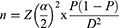
Whereas n = sample size; Z = (α/2) =1.96; P = 0.5; D = marginal error (5%). n = 384 patients.
Study Population and Data Collection
The study included adult patients of both genders who completed the questionnaire after hospital discharge. Data was collected via face-to-face pharmacist exit interviews using a convenience sampling method. An instrument developed and validated by previous work was used to assess patient satisfaction with pharmacy service in hospitals.18 The degree of satisfaction among participants was ascertained utilizing a five-point Likert scale, with responses spanning from “Strongly Dissatisfied” to “Very Satisfied”. The scoring system was designed such that “Strongly Dissatisfied” responses were assigned 1 point, “Dissatisfied” responses were allocated 2 points, “Neutral” responses were accorded 3 points, “Satisfied” responses were granted 4 points, and “Very Satisfied” responses received 5 points.
Data collection was conducted over two months. Prior to their involvement in the data collection, the team was thoroughly trained in the application of the questionnaire, principles of ethical confidentiality, and data management techniques. The data collectors explained the objectives and other details of the study to the subjects. Each participant provided written consent. Completion of the questionnaire typically required between five and ten minutes. To ensure the quality of the data, a pre-test was performed using 20 samples from the discharged pharmacy of the hospital prior to the actual data collection period. Additionally, the data was also examined daily for accuracy and consistency.
Endpoints
- Determine the proportion of patients satisfied with discharged pharmacy services at KAMC-J.
- Identify the factors associated with patients’ satisfaction towards discharged pharmacy services at KAMC-J.
Statistical Analysis
All statistical analyses were performed with SPSS version 26. (SPSS Inc). The demographic characteristics of the patients were described using a standard descriptive analysis. Continuous variables were expressed as mean and standard deviation, while categorical variables were expressed as percentages. The chi-square test was used to determine differences in the demographic characteristics of the participants. The satisfaction score was classified into two categories: satisfied (scores above the mean) and dissatisfied (scores below the mean). Logistic regression analysis was run to determine factors associated with patient satisfaction towards discharge pharmacy. In all the analyses, significance testing was done using two-sided p-values (P) and 95% confidence levels. p-value <0.05 was considered statistically significant.
Results
Patient Characteristics
As shown in Table 1, the study included 437 participants, with a majority being male (59%). The most common education level among respondents was college education (45.3%), followed by secondary education (29.5%). The majority of participants resided in Jeddah (67.3%), and most were not healthcare providers (84.4%). Regarding pharmacy visits, 44.6% of respondents visited the pharmacy once every six months, and 71.6% spent less than 10 minutes per visit. Most respondents had a short stay of 3 days or less in the healthcare facility (63.6%).
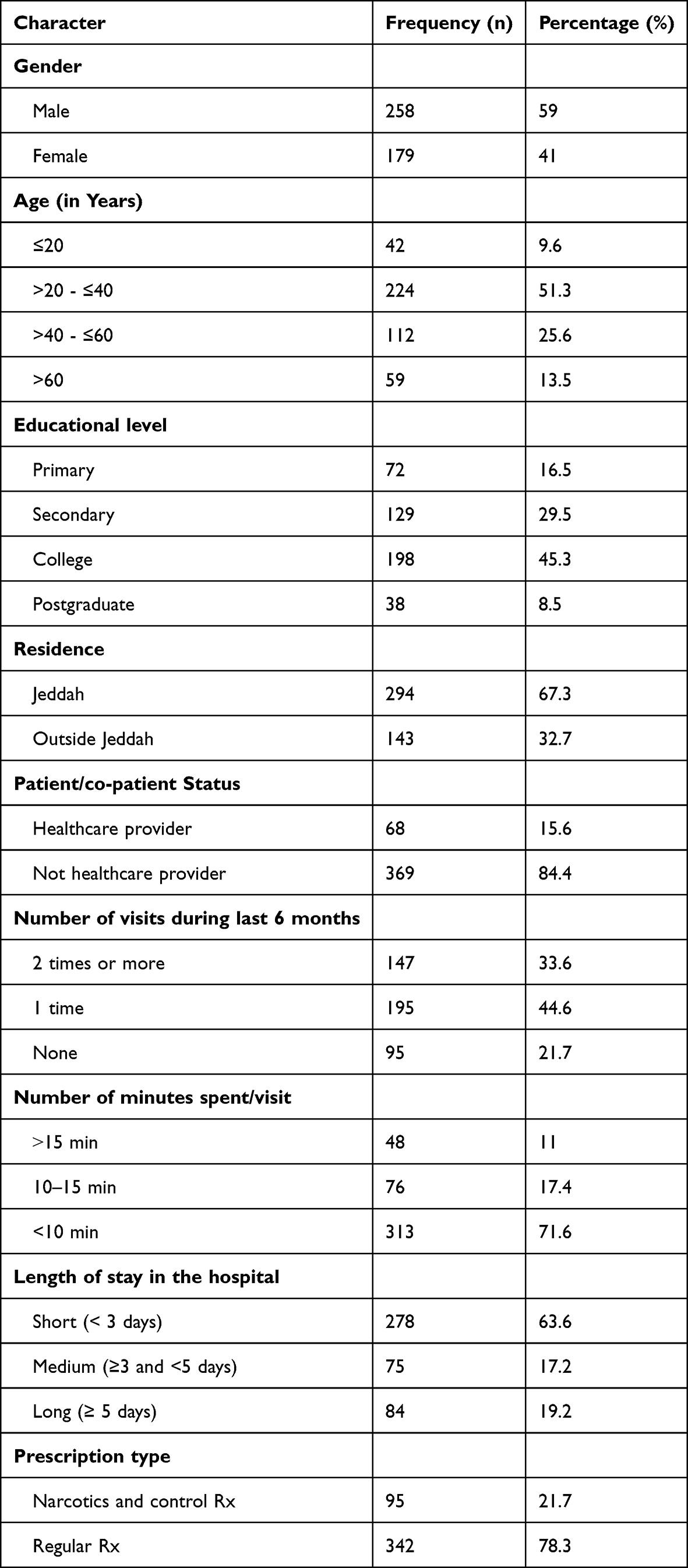 |
Table 1 Patient Demographic and Clinical Characteristics |
Patient Feedback on Counseling, Relationships, and Environment at Discharge Pharmacy
In the satisfaction survey (n=437), three domains were assessed: Patient Counseling, Pharmacist-Patient Relationship, and Pharmacy Location and Waiting Area (Table 2). Overall, the satisfaction scores were high across all domains. The Patient Counseling domain had a weighted mean of 4.37±0.59, with the highest satisfaction related to understanding the pharmacist’s advice (4.94±0.31). The Pharmacist-Patient Relationship domain had the highest overall satisfaction (weighted mean of 4.91±0.29), particularly in courtesy and respect shown by the pharmacy staff. The Pharmacy Location and Waiting Area domain had a weighted mean of 4.68±0.56, with the highest satisfaction related to the privacy of conversations with the pharmacist, while the location of the discharged pharmacy received the lowest score (4.57±0.99) (Table 2).
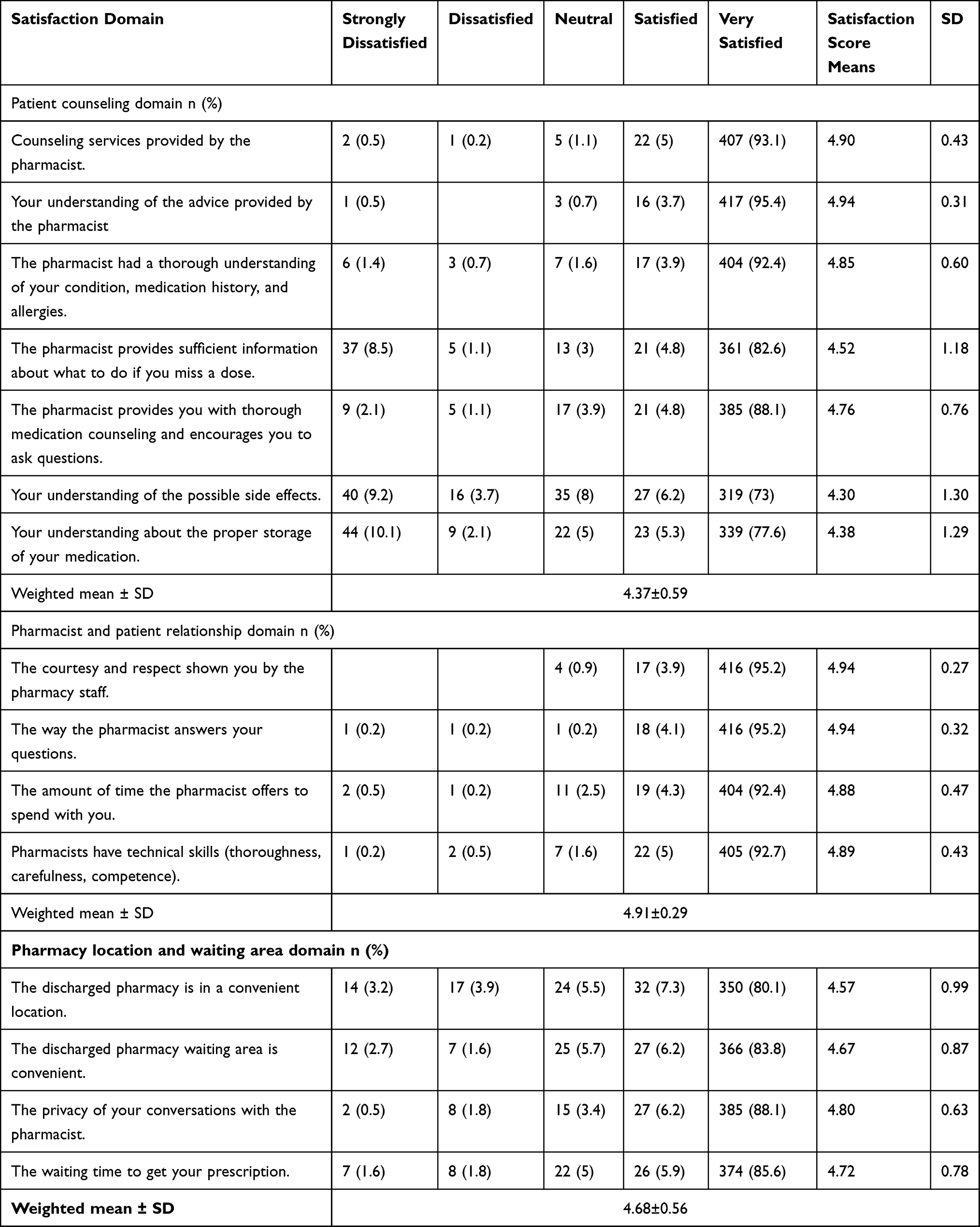 |
Table 2 Patients’ Feedback on Counseling, Pharmacist-Patient Relationship, and Environment at Discharge Pharmacy. |
Factors Associated with Patient Satisfaction Towards Discharge Pharmacy Services
A multivariate logistic regression analysis examined factors influencing patient satisfaction with discharge pharmacy services. Most variables, including gender, age, education level, residence, healthcare provider status, number of visits, chronic medical conditions, and prescription type, showed no significant association with satisfaction (p > 0.05), indicating consistency across these demographics and clinical factors. However, significant associations were found with time spent per visit and length of stay. Shorter visit durations (less than 10 minutes) were linked to higher satisfaction (OR=9.45, 95% CI: 2.43–36.8, p=0.004) compared to visits over 15 minutes. Additionally, a medium length of stay in the healthcare facility was associated with lower satisfaction (OR=0.31, 95% CI: 0.11–0.88, p=0.026) compared to shorter stays (Figure 1).
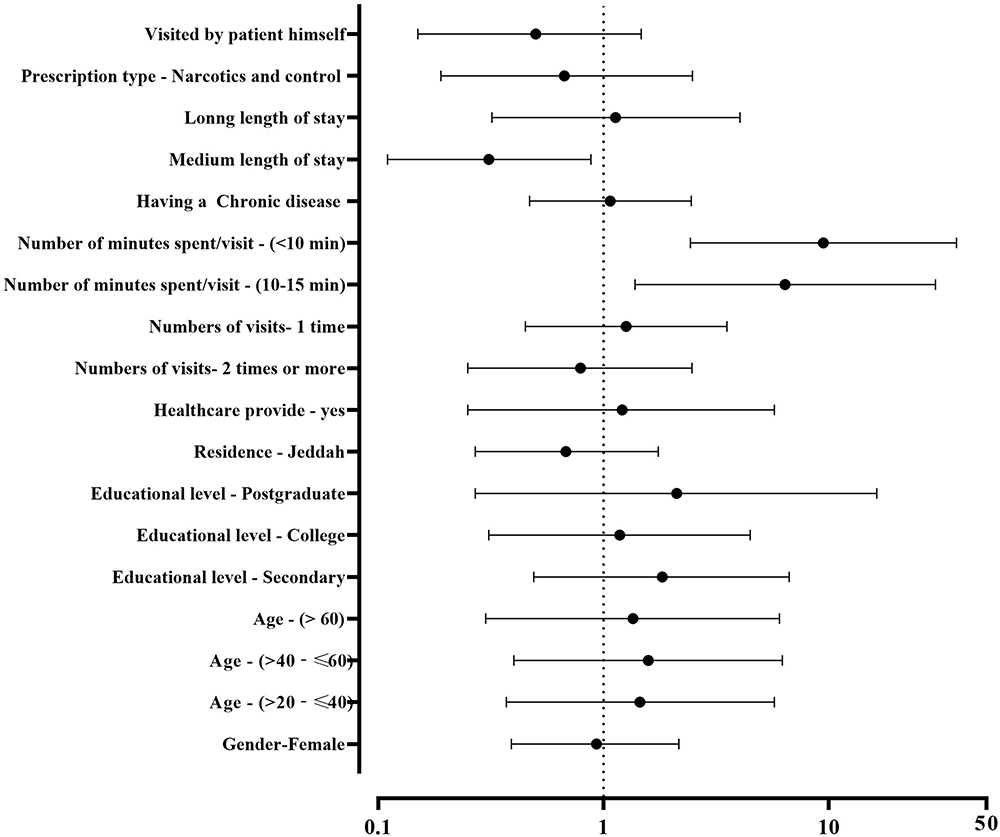 |
Figure 1 Influential factors in patient satisfaction with discharge pharmacy services. Notes: This graph illustrates the adjusted Odds Ratios (ORs) and their corresponding 95% Confidence Intervals (CIs) for satisfaction-related factors. The vertical dashed line at OR of 1 denotes the point of no effect. |
Discussion
This study, to the best of our knowledge, is the first to evaluate patient satisfaction with counseling services in a discharge pharmacy setting. The need for such an investigation is rooted in recent developments in pharmacy practice and the evolving role of the pharmacist as a patient counselor, particularly within the context of a hospital discharge setting.
Patients in a discharge pharmacy are distinct from those in outpatient or community pharmacy scenarios. They have been recently hospitalized, introducing unique factors that could influence their experiences and perceptions, such as the length of stay, the nature of the prescription, or their interactions with physicians and nurses. These unique factors underscore the importance and criticality of conducting such a study.
The demographic breakdown of our survey reflects the vast majority of our respondents, 84.4%, were not healthcare providers, illustrating the patient-centered approach of our research. Conversely, the insights from the 15.6% of healthcare provider respondents could offer a valuable contrasting perspective due to their professional background. In contrast to online surveys, which may attract a younger, more Internet-savvy demographic, our choice to conduct face-to-face interviews allowed us to reach a wider spectrum of the population. This method ensured the participation of individuals across various educational backgrounds and areas within the tertiary care center’s service region. However, it is important to note that this approach might have restricted our reach to those residing outside Jeddah. Our survey technique shares similarities with the online questionnaire used in a Sudan study, which also reported a high engagement from younger and more educated participants. While online questionnaires can provide these groups with easier access, our face-to-face interviews allowed us to include a broader demographic, encompassing those with less access to digital resources. This methodological difference is critical for understanding the nuances in participant demographics between the two studies.19
The study focused on three key domains: patient counseling, pharmacist and patient relationship, and pharmacy location and waiting area. In the field of patient counseling, our investigation has shown a substantial degree of patient satisfaction, particularly in terms of understanding the guidance provided by pharmacists, as evidenced by a mean satisfaction score of 4.94 (± 0.31). This finding underscores the paramount importance of effective communication in the healthcare sector. However, the study identified that the understanding of patients of the possible side effects of medications is an area that needs improvement, with a mean satisfaction score of 4.30 (±1.30). This suggests an imperative for more comprehensive dialogues on possible adverse reactions associated with medications. In addition, patient understanding of the appropriate storage of medications also presents an opportunity to improve, as indicated by a mean satisfaction score of 4.38 (±1.29). This points to the need for pharmacists to increase educational efforts pertaining to the conditions required for proper medication storage, which is crucial for the preservation of drug potency and safety. It is critical to note that these findings are in the specific context of a discharge pharmacy, where the number of patients is markedly fewer compared to outpatient areas, leading to a reduced workload and a lower patient-to-pharmacist ratio. This environment inherently allows for a more focused and possibly higher quality of patient-pharmacist interactions, which can contribute to the elevated levels of satisfaction observed. When comparing these findings with those of other studies, such as those conducted in the Al-Jouf province in northern Saudi Arabia, it becomes evident that our results demonstrate higher patient satisfaction. In the Al-Jouf study, satisfaction scores for counseling on the purpose of drugs, explaining side effects, and medication storage were lower, with scores of 3.08 and 3.11. The lower satisfaction levels in the outpatient setting could be attributed to the absence of dedicated counseling areas and the suboptimal placement of such facilities, which may impede patient satisfaction.20
In the Pharmacy Location and Waiting Area domain, there were slightly lower, yet still substantial, satisfaction levels. The privacy of patient-pharmacist conversations was highly rated (4.80±0.63), emphasizing the value of confidential healthcare dialogues. However, the location of the discharge pharmacy was rated less favorably (4.57±0.99), pinpointing the convenience of the pharmacy location as an area for potential enhancement. In comparison, a recent study in tertiary care hospitals found very good satisfaction with waiting time, waiting area, and pharmacy location. Most patients preferred waiting times of less than 30 minutes, which was deemed acceptable Satisfaction with waiting time differed significantly between the hospitals, likely related to differences in staffing and organization. Furthermore, waiting time was the sole predictor of satisfaction for patients using emergency services.16,21,22 Our results align with these findings, demonstrating the importance patients place on convenient pharmacy location and minimal waiting times. Although our discharge pharmacy scored highly on privacy for patient-pharmacist conversations, the location ratings indicate room for improvement in terms of accessibility. As pharmacy location and waiting times influence patient satisfaction, hospitals should optimize these factors when designing and operating discharge pharmacies. Ongoing assessment of patient preferences can further guide enhancements in service delivery.
The satisfaction scores relating to the pharmacist’s attitude and patient relationships were excellent in our study (4.91±0.29) and higher compared to previous findings from tertiary care hospitals. Our results were comparable to the levels of satisfaction with pharmacist attitudes and relationships documented in a nationwide study conducted across primary healthcare centers.16,17 The differences observed among these studies highlight the fundamental role of the pharmacist-patient relationship and positive pharmacist attitude in influencing patient satisfaction, irrespective of the healthcare setting. Our findings further substantiate the existing evidence that pharmacists’ clinical knowledge as well as interpersonal skills shape patients’ experiences and perceptions of pharmacy services.
The results of multivariate logistic regression analysis offer valuable insight into various factors that influence patient satisfaction with discharge pharmacy services. This deeper understanding can help healthcare providers improve service delivery and patient experiences. Notably, gender, age, and education level, which are often considered significant determinants in many healthcare satisfaction studies, did not exhibit a substantial influence on patient satisfaction in this study. This lack of association might suggest that the discharge pharmacy services are delivering a consistent quality of care across these demographic groups. Similarly, the number of visits, the presence of chronic medical conditions, the prescription type, and the visitor type did not significantly modify patient satisfaction levels. This could potentially indicate that the frequency of interaction, health status, and the nature of the prescription do not necessarily alter patients’ perception of care in the context of discharge pharmacy services. However, these findings warrant further exploration to understand the underlying reasons. A striking finding of this study is the significant influence of visit duration on patient satisfaction. Shorter visits were associated with higher satisfaction levels. This result might reflect the value patients place on efficient and prompt service in the discharge pharmacy context. It suggests that strategies aimed at reducing processing times could positively impact patient satisfaction. In the context of hospital length of stay (LOS), the study found a significant association with patient satisfaction. Specifically, a medium length of stay was associated with decreased satisfaction compared to shorter stays. This finding could reflect the patients’ eagerness to leave the hospital after being discharged, with extended LOS potentially seen as a delay to their departure and thus leading to lower satisfaction levels. This suggests that hospital systems and processes related to discharge may need to be evaluated and streamlined to improve patient satisfaction.
Limitation
The current study has several notable limitations. First, it was a cross-sectional study over a short duration, involving a limited number of study sites. This may affect the conclusions drawn, as respondents’ beliefs and perceptions are dynamic based on their experiences over time. The responses may be influenced by their most recent visits and may not capture changing perceptions. Additionally, the use of convenient sampling reduces generalizability to the broader population. The brief questionnaire was limited in assessing satisfaction across all domains, warranting expanded surveys in future studies to capture additional determinants. Furthermore, conducting face-to-face interviews within the hospital setting may have subjected the results to social desirability bias and the Hawthorne effect. Recall bias is also acknowledged as respondents were required to recall the number of visits during the last six months, which could influence the accuracy of their responses. Overall, this was an exploratory study providing preliminary insights into patient satisfaction, but longitudinal evaluations across more diverse settings are needed to substantiate the conclusions.
Conclusion
In conclusion, this study identified two key factors influencing patient satisfaction with discharge pharmacy services at KAMC-J: the time spent per pharmacy visit and the length of hospital stay. Shorter pharmacy visits were significantly associated with higher satisfaction, highlighting the importance of efficient service delivery. While the length of hospital stay was also associated with satisfaction, its impact appears to be more indirect, potentially reflecting broader aspects of the patient experience. Focusing on optimizing the duration of pharmacy visits and enhancing overall service efficiency could further improve patient satisfaction and the quality of pharmaceutical care provided.
Data Sharing Statement
Datasets used and/or analyzed during the current study are available from the corresponding author upon reasonable request.
Acknowledgments
The authors would like to thank the assistance of Pharm D students; Kawthar M. Alahrani, Lina H. Alqurashi, Bushra F. Alqurashi, Yaqeen Y. Alghamdi, Ammar M. Alghamdi, Barah Y. Natto, Basmah A. Qasem, Eyad A. Alandijani, Lamis A. Al Ghamdi, Wed O. Albeshri and Dimah G. Alhuthayli in the data collection for this study.
Disclosure
The authors report no conflicts of interest in this work.
References
1. Bhattacharjee B, Dave S, Sondhi S. Relevance of efficient market hypothesis: a study of present scenario in India. J Manag Res Anal. 2016;3(2):82. doi:10.5958/2394-2770.2016.00013.2
2. Alghurair SA, Simpson SH, Guirguis LM. What elements of the patient-pharmacist relationship are associated with patient satisfaction? Patient Prefer Adherence. 2012;6:663–676. doi:10.2147/PPA.S35688
3. Hepler CD, Strand LM. Opportunities and responsibilities in pharmaceutical care. Am J Hosp Pharm. 1990;47(3):533–543.
4. McGivney MS, Meyer SM, Duncan-Hewitt W, Hall DL, Goode J-VR, Smith RB. Medication therapy management: its relationship to patient counseling, disease management, and pharmaceutical care. J Am Pharm Assoc. 2007;47(5):620–628. doi:10.1331/JAPhA.2007.06129
5. Mehralian G, Rangchian M, Javadi A, Peiravian F. Investigation on barriers to pharmaceutical care in community pharmacies: a structural equation model. Int J Clin Pharm. 2014;36(5):1087–1094. doi:10.1007/s11096-014-9998-6
6. Ho PM, Bryson CL, Rumsfeld JS. Medication adherence: its importance in cardiovascular outcomes. Circulation. 2009;119(23):3028–3035. doi:10.1161/CIRCULATIONAHA.108.768986
7. Unni EJ, Van Wagoner E, Shiyanbola OO. Utilizing a 3S (strategies, source and setting) approach to understand the patient’s preferences when addressing medication non-adherence in patients with diabetes: a focus group study in a primary outpatient clinic. BMJ Open. 2019;9(1):e024789. doi:10.1136/bmjopen-2018-024789
8. Nelson LA, Wallston KA, Kripalani S, LeStourgeon LM, Williamson SE, Mayberry LS. Assessing barriers to diabetes medication adherence using the information-motivation-behavioral skills model. Diabet Res Clin Pract. 2018;142:374–384. doi:10.1016/j.diabres.2018.05.046
9. Hugtenburg JG, Timmers L, Elders PJ, Vervloet M, van Dijk L. Definitions, variants, and causes of nonadherence with medication: a challenge for tailored interventions. Patient Prefer Adherence. 2013;7:675–682. doi:10.2147/PPA.S29549
10. González N, Quintana JM, Bilbao A, et al. Development and validation of an in-patient satisfaction questionnaire. Int J Qual Heal Care J Int Soc Qual Heal Care. 2005;17(6):465–472. doi:10.1093/intqhc/mzi067
11. Ross CK, Frommelt G, Hazelwood L, Chang RW. The role of expectations in patient satisfaction with medical care. J Health Care Mark. 1987;7(4):16–26.
12. Ekenga V, Bailey-Wheeler J, Hart T, Sarpong D, Earls M. Patients’ perception of community pharmacists as healthcare providers and willingness to participate in pharmacist services: a pilot study. J Pharm Heal Serv Res an off J R Pharm Soc Gt Britain. 2018;9(4):297–300. doi:10.1111/jphs.12226
13. Hindi AMK, Schafheutle EI, Jacobs S. Patient and public perspectives of community pharmacies in the United Kingdom: a systematic review. Heal Expect. 2018;21(2):409–428. doi:10.1111/hex.12639
14. Martínez-López-de-Castro N, Álvarez-Payero M, Martín-Vila A, et al. Factors associated with patient satisfaction in an outpatient hospital pharmacy. Eur J Hosp Pharm. 2018;25(4):183LP–188. doi:10.1136/ejhpharm-2016-001192
15. Kebede H, Tsehay T, Necho M, Zenebe Y. Patient satisfaction towards outpatient pharmacy services and associated factors at Dessie town public hospitals, south Wollo, north-east Ethiopia. Patient Prefer Adherence. 2021;15:87–97. doi:10.2147/PPA.S287948
16. Ali MAS, Amirthalingam P, Alatawi Y, Aljabri A. Patient satisfaction of ambulatory care pharmacy services. J Patient Exp. 2022;9. doi:10.1177/23743735221112631
17. Ahmed Alomi Y, Kurdy L, Aljarad Z, Basudan H, Almekwar B, Almahmood S. Patient satisfaction of pharmaceutical care of primary care centers at ministry of health in Saudi Arabia. J Pharm Pract Community Med. 2016;2(3):79–87. doi:10.5530/jppcm.2016.3.4
18. Alomi Y. Patient satisfaction of pharmaceutical care system at ministry of health in Saudi Arabia. BAOJ Pharm Sci. 2016;2(1):1–4. doi:10.24947/2380-5552/2/1/119
19. Matar M, Eljanzoury A, Musa S, et al. Evaluation of counseling services provided by community pharmacists and patients’ satisfaction toward their services: a cross-sectional survey from Sudan. Curr Med Issues. 2021;19(1):24. doi:10.4103/cmi.cmi_138_20
20. Alotaibi NH, Alzarea AI, Alotaibi AM, et al. Exploring satisfaction level among outpatients regarding pharmacy facilities and services in the Kingdom of Saudi Arabia; a large regional analysis. PLoS One. 2021;16(4):e0247912. doi:10.1371/journal.pone.0247912
21. Abolfotouh MA, Al-Assiri MH, Alshahrani RT, Almutairi ZM, Hijazi RA, Alaskar AS. Predictors of patient satisfaction in an emergency care centre in central Saudi Arabia: a prospective study. Emerg Med J. 2017;34(1):27–33. doi:10.1136/emermed-2015-204954
22. Thompson DA, Yarnold PR. Relating patient satisfaction to waiting time perceptions and expectations: the disconfirmation paradigm. Acad Emerg Med. 1995;2(12):1057–1062. doi:10.1111/j.1553-2712.1995.tb03150.x
 © 2024 The Author(s). This work is published and licensed by Dove Medical Press Limited. The
full terms of this license are available at https://www.dovepress.com/terms
and incorporate the Creative Commons Attribution
- Non Commercial (unported, 3.0) License.
By accessing the work you hereby accept the Terms. Non-commercial uses of the work are permitted
without any further permission from Dove Medical Press Limited, provided the work is properly
attributed. For permission for commercial use of this work, please see paragraphs 4.2 and 5 of our Terms.
© 2024 The Author(s). This work is published and licensed by Dove Medical Press Limited. The
full terms of this license are available at https://www.dovepress.com/terms
and incorporate the Creative Commons Attribution
- Non Commercial (unported, 3.0) License.
By accessing the work you hereby accept the Terms. Non-commercial uses of the work are permitted
without any further permission from Dove Medical Press Limited, provided the work is properly
attributed. For permission for commercial use of this work, please see paragraphs 4.2 and 5 of our Terms.