
Back to Journals » Advances in Medical Education and Practice » Volume 15
Critical Thinking Disposition and Influencing Factors Among Sophomore Pediatric Medical Students
Authors Dang H  , Li S, Li J, Long L
Received 8 August 2024
Accepted for publication 16 October 2024
Published 23 October 2024 Volume 2024:15 Pages 1005—1017
DOI https://doi.org/10.2147/AMEP.S484157
Checked for plagiarism Yes
Review by Single anonymous peer review
Peer reviewer comments 4
Editor who approved publication: Dr Md Anwarul Azim Majumder
Hongxing Dang,1– 3 Shaojun Li,1,3,4 Jing Li,1– 3 Li Long5
1Department of Pediatric Intensive Care Unit, Children’s Hospital of Chongqing Medical University, Chongqing, People’s Republic of China; 2Ministry of Education Key Laboratory of Child Development and Disorders of China, Chongqing, People’s Republic of China; 3China National Clinical Research Center for Child Health and Disorders, China International Science and Technology Cooperation Base of Child Development and Critical Disorders, Chongqing, People’s Republic of China; 4Department of Emergency Medicine, Children’s Hospital of Chongqing Medical University, Chongqing, People’s Republic of China; 5Health Management Center, the First Affiliated Hospital of Chongqing Medical University, Chongqing, People’s Republic of China
Correspondence: Li Long; Jing Li, Email [email protected]; [email protected]
Objective: The second year of undergraduate medical education is a critical phase transitioning from basic medical knowledge to specialized learning, requiring strong critical thinking abilities. Pediatric diseases, with their unique characteristics, demand active critical thinking from pediatricians. This study aims to investigate and analyze the critical thinking dispositions of second-year pediatric medical students, identify influencing factors, and propose recommendations for improving teaching methods.
Methods: This cross-sectional study employed the Chinese version of the California Critical Thinking Disposition Inventory (CTDI-CV) and conducted an online survey among 240 second-year pediatric medical students at Chongqing Medical University, Chongqing, China. The study described the overall CTDI-CV scores and sub-dimension scores (mean ± standard deviation) and analyzed the distribution of critical thinking dispositions using t-tests and trend analysis.
Results: A total of 229 students (95.4%) completed the survey, with 58.95% being female. The overall mean critical thinking score was 287.96 ± 39.09, and 139 students (60.70%) exhibited positive or highly positive critical thinking dispositions. Rural students scored lower than non-rural students (t = − 2.773, P = 0.0069), while only children scored higher than non-only children (t = 2.659, P = 0.0086). Higher high school academic ranking was associated with higher scores (H = 23.85, P < 0.001). Students whose parents had a bachelor’s degree or higher scored significantly better (t = 2.373, P = 0.0188). Interest in pediatrics was linked to higher scores (H = 15.36, P = 0.0015). Positive correlations were found between analyticity, inquisitiveness, and self-confidence (r ≥ 0.75).
Conclusion: Second-year pediatric medical students in China generally display strong critical thinking abilities. Factors such as family background, academic performance, parental education level, and interest in pediatrics significantly influence these abilities. Pediatric educators should account for these individual differences to better enhance critical thinking development in students and improve teaching strategies accordingly.
Keywords: Critical Thinking Disposition, Medical Education, Pediatrics, Undergraduates
Background
In the rapidly evolving healthcare environment, critical thinking skills have become a key component of both medical practice and education.1 Critical thinking is defined as a set of higher-order thinking skills that involve analyzing, evaluating, and refining the thought process. These skills are indispensable for future doctors when facing complex clinical challenges.1–3 However, previous studies have highlighted that Chinese medical students may lag behind their international peers in critical thinking skills, and that these skills may diminish as they progress through traditional medical training.4,5 This may be due to traditional teaching methods and a focus on rote learning.2 Addressing these gaps and enhancing critical thinking is essential for improving clinical decision-making and the overall performance of future healthcare professionals.
In pediatrics, the unique physiological, psychological, and social attributes of children patients present specific challenges. Often, these patients are unable to accurately articulate their symptoms, compelling doctors to rely heavily on observations and feedback from parents or guardians, especially in severe or complex cases. Consequently, the diagnosis and treatment of pediatric diseases often require practitioners to possess high cognitive skills. In this context, the active application of critical thinking skills is crucial in facilitating precise and rational decision-making processes.6 We also observed in classroom practice that many students lack systematic thinking and independent judgment when faced with open-ended and complex problems, which could lead to increased uncertainty in their future clinical practice. This highlights that cultivating students’ critical thinking abilities is an urgent issue that needs to be addressed in pediatric medical education.7
Critical thinking is crucial in global medical education, but its development varies significantly across regions. In Western countries, medical education emphasizes fostering students’ independent thinking and clinical decision-making abilities.8 In contrast, traditional medical education in China may lean more towards the transmission and reception of knowledge. Cultural and educational differences in medical training impact students’ critical thinking development.9 Studies have shown that Chinese medical students often exhibit ambivalent critical thinking dispositions, demonstrating significant diversity and potential for improvement.10–12 In comparison, healthcare professionals in other countries display more positive and assertive critical thinking dispositions.13,14 These differences may be attributed to variations in educational systems, cultural backgrounds, and teaching methods.
Evaluating the critical thinking skills of medical students and practitioners has become an increasingly recognized trend.15 However, current research on critical thinking in medical education primarily focuses on nurse, senior students or practicing physicians with relatively less attention given to students in the early stages of medical education, particularly those specializing in pediatrics.16–19 Additionally, empirical studies specifically targeting pediatric medical education in China are lacking. This gap highlights the need for more comprehensive research and development of critical thinking skills in students at the early stages of medical education, who are on the path to becoming experts in the complex and detailed field of pediatric medicine.
The Department of Pediatrics at Chongqing Medical University is one of China’s primary training bases for pediatricians, having trained over half of the country’s pediatricians (more than 4000) in the last 20 years. The training program at Chongqing Medical University not only influences pediatric medical education in China but also provides important references and experiences for global pediatric medical education. Therefore, this study aims to fill this gap by conducting a cross-sectional survey on the critical thinking dispositions of second-year pediatric medical students at Chongqing Medical University of China. By assessing these students’ critical thinking abilities and identifying influencing factors, this study seeks to provide valuable insights to guide educational strategies and improve pediatric medical education, not only in China but globally. Understanding the development of critical thinking in this context can help educators adjust their methods to better prepare future pediatricians for the complexities of clinical practice.4,20
In medical education, the cultivation of critical thinking skills is a continuous process that spans various stages,1 from basic theoretical learning to clinical practice. Therefore, in this study, we selected second-year undergraduate students majoring in pediatrics as the research participants. This choice is based on several key considerations. First, second-year students are at a critical stage in their medical education.21 During this period, they transition from basic medical knowledge to more specialized pediatric clinical knowledge.22 This transition not only involves the deepening and expansion of knowledge but also poses new challenges to their critical thinking abilities. Second, at this educational stage, students begin to develop and apply more advanced critical thinking skills, such as analyzing complex medical cases, evaluating clinical decisions, and engaging in creative problem-solving.23 Therefore, studying the critical thinking dispositions of second-year pediatric students during this critical period can provide valuable insights into the development of critical thinking skills in medical education.
The results of this study will provide empirical data on the critical thinking dispositions of early-stage pediatric medical students in China, while also offering practical recommendations to improve teaching methods and better cultivate these essential skills. By addressing the identified knowledge gaps, this study will support the development of more effective educational frameworks applicable to various cultural and educational backgrounds. This study not only contributes to the understanding of the development of critical thinking in pediatric medical education, but also provides insights for improving educational practice and informing policy decisions aimed at promoting equitable access to educational resources. Ultimately, this study aims to enhance the quality of pediatric medical education, improve healthcare outcomes for pediatric patients, and provide a reference for international pediatric medical educators.
Materials and Methods
Ethical Approval
This study was approved by the Program for Youth Innovation in Future Medicine from Chongqing Medical University (2021-W0111) and exempt from approval by the Ethics Committee of the Chongqing Medical University, as it did not meet the criteria for human subjects research. All the contents of the study was performed by the Declaration of Helsinki. Informed consent was obtained from all participants. All participants remained anonymous, and the survey results were exclusively used for educational research to improve teaching methods. Students can freely choose to participate or not participate in this survey, and participants can withdraw from the survey at any time according to their own will.
Participants and Study Procedure
This study utilized an online survey conducted via the “Questionnaire Star” platform (https://www.wjx.cn/), executing a cross-sectional survey among all 240 sophomore pediatrics students at Chongqing Medical University from September to December 2023. Inclusion criteria included: (1) students enrolled in the second year of an undergraduate pediatric program; (2) willingness to participate in the survey and no history of participating in similar critical thinking assessments. The exclusion criterion was incomplete questionnaire responses.
After engaging with students in the classroom, researchers explained the purpose of the study, survey characteristics, and test methodology: normal completion time is 20–30 minutes, with tests under 15 minutes deemed invalid; each participant is limited to one submission without repetition; participants must not discuss the test content with others.
Data Collection and California Critical Thinking Skills Test
The survey employed the Chinese version of the California Critical Thinking Disposition Inventory (CCTDI-CV).24,25 Derived from the CCTDI,26 this self-reported questionnaire uses a six-point Likert scale, including seven sub-dimensions: truth-seeking, open-mindedness, analyticity, systematicity, critical thinking self-confidence, inquisitiveness, and cognitive maturity. Each sub-dimension has 10 items, scored from “1” (strongly agree) to “6” (strongly disagree). For example: “I often evaluate the credibility of information sources before accepting them” (truth-seeking) and “I try to be open to different viewpoints, even if they challenge my beliefs” (open-mindedness). The questionnaire’s target score range is from 70 to 420, with higher scores indicating stronger critical thinking tendencies. A positive disposition is assessed as scoring over 40 in sub-dimensions and a total score above 280. Critical thinking disposition is categorized into four groups: relatively negative (≤210), contradictory state (211–279), positive (280–349), and strongly positive (≥350).12,13,27 The overall Content Validity Index (CVI) for the CCTDI-CV was 0.85, the same as the original English version, with a Cronbach’s alpha coefficient of 0.71.24
Basic demographic information was also collected from participants, including gender; age; pre-university family residence (urban or rural); only child status; high school grade ranking; highest educational level of parents; and interest in pediatric studies. Previous studies have shown that these variables are closely related to the development of critical thinking. For example, gender differences28 and disparities in urban and rural educational resources12 may affect critical thinking abilities. Additionally, parental education levels are significantly associated with students’ cognitive abilities.29 Family structure, such as being an only child, has been shown to influence cognitive development due to factors like parental attention,10 and emotional intelligence or interest in specific fields of study can significantly shape critical thinking and engagement (Reference).30,31
Statistical Analyses
Statistical analysis was performed using SPSS software version 23.0. Descriptive statistics, including frequencies, means, and standard deviations, were initially conducted to understand the basic characteristics of the data. The normality of the data was assessed using the Shapiro–Wilk test, and homogeneity of variances was evaluated using Levene’s test. Appropriate statistical methods were selected based on the test results. The independent sample t-test or Mann–Whitney U-test was used to assess critical thinking abilities and its sub-dimensions. One-way ANOVA or Kruskal–Wallis H-test was applied to compare and analyze potential relationships between CCTDI-CV scores and different groups based on high school academic performance and interest in pediatrics. The correlation between analytic ability, critical thinking self-confidence, and inquisitiveness was analyzed using Pearson correlation analysis or Spearman’s rank correlation. All tests were considered statistically significant at a p-value of <0.05.
Results
Characteristics of the Subjects
After distributing electronic questionnaires to all 240 students, a total of 229 sophomore pediatrics students (95.4%) from the pediatric specialty participated in the critical thinking survey and submitted complete questionnaires. Of these, 135 were female, accounting for approximately 58.95% of the total participants. A majority, 151 students (65.94%), were 19 years old. There were 29 students (12.66%) enrolled in an 8-year program. Students hailing from rural family backgrounds numbered 53 (23.14%), while those from families in cities at the county level or above were 176 (76.86%). Single children accounted for about 40.61% with 93 students. Regarding high school academic performance, 87 students (37.99%) ranked in the top 10% of their grade, 63 students (27.51%) were in the top 10–20%, and 58 students (25.33%) were in the top 20–30%. The highest educational level of the parents for 89 students (38.86%) was a bachelor’s degree or above, including 4 with master’s or doctoral degrees. As for interest in pediatrics, 42 students (18.34%) expressed a very high interest, and 139 students (60.70%) showed a moderate interest.
The Distribution of Critical Thinking Disposition in the Group of Sophomore Pediatrics Students
The overall average score on the California Critical Thinking Disposition Inventory (CCTDI-CV) for sophomore pediatrics students was 287.96 ± 39.09. Regarding critical thinking dispositions, 4 students (1.75%) exhibited a negative tendency (≤210 points), 86 students (37.55%) demonstrated a contradictory state (211–279 points), 128 students (55.90%) showed a positive disposition (280–350 points), and 11 students (4.80%) displayed a strongly positive critical thinking disposition (≥350 points).
The study found significant correlations between several factors and the CCTDI-CV scores. Students from rural areas before entering university scored lower on average than those from non-rural areas. Only children had higher average scores than those with siblings. There was a significant correlation between high school academic performance, level of interest in pediatrics, and CCTDI-CV scores. Students whose parents had a higher educational level (bachelor’s degree or above) tended to score higher. Female students scored higher on average than male students, though this difference was not statistically significant. Table 1 illustrates the distribution of critical thinking disposition scores among sophomore pediatrics students by score range and different categories.
 |
Table 1 Distribution and Classification Comparison of CTDI-CV Scores of Sophomore Pediatrics Students (n, %) |
CTDI-CV Seven Sub-Dimension Score Distribution of Sophomore Pediatrics Students
In the CCTDI-CV, the sub-dimensions of analyticity, systematicity, inquisitiveness, and cognitive maturity all averaged over 40 points, indicating that students demonstrated a positive disposition in these areas. Inquisitiveness scored the highest, reaching an average of 43 points. The lowest average score was in the truth-seeking dimension (38.86 points), followed by open-mindedness (39.64 points), and then critical thinking self-confidence (39.95 points), as detailed in Table 2. These findings suggest that while students exhibit strengths in certain areas of critical thinking, there are other dimensions, particularly truth-seeking, open-mindedness, and self-confidence in critical thinking, where there may be room for enhancement in the educational curriculum.
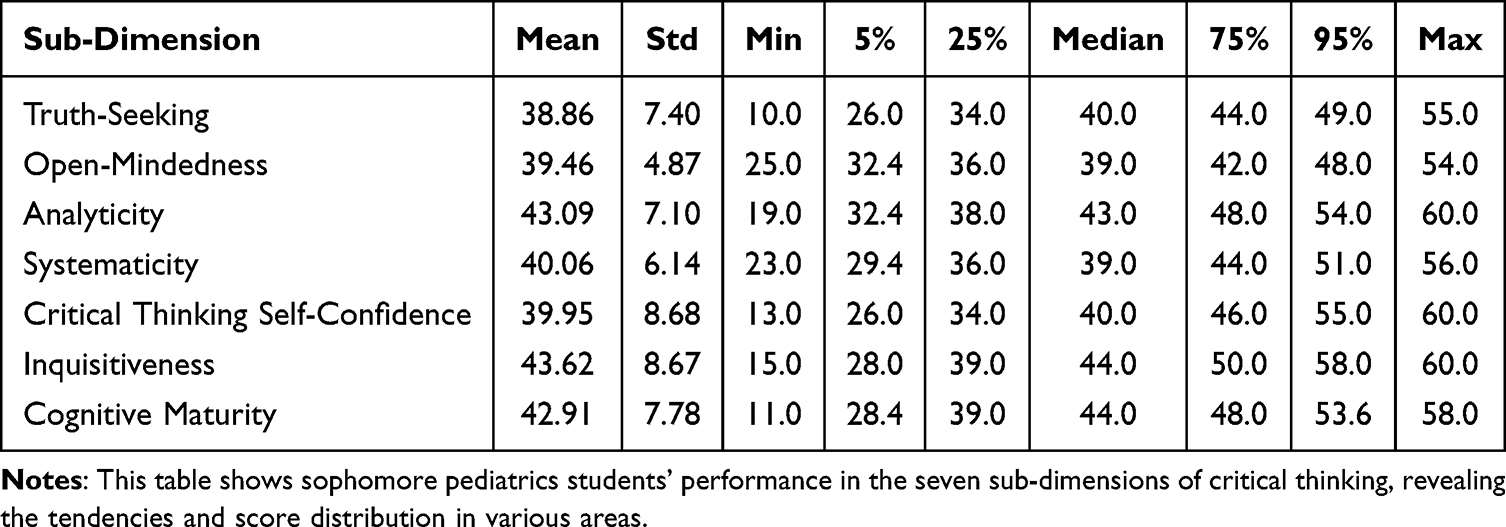 |
Table 2 Score Distribution of Sub-Dimensions of CTDI-CV Scale for Sophomore Pediatrics Students (n = 229) |
Comparison of Sub-Dimensions of CTDI-CV Scores in Different Categories Among Sophomore Pediatrics Students
Gender Differences in Critical Thinking Dispositions
Both male and female students showed similar average scores across all dimensions of the CCTDI-CV. However, female students scored significantly higher than their male counterparts in the dimensions of truth-seeking and cognitive maturity, as indicated in Table 3. This suggests a gender-specific variation in certain critical thinking skills, highlighting the potential for tailored approaches in pedagogical strategies to further develop these skills across different student groups.
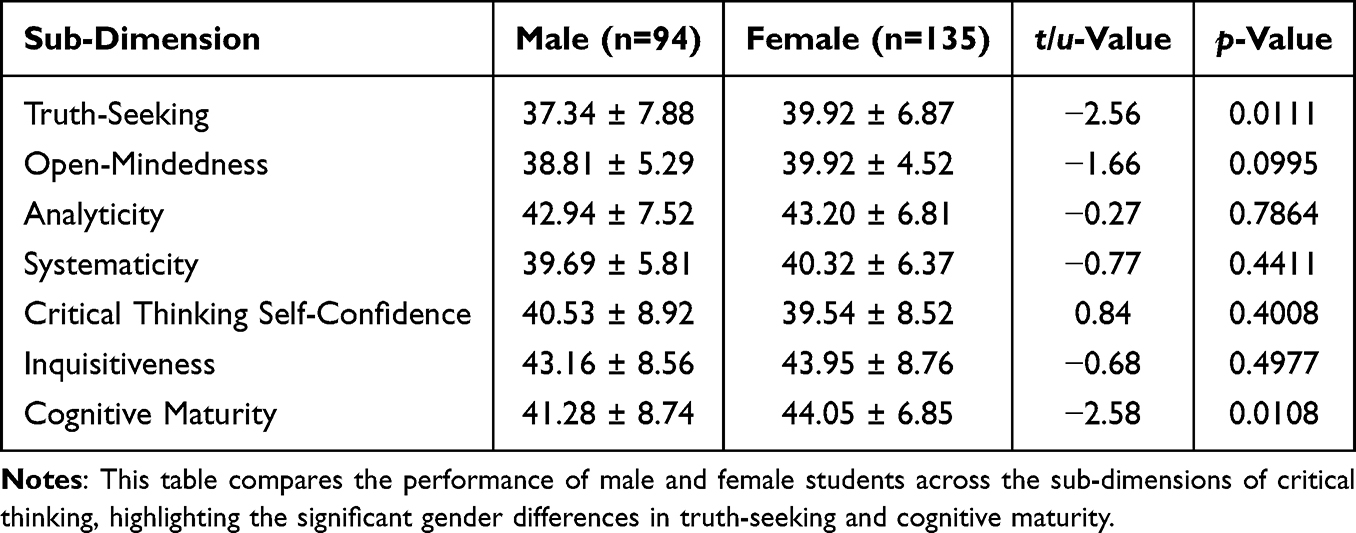 |
Table 3 Gender Distribution of Sub-Dimensions of CTDI-CV in Sophomore Pediatrics Students (n = 229) |
Family Background (Urban vs Rural) and Critical Thinking
Scores based on family background showed notable differences, with students from non-rural areas generally scoring higher than those from rural areas. This trend was most pronounced in the dimensions of analyticity, inquisitiveness, and cognitive maturity, as detailed in Table 4. These findings suggest that environmental and educational differences linked to urban and rural backgrounds may influence the development of certain critical thinking skills in students. This highlights the need for targeted educational interventions and resources to bridge the gap and ensure equitable development of critical thinking skills across diverse student populations.
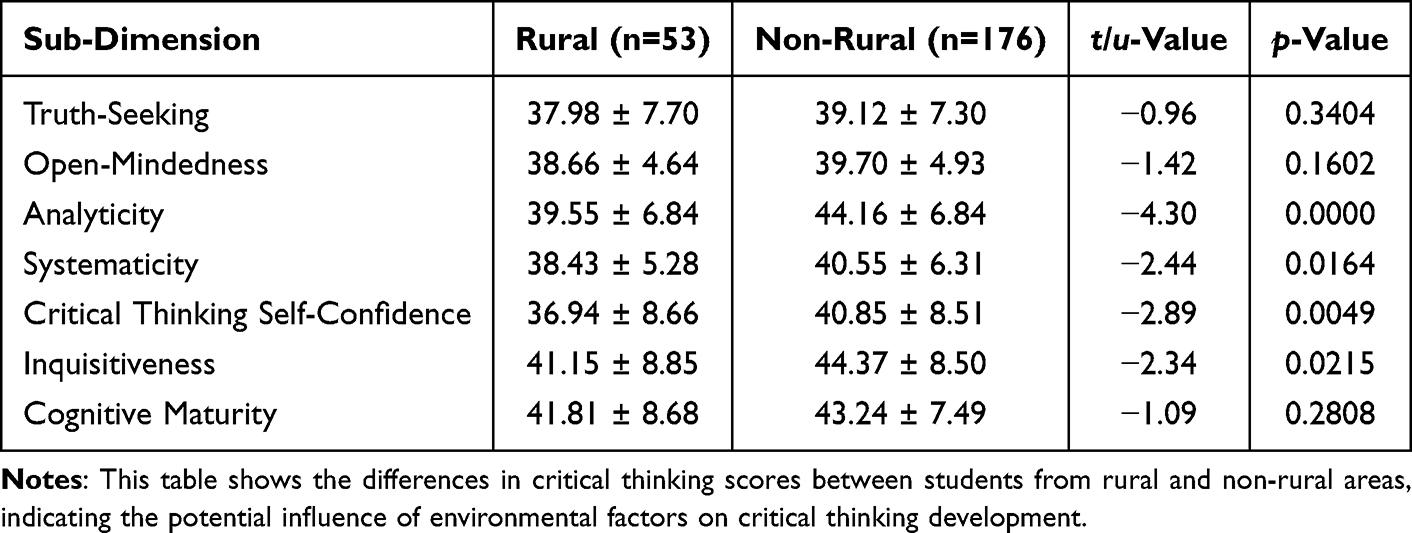 |
Table 4 Family Background Distribution of Sub-Dimensions of CTDI-CV in Sophomore Pediatrics Students (n = 229) |
Only Child Status and Critical Thinking
Only child typically scored higher across all dimensions compared to students with siblings. This was particularly evident in the dimensions of analyticity, critical thinking self-confidence, and inquisitiveness, as shown in Table 5. These results suggest that family dynamics, such as being an only child, might play a role in shaping certain aspects of critical thinking abilities. The enhanced performance in specific dimensions among only children could be attributed to factors like more focused parental attention and resources, which may foster the development of these skills.
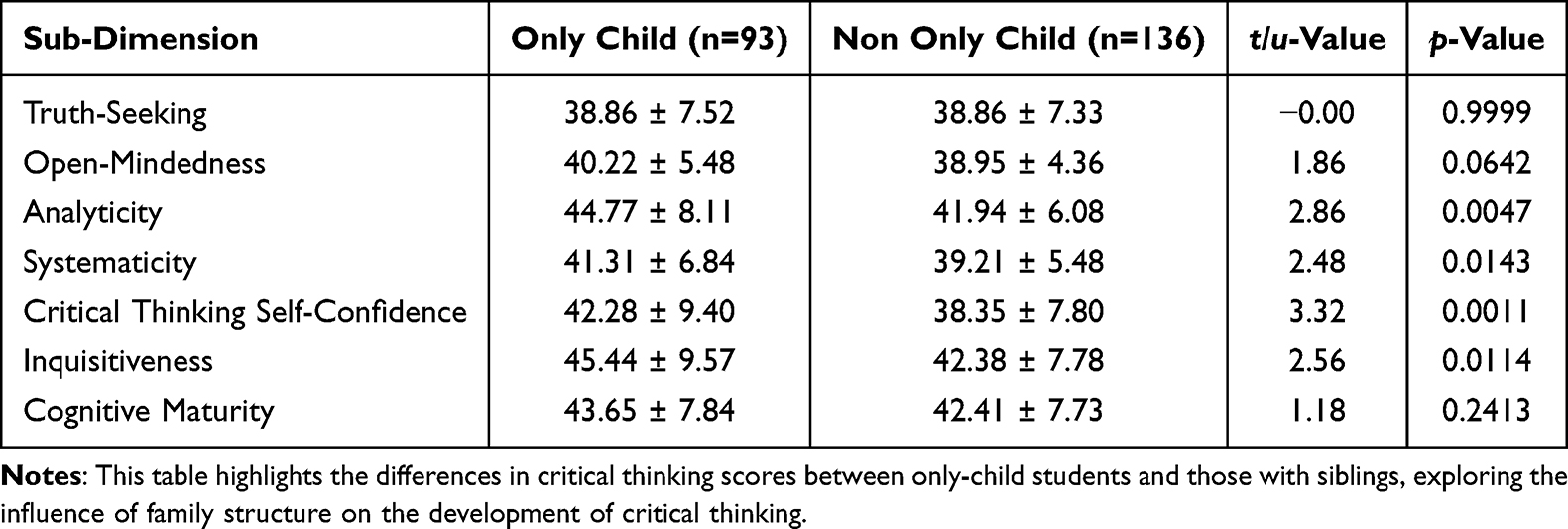 |
Table 5 Sub-Dimension Score Distribution for Category of Only Child in Sophomore Pediatrics Students (M±SD) (n = 229) |
High School Academic Performance and Critical Thinking
Students who ranked in the top 10% in high school consistently scored higher across all dimensions compared to those with lower rankings. Moreover, there was a significant trend of increasing scores in line with higher high school academic rankings prior to entering university. This was most apparent in the dimensions of analyticity, inquisitiveness, and cognitive maturity. These findings indicate a strong correlation between high school academic performance and these cognitive skills, as evidenced in Table 6. This suggests that high academic achievement in high school may be a predictor of stronger critical thinking abilities, particularly in areas requiring analytical and inquisitive thinking, and cognitive maturity.
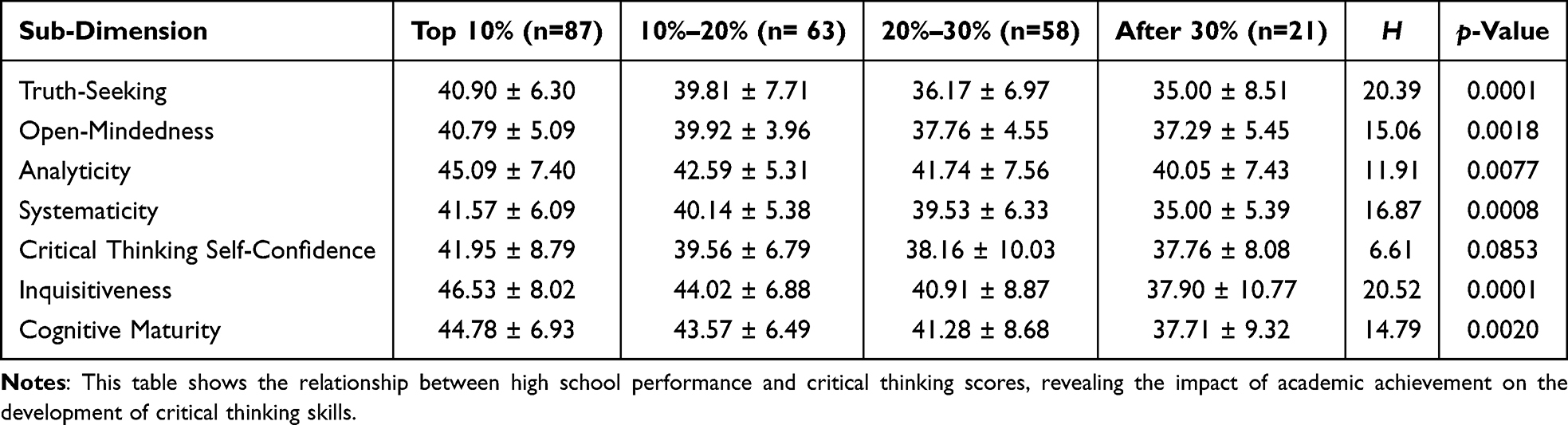 |
Table 6 Relationship Between the Scores of Sub-Dimensions and Their Ranking in High School Before Entering College in Sophomore Pediatrics Students (M±SD) (n = 229) |
Parental Education Level and Critical Thinking
Students whose parents had a bachelor’s degree or higher generally scored higher across all dimensions compared to students whose parents had an educational level below a bachelor’s degree. This suggests that parental education level may have a positive impact on their children’s cognitive abilities. The correlation evident in Table 7 implies that the educational background of parents might contribute to an environment that fosters the development of critical thinking skills in their children.
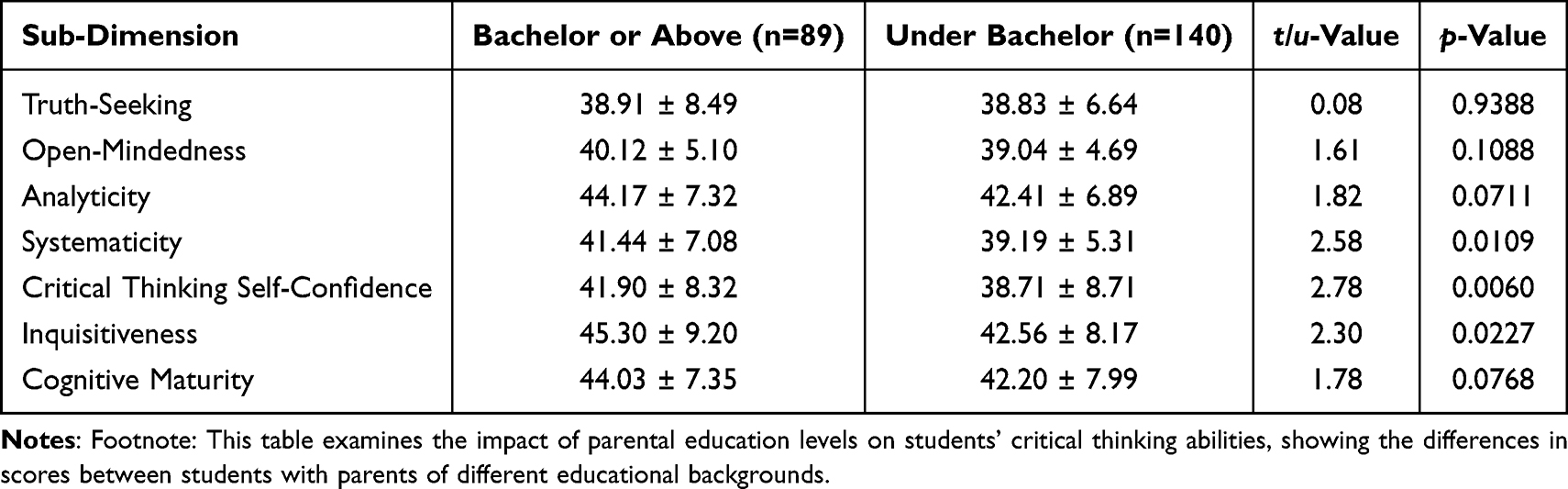 |
Table 7 Distribution of Sub-Dimension Scores for Different Parental Education Levels in Sophomore Pediatrics Students (M±SD) (n = 229) |
Interest in Pediatrics and Critical Thinking
Students with the highest level of interest in pediatrics scored the highest across almost all dimensions, and there was a significant upward trend in scores for each sub-dimension as the interest in pediatric studies increased, as shown in Table 8. This trend suggests a strong correlation between a student’s interest in their field of study and their critical thinking abilities. The data indicates that heightened enthusiasm and engagement in pediatrics may positively influence the development and enhancement of various critical thinking skills.
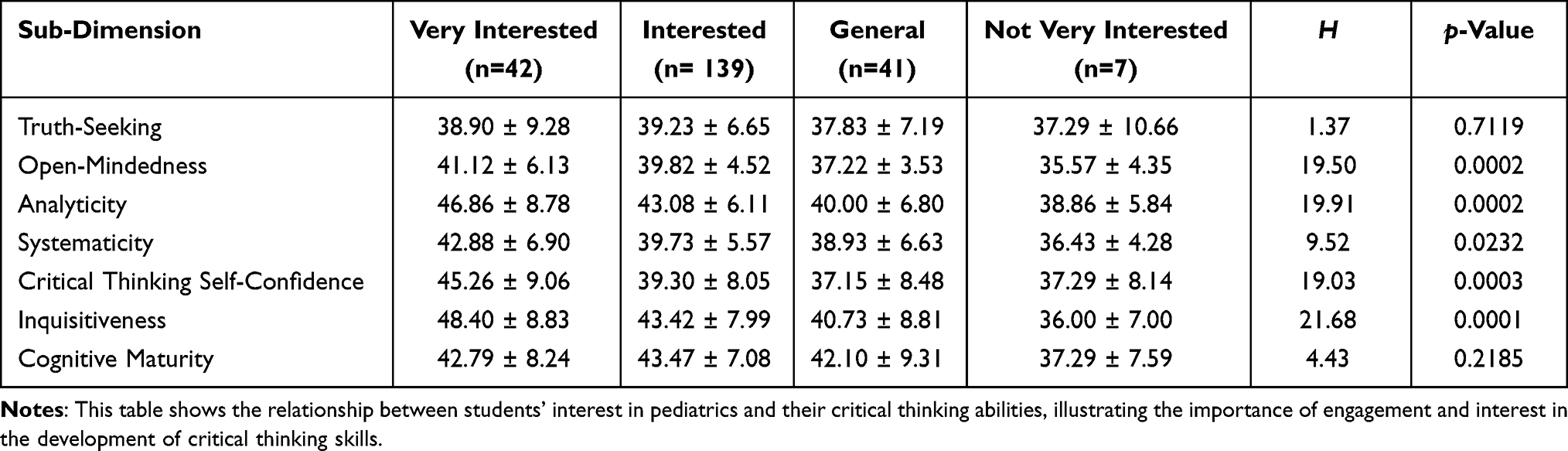 |
Table 8 Relationship Between the Scores of Sub-Dimensions and the Interest in Pediatric Science in Sophomore Pediatrics Students (M±SD) (n = 229) |
The Correlation Between Analytic Ability, Critical Thinking Self-Confidence, and Inquisitiveness in Sophomore Pediatrics Students
The CTDI-CV scores of sophomore pediatrics students show a significant positive correlation among three sub-dimensions: analytic ability, critical thinking self-confidence, and inquisitiveness, as depicted in Figure 1 with correlation coefficients (r) of 0.75 or higher. This implies that students who score high in one of these dimensions are likely to score high in the others, suggesting that these aspects of critical thinking may be interrelated and possibly enhance each other. This finding highlights the interconnectivity of different critical thinking skills, emphasizing the importance of a holistic approach in educational strategies to cultivate these abilities in medical students.
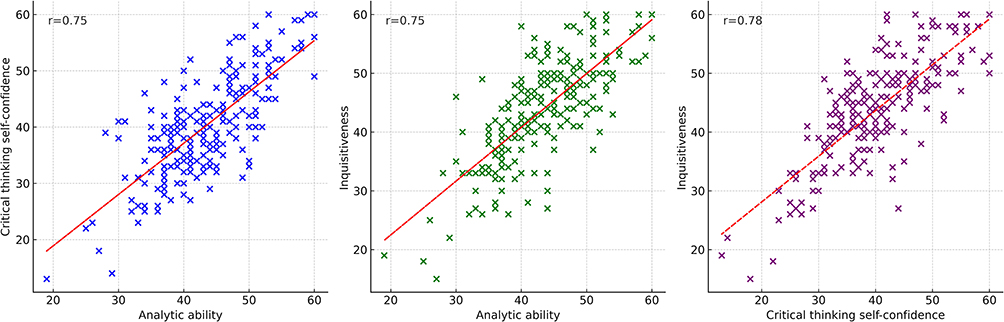 |
Figure 1 The correlation between analytic ability, critical thinking self-confidence, and inquisitiveness in sophomore pediatrics students. This chart shows a significant positive correlation between the three dimensions of analytical skills, critical thinking confidence, and curiosity, indicating the mutually reinforcing role of these skills in the development of critical thinking. |
Discussions
This study aimed to evaluate the critical thinking dispositions of sophomore pediatric medical students and examine the key factors influencing these dispositions. The main findings highlight several significant insights: Gender differences in most sub-dimensions of critical thinking dispositions were not significant. There were notable disparities in critical thinking abilities between rural and non-rural students, with rural students scoring lower. Only children demonstrated higher levels of self-confidence in critical thinking. Students whose parents have higher educational qualifications tend to score higher in most sub-dimensions. Additionally, high school academic performance and interest in pediatrics were positively correlated with critical thinking skills.
In this study, we assessed the critical thinking skills of second-year undergraduate students majoring in pediatrics at Chongqing Medical University. The results indicate that the majority of students exhibit positive tendencies in analytical skills, systematic thinking, curiosity, and cognitive maturity. Overall, these students demonstrated better critical thinking dispositions compared to students in other domestic specialties, possibly reflecting differences in educational methods and clinical practice across disciplines. Pediatrics, as a field involving a wide range of diverse clinical scenarios, may place greater emphasis on flexible and critical thinking approaches. Thus, heuristic, exploratory, and problem-solving-oriented teaching methods may be more effective in cultivating critical thinking skills in pediatric medical education.
The decision-making abilities of pediatricians are closely linked to patient outcomes, including diagnostic accuracy, treatment success, and family satisfaction.25 For pediatric students, strong critical thinking skills are crucial, not only for academic success but also for making sound clinical judgments in the future. Despite the importance of critical thinking, there is limited research on the critical thinking abilities of pediatric medical students, particularly within the context of Chinese medical education. Compared to other studies, the findings of this study emphasize the need to foster critical thinking skills early in pediatric education.12,27
Gender Differences in Critical Thinking Abilities
One significant finding in this study is that among sophomore undergraduate students majoring in pediatrics, apart from the sub-dimensions of seeking truth and cognitive maturity, there were no significant gender differences in the overall mean scores, indicating a lack of significant gender-based variation in the disposition towards critical thinking. This result contradicts the findings of many previous studies, which often suggested that females excel in critical thinking abilities.12,28 Our findings may indicate that in a specific educational environment and cultural context, the influence of gender on critical thinking abilities may not be as pronounced as previously assumed. This display of gender equality might reflect the effectiveness of modern medical education systems in providing equal educational resources and opportunities. In our sample, male and female students might have received similar teaching methods and practical opportunities, leading to equality in their critical thinking abilities. Moreover, this also suggests the need for future research in medical education and critical thinking to consider individual differences and diverse factors beyond gender. This finding opens up new directions for future research, encouraging exploration of factors other than gender that influence critical thinking abilities in medical students.
The Impact of Family Background on Critical Thinking
This study found that students from rural areas generally scored lower in critical thinking abilities compared to students from non-rural areas, particularly in dimensions such as analytical skills, curiosity, and cognitive maturity, with the differences being most significant. This may reflect the impact of unequal distribution of educational resources and socio-economic factors.32 Rural areas often lack high-quality educational resources and advanced learning environments, which limit the cultivation of critical thinking abilities in students. Additionally, the socio-economic status of rural families in China is generally lower than that of urban families, which may restrict students’ access to rich educational resources. Differences in family culture and educational expectations may also affect students’ motivation and cognitive development to some extent. The combined effects of these factors underscore the importance of targeted interventions in medical education and the need to address educational inequality in medical training. It is especially important to provide more support and resources to students from resource-limited rural areas in order to narrow the cognitive ability gap among students from diverse backgrounds. Moreover, this finding suggests that future research should consider a broader geographical and cultural context and explore other potential factors that influence critical thinking abilities.
Only Child Status and Critical Thinking Abilities
This study provides new insights into the role of family structure. We found that only children tend to outperform non-only children in critical thinking abilities, particularly in dimensions like analytical skills, self-confidence in critical thinking, and curiosity. This result may reflect the influence of family environment and educational resources on cognitive and emotional development. Only children often grow up in an environment with more attention and educational resources, which might lead to advantages in language and cognitive skills.29 However, limited interaction with peers may impact their social and emotional skills, which are equally important for the development of critical thinking. These findings highlight the significant influence of family backgrounds on the critical thinking abilities of medical students and suggest that medical educators should consider individual differences in their teaching practices. We recommend providing additional educational resources to non-only children to enhance their critical thinking abilities. Future research can further explore how factors such as family education background, social interaction opportunities, and parental teaching methods affect the critical thinking abilities of medical students.
The Influence of Parental Education on Critical Thinking
The finding in this study that “students whose parents have attained at least a bachelor”s degree tend to have higher average scores’ points towards the potential influence of family educational backgrounds on the critical thinking abilities of medical students. Higher parental education levels typically imply better learning resources, a richer knowledge environment, and higher academic expectations, which may directly or indirectly contribute to the development of students’ critical thinking abilities.10 This influence of family educational background reflects the significant role of socioeconomic status and educational resources in the cognitive and academic development of individuals. Additionally, the positive impact of parents’ higher education level on students’ critical thinking ability further underscores the role of socioeconomic factors in cognitive development. Moreover, this finding underscores the importance of reducing educational inequality in medical education. It suggests that educators and policymakers should consider providing more support and resources to promote educational equality and comprehensive personal development among students from diverse family backgrounds.
High School Performance and Critical Thinking Development
This study found a significant correlation between high school performance and the scores of sophomore undergraduate students majoring in pediatrics on the Chinese version of the California Critical Thinking Disposition Inventory (CTDI-CV), particularly in the dimensions of analytical skills, curiosity, and cognitive maturity. This result suggests that students’ academic performance in high school may serve as an important indicator for predicting their development of critical thinking abilities in medical education. This correlation may reflect the long-term impact of learning habits, cognitive abilities, and problem-solving skills cultivated during high school on critical thinking abilities in medical education. Additionally, it may imply that cognitive and thinking frameworks established during high school continue to play a role in the early stages of medical education.33 This finding holds significant implications for medical school admissions criteria and educational strategies. It indicates that medical schools may need to consider students’ high school academic performance as a predictive factor for their success in medical education when admitting students. Moreover, it provides a basis for early interventions in cultivating critical thinking abilities in medical education, emphasizing the potential importance of high school education in nurturing future doctors. This provides new insights into a previously underexplored area.
Interest in Pediatrics and Its Impact on Critical Thinking
Another significant finding in this study is the significant positive correlation between students’ interest in pediatrics and their scores on the Chinese version of the California Critical Thinking Disposition Inventory (CTDI-CV). Scores show a noticeable upward trend as interest in pediatrics increases. This suggests that students’ interest in their chosen field of study may directly impact their performance and development in critical thinking, highlighting the importance of fostering students’ interest in professional fields to improve their critical thinking skills. Interest, as an intrinsic motivational factor, can stimulate students’ enthusiasm for learning, prompting them to actively explore and understand complex medical concepts and issues.31 Furthermore, interest may help students maintain persistent motivation when faced with challenges and difficulties. Therefore, this finding emphasizes the importance of igniting and sustaining student interest in medical education, particularly in pediatric medical education. It suggests that educators should consider how to more effectively spark students’ interest when designing curricula and teaching methods, ultimately enhancing their critical thinking abilities. Furthermore, course design should incorporate more practical pediatric clinical experiences to foster students’ interest in pediatrics and promote the development of critical thinking skills.
Correlation Among Critical Thinking Sub-Dimensions
This study also revealed a significant positive correlation among the sub-dimensions of analytical ability, self-confidence in critical thinking, and curiosity. This finding suggests that when medical students perform at a higher level in analytical ability, they often exhibit stronger self-confidence in critical thinking and a higher level of curiosity. This phenomenon may be attributed to the fact that a strong analytical ability not only helps students gain a deeper understanding of complex medical concepts, thus enhancing their confidence in critical thinking, but also motivates them to further explore knowledge and desire learning. Furthermore, this positive correlation implies that in medical education, fostering students’ analytical abilities comprehensively can indirectly enhance their self-confidence in critical thinking and curiosity, thereby promoting their cognitive and personal development on a broader scale.34 This finding underscores the importance of adopting holistic and multidimensional teaching methods in medical education, especially in the process of nurturing future pediatricians, where such an approach may be particularly effective.
Limitations
This study has some limitations. Firstly, although this study included sophomore students majoring in pediatrics, the limited sample size due to the relatively small number of students in this major restricts the generalizability of the conclusions. Future research should aim to recruit a more representative sample of pediatric learners from various grades, majors, and institutions for cross-grade, cross-major, and cross-institution comparative studies. Secondly, this study employed a cross-sectional design. Future research should consider longitudinal and intervention studies to develop effective methods for enhancing critical thinking skills and explore the effectiveness of different teaching approaches in improving critical thinking abilities.
Conclusion
This study emphasizes the critical role of critical thinking abilities in pediatric medical education, highlighting that sophomore students at Chongqing Medical University display strong analytical skills and cognitive maturity. Key findings include the lack of significant gender differences in critical thinking, contradicting previous studies. Rural students’ lower scores point to educational disparities. The research also shows that students’ interest in pediatrics positively correlates with their critical thinking skills, underlining the importance of intrinsic motivation. Additionally, family educational background and high school performance were found to influence critical thinking abilities. These insights suggest the need for tailored educational strategies in pediatric medicine, considering individual differences and socio-economic backgrounds, to enhance future child healthcare professionals’ decision-making capabilities. The results of this study can broaden the perspectives of pediatric medical educators worldwide, offering valuable international insights and references.
Data Sharing Statement
The datasets generated or analysed during the current study are available in the Mendeley Data Repository: Dang, Hongxing (2024), “CTDI-CV of Sophomore Pediatrics Students”, Mendeley Data, V2, doi: 10.17632/gsscby3cj6.2
Ethics Approval and Consent to Participate
This study was approved by the Program for Youth Innovation in Future Medicine from Chongqing Medical University (2021-W0111) and exempt from approval by the Ethics Committee of the Chongqing Medical University, as it did not meet the criteria for human subjects research. All the contents of the study was performed by the Declaration of Helsinki. Informed consent was obtained from all participants. All participants remained anonymous, and the survey results were exclusively used for educational research to improve teaching methods. Students can freely choose to participate or not participate in this survey, and participants can withdraw from the survey at any time according to their own will.
Author Contributions
All authors made a significant contribution to the work reported, whether that is in the conception, study design, execution, acquisition of data, analysis and interpretation, or in all these areas; took part in drafting, revising or critically reviewing the article; gave final approval of the version to be published; have agreed on the journal to which the article has been submitted; and agree to be accountable for all aspects of the work.
Funding
Program for Youth Innovation in Future Medicine from Chongqing Medical University (2021-W0111), Chongqing, China.
Disclosure
Li Long and Jing Li are co-responding authors for this study. No potential conflict of interest was reported by the authors.
References
1. Richards JB, Hayes MM, Schwartzstein RM. Teaching Clinical Reasoning and Critical Thinking: from Cognitive Theory to Practical Application. Chest. 2020;158(4):1617–1628. doi:10.1016/j.chest.2020.05.525
2. Shamim T. Critical-thinking skills. J Am Dent Assoc. 2017;148(1):4–5. doi:10.1016/j.adaj.2016.11.006
3. Royce CS, Hayes MM, Schwartzstein RM. Teaching Critical Thinking: a Case for Instruction in Cognitive Biases to Reduce Diagnostic Errors and Improve Patient Safety. Acad Med. 2019;94(2):187–194. doi:10.1097/acm.0000000000002518
4. Huang L, Fan AP, Su N, Thai J, Kosik RO, Zhao X. Chinese medical students’ disposition for critical thinking: a mixed methods exploration. BMC Med Educ. 2021;21(1):385. doi:10.1186/s12909-021-02801-w
5. Bixler GM, Brown A, Way D, Ledford C, Mahan JD. Collaborative Concept Mapping and Critical Thinking in Fourth-Year Medical Students. Clin Pediatr (Phila). 2015;54(9):833–839. doi:10.1177/0009922815590223
6. Silberman D, Carpenter R, Takemoto JK, Coyne L. The impact of team-based learning on the critical thinking skills of pharmacy students. Curr Pharm Teach Learn. 2021;13(2):116–121. doi:10.1016/j.cptl.2020.09.008
7. Khoshgoftar Z, Barkhordari-Sharifabad M. Medical students’ reflective capacity and its role in their critical thinking disposition. BMC Med Educ. 2023;23(1):198. doi:10.1186/s12909-023-04163-x
8. Reale MC, Riche DM, Witt BA, Baker WL, Peeters MJ. Development of critical thinking in health professions education: a meta-analysis of longitudinal studies. Curr Pharm Teach Learn. 2018;10(7):826–833. doi:10.1016/j.cptl.2018.04.019
9. Railey K, Barnett J. Is One Lecture Enough? Self-Perception of Bias and Cultural Training in Medical Education. J Physician Assist Educ. 2022;33(3):222–228. doi:10.1097/jpa.0000000000000452
10. Huang L, Wang Z, Yao Y, et al. Exploring the association between parental rearing styles and medical students’ critical thinking disposition in China. BMC Med Educ. 2015;15:88. doi:10.1186/s12909-015-0367-5
11. Sun Y, Yin Y, Wang J, et al. Critical thinking abilities among newly graduated nurses: a cross-sectional survey study in China. Nurs Open. 2023;10(3):1383–1392. doi:10.1002/nop2.1388
12. Zhai J, Zhang H. Critical thinking disposition of medical students in Anhui Province, China: a cross-sectional investigation. BMC Med Educ. 2023;23(1):652. doi:10.1186/s12909-023-04646-x
13. Zia A, Dar UF. Critical Thinking: perception and disposition of students in a Medical College of Pakistan. J Pak Med Assoc. 2019;69(7):968–972.
14. Jimenez JM, Lopez M, Castro MJ, Martin-Gil B, Cao MJ, Fernandez-Castro M. Development of critical thinking skills of undergraduate students throughout the 4 years of nursing degree at a public university in Spain: a descriptive study. BMJ Open. 2021;11(10):e049950. doi:10.1136/bmjopen-2021-049950
15. Van Nguyen T, Liu HE. Factors associated with the critical thinking ability of professional nurses: a cross-sectional study. Nurs Open. 2021;8(4):1970–1980. doi:10.1002/nop2.875
16. Falcó-Pegueroles A, Rodríguez-Martín D, Ramos-Pozón S, Zuriguel-Pérez E. Critical thinking in nursing clinical practice, education and research: from attitudes to virtue. Nurs Philos. 2021;22(1):e12332. doi:10.1111/nup.12332
17. Bittner NP, Campbell E, Gunning T. Impact of a Dedicated Education Unit Experience on Critical Thinking Development in Nursing Students. Nurse Educ. 2021;46(6):386–388. doi:10.1097/nne.0000000000000966
18. Pu D, Ni J, Song D, et al. Influence of critical thinking disposition on the learning efficiency of problem-based learning in undergraduate medical students. BMC Med Educ. 2019;19(1):1. doi:10.1186/s12909-018-1418-5
19. Richards JB, Schwartzstein RM. Promoting Critical Thinking in Your Intensive Care Unit Team. Crit Care Clin. 2022;38(1):113–127. doi:10.1016/j.ccc.2021.08.002
20. Wang YP, Zhao CX, Zhang SE, et al. Proactive personality and critical thinking in Chinese medical students: the moderating effects of psychological safety and academic self-efficacy. Front Psychol. 2022;13:1003536. doi:10.3389/fpsyg.2022.1003536
21. Artino AR, La Rochelle JS, Durning SJ. Second-year medical students’ motivational beliefs, emotions, and achievement. Med Educ. 2010;44(12):1203–1212. doi:10.1111/j.1365-2923.2010.03712.x
22. Malau-Aduli BS, Roche P, Adu M, Jones K, Alele F, Drovandi A. Perceptions and processes influencing the transition of medical students from pre-clinical to clinical training. BMC Med Educ. 2020;20(1):279. doi:10.1186/s12909-020-02186-2
23. Araújo B, Gomes SF, Ribeiro L. Critical thinking pedagogical practices in medical education: a systematic review. Front Med (Lausanne). 2024;11:1358444. doi:10.3389/fmed.2024.1358444
24. Yeh ML. Assessing the reliability and validity of the Chinese version of the California Critical Thinking Disposition Inventory. Int J Nurs Stud. 2002;39(2):123–132. doi:10.1016/s0020-7489(01)00019-0
25. Scott IA, Hubbard RE, Crock C, Campbell T, Perera M. Developing critical thinking skills for delivering optimal care. Intern Med J. 2021;51(4):488–493. doi:10.1111/imj.15272
26. Redhana IW, Wahyuni NP. Critical thinking disposition inventory: its validity and reliability. Journal of Physics: Conference Series. 2021;1806(1):012187.
27. Soltani A, Mafinejad MK, Tajik M, Moosapour H, Bayat T, Mohseni F. Effects of a curriculum integrating critical thinking on medical students’ critical thinking ability in Iran: a quasi-experimental study. J Educ Eval Health Prof. 2021;18:14. doi:10.3352/jeehp.2021.18.14
28. Boso CM, van der Merwe AS, Gross J. Critical thinking disposition of nursing students: a quantitative investigation. Nurse Educ Pract. 2021;55:103167. doi:10.1016/j.nepr.2021.103167
29. Vukojević M, Zovko A, Talić I, et al. Parental Socioeconomic Status as a Predictor of Physical and Mental Health Outcomes in Children - Literature Review. Acta Clin Croat. 2017;56(4):742–748. doi:10.20471/acc.2017.56.04.23
30. Christodoulakis A, Kritsotakis G, Gkorezis P, Sourtzi P, Tsiligianni I. Linking Learning Environment and Critical Thinking through Emotional Intelligence: a Cross-Sectional Study of Health Sciences Students. Healthcare (Basel). 2023;11(6):826. doi:10.3390/healthcare11060826
31. Tong LK, Au ML, Li YY, Ng WI, Wang SC. The mediating effect of critical thinking between interest in learning and caring among nursing students: a cross-sectional study. BMC Nurs. 2023;22(1):30. doi:10.1186/s12912-023-01181-4
32. Cai W, Wu F. Influence of Income Disparity on Child and Adolescent Education in China: a Literature Review. New Dir Child Adolesc Dev. 2019;2019(163):97–113. doi:10.1002/cad.20268
33. D’Agostino EM, Freudenberg N. Population Thinking Instruction in High Schools: a Public Health Intervention with Triple Benefits. J Urban Health. 2019;96(6):902–911. doi:10.1007/s11524-019-00383-z
34. Kim DH. Evaluation of critical thinking course for premedical students using literature and film. Korean J Med Educ. 2019;31(1):19–28. doi:10.3946/kjme.2019.115
 © 2024 The Author(s). This work is published and licensed by Dove Medical Press Limited. The
full terms of this license are available at https://www.dovepress.com/terms
and incorporate the Creative Commons Attribution
- Non Commercial (unported, 3.0) License.
By accessing the work you hereby accept the Terms. Non-commercial uses of the work are permitted
without any further permission from Dove Medical Press Limited, provided the work is properly
attributed. For permission for commercial use of this work, please see paragraphs 4.2 and 5 of our Terms.
© 2024 The Author(s). This work is published and licensed by Dove Medical Press Limited. The
full terms of this license are available at https://www.dovepress.com/terms
and incorporate the Creative Commons Attribution
- Non Commercial (unported, 3.0) License.
By accessing the work you hereby accept the Terms. Non-commercial uses of the work are permitted
without any further permission from Dove Medical Press Limited, provided the work is properly
attributed. For permission for commercial use of this work, please see paragraphs 4.2 and 5 of our Terms.