
Back to Archived Journals » Open Access Journal of Sports Medicine » Volume 16
Changes in Knowledge and Compliance with Pitch Count Recommendations Among Youth Baseball Coaches: A Cross-Sectional Comparison at Two Time Points
Authors Makita M  , Onishi M, Kouno C, Kawabe R, Doi N, Tahu Y, Aoyama T, Nagai-Tanima M
Received 1 April 2025
Accepted for publication 12 July 2025
Published 29 July 2025 Volume 2025:16 Pages 89—97
DOI https://doi.org/10.2147/OAJSM.S528323
Checked for plagiarism Yes
Review by Single anonymous peer review
Peer reviewer comments 3
Editor who approved publication: Prof. Dr. Andreas Imhoff
Mona Makita,1,* Miyu Onishi,1,* Chika Kouno,1 Rika Kawabe,1 Naoki Doi,1 Yukinobu Tahu,2 Tomoki Aoyama,1 Momoko Nagai-Tanima1
1Department of Human Health Science, Graduate School of Medicine, Kyoto University, Kyoto, Japan; 2Kyoto Prefecture Sports Little League Baseball Association, Kyoto, Japan
*These authors contributed equally to this work
Correspondence: Momoko Nagai-Tanima, Human Health Science, Graduate School of Medicine, Kyoto University, 53 Kawahara-cho, Shogoin, Sakyo-ku, Kyoto, 606-8507, Japan, Tel +81 75 751 3964, Email [email protected]
Background: In Japan, pitch count recommendations were proposed to prevent throwing injuries. In our laboratory, 10 years ago, the knowledge and compliance with pitch count recommendations were assessed among coaches in Kyoto Prefecture and compared with those in the US Since then, the youth baseball environment has changed, including the formal implementation of pitch count rules by the Japan Boys League Foundation. However, no studies have examined how such changes have influenced coaches’ knowledge and compliance over time. Although it is important for coaches to have prior knowledge of injuries in order to prevent the incidence of Little League Elbow, few studies have assessed the actual experience of coaches.
Methods: Of the 242 coaches belonging to the Kyoto Boys’ Baseball Association who participated, 172 with valid responses were analyzed. The questionnaire, consistent with a previous study conducted 10 years ago, assessed knowledge and compliance with pitch count recommendations, as well as coaching background and seminar participation.
Results: The proportion of coaches who reported having knowledge of the recommendations significantly increased from 39.8% to 52.3% (p = 0.04), while the compliance rate decreased from 28.3% to 22.1% (p = 0.23). Coaches with knowledge tended to be older and have longer coaching experience, while those who complied were significantly younger and less experienced. Seminar participation was associated with increased knowledge but did not result in higher compliance. Moreover, 70% of coaches were also parents of players; these individuals were younger, had less coaching experience, and were less likely to have attended seminars.
Conclusion: Despite increased knowledge among youth baseball coaches, compliance with pitch count recommendations remains limited. This knowledge–behavior gap suggests the need for educational interventions that address not only the dissemination of information but also cultural and psychological barriers to behavior change. Tailored support may be especially beneficial for younger and less experienced coaches.
Keywords: Little League, coaches, pitch count recommendation, elbow pain
Introduction
Injuries of the shoulder and elbow joints during baseball sports are numerous, and injuries among youth baseball players are particularly important because of their significant impact on later life.1 In particular, elbow injuries sustained during adolescence, such as medial epicondylar apophysitis and osteochondritis dissecans, have been associated with chronic pain and restricted range of motion, potentially impairing athletic participation and daily activities in adulthood.2 Among them, elbow injuries—especially those involving the growth plate such as medial epicondylar apophysitis and osteochondritis dissecans—have been associated with chronic pain and restricted range of motion, impairing both athletic participation and daily functioning in adulthood. These injuries are characteristic of growing athletes and are referred to as “Little League Elbow.” In fact, a recent study reported that approximately 30.7% of Japanese youth baseball players experience elbow disorders.3 Given their frequency and potential severity, this study focuses specifically on elbow injuries. Elbow joint injuries caused by pitching in youth baseball players can result from a variety of conditions, including medial epicondylar apophysitis, osteochondritis dissecans, and general overuse syndromes. In this study, we use the term “little league elbow” broadly to refer to elbow pain or injury related to throwing, consistent with the phrasing used in our survey questions.
The incidence of little league elbow in youth baseball is reported to result not only in pitching-related factors, such as the number of pitches thrown,2,4,5 pitching form,1,6 and pitching type7 but also in the player’s height8 shoulder joint flexibility2,9 lower extremity instability,10 and being a pitcher.2,7 Although the causal relation of most of these factors to the actual incidence of little league elbow is unclear, only the number of pitches thrown has been shown to be related to the incidence of little league elbow11 The USA Baseball Association provides pitch count recommendations for each age group from school-age children to adults12 For example, the number of pitches per day for 9–10 years old is set at 75 pitches per day. It is also said that limiting the number of pitches rather than the number of innings a game pitched can effectively reduce the risk of little league elbow.13 Additionally, it is reported that awareness and education on preventing the incidence of little league elbow among adults, such as coaches and parents, including the management to restrict pitching are important, especially in youth baseball.13–15 Previous studies conducted outside of Japan have investigated coaches’ knowledge of and compliance with pitch count guidelines. Fazarale et al16 surveyed 95 youth baseball coaches in the Midwestern United States and found that while 73% of coaches reported that they followed the pitching guidelines, their average score on questions assessing actual knowledge of the guidelines was only 43%, with coaches of 11–12-year-olds scoring as low as 35%. Furthermore, 35% of coaches stated that their pitchers experienced shoulder or elbow pain during the season, and 19% admitted to allowing pitchers to play despite arm fatigue or soreness, indicating a gap between awareness and actual compliance. In addition, Bohne et al17 conducted a survey of 98 youth baseball players in the United States and found that 84.5% of respondents had never heard of the USA Baseball Medical and Safety Advisory Committee pitching guidelines, and even among older age groups, only 25.8% answered related questions correctly. Moreover, 61.1% of players stated that they would continue playing despite having a tired or sore arm, highlighting not only a lack of knowledge but also insufficient adherence in practice. Thus, both studies consistently point to a disconnect between the intention to follow safety guidelines and the actual implementation of them, emphasizing the need for targeted educational interventions for both coaches and players.
In Japan, the pitch count recommendations (50 pitches per day at full effort for elementary school students) were proposed by the Japanese Society of Clinical Sports Medicine in 1995.18 A study conducted in our laboratory 10 years ago surveyed coaches in Kyoto Prefecture and found that 39.8% of them had knowledge of the pitch count recommendations, while the compliance rate was 9.4%. These results were compared with data from coaches in the US, where awareness was higher but compliance remained similarly low.19 The study revealed that knowledge on the recommendations among coaches was similar to that in the US, but the ratio of compliance was lower than in the US The study with a higher response rate from coaches in 2017–2018 reported a 13% lower ratio of compliance than the previous study conducted in our laboratory, despite the fact that nearly all coaches responded “yes” to a single-question assessment regarding knowledge of the recommendations.20
In Kyoto Prefecture, a medical examination of little league elbow for elementary school students was started in 2010. In addition to early detection of little league elbow, workshops and instruction on the injury have been held to raise awareness about prevention3 Additionally, the environment surrounding youth baseball has changed because the previous study was evaluated, with the Japan Boys League Baseball Foundation introducing “70 pitches per game” in a tournament rule as the baseball environment changes.21
Little league elbow is a serious problem for youth baseball players and must be prevented. Additionally, because baseball practice is conducted mainly by adults in youth baseball, the influence of coaches on the incidence of little league elbow is considered to be significant. Therefore, the knowledge and actions of youth baseball coaches might be important in preventing the incidence of little league elbow. Prior studies have assessed the availability of pitch count recommendations among coaches and comparisons of compliance with the recommendations by region. However, no research has investigated how coaches’ knowledge and compliance have changed over time in response to structural changes in the baseball environment, such as the formal institutionalization of pitch count rules by the Japan Boys League Foundation. Although it is important for coaches to have prior knowledge of the injuries in order to prevent the incidence of little league elbow, few studies have assessed the actual experience of coaches. This study aimed to show changes over time in the knowledge of pitch count recommendations and compliance with them by comparing with previous studies19 and to reveal actual coaching practices.
Methods
All methods were carried out in accordance with relevant guidelines and regulations. To clarify coaches’ knowledge, compliance, and actual coaching practices, we conducted a cross-sectional study using a paper-based questionnaire. The questionnaire was distributed in November 2021, during the off-season for most teams, and collected manually over a one-month period by staff of the Kyoto Boys’ Baseball Association. Questionnaires were either handed out in person or mailed to team coaches, and returned by mail or in person. A total of 242 questionnaires were distributed, and 172 completed responses were returned, yielding a response rate of 71.1%. Participants provided informed consent. The target population—teams affiliated with the Kyoto Boys’ Baseball Association—was the same as that in our previous study conducted 10 years ago by our laboratory, although the individual respondents were not necessarily the same.
The questionnaire consisted of four multi-part questions with the following themes:
(1) Basic information (age, gender, coaching experience, whether they were a parent of a player). Coaching experience was defined as the number of years actively engaged in coaching, regardless of prior athletic history,
(2) Knowledge of pitch count recommendations and little league elbow (1 item on knowledge of pitch count guidelines based on recommendations from the Japanese Society of Clinical Sports Medicine: “50 pitches per day at full effort, 200 per week or less”),
(3) Compliance with pitch count recommendations, and
(4) Participation in seminars or workshops related to injury prevention, coaching, or performance improvement.
The full questionnaire is presented in Appendix A. The items were identical to those used in our previous study to enable direct comparison.
Of the 242 total respondents, 70 were excluded due to missing data on basic information. Thus, 172 participants (from 80 teams) were included in the final analysis. The number of valid responses per variable ranged from 167 to 172, as some participants left individual items unanswered. To maintain data integrity, analyses were conducted using all available data per item, and the exact number of valid cases is reported in the Results section and table captions.
Basic information was analyzed using descriptive statistics. The knowledge retention rate and compliance rate were calculated in the same way as the previous study.19 Participants were grouped separately based on each of the following theme:
(1) whether or not they had knowledge of pitch count recommendations,
(2) compliance with the recommendations,
(3) participation in seminars or workshops, and
(4) parental status.
Group comparisons were conducted using the Wilcoxon rank-sum test or chi-square test, depending on the type of variable, after testing for normality with the Shapiro–Wilk test. Statistical significance was set at p < 0.05.
Results
Basic Information
Of the 172 participants, 169 (98.3%) were male and 3 (1.7%) were female. The average age was 45.5 years, and the mean coaching experience was 6.5 years (Table 1).
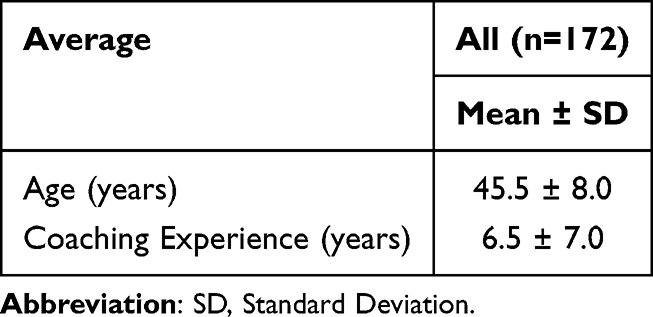 |
Table 1 Basic Information |
Comparison with Previous Study on Knowledge and Compliance with Pitch Count Recommendations
A comparison between the current and previous study (Yukutake et al, 2013)19 is presented in Table 2. Of the 172 participants, 90 (52.3%) reported knowledge of the recommendations, compared to 45 (39.8%) of 113 in the previous study. Meanwhile, 38 (22.1%) reported compliance with the recommendations, compared to 32 (28.3%) previously. Compliance and knowledge were self-reported. The increase in knowledge was statistically significant (p = 0.038), whereas the difference in compliance was not (p = 0.23). Participants in both studies were coaches affiliated with the Kyoto Boys’ Baseball Association, but the samples did not include the same individuals.
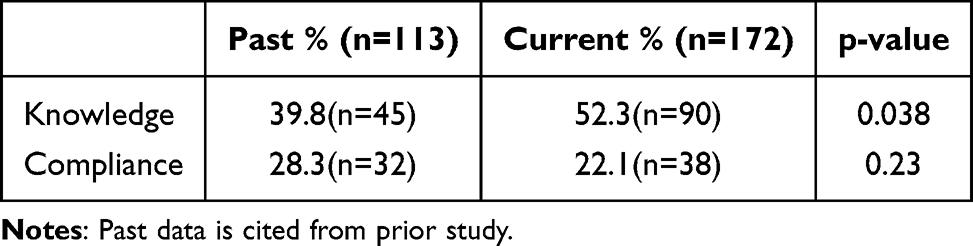 |
Table 2 Presence of Knowledge and Compliance Compared to 10 Years Ago |
Coaching Experience and Knowledge of Recommendations
Table 3 shows that coaches who reported knowledge of the pitch count recommendations had significantly longer coaching experience than those who did not (p = 0.03).
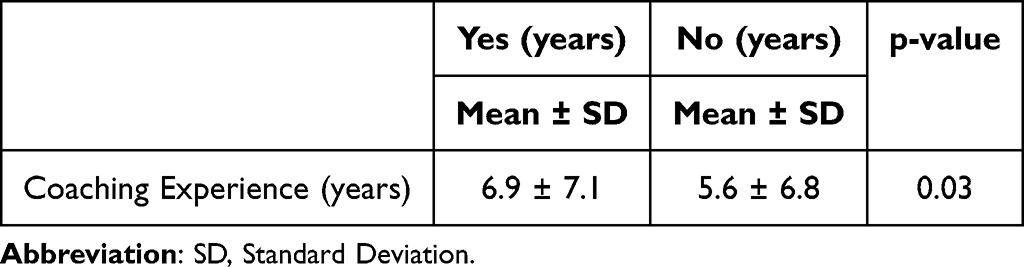 |
Table 3 Coaching Experience in Knowledge (n=166) |
Age and Experience in Relation to Compliance
As shown in Table 4, coaches who complied with the recommendations were significantly younger (p = 0.01) than those who did not. Additionally, their coaching experience was shorter (p = 0.05), approaching statistical significance.
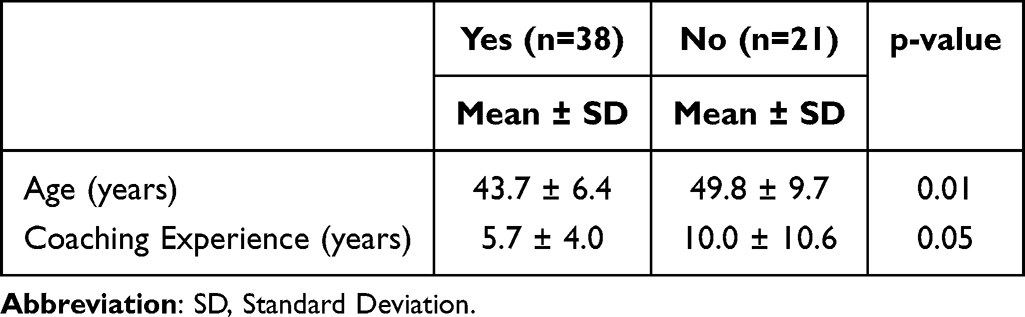 |
Table 4 Age and Coaching Experience in Compliance |
Seminar Participation and Coaching Background
Table 5 presents the results regarding participation in seminars and workshops. Sixty-four of 167 respondents (38.3%) had attended seminars on injury prevention, and 49 (29.3%) had attended those on coaching or performance improvement.
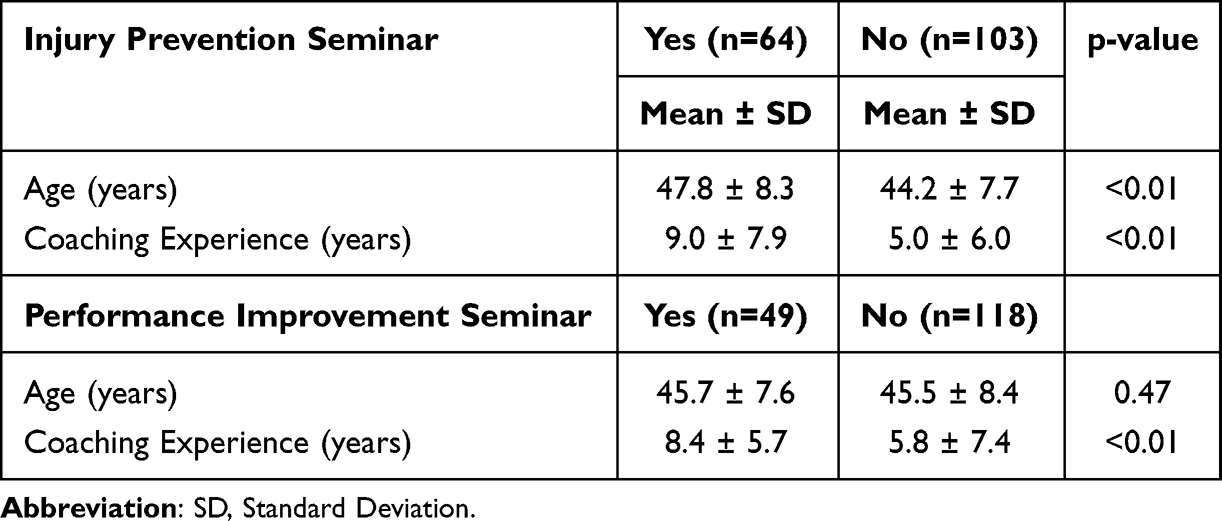 |
Table 5 Age and Coaching Experience in Participation |
Coaches who had attended injury prevention seminars were significantly older (p < 0.01) and had longer coaching experience (p<0.01) than those who had not.Similarly, those who had attended performance improvement seminars had significantly more coaching experience (p <0.01), although there was no significant difference in age between the two groups (p = 0.47).
Parental Status and Coaching Characteristics
Table 6 shows that 119 of the 172 coaches (69.2%) were parents of players. These coaches were significantly younger (p < 0.01) and had shorter coaching experience (p < 0.01) than non-parents. Moreover, they were significantly less likely to have attended seminars on injury prevention (p = 0.015) or coaching/performance improvement (p = 0.013).
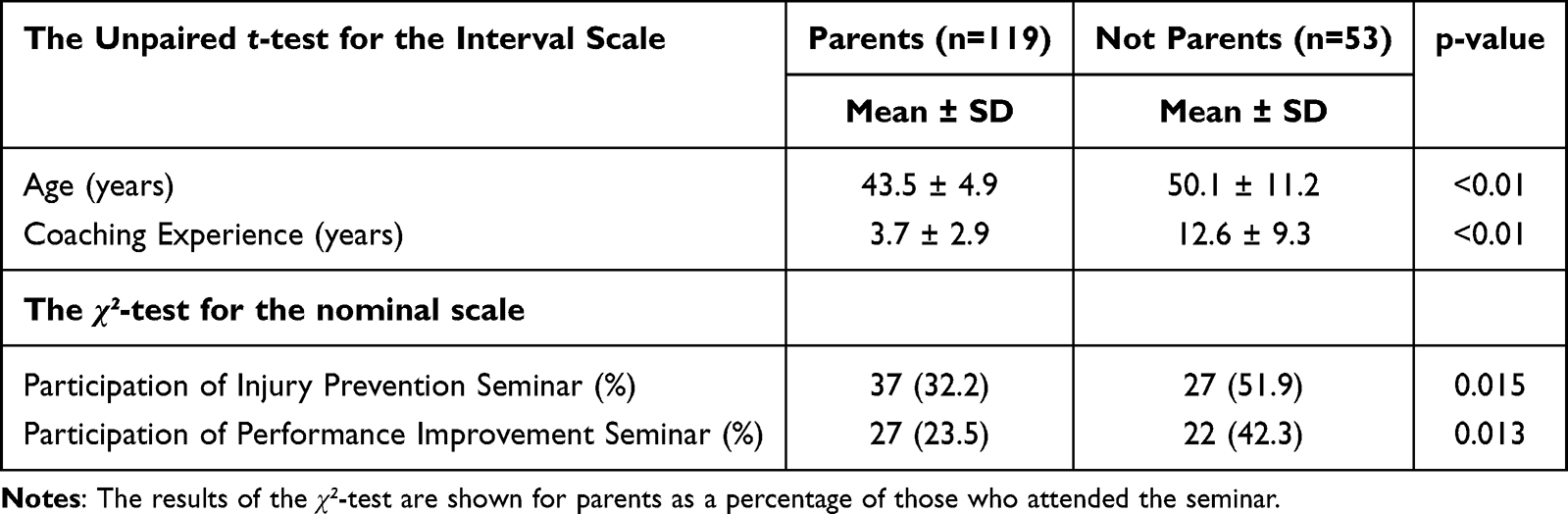 |
Table 6 Age, Coaching Experience and Participation in Participation Among Parents of Players |
Discussion
This study aimed to compare two cross-sectional cohorts drawn from teams affiliated with the same regional baseball organization, in terms of their knowledge of pitch count recommendations and compliance with them, and to clarify coaches’ prior knowledge of Little League Elbow and their actual coaching practices. Although the individual participants were not necessarily the same, both cohorts were recruited from the same organizational context, enabling a meaningful comparison at the group level.
The results of this study showed that 52.3% of the coaches in youth baseball teams of Kyoto Prefecture had knowledge on pitch count recommendations, an increase from 39.8% conducted in our laboratory 10 years ago;19 however, the participants were not necessarily the same individuals. Although knowledge increased over time, the compliance rate remained largely unchanged (22.1% in the current study vs 28.3% in the previous study), indicating a lack of improvement in adherence despite increased awareness.
This discrepancy highlights a persistent knowledge–behavior gap among youth baseball coaches. The findings suggest that while institutional efforts—such as the annual implementation of little league elbow screening programs in Kyoto Prefecture—may have raised awareness, they have not successfully translated into behavioral change. Previous research in Gunma Prefecture (2017–2018) reported a knowledge rate close to 100% but a compliance rate of only 15.5%,20 suggesting that this discrepancy is not unique to Kyoto.
This phenomenon—where increased knowledge does not lead to behavioral change—may be shaped by broader psychological and cultural factors, such as adherence to traditional coaching beliefs, resistance to externally imposed rules, and pressure from parents or the team environment. Such trends may be particularly pronounced in the Japanese youth baseball context, where competition is intense and long-standing practices are deeply ingrained.
Interestingly, we found that coaches who complied with pitch count recommendations were significantly younger and had less coaching experience. In contrast, those with more knowledge and experience were less likely to comply. This finding may reflect greater behavioral adaptability in younger coaches who have not yet developed strong personal coaching philosophies, making them more open to adopting official guidelines. This pattern is consistent with findings by Cattet and Bainbridge,22 who reported that although experienced coaches often possess sufficient knowledge of injury prevention, they may resist changing long-standing coaching habits due to factors such as pressure to win, limited training opportunities, and adherence to traditional beliefs. These factors may contribute to a knowledge–behavior gap in coaching practice. We believe this is a critical insight and have highlighted it to underscore the importance of targeting interventions toward bridging the knowledge–behavior gap, especially among experienced coaches.
Coaches who did not comply with the recommendations were significantly older and tended to have longer coaching experience. Koester reported that coaches who do not have correct knowledge on sports technique often teach based on their own personal experience14 Additionally, it is said that even trained coaches often learn the technical aspects of their assignments by observing and listening to other coaches; therefore, both styles of coaching knowledge acquisition tend to spread misinformation and inappropriate theories, which can lead to injury incidence.14 A prior study reported that coaches often relied on their limited knowledge, thereby adopting commonly used prevention strategies.23 In the results of this study, coaches who had knowledge also had longer coaching experience; therefore, it is possible that coaches with older age and longer coaching experience did not comply because of their experience and knowledge.
Of the 172 participants, 119 (69.2%) were parents of players. These coaches were significantly younger and had shorter coaching experience compared to those who were not parents. Moreover, parents were significantly less likely to attend seminars and workshops. This finding suggests that parents may serve in coaching roles only temporarily while their children are team members, thus having limited opportunities or motivation to participate in educational programs. Frequent and accessible seminars with lower costs may help increase participation among these coaches, many of whom may be constrained by time or financial resources23–25 Although our study did not directly assess barriers to participation, we propose that adjusting seminar content, timing, and cost could help address these challenges.
Participation in such initiatives may provide coaches with updated knowledge, increase their awareness of injury mechanisms, and enhance their ability to communicate injury risks to players and parents. In our study, coaches with shorter coaching experience demonstrated higher compliance with pitch count recommendations than their more experienced counterparts. This suggests that less experienced coaches may be more receptive to official guidelines and adaptive in their coaching practices. Based on these findings, we emphasize the importance of reinforcing their compliance behavior by promoting knowledge acquisition through accessible and targeted educational efforts. Similar approaches may also be beneficial for player-parents, who often take on coaching roles but may lack formal training.
Despite their limited tenure, these coaches play important roles in injury prevention and should be supported through accessible and targeted educational efforts. Participation in injury prevention education programs may provide coaches with updated knowledge, increase their awareness of injury mechanisms, and enhance their ability to communicate injury risks to players and parents. At the same time, our findings indicate that more experienced coaches, despite having higher levels of knowledge and seminar participation, may show lower compliance. This suggests a reliance on personal experience over formal guidelines. To address this gap, future educational strategies should also focus on experienced coaches by providing case-based training, and creating environments where evidence-based guidelines are more actively integrated into long-standing coaching routines.
This study has several limitations. First, it was conducted within a single prefecture in Japan, which limits the generalizability of the findings. Second, while the two cohorts were drawn from the same regional baseball association, they did not consist of the same individuals; thus, changes over time cannot be interpreted as longitudinal trends. Third, responses relied on self-reported data, which may be influenced by recall or social desirability bias. In particular, compliance was self-assessed and may not reflect actual behavior. Also, the questionnaire used in this study employed yes/no response formats for knowledge items, which may limit the assessment of the accuracy or depth of respondents’ understanding. Additionally, we did not assess the accuracy of knowledge or the content and quality of seminars, and did not evaluate coaches’ athletic backgrounds, which may influence their coaching style and attitudes.
Conclusion
In conclusion, this study compared coaches’ knowledge and compliance with pitching recommendations to previous studies and revealed the extent of coaches’ prior knowledge on little league elbow and their actual coaching practices. The results suggest the need for prevention efforts, especially for coaches with a short experience in coaching and coaches who are parents of players, to encourage their participation in opportunities to gain knowledge about little league elbow.
Data Sharing Statement
This study cites data from “A Survey Examining the Correlations Between Japanese Little League Baseball Coaches’ Knowledge of and Compliance With Pitch Count Recommendations and Player Elbow Pain. Sports Health. 2013;5(3):239–243”. doi:10.1177/1941738113480341.
The datasets are available from the corresponding author on reasonable request.
Ethics Approval and Consent to Participate
This study was conducted with approval of the Kyoto University Graduate School and Faculty of Medicine Ethics Committee (R3052), institution review board. Informed consent was obtained from all participants.
Acknowledgments
This paper has been uploaded to Research Square as a preprint: https://www.researchsquare.com/article/rs-2587085/v1.
The authors thank Kyoto City Junior Sports Clubs Association Branch for their cooperation with the data collection.
Author Contributions
All authors made a significant contribution to the work reported, whether that is in the conception, study design, execution, acquisition of data, analysis and interpretation, or in all these areas; took part in drafting, revising or critically reviewing the article; gave final approval of the version to be published; have agreed on the journal to which the article has been submitted; and agree to be accountable for all aspects of the work.
Funding
There is no funding to report.
Disclosure
The authors declare that they have no competing interests.
References
1. Parks ED, Ray TR. Prevention of overuse injuries in young baseball pitchers. Sports Health. 2009;1(6):514–517. doi:10.1177/1941738109343543
2. Harada M, Takahara M, Mura N, Sasaki J, Ito T, Ogino T. Risk factors for elbow injuries among young baseball players. J Shoulder Elbow Surg. 2010;19(4):502–507. doi:10.1016/j.jse.2009.10.022
3. Kouno C, Onishi M, Kawabe R, et al. Incidence and characteristics of elbow injury in Japanese Youth Baseball Players: comparison between 2011 and 2021. Orthop J Sports Med. 2023;11(10). doi:10.1177/23259671231200844
4. Olsen SJ, Fleisig GS, Dun S, Loftice J, Andrews JR. Risk factors for shoulder and elbow injuries in adolescent baseball pitchers. Am J Sports Med. 2006;34(6):905–912. doi:10.1177/0363546505284188
5. Fleisig GS, Andrews JR, Cutter GR, et al. Risk of serious injury for young baseball pitchers: a 10-year prospective study. Am J Sports Med. 2011;39(2):253–257. doi:10.1177/0363546510384224
6. Fleisig GS, Andrews JR. Prevention of elbow injuries in youth baseball pitchers. Sports Health. 2012;4(5):419–424. doi:10.1177/1941738112454828
7. Matsuura T, Suzue N, Kashiwaguchi S, Arisawa K, Yasui N. Elbow injuries in youth baseball players without prior elbow pain: a 1-year prospective study. Orthop J Sports Med. 2013;1(5). doi:10.1177/2325967113509948
8. Tajika T, Oya N, Kuboi T, et al. Risk factors for throwing-related shoulder and elbow pain in adolescent baseball players: a prospective study of physical and developmental factors. Orthop J Sports Med. 2021;9(9). doi:10.1177/23259671211017129
9. Matsel KA, Butler RJ, Malone TR, Hoch MC, Westgate PM, Uhl TL. Current concepts in arm care exercise programs and injury risk reduction in adolescent baseball players: a clinical review. Sports Health. 2021;13(3):245–250. doi:10.1177/1941738120976384
10. Zeppieri G, Lentz TA, Moser MW, Farmer KW. Changes in hip range of motion and strength in collegiate baseball pitchers over the course of a competitive season: a pilot study. Int J Sports Phys Ther. 2015;10(4):505–513. doi:10.26603/001c.21319
11. Matsuura T, Takata Y, Iwame T, et al. Limiting the pitch count in youth baseball pitchers decreases elbow pain. Orthop J Sports Med. 2021;9(3). doi:10.1177/2325967121989108
12. Major League Baseball. Guidelines for youth and adolescent pitchers. Available from: https://www.mlb.com/pitch-smart/pitching-guidelines.
13. Wells MJ, Bell GW. Concerns on Little League elbow. J Athl Train. 2023;30(3):49–253.
14. Koester MC. Youth sports: a pediatrician’s perspective on coaching and injury prevention. J Athletic Training. 2000;35:466.
15. Zabawa L, Alland JA. Association between parental understanding of pitch smart guidelines and youth baseball player injuries. Orthop J Sports Med. 2019;7(5). doi:10.1177/2325967119846314
16. Fazarale JJ, Magnussen RA, Pedroza AD, Kaeding CC. Knowledge of and compliance with pitch count recommendations: a survey of youth baseball coaches. Sports Health. 2012;4(3):202–204. doi:10.1177/1941738111435632
17. Bohne C, George SZ, Zeppieri GJ. Knowledge of injury prevention and prevalence of risk factors for throwing injuries in a sample of youth baseball players. Int J Sports Phys Ther. 2015;10(4):464–475.
18. Japanese Society of Clinical Sports Medicine. The pitch count recommendations. Available from: https://www.rinspo.jp/files/proposal_03-1.pdf.
19. Yukutake T, Yamada M, Aoyama T. A survey examining the correlations between Japanese Little League baseball coaches’ knowledge of and compliance with pitch count recommendations and player elbow pain. Sports Health. 2013;5(3):239–243. doi:10.1177/1941738113480341
20. Kaizu Y, Oyama Y, Ishihara Y, Honma Y. Survey with innovations to increase response rate reveals low compliance with guidelines among youth baseball coaches-including a survey of differences between cities. Int J Sports Phys Ther. 2022;17(3):409–419. doi:10.26603/001c.32978
21. Ito H, Sonobe Y, Sunagawa N, Masujima A. Optimal pitch count range of school-age children in official baseball games. JSCSM. 2022;30(1):198–206.
22. Cattet L, Bainbridge L. Optimizing approaches to pitch-related injury prevention by coaches in Little League. Health Fitness J Canada. 2023;16(4):3–14. doi:10.14288/hfjc.v16i4.833
23. Rees H, Matthews J, McCarthy Persson U, Delahunt E, Boreham C, Blake C. Coaches’ attitudes to injury and injury prevention: a qualitative study of Irish field hockey coaches. BMJ Open Sport Exerc Med. 2021;7(3):e001074. doi:10.1136/bmjsem-2021-001074
24. Dix C, Logerstedt D, Arundale A, Snyder-Mackler L. Perceived barriers to implementation of injury prevention programs among collegiate women’s soccer coaches. J Sci Med Sport. 2021;24(4):352–356. doi:10.1016/j.jsams.2020.09.016
25. Owoeye OB, Mckay CD, Räisänen AM, Hubkarao T, Palacios-derflingher L, Emery CA. Psychosocial factors and the effects of a structured injury prevention workshop on coaches’ self-efficacy to implement the 11+ exercise program. Int J Exercise Sci. 2020;13(5):1459. doi:10.70252/FEDU3136
 © 2025 The Author(s). This work is published and licensed by Dove Medical Press Limited. The
full terms of this license are available at https://www.dovepress.com/terms
and incorporate the Creative Commons Attribution
- Non Commercial (unported, 4.0) License.
By accessing the work you hereby accept the Terms. Non-commercial uses of the work are permitted
without any further permission from Dove Medical Press Limited, provided the work is properly
attributed. For permission for commercial use of this work, please see paragraphs 4.2 and 5 of our Terms.
© 2025 The Author(s). This work is published and licensed by Dove Medical Press Limited. The
full terms of this license are available at https://www.dovepress.com/terms
and incorporate the Creative Commons Attribution
- Non Commercial (unported, 4.0) License.
By accessing the work you hereby accept the Terms. Non-commercial uses of the work are permitted
without any further permission from Dove Medical Press Limited, provided the work is properly
attributed. For permission for commercial use of this work, please see paragraphs 4.2 and 5 of our Terms.