
Back to Journals » International Journal of Women's Health » Volume 18
Causal Effects of Common Pregnancy Complications on Neonatal Birth Weight: A Mendelian Randomization Study
Authors Qu D, Liu J, Peng X, Dou H, Huang L, Lin H, Yang L, Wang Y
Received 30 November 2025
Accepted for publication 2 April 2026
Published 14 April 2026 Volume 2026:18 585565
DOI https://doi.org/10.2147/IJWH.S585565
Checked for plagiarism Yes
Review by Single anonymous peer review
Peer reviewer comments 2
Editor who approved publication: Professor Elie Al-Chaer
Danyang Qu,1,* Jiaxin Liu,2,* Xin Peng,1 Haiping Dou,1 Leixiao Huang,1 Haoyuan Lin,1 Liu Yang,1 Yuqian Wang1
1Department of Pediatrics, The Second Hospital of Dalian Medical University, Dalian, Liaoning, 116021, People’s Republic of China; 2Department of Obstetrics, The Second Hospital of Dalian Medical University, Dalian, Liaoning, 116021, People’s Republic of China
*These authors contributed equally to this work
Correspondence: Liu Yang, Email [email protected] Yuqian Wang, Email [email protected]
Objective: This study aimed to investigate, using a two-sample Mendelian randomization approach, the potential causal effects of major pregnancy complications on neonatal birth weight.
Methods: Summary statistics from genome-wide association studies (GWAS) for intrahepatic cholestasis of pregnancy (ICP), gestational diabetes mellitus (GDM), preeclampsia/eclampsia, placenta previa, and placental abruption were obtained from the FinnGen R9 consortium. Birth weight data were obtained from the Early Growth Genetics (EGG) consortium. We conducted a two-sample MR analysis to assess the causal effects of these pregnancy complications on neonatal birth weight. Univariate MR (UVMR) analyses were mainly conducted using inverse variance weighting (IVW), supported by complementary methods including MR-Egger and weighted median approaches. Sensitivity analyses employed several tests to evaluate robustness, including Cochran’s Q test for heterogeneity, the MR-Egger intercept test for directional pleiotropy, Mendelian randomization pleiotropy residual sum and outlier (MR-PRESSO) for outlier detection, and leave-one-out analysis to assess result stability. Multivariable MR (MVMR) was applied to determine the independent effects of these pregnancy complications on neonatal birth weight.
Results: UVMR showed that ICP was associated with lower neonatal birth weight (β_UVMR = − 0.008, 95% CI: − 0.013 to − 0.002, P = 0.005), and genetically predicted preeclampsia or eclampsia was associated with lower neonatal birth weight (β_UVMR = − 0.041, 95% CI: − 0.070 to − 0.011, P = 0.007). In contrast, genetically predicted GDM was associated with higher neonatal birth weight (β_UVMR = 0.048, 95% CI: 0.024 to 0.073, P < 0.001). No evidence of causal association was observed for placenta previa (β_UVMR = − 0.003, 95% CI: − 0.010 to 0.004, P = 0.374) or placental abruption (β_UVMR = − 0.001, 95% CI: − 0.007 to 0.006, P = 0.856) with neonatal birth weight. Sensitivity analysis showed no evidence of substantial heterogeneity or horizontal pleiotropy. Multivariable MR results were directionally consistent with the univariate findings.
Conclusion: This study provides genetic evidence supporting causal associations of ICP and preeclampsia/eclampsia with lower neonatal birth weight, and of GDM with higher neonatal birth weight. These findings enhance understanding of the genetic links between pregnancy complications and neonatal birth weight.
Keywords: pre-eclampsia, gestational diabetes mellitus, intrahepatic cholestasis of pregnancy, placenta praevia, placental abruption, birth weight
Introduction
Newborns with abnormal birth weights are at higher risk of adverse outcomes.1 The mortality rate of low-birth-weight infants is 20 times higher than that of normal-birth-weight infants. It is also a main cause of childhood morbidity and mortality, and is significantly associated with hypertension, diabetes, and other metabolic diseases in adulthood.2–5 Low-birth-weight infants have compromised immune function, making them more susceptible to multiple pathogens, and are prone to respiratory distress syndrome, anemia, cardiac complications, and growth retardation during the neonatal period.6–9 In addition, low birth weight is associated with an increased risk of neurodevelopmental disorders.10 Macrosomia is also associated with increased maternal and neonatal morbidity and mortality.11 These neonates may be more prone to complications, such as fetal distress, hypoglycemia, polycythemia, and brachial plexus injury.12–15
Common pregnancy complications include eclampsia, gestational diabetes mellitus (GDM), and intrahepatic cholestasis of pregnancy (ICP), all of which may affect neonatal birth weight.16–18 Eclampsia is a severe pregnancy-induced hypertensive disorder that may affect fetal growth and increase the risk of low birth weight.19,20 GDM is a disorder of glucose metabolism that occurs during pregnancy. Elevated maternal blood glucose may pass through the placenta to the fetus, stimulating increased insulin secretion and promoting fetal fat accumulation, thereby increasing the risk of macrosomia and cesarean section.21,22 Intrahepatic cholestasis of pregnancy is a condition characterized by impaired bile acid excretion. This disruption can reduce fetal nutrient absorption and utilization, leading to fetal growth restriction and low birth weight.23,24 Placenta previa and placental abruption are also associated with adverse birth outcomes.25,26 Therefore, pregnancy complications, such as eclampsia, GDM, placenta previa, placental abruption, and ICP, can have adverse effects on neonatal birth weight. However, the associations reported in observational studies may be confounded by maternal lifestyle, socioeconomic status, and genetic factors shared between mother and child, all of which limit causal inference. Mendelian randomization (MR) utilizes the random segregation of genetic alleles at conception to minimize confounding in studies of genetic associations, thus strengthening causal inference.
Mendelian randomization (MR) is an epidemiological method that uses genetic variants as instrumental variables to assess the potential causal effects of exposures on outcomes.27 Compared with conventional observational studies, MR can reduce bias due to confounding and reverse causation because genetic variants are randomly allocated at conception. Previous studies have shown that MR is effective in investigating specific maternal traits and adverse neonatal outcomes.28,29
Although many studies have shown a correlation between pregnancy complications and neonatal birth weight, whether these associations reflect causal relationships remains unclear. We therefore used MR to explore the potential causal relationship between common pregnancy complications and neonatal birth weight. For pregnancy complications that showed evidence of association with neonatal birth weight, we further performed multivariable Mendelian randomization analysis to explore whether the association was independent. In the present study, birth weight was analyzed as a continuous trait in the MR analysis to encompass the full spectrum of genetic influences on birth weight. We aimed to investigate whether maternal genetic predisposition to gestational disorders, using associated genetic variants as proxies, was related to variation in neonatal birth weight. This approach does not directly simulate the effect of the maternal disease state itself on the fetus. Instead, it provides a genetic epidemiological perspective to explore whether maternal genetic susceptibility to a complication is associated with variations in fetal growth, as reflected by birth weight—a trait with strong fetal genetic determinants.
Methods
Data Sources
The genome-wide association analysis of the Early Growth Genetics consortium was used as the outcome data (http://egg-consortium.org). A Europe-only meta-analysis of offspring birth weight involved up to 210,267 individuals. In the present study, birth weight was defined on the basis of raw birth weight at delivery and was not adjusted for gestational age. Five common pregnancy complications, including intrahepatic cholestasis of pregnancy (ICP),eclampsia or preeclampsia, gestational diabetes mellitus (GDM), placenta praevia, and placental abruption were included in the study as the exposure data. The primary exposure genetic association estimates were extracted from the ninth publication analysis of FinnGen Consortium data. The “Intrahepatic cholestasis of pregnancy” phenotype was used, which included 2,003 cases and 130,682 controls of Finnish ancestry. The “Pre-eclampsia or Eclampsia” phenotype was used, which included 7,212 cases and 194,266 controls of Finnish ancestry. The “Gestational diabetes” phenotype was used, which included 13,039 cases and 197,831 controls of Finnish ancestry. The “Placenta praevia” phenotype was used, which included 1,232 cases and 168,929 controls of Finnish ancestry. The “Placental abruption” phenotype was used, which included 613 cases and 168,929 controls of Finnish ancestry. Detailed data on cohorts, genotypes, endpoint definitions, and association tests in the FinnGen Alliance study are available on the FinnGen website. The FinnGen R9 Joint Cohort is a large-scale genomic study in Finland based on unique genetic and health records. Participants in the study were excluded from non-Finnish ancestry, sample duplication, identical twins, and those with specific health problems or histories of drug use. A total of 377,277 participants were included, and 20 million genetic variants and 2,200 health outcomes were analyzed. The EGG Consortium focuses on the genetic architecture of birth weight and gestational length in European populations, with the genome-wide association study used in this study being a Europe-only meta-analysis including 210,267 individuals. Birth weight was analyzed as a continuous outcome in this study. The previously described clinical categories of low birth weight and macrosomia are provided only for background context and were not used as outcome definitions in the MR analysis.The exposure and outcome genome-wide association analysis (GWAS) data were sourced from different consortia, minimizing the risk of bias due to sample overlap. Table 1 shows the summary data sources and the details of the exposure analyzed in this MR study.
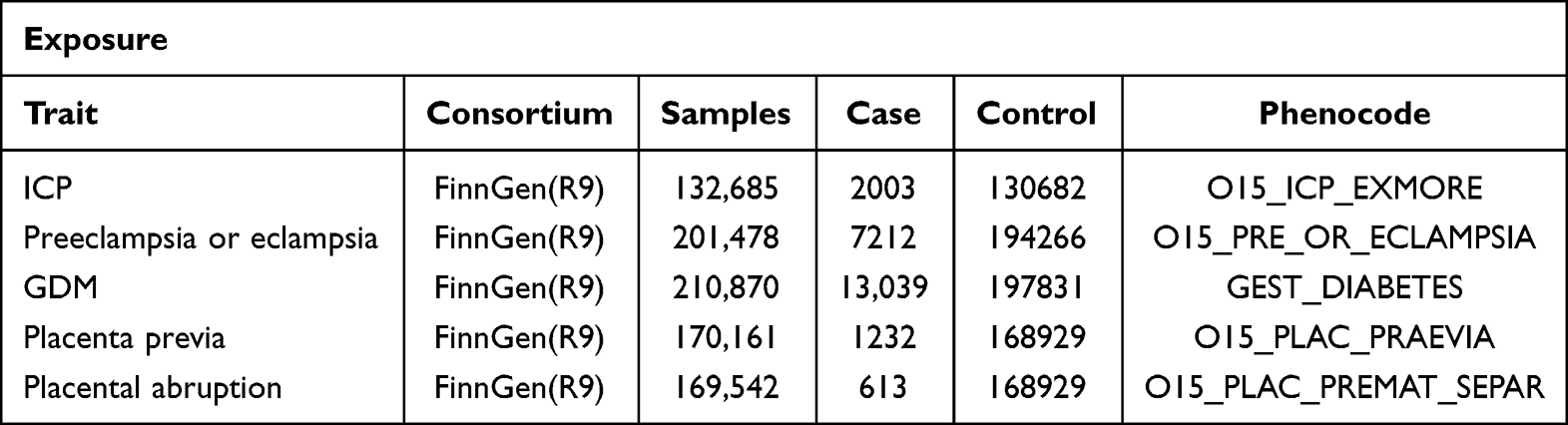 |
Table 1 Data Sources and Details of the Results |
Instrumental Variable Selection
The flow chart of the study is shown in Figure 1. In order to ensure the validity and robustness of the causal relationship between pregnancy complications and neonatal birth weight, the following quality control steps were used to select the best instrumental variables. To eliminate the linkage disequilibrium (LD) among multiple IVs, in the aggregated GWAS data for GDM and ICP, the genetic distance was set to 500 kb, and single nucleotide polymorphisms (SNPs) with r2 > 0.01 in LD with the most significant SNP were removed, while SNPs with P<5e×10−8 were retained. In the aggregated GWAS data for pre-eclampsia or eclampsia, the genetic distance was set to 500 kb. SNPs with r2>0.01 in LD with the most significant SNP were removed, and SNPs with P<1e×10−6 were retained. In the aggregated GWAS data for placenta praevia, the genetic distance was set to 500 kb. SNPs with r2>0.01 in LD with the most significant SNP were removed, and SNPs with P<5e×10−6 were retained. Similarly, in the aggregated GWAS data for placental abruption, the genetic distance was set to 10000 kb. SNPs with r2>0.01 in LD with the most significant SNP were removed, and SNPs with P<1e×10−6 were retained. Because placenta previa and placental abruption had relatively few cases in the available GWAS datasets, slightly relaxed significance thresholds were used to obtain a sufficient number of instrumental variables. Finally, SNPs associated with potential confounding maternal traits were excluded for each exposure as an additional step to reduce possible horizontal pleiotropy. Specifically, six SNPs were removed for GDM (rs7766070, rs780094, rs9275373, rs2248020, rs2523668, and rs74628648), two for ICP (rs1260326 and rs1983127), and one for pre-eclampsia or eclampsia (rs113070138). These exclusions were based on previous studies reporting significant associations between these variants and maternal traits that may confound the relationship between pregnancy complications and birth weight, including maternal body mass index, gestational age, and maternal metabolic traits. An important step of MR was to ensure that the effect of SNPs on exposure corresponded to the same allele as the effect on outcome. During data harmonization, palindromic SNPs were assessed using allele frequency information in accordance with the standard harmonization protocol of the TwoSampleMR R package.30 Palindromic SNPs with ambiguous strand orientation were excluded, whereas those that could be reliably aligned based on allele frequency information were retained. The F-statistic was used to assess the validity of the IVs, serving as a measure of instrument strength.
 |
Figure 1 Flowchart of the study design and Mendelian randomization analysis assessing the associations between pregnancy complications and neonatal birth weight. Pregnancy complications comprised intrahepatic cholestasis of pregnancy, preeclampsia/eclampsia, gestational diabetes, placenta previa, and placental abruption. Abbreviations: MR, Mendelian randomization; SNPs, single nucleotide polymorphisms; IVW, inverse variance weighted; LD, linkage disequilibrium. |
Mendelian Randomization Analysis
As an instrumental variable, genetic variation needs to satisfy three assumptions: (1) the correlation hypothesis, where genetic variation is strongly correlated with exposure factors, (2) the independence hypothesis, where genetic variation is not associated with any possible confounding factors, and (3) the exclusivity hypothesis, where genetic variation is only associated with the outcome through exposure factors. Violation of any of these assumptions in the IVW model can lead to susceptibility to pleiotropic or invalid instrument biases.31
For univariate MR analysis (UVMR), we used inverse variance weighting (IVW) as the primary statistical method to investigate the causal relationship between exposure and outcome, which was expressed as a beta coefficient (β) and the corresponding 95% confidence interval (CI).30 Because birth weight was analyzed as a continuous outcome, causal estimates were reported as beta coefficients rather than odds ratios. To ensure the robustness of the results, we performed three additional MR methods for supplementary analysis.30 We conducted several sensitivity analyses, including weighted median, MR-Egger regression, MR-PRESSO, and leave-one-out analysis, to improve the stability of the results.32–34 Among these methods, the weighted median test assesses causality, the P-value of the MR-Egger intercept detects horizontal pleiotropy and evaluates potential violations of the MR hypothesis, while the MR-PRESSO method identifies outliers and examines potential bias due to horizontal pleiotropy. However, when the number of SNPs is less than 4, this method is not applicable. Cochran’s Q test was used to estimate the heterogeneity of the SNPs identified in each analysis.35 Weak IVs with an F-statistic < 10 were excluded.36
Preeclampsia/eclampsia, ICP, and GDM were jointly included in the MVMR model because these three complications share overlapping metabolic and vascular pathophysiological mechanisms37 and are the most common pregnancy complications with confirmed associations with neonatal birth weight in clinical studies.16,18,22 Placenta previa and placental abruption were excluded from the MVMR model due to null UVMR results and insufficient statistical power. To determine whether the effect of pregnancy complications on neonatal birth weight is direct or indirect, we performed multivariate MR analysis (MVMR), considering traditional risk factors for neonatal birth weight.38 Similarly, IVW and MR-Egger regression were used for analysis, with the intercept derived from MR-Egger regression used to detect potential horizontal pleiotropy. We did not conduct formal statistical power calculations, and this limitation should be taken into account when interpreting the findings. All analyses were performed using the R program (version 4.3.1) with the “TwoSampleMR” package (version 0.5.7).
Result
Univariate Mendelian Randomization Results
UVMR showed that 17, 9, and 9 SNPs associated with neonatal birth weight were respectively obtained from the GWAS data for ICP, eclampsia or preeclampsia, and GDM. ICP was associated with lower neonatal birth weight (β_UVMR = −0.008, 95% CI: −0.013 to −0.002, P = 0.005), preeclampsia or eclampsia was associated with lower neonatal birth weight (β_UVMR = −0.041, 95% CI: −0.070 to −0.011, P = 0.007), and GDM was associated with higher neonatal birth weight (β_UVMR = 0.048, 95% CI: 0.024 to 0.073, P < 0.001). The UVMR results for all pregnancy complications and the corresponding sensitivity analysis metrics are shown in Table 2. The causal effects of three common pregnancy complications on neonatal birth weight are shown in Figure 2. IVW results showed that genetically predicted placenta previa (β_UVMR = −0.003, 95% CI: −0.010 to 0.004, P = 0.374) and placental abruption (β_UVMR = −0.001, 95% CI: −0.007 to 0.006, P = 0.856) were not significantly associated with neonatal birth weight. Although statistically significant associations were observed for some exposures, the corresponding effect sizes were small and should be interpreted cautiously.
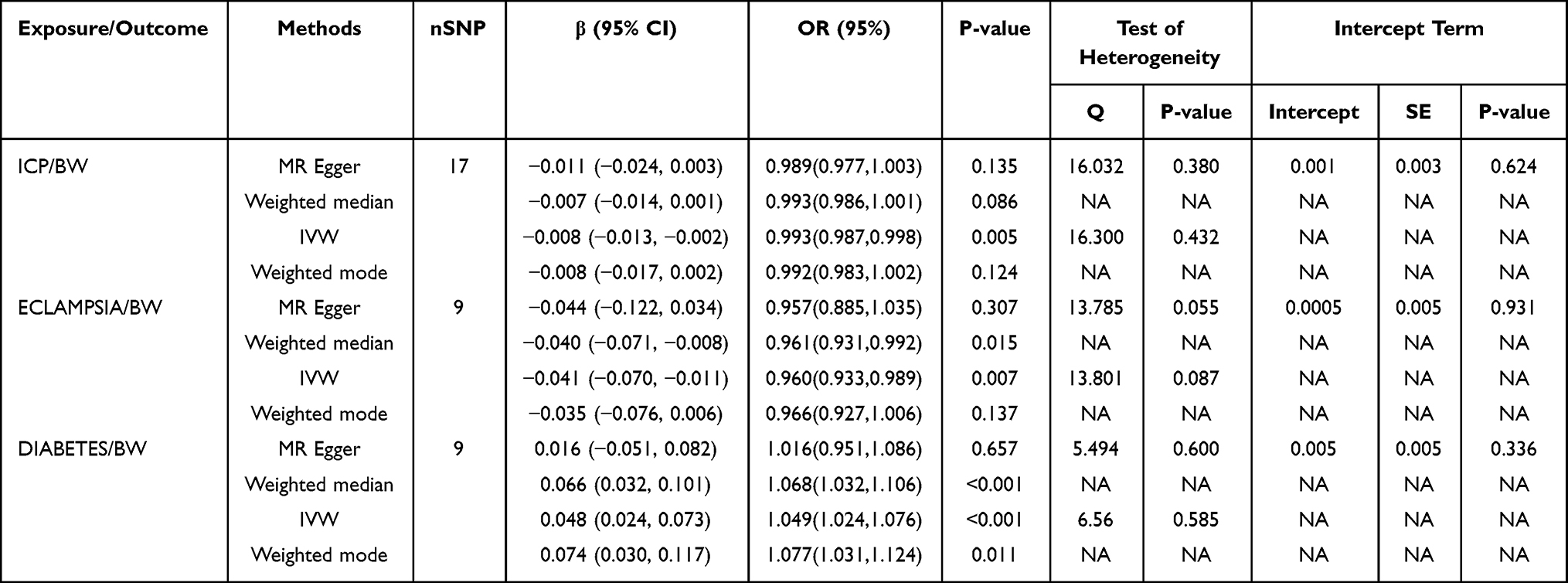 |
Table 2 SNPs Used as Instrumental Variables from ICP and ECLAMPSIA, Gestational Diabetes GWASs |
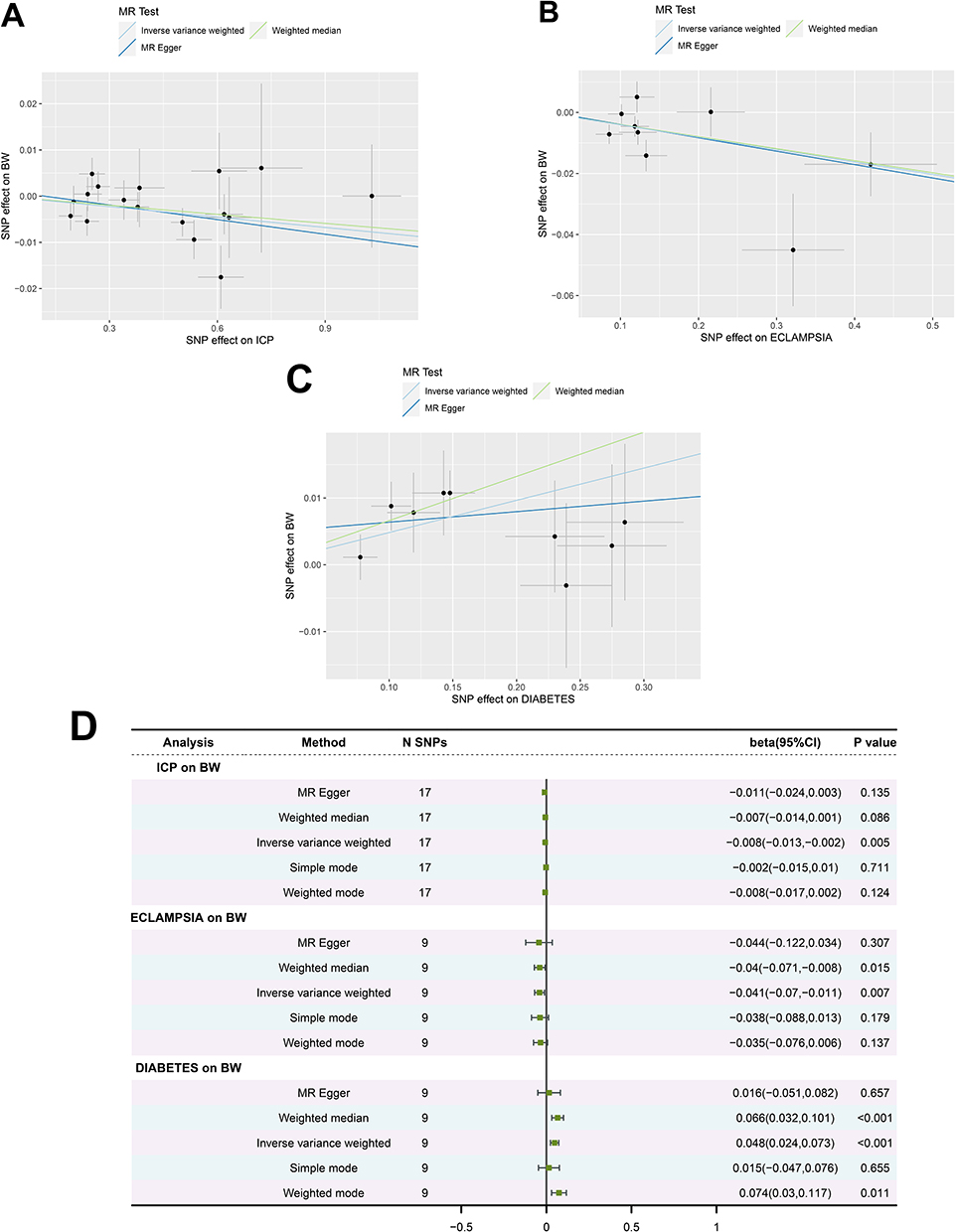 |
Figure 2 Causal effects of pregnancy complications on neonatal birth weight: three methods. The causal relationship between intrahepatic cholestasis of pregnancy and birth weight is shown in (A) the causal relationship between eclampsia or preeclampsia and birth weight is shown in (B) the causal relationship between gestational diabetes and birth weight is shown in (C) and a univariate Mendelian randomized forest map is shown in (D). |
Multivariate Mendelian Randomization Results
To determine whether the three pregnancy complications of ICP, preeclampsia or eclampsia, and GDM were independently associated with neonatal birth weight, we further performed an MVMR analysis. MVMR showed that 17, 2, and 9 SNPs associated with neonatal birth weight were respectively obtained from the GWAS data for ICP, preeclampsia or eclampsia, and GDM (Table 3). The results showed that ICP was independently associated with neonatal birth weight (β_MVMR = −0.007, 95% CI: −0.013 to −0.001, P = 0.014), preeclampsia or eclampsia was independently associated with neonatal birth weight (β_MVMR = −0.041, 95% CI: −0.065 to −0.017, P = 0.001), and GDM was independently associated with neonatal birth weight (β_MVMR = 0.045, 95% CI: 0.019 to 0.070, P = 0.001). The results of the MVMR analysis are presented in Table 3.
 |
Table 3 Multivariate Mendelian Randomization Analysis of ICP and ECLAMPSIA, Gestational Diabetes |
Sensitivity Analysis
Sensitivity analyses were performed using the MR-Egger intercept test and the MR-PRESSO method. In the sensitivity analysis of pregnancy complications and birth weight, the MR-Egger test showed little evidence of horizontal pleiotropy, as the intercept terms were close to zero and all P values were > 0.05 (Table 2). MR-PRESSO did not identify any outlier SNPs or evidence of horizontal pleiotropic effects between pregnancy complications and birth weight (all P > 0.05) (Table 2). In addition, Cochran’s Q test showed no evidence of heterogeneity (all P > 0.05) (Table 2). We further performed leave-one-out analysis to identify potential SNPs that might have influenced the MR estimates. No substantial change in the overall MR estimates was observed after sequential removal of individual SNPs (Figure 3). The F-statistics of the instrumental variables were all above 10, indicating adequate instrument strength. The F-statistics of all instrumental variables (SNPs) for each exposure are listed in Table 4.
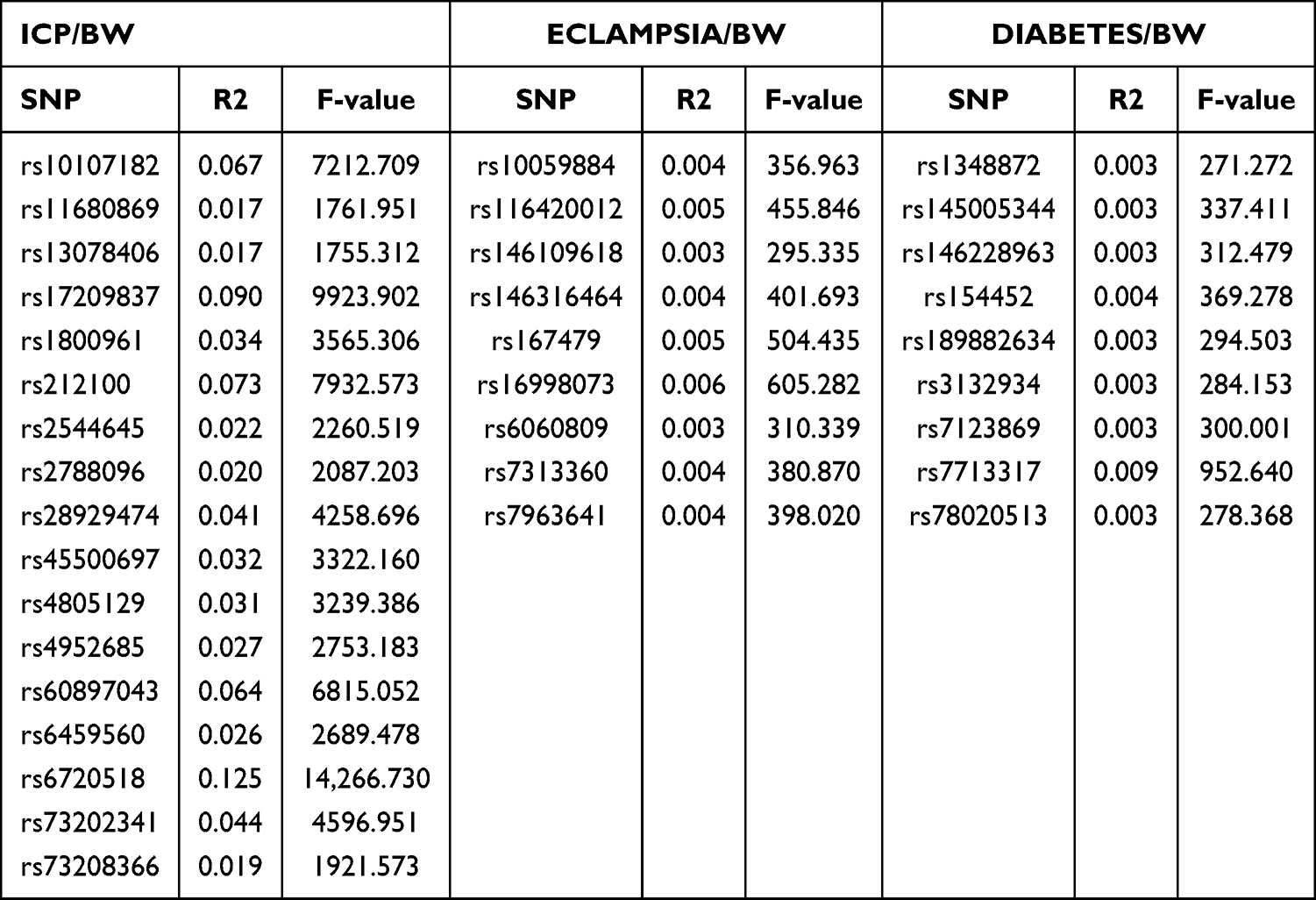 |
Table 4 F-Values of Instrumental Variables for ICP and ECLAMPSIA, Gestational Diabetes |
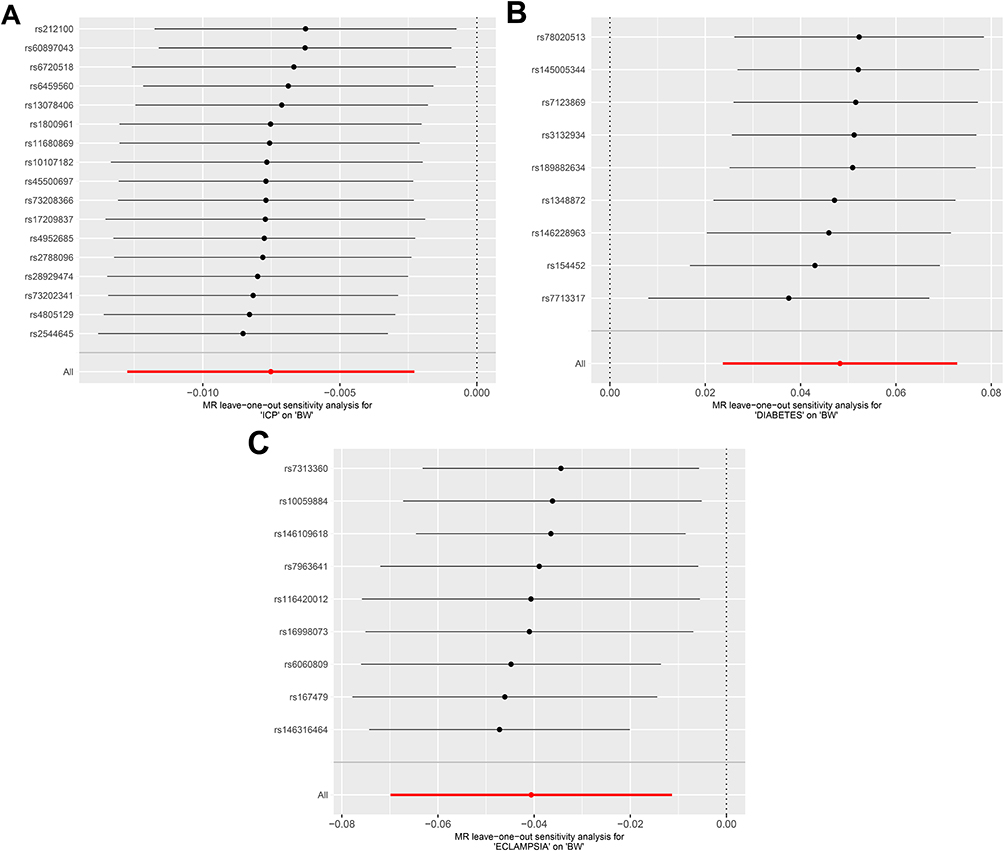 |
Figure 3 Leave-one-out plots of sensitivity analysis results. Leave-one-out plots (A) show the causal effect of intrahepatic cholestasis during pregnancy on birth weight after eliminating SNPs. Similarly, the sensitivity analysis results of the leave-one-out plots (B) and (C) show the relationship between gestational diabetes and eclampsia or preeclampsia mellitus and birth weight, respectively. |
Discussion
In our study, we conducted both UVMR and MVMR to assess the causal effects of common pregnancy complications on neonatal birth weight. Our findings provided supportive evidence for potential causal associations between common pregnancy complications and neonatal birth weight. Specifically, genetically predicted preeclampsia/eclampsia and ICP were associated with lower neonatal birth weight, whereas genetically predicted GDM was associated with higher neonatal birth weight. The adverse intrauterine environment in early life not only impacts fetal growth and development but may also result in persistent structural and functional changes, predisposing to a spectrum of adult diseases in the future.39 Abnormal birth weights are linked to an elevated risk of developing metabolic syndrome.40 Therefore, the prevention and management of abnormal birth weight are important issues in perinatal medicine and maternal–child health. To improve the survival rate and quality of life of infants, it is important to prevent abnormal birth weight, as it is associated with various pregnancy complications.41 Common pregnancy-related factors include ICP, preeclampsia/eclampsia, and GDM.
Currently, the pathogenesis of intrahepatic cholestasis of pregnancy remains unclear, and it is associated with adverse pregnancy outcomes. In cholestatic diseases, the retention of hydrophobic bile acids can induce hepatocyte apoptosis or necrosis, increase bile acid-induced oxidative stress, activate apoptosis pathways, and cause plasma membrane damage.42 Some studies have shown that ICP affects fetal birth weight. For instance, in a 12-year population cohort study involving 1,213,668 singleton neonates, a significant increase in the incidence of low birth weight was observed in infants born to women with intrahepatic cholestasis of pregnancy.43 Another retrospective case-control study showed that the birth weight percentile of infants born to mothers with intrahepatic cholestasis of pregnancy decreased with increasing gestational age.44 However, another meta-analysis showed that neonates born to mothers with ICP had lower birth weights compared to neonates born to mothers with normal pregnancies.45 These previous findings are consistent with our MR results and support an association between maternal susceptibility to ICP and lower neonatal birth weight.
Preeclampsia or eclampsia is the leading cause of small-for-gestational-age and low-birthweight infants. In pre-eclampsia, the maternal blood supply to the placenta is significantly reduced, thereby significantly affecting placental development. This results in a significant reduction in the number and surface area of placental villi, as well as a notable reduction in placental weight compared to that of a normal placenta.46,47 In an institution-based retrospective cross-sectional study that included 240 newborns, pre-eclampsia was associated with low birth weight, a finding that has been confirmed by other studies.48 Vatten et al conducted a questionnaire survey on the weight, blood pressure, and birth status of 4,096 young women aged 13–19 years old. They found lower birth weights among offspring of mothers with preeclampsia.49 Taken together, these studies are in line with our finding that genetically predicted preeclampsia/eclampsia was associated with lower neonatal birth weight.
GDM is a significant risk factor for macrosomia. The placentas of most pregnant women with GDM are heavier than those of women with uncomplicated pregnancies.50 This increase in placental weight in GDM is a compensatory response to chronic hypoxia and a structural adaptation aiding placental self-regulation, thereby enhancing fetal blood perfusion and oxygenation.51,52 In a cohort study involving 649,043 newborns, in utero exposure to insulin-treated maternal diabetes and type 2 diabetes in non-insulin-treated mothers was associated with an increased risk of macrosomia in the offspring.53 Consistent with this clinical evidence, our findings suggested that genetically predicted GDM was associated with higher neonatal birth weight.
The pathological findings of placental specimens from patients with placenta previa suggested that villous coagulation necrosis and fibrin deposition result in impaired placental perfusion, thereby impacting fetal growth and contributing to adverse fetal outcomes.54 Recent studies have found that when gestational hypertension occurs, spasm of the spiral arteries in the decidua basalis causes ischemia and necrosis of distal capillaries, forming hematoma, leading to placental abruption.55 Placental abruption is a severe obstetric complication that may result in preterm delivery and lower birth weight. By contrast, no evidence of a causal association was observed for placenta previa or placental abruption with neonatal birth weight in the present analysis. When MVMR was used, the associations of ICP, preeclampsia/eclampsia, and GDM with neonatal birth weight maintained the same overall pattern as that observed in UVMR. The results were consistent with previous clinical studies. The effect sizes estimated in this study were found to be modest, suggesting genetic influences that are relatively small at the population level rather than large clinical effects at the individual level. Accordingly, the potential clinical relevance of these findings may lie more in risk stratification and prevention than in individual-level prediction. Overall, the pattern of associations observed in this study is broadly consistent with existing clinical and epidemiological evidence, suggesting that the present findings are more supportive than paradigm-changing and that the overall novelty of the study is moderate.
This study has several methodological strengths. First, our analyses were limited to European-ancestry datasets, which likely mitigated bias related to population stratification. Second, by utilizing genetic variants as instrumental variables, these analyses were less susceptible to environmental confounding compared to conventional observational studies. Specifically, the selected SNPs demonstrated strong associations with their respective exposures and achieved independence following LD clumping. Third, both UVMR and MVMR analyses were conducted, thereby strengthening the robustness of the causal inference.
Several important limitations warrant consideration. First, the genetic instruments for the exposures were derived from GWAS of maternal disease status, whereas the outcome GWAS for birth weight primarily reflects fetal genetic effects. Consequently, our analysis estimates the association between genetic variants influencing the mother’s risk of developing a complication and birth weight as a fetal trait. This does not establish a direct clinical or pathophysiological effect of clinically manifest maternal disease on the fetal environment; rather, it suggests that shared biological pathways influencing maternal susceptibility to these conditions may concurrently influence mechanisms regulating fetal growth. Thus, the results should be interpreted as supportive genetic epidemiological evidence at the population level rather than as a demonstration of a direct clinical causal mechanism.
Second, the exposure and outcome GWAS assessed different biological dimensions, which may confound the causal interpretation of maternal exposures and fetal outcomes. In addition, the exposure data were limited to individuals of Finnish ancestry, whereas the outcome data were derived from broader European populations predominantly comprising non-Finnish participants. Although both datasets comprised individuals of European ancestry, this mismatch may have introduced bias and limited the generalizability of our findings. Accordingly, the present findings are primarily applicable to European populations, and future validation in multi-ancestry cohorts, ideally using mother–offspring paired GWAS data, is warranted.
Further limitations relate to data availability and statistical power. Although many pregnancy complications exist, only a limited number of common major complications were included due to the unavailability of suitable GWAS data for the remainder. The sample sizes for placenta previa (1,232 cases) and placental abruption (613 cases) were relatively small, and these acute obstetric events have low heritability and are strongly influenced by clinical and environmental factors. This may reduce the statistical power of MR analysis to detect weak causal associations, and thus the null findings for these two complications should be interpreted with caution. These characteristics may also render placenta previa and placental abruption less optimal as instrumental variables in MR analyses compared to traits with greater stability and heritability. In addition, our MVMR analysis could not account for all potentially relevant exposure factors, which may have influenced the estimated associations between individual exposures and birth weight. Finally, formal statistical power calculations were not performed, necessitating caution in the interpretation of the findings. Future studies with more comprehensive GWAS data may allow for the incorporation of additional relevant factors and elucidate the impact of pregnancy complications on neonatal birth weight.
Conclusion
In summary, genetically predicted ICP, as well as preeclampsia or eclampsia, were associated with lower neonatal birth weight, whereas genetically predicted GDM was associated with higher neonatal birth weight. No evidence supported a causal association between placenta previa or placental abruption and neonatal birth weight. These findings provide supportive genetic epidemiological evidence for the relationship between pregnancy complications and neonatal birth weight, with potential implications for etiological understanding, risk stratification, and prevention in clinical practice.
Abbreviations
CI, Confidence interval; GWAS, Genome-wide association study; GDM, Gestational diabetes mellitus; ICP, Intrahepatic cholestasis of pregnancy; IVW, Inverse variance weighting; MR, Mendelian randomization; MVMR, Multivariable Mendelian randomization; OR, Odds ratio; SNP, Single nucleotide polymorphism; UVMR, Univariate Mendelian randomization; MD, Mean difference.
Data Sharing Statement
The genome-wide association analysis of the Early Growth Genetics consortium was used as the outcome data (http://egg-consortium.org).
Ethics Approval and Consent to Participate
This study used publicly available summary-level data from genome-wide association studies (GWAS) from the FinnGen Consortium (https://www.finngen.fi/) and the Early Growth Genetics (EGG) Consortium (http://egg-consortium.org). All data used in this study were de-identified and publicly available, with no access to individual-level participant information. The original FinnGen and EGG studies received ethical approval from their respective institutional review boards, and all participants provided informed consent. According to Article 32 (Items 1 and 2) of the Measures for Ethical Review of Life Science and Medical Research Involving Human Subjects (February 18, 2023, China), studies that involve secondary analyses of publicly available and anonymized data are exempt from institutional ethics review. Therefore, no additional ethical approval or informed consent was required for this study.
Consent for Publication
Not applicable, as this study does not contain any individual person’s data in any form.
Author Contributions
All authors made a significant contribution to the work reported, whether that is in the conception, study design, execution, acquisition of data, analysis and interpretation, or in all these areas; took part in drafting, revising or critically reviewing the article; gave final approval of the version to be published; have agreed on the journal to which the article has been submitted; and agree to be accountable for all aspects of the work.
Funding
This work was supported by grants from the National Natural Science Foundation of China [grant numbers 82201896], the Foundation of Liaoning Province Education Administration [grant number LJKMZ20221294], and Liaoning Province Joint Science and Technology Plan [grant number 2025-BSLH-117].
Disclosure
The authors declare that the research was conducted in the absence of any commercial or financial relationships that could be construed as a potential conflict of interest.
References
1. Yu J, Flatley C, Greer RM, et al. Birth-weight centiles and the risk of serious adverse neonatal outcomes at term. J Perinat Med. 2018;46(9):1048–13. doi:10.1515/jpm-2017-0176
2. Bizerea-Moga TO, Pitulice L, Pantea CL, et al. Extreme birth weight and metabolic syndrome in children. Nutrients. 2022;14(1):204. doi:10.3390/nu14010204
3. Nilsson PM, Viigimaa M, Giwercman A, et al. Hypertension and reproduction. Curr Hypertens Rep. 2020;22(4):29. doi:10.1007/s11906-020-01036-2
4. Martin-Calvo N, Goni L, Tur JA, et al. Low birth weight and small for gestational age are associated with complications of childhood and adolescence obesity: systematic review and meta-analysis. Obes Rev. 2022;23(1):e13380. doi:10.1111/obr.13380
5. Huang K, Si S, Chen R, et al. Preterm birth and birth weight and the risk of type 1 diabetes in chinese children. Front Endocrinol. 2021;12:603277. doi:10.3389/fendo.2021.603277
6. Rocha G, Pereira S, Antunes-Sarmento J, et al. Early anemia and neonatal morbidity in extremely low birth-weight preterm infants. J Matern Fetal Neonatal Med. 2021;34(22):3697–3703. doi:10.1080/14767058.2019.1689948
7. Wondie WT, Legesse BT, Mekonnen GB, et al. Incidence and predictors of respiratory distress syndrome among low birth weight neonates in the first seven days in Northwest Ethiopia Comprehensive Specialized Hospitals, 2023: a retrospective follow-up study. BMJ Open. 2023;13(11):e079063. doi:10.1136/bmjopen-2023-079063
8. Ofek SN, Reichman B, Zaslavsky‐Paltiel I, et al. Neonatal morbidities and postnatal growth failure in very low birth weight, very preterm infants. Acta Paediatr. 2022;111(8):1536–1545. doi:10.1111/apa.16380
9. Widness JA. Pathophysiology of anemia during the neonatal period, including anemia of prematurity. Neoreviews. 2008;9(11):e520. doi:10.1542/neo.9-11-e520
10. Nawaz FA, Sultan MA. Low birth weight prevalence in children diagnosed with neurodevelopmental disorders in Dubai. Glob Pediatr Health. 2021;8:2333794X211031782. doi:10.1177/2333794X211031782
11. Pahlitzsch T, Hanne L, Henrich W, et al. Influence of foetal macrosomia on the neonatal and maternal birth outcome. Geburtshilfe Frauenheilkd. 2019;79(11):1191–1198. doi:10.1055/a-0880-6182
12. Pillai S, Cheyney M, Everson CL, et al. Fetal macrosomia in home and birth center births in the United States: maternal, fetal, and newborn outcomes. Birth. 2020;47(4):409–417. doi:10.1111/birt.12506
13. Akin Y, Cömert S, Turan C, et al. Macrosomic newborns: a 3-year review. Turk J Pediatr. 2010;52(4):378–383.
14. Beta J, Khan N, Khalil A, et al. Maternal and neonatal complications of fetal macrosomia: systematic review and meta-analysis. Ultrasound Obstet Gynecol. 2019;54(3):308–318. doi:10.1002/uog.20279
15. Said AS, Manji KP. Risk factors and outcomes of fetal macrosomia in a tertiary centre in Tanzania: a case-control study. BMC Pregnancy Childbirth. 2016;16(1):243. doi:10.1186/s12884-016-1044-3
16. Ye W, Luo C, Huang J, et al. Gestational diabetes mellitus and adverse pregnancy outcomes: systematic review and meta-analysis. BMJ. 2022;377:e067946. doi:10.1136/bmj-2021-067946
17. Wu K, Yin B, Li S, et al. Prevalence, risk factors and adverse perinatal outcomes for Chinese women with intrahepatic cholestasis of pregnancy: a large cross-sectional retrospective study. Ann Med. 2022;54(1):2966–2974. doi:10.1080/07853890.2022.2136400
18. Nakimuli A, Starling JE, Nakubulwa S, et al. Relative impact of pre-eclampsia on birth weight in a low resource setting: a prospective cohort study. Pregnancy Hypertens. 2020;21:1–6. doi:10.1016/j.preghy.2020.04.002
19. Phipps EA, Thadhani R, Benzing T, et al. Pre-eclampsia: pathogenesis, novel diagnostics and therapies. Nat Rev Nephrol. 2019;15(5):275–289. doi:10.1038/s41581-019-0119-6
20. Atamamen TF, Naing NN, Oyetunji JA, et al. Systematic literature review on the neonatal outcome of preeclampsia. Pan Afr Med J. 2022;41:82. doi:10.11604/pamj.2022.41.82.31413
21. Almhanna M, Easa ZO, Alatwani S. Morbidity and mortality among infants of diabetic mothers admitted to a neonatal care unit in Karbala pediatric teaching hospital. J Med Life. 2022;15(8):994–999. doi:10.25122/jml-2022-0073
22. Ugwudike B, Kwok M. Update on gestational diabetes and adverse pregnancy outcomes. Curr Opin Obstet Gynecol. 2023;35(5):453–459. doi:10.1097/GCO.0000000000000901
23. Wang L, Lu Z, Zhou X, et al. Effects of intrahepatic cholestasis of pregnancy on hepatic function, changes of inflammatory cytokines and fetal outcomes. Exp Ther Med. 2019;17(4):2979–2984. doi:10.3892/etm.2019.7312
24. Odabas RK, Sökmen Y, Dünder E, et al. The incidence of intrahepatic cholestasis of pregnancy and its maternal, fetal, and neonatal adverse outcomes: a systematic review and meta-analysis. J Midwifery Womens Health. 2024;69(3):370–382. doi:10.1111/jmwh.13640
25. Ananth CV, Smulian JC, Vintzileos AM. The effect of placenta previa on neonatal mortality: a population-based study in the United States, 1989 through 1997. Am J Obstet Gynecol. 2003;188(5):1299–1304. doi:10.1067/mob.2003.76
26. Baczkowska M, Kosińska-Kaczyńska K, Zgliczyńska M, et al. Epidemiology, risk factors, and perinatal outcomes of placental abruption-detailed annual data and clinical perspectives from polish tertiary center. Int J Environ Res Public Health. 2022;19(9):5148. doi:10.3390/ijerph19095148
27. Lawlor DA, Harbord RM, Sterne JAC, et al. Mendelian randomization: using genes as instruments for making causal inferences in epidemiology. Stat Med. 2008;27(8):1133–1163. doi:10.1002/sim.3034
28. Liu Y, Jin C, Ni L-F, et al. Educational attainment and offspring birth weight: a bidirectional Mendelian randomization study. Front Genet. 2022;13:922382. doi:10.3389/fgene.2022.922382
29. Ardissino M, Slob EAW, Millar O, et al. Maternal hypertension increases risk of preeclampsia and low fetal birthweight: genetic evidence from a mendelian randomization study. Hypertension. 2022;79(3):588–598. doi:10.1161/HYPERTENSIONAHA.121.18617
30. Burgess S, Butterworth A, Thompson SG. Mendelian randomization analysis with multiple genetic variants using summarized data. Genet Epidemiol. 2013;37(7):658–665. doi:10.1002/gepi.21758
31. Spiga F, Gibson M, Dawson S, et al. Tools for assessing quality and risk of bias in Mendelian randomization studies: a systematic review. Int J Epidemiol. 2023;52(1):227–249. doi:10.1093/ije/dyac149
32. Bowden J, Davey Smith G, Haycock PC, et al. Consistent estimation in mendelian randomization with some invalid instruments using a weighted median estimator. Genet Epidemiol. 2016;40(4):304–314. doi:10.1002/gepi.21965
33. Verbanck M, Chen C-Y, Neale B, et al. Detection of widespread horizontal pleiotropy in causal relationships inferred from Mendelian randomization between complex traits and diseases. Nat Genet. 2018;50(5):693–698. doi:10.1038/s41588-018-0099-7
34. Bowden J, Davey SG, Burgess S. Mendelian randomization with invalid instruments: effect estimation and bias detection through Egger regression. Int J Epidemiol. 2015;44(2):512–525. doi:10.1093/ije/dyv080
35. Shrestha BM. Systematic reviews and meta-analysis: principles and practice. JNMA J Nepal Med Assoc. 2019;57(215):1–2. doi:10.31729/jnma.3986
36. Pierce BL, Ahsan H, Vanderweele TJ. Power and instrument strength requirements for Mendelian randomization studies using multiple genetic variants. Int J Epidemiol. 2011;40(3):740–752. doi:10.1093/ije/dyq151
37. Arafa A, Dong JY. Association between intrahepatic cholestasis of pregnancy and risk of gestational diabetes and preeclampsia: a systematic review and meta-analysis. Hypertens Pregnancy. 2020;39(3):354–360. doi:10.1080/10641955.2020.1758939
38. Burgess S, Thompson SG. Multivariable Mendelian randomization: the use of pleiotropic genetic variants to estimate causal effects. Am J Epidemiol. 2015;181(4):251–260. doi:10.1093/aje/kwu283
39. Gantenbein KV, Kanaka-Gantenbein C. Highlighting the trajectory from intrauterine growth restriction to future obesity. Front Endocrinol. 2022;13:1041718. doi:10.3389/fendo.2022.1041718
40. Wang D, Na Q, Song G, et al. The role of circRNA-SETD2/miR-519a/PTEN axis in fetal birth weight through regulating trophoblast proliferation. Biomed Res Int. 2020;2020:9809632. doi:10.1155/2020/9809632
41. Liu W, Liu Q, Liu W, et al. Maternal risk factors and pregnancy complications associated with low birth weight neonates in preterm birth. J Obstet Gynaecol Res. 2021;47(9):3196–3202. doi:10.1111/jog.14830
42. Wei S, Ma X, Zhao Y. Mechanism of hydrophobic bile acid-induced hepatocyte injury and drug discovery. Front Pharmacol. 2020;11:1084. doi:10.3389/fphar.2020.01084
43. Wikstrom SE, Marschall HU, Ludvigsson JF, et al. Intrahepatic cholestasis of pregnancy and associated adverse pregnancy and fetal outcomes: a 12-year population-based cohort study. BJOG. 2013;120(6):717–723. doi:10.1111/1471-0528.12174
44. Martineau M, Raker C, Powrie R, et al. Intrahepatic cholestasis of pregnancy is associated with an increased risk of gestational diabetes. Eur J Obstet Gynecol Reprod Biol. 2014;176:80–85. doi:10.1016/j.ejogrb.2013.12.037
45. Li L, Chen Y-H, Yang -Y-Y, et al. Effect of intrahepatic cholestasis of pregnancy on neonatal birth weight: a meta-analysis. J Clin Res Pediatr Endocrinol. 2018;10(1):38–43. doi:10.4274/jcrpe.4930
46. Zelinka-Khobzey MM, Tarasenko KV, Nesterenko LA, et al. Morphometric characteristics of placenta in women with preeclampsia and obesity compared to women with normal body weight. Wiad Lek. 2023;76(12):2593–2600. doi:10.36740/WLek202312107
47. Kornacki J, Olejniczak O, Sibiak R, et al. Pathophysiology of pre-eclampsia-two theories of the development of the disease. Int J Mol Sci. 2023;25(1):307. doi:10.3390/ijms25010307
48. Ekubagewargies DT, Kassie DG, Takele WW. Maternal HIV infection and preeclampsia increased risk of low birth weight among newborns delivered at University of Gondar specialized referral hospital, Northwest Ethiopia, 2017. Ital J Pediatr. 2019;45(1):7. doi:10.1186/s13052-019-0608-z
49. Vatten LJ, Romundstad PR, Holmen TL, et al. Intrauterine exposure to preeclampsia and adolescent blood pressure, body size, and age at menarche in female offspring. Obstet Gynecol. 2003;101(3):529–533. doi:10.1016/s0029-7844(02)02718-7
50. Bianchi C, Taricco E, Cardellicchio M, et al. The role of obesity and gestational diabetes on placental size and fetal oxygenation. Placenta. 2021;103:59–63. doi:10.1016/j.placenta.2020.10.013
51. Desoye G, Cervar-Zivkovic M. Diabetes Mellitus, Obesity, and the Placenta. Obstet Gynecol Clin North Am. 2020;47(1):65–79. doi:10.1016/j.ogc.2019.11.001
52. Carrasco-Wong I, Moller A, Giachini FR, et al. Placental structure in gestational diabetes mellitus. Biochim Biophys Acta Mol Basis Dis. 2020;1866(2):165535. doi:10.1016/j.bbadis.2019.165535
53. Kong L, Nilsson IAK, Gissler M, et al. Associations of maternal diabetes and body mass index with offspring birth weight and prematurity. JAMA Pediatr. 2019;173(4):371–378. doi:10.1001/jamapediatrics.2018.5541
54. Jung EJ, Cho HJ, Byun JM, et al. Placental pathologic changes and perinatal outcomes in placenta previa. Placenta. 2018;63:15–20. doi:10.1016/j.placenta.2017.12.016
55. Brandt JS, Ananth CV. Placental abruption at near-term and term gestations: pathophysiology, epidemiology, diagnosis, and management. Am J Obstet Gynecol. 2023;228(5S):S1313–S1329. doi:10.1016/j.ajog.2022.06.059
 © 2026 The Author(s). This work is published and licensed by Dove Medical Press Limited. The
full terms of this license are available at https://www.dovepress.com/terms
and incorporate the Creative Commons Attribution
- Non Commercial (unported, 4.0) License.
By accessing the work you hereby accept the Terms. Non-commercial uses of the work are permitted
without any further permission from Dove Medical Press Limited, provided the work is properly
attributed. For permission for commercial use of this work, please see paragraphs 4.2 and 5 of our Terms.
© 2026 The Author(s). This work is published and licensed by Dove Medical Press Limited. The
full terms of this license are available at https://www.dovepress.com/terms
and incorporate the Creative Commons Attribution
- Non Commercial (unported, 4.0) License.
By accessing the work you hereby accept the Terms. Non-commercial uses of the work are permitted
without any further permission from Dove Medical Press Limited, provided the work is properly
attributed. For permission for commercial use of this work, please see paragraphs 4.2 and 5 of our Terms.