
Back to Journals » Risk Management and Healthcare Policy » Volume 19
Beyond Side Effect: Immuno-Ethical Risk Analysis of Animal-Derived Ingredients in Pharmaceuticals
Authors Herdiana Y  , Gozali D, Putriana NA, Muchtaridi M , Shamsuddin S, Sofian FF
Received 24 November 2025
Accepted for publication 7 February 2026
Published 26 February 2026 Volume 2026:19 584055
DOI https://doi.org/10.2147/RMHP.S584055
Checked for plagiarism Yes
Review by Single anonymous peer review
Peer reviewer comments 2
Editor who approved publication: Dr Gulsum Kaya
Yedi Herdiana,1 Dolih Gozali,1 Norisca Aliza Putriana,1 Muchtaridi Muchtaridi,2 Shaharum Shamsuddin,3,4 Ferry Ferdiansyah Sofian5
1Department of Pharmaceutics and Pharmaceutical Technology, Faculty of Pharmacy, Universitas Padjadjaran, Sumedang, West Java, Indonesia; 2Department of Pharmaceutical Analysis and Medicinal Chemistry, Faculty of Pharmacy, Universitas Padjadjaran, Sumedang, West Java, Indonesia; 3School of Health Sciences, Universiti Sains Malaysia, Kubang Kerian, Kelantan, Malaysia; 4Nanobiotech Research Initiative, Institute for Research in Molecular Medicine (INFORMM), Universiti Sains Malaysia, Penang, Malaysia; 5Department of Pharmaceutical Biology, Faculty of Pharmacy, Universitas Padjadjaran, Sumedang, West Java, Indonesia
Correspondence: Yedi Herdiana, Department of Pharmaceutics and Pharmaceutical Technology, Faculty of Pharmacy, Universitas Padjadjaran, Sumedang, West Java, Indonesia, Email [email protected]
Abstract: Animal-derived ingredients (ADIs) account for up to 75% of prescription drugs, triggering clinical risks such as alpha-gal syndrome (AGS), ethical-religious conflicts, and supply transparency issues. This calls for a systematic evaluation of ADIs and accelerated development of animal-free alternatives (AFAs). This critical review synthesizes evidence from the biomedical, regulatory, and ethical literature to analyze the persistence of ADIs, map their risk stratification (biological and religious), and evaluate progress in AFAs. ADIs persist due to their functional, regulatory, and biocompatibility advantages in various medical products. Methodologically, the proposed dual risk stratification framework integrates immunological risk profiles, specifically targeting the galactose-α-1,3-galactose epitope, with Halal jurisprudential criteria for categorizing pharmaceutical ingredients. Although various AFAs (plant-based, recombinant, and synthetic) have been developed and supported by global regulatory initiatives, significant challenges in scalability, cost, and bioequivalence remain. The transition to AFAs is crucial and increasingly technically feasible. A unified framework that integrates scientific, ethical, and religious analysis is needed to accelerate the adoption of safe and inclusive AFAs, while ensuring patient autonomy and safety.
Keywords: animal-derived ingredients, immunogenicity, pharmaceutical ethics, halal pharmaceuticals, risk assessment, excipient safety
Introduction
Animal-derived ingredients (ADIs) have long played a crucial role in the development of pharmaceuticals and medical technologies. ADIs include compounds derived from animal tissues, organs, or byproducts, used either as active ingredients or inactive excipients.1 Surveys by regulatory agencies such as the FDA and EMA indicate widespread prevalence, with ADIs found in a significant percentage of prescription drug formulations, often hidden as common excipients such as gelatin in hard-shell capsules or magnesium stearate. The presence of ADIs in pharmaceuticals and medical devices is often invisible to patients or healthcare professionals, but their impact on clinical practice, ethics, and patient trust is significant. For nearly 25% of animal-free medicines available on the market, an independent certification mark would facilitate informed consumer decision-making.2 Their production raises several ethical concerns regarding animal welfare. Furthermore, their biological origin is associated with a high risk of contamination, which often results in poor scientific data for clinical translation.3
The need for animal-free medicines impacts not only vegans and vegetarians, but also those with dietary restrictions due to other religious beliefs. In particular, the classification of “Haram” status in Islamic jurisprudence and the principle of “Ahimsa” in Hindu/Jain traditions create serious implications for patient autonomy. Globally, dietary and religious preferences play a significant role in shaping public attitudes toward healthcare products. Recent data estimates that 22% of the world’s population identifies as vegetarian, with over 88 million people following a vegan diet.4 Pork-derived products, such as heparin (low-molecular-weight heparin/LMWH), are prohibited in Jewish and Muslim traditions, while gelatin is permitted in Islam only if it comes from halal animals slaughtered according to Islamic law. In the context of modern pharmaceuticals, the need to provide culturally and religiously inclusive drug formulations is becoming increasingly urgent.
Beyond social and religious preferences, the medical risks associated with ADIs are also receiving increasing attention. One emerging phenomenon that highlights this complexity is alpha-gal syndrome (AGS). AGS is an allergy triggered by tick bites (such as Amblyomma americanum), which causes sensitization through an Immunoglobulin E (IgE) antibody response to galactose-α-1,3-galactose (alpha-gal), a carbohydrate epitope found in the tissues of all non-primate mammals. AGS reactions to mammalian foods and medical products include delayed anaphylaxis, urticaria, gastrointestinal and cardiac symptoms.5,6 In the United States, an estimated 450,000 people suffer from AGS, and a survey of 559 patients showed that more than 50% experienced anaphylaxis after using medical products containing alpha-gal.7 Patients must modify their medication regimens to avoid ADIs, highlighting a real challenge in daily clinical practice. In addition to new immunological risks such as AGS, traditional risks remain, including anaphylactic reactions to gelatin in vaccines,8 lactose intolerance to tablet excipients,9 and concerns about zoonotic transmission such as Bovine Spongiform Encephalopathy (BSE).10
The issue of ADIs is not limited to prescription drugs but extends to a wide range of pharmaceutical products and everyday medical devices. Porcine-based heparin remains the gold standard in anticoagulant therapy worldwide.1 Animal tissue-based thyroid hormone remains commercially available, although synthetic alternatives have been developed. Other commonly used products include porcine or bovine bioprosthetic heart valves, collagen-based surgical mesh, surgical sutures, and gelatin as a vaccine stabilizer. However, the transition to animal-free alternatives (AFAs) faces significant economic and technical hurdles. Production cost premiums often exceed 20–50%, and in specific cases of “humanising” primary cell cultures, the cost of animal-free media can increase by more than 600% due to the high price of human serum and recombinant stabilizers.11,12
Previous studies have explored partial aspects of ADIs, such as the risk of gelatin allergy, the halal and kosher dilemmas in vaccines, or the sustainability challenges in gelatin production, but the existing literature remains fragmented and lacks a unified framework. This review addresses this gap by presenting a multidisciplinary analysis of ADIs, using AGS as a clinical case study while examining its ethical, religious, regulatory, and environmental implications. This review offers a comprehensive dual-risk stratification framework to understand current risks and guide the development of safer, more inclusive, and sustainable animal-free alternatives.
Why are Some Animal-Derived Ingredients Still Necessary?
Despite ethical, religious, and clinical concerns, ADIs remain common in pharmaceuticals, anesthetics, and food products. Their persistence is explained by several key factors.
First, ADI offer unique functionality that is difficult to replicate with plant-based or synthetic alternatives. Difficulties in achieving key functional properties like emulsification and gelation further limit their ability to replicate animal-based products. Moreover, sustainable approaches for extracting high-quality proteins are still under development.13 For example, gelatin provides irreplaceable gelling and stabilizing properties in capsules, vaccines, and confectionery. Similarly, heparin, derived from porcine intestines, remains indispensable as an anticoagulant, and collagen or lanolin continues to play roles in regenerative and dermatological applications due to their biocompatibility. However, animal-derived proteins like collagen type I, hyaluronic acid, and Matrigel™ present several drawbacks including biological risk contamination and batch-to-batch variability which leads to low data reproducibility.3 Replicating the complex flavor profile of meat is difficult, as it involves intricate interactions between fat, protein, and cooking processes.14
Second, regulatory and clinical familiarity contribute to their persistence. Developing novel alternatives is a lengthy, expensive process involving extensive testing to prove safety and effectiveness before the FDA (US Food and Drug Administration) or EMA (European Medicines Agency) will grant approval, which can take over a decade. Regulators require substantial data, including results from adequately controlled clinical trials, to assess the risk-benefit profile of a new product before it can be used by the public. Established ADI, by contrast, have long safety records and wide clinical acceptance, making them the default choice in many therapeutic and manufacturing contexts.15,16
Third, economic and scalability factors favor ADI. As by-products of the meat and dairy industries, they are cheap and readily available at industrial scale.17 In contrast, animal-free alternatives often require advanced biotechnological production, resulting in higher costs and limited accessibility, particularly in low- and middle-income countries.18
Finally, bioavailability and pharmacokinetics make some ADI clinically preferable. Certain animal-derived compounds are absorbed or metabolized more effectively than synthetic substitutes, ensuring therapeutic efficacy in critical care, perioperative, or pediatric settings.19
In short, ADI persist because they combine proven functionality, regulatory familiarity, affordability, and clinical reliability. While their use raises ethical and cultural concerns, detailed implications for patient autonomy, disclosure, and alternative development are best addressed within specific contexts such as pharmaceuticals and food applications.
Pharmaceutical Applications of Animal-Derived Ingridients
ADIs are deeply integrated into pharmaceuticals and medical products, functioning as both active pharmaceutical ingredients (APIs) and excipients.
Active Pharmaceutical Ingredients (APIs)
Heparin remains the most critical example of ADI dependence; as the gold standard anticoagulant for surgery and dialysis, no synthetic alternative currently matches its clinical scope. However, sourcing variability between Heparin Porcine Intestinal (HPI) and Heparin Bovine Intestinal (HBI) mucosa—which possess distinct anticoagulant activities of approximately 200 IU/mg and 100 IU/mg, respectively—presents significant safety risks. The 2009 bleeding incidents in Brazil highlighted the dangers of non-standardized interchangeability, leading to the landmark 2016/2017 Brazilian Pharmacopeia monographs. By standardizing HPI and HBI as distinct APIs, this regulatory milestone serves as a global model for ensuring patient safety through precise ADI differentiation.19 Heparin products have evolved from animal-derived Unfractionated Heparin (UFH) to Low Molecular Weight Heparin (LMWH), synthetic Ultra-Low Molecular Weight Heparin (ULMWH), and most recently, bioengineered heparins. While UFH, LMWH, and fondaparinux remain FDA approved and in clinical use, fourth-generation bioengineered products represent the future, offering improved safety, consistency, and reduced reliance on animal sources.20 Other APIs historically sourced from animals include insulin (porcine/bovine origin before recombinant forms) and desiccated thyroid hormones from porcine glands. Vaccines and biologics also rely on ADI: gelatin stabilizes viral vaccines such as MMR and varicella, egg proteins are used in influenza vaccines, and fetal bovine serum (FBS) supports cell culture for biologics and monoclonal antibodies.
In almost all human cultures, animals have been used as sources of medicinal products for treating numerous diseases and alleviating symptoms. More than 1500 animal raw materials are mentioned in Traditional Chinese Medicine. It is reported that 584 animal species are used in Latin America and 283 in Brazil for the treatment of various diseases. Two hundred fifty-two important medicinal compounds have been chosen by the World Health Organization, and 11.1% of these originate from plants, while 8.7% come from animals.21
Excipients
Common ADI-based excipients include gelatin for capsules, lactose from cow’s milk as a filler, magnesium stearate (porcine/bovine fat) as a tablet lubricant, and glycerin which may be animal-derived. Other examples include chondroitin sulfate from bovine trachea or shark cartilage and vitamin D3 (colecalciferol) sourced from sheep’s wool lanolin. These ingredients are widely used but often invisible to patients and clinicians.
Medical Devices
ADI also persist in biomaterials. Bioprosthetic heart valves are made from porcine or bovine tissue, and collagen-based wound dressings are widely used for tissue repair. Historically, surgical sutures (catgut) were derived from sheep or cow intestines, although synthetic sutures now dominate.
Approximately 75% of commonly prescribed medicines contain ADI, which can cause allergic reactions. In alpha-gal syndrome (AGS), patients develop IgE-mediated responses to mammalian-derived carbohydrates such as porcine or bovine gelatin and heparin. Importantly, non-mammalian sources such as fish or poultry do not contain alpha-gal, so fish gelatin, marine omega-3 oils, and egg-based excipients are generally tolerated unless a patient has a conventional seafood or egg allergy. This distinction is critical in guiding safer therapeutic choices.
Beyond allergy, ADI raise ethical challenges. Their use is rarely disclosed in perioperative care, yet patients from religious or ethical backgrounds often expect to know. Applying Beauchamp and Childress’ Four Principles, disclosure is ethically required, and legal precedents such as the Montgomery ruling in the UK emphasize the need to share risks significant to patients.22 Surveys reinforce this: 63% of US patients, 44% of UK surgical patients, and 74% of dermatology patients desire disclosure, with many indicating it would affect their treatment decisions. Despite this, 40% of manufacturers cannot confirm ingredient sources, and 70% of physicians remain unaware of ADI content in the drugs they prescribe.23
ADI remain critical in APIs, excipients, and medical devices due to their functionality and lack of fully equivalent alternatives. However, they present both clinical risks (eg, AGS, allergies) and ethical challenges (informed consent, religious or dietary conflicts). Despite growing survey data highlighting patient concerns, peer-reviewed case reports of ADI-related refusal remain scarce, underscoring a gap between patient expectations and documented clinical outcomes. Greater transparency in labeling and proactive disclosure are essential while research continues to develop robust animal-free alternatives. The functional significance of the various ADI components in achieving the desired product characteristics can be seen in Table 1.
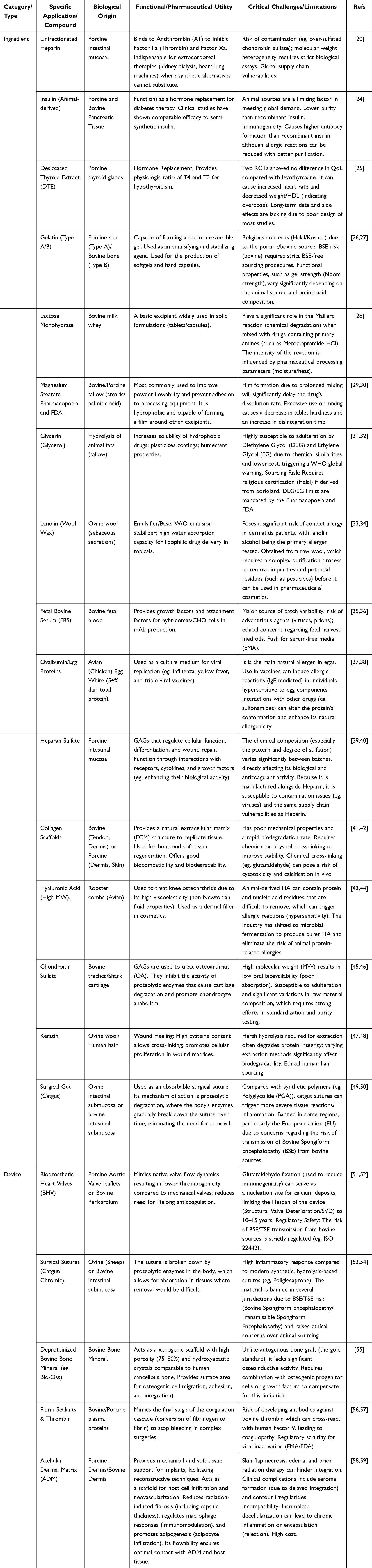 |
Table 1 ADI in Pharmaceutical and Its Functionality |
Scientific and Religious Basis for Risk Stratification
The classification of ADIs requires an integrated framework that combines scientific rationale and religious considerations. Alpha-gal syndrome (AGS) is an allergy triggered by tick bites that transmit the carbohydrate galactose-α-1,3-galactose, leading to IgE antibody formation and reactions to mammalian meat, dairy products, drugs, and vaccines containing this component. The condition can cause symptoms such as urticaria, anaphylaxis, and gastrointestinal distress that appear 2–6 hours after exposure, making diagnosis challenging. In the United States, the Centers for Disease Control and Prevention (CDC) has estimated around 450,000 cases by 2022, but the true number is likely higher since AGS is not nationally reportable and remains poorly recognized by healthcare providers. Surveys show that only a minority of physicians know AGS is caused by tick bites, and less than one-quarter feel confident in its diagnosis and management. As a result of delayed or missed diagnoses, patients may wait years for confirmation, which poses serious risks during medical procedures such as anesthesia or cardiac surgery involving mammalian-derived products.7 Ingredients of ambiguous or mixed origin, such as stearates, glycerin, or polysorbates, fall into an intermediate category where supply-chain verification is essential. To understand the full spectrum of moral challenges in biopharmaceuticals, Table 2 below classifies and outlines the different ethical dilemmas arising from the integration of animal-derived materials into medical procedures and therapies.
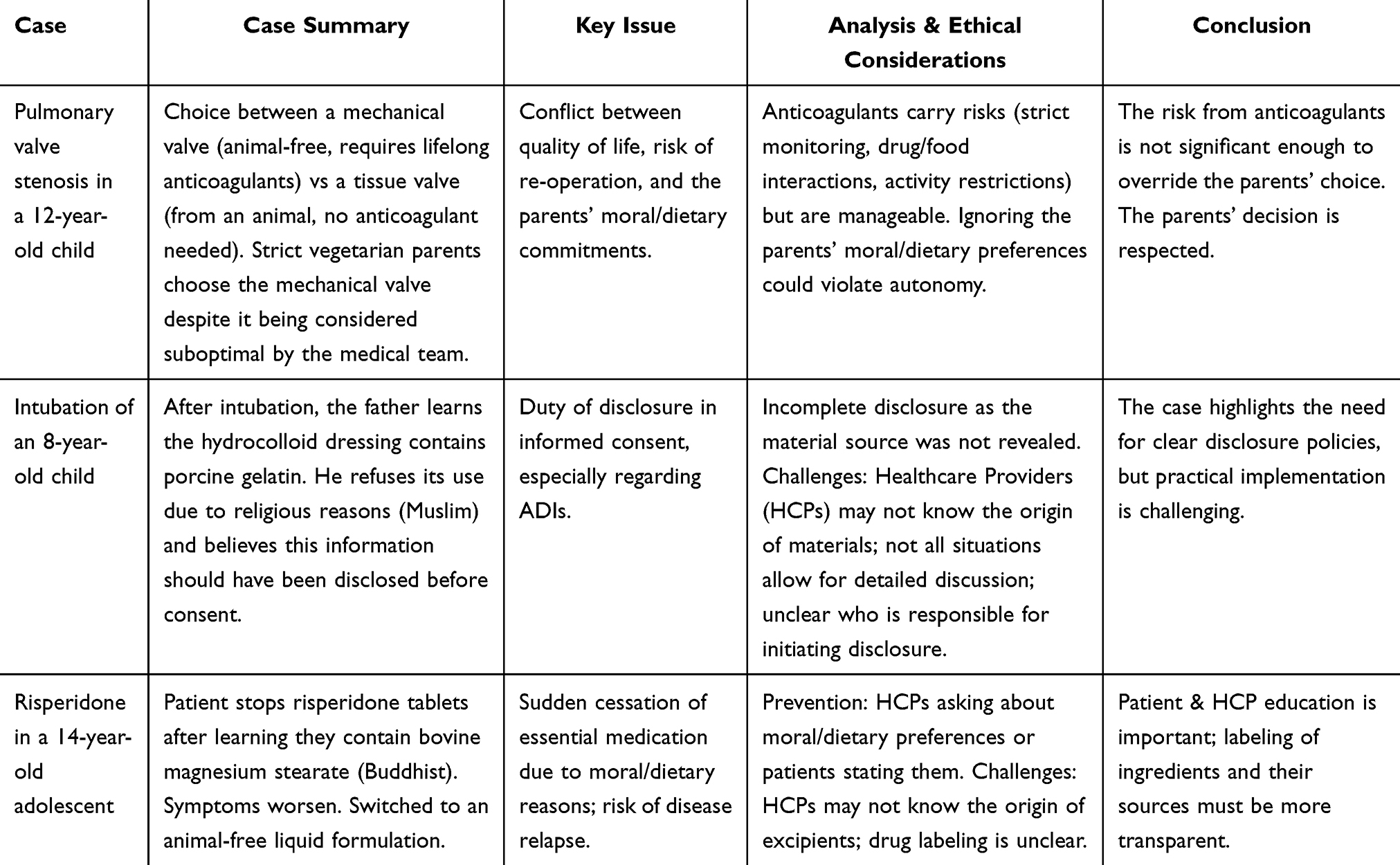 |
Table 2 Ethical Dilemmas Regarding Animal-Derived Ingredients in Medical Treatment60 |
The table below presents the data studied by Hassanein and Anderson. The degree of molecular complexity and processing also modulates risk. Complex proteins and polysaccharides, including gelatin and pancreatic enzymes, tend to preserve antigenic determinants and thus carry higher immunogenic potential, especially when sourced from mammals. Low-molecular-weight excipients such as glycerin or Polyethylene Glycol (PEG)-stearates may undergo chemical transformations that reduce antigenicity, but their risk classification depends heavily on documented origin. A general principle emerges: the closer an ingredient remains to its original biological structure, the higher the probability of α-gal retention. Risk is further influenced by the clinical route of exposure. Parenteral administration, including injections, infusions, and implants, poses the highest potential for systemic reactions, while mucosal, oral, and topical applications carry progressively lower risk. Dose, frequency, and formulation matrix (such as vaccines versus oral tablets) also shape the clinical relevance of risk categories.
In parallel, religious frameworks—particularly Islamic jurisprudence—classify ADI according to the source species and processing method. Substances derived from halal animals slaughtered in accordance with syariah are considered permissible, whereas those from pigs or improperly slaughtered animals are haram. This perspective intersects but does not fully overlap with α-gal risk stratification. For instance, bovine gelatin sourced from halal cattle may be permissible but still unsafe for AGS patients, whereas porcine gelatin is both haram and clinically high risk. Intermediate-risk ingredients such as stearates or glycerin can be halal when sourced from plants or halal animals, but haram if derived from pigs. Low-risk non-mammalian ingredients, such as those from fish or poultry, are generally deemed halal by most scholars, although some debate persists, for example regarding carmine from insects. The selection of the ADI has a direct impact on the safety of the drug formulation. Table 3 outlines the risk stratification of these ingredients, categorized based on key clinical parameters such as immunogenicity and pathogen transmission potential.
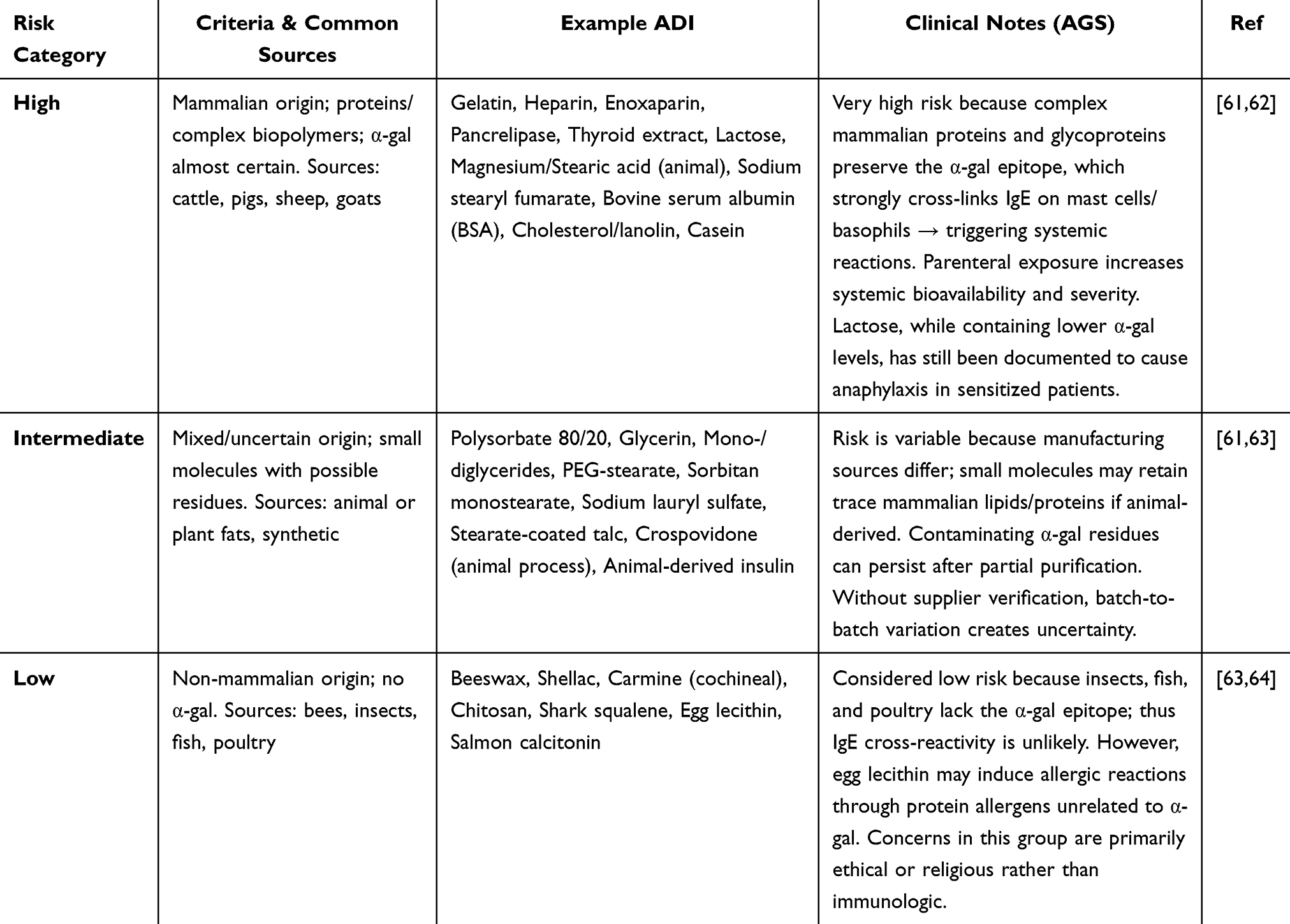 |
Table 3 Risk Stratification of Animal-Derived Ingredients (ADIs) Based on Clinical |
From a practical standpoint, these dual considerations emphasize that halal certification does not equate to safety for AGS patients, just as animal-free certification does not guarantee permissibility under Islamic law. Ideally, products intended for Muslim patients with AGS would be both halal and animal-free or based on non-mammalian sources. To ensure this, verification through Certificates of Analysis and halal certification remains critical.
Alternative Substitution for Animal-Derived Ingridients
The use of ADIs in pharmaceuticals, such as gelatin, heparin, collagen, and lactose, has long been an industry standard. These ingredients serve as critical excipients for drug stability, delivery, and formulation.8 However, reliance on animal sources presents significant challenges that have driven the search for alternatives. Key challenges include: (1) Safety and Purity, including the risk of contamination with zoonotic pathogens (eg, Bovine Spongiform Encephalopathy (BSE)) and inter-batch variability; (2) Ethical and Religious Constraints, where animal-derived products (particularly pork or beef not slaughtered in a specific manner) are unacceptable to vegans, vegetarians, and those with certain religious beliefs (eg, Halal or Kosher); and (3) Supply Chain Limitations, which are dependent on animal availability and susceptible to disruption.10,13
Substitution in formulation—replacing one component with another while maintaining efficacy, safety, and stability—requires thorough evaluation. This chapter will explore various modern technological approaches that make ADI substitution highly feasible, with a focus on biosynthesis, chemical synthesis, and the utilization of non-animal natural resources.
Biosynthesis Approach
The biosynthesis, or bioproduction, approach utilizes biological systems as “cellular factories” to produce complex molecules. At the heart of this method is Genetic Engineering (GE), which modifies the DNA of a host organism (such as bacteria, yeast, or plant cells) to produce the desired target molecule. These engineered organisms are then cultured on a large scale using biotechnological processes such as Precision Fermentation (PF).65,66 This approach offers unparalleled advantages in terms of purity, batch-to-batch consistency, and the elimination of the risk of animal pathogens.
A key success story in the production of recombinant proteins from genetic engineering is insulin. The pharmaceutical industry has completely shifted from extracting insulin from the pancreas of pigs and cows to recombinant human insulin produced by Escherichia coli.21 This transition not only ensures a reliable supply but also produces products of superior purity and quality. The same principles are now being applied to collagen and gelatin. Using yeast expression systems such as Pichia pastoris, recombinant human gelatin (rHG) can be produced. This product is completely free from animal disease risks and has minimal batch variability, making it an ideal alternative for pharmaceutical applications.67,68
In addition to proteins, microorganisms can also be engineered to produce polymers directly. Certain prokaryotes naturally produce polyhydroxyalkanoates (PHAs) and poly-3-hydroxybutyrate (PHB) as energy reserves.69 Through submerged fermentation from renewable resources (such as glucose), these biopolymers can be produced as environmentally friendly and biodegradable alternatives, replacing petrochemical-based excipients and some animal-derived polymers.65
Beyond end products, biosynthetic platforms—particularly mammalian cell culture (eg, CHO cells for monoclonal antibodies) and tissue engineering—have historically relied on ADIs as process aids. For decades, products such as fetal bovine serum (FBS) and Matrigel™ have been the gold standard in research and biomanufacturing.
However, their use raises serious scientific and ethical concerns. These products are susceptible to pathogen contamination, high inter-batch variability, and reproducibility issues. This is inconsistent with the 3R principles (Replacement, Reduction, Refinement) and Good Cell Culture Practice (GCCP). Although advances in serum-free media, synthetic hydrogels, and recombinant antibody technology offer promising alternatives, gold standards such as FBS and Matrigel™ are still widely used due to cost, technical complexity, and limited validation of these alternatives. Overcoming researcher resistance to change remains a major challenge, underscoring the need for robust scientific evidence and regulatory incentives to build trust in these alternatives.
New platforms such as microalgae and transgenic plants (eg, using CRISPR/Cas9) are also being explored as biofactories for complex pharmaceutical molecules, including antibodies and vaccines.70 Despite the enormous potential of biosynthesis, key challenges remain, particularly in scaling up production to remain cost-effective. In addition, the use of Genetically Modified Organisms (GMOs) presents regulatory and public acceptance challenges that must be carefully managed.71,72
Chemical Synthesis
In contrast to biosynthetic approaches that utilize “cellular factories”, chemical synthesis involves the ab initio (from scratch) construction of molecules or their controlled modification using chemical reactions. Its main advantages lie in precise control of the final molecular structure, molecular weight, and purity, as well as the complete elimination of the risk of biological contaminants from animal sources. This approach involves the total synthesis of complex drug molecules to replace biological products. The most successful heparin substitute, Fondaparinux, is a prime example. It is a complex saccharide molecule produced purely synthetically, replacing heparin traditionally extracted from porcine intestine or bovine lung.73 This total synthesis provides predictable anticoagulant efficacy without the immunogenicity or contamination risks associated with ADI. A chemoenzymatic hybrid approach has also been successfully used to produce non-animal heparin (BEH), which exhibits comparable biological characteristics to animal heparin, demonstrating the feasibility of a continuous, contamination-free production pathway.74
Chemical synthesis is prevalent in the excipients field, often used for the polymerization of monomers or the modification of natural, non-animal-derived polymers. Polylactic acid (PLA) is an example of a biodegradable polyester widely used in absorbable sutures and drug-delivery systems.75 Although its monomer, lactic acid, is often produced through fermentation, the polymerization process to convert it into a long-chain polymer is purely a chemical reaction.
Chitosan, a natural polysaccharide extracted from crustacean shells (a non-mammalian source), is chemically modified to improve its solubility and mucoadhesive properties. This process transforms the natural raw material into an advanced biomaterial for nanoparticle delivery and wound healing.76
Despite its clear advantages in terms of control and purity, chemical synthesis presents significant practical challenges. This process often requires advanced polymer chemistry expertise and stringent control of reaction conditions (temperature, pressure).77 Many monomers and catalysts can be expensive. Furthermore, the use of hazardous organic solvents and the potential for toxic byproducts raise environmental and safety concerns that require proper waste handling and disposal.78 Consequently, at the laboratory scale, many researchers prefer to modify commercially available polymers (such as PEG, PLA) rather than synthesizing them from scratch.75,79
Substitution from Non-Animal Natural Sources
This approach focuses on utilizing naturally occurring biopolymers from plant (terrestrial) or marine (aquatic) sources as direct substitutes for ADI. Unlike biosynthesis or chemical synthesis, this method relies on the extraction and purification of raw materials. Plant-based sources offer an abundant, renewable, and widely accepted alternative (including for Halal/Kosher standards). Cellulose-derived polymers, such as Hydroxypropyl Methylcellulose (HPMC), have been successfully commercialized as vegetarian capsule shells, offering a stable, functional alternative to gelatin and a gelatin capsule replacement.68
Other plant-based polysaccharides such as starch, gum tragacanth, and mucilage (eg, from Hibiscus rosa-sinensis) are being extensively explored as functional ingredients.80,81 They can serve as thickening agents, stabilizers, bioadhesives, and matrices in edible films, replacing the functional role of gelatin in formulations.82 The main challenge with plant-based polymers often lies in their sensory and textural functionality. Although chemically functional, they may struggle to precisely mimic properties such as mouthfeel, creaminess, or chewy texture typical of gelatin or animal fat.83,84
Marine resources, particularly fishery by-products, provide valuable sources of biopolymers. Marine collagen, extracted from fish skin, scales, and bones, is a major alternative to bovine and porcine collagen.85 This collagen is rich in Type I and has significant potential in biomedical applications, particularly for wound healing and tissue regeneration.86
The main drawback of fish collagen is its lower thermal stability (lower denaturation temperature) compared to mammalian collagen. This may limit its use in applications requiring heat resistance, although research on chemical cross-linking continues to address this drawback.87
In Silico Approaches as Supporting Tools
Unlike the previous three approaches, which focus on material production, in silico (computational) methods serve as crucial supporting tools and accelerators. This approach directly supports the 3R principle (Replacement, Reduction, Refinement) by reducing reliance on animal testing in the research and development process.3
Its primary role is to predict and screen alternative candidates before expensive and time-consuming laboratory testing. Methods such as QSAR (Quantitative Structure-Activity Relationship) and virtual screening can screen thousands of synthetic molecules (such as potential heparin substitutes) to predict their efficacy and toxicity.3 For biosynthesis, bioinformatics tools can mine microbial genomes to discover new biosynthetic pathways for the molecule of interest.88
Docking and molecular dynamics (MD) simulations can model how alternative polymers (eg, HPMC) interact with drug molecules, or how recombinant proteins will behave in a biological environment.3 By leveraging big data, predictive modeling, and Artificial intelligence (AI), in silico methods enable rapid, cost-effective, and ethical initial screening. While limited in vitro and in vivo validation will ultimately be necessary, computational approaches drastically reduce the number of animals required and accelerate the pace of innovation in finding viable ADI replacements. With the growing need for more ethical and safe raw materials, various technology platforms have been developed to replace animal-derived materials. Table 4 presents a comparative analysis of these key technology platforms, highlighting their advantages, limitations, and feasibility.
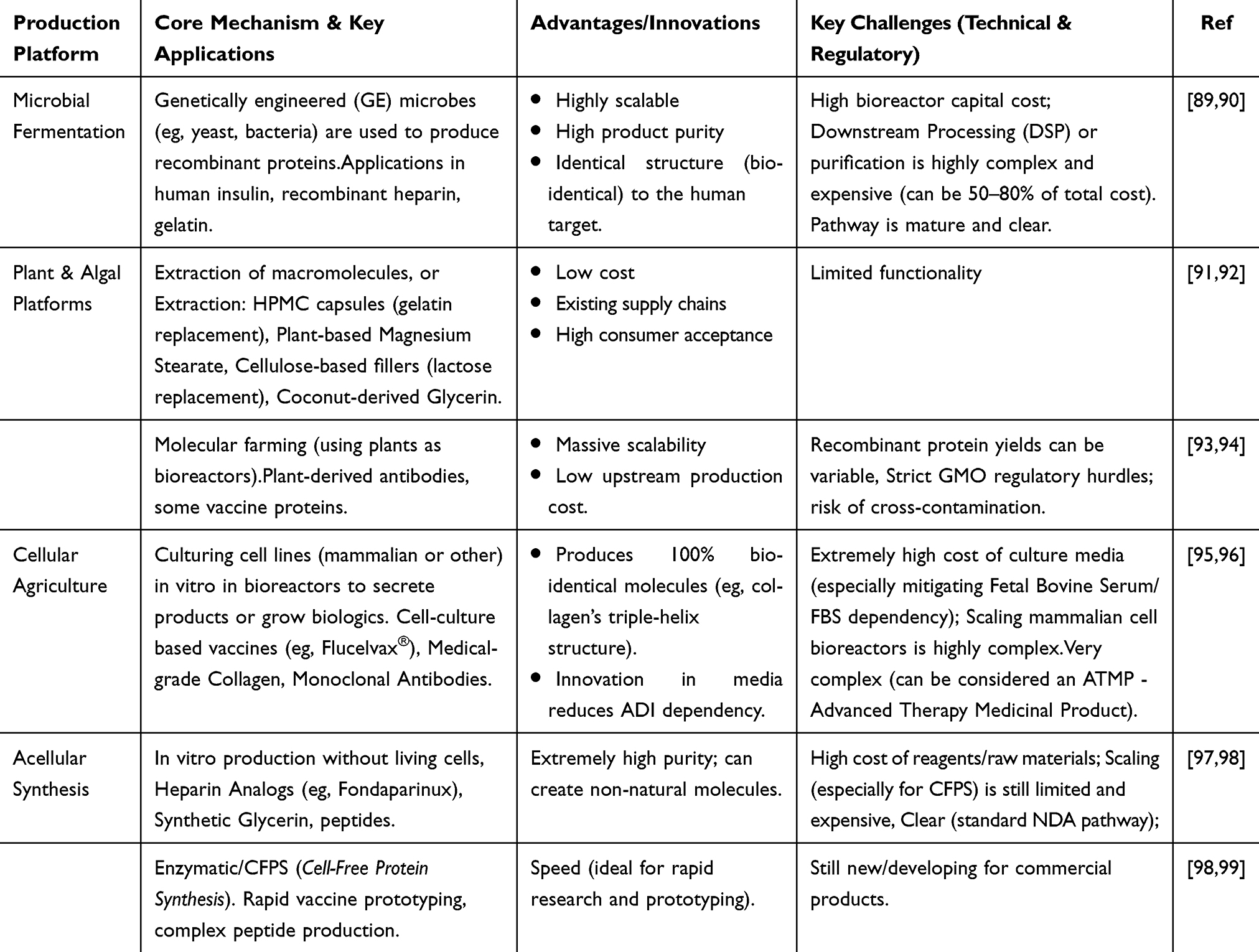 |
Table 4 Comparative Analysis of Technology Platforms for Replacing Animal-Derived Ingredients (ADIs) in Pharmaceuticals |
Challenges of Implementation and Optimization of Replacement Formulation
From Material Substitution to Functional Formulation
Advances in biotechnology, chemical synthesis, and plant-based extraction have provided a range of viable technological platforms for producing substitutes for Animal-Derived Ingredients (ADI).3 These alternatives—ranging from HPMC and plant-based polymers to recombinant gelatin and marine-derived collagen—fundamentally address the ethical, religious, and environmental concerns associated with traditional mammalian-derived ingredients.62
However, the availability of these alternative materials represents only the initial phase in pharmaceutical product development. The critical challenge shifts from ingredient substitution to the functional integration of these ingredients into complex dosage forms. Integrated approaches like Quality-by-Design (QbD) for these assessments, highlighting how ADI replacements, such as synthetic polymers for gelatin, must maintain performance without introducing risks.100
To achieve regulatory approval and clinical acceptance, revised formulations must demonstrate “functional equivalence”. This requires comparable performance to the original ADI formulation. Successful implementation depends on a thorough understanding of how these new materials impact physicochemical compatibility, biopharmaceutical performance and bioequivalence, and long-term formulation stability.100 The revised formulation should not present new or altered safety risks and must achieve the same desired clinical outcomes as the original product.
Challenges in Physicochemical Characterization and Compatibility
The success of ADI substitution depends on comprehensive physicochemical characterization. These challenges can be divided into three main domains: chemical-API compatibility, manufacturing process suitability, and patient acceptability.
First, chemical incompatibilities can directly compromise drug stability and efficacy. For example, replacing lactose (a cow’s milk derivative)—which is known to be susceptible to the Maillard reaction with APIs containing primary amine groups—with an inert filler such as Microcrystalline Cellulose (MCC) can drastically alter the chemical stability profile of a formulation.101 Similarly, functional groups in recombinant gelatin (rHG) may have a different interaction profile with the API compared to porcine-derived gelatin. To detect these interactions, bulk analysis techniques such as Differential Scanning Calorimetry (DSC) are essential to identify thermal transitions, while Fourier Transform Infrared Spectroscopy (FTIR) and X-Ray Diffraction (XRD) assess bonding and crystallinity changes. While these bulk methods are important for initial screening, high-resolution techniques such as Solid-State Nuclear Magnetic Resonance (ssNMR) can provide insights at the molecular level, while Raman Microscopy can visualize the sites of these interactions in situ at the API-excipient interface. The use of advanced sophisticated analytical equipment as well as orthogonal bioanalytical testing, the implementation of a dynamic regulatory cross-checking system, the development and use of machine learning and artificial intelligence tools, and the development of quality-by-design approaches and models have been recognized as the best methods for addressing these challenges.102
Second, mechanical compatibility is crucial for manufacturing scalability.103 Small changes in excipients—such as replacing animal-derived Magnesium Stearate with a plant-based version, or replacing lactose with MCC—can significantly alter the flowability and compressibility of a powder blend, impacting tablet weight uniformity. This difference is also evident in capsule manufacturing: HPMC powder (a gelatin substitute) often has better flow properties but exhibits higher brittleness in low-humidity environments. This difference requires pilot-scale trials to optimize processing parameters to ensure product uniformity.103,104
Third, an often overlooked challenge is patient-centric formulation. In liquid formulations, plant-based thickeners replacing gelatin may require significant taste-masking efforts. This is also crucial for injectable preparations. Formulations of heparin substitutes (which are derived from porcine), such as Fondaparinux (synthetic), must be optimized not only for viscosity to avoid increased pain at the injection site, but also for osmolality and pH profiles to be comparable to the original biologic product, all of which impact patient compliance.105
Biopharmaceutical and Bioequivalence Performance Evaluation
The cornerstone of ADI substitution is the demonstration of bioequivalence (BE), which ensures that the reformulated product delivers equivalent therapeutic outcomes.106
The first-line assessment is in vitro dissolution, which compares drug release kinetics. Differences in excipients can have a significant impact here. A classic example is the replacement of gelatin capsules with HPMC; HPMC offers pH-independent release, while gelatin risks cross-linking over time, which can delay dissolution.107 However, this challenge is not limited to capsules. In tablet formulations, replacing lubricants such as magnesium stearate (animal vs vegetable) can alter the hydrophobicity of the matrix, affecting disintegration time, while replacing fillers from lactose (soluble) to MCC (insoluble) can fundamentally alter the drug release mechanism itself.108
However, comparable in vitro dissolution does not guarantee in vivo BE. Standard in vitro dissolution and permeability tests are limited because no single test condition can fully mimic the complex environment of the human gut.109 Therefore, human pharmacokinetic studies are essential to ensure the comparability of key parameters such as AUC (total exposure), Cmax (peak concentration), and Tmax (time to peak).110 Seemingly small excipient changes, such as switching from lactose to MCC, can significantly alter the bioavailability of APIs with low solubility (BCS Class III).111 Similarly, for injectable products, differences in viscosity—whether in collagen substitutes in dermatological fillers or in synthetic heparin formulations (replacing porcine heparin)—can affect the rate of subcutaneous absorption, necessitating bridging studies to demonstrate non-inferiority.112 Injections into the stomach with high viscosity (up to 15–20 cP) are well tolerated, regardless of the volume (up to 3 mL) or injection rate.113
Finally, the regulatory pathway for these changes presents a significant hurdle. Failure to achieve BE will delay market approval and undermine confidence in the replacement material.114 Even if BE is achieved, substitutions of fundamentally functional excipients (such as capsule shells, primary fillers, or binders) are often classified as major variations (eg, EMA Type II variations or FDA SUPAC guidance). This requires a comprehensive data package well beyond a simple BE study, ultimately adding substantial cost and time-to-market barriers.
Long-Term Formulation Stability
Substituted ingredients must not only be stable, but also revalidate the entire formulation stability profile.115 In many cases, these substitutions actively address the chemical and physical-biological stability issues inherent in ADIs, like gelatin, heparin, or magnesium stearate, must not only demonstrate individual stability but also trigger comprehensive revalidation of the entire formulation’s stability profile to ensure no interactions compromise shelf-life, efficacy, or safety under International Council for Harmonisation (ICH) guidelines. Chemically, replacing lactose—which is notoriously susceptible to the Maillard reaction with APIs containing amine groups—with an inert filler such as MCC can dramatically improve the chemical stability of the API.116 Physically-biologically, replacing gelatin capsules with HPMC eliminates the risk of age-related cross-linking, a phenomenon that can unexpectedly inhibit drug dissolution over time.117
However, these substitutes introduce new physical stability challenges, particularly related to environmental sensitivity. Plant-based polymers such as HPMC or mucilages (mucilages) are much more hygroscopic (readily absorb water) than gelatin.117 This poses new risks for APIs that are highly sensitive to hydrolysis, where water absorption by the capsule shell can accelerate drug degradation. Conversely, under very low humidity conditions, HPMC shells can become more brittle than gelatin, which poses a risk of cracking during packaging or transportation (eg, during thermal cycling).91
Challenges also arise from new chemical impurity profiles.115,118 Substituting excipients such as magnesium stearate or glycerin from animal sources for plant-based sources (eg, palm oil derivatives) introduces a different impurity profile. Trace metals or pro-oxidants different from these plant-based sources have the potential to catalyze previously unobserved API degradation pathways.119,120 Therefore, accelerated stability testing (as per ICH Q1A guidelines, eg, 40°C/75% RH) and long-term, real-time stability programs are crucial, not only to predict shelf life, but also to ensure that new formulations do not fail during commercial distribution.
Balancing Innovation with Safety
In summary, substituting ADI with plant-based or recombinant alternatives is feasible and aligns with global demands for ethical pharmaceutical production, yet it requires substantial R&D investment to overcome physicochemical, biopharmaceutical, and stability challenges.121 By prioritizing functional equivalence through advanced characterization, BE evaluations, and stability assessments, developers can ensure that these innovations enhance rather than compromise product quality, safety, and efficacy. Ultimately, this balanced approach not only mitigates risks associated with material transitions but also paves the way for next-generation formulations that are sustainable, vegan-compliant, and therapeutically superior. Ultimately, mastering these formulation challenges will create a more robust, predictable, and secure pharmaceutical supply chain, one that is resilient to the zoonotic risks and supply-demand volatility inherent in animal-derived materials.
Implications, Regulation, and Future Prospects
While meeting technical formulation criteria such as physicochemical compatibility, bioequivalence, and stability is a fundamental prerequisite for Animal-Derived Ingredient (ADI) substitution, achieving this does not automatically lead to market adoption or clinical integration. The transition from technical viability to real-world implementation relies heavily on navigating a complex non-technical landscape. Therefore, this analysis focuses on socio-economic, ethical, and regulatory determinants. These factors act as both crucial drivers and barriers that ultimately determine the successful adoption of ADI alternatives.
Implications, Gaps, and Barriers to Adoption
Although technical and non-technical foundations provide a rationale for substitution, the real-world adoption of ADIs remains hampered.122 The transition from theoretical feasibility to market implementation is critically dependent on overcoming regulatory barriers and closing persistent stakeholder knowledge gaps. Therefore, this analysis evaluates these implementation barriers, the resulting clinical and market implications, and proposes a framework for risk stratification.123
Significant knowledge gaps among key stakeholders remain a major barrier. Survey data demonstrate a mismatch: while the majority of patients (eg, 63%) desire ADI disclosure, very few (eg, 20% of vegetarians) proactively request it. This inertia burdens healthcare professionals, many of whom report facing ethical dilemmas due to awareness of ADIs but lack of drug-specific knowledge or adequate training to counsel patients.1
To address this gap, an operational decision-making framework is proposed. This heuristic is based on five key criteria: (1) identifying the biological source; (2) considering the molecular form and processing, as complex proteins increase risk; (3) assessing the route of exposure, with parenteral administration posing a higher risk; (4) verifying supplier documentation for intermediate-risk ingredients; and (5) accounting for inter-batch variability in a multi-supplier supply chain.
While this stratification framework offers a transparent and systematic basis for evaluation, its usefulness is limited by the lack of mandatory labeling and minimal manufacturer disclosure. This ambiguity often requires direct confirmation from the manufacturer, making risk classification dynamic and dependent on new supply chain information or clinical tolerability data.
This lack of labeling transparency has direct clinical implications, particularly for patients with Alpha-Gal Syndrome (AGS). High inter-manufacturer variability is common; A case study of Atorvastatin showed that many generic formulations contain ADIs (such as lactose), while others are available as “Certified Animal Chemical Free”.124 This variability highlights that without direct verification, healthcare providers cannot ensure safe prescribing.62
This regulatory and information gap simultaneously creates both market risks and opportunities. Recent projections published by Fairfield Market Research indicate an estimated growth of over 12% during 2019–2026, with revenues exceeding US$34.8 billion by the end of 2026.125 Consequently, manufacturers that fail to innovate in excipient procurement face the risk of significant market share erosion. However, recent developments in 2024–2025 are beginning to bridge this gap through the convergence of ethical frameworks and industry innovation. From a clinical perspective, Lababidi et al (2024) highlighted critical gaps in halal drug delivery and proposed a 4-pronged approach—namely, manufacturer change, dosage form change, administration method modification, or drug substitution—as a pharmacotherapeutic strategy to uphold patients’ religious autonomy.126 This ethical imperative is increasingly being met by advances in biotechnology, such as the Health~Holland consortium’s initiative to develop bioengineered heparin through fermentation technology to break the dependency on porcine tissue.127 Furthermore, major industry players such as GlaxoSmithKline (GSK) have actively recognized the strategic transition of key excipients (magnesium stearate, gelatin, and lactose) to plant-based sources, driven by the need to mitigate disease risks and meet the demand for vegan-certified medicines.128
Perspective: The Future of Animal-Free Pharmaceuticals
The transition to animal-derived medicines has shifted from a niche issue to an ethical, medical, and environmental imperative, driven by technological innovation, regulatory evolution, and patient demand.1
The near-term outlook focuses on transparency and substitution. This includes the implementation of mandatory ADI labeling, “Certified Animal-Free” seals, and digital drug passports for real-time tracking of excipient sources. During this period, traditional ADIs such as gelatin, lactose, and stearate are expected to be widely replaced by plant-based, synthetic, or fermentation-based alternatives, driven by Environmental, Social, and Governance (ESG) pressures and the achievement of cost parity.62
The medium-term outlook is characterized by will be characterized by the integration of artificial intelligence (AI) and robotics within connected ecosystems, leading to highly automated and efficient smart factories. A comprehensive review details AI’s role in optimizing pharmaceutical life cycles, including real-time process monitoring and automation integration for connected factories, forecasting efficiency gains of up to 40% by mid-decade.129 Precision fermentation is projected to dominate the production of biologics (eg, monoclonal antibodies, insulin) without the need for mammalian cell cultures. Technologies such as cell-free synthesis and pharmaceutical 3D printing are expected to enable rapid, safe, and sustainable drug production.90,130,131 In parallel, the regulatory framework is expected to evolve to include a priority review pathway for animal products and global harmonization of standards (ICH), with ethical and religious certification (Halal, Kosher, Vegan) becoming industry standards.132
While this outlook is transformative, significant challenges remain, particularly inertia in existing supply chains, misinformation among stakeholders, and potential patent monopolies on new technologies. Overcoming these barriers requires coordinated action. This transition is seen as inevitable, promising to eliminate the clinical risks of hidden ADIs, ensure ethically inclusive patient access, and significantly reduce the pharmaceutical industry’s carbon footprint.133
Conclusion
The pharmaceutical industry’s historical reliance on Animal-Derived Ingredients (ADIs) now faces significant challenges related to allergic risks (such as AGS), ethical concerns, and religious restrictions (Halal/Kosher). This review paper has demonstrated that AFAs—whether through plant-based excipients, recombinant biologics, or purely synthetic compounds—are now technically feasible.
However, the transition to widespread adoption remains hampered by formulation challenges, cost, and a lack of regulatory harmonization. Currently, patients and healthcare professionals lack transparent data to make medical decisions that align with their clinical needs and personal values. As a concrete solution, the use of the dual-risk stratification framework proposed in this paper is crucial. It provides a practical tool for stakeholders to systematically balance clinical-biological risks and patients’ ethical preferences.
To accelerate this transition, a coordinated effort is needed. Manufacturers should prioritize R&D on AFAs, while regulators are urged to establish clear global labeling standards (eg, “Animal-Free” certification). This investment in innovation and transparency is crucial for building a future pharmaceutical supply chain that is not only clinically effective, but also safe, ethical, and sustainable.
Data Sharing Statement
No data was used for the research described in the article.
Author Contributions
All authors made a significant contribution to the work reported, whether that is in the conception, study design, execution, acquisition of data, analysis and interpretation, or in all these areas; took part in drafting, revising or critically reviewing the article; gave final approval of the version to be published; have agreed on the journal to which the article has been submitted; and agree to be accountable for all aspects of the work.
Funding
This study is funded by Universitas Padjadjaran through the Indonesian Endowment Fund for Education (LPDP) on behalf of the Indonesian Ministry of Higher Education, Science and Technology and managed under the EQUITY Program (Contract No. 4303/ 83/ DT.03.08/ 2025 and 3927/ UN6.RKT/HK.07.00/2025) through scheme the Equity Review Article Grant awarded to WCU Padjadjaran University (contract number No. 3999/ UN6.3.1/PT.00/2025).
Disclosure
The authors report no conflicts of interest in this work.
References
1. Wang JR, Oh E, Aronow B, Bernstein WK. The unseen animal behind medicine: exploring considerations of animal-derived medications and anaesthetics in today’s landscape. BJA Open. 2025;13:100360. doi:10.1016/j.bjao.2024.100360
2. Tieu L, Uchi J, Patel N, et al. Embracing medication needs of patients based on ethical, dietary, and religious preferences. Am J Lifestyle Med. 2022;18:351–21. doi:10.1177/15598276221135538
3. Duarte AC, Costa EC, Filipe HA, et al. Animal-derived products in science and current alternatives. Biomater Adv. 2023;151:213428.
4. Baldemor RV, Ong AKS, German JD, Bautista NS, Alonso MLV, Alidio OJP. Health belief and behavioral analysis of fad diets: a perspective from younger generations in a developing country. Foods. 2024;13:1858. doi:10.3390/foods13121858
5. Platts-Mills TAE, Gangwar RS, Workman L, Wilson JM. The Immunology of alpha-gal syndrome: history, tick bites, IgE, and delayed anaphylaxis to mammalian meat. Immunol Rev. 2025;332. doi:10.1111/imr.70035
6. Nourian MM, Stone CA, Siegrist KK, Riess ML. Perioperative implications of patients with alpha gal allergies. J Clin Anesth. 2023;86:111056. doi:10.1016/j.jclinane.2023.111056
7. Thompson C, Saracco B, Pruthi A, Cerceo E. Alpha-gal syndrome: often hidden, under-recognized, and in need of attention—a rapid review. Int J Gen Med. 2025;18:3477–3488. doi:10.2147/IJGM.S519844
8. Herdiana Y, Sofian FF, Shamsuddin S, Rusdiana T. Towards halal pharmaceutical: exploring alternatives to animal-based ingredients. Heliyon. 2024;10:e23624. doi:10.1016/j.heliyon.2023.e23624
9. Zakowiecki D, Edinger P, Papaioannou M, et al. Development and evaluation of lactose-free single-unit and multiple-unit preparations of a BCS class II drug, rivaroxaban. Pharmaceutics. 2024;16:1485. doi:10.3390/pharmaceutics16111485
10. Lestari TD, Khairullah A, Utama S, et al. Bovine spongiform encephalopathy: a review of current knowledge and challenges. Open Vet J. 2025;15:54–68. doi:10.5455/OVJ.2025.v15.i1.5
11. Bramwell LR, Gould SJ, Davies M, et al. An evaluation of the replacement of animal-derived biomaterials in human primary cell culture. Altern to Lab Anim. 2024;52:247–260. doi:10.1177/02611929241269004
12. Schenzle L, Egger K, Spangl B, et al. Low-cost food-grade alternatives for serum albumins in FBS-free cell culture media. Sci Rep. 2025;15:1–16. doi:10.1038/s41598-025-99603-7
13. Sarathy SP, Ravikumar H, Nanjan P, Alagesan N, Chua BL. Plant-based protein: a multi-nutritional sustainable alternative to animal foods and their structure, functions, and relationship: a review. Int J Biol Macromol. 2025;321:146465. doi:10.1016/j.ijbiomac.2025.146465
14. Ahmad M, Qureshi S, Akbar MH, et al. Plant-based meat alternatives: compositional analysis, current development and challenges. Appl Food Res. 2022;2:100154. doi:10.1016/j.afres.2022.100154
15. Lottes AE, Cavanaugh KJ, Chan YY-F, et al. Navigating the regulatory pathway for medical devices-a conversation with the FDA, clinicians, researchers, and industry experts. J Cardiovasc Transl Res. 2022;15:927–943. doi:10.1007/s12265-022-10232-1
16. U. S. Food & Drug Administration. Development & approval process. Drugs 1. 2022. Available from: https://www.fda.gov/drugs/development-approval-process-drugs#:~:text=Ifthisindependentandunbiasedreviewestablishes,ofdrugquality%2Csafety%2Candeffectivenessstandards.
17. Sar T, Harirchi S, Ramezani M, et al. Potential utilization of dairy industries by-products and wastes through microbial processes: a critical review. Sci Total Environ. 2022;810:152253. doi:10.1016/j.scitotenv.2021.152253
18. Van Eenennaam AL, Werth SJ. Animal board invited review: animal agriculture and alternative meats – learning from past science communication failures. Animal. 2021;15:100360. doi:10.1016/j.animal.2021.100360
19. Ajomiwe N, Boland M, Phongthai S, et al. Protein nutrition: understanding structure, digestibility, and bioavailability for optimal health. Foods. 2024;13:1771. doi:10.3390/foods13111771
20. Baytas SN, Linhardt RJ. Advances in the preparation and synthesis of heparin and related products. Drug Discov Today. 2020;25:2095–2109. doi:10.1016/j.drudis.2020.09.011
21. Renda G. An alternative source of medicines: pharmaceutical utilization of animal-derived metabolites. Phytochem Rev. 2025;0123456789:1–26.
22. Rodger D, Blackshaw BP Using animal-derived constituents in anaesthesia and surgery: the case for disclosing to patients. BMC Med Ethics. 2019;20:1–9.
23. Sattar SP, et al. Patient and physician attitudes to using medications with religiously forbidden ingredients. Ann. Pharmacother. 2004;38:1830–1835.
24. Landgraf W, Sandow J. Recombinant human insulins - clinical efficacy and safety in diabetes therapy. Eur Endocrinol. 2016;12:12–17. doi:10.17925/EE.2016.12.01.12
25. Riis KR, Larsen CB, Bonnema SJ. Potential risks and benefits of desiccated thyroid extract for the treatment of hypothyroidism: a systematic review. Thyroid®. 2024;34:687–701. doi:10.1089/thy.2023.0649
26. bin Zahrin SA, Ishak WRW, Atan EH, Zainuddin Z, Rashid NH, Binti A. a review of gelatine: multifunctional additives in the food industry. Acta Sci Pol Technol Aliment. 2025;24:77–94.
27. Harlina PW, Maritha V, Shahzad R, et al. Comprehensive profiling and authentication of porcine, bovine, and goat bone gelatins through UHPLC-HRMS metabolomics and chemometric strategies. Lwt. 2024;205:116529. doi:10.1016/j.lwt.2024.116529
28. Qiu Z, Stowell JG, Morris KR, Byrn SR, Pinal R. Kinetic study of the Maillard reaction between metoclopramide hydrochloride and lactose. Int J Pharm. 2005;303:20–30. doi:10.1016/j.ijpharm.2005.06.016
29. Razak NFA, Karim RHA, Jamal JA, Said MM. Rapid discrimination of halal and non-halal pharmaceutical excipients by fourier transform infrared spectroscopy and chemometrics. J Pharm Bioallied Sci. 2017;7:1–5.
30. Uzunović A, Vranić E. Effect of magnesium stearate concentration on dissolution properties of ranitidine hydrochloride coated tablets. Bosn J Basic Med Sci. 2007;7:279–283. doi:10.17305/bjbms.2007.3060
31. Zheng S-T, Wang Z-Y, Liu Z, et al. Rapid determination of trace ethylene glycol and diethylene glycol in propylene glycol-contained syrups by ultrahigh-performance supercritical fluid chromatography-mass spectrometry after precolumn derivatization. J Chromatogr A. 2024;1737:465433. doi:10.1016/j.chroma.2024.465433
32. Tadesse Nadew T, Assefa A, Nigussie S, Kamus E, Muchie M. Utilization and purification of tallow, grease, and lard byproducts from abattoir and meat processing plant for soap production: case study at elfora agro-processing industry. J Adv Chem Eng. 2023;13:1–7.
33. Knijp J, Bruynzeel DP, Rustemeyer T. Diagnosing lanolin contact allergy with lanolin alcohol and Amerchol L101. Contact Dermatitis. 2019;80:298–303. doi:10.1111/cod.13210
34. Valverde A, Recasens F. Extraction of solid lanoline from raw wool with near-critical ethanol-modified CO2 —A mass transfer model. J Supercritical Fluids. 2019;145:151–161. doi:10.1016/j.supflu.2018.12.002
35. Even MS, Sandusky CB, Barnard ND. Serum-free hybridoma culture: ethical, scientific and safety considerations. Trends Biotechnol. 2006;24:105–108. doi:10.1016/j.tibtech.2006.01.001
36. Lee DY, Lee SY, Yun SH, et al. Review of the current research on fetal bovine serum and the development of cultured meat. Food Sci Anim Resour. 2022;42:775–799. doi:10.5851/kosfa.2022.e46
37. Taaffe J, Goldin S, Lambach P, Sparrow E. Global production capacity of seasonal and pandemic influenza vaccines in 2023. Vaccine. 2025;51:126839. doi:10.1016/j.vaccine.2025.126839
38. de Lyra ACF, Dos Santos Silva AL, Dos Santos ECL, et al. Molecular interaction of sulfonamides and ovalbumin, an allergenic egg protein, exploring biophysical, theoretical and biological studies. Spectrochim Acta Part A. 2020;228(228):117747. doi:10.1016/j.saa.2019.117747
39. Al-Hakim A. General considerations for diversifying heparin drug products by improving the current heparin manufacturing process and reintroducing bovine sourced heparin to the US Market. Clin Appl Thromb. 2021;27. doi:10.1177/10760296211052293
40. Shaffer KJ, Smith RAA, Daines AM, et al. Rational synthesis of a heparan sulfate saccharide that promotes the activity of BMP2. Carbohydr Polym. 2024;333:121979. doi:10.1016/j.carbpol.2024.121979
41. Dong C, Lv Y. Application of collagen scaffold in tissue engineering: recent advances and new perspectives. Polymers. 2016;8:1–20. doi:10.3390/polym8020042
42. Guzmán-Chávez ML, Claudio-Rizo JA, Caldera-Villalobos M, et al. Novel bioactive collagen-polyurethane-pectin scaffolds for potential application in bone regenerative medicine. Appl Surf Sci Adv. 2022;11:100317. doi:10.1016/j.apsadv.2022.100317
43. Tiwari A, Meriläinen P, Lindh E, et al. Avian Influenza outbreaks: human infection risks for beach users - One health concern and environmental surveillance implications. Sci Total Environ. 2024;943:173692. doi:10.1016/j.scitotenv.2024.173692
44. Graciela C, Gieraldin C, Gabriel A-Á. Hyaluronic acid — extraction methods, sources and applications. Polymers. 2023;15:3473.
45. Saha SK, Zhu Y, Murray P, Madden L. Future proofing of chondroitin sulphate production: importance of sustainability and quality for the end-applications. Int J Biol Macromol. 2024;267:131577. doi:10.1016/j.ijbiomac.2024.131577
46. Shen Q, Guo Y, Wang K, Zhang C, Ma Y. A review of chondroitin sulfate’s preparation, properties, functions, and applications. Molecules. 2023;28:1–33. doi:10.3390/molecules28207093
47. Raydan NDV, Loquet A, Habenstein B, et al. A comprehensive comparative study of ultrasound-alkaline and thermal-alkaline hydrolysis of duck feather. J Clean Prod. 2024;467:142927. doi:10.1016/j.jclepro.2024.142927
48. Ranjit E, Hamlet S, George R, Sharma A, Love RM. Biofunctional approaches of wool-based keratin for tissue engineering. J Sci Adv Mater Devices. 2022;7:100398. doi:10.1016/j.jsamd.2021.10.001
49. Han HR. Antibiotic action, drug delivery, biodegradability, and wound regeneration characteristics of surgical sutures and cutting-edge surgical suture manufacturing technologies. J Funct Biomater. 2025;16:135. doi:10.3390/jfb16040135
50. Meijer N, Van Raamsdonk LWD, Gerrits EWJ, Appel MJ. The use of animal by-products in a circular bioeconomy: time for a TSE road map 3? Heliyon. 2023;9:e14021. doi:10.1016/j.heliyon.2023.e14021
51. Wen S, Zhou Y, Yim WY, et al. Mechanisms and drug therapies of bioprosthetic heart valve calcification. Front Pharmacol. 2022;13:1–12. doi:10.3389/fphar.2022.909801
52. Rassoli A, Fatouraee N, Guidoin R, Zhang Z, Ravaghi S. A comparative study of different tissue materials for bioprosthetic aortic valves using experimental assays and finite element analysis. Comput Methods Programs Biomed. 2022;220:106813. doi:10.1016/j.cmpb.2022.106813
53. Tsugawa AJ, Verstraete FJM. Chapter 7 - Suture materials and biomaterials. In: Verstraete FJM, Lommer MJBT-O, editors. Oral and Maxillofacial Surgery in Dogs and Cats. W.B. Saunders, Oxford; 2012:69–78. doi:10.1016/B978-0-7020-4618-6.00007-5
54. Yohannes G. Review on biological properties of suture materials. Endocrinol Disord. 2024;8:01–05. doi:10.31579/2640-1045/176
55. Khojasteh A, Ghahremani MH, Ostad SN, et al. The effect of deproteinized bovine bone mineral on Saos-2 cell proliferation. Iran Endod J. 2013;8:118–122. doi:10.1002/jbm.b.30196
56. EMA. ICH Q5A(R2): guideline on viral safety evaluation of biotechnology products derived from cell lines of human or animal origin. ICH Harmon Guidel. 2023;31:52.
57. Allotey JK, King AH, Kumins NH, et al. Systematic review of hemostatic agents used in vascular surgery. J Vasc Surg. 2021;73:2189–2197. doi:10.1016/j.jvs.2020.10.081
58. Alharbi MA, Aljindan FK, Reshan RMA, et al. Acellular dermal matrices in immediate breast reconstruction: a literature review. Int J Community Med Public Heal. 2021;8:933. doi:10.18203/2394-6040.ijcmph20210036
59. An S, Kwon W-K, Choi I, et al. Evaluating the efficacy and safety of hemofence (Thorombin cross-linked sodium hyaluronate gel matrix) in hemostasis for intractable exudative bleeding in spinal surgery: a multicenter, randomized, phase III clinical trial. Neurospine. 2024;21:1004–1013. doi:10.14245/ns.2448024.012
60. Hassanein M, Anderson JA. Refusal of animal-derived medical products in a paediatric setting: ethical issues. Paediatr Child Heal. 2021;26:99–102. doi:10.1093/pch/pxz171
61. Philips R, Zimm K. Animal-derived ingredients, the FDA and regulations. GXP. 2021;25(6):1–3. Available from: https://bpi.bioprocessintl.com/hubfs/Animal-Derived%20Ingredients%20the%20FDA%20and%20Regulations_final.pdf. Accessed November 27, 2025.
62. Lababidi H, Bobier C, Rodger D. Animal-derived ingredients in medicines: a framework for ethical prescribing practices. Front Pharmacol. 2025;16:1–6. doi:10.3389/fphar.2025.1693059
63. Sabalingam S, Jayasuriya WJABN. Pharmaceutical excipients of marine and animal origin: a review. Biol Chem Res. 2019;6:184–196.
64. Harding S, Williams L, Smith N, et al. Animal-derived medicinal products: community representatives’ views of their use. Futur Healthc J. 2023;10:291–295. doi:10.7861/fhj.2023-0005
65. Gundlapalli M, Ganesan S. Polyhydroxyalkanoates (PHAs): key Challenges in production and sustainable strategies for cost reduction within a circular economy framework. Results Eng. 2025;26:105345. doi:10.1016/j.rineng.2025.105345
66. González-Rojo S, Paniagua-García AI, Díez-Antolínez R. Advances in microbial biotechnology for sustainable alternatives to petroleum-based plastics: a comprehensive review of polyhydroxyalkanoate production. Microorganisms. 2024;12:1668. doi:10.3390/microorganisms12081668
67. Sherafati Chaleshtori A, Marzhoseyni Z, Saeedi N, et al. Gelatin-based nanoparticles and antibiotics: a new therapeutic approach for osteomyelitis? Front Mol Biosci. 2024;11:1412325. doi:10.3389/fmolb.2024.1412325
68. Song X, Chu T, Shi W, He J. Expression, characterization, and application of human-like recombinant gelatin. Bioresour Bioprocess. 2024;11:1–13. doi:10.1186/s40643-024-00785-1
69. Drishya PK, Reddy MV, Mohanakrishna G, et al. Advances in microbial and plant-based biopolymers: synthesis and applications in next-generation materials. Macromol. 2025;5:21.
70. Zhao W. Microalgal metabolic engineering facilitates precision nutrition and dietary regulation. Sci Total Environ. 2024;951:175460.
71. Olaghere J, Williams DA, Farrar J, et al. Scientific advancements in gene therapies: opportunities for global regulatory convergence. Biomedicines. 2025;13:758. doi:10.3390/biomedicines13030758
72. Knychala MM, Boing LA, Ienczak JL, Trichez D, Stambuk BU. Precision fermentation as an alternative to animal protein, a review. Fermentation. 2024;10:315. doi:10.3390/fermentation10060315
73. White C. Venous thromboembolism: heparins are of porcine origin. BMJ. 2006;332:364. doi:10.1136/bmj.332.7537.364-b
74. Douaisi M, Paskaleva EE, Fu L, et al. Synthesis of bioengineered heparin chemically and biologically similar to porcine-derived products and convertible to low MW heparin. Proc Natl Acad Sci U S A. 2024;121:e2315586121. doi:10.1073/pnas.2315586121
75. Khouri NG, Bahú JO, Blanco-Llamero C, et al. Polylactic acid (PLA): properties, synthesis, and biomedical applications – a review of the literature. J Mol Struct. 2024;1309:138243. doi:10.1016/j.molstruc.2024.138243
76. Iqbal Y, Ahmed I, Irfan MF, et al. Recent advances in chitosan-based materials; The synthesis, modifications and biomedical applications. Carbohydr Polym. 2023;321:121318. doi:10.1016/j.carbpol.2023.121318
77. Anekwe IMS, Akpasi SO, Tetteh EK, et al. Progress in heterogeneous catalysis for renewable energy and petrochemical production from biomass. Fuel Process Technol. 2025;276:108267. doi:10.1016/j.fuproc.2025.108267
78. Wagare DS, Shirsath SE, Shaikh M, Netankar P. Sustainable solvents in chemical synthesis: a review. Environ Chem Lett. 2021;19:3263–3282. doi:10.1007/s10311-020-01176-6
79. Barrera-Juca D, Lazaro-Hdez C, Gomez-Caturla J, et al. Naturally occurring eugenyl acetate as biobased plasticizer for sustainable polylactide formulations with improved toughness. Int J Biol Macromol. 2025;311:144152. doi:10.1016/j.ijbiomac.2025.144152
80. Pulatsu E, Xie J, Wang Q, Udenigwe CC. Edible films based on gum tragacanth and gelatin. Phys Fluids. 2025;37. doi:10.1063/5.0253890
81. Yahaya NA, Anuar NK, Saidin NM. Hibiscus rosa-sinensis mucilage as a functional polymer in pharmaceutical aplication: a review. Int J Appl Pharm. 2023;15:44–49. doi:10.22159/ijap.2023v15i1.46159
82. Meraldo A. Introduction to bio-based polymers. In: Multilayer Flexible Packaging: Second Edition. 2016:47–52. doi:10.1016/B978-0-323-37100-1.00004-1
83. Appiani M, Cattaneo C, Laureati M. Sensory properties and consumer acceptance of plant-based meat, dairy, fish and eggs analogs: a systematic review. Front Sustain Food Syst. 2023;7. doi:10.3389/fsufs.2023.1268068
84. Cardello AV, Llobell F, Jin D, Ryan GS, Jaeger SR. Sensory drivers of liking, emotions, conceptual and sustainability concepts in plant-based and dairy yoghurts. Food Qual Prefer. 2024;113:105077. doi:10.1016/j.foodqual.2023.105077
85. Al Hajj W, Salla M, Krayem M, et al. Hydrolyzed collagen: exploring its applications in the food and beverage industries and assessing its impact on human health – a comprehensive review. Heliyon. 2024;10:e36433. doi:10.1016/j.heliyon.2024.e36433
86. Wosicka-Frąckowiak H, Poniedziałek K, Woźny S, et al. Collagen and its derivatives serving biomedical purposes: a review. Polymers. 2024;16:2668. doi:10.3390/polym16182668
87. Jafari H, Lista A, Siekapen MM, et al. Fish collagen: extraction, characterization, and applications for biomaterials engineering. Polymers. 2020;12:1–37. doi:10.3390/polym12102230
88. Gago F. Computational approaches to enzyme inhibition by marine natural products in the search for new drugs. Mar Drugs. 2023;21:100.
89. de Moura Campos S, Dos Santos Costa G, Karp SG, Thomaz-Soccol V, Soccol CR. Innovations and challenges in collagen and gelatin production through precision fermentation. World J Microbiol Biotechnol. 2025;41:1–26. doi:10.1007/s11274-025-04276-z
90. Mirsalami SM, Mirsalami M. Advances in genetically engineered microorganisms: transforming food production through precision fermentation and synthetic biology. Future Food. 2025;11:100601. doi:10.1016/j.fufo.2025.100601
91. Magramane S, Kállai-Szabó N, Farkas D, et al. Comparative evaluation of gelatin and HPMC inhalation capsule shells exposed to simulated humidity conditions. Pharmaceutics. 2025;17:877. doi:10.3390/pharmaceutics17070877
92. Palomero-Hernández FJ, Caballo-González MÁ, de la Mata FJ, García-Gallego S. Sustainable shell formulations as alternative to the conventional soft gelatin capsules in pharmaceutical and nutraceutical applications. a review. Macromol Mater Eng. 2025;310:1–21. doi:10.1002/mame.202500003
93. Schillberg S, Finnern R. Plant molecular farming for the production of valuable proteins – critical evaluation of achievements and future challenges. J Plant Physiol. 2021;258:153359. doi:10.1016/j.jplph.2020.153359
94. Bobo J. Molecular farming navigates a complex regulatory landscape. Front Plant Sci. 2024;15:1–5. doi:10.3389/fpls.2024.1411943
95. Eibl R, Senn Y, Gubser G, et al. Cellular agriculture: opportunities and challenges. Annu Rev Food Sci Technol. 2021;12:51–73. doi:10.1146/annurev-food-063020-123940
96. Fang Z, Lyu J, Li J, et al. Application of bioreactor technology for cell culture-based viral vaccine production: present status and future prospects. Front Bioeng Biotechnol. 2022;10. doi:10.3389/fbioe.2022.921755
97. Yue K, Chen J, Li Y, Kai L. Advancing synthetic biology through cell-free protein synthesis. Comput Struct Biotechnol J. 2023;21:2899–2908. doi:10.1016/j.csbj.2023.05.003
98. Melinek BJ, Tuck J, Probert P, Branton H, Bracewell DG. Designing of an extract production protocol for industrial application of cell-free protein synthesis technology: building from a current best practice to a quality by design approach. Eng Biol. 2023;7:1–17. doi:10.1049/enb2.12029
99. Caschera F. Cell-free protein synthesis platforms for accelerating drug discovery. Biotechnol Notes. 2025;6:126–132. doi:10.1016/j.biotno.2025.02.001
100. Bas TG. Innovative formulation strategies for biosimilars: trends focused on buffer-free systems, safety, regulatory alignment, and intellectual property challenges. Pharmaceuticals. 2025;18:908.
101. Fukuzawa N, Matsuo K, Atsumi G, Tasaka Y, Mitsuda N. Plant-made pharmaceuticals. Plant Biotechnol. 2024;41:243–260. doi:10.5511/plantbiotechnology.24.0716a
102. Sreedevi A, Raj EA, Sreedhar D, Ligade VS. Exploring the challenges faced by generic version of complex drugs: a scoping review. Syst Rev. 2025;14:183. doi:10.1186/s13643-025-02931-y
103. Latham T. Excipients limitations: challenges in drug formulation and delivery. Clin Trai Vacci Res. 2024;153404:290–291.
104. Dzoagbe HY, Shende AS, Sheikh M, Deshmukh M. Advances in co-processed excipients: multifunctional platforms for diverse pharmaceutical formulations. Int J Pharm Investig. 2024;15:67–77. doi:10.5530/ijpi.20251862
105. Zhang L, Li D, Li X, Yan J. Patient preferences for generic substitution policies: a discrete choice experiment in China. Front Pharmacol. 2024;15:1–10.
106. García-Arieta A, Gordon J. Bioequivalence requirements in the european union: critical discussion. AAPS J. 2012;14:738–748. doi:10.1208/s12248-012-9382-1
107. Varma MVS, Kaushal AM, Garg S. Influence of micro-environmental pH on the gel layer behavior and release of a basic drug from various hydrophilic matrices. J Control Release. 2005;103:499–510. doi:10.1016/j.jconrel.2004.12.015
108. Veronica N, Heng PWS, Liew CV. Magnesium stearate fatty acid composition, lubrication performance and tablet properties. AAPS Pharm Sci Tech. 2024;25. doi:10.1208/s12249-024-02980-x
109. Cascone S, De Santis F, Lamberti G. Mimicking the contractions of a human stomach and their effect on pharmaceuticals. J Drug Deliv Sci Technol. 2017;41:454–461. doi:10.1016/j.jddst.2017.09.008
110. Díaz-Tufinio CA, Gonzalez-Covarrubias V, Palma-Aguirre JA. Pharmacological parameters and pharmacokinetic variability derived from bioequivalence trials in a Mexican population. Clin Pharmacol Drug Dev. 2024;13:6–13. doi:10.1002/cpdd.1343
111. Dai X, Wang J, Yan B, et al. A novel lactose/MCC/L-HPC triple-based co-processed excipients with improved tableting performance designed for metoclopramide orally disintegrating tablets. Pharmaceutics. 2024;16(7):959. doi:10.3390/pharmaceutics16070959
112. Gupta S, Puttaiahgowda YM, Deiglmayr L. Recent advances in the design and immobilization of heparin for biomedical application: a review. Int J Biol Macromol. 2024;264:130743. doi:10.1016/j.ijbiomac.2024.130743
113. Berteau C, Filipe-Santos O, Wang T, Rojas HE, Granger C, Schwarzenbach F. Evaluation of the impact of viscosity, injection volume, and injection flow rate on subcutaneous injection tolerance. Med Devices. 2015;8:473–484.
114. Vokinger KN, Kesselheim AS, Avorn J, Sarpatwari A. Strategies that delay market entry of generic drugs. JAMA Intern Med. 2017;177:1665–1669. doi:10.1001/jamainternmed.2017.4650
115. Gupta KR, Pounikar AR, Umekar MJ. Drug excipient compatibility testing protocols and characterization: a review. Asian J Chem Sci. 2019;6:1–22. doi:10.9734/ajocs/2019/v6i319000
116. Monajjemzadeh F, Hassanzadeh D, Valizadeh H, et al. Assessment of feasibility of maillard reaction between baclofen and lactose by liquid chromatography and tandem mass spectrometry, application to pre formulation studies. AAPS Pharm Sci Tech. 2009;10:649–659. doi:10.1208/s12249-009-9248-8
117. Faulhammer E, Kovalcik A, Wahl V, et al. Multi-methodological investigation of the variability of the microstructure of HPMC hard capsules. Int J Pharm. 2016;511:840–854. doi:10.1016/j.ijpharm.2016.08.005
118. Harrell AW, Reid K, Vahle J, et al. Endeavours made by trade associations, pharmaceutical companies and regulators in the replacement, reduction and refinement of animal experimentation in safety testing of pharmaceuticals. Regul Toxicol Pharmacol. 2024;152:105683. doi:10.1016/j.yrtph.2024.105683
119. Patel A, Bundheliya AR, Vyas AJ, Patel NK, Patel AI, Lumbhani AN. A review on metal impurities in pharmaceuticals. Asian J Pharm Anal. 2021:212–222. doi:10.52711/2231-5675.2021.00038
120. Kumar S, Zhou S, Singh SK. Metal ion leachates and the physico-chemical stability of biotherapeutic drug products. Curr Pharm Des. 2014;20:1173–1181. doi:10.2174/13816128113199990063
121. Chukhray N, Mrykhina O, Izonin I. Holistic approach to R&D products’ evaluation for commercialization under open innovations. J Open Innov Technol Mark Complex. 2022;8(1):9.
122. Saito J, Agrawal A, Patravale V, et al. The current states, challenges, ongoing efforts, and future perspectives of pharmaceutical excipients in pediatric patients in each country and region. Children. 2022;9:1–28. doi:10.3390/children9040453
123. Nemoto K, Hayashi Y, Sugiyama H. Indicator-based assessment of potential supply risks for pharmaceutical excipients: method and application. Int J Pharm. 2024;663:124498. doi:10.1016/j.ijpharm.2024.124498
124. Patel R, Jaglan A, Aguileraserna C, Pandya K, Goldstein L. Unraveling alpha-gal syndrome: a case study of a rare meat allergy. Cureus. 2024;16:e65437. doi:10.7759/cureus.65437
125. Sharma N, Yeasmen N, Dubé L, Orsat V. A review on current scenario and key challenges of plant-based functional beverages. Food Biosci. 2024;60:104320.
126. Lababidi H, Judge R, Khan MA. Dispensing medication for muslims: a guide for pharmacists. 2024.
127. ExCulture GBS, LUMC-CPM EM. Animal-free heparin production and characterisation. Health Holland TKI-MKB PPP Project 2023. 2024. Available from: https://www.health-holland.com/project/2024/2023/animal-free-heparin-production-and-characterisation.
128. Clews G. Going vegan: the rise of animal-free medicines. Pharm J. 2022;309:1–8.
129. Huanbutta K, Urapapadh K, Kraisit P, et al. Artificial intelligence-driven pharmaceutical industry: a paradigm shift in drug discovery, formulation development, manufacturing, quality control, and post-market surveillance. Eur J Pharm Sci. 2024;203:106938.
130. Martins AC, Oshiro MY, Schiavon BN, et al. Monoclonal antibodies (mAbs) and proteins: the biologic drugs approved by the food and drug administration (FDA) in 2024. Biomedicines. 2025;13:1–26. doi:10.3390/biomedicines13081962
131. Simon MC, Laios K, Nikolakakis I, Papaioannou TG. Three-dimensional printing technology in drug design and development: feasibility, challenges, and potential applications. J Pers Med. 2024;14:1080. doi:10.3390/jpm14111080
132. Makary MA, Prasad V. Priorities for a new FDA. JAMA. 2025;334:565–566. doi:10.1001/jama.2025.10116
133. Chen Z, Lian JZ, Zhu H, et al. Application of life cycle assessment in the pharmaceutical industry: a critical review. J Clean Prod. 2024;459:142550. doi:10.1016/j.jclepro.2024.142550
 © 2026 The Author(s). This work is published and licensed by Dove Medical Press Limited. The
full terms of this license are available at https://www.dovepress.com/terms
and incorporate the Creative Commons Attribution
- Non Commercial (unported, 4.0) License.
By accessing the work you hereby accept the Terms. Non-commercial uses of the work are permitted
without any further permission from Dove Medical Press Limited, provided the work is properly
attributed. For permission for commercial use of this work, please see paragraphs 4.2 and 5 of our Terms.
© 2026 The Author(s). This work is published and licensed by Dove Medical Press Limited. The
full terms of this license are available at https://www.dovepress.com/terms
and incorporate the Creative Commons Attribution
- Non Commercial (unported, 4.0) License.
By accessing the work you hereby accept the Terms. Non-commercial uses of the work are permitted
without any further permission from Dove Medical Press Limited, provided the work is properly
attributed. For permission for commercial use of this work, please see paragraphs 4.2 and 5 of our Terms.