
Back to Journals » International Journal of Women's Health » Volume 18

Beyond Continence: Long-Term Psychosocial Adaptation Following Mainz II Urinary Diversion for Incurable Obstetric Fistula in Rural Uganda
Authors Kirya F, Opito R  , Kiconco R , Aderu D, Epodoi J, Apolot D, Eperu J , Mpango RS
Received 5 March 2026
Accepted for publication 20 May 2026
Published 23 May 2026 Volume 2026:18 607080
DOI https://doi.org/10.2147/IJWH.S607080
Checked for plagiarism Yes
Review by Single anonymous peer review
Peer reviewer comments 3
Editor who approved publication: Dr Matteo Frigerio
Fred Kirya,1 Ronald Opito,2 Ritah Kiconco,3 David Aderu,4 Joseph Epodoi,5 Denise Apolot,6 Jacob Eperu,7 Richard Stephen Mpango7,8
1Department of Surgery, School of Health Sciences, Soroti University, Soroti, Uganda; 2Department of Public Health, School of Health Sciences, Soroti University, Soroti, Uganda; 3Department of Biochemistry, School of Health Sciences, Soroti University, Soroti, Uganda; 4Department of Obstetrics and Gynecology, School of Health Sciences, Soroti University, Soroti, Uganda; 5Department of Surgery, Soroti Regional Referral Hospital, Soroti, Uganda; 6Department of Radiology, School of Health Sciences, Soroti University, Soroti, Uganda; 7Department of Mental Health, School of Health Sciences, Soroti University, Soroti, Uganda; 8Brown School, Washington University, St. Louis, MO, 63130, USA
Correspondence: Ronald Opito, Email [email protected]
Background: Obstetric fistula remains a debilitating maternal health condition, particularly in low-income countries. The Mainz II pouch, a continent urinary diversion, is a last-resort surgical option for irreparable fistulas. Despite surgical success, little is known about long-term psychosocial outcomes in such settings. This study aimed to explore the long-term lived experiences and quality of life outcomes of women in rural Uganda who underwent the Mainz II pouch procedure for incurable obstetric fistula, with a focus on post-surgical equity and adaptation.
Methods: This qualitative study, informed by biopsychosocial and feminist political economy frameworks, utilized in-depth interviews guided by a culturally adapted World Health Organization Quality of Life (WHOQOL-BREF) tool. Six women with obstetric fistula and one with a non-obstetric urological condition were purposively sampled and interviewed 5– 14 years post-surgery. Thematic analysis using NVivo 12 followed a rigorous six-phase approach, with intercoder reliability (κ=0.82) ensuring analytical rigor.
Results: Participants reported restored continence and improved physical functionality. However, ongoing nocturnal incontinence, psychological distress, and social stigma persisted. Younger women (23– 33 years) adapted better compared to older counterparts (52– 70 years), who faced challenges such as social isolation.
Conclusion: Mainz II pouch surgery offers physical relief but insufficient psychosocial recovery. To address systemic inequities in post-fistula care, health systems in low-income countries must prioritize integrated, context-sensitive rehabilitation services that include mental health, sexual health, and long-term follow-up.
Plain Language Summary: This study explores the lived experiences of women in rural Uganda who underwent a rare surgery called the Mainz II pouch for severe childbirth injuries that could not be repaired by standard methods. Although the surgery successfully stopped constant urine leakage and enabled women to resume daily activities, they continued to experience emotional distress, nighttime wetting, and community stigma years after surgery. Younger women adapted more easily than older women. Crucially, none of the women had received ongoing care from their local health centers or family doctors after their surgery. These findings suggest that Uganda’s primary care system must be strengthened to provide long-term mental health support, sexual health counseling, and regular medical checks for these women.
Keywords: obstetric fistula, quality of life, Mainz II pouch, Uganda, urinary diversion, psychosocial health
Introduction
Obstetric fistula is a devastating childbirth injury characterized by an abnormal connection between the vagina and the bladder or rectum, leading to continuous and uncontrollable leakage of urine and/or feces.1 This condition predominantly arises from prolonged obstructed labor without timely medical intervention, resulting in tissue necrosis and subsequent fistula formation.2 Globally, an estimated 50,000 to 100,000 new cases occur each year, with more than 2 million women living with untreated obstetric fistula, predominantly in sub-Saharan Africa and Asia.3–6
In Uganda, obstetric fistula is a significant public health issue, with a prevalence of 1.2% among women of reproductive age and disproportionately higher rates in rural regions where access to quality maternal healthcare is limited.7,8 The World Health Organization estimates that annually, 50,000 to 100,000 women worldwide develop obstetric fistula.9,10 In Uganda, the incidence rate is as high as 1.6 per 1000 deliveries, with higher prevalence in areas characterized by low literacy and inadequate healthcare infrastructure.11,12 The consequences of obstetric fistula extend beyond physical complications to include profound psychological and social impacts, such as stigma, isolation, and diminished quality of life.2,4 Many affected women face marital instability, loss of livelihood, and discrimination.13 Previous studies have emphasized the psychological and social stigma faced by women living with fistulas.2,4,14
Surgical repair is the primary treatment for obstetric fistula, with success rates depending on factors such as the fistula’s size, location, complexity, and surgical expertise.9,11 For women with irreparable fistulas, surgical repair through urinary diversion techniques, such as the Mainz II pouch, offers a chance to restore continence;15 However, the broader QoL implications remain underexplored in such settings.
The Mainz II pouch is a continent urinary diversion created from a segment of the sigmoid colon, allowing urine to be stored and then voluntarily emptied via the anal canal, thereby restoring continence for women with fistulas that cannot be surgically closed. It offers an alternative for women with irreparable fistulas, restoring continence and providing both functional and psychological relief.15,16
While the Mainz II pouch has been primarily evaluated among male bladder cancer patients in high-income countries,17 its application in women with obstetric fistula in low- and middle-income countries (LMICs) is rare.18 This study addresses that global knowledge gap by exploring long-term outcomes in rural Uganda. To our knowledge, this is one of the first qualitative explorations of its long-term impacts in a rural African context. This study not only examines physical recovery but also delves into sexual, emotional, and social reintegration challenges over 5–14 years post-surgery.
Despite its clinical success, limited research has examined the broader quality of life (QoL) outcomes associated with the Mainz II pouch in resource-constrained settings like Uganda; less attention has been paid to the long-term impacts of advanced surgical interventions, such as the Mainz II pouch, on women’s overall well-being in LMICs. Understanding these outcomes is crucial for informing holistic care and health policies.1,3,19 QoL includes physical, psychological, social, and environmental dimensions, profoundly shaped by cultural contexts and structural factors, as reflected in our biopsychosocial and feminist political economy frameworks.20,21
This study explores the quality of life (QoL) among Ugandan women who had undergone the Mainz II pouch procedure, focusing on their long-term psychosocial adaptation and the multidimensional impacts of the intervention beyond continence restoration.
Methods
Study Design
This study was nested within a larger project assessing the viability of the Mainz II pouch for incurable obstetric fistula.22 We conducted a cross-sectional qualitative study to explore the multidimensional quality of life (QoL) among women with irreparable obstetric fistulas who underwent the Mainz II pouch procedure between 2009 and 2018 at Soroti Regional Referral Hospital (SRRH) in Uganda, with the study setting and clinical context previously described.22 This study was designed to capture in-depth, context-specific insights into patients’ lived experiences across physical, psychological, social, and environmental domains of QoL.23
Theoretical Framework
This study was informed by two complementary theoretical perspectives: the “Biopsychosocial Model” (Engel, 1977)24 and “Feminist Political Economy of Health”.25–28 The Biopsychosocial Model provided a holistic lens to examine how biological, psychological, and social factors interact to shape post-surgical adaptation, moving beyond purely medical outcomes. Simultaneously, the Feminist Political Economy of Health framework enabled critical examination of how structural inequities, including gender, poverty, and rurality—mediate women’s access to care and long-term recovery.25–28
Inclusion and Exclusion Criteria
Inclusion criteria were women aged ≥18 years who had undergone the Mainz II pouch procedure at SRRH between 2009 and 2018 for an irreparable urological condition (obstetric fistula or other), were able to communicate in English or Ateso, and provided written informed consent. Exclusion criteria were documented cognitive impairment or inability to complete the interview.
Participant Selection and Recruitment
Seven participants who had undergone Mainz II pouch procedure in SRRH between 2009 and 2018 for urological conditions requiring urinary diversion were successfully traced and interviewed using the WHOQOL_BREF instrument. While six participants had obstetric fistula, one had sacral agenesis with an atonic bladder, providing comparative insights across different indications for urinary diversion. Recruitment was conducted with support from the hospital’s surgical and fistula care teams.
Data Collection
Data were collected through semi-structured in-depth interviews conducted in a private setting. The interview guide was based on a culturally adapted WHOQOL-BREF instrument, with its four domains (physical, psychological, social, and environmental) serving as initial deductive categories. However, our analysis extended beyond these domains to explore emergent themes related to structural determinants of health equity. We culturally adapted the WHOQOL-BREF questionnaire for relevance to the Ugandan context, with inputs from local healthcare professionals and researchers.21 This tool’s cross-cultural applicability made it ideal for use in rural Ugandan settings. The tool was pilot tested with two participants and refined for clarity and sensitivity. Interviews lasted 45–75 minutes, were audio-recorded with informed consent, and transcribed verbatim. Interviews were conducted in either English or Ateso and translated where necessary by professional bilingual transcribers.
Researcher Reflexivity
To minimize bias, the lead interviewer maintained a reflexive journal to document assumptions, emotions, and interactions throughout the fieldwork. Peer debriefings were held with co-researchers and external qualitative experts to enhance analytic credibility.
Data Analysis
We employed a “rigorous hybrid thematic analysis approach” (Fereday & Muir-Cochrane, 2006)29 that combined deductive and inductive reasoning. This dual approach ensured both theoretical sensitivity and data-driven insights.
The analysis process involved six distinct phases. First, familiarization involved all researchers reading transcripts multiple times. Second, initial coding used NVivo 12 software for systematic line-by-line coding. Third, theme development involved clustering codes through iterative discussion using constant comparative analysis. Fourth, theme refinement involved reviewing themes against coded extracts and the entire dataset, with deliberate negative case analysis. Fifth, theme definition and naming involved developing clear definitions for each theme. Sixth, interpretive synthesis involved analyzing final themes in relation to the Biopsychosocial Model and Feminist Political Economy framework.
Coding Process Specifics: Two researchers independently coded all transcripts. Deductive codes were initially generated based on the four WHOQOL-BREF domains (physical health, psychological wellbeing, social relationships, environmental health), which served as a starting framework. Inductive open coding captured unanticipated themes beyond this framework. “Intercoder reliability” was formally assessed using “Cohen’s kappa (κ = 0.82)” after coding 20% of the data, indicating substantial agreement. Discrepancies were resolved through consensus discussions involving a third researcher. “Reflexivity memos” were maintained throughout to document analytical decisions and researcher positioning.
Trustworthiness and Rigor
We ensured methodological rigor by applying Lincoln and Guba’s criteria:
Credibility: Through member checking and triangulation of data with sociodemographic profiles.
Transferability: Detailed descriptions of the setting and context are provided.
Dependability: An audit trail of coding decisions and reflexive notes was maintained.
Confirmability: Themes were verified through independent analysis and peer review.
Results
Sociodemographic Characteristics of Participants
The study included seven participants aged 23 to 70 years who had undergone the Mainz II pouch procedure between 2009 and 2018, reflecting a diverse range of experiences based on age, parity, and clinical conditions. Younger participants (eg, aged 23–40 years) reported better adaptation to the pouch, with notable improvements in mobility, social engagement, and independence in daily activities. In contrast, older participants (eg, aged 50–70 years) faced persistent challenges such as severe reflux, moderate renal impairment, and difficulties adapting to lifestyle changes (Table 1).
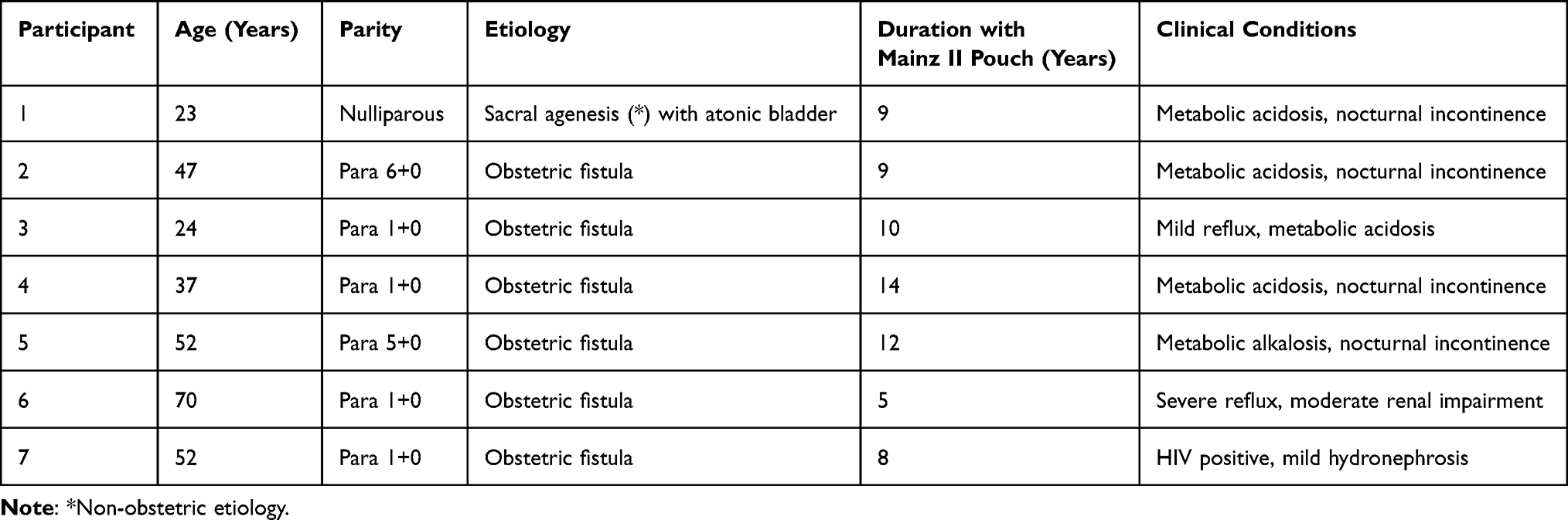 |
Table 1 Sociodemographic and Clinical Characteristics of Participants (n=7) |
Themes Identified Across Quality-of-Life Domains
Five major themes emerged from the analysis: (1) Physical restoration with persistent complications, (2) Psychological liberation burdened by invisible scars, (3) Social reconnection constrained by stigma, (4) Environmental barriers to sustained recovery, and (5) Gendered structural inequities in post-surgical care. These themes represent both the expected domains of quality of life and emergent issues specific to this marginalized population in a low-resource setting.
Physical Health
All the seven participants reported significant improvements in physical functionality post-surgery, including the restoration of urinary continence and the ability to perform daily tasks without restrictions. Urinary continence enabled many to resume farming, household chores, and social activities.
Participant 5 (aged 52) remarked,
I no longer leak urine, which has made it easier to farm and visit friends.
Similarly, Participant 4 (aged 37) shared,
Now I can walk to the market without worrying about wetting myself.
Despite these improvements, four of the seven participants reported persistent nocturnal incontinence, occasional gastrointestinal disturbances, and concerns about their long-term health. Participant 2 (aged 47) described her experience,
Sometimes at night, I wake up wet, and it makes me scared to sleep.
Relatedly, Participant 6 (aged 70) shared,
I feel stomach discomfort after eating certain foods, and I wonder if it is related to the surgery.
Psychological Well-Being
All seven participants expressed relief from the stigma of daytime incontinence, but five of the seven described ongoing anxiety, depression, or feelings of isolation. Relief from the stigma of incontinence brought increased self-esteem for some. Participant 1 remarked,
I feel like a human being again because I no longer smell bad.
However, ongoing anxiety and depression were also common. Participant 3 (aged 24) stated,
I always feel anxious, especially at night when accidents happen.
Participant 7 (aged 52) described feelings of isolation,
I feel lonely because I don’t have anyone to talk to about my struggles after the surgery.
Social Relationships
Participants frequently mentioned the role of community perceptions in shaping their post-operative experiences, both positively and negatively. While some participants described receiving encouragement and support from their communities, others reported facing lingering stigma or misconceptions about their condition, which hindered full reintegration. Improved continence has positively impacted social interactions, enabling participants to rebuild community relationships and engage in social activities without fear of embarrassment.
Participant 4 (aged 37) noted,
I can now visit my neighbors without fear of embarrassment.
However, stigma and discomfort in intimate relationships persisted, with participants reporting feelings of shame, failed marriages, and fear of rejection due to the physical impacts of the procedure.
Participant 3 revealed,
I tried many failed marriages and relationships. Weird noises always experienced during sexual intercourse often scare my sexual partners.
Participant 7 noted,
I feel ashamed to talk about intimacy because I don’t know if I will ever be normal again.
The challenges in intimate relationships extended to specific sexual and reproductive concerns, which participants described in detail.
Sexual and Reproductive Experiences Post-Surgery
Many participants avoided sexual relationships due to fear of urinary leakage, physical pain, and emotional embarrassment, which often led to feelings of inadequacy.
Participant 7 admitted,
I have never had sexual intercourse since the surgery because I am afraid of what might happen.
Participant 3 shared a similar sentiment,
I avoid being intimate because I don’t want to disappoint my partner.
Participants frequently reported pain during intercourse, urinary leakage during intimacy, and heightened anxiety about engaging in sexual relationships. Participant 5 noted,
Sometimes urine flows after sex, which is embarrassing.
Similarly, participant 4 revealed,
I feel pain in my lower abdomen during sex, and it makes me afraid to try again.
Environmental Health
Participants identified significant barriers to healthcare access, including limited follow-up care, long distances to clinics, and a lack of resources for managing post-operative complications.
Participant 6 stated,
I wish I had more medical reviews to understand my condition.
Participant 2 (aged 47) highlighted the lack of accessible resources,
I travel far to see a doctor, and sometimes I don’t even get the help I need.
Additionally, poor living conditions, such as dusty environments and inadequate housing, exacerbated participants’ struggles with maintaining their overall health.
Participant 1 mentioned,
The dust in my house makes me cough, and I don’t know if this affects my stomach issues.
Discussion
This study provides novel insights into the long-term, multidimensional adaptation of women following Mainz II urinary diversion in a rural African setting—an area severely underrepresented in global surgical literature. While the procedure demonstrably improved physical functionality and social reintegration,15 our findings over 5–14 years post-surgery reveal persistent psychological distress, nocturnal incontinence, and structural barriers to sexual health and follow-up care. Using a biopsychosocial lens, we found that while surgical success (biological) improved social participation (social), persistent psychological distress (psychological) remained unaddressed. These gaps highlight that surgical success does not equate to holistic recovery. While comparative literature notes similar challenges in low-resource settings,30,31 our in-depth qualitative approach details how these challenges manifest in the daily lives of this marginalized population, underscoring the critical need for comprehensive post-operative care that integrates psychosocial dimensions.
Impact of Sociodemographic Characteristics
Our analysis was framed by participants’ sociodemographic characteristics, which revealed age, parity, and pre-existing conditions as critical factors shaping adaptation. [Note on sample heterogeneity:] While primarily focused on women with obstetric fistula (n=6), the inclusion of one participant with a non-obstetric pathology highlighted shared psychosocial and access barriers, contextualizing the broader challenges of urinary diversion. Notably, younger participants (23–40 years) appeared to demonstrate better adaptation, aligning with literature on enhanced physiological resilience and fewer comorbidities in younger surgical patients.32,33 In contrast, older participants (52–70 years) faced more significant challenges, including renal complications often exacerbated by inadequate follow-up care. These observed age-related differences should be interpreted cautiously given the small, purposive sample and should be explored in larger, mixed-methods studies. Parity also shaped experiences, with multiparous women navigating caregiving roles and nulliparous women confronting stigma related to childlessness.34 Furthermore, while longer duration with the pouch appeared to aid adaptation, persistent complications like nocturnal incontinence underscored the need for continuous medical support.15,35 The prevalence of conditions such as metabolic acidosis among participants reinforces the necessity of meticulous, long-term follow-up to manage the systemic risks associated with urinary diversion.16
Physical Health
Participants reported significant improvements in continence and mobility, enabling them to perform daily activities such as farming and attending social gatherings with confidence. These findings align with studies demonstrating the functional benefits of the Mainz II pouch36 and its efficacy in achieving continence and improving quality of life.15 However, challenges such as persistent nocturnal incontinence, gastrointestinal disturbances, and associated anxiety were frequently reported, consistent with known complications of the Mainz II pouch;37 similarly, findings from this study align with literature that identifies metabolic acidosis and night-time incontinence as potential complications of the Mainz II pouch procedure.15,38 These findings emphasize the importance of regular follow-up care to manage complications and improve physical health outcomes. Participant narratives revealed that these persistent physical challenges often exacerbated psychological distress, further highlighting the interconnected nature of QoL domains. Findings align with literature highlighting the benefits of urinary diversion for physical functionality while emphasizing psychological and social challenges.15 This consistency underscores the need to balance surgical outcomes with comprehensive psychosocial support.
Psychological Well-Being
While participants reported relief from incontinence-related stigma, they expressed ongoing anxiety and depression stemming from nocturnal incontinence, perceived societal rejection, and unmet emotional needs.39 This aligns with studies highlighting the psychological burden of living with a urinary diversion, including feelings of isolation and diminished self-esteem.2 Participants’ experiences underscore the need for community-based mental health interventions to complement surgical care. The lack of dedicated mental health support and culturally appropriate counseling services exacerbated these challenges, emphasizing the critical need for integrated psychosocial care in post-operative management.4,40
Social Relationships
While restored continence significantly improved social interactions, participants continued to face challenges in intimate relationships, citing physical discomfort, anxiety about rejection, and fear of complications during sexual activity; For instance, one participant shared, “I avoid intimacy because I’m afraid of disappointing my partner”.41 This is consistent with previous findings which established that sexual dysfunction and relational difficulties are common among women with urinary diversions.40,42 Comparative analyses with other LMIC studies reveal similar challenges, emphasizing the systemic gaps in post-operative support for fistula patients. Cultural norms surrounding sexuality, combined with inadequate counseling services, perpetuated these relational challenges, underscoring the importance of culturally tailored interventions,39 highlighting the importance of addressing sexual health in post-operative care.43
Environmental Health
Participants highlighted significant barriers to healthcare access, including long travel distances, insufficient follow-up care, and lack of educational resources on post-operative management.44 Additionally, poor living conditions and economic constraints further compounded their challenges, limiting their ability to prioritize healthcare needs. Participants expressed a need for regular medical reviews and education on managing their condition. This reflects broader systemic issues in healthcare access in resource-limited settings, where follow-up care is often inadequate.12 Improving healthcare infrastructure and patient education is crucial for long-term success of the Mainz II pouch procedure.3
Sexual and Reproductive Experiences Post-Surgery
Participants reported restricted intimacy and significant physical discomfort during sexual activity, citing pain, urinary leakage, and fear of rejection, which led to avoidance of sexual relationships; These issues often led to avoidance of sexual relationships, further contributing to feelings of isolation and diminished self-esteem. One participant stated, “I worry about complications, so I prefer to stay away from relationships”.45 These findings are in line with studies documenting sexual dysfunction among women with continent urinary diversions.15 The fear of complications and lack of counselling contribute to avoidance of sexual relationships, underscoring the need for targeted interventions to address sexual health concerns.4 These findings emphasize the importance of integrating sexual health counselling into post-operative care to support women in rebuilding intimate relationships and improving their overall QoL.
This study underscores the imperative of equity-centered surgical rehabilitation programs that go beyond physical repair to address the psychosocial and structural determinants impacting marginalized women in rural LMIC settings. By illustrating the complex interplay between surgical outcomes and social reintegration, it offers valuable lessons for clinicians and policymakers in other resource-constrained regions exploring alternative urinary diversion techniques.
Limitations
While this study provides rich, in-depth insights into an under-researched population, several limitations warrant consideration. The small sample size (n=7) reflects the rarity of the Mainz II procedure in this setting but limits generalizability. However, qualitative research prioritizes “information power” over sample size, and our purposive sampling achieved data saturation on key experiences. Member checking with four participants enhanced credibility, while thick descriptions support transferability to similar settings. In addition, the exclusion of partners limits insights into relational dynamics—a valuable direction for future research that could provide more holistic understanding of psychosocial impacts.
Despite these limitations, we employed multiple strategies to ensure methodological rigor: prolonged engagement, triangulation through multiple analysts, audit trails, and explicit reflexivity. These measures enhance confidence in our findings while acknowledging boundaries of generalizability.
Recommendations for Improving Care for Mainz II Pouch Recipients
Integrated counselling services should be incorporated into post-operative care plans, focusing on mental and sexual health. These services must address psychological distress, relational challenges, and coping mechanisms to promote holistic well-being among recipients. Counselling interventions should include tailored support for managing anxiety and depression associated with complications like nocturnal incontinence and relational difficulties. Sexual health counseling should aim to reduce fear of intimacy and enhance confidence in resuming sexual relationships. (Integrated counseling for mental health and sexual health).
Structured health education programs are essential to empower recipients with knowledge on managing the Mainz II pouch, recognizing early complications, and understanding sexual health. These programs should emphasize practical self-care strategies, such as maintaining hygiene, managing dietary needs to prevent gastrointestinal disturbances, and recognizing symptoms of complications like metabolic acidosis. A focus on self-efficacy and independence is vital for enhancing long-term quality of life.
A systematic follow-up care schedule should be established to monitor recipients’ physical and mental health, identify complications early, and provide consistent support to enhance recovery and quality of life. This structured approach could include regular outpatient visits, telemedicine consultations for remote patients, and clear pathways for managing complications. Ensuring timely referrals for specialized care will reduce the burden of unresolved medical and psychological issues. (Structured follow-up to monitor complications).
Community-based initiatives are needed to combat stigma, promote social reintegration, and raise public awareness about obstetric fistula and the Mainz II pouch procedure. Collaborating with local leaders, religious organizations, and community groups will ensure cultural sensitivity and amplify the impact of these initiatives. Educational campaigns can address misconceptions about fistula repair and urinary diversions while fostering acceptance and support for recipients in their communities (Community initiatives to combat stigma).
Holistic care approaches should be advocated, integrating physical, psychological, and social dimensions. This comprehensive model will ensure that the physical health improvements from the Mainz II procedure are sustained and complemented by enhanced mental health and social well-being. Such care models could include multidisciplinary teams comprising surgeons, mental health professionals, and social workers, ensuring recipients receive coordinated and person-centered care.
Our findings underscore that quality-of-life outcomes following the Mainz II procedure extend beyond continence to include psychosocial and economic reintegration. This study underscores the global importance of tailoring surgical rehabilitation programs for vulnerable female populations in LMICs. By illustrating the complex interplay between surgical outcomes and social reintegration, it offers valuable lessons for clinicians and policymakers in other resource-constrained regions exploring alternative urinary diversion techniques.
While Mainz II surgery offers physical relief, it does not guarantee comprehensive psychosocial recovery. Health systems in low-income settings must adopt an equity-oriented and patient-centered approach that integrates post-surgical mental health, sexual health, and long-term follow-up care—particularly for surgically complex and socially marginalized women—if Sustainable Development Goals related to health and gender equality are to be realized.
Conclusion
As one of the few studies assessing the long-term quality of life in female recipients of Mainz II urinary diversion in rural Africa, this work contributes unique insights to global surgical literature. It calls for context-sensitive, multidisciplinary rehabilitation that integrates mental health, sexual health, and social support systems for marginalized populations with complex morbidities. The Mainz II pouch represents a transformative intervention for women with irreparable obstetric fistula, offering significant improvements in physical health and restoring urinary continence. This study highlights its positive impact on mobility and daily functionality, enabling recipients to regain independence and engage more actively in their communities. Despite these advancements, the findings underscore critical gaps in addressing the psychological, social, and environmental dimensions of quality of life (QoL).
Addressing these multidimensional challenges requires a holistic, patient-centered approach. These insights emphasize the need for tailored post-operative interventions that address the complex interplay of age, parity, clinical conditions, and consider these diverse factors to improve the overall quality of life for recipients of the Mainz II pouch. Post-operative care should include mental health counselling, sexual health support, and comprehensive patient education on managing the Mainz II pouch and recognizing potential complications. Community-based programs to reduce stigma and promote social inclusion are essential to foster long-term well-being.
By adopting a multidisciplinary approach and enhancing healthcare access in resource-limited settings, the holistic needs of Mainz II pouch recipients can be met, improving their overall quality of life and enabling them to lead fulfilling lives. These findings call for gender-equitable, patient-centered postoperative care models and long-term follow-up systems within national fistula programs, with a focus on bridging rural-urban health disparities in LMICs.
Abbreviations
BMC, BioMed Central; QoL, Quality of Life; SRRH, Soroti Regional Referral Hospital; WHO, World Health Organization; WHOQOL-BREF, World Health Organization Quality of Life - Brief Version.
Data Sharing Statement
The dataset(s) supporting the conclusions of this article is (are) included within the article.
Ethics Approval and Consent to Participate
Ethical approval was granted by the Mbale Regional Referral Hospital Research and Ethics Committee (MRRH-REC, an independent, nationally accredited ethics committee in Uganda) (MRRH-2023-260) and the Uganda National Council of Science and Technology (HS3247ES). This study was conducted in accordance with the principles of the Declaration of Helsinki. Written informed consent was obtained from all participants.
Consent to Publish
All participants provided written informed consent for their anonymized data and direct quotes to be used in publications resulting from this study.
Acknowledgments
The authors would like to thank the participants of this study for sharing their experiences and insights. We also acknowledge the support of the staff at Soroti Regional Referral Hospital for facilitating the study. Special thanks to the research assistants who contributed to data collection and transcription. In a special way, we would like to acknowledge the Soroti University Director of Research, Innovation and Graduate Studies, Professor Francis Ejobi, who provided the administrative oversight into the management of the grants and finally, we acknowledge Professor J. R. Odongo Ikoja, the Soroti University Vice Chancellor who solicited for the funds for this study.
Author Contributions
All authors made a significant contribution to the work reported, whether that is in the conception, study design, execution, acquisition of data, analysis and interpretation, or in all these areas; took part in drafting, revising or critically reviewing the article; gave final approval of the version to be published; have agreed on the journal to which the article has been submitted; and agree to be accountable for all aspects of the work.
Funding
This study was supported by funding from Government of Uganda through the Soroti University Research Innovation Fund (SUN-RIF), which provided financial resources for data collection, analysis, and manuscript preparation. The funding body did not influence the study design, data collection, analysis, or interpretation.
Disclosure
The author declare that they have no competing interests in this work.
References
1. Bomboka JB, N-Mboowa MG, Nakilembe J. Post - effects of obstetric fistula in Uganda; a case study of fistula survivors in KITOVU mission hospital (MASAKA), Uganda. BMC Public Health. 2019;19(1). doi:10.1186/s12889-019-7023-7
2. Mselle LT, Kohi TW. Living with constant leaking of urine and odour: thematic analysis of socio-cultural experiences of women affected by obstetric fistula in rural Tanzania. BMC Women’s Health. 2015;15(1). doi:10.1186/s12905-015-0267-1
3. El Ayadi AM, Barageine JK, Korn AP, et al. Trajectories of women’s physical and psychosocial health following obstetric fistula repair in Uganda: a longitudinal study. Tropical Med Int Health. 2018;24(1):53–12. doi:10.1111/tmi.13178
4. Nduka I, Ali N, Kabasinguzi I, Abdy D. The psycho-social impact of obstetric fistula and available support for women residing in Nigeria: a systematic review. BMC Women’s Health. 2023;23(1). doi:10.1186/s12905-023-02220-7
5. De Bernis L. Obstetric fistula: guiding principles for clinical management and programme development, a new WHO guideline. Int J Gynecol Obstet. 2007;99(S1):S117–S21. doi:10.1016/j.ijgo.2007.06.032
6. World Health O. Obstetric Fistula: Guiding Principles for Clinical Management and Programme Development. Lewis G, de Bernis L, editors. Geneva: World Health Organization; 2006.
7. den Hollander GC, Janszen EWM. Obstetric fistulas in Uganda: scoping review using a determinant of health approach to provide a framework for health policy improvement. BMC Pregnancy Childbirth. 2020;20(1):257. doi:10.1186/s12884-020-02951-7
8. Uganda Bureau of Statistics (UBOS), (ICF) ICF. Uganda demographic and health survey 2016. Kampala, Uganda and Rockville, Maryland, USA: UBOS and ICF; 2018.
9. Ruder B, Cheyney MJ, Emasu A. Too long to wait: obstetric fistula and the sociopolitical dynamics of the fourth delay in Soroti, Uganda. Qual Health Res. 2018;28(5):721–732. doi:10.1177/1049732317754084
10. Rundasa DN, Wolde TF, Ayana KB, Worke AF. Awareness of obstetric fistula and associated factors among women in reproductive age group attending public hospitals in southwest Ethiopia, 2021. Reprod Health. 2021;18:183.
11. Wilson SM, Sikkema KJ, watt MH, Masenga GG, Mosha MV. Psychological symptoms and social functioning following repair of obstetric fistula in a low-income setting. Maternal Child Health J. 2016;20(5):941–945. doi:10.1007/s10995-016-1950-z
12. Bello OO, Morhason-Bello IO, Ojengbede O. Nigeria, a high burden state of obstetric fistula: a contextual analysis of key drivers. Pan Afr Med J. 2020;36. doi:10.11604/pamj.2020.36.22.22204
13. Tebeu PM, Fomulu JN, Khaddaj S, de Bernis L, Delvaux T, Rochat CH. Risk factors for obstetric fistula: a clinical review. Int Urogynecol J. 2012;23(4):387–394. doi:10.1007/s00192-011-1622-x
14. Changole J, Thorsen VC, Kafulafula U. “I am a person but I am not a person”: experiences of women living with obstetric fistula in the central region of Malawi. BMC Pregnancy Childbirth. 2017;17(1):1–13. doi:10.1186/s12884-017-1604-1
15. Vindhya P, Majinge P, Chapa J. Mainz II pouch for urinary diversion: outcome and quality of life among patients who underwent it at CCBRT hospital dar es salaam 2011/2013. Obstet Gynecol Int J. 2016;4(4):00114.
16. Bastian PJ, Albers P, Hanitzsch H, et al. Health-related quality-of-life following modified ureterosigmoidostomy (Mainz Pouch II) as continent urinary diversion. Europ Urol. 2004;46(5):591–597. doi:10.1016/j.eururo.2004.06.007
17. Hautmann RE, de Petriconi RC, Volkmer BG. Lessons learned from 1000 neobladders: the 90-day complication rate. J Urol. 2010;184(3):990–994. doi:10.1016/j.juro.2010.05.037
18. Raassen TJ, Ngongo CJ, Mahendeka MM. Iatrogenic genitourinary fistula: an 18-year retrospective review of 805 injuries. Int Urogynecol J. 2014;25(12):1699–1706. doi:10.1007/s00192-014-2445-3
19. Bashah DT, Worku AG, Mengistu MY. Consequences of obstetric fistula in sub Sahara African countries, from patients’ perspective: a systematic review of qualitative studies. BMC Women’s Health. 2018;18(1):1–12. doi:10.1186/s12905-018-0605-1
20. Goes M, Lopes MJ, Marôco J, Oliveira H, Fonseca C. Psychometric properties of the WHOQOL-BREF(PT) in a sample of elderly citizens. Health Qual Life Outcomes. 2021;19(1). doi:10.1186/s12955-021-01783-z
21. Haraldstad K, Wahl AK, Andenæs R, et al. A systematic review of quality of life research in medicine and health sciences. Qual Life Res. 2019;28(10):2641–2650. doi:10.1007/s11136-019-02214-9
22. Kirya F, Aderu D, Epodoi J, et al. Clinical, sonographic and biochemical profiles of patients with a Mainz II pouch urine diversion in Rural Uganda. A case series. Int Med Case Reports J. 2025;Volume 18:601–607. doi:10.2147/IMCRJ.S515145
23. Kalfoss MH, Reidunsdatter RJ, Klöckner CA, Nilsen M. Validation of the WHOQOL-Bref: psychometric properties and normative data for the Norwegian general population. Health Qual Life Outcomes. 2021;19(1):13. doi:10.1186/s12955-020-01656-x
24. Engel GL. The need for a new medical model: a challenge for biomedicine. Science. 1977;196(4286):129–136. doi:10.1126/science.847460
25. Doyal L. What Makes Women Sick: Gender and the Political Economy of Health. Bloomsbury Publishing; 1995.
26. Morgan R, George A, Ssali S, Hawkins K, Molyneux S, Theobald S. How to do (or not to do)… gender analysis in health systems research. Health Policy Plann. 2016;31(8):1069–1078. doi:10.1093/heapol/czw037
27. Davies SE, Bennett B. A gendered human rights analysis of Ebola and Zika: locating gender in global health emergencies. Int Affairs. 2016;92(5):1041–1060. doi:10.1111/1468-2346.12704
28. Sen G, Iyer A. Who gains, who loses and how: leveraging gender and class intersections to secure health entitlements. Soc Sci Med. 2012;74(11):1802–1811. doi:10.1016/j.socscimed.2011.05.035
29. Fereday J, Muir-Cochrane E. Demonstrating rigor using thematic analysis: a hybrid approach of inductive and deductive coding and theme development. Int J Qual Methods. 2006;5(1):80–92. doi:10.1177/160940690600500107
30. Wong CH-M, IC-h K, Kang SH, et al. Long-term outcomes of orthotopic neobladder versus ileal conduit urinary diversion in robot-assisted radical cystectomy (RARC): multicenter results from the Asian RARC Consortium. Ann Surg Oncol. 2024;31(9):5785–5793. doi:10.1245/s10434-024-15396-5
31. Patel T, Chipungu E, Draganchuk J, Chalamanda C, Wilkinson JP. Mainz II urinary diversion should not be performed in low-income settings: a retrospective observational study of patient outcomes associated with Mainz II urinary diversion in women with irreparable fistula in Malawi. 2023. Available at SSRN 4526535.
32. Muleta M, Fantahun M, Tafesse B, Hamlin E, Kennedy R. Obstetric fistula in rural Ethiopia. East Afr Med J. 2007;84(11):525–533. doi:10.4314/eamj.v84i11.9572
33. Jing S, Yang E, Luo Z, et al. Perioperative outcomes and continence following robotic-assisted radical cystectomy with Mainz pouch II urinary diversion in patients with bladder cancer. BMC Cancer. 2024;24(1):127. doi:10.1186/s12885-024-11874-x
34. Azad AD, Charles AG, Ding Q, Trickey AW, Wren SM. The gender gap and healthcare: associations between gender roles and factors affecting healthcare access in Central Malawi, June–August 2017. Arch Public Health. 2020;78(1):119. doi:10.1186/s13690-020-00497-w
35. Arrowsmith S. Urinary diversion in the vesico-vaginal fistula patient: general considerations regarding feasibility, safety, and follow-up. Int J Gynecol Obstet. 2007;99(S1):S65–S8. doi:10.1016/j.ijgo.2007.06.028
36. Arrowsmith S, Hamlin EC, Wall LL. Obstructed labor injury complex: obstetric fistula formation and the multifaceted morbidity of maternal birth trauma in the developing world. Obstetrical Gynecol Surv. 1996;51(9):568–574. doi:10.1097/00006254-199609000-00024
37. Browning A, Menber B. Women with obstetric fistula in Ethiopia: a 6‐month follow up after surgical treatment. BJOG. 2008;115(12):1564–1569. doi:10.1111/j.1471-0528.2008.01900.x
38. Mekonen Y. Review of urinary diversion (Mainz II) for women with irreparable vesico-vaginal fistula (VVF) in eritrea, 2022: a retrospective study. J Clin Surg Anesth. 2024;2(1):1–5. doi:10.61440/JCSA.2024.v2.04
39. Pope R, Bangser M, Requejo JH. Restoring dignity: social reintegration after obstetric fistula repair in Ukerewe, Tanzania. Global Public Health. 2011;6(8):859–873. doi:10.1080/17441692.2010.551519
40. Voigt M, Hemal K, Matthews C. Influence of simple and radical cystectomy on sexual function and pelvic organ prolapse in female patients: a scoping review of the literature. Sexual Med Rev. 2019;7(3):408–415. doi:10.1016/j.sxmr.2019.03.005
41. Landry E, Frajzyngier V, Ruminjo J, et al. Profiles and experiences of women undergoing genital fistula repair: findings from five countries. Global Public Health. 2013;8(8):926–942. doi:10.1080/17441692.2013.824018
42. Louar M, Morel-Journel N, Ruffion A, Carnicelli D, Neuville P. Female sexual function and body image after urinary diversion for benign conditions. J Sexual Med. 2021;19(2):263–269. doi:10.1016/j.jsxm.2021.11.007
43. Bhavsar V, Bhugra D. Cultural factors and sexual dysfunction in clinical practice. Adv Psychiatric Treat. 2013;19(2):144–152. doi:10.1192/apt.bp.111.009852
44. Browning A, Patel TL. FIGO initiative for the prevention and treatment of vaginal fistula. Int J Gynecol Obstet. 2004;86(2):317–322. doi:10.1016/j.ijgo.2004.05.003
45. Raassen TJ, Verdaasdonk EG, Vierhout ME. Prospective results after first-time surgery for obstetric fistulas in East African women. Int Urogynecol J. 2008;19(1):73–79. doi:10.1007/s00192-007-0389-6
 © 2026 The Author(s). This work is published and licensed by Dove Medical Press Limited. The
full terms of this license are available at https://www.dovepress.com/terms
and incorporate the Creative Commons Attribution
- Non Commercial (unported, 4.0) License.
By accessing the work you hereby accept the Terms. Non-commercial uses of the work are permitted
without any further permission from Dove Medical Press Limited, provided the work is properly
attributed. For permission for commercial use of this work, please see paragraphs 4.2 and 5 of our Terms.
© 2026 The Author(s). This work is published and licensed by Dove Medical Press Limited. The
full terms of this license are available at https://www.dovepress.com/terms
and incorporate the Creative Commons Attribution
- Non Commercial (unported, 4.0) License.
By accessing the work you hereby accept the Terms. Non-commercial uses of the work are permitted
without any further permission from Dove Medical Press Limited, provided the work is properly
attributed. For permission for commercial use of this work, please see paragraphs 4.2 and 5 of our Terms.
Recommended articles
Caregiver Burden in Bladder Cancer Patients with Urinary Diversion Post-Radical Cystectomy and the Need for Comprehensive Nursing Education: A Narrative Literature
Zhang T, Qi X
Journal of Multidisciplinary Healthcare 2024, 17:3825-3834
Published Date: 7 August 2024
Clinical, Sonographic and Biochemical Profiles of Patients with a Mainz II Pouch Urine Diversion in Rural Uganda. A Case Series
Kirya F, Aderu D, Epodoi J, Apolot D, Kiconco R, Mpango R, Eperu J, Opito R
International Medical Case Reports Journal 2025, 18:601-607
Published Date: 24 May 2025