
Back to Journals » Journal of Multidisciplinary Healthcare » Volume 19
Barriers Facing the Hospitals from Establishing Pulmonary Rehabilitation Programs in the Usual Care of COPD and Respiratory Patients in Saudi Arabia
Authors Alsubaiei M, AlQuaimi M  , Khushhal A , Aldhahir AM , Alasimi AH , Alghamdi SM , Almalki S, Aloudi N, Almojaibel AA
Received 8 December 2025
Accepted for publication 2 April 2026
Published 18 April 2026 Volume 2026:19 587319
DOI https://doi.org/10.2147/JMDH.S587319
Checked for plagiarism Yes
Review by Single anonymous peer review
Peer reviewer comments 2
Editor who approved publication: Professor Linda Yoder
Mohammed Alsubaiei,1 Maher AlQuaimi,2 Alaa Khushhal,3 Abdulelah M Aldhahir,4 Ahmed H Alasimi,5 Saeed M Alghamdi,6 Sarah Almalki,7 Noora Aloudi,8 Abdullah A Almojaibel2
1Department of Physical Therapy, Faculty of Applied Medical Sciences, Imam Abdulrahman bin Faisal University, Dammam, Saudi Arabia; 2Department of Respiratory Care, Imam Abdulrahman Bin Faisal University, Dammam, Saudi Arabia; 3Department of Medical Rehabilitation Sciences, College of Applied Medical Sciences, Umm Al-Qura University, Makkah, Saudi Arabia; 4Respiratory Therapy Program, Department of Nursing, College of Nursing and Health Sciences, Jazan University, Jazan, Saudi Arabia; 5National Heart and Lung Institute, Imperial College London, London, UK; 6Respiratory Care Program, Clinical Technology Department, College of Applied Medical Science, Umm Al-Qura University, Makkah, Saudi Arabia; 7Department of Physical Therapy, Asir Rehabilitation Centre, Asir Central Hospital, Abha, Saudi Arabia; 8College of Medicine, Almaarefa University, Dammam, Saudi Arabia
Correspondence: Alaa Khushhal, Department of Physical Therapy, College of Applied Medical Sciences, Umm Al-Qura University, Makkah, Saudi Arabia, Email [email protected] Mohammed Alsubaiei, Department of Physical Therapy, Imam Abulrahman bin Faisal University, Dammam, Saudi Arabia, Email [email protected]
Background: The prevalence of pulmonary diseases, including chronic obstructive pulmonary diseases, in Saudi Arabia is high, and pulmonary rehabilitation is not available in most Saudi hospitals. The causes that prevent hospitals in Saudi Arabia are still unclear and need more investigation. Thus, the aim of this study is to determine why pulmonary rehabilitation is not part of the usual COPD and respiratory disease management in Saudi Arabia.
Methods: A cross-sectional study was conducted in Saudi Arabia with two questionnaires: the first for the healthcare providers and the second for pulmonary patients.
Results: About 349 healthcare providers completed the first questionnaire. The three highest barriers for establishing pulmonary rehabilitation in Saudi Arabia were shortage of healthcare providers (n = 183), followed by reduction of funds (n = 146) and lack of hospital room and capacity, respectively (n = 101 and n = 78). From the healthcare provider’s point of view, the two highest barriers to preventing patients from attending pulmonary rehabilitation were transportation (n = 151), followed by lack of perceived benefits (n = 142). Almost half of healthcare providers (44%) intended to implement percentage a pulmonary rehabilitation program in Saudi Arabia. About 269 pulmonary patients filled out the second questionnaire. The three highest barriers from the patients’ point of view to attend the pulmonary rehabilitation were being consistent with the program, lack of transportation, and wasting time in the program.
Conclusion: The main barriers that prevent the implementation of a pulmonary rehabilitation program were lack of healthcare professionals and funds and low hospital capacity. The most barriers that prevent pulmonary patients from attending pulmonary rehabilitation programs were transportation challenges and lack of perceived benefits. About half of the healthcare providers intended to implement a pulmonary rehabilitation program in Saudi Arabia.
Keywords: barriers, pulmonary rehabilitation, establish
Introduction
Chronic Obstructive Pulmonary Disease (COPD) is a disease characterized by persistent airflow limitation that is usually progressive.1 COPD is one of the leading causes of morbidity and mortality across the world. According to the World Health Organization (WHO), in 2001, COPD was the sixth leading cause of mortality in middle- or low-income countries.2,3 Patients with COPD exhibit several symptoms, including dyspnea, low exercise capacity, fatigue, recurrent exacerbations, cough, chest tightness, decreased ability to perform activities of daily living, and increased sputum production. The inability to perform daily activities can lead to further muscle weakness, depression, social isolation, and low health-related quality of life.4
 |
Figure 1 Presented the flow chart for the recruitment process in this study. |
The population in Saudi Arabia is now more than 33 million,5 with an increasing number of patients with COPD.6 However, the literature lacks the exact prevalence of COPD in Saudi Arabia. In a study that included a total of 501 smokers over the age of 40 who are attending primary healthcare clinics in the biggest three cities in Saudi Arabia, they reported that 71 patients had COPD, which is 14.2% of the study population.6 This prevalence rate of COPD in Saudi Arabia is matching the prevalence rate reported from many other countries across the world.6
Cigarette smoking is the main risk factor of COPD. Cigarette smoking rates are increasing in Saudi Arabia. Therefore, it is expected that the prevalence of COPD could increase too.6 In the eastern province of Saudi Arabia, the prevalence of current smoking is 16.9%.7 Other factors that might increase the risk of COPD in Saudi Arabia include outdoor air pollution.8
The level of physical inactivity is high among the Saudi population. A recent study reported that 96.1% of males and 98.5% of females in Saudi Arabia are physically inactive compared with Australia (64% of males and 60% of females).9,10 Multiple studies reported that patients with COPD may tend to be physically inactive.11 In a recent systematic review, patients with COPD are inactive in daily life. This systematic review connects decreasing the level of physical activity with poor quality of life, increased health care utilization, and reduced survival.11
The prevalence of cigarette smoking and the level of physical inactivity in Saudi Arabia make it a must to find treatments and preventive strategies for patients with COPD in Saudi Arabia.12 Those patients are symptomatic and may have decreased daily life activities. Pulmonary rehabilitation is usually integrated into the patient’s treatment plan. The goal of pulmonary rehabilitation is to reduce symptoms, optimize functional status, increase participation, and reduce healthcare costs by stabilizing or reversing systemic manifestations of chronic respiratory diseases.13
Pulmonary rehabilitation is a comprehensive, multidisciplinary intervention and is now a core component of guideline-based care for patients with COPD. A standard PR program includes supervised exercise training, education, and psychosocial support. Pulmonary rehabilitation has been consistently proven to have significant clinical benefits. Many studies worldwide have demonstrated that pulmonary rehabilitation is associated with decreased dyspnea, increased exercise capacity and daily physical activity levels, reduced anxiety and depression, lower hospitalization rates, and a marked improvement in quality of life.13 However, the benefits of pulmonary rehabilitation often last for only 12 to 18 months after finishing the program.14,15 Adding self-management strategies to the patients and changing their behaviour may extend the benefits of the programs.14–16 In the Middle East, only five studies have reported the benefits of pulmonary rehabilitation in Saudi Arabia,17–21 and few reports were from Turkey.22–24
Currently, to the best of our knowledge, only a few tertiary hospitals (for example, the King Abdulaziz Medical City in Riyadh and King Fahad Medical City) offer pulmonary rehabilitation programs in Saudi Arabia.17 Therefore, the number of patients with COPD and respiratory diseases who can access pulmonary rehabilitation programs in Saudi Arabia is extremely low, and establishing more pulmonary rehabilitation programs throughout Saudi Arabia is critically needed.17–19
The primary aim is to determine why pulmonary rehabilitation is not part of the usual COPD management in Saudi Arabia. The secondary aim is to evaluate barriers to establishing pulmonary rehabilitation programs according to health care providers who are treating and providing care for patients with COPD and patients with respiratory diseases. In addition, we aim to determine barriers that might prevent patients from participating in pulmonary rehabilitation programs.
Methods and Materials
Study Design and Setting
A cross-sectional study was conducted from February 2023 until May 2023 in all regions of Saudi Arabia. All subjects were selected from governmental hospitals (n = 42). Figure 1 illustrated the flowchart of the recruitment process in this study.
The researcher contacted the directors of the Department of Internal Medicine, Physiotherapy, Respiratory Therapy, and Nursing to identify all healthcare providers who provide care to patients with COPD and respiratory diseases. After all these healthcare providers were identified, an information sheet about the study and a consent form was sent to them (Appendix 1), and a questionnaire for the healthcare providers was sent to them (Appendix 2).
For the patients, the researcher sent the questionnaire electronically via mobile application (WhatsApp) to the general population and provided an information sheet to the patients. Subjects who provided consent to participate and have respiratory diseases such as COPD were asked to complete the questionnaire in the Arabic language, and we provided the English version for the consent form (Appendix 3) and the questionnaire (Appendix 4), which was sent to the patients.
The researcher asked all health care providers who gave consent to participate to complete the questionnaires, which were sent electronically.
The research was approved by the local Institutional Review Board (IRB) at Imam Abdulrahman Bin Faisal University, Dammam, Saudi Arabia.
Sample Size Calculation
In this study, the census survey method was used. Therefore, all healthcare providers who met our inclusion criteria were approached to participate in the study. Based on a previous study completed by us in the largest province in Saudi Arabia (eastern province) with a high number of hospitals and healthcare providers,23 we assume that we could include 10 participants from each hospital. In addition, we try to include all patients with respiratory diseases who agree to participate in this survey.
Inclusion Criteria
Hospitals
Inclusion criteria:
- Governmental hospitals sponsored by the Ministry of Health, military hospitals, and the Ministry of Higher Education.
- Governmental hospitals with more than 200 bed capacity.
Exclusion criteria:
- Specialist hospitals such as psychiatric hospitals, convalescent hospitals, and maternity and children’s hospitals sponsored by the Ministry of Health.
- Referral hospitals sponsored by the Ministry of Health such as King Fahad Specialist Hospital.
- Private hospitals.
Healthcare providers were included if they had access to evaluate, treat, and provide care for patients with COPD. In addition, we include patients who are diagnosed by physicians with respiratory diseases.
Measurements
Data was collected by questionnaires. All questionnaires were in the English language because English is the official language in Saudi hospitals. However, questionnaires for patients were in the Arabic language because the official language in Saudi Arabic is Arabic.
A full version of the pulmonary rehabilitation questionnaire was provided to the healthcare providers who are familiar with pulmonary rehabilitation to determine barriers to setting up a pulmonary rehabilitation (PR) program in the eastern province of Saudi Arabia. This survey includes 12 open-ended questions and 5 closed questions. This survey is divided into two parts. The first part of questions 1–4 evaluated knowledge about pulmonary rehabilitation programs. The other 13 questions evaluated the barriers to setting up a pulmonary rehabilitation program. Most of the barriers listed in this survey were listed based on the results from a systematic review completed by Keating et al, (2011), who have used it to determine factors associated with the uptake and completion of pulmonary rehabilitation for people with COPD. In addition, we asked health care providers about their readiness to implement a PR program by providing statements about implementing a PR program. Each statement represents one stage of readiness. Finally, we asked healthcare providers. How confident are you in implementing a pulmonary rehabilitation program now, where 0 is “not at all confident” and 10 is “very confident”? The completion of this questionnaire took 15 minutes.
The patient questionnaire includes three parts. The first part asks patients to provide demographic information. For the second part, we asked the patients if they were willing to participate in a pulmonary rehabilitation program if they were offered one. For the final part, we ask the patients about barriers that might prevent them from participating in a pulmonary rehabilitation program. This questionnaire took 10 minutes to complete.
Statistical Analysis
All data were entered into the Statistical Package for Social Sciences (SPSS) version (26). The analysis was mostly descriptive. The normality of the distribution was tested, and continuous variables were summarized by calculating the mean and the standard deviation if the data were normally distributed or the median and interquartile range.
Results
About 349 healthcare providers, including 129 physicians, 98 physiotherapists, 90 respiratory therapists, and 32 nurses (47.55% males), have completed the survey. About 37% stated they have access to pulmonary rehabilitation in their hospitals. When asked about their ranking position, the majority answered “specialist, 53%” followed by “consultant, 18%” then, “other 14%” “technician, 9.6%”, and “resident 5%”. The mean years of experience was 9.4 (SD 8.9). Most healthcare providers are physiotherapists, followed by respiratory therapists. When asked, “Do you think patients are willing to participate in a pulmonary rehabilitation program if they have been offered to participate?” the answer was yes in 92% of the sample.
Table 1 showed demographic data for patients with COPD and respiratory diseases.
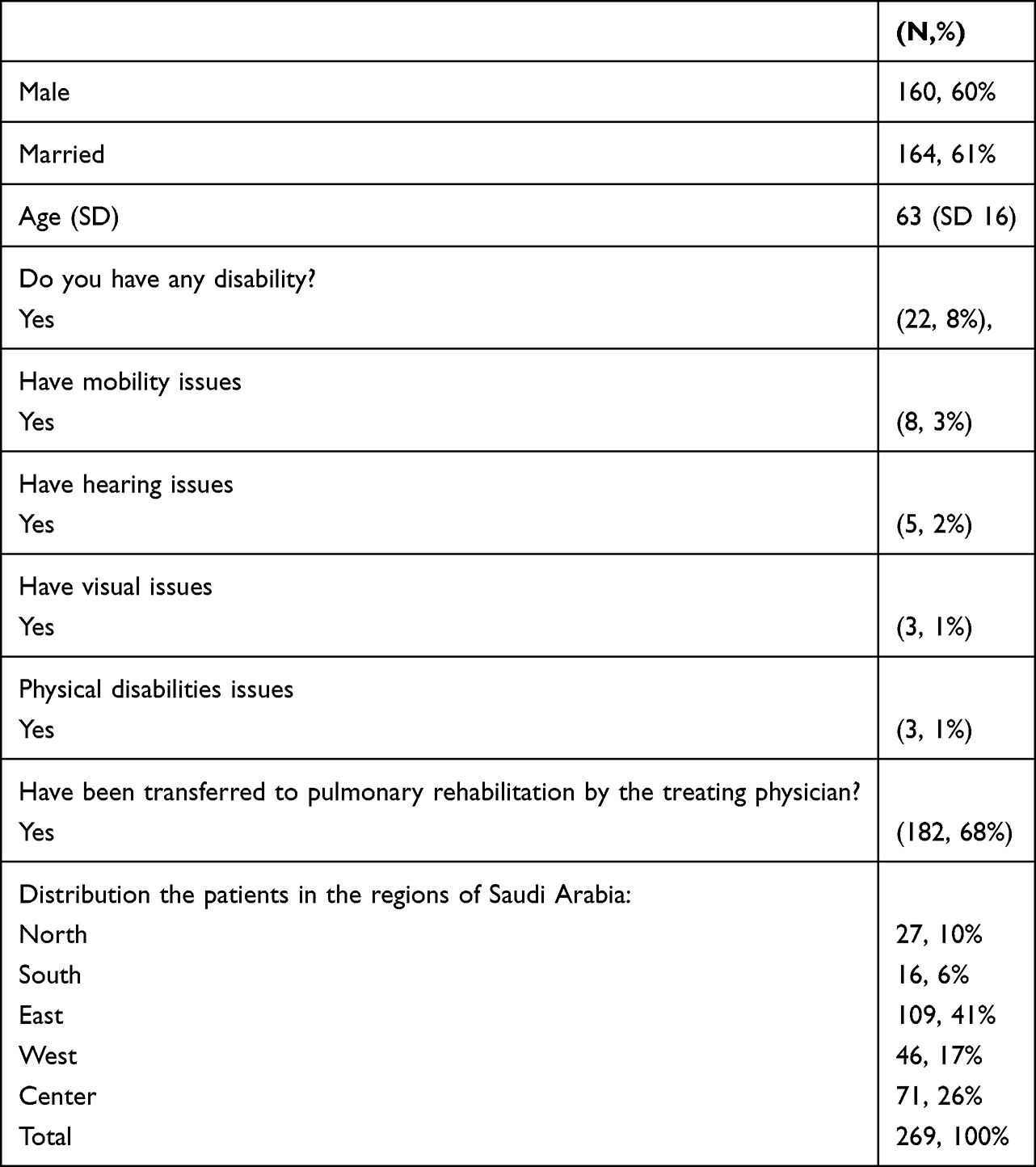 |
Table 1 Demographic Data for Patients with COPD and Respiratory Diseases (n = 269) |
Table 2 showed health care providers’ points of view about barriers that might prevent hospitals from establishing pulmonary rehabilitation programs. The highest barrier was lack of healthcare providers (n = 183), followed by lack of funds (n = 146) and lack of hospital room and capacity, respectively (n = 101 and n = 78).
 |
Table 2 Healthcare Providers (n = 349) Points of View About Barriers That Might Prevent Hospitals from Establishing Pulmonary Rehabilitation Programs |
Table 3 showed healthcare providers’ point of view about barriers that might prevent patients from participating in a pulmonary rehabilitation program if they have been offered to participate. The highest barriers were transportation (n = 151) followed by lack of perceived benefits (n = 142).
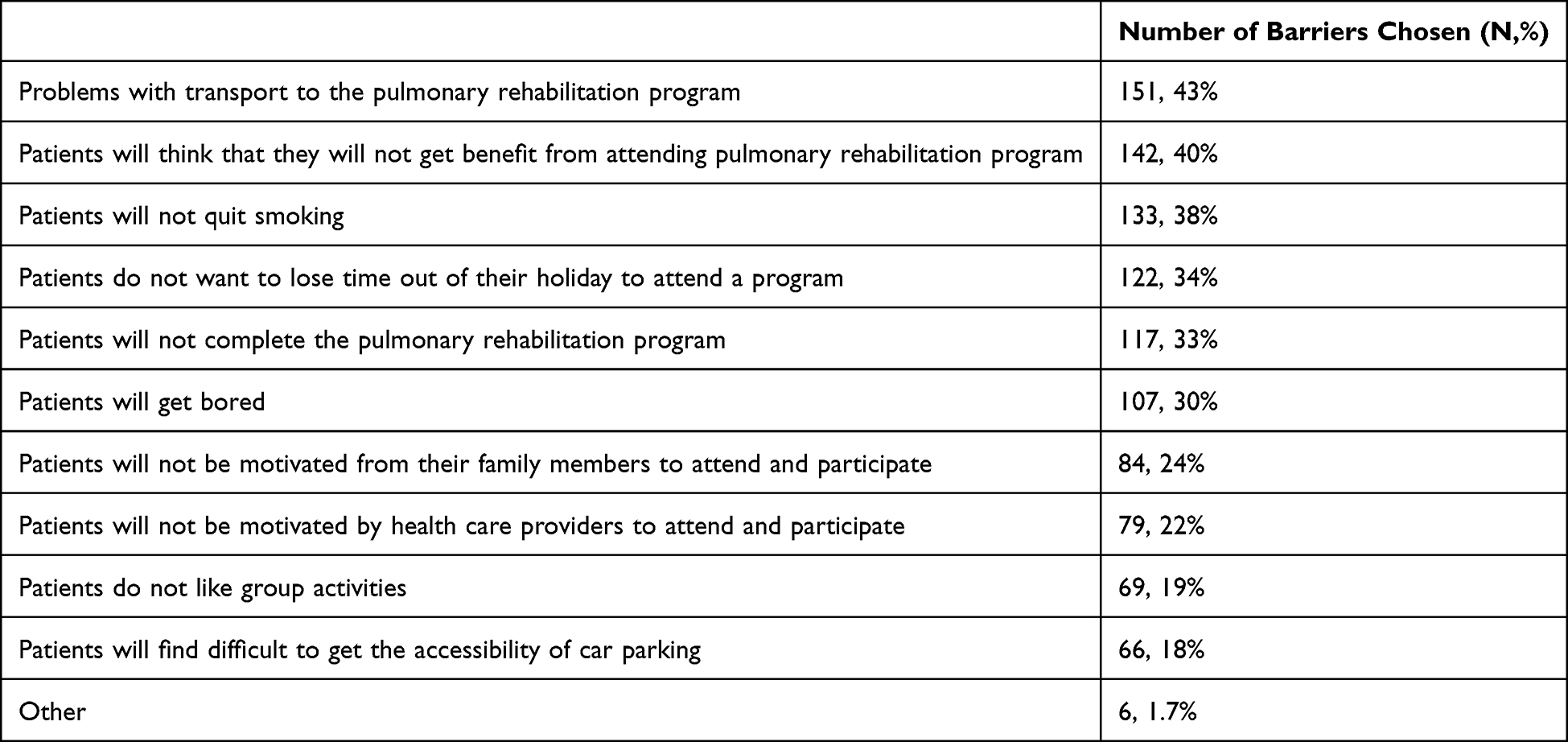 |
Table 3 Healthcare Providers’ (n = 349) Points of View About Barriers Prevents Patients from Participating in a Pulmonary Rehabilitation Program if They Have Been Offered to Participate |
Table 4 showed healthcare providers’ readiness to implement a PR program. Most healthcare providers have selected “I am intending to implement a pulmonary rehabilitation program (44%), followed by “I am not intending to implement a pulmonary rehabilitation program” (33.81%). In addition, when we asked healthcare providers about how confident they are to implement a pulmonary rehabilitation program now, where 0 is “not at all confident” and 10 is “very confident”, 19% of healthcare providers rated themselves a10.
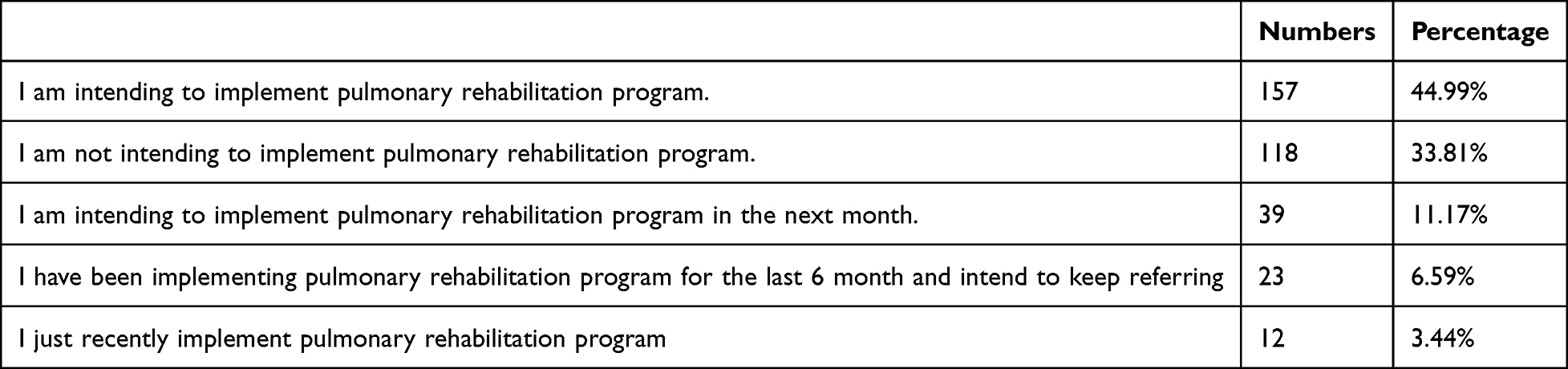 |
Table 4 Health Care Providers Readiness to Implement a PR Program |
For the patient’s survey, we have developed a validated Arabic questionnaire and distributed it via an online questionnaire system (QuestionPro) n = 269 have filled and completed the survey. About 60% were females (n = 163). When asked about marital status, the answers were 61% married (n = 164), 34% single (n = 91), and 14% others (n = 14); the average age was 63 years old (SD 16). Most of the sample has no disability (n = 247, 92%); (n = 8, 3%) have mobility issues; (n = 5, 2%) have hearing; (n = 3,1%) have visual and physical disabilities each. When asked if they have been transferred to pulmonary rehabilitation by the treating physician (68%, n = 182) answered yes. When asked “Would you be willing to attend online pulmonary rehabilitation?” (76%, n = 204) answered yes.
Table 5 showed patients’ points of view about barriers that might prevent them from participating in a pulmonary rehabilitation program if they had been offered one. The highest barriers were being consistent with the program, lack of transportation, and wasting time in the program. These barriers were reported by more than 20% of the participants.
 |
Table 5 Barriers That Might Prevent Patients from Participating in a Pulmonary Rehabilitation Program if They Have Been Offered to Participate |
Discussion
Pulmonary rehabilitation programs within Saudi Arabia are still very limited.25 Therefore, this study aimed to identify the barriers deterring PR incorporation into routine COPD management through the views of healthcare providers and patients. Notable institutional and patient-level barriers deterring the establishment and initiation of PR programs. The most frequently stated institutional barriers were a shortage of healthcare providers, insufficient funds, and limited hospital capacity. Transportation problems and the perceived lack of benefit were the most common barriers to patient engagement. Though most healthcare providers said they were prepared to use PR, confidence levels were inconsistent, suggesting professional development and additional resources are needed.
The most significant barrier recognized was the lack of healthcare providers, in agreement with numerous studies showing that a limited number of qualified professionals can be a tremendous obstacle to providing effective rehabilitation services.26,27 Likewise, insufficient healthcare professionals with PR expertise can contribute to low referral levels, compounding the service availability issue.28 In Saudi Arabia, follow-up evidence reinforced the need for a well-trained multidisciplinary workforce for successful PR uptake, and workforce shortages have been among the primary barriers globally due to a shortage of rehabilitation experts.29 This scarcity impacts the direct delivery of rehabilitation services and the overall quality of care given to patients, as healthcare providers may not have had the requisite training to manage and refer patients to PR programs suitably.20,30
The differences between this study and the previous studies are that this study focused on what barriers prevent establishing pulmonary rehabilitation from healthcare and patients’ views in different regions of Saudi Arabia and in all respiratory patients, including COPD patients, while the previous study focused on evaluating the pulmonary rehabilitation services only from a healthcare view and only in the eastern region of Saudi Arabia.29 Other studies focused on barriers for referring COPD patients only to pulmonary rehabilitation from a healthcare view only but not the barriers for establishing pulmonary rehabilitation centers, and they suggest including the patients’ views in future research.20,30
Financial constraints were also a significant impediment to implementing PR programs. This finding is consistent with a Saudi Arabian research survey, where the availability of sufficient resources to implement effective COPD management was emphasized.31 Insufficient financial support has been extensively reported as one of the main obstacles to the long-term sustainability of PR programs.27,32 The notion of limited funds can result in insufficient investment in the training and infrastructure of personnel necessary for PR programs to be implemented effectively.33 Moreover, there is the financial dimension to the priority given to PR by healthcare organizations, which would be less inclined to endorse programs that they believe are poorly funded or supported.34 This cost barrier is exacerbated by the need for ongoing funding to create and maintain PR services.35 Health policymakers should consider allocating specific budgets to PR programs to ensure sustainability and accessibility.
Hospital capacity and space constraints reported by HCPs can contribute to these challenges since infrastructural shortages can get in the way of the availability of specialized PR facilities.29 Space requirements for physical rehabilitation activities are typically underestimated when planning, resulting in inadequate facilities to meet patients’ needs.36,37 This is a widespread issue in environments where the hospitals are already full, and getting space for specialized programs such as PR is challenging.38 Previous evidence suggests that integrating PR into home or community-based settings may provide alternative solutions to hospital-based programs.39
Patient-related barriers were also prominent, with transportation difficulties being the most frequently reported obstacle to PR attendance. Chronically ill respiratory patients, such as those with COPD, often experience physical impairment, including breathlessness, fatigue, and mobility issues, which can make traveling to a rehabilitation center particularly difficult.40 This finding is in line with prior research indicating that transportation issues are a global challenge for PR adherence.41 Lack of accessible transportation for mobility-impaired and aging COPD patients limits their capacity to attend sessions regularly. Hence, transport barriers significantly impact PR uptake rates and typically cause high non-adherence and dropout rates.42 Telerehabilitation has been suggested as a promising approach to eliminating transport barriers.43 Based on these findings, Saudi Arabian hospitals can adapt and implement a PR model that fits their resources and capacities.
Another key patient-related barrier was the lack of perceived benefits, which refers to uncertainty among patients about the benefits of PR. Evidence has demonstrated that patients undervalue the importance of such programs since the benefits are not always immediate or tangible compared to medication that treats the symptoms instantly.44 It has been shown that while exercise training is paramount in enhancing functional capacity and reducing symptoms like dyspnea, in many patients, benefits may not be immediately realized, further dissuading attendance of rehabilitation programs.45,46 Patients may become frustrated at the slow progress being made with exercise tolerance and in quality-of-life improvement when they have been accustomed to quicker drug therapy intervention.47 Consequently, awareness among patients about their condition and the rehabilitation process is crucial in their acceptance and enrollment.33 This would suggest that communication strategies and educational interventions must be reinforced to change patient attitudes and enhance participation in PR programs.
The enthusiasm of clinicians to establish PR programs, as indicated by 44%, demonstrates increasing awareness of the programs’ value in managing chronic respiratory conditions, particularly COPD. This willingness is supported by an extensive body of evidence regarding the efficacy of PR in improving patient outcomes like exercise tolerance, health-related quality of life, and hospital readmission reductions.48,49 Furthermore, the global clinical guidelines recommend PR as a standard of care in the event of individuals with moderate and severe COPD and that serves as a good incentive for practitioners to adopt such programs into practice.50 Nonetheless, the comparatively modest proportion of providers reporting confidence in instituting PR indicates possible obstacles to the widespread adoption of such programs. Inadequate training, resource constraints, and organizational issues within healthcare organizations have been posited as contributing factors for such reluctance.20,51 The evidence indicates that more comprehensive training and education of health professionals can significantly increase their competence and confidence to provide PR.52 This implies that streamlining the education system for PR is an essential factor in clinical professionals’ readiness and confidence, thus making integrating such important programs into clinical practice easier.53
From the patient’s perspective, compliance issues such as inability to maintain consistency, transportation issues, and lack of perceived time were cited by over 20% of respondents. Non-adherence to PR programs has been extensively documented, with a previous study showing a 38.5% dropout rate.54 Adherence to PR can be difficult owing to unstable health status and motivation, mainly if no immediate improvement exists.55 Furthermore, the perception of wasting time during rehabilitation sessions was also pointed out, implying that patients might not be fully aware of the usefulness of these types of programs.40 This sentiment is compounded by PR programs’ functional and structural heterogeneity, potentially leading to frustration and dropout among patients.56,57 Moreover, the severity of chronic respiratory conditions, such as COPD, generally increases the sensations of frailty and fatigue and thus makes it even more difficult for them to adhere to rehabilitation.40 These barriers must be overcome through various strategies, such as promoting patient education regarding the value of rehabilitation, improving transportation, and customizing programs to meet patients’ needs and expectations.55,56 Our results showed that the acceptance of using online sessions is high (76%) among pulmonary patients, and this could be a solution for some barriers, such as transportation and less adherence to PR programs. To overcome the barriers of pulmonary rehabilitation such as shortage of staff, transportation, and funding, home exercise or telerehabilitation could be the alternative solution. The evidence supports using pulmonary telerehabilitation to improve pulmonary outcomes.58
Monitoring biomarkers is important to improve outcomes in pulmonary rehabilitation because exercise can benefit patients with chronic respiratory diseases in different ways based on the severity of the disease and the duration and frequency of the exercise.59
Strengths and Limitations
This study is significant as it used a dual-perspective approach, incorporating both healthcare providers and patients, thus providing a comprehensive understanding of the barriers to the establishment of PR. This mixed-methods design enables a deeper and more meaningful appreciation of the determinants of the lack of such programs and can show results not so clear in earlier research. Furthermore, it fills an important gap in COPD management in the Saudi Arabian healthcare system, a country where PR services remain very limited. Nevertheless, limitations include potential biases in participants’ self-reported data, which can compromise the validity of findings. Despite these constraints, the study offers important background for future work that incorporates PR as standard COPD management in Saudi Arabia.
Conclusion
Implementation of PR programs in Saudi Arabia is restricted by widespread institutional and patient-level barriers. The most frequently reported institutional-level barriers were unavailable healthcare professionals, lack of funds, and low hospital capacity, all of which were responsible for the limited availability of PR services. In the same way, transportation challenges and low perceived benefits were identified as leading patient-level barriers, potentially restricting enrollment. Despite these challenges, many healthcare professionals were willing to offer PR with differing confidence levels, highlighting the necessity for additional training and resource access.
Acknowledgment
We thank all participants for their time and commitment to completing the survey.
Disclosure
The authors report no conflicts of interest in this work.
References
1. Rabe KF, Hurd S, Anzueto A. Global initiative for chronic obstructive lung disease. Global strategy for the diagnosis, management, and prevention of chronic obstructive pulmonary disease. GOLD executive summary. Am J Resp Crit Care Med. 2007;176(6):532–11. doi:10.1164/rccm.200703-456SO
2. Buist AS, McBurnie MA, Vollmer WM, et al. International variation in the prevalence of COPD (the BOLD Study): a population-based prevalence study. Lancet. 2007;370(9589):741–750. doi:10.1016/S0140-6736(07)61377-4
3. Singh D, Agusti A, Anzueto A, et al. Global strategy for the diagnosis, management, and prevention of chronic obstructive lung disease: the GOLD science committee report 2019. Eur Resp J. 2019;53(5):1900164. doi:10.1183/13993003.00164-2019
4. Belfer MH, Reardon JZ. Improving exercise tolerance and quality of life in patients with chronic obstructive pulmonary disease. JAOA. 2009;109(5):268–278.
5. Central Department of Statistics and Information. 2012; Available from: http://www.cdsi.gov.sa/english/index.php.
6. Al Ghobain M. The prevalence of chronic obstructive pulmonary disease in Saudi Arabia: where do we stand? Annals Thoracic Med. 2011;6(4):185. doi:10.4103/1817-1737.84770
7. Al-Turki K, Al Turki KA, Al Ghamdi AJ, et al. Prevalence of current smoking in Eastern province, Saudi Arabia. EMHJ. 2010;16(6):621–629.
8. Waness A, El-sameed YA, Mahboub B, et al. Respiratory disorders in the Middle East: a review. Respirology. 2011;16(5):755–766. doi:10.1111/j.1440-1843.2011.01988.x
9. Al-Nozha MM, Al-Hazzaa HM, Arafah MR, et al. Prevalence of physical activity and inactivity among Saudis aged 30-70 years: a population-based cross-sectional study. Saudi Med J. 2007;28(4):559–568.
10. Statistics ABO. Physical Activity in Australia: A Snapshot, 2007-08 2012; Available from: http://www.abs.gov.au/ausstats/[email protected]/Lookup/4835.0.55.001main+features32007-08.
11. Ng LWC, Mackney J, Jenkins S, et al. Does exercise training change physical activity in people with COPD? A systematic review and meta-analysis. Chronic Resp Dis. 2012;9(1):17–26. doi:10.1177/1479972311430335
12. Abramson M, Crockett A, Frith P. The COPD-X plan: Australian and New Zealand guidelines for the management of chronic obstructive pulmonary disease. 2008;2010.
13. Nici L, Donner C, Wouters E, et al. American thoracic society/European respiratory society statement on pulmonary rehabilitation. Am J Resp Crit Care Med. 2006;173(12):1390–1413. doi:10.1164/rccm.200508-1211ST
14. Facchiano L, Snyder CH, Núñez DE. A literature review on breathing retraining as a self-management strategy operationalized through Rosswurm and Larrabee’s evidence-based practice model. J Am Acad Nurse Pract. 2011;23:421–426. doi:10.1111/j.1745-7599.2011.00623.x
15. Al Moamary M. Pulmonary rehabilitation: The standard practice… not yet standard. Annals Thoracic Med. 2006;1(2):65. doi:10.4103/1817-1737.27103
16. Effing T, Monninkhof EM, Van der Valk PD, et al. Self-management education for patients with chronic obstructive pulmonary disease. Cochrane Database Syst Rev. 2007;4:1.
17. Al Moamary MS. Health care utilization among chronic obstructive pulmonary disease patients and the effect of pulmonary rehabilitation. Med Principles Pract. 2010;19(5):373–378. doi:10.1159/000316376
18. Al-Moamary MS. Experience with pulmonary rehabilitation program in a tertiary care center in Saudi Arabia. Saudi Med J. 2008;29(2):271–276.
19. Al Moamary M. Impact of a pulmonary rehabilitation programme on respiratory parameters and health care utilization in patients with chronic lung diseases other than COPD. EMHJ. 2012;18:120–126. doi:10.26719/2012.18.2.120
20. Aldhahir AM, Alqahtani JS, Alghamdi SM, et al. Physicians’ attitudes, beliefs and barriers to a pulmonary rehabilitation for COPD patients in Saudi Arabia: A cross-sectional study. Healthcare. 2022;10(5):904. doi:10.3390/healthcare10050904
21. Alahmadi FH. Optimizing pulmonary rehabilitation in Saudi Arabia: Current practices, challenges, and future directions. Medicina. 2025;61(4):673. doi:10.3390/medicina61040673
22. ElCI A, Börekçi Ş, Ovayolu N, et al. The efficacy and applicability of a pulmonary rehabilitation programme for patients with COPD in a secondary-care community hospital. Respirology. 2008;13(5):703–707. doi:10.1111/j.1440-1843.2008.01327.x
23. Akinci AC, N O. The effectiveness of nurse-led, home-based pulmonary rehabilitation in patients. Rehabil Nurs. 2011;36(4):159–65, (–0278–4807(Print)). T - ppublish. doi:10.1002/j.2048-7940.2011.tb00084.x
24. Ergün P, Kaymaz D, Günay E, et al. Comprehensive out-patient pulmonary rehabilitation: Treatment outcomes in early and late stages of chronic obstructive pulmonary disease. Annals Thoracic Med. 2011;6(2):70–76.
25. Aldhahir AM, Alghamdi SM, Alqahtani JS, et al. Pulmonary rehabilitation for COPD: a narrative review and call for further implementation in Saudi Arabia. Annals thoracic Med. 2021;16(4):299–305. doi:10.4103/atm.atm_639_20
26. Farah R, Groot W, Pavlova M. Pulmonary rehabilitation in Lebanon “What do we have”? A national survey among chest physicians. PLoS One. 2021;16(7):e0254419. doi:10.1371/journal.pone.0254419
27. Alsubaiei ME, Cafarella P, Frith P, et al. Barriers for setting up a pulmonary rehabilitation program in the Eastern Province of Saudi Arabia. Annals Thoracic Med. 2016;11(2):121–127. doi:10.4103/1817-1737.180028
28. Hao S, Xie L, Wang H, et al. Respiratory physicians’ awareness and referral of pulmonary rehabilitation in China: a cross-sectional study. J Thoracic Dis. 2021;13(8):4753. doi:10.21037/jtd-20-2587
29. Alsubaiei ME, Cafarella P, Frith P, et al. Current care services provided for patients with COPD in the Eastern province in Saudi Arabia: a descriptive study. Int J Chronic Obstr Pulmonary Dis;2015. 2379–2391. doi:10.2147/COPD.S89456
30. Aldhahir AM, Alqahtani JS, AlDraiwiesh IA, et al. Healthcare providers’ attitudes, beliefs and barriers to pulmonary rehabilitation for patients with chronic obstructive pulmonary disease in Saudi Arabia: a cross-sectional study. BMJ Open. 2022;12(10):e063900. doi:10.1136/bmjopen-2022-063900
31. Alsubaiei ME, Cafarella P, Frith P, et al. Factors influencing management of chronic respiratory diseases in general and chronic obstructive pulmonary disease in particular in Saudi Arabia: an overview. Annals Thoracic Med. 2018;13(3):144–149. doi:10.4103/atm.ATM_293_17
32. Janssens W, Corhay J-L, Bogaerts P, et al. How resources determine pulmonary rehabilitation programs: a survey among Belgian chest physicians. Chronic Resp Dis. 2018;16:1479972318767732. doi:10.1177/1479972318767732
33. Jiang Y, Guo J, Sun P, et al. Perceptions and experiences of older patients and healthcare professionals regarding shared decision-making in pulmonary rehabilitation: a qualitative study. Clin Rehab. 2021;35(11):1627–1639. doi:10.1177/02692155211010279
34. Demeco A, Marotta N, Barletta M, et al. Rehabilitation of patients post-COVID-19 infection: a literature review. J Int Med Res. 2020;48(8):0300060520948382. doi:10.1177/0300060520948382
35. Burge AT, Holland AE, McDonald CF, et al. Home-based pulmonary rehabilitation for COPD using minimal resources: an economic analysis. Respirology. 2020;25(2):183–190. doi:10.1111/resp.13667
36. Lahham A, Holland AE. The need for expanding pulmonary rehabilitation services. Life. 2021;11(11):1236. doi:10.3390/life11111236
37. Holland AE, Jones AW, Mahal A, et al. Implementing a choice of pulmonary rehabilitation models in chronic obstructive pulmonary disease (HomeBase2 trial): protocol for a cluster randomised controlled trial. BMJ Open. 2022;12(4):e057311. doi:10.1136/bmjopen-2021-057311
38. Rochester CL, Vogiatzis I, Holland AE, et al. An official American Thoracic Society/European Respiratory Society policy statement: enhancing implementation, use, and delivery of pulmonary rehabilitation. Am J Resp Crit Care Med. 2015;192(11):1373–1386. doi:10.1164/rccm.201510-1966ST
39. Neves LF, Reis MHD, Gonçalves TR. Home or community-based pulmonary rehabilitation for individuals with chronic obstructive pulmonary disease: a systematic review and meta-analysis. Cadernos saude publica. 2016;32:e00085915. doi:10.1590/0102-311X00085915
40. Brighton LJ, Bristowe K, Bayly J, et al. Experiences of pulmonary rehabilitation in people living with chronic obstructive pulmonary disease and frailty. A qualitative interview study. Annals Am Thoracic Soc. 2020;17(10):1213–1221. doi:10.1513/AnnalsATS.201910-800OC
41. Sami R, Salehi K, Hashemi M, et al. Exploring the barriers to pulmonary rehabilitation for patients with chronic obstructive pulmonary disease: a qualitative study. BMC Health Serv Res. 2021;21(1):1–10. doi:10.1186/s12913-021-06814-5
42. Holland AE, Mahal A, Hill CJ, et al. Home-based rehabilitation for COPD using minimal resources: a randomised, controlled equivalence trial. Thorax. 2017;72(1):57–65. doi:10.1136/thoraxjnl-2016-208514
43. Cox NS, McDonald CF, Mahal A, et al. Telerehabilitation for chronic respiratory disease: a randomised controlled equivalence trial. Thorax. 2022;77(7):643–651. doi:10.1136/thoraxjnl-2021-216934
44. Donesky D, Citron TL, Hilling L, et al. Additional evidence for the long-term benefits of pulmonary rehabilitation. Resp Care. 2015;60(8):1120–1129. doi:10.4187/respcare.03153
45. Gabrys L, Soff J, Thiel C, et al. Exercise-based cardiac rehabilitation: secondary data analyses of mortality and working capacity in Germany, 2010–2017. Sports Med Open. 2021;7:1–8. doi:10.1186/s40798-021-00381-z
46. Tilgner N, Nehls D, Lichtmess C, et al. Adherence to exercise and fitness following exercise-based outpatient cardiac rehabilitation: a cross-sectional survey for Germany. BMC Sports Sci Med Rehab. 2022;14(1):191. doi:10.1186/s13102-022-00585-0
47. Arnold MT, Dolezal BA, Cooper CB. Pulmonary rehabilitation for chronic obstructive pulmonary disease: highly effective but often overlooked. Tuberculosis Resp Dis. 2020;83(4):257. doi:10.4046/trd.2020.0064
48. Di Chiara C, Sartori G, Fantin A, et al. Reducing hospital readmissions in chronic obstructive pulmonary disease patients: current treatments and preventive strategies. Medicina. 2025;61(1):97. doi:10.3390/medicina61010097
49. Spitzer KA, Stefan MS, Priya A, et al. Promoting participation in pulmonary rehabilitation after hospitalization for chronic obstructive pulmonary disease, strategies of top-performing systems: a qualitative study. Annals Am Thoracic Soc. 2023;20(4):532–538. doi:10.1513/AnnalsATS.202203-237OC
50. Rochester CL, Alison JA, Carlin B, et al. Pulmonary rehabilitation for adults with chronic respiratory disease: an official American Thoracic Society clinical practice guideline. Am J Resp Crit Care Med. 2023;208(4):e7–e26. doi:10.1164/rccm.202306-1066ST
51. Augustine A, Bhat A, Vaishali K, et al. Barriers to pulmonary rehabilitation–A narrative review and perspectives from a few stakeholders. Lung India. 2021;38(1):59–63. doi:10.4103/lungindia.lungindia_116_20
52. Cox NS, Khor YH. Telerehabilitation in pulmonary diseases. Current Opinion Pulm Med. 2023;29(4):313–321. doi:10.1097/MCP.0000000000000962
53. Pfaller JS, Tu W-M, Morrison B, et al. Social-cognitive predictors of readiness to use evidence-based practice: a survey of community-based rehabilitation practitioners. Rehab Counseling Bull. 2016;60(1):7–15. doi:10.1177/0034355215591779
54. Pacheco VA, Pavón Masa M, Gómez-Bastero Fernández AP, et al. Patient profile of drop-outs from a pulmonary rehabilitation program. Arch Bronconeumol. 2017;53(5):257–262. doi:10.1016/j.arbr.2017.03.003
55. Watson JS, Jordan RE, Adab P, et al. Investigating primary healthcare practitioners’ barriers and enablers to referral of patients with COPD to pulmonary rehabilitation: a mixed-methods study using the Theoretical Domains Framework. BMJ Open. 2022;12(1):e046875. doi:10.1136/bmjopen-2020-046875
56. Holland AE, Cox NS, Houchen-Wolloff L, et al. Defining modern pulmonary rehabilitation. An official American Thoracic Society workshop report. Annals Am Thoracic Soc. 2021;18(5):e12–e29. doi:10.1513/AnnalsATS.202102-146ST
57. Lindenauer PK, Stefan MS, Pekow PS, et al. Association between initiation of pulmonary rehabilitation after hospitalization for COPD and 1-year survival among Medicare beneficiaries. JAMA. 2020;323(18):1813–1823. doi:10.1001/jama.2020.4437
58. Candia C, Maniscalco L, Fuschillo S, et al. The history of pulmonary rehabilitation: learning from the past to shape a brighter future. Breathe. 2025;21(3):250171. doi:10.1183/20734735.0171-2025
59. Candia C, Fuschillo S, Ambrosino P, et al. Exercise-based pulmonary rehabilitation for individuals with chronic obstructive pulmonary disease: what is the potential role of biomarkers? A narrative review. Resp Med. 2025;247:108282. doi:10.1016/j.rmed.2025.108282
 © 2026 The Author(s). This work is published and licensed by Dove Medical Press Limited. The
full terms of this license are available at https://www.dovepress.com/terms
and incorporate the Creative Commons Attribution
- Non Commercial (unported, 4.0) License.
By accessing the work you hereby accept the Terms. Non-commercial uses of the work are permitted
without any further permission from Dove Medical Press Limited, provided the work is properly
attributed. For permission for commercial use of this work, please see paragraphs 4.2 and 5 of our Terms.
© 2026 The Author(s). This work is published and licensed by Dove Medical Press Limited. The
full terms of this license are available at https://www.dovepress.com/terms
and incorporate the Creative Commons Attribution
- Non Commercial (unported, 4.0) License.
By accessing the work you hereby accept the Terms. Non-commercial uses of the work are permitted
without any further permission from Dove Medical Press Limited, provided the work is properly
attributed. For permission for commercial use of this work, please see paragraphs 4.2 and 5 of our Terms.