
Back to Journals » Neuropsychiatric Disease and Treatment » Volume 21
Association of Blood Cell-Derived Inflammatory Markers with Symptoms and Short-Term Treatment Response in Late-Life Depression
Authors Lu M, Zhang Y, Shi L, Wang Q, Yang X, Ma H, Wang M, Zhao Y, Miao Q 
Received 18 April 2025
Accepted for publication 12 August 2025
Published 25 August 2025 Volume 2025:21 Pages 1751—1760
DOI https://doi.org/10.2147/NDT.S534235
Checked for plagiarism Yes
Review by Single anonymous peer review
Peer reviewer comments 2
Editor who approved publication: Professor Taro Kishi
Meixu Lu,1 Yan Zhang,2 Leiming Shi,2 Qianlong Wang,1 Xiaohua Yang,2 Haitao Ma,2 Mingzhen Wang,2 Yuping Zhao,2 Qi Miao2
1School of Mental Health, Jining Medical University, Jining, People’s Republic of China; 2Shandong Mental Health Center (Affiliated Mental Health Center of Shandong University), Shandong Provincial Key Medical and Health Discipline of Gerontology (Shandong Mental Health Center), Jinan, Shandong, People’s Republic of China
Correspondence: Qi Miao, Shandong Mental Health Center (Affiliated Mental Health Center of Shandong University), Shandong Provincial Key Medical and Health Discipline of Gerontology (Shandong Mental Health Center), Jinan, Shandong, 250014, People’s Republic of China, Email [email protected]
Objective: The aim of this study was to explore the relationship between whole blood cell-derived inflammatory markers and clinical symptoms in patients with late-life depression (LLD). It also aimed to explore the predictive value of whole blood cell-derived inflammatory markers on the efficacy of short-term medication.
Methods: Eighty-three patients with LLD were included, and their baseline demographics, routine blood test results and clinical characteristics before and after 2 weeks of treatment were collected. Whole-blood cell-derived inflammatory markers at pre-treatment were calculated. Additionally, correlation analysis was used to explore the correlation between inflammatory makers and clinical characteristics. Multivariable logistic regression was used to analyze the factors influencing short-term outcomes in patients. The predictive value of whole blood cell-derived inflammatory markers for short-term outcomes was evaluated by plotting receiver operating characteristic (ROC) curve.
Results: In this study, baseline PLR showed a positive correlation with the patients’ HAMA scores at baseline. Furthermore, the levels of NLR, MLR, and NPR at baseline were negatively correlated with the patients’ percentage reduction in HAMD score after 2 weeks of treatment. Regression analysis showed that baseline NPR was an independent risk factor affecting the efficacy of short-term pharmacological treatment. ROC curve analysis showed that the area under the curve of baseline NPR for predicting the outcome of short-term treatment was 0.713.
Conclusion: There is a correlation between baseline whole blood cell-derived inflammatory markers and anxiety symptoms and short-term antidepressant efficacy in patients with LLD. Pre-treatment NPR levels may be an independent risk factor influencing the short-term treatment outcome in patients with LLD, and it may have a potential predictive value for short-term treatment efficacy.
Keywords: late-life depression, inflammatory biomarker, short-term outcome prediction, predictive value
Introduction
Late-life depression (LLD) is defined as a depressive disorder presenting in people aged ≥60 years and includes both patients diagnosed earlier in life who continue to experience episodes in old age, as well as patients with the first onset of depressive disorder in old age.1 More than half of major depressive disorders over 65 years of age are ineffective on first-line pharmacologic therapy.2 Early prediction of antidepressant efficacy aids clinical decision-making and can reduce ineffective antidepressant treatment, thereby improving treatment adherence and efficacy, and early improvement is the strongest predictor of long-term outcome in depression.3,4 Furthermore, the prediction of the efficacy of antidepressants can enhance treatment sensitivity, which will help reduce unnecessary drug exposure, timely identify refractory depression, and optimize antidepressant treatment as early as possible. This can improve the quality of life of patients, alleviate the medical burden, and even reduce the risk of suicide for patients.5 Inflammatory markers derived from blood cells, such as NLR and PLR, can reflect systemic inflammatory responses and can be used as potential diagnostic and prognostic tools for depressive episodes and their severity. Moreover, they have the advantages of high cost-effectiveness, high practical value, and ease of access in clinical settings.6 The NLR reflects the balance between pro-inflammatory neutrophils and anti-inflammatory or immunoregulatory lymphocytes,7 and can represent the relationship between the two different immune inflammatory pathways, namely the innate immunity (neutrophil count) and the acquired immunity (lymphocyte count).8 The PLR can reflect the level of systemic inflammation.9 The MLR may represent the peripheral markers of microglial cell activation.10 NPR is an inflammatory marker that can reflect the degree of acute and chronic inflammation. It represents both the acute inflammatory response (with neutrophils as the representative) and the degree of chronic inflammatory state of injury (with platelets as the representative) and can be used as a factor to describe the inflammatory index.11 Previous studies have shown that NPR is independently associated with an increased risk of depression in patients with sleep difficulties. Depression disorder is a mental disease closely related to inflammation. The relationships between inflammatory markers such as NLR and PLR and depression disorders have been studied extensively.12 However, at present, there are still relatively few studies on inflammation-related biomarkers in late-life depression compared to non-late-life depression, and in particular, whole blood cell-derived inflammatory markers still need to be further explored as objective indicators in clinical applications. In this study, we explored the relationship between whole blood cell-derived inflammatory markers and clinical symptoms in patients with late-life depression. Additionally, the predictive value of whole blood cell-derived inflammatory markers on the efficacy of short-term drug therapy in patients with late-life depression was further explored. Therefore, this study aimed to investigate whether baseline blood cell-derived inflammatory markers are associated with clinical symptoms and short-term antidepressant response in patients with late-life depression.
Materials and Methods
Subjects
Patients with LLD admitted to the Geriatric Medicine Center of Shandong Mental Health Center from January 2024 to November 2024 were included. Inclusion criteria: (1) aged ≥60 years, Han nationality, male and female; (2) meeting the diagnostic criteria for depression in the 10th edition of the International Classification of Diseases (ICD), and having had at least one depressive episode at age 60 years and later; (3) No systemic antidepressant treatment 2 weeks before enrollment and no Modified Electroconvulsive Therapy (MECT) treatment 3 months before enrollment. Exclusion criteria: (1) depression secondary to organic lesions or other mental disorders; (2) the presence of serious violent aggression or suicidal behavior and other uncooperative people; (3) the combination of intellectual disability, dementia, epilepsy, and end-stage diseases; (4) the use of medications that may affect the blood count in the last 2 weeks (anti-inflammatory drugs, glucocorticoids, immunosuppressants, etc) and the presence of infectious medical history. Screening was performed according to the above inclusion and exclusion criteria, and 83 patients with depressive disorders in old age were finally included. This study is based on the programme registered at the Chinese Clinical Trial Registry (ChiCTR2300075161). The study was approved by the Ethics Committee of Shandong Mental Health Center, and all signed an informed consent form before enrollment. According to the guidelines,13 for patients with depression, systemic antidepressant treatment can involve the use of selective serotonin reuptake inhibitors (SSRIs) and/or serotonin-norepinephrine reuptake inhibitors (SNRIs). Short-term combinations of benzodiazepines, newer non-benzodiazepines (eg, zopiclone, zolpidem, etc), or low-dose antipsychotics may be used to improve sleep or control other psychiatric symptoms. MECT is not used in the study. LLD patients who had not received systematic antidepressant treatment in the past two weeks began taking antidepressant drugs after participating in the study. The types and doses of the actual antidepressants used were as follows: Selective Serotonin Reuptake Inhibitors (SSRIs), including fluoxetine capsules (40 mg/day), escitalopram tablets (5–20 mg/day), sertraline tablets (50–200 mg/day), and fluvoxamine tablets (150 mg/day). Serotonin and Norepinephrine Reuptake Inhibitors (SNRIs), including duloxetine enteric-coated capsules (20–100 mg/day), venlafaxine capsules (50–225 mg/day). All medications were started at low doses and adjusted according to the patients’ individual conditions. The patients’ symptoms were evaluated and recorded before treatment and within two weeks after the start of treatment.
Assessment
A self-administered general information questionnaire was used to collect general socio-demographic data of the patients. The patient filled out the general demographic data form, the Perceived Deficits Questionnaire-Depression (PDQ-D), and the Pittsburgh Sleep Quality Index (PSQI) scale under the guidance of two psychiatrists who had received consistency training. The two psychiatrists conducted the assessment of the Hamilton Depression Scale (HAMD) and Hamilton Anxiety Scale (HAMA) scales through clinical interviews and observations. The Perceived Deficits Questionnaire-Depression (PDQ-D) was used to assess the subjective cognitive functions of the patients.14 Hamilton Depression Scale (HAMD) and Hamilton Anxiety Scale (HAMA) were used to assess the depression and anxiety of subjects with LLD, and the score reduction rate of HAMD-17 before and after the treatment was used as a criterion for clinical efficacy evaluation. Score reduction rate (%) = (pre-treatment value - post-treatment value)/pre-treatment value×100%. In this study, we define the effectiveness of treatment as a reduction rate of ≥25% in HAMD score.15 Pittsburgh Sleep Quality Index (PSQI) was used to assess the subjective sleep quality of the subjects.16 The above-mentioned scales were evaluated, respectively, at baseline and after 2 weeks of antidepressant treatment. Routine blood indicators were tested using the Myriad BC5390 instrument. Whole blood cell-derived inflammatory markers were calculated: neutrophil-to-lymphocyte ratio (NLR) = neutrophil count/lymphocyte count; platelet-to-lymphocyte ratio (PLR) = platelet count/lymphocyte count; monocyte-to-lymphocyte ratio (MLR) = monocyte count/lymphocyte count; neutrophil-to-platelet ratio (NPR) = neutrophil count/platelet count. On the first morning after the patient’s admission (between 6 and 8 o’clock), after a 12-hour fasting period, a blood sample was taken from the patient’s forearm vein, approximately 3 milliliters of blood were collected.
Statistical Analysis
SPSS 27.0 statistical software was used for data analysis, and Z-Score standardization was used for the standardized transformation of independent variables included in the multivariable regression analysis. Measurement information that conformed to normal distribution was expressed as ( ), and comparisons between the two groups were made using the independent samples t-test. Information that did not conform to normal distribution was expressed as M (P25, P75), and comparisons between the groups were made using the Mann–Whitney U-test. Count data were expressed as relative numbers, and comparisons between groups were made using the χ2 test. Spearman rank correlation analysis was used to explore the correlation between baseline whole blood cell-derived inflammatory markers and patients’ clinical characteristics. Multivariable logistic regression analysis was used to explore the factors influencing short-term treatment efficacy in patients with LLD. The predictive value of whole blood cell-derived inflammatory markers on the short-term efficacy of antidepressant treatment in patients was evaluated by applying ROC curve. The difference was considered statistically significant at P < 0.05.
Results
Comparison of General Information and Baseline Clinical Characteristics of Patients with Late-Life Depression in the Effective and Ineffective Groups
A total of 83 patients with late-life depression were included in the study, of which 56 cases were in the effective group and 27 cases were in the ineffective group. The differences in age, gender, marital status, family history, age of first onset, and years of education between the two groups were not statistically significant (P>0.05). Differences in whole blood cell-derived inflammatory markers in the two groups were statistically significant (P<0.05) in terms of NLR, MLR, and NPR. The differences in PDQ-D scale score, HAMD scale total score, HAMA scale total score, PSQI scale total score, and PLR were not statistically significant between the two groups (P>0.05). See Table 1.
 |
Table 1 Comparison of Socio-Demographic Data and Baseline Clinical Characteristics Between the Effective Group and the Ineffective Group |
Correlations Between Whole Blood Cell-Derived Inflammatory Markers and Clinical Symptoms in Baseline Elderly Patients with Depressive Disorders
Correlation Between Whole Blood Cell-Derived Inflammatory Markers and Anxiety Symptoms
PLR (rs=0.234*P=0.033) was positively correlated with the total HAMA score. The correlation between NLR, MLR, NPR, and the total HAMA score was not statistically significant (P>0.05).
Correlation Between Whole Blood Cell-Derived Inflammatory Markers and Cognitive Function
None of the correlations between NLR, MLR, PLR, NPR, and PDQ-D scale score were statistically significant (P>0.05).
Correlation Between Whole Blood Cell-Derived Inflammatory Markers and Sleep Quality
None of the correlations between NLR, MLR, PLR, NPR, and PSQI total score were statistically significant (P>0.05).
Correlation Between Whole Blood Cell-Derived Inflammatory Markers and HAMD-17 Score Reduction Rate After 2 weeks of Treatment
NLR (rs=−0.274 *P=0.012), MLR (rs=−0.275 **P=0.012), and NPR (rs=−0.289 **P=0.008) were negatively correlated with HAMD-17 score reduction rate after 2 weeks of treatment. None of the correlations between baseline NLR, MLR, PLR, NPR, and the total score of baseline HAMD were statistically significant (P>0.05).
Multivariable Logistic Regression Analysis of Factors Influencing Short-Term Treatment Efficacy in Late-Life Depression Patients
Multivariable logistic regression analysis was conducted with the indicators with statistically significant differences (P<0.05) in the comparison between groups as independent variables and whether the treatment effect was effective as dependent variables. The results showed that baseline NPR was an independent risk factor affecting short-term treatment efficacy of patients with LLD (P<0.05). See Table 2.
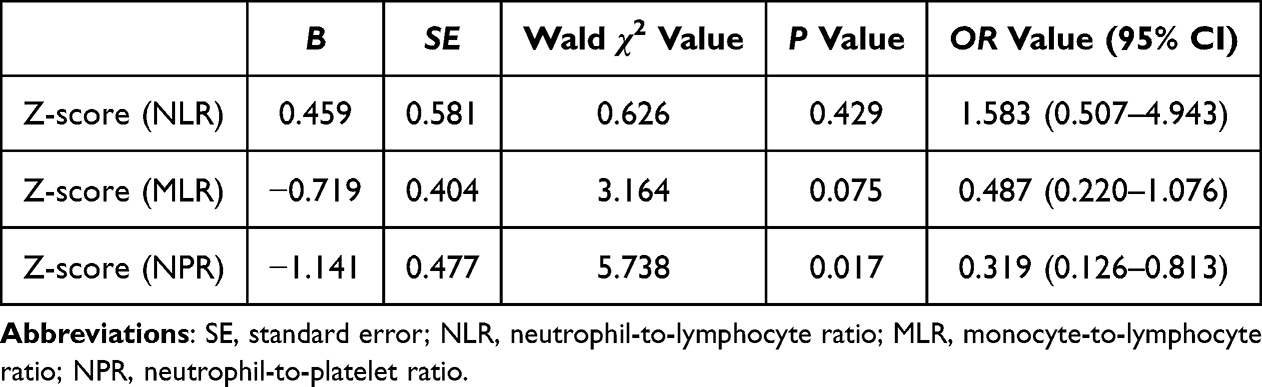 |
Table 2 Multivariate Logistic Regression Analysis of Influencing Factors on Therapeutic Efficacy of Patients with LLD |
ROC Curve of NPR for Predicting Short-Term Treatment Effect in Patients with Late-Life Depression
The results of ROC curve analysis showed that the area under the curve of baseline NPR for predicting the treatment effect of patients with depressive disorders in old age was 0.713, the sensitivity was 76.80%, and the specificity was 59.30%, as shown in Figure 1 and Table 3.
 |
Table 3 ROC Curve Analysis for Predicting the Therapeutic Efficacy of LLD Based on NPR Prediction |
 |
Figure 1 The ROC curve for predicting the therapeutic efficacy of LLD by NPR. |
Discussion
The aim of this study was to explore the relationship between whole blood cell-derived inflammatory markers and clinical symptoms in patients with LLD. We also explore the predictive value of inflammatory markers on the efficacy of short-term drug therapy in patients with LLD. The results of the study showed that (1) some of the whole blood cell-derived inflammatory markers at baseline in patients with LLD were positively correlated with patients’ total HAMA scores at baseline and negatively correlated with patients’ HAMD-17 score reduction rate after 2 weeks of treatment; (2) Our findings consistently highlight pretreatment NPR as a significant independent predictor of short-term antidepressant response in patients with LLD; (3) pretreatment baseline NPR level at pre-treatment baseline may have a good predictive value for the short-term treatment outcome of patients with LLD.
Pre-Treatment Baseline PLR Level Is Positively Correlated with HAMA Total Score
We found a statistically significant positive correlation between baseline PLR levels and HAMA scores, suggesting a potential link between systemic inflammation and anxiety severity in LLD. Depression is a psychiatric disorder closely related to inflammation, which may impair cognitive functioning and affect sleep, mood and mental status in patients with mood disorders.10 In older patients with depressive disorders, there is a correlation between the levels of inflammatory markers and clinical symptoms. PLR may reflect the level of systemic inflammation9 and has a potential role as an indicator of systemic inflammation in major depression.17 An 18-month prospective study of outpatients with normal mood showed that PLR levels were positively associated with anxiety levels and poorer overall functioning, with higher PLR levels predicting more mood episodes and psychiatric hospitalizations.18 Previous findings have shown that subjects in the moderate-severe to severe anxiety stress groups had higher levels of CPR and monocyte counts compared to the mild to moderate anxiety stress groups.19 This is similar to our findings, which showed a positive correlation between baseline PLR levels and HAMA total score in patients with LLD. This suggests that higher baseline inflammation may be associated with more severe anxiety symptoms. The results of a previous review of the literature20 showed significant differences between anxious and non-anxious depressive disorders in terms of brain imaging findings of HPA axis function, structure and functionality as well as inflammatory markers. Chronic inflammatory responses play a role in the pathophysiologic process of anxiety-depressive symptoms.21 There is an association between anxiety symptoms and oxidative stress, with multiple signaling pathways of antioxidant, anti-inflammatory and/or anti-apoptotic mechanisms to modulate anxiety-like behaviors.22 Previous studies have shown that neuroinflammation is a pathological and physiological marker of anxiety disorders. Shim et al19 found that, compared with the mild to moderate group, the subjects with MDD and moderate-severe to severe anxiety had higher levels of monocyte count, which is consistent with our result that PLR correlated with anxiety (HAMA). Previous studies have found that certain clinical characteristics of patients with depression may be related to inflammatory markers. For instance, previous research found that patients with depressive disorders accompanied by psychotic symptoms have significantly higher PLR than those without psychotic symptoms.23 Consistent with our patients, previous studies have also found that anxiety and agitation are common and prominent characteristics in patients with late life depression, potentially masking the core complaint of depressive disorders.1,24 We speculate that the patient’s characteristics might be related to the outcome between PLR and HAMA score rather than the HAMD score. However, we cannot determine the relationship between PLR and depressive symptoms based on this study. Further research and verification will be conducted using a large sample size and comparisons across different age groups in a comparative study method in the future.
Pre-Treatment Baseline NLR, MLR, and NPR Levels are Negatively Correlated with HAMD-17 Score Reduction Rate
Our results showed that there was a negative correlation between baseline whole blood cell-derived inflammatory markers NLR, MLR, and NPR levels and 2-week HAMD-17 score reduction rate. That is to say, the higher the pretreatment baseline whole blood cell-derived inflammatory markers NLR, MLR, and NPR levels in patients with LLD, the worse the effect of short-term antidepressant treatment. NLR reflects the relationship between pro-inflammatory neutrophils and anti-inflammatory or immunomodulatory lymphocytes7 and may represent the relationship between two different immunoinflammatory pathways, acquired immunity (lymphocyte count) and innate immunity (neutrophil count).8 MLR may represent a peripheral marker of microglia activation.9 It may be a risk factor for the development of depression.6 NPR is an inflammatory marker that can reflect the degree of acute and chronic inflammation. It represents both the acute inflammatory response (represented by neutrophils) and the degree of chronic inflammatory state of the injury (represented by platelets) and can be used as a factor describing the inflammatory index.25 In adolescent patients with major depression, those who did not respond/remit to ECT treatment tended to have higher levels of NPR at baseline compared to those who responded/remitted to ECT treatment, and high levels of NPR were associated with poorer ECT treatment outcomes in adolescent patients with major depression.26 There is a correlation between reduced inflammatory cytokines and improved depressive symptoms. The results of a meta-analysis conducted to explore the relationship between peripheral cytokine levels and response to antidepressant treatment in patients with depression found that patients with major depression who responded better to antidepressant treatment had lower baseline IL-8 levels compared to non-responders.27 In bipolar depressed patients, there was a significant negative correlation between NLR, MLR and SII levels and changes in HAMD-24 scores.28 However, results of another study showed that in adolescent major depression, inflammatory markers increased despite clinical improvement of the disease.29 This heterogeneity may be influenced by age, study design and antidepressant medication.
Pre-Treatment Baseline NPR Levels May Be an Independent Risk Factor for Short-Term Treatment Outcome
In this study, the whole blood cell-derived inflammatory marker NPR was found to be an independent risk factor affecting the treatment outcome of depressive disorders in old age, with potential short-term efficacy predictive value. Levels of the pro-inflammatory milieu were higher in patients who did not respond to medication for depression and correlated with symptom severity and duration of episodes in patients with LLD.30 Serum baseline IL-6 levels can be used to predict the prognosis of efficacy of MECT treatment in elderly patients with depressive disorders with suicidal ideation.31 Several previous studies have shown that the application of escitalopram oxalate treatment reduces the expression of inflammatory factors in the body, thereby reducing the inflammatory response and inflammation-induced symptoms.32,33 In a study of 656 older adults followed up over a 5-year period, it was shown that elevated levels of inflammatory markers predicted depressive symptoms during follow-up and that IL-6 or CRP levels were positively correlated with the development of depressive symptoms during the 5-year follow-up period.34 Higher platelet counts at baseline with patients with MDD can serve as a potential predictor for those who do not respond to antidepressant treatment, and SSRI treatment reduces MLR, neutrophil and monocyte percentages.35 The deleterious effects of inflammation on the brain may hinder the antidepressant response, and gender affects the relationship between inflammation and response to treatment. NLR levels correlate with the severity of depression and correlate with the therapeutic effect of antidepressant medication, which is of value in assessing the prognostic outcome of depression.36 In patients treated with antidepressants, higher baseline NLR levels predicted a poorer prognosis in women, but the opposite was true for men. This may be due to the differential effects of inflammation on brain regions such as the hippocampus.37
C-reactive protein has been studied in the inflammatory mechanism of depression. The level of CRP increases due to inflammation, and MDD is associated with elevated CRP levels.38 Previous studies have shown that the level of C-reactive protein has a predictive effect on the therapeutic efficacy of depression treatment. CRP can predict the efficacy of SSRIs in the real world, and patients with depression and high CRP levels may be more likely to have a poor response to SSRI.39 During the search of previous literature, we found that studies on the efficacy of CRP in the treatment of depression and its prediction mainly focused on the prediction of long-term efficacy and the comparison of the therapeutic effects of various antidepressant drugs.40 Most of the current studies on MDD inflammation focus on cytokines or CRP, but these markers are not easily obtainable at the time of admission and require a certain economic cost. Whole blood cell-derived inflammatory markers are used as signals of systemic inflammation because they are reasonably priced and easily accessible. In our future research, we will increase the study of predictive markers for long-term treatment effects, and also add other inflammatory markers to construct a predictive model for further investigation.
A study on adolescents with severe depression have shown that a high baseline NPR is associated with a lower response rate and remission rate after ECT treatment. Moreover, compared with other blood markers such as NLR, PLR, and MLR, NPR has better predictive value.26 This is consistent with our research. NPR represents the ratio of neutrophils to platelets in the peripheral blood. Neutrophils are the first line of defense cells in the innate immune system, representing the active non-specific inflammatory mediators with phagocytic and apoptotic functions.41 Platelets are involved in the primary inflammatory response and can regulate the recruitment of neutrophils, macrophages and their effectors, as well as the endothelial permeability. The formation of neutrophil-platelet aggregates and platelet activation, among other mechanisms, are involved in the interaction between neutrophils and platelets.42 Although current research on the association between NPR and depressive disorders is limited, NPR is considered a prognostic factor for other inflammatory diseases. For example, the pre-treatment NPR level has been used as a potential prognostic marker for the overall survival time of patients with acute aortic dissection.43 Additionally, NPR can also predict the all-cause mortality of patients with ST-segment elevation myocardial infarction within 3 years after the first percutaneous coronary intervention.44 Therefore, as a marker of the dynamic interaction between the acute inflammatory response represented by neutrophils and the chronic inflammatory state represented by platelets, it may help understand the inflammation and prognosis prediction occurring in elderly depressive disorders.
Limitations
There are some limitations of this study: (1) This study is a single-center clinical study with a small sample size, which limits the generalizability of the research results to a larger population. Secondly, NPR was only recorded once at admission, making it impossible to obtain the dynamic changes of NPR during hospitalization and its relationship with treatment efficacy. Future studies need to be conducted in multiple centers with a large sample size and long-term follow-up effects to further verify these findings. (2) The scales used to assess the patients’ cognitive status and sleep quality in this study were all subjective scales. Future research can include objective cognitive assessment and sleep monitoring to further conduct the study and combine other neuroinflammatory factors as well as structural/functional brain imaging to further explore the disease mechanism. (3) In addition, we lack other related inflammatory markers such as C-reactive protein or interleukins to confirm the predictive role of NPR. This study suggests that NPR has the potential to serve as a predictor of therapeutic efficacy, but further larger sample sizes and external validation are needed to determine its true effect size and clinical value.
Conclusion
Our results show that baseline whole blood cell-derived inflammatory markers correlate with anxiety symptoms and short-term treatment efficacy in LLD and that pretreatment levels of NPR may have predictive value for short-term treatment efficacy in LLD. Furthermore, the results of this study indicate that NPR has the potential to guide personalized treatment in LLD diseases. These findings suggest that NPR could serve as a simple, cost-effective biomarker to help guide early treatment decisions in elderly patients with depression. However, further validation in larger, multicenter studies is needed to confirm these results.
Data Sharing Statement
The data used in this study are available from the corresponding author on reasonable request.
Ethics Statements
This study was conducted in accordance with the Declaration of Helsinki and approved by the Ethics Committee of Shandong Mental Health Center. All participants had signed an informed consent form for inclusion.
Acknowledgments
This study was supported by the Joint TCM Science & Technology Projects of National Demonstration Zones for Comprehensive TCM Reform (GZY-KJS-SD-2023-066), the Shandong Provincial Natural Science Foundation (ZR2022QH348) and the Shandong Province Traditional Chinese Medicine Science & Technology Project (M20243305).
Disclosure
The authors report no conflicts of interest in this work.
References
1. Taylor WD, Solomon CG. Depression in the Elderly. N Engl J Med. 2014;371(13):1228–1236. doi:10.1056/NEJMcp1402180
2. Beyer JL, Johnson KG. Advances in pharmacotherapy of late-life depression. Curr Psychiatry Rep. 2018;20(5). doi:10.1007/s11920-018-0899-6
3. Kim J-M, Kim S-Y, Stewart R, et al. Improvement within 2weeks and later treatment outcomes in patients with depressive disorders: the CRESCEND study. J Affect Disord. 2011;129(1–3):183–190. doi:10.1016/j.jad.2010.09.007
4. Vermeiden M, Kamperman AM, Vulink ME, van den Broek WW, Birkenhäger TK. Early improvement as a predictor of eventual antidepressant treatment response in severely depressed inpatients. Psychopharmacology. 2014;232(8):1347–1356. doi:10.1007/s00213-014-3765-1
5. Pan W, Liu C, Zhu D, et al. Prediction of antidepressant efficacy by cognitive function in first-episode late-life depression: a pilot study. Front Psychiatry. 2022;13. doi:10.3389/fpsyt.2022.916041
6. Wu S, Yang J, Luo W, et al. Inflammation and late-life depression: unraveling the complex relationship and potential therapeutic strategies. Front Biosci. 2023;28(12). doi:10.31083/j.fbl2812356
7. Shan M, Wang S, Sun Z, Yang Y, Pan Y. Association between neutrophil-to-lymphocyte ratio and specific depressive symptoms: an analysis of a population-based cross-sectional survey. BMC Psychiatry. 2024;24(1). doi:10.1186/s12888-024-06214-z
8. Zheng Q, Liu J, Ji Y, Zhang Y, Chen X, Liu B. Elevated levels of monocyte-lymphocyte ratio and platelet-lymphocyte ratio in adolescents with non-suicidal self-injury. BMC Psychiatry. 2022;22(1). doi:10.1186/s12888-022-04260-z
9. Shan M, Yang Z, Sun Z, Yang Y, Cheng Q, Pan Y. Association between platelet to lymphocyte ratio and depression and symptom severity among adults in the United States: a cross-sectional study. Heliyon. 2023;9(9):e20127. doi:10.1016/j.heliyon.2023.e20127
10. Mazza MG, Tringali AGM, Rossetti A, Botti RE, Clerici M. Cross-sectional study of neutrophil-lymphocyte, platelet-lymphocyte and monocyte-lymphocyte ratios in mood disorders. Gen Hosp Psychiatry. 2019;58:7–12. doi:10.1016/j.genhosppsych.2019.02.003
11. Xiaoming Z, Kuibao L, Changlin L, et al. Neutrophil to platelet ratio: a novel prognostic biomarker in patients with critical cardiovascular disease received continuous renal replacement therapy [J]. Chin J Cardiovasc Med. 2022;27(03):258–262. doi:10.3969/j.issn.1007-5410.2022.03.011
12. Zhu R, Wang L, Wu X, Wang K. Systemic inflammatory indices and the risk of depression in individuals with sleep difficulties: a cohort study based on NHANES 2005–2020. Compr Psychoneuroendocrinol. 2025;23:100299. doi:10.1016/j.cpnec.2025.100299
13. Li L, Ma X. Chinese Guidelines for the Prevention and Treatment of Depressive Disorder (Second Edition). Chinese Medical Multimedia Press; 2015. (in Chinese).
14. Sumiyoshi T, Watanabe K, Noto S, et al. Relationship of subjective cognitive impairment with psychosocial function and relapse of depressive symptoms in patients with major depressive disorder: analysis of longitudinal data from PERFORM-J. Neuropsychiatr Dis Treat. 2021;17:945–955. doi:10.2147/ndt.S288108
15. Wang Y, Shi Y-H, Xu Z, Fu H, Zeng H, Zheng G-Q. Efficacy and safety of Chinese herbal medicine for depression: a systematic review and meta-analysis of randomized controlled trials. J Psychiatr Res. 2019;117:74–91. doi:10.1016/j.jpsychires.2019.07.003
16. Tsai P-S, Wang S-Y, Wang M-Y, et al. Psychometric evaluation of the Chinese Version of the Pittsburgh Sleep Quality Index (CPSQI) in primary insomnia and control subjects. Qual Life Res. 2005;14(8):1943–1952. doi:10.1007/s11136-005-4346-x
17. Liu Y, Li C, Ren H, et al. The relationship of peripheral blood cell inflammatory biomarkers and psychological stress in unmedicated major depressive disorder. J Psychiatr Res. 2024;176:155–162. doi:10.1016/j.jpsychires.2024.06.013
18. Marazziti D, Torrigiani S, Carbone MG, et al. Neutrophil/lymphocyte, platelet/lymphocyte, and monocyte/lymphocyte ratios in mood disorders. Curr Med Chem. 2022;29(36):5758–5781. doi:10.2174/0929867328666210922160116
19. Shim IH, Woo YS, Bahk W-M. Associations between immune activation and the current severity of the “with anxious distress” specifier in patients with depressive disorders. Gen Hosp Psychiatry. 2016;42:27–31. doi:10.1016/j.genhosppsych.2016.07.003
20. Choi KW, Kim Y-K, Jeon HJ. Chapter 14-comorbid anxiety and depression: clinical and conceptual consideration and transdiagnostic treatment. In: Anxiety Disorders. 2020:219–235.
21. Wang X, Lin J, Liu Q, et al. Major depressive disorder comorbid with general anxiety disorder: associations among neuroticism, adult stress, and the inflammatory index. J Psychiatr Res. 2022;148:307–314. doi:10.1016/j.jpsychires.2022.02.013
22. Salim S. Oxidative stress and psychological disorders. Curr Neuropharmacol. 2014;12(2):140–147. doi:10.2174/1570159X11666131120230309
23. Kayhan F, Gündüz Ş, Ersoy SA, Kandeğer A, Annagür BB. Relationships of neutrophil–lymphocyte and platelet–lymphocyte ratios with the severity of major depression. Psychiatry Res. 2017;247:332–335. doi:10.1016/j.psychres.2016.11.016
24. Jeste ND, Hays JC, Steffens DC. Clinical correlates of anxious depression among elderly patients with depression. J Affect Disord. 2006;90(1):37–41. doi:10.1016/j.jad.2005.10.007
25. Somaschini A, Cornara S, Demarchi A, et al. Neutrophil to platelet ratio: a novel prognostic biomarker in ST-elevation myocardial infarction patients undergoing primary percutaneous coronary intervention. Eur J Prev Cardiol. 2020;27(19):2338–2340. doi:10.1177/2047487319894103
26. Geng D, Wang W, Du N, et al. Association of the neutrophil-to-platelet ratio with response to electroconvulsive therapy in adolescents with major depressive disorder. Front Psychiatry. 2024;15. doi:10.3389/fpsyt.2024.1413608
27. Liu JJ, Wei YB, Strawbridge R, et al. Peripheral cytokine levels and response to antidepressant treatment in depression: a systematic review and meta-analysis. Mol Psychiatry. 2019;25(2):339–350. doi:10.1038/s41380-019-0474-5
28. Ryan KM, Lynch M, McLoughlin DM. Blood cell ratios in mood and cognitive outcomes following electroconvulsive therapy. J Psychiatr Res. 2022;156:729–736. doi:10.1016/j.jpsychires.2022.11.016
29. Lee H, Song M, Lee J, Kim J-B, Lee M-S. Prospective study on cytokine levels in medication-naïve adolescents with first-episode major depressive disorder. J Affect Disord. 2020;266:57–62. doi:10.1016/j.jad.2020.01.125
30. Aschbacher K, Epel E, Wolkowitz OM, Prather AA, Puterman E, Dhabhar FS. Maintenance of a positive outlook during acute stress protects against pro-inflammatory reactivity and future depressive symptoms. Brain Behav Immun. 2012;26(2):346–352. doi:10.1016/j.bbi.2011.10.010
31. Zhou J, Liu M, Wang X. Prediction effect of IL-6 on the efficacy of non-convulsively modified electroconvulsive therapy for geriatric depression with suicidal ideation. J Neurosci Mental Health. 2023;23(09):609–613. doi:10.3969/j.issn.1009-6574.2023.09.001
32. Dionisie V, Filip GA, Manea MC, Manea M, Riga S. The anti-inflammatory role of SSRI and SNRI in the treatment of depression: a review of human and rodent research studies. Inflammopharmacology. 2020;29(1):75–90. doi:10.1007/s10787-020-00777-5
33. Patel AN, Varma J, Ganguly B. Evidence of the immunomodulatory effects of selective serotonin reuptake inhibitors in patients with depression through a systematic review. Cureus. 2024;16(6). doi:10.7759/cureus.62991
34. Zalli A, Jovanova O, Hoogendijk WJG, Tiemeier H, Carvalho LA. Low-grade inflammation predicts persistence of depressive symptoms. Psychopharmacology. 2015;233(9):1669–1678. doi:10.1007/s00213-015-3919-9
35. Puangsri P, Jinanarong V, Ninla-aesong P. Impact of antidepressant treatment on complete blood count parameters and inflammatory ratios in adolescents with major depressive disorder. J Psychiatr Res. 2023;157:26–35. doi:10.1016/j.jpsychires.2022.11.017
36. Aydin Sunbul E, Sunbul M, Yanartas O, et al. Increased neutrophil/lymphocyte ratio in patients with depression is correlated with the severity of depression and cardiovascular risk factors. Psychiatry Invest. 2016;13(1):121. doi:10.4306/pi.2016.13.1.121
37. Paolini M, Harrington Y, Raffaelli L, et al. Neutrophil to lymphocyte ratio and antidepressant treatment response in patients with major depressive disorder: effect of sex and hippocampal volume. Eur Neuropsychopharmacol. 2023;76:52–60. doi:10.1016/j.euroneuro.2023.07.010
38. Hashimoto K. Inflammatory biomarkers as differential predictors of antidepressant response. Int J Mol Sci. 2015;16(4):7796–7801. doi:10.3390/ijms16047796
39. Pan Y, Luo R, Zhang S, et al. C-reactive protein could predict the efficacy of SSRIs in clinical practice: a cohort study of large samples in the real world. J Affect Disord. 2022;313:251–259. doi:10.1016/j.jad.2022.06.080
40. Carboni L, McCarthy DJ, Delafont B, et al. Biomarkers for response in major depression: comparing paroxetine and venlafaxine from two randomised placebo-controlled clinical studies. Transl Psychiatry. 2019;9(1):182. doi:10.1038/s41398-019-0521-7
41. Velasco A, Lengvenyte A, Rodriguez-Revuelta J, et al. Neutrophil-to-lymphocyte ratio, platelet-to-lymphocyte ratio, and monocyte-to-lymphocyte ratio in depressed patients with suicidal behavior: a systematic review. Eur Psychiatry. 2023;67(1):1–25. doi:10.1192/j.eurpsy.2023.18
42. Zhang Y, Peng W, Zheng X. The prognostic value of the combined neutrophil-to-lymphocyte ratio (NLR) and neutrophil-to-platelet ratio (NPR) in sepsis. Sci Rep. 2024;14(1). doi:10.1038/s41598-024-64469-8
43. Pang J, Liu J, Liang W, Yang L, Wu L, Sun Y. High neutrophil-to-platelet ratio is associated with poor survival in patients with acute aortic dissection. Dis Markers. 2022;2022:1–8. doi:10.1155/2022/5402507
44. Lin Y, Dai W, Chen Y, He X, Xu Y. Neutrophil-to-platelet ratio predicts mortality following percutaneous coronary intervention in patients with acute ST-elevation myocardial infarction. Front Physiol. 2022;13. doi:10.3389/fphys.2022.1011048
 © 2025 The Author(s). This work is published and licensed by Dove Medical Press Limited. The
full terms of this license are available at https://www.dovepress.com/terms
and incorporate the Creative Commons Attribution
- Non Commercial (unported, 4.0) License.
By accessing the work you hereby accept the Terms. Non-commercial uses of the work are permitted
without any further permission from Dove Medical Press Limited, provided the work is properly
attributed. For permission for commercial use of this work, please see paragraphs 4.2 and 5 of our Terms.
© 2025 The Author(s). This work is published and licensed by Dove Medical Press Limited. The
full terms of this license are available at https://www.dovepress.com/terms
and incorporate the Creative Commons Attribution
- Non Commercial (unported, 4.0) License.
By accessing the work you hereby accept the Terms. Non-commercial uses of the work are permitted
without any further permission from Dove Medical Press Limited, provided the work is properly
attributed. For permission for commercial use of this work, please see paragraphs 4.2 and 5 of our Terms.