
Back to Journals » International Journal of Women's Health » Volume 18
Association Between Metabolic Score for Insulin Resistance (METS-IR) and Risk of Infertility: Evidence from NHANES 2013–2020 and Mendelian Randomization Study
Authors Li X, Sun Q, Zhang J, Ling X, Liu Y, Zhao C 
Received 17 October 2025
Accepted for publication 17 February 2026
Published 26 February 2026 Volume 2026:18 575111
DOI https://doi.org/10.2147/IJWH.S575111
Checked for plagiarism Yes
Review by Single anonymous peer review
Peer reviewer comments 2
Editor who approved publication: Dr Matteo Frigerio
Xin Li,1 Qixi Sun,1 Juanjuan Zhang,1 Xiufeng Ling,1 Yu Liu,2 Chun Zhao1
1Department of Reproductive Medicine, Women’s Hospital of Nanjing Medical University, Nanjing Women and Children’s Healthcare Hospital, Nanjing, People’s Republic of China; 2Department of Obstetrics and Gynecology, Women’s Hospital of Nanjing Medical University, Nanjing Women and Children’s Healthcare Hospital, Nanjing, People’s Republic of China
Correspondence: Yu Liu, Women’s Hospital of Nanjing Medical University, Nanjing Women and Children’s Healthcare Hospital, 123 Tianfeixiang, Mochou Road, Qinhuai District, Nanjing, Jiangsu, 210004, People’s Republic of China, Tel +86-25-52226102, Email [email protected] Chun Zhao, Women’s Hospital of Nanjing Medical University, Nanjing Women and Children’s Healthcare Hospital, 123 Tianfeixiang, Mochou Road, Qinhuai District, Nanjing, Jiangsu, 210004, People’s Republic of China, Tel +86-25-52226102, Email [email protected]
Objective: Infertility affects approximately 15% of couples worldwide and represents a significant global health burden with profound psychological, social, and economic consequences. Nearly 15% of couples globally experience infertility while insulin resistance (IR) has been identified as a possible risk factor. Despite growing evidence linking metabolic dysfunction to reproductive impairment, the relationship between comprehensive insulin resistance indices and infertility risk remains poorly characterized. Metabolic Score for Insulin Resistance (METS-IR) demonstrates potential for metabolic disease evaluation yet its connection to infertility has not yet been examined. This study aims to provide the first comprehensive evaluation of the association between METS-IR and infertility risk, utilizing both cross-sectional analysis and genetic causal inference methods to establish robust evidence for clinical translation. The research examines how METS-IR relates to infertility risk through observational studies and genetic analysis.
Methods: We analyzed data from the National Health and Nutrition Examination Survey (NHANES) 2013– 2020 and performed Mendelian randomization (MR) analysis. The study examined METS-IR’s association with infertility through multivariate regression, restricted cubic spline analysis, and subgroup analyses. MR analysis investigated causal relationships between metabolic traits and infertility, with sensitivity analyses including weighted median, MR-Egger regression, and Steiger directionality testing to ensure robust causal inference.
Results: Women with infertility exhibited significantly higher METS-IR values (47.56± 1.33) compared to non-infertile women (41.42± 0.44, P< 0.0001). The highest METS-IR quartile showed increased infertility risk in the fully adjusted model (OR 1.53, 95% CI 1.24– 5.21, P=0.04). Restricted cubic spline analysis revealed a significant non-linear relationship (P< 0.001), with stronger associations in younger women. Subgroup analyses identified significant effect modifications by race and age. MR analysis demonstrated causal relationships between triglycerides (IVW OR: 1.149, 95% CI: 1.042– 1.268, P=0.005), body mass index (IVW OR: 0.967, 95% CI: 0.937– 0.998, P=0.04), and inflammatory markers (Interleukin-18 and CXCL11) with infertility risk, with no evidence of reverse causation.
Conclusion: Women with markedly elevated METS-IR (highest quartile) demonstrated increased infertility risk in this cross-sectional analysis, though the association was primarily driven by BMI. MR analysis revealed causal relationships between triglycerides and BMI as risk factors, while IL-18 and CXCL11 showed protective effects against infertility, suggesting that metabolic and inflammatory factors contribute to reproductive dysfunction through multiple pathways. These findings highlight the potential utility of metabolic assessment in fertility evaluation, while underscoring that the METS-IR-infertility relationship may largely reflect the well-established link between obesity and reproductive impairment.
Keywords: METS-IR, insulin resistance NHANES, infertility, cross-sectional study, mendelian randomization
Introduction
Infertility is a complex disorder that impacts around 15% of couples globally and creates major reproductive health problems while reducing quality of life.1 Infertility arises from multiple factors including genetic components, environmental influences and metabolic elements.2–5 Current research identifies metabolic disorders as risk factors for reproductive dysfunction with insulin resistance (IR) being a significant contributor.6,7 IR stands out as a key feature of metabolic syndrome because it involves diminished tissue response to insulin resulting in increased insulin secretion to compensate.8 Research demonstrates that insulin resistance negatively affects reproductive health through disruption of the hypothalamic-pituitary-gonadal (HPG) axis and by impairing follicular development and endometrial receptivity while reducing sperm quality.9,10 The frequent occurrence of insulin resistance among women who have polycystic ovary syndrome (PCOS), which stands as a primary reason for anovulatory infertility, emphasizes IR’s possible connection to reproductive health issues.11,12
Insulin resistance directly affects reproductive functions and simultaneously creates chronic low-grade inflammation which can exacerbate infertility according to Gemma Fabozzi.13 Research has connected inflammatory cytokines including interleukin-6 (IL-6) and tumor necrosis factor-alpha (TNF-α) to the development of ovarian dysfunction alongside impaired spermatogenesis and reduced embryo implantation capabilities.14,15 The connection between IR and inflammation as factors leading to infertility continues to be unclear while evidence grows and requires additional study.
The metabolic score for insulin resistance (METS-IR) has recently become recognized as a reliable marker for evaluating IR with proven predictive power for metabolic syndrome, cardiovascular diseases, and diabetes.16,17 The METS-IR derives from a weighted combination of clinical parameters like waist circumference, high-density lipoprotein cholesterol (HDL-C) levels, triglycerides (TG), and fasting blood glucose (FBG) which together give a complete assessment of metabolic health.18 Research has demonstrated METS-IR’s potential in metabolic disease studies but its connection to infertility risk has yet to receive extensive investigation. METS-IR offers several advantages over individual metabolic parameters and traditional measures such as HOMA-IR. As a composite index, METS-IR captures the multidimensional nature of insulin resistance by integrating fasting glucose, triglycerides, BMI, and HDL cholesterol, providing a more comprehensive metabolic assessment. Furthermore, METS-IR utilizes routine clinical measurements, making it more accessible in resource-limited settings where insulin assays may be unavailable or costly. Recent studies have demonstrated that METS-IR exhibits superior predictive performance for metabolic complications compared to individual components, and shows strong correlation (P = −0.622) with the euglycemic-hyperinsulinemic clamp, the gold standard for insulin sensitivity assessment.18
This study seeks to explore the link between METS-IR and infertility risk by employing a dual-method approach to fill this important knowledge gap. Our research begins by performing an observational analysis based on data collected from the National Health and Nutrition Examination Survey (NHANES) for the years 2013 to 2020 which represents a national sample from the United States population. The research will investigate how METS-IR relates to infertility risk and will analyze if inflammatory cytokines act as mediators in this relationship. We will utilize Mendelian randomization (MR) methods to evaluate the direct impact of METS-IR on infertility rates. MR stands as an effective approach for causal inference through the utilization of genetic variants as instrumental variables which help reduce confounding bias.19
Our research provides the first complete evaluation of how METS-IR impacts infertility risk. Our research combines observational studies with causal inference techniques to establish strong evidence about IR’s involvement in infertility development. These results present significant clinical applications by uncovering intervention targets and supporting the creation of personalized infertility treatment approaches. This study provides an understanding of how metabolic health affects reproductive function which will enhance comprehension of infertility mechanisms and stimulate additional research in this essential field. By integrating cross-sectional epidemiological analysis with genetic causal inference, this study addresses critical gaps in our understanding of metabolic contributions to female infertility and provides actionable evidence for clinical practice.
Methods
Study Design and Participants
Data for this study were sourced from NHANES, which assesses the health and nutrition of individuals living outside institutional settings. NHANES uses a rigorous, stratified, probability-based sampling approach to determine the prevalence of various health conditions and identify contributing factors. The NHANES protocols were approved by the National Center for Health Statistics Research Ethics Review Board, and informed consent was obtained from all survey participants. Additional details on NHANES methodologies and procedures can be found on their website at https://www.cdc.gov/nchs/nhanes/.
For this study, data from the NHANES 2013–2020 dataset, which included 44,959 individuals, were analyzed. A total of 5,524 female participants aged 20–45 who had completed the Reproductive Health Questionnaire were selected. The final participant selection was based on the following exclusion criteria: 1) absence of dietary data or incomplete dietary records (eg, only one day recorded instead of the required two), or lack of dietary interview data; 2) missing information on key covariates such as alcohol consumption, body mass index, education level, diabetes, and smoking status. After applying these criteria, 2,000 participants remained in the analytical sample. The screening process and participant demographics are shown in Figure 1.
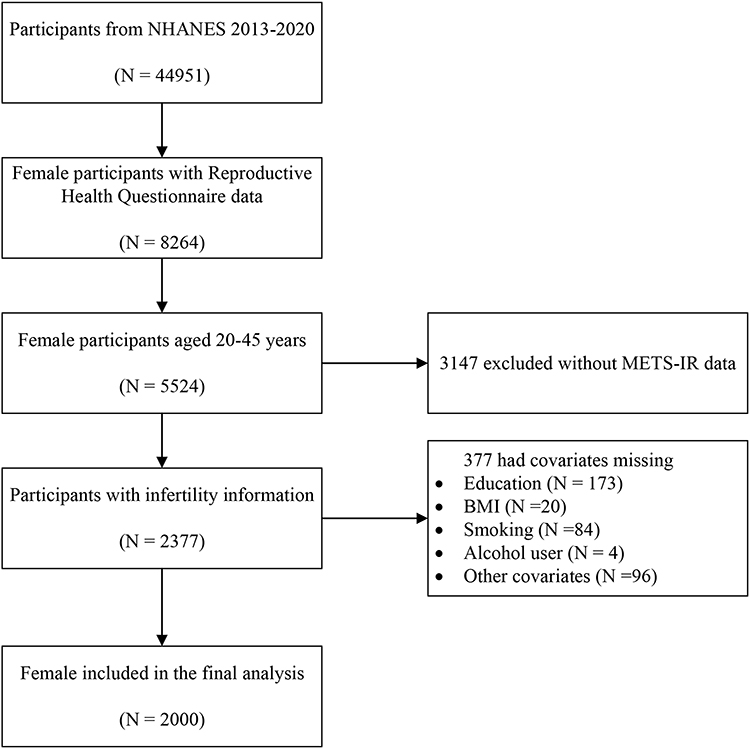 |
Figure 1 Flowchart of the population included in our study. Abbreviations: NHANES, National Health and Nutrition Examination Survey; METS-IR, metabolic score for insulin resistance. |
The Calculation of METS-IR
In this study, the METS-IR index was used as the exposure variable. The METS-IR was calculated as follows: METS-IR=Ln [(2×fasting glucose (mg/dL) + fasting triglycerides (mg/dL)] × body mass index (kg/m2)) / [Ln (high-density lipoprotein cholesterol (mg/dL))].18 FBG and TG were measured enzymatically using an automated biochemical analyzer. Specifically, the Roche Cobas 6000 chemistry analyzer and the Roche Modular P were used to determine serum TG concentrations. Body mass index (BMI) was calculated as weight (kg) divided by the square of height (m), with body weight and height data available in the Examination Data “Body Measure.”
Assessment of Infertility
Infertility was assessed based on responses to selected items (RHQ074 and RHQ076) from the Reproductive Health Questionnaire. RHQ074 asked whether participants had attempted conception for at least one year without success, while RHQ076 inquired if they had ever sought medical assistance for conception issues. Women who affirmed either condition were categorized into the infertility group, whereas those who denied both conditions were placed in the non-infertility group. While this classification method may not fully align with the WHO clinical definition of infertility, it represents a validated approach for large-scale epidemiological research where clinical diagnoses are unavailable and has been consistently employed in previous NHANES-based fertility studies.
Covariates
To examine the independent relationship between METS-IR and infertility, we controlled for various potential confounders, including sociodemographic factors, lifestyle behaviors, and health status indicators. Sociodemographic variables included age, race/ethnicity (categorized as Mexican American, Other Hispanic, Non-Hispanic White, Non-Hispanic Black, and Other Races), and educational attainment (grouped as less than 9th grade, 9th to 11th grade, high school graduate, some college, and college graduate).
Lifestyle-related confounders included smoking and alcohol consumption. Participants were categorized based on self-reported smoking status into three groups: never smokers (having smoked fewer than 100 cigarettes in their lifetime and not currently smoking), former smokers (having smoked more than 100 cigarettes in their lifetime but not currently smoking), and current smokers (having smoked at least 100 cigarettes in their lifetime and currently smoking). Alcohol consumption was classified as follows: never drinkers (having consumed fewer than 12 drinks in their lifetime), former drinkers (having consumed at least 12 drinks in any one year but not in the past year, or having consumed at least 12 drinks in their lifetime but not in the past year), current light/moderate drinkers (averaging up to one drink per day for women or up to two drinks per day for men over the past year), and current heavy drinkers (averaging more than one drink per day for women or more than two drinks per day for men over the past year).
Health status variables included BMI, HDL-C levels, and history of diabetes. BMI was measured directly at the Mobile Examination Center (MEC) and calculated as weight in kilograms divided by the square of height in meters (kg/m2). Blood samples for cholesterol analysis were collected and processed at the University of Minnesota, following protocols outlined in the NHANES Laboratory Procedures Manual. Diabetes history was determined through self-reported physician diagnoses or current insulin use.
MR Analysis
The study design and three main assumptions of MR were shown in Supplementary Figure 1. The summary genome-wide association study (GWAS) of circulating antioxidants from published studies were analyzed, and their sources were detailed in Supplementary Table 1. The lipid-related traits and circulating cytokines analyzed in the METS-IR study included a range of FBG, TG, HDL-C, total cholesterol (TC), low-density lipoprotein cholesterol (LDL-C), BMI and circulating cytokines. Summary genetic data for the univariate analysis, including HDL cholesterol, LDL cholesterol, total cholesterol, and triglycerides, were obtained from the Global Lipids Genetics Consortium (GLGC),20 the single nucleotide polymorphisms (SNPs) associated with circulating cytokines were obtained from a study of 8,293 individuals that included 41 cytokines and growth factors,21 as presented in Supplementary Tables 2 and 3. The leading SNPs associated with each biochemical index, used as instrumental variables (IVs, P<5×10⁶), were identified in GWAS data after eliminating linkage disequilibrium (LD distance >10,000 kb, r2<0.001).22 We aligned the SNP alleles between the different studies and excluded palindromic SNPs when their allele frequencies were ambiguous, specifically in the range of 0.42 to 0.58. Genetic variants associated with female infertility were derived from the published GWAS by the FinnGen Consortium (https://r14.finngen.fi/). We used data from the R14 release (accessed December 2024), which included diagnoses based on ICD-9 and ICD-10 criteria. We obtained a total of 14,759 cases and 111,583 controls, providing adequate statistical power for causal inference.
Statistical Analysis
The statistical procedures adhered to the standards set by the Centers for Disease Control and Prevention (CDC), employing NHANES sample weights and accounting for the intricacies of multistage cluster surveys. Continuous variables were reported as means with standard deviations, while categorical data were expressed in percentages. Differences between groups, delineated by the presence of infertility, were analyzed using a weighted Student’s t-test. Relationships among categories were assessed through a weighted chi-square test. We explored the independent relationship between MET-IR and infertility using multivariate logistic regression in three different models: Model 1 was basic, without covariate adjustments; Model 2 adjusted for age, BMI, fasting glucose, fasting triglycerides, and HDL cholesterol; Model 3 expanded to include race, education level, smoking status, diabetes, waist circumference, and liver enzymes (ALT and AST). Further analysis using restricted cubic spline (RCS) assessed potential non-linear relationships between infertility and MET-IR. Additionally, subgroup and interaction analyses tested the consistency of our results across various covariates.
The primary MR analysis was conducted using random-effects inverse-variance weighted (IVW) regression.23 This was followed by weighted median (WM) and MR-Egger regression analyses to verify the robustness of the IVW estimate.24,25 In a subsequent sensitivity analysis, Cochran’s IVW Q statistic was used to detect heterogeneity, the intercept test of MR-Egger regression to detect horizontal pleiotropy.24 Results were expressed as odds ratios (ORs) with 95% confidence intervals (CIs) for stroke risk per unit change in antioxidant levels. The F-statistic was used to assess the strength of the instrumental variables (IVs). Additionally, a “leave-one-out” analysis was performed to identify potentially heterogeneous IVs by sequentially removing each one.
The Steiger test is used to examine the directionality of the instrumental variable’s effect on the outcome, thereby avoiding reverse causation and confirming whether the results support the initial hypothesis. A P-value greater than 0.05 for the Steiger test indicates the presence of reverse causation. Data analysis was carried out using R (version 4.3.2, available at http://www.R-project.org), with a two-tailed P-value of less than 0.05 considered statistically significant.
Results
Baseline Characteristics of Participants
Table 1 presents the baseline characteristics of the participants. The average age of women without infertility was 30.89±0.22 years, compared to 34.09±0.61 years for those with infertility. The mean BMI was 29.07±0.25 kg/m2 in the non-infertility group and 32.57±0.73 kg/m2 in the infertility group. MET-IR values were 41.42±0.44 for non-infertile women and 47.56±1.33 for infertile women, indicating a significant difference (P < 0.0001). Significant disparities were also noted in baseline characteristics such as age, BMI, HDL cholesterol, waist circumference alcohol consumption, and diabetes history between the groups with and without infertility.
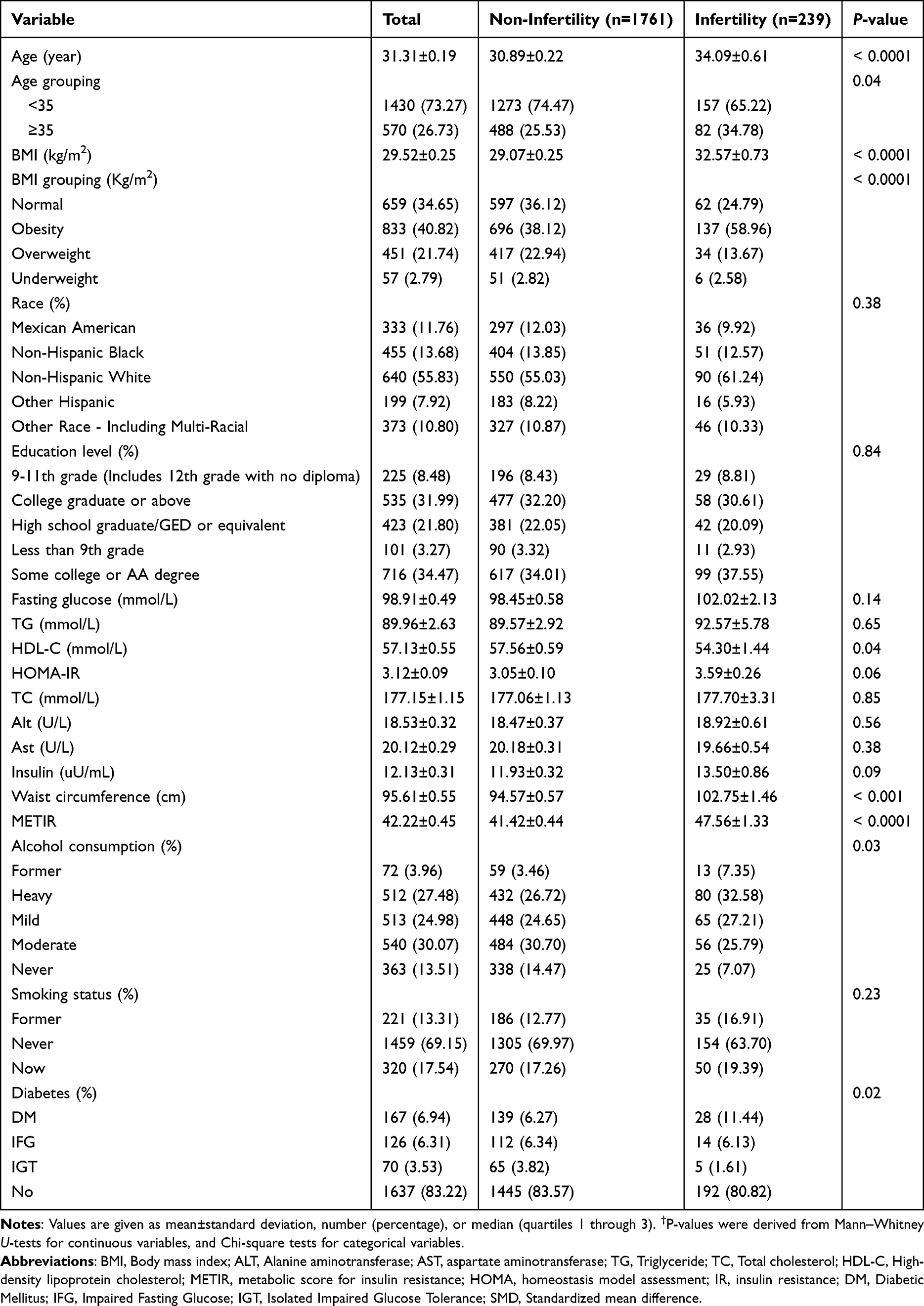 |
Table 1 Weighted Baseline Characteristics of Included Participants |
Association Between MET-IR and Infertility
Table 2 presents the results of the multivariate logistic regression analysis. In the crude model, a significant positive correlation was observed between METS-IR and infertility risk (OR 1.02, 95% CI 1.01–1.04, P<0.0001). This association remained significant in the minimally adjusted model (OR 1.02, 95% CI 1.01–1.05, P<0.001), which accounted for age, BMI, fasting glucose, fasting triglycerides, and HDL cholesterol. However, in the fully adjusted model, which additionally controlled for waist circumference, race, education level, smoking status, diabetes, and liver enzymes (ALT and AST), the association was attenuated and no longer statistically significant (OR 1.01, 95% CI 0.99–1.04, P=0.21).
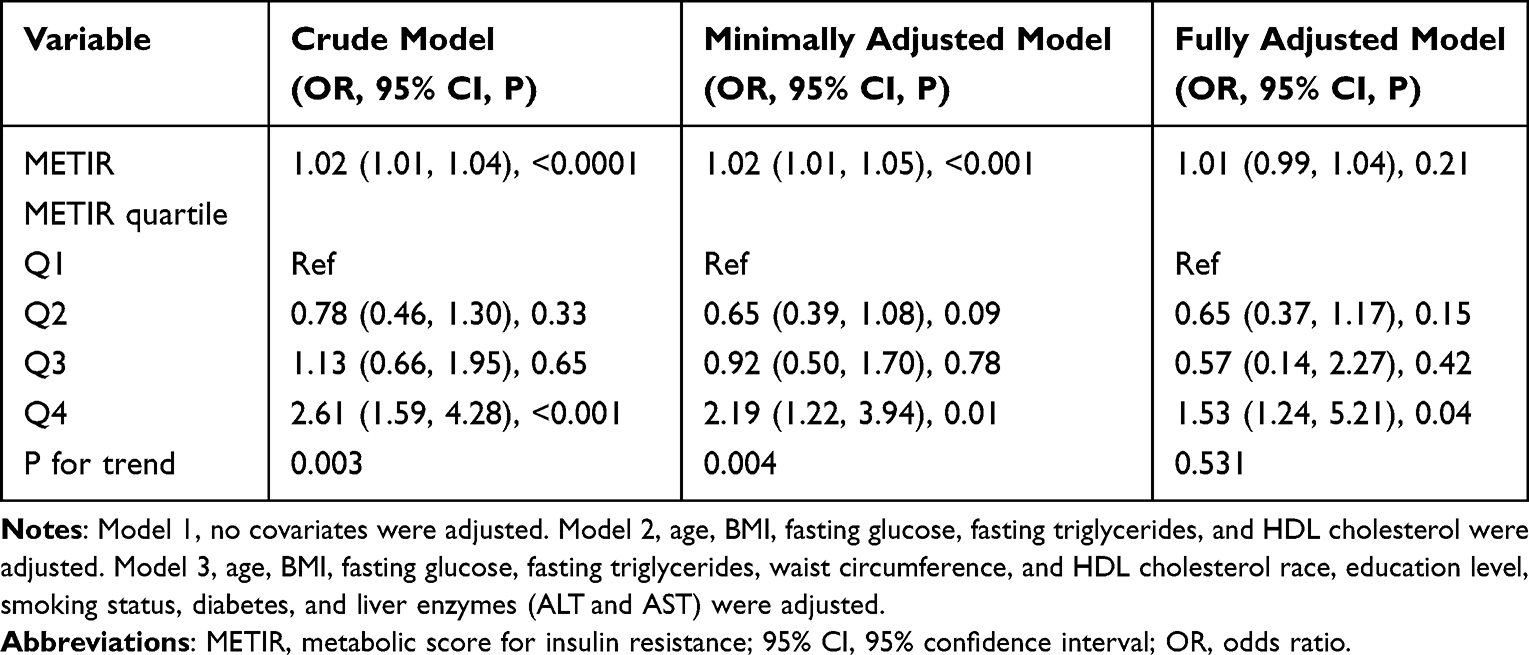 |
Table 2 The Association Between METIR and Infertility |
When analyzing METS-IR as a categorical variable by quartiles, a similar pattern was observed. In the crude model, individuals in the highest quartile (Q4) had a significantly increased risk of infertility compared to those in the lowest quartile (Q1) (OR 2.61, 95% CI 1.59–4.28, P<0.001). This association remained significant in the minimally adjusted model (OR 2.19, 95% CI 1.22–3.94, P=0.01) and the fully adjusted model (OR 1.53, 95% CI 1.24–5.21, P=0.04). The trend analysis across METS-IR quartiles revealed a significant increasing trend in the crude (P=0.003) and minimally adjusted models (P=0.004), but this trend was not maintained in the fully adjusted model (P=0.531).
A Nonlinear Relationship Between MET-IR and Infertility
The study employed RCS analysis to explore the non-linear relationship between METS-IR levels and infertility risk. The findings, presented in Figure 2, revealed a significant non-linear association (P for overall significance = 0.0213, P for non-linearity < 0.001). Stratifying the analysis by age showed distinct non-linear relationships between METS-IR and infertility risk in different age groups. In younger women (represented by the red line), the association between METS-IR and infertility risk was more pronounced, with a steeper increase in the odds of infertility as METS-IR values rose. In contrast, the association in older women (represented by the green line) was less pronounced, showing a more gradual increase, as depicted in Figure 3.
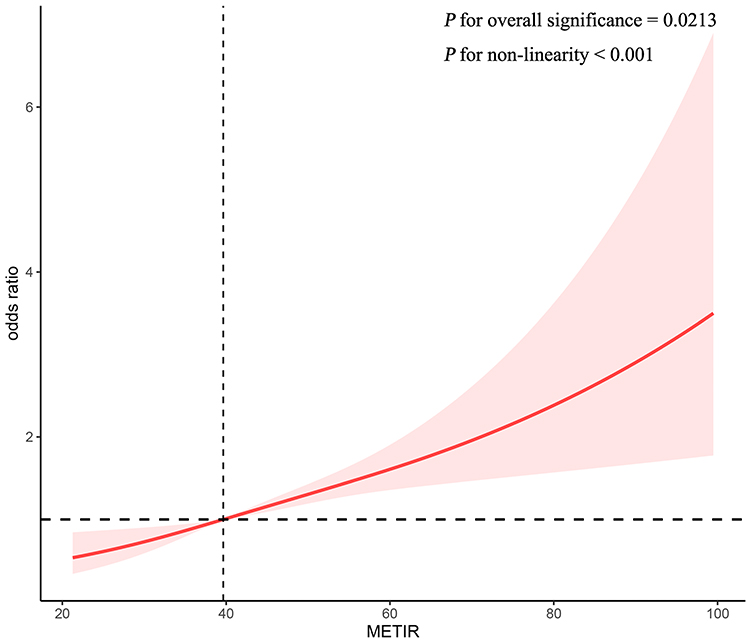 |
Figure 2 Restricted cubic spline for relation of MET-IR with risk of infertility. |
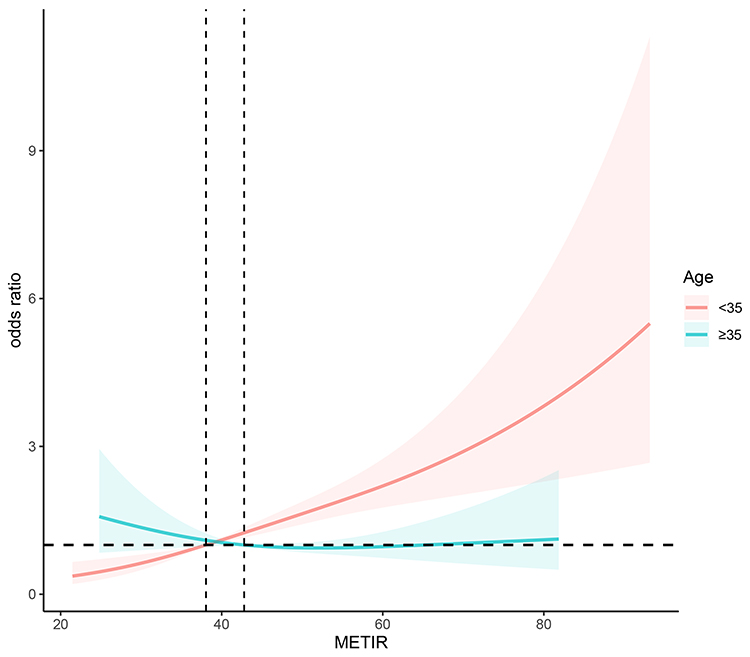 |
Figure 3 Restricted cubic spline curve of age-related MET-IR in relation to risk of infertility. |
Subgroup Analysis
Subgroup analyses, presented in Table 3 and Figure 4, examined the consistency of the relationship between METS-IR quartiles and infertility across various demographic and behavioral factors, including age, BMI, race, education level, smoking status, alcohol use, and diabetes history. Notably, significant interactions were observed in the race categories and age groups (all P-values for interaction < 0.05), suggesting that these factors significantly modify the relationship between METS-IR and infertility. These findings indicate that the negative correlation between METS-IR and infertility is influenced by subgroup characteristics.
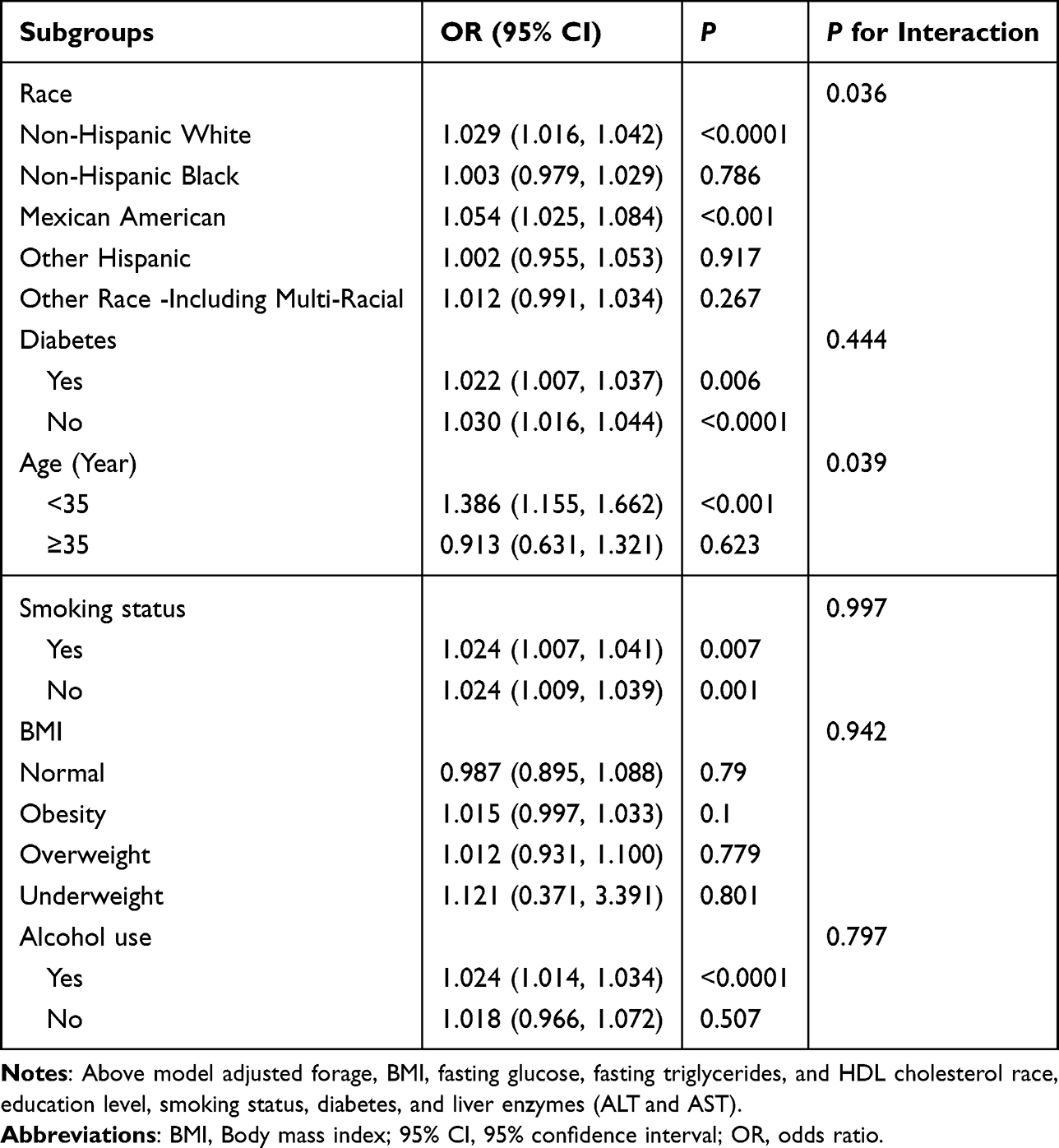 |
Table 3 Subgroup Analysis of the Association Between METIR and Infertility |
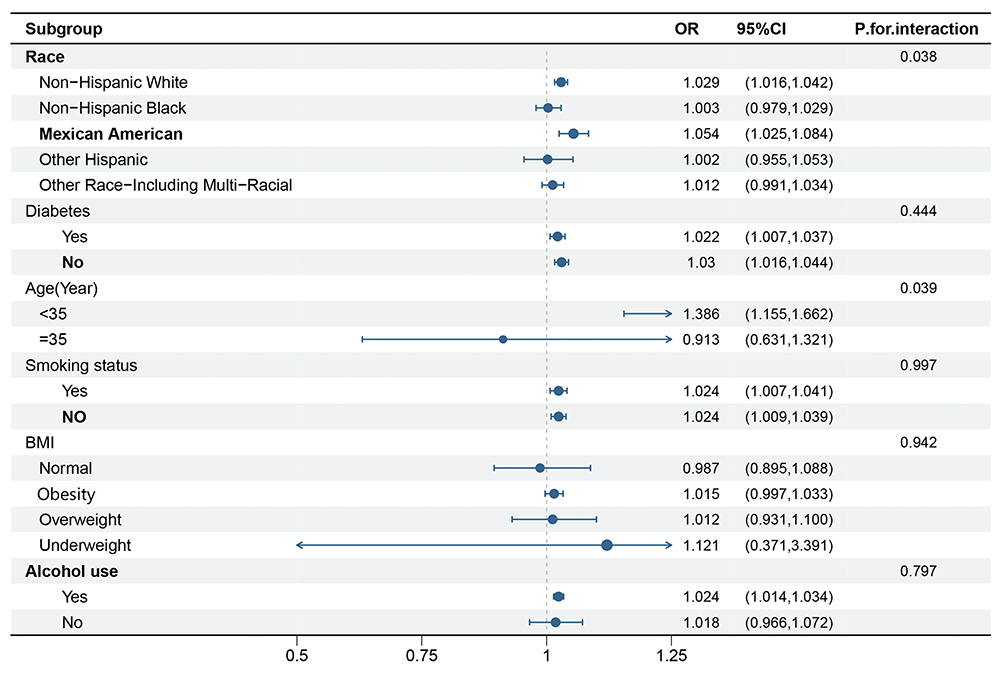 |
Figure 4 Forest Plot for Stratified Analysis of MET-IR and infertility subgroups. |
MR Analysis
The relationships between lipid-related traits (including HDL-C, LDL-C, TC, and TG), BMI, fasting glucose, and circulating cytokines with female infertility in the GLGC and FinnGen consortia are presented in Figures 5 and 6. The MR analysis results revealed that TG and BMI were causally associated with the risk of infertility (IVW OR: 1.149, 95% CI: 1.042–1.268, P = 0.005; IVW OR: 0.967, 95% CI: 0.937–0.998, P = 0.04). Additionally, inflammatory markers including Interleukin-18 (IL-18) (IVW OR: 0.894, 95% CI: 0.819–0.977, P = 0.013) and CXCL11 (IVW OR: 0.891, 95% CI: 0.799–0.995, P = 0.040) were causally associated with reduced risk of infertility, suggesting protective effects of these cytokines.
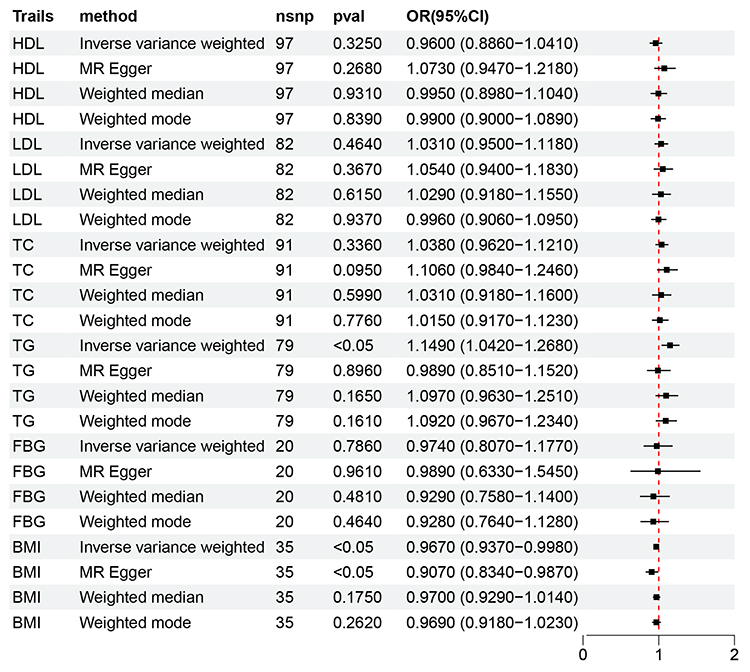 |
Figure 5 Forest plot for the causal effect of lipid-related traits on the risk of infertility. |
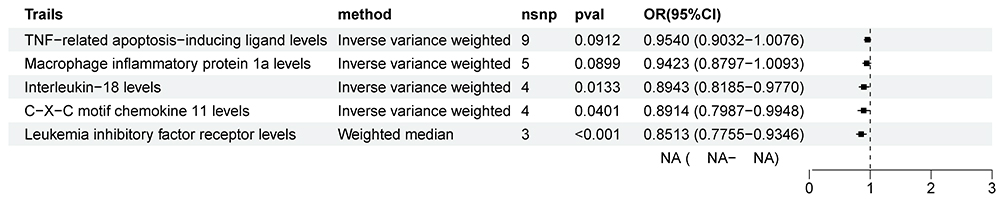 |
Figure 6 Forest plot for the causal effect of circulating cytokines on the risk of infertility derived from inverse variance weighted (IVW). |
The MR-Steiger directionality test confirmed the accuracy of the exposure-to-outcome direction, with all instrumental variables showing P Steiger < 0.05. P-values for testing the reverse relationship between each metabolite and psoriasis were all less than 0.05, providing no evidence for potential reverse causation. Detailed information is provided in Supplementary Table 3. Based on the MR-Steiger test, no reverse causality was found.
Discussion
This study aimed to investigate the relationship between insulin resistance, as measured by the METS-IR, and infertility risk in a nationally representative US population. We discovered that higher METS-IR levels correlated significantly with increased infertility risk. After adjusting for potential confounders, people in the highest METS-IR quartile experienced a 1.53 times greater infertility risk than those in the lowest quartile. The link between insulin resistance and impaired fertility showed consistency across NHANES cross-sectional analysis and Mendelian randomization approach which supports a potential causal relationship. The MR analysis discovered causal links between triglycerides and BMI with increased infertility risk, while inflammatory markers including Interleukin-18 (IL-18) and C-X-C motif chemokine 11 (CXCL11) demonstrated protective effects against infertility (OR<1). These findings provide novel insights into the complex and bidirectional interplay between metabolic and inflammatory pathways in reproductive health.
The results of our study align with previous research that indicates insulin resistance negatively affects reproductive function. A study by Liu et al showed that women with PCOS along with insulin resistance experienced much reduced pregnancy rates compared to women who did not have insulin resistance.26 Similarly, some studies reported that insulin-sensitizing agents improved ovulation and pregnancy rates in infertile women with PCOS.27
Most previous studies investigated specific patient groups or less comprehensive measures insulin resistance measures such as HOMA-IR.28,29 The present investigation broadens the research scope to include general populations by using the novel METS-IR index which reflects wider aspects of metabolic dysfunction. By integrating cross-sectional and Mendelian randomization analyses we deliver stronger evidence supporting the hypothesis that insulin resistance causes an increased risk of infertility. Our MR analysis reveals that triglycerides and BMI serve as causal risk factors for infertility, while IL-18 and CXCL11 demonstrate protective effects against infertility risk. These findings highlight the complex and bidirectional interplay between metabolic and inflammatory pathways in reproductive health.
Several biological factors may explain the connection between METS-IR and infertility risk. Ovarian function responds to insulin resistance through multiple mechanisms. Insulin resistance causes theca cells in the ovaries to produce more androgens while decreasing sex hormone-binding globulin (SHBG) levels which results in increased free androgen levels.30,31 Hyperandrogenism develops from these processes which negatively impacts follicle development as well as ovulation and egg quality. The pituitary gland’s follicle-stimulating hormone (FSH) and luteinizing hormone (LH) balance gets disrupted by insulin resistance which leads to ovulatory issues.32 Insulin resistance is also linked to low-grade chronic inflammation, which may contribute to infertility. Higher levels of inflammatory markers, such as C-reactive protein (CRP), interleukin-6 (IL-6), and tumor necrosis factor-alpha (TNF-α), have been found in women with insulin resistance and infertility.33–35 These inflammatory markers can affect ovarian function, the ability of the endometrium to support pregnancy, and overall pregnancy success. For example, TNF-α interferes with insulin signaling in granulosa cells, which reduces estradiol production and harms follicular development.
Our MR analysis revealed that IL-18 and CXCL11 demonstrated significant protective effects against infertility (IL-18: OR=0.894, 95% CI: 0.819–0.977, P=0.013; CXCL11: OR=0.891, 95% CI: 0.799–0.995, P=0.040). IL-18 is a pleiotropic cytokine involved in both innate and adaptive immunity. While traditionally considered pro-inflammatory, IL-18 plays complex roles in reproductive tissues. Studies have shown that appropriate IL-18 levels are essential for endometrial receptivity and successful implantation, with both deficiency and excess being associated with reproductive dysfunction. The protective effect observed in our analysis may reflect IL-18’s role in maintaining immune homeostasis at the maternal-fetal interface. CXCL11, a chemokine that regulates immune cell trafficking, has been implicated in endometrial function and angiogenesis. Recent MR studies have similarly reported protective effects of CXCL11 on endometriosis risk, suggesting a complex regulatory role of this chemokine in female reproductive health. These findings indicate that the relationship between inflammation and infertility is not unidirectional, and that certain inflammatory mediators may exert protective effects on fertility through mechanisms that warrant further investigation.
Insulin resistance in the endometrium can diminish implantation potential by decreasing receptivity. Successful embryo implantation requires proper regulation of endometrial glucose metabolism through insulin signaling. Studies show that insulin resistance obstructs endometrial stromal cells from finishing decidualization which is necessary to establish pregnancy.36,37 It also reduces the expression of important markers for implantation, such as integrin αvβ3 and glycodelin, in endometrial tissue.38
The MR analysis identified triglycerides and BMI as causal risk factors for infertility. High triglyceride levels, often linked to insulin resistance, lead to increased free fatty acid (FFA) uptake by the ovaries, causing lipotoxicity and impaired ovarian function.39,40 BMI indicates obesity which represents both a recognized risk factor for infertility and maintains a strong connection with insulin resistance. Obesity creates a dysfunctional state in adipose tissue which then releases both pro-inflammatory cytokines and adipokines including leptin and adiponectin thereby disrupting the hypothalamic-pituitary-gonadal axis which leads to impaired ovarian function.41
Notably, in our study population, the METS-IR association with infertility appears to be primarily driven by BMI, as fasting glucose and triglyceride levels did not differ significantly between groups. This observation is consistent with the well-established relationship between obesity and reproductive dysfunction. Furthermore, when the association between METS-IR and infertility was examined within BMI-stratified subgroups, the relationship became non-significant across all BMI categories. This finding suggests that the METS-IR-infertility association observed in our overall analysis is primarily attributable to differences in BMI rather than the composite metabolic assessment. While reduced statistical power in stratified analyses may partially explain these null findings, the consistency across all BMI categories indicates that BMI is the dominant contributing factor. However, the MR analysis provides complementary evidence showing causal relationships between both triglycerides and BMI with infertility risk, suggesting that lipid metabolism may contribute to infertility through pathways that are not fully captured in cross-sectional comparisons.
Insulin resistance together with hyperandrogenism and inflammatory processes along with dysfunctional adipose tissue establishes a reproductive health-threatening environment. The metabolic indicator METS-IR represents widespread metabolic shifts associated with insulin resistance and shows promise as a marker for identifying these deeper problems. Developing treatment methods that target insulin resistance and its associated metabolic shifts may lead to innovative infertility prevention and treatment options.
The results of our study have significant applications for clinical practice and public health initiatives. Insulin resistance functions as a potentially risk factor that elevates infertility risk demonstrating the vital role of metabolic health in reproductive results. Routine clinical measures make it possible to calculate the METS-IR which serves as a useful tool for evaluating infertility risk among women of reproductive age. The inclusion of METS-IR in fertility examinations enables the identification of patients who would benefit from specific treatments aimed at enhancing insulin sensitivity through lifestyle changes, weight reduction strategies or insulin-sensitizing drugs. The rising occurrence of obesity and metabolic disorders makes early insulin resistance screening and management essential for enhancing fertility outcomes and reducing related health complications. Furthermore, the MR analysis identified triglycerides and BMI as causal risk factors for infertility, while IL-18 and CXCL11 showed protective effects. These findings suggest that therapeutic strategies should focus on lowering triglyceride levels and supporting weight reduction. The protective role of certain inflammatory mediators also suggests that blanket anti-inflammatory approaches may not be universally beneficial, and more nuanced immunomodulatory strategies may be needed for fertility optimization. The creation of innovative treatments that focus on these pathways offers fresh possibilities for preventing and managing infertility among women who experience metabolic dysfunction.
The use of a large nationally representative sample from NHANES strengthens the study by improving the generalizability of its findings. METS-IR delivers a broader evaluation of insulin resistance than traditional measurement methods. The MR analysis provides more robust causal evidence by reducing the effects of confounding variables and reverse causation. MR analysis indicates that triglycerides and BMI serve as causal risk factors for infertility, while inflammatory markers IL-18 and CXCL11 demonstrate protective effects. These discoveries enhance our comprehension of the complex bidirectional relationship between metabolic and inflammatory pathways in reproductive health.
However, some limitations should be noted. The NHANES cross-sectional study design limits researchers from establishing clear temporal relationships and causal connections. Self-reported infertility data carries the risk of being misclassified. Our infertility classification relied on self-reported responses to RHQ074 and RHQ076, which may not fully align with the WHO clinical definition of infertility. This approach may introduce misclassification bias, particularly for women who did not seek medical assistance due to financial constraints, cultural factors, or lack of awareness. However, this methodology is consistent with previous NHANES-based infertility studies and represents a validated approach for large-scale epidemiological research where clinical diagnoses are unavailable. Any resulting non-differential misclassification would likely bias our results toward the null, suggesting our findings may underestimate the true association. Even though we accounted for many confounding variables our analysis may still contain residual confounding. Our consistent results from various analytical methods demonstrate the significance and credibility of the link between METS-IR and the risk of infertility despite existing study limitations.
Subsequent studies should expand on these discoveries to more precisely define the connection between insulin resistance and infertility. Research requires prospective cohort studies that use objective infertility measures to clarify time-based relationships while reducing diagnostic errors. Randomized controlled trials that assess insulin-sensitizing interventions for fertility outcomes in high-risk groups can deliver stronger causal evidence and improve clinical management decisions. Our MR analysis uncovered that triglycerides and BMI serve as causal risk factors, while IL-18 and CXCL11 exert protective effects against infertility. These findings create new opportunities for research directions, particularly in understanding the dual role of inflammatory mediators in reproductive health. Future prospective studies that assess these factors in women both with and without insulin resistance may determine their usefulness as biomarkers for predicting fertility risks. Research that examines the particular biological processes by which these factors affect reproductive function will reveal new targets for therapeutic intervention. Research needs to confirm METS-IR thresholds for infertility risk assessment and investigate the effectiveness of METS-IR across different patient groups. The integration of METS-IR into fertility management protocols alongside cost-effectiveness assessments will enhance both resource distribution and patient treatment.
Conclusion
In conclusion, this study demonstrates that women with the highest METS-IR quartile have elevated infertility risk compared to those with lower METS-IR values. However, stratified analyses indicate that this association is primarily attributable to BMI rather than the composite METS-IR score per se. The complementary MR analysis provides genetic evidence for causal relationships between triglycerides and BMI as risk factors, while inflammatory markers IL-18 and CXCL11 demonstrated protective effects against female infertility, offering mechanistic insights into the metabolic-reproductive axis. While METS-IR may serve as a marker identifying women at increased metabolic and reproductive risk, its incremental value beyond BMI for infertility prediction requires further investigation in larger, prospective studies.
Data Available on Request
The datasets used in this study can be found in online repositories: (https://www.cdc.gov/nchs/nhanes/index.htm).
Ethics Approval and Consent to Participate
The data used in this study were obtained from publicly available, free-access sources. This study is exempt from institutional review board (IRB) approval in accordance with Article 32 (items 1 and 2) of the Measures for Ethical Review of Life Science and Medical Research Involving Human Subjects (issued February 18, 2023, China), which exempts research utilizing publicly available, de-identified data from ethical review requirements. The NHANES survey protocol was approved annually by the NCHS Research Ethics Review Board, and all participants provided written informed consent during the original data collection. As this study exclusively analyzed de-identified, publicly available secondary data from NHANES 2013-2020, no additional ethical approval or informed consent was required from our institution. The studies were conducted in accordance with the local legislation and institutional requirements.
Acknowledgments
The authors acknowledge the physicians, nurses, and scientific staff of Department of Reproductive Medicine, Nanjing Maternity and Child Health Care Hospital.
Author Contributions
All authors made a significant contribution to the work reported, whether that is in the conception, study design, execution, acquisition of data, analysis and interpretation, or in all these areas; took part in drafting, revising or critically reviewing the article; gave final approval of the version to be published; have agreed on the journal to which the article has been submitted; and agree to be accountable for all aspects of the work.
Funding
This work was supported by National Natural Science Foundation of China (82204469).
Disclosure
The authors declared no potential conflicts of interest with respect to the research, authorship, and/or publication of this article.
References
1. Agarwal A, Baskaran S, Parekh N, et al. Male infertility. Lancet. 2021;397(10271):319–15. doi:10.1016/S0140-6736(20)32667-2
2. Demain LA, Conway GS, Newman WG. Genetics of mitochondrial dysfunction and infertility. Clin Genet. 2017;91(2):199–207. doi:10.1111/cge.12896
3. Practice Committee of the American Society for Reproductive Medicine. Electronic address aao, practice committee of the american society for reproductive M. Obesity and reproduction: a committee opinion. Fertil Steril. 2021;116(5):1266–1285. doi:10.1016/j.fertnstert.2021.08.018
4. Aitken RJ, Baker MA. The role of genetics and oxidative stress in the etiology of male Infertility-A unifying hypothesis? Front Endocrinol. 2020;11:581838. doi:10.3389/fendo.2020.581838
5. Mendrick DL, Diehl AM, Topor LS, et al. Metabolic syndrome and associated diseases: from the bench to the clinic. Toxicol Sci. 2018;162(1):36–42. doi:10.1093/toxsci/kfx233
6. Lei R, Chen S, Li W. Advances in the study of the correlation between insulin resistance and infertility. Front Endocrinol. 2024;15:1288326. doi:10.3389/fendo.2024.1288326
7. Amisi CA. Markers of insulin resistance in Polycystic ovary syndrome women: an update. World J Diabetes. 2022;13(3):129–149. doi:10.4239/wjd.v13.i3.129
8. Mikhail N. The metabolic syndrome: insulin resistance. Curr Hypertens Rep. 2009;11(2):156–158. doi:10.1007/s11906-009-0027-4
9. Manaserh IH, Chikkamenahalli L, Ravi S, Dube PR, Park JJ, Hill JW. Ablating astrocyte insulin receptors leads to delayed puberty and hypogonadism in mice. PLoS Biol. 2019;17(3):e3000189. doi:10.1371/journal.pbio.3000189
10. Service CA, Puri D, Al Azzawi S, Hsieh TC, Patel DP. The impact of obesity and metabolic health on male fertility: a systematic review. Fertil Steril. 2023;120(6):1098–1111. doi:10.1016/j.fertnstert.2023.10.017
11. Palomba S. Is fertility reduced in ovulatory women with polycystic ovary syndrome? An opinion paper. Hum Reprod. 2021;36(9):2421–2428. doi:10.1093/humrep/deab181
12. Chen X, Koivuaho E, Piltonen TT, Gissler M, Lavebratt C. Association of maternal polycystic ovary syndrome or anovulatory infertility with obesity and diabetes in offspring: a population-based cohort study. Hum Reprod. 2021;36(8):2345–2357. doi:10.1093/humrep/deab112
13. Fabozzi G, Verdone G, Allori M, et al. Personalized nutrition in the management of female infertility: new insights on chronic low-grade inflammation. Nutrients. 2022;14(9). doi:10.3390/nu14091918
14. Wang XM, Ma ZY, Song N. Inflammatory cytokines IL-6, IL-10, IL-13, TNF-alpha and peritoneal fluid flora were associated with infertility in patients with endometriosis. Eur Rev Med Pharmacol Sci. 2018;22(9):2513–2518. doi:10.26355/eurrev_201805_14899
15. Syriou V, Papanikolaou D, Kozyraki A, Goulis DG. Cytokines and male infertility. Eur Cytokine Netw. 2018;29(3):73–82. doi:10.1684/ecn.2018.0412
16. Duan M, Zhao X, Li S, et al. Metabolic score for insulin resistance (METS-IR) predicts all-cause and cardiovascular mortality in the general population: evidence from NHANES 2001-2018. Cardiovasc Diabetol. 2024;23(1):243. doi:10.1186/s12933-024-02334-8
17. Cheng H, Jia Z, Li YT, et al. Metabolic score for insulin resistance and New-Onset type 2 diabetes in a Middle-Aged and older adult population: nationwide prospective cohort study and implications for primary care. JMIR Public Health Surveill. 2024;10(e49617). doi:10.2196/49617
18. Bello-Chavolla OY, Almeda-Valdes P, Gomez-Velasco D, et al. METS-IR, a novel score to evaluate insulin sensitivity, is predictive of visceral adiposity and incident type 2 diabetes. Eur J Endocrinol. 2018;178(5):533–544. doi:10.1530/EJE-17-0883
19. Darrous L, Hemani G, Davey Smith G, Kutalik Z. PheWAS-based clustering of mendelian randomisation instruments reveals distinct mechanism-specific causal effects between obesity and educational attainment. Nat Commun. 2024;15(1):1420. doi:10.1038/s41467-024-45655-8
20. Willer CJ, Schmidt EM, Sengupta S, et al. Discovery and refinement of loci associated with lipid levels. Nat Genet. 2013;45(11):1274–1283. doi:10.1038/ng.2797
21. Ahola-Olli AV, Wurtz P, Havulinna AS, et al. Genome-wide association study identifies 27 loci influencing concentrations of circulating cytokines and growth factors. Am J Hum Genet. 2017;100(1):40–50. doi:10.1016/j.ajhg.2016.11.007
22. Chen R, Liu H, Zhang G, et al. Antioxidants and the risk of stroke: results from NHANES and two-sample Mendelian randomization study. Eur J Med Res. 2024;29(1):50. doi:10.1186/s40001-024-01646-5
23. Burgess S, Butterworth A, Thompson SG. Mendelian randomization analysis with multiple genetic variants using summarized data. Genet Epidemiol. 2013;37(7):658–665. doi:10.1002/gepi.21758
24. Bowden J, Davey Smith G, Burgess S. Mendelian randomization with invalid instruments: effect estimation and bias detection through Egger regression. Int J Epidemiol. 2015;44(2):512–525. doi:10.1093/ije/dyv080
25. Hartwig FP, Davey Smith G, Bowden J. Robust inference in summary data Mendelian randomization via the zero modal pleiotropy assumption. Int J Epidemiol. 2017;46(6):1985–1998. doi:10.1093/ije/dyx102
26. Liu Y, Li J, Yan Z, Liu D, Ma J, Tong N. Improvement of insulin sensitivity increases pregnancy rate in infertile PCOS women: a systemic review. Front Endocrinol. 2021;12:657889. doi:10.3389/fendo.2021.657889
27. Morley LC, Tang T, Yasmin E, Norman RJ, Balen AH. Insulin-sensitising drugs (metformin, rosiglitazone, pioglitazone, D-chiro-inositol) for women with polycystic ovary syndrome, oligo amenorrhoea and subfertility. Cochrane Database Syst Rev. 2017;11(11):CD003053. doi:10.1002/14651858.CD003053.pub6
28. Carobene A, Kilpatrick E, Bartlett WA, et al. The biological variation of insulin resistance markers: data from the European Biological Variation Study (EuBIVAS). Clin Chem Lab Med. 2025;63(1):110–117. doi:10.1515/cclm-2024-0672
29. Gayoso-Diz P, Otero-Gonzalez A, Rodriguez-Alvarez MX, et al. Insulin resistance (HOMA-IR) cut-off values and the metabolic syndrome in a general adult population: effect of gender and age: EPIRCE cross-sectional study. BMC Endocr Disord. 2013;13:47. doi:10.1186/1472-6823-13-47
30. Barbieri RL, Makris A, Ryan KJ. Insulin stimulates androgen accumulation in incubations of human ovarian stroma and theca. Obstet Gynecol. 1984;64(3 Suppl):73S–80S. doi:10.1097/00006250-198409001-00019
31. Barbieri RL, Smith S, Ryan KJ. The role of hyperinsulinemia in the pathogenesis of ovarian hyperandrogenism. Fertil Steril. 1988;50(2):197–212. doi:10.1016/s0015-0282(16)60060-2
32. Saadia Z. Follicle Stimulating Hormone (LH: FSH) ratio in Polycystic Ovary Syndrome (PCOS) - obese vs. non- obese women. Med Arch. 2020;74(4):289–293. doi:10.5455/medarh.2020.74.289-293
33. Kuang H, Duan Y, Li D, et al. The role of serum inflammatory cytokines and berberine in the insulin signaling pathway among women with polycystic ovary syndrome. PLoS One. 2020;15(8):e0235404. doi:10.1371/journal.pone.0235404
34. Escobar-Morreale HF, Villuendas G, Botella-Carretero JI, Sancho J, San Millan JL. Obesity, and not insulin resistance, is the major determinant of serum inflammatory cardiovascular risk markers in pre-menopausal women. Diabetologia. 2003;46(5):625–633. doi:10.1007/s00125-003-1090-z
35. Younis A, Hawkins K, Mahini H, Butler W, Garelnabi M. Serum tumor necrosis factor-alpha, interleukin-6, monocyte chemotactic protein-1 and paraoxonase-1 profiles in women with endometriosis, PCOS, or unexplained infertility. J Assist Reprod Genet. 2014;31(11):1445–1451. doi:10.1007/s10815-014-0237-9
36. Ujvari D, Jakson I, Babayeva S, et al. Dysregulation of in vitro decidualization of human endometrial stromal cells by insulin via transcriptional inhibition of forkhead box protein O1. PLoS One. 2017;12(1):e0171004. doi:10.1371/journal.pone.0171004
37. Jakson I, Ujvari D, Brusell Gidlof S, Linden Hirschberg A. Insulin regulation of solute carrier family 2 member 1 (glucose transporter 1) expression and glucose uptake in decidualizing human endometrial stromal cells: an in vitro study. Reprod Biol Endocrinol. 2020;18(1):117. doi:10.1186/s12958-020-00674-0
38. Wang C, Wen YX, Mai QY. Impact of metabolic disorders on endometrial receptivity in patients with polycystic ovary syndrome. Exp Ther Med. 2022;23(3):221. doi:10.3892/etm.2022.11145
39. Akamine EH, Marcal AC, Camporez JP, et al. Obesity induced by high-fat diet promotes insulin resistance in the ovary. J Endocrinol. 2010;206(1):65–74. doi:10.1677/JOE-09-0461
40. Elkanawati RY, Sumiwi SA, Levita J. Impact of lipids on insulin resistance: insights from human and animal studies. Drug Des Devel Ther. 2024;18:3337–3360. doi:10.2147/DDDT.S468147
41. Unamuno X, Gomez-Ambrosi J, Rodriguez A, Becerril S, Fruhbeck G, Catalan V. Adipokine dysregulation and adipose tissue inflammation in human obesity. Eur J Clin Invest. 2018;48(9):e12997. doi:10.1111/eci.12997
 © 2026 The Author(s). This work is published and licensed by Dove Medical Press Limited. The
full terms of this license are available at https://www.dovepress.com/terms
and incorporate the Creative Commons Attribution
- Non Commercial (unported, 4.0) License.
By accessing the work you hereby accept the Terms. Non-commercial uses of the work are permitted
without any further permission from Dove Medical Press Limited, provided the work is properly
attributed. For permission for commercial use of this work, please see paragraphs 4.2 and 5 of our Terms.
© 2026 The Author(s). This work is published and licensed by Dove Medical Press Limited. The
full terms of this license are available at https://www.dovepress.com/terms
and incorporate the Creative Commons Attribution
- Non Commercial (unported, 4.0) License.
By accessing the work you hereby accept the Terms. Non-commercial uses of the work are permitted
without any further permission from Dove Medical Press Limited, provided the work is properly
attributed. For permission for commercial use of this work, please see paragraphs 4.2 and 5 of our Terms.
Recommended articles

Association Between Triglyceride Glucose Index and Infertility in Reproductive-Aged Women: A Cross-Sectional Study
Zhuang J, Wang S, Wang Y, Hu R, Wu Y
International Journal of Women's Health 2024, 16:937-946
Published Date: 27 May 2024
Lipidomics Reveals Common Mechanisms in Polycystic Ovarian Syndrome, Recurrent Spontaneous Abortion, and Infertility: A Genetic-Based Analysis
Tao A, Wu T, Han X, Niu D, Feng X
International Journal of Women's Health 2025, 17:1055-1065
Published Date: 13 April 2025