
Back to Journals » Diabetes, Metabolic Syndrome and Obesity » Volume 18
Assessment of Sleep Quality and Its Determinants Among Patients with Type 2 Diabetes Mellitus in Mogadishu, Somalia: A Cross-Sectional Study
Authors Mohamed NA  , Haji Mohamud RY , Hilowle FH, Ali TA, Mohamed YA , Gabow AA, Mohamed HN, Sidow NO , Hassan MS , Waberi MM
Received 11 April 2025
Accepted for publication 11 June 2025
Published 15 June 2025 Volume 2025:18 Pages 1949—1965
DOI https://doi.org/10.2147/DMSO.S533810
Checked for plagiarism Yes
Review by Single anonymous peer review
Peer reviewer comments 2
Editor who approved publication: Dr Rebecca Baqiyyah Conway
Nur Adam Mohamed,1,2 Rahma Yusuf Haji Mohamud,3 Fadumo Hussein Hilowle,3 Tigad Abdisad Ali,4 Yusuf Abdirisak Mohamed,1,5 Adan Ali Gabow,1 Hawa Nuradin Mohamed,6 Nor Osman Sidow,7,8 Mohamed Sheikh Hassan,7 Mohamud Mire Waberi9
1Department of Psychiatry and Behavioral Sciences, Mogadishu Somali-Turkiye Recep Tayyip Erdogan Training and Research Hospital, Mogadishu, Somalia; 2Faculty of Medicine and Health Sciences, Jamhuriya University of Science and Technology, Mogadishu, Somalia; 3Department of Nursing, Mogadishu Somali-Turkiye Recep Tayyip Erdogan Training and Research Hospital, Mogadishu, Somalia; 4Department of Infection Prevention Control, Mogadishu Somali-Turkiye Recep Tayyip Erdogan Training and Research Hospital, Mogadishu, Somalia; 5Faculty of Medicine and Surgery, Somali National University, Mogadishu, Somalia; 6Department of Internal Medicine, Mogadishu Somali-Turkiye Recep Tayyip Erdogan Training and Research Hospital, Mogadishu, Somalia; 7Department of Neurology, Mogadishu Somali-Turkiye Recep Tayyip Erdogan Training and Research Hospital, Mogadishu, Somalia; 8Faculty of Medicine and Surgery, Jazeera University, Mogadishu, Somalia; 9Department of Cardiology, Mogadishu Somali-Turkiye Recep Tayyip Erdogan Training and Research Hospital, Mogadishu, Somalia
Correspondence: Nur Adam Mohamed, Department of Psychiatry and Behavioral Sciences, Mogadishu Somali-Turkiye Recep Tayyip Erdogan Training and Research Hospital, Mogadishu, Somalia, Email [email protected]
Background: Type 2 diabetes mellitus (T2DM) is a growing global health crisis, affecting hundreds of millions worldwide. Poor sleep quality—often under-recognized—impairs glycemic control and accelerates diabetes-related complications. Despite its clinical relevance, data on sleep quality among T2DM patients in Somalia are virtually nonexistent. This study aimed to evaluate the prevalence and determinants of poor sleep quality among T2DM patients in Mogadishu, Somalia.
Methods: A hospital-based cross-sectional study was conducted between November 2024 and January 2025 at Mogadishu Somali-Turkiye Recep Tayyip Erdogan Training and Research Hospital. A total of 311 adults with T2DM were selected using systematic sampling. Data were collected using structured questionnaires and validated instruments including the Pittsburgh Sleep Quality Index (PSQI), Patient Health Questionnaire-9 (PHQ-9), and Oslo Social Support Scale (OSSS-3). Logistic regression analysis was employed to identify variables independently associated with suboptimal sleep quality.
Results: Overall, 54.0% of participants reported poor sleep quality (95% CI: 48.3– 59.7). Multivariable analysis identified several significant predictors, including female gender, unemployment, low income, substance use, physical inactivity, and depressive symptoms. Clinical factors such as comorbidities, poor glycemic control, and diabetes-related complications were also independently associated with suboptimal sleep quality.
Conclusion: Over half of T2DM patients in Mogadishu experience poor sleep quality, influenced by sociodemographic, behavioral, psychological, and clinical factors. The findings highlight the need to incorporate sleep evaluation and targeted interventions—focusing on mental health, lifestyle, and metabolic control—into routine diabetes care.
Keywords: type 2 diabetes mellitus, sleep quality, determinants, Mogadishu, Somalia
Introduction
Diabetes mellitus (DM) is a major global public health challenge, placing a heavy burden on individuals, healthcare systems, and economies. Type 2 diabetes mellitus (T2DM) accounts for over 90% of diabetes cases1 and is characterized by insulin resistance and progressive β-cell dysfunction.2,3 According to the International Diabetes Federation, approximately 537 million adults aged 20–79 were living with diabetes in 2021, a figure projected to rise to 643 million by 2030 and 783 million by 2045.1 This underscores the growing burden of T2DM, which is associated with serious complications such as cardiovascular disease, stroke, nephropathy, retinopathy, and lower-limb amputation, contributing to early mortality and rising healthcare costs.1,4 As a leading cause of death and disability globally,5 T2DM affects all age groups and populations.5 While known risk factors include aging, genetics, physical inactivity, and poor diet, recent studies also point to poor sleep quality as an overlooked but important, bidirectional contributor to the development and progression of T2DM.6,7
Sleep is crucial for preserving metabolic, cognitive, and physical health.8 Sleep quality encompasses various subjective aspects such as sleep initiation, duration, latency, and nighttime awakenings.9 Individuals with T2DM consistently report poorer sleep quality compared to the general population,10 with studies linking poor sleep to increased insulin resistance, impaired glycemic control, and greater disease severity.11–13 A comprehensive meta-analysis of 35 studies involving over 69,000 participants found that poor sleep quality—especially irregular sleep duration, reduced sleep efficiency, and subjective dissatisfaction—was significantly associated with elevated glycated hemoglobin (HbA1c) levels, accounting for over 10% of the variability observed in glycemic management.14 Moreover, poor sleep negatively impacts diabetes self-management, mental health status, and overall quality of life.15–17 It also correlates with heightened cardiovascular-related illness and mortality among individuals with T2DM.18,19 Identifying the prevalence and key determinants of poor sleep quality is thus critical to guiding early intervention, improving prognosis, and enhancing disease management in this population.
Several studies have investigated sleep quality among individuals with T2DM, reporting prevalence rates of 55.6% in Ethiopia,20 32% in Malaysia,21 40.5% in China,22 and 56.0% in Taiwan.23 These studies point to a variety of associated factors, including female sex, unmarried status, poor glycemic control, diabetes-related complications, low income, substance use, comorbidities, longer disease duration, nocturia, restless leg syndrome, and depression.20–24
In Somalia, diabetes affects approximately 20% of households and contributes to a national chronic disease prevalence of 6%, according to the 2020 Somali Health and Demographic Survey.25 Despite this burden, data on sleep quality among individuals with T2DM remain scarce across Sub-Saharan Africa, and to our knowledge, no published studies have specifically investigated this issue in Somalia.26 This represents the first study to examine sleep quality and its associated factors among Somali individuals with T2DM—a critical gap in the literature and an urgent need for localized research. To address this gap, the present study sought to identify the prevalence of poor sleep quality and its associated determinants among adults with T2DM in Mogadishu, Somalia.
Methods
Study Design and Setting
A cross-sectional study was performed in a hospital setting from November 2024 to January 2025 among outpatients diagnosed with T2DM who visited the diabetes outpatient clinic at the Somali-Turkiye Recep Tayyip Erdogan Training and Research Hospital in Mogadishu. Located in Mogadishu, Somalia, this facility serves as a public academic tertiary referral center, playing a pivotal role in the nation’s healthcare system. Originally founded in the 1960s, the facility functioned until it ceased operations during the early 1990s because of the breakdown of central governance amid civil unrest. Following a bilateral agreement between the Somali and Turkish governments, the hospital underwent substantial renovation and modernization, culminating in its reopening in January 2015. Since then, it has emerged as a leading provider of specialized medical services in the region.
Sample Size and Sampling Procedure
The necessary sample size was determined utilizing the single population proportion formula: n0 = (Z2 x p x (1−p)) / d2 where n₀ represents the preliminary sample size, and Z signifies the standard normal value corresponding to a 95% confidence interval (1.96), p symbolizes the anticipated prevalence of poor sleep quality among individuals with T2DM (55.6%),20 and d indicates the allowable margin of error (5%). This calculation resulted in an initial sample size of 379. Given that the total eligible population throughout the three-month period allocated for data collection was 1350, the finite population correction formula was applied, reducing the sample size to 296. After accounting for an anticipated non-response rate of 10%, the final adjusted sample size was set at 326 participants. Systematic sampling was employed to recruit participants. The sampling interval (k) was computed by dividing the total eligible patients (1350) by the final sample size (326), yielding an interval of approximately 4. Accordingly, every fourth patient was selected, beginning from a randomly chosen starting point among the first four eligible patients.
Inclusion and Exclusion Criteria
Inclusion Criteria
Participants were eligible if they were at least 18 years old, had a confirmed diagnosis of type 2 diabetes mellitus (T2DM) for at least six months prior to data collection, and were attending the hospital’s outpatient department during the study period. Diagnosis was confirmed using the American Diabetes Association (ADA) criteria, including any of the following:
- Fasting plasma glucose ≥126 mg/dL
- Plasma glucose ≥200 mg/dL two hours post–oral glucose tolerance test
- HbA1c ≥6.5%
- Random plasma glucose ≥200 mg/dL with classic hyperglycemia symptoms.27
Exclusion Criteria
Participants were excluded if they:
- Were severely ill or required immediate hospitalization
- Had psychiatric illnesses or were on psychotropic medications
- Had concurrent endocrine disorders (eg, thyroid dysfunction)
- Were on long-term glucocorticoid therapy
- Had cognitive impairments (eg, dementia, intellectual disabilities)
- Were pregnant or lactating
- Were shift workers
- Had prior diagnosed sleep disorders (eg, obstructive sleep apnea).
Study Variables
Dependent Variable
Sleep quality classification: Adequate sleep quality (PSQI ≤ 5) versus inadequate sleep quality (PSQI > 5).
Independent Variables
Independent variables included a broad range of socio-demographic, clinical, behavioral, and psychosocial characteristics: Sociodemographic characteristics: age (years), gender, marital status, employment status, educational attainment, number of children, average monthly earnings (expressed in US dollars), presence and number of comorbid illnesses, family medical history related to T2DM, and family history of mental illness. Clinical attributes: length of diabetes diagnosis, presence of complications associated with diabetes, frequency of regular physician follow-ups, glycemic control status, current diabetes management approach, adherence to diabetes management, lipid profile parameters, and presence of nocturia. Behavioral and psychosocial characteristics: regular physical activity, current substance use, presence of depressive symptoms, and level of social support.
Operational Definitions
Sleep quality status: (1) sleep quality was categorized as good if the total PSQI score was ≤ 5. (2) Poor sleep quality was classified by a total PSQI score greater than 5.28
Regular physical activity: is defined as performing at least 150 minutes of aerobic activity at moderate intensity, or 75 minutes of high-intensity activity, or a combination equivalent to this recommendation, per week, for adults.29
Glycemic control status: (1) glycemic control was deemed adequate if the patient’s HbA1c was below 7%. (2) glycemic control was categorized as inadequate if a patient’s HbA1c exceeded 7%.27
Current substance use: Individuals who reported using psycho-stimulant substances like alcohol, khat, or cigarettes at least once in the previous 30 days were identified as current substance users.30
Data Collection Procedures and Tools
Information was gathered through two sets of self-administered questionnaires. The first captured socio-demographic, clinical, behavioral, and psychosocial characteristics of participants, while the second included standardized instruments: the Pittsburgh Sleep Quality Index (PSQI),28 Patient Health Questionnaire-9 (PHQ-9),31 and Oslo Social Support Scale-3 (OSSS-3).32
The socio-demographic, clinical, behavioral, and psychosocial data were collected using a specifically designed structured questionnaire following a comprehensive review of pertinent literature.20,33 All variables, with the exception of age, were categorical and assessed through closed-ended responses.
The Pittsburgh Sleep Quality Index (PSQI)
The PSQI, initially created by Buysse et al,28 is a self-administered questionnaire assessing sleep quality over the preceding four weeks. It comprises 19 self-assessment questions and 5 additional questions completed by a bed partner or roommate. However, only the self-assessment items contribute to the global score. The PSQI evaluates seven components of sleep: subjective sleep quality, latency to fall asleep, sleep duration, habitual sleep efficiency, frequency of sleep disturbances, usage of sleep medication, and daytime impairment. Each component receives a score ranging from 0 to 3, where higher scores represent increased dysfunction. The total score of PSQI ranges between 0 and 21; scores exceeding 5 signify poor sleep quality, whereas scores of 5 or lower denote good sleep quality. Even though responses from roommates or bed partners may provide supplementary valuable information, these responses are excluded in the global score. The PSQI is widely employed in both clinical and research contexts and has shown strong psychometric characteristics, including both reliability and validity, across diverse populations.20,34
The Patient Health Questionnaire-9 (PHQ-9)
The PHQ-9 is a self-administered questionnaire originally created by Kroenke et al31 to screen for symptoms of depression experienced in the previous two weeks. It includes 9 items scored on a 4-point Likert scale from 0 (“not at all”) to 3 (“nearly every day”), yielding an overall score from 0 to 27. Depression severity is typically categorized as follows: mild (scores 5–9), moderate (10–14), and moderately severe to severe (scores ≥15). The PHQ-9 has been validated in various populations, including among Somali individuals. Nallusamy et al35 reported a Cronbach’s alpha coefficient of 0.79 for the Somali version, demonstrating acceptable internal consistency.
The Oslo Social Support Scale-3 (OSSS-3)
The OSSS-3, developed by Dalgard,32 is a brief instrument assessing perceived social support through the assessment of three aspects: frequency of interactions with family, the number of close confidants, and level of satisfaction with support received. The scale comprises three components, with a total score range from 3 up to 14. Elevated scores denote better social support, while reduced scores suggest limited support networks. Social support levels are typically classified as poor (3–8), moderate (9–11), and strong (12–14). The OSSS-3 has demonstrated validity across diverse populations and is useful in identifying individuals who may benefit from enhanced support, thereby contributing to an improved comprehension of the association between social support and psychological health outcomes.
Additionally, the most recent HbA1c and lipid profile measures were retrieved from participants’ electronic medical records. As per guidelines from the American Diabetes Association (ADA), HbA1c levels below 7.0% indicate good glycemic control, whereas levels of 7.0% or higher suggest suboptimal or poor glycemic control.27
The PSQI and OSSS-3 questionnaires were translated from English into Somali, followed by back-translation into English, ensuring semantic and conceptual equivalence with the original instruments. To assess the clarity, readability, and overall comprehensibility of these translated instruments, a pilot study was conducted involving 33 individuals diagnosed with T2DM. Feedback from this pilot informed minor linguistic adjustments, ensuring the final Somali versions were culturally appropriate and easily comprehensible for the target population.
Data Processing and Statistical Procedures
Data were first entered into Microsoft Excel to ensure accuracy and consistency of data entry. Subsequently, the dataset was imported into IBM SPSS Statistics version 26 (IBM Corp., Armonk, NY) for comprehensive statistical analysis. Descriptive statistical methods were applied to summarize socio-demographic, clinical, behavioral, and psychosocial attributes. The prevalence of poor sleep quality was estimated, and 95% confidence intervals (CIs) were estimated using the Clopper–Pearson exact technique.36 Bivariate and multivariable logistic regression analyses were performed to identify factors correlated with poor sleep quality. Variables with a p-value below 0.25 from the bivariate analysis were selected as potential candidates for inclusion in the multivariable logistic regression model. Multicollinearity among independent variables was evaluated through examination of variance inflation factors (VIFs) and correlation matrices. All VIF values were below 2.5, indicating that multicollinearity was not problematic. The Hosmer–Lemeshow goodness-of-fit test was used to evaluate the adequacy of the final model’s fit to the data.37 Model discrimination was evaluated via receiver operating characteristic (ROC) curve analysis, with model performance evaluated based on the area under the curve (AUC). An AUC between 0.70 and 0.80 signifies an acceptable level of discriminative capability.37 Variables with p-values below 0.05 in the multivariable logistic regression analysis were deemed statistically significant, and results were presented as adjusted odds ratios (AORs) along with corresponding 95% CIs.
Ethical Approval
This study received ethical clearance from the Ethics Review Board of Mogadishu Somali Turkiye Recep Tayyip Erdoğan Training and Research Hospital (reference number: MSTH/18177). The objectives of the study were clearly explained to potential participants diagnosed with T2DM, and participation was voluntary. All participants provided written informed consent after receiving a comprehensive explanation of the study’s purpose and procedures. Participants were clearly informed about their right to withdraw from the study at any point without penalty. Confidentiality was strictly maintained; personally identifiable information was not disclosed, and all survey responses were anonymized. Participants did not receive any form of compensation or incentives for their participation.
Results
Sociodemographic and Behavioral Characteristics
Of the eligible patients approached, 311 completed the survey, yielding a response rate of 95.4%. The majority were female (56.9%). Most participants were between the ages of 35–49 years (44.1%) or 50–64 years (40.8%), with an average age of 46.2 years (SD = 10.7). The majority were married (68.5%) and employed (59.8%). Regarding health status, 60.8% reported having at least one comorbid condition, while only 16.1% reported a family history of mental illness (Table 1).
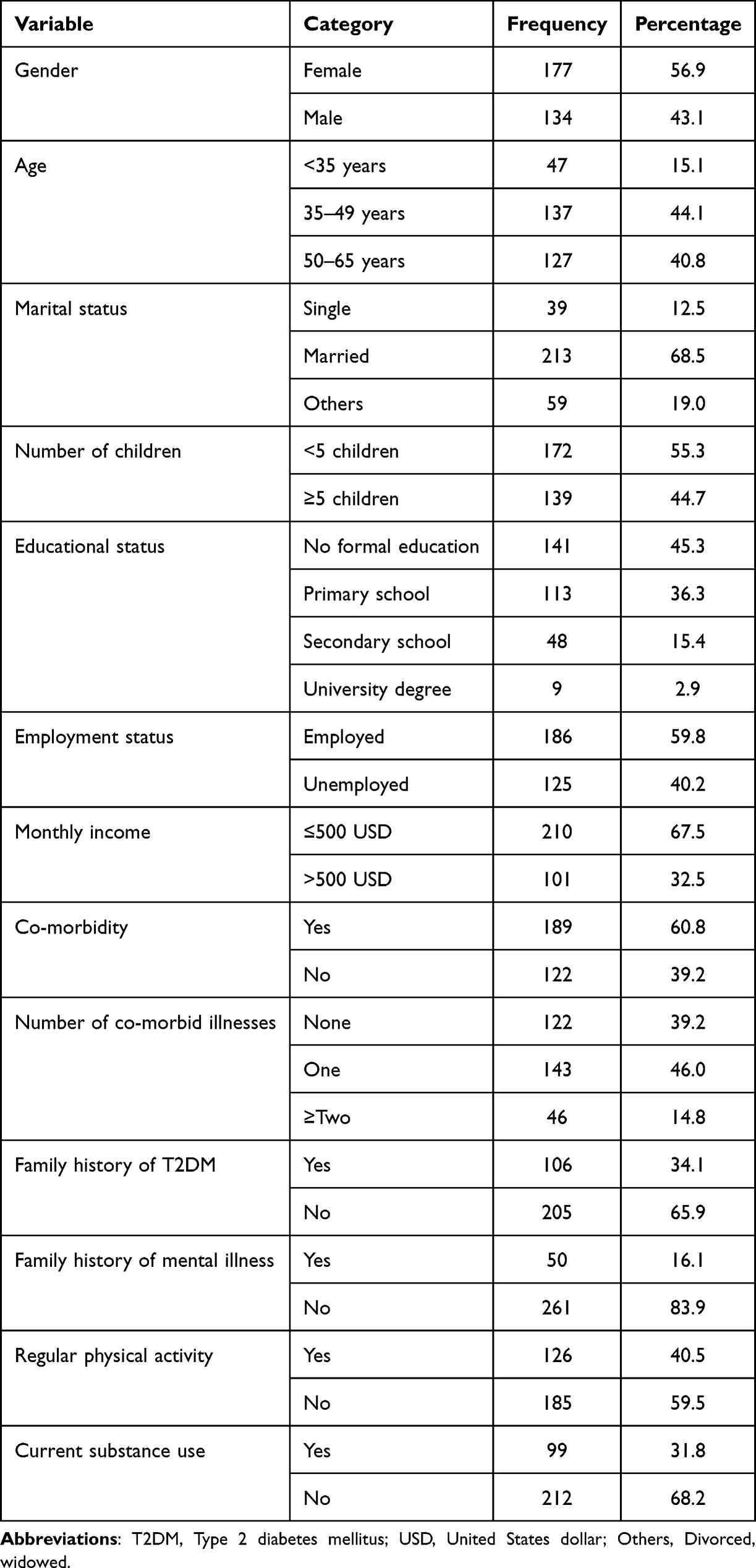 |
Table 1 Sociodemographic and Behavioral Characteristics of Patients with T2DM (n = 311) |
Clinical and Psychosocial Characteristics
Approximately one-fifth of participants (19.6%) had been living with T2DM for over 10 years. More than half (56.6%) had poor glycemic control. A significant proportion of patients reported nocturia (66.9%) and depressive symptoms (61.4%). In contrast, only 11.9% of participants reported having strong social support (Table 2).
 |
Table 2 Clinical and Psychosocial Characteristics of Patients with T2DM (n = 311) |
Prevalence and Components of Poor Sleep Quality
Overall, 54.0% of the participants fulfilled the criteria for poor sleep quality (95% CI: 48.3–59.7), as assessed by the PSQI. Despite the high prevalence of poor sleep quality, 50.2% of participants subjectively rated their sleep quality as “very good”. More than half of the participants reported sleeping more than seven hours per night. Additionally, 50.2% indicated using sleep medications at least once per week (Table 3).
 |
Table 3 Sleep Quality and Its Components Among Patients with T2DM (n = 311) |
Sociodemographic and Behavioral Factors Associated with Poor Sleep Quality
Bivariate logistic regression analysis identified several sociodemographic and behavioral variables significantly associated with poor sleep quality, including gender, marital status, monthly income, employment status, family history of diabetes mellitus (DM), family history of mental illness, current substance use, physical activity, and the presence of comorbidities. However, in the multivariable logistic regression model—adjusted for potential confounders—marital status and family history of mental illness lost statistical significance. All remaining variables remained significantly linked to poor sleep quality (p < 0.05).
Specifically, participants who did not participate in regular physical activity had significantly higher odds of reporting poor sleep quality in comparison to those who maintained physical activity (AOR = 2.01; 95% CI: 1.19–3.39; p < 0.05). Female participants had more than double the likelihood as males to experience poor sleep quality (AOR = 2.14; 95% CI: 1.10–3.56; p < 0.05). Unemployment was also linked to higher odds of experiencing poor sleep quality (AOR = 1.86; 95% CI: 1.29–3.14; p < 0.05), as was lower monthly income, with individuals earning ≤500 USD being significantly more likely to experience poor sleep quality compared to those earning >500 USD (AOR = 2.09; 95% CI: 1.22–3.59; p < 0.05) (Table 4).
 |
Table 4 Logistic Regression of Sociodemographic and Behavioral Factors Associated with Poor Sleep Quality (n = 311) |
Clinical and Psychosocial Factors Associated with Poor Sleep Quality
Several clinical and psychosocial variables were significantly linked to poor sleep quality in the bivariate analysis, including nocturia, duration of DM, regular doctor follow-up, glycemic control, DM management approach, treatment adherence, presence of diabetes-related complications, depressive symptoms, and social support. However, in the adjusted multivariable model, only nocturia, poor glycemic control, poor treatment adherence, diabetes-associated complications, and depressive symptoms remained significant predictors (p < 0.05). Variables such as DM duration, follow-up frequency, management strategy, and social support lost significance after adjustment.
Participants who experienced nocturia had markedly higher odds of poor sleep quality compared with those without nocturia (AOR = 3.51; 95% CI: 1.98–6.22; p < 0.001). Similarly, the presence of diabetes-associated complications was significantly related to increased odds of poor sleep quality (AOR = 3.54; 95% CI: 2.07–6.04; p < 0.001). Participants with poor glycemic control also had a nearly threefold increased risk of poor sleep quality compared with individuals who had adequate glycemic control (AOR = 2.92; 95% CI: 1.70–5.01; p < 0.001) (Table 5).
 |
Table 5 Logistic Regression of Clinical and Psychosocial Factors Associated with Poor Sleep Quality (n = 311) |
Discussion
This study found that over half (54.0%) of individuals with T2DM in Mogadishu experienced poor sleep quality. Notably, although over half of the participants met criteria for poor sleep quality based on the PSQI, 50.2% still rated their sleep subjectively as “very good”. Multivariable analysis identified several independent predictors, including female gender, unemployment, lower income, physical inactivity, substance use, nocturia, diabetes-related complications, poor glycemic control, depressive symptoms, and poor adherence to diabetes treatment. These findings emphasize the multifactorial nature of sleep disturbances in diabetic populations and point to key modifiable and sociodemographic risk factors relevant for intervention.
Poor sleep quality is frequently observed among individuals with T2DM and has been linked to insulin resistance, impaired glycemic control, and an elevated likelihood of complications.11–13 Addressing sleep disturbances may play a critical role in improving diabetes self-care, treatment adherence, and overall health outcomes.38 The high prevalence rate of poor sleep quality observed in this study aligns with findings from similar research conducted in Ethiopia,20 Saudi Arabia,39 Taiwan,23 Kenya,10 and India,40 reinforcing its broader relevance in diabetic populations. A recent systematic review and meta-analysis incorporating 11 studies involving 3766 participants across Sub-Saharan Africa reported comparable prevalence rates,26 further supporting the consistency of these findings.
However, the prevalence reported in this study was comparatively lower than reported by a previous study conducted in Jordan,41 yet higher than those documented in studies from China22 and Malaysia21,24 A meta-analysis of eight Ethiopian studies involving 2471 participants also reported slightly lower prevalence rates compared to the current investigation.42 These variations may be attributed to methodological differences, including disparities in study design, sample sizes, cut-off scores utilized to characterize poor sleep quality, and sociodemographic characteristics of the study populations. For instance, Barakat et al41 used a cut-off score of ≥8 in the Jordanian study, while the Chinese study applied a threshold of >7. In contrast, Karumanchi et al40 in India adopted a more stringent criterion of <5. Sample sizes also varied notably, with the Jordanian and Chinese studies including over 1000 participants each, whereas the Indian study comprised only 200 individuals.
In the present study, poor sleep quality was assessed using a cut-off score of >5, with a cross-sectional design involving 311 individuals diagnosed with T2DM. Despite methodological differences across studies, the literature consistently indicates that individuals with T2DM are at a greater likelihood to experience poor sleep quality compared to the general population.10
Existing literature indicates that poor sleep quality occurs more frequently in women compared to men, largely due to the influence of female sex hormones.43 Consistent with these findings, the present study identified female gender as a significant predictor of poor sleep quality among individuals with T2DM. This association is corroborated by earlier research conducted in China,22 Taiwan,23 and Saudi Arabia.39 The higher prevalence of sleep disturbances among women may be attributed to the influence of estrogen and progesterone on sleep-regulating neurotransmitters such as GABA and serotonin, which are essential for initiating and maintaining sleep.43 Hormonal fluctuations during menstruation, pregnancy, and menopause can further disrupt circadian regulation by affecting neural pathways in the hypothalamus and brainstem.43 These findings underscore the importance of integrating gender-sensitive approaches in managing sleep disturbances in women with T2DM to enhance both sleep quality and diabetes outcomes.
Physical activity is another well-documented modifiable factor associated with improved sleep.44 This study identified that insufficient regular physical activity significantly predicted poor sleep quality among individuals with T2DM. This finding aligns with studies from Ethiopia45 and Taiwan,23 which similarly reported a strong association between low physical activity levels and poor sleep quality among diabetic populations. A recent systematic review and meta-analysis also concluded that both physical and mind-body exercises notably enhance sleep quality among individuals with diabetes.44 Physical activity enhances sleep by reducing stress through endorphin release, regulating circadian rhythms, and promoting thermoregulation.46 It also improves mood and relaxation by increasing serotonin and norepinephrine levels, which aid in initiating and maintaining restful sleep.46 These findings highlight the potential of incorporating regular physical activity into diabetes care plans as a non-pharmacological strategy to improve sleep and metabolic health outcomes.
Comorbidities are common in individuals with T2DM and are increasingly recognized as significant contributors to poor sleep quality. In this study, the presence of multiple comorbidities was a significant predictor of poor sleep, consistent with findings from Ethiopia20,45 and Saudi Arabia, as well as a recent systematic review from Sub-Saharan Africa.26 The review reported that individuals with T2DM and comorbid conditions had nearly twice the odds of experiencing poor sleep quality compared with individuals without comorbidities. These conditions contribute to sleep disturbances through mechanisms such as chronic pain, nocturia, obstructive sleep apnea, cardiovascular symptoms, and psychological issues like depression and anxiety—all of which impair sleep continuity and reduce sleep efficiency.47 The findings emphasize the critical need for integrated care models that address both diabetes and its comorbidities. Effective management of these accompanying conditions may significantly improve sleep quality and, by extension, enhance overall diabetes control and patient quality of life.
Emerging evidence indicates that individuals with T2DM who develop complications such as neuropathy, retinopathy, nephropathy, and diabetic foot are at significantly higher risk for poor sleep quality.22 In this research, the existence of diabetes-related complications was strongly linked to higher odds of experiencing poor sleep quality. This finding is consistent with previous research from Saudi Arabia,39 China,22 and India,40 reinforcing the robust link between diabetes-related complications and sleep disturbances. These complications can disrupt sleep through mechanisms such as chronic pain, nocturia, autonomic dysfunction, and psychological distress, all of which contribute to fragmented, delayed, and non-restorative sleep.48,49 These findings underscore the importance of integrated diabetes care that addresses both physical symptoms and associated sleep disturbances.
Nocturia, or frequent nighttime urination, is another common condition that significantly affects sleep quality in individuals with T2DM.50 Our findings identified a strong association between nocturia and poor sleep quality, consistent with studies from Malaysia,21,24 Taiwan,51 and Singapore.52 Nocturia fragments sleep architecture by causing repeated awakenings, reducing both the duration and quality of slow-wave and REM sleep. This disruption contributes to poor sleep efficiency, daytime fatigue, and impaired metabolic regulation, potentially exacerbating glycemic control issues.50,51 Addressing nocturia is therefore crucial in comprehensive diabetes management to improve both sleep and health outcomes.
Depression and poor sleep share a well-established, bidirectional relationship, where each can exacerbate the other.53 While improving sleep may enhance psychological well-being,54 paradoxically, acute lack of sleep can sometimes reduce depressive symptoms, highlighting the complex and nuanced interaction between sleep and mood disorders.55 In this study, depressive symptoms were significantly correlated with poor sleep quality in individuals with T2DM, in line with findings from Ethiopia,45 Saudi Arabia,39 and Malaysia.24 A recent systematic review found that individuals with T2DM and depressive symptoms were nearly four times more likely to encounter sleep disturbances compared to those without depression.26 Depression disrupts sleep through serotonin imbalance, circadian rhythm disturbances, and increased physiological arousal.56,57 It also alters sleep architecture by reducing slow-wave sleep and increasing REM density, leading to insomnia and non-restorative sleep.57 These results highlight the need to prioritize mental health support as part of a holistic approach to diabetes care.
Socioeconomic status is another important determinant of sleep health. Consistent with previous literature,58 this study found that individuals with lower monthly income had significantly greater likelihood of experiencing poor sleep quality. A systematic review and meta-analysis similarly found that lower socioeconomic status correlated with reduced overall sleep duration, increased latency to sleep onset, and increased sleep fragmentation.59 This relationship may be mediated by increased psychosocial stress due to financial insecurity, reduced access to healthcare, and environmental factors such as noise and overcrowding. A qualitative study from Türkiye further emphasized how socioeconomic disadvantage impairs self-care, dietary adherence, and psychosocial well-being in individuals with T2DM.60 Moreover, individuals with higher socioeconomic status often benefit from greater access to protective resources—social, psychological, and material—that help buffer against sleep disturbances.22 These findings call for equity-focused interventions that address both medical and social determinants of health to improve sleep and diabetes management outcomes.
A growing body of evidence links unemployment to poor sleep quality. Studies conducted in the United States, Europe, and Japan have consistently shown that unemployed individuals are more likely to encounter disrupted sleep patterns compared with individuals who are employed.61–63 In the present study, unemployment significantly correlated with poor sleep quality among individuals with T2DM. This finding aligns with prior research from Jordan41 and Germany62 which reported similar associations. The relationship may be explained by financial stress, increased anxiety, lack of daily structure, and higher levels of sedentary behavior—factors that disrupt circadian rhythms and negatively impact sleep quality.62,64,65 These results underscore the importance of holistic interventions that address social determinants of health, particularly employment status, in managing sleep disturbances among individuals with T2DM.
Substance use also emerged as a significant factor predicting poor sleep quality in this study, corroborating findings from Ethiopia.20,66 Previous research has consistently demonstrated that substance use contributes to sleep disturbances such as insomnia and fragmented sleep.67,68 The relationship is bidirectional: substance use impairs sleep architecture by altering neurotransmitter activity, disrupting circadian rhythms, and triggering withdrawal symptoms; in turn, persistent sleep disturbances can heighten stress, impair emotion regulation, and increase the risk of relapse.69,70 These findings highlight the importance of integrating substance use assessment and support into diabetes care, as addressing this modifiable factor may enhance sleep and overall health outcomes.
Medication adherence also plays a key role in sleep health. This study found that individuals with poor adherence to diabetes treatment had notably increased odds of experiencing poor sleep quality. This is consistent with prior findings from Korea and a systematic review of older adults, both of which reported an association between sleep disturbances and reduced treatment adherence.71,72 Poor adherence may lead to suboptimal glycemic control, increased diabetes complications, and psychological distress—all of which can interfere with sleep.66,73 These findings reinforce the need for interventions that promote medication adherence as part of comprehensive diabetes and sleep management strategies.
Poor glycemic control has also been consistently related to decreased sleep quality in individuals with T2DM. Our findings support this relationship, aligning with prior studies from Jordan,41 Ethiopia,20 and Saudi Arabia.39 A recent systematic review further confirmed that individuals with suboptimal glycemic control are significantly more likely to experience sleep disturbances.26 Mechanisms include nocturia, neuropathic pain, glycemic variability, inflammation, hormonal disruption, and mood disturbances—all of which can fragment sleep and reduce restorative sleep stages.48,74 These results emphasize the significance of addressing both glycemic management and sleep quality in diabetes care to optimize long-term outcomes.
The findings of this study carry important public health implications for Somalia and similar low-resource settings. The high burden of poor sleep quality among individuals with T2DM highlights the need to integrate sleep assessment and management into routine diabetes care. Given the limited availability of specialist services such as sleep clinics and mental health care, especially in under-resourced areas, scalable strategies such as incorporating brief screening tools (eg, PSQI, PHQ-9) into primary care, training non-specialist health workers, and promoting lifestyle interventions (eg, physical activity and stress reduction) may offer practical solutions. Addressing modifiable factors such as physical inactivity, depression, and substance use within diabetes programs can improve not only sleep health but also glycemic control and overall quality of life. These findings support the development of context-appropriate, multidisciplinary approaches to chronic disease management in fragile health systems.
Limitations
While this study provides valuable insights, several limitations must be acknowledged. First, the evaluation of sleep quality and associated factors relied on self-reported data, which could be affected by recall bias and social desirability bias, potentially impacting the accuracy and reliability of the responses. Second, the instrument used—the PSQI—is a screening tool rather than a diagnostic measure, limiting the findings to the identification of probable sleep disturbances rather than clinically confirmed conditions. Third, as the study was performed at a single medical center in Mogadishu, the results may not be generalizable to all individuals with T2DM in Mogadishu or other regions of Somalia. Fourth, the cross-sectional design of the study limits any inference of causality between variables. Future longitudinal research is warranted to better establish causal relationships. Finally, this study did not assess dietary intake or use the Dietary Inflammatory Index (DII), limiting our ability to examine the impact of dietary inflammation on sleep quality. Future research should incorporate validated dietary tools to explore this relationship in individuals with T2DM. Despite these limitations, the research successfully met its objectives and, to the best of the authors’ knowledge, represents the first investigation into sleep quality among individuals with T2DM in Mogadishu, Somalia.
Conclusion
This study found a high prevalence of poor sleep quality among individuals with T2DM in Mogadishu, Somalia, affecting over half of the participants. Multiple interrelated factors were significantly associated with poor sleep, including female gender, unemployment, low income, comorbidities, diabetes-related complications, depressive symptoms, nocturia, poor glycemic control, substance use, physical inactivity, and poor treatment adherence. These findings align with regional and global literature and highlight the complex, multifactorial nature of sleep disturbances in this population.
The results underscore the importance of integrating sleep health into diabetes care. Poor sleep quality not only contributes to impaired metabolic control and increased complications but also diminishes quality of life. Addressing modifiable risk factors may improve sleep, enhance treatment adherence, and promote better overall health outcomes.
Recommendations
Considering these findings, the following recommendations are proposed:
- Integrate sleep assessment into routine diabetes care using validated tools such as the PSQI, and address identified sleep problems accordingly.
- Adopt a multidisciplinary approach involving primary care providers, mental health professionals, and diabetes specialists to manage sleep, metabolic, and psychological aspects comprehensively.
- Promote lifestyle modifications, including regular physical activity and patient education, as non-pharmacological strategies to improve sleep and glycemic control.
- Screen for and manage mental health issues, particularly depression and anxiety, especially in high-risk groups such as women and unemployed individuals.
- Develop public health strategies that address socioeconomic inequalities and substance use as part of a broader effort to improve sleep and diabetes outcomes.
Abbreviations
PSQI, Pittsburgh Sleep Quality Index; PHQ-9, Patient Health Questionnaire-9; OSSS-3, Oslo Social Support Scale–3-item version; CI, Confidence Interval; AOR, Adjusted Odds Ratio; DM, Diabetes Mellitus; ADA, American Diabetes Association; HbA1c, Hemoglobin A1c; VIFs, Variance Inflation Factors; ROC, Receiver Operating Characteristic; AUC, Area Under the Curve; GABA, Gamma-AminoButyric Acid; DII, Dietary Inflammatory Index.
Data Sharing Statement
All data generated or analyzed during this study are included in this published article or are available from the corresponding author upon reasonable request.
Ethics Approval and Consent to Participate
This study received ethical approval from the Ethics Review Board of Mogadishu Somali-Turkiye Recep Tayyip Erdoğan Training and Research Hospital (Reference No: MSTH/18177). All procedures were conducted in accordance with the ethical standards outlined in the Declaration of Helsinki. Written informed consent was obtained from all participants prior to their inclusion in the study.
Acknowledgments
The authors express their sincere gratitude to all study participants for their valuable contribution and to the staff of the diabetes consultation unit at our hospital for their generous support and assistance during data collection. The authors also acknowledge the use of the generative AI tool ChatGPT to support language editing and improve clarity during the manuscript preparation phase. All content was critically reviewed and verified by the authors to ensure accuracy and integrity.
Author Contributions
All authors made a significant contribution to the work reported, whether that is in the conception, study design, execution, acquisition of data, analysis and interpretation, or in all these areas; took part in drafting, revising or critically reviewing the article; gave final approval of the version to be published; have agreed on the journal to which the article has been submitted; and agree to be accountable for all aspects of the work.
Funding
This research did not receive any specific grant from funding agencies in the public, commercial, or not-for-profit sectors.
Disclosure
The authors declare that there are no conflicts of interest regarding the publication of this article.
References
1. Magliano DJ, Boyko EJ; IDF Diabetes Atlas 10th edition scientific committee. IDF Diabetes Atlas.
2. Cohrs CM, Panzer JK, Drotar DM, et al. Dysfunction of persisting β cells is a key feature of early type 2 diabetes pathogenesis. Cell Rep. 2020;31(1):107469. doi:10.1016/j.celrep.2020.03.033
3. Wysham C, Shubrook J. Beta-cell failure in type 2 diabetes: mechanisms, markers, and clinical implications. Postgrad Med. 2020;132(8):676–686. doi:10.1080/00325481.2020.1771047
4. Bommer C, Heesemann E, Sagalova V, et al. The global economic burden of diabetes in adults aged 20-79 years: a cost-of-illness study. Lancet Diabetes Endocrinol. 2017;5(6):423–430. doi:10.1016/S2213-8587(17)30097-9
5. GBD 2021 Diabetes Collaborators. Global, regional, and national burden of diabetes from 1990 to 2021, with projections of prevalence to 2050: a systematic analysis for the global burden of disease study 2021 [published correction appears in Lancet. 2023 Sep 30;402(10408):1132. doi: 10.1016/S0140-6736(23)02044-5.] [published correction appears in Lancet. 2025 Jan 18;405(10474):202. doi: 10.1016/S0140-6736(25)00053-4.]. Lancet. 2023;402(10397):203–234. doi:10.1016/S0140-6736(23)01301-6
6. Shan Z, Ma H, Xie M, et al. Sleep duration and risk of type 2 diabetes: a meta-analysis of prospective studies. Diabetes Care. 2015;38(3):529–537. doi:10.2337/dc14-2073
7. Reutrakul S, Van Cauter E. Sleep influences on obesity, insulin resistance, and risk of type 2 diabetes. Metabolism. 2018;84:56–66. doi:10.1016/j.metabol.2018.02.010
8. Baranwal N, Yu PK, Siegel NS. Sleep physiology, pathophysiology, and sleep hygiene. Prog Cardiovasc Dis. 2023;77:59–69. doi:10.1016/j.pcad.2023.02.005
9. Nelson KL, Davis JE, Corbett CF. Sleep quality: an evolutionary concept analysis. Nurs Forum. 2022;57(1):144–151. doi:10.1111/nuf.12659
10. Sokwalla SM, Joshi MD, Amayo EO, Acharya K, Mecha JO, Mutai KK. Quality of sleep and risk for obstructive sleep apnoea in ambulant individuals with type 2 diabetes mellitus at a tertiary referral hospital in Kenya: a cross-sectional, comparative study. BMC Endocr Disord. 2017;17(1):7. doi:10.1186/s12902-017-0158-6
11. Lee SWH, Ng KY, Chin WK. The impact of sleep amount and sleep quality on glycemic control in type 2 diabetes: a systematic review and meta-analysis. Sleep Med Rev. 2017;31:91–101. doi:10.1016/j.smrv.2016.02.001
12. Azharuddin M, Kapur P, Adil M, Ghosh P, Sharma M. The impact of sleep duration and sleep quality on glycaemic control in Asian population with type 2 diabetes mellitus: a systematic literature review and meta-analysis of observational studies. Clin Epidemiol Global Health. 2020;8(3):967–975. doi:10.1016/j.cegh.2020.03.006
13. Shibabaw YY, Dejenie TA, Tesfa KH. Glycemic control and its association with sleep quality and duration among type 2 diabetic patients. Metabol Open. 2023;18:100246. doi:10.1016/j.metop.2023.100246
14. Brouwer A, van Raalte DH, Rutters F, et al. Sleep and HbA1c in patients with type 2 diabetes: which sleep characteristics matter most? Diabetes Care. 2020;43(1):235–243. doi:10.2337/dc19-0550
15. Chasens ER, Korytkowski M, Sereika SM, Burke LE. Effect of poor sleep quality and excessive daytime sleepiness on factors associated with diabetes self-management. Diabetes Educ. 2013;39(1):74–82. doi:10.1177/0145721712467683
16. Seligowski AV, Pless Kaiser AP, Niles BL, Mori DL, King LA, King DW. Sleep quality as a potential mediator between psychological distress and diabetes quality of life in veterans with type 2 diabetes. J Clin Psychol. 2013;69(10):1121–1131. doi:10.1002/jclp.21866
17. Gunn S, Henson J, Robertson N, et al. Self-compassion, sleep quality and psychological well-being in type 2 diabetes: a cross-sectional study. BMJ Open Diabetes Res Care. 2022;10(5):e002927. doi:10.1136/bmjdrc-2022-002927
18. Jaspan VN, Greenberg GS, Parihar S, et al. The role of sleep in cardiovascular disease. Curr Atheroscler Rep. 2024;26(7):249–262. doi:10.1007/s11883-024-01207-5
19. Onyegbule CJ, Muoghalu CG, Ofoegbu CC, Ezeorah F. The impact of poor sleep quality on cardiovascular risk factors and quality of life. Cureus. 2025;17(1):e77397. doi:10.7759/cureus.77397
20. Jemere T, Mossie A, Berhanu H, Yeshaw Y. Poor sleep quality and its predictors among type 2 diabetes mellitus patients attending Jimma university medical center, Jimma, Ethiopia. BMC Res Notes. 2019;12(1):488. doi:10.1186/s13104-019-4531-6
21. Nasir NFM, Draman N, Zulkifli MM, Muhamad R, Draman S. Sleep quality among patients with type 2 diabetes: a cross-sectional study in the east coast region of Peninsular Malaysia. Int J Environ Res Public Health. 2022;19(9):5211. doi:10.3390/ijerph19095211
22. Maimaitituerxun R, Chen W, Xiang J, et al. Sleep quality and its associated factors among patients with type 2 diabetes mellitus in Hunan, China: a cross-sectional study. BMJ Open. 2024;14(2):e078146. doi:10.1136/bmjopen-2023-078146
23. Kuo CP, Lu SH, Huang CN, Liao WC, Lee MC. Sleep quality and associated factors in adults with type 2 diabetes: a retrospective cohort study. Int J Environ Res Public Health. 2021;18(6):3025. doi:10.3390/ijerph18063025
24. Saparwan N, Tohit NM, Salmiah MS. A cross-sectional study on the sleep quality among type 2 diabetes mellitus patients and its associated factors. Med J Malaysia. 2023;78(5):627–634.
25. Directorate of National Statistics, Federal Government of Somalia. The Somali health and demographic survey 2020. SHD Survey 2020 Somalia. 2020;462:2020.
26. Fentahun S, Tinsae T, Rtbey G, et al. Quality of sleep and its determinants among people with diabetes mellitus in Sub-Saharan Africa: a systematic review and meta-analysis. Behav Sleep Med. 2024;22(6):803–819. doi:10.1080/15402002.2024.2367469
27. ElSayed NA, Aleppo G, Bannuru RR; American Diabetes Association Professional Practice Committee. Summary of revisions: standards of care in Diabetes—2024. Diabetes Care. 2024;47(Supplement_1):S5–S10. doi:10.2337/dc24-SREV
28. Buysse DJ, Reynolds CF, Monk TH, Berman SR, Kupfer DJ. The Pittsburgh Sleep Quality Index: a new instrument for psychiatric practice and research. Psychiatry Res. 1989;28(2):193–213. doi:10.1016/0165-1781(89)90047-4
29. Bull FC, Al-Ansari SS, Biddle S, et al. World health organization 2020 guidelines on physical activity and sedentary behaviour. Br J Sports Med. 2020;54(24):1451–1462. doi:10.1136/bjsports-2020-102955
30. Hoots BE, Li J, hertz MF, et al. Alcohol and other substance use before and during the COVID-19 pandemic among high school students - youth risk behavior survey, United States, 2021. MMWR Suppl. 2023;72(1):84–92. doi:10.15585/mmwr.su7201a10
31. Kroenke K, Spitzer RL, Williams JB. The PHQ-9: validity of a brief depression severity measure. J Gen Intern Med. 2001;16(9):606–613. doi:10.1046/j.1525-1497.2001.016009606.x
32. Dalgard OS. Community health profile as a tool for psychiatric prevention. In: Trent DR, Reeds C, editors. Promotion of Mental Health. United Kingdom: Ashgate Publishing; 1996.
33. Mohamed NA, Mohamud RYH, Hilowle FH, Mohamed YA, Mohamed HN. The prevalence and determinants of anxiety and depressive symptoms in patients with type II diabetes mellitus in Mogadishu, Somalia: a cross-sectional study. Diabetes Metab Syndr Obes. 2024;17:3419–3432. doi:10.2147/DMSO.S479583
34. Haji Mohamud RY, Mohamed NA, Abdi AA, et al. Prevalence and associated factors of poor sleep quality among nurses in a tertiary care hospital: a cross-sectional study. Risk Manag Healthc Policy. 2025;18:975–986. doi:10.2147/RMHP.S511543
35. Nallusamy V, Afgarshe M, Shlosser H. Reliability and validity of Somali version of the PHQ-9 in primary care practice. Int J Psychiatry Med. 2016;51(6):508–520. doi:10.1177/0091217417696732
36. Clopper CJ, Pearson ES. The use of confidence or fiducial limits illustrated in the case of the binomial. Biometrika. 1934;26(4):404–413. doi:10.1093/biomet/26.4.404
37. Hosmer DW, Lemeshow S, Sturdivant RX. Applied Logistic Regression. John Wiley & Sons; 2013.
38. Groeneveld L, Beulens JW, Blom MT, et al. The effect of cognitive behavioral therapy for insomnia on sleep and glycemic outcomes in people with type 2 diabetes: a randomized controlled trial. Sleep Med. 2024;120:44–52. doi:10.1016/j.sleep.2024.05.029
39. Darraj A, Mahfouz MS, Alsabaani A, Sani M, Alameer A. Assessment of sleep quality and its predictors among patients with diabetes in Jazan, Saudi Arabia. Diabetes Metab Syndr Obes. 2018;11:523–531. doi:10.2147/DMSO.S178674
40. Karumanchi S, Mallela VR, Alam KC, Pendurthi AK, Manjula BS, Pakalapati A. Assessment of insomnia and sleep quality among patients with type 2 diabetes. APIK J Internal Med. 2023;11(1):28–32. doi:10.4103/ajim.ajim_20_22
41. Barakat S, Abujbara M, Banimustafa R, Batieha A, Ajlouni K. Sleep quality in patients with type 2 diabetes mellitus. J Clin Med Res. 2019;11(4):261. doi:10.14740/jocmr2947w
42. Abate HK, Azagew AW, Nega GA, Birru SM, Mekonnen CK. Prevalence and determinants of poor sleep quality among diabetic patients in Ethiopia: systematic review. Front Public Health. 2024;12:1363408. doi:10.3389/fpubh.2024.136340
43. Dorsey A, de Lecea L, Jennings KJ. Neurobiological and hormonal mechanisms regulating women’s sleep. Front Neurosci. 2021;14:625397. doi:10.3389/fnins.2020.625397
44. Andy Rias Y, Apriliyasari RW, Gautama MSN, et al. Effects of physical and mind-body exercise on sleep quality in individuals with diabetes mellitus: a systematic review and meta-analysis. J Prev Med Public Health. 2025;58(1):1–10. doi:10.3961/jpmph.24.354
45. Zewdu D, Gedamu H, Beyene Y, Tadesse M, Tamirat M, Muluken S. Sleep quality and associated factors among type 2 Dm patients and non-Dm individuals in Bahir Dar governmental hospitals: comparative cross-sectional study. Sleep Sci Pract. 2022;6(1):10. doi:10.1186/s41606-022-00079-5
46. Alnawwar MA, Alraddadi MI, Algethmi RA, Salem GA, Salem MA, Alharbi AA. The effect of physical activity on sleep quality and sleep disorder: a systematic review. Cureus. 2023;15(8):e43595. doi:10.7759/cureus.43595
47. Khandelwal D, Dutta D, Chittawar S, Kalra S. Sleep disorders in type 2 diabetes. Indian J Endocrinol Metab. 2017;21(5):758–761. doi:10.4103/ijem.IJEM_156_17
48. Surani S, Brito V, Surani A, Ghamande S. Effect of diabetes mellitus on sleep quality. World J Diabetes. 2015;6(6):868–873. doi:10.4239/wjd.v6.i6.868
49. Kulkarni A, Thool AR, Daigavane S. Understanding the clinical relationship between diabetic retinopathy, nephropathy, and neuropathy: a comprehensive review. Cureus. 2024;16(3):e56674. doi:10.7759/cureus.56674
50. Lavadia AC, Kim JH, Yun SW, Noh TI. Nocturia, sleep quality, and mortality: a systematic review and meta-analysis. World J Mens Health. 2025;43.
51. Chang CJ, Pei D, Wu CC, et al. Correlates of nocturia and relationships of nocturia with sleep quality and glycemic control in women with type 2 diabetes. J Nurs Scholarsh. 2017;49(4):400–410. doi:10.1111/jnu.12302
52. Chiang GSH, Sim BLH, Lee JJM, Quah JHM. Determinants of poor sleep quality in elderly patients with diabetes mellitus, hyperlipidemia and hypertension in Singapore. Prim Health Care Res Dev. 2018;19(6):610–615. doi:10.1017/S146342361800018X
53. Yasugaki S, Okamura H, Kaneko A, Hayashi Y. Bidirectional relationship between sleep and depression. Neurosci Res. 2025;211:57–64. doi:10.1016/j.neures.2023.04.006
54. Scott AJ, Webb TL, Martyn-St James M, Rowse G, Weich S. Improving sleep quality leads to better mental health: a meta-analysis of randomised controlled trials. Sleep Med Rev. 2021;60:101556. doi:10.1016/j.smrv.2021.101556
55. Ioannou M, Wartenberg C, Greenbrook JTV, et al. Sleep deprivation as treatment for depression: systematic review and meta-analysis. Acta Psychiatr Scand. 2021;143(1):22–35. doi:10.1111/acps.13253
56. Xie M, Huang Y, Cai W, et al. Neurobiological underpinnings of hyperarousal in depression: a comprehensive review. Brain Sci. 2024;14(1):50. doi:10.3390/brainsci14010050
57. Fang H, Tu S, Sheng J, Shao A. Depression in sleep disturbance: a review on a bidirectional relationship, mechanisms and treatment. J Cell Mol Med. 2019;23(4):2324–2332. doi:10.1111/jcmm.14170
58. Papadopoulos D, Etindele Sosso FA. Socioeconomic status and sleep health: a narrative synthesis of 3 decades of empirical research. J Clin Sleep Med. 2023;19(3):605–620. doi:10.5664/jcsm.10336
59. Etindele Sosso FA, Holmes SD, Weinstein AA. Influence of socioeconomic status on objective sleep measurement: a systematic review and meta-analysis of actigraphy studies. Sleep Health. 2021;7(4):417–428. doi:10.1016/j.sleh.2021.05.005
60. Semerci Çakmak V, Sönmez Sari E, Çetinkaya Özdemir S. Experiences of adults with type 2 diabetes mellitus with low socioeconomic status: a qualitative study. BMC Public Health. 2025;25(1):381. doi:10.1186/s12889-025-21582-1
61. Blanchflower DG, Bryson A. Unemployment and sleep: evidence from the United States and Europe. Econ Hum Biol. 2021;43:101042. doi:10.1016/j.ehb.2021.101042
62. Greissl S, Mergl R, Sander C, Hensch T, Engel C, Hegerl U. Is unemployment associated with inefficient sleep habits? A cohort study using objective sleep measurements. J Sleep Res. 2022;31(3):e13516. doi:10.1111/jsr.13516
63. Maeda M, Filomeno R, Kawata Y, et al. Association between unemployment and insomnia-related symptoms based on the comprehensive survey of living conditions: a large cross-sectional Japanese population survey. Ind Health. 2019;57(6):701–710. doi:10.2486/indhealth.2018-0031
64. Chessa A, Schrempft S, Richard V, et al. Perceived financial hardship and sleep in an adult population-based cohort: the mediating role of psychosocial and lifestyle-related factors. Sleep Health. 2025;11(2):222–229. doi:10.1016/j.sleh.2024.12.006
65. Menezes-Júnior LAA, de Moura SS, Miranda AG, de Souza Andrade AC, Machado-Coelho GLL, Meireles AL. Sedentary behavior is associated with poor sleep quality during the COVID-19 pandemic, and physical activity mitigates its adverse effects. BMC Public Health. 2023;23(1):1116. doi:10.1186/s12889-023-16041-8
66. Birhanu TT, Hassen Salih M, Abate HK. Sleep quality and associated factors among diabetes mellitus patients in a follow-up clinic at the university of Gondar comprehensive specialized hospital in Gondar, Northwest Ethiopia: a Cross-Sectional Study. Diabetes Metab Syndr Obes. 2020;13:4859–4868. doi:10.2147/DMSO.S285080
67. Phiri D, Amelia VL, Muslih M, Dlamini LP, Chung MH, Chang PC. Prevalence of sleep disturbance among adolescents with substance use: a systematic review and meta-analysis. Child Adolesc Psychiatr Ment Health. 2023;17(1):100. doi:10.1186/s13034-023-00644-5
68. Sancho-Domingo C, Carballo JL. Sleep patterns in adolescents and associations with substance use. Sleep Health. 2024;10(6):749–756. doi:10.1016/j.sleh.2024.09.002
69. Ara A, Jacobs W, Bhat IA, McCall WV. Sleep disturbances and substance use disorders: a bi-directional relationship. Psychiatr Ann. 2016;46(7):408–412. doi:10.3928/00485713-20160512-01
70. Dobani F, Schillinger ES, Vrabec A, Kidwell KM, Park A. A meta-analysis of bi-directional associations between sleep health and substance use among US youth: racial/ethnic differences. Curr Addiction Reports. 2025;12(1):25. doi:10.1007/s40429-025-00628-9
71. Amato L, Giannetta N, Taborri S, et al. Sleep quality and medication adherence in older adults: a systematic review. Clocks Sleep. 2024;6(3):488–498. doi:10.3390/clockssleep6030032
72. Hwang H, Jeong H, Yim HW. Association between non-adherence to diabetes management and poor sleep quality based on the Korean community health survey. J Prev Med Public Health. 2025;58(3):260–268. doi:10.3961/jpmph.24.486
73. Lawrence A, Khataniar H, Joseph S, Nagarajan T, Umesh S, Michael Raj AJ. Sleep impairment: is it an overlooked burden in painful diabetic peripheral neuropathy? A single-centre, cross-sectional study from south India. Diabetes Metab Syndr. 2022;16(8):102568. doi:10.1016/j.dsx.2022.102568
74. Mao Y. Sleep architecture changes in diabetes. J Clin Med. 2024;13(22):6851. doi:10.3390/jcm13226851
 © 2025 The Author(s). This work is published and licensed by Dove Medical Press Limited. The
full terms of this license are available at https://www.dovepress.com/terms
and incorporate the Creative Commons Attribution
- Non Commercial (unported, 4.0) License.
By accessing the work you hereby accept the Terms. Non-commercial uses of the work are permitted
without any further permission from Dove Medical Press Limited, provided the work is properly
attributed. For permission for commercial use of this work, please see paragraphs 4.2 and 5 of our Terms.
© 2025 The Author(s). This work is published and licensed by Dove Medical Press Limited. The
full terms of this license are available at https://www.dovepress.com/terms
and incorporate the Creative Commons Attribution
- Non Commercial (unported, 4.0) License.
By accessing the work you hereby accept the Terms. Non-commercial uses of the work are permitted
without any further permission from Dove Medical Press Limited, provided the work is properly
attributed. For permission for commercial use of this work, please see paragraphs 4.2 and 5 of our Terms.