
Back to Journals » Journal of Multidisciplinary Healthcare » Volume 19
Nurses’ Lived Experiences of Assessing Pain in Hospitalized Children in Indonesia: A Qualitative Phenomenological Study
Authors Ramdhanie GG  , Wanda D, Agustini N, Nurhaeni N , Mediani HS , Abuzairi T, Akbar MA , Nugraha BA
Received 12 February 2026
Accepted for publication 16 April 2026
Published 18 May 2026 Volume 2026:19 600334
DOI https://doi.org/10.2147/JMDH.S600334
Checked for plagiarism Yes
Review by Single anonymous peer review
Peer reviewer comments 2
Editor who approved publication: Professor Tilakavati Karupaiah
Gusgus Ghraha Ramdhanie,1,2 Dessie Wanda,3 Nur Agustini,3 Nani Nurhaeni,3 Henny Suzana Mediani,1 Tomy Abuzairi,4 M Agung Akbar,2 Bambang Aditya Nugraha5
1Department of Pediatric and Maternity Nursing, Faculty of Nursing, Universitas Padjadjaran, Bandung, West Java, Indonesia; 2Doctoral Nursing Program, Faculty of Nursing, Universitas Indonesia, Depok, West Java, Indonesia; 3Department of Pediatric Nursing, Faculty of Nursing, Universitas Indonesia, Depok, West Java, Indonesia; 4Department of Electrical Engineering, Faculty of Engineering, Universitas Indonesia, Depok, West Java, Indonesia; 5Department of Critical and Medical Surgical Nursing, Faculty of Nursing, Universitas Padjadjaran, Bandung, West Java, Indonesia
Correspondence: Gusgus Ghraha Ramdhanie, Department of Pediatric and Maternity Nursing, Faculty of Nursing, Universitas Padjadjaran, Jl. Raya Bandung-Sumedang, KM. 21, Jatinangor, Sumedang, West Java, 45363, Indonesia, Fax +62 022 7795596, Email [email protected]
Background: Pediatric pain during hospitalization remains a significant clinical concern. Inadequate and inconsistent pain assessment may lead to suboptimal pain management, negatively affecting children’s comfort, recovery, and overall quality of care.
Purpose: This study aimed to explore nurses’ lived experiences in assessing pain among hospitalized children in pediatric wards of a public hospital in Indonesia using a descriptive phenomenological approach.
Methods: A qualitative descriptive phenomenological design was employed. Thirteen pediatric nurses participated in two focus group discussions (FGDs) conducted between March and May 2025 in the pediatric wards of a public hospital in Indonesia. Data were analyzed using Colaizzi’s method to identify the essential meanings and patterns underlying nurses’ experiences in pediatric pain assessment.
Results: Four main themes emerged from the analysis: 1) methods and tools for pain assessment, 2) pain assessment implementation, 3) challenges in assessing children’s pain, and 4) nurses’ expectations for system-level support and innovation in pediatric pain assessment.
Conclusion: Pediatric pain assessment practices are shaped by the dynamic interaction between organizational structures, individual clinical judgment, and broader system-level support mechanisms. While standardized tools exist, sustaining consistent implementation requires strengthened institutional monitoring, continuous professional development, and improved availability of child-specific resources. Nurses also emphasized the importance of practical and integrated innovations to support clinical workflows and decision-making processes.
Keywords: children, hospitalized, pediatric nurses, pain assessment
Introduction
Illness and hospitalization are traumatic experiences in a child’s life cycle, especially during early life stages when children are highly vulnerable to diseases.1 During hospitalization, children receive care and medical interventions based on their basic needs and diagnosis.2 They undergo various procedures that often cause pain, which is frequently the most feared aspect of hospital care for children.3 Pain thus becomes a major stressor for children during their hospital stay.4 Pain is a subjective experience, as each individual’s perception of pain varies in scale and intensity, and only those experiencing pain can accurately describe what they feel.5 Children perceive pain as a harmful threat, necessitating the adaptation of various approaches to assess pain in pediatric patients. This includes observing pain-related behaviors, preparing children to face painful experiences, and understanding how they describe their pain.6,7
Many studies have explored children’s subjective experience of pain and their ability to report it during hospitalization.8,9 The incidence of pain among neonates, infants, and hospitalized children is estimated to be between 33% and 82%, with moderate to severe intensity, particularly after surgery or other medical procedures.10 Research indicates that pain management and analgesic regimens for children in hospitals remain suboptimal. It has long been recognized that pain in pediatric populations is poorly assessed and managed, resulting in adverse effects. Major post-surgical pediatric patients continue to report moderate to severe pain despite receiving analgesics.11
Nurses often encounter various challenges in managing pediatric pain, starting from pain assessment to evaluation.12,13 One major difficulty lies in the objective interpretation and measurement of children’s pain, particularly because pain is a personal and subjective experience that cannot be directly felt by others.14 According to Paincheck Intelligent Pain Assessment,15 despite the availability of various pain assessment tools, nurses underutilize these instruments. Consequently, care teams often rely on personal opinions or prior knowledge to gauge pain levels, although effective pain management heavily depends on accurate pain assessment.6 Other factors influencing suboptimal pain management include nurse workload, clinical knowledge and skills, education and training, and information system support for pain documentation.7,16
Errors in pediatric pain management can significantly affect a child’s well-being and pain experience.14 Undiagnosed or poorly managed pain can cause unnecessary suffering, prolong recovery, and increase the risk of complications.16 Furthermore, inadequate pain management can lead to patient and family dissatisfaction and undermine trust between patients and healthcare teams.17 Therefore, it is vital for nurses to continuously improve their skills in pediatric pain management and adopt best practices to holistically respond to children’s pain needs as part of their professional role.12,18
Pain remains a common and distressing experience for hospitalized children that requires careful and ongoing assessment to ensure effective management and improved clinical outcomes.4 Pediatric pain assessment faces unique challenges due to differences in developmental stages, communication limitations, and the roles of caregivers and healthcare staff in interpreting pain signals.18,19 Nurses, as frontline healthcare providers, play a critical role in evaluating and managing children’s pain; thus, understanding their experiences and practices is key to examining the quality and effectiveness of pain assessment.20 Even with existing standardized instruments and clinical guidelines for pediatric pain assessment, multiple barriers affect consistent implementation in nursing practice. These include nurse knowledge, workload, organizational support, and resource availability. Additionally, the integration of digital technologies into pain assessment remains limited despite its potential to improve accuracy and efficiency.21,22
The Indonesian healthcare context shapes pediatric pain assessment through several specific clinical and contextual challenges, including limitations in resources, variations in practice, and the important role of family members in accompanying and interpreting children’s pain during hospitalization. These contextual factors make the present study particularly relevant to the Indonesian setting. The subjective nature of pediatric pain, together with the behavioral, developmental, and relational cues through which children express pain, makes a descriptive phenomenological approach appropriate for exploring how nurses perceive, interpret, and assign meaning to pain assessment in daily clinical practice. This study aims to explore nurses’ experiences of pain assessment in hospitalized children using a qualitative descriptive phenomenology approach.
Method
Design
This study employed a qualitative research design with a descriptive phenomenology approach. The qualitative approach was chosen to gain in-depth insights into nurses’ experiences of pain assessment in children during hospitalization. Phenomenology was applied to capture the lived experiences and perceptions of participants, providing a deeper understanding of the challenges and contextual factors that shape pain assessment practices, and to determine the meaning of pain assessment in the daily nursing workflow.23
This qualitative study was designed and reported in accordance with the Consolidated Criteria for Reporting Qualitative Research (COREQ),24 a 32-item checklist aimed at enhancing transparency and methodological rigor in studies using interviews and focus group discussions.
Participant and Setting
The study was conducted at a public hospital in West Java, Indonesia, between March and May 2025. The hospital was chosen because it serves as a referral center for pediatric care and accommodates a diverse inpatient population, providing opportunities to capture varied experiences among nurses. Purposive sampling was used to recruit participants who met the following inclusion criteria: (1) registered nurses working in pediatric wards with at least one year of experience in pediatric care, (2) directly involved in pain assessment and management during child hospitalization, and (3) willing to participate voluntarily. Exclusion criteria included nurses who were on extended leave during the study period or those not routinely engaged in pediatric pain assessment.
A total of thirteen participants were recruited, divided into two focus group discussions (FGDs): the first group consisted of seven participants and the second of six participants, ensuring diverse representation of nursing experiences. The sample size was considered adequate because the participants provided rich and relevant accounts of pediatric pain assessment, and no substantially new insights emerged across the two FGDs. The researchers observed that the second FGD largely confirmed patterns identified in the first group, and no substantially new themes emerged. This indicated that the data were sufficient to support an in-depth phenomenological understanding of nurses’ experiences in pediatric pain assessment.
Data Collection
Data were collected through FGDs, chosen because they allow exploration of collective experiences and shared perceptions in an interactive manner. FGDs encourage dynamic discussions in which participants may complement or challenge one another’s views, leading to richer data compared to individual interviews.21 The first FGD lasted 140 minutes with seven participants, and the second lasted 120 minutes with six participants. Both FGDs were conducted in a private meeting room within the hospital and were moderated by the principal researcher without an assistant note-taker. The principal researcher had prior experience in conducting qualitative interviews and focus group discussions in nursing research, which supported the facilitation of group interaction and the management of discussion flow during data collection. The moderator conducted the FGDs without an assistant note-taker to maintain a focused and less intrusive discussion environment. The researcher also used a semi-structured guide, audio-recording, and field notes to ensure that the discussion remained focused and that important contextual information was retained.
A semi-structured interview guide was used to facilitate the discussions, with questions such as: “How do you usually assess pain in hospitalized children, and what tools or methods do you use?”, “What challenges or barriers do you encounter in assessing children’s pain, including issues related to workload, resources, or clinical workflow?”, and “What kinds of support, system improvements, or innovations would help you perform more accurate, efficient, and consistent pain assessments?”. Follow-up probes such as “Could you explain further?” or “Can you give an example?” were used to elicit more detailed responses. All FGDs were audio-recorded, transcribed verbatim, and anonymized. Field notes were taken by the moderator to capture contextual aspects and non-verbal cues.
Rigour
Trustworthiness was ensured by addressing the four criteria of credibility, dependability, transferability, and confirmability. Credibility was strengthened through member checking, repeated immersion in the transcripts, and comparison of participant perspectives across the two focus group discussions. Dependability was established through an audit trail documenting key analytic decisions, including coding processes, theme development, and interpretive reflections. Transferability was enhanced by presenting rich descriptions of the research setting, participant characteristics, and data collection context to allow readers to assess the applicability of the findings to similar settings. Confirmability was supported through reflexive journaling, which enabled the researchers to critically reflect on and reduce the influence of personal assumptions and biases during data analysis.25
Data Analysis
Data analysis followed Colaizzi’s descriptive phenomenological method, which consists of seven steps to ensure systematic and rigorous interpretation: (1) familiarization with the data by reading and re-reading transcripts, (2) identification of significant statements directly related to the phenomenon, (3) formulation of meanings from these statements, (4) clustering of formulated meanings into themes, (5) developing an exhaustive description of the phenomenon, (6) formulating the fundamental structure of the phenomenon, and (7) validating the findings by returning summaries to selected participants (member checking) to confirm accuracy and resonance with their lived experiences.26
Results
Characteristics of Participants
This study involved thirteen nurses working in the pediatric ward. Seven nurses participated in the first FGD and six nurses in the second FGD, conducted between March and May 2025. The characteristics of participants are presented in Table 1.
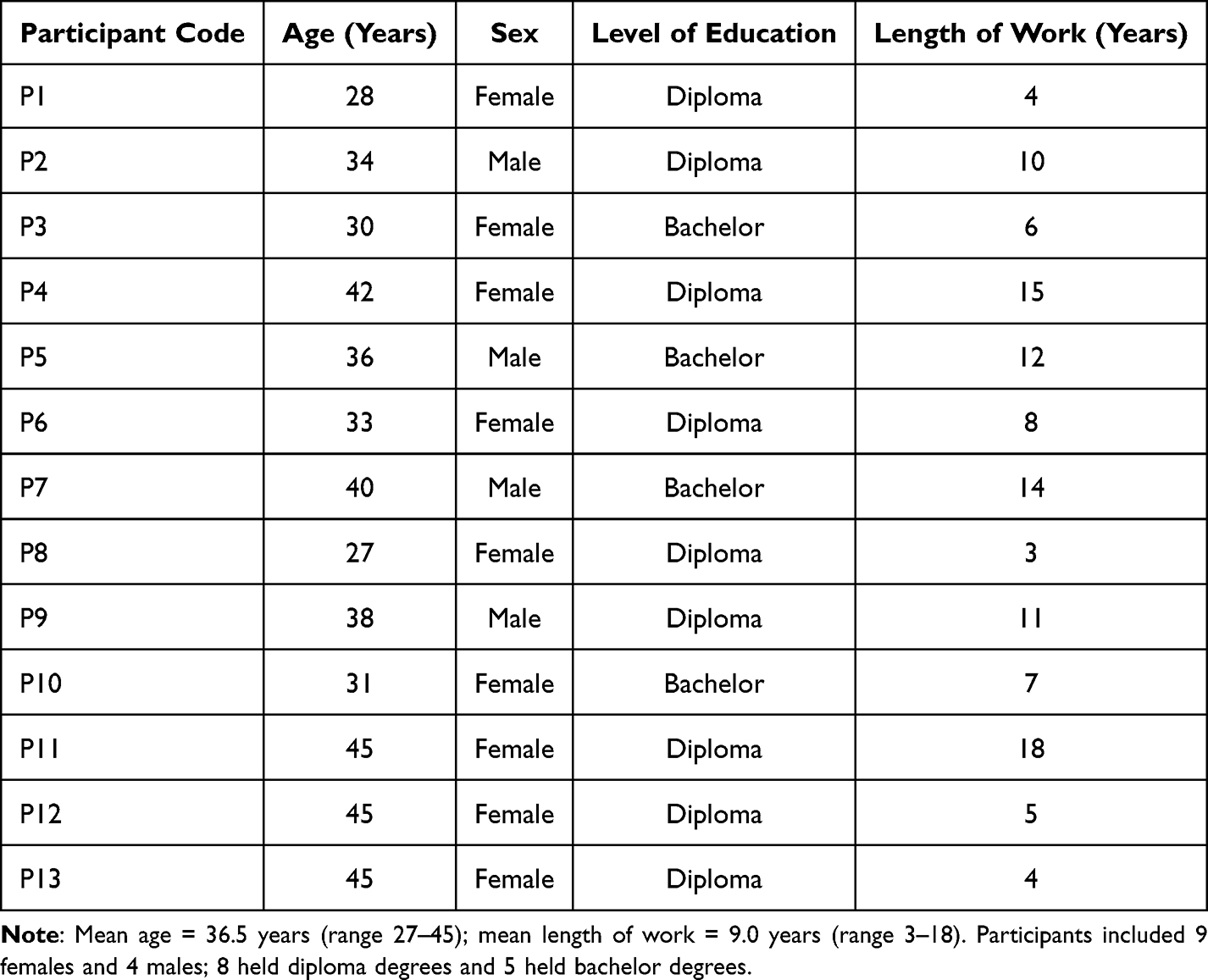 |
Table 1 Characteristics of Participants in This Study |
Thematic analysis identified four themes and ten subthemes that illustrated nurses’ lived experiences of pain assessment in hospitalized children. Figure 1 presents the conceptual relationships among these themes and subthemes, while Table 2 provides a concise structured summary. The narrative below elaborates each theme with illustrative participant quotations. Overall, the themes showed that pediatric pain assessment was shaped by the interaction of structured clinical procedures, nurses’ individual judgment, organizational constraints, and expectations for system-level support and innovation.
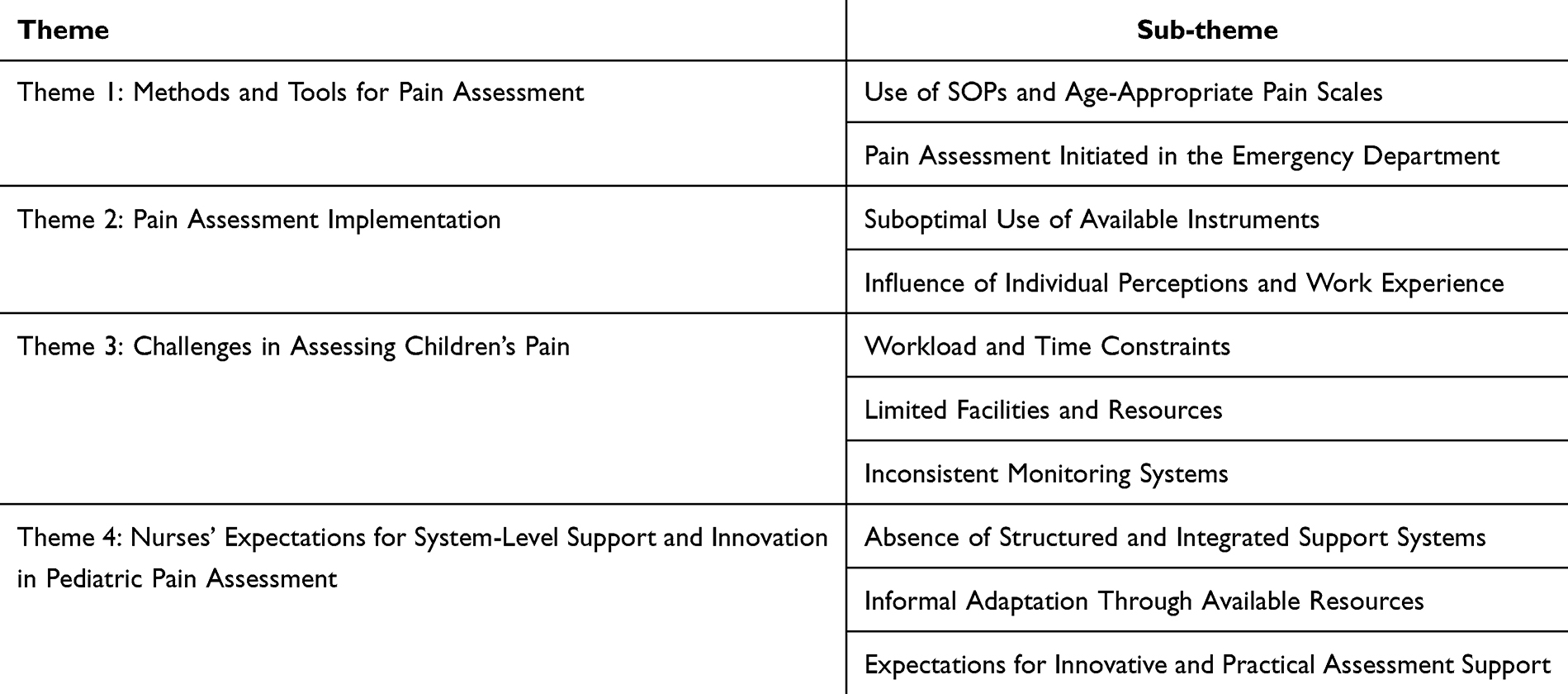 |
Table 2 Sub-Themes and Themes Derived from the Data |
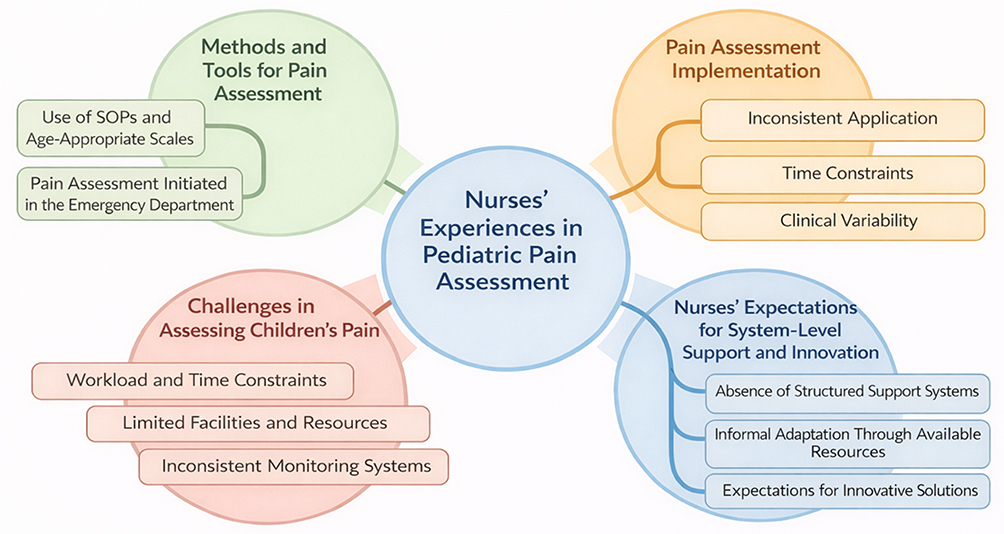 |
Figure 1 Overview of themes and subthemes related to nurses’ experiences in pediatric pain assessment. |
Theme 1. Methods and Tools for Pain Assessment
Use of SOPs and Age-Appropriate Pain Scales
Participants consistently described that pediatric pain assessment practices in their clinical settings were guided by SOPs and age-appropriate assessment tools. In practice, nurses referred to age-appropriate pain assessment instruments included in the hospital protocol, such as Wong-Baker Faces Pain Rating Scale or Numeric Rating Scale. The use of clearly defined instruments helped nurses align their assessments with the child’s developmental stage and communication ability. These structured protocols were perceived not only as formal institutional requirements but also as practical frameworks that supported nurses in making consistent clinical judgments. Nurses emphasized that having standardized scales helped them navigate complex situations, particularly when caring for children who were unable to verbally communicate their pain or who demonstrated subtle behavioral cues.
The availability of SOPs contributed to a sense of procedural clarity and professional confidence. Participants noted that structured guidelines reduced reliance on intuition alone and enabled more systematic observation of children’s physical and emotional responses. Some nurses described that the presence of standardized tools also facilitated communication with colleagues and strengthened multidisciplinary collaboration, as assessments could be interpreted consistently across team members.
One participant described the role of institutional guidance in daily practice:
Alhamdulillah, we already have standardized SOPs issued by the pain management team, so when we assess children’s pain we follow clear steps and choose the scale according to the child’s age and condition. It makes us feel that our assessment is more structured and consistent with what the team expects. (P3)
Another nurse emphasized how standardized scales improve objectivity and team communication:
We usually follow the pain scale based on developmental stage, and that helps us avoid guessing because everyone refers to the same reference. When there is a clear SOP, it increases our confidence and ensures that all nurses interpret the child’s pain using the same clinical standard. (P8)
These experiences suggest that standardized instruments function not only as technical resources but also as cognitive supports that shape nurses’ approaches to assessing pediatric pain in daily practice.
Pain Assessment Initiated in the Emergency Department
Participants highlighted that pain assessment begins early in the care process, often from the moment children arrive at the emergency department. Nurses described this early assessment as an integral part of initial patient evaluation rather than an additional task performed after admission. Early identification of pain was perceived as essential for guiding immediate interventions and minimizing distress in children during critical moments of care.
Participants explained that early pain assessment helped nurses prioritize clinical actions and communicate patient needs more effectively to physicians and other healthcare professionals. Conducting assessments at the point of entry allowed nurses to establish a baseline understanding of the child’s condition, which later supported continuity of care during hospitalization. Some nurses described how this practice fostered a proactive approach to pain management and encouraged vigilance throughout the care trajectory.
One participant explained how pain assessment is embedded in triage routines:
Pain assessment is already carried out from the moment they enter the ED, even during the initial triage process. We observe behavior, vital signs, and visible discomfort right away so that we can determine urgency and start responding before the child becomes more distressed. (P2)
Another nurse described the importance of early observation for clinical decision-making:
As soon as the child arrives, we immediately observe their expressions, behavior, and physiological signs, including pain indicators. That early assessment helps us respond quickly, communicate effectively with doctors, and prepare appropriate interventions from the beginning of care. (P5)
This illustrates how nurses perceive pain assessment as embedded within the broader workflow of emergency care and as a routine component of early clinical decision-making.
Theme 2. Pain Assessment Implementation
Suboptimal Use of Available Instruments
Although SOPs and standardized tools were available, participants acknowledged that their implementation in everyday clinical practice was not always optimal. Nurses described situations in which pain assessments were overlooked or conducted superficially due to competing clinical priorities or time pressures. Some participants reflected that while written procedures existed, translating them into consistent practice required continuous effort and institutional reinforcement.
Participants noted that routine workload and the urgency of other clinical tasks sometimes led to incomplete documentation or delayed reassessment. Others mentioned that adherence to SOPs varied among staff members, reflecting differences in awareness, motivation, and practical constraints encountered during busy shifts.
One participant explained the gap between policy and practice:
We already have SOPs and flowcharts available in the ward, and everyone knows they exist, but maybe their use is not yet maximized. When the situation becomes busy, we sometimes focus more on urgent treatments rather than completing the assessment thoroughly. (P4)
Another participant described how workload influences consistency:
Sometimes we know the assessment tools are there and should be used, but when the ward is very busy and there are many urgent tasks, we prioritize immediate clinical interventions first, and the pain assessment documentation can become incomplete or delayed. (P10)
These experiences highlight the complexity of integrating standardized assessment procedures into real-world clinical environments where situational demands influence daily practice.
Influence of Individual Perceptions and Work Experience
Participants emphasized that personal beliefs, clinical judgment, and accumulated work experience significantly shaped how pain assessments were performed. Differences in perception influenced the way nurses interpreted children’s behaviors and decided when and how to apply assessment tools. More experienced nurses described relying on observational skills developed through years of practice, while less experienced staff tended to adhere more strictly to written guidelines.
Participants suggested that professional background and prior clinical exposure contributed to variations in assessment approaches. Some nurses perceived flexibility in adapting tools to specific situations, whereas others viewed strict adherence to protocols as essential. These differences sometimes resulted in inconsistent application of pain assessment methods across staff members.
One participant reflected on how perception and experience influence assessment decisions:
It really goes back to each person’s perception because some nurses think the assessment should be done one way while others use a different approach. Clinical experience also plays a big role in how we interpret children’s pain and decide which tools to prioritize. (P13)
Another nurse described differences between senior and junior staff:
Nurses who have worked longer often rely on observation and instinct developed over years of practice, while newer staff tend to follow the scale step by step according to guidelines. Because of that, sometimes two nurses may interpret the same child’s pain differently. (P7)
This finding reflects the dynamic interaction between formal procedures and individual professional identities in shaping pain assessment practices. These differences suggest that clinical experience may function in two ways. On one hand, experience may support faster and more adaptive interpretation of children’s pain in complex situations. On the other hand, excessive reliance on intuition and personal observation may introduce variability and reduce consistency in the use of standardized pain assessment tools across nurses.
Theme 3. Challenges in Assessing Children’s Pain
Workload and Time Constraints
Participants frequently described heavy workloads and limited time as major barriers to conducting comprehensive pain assessments. High patient volumes and urgent clinical demands often forced nurses to prioritize immediate medical interventions over detailed pain evaluations. Nurses explained that effective pain assessment requires careful observation, communication with families, and repeated monitoring—tasks that become difficult when staffing resources are limited.
Participants also noted that time constraints affected collaboration with physicians and other team members, reducing opportunities to discuss assessment findings or adjust care plans. In busy clinical environments, pain assessments were sometimes shortened or postponed, leading to concerns about the consistency and thoroughness of care.
One participant described communication challenges during busy shifts:
The challenge is really when there are many patients at the same time, because communication with doctors and coordination with the team becomes more difficult. In those moments, even though we want to perform a detailed pain assessment, the workload makes it challenging to do everything thoroughly. (P3)
Another nurse explained how time pressure affects monitoring:
When the ward is full, we have to move quickly from one patient to another, and sometimes detailed pain assessment becomes secondary. We actually want to observe the child longer and monitor pain more frequently, but the workload makes it difficult to do it as often as we should. (P9)
These experiences highlight how structural and organizational pressures shape nurses’ ability to perform pain assessments in accordance with ideal clinical standards. These constraints may also affect the timeliness of reassessment, communication of pain findings to other professionals, and responsiveness of pain management interventions. As a result, heavy workload may increase the risk of delayed clinical responses and reduce the overall quality and safety of pediatric pain management.
Limited Facilities and Resources
Participants reported that the availability of pediatric-specific tools and equipment was often insufficient to support accurate pain assessment. Nurses described situations in which existing instruments did not fully match the developmental level or clinical needs of children, requiring them to adapt available tools or rely on subjective interpretation. Limited resources were perceived as obstacles that constrained clinical effectiveness and increased uncertainty in evaluating pain intensity.
Some nurses emphasized that inadequate facilities also influenced the overall workflow, as additional effort was required to locate appropriate materials or adjust assessment methods. Participants expressed that the lack of dedicated pediatric assessment tools could reduce confidence in clinical judgments and potentially affect the precision of treatment decisions.
One participant described limitations in pediatric-specific equipment:
There are no specific tools in the pediatric ward that fully match the age and developmental level of the children we treat, so sometimes we feel that the facilities are limited and not entirely suitable for accurate pain assessment. (P1)
Another nurse explained how limited resources require adaptation:
Sometimes we have to modify adult assessment tools because we don’t have enough pediatric-specific instruments available. Because of that, we rely more on observation and clinical judgment rather than standardized tools designed specifically for children. (P12)
These findings illustrate how infrastructural limitations directly influence daily nursing practices and the quality of pediatric pain evaluation.
Inconsistent Monitoring Systems
Participants reported that although pain assessments were typically performed at the beginning of hospitalization, ongoing monitoring and follow-up were not always sustained. Nurses described challenges in maintaining systematic reassessment due to competing priorities, documentation demands, and limited institutional monitoring mechanisms.
Some participants expressed concern that pain assessments could become routine administrative tasks rather than continuous clinical processes when follow-up systems were weak. The absence of structured monitoring tools or reminders contributed to inconsistencies in documenting changes in pain levels over time.
One participant explained challenges in maintaining continuity:
At the beginning the assessment is usually done well, but later the problem appears in monitoring because the system is not strong enough to support consistent reassessment. Without reminders or structured follow-up, it depends a lot on each nurse’s initiative. (P9)
Another nurse described gaps in reassessment processes:
Initial assessment is usually complete at admission, but reassessment sometimes gets missed because there is no reminder system or structured monitoring mechanism to ensure that pain levels are reviewed regularly throughout hospitalization. (P4)
These experiences suggest that continuity of pain assessment requires stronger institutional structures to support sustained implementation.
Theme 4. Nurses’ Expectations for System-Level Support and Innovation in Pediatric Pain Assessment
Absence of Structured and Integrated Support Systems
Participants described that pain assessment in daily practice is still largely dependent on manual processes and individual clinical judgment due to the absence of structured and integrated support systems. Although standardized procedures exist, nurses perceived a lack of tools that could facilitate systematic documentation, monitoring, and follow-up evaluation of children’s pain.
One participant explained limitations in technological support:
So far we don’t have any specific technology for pain assessment in our ward, so everything is still manual and paper-based. Because of that, it’s sometimes hard to see how the child’s pain changes from one shift to another. (P3)
Another nurse described the impact of non-integrated systems on workflow:
We still write everything manually because there is no integrated system to help us follow the child’s pain regularly. When the ward is busy, it becomes harder to keep track of the patient’s progress and documentation. (P8)
This absence of integrated systems contributed to variability in practice and increased reliance on memory or manual recording. Nurses expressed that without structured support, maintaining consistency in documentation and ongoing monitoring becomes challenging, especially during high workload conditions. The lack of technological integration was experienced not merely as a technical limitation but as an organizational gap that influences daily workflow and clinical efficiency.
Informal Adaptation Through Available Resources
In the absence of formal support systems, nurses demonstrated adaptive strategies by utilizing available resources, particularly mobile phones, mainly for communication and patient or family education rather than structured clinical assessment.
One participant described informal technology use for education:
Mobile phones really help when we explain things to parents or give education about pain management, but we don’t have any clinical tools yet, so we only use them for communication, not for formal assessment. (P6)
Another nurse explained how phones are used informally in daily practice:
We often use our personal phones to explain treatment plans or give reminders to families, and sometimes we take notes or quick reminders for ourselves, but it is still informal and not connected to the hospital’s clinical documentation system. (P10)
These practices reflected nurses’ efforts to compensate for system limitations while maintaining care quality. However, participants acknowledged that such informal adaptations were not standardized and could not replace integrated clinical tools. This experience illustrates how nurses navigate constraints by creatively using accessible technologies, while still recognizing the need for more structured and reliable systems to support clinical decision-making. At the same time, this informal use of personal smartphones raises important concerns related to data privacy, professional boundaries, and the absence of secure integration with the hospital’s clinical documentation system. These issues indicate that informal innovation cannot substitute for institutionally supported and ethically governed digital solutions.
Expectations for Innovative and Practical Assessment Support
Participants expressed strong expectations for supportive systems that could streamline pediatric pain assessment processes, reduce documentation burden, and enhance efficiency without disrupting workflow.
One nurse described hopes for practical digital tools:
If there was a mobile app for pain assessment, it would really help us. We could just choose based on the child’s condition and finish the assessment faster, especially during busy shifts. (P11)
Another participant emphasized the need for user-friendly innovations:
We hope for a tool that is simple, practical, and guides us step by step when assessing pain. It should be quick to use in real situations so that everyone can assess pain in a similar way. (P7)
These expectations were rooted in daily experiences of workload pressure and time constraints rather than purely technological enthusiasm. Nurses envisioned practical tools that are user-friendly, accessible, and integrated into existing clinical systems. The desire for innovation reflected a broader aspiration for system-level improvements that could support consistent, accurate, and sustainable pain assessment practices in pediatric care.
Discussion
This study explored nurses’ lived experiences in assessing pediatric pain during hospitalization and revealed that pain assessment is a structured yet adaptive clinical process influenced by institutional systems, individual clinical judgment, and contextual challenges. The findings highlight the interplay between standardized procedures, real-world clinical constraints, and emerging technological expectations, providing a deeper understanding of how pediatric pain assessment is implemented in daily nursing practice. Some findings in this study appear to be closely related to the Indonesian healthcare context, particularly those concerning resource limitations, documentation challenges, and dependence on informal workarounds within a public referral hospital setting. At the same time, broader issues such as variability in practice, workload-related constraints, and the need for consistent pediatric pain reassessment may also be relevant to pediatric nursing practice in other healthcare systems internationally.
The results demonstrate that nurses rely on SOPs and age-appropriate pain assessment scales as foundational elements guiding clinical practice. The integration of structured assessment tools from the early stages of care, particularly beginning in the emergency department, reflects a systematic approach aligned with best-practice clinical recommendations emphasizing early pain identification to improve healthcare quality and patient outcomes.1,6,27 Early initiation of pain assessment also suggests that nurses perceive pain management as an integral component of the care continuum rather than an isolated task performed only during inpatient treatment. In interpreting this finding, the systematic approach described in this study should be understood within the context of a public referral hospital in West Java, where structured pediatric care pathways may be more established than in smaller or less-resourced settings. Therefore, this pattern should not be assumed to reflect a universal norm across all hospitals in Indonesia, and its transferability to other regional contexts should be considered cautiously. This finding supports previous evidence that embedding pain assessment into initial clinical workflows enhances timely interventions and contributes to improved patient experiences.28,29
Despite the presence of structured guidelines, the study found that the implementation of pediatric pain assessment remains inconsistent. Nurses described gaps between institutional policies and real-world clinical practice, highlighting that the availability of instruments does not automatically ensure optimal utilization.12 Individual perceptions and professional experience emerged as influential factors shaping assessment practices. Experienced nurses often relied on personal clinical judgment, which could enhance adaptability but also introduced variability in practice.30 This finding suggests a tension between experiential judgment and procedural standardization. While clinical intuition may help nurses respond more flexibly to complex and rapidly changing pediatric conditions, overreliance on intuition may also undermine the objectivity and consistency intended by standardized pain assessment scales. This aligns with existing literature indicating that clinical competence, attitudes toward pain, and professional beliefs significantly influence the effectiveness and consistency of pediatric pain assessment.18,28 Therefore, strengthening nurses’ clinical reasoning through continuous education and reflective practice is essential to promote standardized and evidence-based assessment behaviors.19,29
The study further identified multiple contextual challenges affecting the quality of pain assessment, particularly heavy workloads, limited time, inadequate facilities, and weak monitoring systems. High patient loads were reported to reduce opportunities for thorough assessment and interprofessional communication, highlighting the impact of organizational conditions on clinical performance.31,32 In practical terms, these constraints may delay reassessment, limit timely communication of pain findings, and slow the initiation or adjustment of pain management interventions. Such conditions may compromise not only assessment completeness but also the quality and safety of pediatric care. Previous research has similarly shown that unsupportive work environments and resource limitations can hinder effective pain management practices and compromise assessment accuracy.6 The lack of age-specific assessment tools also forced nurses to rely on improvisation, which may affect clinical decision-making and increase variability in practice. In addition, the use of widely adopted pain scales may require contextual adaptation to ensure that their instructions, symbols, and interpretive assumptions are meaningful to children and families in local clinical settings. Some forms of improvisation described by nurses may therefore reflect not only resource limitations but also practical efforts to translate standardized tools into culturally and developmentally understandable forms within routine care. Institutional interventions, including improved resource allocation, structured supervision, and enhanced monitoring systems, are therefore crucial to support sustainable and consistent pediatric pain assessment.31
The findings reveal that nurses’ expectations for system-level support and innovation emerge from lived experiences of working within constrained organizational environments. The absence of structured and integrated support systems was perceived as a significant barrier to maintaining consistency and continuity in pediatric pain assessment.14 Although standardized procedures exist, the lack of technological integration limits real-time documentation, monitoring, and clinical decision support, ultimately affecting workflow efficiency and assessment reliability.33 These findings are in line with expert opinion emphasizing that digital tools can improve the accuracy and consistency of clinical pain evaluation when integrated into routine care systems.34
Nurses’ informal adaptation through available resources, particularly the use of mobile phones for educational purposes, demonstrates resilience and creativity in responding to system limitations. However, these practices remain fragmented and lack clinical standardization. In addition, the informal use of personal devices raises ethical and operational concerns, particularly in relation to data privacy, confidentiality, and the lack of secure integration with institutional systems. These concerns reinforce the need for formal, organization-based digital solutions rather than reliance on ad hoc personal technology. Similar observations have been reported in previous studies highlighting how healthcare professionals compensate for resource gaps through improvised technological use, which, while beneficial, cannot replace structured digital systems designed specifically for clinical assessment.19,35
The strong expectation for innovative and practical support systems reflects a growing awareness among nurses of the potential benefits of digital transformation in healthcare. Rather than viewing technology as an external addition, participants perceived innovation as a necessary component to reduce workload, streamline processes, and enhance the accuracy of pediatric pain evaluation.19,21 This perspective is consistent with global trends in e-health and mobile health development, where mobile-based tools have been shown to improve accessibility, real-time monitoring, and clinical workflow efficiency. Furthermore, integrating digital solutions into hospital systems can facilitate more systematic data analysis and support timely interventions, contributing to improved pediatric pain management outcomes.35,36 In the West Java context, however, the implementation of digital solutions may face not only technical design challenges but also infrastructural barriers, including variable connectivity, limited device integration, and the need for responsive real-time information technology support. These contextual factors should be considered to ensure that user-centered innovation remains feasible and sustainable in everyday clinical practice.
Overall, this theme illustrates that nurses’ expectations for innovation are deeply rooted in practical clinical experiences rather than technological enthusiasm alone. The findings highlight the importance of designing user-centered digital solutions that align with nurses’ workflow, organizational structures, and contextual needs. Institutional commitment to developing and implementing integrated support systems is therefore essential to bridge the gap between existing procedural standards and sustainable, technology-assisted pediatric pain assessment practices.
Conclusions
Pediatric pain assessment in this study was shaped by four interrelated dimensions: the use of standardized tools, the realities of clinical implementation, contextual barriers in everyday practice, and nurses’ expectations for stronger system support. Although standardized pain assessment procedures were available, their consistent application was constrained by workload, time pressure, limited pediatric-specific resources, and weak monitoring systems. Nurses also emphasized the importance of practical and integrated innovations to support clinical workflows and decision-making processes. Overall, the findings suggest that improving pediatric pain assessment requires not only appropriate tools, but also stronger organizational support and context-sensitive innovations that can be integrated into routine clinical care.
Data Sharing Statement
The data supporting the findings of this study are available from the corresponding author upon reasonable request. The data were not publicly available because of privacy and ethical restrictions to protect participants’ confidentiality.
Ethical Considerations
Ethical approval for the study was obtained from the Research Ethics Committee of the Faculty of Nursing, Universitas Indonesia with approval number KET-029/UN2.F12.D1.2.1/PPM.00.02/2025. Written informed consent was obtained from all participants prior to data collection. Participants were informed of their right to withdraw at any stage without negative consequences, and confidentiality was ensured by anonymizing transcripts and securely storing the data with access limited to the research team.
Acknowledgments
The authors gratefully acknowledge the University of Padjadjaran for supporting the open access funding of this article.
Author Contributions
All authors contributed substantially to this work, including involvement in the conception and design of the study, as well as the execution, data collection, analysis, and interpretation. All authors participated in drafting the manuscript or revising it critically for important intellectual content and approved the final version for publication. Furthermore, all authors have agreed to submission of the manuscript to this journal and accept responsibility for all aspects of this work, ensuring that questions related to the accuracy or integrity of any part are appropriately investigated and resolved.
Funding
The authors would like to thank the Indonesian Education Scholarship (BPI), Center for Higher Education Funding and Assessment of the Ministry of Higher Education, Science, and Technology of the Republic of Indonesia (Kemdiktisaintek RI), and Indonesian Endowment Fund for Education (LPDP).
Disclosure
The authors report no conflicts of interest in this work.
References
1. Benzon H, Rathmell JP, Wu CL, Turk DC, Argoff CE, Hurley RW. Practical Management of Pain E-Book. Elsevier Health Sciences; 2022.
2. Saputra A, Gurning M, Mannopposem IA. The effect of puzzle play therapy on the anxiety level of hospitalization of pre-school age children: a literature review. Indonesian J Health Services. 2024;1(4):167–14. doi:10.63202/ijhs.v1i4.52
3. Hockenberry MJ, Wilson D, Rodgers CC. Wong’s Essentials of Pediatric Nursing-e-Book. Elsevier health sciences; 2021.
4. Jagpal A, Hainsworth K, Galijot R, Salamon KS, Anderson Khan K, Tran ST. The relationship between stressors and pain-related clinical outcomes in pediatric chronic pain patients. Children. 2021;8(1):21. doi:10.3390/children8010021
5. Kammerer E, Eszczuk J, Caldwell K, et al. A qualitative study of the pain experiences of children and their parents at a Canadian Children’s Hospital. Children. 2022;9(12):1796. doi:10.3390/children9121796
6. Zieliński J, Morawska-Kochman M, Zatoński T. Pain assessment and management in children in the postoperative period: a review of the most commonly used postoperative pain assessment tools, new diagnostic methods and the latest guidelines for postoperative pain therapy in children. Adv Clin Exp Med. 2020;29(3):365–374. doi:10.17219/acem/112600
7. Delgado A, Ok SM, Ho D, Lynd T, Cheon K. Evaluation of children’s pain expression and behavior using audio visual distraction. Clin Exp Dent Res. 2021;7(5):795–802. doi:10.1002/cre2.407
8. Andersson V, Bergman S, Henoch I, Simonsson H, Ahlberg K. Pain and pain management in children and adolescents receiving hospital care: a cross-sectional study from Sweden. BMC Pediatr. 2022;22(1):252. doi:10.1186/s12887-022-03319-w
9. Lemma HH, Salih A, Hadgu A, Seyum D, Gebrekidan G. Assessment of pain and pain management practices in hospitalized children in Ayder, Tigray, Ethiopia. Global Pediatrics. 2025;14:100296. doi:10.1016/j.gpeds.2025.100296
10. Meesters N, Dilles T, Simons S, van Dijk M. Do pain measurement instruments detect the effect of pain-reducing interventions in neonates? A systematic review on responsiveness. J Pain. 2019;20(7):760–770. doi:10.1016/j.jpain.2018.12.005
11. Linder LA, Hooke MC. Symptoms in children receiving treatment for cancer-part II: pain, sadness, and symptom clusters. J Pediatr Oncol Nurs. 2019;36(4):262–279. doi:10.1177/1043454219849578
12. Næss T, Sørensen K, Smeland AH. Children’s experiences with pain and pain-relieving strategies after surgery: a qualitative study. Pain Manage Nurs. 2025;26(6):696–703. doi:10.1016/j.pmn.2025.07.005
13. Ramdhanie GG, Nurrohmah A, Mulya AP, et al. A scoping review of audiovisual distraction techniques among children in reducing invasive procedure pain. J Multidiscip Healthc. 2024;17:4363–4372. doi:10.2147/jmdh.S479107
14. Atefeh S. Barriers and facilitators of pain management in children: a scoping review. BMC Anesthesiol. 2025;25(1):148. doi:10.1186/s12871-025-02941-2
15. Mak W, Burack O, Hoti K, Hughes J, Bergen-Jackson K. The PainChek® pain assessment tool: harnessing AI and reducing subjectivity to assess pain in people with dementia. Innov Aging. 2025;9(Suppl 2). doi:10.1093/geroni/igaf122.2928
16. Riddell RP, O’Neill MC, Campbell L, Taddio A, Greenberg S, Garfield H. Featured article: the ABCDs of pain management: a double-blind randomized controlled trial examining the impact of a brief educational video on infants’ and toddlers’ pain scores and parent soothing behavior. J Pediatr Psychol. 2018;43(3):224–233. doi:10.1093/jpepsy/jsx122
17. Gurlu R, Kahvecioğlu D, Tatar Aksoy H, Yılmaz A, Alioglu B. Investigation of The Effects of Two Nonpharmacological Methods; Using Pacifiers and Maternal Holding, On Pain of Neonates in The Outpatient Clinic and Neonatal Intensive Care Unit [Sağlam Çocuk Polikliniğinde ve Yenidoğan Yoğun Bakım Ünitesinde Farmakolojik Olmayan Ağrı Giderme Yöntemlerinden Emzik Verme ve Anne Kucağının Yenidoğan Ağrısı Üzerine Etkisinin İncelenmesi]. Journal of Contemporary Med. 2022;12(1):33–37. doi:10.16899/jcm.928100
18. Wang Z, Hu J, Zeng J, Shen Q, Zheng X. Consensus, divergence, and challenges in pediatric pain management practices: a qualitative study from a multi-stakeholder perspective. BMC Health Serv Res. 2026;26:427. doi:10.1186/s12913-026-14271-1
19. Ramdhanie GG, Wanda D, Agustini N, Abuzairi T. Identification of technology-based models and efficacy of digital-based pain facial expression assessment tools among children: a systematic review. BMC Nurs. 2025;24(1):905. doi:10.1186/s12912-025-03451-9
20. Zhang M, Zhu L, Lin SY, et al. Using artificial intelligence to improve pain assessment and pain management: a scoping review. J Am Med Inform Assoc. 2023;30(3):570–587. doi:10.1093/jamia/ocac231
21. Sakulchit T, Kuzeljevic B, Goldman RD. Evaluation of digital face recognition technology for pain assessment in young children. Clin J Pain. 2019;35(1):18–22. doi:10.1097/ajp.0000000000000659
22. Ramdhanie GG, Widanti N, Nurgraha BA, Abuzairi T, Agustini N, Wanda D. Automated young children’s pain detection via facial expressions with YOLO v11. Jurnal RESTI (Rekayasa Sistem Dan Teknologi Informasi). 2026;10(1):86–94. doi:10.29207/resti.v10i1.7206
23. Abraham DM, Padmakumari P. A methodological framework for descriptive phenomenological research. West J Nurs Res. 2025;47(2):125–134. doi:10.1177/01939459241308071
24. Tong A, Sainsbury P, Craig J. Consolidated criteria for reporting qualitative research (COREQ): a 32-item checklist for interviews and focus groups. Int J Qual Health Care. 2007;19(6):349–357. doi:10.1093/intqhc/mzm042
25. Akbar MA. Trustworthiness in qualitative inquiry as a foundation for rigorous research. Indonesian J Health Services. 2026;3(1):1–4. doi:10.63202/ijhs.v3i1.133
26. Northall T, Chang E, Hatcher D, Nicholls D. The application and tailoring of Colaizzi’s phenomenological approach in a hospital setting. Nurse Res. 2020;28(2):20–25. doi:10.7748/nr.2020.e1700
27. Crellin D, Harrison D, Santamaria N, Babl FE. Comparison of the psychometric properties of the FLACC scale, the MBPS and the observer applied visual analogue scale used to assess procedural pain. J Pain Res. 2021;14:881–892. doi:10.2147/jpr.S267839
28. Senger A, Bryce R, McMahon C, Baerg K. Cross-sectional study of pediatric pain prevalence, assessment, and treatment at a Canadian tertiary hospital. Can J Pain. 2021;5(1):172–182. doi:10.1080/24740527.2021.1961081
29. Trottier ED, Ali S, Doré-Bergeron MJ, Chauvin-Kimoff L. Best practices in pain assessment and management for children. Paediatr Child Health. 2022;27(7):429–448. doi:10.1093/pch/pxac048
30. Ominyi J, Alabi A. Promoting evidence-based nursing through collaboration, autonomy, and agency: a qualitative case study. Int J Nurs Sci. 2025. doi:10.1016/j.ijnss.2025.08.010
31. Freund D, Bolick BN. CE: assessing a child’s pain. Am J Nurs. 2019;119(5):34–41. doi:10.1097/01.NAJ.0000557888.65961.c6
32. Akbar MA, Sahar J, Rekawati E, Sartika RAD. Challenges and barriers to noncommunicable disease management at community health centers in South Sumatera Province, Indonesia: a qualitative study. Nursing Practice Today. 2025;12(2):190–201. doi:10.18502/npt.v12i2.18342
33. Walzer S, Armbruster C, Mahler S, Farin-Glattacker E, Kunze C. Factors influencing the implementation and adoption of digital nursing technologies: systematic umbrella review. J Med Internet Res. 2025;27:e64616. doi:10.2196/64616
34. Cascella M, Ponsiglione AM, Santoriello V, et al. Expert consensus on feasibility and application of automatic pain assessment in routine clinical use. J Anesth Analg Crit Care. 2025;5(1):29. doi:10.1186/s44158-025-00249-8
35. Gkikas S, Tsiknakis M. Automatic assessment of pain based on deep learning methods: a systematic review. Comput Methods Programs Biomed. 2023;231:107365. doi:10.1016/j.cmpb.2023.107365
36. Abuzairi T, Widanti N, Kusumaningrum A, Rustina Y. Implementasi convolutional neural network untuk deteksi nyeri bayi melalui citra wajah dengan YOLO [Implementation of a convolutional neural network for infant pain detection using facial images with YOLO]. Jurnal RESTI (Rekayasa Sistem Dan Teknologi Informasi). 2021;5(4):624–630. doi:10.29207/resti.v5i4.3184
 © 2026 The Author(s). This work is published and licensed by Dove Medical Press Limited. The
full terms of this license are available at https://www.dovepress.com/terms
and incorporate the Creative Commons Attribution
- Non Commercial (unported, 4.0) License.
By accessing the work you hereby accept the Terms. Non-commercial uses of the work are permitted
without any further permission from Dove Medical Press Limited, provided the work is properly
attributed. For permission for commercial use of this work, please see paragraphs 4.2 and 5 of our Terms.
© 2026 The Author(s). This work is published and licensed by Dove Medical Press Limited. The
full terms of this license are available at https://www.dovepress.com/terms
and incorporate the Creative Commons Attribution
- Non Commercial (unported, 4.0) License.
By accessing the work you hereby accept the Terms. Non-commercial uses of the work are permitted
without any further permission from Dove Medical Press Limited, provided the work is properly
attributed. For permission for commercial use of this work, please see paragraphs 4.2 and 5 of our Terms.