
Back to Journals » Journal of Inflammation Research » Volume 18
Mechanisms and Clinical Application Prospects of Curcumin in the Treatment of Sepsis
Authors Zhang W, Liu S, Ma W, Huang D, Li Y
Received 24 April 2025
Accepted for publication 15 July 2025
Published 22 July 2025 Volume 2025:18 Pages 9627—9636
DOI https://doi.org/10.2147/JIR.S536551
Checked for plagiarism Yes
Review by Single anonymous peer review
Peer reviewer comments 3
Editor who approved publication: Dr Anh Ngo
Weidong Zhang, Siting Liu, Wangzhi Ma, Die Huang, Yongning Li
Department of Emergency, The First Affiliated Hospital of Dalian Medical University, Dalian City, Liaoning Province, People’s Republic of China
Correspondence: Yongning Li, Email [email protected]
Abstract: Sepsis is a systemic inflammatory response syndrome caused by pathogenic microorganisms such as bacteria, fungi, viruses, and parasites invading the body. It is primarily characterized by an immune dysregulation in response to infection, leading to severe complications such as dysfunction of vital organs, shock, and disseminated intravascular coagulation (DIC), thereby threatening the patient’s life. Additionally, approximately 3 million surviving patients suffer from cognitive impairment, severely affecting their quality of life. Curcumin, a monomer of traditional Chinese medicine, has extensive pharmacological activity. Numerous studies have shown that curcumin can counteract the inflammatory response in sepsis and protect against organ damage caused by sepsis, suggesting that curcumin may become a new direction for sepsis treatment. In this review, we summarize the therapeutic effects and detailed mechanisms of curcumin in the treatment of sepsis based on current research.
Keywords: sepsis, curcumin, inflammation, pyroptosis, oxidative stress
Introduction
Sepsis is a life-threatening disease caused by immune dysregulation in response to infection by pathogens such as bacteria and fungi, resulting in multiple organ dysfunction.1 It is a severe global public health issue, with approximately 5.3 million deaths annually due to sepsis.2 Most patients require admission to intensive care units (ICU) for comprehensive treatment. Sepsis treatment methods mainly include etiological treatment, supportive treatment, and immunomodulatory therapy. Etiological treatment primarily involves the early removal of infection sources and the use of effective antibiotics. Supportive treatment aims to maintain physiological functions, including early circulatory resuscitation, mechanical ventilation, and renal replacement therapy. Immunomodulatory therapy refers to treatments targeting the immune-inflammatory response. Additionally, sepsis treatment measures include early goal-directed therapy and fluid therapy, the use of vasopressors and hormones, organ function support, and the application of blood products, which impose significant economic burdens on families and society,3,4 and negatively impact the patients’ physical and psychological well-being.5 Therefore, new treatment strategies and methods await research and proposals from scholars.
Curcumin is a natural small-molecule polyphenolic compound extracted from the rhizome of turmeric,6 chemical formula: C21H20O6. Curcumin is widely used as a food additive and colorant, and has been qualified as a safe product by the United States Food and Drug Administration (FDA).7 Numerous studies have shown that curcumin has a wide range of pharmacological effects, including anti-inflammatory,8,9 antioxidant,10,11 anticancer,12,13 immunomodulatory,14,15 and cardiovascular protective properties.16,17 Extensive research indicates that curcumin can counteract the inflammatory response in sepsis and protect against organ damage caused by sepsis, suggesting that curcumin may become a new direction for sepsis treatment. This article reviews the therapeutic effects and mechanisms of action of curcumin in the treatment of sepsis (Figure 1 and Tables 1 and 2).
 |
Table 1 The Protective Mechanism of Curcumin on Vital Organs |
 |
Table 2 Curcumin Modulates Various Cell Types Involved in Sepsis |
 |
Figure 1 The Therapeutic Effects of Curcumin in Sepsis. The molecular structure of curcumin and its therapeutic effects on sepsis-induced injury, which mainly include Anti-inflammatory, Antioxidant stress, Anti-Pyroptosis, Protection of vascular endothelium, Protection of mitochondrial integrity, and Regulation of immune cells. |
Anti-Inflammatory
The inflammatory response is the main foundation for the occurrence and development of sepsis (Figure 2). It leads to immune dysregulation in response to infection, resulting in multiple organ damage.35 Therefore, early suppression of the inflammatory response and elimination of inflammatory mediators are key to treating sepsis.
 |
Figure 2 Anti-inflammatory Mechanisms of Curcumin. |
Extensive experiments have demonstrated that curcumin has a strong anti-inflammatory effect, which has been validated in various sepsis models.36 However, due to the complexity of the inflammatory pathways, the detailed anti-inflammatory mechanisms of curcumin in sepsis are still being explored. NF-κB, an important regulatory protein in the inflammatory pathway, plays a crucial role in the inflammatory response. Continuous activation of NF-κB can promote the massive synthesis and release of cytokines, while curcumin can inhibit NF-κB activation through multiple inflammatory pathways. Chen et al26 showed that curcumin downregulates TLR1 expression in a dose-dependent manner, thereby inhibiting NF-κB phosphorylation and reducing sepsis-induced myocardial injury. This study also revealed through molecular docking analysis that curcumin interacts with TLR1 via hydrogen bonds, stably binding to inhibit TLR1’s biological function. Huang et al23 found that curcumin can inhibit PVT1 expression, thereby suppressing the activation of the JNK/NF-κB pathway and alleviating sepsis-induced kidney injury. Experiments have shown that curcumin can also inhibit NF-κB phosphorylation through the SIRT1 signaling pathway.37 Furthermore, studies have found that curcumin significantly inhibits p-JAK2/STAT3 expression, reducing sepsis-induced kidney injury.22 In sepsis models, curcumin can exert anti-inflammatory effects by downregulating the MAPK-ERK1/2 pathway.38 Wu et al39 confirmed the anti-inflammatory activity of curcumin in sepsis models, suggesting that its anti-inflammatory activity may be mediated by the ROS/JNK/p53 signaling pathway.
The anti-inflammatory effects of curcumin in sepsis models have been widely validated by scholars, and further detailed mechanisms are still under exploration.
Antioxidant Stress
Oxidative stress in sepsis is a complex process wherein the body, when subjected to harmful stimuli, produces excessive amounts of highly reactive molecules such as reactive oxygen species (ROS) and reactive nitrogen species (RNS).40 This production exceeds the body’s ability to eliminate oxidants, leading to an imbalance between oxidative and antioxidant systems. This imbalance causes cells to enter a state of oxidative stress, which may result in cellular damage.41 Throughout the progression of sepsis, mitochondrial damage, inflammatory responses, and oxidative stress interact and influence each other, creating a vicious cycle.42 Related toxins and inflammatory mediators can induce oxidative stress responses, which damage the function of endothelial cells throughout the body, increase vascular permeability, impair mitochondrial function, and ultimately lead to dysfunction of various organs and systems in sepsis patients.
Curcumin, as an effective antioxidant, can neutralize oxygen free radicals and enhance the activity of antioxidant enzymes in the body.43–45 In sepsis models, curcumin promotes the expression of the transcription factor Nrf2 in a concentration-dependent manner,18 which is an important mechanism for cells to counteract oxidative stress. Through the Nrf2-mediated expression of oxidative stress response element-dependent genes, curcumin can promote the balance of cellular redox reactions, thereby preventing or delaying cellular aging or death. Additionally, curcumin can inhibit the production of intracellular reactive oxygen species,46 increase mitochondrial membrane potential stability,42 inhibit lipid peroxidation reactions,47,48 and increase glutathione levels,43 demonstrating its capability as a potent scavenger of reactive oxygen species.
Oxidative stress is considered the fundamental mechanism of multi-organ and multi-system damage in sepsis. As an effective antioxidant, curcumin may offer new strategies for the treatment of sepsis.
Anti-Pyroptosis
Pyroptosis is an important process in the pathogenesis of sepsis.49,50 Pyroptosis, also known as cell inflammatory necrosis, is a form of programmed cell death.51,52 It leads to the release of a large number of proinflammatory cytokines such as IL-18 and IL-1β into the microenvironment through the activation of Caspase, which then enter the blood circulation and promote systemic inflammatory responses.29,53,54
The specific mechanisms by which curcumin affects pyroptosis in sepsis are not yet fully understood. However, according to research reports, curcumin may regulate pyroptosis through the following mechanisms: first, curcumin significantly inhibits the production of mature IL-1β in macrophages triggered by LPS and various NLRP3 inflammasome activators. Curcumin suppresses the activation of inflammasomes, reducing the production of pro-inflammatory factors and thereby alleviating the inflammatory response.29 Second, curcumin may regulate intracellular signaling pathways, inhibiting the expression of pyroptosis-related proteins and reducing the upregulation of caspase-1, caspase-3, NLRP3, IL-1β, and GSDMD, thereby inhibiting pyroptosis and weakening the cascade reaction of pro-inflammatory cytokines.18 Additionally, curcumin may also mitigate oxidative stress-induced cell damage through its antioxidant effects, further inhibiting pyroptosis.18,29
Pyroptosis plays an important role in the pathogenesis of sepsis. Curcumin, as a natural compound with multiple biological activities, may exert therapeutic effects by regulating the process of pyroptosis. In the future, further in-depth research on the specific mechanisms of curcumin in sepsis-induced pyroptosis can provide new effective strategies for the treatment of sepsis and other infectious diseases.
Protection of Vascular Endothelium
Sepsis, as a systemic inflammatory response syndrome caused by infection, often leads to impaired vascular endothelial function.55,56 The vascular endothelium plays a crucial role in maintaining vascular permeability, blood flow, and regulating the inflammatory response.57 Therefore, protecting vascular endothelial function is of great importance in the treatment of sepsis.
As a natural active compound, curcumin has garnered extensive attention in recent years for its protective effects on vascular endothelium in sepsis. Studies have shown that curcumin can significantly improve vascular endothelial function in sepsis patients (Figure 3). Curcumin can reduce the permeability of endothelial cells and decrease the exudation of inflammatory mediators, thereby mitigating inflammation-induced damage to the vascular endothelium.58 Additionally, curcumin can inhibit the adhesion of leukocytes to endothelial cells, reduce leukocyte infiltration into the vasculature, and lower the inflammatory response of the vascular walls.34
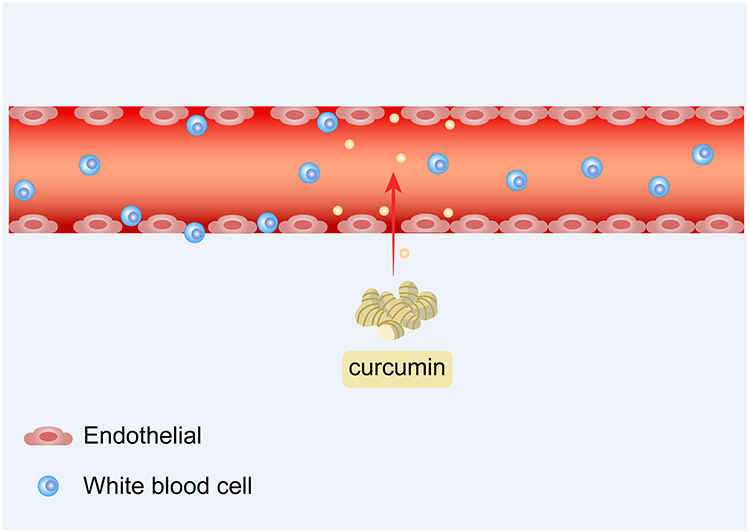 |
Figure 3 Curcumin Protects Vascular Endothelial Function. |
Clinically, sepsis patients often exhibit vascular endothelial dysfunction, characterized by increased vascular permeability, coagulation system disorders, and microcirculation disturbances.55 Therefore, the application of curcumin and other drugs with endothelial protective effects is expected to improve vascular endothelial function in sepsis patients and enhance treatment outcomes.
Protection of Mitochondrial Integrity
Mitochondria, being the primary site of intracellular energy production, are crucial for normal cellular physiological activities. When mitochondrial function is impaired, it can lead to cellular dysfunction and subsequently various diseases.59,60 In the context of sepsis, the mitochondrial electron transport chain complexes experience dysfunction, and these malfunctioning mitochondria further promote inflammation.61,62 Additionally, dysfunctional mitochondria increase oxidative stress, which in turn damages the mitochondrial membrane, increases mitochondrial permeability, and leads to mitochondrial DNA leaking into the circulation. This perpetuates systemic inflammation, damages cells, and can result in cell death, ultimately affecting organ function.63,64
Research has found that during sepsis treatment, curcumin can inhibit mitochondrial membrane permeability transition, reduce mitochondrial swelling, and improve cell viability. This mechanism may be related to the reduction of intracellular calcium ion concentration, promotion of anti-apoptotic Bcl-2 gene expression, inhibition of caspase-3 activation, and Bax gene expression.65 Furthermore, curcumin can enhance mitochondrial quality and regulate mitochondrial function by reducing the translocation of dynamin-related protein 1 from the cytoplasm to mitochondria, decreasing excessive mitochondrial fission, and restoring mitochondrial quality, ultimately normalizing mitochondrial morphology and function.20 At the same time, curcumin can target macrophage immunometabolism by inhibiting mitochondrial STAT3 activity, which might be a significant breakthrough in treating sepsis.28
Mitochondria are the “powerhouses” of the cell, responsible for converting nutrients into usable energy. In sepsis, mitochondrial energy metabolism can be disrupted, leading to insufficient cellular energy supply. Curcumin might alleviate the impact of sepsis on cellular energy metabolism by improving mitochondrial function integrity and influencing mitochondrial biogenesis, thereby enhancing organ function.
Regulation of Immune Cells
The quantity and activity of immune cells are crucial for maintaining overall health, as dysfunction or insufficient numbers of immune cells can lead to immune system imbalance. The immunoregulation of sepsis is a complex and multifaceted process involving various immune cells. Effective regulation of these immune cells can significantly reduce inflammatory responses and tissue damage.
Curcumin can modulate the polarization state of macrophages, promoting their polarization towards an anti-inflammatory type and reducing the number and function of pro-inflammatory macrophages.30 In sepsis mice treated with curcumin, the suppressive function of Treg cells is enhanced, plasma IL-10 levels increase, and the secretion of plasma TNF-α and IL-6 is significantly inhibited, alleviating acute organ dysfunction caused by an overactive immune response.66 Curcumin reduces the expression of TNF-α, IL-6, and IL-8 in LPS-stimulated neutrophils and the phosphorylation levels of p38 and JNK, but it does not affect the phosphorylation level of ERK1/2. Additionally, curcumin can restore delayed apoptosis in LPS-stimulated neutrophils.33
Changes in immune function play a critical role in the occurrence and development of sepsis.67 By comprehensively monitoring the immune function status of patients and dynamically adjusting immune cell functions, it is expected to reduce the mortality rate of sepsis and improve patient prognosis.
Curcumin in Clinical Research on Sepsis
At present, the clinical research on curcumin in the treatment of sepsis is still in its early stages. A few small-scale human studies have shown that, compared with placebo, curcumin significantly reduces levels of leukocytes, neutrophils, erythrocyte sedimentation rate (ESR), and interleukin-8 (IL-8).68 In addition, curcumin has been found to significantly lower the Sequential Organ Failure Assessment (SOFA) score and the duration of mechanical ventilation,69 suggesting its potential therapeutic effect in sepsis. Moreover, oral administration of curcumin at a dose of 160 mg twice daily for 10 days did not cause any adverse effects, indicating good safety.68,69 However, these findings are limited to small-sample studies, and large-scale, multicenter, randomized controlled trials are still lacking. Furthermore, data on safety remain insufficient, and effective curcumin formulations are yet to be developed. Therefore, well-designed multicenter, double-blind, randomized controlled clinical trials are needed in the future to clearly determine the safety, efficacy, optimal dosage, and administration regimen of curcumin in patients with sepsis.
Summary
Sepsis is a systemic inflammatory response syndrome caused by infection, with a complex pathogenesis involving various cytokines and chemical mediators. During sepsis, endotoxins and other stimuli activate inflammatory cells, producing large amounts of inflammatory mediators and lipid metabolites. This promotes the recruitment and activation of inflammatory response cells in target organs, further inducing the production of cytokines, chemokines, reactive oxygen species, and proteases. This cascade reaction leads to tissue damage and organ dysfunction.
In recent years, research on the therapeutic potential of curcumin in sepsis has been steadily increasing. As a natural compound with multiple biological properties, curcumin has demonstrated promising potential in the treatment of sepsis. Curcumin can inhibit the cytokine storm and alleviate sepsis-induced organ damage through various mechanisms, including anti-inflammatory and antioxidant effects, inhibition of inflammatory cell death, protection of vascular endothelial cells, maintenance of mitochondrial function, and modulation of immune cells. However, discrepancies in preclinical studies have been observed due to differences in sepsis models, curcumin dosage, routes of administration, as well as species and strains of experimental animals. These variations have led to inconsistent experimental outcomes.70 In addition, the low oral bioavailability of curcumin, the lack of standardized dosing regimens, and the small sample sizes of clinical trials have resulted in insufficient clinical evidence to fully support its efficacy in sepsis treatment.71 Therefore, the specific mechanisms of curcumin in sepsis remain to be further investigated and elucidated by researchers.
In the future, with a deeper understanding of curcumin’s mechanisms of action and the continuous advancement of clinical research, curcumin is expected to become an important drug in the treatment of sepsis.
Acknowledgments
We are grateful for the financial support from the Liaoning Province Medical Education Research Project. We also thank the editors and reviewers of the journal for their editing and review of this paper. Finally, we express our appreciation to the team members for their hard work in writing this paper.
Funding
This work was supported by Liaoning Province Medical Education Research Project (No. WJS039).
Disclosure
The authors have declared no conflicts of interest in this work.
References
1. Rather A, Kasana B. The Third International Consensus Definitions for Sepsis and Septic Shock (Sepsis-3). JMS. 2015;18(2):162–164. doi:10.33883/jms.v18i2.269
2. Fleischmann C, Scherag A, Adhikari NK, et al. Assessment of Global Incidence and Mortality of Hospital-treated Sepsis. Current Estimates and Limitations. AM J RESP CRIT CARE. 2016;193(3):259–272. doi:10.1164/rccm.201504-0781OC
3. Arefian H, Heublein S, Scherag A, et al. Hospital-related cost of sepsis: a systematic review. J INFECTION. 2017;74(2):107–117. doi:10.1016/j.jinf.2016.11.006
4. Yin F, Zhang F, Liu S, et al. The therapeutic effect of high-volume hemofiltration on sepsis: a systematic review and meta-analysis. ANN TRANSL MED. 2020;8(7):488. doi:10.21037/atm.2020.03.48
5. Huang CY, Daniels R, Lembo A, et al. Life after sepsis: an international survey of survivors to understand the post-sepsis syndrome. INT J QUAL HEALTH C. 2019;31(3):191–198. doi:10.1093/intqhc/mzy137
6. Ayati Z, Ramezani M, Amiri MS, et al. Ethnobotany, Phytochemistry and Traditional Uses of Curcuma spp. and Pharmacological Profile of Two Important Species (C. longa and C. zedoaria): a Review. CURR PHARM DESIGN. 2019;25(8):871–935. doi:10.2174/1381612825666190402163940
7. Amalraj A, Pius A, Gopi S, et al. Biological activities of curcuminoids, other biomolecules from turmeric and their derivatives - A review. J Tradit Complement Med. 2017;7(2):205–233. doi:10.1016/j.jtcme.2016.05.005
8. Kim YS, Ahn Y, Hong MH, et al. Curcumin attenuates inflammatory responses of TNF-alpha-stimulated human endothelial cells. J CARDIOVASC PHARM. 2007;50(1):41–49. doi:10.1097/FJC.0b013e31805559b9
9. Zhao YH, Shen CF, Wang GJ, et al. Curcumin alleviates acute kidney injury in a dry-heat environment by reducing oxidative stress and inflammation in a rat model. J BIOCHEM MOL TOXIC. 2021;35(1):e22630. doi:10.1002/jbt.22630
10. Hou X, Liang J, Yang X, et al. Poloxamer188-based nanoparticles improve the anti-oxidation and anti-degradation of curcumin. FOOD CHEM. 2022;375:131674. doi:10.1016/j.foodchem.2021.131674
11. Samarghandian S, Azimi-Nezhad M, Farkhondeh T, et al. Anti-oxidative effects of curcumin on immobilization-induced oxidative stress in rat brain, liver and kidney. BIOMED PHARMACOTHER. 2017;87:223–229. doi:10.1016/j.biopha.2016.12.105
12. Baldi A, De Luca A, Maiorano P, et al. Curcumin as an Anticancer Agent in Malignant Mesothelioma: a Review. Int J Mol Sci. 2020;21(5):1839. doi:10.3390/ijms21051839
13. Mukherjee S, Baidoo JNE, Fried A, et al. Using curcumin to turn the innate immune system against cancer. BIOCHEM PHARMACOL. 2020;176:113824. doi:10.1016/j.bcp.2020.113824
14. Yang M, Akbar U, Mohan C. Curcumin in Autoimmune and Rheumatic Diseases. Nutrients. 2019;11(5):1004. doi:10.3390/nu11051004
15. Kocaadam B, Şanlier N. Curcumin, an active component of turmeric (Curcuma longa), and its effects on health. CRIT REV FOOD SCI. 2017;57(13):2889–2895. doi:10.1080/10408398.2015.1077195
16. Hadi A, Pourmasoumi M, Ghaedi E, et al. The effect of Curcumin/Turmeric on blood pressure modulation: a systematic review and meta-analysis. PHARMACOL RES. 2019;150:104505. doi:10.1016/j.phrs.2019.104505
17. Ilyas EI, Nur BM, Laksono SP, et al. Effects of Curcumin on Parameters of Myocardial Oxidative Stress and of Mitochondrial Glutathione Turnover in Reoxygenation after 60 Minutes of Hypoxia in Isolated Perfused Working Guinea Pig Hearts. ADV PHARMACOL SCI. 2016;2016:6173648. doi:10.1155/2016/6173648
18. Zhong W, Qian K, Xiong J, et al. Curcumin alleviates lipopolysaccharide induced sepsis and liver failure by suppression of oxidative stress-related inflammation via PI3K/AKT and NF-κB related signaling. BIOMED PHARMACOTHER. 2016;83:302–313. doi:10.1016/j.biopha.2016.06.036
19. Yin H, Qiu M, He D, et al. Protective effect of curcumin on hepatocytes in rats with sepsis. Zhonghua Wei Zhong Bing Ji Jiu Yi Xue. 2017;29(2):162–166. doi:10.3760/cma.j.issn.2095-4352.2017.02.013
20. Hou D, Liao H, Hao S, et al. Curcumin simultaneously improves mitochondrial dynamics and myocardial cell bioenergy after sepsis via the SIRT1-DRP1/PGC-1α pathway. Heliyon. 2023;10(7):e28501. doi:10.1016/j.heliyon.2024.e28501
21. Wang S, Zhao P, Zhang Y, et al. The Therapeutic Effects of Curcumin in Early Septic Acute Kidney Injury: an Experimental Study. Drug Des Devel Ther. 2021;15:4243–4255. doi:10.2147/DDDT.S332623
22. Zhu H, Wang X, Wang X, et al. Curcumin attenuates inflammation and cell apoptosis through regulating NF-κB and JAK2/STAT3 signaling pathway against acute kidney injury. Cell Cycle. 2020;19(15):1941–1951. doi:10.1080/15384101.2020.1784599
23. Huang W, Li X, Wang D, et al. Curcumin reduces LPS-induced septic acute kidney injury through suppression of lncRNA PVT1 in mice. Life Sci. 2020;254:117340. doi:10.1016/j.lfs.2020.117340
24. Xiao X, Yang M, Sun D, et al. Curcumin protects against sepsis-induced acute lung injury in rats. J SURG RES. 2012;176(1):e31–9. doi:10.1016/j.jss.2011.11.1032
25. Xu F, Lin SH, Yang YZ, et al. The effect of curcumin on sepsis-induced acute lung injury in a rat model through the inhibition of the TGF-β1/SMAD3 pathway. INT IMMUNOPHARMACOL. 2013;16(1):1–6. doi:10.1016/j.intimp.2013.03.014
26. Chen D, Wang H, Cai X. Curcumin interferes with sepsis-induced cardiomyocyte apoptosis via TLR1 inhibition. Rev Port Cardiol. 2023;42(3):209–221. doi:10.1016/j.repc.2023.01.013
27. Rattis BAC, Piva HL, Duarte A, et al. Modulation of the mTOR Pathway by Curcumin in the Heart of Septic Mice. Pharmaceutics. 2022;14(11):2277. doi:10.3390/pharmaceutics14112277
28. Li R, Li X, Zhao J, et al. Mitochondrial STAT3 exacerbates LPS-induced sepsis by driving CPT1a-mediated fatty acid oxidation. Theranostics. 2022;12(2):976–998. doi:10.7150/thno.63751
29. Gong Z, Zhou J, Li H, et al. Curcumin suppresses NLRP3 inflammasome activation and protects against LPS-induced septic shock. MOL NUTR FOOD RES. 2015;59(11):2132–2142. doi:10.1002/mnfr.201500316
30. Jiang C, Shi Q, Yang J, et al. Ceria nanozyme coordination with curcumin for treatment of sepsis-induced cardiac injury by inhibiting ferroptosis and inflammation. J ADV RES. 2023;63:159–170. doi:10.1016/j.jare.2023.10.011
31. Ma F, Liu F, Ding L, et al. Anti-inflammatory effects of curcumin are associated with down regulating microRNA-155 in LPS-treated macrophages and mice. PHARM BIOL. 2017;55(1):1263–1273. doi:10.1080/13880209.2017.1297838
32. Zou J, Guo J, Hu G, et al. Curcumin Attenuates PD-L1-Positive Neutrophil-Induced T-Lymphocyte Apoptosis and Alleviates Lung Injury During Sepsis in Rats. Discov Med. 2025;37(195):772–782. doi:10.24976/Discov.Med.202537195.67
33. Cho KB, Park CH, Kim J, et al. Protective role of curcumin against lipopolysaccharide-induced inflammation and apoptosis in human neutrophil. Anesth Pain Med. 2020;15(1):41–48. doi:10.17085/apm.2020.15.1.41
34. Tham CL, Hazeera Harith H, Wai Lam K, et al. The synthetic curcuminoid BHMC restores endotoxin-stimulated HUVEC dysfunction: specific disruption on enzymatic activity of p38 MAPK. EUR J PHARMACOL. 2015;749:1–11. doi:10.1016/j.ejphar.2014.12.015
35. Wang W, He Z. Gasdermins in sepsis. Front Immunol. 2023;14:1203687. doi:10.3389/fimmu.2023.1203687
36. Karimi A, Ghodsi R, Kooshki F, et al. Therapeutic effects of curcumin on sepsis and mechanisms of action: a systematic review of preclinical studies. PHYTOTHER RES. 2019;33(11):2798–2820. doi:10.1002/ptr.6467
37. Li L, Liu X, Li S, et al. Tetrahydrocurcumin protects against sepsis-induced acute kidney injury via the SIRT1 pathway. RENAL FAILURE. 2021;43(1):1028–1040. doi:10.1080/0886022X.2021.1942915
38. Zhao C, Zhang Y, Zou P, et al. Synthesis and biological evaluation of a novel class of curcumin analogs as anti-inflammatory agents for prevention and treatment of sepsis in mouse model. Drug Des Devel Ther. 2015;9:1663–1678. doi:10.2147/DDDT.S75862
39. Wu Y, Liu Z, Wu W, et al. Effects of FM0807, a novel curcumin derivative, on lipopolysaccharide-induced inflammatory factor release via the ROS/JNK/p53 pathway in RAW264.7 cells. Biosci Rep. 2018;38(5):BSR20180849. doi:10.1042/BSR20180849
40. Vera S, Martínez R, Gormaz JG, et al. Novel relationships between oxidative stress and angiogenesis-related factors in sepsis: new biomarkers and therapies. ANN MED. 2015;47(4):289–300. doi:10.3109/07853890.2015.1029967
41. Kumar S, Saxena J, Srivastava VK, et al. The Interplay of Oxidative Stress and ROS Scavenging: antioxidants as a Therapeutic Potential in Sepsis. Vaccines (Basel). 2022;10(10):1575. doi:10.3390/vaccines10101575
42. Nagar H, Piao S, Kim CS. Role of Mitochondrial Oxidative Stress in Sepsis. ACUTE CRIT CARE. 2018;33(2):65–72. doi:10.4266/acc.2018.00157
43. Sompamit K, Kukongviriyapan U, Nakmareong S, et al. Curcumin improves vascular function and alleviates oxidative stress in non-lethal lipopolysaccharide-induced endotoxaemia in mice. EUR J PHARMACOL. 2009;616(1–3):192–199. doi:10.1016/j.ejphar.2009.06.014
44. Kumari A, Tyagi N, Dash D, et al. Intranasal curcumin ameliorates lipopolysaccharide-induced acute lung injury in mice. INFLAMMATION. 2015;38(3):1103–1112. doi:10.1007/s10753-014-0076-y
45. Emel A, Hilal Y. Antioxidant and ntiinflammatory efficacy of curcumin on lung tissue in rats with sepsis. J TRADIT CHIN MED. 2020;40(5):820–826. doi:10.19852/j.cnki.jtcm.2020.05.012
46. Wang DW, Li SJ, Tan XY, et al. Engineering of stepwise-targeting chitosan oligosaccharide conjugate for the treatment of acute kidney injury. CARBOHYD POLYM. 2021;256:117556. doi:10.1016/j.carbpol.2020.117556
47. Yang T, Yu H, Xie Z. Curcumin-induced exosomal FTO from bone marrow stem cells alleviates sepsis-associated acute kidney injury by modulating the m6A methylation of OXSR1. KAOHSIUNG J MED SCI. 2023;41(2):e12923. doi:10.1002/kjm2.12923
48. Yılmaz Savcun G, Ozkan E, Dulundu E, et al. Antioxidant and anti-inflammatory effects of curcumin against hepatorenal oxidative injury in an experimental sepsis model in rats. Ullus Tranma Acil Cer. 2013;19(6):507–515. doi:10.5505/tjtes.2013.76390
49. Zhang W, Jiang H, Wu G, et al. The pathogenesis and potential therapeutic targets in sepsis. MedComm. 2023;4(6):e418. doi:10.1002/mco2.418
50. Bertheloot D, Latz E, Franklin BS. Necroptosis, pyroptosis and apoptosis: an intricate game of cell death. CELL MOL IMMUNOL. 2021;18(5):1106–1121. doi:10.1038/s41423-020-00630-3
51. Wei X, Xie F, Zhou X, et al. Role of pyroptosis in inflammation and cancer. CELL MOL IMMUNOL. 2022;19(9):971–992. doi:10.1038/s41423-022-00905-x
52. Li S, Bracey S, Liu Z, et al. Regulation of gasdermins in pyroptosis and cytokine release. ADV IMMUNOL. 2023;158:75–106.
53. Vasudevan SO, Behl B, Rathinam VA. Pyroptosis-induced inflammation and tissue damage. SEMIN IMMUNOL. 2023;69:101781. doi:10.1016/j.smim.2023.101781
54. Feng Y, Li M, Yangzhong X, et al. Pyroptosis in inflammation-related respiratory disease. J PHYSIOL BIOCHEM. 2022;78(4):721–737. doi:10.1007/s13105-022-00909-1
55. Dolmatova EV, Wang K, Mandavilli R, et al. The effects of sepsis on endothelium and clinical implications. CARDIOVASC RES. 2021;117(1):60–73. doi:10.1093/cvr/cvaa070
56. Joffre J, Hellman J, Ince C, et al. Endothelial Responses in Sepsis. AM J RESP CRIT CARE. 2020;202(3):361–370. doi:10.1164/rccm.201910-1911TR
57. Xue J, Zhang Z, Sun Y, et al. Research Progress and Molecular Mechanisms of Endothelial Cells Inflammation in Vascular-Related Diseases. J Inflamm Res. 2023;16:3593–3617. doi:10.2147/JIR.S418166
58. Nugent WH, Carr DA, Friedman J, et al. Novel transdermal curcumin therapeutic preserves endothelial barrier function in a high-dose LPS rat model. ARTIF CELL NANOMED B. 2023;51(1):33–40.
59. Nadalutti CA, Ayala-Peña S, Santos JH. Mitochondrial DNA damage as driver of cellular outcomes. AM J PHYSIOL-CELL PH. 2022;322(2):C136–C150. doi:10.1152/ajpcell.00389.2021
60. Tresse E, Marturia-Navarro J, Sew WQG, et al. Mitochondrial DNA damage triggers spread of Parkinson’s disease-like pathology. Mol Psychiatry. 2023;28(11):4902–4914. doi:10.1038/s41380-023-02251-4
61. Jassim AH, Inman DM, Mitchell CH. Crosstalk Between Dysfunctional Mitochondria and Inflammation in Glaucomatous Neurodegeneration. Front Pharmacol. 2021;12:699623. doi:10.3389/fphar.2021.699623
62. Zhang H, Feng YW, Yao YM. Potential therapy strategy: targeting mitochondrial dysfunction in sepsis. MILITARY MED RES. 2018;5(1):41. doi:10.1186/s40779-018-0187-0
63. Ye W, Miao Q, Xu G, et al. CircRNA itchy E3 ubiquitin protein ligase improves mitochondrial dysfunction in sepsis-induced acute kidney injury by targeting microRNA-214-3p/ATP-binding cassette A1 axis. RENAL FAILURE. 2023;45(2):2261552. doi:10.1080/0886022X.2023.2261552
64. Lubkin DT, Bishawi M, Barbas AS, et al. Extracellular Mitochondrial DNA and N-Formyl Peptides in Trauma and Critical Illness: a Systematic Review. CRIT CARE MED. 2018;46(12):2018–2028. doi:10.1097/CCM.0000000000003381
65. Tao P, Yin H, Ma Y. Study of the mechanisms of curcumin on mitochondrial permeability transition of hepatocytes in rats with sepsis. Zhonghua Wei Zhong Bing Ji Jiu Yi Xue. 2014;26(9):666–670. doi:10.3760/cma.j.issn.2095-4352.2014.09.012
66. Chen L, Lu Y, Zhao L, et al. Curcumin attenuates sepsis-induced acute organ dysfunction by preventing inflammation and enhancing the suppressive function of Tregs. INT IMMUNOPHARMACOL. 2018;61:1–7. doi:10.1016/j.intimp.2018.04.041
67. Allegra A, Mirabile G, Ettari R, et al. The Impact of Curcumin on Immune Response: an Immunomodulatory Strategy to Treat Sepsis. Int J Mol Sci. 2022;23(23):14710. doi:10.3390/ijms232314710
68. Naeini F, Tutunchi H, Razmi H, et al. Does nano-curcumin supplementation improve hematological indices in critically ill patients with sepsis? A randomized controlled clinical trial. J FOOD BIOCHEM. 2022;46(5):e14093. doi:10.1111/jfbc.14093
69. Karimi A, Naeini F, Niazkar HR, et al. Nano-curcumin supplementation in critically ill patients with sepsis: a randomized clinical trial investigating the inflammatory biomarkers, oxidative stress indices, endothelial function, clinical outcomes and nutritional status. FOOD FUNCT. 2022;13(12):6596–6612. doi:10.1039/D1FO03746C
70. Vieira BM, Caetano MAF, de Carvalho MT, et al. Impacts of Curcumin Treatment on Experimental Sepsis: a Systematic Review. OXID MED CELL LONGEV. 2023;2023:2252213. doi:10.1155/2023/2252213
71. Alikiaii B, Khatib N, Badpeyma M, et al. Therapeutic effects of curcumin and piperine combination in critically ill patients with sepsis: a randomized double-blind controlled trial. Trials. 2025;26(1):205. doi:10.1186/s13063-025-08916-5
 © 2025 The Author(s). This work is published and licensed by Dove Medical Press Limited. The
full terms of this license are available at https://www.dovepress.com/terms
and incorporate the Creative Commons Attribution
- Non Commercial (unported, 4.0) License.
By accessing the work you hereby accept the Terms. Non-commercial uses of the work are permitted
without any further permission from Dove Medical Press Limited, provided the work is properly
attributed. For permission for commercial use of this work, please see paragraphs 4.2 and 5 of our Terms.
© 2025 The Author(s). This work is published and licensed by Dove Medical Press Limited. The
full terms of this license are available at https://www.dovepress.com/terms
and incorporate the Creative Commons Attribution
- Non Commercial (unported, 4.0) License.
By accessing the work you hereby accept the Terms. Non-commercial uses of the work are permitted
without any further permission from Dove Medical Press Limited, provided the work is properly
attributed. For permission for commercial use of this work, please see paragraphs 4.2 and 5 of our Terms.
Recommended articles

Extracellular Histones Activate Endothelial NLRP3 Inflammasome and are Associated with a Severe Sepsis Phenotype

Beltrán-García J, Osca-Verdegal R, Pérez-Cremades D, Novella S, Hermenegildo C, Pallardó FV, García-Giménez JL
Journal of Inflammation Research 2022, 15:4217-4238
Published Date: 25 July 2022
Neutrophil Extracellular Traps Induce Alveolar Macrophage Pyroptosis by Regulating NLRP3 Deubiquitination, Aggravating the Development of Septic Lung Injury
Cui Y, Yang Y, Tao W, Peng W, Luo D, Zhao N, Li S, Qian K, Liu F
Journal of Inflammation Research 2023, 16:861-877
Published Date: 27 February 2023
Long Noncoding RNA SOX2OT Ameliorates Sepsis-Induced Myocardial Injury by Inhibiting Cellular Pyroptosis Through Mediating the EZH2/Nrf-2/NLRP3 Signaling Pathway
Bai X, Yang L, Liu R, Tang Y, Yang L, Ma L, Chen M, Zhang L
Journal of Inflammation Research 2024, 17:3115-3127
Published Date: 17 May 2024
Curcumin-Loaded Long-Circulation Liposomes Ameliorate Insulin Resistance in Type 2 Diabetic Mice
Li KX, Yuan H, Zhang J, Peng XB, Zhuang WF, Huang WT, Liang HX, Lin Y, Huang YZ, Qin SL
International Journal of Nanomedicine 2024, 19:12099-12110
Published Date: 19 November 2024
NLRP3 Inflammasome Targeting Offers a Novel Therapeutic Paradigm for Sepsis-Induced Myocardial Injury
Jin Y, Fleishman JS, Ma Y, Jing X, Guo Q, Shang W, Wang H
Drug Design, Development and Therapy 2025, 19:1025-1041
Published Date: 14 February 2025