
Back to Journals » Journal of Multidisciplinary Healthcare » Volume 18
Affective Commitment Influences Occupational Stressors Among Maternal and Child Health Nurses via Job Burnout as a Mediator
Authors Tian L
Received 5 June 2025
Accepted for publication 22 August 2025
Published 18 September 2025 Volume 2025:18 Pages 5905—5916
DOI https://doi.org/10.2147/JMDH.S536236
Checked for plagiarism Yes
Review by Single anonymous peer review
Peer reviewer comments 3
Editor who approved publication: Professor Charles V Pollack
Lixin Tian
Department of Nursing, Tongzhou Maternal & Child Health Hospital of Beijing, Beijing, 101100, People’s Republic of China
Correspondence: Lixin Tian, Department of Nursing, Tongzhou Maternal & Child Health Hospital of Beijing, No. 124 of Yuqiao Middle Road, Yuqiao District, Beijing, 101100, People’s Republic of China, Tel +8613716726111, Fax +8601081583000-6143, Email [email protected]
Objective: The aim of this study was to examine the mediating role of job burnout between affective commitment and occupational stressors among nurses working in maternal and child health settings, with the goal of informing strategies to enhance both physical and psychological well-being while supporting the quality and safety of nursing care.
Methods: Maternal and child health nurses were recruited from a tertiary care hospital in Tongzhou District, Beijing between July and August 2024. Correlations among affective commitment, job burnout, and occupational stressors were assessed. The mediating role of job burnout was evaluated using structural equation modeling, and a model was constructed to verify the hypothesized affective commitment–job burnout–occupational stressors pathway.
Results: The average item scores were 3.84 ± 1.48 for job burnout, 1.99 ± 0.75 for occupational stressors, and 3.60 ± 1.09 for affective commitment. Pearson’s correlation coefficients indicated that affective commitment was negatively associated with both job burnout and occupational stressors, while job burnout was positively associated with occupational stressors. Structural equation modeling revealed that job burnout significantly mediated the relationship between affective commitment and occupational stressors, with an indirect effect value of − 0.344, accounting for 35.16% of the total effect.
Conclusion: Moderate levels of affective commitment, job burnout, and occupational stressors were observed among maternal and child health nurses. Job burnout played a mediating role between affective commitment and occupational stressors. Interventions aimed at enhancing organizational climate and mitigating job burnout may contribute to reduced occupational stress in this population.
Keywords: affective commitment, job burnout, mediating effect, occupational stressors, structural equation model
Introduction
Affective commitment among nurses refers to an emotional attachment to the employing institution, identification with the organizational culture, emotional engagement, and a sense of responsibility to remain with the organization based on personal willingness to do so.1 The level of affective commitment was found to influence the degree of job burnout.2 Job burnout was characterized as a state of physical and mental exhaustion resulting from prolonged exposure to high levels of stress and excessive workloads.3 This condition has a substantial impact on work efficiency, often requiring additional time to complete routine tasks, thereby increasing occupational stress.
Clinical occupational stress encompasses the physical and psychological burdens encountered during clinical practice and is associated with maladaptive cognitive or emotional responses.4 Nurses frequently experience considerable stress due to the demands of providing high-quality patient care, managing complex interpersonal dynamics, and functioning in unpredictable and high-pressure environments. These stressors adversely affect both physical and mental well-being, reduces professional motivation and efficiency, and ultimately compromises the quality of nursing care.
Nurses with high commitment are more likely to adopt positive coping strategies when facing contradictions, disputes, etc., viewing problems as opportunities for growth, thereby reducing the risk of emotional exhaustion; affective commitment drives nurses to proactively seek help and support from colleagues internally, alleviating work pressure; the sense of mission of maternal and child hospitals towards maternal and infant health can counteract the depersonalization tendency caused by repetitive and tedious clinical work, thus reducing the risk of emotional exhaustion.5
Regarding the impact of affective commitment on job stressors, nurses with high commitment are more likely to obtain support from head nurses and collaboration from colleagues, transforming objective stressors into learning resources and reducing their work pressure; the belief in professional mission can neutralize part of the pressure caused by nurses’ mechanical work; nurses with low commitment have diminished professional identity, and when encountering critical illnesses or emergencies, their sense of work pressure will increase.6,7
As for the impact of job burnout on job stressors, emotional exhaustion reduces nurses’ self-efficacy; in clinical work, the same work tasks will be evaluated by burned-out nurses as “beyond their ability range”, and this state of imbalance increases their pressure load, thus increasing nurses’ work pressure; low sense of achievement easily makes nurses believe in “the futility of effort” or “problems will occur no matter how carefully they work”, which weakens nurses’ enthusiasm for active response, prolongs the time of passively enduring pressure, and thus increases their work pressure.8 Job burnout is likely to cause some behavioral changes in nurses, such as work procrastination, interpersonal alienation, and quality decline, leading to task backlogs, lack of collaboration, operational errors, etc., which derive new stressors.
Although prior research conducted in China and internationally have explored the relationships between affective commitment, occupational stressors, and job burnout in pairs, investigations examining all three variables concurrently remained limited. The aim of the present study is to analyze the relationships among affective commitment, job burnout, and occupational stressors among nurses in maternal and child health settings. Additionally, the mediating role of job burnout in the relationship between affective commitment and occupational stressors was assessed in this study. The findings are intended to provide a theoretical foundation for the development of administrative strategies aimed at reducing occupational stress and improving the quality of care.
Participants and Methods
Study Participants
Following the inclusion and exclusion criteria, questionnaire was distributed through Wenjuanxing to 223 nurses in the hospital in Tongzhou District, Beijing between July and August 2024. A total of 200 responses were received, of which 190 were valid, yielding an effective response rate of 89.7%. 190 valid responses were all from female nurses. Ethical approval had been obtained (Approval No. 2023-TZFY-007-01). Inclusion criteria: ① Registered nurses; ② engaged in clinical nursing work for more than one year; and ③ provide informed consent and voluntarily participate in the study. Exclusion criteria: ① Nurses who were in training or internships; ② been on leave for more than six months (including sick leave, maternity leave, or personal leave); and ③were simultaneously participating in other related studies.
The required sample size was calculated using the formula: Sample size = [MAX(number of dimensions) × (10–20)] × [1 + (10%–15%)]. With the largest construct comprising 7 dimensions, the estimated sample size ranged from 77 to 152. Although structural equation modeling typically recommends at least 200 cases, the final valid dataset comprised 190 responses, slightly below this threshold.
Research Instruments
General Information Questionnaire
A self-designed general information questionnaire was used in this study, consisting of nine items. Details are presented in Table 1.
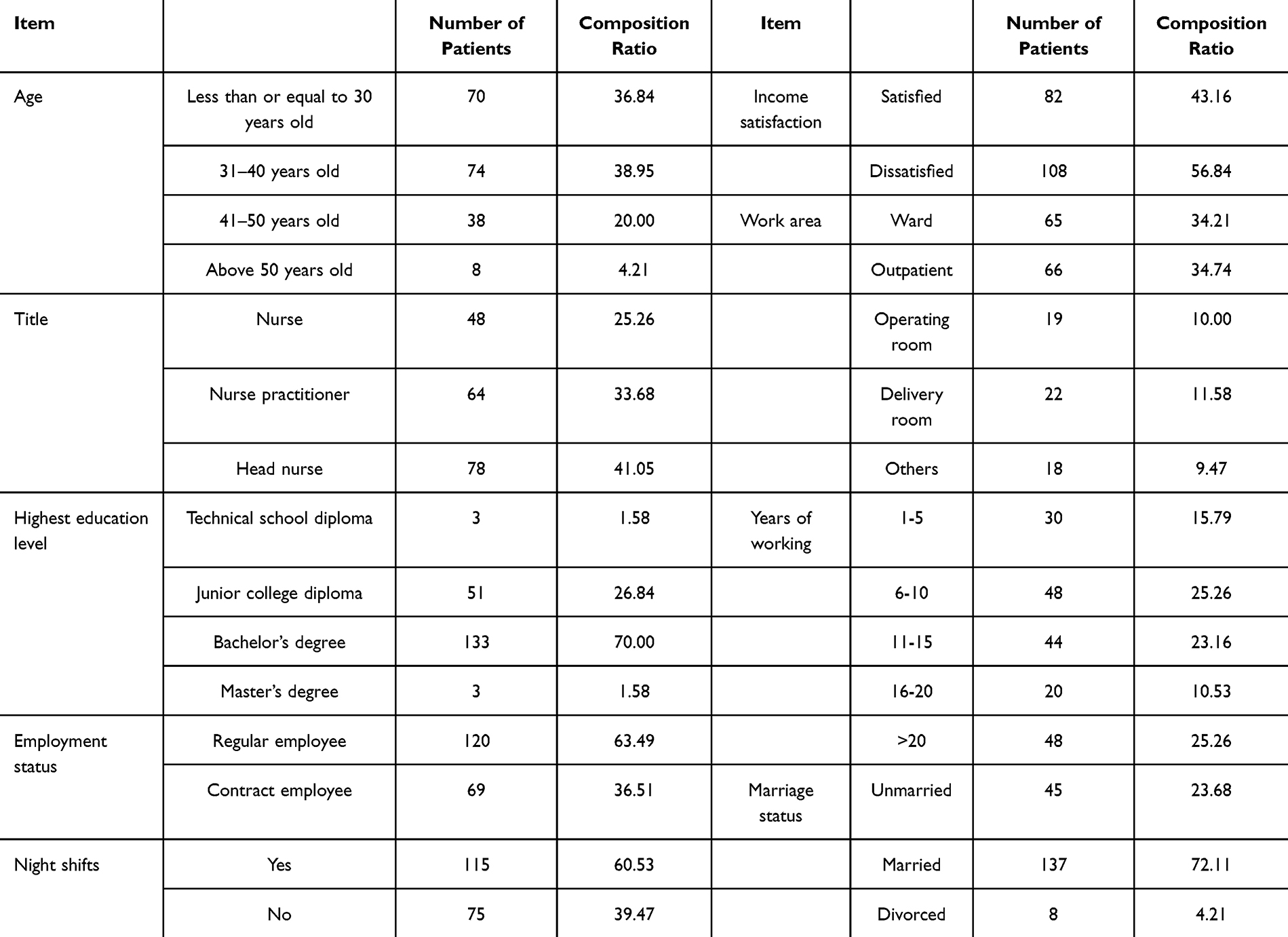 |
Table 1 General Demographic Characteristics of Nurses |
Occupational Stressor Scale
The Nurse Work Stressor Scale developed by Li et al was utilized in this study.9 The scale includes five dimensions: Dimension 1: Nursing profession – 7 items (Items 1–7); Dimension 2: Workload and time allocation – 5 items (Items 8–12); Dimension 3: Work environment and resources – 3 items (Items 13–15); Dimension 4: Patient care – 11 items (Items 16–26); Dimension 5: Management and interpersonal relationships – 9 items (Items 27–35). A four-point Likert scale was used, with higher scores indicating greater levels of stress. The mean score of all 35 items was used for analysis. The scale indicated the classification of occupational stressors: mild (35–70), moderate (71–105), and severe (106–140). The classification was determined based on the average score calculated from the total score. The Cronbach’s α coefficient for this scale in the present study was 0.869.
Job Burnout Scale
This scale was originally developed by Maslach et al and revised by Li et al in 2003.10,11 It comprises three dimensions with 15 items: emotional exhaustion, depersonalization, and reduced personal accomplishment. The first two dimensions were scored positively, while the third was scored in reverse. A 7-point Likert scale was employed, with a total score range up to 90. Higher scores reflected higher levels of burnout. The Cronbach’s α coefficient for the scale in the current study was 0.783.
Affective Commitment Scale
A unidimensional scale developed by Meyer et al and later translated and adapted into Chinese by Zhao et al was used to assess affective commitment.12,13 The scale consisted of six items and used a 5-point Likert scoring system, ranging from 1 (“strongly disagree”) to 5 (“strongly agree”), with total scores ranging from 6 to 30. Higher scores indicated greater levels of affective commitment. In this study, the Cronbach’s α coefficient for the scale was 0.965.
Survey Method
The study content was compiled into an electronic questionnaire. Following approval from the head nurses of three primary departments, the questionnaire link was distributed via the WeChat platform to the head nurses of each unit. These head nurses then communicated the purpose and significance of the study to nursing staff through departmental WeChat groups. Participants were informed that the questionnaire would be completed anonymously after their informed consent was provided. No right or wrong answers were indicated, and participants were encouraged to respond honestly. The questionnaire link was then shared with nurses who met the inclusion criteria. A total of 190 questionnaires were distributed, all of which were returned and deemed valid.
Statistical Analysis
Statistical analysis was conducted using the SPSSAU online platform. Categorical variables were presented as frequencies and percentages (%), and continuous variables conforming to a normal distribution were expressed as mean ± standard deviation. Independent-sample t-tests were conducted to compare differences in affective commitment, occupational stressors, and job burnout scores among nurses with different demographic characteristics. Pearson’s correlation analysis was used for normally distributed continuous variables. The mediating effect was examined using the procedure proposed by Wen et al.14 Structural equation modeling (SEM) was applied to further validate the mediation model. Indicators included χ²/df, GFI, AGFI, CFI, IFI, NFI, and TLI. The judgment criteria were as follows: χ²/df < 3, GFI > 0.9, AGFI > 0.9, CFI > 0.9, IFI > 0.9, NFI > 0.9, and TLI > 0.9. The first type of regression model involves constructing a regression model with the independent variable X and the dependent variable Y; the second type of regression model entails building a regression model with the independent variable X and the mediating variable M; the third type of regression model consists of constructing a regression model with the independent variable X and the mediating variable M together with the dependent variable Y. A value of p < 0.05 was considered statistically significant.
Results
General Data
The demographic characteristics of the 190 participating nurses are presented in Table 1.
Variation in Affective Commitment, Occupational Stressors, and Job Burnout By demographic and Employment Characteristics
Statistically significant differences in affective commitment scores were observed across different levels of income satisfaction (p < 0.05), as presented in Table 2. Occupational stressor scores also differed significantly based on income satisfaction and employment type (p < 0.05). Additionally, job burnout scores varied significantly according to income satisfaction, employment type, and professional title (p < 0.05).
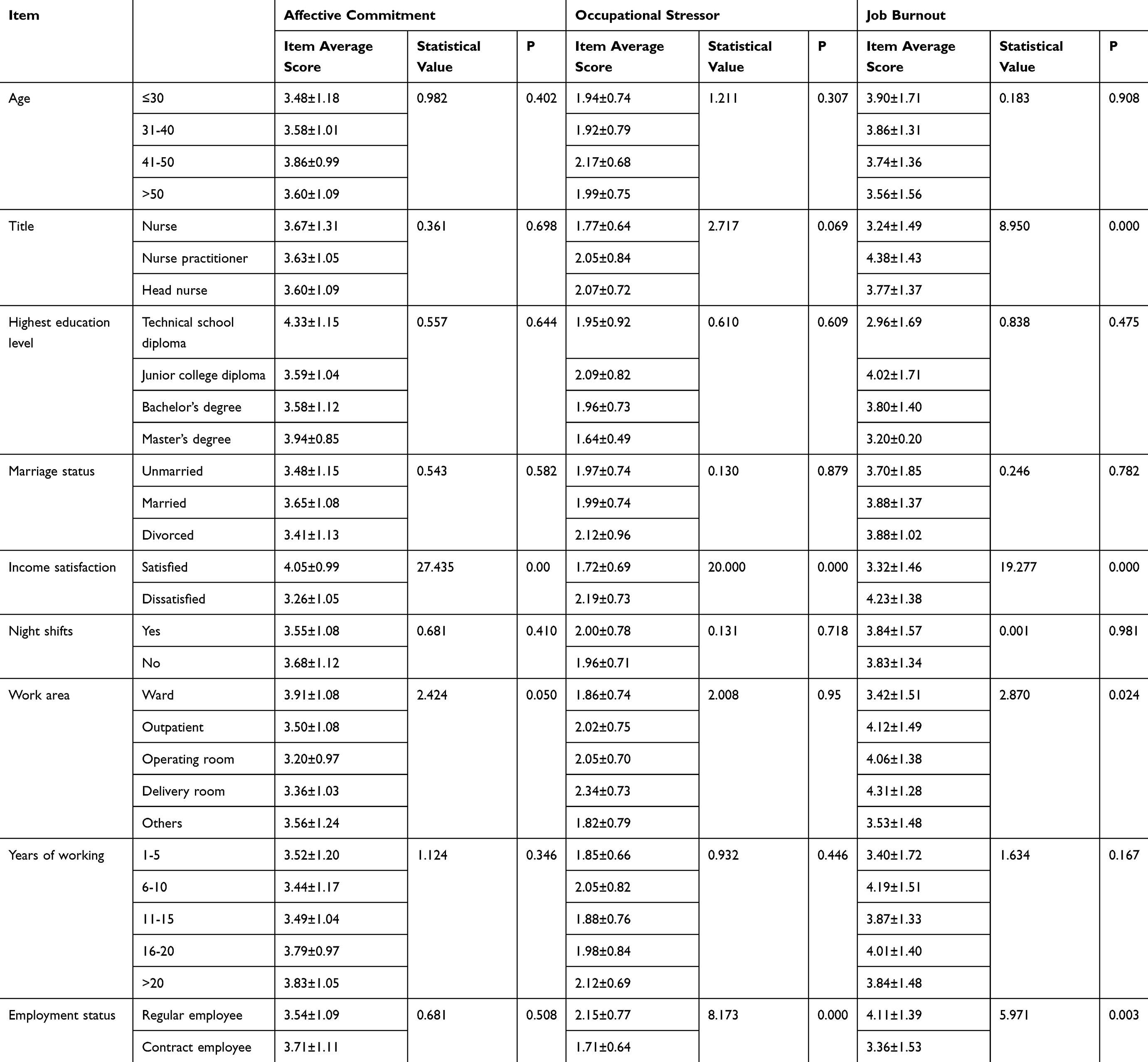 |
Table 2 Affective Commitment, Occupational Stressors, and Job Burnout Scores by Demographic and Employment Characteristics |
Descriptive Analysis of Affective Commitment, Occupational Stressors, and Job Burnout
The results indicated that the nurses exhibited a moderately high level of affective commitment, with a mean score of (3.60 ± 1.48). The average score for occupational stressors was (1.99 ± 0.75), reflecting a moderate level of perceived stress. Among the five dimensions of occupational stressors, the highest mean score was reported in workload and time allocation (2.34 ± 0.98). The mean score for job burnout was (3.84 ± 1.48), indicating a moderate burnout level. Detailed findings are presented in Table 3.
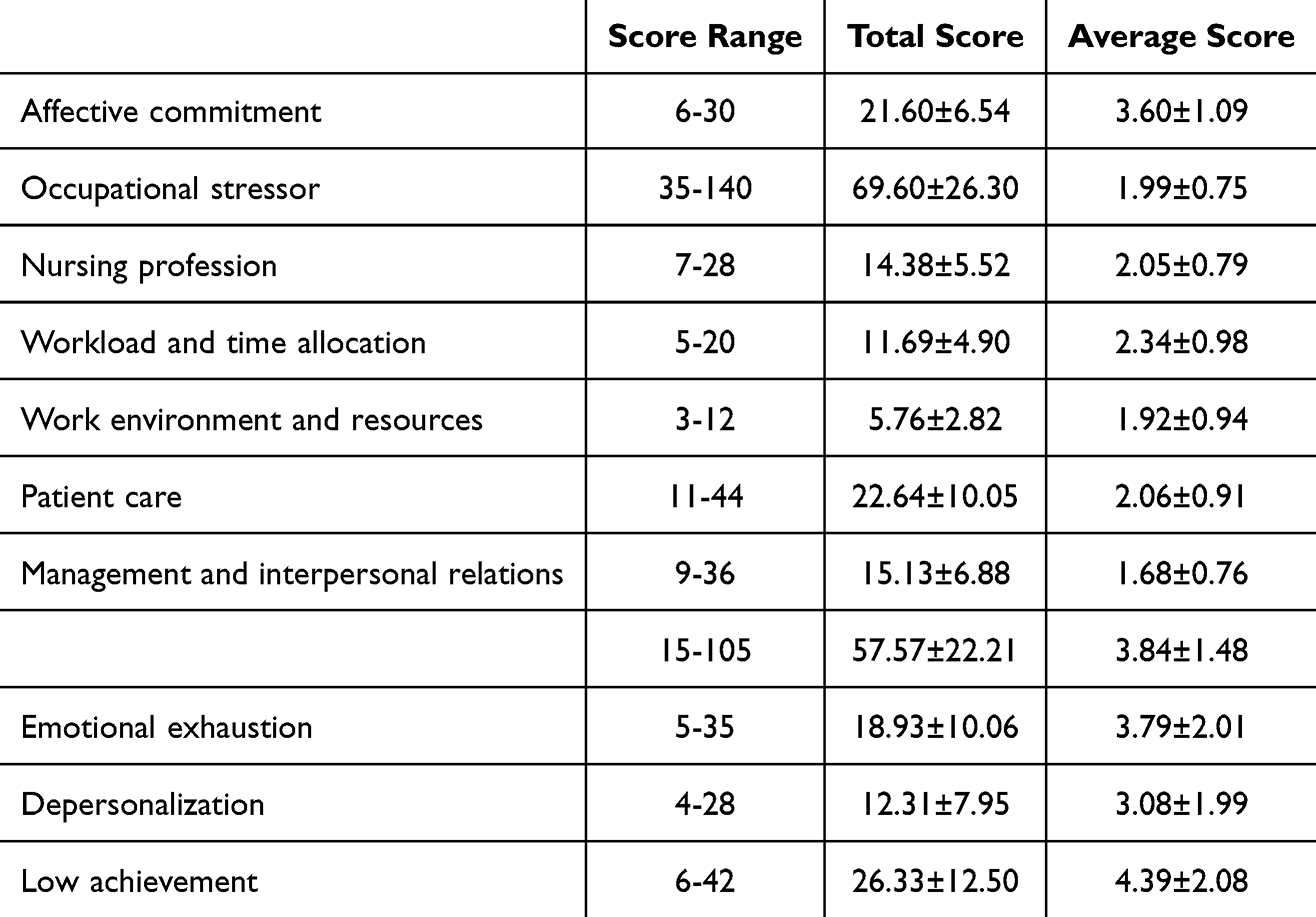 |
Table 3 Overall Scores of Affective Commitment, Occupational Stressors, and Job Burnout Among Nurses |
Correlations Among Occupational Stressors, Job Burnout, and Affective Commitment
Affective commitment was negatively correlated with occupational stressors (r = –0.333, p < 0.05) and job burnout (r = –0.246, p < 0.05). A positive correlation was observed between occupational stressors and job burnout (r = 0.675, p < 0.05). These correlation coefficients are presented in Table 4.
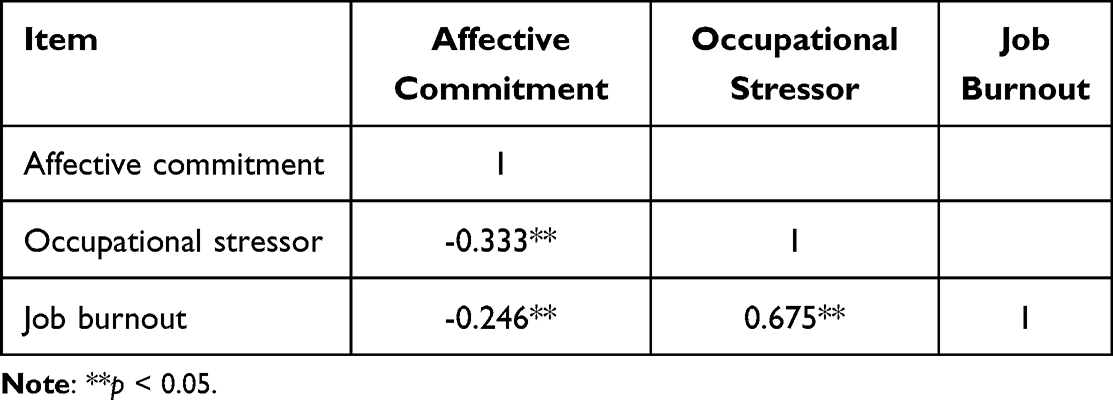 |
Table 4 Correlations Among Affective Commitment, Occupational Stressors, and Job Burnout |
Mediating Effect of Job Burnout Between Affective Commitment and Occupational Stressors
The mediating role of job burnout was examined using the procedure described by Wen et al. In the proposed mediation model, affective commitment served as the independent variable (X), occupational stressors as the dependent variable (Y), and job burnout as the mediating variable (M). A three-step testing approach was used to analyze the effect paths. The coefficient for the direct effect (c′) of affective commitment on occupational stressors was –0.634 (t = –3.494, p < 0.001). After adjusting for variables with significant effects in the univariate analysis, job burnout was found to mediate the relationship between affective commitment and occupational stressors, with a mediating effect value of –0.344, accounting for 35.16% of the total effect. These results indicate that, beyond the direct pathway, 35.16% of the effect of affective commitment on occupational stressors was mediated through job burnout (Table 5).
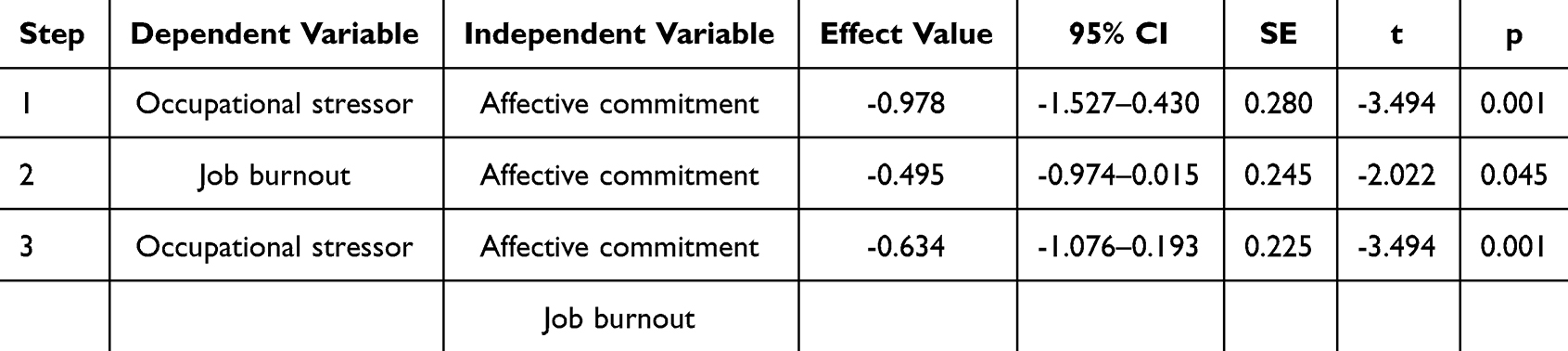 |
Table 5 Mediating Effect of Job Burnout Between Affective Commitment and Occupational Stressors |
Structural Equation Modeling of Affective Commitment, Occupational Stressors, and Job Burnout
A structural equation model was constructed to further validate the mediating effect of job burnout in the relationship between affective commitment (independent variable) and occupational stressors (dependent variable), with job burnout included as the mediating variable. Path analysis was conducted using the maximum likelihood estimation method. The model fit was acceptable, with indices reported as follows: χ²/df = 0.130, GFI = 0.996, AGFI = 0.985, CFI = 1.034, IFI = 1.033, NFI = 0.995, and TLI = 1.068, indicating a good model fit. As presented in Figure 1, affective commitment had direct effects on both job burnout (path coefficient = –0.146) and occupational stressors (path coefficient = –0.159). Additionally, job burnout had a significant direct effect on occupational stressors (path coefficient = 0.590). The total effect of affective commitment on occupational stressors (β = –0.245) was composed of a direct effect (–0.159) and an indirect effect via job burnout (–0.146 × 0.590 = –0.086). The mediating effect accounted for 35.10% of the total effect, as presented in Figure 1.
 |
Figure 1 Structural model of the mediating effect. “**” indicates a relationship between two variables. |
Discussion
Analysis of the Current Status of Nurses’ Affective Commitment, Occupational Stressors, and Job Burnout
Current Status of Nurses’ Affective Commitment
Affective commitment reflects the degree of emotional attachment, organizational identification, and involvement demonstrated by nurses toward their employing institution, and it is regarded as a core component of organizational commitment.1 In the present study, the mean score for affective commitment was 3.60 ± 1.09, indicating a moderately high level. This result is consistent with findings reported by Cui.15 Similar outcomes were observed in a study conducted by Hu et al, in which nurses across eastern, central, and western regions of China exhibited a moderately high level of professional commitment, corroborating the present findings.16 The item with the highest score in the affective commitment scale was “I feel like I am part of the hospital”, with a mean score of 3.78. This may be explained by the presence of a positive work environment and effective team collaboration, which likely enhance the emotional connection between nurses and their workplace. Furthermore, hospital- and department-level leadership practices that emphasize humanistic care, along with organizational activities designed to cultivate a sense of ownership, may contribute to a heightened sense of belonging. These factors appear to support the perception among nurses that the hospital holds significant meaning in their professional lives.
Current Status of Nurses’ Occupational Stressors
The specialized work environment in maternal and child healthcare hospitals presents nurses with frequent exposure to complex and urgent clinical situations, which require not only advanced theoretical knowledge and clinical competence but also a heightened capacity for identifying and managing critical conditions. Moreover, interpersonal coordination across multidisciplinary teams, including interdepartmental, physician-nurse, and nurse-patient interactions, further compounds workplace demands. The nature of shift-based scheduling, particularly involving night shifts and the absence of a consistent daily routine, imposes additional occupational stress. These conditions collectively contribute to elevated levels of occupational stress and highlight the need for nursing-related stress to be acknowledged as an occupational risk deserving managerial attention. In the present study, the mean score for occupational stressors among nurses was 1.99 ± 0.75, indicating a moderate level of stress, a finding consistent with that reported by Hoeve et al.17 Nursing stress has been investigated from multiple perspectives in prior studies, with many studies identifying excessive workloads and high levels of responsibility as principal contributors.4 One plausible explanation for the elevated stress levels is the specialized nature of maternal and child healthcare institutions, where the patient population—comprising primarily pregnant women and children—necessitates a high degree of clinical precision and advanced nursing skills. Furthermore, limited opportunities for career progression and excessive workload may reinforce the perception of nursing as a highly stressful occupation.
Current Status of Job Burnout Among Nurses
In clinical environments, nurses are frequently required to perform high-risk procedures and respond to patients’ individualized care needs, while also participating in ongoing professional training and performance evaluations conducted by supervisory personnel. These continuous demands place nurses at heightened risk for job burnout. In the present study, the average score for job burnout was 3.84 ± 1.48, indicating a moderate burnout level. This finding aligns with data reported in previous research.18 The emotional exhaustion subscale yielded an average score of 3.79 ± 2.01, with the item “Feeling exhausted at the end of the workday” receiving the highest average score of 4.08. Factors contributing to this elevated level of emotional exhaustion may include excessive workload, prolonged working hours, the demanding nature of the patient population, complex interpersonal interactions, and heightened expectations from patients. These stressors collectively contribute to both physical and psychological fatigue among nurses, potentially leading to severe occupational strain.
The specificity of maternal care brings higher demands for emotional labor, and high emotional labor increases nurses’ stress.19 Pregnant women and children are vulnerable patient groups. Nurses in maternal and child health institutions often face emotions such as anxiety of pregnant women, postpartum depression, and sadness of families of critically ill newborns. Long-term nurse-patient empathy leads to emotional exhaustion.20 Emotional exhaustion is an important dimension of job burnout. Burnout is accompanied by low sense of accomplishment, making nurses face work negatively and have distracted attention, which affects work efficiency. They need to spend more time to complete their own work, thus increasing their work stress.21
Nurses’ Affective Commitment, Job Burnout, and Occupational Stressors Correlation Analysis
Affective Commitment Is Negatively Correlated with Occupational Stressors and Job Burnout
The findings of the current study indicated that affective commitment was negatively correlated with both occupational stressors and job burnout (r = –0.333, r = –0.246, p < 0.05). This observation was consistent with the results reported by Liu and Wong, in which organizational commitment demonstrated negative correlations with occupational stress and burnout.22,23 Notably, domains such as management and interpersonal relationships, as well as reduced personal accomplishment, exhibited significant positive correlations with nurses’ affective commitment. Similarly, Wang identified a negative association between job burnout and organizational affective commitment among dental clinic nurses, which further supports the present findings.24 Elevated levels of affective commitment reflected a stronger emotional attachment to the hospital, which contributed to more harmonious professional relationships among colleagues, including interactions between medical staff, among nurses, and between nurses and patients. A supportive work environment and positive organizational atmosphere appeared to enhance nurses’ motivation and enthusiasm, potentially mitigating the intensity of job burnout, increasing work efficiency, and reducing overall occupational stress.
Occupational Stressors and Job Burnout are Positively Correlated
The findings of this study indicated that higher levels of job burnout among nurses were associated with greater perceived occupational stress. A significant positive correlation was observed between occupational stressors and job burnout (r = 0.675, p < 0.05), aligning with results reported by Eva et al.25 Similar associations have been identified by Na et al, who also documented a close relationship between job burnout and occupational stressors among nursing staff.26 Occupational stress has been identified as a key contributing factor to job burnout among nurses.
From the perspective of stressor dimensions, a high workload emerged as the primary source of stress, with an average score of 2.34 ± 0.98, exceeding the overall average score of 1.99 ± 0.75. Among individual items, low wages and benefits (mean score = 2.53) and the low social status attributed to the nursing profession (mean score = 2.46) were identified as prominent stressors. Nurses who are exposed to prolonged periods of high-pressure work environments, particularly in the absence of sufficient resources, are at increased risk of developing job burnout. This condition subsequently leads to reduced work efficiency, indirectly prolongs working hours, and further intensifies perceived stress. Therefore, the positive correlation between occupational stressors and job burnout is supported by the present data.
Mediating Role of Job Burnout Between Affective Commitment and Occupational Stressors
The findings of this study indicated that job burnout served as a partial mediator in the relationship between affective commitment and occupational stressors among nurses, with a mediating effect size of –0.344, accounting for 35.16% of the total effect. This result closely aligned with the 35.10% mediating effect identified through structural equation modeling. These findings indicate that affective commitment influenced occupational stressors both directly and indirectly through the mediating role of job burnout. Affective commitment emerged as a significant factor affecting both occupational stress and job burnout. Lower levels of affective commitment were associated with increased occupational stress. In addition, diminished affective commitment contributed to heightened job burnout, which subsequently elevated perceived occupational stress among nurses.27
Affective commitment indirectly influences occupational stressors through the mediating variable of job burnout, with an overall negative indirect effect. Affective commitment indirectly alleviates occupational stressors by reducing nurses’ job burnout levels.28 Chronic emotional load triggers depersonalization tendencies, increases nurses’ risk of job burnout, exacerbates the perception of work stress, and thereby intensifies their work pressure.29 In maternal and child hospitals, nurses often face pregnant women’s anxiety and depression, newborn rescue, and families’ tension and worries, requiring them to empathize with patients. Long-term emotional exhaustion leads to nurses’ emotional depletion and increases their job burnout. High affective commitment provides nurses with psychological resource protection, enhances their sense of accomplishment, which can not only resist emotional exhaustion but also effectively reduce nurses’ depersonalization tendencies, lower the overall incidence of job burnout, and indirectly alleviate nurses’ occupational stressors.30
Organizational Interventions or Policy Implications
The mediating role of burnout, as the core of this study, can be expanded by referring to theoretical models such as the Job Demands-Resources Model. Additionally, organizational interventions or policy implications should be discussed based on the survey results.
I. Strengthening affective commitment
Cultivating positive emotions and psychological capital can help nurses maintain an optimistic attitude at work, enhance their affective commitment, and thereby alleviate job burnout.
Organizations can strengthen support, optimize psychological contracts, and promote affective commitment to reduce the risk of job burnout, which in turn lowers occupational stress.
II. Blocking the transmission of job burnout
3. Conducting mindfulness training for department nurses, such as 10-minute daily breathing meditation, can reduce amygdala activity, alleviate emotional exhaustion, and mitigate job burnout.
4. Establishing a “job burnout early warning team” to actively intervene when nurses exhibit behaviors such as continuous lateness, passive work performance, or social avoidance.31
Limitations of the Study
This study has certain limitations. The sample was sourced exclusively from a single maternal and child health hospital in Tongzhou District, Beijing, and all participants were female nurses. The singularity in terms of region, institution type, and gender restricts the generalizability of the results. The sample size (190 participants) is slightly below the recommended threshold of 200 for structural equation modeling, which may affect the stability of the model. The cross-sectional design fails to determine the causal and temporal relationships between variables, and self-reported questionnaires may introduce common method bias and subjective reporting errors. Additionally, the study did not incorporate potential influencing variables such as individual traits and organizational support, and the data collection period might have been affected by seasonal fluctuations in work stress. These factors should be considered when interpreting the results.
Conclusion
The findings of this study indicated affective commitment influences occupational stressors among maternal and child health nurses via job burnout as a mediator It is essential for management to not only monitor the levels of occupational stress, job burnout, and affective commitment among nurses, but also to consider the dynamic interplay among these three factors. Strengthening affective commitment among nurses may contribute to the reduction of job burnout, which is critical for maintaining workforce stability, enhancing work efficiency, and alleviating occupational stress. These outcomes are instrumental in ensuring high-quality nursing care and in promoting the physical and psychological well-being of nurses.
Ethics Approval and Consent to Participate
This study was conducted in accordance with the declaration of Helsinki. This study was conducted with approval from the Ethics Committee of Tongzhou Maternal & Child Health Hospital of Beijing.A written informed consent was obtained from all participants.
Disclosure
The author reports no conflicts of interest in this work.
References
1. Yang T, Guo Y, Ma M, Li Y, Tian H, Deng J. Job stress and presenteeism among chinese healthcare workers: the mediating effects of affective commitment. Int J Environ Res Public Health. 2017;14(9):978. doi:10.3390/ijerph14090978
2. Na L, Zhang L, Qian L, Lu Q. The influence of operating room nurses’ job stress on burnout and organizational commitment: the moderating effect of over-commitment of advanced nursing. J Adv Nurs. 2021;77(4):1772–1782. doi:10.1111/jan.14725
3. Chiyoung C, Gumhee B. Factors influencing the burnout dimensions among nurses: a cross-sectional study in South Korea. Nurs Open. 2023;10(12):7725–7737. doi:10.1002/nop2.2013
4. Mrayyan MT, Al‐Rawashdeh S, Al‐Omari H. Nurses’ job stressors and social support behaviors: comparing public, teaching, and private hospitals. Nurs Forum. 2021;56(1):74–82. doi:10.1111/nuf.12527
5. Petra S, Michael K, Heidemarie A, Gerhard B, Harald S, Alexandra K. Job‐related meaningfulness moderates the association between over‐commitment and emotional exhaustion in nurses. J Nurs Manage. 2018;26(7):820–832. doi:10.1111/jonm.12602
6. Mutaz I, Anas O, Islam K, Oweidat A, Nashwan J. The relationship between emotional intelligence, job satisfaction, and organizational commitment among first-line nurse managers in Qatar. J Nurs Manage. 2024;2024:5114659. doi:10.1155/2024/5114659
7. Omdahl BL, O’Donnell C. Emotional contagion, empathic concern and communicative responsiveness as variables affecting nurses’ stress and occupational commitment. J Adv Nurs. 1999;29(6):1351–1359. doi:10.1046/j.1365-2648.1999.01021.x
8. Elena S, Sebastian G. The moderating effect of emotional competence on job satisfaction and organisational commitment of healthcare professionals. BMC Health Serv Res. 2021;21(1):1257. doi:10.1186/s12913-021-07234-1
9. Li XM, Liu YJ. Stressors and burnout among staff nurses. Chin J Nurs. 2000;35(11):645–649.
10. Schaufeli WB, Leiter M, Maslach C, et al. MBI-General Survey Palo Alto. CA_Consulting Psychologist Press; 1996.
11. Li CP, Shi K. The influence of distributive justice and procedural justice on job burnout. Psychol Sci. 2003;35(5):677–684.
12. Meyer JP, Allen N, Smith CA. Commitment to organizations and occupations_ extension and test of a three-component conceptualization. J Vocational Behav. 1993;78(4):538–551.
13. Zhao JJ, Gao XQ. The influence of harmonious interpersonal management on leader-subordinate exchange and nurses’ emotional commitment. Chin J Prac Nurs. 2016;32(2):139–141.
14. Wen ZL, Zhang L, Hou JT, Liu HY. Procedure and application of mediation effect test. ActaPsychologicaSinica. 2004;36(5):614–620.
15. Cui HJ. Study on the Relationship Between Nurses’ Personal Organizational Fit, Organizational Commitment and Self-Assessment of Work Performance. Zhengzhou: Zhengzhou University; 2018.
16. Hu HX, Sun C, Sun K, Wang L, Wang X. Status and relationship of nursing work environment and nurses’ occupational commitment in eastern, middle and western China. ChinJ Modern Nurs. 2020;26(34):4748–4755.
17. Yvonne TH, Jasperina B, Saskia K. Turnover prevention: the direct and indirect association between organizational job stressors, negative emotions and professional commitment in novice nurses. J Adv Nurs. 2020;76(3):836–845. doi:10.1111/jan.14281
18. Nurşen K, Sevda U. The effect of burnout and moral sensitivity levels of surgical unit nurses on job satisfaction. J Perianesth Nurs. 2023;38(5):768–772. doi:10.1016/j.jopan.2023.01.012
19. Santana-Martins M, Nascimento JL, Sánchez-Hernández MI. Employees’ emotional awareness as an antecedent of organizational commitment—The mediating role of affective commitment to the leader. Front Psycholog. 2022;13:945304. doi:10.3389/fpsyg.2022.945304
20. Gholamhossein M, Shima B, Jamshid B, Hedyeh A, Reza A. The impact of emotional and moral intelligence on nurses’ organizational commitment. BMC Nurs. 2024;23(1):800. doi:10.1186/s12912-024-02455-1
21. Liao H, Liang R, He H, Huang Y, Liu M. Work stress, burnout, occupational commitment, and social support among Chinese pediatric nurses: a moderated mediation model. J Pediatric Nurs. 2022;67:e16–e23. doi:10.1016/j.pedn.2022.10.009
22. Liu Y, Aungsuroch Y, Gunawan J, Stress ZDJ. Psychological capital, perceived social support, and occupational burnout among hospital nurses. J Nurs Scholarsh. 2021;53(4):511–518. doi:10.1111/jnu.12642
23. Wong CA, Spence Laschinger HK. The influence of frontline manager job strain on burnout, commitment and turnover intention: a cross-sectional study. Int J Nurs Stud. 2015;52(12):1824–1833. doi:10.1016/j.ijnurstu.2015.09.006
24. Wang W, Wang J. Current status of professional identity of dental clinic nurses and its correlation with job burnout and organizational affective commitment. Int J Nurs. 2023;42(15):2723–2727.
25. Garrosa E, Moreno-Jimenez B, Liang Y, et al. The relationship between socio-demographic variables, job stressors, burnout, and hardy personality in nurses: an exploratory study. Inter J Nurs Stud. 2008;45(3):418–427. doi:10.1016/j.ijnurstu.2006.09.003
26. Na L, Lichuan Z, Xuejing L, Qian L. Moderated role of social support in the relationship between job strain, burnout, and organizational commitment among operating room nurses: a cross-sectional study. Int J Environ Res Public Health. 2022;19(17).
27. Lim JY, Kim GM, Kim EJ. Factors associated with job stress among hospital nurses: a meta-correlation analysis. Int J Environ Res Public Health. 2022;19(10):5792. doi:10.3390/ijerph19105792
28. Ruble MJ, JD C, SS W, Clayton R, Weiss L. The relationship between pharmacist emotional intelligence, occupational stress, job performance, and psychological affective well-being. J Ame Pharm Assoc. 2022;62(1):120–124. doi:10.1016/j.japh.2021.09.004
29. Jamal M, Baba VV. Job stress and burnout among Canadian managers and nurses: an empirical examination. Canad J Public Health Revue Canadienne de Sante Publique. 2000;91(6):454–458. doi:10.1007/BF03404828
30. Xia M, Wang J, Bi D. Predictors of job burnout among Chinese nurses: a systematic review based on big data analysis. Biotechnol Genet Eng Rev. 2023;39(2):1163–1186. doi:10.1080/02648725.2023.2168910
31. Irfan A, Aysun T, Korhan A, Abdullah Ç. Role of affective commitment in the relationship between emotional labor and life satisfaction in nurses. Perspec Psych Care. 2022;58(4):2050–2058. doi:10.1111/ppc.13028
 © 2025 The Author(s). This work is published and licensed by Dove Medical Press Limited. The
full terms of this license are available at https://www.dovepress.com/terms
and incorporate the Creative Commons Attribution
- Non Commercial (unported, 4.0) License.
By accessing the work you hereby accept the Terms. Non-commercial uses of the work are permitted
without any further permission from Dove Medical Press Limited, provided the work is properly
attributed. For permission for commercial use of this work, please see paragraphs 4.2 and 5 of our Terms.
© 2025 The Author(s). This work is published and licensed by Dove Medical Press Limited. The
full terms of this license are available at https://www.dovepress.com/terms
and incorporate the Creative Commons Attribution
- Non Commercial (unported, 4.0) License.
By accessing the work you hereby accept the Terms. Non-commercial uses of the work are permitted
without any further permission from Dove Medical Press Limited, provided the work is properly
attributed. For permission for commercial use of this work, please see paragraphs 4.2 and 5 of our Terms.