
Back to Journals » Integrated Pharmacy Research and Practice » Volume 13

Advancing Pharmacy Practice: The Role of Intelligence-Driven Pharmacy Practice and the Emergence of Pharmacointelligence
Authors Hatem NAH 
Received 22 May 2024
Accepted for publication 16 August 2024
Published 26 August 2024 Volume 2024:13 Pages 139—153
DOI https://doi.org/10.2147/IPRP.S466748
Checked for plagiarism Yes
Review by Single anonymous peer review
Peer reviewer comments 2
Editor who approved publication: Professor Walid Al-Qerem
Najmaddin AH Hatem
Department of Clinical Pharmacy, College of Clinical Pharmacy, Hodeidah University, Al-Hudaydah, Yemen
Correspondence: Najmaddin AH Hatem, Department of Clinical Pharmacy, College of Clinical Pharmacy, Hodeidah University, Al-Hudaydah, 3114, Yemen, Tel +967775040472, Email [email protected]; [email protected]
Abstract: The field of healthcare is experiencing a significant transformation driven by technological advancements, scientific breakthroughs, and a focus on personalized patient care. At the forefront of this evolution is artificial intelligence-driven pharmacy practice (IDPP), which integrates data science and technology to enhance pharmacists’ capabilities. This prospective article introduces the concept of “pharmacointelligence”, a paradigm shift that synergizes artificial intelligence (AI), data integration, clinical decision support systems (CDSS), and pharmacy informatics to optimize medication-related processes. Through a comprehensive literature review and analysis, this research highlights the potential of pharmacointelligence to revolutionize pharmacy practice by addressing the complexity of pharmaceutical data, changing healthcare demands, and technological advancements. This article identifies the critical need for integrating these technologies to enhance medication management, improve patient outcomes, and streamline pharmacy operations. It also underscores the importance of regulatory and ethical considerations in implementing pharmacointelligence, ensuring patient privacy, data security, and equitable healthcare delivery.
Keywords: artificial intelligence in pharmacy, clinical decision support systems, pharmacy informatics, data integration in healthcare, personalized medication management, pharmacointelligence
Introduction
The field of healthcare is undergoing a transformative shift, marked by technological advancements, scientific breakthroughs, and a growing emphasis on personalized patient care.1–3 At the forefront of this evolution stands the concept of artificial intelligence-driven pharmacy practice, an approach that not only adapts pharmacy practice to the digital era but redefines its very essence. This term encompasses the integration of pharmacy, data science, and technology to empower pharmacists with tools and insights essential for navigating the complexities of modern healthcare.4–6
Recent studies and discussions highlight the critical role of advanced technologies in healthcare, emphasizing the need for innovative approaches in pharmacy practice.7,8 Nishioka and colleagues evaluated deep learning models to detect adverse event signals using patients’ concerns recorded in pharmaceutical care records. These models demonstrated an ability to accurately identify relevant adverse events based on subjective data recorded by pharmacists. The study emphasizes the potential of AI in enhancing real-time monitoring of patient safety and aiding in clinical decisions by utilizing patient-reported outcomes efficiently.9 A recent review identified AI’s potential to improve patient safety and incident reporting, emphasizing that while AI is a valuable tool for identifying and preventing risks, it requires human oversight and cannot completely replace human capabilities.10 Furthermore, machine learning approaches based on available electronic medical records have shown to estimate individual doses more accurately than standard guidelines and practices for initial inpatient total daily dose of insulin.11
The Need for Intelligence-Driven Pharmacy Practice
Three factors are closely related to the growing need for intelligence-Driven pharmacy practice IDPP: the complexity of pharmaceutical data, changing healthcare demands, and technology improvements.4,12 First of all, given the remarkable advancements in technology, IDPP becomes an invaluable resource for the pharmaceutical sector.12 Decision-making is revolutionized by the combination of artificial intelligence, machine learning, and advanced data analytics, especially as the sector deals with complex and large-scale information. IDPP positions itself as a cutting-edge method at the pioneering of influencing the future of pharmaceutical research and practice by grabbing the chance to extract significant insights, spot trends, and maximize pharmaceutical outcomes.12,13
Furthermore, IDPP frames itself as a response to the growing need for more individualized and efficient medical care as healthcare requirements continue to change. Novel strategies are required to handle individual differences in patient responses, new illnesses, and the increasing need for precision medicine due to the ever-changing healthcare environment.2,13 IDPP adequately addresses these changing healthcare demands with its tailored approaches and adaptive learning algorithms. It satisfies the need for patient-centric and outcome-focused approaches in the pharmaceutical sector by personalizing drug therapies to each patient’s individual characteristics.12–14 Finally, one challenging issue that IDPP successfully addresses is the growing complexity of pharmaceutical data. Common approaches find it difficult to offer thorough insights in the light of the increasing number and complexity of data collected in pharmaceutical research.14–16
With its cutting-edge techniques and resources, IDPP takes on this task by managing a variety of datasets and providing real-time interpretation. It leads to a better understanding of side effects, therapeutic effectiveness, and drug interactions13 (see Table 1).
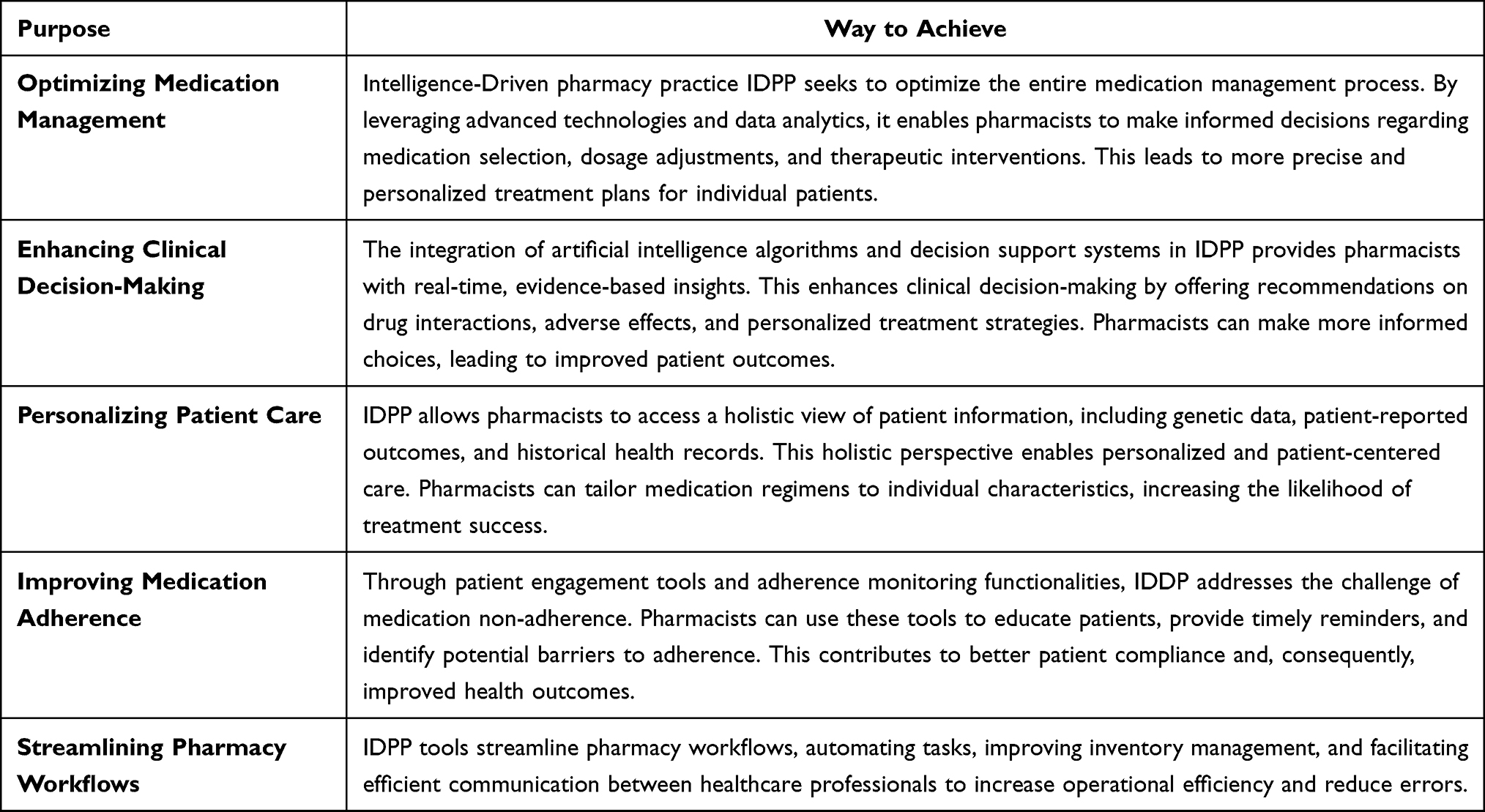 |
Table 1 Main Purposes of Intelligence-Driven Pharmacy Practice IDPP in Pharmacy Practice |
The objective of this prospective article is to introduce and define the concept of “pharmacointelligence”, which integrates artificial intelligence (AI), data integration, clinical decision support systems (CDSS), and pharmacy informatics to optimize medication-related processes and enhance decision-making in pharmacy practice. This paper aims to highlight the transformative potential of pharmacointelligence in addressing the complexities of pharmaceutical data, evolving healthcare demands, and technological advancements. It provides a comprehensive literature review to identify emergent themes and gaps that pharmacointelligence could address, distinguishing this concept from broader technological innovations in healthcare. Additionally, the paper proposes a conceptual framework for pharmacointelligence, illustrating how the integration of advanced technologies can revolutionize medication management, improve patient outcomes, and streamline pharmacy operations. It also discusses the regulatory and ethical considerations critical to the successful implementation of pharmacointelligence, ensuring patient privacy, data security, and equitable healthcare delivery. Finally, the article encourages further research and empirical validation of the pharmacointelligence concept, exploring best practices, potential challenges, and innovative solutions to fully realize its benefits in pharmacy practice.
Methodology
A detailed search was conducted across several databases, including PubMed/Medline, Web of Science, and Google Scholar, covering publications from 2020 to May 2024. The search strategy employed a combination of keywords to capture the interdisciplinary nature of this field. The keywords used were: “pharmacy”, “pharmacy practice”, “clinical pharmacy”, “pharmacist”, “artificial intelligence”, “machine learning”, “natural language processing”, “decision support systems”, and “pharmacy informatics”. To refine the search, articles were filtered to include only peer-reviewed journals and exclude non-English publications. Inclusion criteria focused on studies that specifically addressed the application of AI and data science within clinical and retail pharmacy settings.
This methodology outlines the systematic approach used to develop the concept of “pharmacointelligence” within pharmacy practice. The foundation of this research involved a comprehensive literature review focusing on the integration of data science technologies in pharmacy. This review was essential to identify emergent themes and gaps that “pharmacointelligence” could address, aiming to distinguish this term from broader, more generic technological concepts in healthcare.
Defining Pharmacointelligence
Pharmacointelligence refers to the intelligent use of information and technology to optimize medication-related processes and enhance decision-making across the entire pharmaceutical field. This includes drug development, manufacturing, distribution, and patient care. It encompasses the utilization of tools such as artificial intelligence, data integration, and clinical decision support systems to enhance the efficiency and effectiveness of pharmacy practice. Pharmacointelligence is not merely about the utilization of technology; it is a paradigm shift that embraces a comprehensive approach to the pharmaceutical sector, emphasizing the synergy between human expertise and computational power.
Concept Development
The term “pharmacointelligence” was firstly introduced by Sri Harsha Chalasani and colleagues,16 to encapsulate the unique integration of these advanced technologies, tailored specifically for pharmacy practice. This perspective paper proposes “pharmacointelligence” as a new focal point for scholarly discussion and future research, setting the stage for further validation through empirical studies and reviews by expert panels. This approach aims to establish pharmacointelligence as a distinct and valuable domain within the pharmaceutical sciences, promoting its adoption and further exploration in academic and professional settings.
Literature Gap
Individually, “Data integration and interoperability”, “Artificial intelligence algorithms”, “Clinical decision support systems”, and “Pharmacy informatics” have been extensively explored, with numerous studies delving into their applications, benefits, and challenges in healthcare and pharmacy practice. Data integration and interoperability have been investigated for their role in harmonizing diverse datasets,5,15 while Artificial intelligence algorithms have been studied for their potential in data analysis and decision-making.6–8,17 Similarly, clinical decision support systems and pharmacy informatics have been examined for their impact on enhancing clinical decisions and optimizing pharmacy workflows.8,16,17
The concept of “pharmacointelligence” distinguishes itself from traditional AI applications by integrating data science directly into the field of pharmacy practice. While existing literature extensively explores individual components such as data integration, AI algorithms, and clinical decision support systems, there is a paucity of studies examining their synergistic application in pharmacy. This review identifies a critical gap: the lack of a unified approach in influencing these technologies to enhance the pharmacist’s role in medication management and patient care. By comparing with existing models, this prospective underscores pharmacointelligence as a comprehensive solution, not merely an incremental improvement in healthcare technology. To address this gap, future studies could explore nuanced research questions such as: How can the involvement of data integration and interoperability, artificial intelligence algorithms, clinical decision support systems, and pharmacy informatics be optimized to enhance medication management comprehensively? What are the specific challenges and opportunities associated with implementing pharmacointelligence in diverse healthcare settings? How does the adoption of pharmacointelligence impact patient outcomes and satisfaction? By exploring these research areas, researchers may make a substantial contribution to developing a deeper and more nuanced knowledge of the interactions between these essential elements, advancing the field of pharmacointelligence, and influencing evidence-based pharmacy practices.
Suggested Conceptual Framework of Pharmacointelligence
The conceptual framework of pharmacointelligence seeks to revolutionize pharmacy practice by harmoniously integrating four core components: Data Integration and Interoperability, Artificial Intelligence (AI) Algorithms, Clinical Decision Support Systems (CDSS), and Pharmacy Informatics. At its foundation, Data Integration and Interoperability ensure seamless access and exchange of comprehensive healthcare datasets, including genetic information, medication histories, and electronic health records (EHRs), establishing a robust basis for real-time, comprehensive data analysis.18,19 Building upon this, AI Algorithms are employed to analyze these integrated datasets to extract meaningful insights, patterns, and correlations, which are crucial for tailoring individualized patient care.20 These AI-driven insights are then utilized by CDSS to provide real-time, evidence-based recommendations and alerts to healthcare professionals, enhancing the accuracy and timeliness of clinical decisions, particularly in the realm of medication management.21 Simultaneously, Pharmacy Informatics optimizes operational processes within pharmacy practice by leveraging technology to streamline and secure medication-related information, ensuring that AI algorithms receive relevant and current data.8
Additionally, the framework is supported by stringent Regulatory and Ethical Governance to address privacy, ethical use of AI, and data security, maintaining patient safety and trust. Outcome Measurement and Analytics further enrich the framework by employing statistical methods to assess the impact of interventions on patient outcomes, fostering a continuous improvement loop that refines decision-making tools based on real-world performance. This integrated framework not only enhances predictive personalization and operational efficiency but also fosters an interdisciplinary approach and adaptive learning within the healthcare ecosystem, setting a new standard for personalized, data-driven pharmacy practice (see Figure 1).
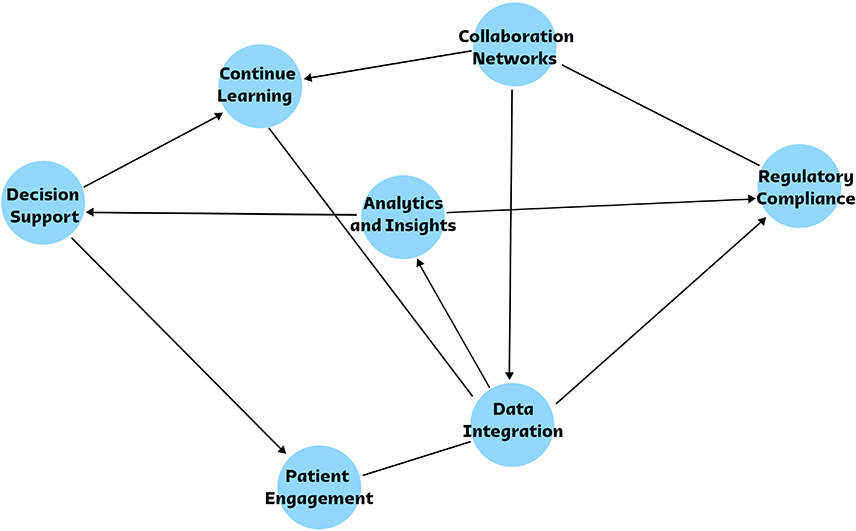 |
Figure 1 The prospect multi-faceted approach required for adopting pharmacointelligence in pharmacy practice. |
Pharmacointelligence Key Components
Data Integration and Interoperability
Data integration involves bringing together information from various sources and systems into a unified and cohesive structure. Interoperability, on the other hand, ensures that different systems can communicate and exchange data seamlessly.22,23 In the intelligence-Driven pharmacy practice IDPP, data integration and interoperability can play a crucial role in creating a comprehensive and interconnected information ecosystem.6 This involves breaking down silos, ensuring that information from various stages of the pharmaceutical sector, such as drug development, manufacturing, distribution, and patient care, can be integrated and exchanged cohesively.24 Standardized data structures and communication protocols play a crucial role in this process, enabling the efficient flow of information across different domains within the pharmaceutical landscape.4,24–26
Data integration and interoperability operate within the context of IDPP by creating an environment where data from different sources can be seamlessly exchanged and utilized to enhance decision-making processes. This involves the adoption of standardized data formats, common communication protocols, and technologies that facilitate interoperability among diverse information systems. In the context of pharmacy practice, this means that pharmacists can access and analyze relevant data from various stages of the pharmaceutical continuum, allowing for informed decision-making, personalized interventions, and improved patient outcomes.6,26 Ultimately, data integration and interoperability in the IDPP empower pharmacy professionals to harness the full potential of information in their decision-making processes, contributing to a more intelligent and responsive pharmaceutical ecosystem.24,26
Interoperability refers to the ability of different systems or components to exchange and use data seamlessly and effectively. It implies the capability of diverse software applications, databases, and devices to communicate, interpret, and understand data in a standardized and mutually intelligible manner.22,23 In other words, interoperability ensures that various systems can work together, share information, and utilize shared data without encountering compatibility issues.
In pharmacy practice for instance, “Data integration and interoperability“ can support proactive monitoring of patient adherence, identification of potential drug interactions, and personalized medication recommendations.25 As the pharmaceutical landscape continues to evolve, the interconnected systems fostered by ”Data integration and interoperability” will contribute to the development of more efficient and patient-centered pharmacy practices.
Artificial Intelligence Algorithms
Artificial Intelligence (AI) Algorithms is the main core component in pharmacointelligence concept. Al algorithms encompass utilizing sophisticated AI and Machine Learning (ML) applications alongside advanced data analytics platforms. These tools are central to interpreting complex data sets, which is essential for enhancing decision-making processes in pharmacy and healthcare settings.27
AI algorithms in pharmacy practice are advanced computational tools that analyze data through models that can learn from and make predictions or decisions based on data. These tools are particularly adept at handling complex, multivariate analyses and predictive tasks.5,6 (See Table 2).
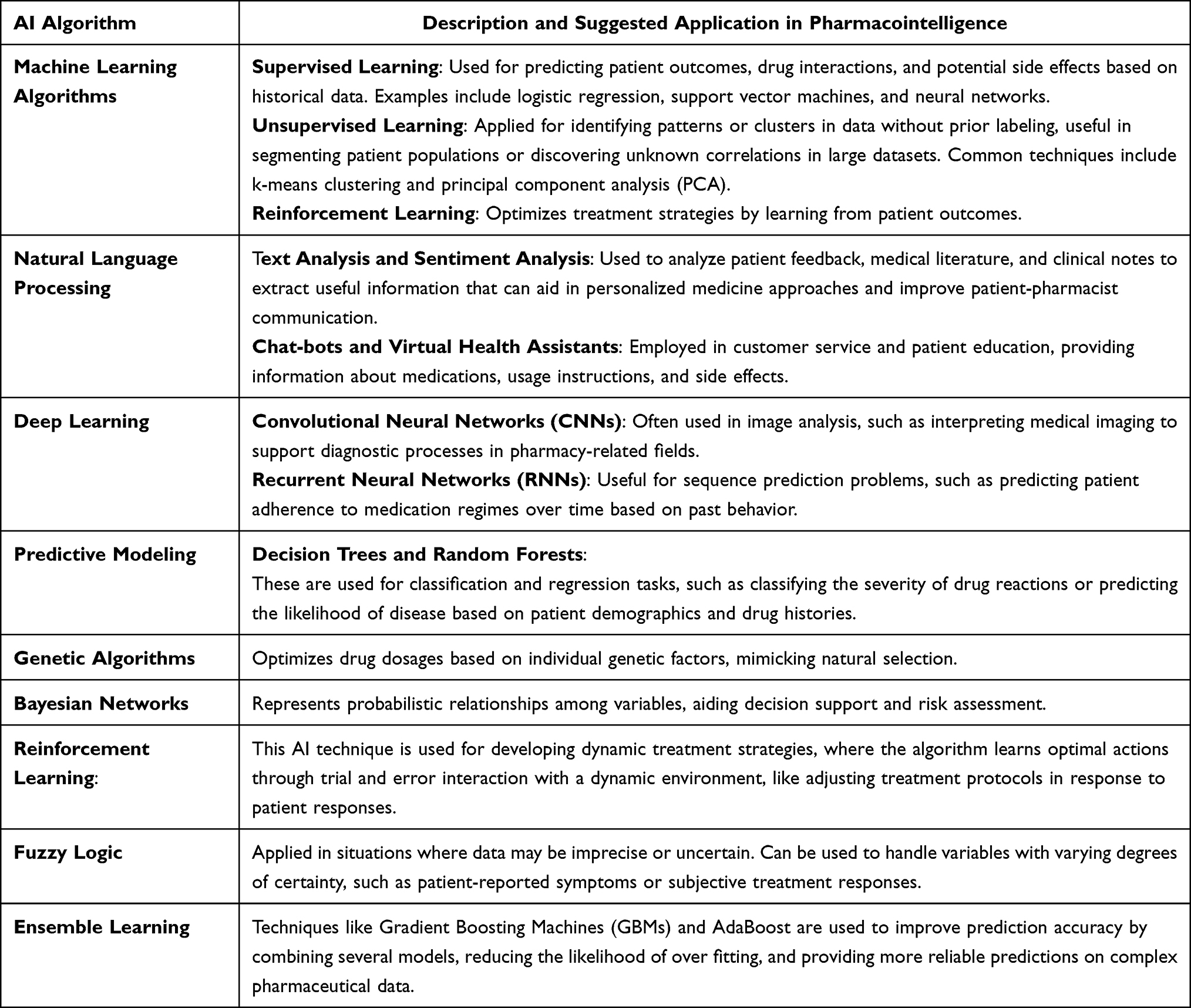 |
Table 2 Some of Main Key Artificial Intelligence Algorithms Can Be Adopted in Pharmacointelligence Concept |
AI algorithms play a crucial role in pharmacy practice for several reasons. Firstly, these algorithms excel in handling vast amounts of diverse data, including patient information, drug interactions, genetic factors, and treatment outcomes.5,6,9 By processing this data efficiently, AI algorithms can identify patterns and correlations that might be challenging for humans to identify, leading to more personalized and effective drug therapy recommendations.11,12,28 In this regard Yimeng Liu and colleagues have explored the development of a personalized dosing regimen for venlafaxine, recognizing that dosing requirements vary widely among individuals. By analyzing real-world data, the research identified factors influencing venlafaxine dosage and employed advanced AI techniques to construct a model. The TabNet model was utilized for this purpose and demonstrated high predictive accuracy in determining appropriate venlafaxine doses, offering a more personalized approach to medication dosing based on individual patient data. Which exhibited the highest performance with an accuracy of 0.80. The area under the curve (AUC) for predicting venlafaxine doses of 75 mg, 150 mg, and 225 mg were 0.90, 0.85, and 0.90, respectively.29 Secondly, AI algorithms can enhance decision-making processes in pharmacy practice by providing real-time insights. They can assist pharmacists in assessing patient profiles, predicting potential drug interactions or adverse reactions, and suggesting personalized treatment plans.1–4 This not only improves the accuracy and efficiency of pharmaceutical care but also minimizes the risk of errors, contributing to safer patient outcomes.11,30 A recent study published in Nature Medicine discussed medication direction copilot (MEDIC), an AI system designed to reduce medication direction errors in online pharmacies by utilizing large language models (LLMs). MEDIC enhanced medication direction accuracy by integrating domain knowledge and safety protocols, outperforming traditional LLMs. It was tested in a production environment where it significantly reduced near-miss events by 33%, demonstrating its efficacy in improving pharmacy operations and patient safety. This approach illustrated the potential of AI in enhancing the accuracy and efficiency of pharmaceutical services.30
Furthermore, AI algorithms can contribute to ongoing research and development in pharmacology, that can analyze scientific literature, clinical trials, and emerging data to identify new drug candidates, predict their efficacy, and facilitate the discovery of innovative therapeutic approaches.31,32 This aspect of AI in pharmacointelligence aligns with the goal of advancing pharmaceutical knowledge and expanding the range of treatment options available.
Clinical Decision Support Systems (CDSSs)
CDSSs are computer-based tools designed to assist healthcare professionals, including pharmacists, in making informed and evidence-based decisions about patient care. These systems utilize advanced algorithms to analyze patient-specific information, medical history, and relevant clinical knowledge to provide real-time guidance and recommendations. CDSSs aim to enhance the quality of healthcare by reducing errors, improving patient safety, and optimizing the decision-making process.33,34 To differentiate between their implementation and usage, CDSSs are often divided into two categories: knowledge-based and non-knowledge-based. Knowledge-based CDSSs provide suggestions for doctors by using logical rules to generate results. A knowledge-based CDSS always has a source of information; guidelines, patient-centered procedures, literature, and expert knowledge are some of the places where rules are derived. In order to mimic expert knowledge, Artificial intelligence-based CDSSs, or non-knowledge-based CDSSs, have just lately been used in clinical settings.34,35 AI-CDSSs use AI and machine learning to provide suggestions based on patient characteristics, but they still need a data source. Since AI-CDSSs require computer-intensive and time-consuming processes as well as the processing of a sizable quantity of data to make reliable conclusions, modern CDSSs are mostly knowledge-based.36–38
CDSSs play a pivotal role within this framework by leveraging technology to assist pharmacists in navigating the complexities of medication management. CDSSs function within the framework of pharmacointelligence by seamlessly integrating patient-specific data and leveraging advanced algorithms to provide real time, evidence-based decision support for healthcare professionals, particularly pharmacists. Operating at the intersection of knowledge management systems, data analytics, and decision support tools, CDSSs ensure a comprehensive approach to medication-related decision-making.39,40 Recent reports suggested reporting suspected adverse effects may be affected by the use of AI‑based clinical decision support system prescribing tools in which may enhance the apparent safety profiles of medications.38 Through continuous analysis of medical history, laboratory results, and drug-related information, CDSSs offer personalized treatment recommendations, alert pharmacists to potential issues like drug interactions, and monitor patient responses for ongoing adjustments.25,41 This interoperability with other components allows CDSSs to contribute significantly to the overarching goal of improving patient outcomes and safety in pharmacy practice.36
Personalized medication management will be greatly enhanced by CDSSs, which will help pharmacists detect possible drug interactions, side effects, and customize treatment regimens to meet the needs of specific patients.41 This integration promotes a more proactive and patient-centered approach to healthcare, which is consistent with Pharmacointelligence’s overarching objectives.
Pharmacy Informatics
Pharmacy informatics, as a pivotal component of pharmacointelligence, can play a crucial role in modern healthcare by leveraging technology and data to optimize medication use and enhance patient outcomes. It involves the integration of information technology systems and tools to manage and analyze medication-related data, thereby supporting clinical decision-making processes.8 Pharmacy informatics encompasses various domains, including electronic health records (EHRs), computerized physician order entry (CPOE), clinical decision support systems (CDSS), and automated dispensing systems.42 These technologies facilitate the accurate and efficient management of medication information, ensuring that healthcare providers have access to comprehensive and up-to-date data. This integration not only improves the accuracy of prescribing and dispensing medications but also enhances the safety and quality of patient care by reducing medication errors and adverse drug events.43 Furthermore, pharmacy informatics supports the collection and analysis of large datasets, enabling healthcare professionals to identify trends, predict outcomes, and develop evidence-based strategies for medication management.8,44 As healthcare systems increasingly adopt digital solutions, the role of pharmacy informatics becomes even more critical in streamlining workflows, enhancing communication among healthcare teams, and ensuring compliance with regulatory standards.43 Additionally, it plays a significant role in advancing personalized medicine by facilitating the use of pharmacogenomics and other precision medicine approaches.45 By harnessing the power of data and technology, pharmacy informatics not only enhances the efficiency and effectiveness of pharmacotherapy but also contributes to the broader goal of improving public health outcomes.8,43
Regulatory and Ethical Considerations
Regulatory and ethical considerations are fundamental components of pharmacointelligence, ensuring that the integration of advanced technologies and data analytics in pharmacy practice adheres to established standards and principles.46 Regulatory frameworks provide guidelines and requirements for the safe and effective use of medications, encompassing aspects such as drug approval processes, labeling, post-marketing surveillance, and the management of adverse drug reactions.47,48 These regulations are essential to protect public health, ensuring that medications are safe, efficacious, and of high quality.47 Pharmacointelligence leverages data to support regulatory compliance, enabling healthcare professionals to track and report adverse events, monitor drug utilization patterns, and ensure adherence to therapeutic guidelines.
Ethical considerations, on the other hand, address the moral principles guiding the use of data and technology in pharmacy practice. Key ethical issues include patient privacy, informed consent, data security, and the equitable distribution of healthcare resources.46 As pharmacointelligence involves the collection and analysis of vast amounts of patient data, it is crucial to implement robust measures to protect patient confidentiality and prevent data breaches. This includes adhering to regulations such as the Health Insurance Portability and Accountability Act (HIPAA) in the United States, the General Data Protection Regulation (GDPR) in the European Union, and similar standards worldwide ensures that patient data is protected, and healthcare providers operate within legal bounds.49,50 For further regulations bodies see Table 3.
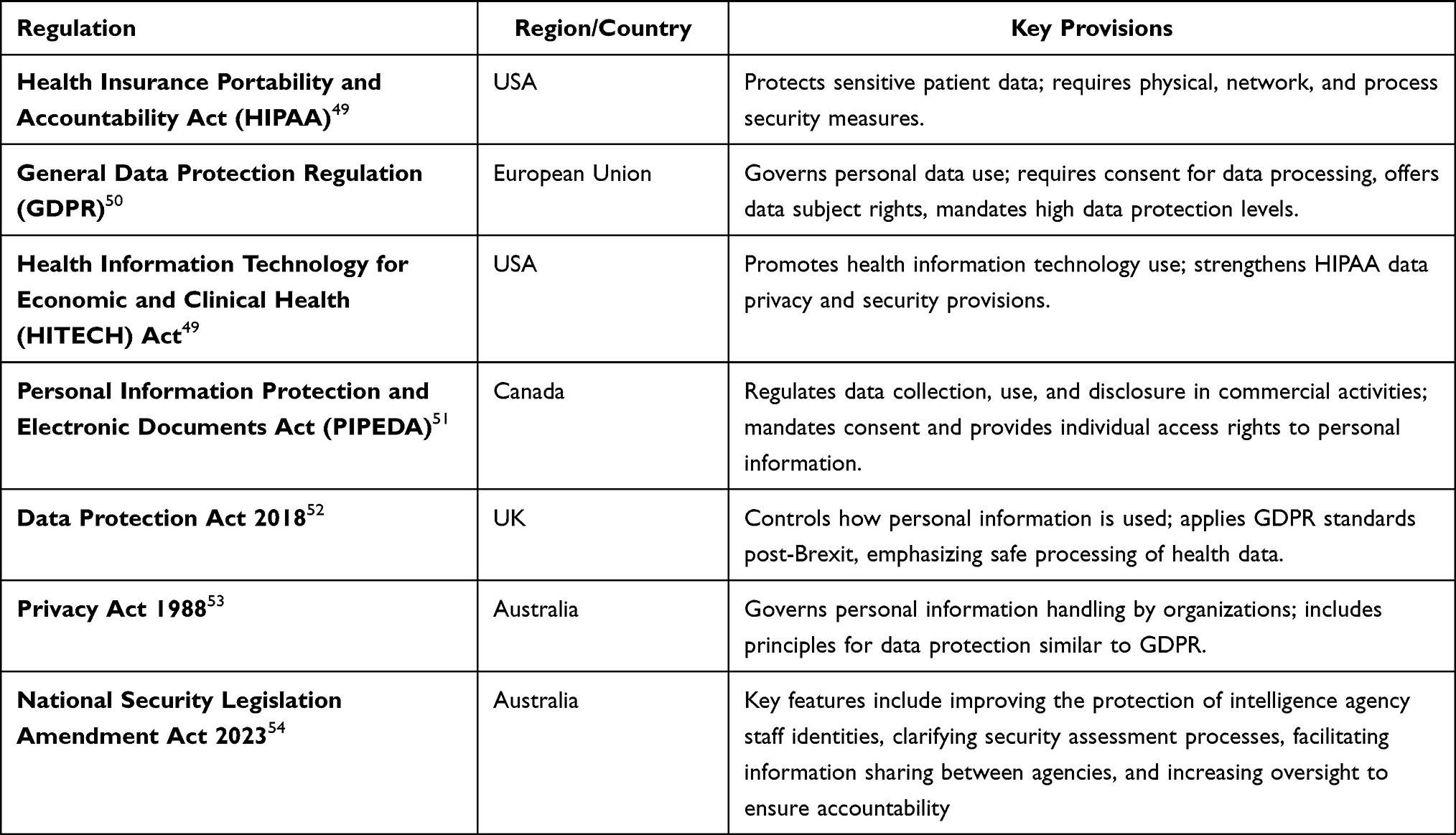 |
Table 3 Common Global Regulatory Framework for Data Protection in Healthcare |
Informed consent is another critical ethical consideration, ensuring that patients are fully aware of how their data will be used and have the opportunity to opt-in or opt-out of data sharing initiatives.55 This transparency fosters trust between patients and healthcare providers, which is essential for the successful implementation of pharmacointelligence strategies.46,47,55 Moreover, ethical frameworks guide the equitable use of pharmacointelligence, ensuring that advancements in data analytics and technology do not exacerbate existing healthcare disparities but rather contribute to improved health outcomes for all populations.
Blockchain technology and data security tools can play pivotal components of pharmacointelligence, ensuring the integrity and traceability of pharmaceutical products along the supply chain and securing patient data management. Blockchain’s decentralized ledger records every transaction related to drug movement, enabling comprehensive traceability from production to patient, thus ensuring product quality and safety.56 This capability is essential in combating counterfeit drugs and maintaining patient trust. Additionally, blockchain facilitates a secure environment for patient data by decentralizing storage, reducing breach risks, and enabling secure data sharing between healthcare providers.57 Complementing blockchain, data security tools protect sensitive health information and ensure compliance with data protection laws. These tools utilize encryption, secure transmission protocols, and access controls to safeguard patient information at rest and in transit, ensuring accessibility only to authorized personnel.58 They are crucial for meeting regulatory standards such as HIPAA in the US and GDPR in the EU, thus maintaining legal compliance and protecting patient data.49,50 Together, blockchain technology and data security tools support the ethical and legal framework necessary for the effective implementation of pharmacointelligence, ensuring that technological advancements translate into improved patient outcomes and enhanced public health.
By addressing these regulatory and ethical considerations, pharmacointelligence can effectively balance innovation with responsibility, ensuring that the benefits of advanced data analytics and technology in pharmacy practice are realized while upholding the highest standards of patient care and safety. This comprehensive approach not only enhances the credibility and reliability of pharmacointelligence initiatives but also promotes their sustainable and ethical integration into the healthcare system.
Outcome Measurement and Analytics
Outcome Measurement and Analytics are pivotal in pharmacointelligence for evaluating the effectiveness, patient satisfaction, and cost-efficiency of pharmaceutical services. Data Analytics Platforms process extensive healthcare data to assess treatment efficacy, analyze patient satisfaction trends, and conduct economic evaluations, thus supporting informed healthcare.26,59 Data analytics platforms are essential for processing and analyzing extensive healthcare data to evaluate treatment efficacy, patient satisfaction, and cost-efficiency. These platforms typically include several key features such as Data Integration, Advanced Analytics, Visualization Tools and Predictive Analytics.60,61
Simultaneously, Outcome Measurement Software specializes in tracking and reporting health outcomes, enabling pharmacies to demonstrate the tangible benefits of their services through systematic data collection and robust reporting tools.62,63 These tools collectively ensure that pharmaceutical interventions are not only effective but also aligned with patient needs and cost-effective, thereby enhancing service value and accountability in healthcare settings (see Table 4).
 |
Table 4 Examples of Tools That Can be Used for Outcome Measurement and Analytics in Pharmacointelligence |
Outcome measurement software focuses on tracking and reporting health outcomes systematically. Key functionalities include:60
Standardized Metrics: These tools often come with predefined metrics and benchmarks for measuring health outcomes, ensuring consistency and comparability across different settings.60
Customizable Reporting: They allow users to create customized reports that highlight key performance indicators, outcomes, and areas for improvement.
Data Collection: Automated data collection features streamline the process of gathering patient data, reducing the burden on healthcare providers and increasing data accuracy.63
Compliance and Documentation: These tools help ensure compliance with regulatory requirements by providing thorough documentation and audit trails of outcome measurements and interventions.60,63
Enabling Growth: Competencies in Pharmacointelligence
Pharmacointelligence, at the intersection of pharmaceutical science, advanced data analytics, and advance technology relies on a set of crucial competencies to drive innovation in healthcare. These core competencies form the bedrock for professionals working in the field, equipping them with the necessary skills to navigate the complex landscape of pharmaceutical data (Box 1).
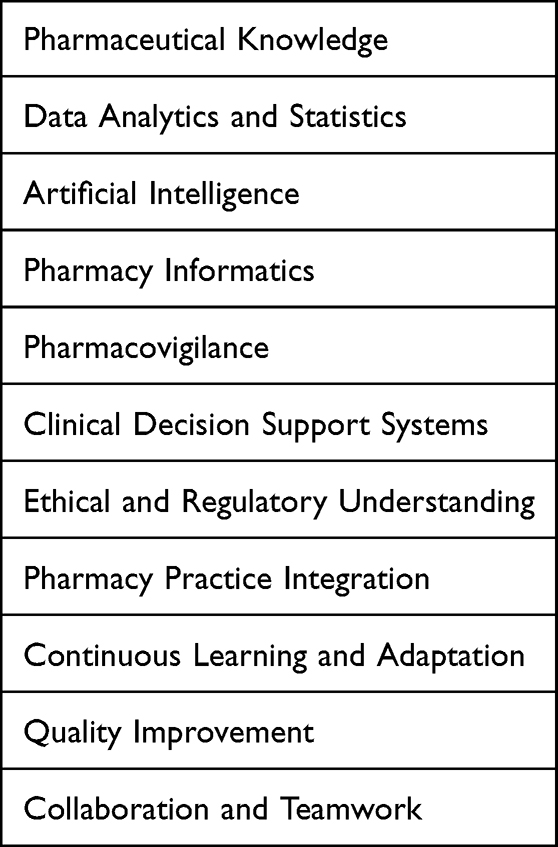 |
Box 1 Suggested Core Competencies in Pharmacointelligence |
What Pharmacointelligence Can Add?
This innovative approach goes beyond traditional pharmacy models, offering personalized medication therapy management tailored to individual patient characteristics. Real time decision support systems embedded within pharmacointelligence provide pharmacists with immediate guidance and alerts, ensuring the accuracy and safety of medication-related decisions. The use of predictive analytics enables the identification of patients at higher risk of adverse events, allowing for proactive interventions. Pharmacointelligence optimizes medication regimens through data-driven analysis of patient responses, enhances drug-drug interaction checking, and seamlessly integrates with electronic health records for a comprehensive patient overview. With a focus on continuous learning, pharmacointelligence adapts to evolving clinical guidelines, contributing to efficient medication reconciliation and improved patient adherence strategies. It provides strategic insights for administrators, supports Telepharmacy services and remote patient monitoring, and facilitates population health management through analytics. (See Box 2.)
 |
Box 2 Pharmaceutical Areas That Can Be Enhanced by Adopting Pharmacointelligence |
Ethical Considerations in the Adoption of Pharmacointelligence in Pharmacy Practice
The adoption of pharmacointelligence in pharmacy practice is fraught with ethical challenges that necessitate diligent oversight. The main among these is the protection of patient privacy. As pharmacointelligence systems aggregate and analyze vast arrays of personal health information, ensuring the confidentiality and security of this data is crucial. This involves not only technical safeguards but also robust policies to prevent unauthorized access and misuse. Additionally, the issue of informed consent is pivotal; patients must be fully aware of how their data will be used and actively agree to these uses, ensuring transparency and trust in the system. Another significant ethical concern is the potential for inherent biases within AI algorithms, which could lead to undesirable health outcomes or discrimination. Addressing these biases requires transparent algorithmic processes and ongoing oversight to ensure equitable and fair treatment for all patients.
Challenges in Implementing Pharmacointelligence
Implementing pharmacointelligence in pharmacy practice presents a lot of challenges. The initial cost of integrating sophisticated AI systems and maintaining these data-intensive platforms can be substantial, potentially putting them out of reach for smaller or resource-limited practices. The complexity of these systems introduces a steep learning curve, requiring significant training for pharmacy staff to effectively utilize these technologies. Interoperability issues, stemming from the need to integrate multiple data sources with varying formats, can complicate the deployment and effective functioning of pharmacointelligence systems. Furthermore, the rapid pace of technological advancements means that systems need regular updates to stay effective, necessitating ongoing investment. Regulatory challenges also abound, as pharmacies must navigate a complex landscape of health data regulations, which can vary widely by jurisdiction, to ensure compliance with all legal standards.
In conclusion, while the potential of pharmacointelligence to revolutionize pharmacy practice is immense, it comes with an array of ethical considerations, opportunities, and challenges. Each of these aspects requires careful planning, robust ethical guidelines, and strategic investment to harness the benefits of pharmacointelligence fully while mitigating its risks.
Call to Action: Advancing Pharmacointelligence in Pharmacy Practice
As we stand on the brink of a transformative shift in pharmacy practice through the adoption of pharmacointelligence, the potential to enhance patient care, improve operational efficiency, and streamline medical treatments is immense. However, with great potential comes the responsibility to address the ethical, operational, and technological challenges that accompany these advancements.
I invite researchers, practitioners, and technology developers in the fields of pharmacy, healthcare informatics, and data science to engage in an active dialogue about pharmacointelligence. This call to action seeks to foster a collaborative environment where ideas and strategies can be shared and critically evaluated. Our goal is to ensure that the deployment of pharmacointelligence concept not only aligns with the highest standards of patient care but also adheres to stringent ethical practices that respect patient privacy and equity.
Furthermore, I encourage the submission of empirical research, case studies, and review articles that explore the successes and challenges of pharmacointelligence implementations across different settings. Such contributions are vital for identifying best practices, potential pitfalls, and innovative solutions. By consolidating our collective knowledge and experiences, we can refine the concept of pharmacointelligence and ensure its accurate representation and effective utilization in the field of pharmacy.
To facilitate this collaboration, we propose the establishment of an interdisciplinary symposium on pharmacointelligence, where stakeholders can convene to discuss, debate, and delineate the future pathways for this promising field. Together, we can build a robust framework that not only leverages cutting-edge technology but also preserves the core values of healthcare.
Join us in this exciting journey to redefine the landscape of pharmacy practice through the lens of pharmacointelligence. Your insights and expertise are invaluable to shaping a future where technology and healthcare converge to produce the best outcomes for patients worldwide.
Conclusion
Pharmacointelligence represents a transformative approach in pharmacy practice, leveraging advanced technologies such as AI, data integration, CDSS, and pharmacy informatics to optimize medication management and enhance patient care. This prospective article suggests that pharmacointelligence can address the growing complexity of pharmaceutical data, evolving healthcare demands, and the need for precision medicine. By integrating these technologies, pharmacointelligence can provide real-time, evidence-based decision support, personalized drug therapies, and improved patient outcomes. However, the implementation of pharmacointelligence also presents challenges, including high initial costs, training requirements, interoperability issues, and regulatory compliance. Addressing these challenges requires strategic investment, robust ethical guidelines, and continuous collaboration among researchers, practitioners, and technologists. As we advance towards a data-driven and patient-centric healthcare system, pharmacointelligence stands as a critical enabler of innovation, efficiency, and improved healthcare delivery. Future research should focus on empirical validation, exploring best practices, and refining the integration of these technologies to fully realize the benefits of pharmacointelligence in pharmacy practice.
Acknowledgment
This paper has been uploaded to SSRN as a preprint at https://papers.ssrn.com/sol3/papers.cfm?abstract_id=4754711
Disclosure
The author reports no conflicts of interest in this work.
References
1. Al Kuwaiti A, Nazer K, Al-Reedy A, et al. A review of the role of artificial intelligence in healthcare. J Pers Med. 2023;13(6):951. doi:10.3390/jpm13060951
2. Martinez-Millana A, Saez-Saez A, Tornero-Costa R, Azzopardi-Muscat N, Traver V, Novillo-Ortiz D. Artificial intelligence and its impact on the domains of universal health coverage, health emergencies and health promotion: an overview of systematic reviews. Int J Med Inform. 2022;166:104855. doi:10.1016/j.ijmedinf.2022.104855
3. Gala D, Behl H, Shah M, Makaryus AN. The role of artificial intelligence in improving patient outcomes and future of healthcare delivery in cardiology: a narrative review of the literature. Healthcare. 2024;12(4):481. doi:10.3390/healthcare12040481
4. Khan O, Parvez M, Kumari P, Parvez S, Ahmad S. The future of pharmacy: how AI is revolutionizing the industry. Intelligent Pharm. 2023;1(1):32–40. doi:10.1016/j.ipha.2023.04.008
5. Ranchon F, Chanoine S, Lambert-Lacroix S, Bosson JL, Moreau-Gaudry A, Bedouch P. Development of artificial intelligence powered apps and tools for clinical pharmacy services: a systematic review. Int J Med Inform. 2023;172:104983. doi:10.1016/j.ijmedinf.2022.104983
6. Grothen AE, Tennant B, Wang C, et al. Application of artificial intelligence methods to pharmacy data for cancer surveillance and epidemiology research: a systematic review. JCO Clin Cancer Inform. 2020;4(4):1051–1058. doi:10.1200/CCI.20.00101
7. Liu X, Barreto EF, Dong Y, et al. Discrepancy between perceptions and acceptance of clinical decision support Systems: implementation of artificial intelligence for vancomycin dosing. BMC Med Inform Decis Mak. 2023;23(1):157. doi:10.1186/s12911-023-02254-9
8. Cortes D, Leung J, Ryl A, Lieu J. Pharmacy informatics: where medication use and technology meet. Can J Hosp Pharm. 2019;72(4):320–326. doi:10.7326/M13-1531
9. Shanbhogue MH, Thirumaleshwar S, Tegginamath PK, Somareddy HK. Artificial intelligence in pharmaceutical field - a critical review. Curr Drug Deliv. 2021;18(10):1456–1466. doi:10.2174/1567201818666210617100613
10. Nishioka S, Watabe S, Yanagisawa Y, et al. Adverse event signal detection using patients’ concerns in pharmaceutical care records: evaluation of deep learning models. J Med Internet Res. 2024;26:e55794. doi:10.2196/55794
11. Ferrara M, Bertozzi G, Di Fazio N, et al. Risk management and patient safety in the artificial intelligence era: a systematic review. Healthcare. 2024;12(5):549. doi:10.3390/healthcare12050549
12. Nguyen M, Jankovic I, Kalesinskas L, Baiocchi M, Chen JH. Machine learning for initial insulin estimation in hospitalized patients. J Am Med Inform Assoc. 2021;28(10):2212–2219. doi:10.1093/jamia/ocab099
13. Rammal DS, Alomar M, Palaian S. AI-Driven pharmacy practice: unleashing the revolutionary potential in medication management, pharmacy workflow, and patient care. Pharmacy Practice. 2024;22(2):2958. doi:10.18549/PharmPract.2024.2.2958
14. Raza MA, Aziz S. Transformative potential of Artificial Intelligence in pharmacy practice. Saudi Pharm J. 2023;31(9):101706. doi:10.1016/j.jsps.2023.101706
15. Manivannan R. Harnessing artificial intelligence in pharmacy practice and management: a comprehensive review. IJNRD. 2024;9(4):c72–c85.
16. Chalasani SH, Syed J, Ramesh M, Patil V, Pramod Kumar TM. Artificial intelligence in the field of pharmacy practice: a literature review. Explor Res Clin Soc Pharm. 2023;12:100346. doi:10.1016/j.rcsop.2023.100346
17. Raza MA, Aziz S, Noreen M, et al. Artificial Intelligence (AI) in pharmacy: an overview of innovations. Innov Pharm. 2022;13(2):
18. Nelson SD, Walsh CG, Olsen CA, et al. Demystifying artificial intelligence in pharmacy. Am J Health Syst Pharm. 2020;77(19):1556–1570. doi:10.1093/ajhp/zxaa218
19. Dinh-le C, Chuang R, Chokshi S, Mann D. Wearable health technology and electronic health record integration: scoping review and future directions. JMIR mHealth uHealth. 2019;7(9):e12861. doi:10.2196/12861
20. Mirzaei A, Aslani P, Schneider CR. Healthcare data integration using machine learning: a case study evaluation with health information-seeking behavior databases. Res Social Adm Pharm. 2022;18(12):4144–4149. doi:10.1016/j.sapharm.2022.08.001
21. Hossain E, Rana R, Higgins N, et al. Natural language processing in electronic health records in relation to healthcare decision-making: a systematic review. Comput Biol Med. 2023;155:106649. doi:10.1016/j.compbiomed.2023.106649
22. ThoroughCare. Healthcare through healthcare data integration & interoperability: why they matter; 2024. Available from: https://www.thoroughcare.net/blog/healthcare-data-integration-interoperability-why-they-matter.
23. Limaye N. Data Integration: changing the pharma and healthcare landscape. Technology Networks; 2024. Available from: https://www.technologynetworks.com/biopharma/articles/data-integration-changing-The-pharma-and-healthcare-landscape-3313.
24. Ma C, Smith HW, Chu C, Juarez DT. Big data in pharmacy practice: current use, challenges, and the future. Integr Pharm Res Pract. 2015;4:91–99. doi:10.2147/IPRP.S55862
25. Rajput VK, Dowie J, Kaltoft MK. Are clinical decision support systems compatible with patient-centred care? Stud Health Technol Inform. 2020;270:532–536. doi:10.3233/SHTI200217
26. Vora LK, Gholap AD, Jetha K, Thakur RRS, Solanki HK, Chavda VP. Artificial intelligence in pharmaceutical technology and drug delivery design. Pharmaceutics. 2023;15(7):1916. doi:10.3390/pharmaceutics15071916
27. Bini SA. Artificial intelligence, machine learning, deep learning, and cognitive computing: what do these terms mean and how will they impact health care? J Arthroplasty. 2018;33(8):2358–2361. doi:10.1016/j.arth.2018.02.067
28. Johnson KB, Wei WQ, Weeraratne D, et al. Precision Medicine, AI, and the future of personalized health care. Clin Transl Sci. 2021;14(1):86–93. doi:10.1111/cts.12884
29. Liu Y, Yu Z, Ye X, et al. Personalized venlafaxine dose prediction using artificial intelligence technology: a retrospective analysis based on real-world data. Int J Clin Pharm. 2024;46(4):926–936. doi:10.1007/s11096-024-01729-7
30. Pais C, Liu J, Voigt R, et al. Large language models for preventing medication direction errors in online pharmacies. Nat Med. 2024;30(6):1574–1582. doi:10.1038/s41591-024-02933-8
31. Paul D, Sanap G, Shenoy S, Kalyane D, Kalia K, Tekade RK. Artificial intelligence in drug discovery and development. Drug Discov Today. 2021;26(1):80–93. doi:10.1016/j.drudis.2020.10.010
32. Patil RS, Kulkarni SB, Gaikwad VL. Artificial intelligence in pharmaceutical regulatory affairs. Drug Discov Today. 2023;28(9):103700. doi:10.1016/j.drudis.2023.103700
33. Jia P, Zhang L, Chen J, Zhao P, Zhang M. The effects of clinical decision support systems on medication safety: an overview. PLoS One. 2016;11,1–17.
34. Sutton RT, Pincock D, Baumgart DC, Sadowski DC, Fedorak RN, Kroeker KI. An overview of clinical decision support systems: benefits, risks, and strategies for success. NPJ Digit Med. 2020;3(1):17. doi:10.1038/s41746-020-0221-y
35. Tao L, Zhang C, Zeng L, et al. Accuracy and effects of clinical decision support systems integrated with BMJ best practice-aided diagnosis: interrupted time series study. JMIR Med Inform. 2020;8(1):e16912. doi:10.2196/16912
36. Gholamzadeh M, Abtahi H, Safdari R. The application of knowledge-based clinical decision support systems to enhance adherence to evidence-based medicine in chronic disease. J Healthc Eng. 2023;2023(1):8550905. doi:10.1155/2023/8550905
37. Pierce RL, Van Biesen W, Van Cauwenberge D, Decruyenaere J, Sterckx S. Explainability in medicine in an era of AI-based clinical decision support systems. Front Genet. 2022;13:903600. doi:10.3389/fgene.2022.903600
38. Dickinson H, Teltsch DY, Feifel J, et al. The unseen hand: AI-based prescribing decision support tools and the evaluation of drug safety and effectiveness. Drug Saf. 2024;47(2):117–123. doi:10.1007/s40264-023-01376-3
39. Norouzi S, Galavi Z, Ahmadian L. Identifying the data elements and functionalities of clinical decision support systems to administer medication for neonates and pediatrics: a systematic literature review. BMC Med Inform Decis Mak. 2023;23(1):263. doi:10.1186/s12911-023-02355-5
40. Hemens BJ, Holbrook A, Tonkin M, et al. Computerized clinical decision support systems for drug prescribing and management: a decision-maker-researcher partnership systematic review. Implement Sci. 2011;6(1):89. doi:10.1186/1748-5908-6-89
41. Robertson J, Walkom E, Pearson SA, Hains I, Williamsone M, Newby D. The impact of pharmacy computerised clinical decision support on prescribing, clinical and patient outcomes: a systematic review of the literature. Int J Pharm Pract. 2010;18(2):69–87. doi:10.1211/ijpp.18.02.0002
42. HIMSS. Pharmacy informatics and its cross-functional role in healthcare; 2024. Available from: https://www.himss.org/resources/pharmacy-informatics-and-its-cross-functional-role-healthcare.
43. American Society of Health-System Pharmacists. ASHP statement on the pharmacist’s role in clinical informatics. Am J Health Syst Pharm. 2016;73(6):410–413. doi:10.2146/ajhp150540
44. USF Health. Pharmacy informatics: creating a safer healthcare system; 2024. Available from: https://www.usfhealthonline.com/resources/health-informatics/pharmacy-informatics-creating-a-safer-healthcare-system/.
45. Hanna MG, Pantanowitz L. The role of informatics in patient-centered care and personalized medicine. Cancer Cytopathol. 2017;125(S6):494–501. doi:10.1002/cncy.21833
46. Murdoch B. Privacy and artificial intelligence: challenges for protecting health information in a new era. BMC Med Ethics. 2021;22(1):122. doi:10.1186/s12910-021-00687-3
47. Hasan HE, Jaber D, Khabour OF, Alzoubi KH. Ethical considerations and concerns in the implementation of AI in pharmacy practice: a cross-sectional study. BMC Med Ethics. 2024;25(1):55. doi:10.1186/s12910-024-01062-8
48. Fournier-Tombs E, McHardy J. A medical ethics framework for conversational artificial intelligence. J Med Internet Res. 2023;25:e43068. doi:10.2196/43068
49. US Department of Health and Human Services. HITECH act enforcement interim final rule; 2024. Available from: https://www.hhs.gov/hipaa/for-professionals/special-topics/hitech-act-enforcement-interim-final-rule/index.html.
50. General Data Protection Regulation GDPR; 2024. Available from: https://gdpr-info.eu/.
51. Justice Laws Website, Government of Canada. Personal information protection and electronic documents act (S.C. 2000, c. 5); 2024 Available from: https://laws-lois.justice.gc.ca/eng/acts/p-8.6/page-1.html.
52. Legislation.gov.uk. Data protection act 2018; 2024. Available from: https://www.legislation.gov.uk/ukpga/2018/12/contents/enacted.
53. Privacy Act 1988. Federal register of legislation; 2024. Available from: https://www.legislation.gov.au/C2004A03712/2022-11-14/text.
54. National security legislation amendment (Comprehensive Review and Other Measures No. 3) Act 2024. 2024. Available from: https://www.prod.legislation.gov.au/C2024A00024/latest/text.
55. Naik N, Hameed BMZ, Shetty DK, et al. Legal and ethical consideration in artificial intelligence in healthcare: who takes responsibility? Front Surg. 2022;9:862322. doi:10.3389/fsurg.2022.862322
56. Xie Y, Zhang J, Wang H, et al. Applications of blockchain in the medical field: narrative review. J Med Internet Res. 2021;23(10):e28613. doi:10.2196/28613
57. Sahu H, Choudhari S, Chakole S. The use of blockchain technology in public health: lessons learned. Cureus. 2024;16(6):e63198. doi:10.7759/cureus.63198
58. Almalawi A, Khan AI, Alsolami F, Abushark YB, Alfakeeh AS. Managing security of healthcare data for a modern healthcare system. Sensors. 2023;23(7):3612. doi:10.3390/s23073612
59. Ferreira DC, Vieira I, Pedro MI, Caldas P, Varela M. Patient satisfaction with healthcare services and the techniques used for its assessment: a systematic literature review and a bibliometric analysis. Healthcare. 2023;11(5):639. doi:10.3390/healthcare11050639
60. Torous J, Powell AC, Rodriguez-Villa E. Health information technology resources to support measurement-based care. Child Adolesc Psychiatr Clin N Am. 2020;29(4):763–773. doi:10.1016/j.chc.2020.06.011
61. Frestel J, Teoh SWK, Broderick C, Dao A, Sajogo M. A health integrated platform for pharmacy clinical intervention data management and intelligent visual analytics and reporting. Explor Res Clin Soc Pharm. 2023;12:100332. doi:10.1016/j.rcsop.2023.100332
62. Patel K, Chim YL, Grant J, Wascher M, Nathanson A, Canfield S. Development and implementation of clinical outcome measures for automated collection within specialty pharmacy practice. J Manag Care Spec Pharm. 2020;26(7):901–909. doi:10.18553/jmcp.2020.26.7.901
63. Price E, Shirtcliffe A, Fisher T, Chadwick M, Marra CA. A systematic review of economic evaluations of pharmacist services. Int J Pharm Pract. 2023;31(5):459–471. doi:10.1093/ijpp/riad052
 © 2024 The Author(s). This work is published and licensed by Dove Medical Press Limited. The
full terms of this license are available at https://www.dovepress.com/terms
and incorporate the Creative Commons Attribution
- Non Commercial (unported, 3.0) License.
By accessing the work you hereby accept the Terms. Non-commercial uses of the work are permitted
without any further permission from Dove Medical Press Limited, provided the work is properly
attributed. For permission for commercial use of this work, please see paragraphs 4.2 and 5 of our Terms.
© 2024 The Author(s). This work is published and licensed by Dove Medical Press Limited. The
full terms of this license are available at https://www.dovepress.com/terms
and incorporate the Creative Commons Attribution
- Non Commercial (unported, 3.0) License.
By accessing the work you hereby accept the Terms. Non-commercial uses of the work are permitted
without any further permission from Dove Medical Press Limited, provided the work is properly
attributed. For permission for commercial use of this work, please see paragraphs 4.2 and 5 of our Terms.