
Back to Journals » Journal of Pain Research » Volume 18

Addressing Pain in Oral Mucositis: Narrative Review of Current Practices and Emerging Treatments
Authors Villa JF  , Strang A, Owolabi A, Ramirez MF
Received 22 May 2025
Accepted for publication 15 July 2025
Published 23 July 2025 Volume 2025:18 Pages 3723—3741
DOI https://doi.org/10.2147/JPR.S533351
Checked for plagiarism Yes
Review by Single anonymous peer review
Peer reviewer comments 3
Editor who approved publication: Dr David Keith
Juan F Villa,1 Amanda Strang,2 Adebukola Owolabi,3 Maria F Ramirez3
1Department of Anesthesia, Universidad CES, Medellín, Antioquia, Colombia; 2Department of Anesthesia, University of Texas, McGovern Medical School at UTHealth, Houston, TX, USA; 3Department of Anesthesiology and Perioperative Medicine, The University of Texas MD Anderson Cancer Center, Houston, TX, USA
Correspondence: Maria F Ramirez, Department of Anesthesiology and Perioperative Medicine, The University of Texas MD Anderson Cancer Centre, 1515 Holcombe Blvd., Unit 409, Houston, TX, 77005, USA, Tel +1 713-792-4582, Email [email protected]
Objective: Oral mucositis (OM) is a debilitating complication of cancer therapies, affecting up to 85% of patients undergoing bone marrow transplantation and nearly all receiving head and neck radiotherapy. Characterized by mucosal inflammation, ulceration, and severe pain, OM significantly impairs oral intake, speech, and quality of life. These disruptions, compounded by complications such as infection, bleeding, and increased healthcare costs, often necessitate treatment delays or modifications, negatively impacting cancer prognosis. Recent insights into nociceptive and neuropathic mechanisms of OM-related pain have led to the development of innovative management strategies. Given the debilitating nature of OM in cancer patients and the critical need for effective pain control, this review aims to examine pharmacological advancements targeting the complex nature of OM-related pain, including agents such as lidocaine, doxepin, benzydamine, methylene blue, opioids, gabapentin, palifermin, caphosol, and ketamine.
Methods: A literature search was conducted in the PUBMED, COCHRANE, and MEDLINE databases, covering studies from 2000 to 2024. Studies focusing on OM pathogenesis and pain management strategies were screened. Inclusion criteria encompassed randomized controlled trials, meta-analyses, and systematic reviews involving adult patients treated with lidocaine, doxepin, benzydamine, methylene blue, opioids, gabapentin, palifermin, caphosol, or ketamine for OM-associated pain.
Conclusion: OM pain arises from nociceptive and neuropathic pathways involving inflammatory cytokines and neuropeptides. Current interventions, including topical and systemic agents, have shown promise, yet variability in treatment protocols and limited high-quality evidence hinder standardized practices. This review highlights the clinical applicability of emerging therapies, such as avasopasem manganese, which has demonstrated efficacy in mitigating OM progression. Ongoing clinical trials targeting novel pathways that modulate mucosal inflammatory response and limit disease severity offer hope for improved pain relief. Addressing the multifaceted nature of OM-associated pain is essential for enhancing quality of life and optimizing cancer treatment outcomes. Further research is needed to establish robust, evidence-based guidelines for OM pain management.
Keywords: oral pain, head and neck cancer, mucosal ulceration, pain management, mouth washes, oral mucositis
Introduction
Oral Mucositis (OM) is a condition characterized by mucosal damage that can range from mild inflammation to deep ulceration of the oral mucosa.1 OM can develop because of radiotherapy, chemotherapy, combined radio/chemotherapy, or stem cell transplantation.2 OM-related pain is frequently reported among the most common and distressing symptoms experienced by patients during cancer therapy.3 It significantly impacts quality of life and affects up to 40% of patients receiving chemotherapy, up to 85% of patients undergoing bone marrow transplantation, and nearly all patients receiving head and neck radiotherapy.3,4 OM-related pain arises primarily from direct cytotoxic injury to the oral mucosa and the subsequent activation of inflammatory pathways. This damage leads to the release of pro-inflammatory cytokines and mediators, which sensitize peripheral nociceptors and contribute to neuroplastic changes that perpetuate pain symptoms. Consequently, current treatment strategies focus on targeting both inflammatory and neuromodulatory pathways to effectively alleviate pain.5
Patients with poor oral hygiene, concomitant chemotherapy, obesity, smoking, and drinking history are at higher risk for developing radiation-induced OM.6 The severity of OM is influenced by both the type and dosage of antineoplastic therapy. For example, severe OM is frequently observed following myeloablative conditioning regimens for hematopoietic stem cell transplantation (HSCT). Approximately 70% of patients receiving cyclophosphamide-based regimens in combination with total body irradiation (TBI) develop severe OM. Similarly, more than one-third of patients undergoing BEAM (carmustine, etoposide, cytarabine, melphalan) conditioning therapy experience heightened OM severity.7 Certain chemotherapeutic agents also carry differing risks: the antimetabolite 5-fluorouracil (5-FU) is associated with a higher incidence of OM compared to the fluoropyrimidine S-1.8 In patients receiving head and neck radiation therapy, OM severity is determined by factors such as the cumulative radiation dose, the specific area irradiated, and the use of concurrent chemotherapy. Total radiation doses exceeding 39 grays (Gy) to the oral cavity are linked to prolonged OM duration, and cumulative doses greater than 60 Gy in patients with head and neck cancer are associated with a higher incidence of severe OM.9,10 However, advanced techniques such as intensity-modulated radiation therapy (IMRT) have been shown to reduce the progression and severity of OM compared to traditional three-dimensional conformal radiation therapy (3D-CRT).11
In addition to pain, OM can cause significant difficulties with eating and swallowing, often necessitating enteral or parenteral nutritional support.12 The onset of OM is characterized by oral mucosal erythema accompanied by burning and numbness. However, as OM progresses, the clinical presentation can vary significantly among patients, with most developing deep ulcerations in areas such as the floor of the mouth, soft palate, and lateral aspects of the tongue. The severity and nature of pain can differ depending on the extent and location of mucosal involvement.13,14
More importantly, severe OM can result in delays, interruptions, or modifications to planned cancer treatment regimens, potentially impacting the overall prognosis of cancer.15
Severe pain associated with OM can have profound consequences, potentially disrupting a patient’s cancer treatment course. Studies show that approximately 30% of patients with advanced mucositis are forced to discontinue their treatment regimens due to the debilitating pain and other associated conditions such as bacteremia (particularly in neutropenic patients) and bleeding. The additional hospital costs for patients diagnosed with high-grade oral mucositis in the context of HSCT are estimated to be $42,000.5 In patients with solid tumors who receive myelosuppressive chemotherapy, cost increments range from $2,500 for mild mucositis to $5,500 for severe mucositis per chemotherapy cycle.16 These costs stem from the need for supplementary nutritional support, increased analgesic prescriptions, and extended hospitalizations, further compounding the financial and emotional burden on patients. Mucositis, therefore, not only leads to prolonged hospital stays but also places a significant financial strain on both patients and healthcare systems.
OM presents a significant challenge in pain management, particularly as its severity progresses. While various interventions, such as oral rinses or mucosal agents containing topical anesthetics and analgesics, may offer some relief in mild cases, they often fail to provide sufficient pain control as the condition intensifies. Currently, there is no curative treatment for OM; thus, ongoing research and the development of novel therapies are critically important. Consequently, systemic analgesics—including opioids, antidepressants, anticonvulsants, and others—have been investigated for their effectiveness in achieving adequate pain relief. This review focuses on the pharmacological management of OM-associated pain, discusses the challenges inherent in its treatment and highlights promising advancements aimed at enhancing pain control for this patient population.
Methodology
We aimed to investigate the therapies used for treating OM-related pain in patients undergoing antineoplastic treatment. We conducted a literature review using the electronic databases PUBMED, COCHRANE, and MEDLINE, covering publications from 2000 to 2024. The review included randomized controlled trials, retrospective studies, meta-analyses, and systematic reviews. The search strategy utilized keywords and MeSH terms such as: (“oral mucositis” OR “stomatitis” OR “mucositis”) AND (“radiotherapy” OR “chemotherapy” OR “antineoplastic agents” OR “chemoradiotherapy”) AND (“lidocaine” OR “doxepin” OR “benzydamine” OR “methylene blue” OR “opioids” OR “gabapentin” OR “palifermin” OR “caphosol” OR “ketamine”). The initial database search yielded 1018 articles. Duplicates (n=520) were removed. Two independent reviewers screened the titles and abstracts (n=498), and disagreements, if present, were resolved by a third reviewer. Subsequently, 252 articles were retrieved for full-text review. Studies with limited methodological rigor or investigating herbal compounds were excluded from further analysis. Articles were selected based on the following criteria: (a) studies were published in English, (b) studies involved adult participants, (c) the administration of lidocaine, doxepin, benzydamine, methylene blue, opioids, gabapentin, caphosol or ketamine targeted patients with cancer, and (d) the studies evaluated the effects of these medications on OM-related pain. Additionally, relevant studies cited in the reviewed articles were included in the analysis.
Discussion
Pathogenesis of OM
The pathogenesis of OM is complex and involves multiple factors. The current model of its development includes cytotoxic effects from chemotherapy drugs, disruption of epithelial junctional integrity, inflammation, myelosuppression caused by treatment, and alterations in the oral microbiota.
The pathogenesis of OM follows a complex five-phase process: initiation, upregulation, signal amplification, ulceration, and healing1,17 (Figure 1).
 |
Figure 1 Oral mucositis pathogenesis. Exposure to antineoplastic treatments triggers DNA damage, reactive oxygen species (ROS) generation, and death of basal oral mucosa epithelial cells. Pro-inflammatory cytokine release impairs tissue oxygenation and activates pathways that exacerbate connective tissue damage and cellular apoptosis. The high infection risk can further aggravate mucosal ulceration once the submucosal breaks form in the oral mucosa lining. The final phase involves oral mucosa re-epithelialization and tissue repair. Created in BioRender. Ramirez, (M) (2025) https://BioRender.com/ o32c149. |
1. Initiation Phase: This phase begins with cellular and DNA damage induced by radiation and/or chemotherapy, which leads to the release of Reactive Oxygen Species (ROS) and results in the death of basal and submucosal epithelial cells.
2. Upregulation Phase: In this phase, the release of pro-inflammatory cytokines such as tumor necrosis factor α (TNF-α), interleukin-6 (IL-6), and interleukin-1β (IL-1β) occurs. These cytokines activate pathways that damage connective tissue, impair tissue oxygenation, and trigger cellular apoptosis.
3. Amplification Phase: Positive feedback mechanisms involving pro-inflammatory cytokines exacerbate tissue damage, further propagating the inflammatory response.
4. Ulceration Phase: Characterized by the formation of submucosal breaks, this phase allows for the invasion of microorganisms, increasing the risk of infection.
5. Healing Phase: The final phase involves re-epithelialization and tissue repair of the oral mucositis ulcerations, aiming to restore the integrity of the effected mucosal tissue.
Pain Perception Pathways
The etiology of OM pain is multifactorial. In oncology patients, OM-associated pain manifests through a combination of nociceptive and neuropathic mechanisms, reflecting both direct tissue injury and aberrant neuronal signaling (Figure 2). This dual pathogenesis highlights the need for analgesic strategies that target various aspects of the pain experience.
 |
Figure 2 Nociceptive and neuropathic pain perception pathways in oral mucositis. Chemoradiation-induced mucosal injury leads to DNA damage, ROS generation, and proinflammatory cytokine release. TRP, ET-1, and TNF-α receptors in nearby Aδ and C fibers initiate the pain transduction process upon cytokine stimuli. Endothelial dysfunction further aggravates the inflammatory cascade by NF-ĸB pathway activation, with additional ROS and ET-1 release. The release of substance P, CGRP, glutamate, and proinflammatory cytokines sensitize neurons and amplify pain perception. ROS, reactive oxygen species; TRPV4, Transient Receptor Potential V4 channel; TNF-R, Tumor Necrosis Factor Receptor; ET-1, Endothelin-1; ET-1 R, Endothelin 1 receptor; CGRP, Calcitonin Gene-Related Peptide; NGFR, nerve growth factor receptor. Created in BioRender. Ramirez, (M) (2025) https://BioRender.com/w20d434. |
Both nociceptive and neuropathic pain pathways can be involved in oral mucositis, and evidence suggests they may overlap rather than occur strictly sequentially. Nociceptive pain arises early due to direct tissue injury, inflammation, and ulceration, which expose and sensitize peripheral nerve endings. As the condition progresses, persistent inflammation, repeated tissue damage, and possible infection can lead to neuroplastic changes and nerve injury, resulting in neuropathic pain features such as burning or scalding sensations.18 Studies indicate that patients with oral mucositis often experience both types of pain simultaneously, especially during the ulceration phase when tissue breakdown and inflammation are most pronounced.19
Neuropathic pain does not necessarily occur only after nociceptive pain has subsided; rather, chronic inflammation and ongoing tissue injury can induce neuropathic mechanisms while nociceptive pathways remain active. Therefore, the two pain pathways frequently coexist in oral mucositis, contributing to the complex and persistent pain experienced by patients.
Nociceptive Pain
Nociceptive pain arises from actual or threatened damage to non-neural tissue in the oral mucosa. This pain is transmitted through A-delta fibers, and C fibers via the trigeminal system.20 Epithelial cells in the oral mucosa initiate this process by secreting pro-inflammatory cytokines, including IL-1β, IL-2, IL-6, and TNFα. These cytokines activate various receptors, such as Transient Receptor Potential (TRP) channels, endothelin-1 (ET-1) receptors, TNFα receptors, and Nerve Growth Factor (NGF) receptors. Of particular importance are the TRP channels, especially TRPV4 in the trigeminal ganglion, which contribute to mechanical hyperalgesia in OM. TRPV4 activation triggers the release of ET-1, a potent nociceptive molecule found at elevated levels in cancer patients experiencing pain.5,21 Concurrently, endothelial cell damage generates ROS, activating the NF-κB pathway, which further stimulates ET-1 receptor activation and perpetuates the pain cycle.22
NF-κB activation also induces TNFα and cyclooxygenase-2 (COX-2), key components in pain pathways that are upregulated in chemotherapy patients with mucositis.23 While TNFα blockade has shown promise in reducing pain from chemoradiation-induced OM, clinical trials of COX-2 inhibitors and prostaglandin antagonist oral rinses have not demonstrated significant pain relief.20,23,24 Neurotrophic factors like NGF, produced by oral cancer cells, are another potential therapeutic target for relieving nociceptive pain.25
Neuropathic Pain
Persistent nociceptive stimuli in chronic OM-pain, and direct neuronal injury from chemoradiotherapy regimens, can induce neuroplastic changes that amplify neuropathic pain mechanisms.3 At the molecular level, neurogenic inflammation plays a critical role in pain sensitization associated with OM. Key inflammatory mediators include neuropeptides like substance P, Calcitonin Gene-Related Peptide (CGRP), Nerve Growth Factor (NGF), and pro-inflammatory cytokines such as glutamate, TNF-alpha, and interleukins.26 These molecules, primarily released by Trigeminal A-delta (Aδ) and C fibers, act as chemical messengers that communicate pain signals and sensitize neurons, amplifying pain perception and creating a self-perpetuating cycle of discomfort.
Pain Management Strategies
The standard approach to managing oral mucositis involves patient education, the use of oral rinses, both topical and systemic pain management, hydration, nutritional support, and infection prevention strategies. Pain management strategies for OM involve a comprehensive approach that targets both nociceptive and neuropathic components. Nociceptive pain, which arises from tissue damage, can be effectively managed with analgesic oral rinses, over-the-counter analgesics like acetaminophen and NSAIDs, as well as opioid medications. However, neuropathic pain often requires alternative therapies. In these cases medications like duloxetine (an antidepressant) and gabapentin (an anticonvulsant) are commonly utilized to address the underlying nerve dysfunction and provide pain relief.5
As outlined by the Mucositis Study Group of the Multinational Association of Supportive Care in Cancer/International Society for Oral Oncology (MASCC/ISOO), multi-agent combination oral care protocols have shown efficacy in preventing OM.27 The following section will explore the non-pharmacological and pharmacological treatment options for OM, as well as the latest emerging therapies under investigation to address this highly complex condition.
Non-Pharmacological Interventions
Oral cryotherapy (OC) is an inexpensive intervention with documented evidence on OM prevention. Its effects are mediated by local vasoconstriction, thereby limiting the toxic effects of systemic chemotherapy in the oral mucosa.28,29 The current MASCC/ISO guidelines recommend OC 30 minutes prior to a bolus of 5-FU chemotherapy, and as part of conditioning therapy for HSCT, including high-dose melphalan.27 A recent umbrella review demonstrated that cryotherapy reduces the incidence of severe OM.30 Furthermore, in patients undergoing HSCT, OC and photobiomodulation therapy (PBMT) reduced the incidence, severity, pain, and duration of OM.31
PBMT is a laser-based treatment with growing evidence for the prevention and management of OM. Preclinical investigations have demonstrated that PBMT influences tissue repair by activating fibroblast activity, thereby promoting extracellular matrix deposition in the injured mucosa. Moreover, PBMT increases ATP production and enhances a cellular antioxidant state, leading to decreased reactive oxygen species (ROS) generation and tissue repair.32,33 The light-emitting diode (LED) beams are frequently administered intraorally for 30 to 60 seconds per point, with a wavelength range between 600–1000 nm.32 A recent systematic review and meta-analysis involving 14 RCTs evaluated the efficacy of PBMT in managing OM in patients with head and neck cancer. The authors demonstrated that PBMT significantly alleviated pain and decreased the incidence and disease severity of OM.34
Overall, OC and PBMT decrease disease severity in patients with OM and are recommended by the MASCC/ISO guidelines for OM prevention in cancer patients undergoing HSCT. More clinical trials are needed to determine the extent of pain relief of these interventions among patients with HNC and different chemotherapeutic regimens.
Mouthwash Solutions
Lidocaine 2%
Lidocaine is a local anesthetic commonly used in clinical practice. Its principal mode of action involves the inhibition of sodium channels in neuronal fibers, which disrupts neural conduction and provides analgesia.35 Lidocaine-based mouth rinses are frequently combined with other pharmacological agents, including anticholinergics, antacids/coating agents, antimicrobials, and antifungals, resulting in the formulation commonly known as “Magic Mouthwash”. Antacids and coating agents function to protect damaged mucosal surfaces, while anticholinergics such as diphenhydramine contribute an additional anesthetic effect.36 These rinses are primarily employed for the initial symptomatic management of oral mucositis. However, the efficacy of oral rinses is often limited due to dilution in saliva and further shortened by swallowing, which reduces their duration of action.
In a recent longitudinal study of patients with nasopharyngeal cancer undergoing chemoradiotherapy, lidocaine 2% mouthwashes led to better pain control compared to benzydamine, bicarbonate, and nystatin solutions.37 To our knowledge, few randomized controlled trials have assessed lidocaine-diphenhydramine-antacid efficacy in treating OM in cancer patients. The most recent study by Sio et al analyzed overall pain reduction following the use of a doxepin mouthwash or a lidocaine-diphenhydramine-antacid mouthwash compared to placebo in patients with radiotherapy-related mucositis. The lidocaine-diphenhydramine-antacid mouthwash and the doxepin mouthwash resulted in significantly reduced OM-related pain for 4 hours compared to placebo; however, the effect size was not clinically important.38,39
Taken together, lidocaine-based mouth rinses may have a role in alleviating OM pain, but the Multinational Association of Supportive Care in Cancer and the International Society of Oral Oncology (MASCC/ISO) have made no recommendations for its use due to a lack of formula standardization and clinical trials assessing its effectiveness. More research is warranted to compare its effectiveness to placebo and in conjunction with different mouth rinses.
Doxepin
Doxepin is a tricyclic antidepressant widely used in the management of depression and anxiety disorders. Its therapeutic effect is primarily attributed to the inhibition of serotonin and norepinephrine reuptake at the presynaptic level, thereby increasing their availability in the synaptic cleft.40 Beyond its antidepressant properties, doxepin has also shown potential anesthetic effects in animal models, believed to result from its sodium channel-blocking activity in nerve terminals.41,42 Several clinical studies have investigated doxepin’s effectiveness in treating pain associated with OM (Table 1); however, due to the limitations of these underpowered studies, the most recent MASCC/ISO guidelines did not recommend its routine use in clinical practice.
 |
Table 1 Clinical Studies Evaluating the Analgesic Effect of Doxepin in Patients with OM |
In a clinical trial involving 275 patients, Sio et al demonstrated that doxepin and lidocaine-diphenhydramine-antacid mouthwashes significantly reduced OM-related pain. However, significant adverse effects, including stinging and burning in the oral cavity and drowsiness, were reported in the doxepin group.38 Overall, doxepin mouthwashes show potential for alleviating OM-related pain due to their local anesthetic properties. Ongoing clinical trials are investigating their efficacy and safety in clinical practice. Further research is needed to better understand the long-term safety profile and overall impact of doxepin in OM management.
Benzydamine
Benzydamine, an indazole derivative, is a local Non-Steroidal Anti-Inflammatory Drug (NSAID) commonly used topically to treat inflammatory conditions in the mouth and oropharynx, with no systemic effects.47 Locally, benzydamine reduces the release of TNFα and IL-1β from peripheral blood mononuclear cells while preserving anti-inflammatory cytokines.48 In vitro studies have shown that benzydamine diminishes neural excitability and inflammatory sensitization, thereby contributing to its anti-inflammatory and analgesic effects.49 Additionally, benzydamine exhibits antimicrobial properties and stabilizes the membrane of phagocytes, inhibiting neutrophil respiratory burst, degranulation, and the release of lytic enzymes.50
A Phase IV prospective study conducted by Bossi et al in 2024 demonstrated that benzydamine 0.15% mouth rinses, administered 2 to 3 times daily, were a feasible treatment option for oral mucositis secondary to radiotherapy in cancer patients. The authors reported that over 80% of patients adhered to the prescribed treatment regimen during an average 6-week treatment period, with minimal adverse effects. However, the absence of a placebo group limited the ability to directly compare the outcomes and assess the treatment’s effectiveness.51
Several clinical studies support the use of prophylactic benzydamine in patients with head and neck cancer, showing that it reduces the severity of radiotherapy-induced OM (Table 2). However, in a multicenter RCT, benzydamine administration showed no improvement in mucositis severity in patients with high-intensity radiotherapeutic regimens (> or = 220 cGy/day).52 Moreover, the current evidence is insufficient to recommend benzydamine for preventing OM in patients receiving concurrent radiotherapy and chemotherapy.53 Therefore, the Multinational Association of Supportive Care in Cancer and the International Society of Oral Oncology (MASCC/ISO) recommend benzydamine mouthwashes for preventing OM in patients with head and neck cancer exposed to moderate dose radiotherapy <50 Gy.27
 |
Table 2 Clinical Studies Evaluating the Analgesic Effect of BZ in Patients with OM |
In summary, benzydamine has demonstrated the ability to reduce the severity of OM with minimal adverse effects in patients with head and neck cancer undergoing low to moderate-dose radiotherapy (<50 Gy). However, clinical evidence regarding its efficacy in the context of high-dose radiotherapy (>50 Gy) or OM resulting from concurrent chemoradiotherapy remains limited.
Methylene Blue
Methylene blue is a cationic thiazine dye with an expanding body of evidence supporting its potential benefits in the management of neuropathic pain.57 Methylene blue exerts its effects by directly inhibiting Nitric Oxide Synthase (NOS), thereby reducing nitric oxide levels and cyclic Guanosine MonoPhosphate (cGMP), which results in vasoconstriction.58 Although the precise analgesic mechanisms are not fully elucidated, the inhibition of monoamine oxidase MAO and its anti-inflammatory properties are believed to play a role in pain modulation. Furthermore, methylene blue appears to decrease neural excitability and may exert neurolytic effects.59
In the context of OM, several studies have highlighted the pain-relieving effects of methylene blue mouthwashes in patients undergoing cancer treatment (Table 3). For example, a cohort study found that more than 40% of patients with radiation-induced OM who used methylene blue oral rinse experienced significant pain reduction after just two doses, with the analgesic effect lasting up to 6 hours on average. Additionally, methylene blue appears to be particularly beneficial for patients suffering from intractable OM-related pain.60
 |
Table 3 Clinical Studies Evaluating the Analgesic Effect of MB in Patient with OM |
A RCT involving 60 patients with OM secondary to chemotherapy assessed the efficacy of methylene blue mouth rinses as a topical pain management strategy. The study found that mouthwash concentrations of 0.025%, 0.05%, and 0.1%, when used alongside conventional therapy, significantly reduced pain and improved oral function compared to conventional therapy alone. No significant differences were observed between the different concentrations. Mild adverse effects, including transient teeth discoloration and a burning sensation in the oral cavity were reported in less than 15% of participants, with no adverse effects noted after 30 days.62 However, this study did not evaluate the pain-relieving effects of methylene blue in cancer patients undergoing radiation therapy to the head and neck.
Overall methylene blue displays promising pharmacologic properties in treating OM-related pain. It has been shown to provide a rapid analgesic effect after the first dose with minimal adverse effects. Further research is needed to evaluate its impact on opioid consumption and quality of life.
Opioids
Opioids are commonly used to treat moderate to severe cancer-related pain. Their mechanism of action involves interaction with opioid receptors mu (µ), kappa (ĸ), and delta (δ) in the central and peripheral nervous system.64 In a clinical trial involving 52 patients, Haumann et al demonstrated that methadone resulted in greater pain reduction at both 1- and 3-weeks post-administration compared to fentanyl in patients with head and neck cancer experiencing a neuropathic pain component.65 Additionally, the same authors showed that methadone was not inferior to fentanyl in managing mucosal nociceptive pain following 1 to 3 weeks of radiation therapy.66 However, both studies experienced significant loss to follow-up, and the sample sizes were considered insufficient, highlighting the need for larger, more well-powered clinical trials to validate these findings.
A recent RCT assessed the efficacy of gabapentin and methadone as pain management strategies during chemoradiation therapy for head and neck cancer. In arm 1, patients received high-dose gabapentin (2700 mg daily) along with the standard of care, which included hydrocodone/acetaminophen, titrated to fentanyl for breakthrough pain. In arm 2, patients were administered low-dose gabapentin (900 mg) combined with methadone and oxycodone for breakthrough pain. While no significant difference was found between the two groups regarding adverse events and pain intensity, patients in the methadone group showed statistically significant improvements in insomnia and fatigue, along with better physical functioning and quality of life.67
Additionally, a retrospective cohort involving 54 patients who underwent stem cell transplantation and subsequently developed severe OM demonstrated less opioid consumption and pain while swallowing after the implementation of a buprenorphine Patient-Controlled Analgesia (PCA) regimen.68 On the other hand, tramadol showed no difference in pain outcomes compared to the NSAID diclofenac in patients with OM.69
The efficacy of topical opioids in managing oral pain remains a topic of debate. For instance, 2% topical morphine has demonstrated pain-relieving effects in patients experiencing oral discomfort related to chemotherapy and/or radiotherapy.70,71 Additionally, when compared to mouth rinses containing lidocaine, diphenhydramine, and antacid, topical morphine was shown to significantly reduce the severity of mucositis (p = 0.045).72 However, in a mixed population of pediatric and adult patients with hematological malignancies or those undergoing hematopoietic stem-cell transplants, topical morphine did not exhibit superior analgesic effects when compared to placebo.73
Clinical studies (depicted in Table 4) suggest that opioids play a key a role in alleviating pain and improving quality of life; however, significant variability in analgesic regimens across studies, along with small sample sizes, limits the generalizability of these findings. Moreover, it remains unclear whether the efficacy of opioids differs depending on whether OM is induced by chemoradiation therapy for head and neck cancer or by chemotherapy during stem cell transplantation. Additionally, due to the limited availability of high-quality studies on the use of opioids specifically for managing OM, the current MASCC/ISO guidelines are restricted to recommending only the use of a 0.2% morphine mouthwash for treatment.
 |
Table 4 Clinical Studies Evaluating the Analgesic Effect Opioids in Patients with OM |
Gabapentin
Gabapentin, a commonly used anticonvulsant, is frequently prescribed for the management of chronic neuropathic pain. While its analgesic mechanisms are not entirely understood, it is thought to reduce hyperalgesia and allodynia by antagonizing N-Methyl-D-Aspartate (NMDA) receptors and blocking voltage-dependent calcium channels in the central nervous system.77 Despite this theoretical basis, clinical evidence regarding the efficacy of gabapentin for the management of OM pain remains controversial (Table 5). For instance, a RCT by Cook et al investigated the prophylactic use of gabapentin (1800 mg daily) versus placebo over a 6-week period in patients undergoing platinum-based chemotherapy and radiation for locally advanced squamous cell carcinoma of the head and neck. This study found no significant differences in symptom severity or opioid analgesic consumption between the two groups.78
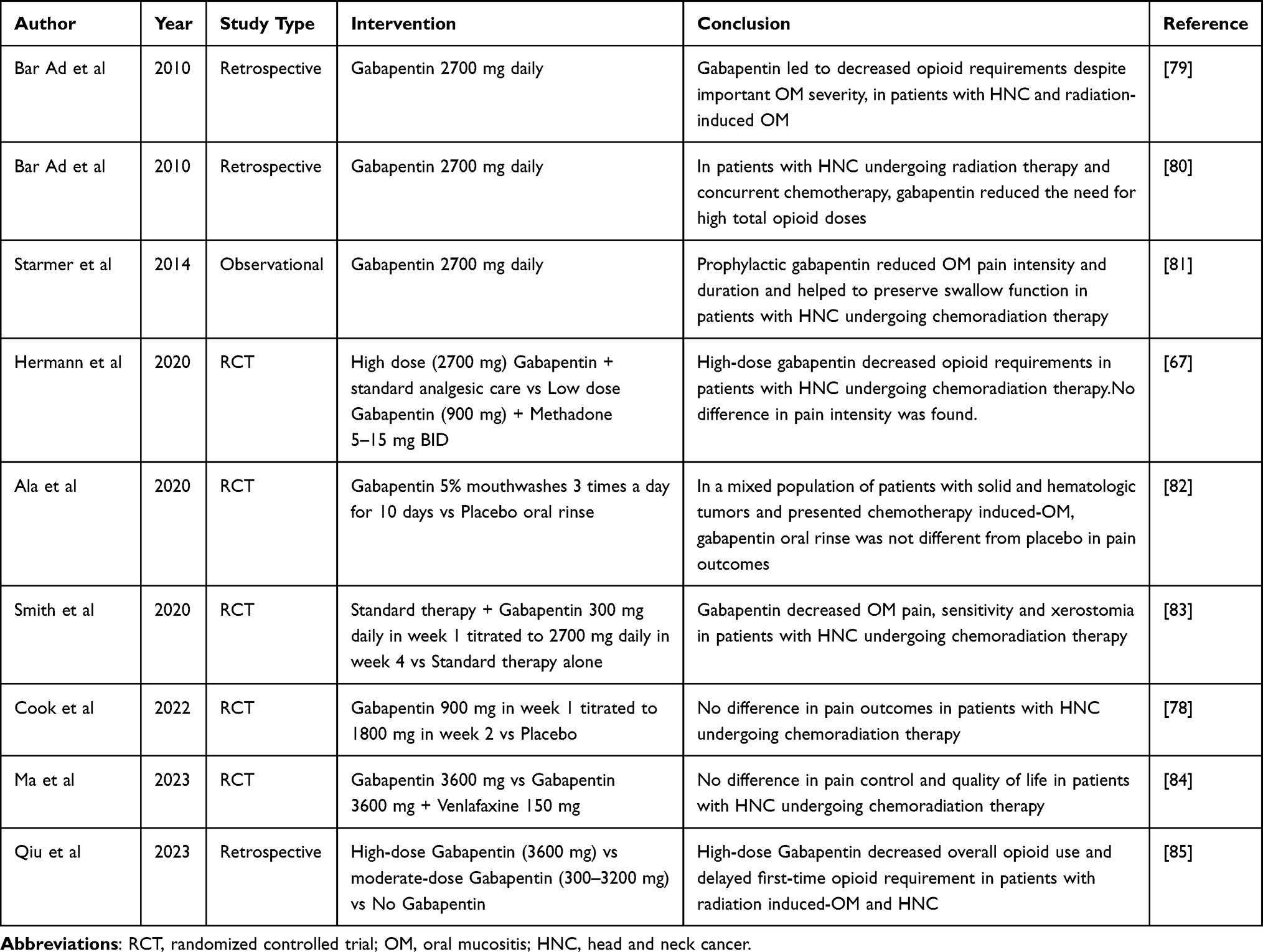 |
Table 5 Clinical Studies Evaluating the Analgesic Effect Gabapentin in Patients with OM |
A secondary analysis of two clinical trials by Ma et al assessed prophylactic gabapentin doses of 3600 mg, 2700 mg, and 900 mg in SCCHN patients undergoing radiotherapy.67,84 They found that the highest dose (3600 mg) was well tolerated, reduced opioid requirements for OM pain management, and had minimal adverse effects.86 Furthermore, a retrospective cohort study by Qui et al involving 480 patients revealed that a high-dose regimen of gabapentin (3600 mg) delayed the time to first opioid use and reduced overall opioid requirements when compared to both moderate-dose (300–3200 mg) and non-gabapentin groups, although it did not significantly affect symptom severity.85
These studies highlight the variability in outcomes regarding gabapentin’s role in OM pain management, suggesting that its efficacy may depend on dosage, patient population, and treatment context.
Ketamine
Ketamine is an anesthetic inductor with proven analgesic and anti-neuropathic properties. It exerts its mechanism of action by the noncompetitive inhibition of NMDA receptors in the periphery, dorsal root ganglion, and central nervous system, providing analgesia and dissociative anesthesia.87 When used topically in patients with oral mucositis, case reports and retrospective studies have documented its potential benefits in reducing pain intensity in adults.88,89 One clinical trial investigated the effects of ketamine mouth rinses in 30 patients with hematologic malignancies who had undergone at least one chemotherapy cycle and were experiencing severe mucositis. In addition to baseline opioid analgesics and lidocaine-based mouth rinses, patients used 5 mL of ketamine mouth rinse (20 mg/5 mL) as part of their treatment. Participants reported significant pain relief at rest (p = 0.0001) and during swallowing (p = 0.0006). The solution was well tolerated, with no adverse effects attributed to ketamine administration.90
In conclusion, ketamine mouthwashes might play a role alleviating OM-related pain in adults. However, current evidence is limited to a single non-randomized clinical trial and a few observational studies. Additionally, the concomitant use of lidocaine-antihistamine-antacid mouthwash solutions in these studies complicates the assessment of ketamine’s independent analgesic effects. Therefore, more research is necessary to assess the separate benefits of ketamine and its effects on quality of life.
Caphosol
Caphosol, a supersaturated calcium phosphate rinse, is an FDA-approved adjunct therapy for the treatment of oral mucositis (OM). This concentrated ionic solution is thought to function by penetrating the oral mucosa and activating cellular pathways that mitigate pain and inflammation, thereby promoting tissue healing.91 Early investigations into Caphosol have demonstrated promising results. A 2003 RCT (Table 6) reported that the use of Caphosol in conjunction with fluoride treatments significantly reduced the incidence and severity of OM, as well as the duration of mucositis symptoms (3.72 vs 7.22 days, p = 0.001) and pain (2.86 vs 7.67 days, p = 0.0001), compared to fluoride treatment alone.92 Additionally, a 2012 study indicated that Caphosol reduced OM severity and pain duration in patients undergoing hematopoietic stem cell transplantation.93 Similarly, Younus et al reported that Caphosol attenuated chemotherapy-induced OM pain.94
 |
Table 6 Clinical Studies Evaluating the Analgesic Effect Caphosol in Patients with OM |
However, the efficacy of Caphosol for OM in patients undergoing radiation therapy for head and neck cancer (HNC) remains inconclusive. A 2016 study by Kiprian et al found that Caphosol reduced the severity of OM, xerostomia, and dysphagia in patients receiving radiotherapy for HNC.97 Conversely, an RCT by Wong et al failed to demonstrate a significant reduction in OM incidence, severity, or associated pain.98 These findings were supported by a 2020 Phase II study by Rao et al, which similarly reported no significant reduction in severe OM with Caphosol use in this population.95 Given the high prevalence and substantial burden of OM among HNC patients undergoing radiotherapy, further research is warranted to identify effective interventions.
Recent studies evaluating Caphosol in chemotherapy- and hematopoietic stem cell transplantation–associated OM have also yielded mixed results. A retrospective analysis by Murdock and Reeves found no significant differences in symptom duration, pain levels, or opioid consumption between patients using Caphosol and those using conventional topical anesthetic-based mouthwashes for chemotherapy-induced OM.100 Among hematopoietic stem cell transplant recipients, Mubaraki et al (2020) reported that while Caphosol did not reduce OM incidence, it did mitigate OM severity.101 In contrast, Bhatt et al found that supersaturated calcium phosphate was ineffective in preventing or treating OM in this population.99 Similarly, Svanberg et al demonstrated that the addition of Caphosol to cryotherapy in stem cell transplant patients did not provide additional benefit in reducing OM grade or pain scores.96
Overall, recent interventional and observational studies suggest limited efficacy of Caphosol for cancer therapy–related OM. While no significant adverse effects have been reported, its clinical benefits remain uncertain. Future research should focus on optimizing formulation and delivery methods to enhance its therapeutic potential.
Growth Factor Analogs
Palifermin
Palifermin is a recombinant form of human Keratinocyte Growth Factor (KGF), a protein involved in critical biological processes such as wound healing and tissue repair. Resembling endogenous KGF, palifermin has demonstrated significant benefits in managing chemoradiation-induced OM. Its mechanism of action is primarily mediated through interaction with the Fibroblast Growth Factor Receptor (FGFR), which activates downstream pathways involved in ROS clearance and DNA repair. These processes promote tissue regeneration and exert anti-apoptotic effects on cells, contributing to the repair and protection of the mucosal lining.102
In a clinical trial involving 212 patients with hematologic malignancies undergoing high-dose chemotherapy, total-body irradiation, and autologous stem cell transplantation, an intravenous regimen of palifermin (three doses of 60 micrograms per kilogram per day, administered before and after conditioning therapy) significantly reduced the severity and incidence of severe mucositis compared to placebo (p < 0.001).103,104 Palifermin was well-tolerated with mild to moderate adverse effects such as rash, pruritus, erythema, and paresthesias, none of which led to treatment discontinuation. However, because FGFR are expressed in various epithelial tissues, there is a theoretical concern regarding the potential tumor-promoting effects of palifermin administration.105
When investigating the efficacy of palifermin for managing OM in patients with solid tumors, Le et al demonstrated that 180 micrograms per kilogram of intravenous palifermin in patients with head and neck cancer improved OM severity compared to placebo. However, no differences were evidenced in opioid analgesic use between treatment arms.106
A recent meta-analysis by Coutsouvelis et al investigated palifermin efficacy for the management of OM in patients with solid and hematologic malignancies. The study included 10 RCTs and 1388 patients. The authors concluded that palifermin administration led to a lower incidence of severe OM in patients with solid tumors (RR 0.76 [95% CI 0.63–0.92; p = 0.004]) and hematologic malignancies (RR 0.63 [95% CI 0.48–0.82; p = 0.0007]).107 Additionally, in prospective studies palifermin administration was associated with better physical well-being after 7 days of treatment in patients undergoing antineoplastic treatment for hematologic cancers.108
Overall palifermin demonstrates mucosal regenerative properties and has been shown to reduce the severity of OM in patients with hematologic malignancies and head and neck cancer. While tumor proliferation remains a theoretical concern due to the expression of FGFR in various epithelial tissues, no significant evidence of cancer recurrence has been reported in clinical studies. Nevertheless, further research and larger clinical trials are essential to fully assess palifermin’s safety profile and its long-term effects in cancer patients.
Future Directions and Ongoing Clinical Trials
Avasopasem Manganese (AVA), also known as “GC4419”, is a promising agent currently under investigation for the treatment of cancer-associated Oral Mucositis (OM). AVA is a molecule that rapidly and specifically converts superoxide into hydrogen peroxide, acting as a free-radical scavenger.109 Given that high levels of ROS and inflammatory cytokines play a central role in the pathogenesis of OM, AVA may help mitigate OM progression by reducing oxidative damage. In a Phase IIb clinical trial, 90 mg of intravenous AVA, compared to placebo, significantly reduced the incidence and severity of OM in patients with oral cavity or oropharynx cancers undergoing chemoradiation therapy.110 These results were further confirmed in the ROMAN Phase III trial where the incidence of severe OM in the AVA group was 54% compared to 64% in the placebo group (p = 0.045). Moreover the median duration of severe OM was reduced to 8 days in the AVA group compared to 18 days in the placebo group (p = 0.002).111
CAM-2028 is a lipid-based formulation primarily developed as a carrier for oral benzydamine preparations. Its mechanism of action occurs upon contact with saliva, where phospholipids and triglycerides self-assemble to form a protective crystalline layer over ulcerated oral mucosa. The bioadhesive properties of CAM-2028 facilitate the controlled release of medications, such as BZ, commonly used in patients with OM. However, in a clinical trial conducted by Hadjieva et al, CAM-2028 alone demonstrated similar pain-relieving effects when compared to a CAM-2028-benzydamine combination. The authors concluded that the pain reduction observed was primarily due to the bioadhesive and protective properties of CAM-2028, with no additional benefit from the release of benzydamine.112
Gelclair (Polyvinylpyrrolidone-sodium hyaluronate gel) is a viscous oral gel used to treat mucosal lesions in the oral cavity, particularly in cancer patients with OM. It adheres to exposed injured epithelium and nerve terminals, forming a protective barrier that helps alleviate pain.113,114 In a clinical trial involving 20 patients with head and neck cancer who developed radiation-induced OM, gelclair mouth rinses were compared to standard therapy (sucralfate and mucaine) as a pain management strategy. Unfortunately, the study found no significant difference in pain outcomes after 24 hours of treatment and no improvement in pain during activities such as speaking, eating, or drinking.115 In alignment with these findings, another clinical study involving 37 patients who underwent stem cell transplantation and developed OM showed no significant differences in pain relief between gelclair and other rinsing solutions (chlorhexidine, benzydamine, and salvia). Nevertheless, gelclair was associated with a longer-lasting effect and significantly reduced the incidence of oral mucosa colonization by Enterococcus faecalis and Candida species in OM patients.116
Ongoing clinical trials are evaluating various therapies to address pain associated with oral mucositis. One trial is investigating the efficacy of a doxepin solution spray (administered 10 minutes prior to meals) to manage breakthrough pain in patients undergoing radiotherapy (NCT06017895). Another Phase II trial is assessing the synergistic effects of long-acting transdermal buprenorphine combined with oral tramadol in patients receiving radiation therapy (NCT04752384). Among novel topical treatments, Orosol®, an osmotically active viscous solution (NCT05161091), and Mucopad HA, an antiseptic solution containing ostenidine and sodium hyaluronate polysaccharide (NCT06276270), are currently under investigation. Nutritional supplementation strategies are also gaining attention, with studies focusing on oral vitamin D to mitigate oral inflammation in chemotherapy patients (NCT06016400) and hydrogen-rich water for its potential to alleviate radiotherapy-induced oral mucositis (NCT05278260). Probiotic research is examining the role of Lactobacillus strains, such as Lactobacillus reuteri (NCT06285591) and Lactobacillus rhamnosus (NCT06390176), in the prevention of severe oral mucositis during radiotherapy. Furthermore, a Phase II clinical trial is evaluating BMX-0001, a therapeutic intervention aimed at reducing free radicals and potentially alleviating the symptoms of oral mucositis (NCT06532279). The results of these trials will undoubtedly provide valuable insights and shape future clinical practices. Advancements in oral mucositis therapies have the potential to significantly enhance pain management and improve the quality of life for affected patients.
Conclusion
In conclusion, this review highlights the range of pharmacological and non-pharmacological interventions aimed at alleviating pain in OM. OM remains a significant complication of cancer therapy, with complex pathogenesis and substantial impact on patient quality of life. Enhanced pain management strategies are crucial, as they can reduce treatment delays, minimize dose reductions, and ultimately enhance therapeutic outcomes. Additionally, effective management may lower healthcare costs by decreasing the need for supportive interventions and hospitalizations.
Given the complexity of OM pathogenesis and the diverse inflammatory mediators involved in pain perception, no single intervention has proven sufficient to address OM across its various stages. Effective management often requires a combination of treatments, beginning with topical medications and escalating to systemic therapy. Despite the variety of available options, a well-established gold-standard protocol has yet to be defined.
Assessing the efficacy of mouthwashes for pain management presents challenges due to variations in their composition and concentration across clinical studies. This lack of standardization complicates the application of findings to clinical practice. Certain mouthwashes, such as those containing lidocaine, doxepin, or benzydamine, have demonstrated promising results for pain relief. However, the potential benefits of combining different pain management strategies remain unclear. Further clinical data are needed to determine whether such combinations could enhance pain reduction. Looking ahead, prioritizing research on novel molecular pathways—such as transient receptor potential (TRP) channels and neurotrophic factors—holds promise for the development of more targeted and effective therapies.
Abbreviations
OM, Oral mucositis; IL-1β, Interleukin 1-β; IL-6, Interleukin-6; TNF-α, Tumor necrosis factor-α; TRP, Transient receptor potential; ET-1, Endothelin-1; NGF, Nerve growth factor; TRPV4, Transient receptor potential V4; COX-2, Cyclooxygenase-2; CGRP, Calcitonin gene-related peptide; NOS, Nitric oxide synthase; cGMP, Cyclic guanosine-MonoPhosphate; NMDA, N-Methyl-D-Aspartate; KGF, Keratinocyte Growth Factor; FGFR; Fibroblast Growth Factor Receptor, HNC, Head and neck cancer; SCT, Stem cell transplantation; CAR-T, Chimeric antigen receptor T-cell therapy; BZ, Benzydamine; MB, Methylene blue; AVA, Avasopasem manganese; RCT, Randomized controlled trial; NRCT, Non-randomized controlled trial; HSCT, Hematopoietic stem cell transplantation; WHO, world health organization.
Author Contributions
All authors made a significant contribution to the work reported, whether that is in the conception, study design, execution, acquisition of data, analysis and interpretation, or in all these areas; took part in drafting, revising or critically reviewing the article; gave final approval of the version to be published; have agreed on the journal to which the article has been submitted; and agree to be accountable for all aspects of the work.
Disclosure
The authors report no conflicts of interest in this work.
References
1. Pulito C, Cristaudo A, Porta C, et al. Oral mucositis: the hidden side of cancer therapy. J Exp Clin Cancer Res. 2020;39(1):210. doi:10.1186/s13046-020-01715-7
2. Lalla RV, Saunders DP, Peterson DE. Chemotherapy or radiation-induced oral mucositis. Dent Clin North Am. 2014;58(2):341–349. doi:10.1016/j.cden.2013.12.005
3. Epstein JB, Wilkie DJ, Fischer DJ, Kim YO, Villines D. Neuropathic and nociceptive pain in head and neck cancer patients receiving radiation therapy. Head Neck Oncol. 2009;1(1):26. doi:10.1186/1758-3284-1-26
4. Al-Rudayni AHM, Gopinath D, Maharajan MK, Menon RK. Impact of oral mucositis on quality of life in patients undergoing oncological treatment: a systematic review. Transl Cancer Res. 2020;9(4):3126–3134. doi:10.21037/tcr.2020.02.77
5. Epstein JB, Miaskowski C. Oral pain in the cancer patient. J Natl Cancer Inst Monogr. 2019;2019(53). doi:10.1093/jncimonographs/lgz003
6. Li E, Zeng J, Hong F, Chen P, Yu X. The prevalence of oral mucositis after radiotherapy in patients with head and neck cancer and its associated factors: a meta-analysis. Clin Transl Oncol. 2025;27(4):1767–1778. doi:10.1007/s12094-024-03706-y
7. Nakagaki M, Kennedy GA, Gavin NC, Clavarino A, Whitfield K. The incidence of severe oral mucositis in patients undergoing different conditioning regimens in haematopoietic stem cell transplantation. Support Care Cancer. 2022;30(11):9141–9149. doi:10.1007/s00520-022-07328-4
8. Abdel-Rahman O, ElHalawani H, Essam-Eldin S. S-1-based regimens and the risk of oral and gastrointestinal mucosal injury: a meta-analysis with comparison to other fluoropyrimidines. Expert Opin Drug Saf. 2016;15(1):5–20. doi:10.1517/14740338.2016.1105959
9. Narayan S, Lehmann J, Coleman MA, et al. Prospective evaluation to establish a dose response for clinical oral mucositis in patients undergoing head-and-neck conformal radiotherapy. Int J Radiat Oncol Biol Phys. 2008;72(3):756–762. doi:10.1016/j.ijrobp.2008.01.060
10. Lalla RV, Brennan MT, Gordon SM, Sonis ST, Rosenthal DI, Keefe DM. Oral mucositis due to high-dose chemotherapy and/or head and neck radiation therapy. J Natl Cancer Inst Monogr. 2019;2019(53). doi:10.1093/jncimonographs/lgz011
11. Harnekar SH, Prakash N, Nagarkar R, Pradeep GL, Mahajan A, Patil RKA. Comparative evaluation of oral mucositis in oral cancer patients undergoing 3-dimensional conformal radiation therapy and intensity modulated radiation therapy with or without chemotherapy. J Oral Maxillofac Pathol. 2023;27(4):720–726. doi:10.4103/jomfp.jomfp_31_23
12. Campos MI, Campos CN, Aarestrup FM, Aarestrup BJ. Oral mucositis in cancer treatment: natural history, prevention and treatment. Mol Clin Oncol. 2014;2(3):337–340. doi:10.3892/mco.2014.253
13. Kusiak A, Jereczek-Fossa BA, Cichońska D, Alterio D. Oncological-therapy related oral mucositis as an interdisciplinary problem-literature review. Int J Environ Res Public Health. 2020;17(7):2464. doi:10.3390/ijerph17072464
14. Sonis ST. Oral mucositis in cancer therapy. J Support Oncol. 2004;2(6 Suppl 3):3–8.
15. Brown TJ, Gupta A. Management of cancer therapy-associated oral mucositis. JCO Oncol Pract. 2020;16(3):103–109. doi:10.1200/JOP.19.00652
16. Elting LS, Cooksley C, Chambers M, Cantor SB, Manzullo E, Rubenstein EB. The burdens of cancer therapy. clinical and economic outcomes of chemotherapy-induced mucositis. Cancer. 2003;98(7):1531–1539. doi:10.1002/cncr.11671
17. Singh V, Singh AK. Oral mucositis. Natl J Maxillofac Surg. 2020;11(2):159–168. doi:10.4103/njms.NJMS_10_20
18. Elad S, Yarom N, Zadik Y, Kuten-Shorrer M, Sonis ST. The broadening scope of oral mucositis and oral ulcerative mucosal toxicities of anticancer therapies. CA Cancer J Clin. 2022;72(1):57–77. doi:10.3322/caac.21704
19. Judge LF, Farrugia MK, Singh AK. Narrative review of the management of oral mucositis during chemoradiation for head and neck cancer. Ann Transl Med. 2021;9(10):916. doi:10.21037/atm-20-3931
20. Viet CT, Corby PM, Akinwande A, Schmidt BL. Review of preclinical studies on treatment of mucositis and associated pain. J Dent Res. 2014;93(9):868–875. doi:10.1177/0022034514540174
21. Pickering V, Jordan RC, Schmidt BL. Elevated salivary endothelin levels in oral cancer patients--a pilot study. Oral Oncol. 2007;43(1):37–41. doi:10.1016/j.oraloncology.2005.12.027
22. Morgan MJ, Liu ZG. Crosstalk of reactive oxygen species and NF-kappaB signaling. Cell Res. 2011;21(1):103–115. doi:10.1038/cr.2010.178
23. Mohammed AI, Fedoruk L, Fisher N, et al. Systemic anti-inflammatory agents in the prevention of chemoradiation-induced mucositis: a review of randomised controlled trials. Biomolecules. 2024;14(5):560. doi:10.3390/biom14050560
24. Watanabe T, Ishihara M, Matsuura K, Mizuta K, Itoh Y. Polaprezinc prevents oral mucositis associated with radiochemotherapy in patients with head and neck cancer. Int, J, Cancer. 2010;127(8):1984–1990. doi:10.1002/ijc.25200
25. Barker PA, Mantyh P, Arendt-Nielsen L, Viktrup L, Tive L. Nerve growth factor signaling and its contribution to pain. J Pain Res. 2020;13:1223–1241. doi:10.2147/JPR.S247472
26. Chen C, Zhang Q, Yu W, Chang B, Le AD. Oral mucositis: an update on innate immunity and new interventional targets. J Dent Res. 2020;99(10):1122–1130. doi:10.1177/0022034520925421
27. Elad S, Cheng KKF, Lalla RV, et al. MASCC/ISOO clinical practice guidelines for the management of mucositis secondary to cancer therapy. Cancer. 2020;126(19):4423–4431. doi:10.1002/cncr.33100
28. Al-Rudayni AHM, Gopinath D, Maharajan MK, Veettil SK, Menon RK. Efficacy of oral cryotherapy in the prevention of oral mucositis associated with cancer chemotherapy: systematic review with meta-analysis and trial sequential analysis. Curr Oncol. 2021;28(4):2852–2867. doi:10.3390/curroncol28040250
29. Colella G, Boschetti CE, Vitagliano R, et al. Interventions for the prevention of oral mucositis in patients receiving cancer treatment: evidence from randomised controlled trials. Curr Oncol. 2023;30(1):967–980. doi:10.3390/curroncol30010074
30. Lee CC, Kuo SF, Chang WP, Guo SL, Huang TW. Effectiveness of cryotherapy on cancer therapy-induced oral mucositis: an umbrella review. Cancer Nurs. 2023;46(5):E288–e296. doi:10.1097/ncc.0000000000001128
31. Chan X, Tay L, Yap SJ, Wu VX, Klainin-Yobas P. Effectiveness of photobiomodulation and oral cryotherapy on oral mucositis among patients undergoing chemotherapy conditioning prior to hematological stem cell transplantation. Semin Oncol Nurs. 2023;39(3):151405. doi:10.1016/j.soncn.2023.151405
32. Zecha JA, Raber-Durlacher JE, Nair RG, et al. Low level laser therapy/photobiomodulation in the management of side effects of chemoradiation therapy in head and neck cancer: part 1: mechanisms of action, dosimetric, and safety considerations. Support Care Cancer. 2016;24(6):2781–2792. doi:10.1007/s00520-016-3152-z
33. Melo WWP, Aragão WAB, Baia-da-Silva DC, Nascimento PC, Lima RR, de Souza-Rodrigues RD. Effects of photobiomodulation on oral mucositis: visualization and analysis of knowledge. Life. 2022;12(11):1940. doi:10.3390/life12111940
34. Shen B, Zhou Y, Wu D, Liu J. Efficacy of photobiomodulation therapy in the management of oral mucositis in patients with head and neck cancer: a systematic review and meta-analysis of randomized controlled trials. Head Neck. 2024;46(4):936–950. doi:10.1002/hed.27655
35. Becker DE, Reed KL. Local anesthetics: review of pharmacological considerations. Anesth Prog. 2012;59(2):
36. Sicari V, Zabbo CP. Diphenhydramine. StatPearls. 2025.
37. Mageswaran R, Ang ZY. A longitudinal assessment of major mouthwashes used in alleviating pain and xerostomia among advanced nasopharyngeal carcinoma patients receiving chemoradiotherapy. J Oncol Pharm Pract. 2024;10781552241265933. doi:10.1177/10781552241265933
38. Sio TT, Le-Rademacher JG, Leenstra JL, et al. Effect of doxepin mouthwash or diphenhydramine-lidocaine-antacid mouthwash vs placebo on radiotherapy-related oral mucositis pain: the alliance A221304 randomized clinical trial. JAMA. 2019;321(15):1481–1490. doi:10.1001/jama.2019.3504
39. Elad S, Yarom N. The search for an effective therapy and pain relief for oral mucositis. JAMA. 2019;321(15):1459–1461. doi:10.1001/jama.2019.3269
40. Jayakrishnan R, Chang K, Ugurluer G, Miller RC, Sio TT. Doxepin for radiation therapy-induced mucositis pain in the treatment of oral cancers. Oncol Rev. 2015;9(1):290. doi:10.4081/oncol.2015.290
41. Sudoh Y, Cahoon EE, Gerner P, Wang GK. Tricyclic antidepressants as long-acting local anesthetics. Pain. 2003;103(1–2):49–55. doi:10.1016/s0304-3959(02)00375-5
42. Epstein JB, Epstein JD, Epstein MS, Oien H, Truelove EL. Doxepin rinse for management of mucositis pain in patients with cancer: one week follow-up of topical therapy. Spec Care Dentist. 2008;28(2):73–77. doi:10.1111/j.1754-4505.2008.00015.x
43. Epstein JB, Truelove EL, Oien H, Allison C, Le ND, Epstein MS. Oral topical doxepin rinse: analgesic effect in patients with oral mucosal pain due to cancer or cancer therapy. Oral Oncol. 2001;37(8):632–637. doi:10.1016/s1368-8375(01)00005-7
44. Epstein JB, Truelove EL, Oien H, Le ND, Epstein MS. Oral topical doxepin rinse: anesthetic effect in normal subjects. Pain Res Manag. 2003;8(4):195–197. doi:10.1155/2003/431308
45. Epstein JB, Epstein JD, Epstein MS, Oien H, Truelove EL. Oral doxepin rinse: the analgesic effect and duration of pain reduction in patients with oral mucositis due to cancer therapy. Anesth Analg. 2006;103(2):465–470. doi:10.1213/01.ane.0000223661.60471.78
46. Leenstra JL, Miller RC, Qin R, et al. Doxepin rinse versus placebo in the treatment of acute oral mucositis pain in patients receiving head and neck radiotherapy with or without chemotherapy: a Phase III, randomized, double-blind trial (NCCTG-N09C6 [Alliance]). J Clin Oncol. 2014;32(15):1571–1577. doi:10.1200/JCO.2013.53.2630
47. Bossi P, Gurizzan C, Guntinas-Lichius O, Hainarosie R, Lancini D. The present and the future of benzydamine: expert opinion paper. Front Oral Health. 2023;4:1191319. doi:10.3389/froh.2023.1191319
48. Riboldi E, Frascaroli G, Transidico P, et al. Benzydamine inhibits monocyte migration and MAPK activation induced by chemotactic agonists. Br J Pharmacol. 2003;140(2):377–383. doi:10.1038/sj.bjp.0705428
49. Nikolaeva-Koleva M, Espinosa A, Vergassola M, et al. Benzydamine plays a role in limiting inflammatory pain induced by neuronal sensitization. Mol Pain. 2023;19:17448069231204191. doi:10.1177/17448069231204191
50. Nicolatou-Galitis O, Bossi P, Orlandi E, Rene-Jean B. The role of benzydamine in prevention and treatment of chemoradiotherapy-induced mucositis. Support Care Cancer. 2021;29(10):5701–5709. doi:10.1007/s00520-021-06048-5
51. Bossi P, Tellone V, Di Loreto G, Fioravanti S, Salvatori E, Comandini A. Phase IV study on the use of benzydamine mouthwash in radiation-induced oral mucositis in patients with head and neck cancer. Front Oncol. 2024;14:1345129. doi:10.3389/fonc.2024.1345129
52. Epstein JB, Silverman S, Paggiarino DA, et al. Benzydamine HCl for prophylaxis of radiation-induced oral mucositis: results from a multicenter, randomized, double-blind, placebo-controlled clinical trial. Cancer. 2001;92(4):875–885. doi:10.1002/1097-0142(20010815)92:4<875::aid-cncr1396>3.0.co;2-1
53. Ariyawardana A, Cheng KKF, Kandwal A, et al. Systematic review of anti-inflammatory agents for the management of oral mucositis in cancer patients and clinical practice guidelines. Support Care Cancer. 2019;27(10):3985–3995. doi:10.1007/s00520-019-04888-w
54. Kazemian A, Kamian S, Aghili M, Hashemi FA, Haddad P. Benzydamine for prophylaxis of radiation-induced oral mucositis in head and neck cancers: a double-blind placebo-controlled randomized clinical trial. Eur J Cancer Care. 2009;18(2):174–178. doi:10.1111/j.1365-2354.2008.00943.x
55. Roopashri G, Jayanthi K, Guruprasad R. Efficacy of benzydamine hydrochloride, chlorhexidine, and povidone iodine in the treatment of oral mucositis among patients undergoing radiotherapy in head and neck malignancies: a drug trail. Contemp Clin Dent. 2011;2(1):8–12. doi:10.4103/0976-237X.79292
56. Sheibani KM, Mafi AR, Moghaddam S, Taslimi F, Amiran A, Ameri A. Efficacy of benzydamine oral rinse in prevention and management of radiation-induced oral mucositis: a double-blind placebo-controlled randomized clinical trial. Asia Pac J Clin Oncol. 2015;11(1):22–27. doi:10.1111/ajco.12288
57. Roldan CJ, Chai T, Erian J, Welker J. Oral pain associated with cancer therapy, a pain medicine perspective. Pain Manag. 2018;8(6):487–493. doi:10.2217/pmt-2018-0036
58. Lee SW, Han HC. Methylene blue application to lessen pain: its analgesic effect and mechanism. Front Neurosci. 2021;15:663650. doi:10.3389/fnins.2021.663650
59. Lee SW, Moon SW, Park JS, Suh HR, Han HC. Methylene blue induces an analgesic effect by significantly decreasing neural firing rates and improves pain behaviors in rats. Biochem Biophys Res Commun. 2021;541:36–42. doi:10.1016/j.bbrc.2021.01.008
60. Roldan CJ, Nouri K, Chai T, Huh B. Methylene blue for the treatment of intractable pain associated with oral mucositis. Pain Pract. 2017;17(8):1115–1121. doi:10.1111/papr.12566
61. Roldan CJ, Chung M, Feng L, Bruera E. Methylene blue for the treatment of intractable pain from oral mucositis related to cancer treatment: an uncontrolled cohort. J Natl Compr Canc Netw. 2021;19(5):521–527. doi:10.6004/jnccn.2020.7651
62. Roldan CJ, Huh B, Song J, et al. Methylene blue for intractable pain from oral mucositis related to cancer treatment: a randomized phase 2 clinical trial. BMC Med. 2022;20(1):377. doi:10.1186/s12916-022-02579-8
63. Roldan CJ, Rosenthal DI, Koyyalagunta D, Feng L, Warner K. Methylene blue for the treatment of radiation-induced oral mucositis during head and neck cancer treatment: an uncontrolled cohort. Cancers. 2023;15(15):3994. doi:10.3390/cancers15153994
64. Pasternak GW. Opiate pharmacology and relief of pain. J Clin Oncol. 2014;32(16):1655–1661. doi:10.1200/JCO.2013.53.1079
65. Haumann J, Geurts JW, van Kuijk SM, Kremer B, Joosten EA, van den Beuken-van Everdingen MH. Methadone is superior to fentanyl in treating neuropathic pain in patients with head-and-neck cancer. Eur J Cancer. 2016;65:121–129. doi:10.1016/j.ejca.2016.06.025
66. Haumann J, van Kuijk SMJ, Geurts JW, et al. Methadone versus fentanyl in patients with radiation-induced nociceptive pain with head and neck cancer: a randomized controlled noninferiority trial. Pain Pract. 2018;18(3):331–340. doi:10.1111/papr.12609
67. Hermann GM, Iovoli AJ, Platek AJ, et al. A single-institution, randomized, pilot study evaluating the efficacy of gabapentin and methadone for patients undergoing chemoradiation for head and neck squamous cell cancer. Cancer. 2020;126(7):1480–1491. doi:10.1002/cncr.32676
68. Meyer I, Chan B, Cohen E, et al. Use of a buprenorphine-based pain management protocol is associated with reduced opioid requirements and pain on swallowing in oral mucositis: a retrospective cohort study. Support Care Cancer. 2022;30(7):6013–6020. doi:10.1007/s00520-022-07014-5
69. Joshi A, Patil VM, Noronha V, et al. Diclofenac versus tramadol for mucositis related pain in head and neck cancer patients undergoing concurrent chemoradiation-a phase 3 study. Ecancermedicalscience. 2021;15:1318. doi:10.3332/ecancer.2021.1318
70. Vayne-Bossert P, Escher M, de Vautibault CG, et al. Effect of topical morphine (mouthwash) on oral pain due to chemotherapy- and/or radiotherapy-induced mucositis: a randomized double-blinded study. J Palliat Med. 2010;13(2):125–128. doi:10.1089/jpm.2009.0195
71. Saunders DP, Epstein JB, Elad S, et al. Systematic review of antimicrobials, mucosal coating agents, anesthetics, and analgesics for the management of oral mucositis in cancer patients. Support Care Cancer. 2013;21(11):3191–3207. doi:10.1007/s00520-013-1871-y
72. Sarvizadeh M, Hemati S, Meidani M, Ashouri M, Roayaei M, Shahsanai A. Morphine mouthwash for the management of oral mucositis in patients with head and neck cancer. Adv Biomed Res. 2015;4(1):44. doi:10.4103/2277-9175.151254
73. Nielsen BN, Friis SM, Schmiegelow K, Henneberg S, Romsing J. Evaluation of topical morphine for treatment of oral mucositis in cancer patients. Br J Pain. 2021;15(4):411–419. doi:10.1177/2049463720975061
74. Hu W, Chen L, Wang C, et al. Standardized nursing and therapeutic effect of oxycontin on oral mucosal pain in nasopharyngeal carcinoma patients. J Cancer Res Ther. 2018;14(7):1594–1599. doi:10.4103/jcrt.JCRT_551_18
75. Hua X, Chen LM, Zhu Q, et al. Efficacy of controlled-release oxycodone for reducing pain due to oral mucositis in nasopharyngeal carcinoma patients treated with concurrent chemoradiotherapy: a prospective clinical trial. Support Care Cancer. 2019;27(10):3759–3767. doi:10.1007/s00520-019-4643-5
76. Schaller A, Peterson A, Backryd E. Pain management in patients undergoing radiation therapy for head and neck cancer - a descriptive study. Scand J Pain. 2021;21(2):256–265. doi:10.1515/sjpain-2020-0067
77. Rose MA, Kam PC. Gabapentin: pharmacology and its use in pain management. Anaesthesia. 2002;57(5):451–462. doi:10.1046/j.0003-2409.2001.02399.x
78. Cook A, Modh A, Ali H, et al. Randomized phase 3, double-blind, placebo-controlled study of prophylactic gabapentin for the reduction of oral mucositis pain during the treatment of oropharyngeal squamous cell carcinoma. Int J Radiat Oncol Biol Phys. 2022;112(4):926–937. doi:10.1016/j.ijrobp.2021.11.012
79. bar Ad V, Weinstein G, Dutta PR, Chalian A, Both S, Quon H. Gabapentin for the treatment of pain related to radiation-induced mucositis in patients with head and neck tumors treated with intensity-modulated radiation therapy. Head Neck. 2010;32(2):173–177. doi:10.1002/hed.21165
80. V BA, Weinstein G, Dutta PR, et al. Gabapentin for the treatment of pain syndrome related to radiation-induced mucositis in patients with head and neck cancer treated with concurrent chemoradiotherapy. Cancer. 2010;116(17):4206–4213. doi:10.1002/cncr.25274
81. Starmer HM, Yang W, Raval R, et al. Effect of gabapentin on swallowing during and after chemoradiation for oropharyngeal squamous cell cancer. Dysphagia. 2014;29(3):396–402. doi:10.1007/s00455-014-9521-1
82. Ala S, Zamani N, Akbari J, Salehifar E, Janbabai G, Koulaeinejad N. Efficacy of gabapentin mouthwash in managing oral mucositis pain in patients undergoing chemotherapy: a prospective, randomised, double-blind, controlled clinical trial. Scott Med J. 2020;65(1):12–18. doi:10.1177/0036933019897237
83. Smith DK, Cmelak A, Niermann K, et al. Preventive use of gabapentin to decrease pain and systemic symptoms in patients with head and neck cancer undergoing chemoradiation. Head Neck. 2020;42(12):3497–3505. doi:10.1002/hed.26407
84. Ma SJ, Iovoli AJ, Wang K, et al. Efficacy of prophylactic high-dose gabapentin and venlafaxine on reducing oral mucositis pain among patients treated with chemoradiation for head and neck cancer: a single-institution, phase 2, randomized clinical trial. Int J Radiat Oncol Biol Phys. 2023;116(4):797–806. doi:10.1016/j.ijrobp.2023.01.047
85. Qiu ML, Iovoli AJ, Khan M, Farrugia MK, Ma SJ, Singh AK. Prophylactic high-dose gabapentin reduces opiate use during radiation therapy for head and neck squamous cell carcinoma. Cancers. 2023;15(7):2003. doi:10.3390/cancers15072003
86. Ma SJ, Wang K, Iovoli AJ, et al. Association of gabapentin use with pain control and feeding tube placement among patients with head and neck cancer receiving chemoradiotherapy. JAMA Network Open. 2022;5(5):e2212900. doi:10.1001/jamanetworkopen.2022.12900
87. Yang Y, Maher DP, Cohen SP. Emerging concepts on the use of ketamine for chronic pain. Expert Rev Clin Pharmacol. 2020;13(2):135–146. doi:10.1080/17512433.2020.1717947
88. Slatkin NE, Rhiner M. Topical ketamine in the treatment of mucositis pain. Pain Med. 2003;4(3):298–303. doi:10.1046/j.1526-4637.2003.03032.x
89. Ryan AJ, Lin F, Atayee RS. Ketamine mouthwash for mucositis pain. J Palliat Med. 2009;12(11):989–991. doi:10.1089/jpm.2009.0198
90. Shillingburg A, Kanate AS, Hamadani M, Wen S, Craig M, Cumpston A. Treatment of severe mucositis pain with oral ketamine mouthwash. Support Care Cancer. 2017;25(7):2215–2219. doi:10.1007/s00520-017-3627-6
91. Treister N, Nieder M, Baggott C, et al. Caphosol for prevention of oral mucositis in pediatric myeloablative haematopoietic cell transplantation. Br J Cancer. 2017;116(1):21–27. doi:10.1038/bjc.2016.380
92. Papas AS, Clark RE, Martuscelli G, O’Loughlin KT, Johansen E, Miller KB. A prospective, randomized trial for the prevention of mucositis in patients undergoing hematopoietic stem cell transplantation. Bone Marrow Transplant. 2003;31(8):705–712. doi:10.1038/sj.bmt.1703870
93. Wasko-Grabowska A, Rzepecki P, Oborska S, et al. A supersaturated calcium phosphate solution seems to effectively prevent and treat oral mucositis in haematopoietic stem cell transplanted cancer patients - single centre experience. J BUON. 2012;17(2):363–368.
94. Younus J, Kligman L, Jawaid MA, Dhalla A. Treatment of active mucositis with caphosol (calcium phosphate): a retrospective case-series. World J Oncol. 2013;4(3):147–150. doi:10.4021/wjon683e
95. Rao NG, Trotti A, Kim J, et al. Phase II multicenter trial of caphosol for the reduction of mucositis in patients receiving radiation therapy for head and neck cancer. Oral Oncol. 2014;50(8):765–769. doi:10.1016/j.oraloncology.2014.06.001
96. Svanberg A, Ohrn K, Birgegard G. Caphosol((R)) mouthwash gives no additional protection against oral mucositis compared to cryotherapy alone in stem cell transplantation. A pilot study. Eur J Oncol Nurs. 2015;19(1):50–53. doi:10.1016/j.ejon.2014.07.011
97. Kiprian D, Jarzabski A, Kawecki A. Evaluation of efficacy of caphosol in prevention and alleviation of acute side effects in patients treated with radiotherapy for head and neck cancers. Contemp Oncol. 2016;20(5):389–393. doi:10.5114/wo.2016.64600
98. Wong KH, Kuciejewska A, Sharabiani MTA, et al. A randomised controlled trial of Caphosol mouthwash in management of radiation-induced mucositis in head and neck cancer. Radiother Oncol. 2017;122(2):207–211. doi:10.1016/j.radonc.2016.06.015
99. Bhatt N, Naithani R, Gupta SK. Supersaturated calcium phosphate rinse in prevention and treatment of mucositis in patients undergoing hematopoietic stem cell transplant. Exp Clin Transplant. 2017;15(5):567–570. doi:10.6002/ect.2016.0180
100. Murdock JL, Reeves DJ. Chemotherapy-induced oral mucositis management: a retrospective analysis of mugard, caphosol, and standard supportive care measures. J Oncol Pharm Pract. 2020;26(3):521–528. doi:10.1177/1078155219850298
101. Mubaraki S, Pani SC, Alseraihy A, Abed H, Alkhayal Z. The efficacy of two different oral hygiene regimens on the incidence and severity of oral mucositis in pediatric patients receiving hematopoietic stem cell transplantation: a prospective interventional study. Spec Care Dentist. 2020;40(6):566–573. doi:10.1111/scd.12525
102. Sadeghi S, Kalhor H, Panahi M, et al. Keratinocyte growth factor in focus: a comprehensive review from structural and functional aspects to therapeutic applications of palifermin. Int J Biol Macromol. 2021;191:1175–1190. doi:10.1016/j.ijbiomac.2021.09.151
103. Spielberger R, Stiff P, Bensinger W, et al. Palifermin for oral mucositis after intensive therapy for hematologic cancers. N Engl J Med. 2004;351(25):2590–2598. doi:10.1056/NEJMoa040125
104. Awada A, Genot MT, Klastersky J. Palifermin and chemotherapy-induced oral mucositis. N Engl J Med. 2005;352(12):1264–1265. author reply 1264-5. doi:10.1056/NEJM200503243521219
105. McDonnell AM, Lenz KL. Palifermin: role in the prevention of chemotherapy- and radiation-induced mucositis. Ann Pharmacother. 2007;41(1):86–94. doi:10.1345/aph.1G473
106. Le QT, Kim HE, Schneider CJ, et al. Palifermin reduces severe mucositis in definitive chemoradiotherapy of locally advanced head and neck cancer: a randomized, placebo-controlled study. J Clin Oncol. 2011;29(20):2808–2814. doi:10.1200/JCO.2010.32.4095
107. Coutsouvelis J, Corallo C, Spencer A, Avery S, Dooley M, Kirkpatrick CM. A meta-analysis of palifermin efficacy for the management of oral mucositis in patients with solid tumours and haematological malignancy. Crit Rev Oncol Hematol. 2022;172:103606. doi:10.1016/j.critrevonc.2022.103606
108. Sakellari I, Angelopoulou M, Tsopra O, et al. A prospective study of incidence, clinical and quality of life consequences of oral mucositis post palifermin prophylaxis in patients undergoing high-dose chemotherapy and autologous hematopoietic cell transplantation. Ann Hematol. 2015;94(10):1733–1740. doi:10.1007/s00277-015-2437-5
109. Sonis ST. Superoxide dismutase as an intervention for radiation therapy-associated toxicities: review and profile of avasopasem manganese as a treatment option for radiation-induced mucositis. Drug Des Devel Ther. 2021;15:1021–1029. doi:10.2147/dddt.S267400
110. Anderson CM, Lee CM, Saunders DP, et al. Phase IIb, randomized, double-blind trial of GC4419 versus placebo to reduce severe oral mucositis due to concurrent radiotherapy and cisplatin for head and neck cancer. J Clin Oncol. 2019;37(34):3256–3265. doi:10.1200/jco.19.01507
111. Anderson C, Salvaggio S, De Backer M, et al. Benefit of avasopasem manganese on severe oral mucositis in head and neck cancer in the ROMAN trial: unplanned secondary analysis. Adv Radiat Oncol. 2025;10(1):101674. doi:10.1016/j.adro.2024.101674
112. Hadjieva T, Cavallin-Ståhl E, Linden M, Tiberg F. Treatment of oral mucositis pain following radiation therapy for head-and-neck cancer using a bioadhesive barrier-forming lipid solution. Support Care Cancer. 2014;22(6):1557–1562. doi:10.1007/s00520-014-2117-3
113. Smith T. Gelclair: managing the symptoms of oral mucositis. Hosp Med. 2001;62(10):623–626. doi:10.12968/hosp.2001.62.10.1666
114. Buchsel PC, Murphy PJ. Polyvinylpyrrolidone–sodium hyaluronate gel (Gelclair ®): a bioadherent oral gel for the treatment of oral mucositis and other painful oral lesions. Expert Opin Drug Metab Toxicol. 2008;4(11):1449–1454. doi:10.1517/17425255.4.11.1449
115. Barber C, Powell R, Ellis A, Hewett J. Comparing pain control and ability to eat and drink with standard therapy vs gelclair: a preliminary, double centre, randomised controlled trial on patients with radiotherapy-induced oral mucositis. Support Care Cancer. 2007;15(4):427–440. doi:10.1007/s00520-006-0171-1
116. Vokurka S, Skardova J, Hruskova R, et al. The effect of polyvinylpyrrolidone-sodium hyaluronate gel (Gelclair) on oral microbial colonization and pain control compared with other rinsing solutions in patients with oral mucositis after allogeneic stem cells transplantation. Med Sci Monit. 2011;17(10):Cr572–6. doi:10.12659/msm.881983
 © 2025 The Author(s). This work is published and licensed by Dove Medical Press Limited. The
full terms of this license are available at https://www.dovepress.com/terms
and incorporate the Creative Commons Attribution
- Non Commercial (unported, 4.0) License.
By accessing the work you hereby accept the Terms. Non-commercial uses of the work are permitted
without any further permission from Dove Medical Press Limited, provided the work is properly
attributed. For permission for commercial use of this work, please see paragraphs 4.2 and 5 of our Terms.
© 2025 The Author(s). This work is published and licensed by Dove Medical Press Limited. The
full terms of this license are available at https://www.dovepress.com/terms
and incorporate the Creative Commons Attribution
- Non Commercial (unported, 4.0) License.
By accessing the work you hereby accept the Terms. Non-commercial uses of the work are permitted
without any further permission from Dove Medical Press Limited, provided the work is properly
attributed. For permission for commercial use of this work, please see paragraphs 4.2 and 5 of our Terms.