
Back to Journals » International Journal of General Medicine » Volume 18
Addressing Critical Mistakes in Administering Intravenous Medications at Omdurman Military Hospital, Khartoum, Sudan
Authors Ahmed WAM, Abdelrahman AEHE, Mohamed AA  , Mohammed IO, Mustafa AMA, Ahmed ZEE, Mohamed MMT, Alghamdi FAA, Elbashir AEE , Alkubati S , Al-Sowaidi A, Dinar NMAA, Obadi AA, Saleh KA
Received 23 October 2024
Accepted for publication 23 December 2024
Published 9 January 2025 Volume 2025:18 Pages 123—133
DOI https://doi.org/10.2147/IJGM.S497591
Checked for plagiarism Yes
Review by Single anonymous peer review
Peer reviewer comments 2
Editor who approved publication: Dr Satish Nair
Waled AM Ahmed,1,2 Amna Eltom Hajo Elsheikh Abdelrahman,3 Amal Abdelgadir Mohamed,4 Ibrahim Osman Mohammed,5 Amna Mohammed Ali Mustafa,6 Zeinab Eltayeb Elfaki Ahmed,7 Maab Mutaz Tagelsir Mohamed,8 Fahad Abdullah A Alghamdi,9 Amira EE Elbashir,10 Sameer Alkubati,11 Akram Al-Sowaidi,12 Neimat MAA Dinar,13 Abdalkhaliq Ahmed Obadi,1 Khalil A Saleh14
1Community Medicine Department, Faculty of Medicine, Al-Saeeda University, Sanaa, Yemen; 2Community Health Nursing Department, Faculty of Nursing, Al-Baha University, Al-Baha, Saudi Arabia; 3Clinical Pharmacy Department, Faculty of Pharmacy, Omdurman Islamic University, Khartoum, Sudan; 4Department of Maternity and Childhood Nursing, College of Nursing, Taif University, Taif, Saudi Arabia; 5Clinical Pharmacy Department, Faculty of Pharmacy, Gazeira University, Gazeira, Sudan; 6Department of Nursing, College of Nursing and Health Sciences, Jazan University, Jazan, Saudi Arabia; 7Obstetrics and Gynecology Department, Faculty of Medicine, Alzaeim Alazhari University, Khartoum, Sudan; 8Clinical Pharmacy Department, Faculty of Pharmacy, University of Medical Sciences and Technology, Khartoum, Sudan; 9Geriatric Care Nursing Department, Faculty of Nursing, Al-Baha University, Al-Baha, Saudi Arabia; 10Maternal and Child Health Nursing Department, Faculty of Nursing, Al-Baha University, Al-Baha, Saudi Arabia; 11Department of Medical Surgical Nursing, College of Nursing, University of Ha’il, Hail City, Saudi Arabia, and Department of Nursing, Faculty of Medicine and Health Sciences, Hodeida University, Hodeida, Yemen; 12Pharmacy Department, Faculty of Medical Sciences, Al Janad University for Science & Technology, Taiz, Yemen; 13Medical-Surgical Nursing Department, Faculty of Nursing, Al-Baha University, Al-Baha, Saudi Arabia; 14Department of Medical Surgical, College of Nursing, University of Ha’il, Hail, Saudi Arabia
Correspondence: Waled AM Ahmed, Community Medicine Department, Faculty of Medicine, Al-Saeeda University, Sanaa, Yemen. Community Health Nursing Department, Faculty of Nursing, Al-Baha University, Sanaa, Yemen, Tel +00966508245369, Email [email protected]
Objective: Errors in the preparation and administration of intravenous medications are significant contributors to morbidity and mortality rates in medical practice. Early reporting and the implementation of preventive measures can mitigate these errors. This study aims to identify patterns and frequencies of errors in IV medication preparation and administration, along with associated factors, at Omdurman Military Hospital in Khartoum, Sudan.
Methods: This observational, descriptive, cross-sectional study was conducted in the emergency department of Omdurman Military Hospital from January to May 2022. We observed 60 nurses responsible for intravenous drug preparation and administration using a pretested questionnaire and checklist on multiple occasions. The data was analyzed by SPSS and the descriptive and inferential statistics were applied.
Results: Our findings reveal that 98% of the nurses reported a lack of formal training in IV drug preparation and administration. The observed preparation area was characterized as untidy in 59.6% of observations, and 52.5% were conducted in crowded environments. We identified six distinct types of errors during drug preparation, with the most common being the absence of aseptic techniques (63.2%) and the failure to check drug expiry dates before administration (99%). In contrast, five types of administration errors were reported, with the most prevalent being incorrect administration rates (68.7%) and the absence of post-administration side-effect assessments (84.8%). Additionally, 83.3% of nurses did not label the unused portion of a drug intended for the next dose.
Conclusion: This study identifies a total of 11 different types of errors in IV drug preparation and administration, some of which are associated with the hospital’s work environment. The lack of formal training among 98% of the nurses stands out as a significant contributor to the increasing frequency of these errors.
Keywords: medications errors, preparation, administration, intravenous, emergency
Introduction
Medication errors represent a significant challenge within healthcare systems, with direct consequences for patient safety.1–3 Recognizing the gravity of this issue, the World Health Organization (WHO) embarked on a global initiative to reduce morbidity and mortality associated with medication errors by 50% by 2022.4
Nurses play a pivotal role in patient care, including the preparation, reconstitution, and administration of medications. Their actions at this crucial juncture can significantly influence the outcome of therapy.3,5 Medication administration errors are typically defined as deviations from the prescriber’s medication order, manufacturer’s preparation/administration instructions, or institutional policies.6–8 Among these errors, those involving IV medications carry the highest risk and potential harm due to the rapid introduction of drugs into the bloodstream. Shockingly, 61% of life-threatening errors are associated with IV medications.9,10 Al-worafi et al, 2020 have mentioned several definitions for MEs. Furthermore, they mentioned two main types for MEs in the study conducted in Yemen.11
Previous studies have identified that the majority of these errors occur during the administration of bolus doses or the preparation of drugs requiring complex multi-step processes.12–14 Factors contributing to medical errors encompass various aspects, including hospital-related factors such as unfavorable working conditions, inadequate facilities, and drug shortages.15,16 Additionally, errors may be linked to medical staff-related factors, including lack of experience, knowledge, job satisfaction, fatigue, disorganized work schedules, and a shortage of senior staff.16
A previous study conducted at our institution revealed that medication errors were prevalent, with 97.7% of samples showing at least one error. These errors spanned various stages, with pre-preparation errors occurring in 91.2% of samples, preparation errors in 32.8%, labeling errors in 3.2%, and administration errors in 88.6% of samples. Notably, the preparation environment was often suboptimal, with inadequate cleaning, lack of sterile gloves, and omission of essential swabbing procedures.17 Infusion-controlled IV drugs exhibited a lower incidence of errors, underscoring the importance of technology in error prevention. Despite these findings, errors remained more prevalent during bolus drug administration, particularly at morning.17
Further analysis showed that specific types of errors, such as wrong intravenous rates, mixture, volume, and drug incompatibility, constituted 91.7% of the errors. Notably, each year of nursing experience reduced the risk of error, emphasizing the importance of expertise. Administration by bolus significantly increased the risk of errors, while diligent patient identification reduced the risk by 56%.18 Another study discerned that errors were divided between preparation and administration. Fast injection of bolus doses beyond recommended rates accounted for a substantial portion of errors. Amikacin had the highest error rate, and errors were more prevalent during IV rounds. Surprisingly, no significant correlations were found between error frequency and nurses’ demographics.19
A recent systematic review has showed that an education emerged as a critical factor in error prevention, with one study demonstrating a significant improvement in error rates after an educational intervention that used wall posters and informative pamphlets to educate nurses on correct IV drug preparation and administration.20
In another study, parenteral medications were found to contain errors in preparation and administration in a staggering 79% of cases, with 33% of doses exhibiting two or more errors. The most common errors involved incorrect drug preparation (57%) and administration rate (33%). Alarmingly, double-checking procedures were absent in all preparations and administrations. Failure to label syringes properly was associated with a higher error rate.21
A study further emphasized that errors in the preparation and administration of IV drugs are prevalent, with bolus injections at an increased risk.22 Errors encompassed injection rates, preparation, administration, and compliance with doctor’s orders. Amikacin was frequently involved in these errors.23
Nurses are the responsible healthcare providers and connection channel between the management plan and the therapeutic effect so they should properly prepare and give IV drugs.24,25 Thus, this study was conducted in Sudan to assess IV medication errors in our complex hospital environment. This will include assessing the MEs in preparation and administration of IV medications.
Methods
Study Design
This is an observational descriptive cross-sectional study. It was conducted at Omdurman Military Hospital to identify the errors of IV administration of medication.
Study Area
The study was conducted at the emergency department in Omdurman Military Hospital, Khartoum, Sudan.
Study Period
The study was conducted over a period from January to May 2022 in the selected department of the hospital.
Sampling and Sample Size
The study used the purposive sampling of the preparation and administration of IV medications to assess the practice of 60 nurses involved in the preparation and administration of IV drugs in the hospital. The nurses who work at Omdurman Military Hospital ED, and agreed to participate were included in the study and being observed during IV preparation and administration.
Data Collection Technique
The data was collected by questionnaire, and observation checklist that were prepared and pretested using the last evidence-based recommendations in good preparation and administration practices of IV drugs. The researcher have obtained permission from hospital authorities and head of ED to collect the data from working nurses. The questionnaire was filled from nurses at the nurse station and then one drug preparation and administration was attended by the researcher while the nurse preparing and administering the drug to patient at ER. The checklist was completed by the researchers during procedure and re-checked after completing the procedure. The included nurses have provided written consent to participate in the study and their provided information were kept confidential.
Data Collection Tools
The questionnaire is composed of two parts; part one includes the sociodemographic characteristics of the participants like age, gender, and duration of the experience and part two includes the experience and attitude of nurses towards errors in the preparation and administration of IV medications. The questionnaire was adapted from the previous study conducted by Di Muzio 2016.26
The checklist also included observation of the administration composed of type of drug, expiry date, labeling, storage, side effects, compatibility with solvent and other concomitant IV drugs, and several given drugs at the same time in addition to aseptic and safety technique, dosage concentration, solvent compatibility, and rate of administration and environmental factors (tidiness, crowdedness, preparation area), it was obtained from the study conducted by Truter 2017.27
Pilot Study
To indicate the tool’s validity and reliability of the questionnaire was reviewed by expertise in the field for accuracy and was pretested on a sample of emergency department in two hospitals from Khartoum state. The Cronbach’s alpha was found to be 0.83.
Data Analysis
The collected data was revised, coded, and entered, an excel data sheet using SPSS version 22.0. The analysis of the collected data was conducted using both descriptive and inferential statistics; the descriptive method was applied for all variables to get frequencies and percentages and to present data in tables and/ or figures, while the inferential statistics including chi square test was used to identify the associations between the variables. A p-value of 0.05 was considered statistically significant.
Results
Sociodemographic Characteristics
Table 1 shows that the study included 60 nurses working in the Emergency Department at Omdurman Military Hospital were examined in terms of sociodemographic characteristics and working conditions. The majority of participants were female (81.7%), with educational backgrounds ranging from bachelor’s degrees (68.3%) to diplomas (5%) and master’s degrees (26.7%). Their work experience varied, with 30% having less than 12 months, 45% between 12 and 36 months, and 25% more than 36 months of experience. These nurses followed a 24-hour shift schedule, spanning departments such as C1 (23.3%), C2 (23.3%), ICU (20%), trauma (23.3%), and wards (10%). Medication administration adhered to specific time slots, including 6:00 am, 12:00 pm, 2:00 pm, 6:00 pm, and 12:00 am, with additional responsibilities for newly prescribed or urgently needed drugs at any time during their shifts. Each nurse underwent multiple observations, providing a comprehensive perspective on their medication preparation and administration practices.
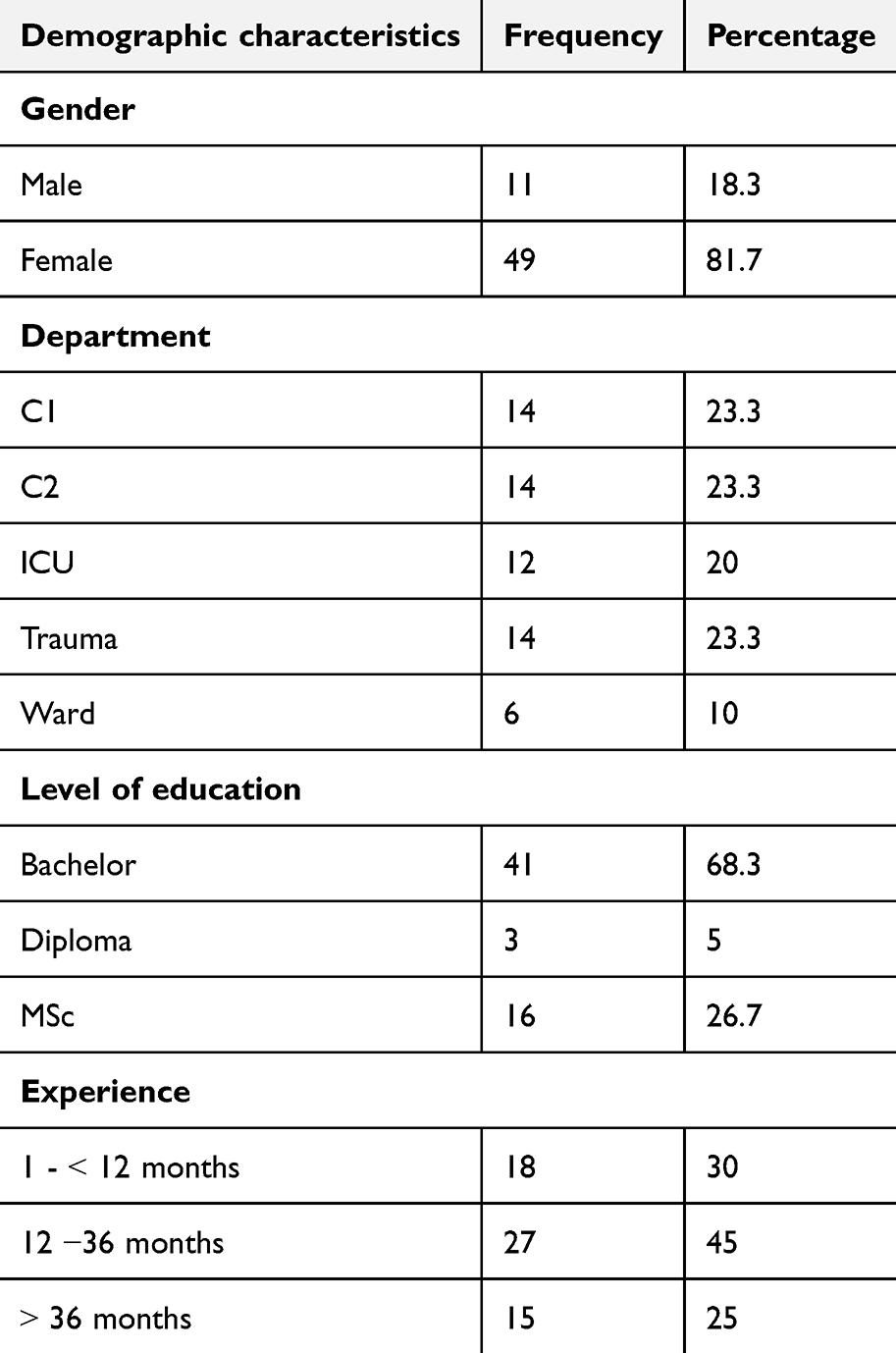 |
Table 1 The Sociodemographic Characteristics of Nurses at Omdurman Military Hospital, Khartoum, Sudan |
Frequency and Type of Administered Drugs
The study observed the frequency and types of intravenous (IV) medications administered by nurses, revealing a diverse range of medications in their practice. Antibiotics accounted for the majority, constituting 50.5% of the administered drugs, followed by analgesics/antipyretics at 14.1%, electrolyte solutions at 13.1%, acid-suppressing agents at 16.2%, anticonvulsants at 5.1%, and corticosteroids at 1% as shown in Table 2.
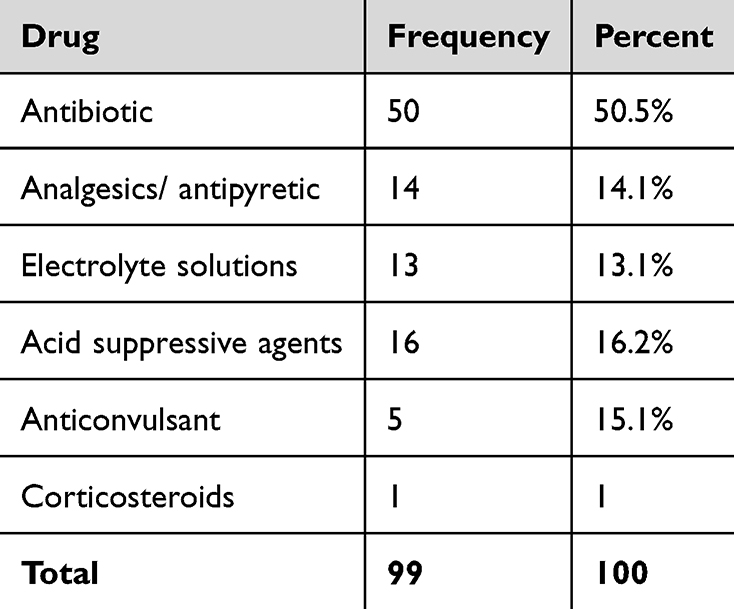 |
Table 2 Frequency and Type of Administered Medications Among Nurses at Omdurman Military Hospital, Khartoum, Sudan |
Experience and Attitude of the Observed Nurses
The study delved into the experience and attitudes of the observed nurses regarding the preparation and administration of intravenous (IV) drugs. An alarming 98% of the nurses disclosed that they had never undergone any formal training program in this critical aspect of their practice.
Work Environment
The examination of the work environment yielded important insights. It was found that 39.4% of the IV drugs observed were prepared at the nurse station, while a majority of 60.6% were prepared in proximity to a patient’s bedside. Notably, the observed preparation areas were characterized as tidy and non-crowded in only 40.4% of cases, with a concerning 59.6% being documented as untidy and 52.5% as crowded. Additionally, it was discovered that readily available information on drug and solvent compatibilities was lacking at the nurse station, and there were no written instructions and policies in place regarding aseptic techniques, as detailed in Table 3.
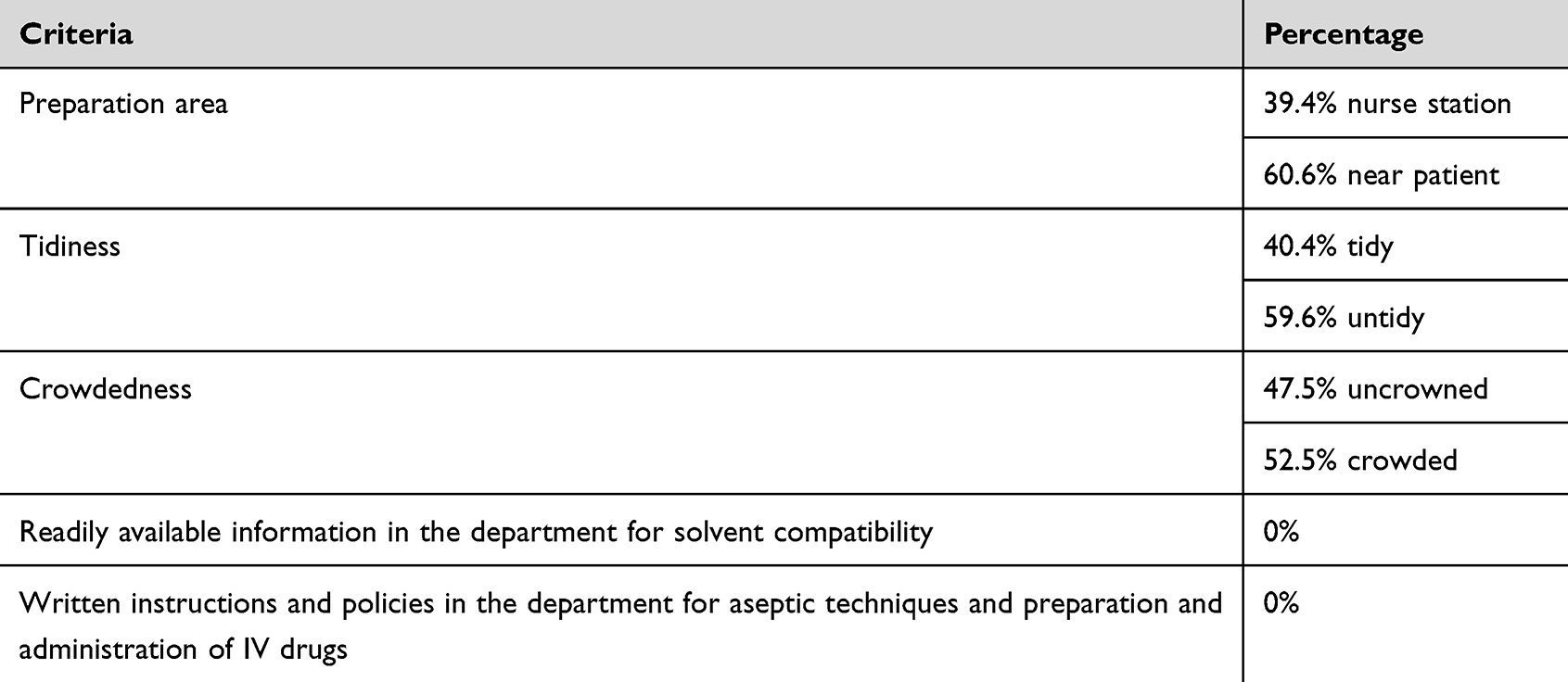 |
Table 3 Criteria of Administered Medications Among Nurses at Omdurman Military Hospital, Khartoum, Sudan |
Preparation Errors
There were 6 different types of errors observed while preparation of IV drugs: no checking of patient/ prescription identification was observed in 14.1%, lack of a septic technique was observed in 63.2%, no checking of the expiry date before drug administration was observed in 99%, incompatible solvent for the drug was observed in 6.0%, an insufficient solvent amount for the required concentration was 21.7%, incompatibility of concomitant intravenous drugs 27.2%, Figure 1.
 |
Figure 1 Types of preparation errors among nurses at Omdurman Military Hospital, Khartoum, Sudan The figure show six types of medication errors associated in the study. |
Administration Errors
This study showed five different types of administration errors: wrong rate of administration 68.7%, incomplete administration of all the volume of the dose 25.3%, no checking for possible side effects after drug administration 84.8%, no labeling of the unused amount of the drug which is intended to be used in the next dose 83.3%, improper storage of the unused amount of the drug which is intended to be used in the next dose 66%. A summary of administration errors was illustrated in Figure 2.
 |
Figure 2 Types of administration errors among nurses at Omdurman Military Hospital, Khartoum, SudanThe figure show five types of medication errors associated in the study. |
Associations Between Errors and Other Related Factors
Table 4 shows the association between work environment factors and medication preparation errors, it presents that the tidiness, crowdedness and type of drug of the station associate significantly with error types. The lack of an aseptic technique was significantly associated with the tidiness of the area (P<0.001), and the crowdedness of the area (P<0.05). Incomplete administration of the volume of the drug was significantly associated with the crowdedness of the area (P=0.05) and there was no significant association with other work environment factors. The chi-square and p-values indicate the statistical significance of these associations.
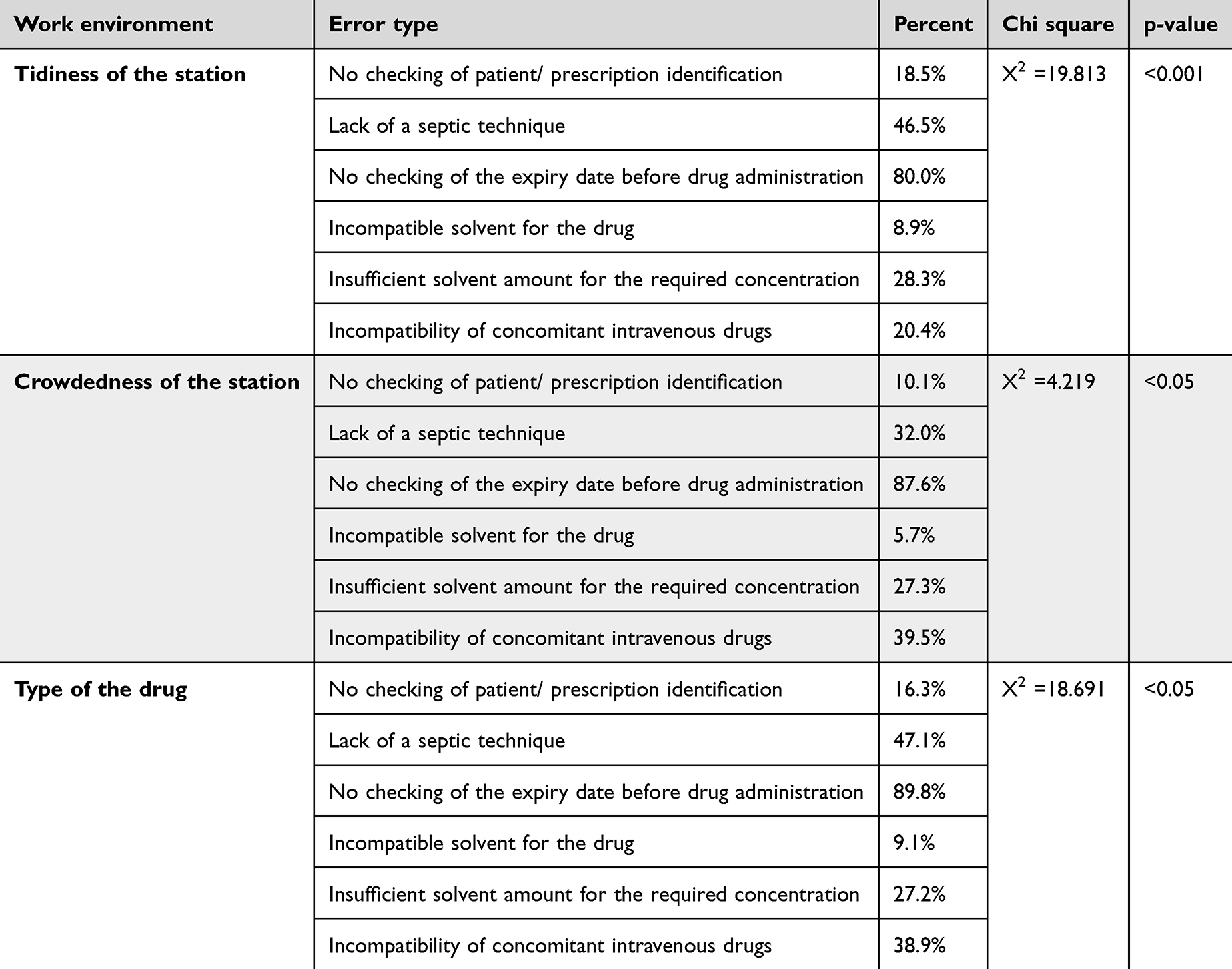 |
Table 4 Association Between Work Environment Factors and Medication Preparation Errors Among Nurses at Omdurman Military Hospital, Khartoum, Sudan |
Table 5 shows the association between work environment factors and medication administration errors, it presents that the tidiness, crowdedness and type of drug of the station associate significantly with error types. Incompatible type of solvent (P< 0.05), and insufficient solvent amount for the required concentration of the drug (P<0.05) were significantly associated with the type of the given drug. Labeling of the unused amount of the drug which is intended to be used in the next dose was significantly associated with many given drugs (P<0.001). The chi-square and p-values indicate the statistical significance of these associations.
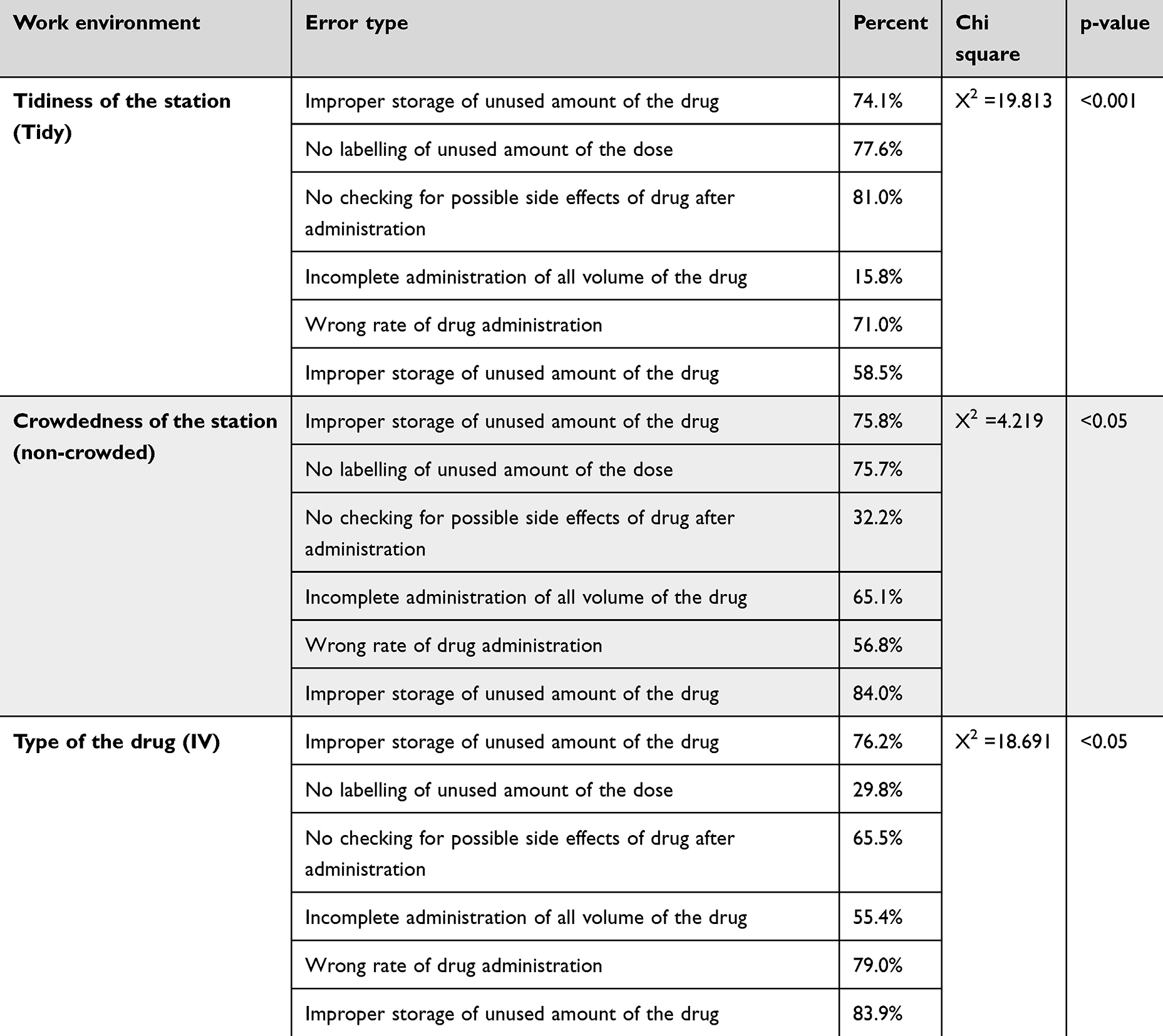 |
Table 5 Association Between Work Environment Factors and Medication Administration Errors Among Nurses at Omdurman Military Hospital, Khartoum, Sudan |
Discussion
This study was carried out in ED as it has a higher pattern of stressful unexpected workflow, which is a major leading cause of errors. In this study, 98% of the nurses who were included in the observation of IV drug preparation and administration did not receive any training program or guidance in the preparation and administration of IV drugs in the hospital which may be considered as a modified contributing factor of errors. Training and education may reduce the frequency of error as mentioned in a systematic review that was carried out recently which confirmed a reduction in the incidence of errors after educational intervention about proper preparation and administration of IV drugs.28
In this study, more than one error was reported in all observations of preparation and administration of IV drugs (100%), this inconsistency with a study which was conducted in a tertiary care hospital in Malaysia (2013) which reported 97.7% of the samples had at least one medication error.17 However, this result is higher than records of two studies, carried out in ICU in a tertiary hospital in Malaysia (2016)21 and Iran (2012)29 in which 79%, 49% of the parenteral medications prepared and administered had one or more error respectively.
Patient/ prescription identification was checked in 85.9% unlike a previous study which was conducted at the Universiti Kebangsaan Malaysia Medical Center (2011), which showed that Patient identification was only checked in 47.9% of administrations but it was associated with a 56% reduction in intravenous error risk.30
One of the most frequently occurring errors was the lack of a septic technique which was recorded in 63.2% of observations. This error occurs because of poor facilities and a low supply of aseptic implements such as: disinfecting alcohol, gloves, and facemask. This finding is similar to that of a previous study which was observed that in 81 samples (n=307, 98.7%) neither the hands were washed nor sterile gloves were worn.24
Incompatibility of the solvent 6.0%, and insufficient solvent amount for the required concentration 21.7% have lower occurring frequencies because both errors did not occur in some brands in which the compatible solvent type and amount is available in the same package with the drug powder vial, unlike a previous study which was conducted in the emergency department at the university hospital, 48% of the prepared drug infusions contained wrong concentration errors.31
In this study wrong rate of administration, 68.7% was one of the more frequent errors when compared with other types of errors, similar findings observed in previous studies as described below: (n=257, 85.1%) was recorded in a study that was conducted in two teaching hospitals,32 (94%) was reported in a study that was conducted in university Kebangsaan Malaysia Medical Center,21 and (33%) was reported in a study that was conducted in the emergency department at the university hospital in Brazil.31
In this study crowdedness of the area was significantly associated with a lack of aseptic technique (P<0.05) and incomplete administration of all the volume of the drug (P=0.05), this part corresponds to a systematic review study which was done to determine the incidence and prevalence of intravenous medication errors in the UK at which nurses frequently reported that the quality of intravenous dose-checking activities was compromised due to high perceived workload.3
Conclusion
In summary, this study was conducted in Sudan to assess IV medication errors during preparation and administration in a hospital environment, it has brought to light various types of errors in the preparation and administration of intravenous (IV) drugs, occurring at varying frequencies, with multiple errors often observed in a single instance. A substantial portion of these errors can be attributed to factors within the hospital’s work environment. A concerning finding is that a significant majority of nurses, 98%, reported a lack of formal training or guidance in IV drug preparation and administration, highlighting this as a prominent contributing factor to these errors. Furthermore, the absence of written instructions and policies for proper preparation and administration within the work area compounds the problem.
Recommendations
To address medication administration errors, it is recommended to improve the hospital work environment, implement training programs, ensure sound drug supply practices, and collaborate with manufacturing companies to optimize IV drug packaging. Future research encompassing diverse hospitals across various regions is recommended. Additionally, promoting the consistent use of aseptic techniques during IV drug preparation and administration stands as a crucial measure to minimize the risk of infections.
Data Sharing Statement
Data are available upon request from the corresponding author.
Ethics statement
The study was approved by Omdurman Islamic University ethical committees at the faculty of Pharmacy (Approval No. OIU/PC/16) on 01/02/2022. Before enrollment, nurses were told about the purpose of the study, without knowing the nature and time of the observation or the observer, and only those who agreed were included in the observation. They provided written consents prior to their participation in the study.
Acknowledgments
The authors would like to express their appreciation to the participants of this study and to the nurse manager at Omdurman Military Hospital.
Disclosure
The authors declare that they have no competing interest related to this work.
References
1. Escrivá Gracia J, Brage Serrano R, Fernández Garrido J. Medication errors and drug knowledge gaps among critical-care nurses: a mixed multi-method study. BMC Health Serv Res. 2019;19(1):1–9.
2. Ribeiro Mendes J, Teixeira Lopes MCB, Vancini-Campanharo CR, Pinto Okuno MF, Assayag Batista RE. Types and frequency of errors in the preparation and administration of drugs. Einstein. 2018;16(3).
3. Sutherland A, Canobbio M, Clarke J, Randall M, Skelland T, Weston E. Incidence and prevalence of intravenous medication errors in the UK: a systematic review. Eur J Hosp Pharm. 2020;27(1):3–8. doi:10.1136/ejhpharm-2018-001624
4. World Health Organization. Global patient safety action plan 2021-2030: towards eliminating avoidable harm in health care. World Health Organization. 2021.
5. Nashwan AJ, Abou Hashish EA, Mohamed AS, et al. Exploring the National Nursing Research Priorities in the Eastern Mediterranean Region and Overcoming the Associated Challenges: an Expert Opinion. Cureus. 2024;16(7).
6. Keers RN, Williams SD, Cooke J, Ashcroft DM. Understanding the causes of intravenous medication administration errors in hospitals: a qualitative critical incident study. BMJ Open. 2015;5(3):e005948. doi:10.1136/bmjopen-2014-005948
7. Yousef A, Abu Farha R, Da’meh K. Medication administration errors: causes and reporting behaviours from nurses perspectives. Int J Clin Pract. 2021;75(10):e14541. doi:10.1111/ijcp.14541
8. Shawahna R, Masri D, Al‐Gharabeh R, Deek R, Al‐Thayba L, Halaweh M. Medication administration errors from a nursing viewpoint: a formal consensus of definition and scenarios using a Delphi technique. J Clin Nurs. 2016;25(3–4):412–423. doi:10.1111/jocn.13062
9. Gul A, Khan MJ, Gillani M, Imtiaz K. Intravenous Infusions Medication Errors Among Patients Visiting Shiekh Khalifa Bin Zaid Combined Military Hospital Muzaffarabad; A Cross-sectional Study. J Asian Med Student Asso. 2019;7(1).
10. Lieber JB. Killer Care: How Medical Error Became America’s Third Largest Cause of Death, and What Can Be Done About It. OR Books; 2015.
11. Al-Worafi YM Medication errors. Drug safety in developing countries: elsevier; 2020. p. 59–71.
12. Hoppe-Tichy T. Current challenges in European oncology pharmacy practice. J Oncol Pharm Pract. 2010;16(1):9–18. doi:10.1177/1078155209354346
13. Laurent PS. Medication Administration Safety I. Chatham University; 2014.
14. Taxis K, Barber N. Ethnographic study of incidence and severity of intravenous drug errors. BMJ. 2003;326(7391):684. doi:10.1136/bmj.326.7391.684
15. Smeds Alenius L Conditions for care: factors in the nurse work environment related to safe and high quality care in acute care hospitals. 2018.
16. Shahrokhi A, Ebrahimpour F, Ghodousi A. Factors effective on medication errors: a nursing view. J Rese Pharmacy Pract. 2013;2(1):18. doi:10.4103/2279-042X.114084
17. Ong W, Subasyini S. Medication errors in intravenous drug preparation and administration. Med J Malaysia. 2013;68(1):52–57.
18. Hirebail SK. Analysis of Medication Errors in Medicine Ward of Medical College Teaching Hospital. Mandya: Rajiv Gandhi University of Health Sciences (India); 2018.
19. Márquez-Hernández F-C VV, Cañadas-Núñez AL, Di Muzio F, Giannetta M, Gutiérrez-Puertas L N. Factors related to medication errors in the preparation and administration of intravenous medication in the hospital environment. PLoS One. 2019;14(7):e0220001. doi:10.1371/journal.pone.0220001
20. Takhtinejad NJ, Stewart D, Nazar Z, Hamad A, Hadi MA. Identifying factors influencing clinicians’ reporting of medication errors: a systematic review and qualitative evidence synthesis using the theoretical domains framework. Expert Opin Drug Saf. 2024;23(10):1271–1282. doi:10.1080/14740338.2024.2396397
21. Yin T, Said MM, Rahman RA, Taha N. An investigation of errors: the preparation and administration of parenteral medications in an intensive care unit of a tertiary teaching hospital in Malaysia. Int J Pharm Pharmaceut Sci. 2016;8:5.
22. Strbova P, Mackova S, Miksova Z, Urbanek K. Medication errors in intravenous drug preparation and administration: a brief review. J Nurs Care. 2015;4(285):2167–1168.1000285.
23. World Health Organization. Medication Safety in High-Risk Situations: World Health Organization; 2019.
24. Shamsuddin AF, Shafie SD. Knowledge of nurses in the preparation and administration of intravenous medications. Procedia Soc Behav Sci. 2012;60:602–609. doi:10.1016/j.sbspro.2012.09.429
25. Westbrook JI, Rob MI, Woods A, Parry D. Errors in the administration of intravenous medications in hospital and the role of correct procedures and nurse experience. BMJ Qual Saf. 2011;20(12):1027–1034. doi:10.1136/bmjqs-2011-000089
26. Di Muzio M, Tartaglini D, De Vito C, La Torre G. Validation of a questionnaire for ICU nurses to assess knowledge, attitudes and behaviours towards medication errors. Ann Ig. 2016;28(2):113–121. doi:10.7416/ai.2016.2090
27. Truter A, Schellack N, Meyer JC. Identifying medication errors in the neonatal intensive care unit and paediatric wards using a medication error checklist at a tertiary academic hospital in Gauteng, South Africa. South Afr J Child Health. 2017;11(1):5–10. doi:10.7196/SAJCH.2017.v11i1.1101
28. Giannetta N, Dionisi S, Tonello M, Cappadona R, Di Muzio M, Di Simone E. Educational intervention to improve the safety medication process: a review using the GRADE approach. J Pharm Health Serv Res. 2021;12(3):434–443. doi:10.1093/jphsr/rmab014
29. Abbasinazari M, Zareh-Toranposhti S, Hassani A, Sistanizad M, Azizian H, Panahi Y. The effect of information provision on reduction of errors in intravenous drug preparation and administration by nurses in ICU and surgical wards. Acta Med Iran. 2012;771–777.
30. Raja Lope R, Boo N, Rohana J, Cheah F. A quality assurance study on the administration of medication by nurses in a neonatal intensive care unit. Singapore Med J. 2009;50(1):68.
31. Volpe CRG, Pinho DLM, Stival MM, de Oliveira Karnikowski MG. Medication errors in a public hospital in Brazil. Br J Nurs. 2014;23(11):552–559. doi:10.12968/bjon.2014.23.11.552
32. Westbrook JI, Li L, Lehnbom EC, et al. What are incident reports telling us? A comparative study at two Australian hospitals of medication errors identified at audit, detected by staff and reported to an incident system. Int J Qual Health Care. 2015;27(1):1–9. doi:10.1093/intqhc/mzu098
 © 2025 The Author(s). This work is published and licensed by Dove Medical Press Limited. The
full terms of this license are available at https://www.dovepress.com/terms
and incorporate the Creative Commons Attribution
- Non Commercial (unported, 3.0) License.
By accessing the work you hereby accept the Terms. Non-commercial uses of the work are permitted
without any further permission from Dove Medical Press Limited, provided the work is properly
attributed. For permission for commercial use of this work, please see paragraphs 4.2 and 5 of our Terms.
© 2025 The Author(s). This work is published and licensed by Dove Medical Press Limited. The
full terms of this license are available at https://www.dovepress.com/terms
and incorporate the Creative Commons Attribution
- Non Commercial (unported, 3.0) License.
By accessing the work you hereby accept the Terms. Non-commercial uses of the work are permitted
without any further permission from Dove Medical Press Limited, provided the work is properly
attributed. For permission for commercial use of this work, please see paragraphs 4.2 and 5 of our Terms.