
Back to Journals » Nursing: Research and Reviews » Volume 16
A Qualitative Study on Perceived Professional Benefits Among Nursing Interns in China’s Grade A Tertiary Hospitals
Authors Zhu X, Xu M, Yan C  , Bao R, Jiang J
Received 24 April 2026
Accepted for publication 18 June 2026
Published 24 June 2026 Volume 2026:16 607836
DOI https://doi.org/10.2147/NRR.S607836
Checked for plagiarism Yes
Review by Single anonymous peer review
Peer reviewer comments 2
Editor who approved publication: Professor Ferry Efendi
Xiaoxia Zhu,1 Man Xu,2 Congbing Yan,3 Rong Bao,1 Jinxia Jiang4
1Disinfection Supply Department of the First Affiliated Hospital of Naval Medical University, Shanghai, People’s Republic of China; 2Department of Stomatology, The First Affiliated Hospital of Naval Medical University, Shanghai, People’s Republic of China; 3Department of Pain, Shanghai Fourth People’s Hospital Affiliated to Tongji University, Shanghai, People’s Republic of China; 4Emergency Department, Shanghai Tenth People’s Hospital Affiliated to Tongji University, Shanghai, People’s Republic of China
Correspondence: Rong Bao, The First Affiliated Hospital of Naval Medical University, No. 168, Chang hai Road, Yangpu District, Shanghai, 200433, People’s Republic of China, Email [email protected] Congbing Yan, Shanghai Fourth People’s Hospital Affiliated to Tongji University School of Medicine, No. 1279, Sanmen Road, Hongkou District, Shanghai, 200434, People’s Republic of China, Email [email protected]
Aim: To explore the perceived professional benefits among nursing interns in China’s Grade A tertiary hospitals and to provide empirical evidence for clinical educators and managers to inform targeted intervention strategies.
Design: A descriptive qualitative study.
Methods: Purposive sampling was used to recruit 12 nursing interns from a Grade A tertiary teaching hospital in Shanghai, China. Semi-structured in-depth interviews were conducted between August and October 2025. Data were analyzed using thematic analysis following Braun and Clarke’s six-phase framework. Trustworthiness was ensured through member checking, peer debriefing, researcher triangulation, and maintaining an audit trail.
Results: Four themes emerged: (1) professional achievement, comprising awe toward advanced skills, patient feedback motivation, and growth through challenges; (2) professional value, including value enhancement, self-validation, and role expansion; (3) social support, encompassing professional recognition, organizational support, and family support; and (4) positive departmental atmosphere, involving team belonging, communication skills, and humanistic care.
Conclusion: Nursing interns in Grade A tertiary hospitals perceive substantial professional benefits through clinical achievements, value recognition, multidimensional support, and positive work environments. These findings inform nursing education and hospital management strategies to enhance professional socialization and reduce intern attrition.
Keywords: nursing interns, perceived professional benefits, qualitative research, work environment, clinical training, healthy work environments
Introduction
Clinical placement constitutes a pivotal socialization process within the nursing education system, facilitating the transition of students into the professional nurse role.1 During this phase, intern nursing students engage with authentic healthcare environments, integrate professional knowledge, hone practical skills, and shape professional values.2,3 The professional identity of intern nursing students—their sense of belonging and self-definition as nurses-is closely linked to their future career choices and directly influences both nursing quality and workforce stability.4,5 Research indicates that intern nursing students with higher professional identity demonstrate improved clinical decision-making and stronger patient-centered care orientation.2,6 Conversely, professional identity crisis increases the risk of nursing errors and elevates career change intention.3,7
During the transition from students to clinical practitioners, intern nursing students confront multifaceted challenges including complex clinical environments, the gap between theory and practice, underdeveloped clinical skills, and high workload pressure.6,8 These difficulties can lead to anxiety, depression, and emotional exhaustion.9 The turnover rate among Chinese nursing graduates reaches 8%–69% during their first year of employment,7 while burnout prevalence among Chinese nurses has been reported as high as 64.5%.10 Nurses experiencing burnout report fatigue, work-related apathy, diminished initiative, and loss of work motivation.11
Perceived professional benefit among nurses refers to the recognition of rewards and advantages brought by their profession, as well as the belief that nursing practice contributes to holistic personal growth.12 With the advancement of positive psychology, scholars have increasingly focused on nurses’ positive psychological experiences in clinical practice.13 Research indicates that nurses’ perceived professional benefit is significantly correlated with job satisfaction, burnout, and professional identity.14,15 Nurses with higher perceived professional benefit exhibit greater job satisfaction, lower burnout, and stronger professional identification.14 Enhancing perceived professional benefit among intern nursing students is therefore important for alleviating occupational stress, strengthening professional identity, and reducing turnover intention.16
Despite growing quantitative evidence linking perceived professional benefits to nurse retention and job satisfaction, few studies have explored this construct qualitatively among nursing interns in China’s Grade A tertiary hospitals. Existing qualitative research has primarily focused on registered nurses,12,14 leaving a significant gap in understanding how interns-at the critical transition from student to practitioner-experience and construct meaning around professional benefits. Grade A tertiary hospitals in China represent the highest tier of medical institutions, characterized by complex caseloads, advanced technology, and high-intensity clinical environments that create both unique challenges and potential sources of professional benefit for nursing interns.
This study aimed to answer the following research question: What are the perceived professional benefits among nursing interns during clinical placement in China’s Grade A tertiary hospitals? Using positive cognitive appraisal as the starting point, this study investigated how nursing interns in tertiary hospitals construct meaning and derive positive experiences from their clinical training, with the goal of informing targeted interventions to enhance professional benefit perception.
Methods
Design
This study employed a descriptive qualitative design, which is particularly suited for exploring subjective experiences and generating rich, contextualized descriptions of human phenomena.17,18 This design was chosen because perceived professional benefits constitute a complex, subjective construct requiring in-depth exploration of participants’ lived experiences, emotional processes, and meaning-making strategies. The study is reported following the Consolidated Criteria for Reporting Qualitative Research (COREQ) guidelines.19
Research Team
This study was led by a senior scholar holding dual appointments as a Master’s Supervisor and Associate Professor, with extensive expertise in nursing management and more than ten years of qualitative research experience. Two trained master’s students assisted with data collection and initial analysis. The research team declared no potential conflicts of interest. All team members maintained reflexive journals throughout the research process to document preconceptions, emotional responses, and analytical decisions.
Participants
Grade A tertiary hospitals in China undertake critical and emergency care, teaching, research, and regional medical guidance tasks. Their clinical environments are complex, technology-intensive, and fast-paced, creating high-intensity practical settings for nursing interns’ professional growth. This study employed purposive sampling to select nursing interns practicing in a Grade A tertiary hospital in Shanghai and meeting inclusion criteria. Purposive sampling allows researchers to select information-rich cases that illuminate the research question.17
The inclusion criteria were: (1) Completion of at least two years of systematic nursing curricula; (2) Scheduled to complete a minimum of eight months of clinical placement; (3) Provision of written informed consent and voluntary participation. The exclusion criteria were: (1) Engagement exclusively in secretarial or administrative tasks without direct clinical participation; (2) Declined to be audio-recorded; (3) Withdrew from participation during the interview.
Participants were recruited through informational posters displayed at the nursing education department and announcements during intern group meetings. Of 15 interns approached, 12 agreed to participate; three declined due to scheduling conflicts. Data saturation was determined when no new codes emerged from three consecutive interviews, which occurred after the 10th participant; two additional interviews were conducted to confirm saturation. All 12 participants were included in the final analysis. Interviews were conducted between August and October 2025.
Data Collection
Semi-structured in-depth interviews were employed for data collection. Following an extensive literature review and team discussion, a preliminary interview guide was developed. The interview guide was informed by Hu’s conceptual framework of nurses’ professional benefit perception,12 positive psychology theory,13 and previous qualitative studies on nursing professional experiences.14,20 Key domains covered professional achievement, professional value, social support, and work environment dimensions. The guide was pilot-tested with two nursing interns and refined for clarity. Specific interview questions are provided in Figure 1.
 |
Figure 1 Interview Guide. |
Participants were informed about the study’s purpose, methodology, confidentiality measures, and right to withdraw. Written informed consent was obtained from all participants before interviews, which documented agreement to participate, permission for audio recording, and explicit consent for the publication of anonymized responses and direct quotations. Interviews were conducted in quiet, private rooms. Participants were assured that alphanumeric codes (N1-N12) would replace their names in all records. The researcher employed clarification, probing, and restatement techniques to ensure depth and accuracy. Each interview lasted 40–60 minutes.
Data Analysis and Quality Control
Within 24 hours post-interview, audio recordings were transcribed verbatim by two team members. Data were analyzed using thematic analysis following Braun and Clarke’s six-phase framework:21 (1) familiarization with data through repeated reading of transcripts; (2) generation of initial codes; (3) searching for themes; (4) reviewing themes; (5) defining and naming themes; and (6) producing the report. NVivo software (version 12) was used to assist data management.
Two researchers independently coded the first three transcripts and then compared coding strategies. Regular team meetings were held to discuss code development and theme generation. When discrepancies arose between the two primary analysts, differences were documented in an audit trail and discussed in team meetings. If consensus could not be reached, a third senior qualitative researcher (Professor J.JX, with 15 years of qualitative research experience in nursing education) was consulted. Additionally, two nursing experts from the hospital’s academic committee (Professor Y.CB, specialist in clinical nursing education, and Professor B.R, specialist in nursing management) reviewed the thematic structure until full consensus was achieved.
Trustworthiness
Trustworthiness was established using Lincoln and Guba’s criteria:22
Credibility
Prolonged engagement was achieved through three months of field involvement prior to data collection. Member checking was conducted by returning preliminary findings to three participants for validation. Peer debriefing involved monthly meetings with an external qualitative researcher who challenged interpretations and assumptions.
Dependability
An audit trail documented all methodological decisions, coding changes, and analytical memos. Detailed records of data collection and analysis procedures were maintained.
Confirmability
Researcher triangulation was achieved through independent coding by two researchers. All team members maintained reflexive journals to bracket preconceptions. Regular team discussions examined how researchers’ backgrounds might influence interpretation.
Transferability
Thick description of the research context, participants, and findings was provided to enable readers to assess applicability to other settings.
Reflexivity
The research team acknowledged their dual roles as educators and researchers. The principal investigator’s clinical nursing background and experience mentoring nursing interns provided insider knowledge but also potential assumptions about interns’ experiences. To minimize bias, all researchers maintained reflexive journals documenting preconceptions and emotional responses. Regular debriefing sessions examined how researchers’ educational and clinical backgrounds might influence data collection and interpretation.
Ethical Considerations
This study was approved by the Ethics Review Committee of [Hospital Name] (Approval Number: XXXX; Approval Date: XX/XX/XXXX). Three layers of privacy protection were implemented: (1) anonymized participant codes (N1-N12); (2) written informed consent including confidentiality agreements; (3) participants’ right to withdraw at any time. As a token of appreciation, participants received a small thank-you gift (value approximately ¥30) after completing the interview. Participants were explicitly informed that this gift was unrelated to their decision to participate and that participation was entirely voluntary. Institutional approval for publication of study findings was obtained from [Hospital Name].
Results
Participant Characteristics
Table 1 presents the demographic characteristics of the 12 participants (10 females, 2 males; mean age 21.33 ± 2.02 years). Educational backgrounds included one Master’s student, five Bachelor of Science in Nursing students, and six Associate Degree in Nursing students. The planned duration of clinical placement was 9.25 ± 1.66 months, while completed duration at interview was 5.25 ± 1.86 months. Nine participants were enrolled in General Nursing programs and three in Midwifery programs. Participants had rotated through a mean of 5.5 clinical departments, including emergency department, ICU, general surgery, pediatrics, and operating room.
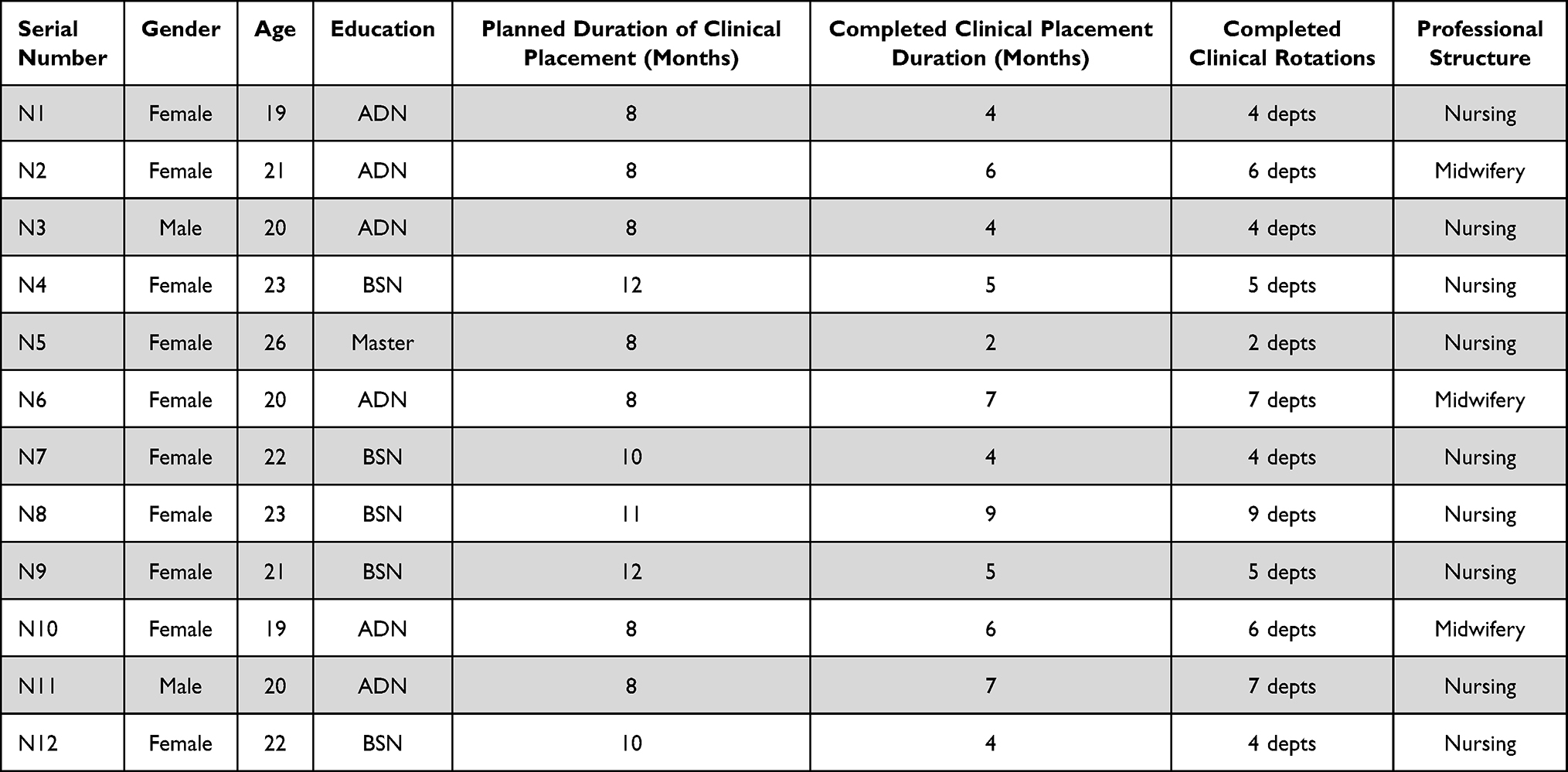 |
Table 1 General Profile of Intern Nursing Students |
Three themes and 12 subthemes were identified (Figure 2). The following sections present each theme with representative quotations. Analytical interpretations are provided to contextualize participants’ experiences within the broader research framework.
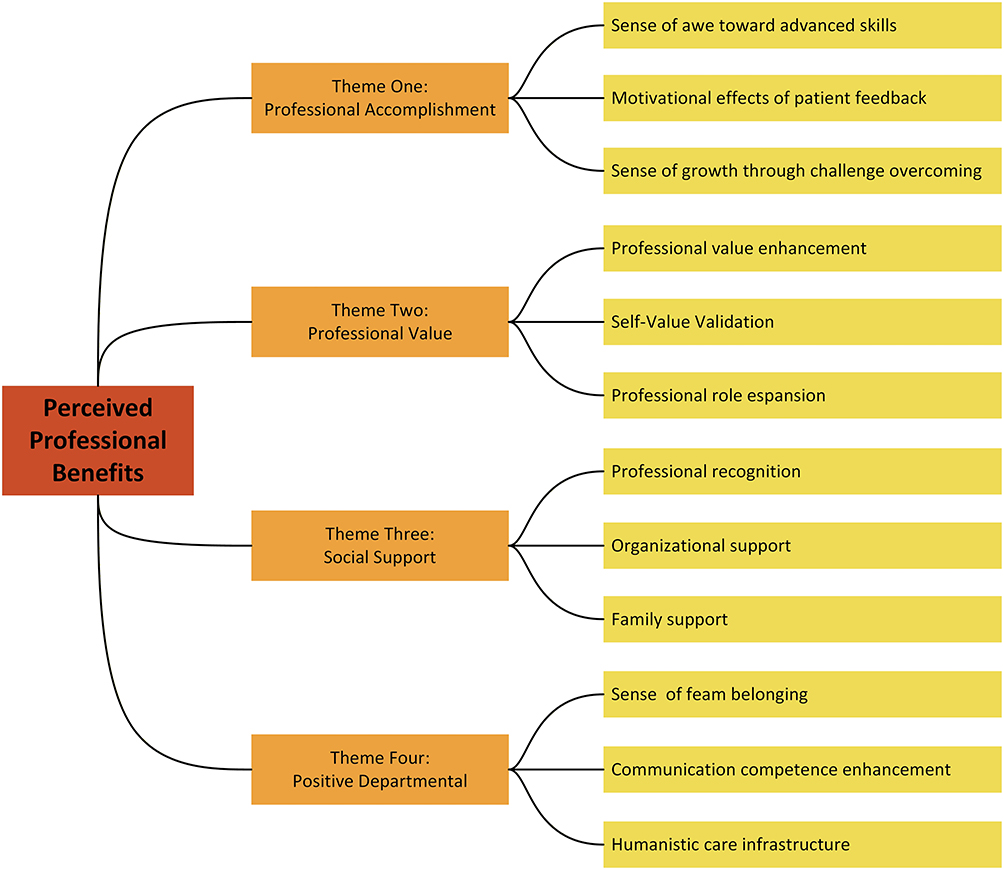 |
Figure 2 Themes and Subthemes of Perceived Professional Benefits. |
Theme 1: Professional Achievement
Professional achievement captures the “doing” dimension of interns’ experiences-tangible accomplishments in clinical practice that generate competence and satisfaction. Three subthemes were identified: sense of awe toward advanced skills, motivational effects of patient feedback, and growth through overcoming challenges.
Sense of Awe Toward Advanced Skills
Exposure to advanced life support technologies in Grade A tertiary hospitals generated profound appreciation for clinical expertise and strengthened interns’ commitment to skill mastery. Participants described how witnessing complex procedures created both immediate emotional impact and lasting professional motivation.
Witnessing my preceptor’s decisive localization and needle insertion was revelatory. As life-saving fluids infused and blood pressure stabilized, my motivation to master such skills intensified. N1
Participating in an ECMO resuscitation, I witnessed how extracorporeal circulation maintained perfusion despite cardiac arrest. This experience imprinted on me that critical care embodies precision guardianship-and ignited my resolve to develop such expertise. N11
These accounts demonstrate that exposure to advanced technology serves as a catalyst for professional commitment, transforming abstract educational goals into concrete aspirations for clinical excellence.
Motivational Effects of Patient Feedback
Participants consistently reported that patients’ encouragement and affirmation motivated them to persevere through challenges. This subtheme highlights the reciprocal nature of nurse-patient relationships in constructing professional meaning.
An elderly post-chemotherapy patient encouraged me after a failed needle insertion: ‘Come back tomorrow, young lady-I trust you.’ When I succeeded the next day, he requested my assistance for subsequent procedures. This trust transformed my fear of failure into courage. N4
A young chemotherapy patient refused eating due to treatment-induced emesis. I presented a wrapped stone as ‘a monster-tooth-shattering talisman,’ and she resumed eating. When she returned the stone with her mother’s gratitude, I grasped the sacred nature of nursing. N10
These experiences illustrate how positive patient feedback functions as immediate, concrete validation of clinical competence and interpersonal effectiveness-key components of professional benefit perception.
Growth Through Overcoming Challenges
Each clinical challenge confronted by interns represented an opportunity for competence development and professional maturation. This subtheme captures the constructive transformation of stress into growth.
During a cardiology night shift, a patient’s SpO2 suddenly dropped to 80%. I increased oxygen flow, suctioned the airway, and activated the rapid response team. By the time my preceptor arrived, SpO2 had stabilized. This emergency showed me how drilled protocols sustain life at critical moments. N9
Each independent procedure confronted me with growth opportunities. Courageously embracing these challenges embodies professional maturation. N8
These accounts align with the stress-benefit growth model, wherein manageable challenges in supportive environments promote competence and confidence rather than burnout.
Theme 2: Professional Value
Professional value captures the “being” dimension-meaning-making processes through which interns construct self-worth and professional identity. Three subthemes emerged: professional value enhancement, self-validation, and role expansion.
Professional Value Enhancement
Interns observed specialized nursing roles that expanded their understanding of professional possibilities and demonstrated nursing’s intellectual and autonomous dimensions.
Rotating through Colorectal Surgery, my Enterostomal Therapist preceptor managed complex wound care with specialized expertise. Observing her mastery made becoming an Advanced Practice Nurse my professional aspiration. N7
I discovered nurse-led specialty clinics where preceptors independently managed PICC line maintenance and patient education. This contradicted my preconception that only physicians conduct clinics and expanded my understanding of nursing’s scope. N11
These observations of advanced practice provided concrete evidence that nursing offers intellectually demanding, autonomous career pathways—directly challenging stereotypes that may diminish professional value perception.
Self-Validation
Direct participation in life-sustaining care provided powerful validation of professional worth, particularly in high-acuity settings.
During my first CPR, my preceptor guided me to compress at the correct depth and rate. When the patient’s pulse returned, I realized my scrubs were drenched. I subsequently practiced compressions daily to improve my skills. These experiences crystallize our mandate as healers. N3
This account illustrates how successful performance in critical situations generates “mastery experiences”—the most powerful source of self-efficacy belief that validates professional capability and worth.
Professional Role Expansion
Contemporary nursing practice has expanded beyond traditional boundaries, and interns recognized diverse pathways for professional contribution.
We create value through health education, professional presentations, quality improvement initiatives, and technological innovations. Our nurse-led research project earned a national award, validating nursing’s innovative potential. N5
My TCM rotation head nurse excels at health science communication with significant social media following. This demonstrated how nursing expertise can reach broader audiences. N6
These examples show that role expansion perceptions enhance professional value by demonstrating nursing’s versatility and societal contribution beyond bedside care.
Theme 3: Social Support
Social support encompasses external recognition and resources that interns experience as validating and sustaining their professional commitment. Three subthemes were identified: professional recognition, organizational support, and family support.
Professional Recognition
Participants perceived that evolving societal recognition of nursing as an independent profession strengthened their professional self-worth.
Our unit implements virtual nursing consultations, enabling homebound patients to access expert guidance remotely. Such advancements reflect societal endorsement of nursing innovation. N9
After rotations in specialized units, I reject the notion of nurses as ‘physician extenders.’ Witnessing enterostomal therapists leading independent clinics signifies recognition of nursing’s specialized disciplinary maturation. N2
These perceptions align with social identity theory, wherein group status elevation enhances individual members’ self-esteem and commitment.
Organizational Support
Structured support systems within the hospital-particularly from preceptors and nurse managers-provided practical and emotional scaffolding for interns’ professional development.
Our hospital has a robust intern training system. After a failed venipuncture, my preceptor taught me angle adjustment techniques and shared her own early failures. This mentorship transformed frustration into learning. N1
During COVID, the hospital provided free counseling that helped my roommate process a traumatic code experience. This sense of being ‘protected’ empowers us to face difficulties. N12
Practical provisions like quality meals in the staff canteen demonstrate organizational care that sustains morale during demanding rotations. N8
These multi-level organizational supports-clinical mentorship, psychological services, and welfare provisions-collectively communicate institutional valuing of interns, which reciprocally enhances their valuation of the profession.
Family Support
Family members’ understanding and practical support reinforced participants’ capacity to manage internship demands and sustained their professional commitment.
My parents recognized that post-night shifts are exhausting. They exempted me from housework so I could rest. This practical support matters for my work. N6
During my ICU rotation assessment, my grandmother concealed my grandfather’s hospitalization until after my examination. Such family understanding, experienced from the patient-relative perspective, deepened my appreciation for intergenerational support in nursing. N11
Family support operates as a buffer against occupational stress and as implicit endorsement of participants’ career choice, thereby amplifying perceived professional benefits.
Theme 4: Positive Departmental Atmosphere
Collegial relationships and humanistic management practices within clinical departments fostered team belonging and enhanced professional benefit perception. Three subthemes emerged: sense of team belonging, enhanced communication skills, and humanistic care.
Sense of Team Belonging
Inclusion in departmental activities and recognition from senior colleagues provided interns with authentic membership in the clinical team.
During my cardiology rotation, the department director mandated that interns lead morning handover reports. Despite trepidation, my successful presentation and colleagues’ affirmative responses made me feel I had transitioned from observer to integrated team member. N4
When assisting in resuscitations or performing procedures, I undertook supervised responsibilities that contributed to collective efficacy. This operational interdependence instilled profound purposefulness. N1
Team belonging satisfies the fundamental human need for relatedness identified in Self-Determination Theory, generating positive emotional experiences that constitute professional benefits.
Enhanced Communication Skills
Guided clinical interactions progressively developed interns’ communication competence, generating confidence and recognition from patients and colleagues.
Initially, communication was my primary challenge-I feared misspeaking. Through collaborative practice, I assimilated essential techniques. As my competence grew, my patient education initiatives expanded, earning affirmative feedback. This communicative growth has yielded substantial professional dividends. N3
Communication skill development represents a concrete domain of professional growth that interns recognize as both personally satisfying and professionally valuable.
Humanistic Care
Department leaders’ and preceptors’ attention to interns’ wellbeing created psychologically safe environments that sustained motivation despite demanding workloads.
Certain preceptors demonstrated exceptional attunement to interns’ psychological well-being, inquiring about circumstances and mobilizing support. Our head nurse implemented team-building initiatives that fostered collective positivity. N8
Amidst demanding responsibilities, preceptors extended holistic concern-asking ‘Need respite?’ or sharing humor during fatigued moments. These subtle gestures epitomized our collective resilience. N5
Humanistic leadership creates a positive emotional climate that amplifies interns’ capacity to perceive benefits despite objective challenges, consistent with Broaden-and-Build Theory’s proposition that positive emotions expand awareness and build enduring resources.
Discussion
This study provides the first qualitative exploration of perceived professional benefits among nursing interns in China’s Grade A tertiary hospitals. Four interconnected dimensions-professional achievement, professional value, social support, and positive departmental atmosphere-constitute a comprehensive framework for understanding how interns construct positive meaning from their clinical experiences. These findings extend understanding of professional benefits beyond registered nurses to the critical internship transition period and offer practical guidance for nursing education and healthcare management.
Professional Achievement as Competence Development
The professional achievement theme, encompassing awe toward advanced skills, patient feedback, and challenge mastery, aligns with Self-Determination Theory’s competence dimension.23 Interns’ descriptions of witnessing complex procedures and subsequently developing their own skills illustrate the transformation of external observation into internalized capability. This competence-building process has been documented among nursing students internationally. A qualitative study of Australian nursing students similarly found that successful performance in clinical tasks generated self-efficacy and professional commitment.24
The subtheme of patient feedback motivation is particularly noteworthy. While quantitative studies have documented correlations between patient satisfaction and nurse wellbeing,25 our findings reveal the mechanisms through which individual patient interactions generate immediate professional benefits. This aligns with constructivist learning theory, wherein feedback from authentic practice contexts serves as the primary driver of professional identity formation.26
Interns’ growth through challenge overcoming reflects the stress-related growth phenomenon documented across healthcare professions. Research with medical residents in the United States found that manageable clinical challenges in supportive environments promoted professional development rather than burnout.27 However, our participants’ accounts consistently emphasized the critical role of supervisor support in transforming stress into growth-a finding that resonates with UK studies highlighting the protective function of clinical mentorship against transition shock.28
Professional Value as Meaning Construction
The professional value theme captures how interns constructed meaning and self-worth through their clinical experiences. This meaning-making process is central to professional identity formation and has been theorized as the cognitive foundation for sustained career commitment.29
Observations of advanced practice roles generating professional value enhancement reflect the expanding scope of nursing globally. Similar findings have been reported in Canadian studies where exposure to nurse practitioners and clinical nurse specialists increased nursing students’ career aspirations.30 The specific domains observed by our participants-enterostomal therapy, nurse-led clinics, quality improvement-mirror international trends in advanced practice nursing development.31
Self-validation through direct patient care participation connects to research on moral distress and moral courage in nursing. Studies from Scandinavian countries have emphasized how nurses’ sense of professional worth derives from meaningful patient relationships and successful clinical outcomes.32 Our finding that critical care experiences particularly generated self-validation supports previous research suggesting that high-acuity environments, while stressful, offer unique opportunities for competence demonstration and professional affirmation.33
Role expansion perceptions reflect nursing’s evolving identity as a knowledge-based profession. This finding resonates with research from Singapore documenting nursing students’ aspirations toward non-traditional roles in education, technology, and leadership.34 The diversity of career pathways described by our participants suggests that modern nursing education should explicitly expose interns to varied professional trajectories.
Social Support as Relational Resource
Social support emerged as a critical contextual factor enabling professional benefit perception. This aligns with extensive international literature documenting social support’s buffering effects against occupational stress.35,36
Professional recognition as a support source reflects the evolving status of nursing in China’s healthcare system. Interns’ awareness of advanced practice developments and telehealth innovations suggests that perceived professional benefits are partially socially constructed through exposure to institutional innovations. This finding extends previous research conducted primarily in Western healthcare systems37,38 by demonstrating similar mechanisms in China’s distinct institutional context.
Organizational support findings parallel research from multiple countries demonstrating that structured mentorship programs and psychosocial services reduce new graduate nurse turnover.11,39 The specific forms of support valued by our participants-clinical debriefing after difficult cases, psychological counseling access, practical welfare provisions-offer concrete guidance for internship program development.
Family support as a professional benefit determinant has received limited attention in international nursing literature, which has focused predominantly on workplace factors. Our finding that family understanding and practical assistance significantly influenced interns’ professional experiences suggests that support system interventions should extend beyond healthcare institutions to include family education about nursing career demands.
Positive Departmental Atmosphere as Enabling Environment
The departmental atmosphere theme highlights how localized work environments shape professional benefit perception. This finding connects to international research on healthy work environments for nursing students and new graduates.40,41
Team belonging findings align with social connectedness theory and its application to healthcare teamwork. Research from the Netherlands found that nursing students’ sense of team integration predicted both learning outcomes and wellbeing.42 Our participants’ descriptions of moving from peripheral observation to active team contribution illustrate the developmental process of professional socialization.
Communication skill development as a professional benefit source extends previous research by identifying skill acquisition itself-not merely skill application-as a source of positive professional experience. This finding suggests that explicit attention to communication skill development during internship may enhance professional benefit perception.
Humanistic care from preceptors and managers reflects transformational leadership theory’s application to nursing education. Research from South Korea similarly found that preceptors’ emotional support and personalized attention significantly influenced nursing students’ clinical learning and satisfaction.43 Our finding that micro-interventions-brief inquiries, shared humor, small gestures-collectively created supportive climates suggests that humanistic leadership need not require resource-intensive programs.
Theoretical Integration
These findings can be understood through two complementary theoretical lenses. Self-Determination Theory23 provides a framework for understanding how the four themes correspond to fundamental psychological needs: professional achievement addresses competence, social support and departmental atmosphere satisfy relatedness, and professional value reflects autonomous meaning-making. When these needs are met through clinical experiences, interns develop intrinsic motivation and psychological wellbeing that sustain career commitment.
Fredrickson’s Broaden-and-Build Theory44 explains how positive professional experiences function as emotional resources that expand cognitive and behavioral repertoires. Each positive interaction, successful procedure, or supportive encounter builds enduring personal and professional resources that buffer against subsequent challenges. This perspective reframes professional benefits not merely as pleasant experiences but as active contributors to professional development and resilience.
Cultural Context
The findings must be understood within China’s specific healthcare and cultural context. Confucian values emphasizing respect for authority, collective harmony, and filial piety shape both participants’ expectations and their experiences of professional benefits. The hierarchical structure of Chinese tertiary hospitals, with clear authority gradients between physicians and nurses, may intensify interns’ appreciation for moments of autonomous practice and professional recognition. Additionally, China’s one-child policy generation may experience family support as particularly significant given the concentration of parental investment in single children.
The single-site design, while enabling deep contextual understanding, limits transferability. Grade A tertiary hospitals in China represent the highest tier of medical institutions; interns in secondary hospitals or community settings may experience different benefit profiles. Similarly, the voluntary participation of motivated interns may have introduced selection bias toward those with more positive experiences.
Limitations
Several limitations should be acknowledged. First, single-site recruitment limits transferability to other healthcare settings. Second, the small sample size, while appropriate for qualitative saturation, precludes statistical generalization. Third, voluntary participation may have attracted interns with more positive experiences, potentially overestimating professional benefit levels. Fourth, all participants were from one Grade A tertiary hospital in Shanghai, which has greater resources than many Chinese hospitals. Fifth, researcher-participant power dynamics inherent in the academic-clinical relationship may have influenced disclosure patterns. Finally, data collection during ongoing clinical placement may have captured situational rather than enduring professional benefit perceptions.
Implications for Future Research
Future research should employ longitudinal designs to track how perceived professional benefits evolve throughout internship and early career stages. Multi-site comparative studies across hospital tiers and geographical regions would enhance transferability. Intervention studies testing structured mentorship programs, reflective practice groups, or benefit-focused debriefing protocols could establish evidence-based strategies for enhancing professional benefits. Additionally, quantitative instrument development based on these qualitative findings would enable larger-scale assessment. Research exploring perceived professional benefits among interns in non-tertiary settings and cross-cultural comparative studies would further extend understanding.
Conclusion
This study provides the first qualitative exploration of perceived professional benefits among nursing interns in China’s Grade A tertiary hospitals. Four interconnected dimensions—professional achievement, professional value, social support, and positive departmental atmosphere—constitute a comprehensive framework for understanding interns’ positive professional experiences.
For nursing educators, these findings suggest integrating explicit attention to professional benefit sources into curricula and preceptor training. Highlighting how clinical challenges generate competence, how patient interactions provide meaning, and how supportive relationships sustain commitment may help interns actively recognize and cultivate professional benefits during placement.
For hospital administrators, investment in structured mentorship programs, psychosocial support services, and humanistic leadership development for preceptors and nurse managers can create environments where professional benefits flourish. Specific attention to ensuring interns experience genuine team inclusion and progressive responsibility may enhance both learning and wellbeing.
For policy makers, recognizing professional benefits as a modifiable protective factor against nurse turnover supports investment in internship quality as a workforce retention strategy. The substantial costs of nurse replacement warrant proactive investment in positive internship experiences.
Fostering positive professional experiences during internship is not merely a retention strategy-it is an ethical imperative that shapes the next generation of nursing professionals and, ultimately, the quality of patient care. Future research should build on this foundation through longitudinal and intervention studies to develop evidence-based strategies for cultivating professional benefits across diverse healthcare settings.
Data Sharing Statement
Data will be made available on request.
Ethics Statement
This study has received ethical approval from Shanghai Tenth People’s Hospital Affiliated to Tongji University and the First Affiliated Hospital of Naval Medical University (Approval Date: February 26, 2025; Approval Number: 25KN114).
Informed Consent Statement
This study involves the First Affiliated Hospital of Naval Medical University. Due to the requirements of the institutional ethics committee and restrictions on paper publication, the members of the institution need to obtain approval from the hospital before publishing their articles.
Acknowledgments
The authors express their heartfelt gratitude to all anonymous reviewers, editors, participants in this study, as well as the First Affiliated Hospital of Naval Medical University and Shanghai Tenth People’s Hospital Affiliated to Tongji University for their support of this research. Meanwhile, they are also grateful to Professors Bao Rong and Jiang Jinxia for their guidance as supervisors for this research project.
Author Contributions
First author: Xiaoxia Zhu. Co-first author: Man Xu. All authors made a significant contribution to the work reported, whether that is in the conception, study design, execution, acquisition of data, analysis and interpretation, or in all these areas; took part in drafting, revision or critically reviewing the article;gave final approval of the version to be published; have agreed on the journal to which the article has been submitted; and agree to be accountable for all aspects of the work.
Funding
There is no funding to report.
Disclosure
The authors declare that they have no known competing financial interests or personal relationships that could have influenced the work reported in this study.
References
1. Ribeiro DFDS, Gaspar DRFA, Santos LP, Silva MBTD. The nurse’s professional identity on the Primary Health Care users perception. Revista Brasileira de Enfermagem. 2022;75(3):e20200974. doi:10.1590/0034-7167-2020-0974
2. Zhang Z, Fu W, Tian C, et al. Professional identity of Chinese nursing students during the COVID-19 pandemic outbreak: a nation-wide cross-sectional study. Nurse Educ Pract. 2021;52:103040. doi:10.1016/j.nepr.2021.103040
3. Institute of Hospital Management, National Health Commission. Economic Analysis Report on the Loss of Nursing Workforce. 2023. Available from: http://www.niha.org.cn/.
4. World Health Organization. State of the World’s Nursing 2020: Investing in Education, Jobs and Leadership. Geneva: WHO; 2020. Available from: https://www.who.int/publications/i/item/9789240003279.
5. American Academy of Nursing. Cost-benefit analysis of nursing education investment: a predictive model. AAN Policy Brief Series. 2024.
6. Chen F, Liu Y, Wang X, Dong H. Transition shock, preceptor support and nursing competency among newly graduated registered nurses: a cross-sectional study. Nurse Educ Today. 2021;102:104891. doi:10.1016/j.nedt.2021.104891
7. Zhang YP, Huang X, Xu SY, Xu CJ, Feng XQ, Jin JF. Can a one-on-one mentorship program reduce the turnover rate of new graduate nurses in China? A longitudinal study. Nurse Educ Pract. 2019;40:102616. doi:10.1016/j.nepr.2019.08.010
8. Powers K, Herron EK, Pagel J. Nurse Preceptor Role in New Graduate Nurses’ Transition to Practice. Dimens Crit Care Nurs. 2019;38(3):131–14. doi:10.1097/DCC.0000000000000354
9. Ling L, Hu S. Analysis of the reasons for the resignation of hired nurses in a tertiary hospital. J PLA Hosp Manag. 2016;23(7):677–679. doi:10.16770/J.cnki.1008-9985.2016.07.029
10. Luo G, Xiao N, Chen X. Meta-analysis of the detection rate of job burnout among nurses in China. Occup Health. 2022;38(13):1854–1859. doi:10.13329/j.cnki.zyyjk.2022.0367
11. Kelly LA, Gee PM, Butler RJ. Impact of nurse burnout on organizational and position turnover. Nurs Outlook. 2021;69(1):96–102. doi:10.1016/j.outlook.2020.06.008
12. Zhou H, Zhu Y, Zhang X, et al. Psychological Capital and Perceived Professional Benefits: testing the Mediating Role of Perceived Nursing Work Environment Among Chinese Nurses. J Psychosoc Nurs Ment Health Serv. 2018;56(4):38–47. doi:10.3928/02793695-20171128-01
13. Hu J. Research on the Conceptual Framework and Evaluation Tools of Nurses’ Professional Benefit Perception. Dissertation. Shanghai: The Second Military Medical University; 2013.
14. Zhou X, Yang H, Yang Y, Zhang Y. Analysis of the mediating effect of nurses’ professional identity on professional benefit perception and job engagement. J Nurs Sci. 2019;34(17):51–54. doi:10.3870/j.issn.1001-4152.2019.17.051
15. Ma HW, Dan X, Xu SH, Hou RN, Zhao NM. Current status of nurses’ perceived professional benefits and influencing factors in 3A-level hospitals in Tianjin. Chin J Ind Hyg Occup Dis. 2017;35(6):443–447.
16. Cai T. Transition of newly graduated nurses in China: an evaluation study. Nurse Educ Pract. 2021;50:102951. doi:10.1016/j.nepr.2020.102951
17. Thomas J, Jack BA, Jinks AM. Resilience to care: a systematic review and meta-synthesis of the qualitative literature concerning the experiences of student nurses in adult hospital settings in the UK. Nurse Educ Today. 2012;32(6):657–664. doi:10.1016/j.nedt.2011.09.005
18. Tong A, Sainsbury P, Craig J. Consolidated criteria for reporting qualitative research (COREQ): a 32-item checklist for interviews and focus groups. Int J Qual Health Care. 2007;19(6):349–357. doi:10.1093/intqhc/mzm042
19. Braun V, Clarke V. Using thematic analysis in psychology. Qual Res Psychol. 2006;3(2):77–101. doi:10.1191/1478088706qp063oa
20. Han P, Duan X, Wang L, Zhu X, Jiang J. Stress and coping experience in Nurse Residency Programs for new graduate nurses: a qualitative meta-synthesis. Front Public Health. 2022;10:979626. doi:10.3389/fpubh.2022.979626
21. Lincoln YS, Guba EG. Naturalistic Inquiry. Newbury Park, CA: Sage Publications; 1985.
22. Deci EL, Ryan RM. Self-Determination Theory: Basic Psychological Needs in Motivation, Development, and Wellness. New York: Guilford Press; 2017.
23. Labrague LJ, McEnroe-Petitte DM, Gloe D, Thomas L, Papathanasiou IV, Tsaras K. A literature review on stress and coping strategies in nursing students. J Ment Health. 2017;26(5):471–480. doi:10.1080/09638237.2016.1244721
24. Schofield R, Chircop A, Baker C, Dietrich Leurer M, Duncan S, Wotton D. Entry-to-practice public health nursing competencies: a Delphi method and knowledge translation strategy. Nurse Educ Today. 2018;65:102–107. doi:10.1016/j.nedt.2018.03.001
25. Papp I, Markkanen M, von Bonsdorff M. Clinical environment as a learning environment: student nurses’ perceptions concerning clinical learning experiences. Nurse Educ Today. 2003;23(4):262–268. doi:10.1016/s0260-6917(02)00185-5
26. Duchscher JE. Transition shock: the initial stage of role adaptation for newly graduated registered nurses. J Adv Nurs. 2009;65(5):1103–1113. doi:10.1111/j.1365-2648.2008.04898.x
27. Savitsky B, Findling Y, Ereli A, Hendel T. Anxiety and coping strategies among nursing students during the covid-19 pandemic. Nurse Educ Pract. 2020;46:102809. doi:10.1016/j.nepr.2020.102809
28. Guo YJ, Yang L, Ji HX, Zhao Q. Caring characters and professional identity among graduate nursing students in China-A cross sectional study. Nurse Educ Today. 2018;65:150–155. doi:10.1016/j.nedt.2018.02.039
29. Veen M, de la Croix A. How to Grow a Professional Identity: philosophical Gardening in the Field of Medical Education. Perspect Med Educ. 2023;12(1):12–19. doi:10.5334/pme.367
30. Ayaz-Alkaya S, Yaman-Sözbir Ş, Bayrak-Kahraman B. The effect of nursing internship program on burnout and professional commitment. Nurse Educ Today. 2018;68:19–22. doi:10.1016/j.nedt.2018.05.020
31. Labrague LJ, McEnroe-Petitte DM, De Los Santos JAA, Edet OB. Examining stress perceptions and coping strategies among Saudi nursing students: a systematic review. Nurse Educ Today. 2018;65:192–200. doi:10.1016/j.nedt.2018.03.012
32. Phillips C, Kenny A, Esterman A. Pre-registration paid employment practices of undergraduate nursing students: a scoping review. Collegian. 2016;23(1):115–127. doi:10.1016/j.colegn.2014.09.012
33. Klick JC, Syed M, Leong R, Miranda H, Cotter EK. Health and Well-Being of Intensive Care Unit Physicians: how to Ensure the Longevity of a Critical Specialty. Anesthesiol Clin. 2023;41(1):303–316. doi:10.1016/j.anclin.2022.10.009
34. Labrague LJ, Hammad K, Gloe DS, et al. Disaster preparedness among nurses: a systematic review of literature. Int Nurs Rev. 2018;65(1):41–53. doi:10.1111/inr.12369
35. Ren Z, Zhou C, Zhang X, Yang A, Li W, Liu H. Emotional labor, fatigue, and presenteeism in Chinese nurses: the role of organizational identification. BMC Nurs. 2024;23(1):673. doi:10.1186/s12912-024-02351-8
36. Lu Y, Jia Y, Gao F. Influencing factors and coping strategies of mental health of medical staff involved in the treatment of newly emerging acute respiratory infectious diseases. Chin J Nurs Manag. 2019;19(1):83–86.
37. Huo J, Cui Y. Research on the impact of challenging-obstructive stress on the professional benefit perception of emergency department nurses. Chin J Pract Nurs. 2018;34(28):2226–2230.
38. Wei L, Guo Z, Zhang X, et al. Mental health and job stress of nurses in surgical system: what should we care. BMC Psychiatry. 2023;23(1):871. doi:10.1186/s12888-023-05336-0
39. Marlicz W, Koulaouzidis A, Charisopoulou D, et al. Burnout in healthcare - the Emperor’s New Clothes. Prz Gastroenterol. 2023;18(3):274–280. doi:10.5114/pg.2023.131595
40. Fredrickson BL. The role of positive emotions in positive psychology. The broaden-and-build theory of positive emotions. Am Psychol. 2001;56(3):218–226. doi:10.1037//0003-066x.56.3.218
41. Labrague LJ, McEnroe-Petitte DM, Papathanasiou IV, et al. A cross-country comparative study on stress and quality of life in nursing students. Perspect Psychiatr Care. 2018;54(4):469–476. doi:10.1111/ppc.12248
42. De Los Santos JAA, Labrague LJ, Falguera CC. Fear of COVID-19, poor quality of sleep, irritability, and intention to quit school among nursing students: a cross-sectional study. Perspect Psychiatr Care. 2022;58(1):71–78. doi:10.1111/ppc.12781
43. Labrague LJ, McEnroe-Petitte DM, Papathanasiou IV, et al. Stress and coping strategies among nursing students: an international study. J Ment Health. 2018;27(5):402–408. doi:10.1080/09638237.2017.1417552
44. Tugade MM, Fredrickson BL. Resilient individuals use positive emotions to bounce back from negative emotional experiences. J Pers Soc Psychol. 2004;86(2):320–333. doi:10.1037/0022-3514.86.2.320
 © 2026 The Author(s). This work is published and licensed by Dove Medical Press Limited. The
full terms of this license are available at https://www.dovepress.com/terms
and incorporate the Creative Commons Attribution
- Non Commercial (unported, 4.0) License.
By accessing the work you hereby accept the Terms. Non-commercial uses of the work are permitted
without any further permission from Dove Medical Press Limited, provided the work is properly
attributed. For permission for commercial use of this work, please see paragraphs 4.2 and 5 of our Terms.
© 2026 The Author(s). This work is published and licensed by Dove Medical Press Limited. The
full terms of this license are available at https://www.dovepress.com/terms
and incorporate the Creative Commons Attribution
- Non Commercial (unported, 4.0) License.
By accessing the work you hereby accept the Terms. Non-commercial uses of the work are permitted
without any further permission from Dove Medical Press Limited, provided the work is properly
attributed. For permission for commercial use of this work, please see paragraphs 4.2 and 5 of our Terms.