
Back to Journals » Advances in Medical Education and Practice » Volume 17
A Multidisciplinary ICU Clerkship Curriculum Incorporating Simulation and Competency-Based Education: Design, Implementation, and Early Outcomes
Authors Arkin N  , Ramaswamy T, Carvalho B, Kache S, Nassar AK, Johnson CL, Hennessey E, Barr J
Received 28 April 2026
Accepted for publication 11 June 2026
Published 16 July 2026 Volume 2026:17 618733
DOI https://doi.org/10.2147/AMEP.S618733
Checked for plagiarism Yes
Review by Single anonymous peer review
Peer reviewer comments 2
Editor who approved publication: Dr Sateesh Arja
Nicole Arkin,1 Tara Ramaswamy,1 Bernadette Carvalho,2 Saraswati Kache,3 Aussama Khalaf Nassar,4 Christine LC Johnson,3 Erin Hennessey,5 Juliana Barr6
1Department of Anesthesiology, Perioperative, and Pain Medicine, Division of Critical Care Medicine, Stanford University, Stanford, CA, USA; 2Department of Anesthesiology, Perioperative, and Pain Medicine, Stanford University, Stanford, CA, USA; 3Department of Pediatrics, Stanford University, Stanford, CA, USA; 4Department of Surgery, Stanford University, Stanford, CA, USA; 5Department of Anesthesiology, University of Virginia, Charlottesville, VA, USA; 6Department of Anesthesiology, Perioperative, and Pain Medicine, Stanford University School of Medicine, Stanford, CA, USA
Correspondence: Nicole Arkin, Department of Anesthesiology, Perioperative and Pain Medicine, Division of Critical Care Medicine, Stanford University, Stanford, CA, USA, Email [email protected]
Introduction: Critical care competencies are increasingly relevant across specialties, yet structured exposure in undergraduate medical education (UME) remains variable. We describe the design, implementation, and early outcomes of a four-week, modular ICU clerkship.
Methods: We implemented a multidisciplinary ICU clerkship integrating clinical immersion, protected weekly didactics, asynchronous learning, high-fidelity simulation, health equity rounds, and palliative care debriefing. Objectives were aligned with Delphi-derived undergraduate critical care competencies and AAMC Entrustable Professional Activities. We compared student clerkship evaluation ratings (learner perceptions on a 5-point Likert scale) before and after a comprehensive curriculum redesign (July 2022–June 2024 vs July 2024–June 2025) using Welch two-sample t-tests.
Results: Approximately 95 students per year completed the clerkship. Following redesign, the largest improvements were observed in structural and organizational domains: orientation (+0.94), syllabus (+0.95), didactics (+0.85), and organization (+0.76) (all p < 0.001). Clinical skills (+0.36, p=0.01) and knowledge (+0.31, p=0.01) increased modestly and remained consistently high. Simulation ratings remained high (4.44 to 4.65, p=0.04). Overall clerkship rating improved from 4.00 to 4.51 (p=0.002).
Discussion: A modular ICU clerkship is feasible and adaptable across settings. Improvements were most pronounced in structural domains, while core clinical learning domains remained stable, suggesting that targeted curricular redesign can enhance learner experience while maintaining high perceived educational value.
Keywords: critical care education, undergraduate medical education, clerkship curriculum, simulation-based learning, competency-based assessment
Introduction
Across hospitals worldwide, patients with life-threatening conditions are routinely managed on general medical and surgical wards, often by physicians with limited formal training in critical care medicine.1 Many US hospitalists report providing critical care without adequate preparation,2 and the COVID-19 pandemic further underscored this system gap as non-Critical Care Medicine (CCM) trained physicians were deployed to care for critically ill patients.3 Calls to formally integrate critical care into medical school curricula date back over three decades,4 with more recent recommendations from professional societies and educators.5,6 Despite the inclusion of competencies related to the care of critically ill patients in many residency programs, fewer than 50% of US medical schools mandate a critical care clerkship.7 This represents a significant gap in the transition from Undergraduate Medical Education (UME) to Graduate Medical Education (GME).
A Delphi consensus-derived set of undergraduate critical care competencies aligns closely with AAMC updated Foundational Competencies of Undergraduate Medical Education (UME) from 2024 and the Entrustable Professional Activities (EPAs) for entering residency developed in 2014.8–10 While nearly all components can be achieved in the ICU, Patient Care and Procedural Skills #4 (identifies patients in need of urgent or emergent care) and #9 (demonstrates basic procedural skills) represent foundational competencies that are particularly emphasized and refined in the ICU setting. The ICU learning environment uniquely supports these competencies by integrating cross-disciplinary knowledge, exposure to advanced pharmacology and procedures, interprofessional teamwork, and communication around prognosis and end-of-life care. Early ICU exposure has been associated with better intern performance and greater confidence across specialties.11,12
Prior publications have advanced undergraduate critical care education by embedding ICU curricula within existing clerkships, including internal medicine-based programs that integrate focused didactics and simulation experiences.13 Early simulation-based learning has also been shown to support competency development prior to residency training.14 Our contribution differs in both scope and structure. We describe a stand-alone, four-week core ICU clerkship that integrates competency-driven objectives, protected multimodal didactics, multidisciplinary ICU experiences, a sustainable simulation curriculum, health equity and palliative care programming, and standardized assessment. Drawing on more than two decades of institutional experience, we present a practical framework that can be adapted by institutions seeking to implement or enhance critical care training within undergraduate medical education. Given ongoing concerns regarding readiness for residency and the challenges of the UME–GME transition, particularly during the early months of internship,15 structured exposure to critical illness may provide learners with foundational skills in patient assessment, clinical reasoning, communication, and escalation of care. The purpose of this report is to describe the design, implementation, and early evaluation of this curriculum while offering a replicable model for other institutions.
Methods
Ethics Compliance
This project was reviewed by the Stanford University Institutional Review Board (Protocol # 83221) and was determined not to meet the definition of human subjects’ research. As such, the IRB concluded that no further review was required. Informed consent was determined to not be necessary and was not obtained.
Curricular Context
In 2000, our institution implemented an interdisciplinary core critical care clerkship, driven by student-led advocacy, specifically, a formal petition by medical students requesting structured critical care exposure during clerkship training. Over the past 25 years, this clerkship has consistently evolved, incorporating continuous student and faculty feedback and curriculum improvements grounded in evidence-based educational frameworks.
The clerkship spans four weeks, requiring students to have completed Step 1 of the USMLE and the clinical rotation associated with the ICU where they intend to rotate. For example, students wishing to rotate in the Pediatric or Neonatal ICU must have completed and passed their Pediatrics core clerkship, whereas those rotating in the Medical-Surgical or Surgical ICU must have completed and passed their Medicine or Surgery core clerkships, respectively.
To adapt to the changing needs of learners, we developed and introduced a case-based simulation curriculum in 2004 that encompasses various patient populations within adult, pediatric, and neonatal ICUs. During the COVID-19 pandemic, we transitioned the entire curriculum to a fully online and asynchronous format. With the return to in-person education, we undertook a significant re-design of the curriculum in July 2024, integrating a blend of in-person, virtual, and asynchronous didactic methods to address the evolving learning preferences of post-pandemic learners who have demonstrated a preference for flexible, interactive formats over purely passive, asynchronous content.16,17
This paper outlines key components of the clerkship structure and provides the necessary materials to design and implement a core ICU rotation for those institutions that do not yet have one. For those institutions with existing programs, these materials can serve to enhance or augment current offerings.
Implementation
Multidisciplinary Approach
To enhance the relevance and applicability of critical care medicine for students pursuing different sub-specialties, we offer rotation sites in both academic and community ICU settings, along with opportunities to focus on medical, surgical, pediatric, and neonatal ICUs. Given the breadth of content covered at these sites, we identify site directors who work in each ICU site who orient, support, and oversee the collection of evaluations for clerkship students. All faculty receive the clerkship syllabus to ensure they are aware of the specific requirements and expectations of both the medical students and the clinical teams (Appendix A). Faculty, residents, fellows, and advanced practice providers work closely with the clerkship students and are provided an updated “Critical Care Clerkship Educators Guidebook” every year, which includes information about the core Critical Care Clerkship, including site descriptions, requirements of medical students, expectations, schedules, and helpful resources (Appendix B). The specific teams are also provided with a “Clerkship Expectations” worksheet (Appendix C) to standardize expectations of medical students across diverse clinical teams, sites, and training backgrounds.
Faculty and fellows participating in the specialty sessions, including health equity rounds and simulation sessions, receive additional training, which includes onboarding with current specialty faculty, receipt of course learning objectives and materials, facilitator guides, and observation by clerkship leadership.
Learning Objectives
The identification of key learning objectives was the foundation for developing this curriculum. In 2020, a national consensus process using the Delphi method defined core critical care competencies for medical students, providing a structured framework for implementation.9 Following the resumption of fully in-person teaching in 2024, we undertook a comprehensive curriculum redesign. Key changes included: consolidating previously fragmented asynchronous content into structured in-person and hybrid didactic sessions; introducing a formal protected Wednesday afternoon for all required activities; adding a health equity rounds curriculum; expanding simulation to include competency-based adult and pediatric/neonatal tracks with standardized facilitation guides; and standardizing the schedule for reviewing student assessment feedback across all clinical sites. No instructional content areas were removed, rather, previously loosely structured components were formalized. We redesigned our didactic content to align with the Delphi-derived content objectives, except for status epilepticus, which we confirmed was adequately covered in the neurology core clerkship (Table 1). Additionally, we incorporated several content areas, including pediatric and neonatal-focused topics, along with an expanded procedural skills component in our simulation curriculum (Table 2).
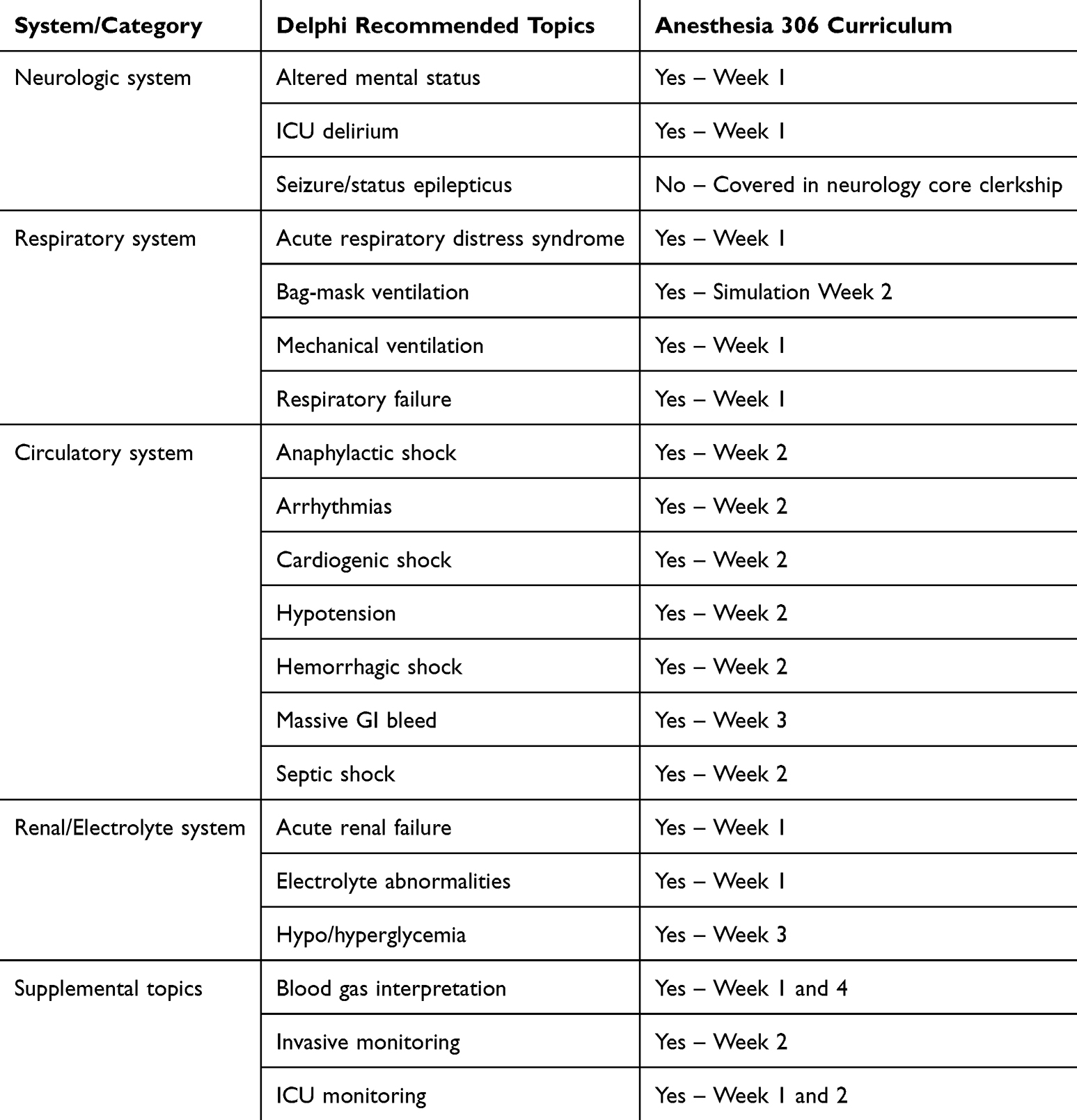 |
Table 1 Coverage of Delphi “Highly Recommended” ICU Topics |
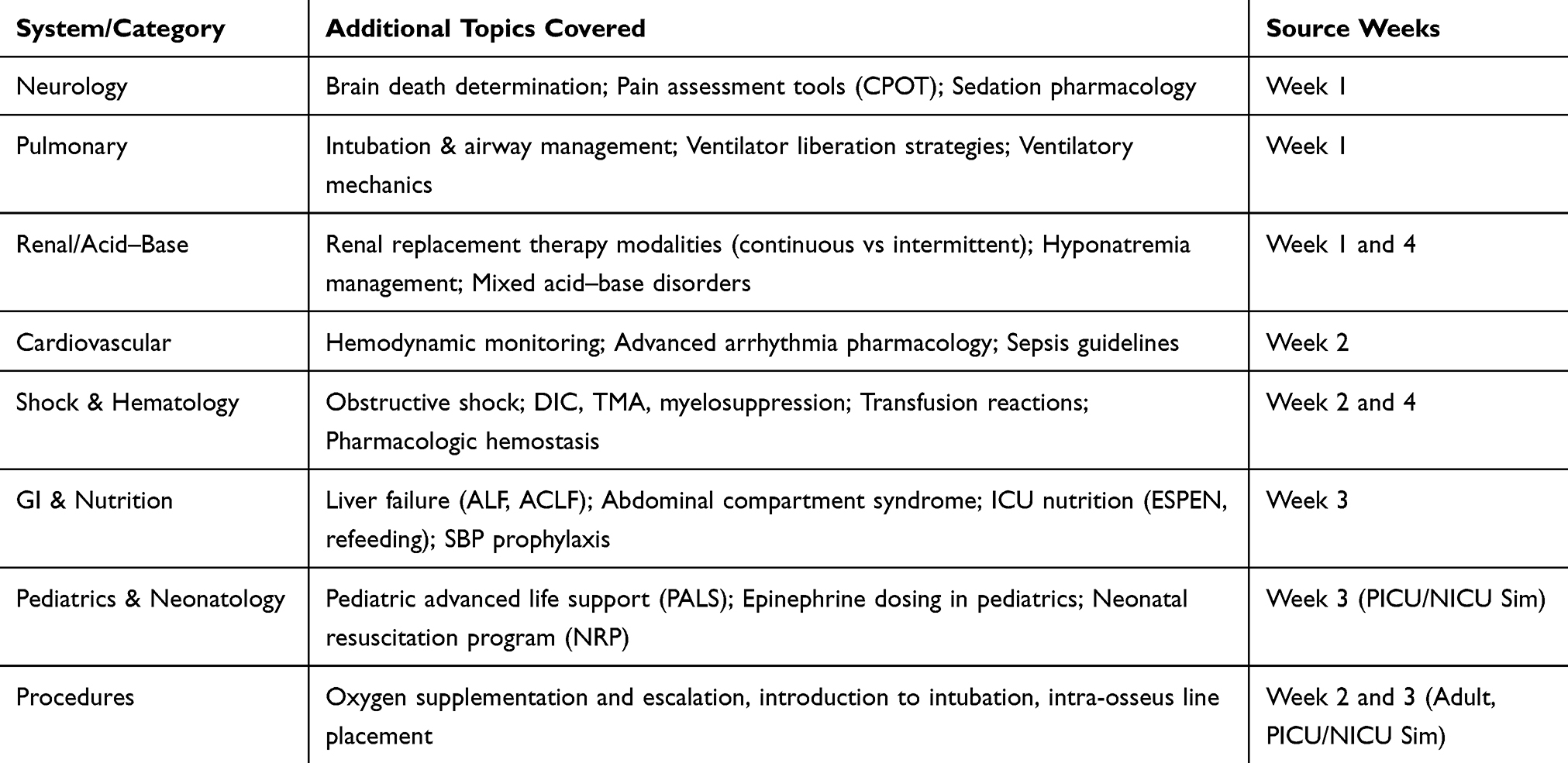 |
Table 2 Additional Topics Covered in Core Didactic Curriculum |
Core Didactics
The structure of core didactics includes a mix of in-person seminar-style teaching, asynchronous self-directed reading with weekly quizzes, case-based simulation sessions, a case-based health equity discussion, end of rotation exam review, and a debriefing death and dying session led by palliative care colleagues (Table 3). All core didactic sessions are specifically designed for and are unique to the critical care clerkship. Students are relieved of clinical duties starting at noon on each Wednesday to participate in required didactic activities and to allow time for self-study. Attendance at all in-person sessions, including health equity rounds, adult and pediatric simulation, and debriefing on death and dying, is required to pass the clerkship. All assignments are required to be completed by the end of the rotation, to allow for flexibility among adult learners.
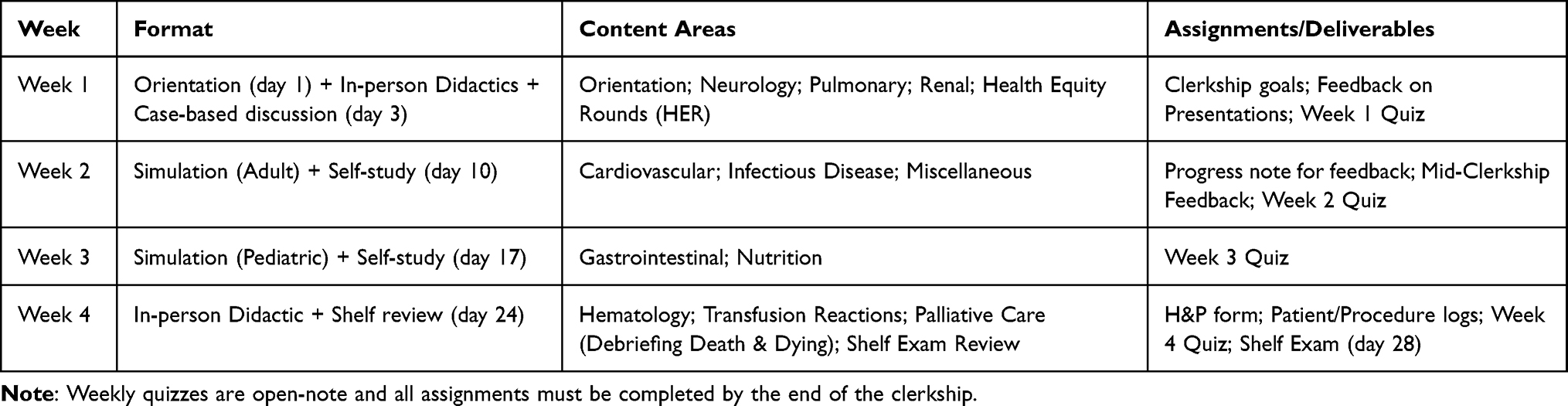 |
Table 3 Overview of Required Didactics During the 4-Week Critical Care Clerkship |
Didactics are organized by organ system and are taught sequentially through the four weeks (Table 3). Weekly quizzes consist of 1-step questions directly related to the content areas covered each week. The final exam was developed in collaboration with our multidisciplinary site directors and is composed of 2 and 3-step questions directly aligned with the educational objectives covered.
Implementation of a Sustainable Simulation Curriculum
We run high-fidelity simulation tracks centered on 1) rapid recognition and initial management of critical illness with an emphasis on respiratory failure and shock, 2) team leadership and crisis resource management, and 3) age-appropriate guideline-based resuscitation. Simulation sessions are scheduled during the second and third weeks of the four-week clerkship to follow initial clinical exposure and didactics and are delivered over two four-hour protected afternoons (one adult session and one combined pediatric/neonatal session). Each simulation scenario lists three to five objectives mapped to our clerkship objectives and integrates Advanced Cardiac Life Support (ACLS), Pediatric Advanced Life Support (PALS), or Neonatal Resuscitation Program (NRP) algorithms. Scenario structures and key teaching points were adapted from MedEdPORTAL resources;18 we added a brief crisis resource management didactic before the first adult simulation and use the “Promoting Excellence and Reflective Learning in Simulation”, or “PEARLS” framework for debriefs.19 Cases are reviewed with simulation technologists to optimize feasibility and reproducibility. Hands-on skills are incorporated within cases including bag-valve-mask ventilation, chest compressions, intraosseous access placement, and an introduction to advanced airway support (intubation and bi-level positive airway pressure).
Sessions are staffed by simulation technologists, an embedded nurse participant, a faculty facilitator, and an adult or pediatric critical care fellow who serves as a co-instructor. Most faculty complete the simulation instructor course through Stanford’s Center for Immersive and Simulation-based Learning Center. We designed cases for six to eight learners per scenario for optimal participation, though can accommodate cohorts of more than ten students (Appendix D).
Student Assessment and Evaluation
Students are assessed and evaluated on competency-based metrics. They are required to meet with the attending on service by the end of the second week for in-person formative feedback and to submit a mid-clerkship Feedback form signed by the attending. Final evaluations are competency-based using the Reporter, Interpreter, Educator, Manager (RIME) framework and are sent to attendings, fellows, residents, and advanced practice providers identified by the clerkship student. The mid-clerkship feedback form and RIME-based final evaluation are standardized across all core clerkships at our institution (Figures 1 and 2). To support consistency across evaluators of varying training levels and clinical sites, all faculty, residents, fellows, and advanced practice providers receive the clerkship syllabus and annual Educators Guidebook, and site directors are briefed on evaluation expectations each year. A formal inter-rater reliability process has not been implemented and represents a limitation of this methodology. Students may submit a clerkship evaluation during a three-week open window following completion of the shelf exam that closes before their summative grades are released (Figure 3). All assessment and evaluation instruments are proprietary tools developed by the university’s medical education department.
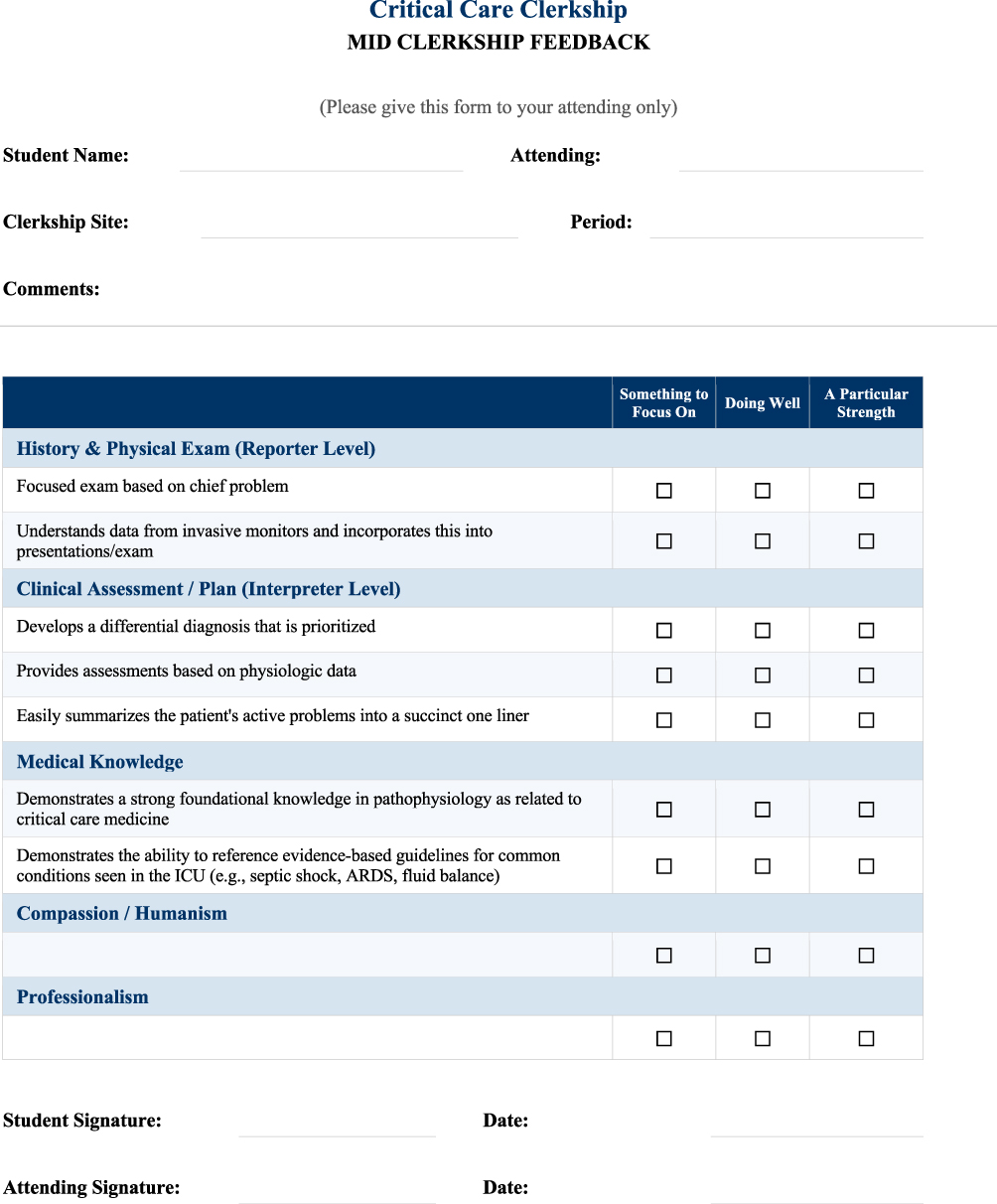 |
Figure 1 Mid-clerkship Feedback form. Form used to provide student feedback given by attending physician by the end of week two of the clerkship. Feedback is then reviewed with clerkship director in the first half of week three to identify if the student is on track to pass the clerkship. |
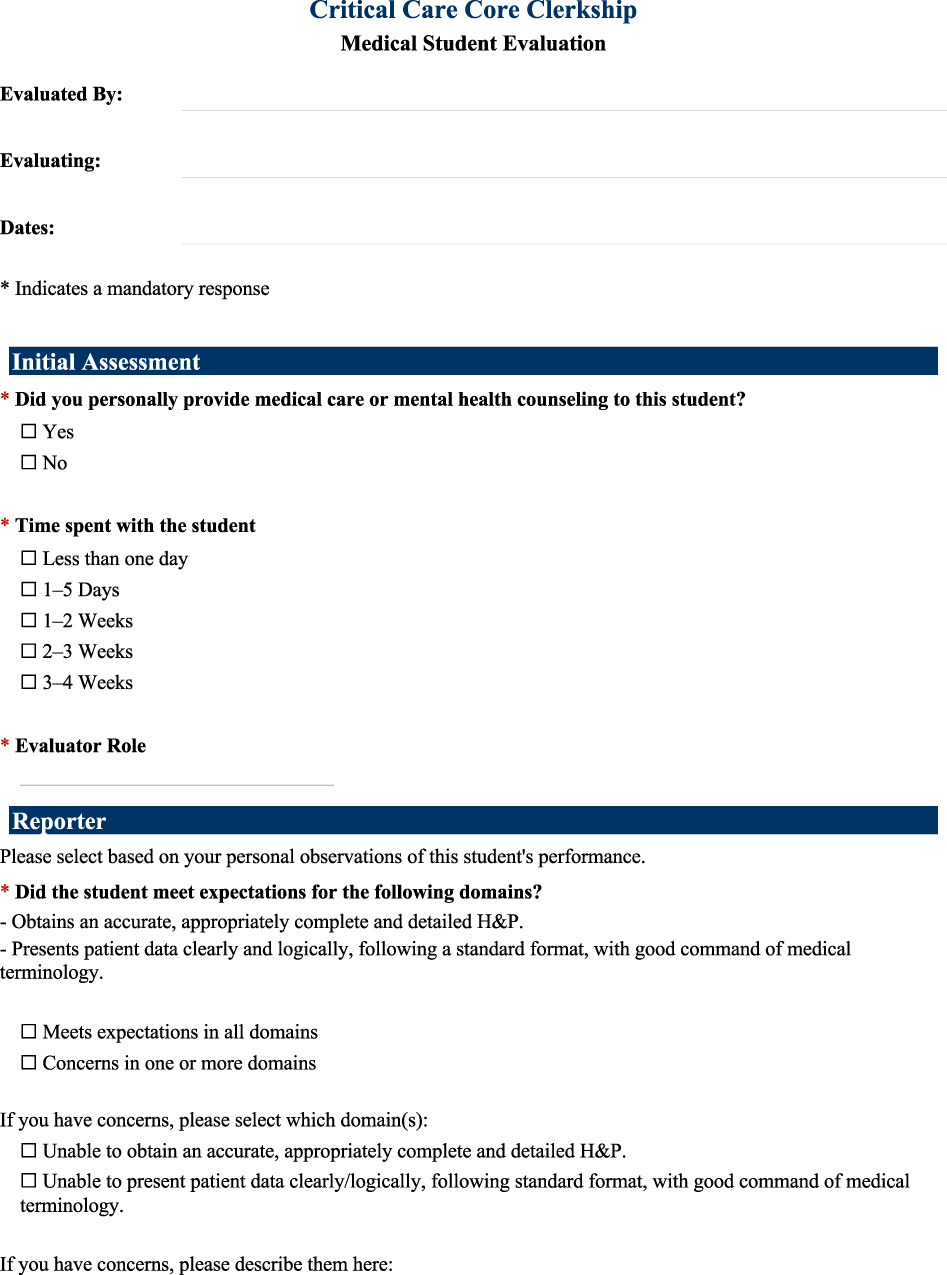 |
Figure 2 Final clerkship evaluation form of medical student. Assigned to supervising evaluators who worked with medical students as a final clerkship evaluation form. Uses the Reporter, Interpreter, Educator, Manager (RIME) framework for evaluation. Evaluators may include faculty, fellow, and resident physicians, along with advanced practice providers. |
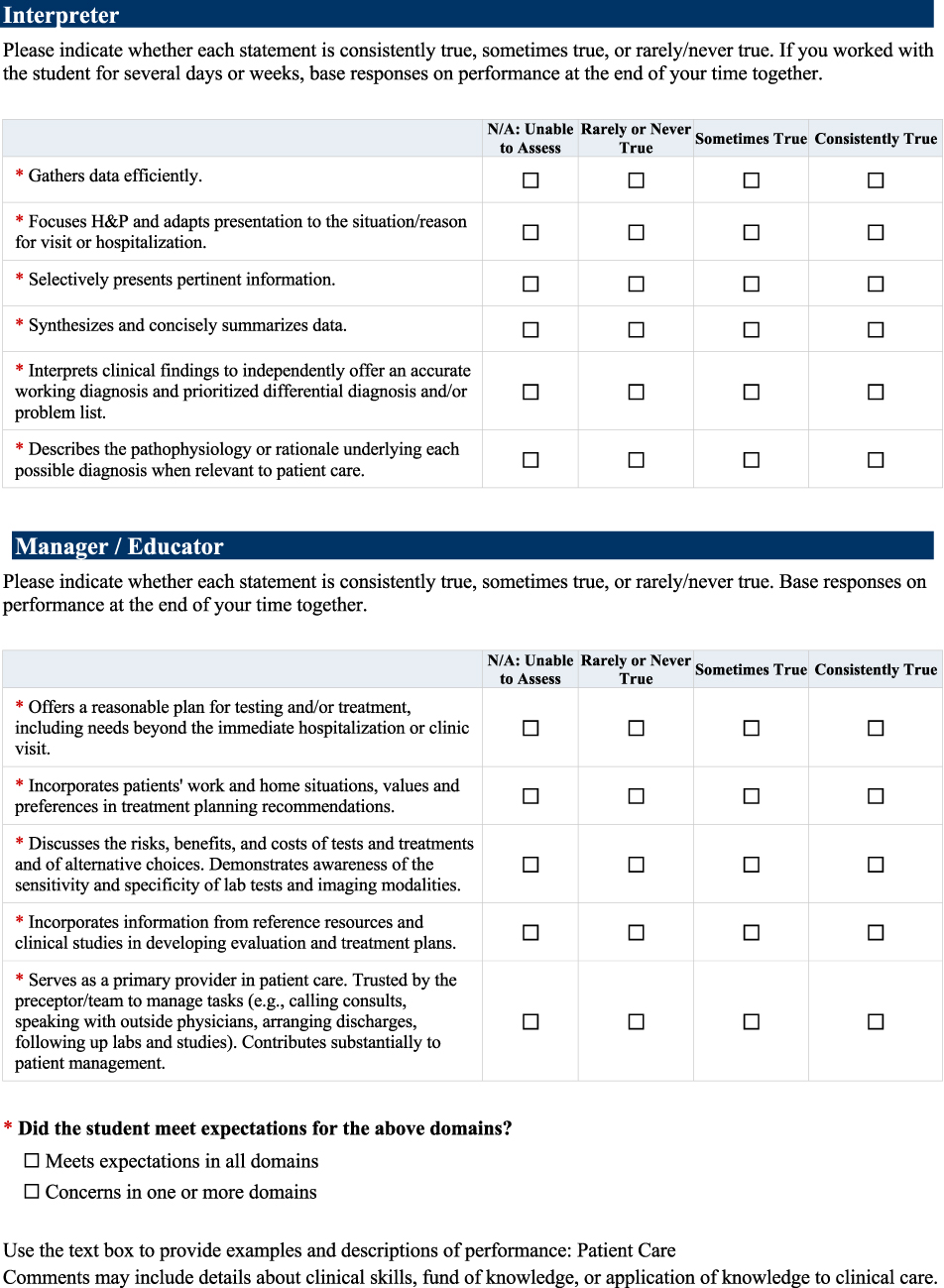 |
Figure 2 Continued. |
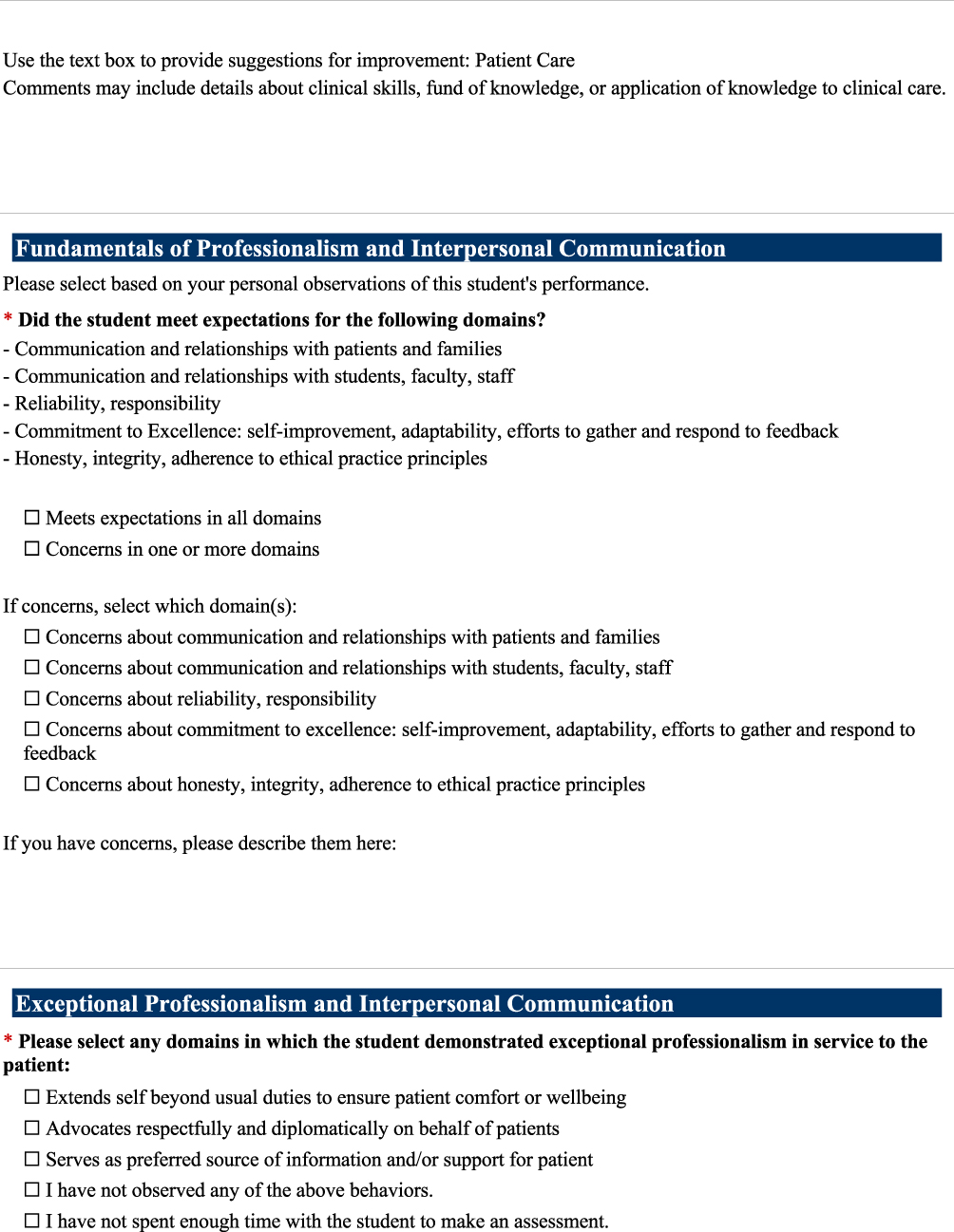 |
Figure 2 Continued. |
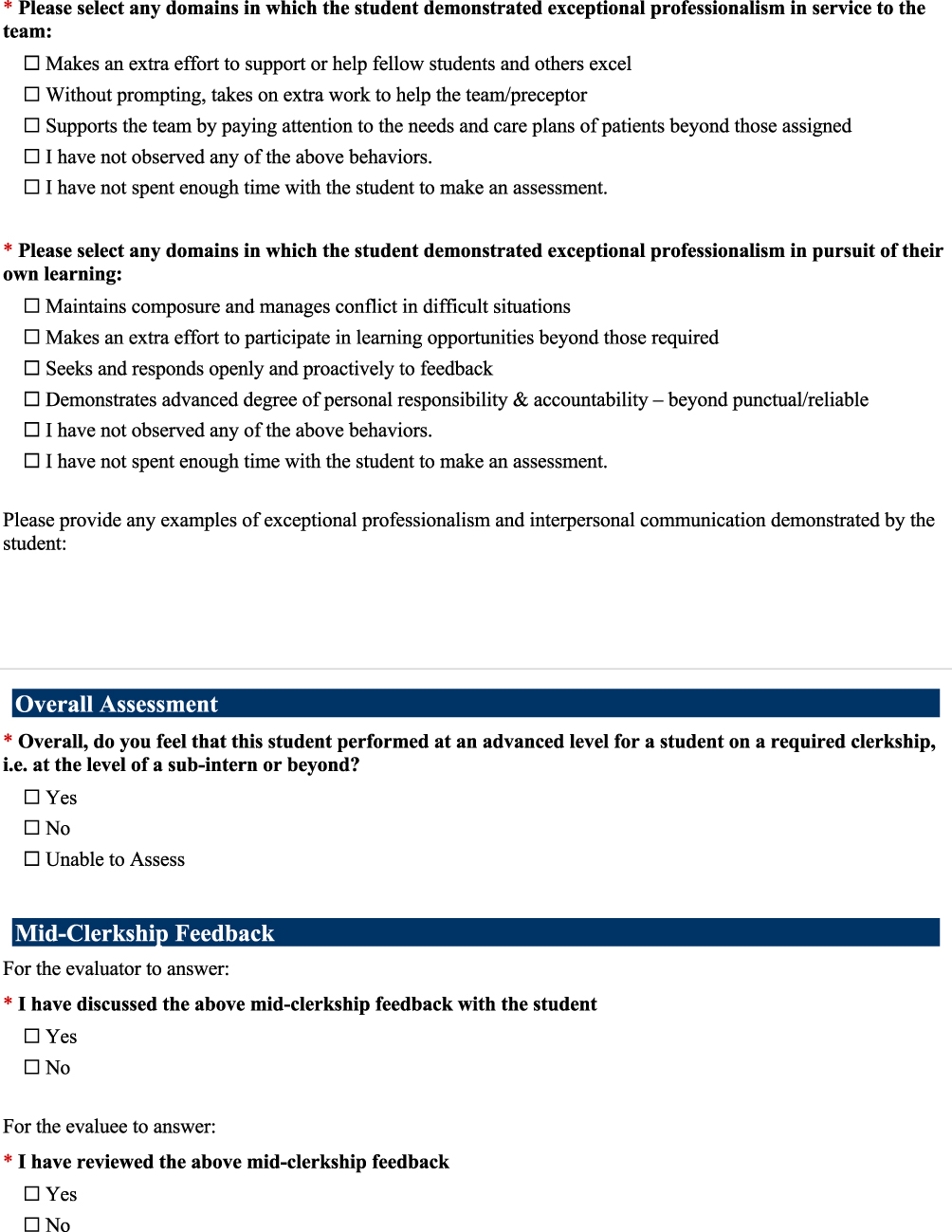 |
Figure 2 Continued. |
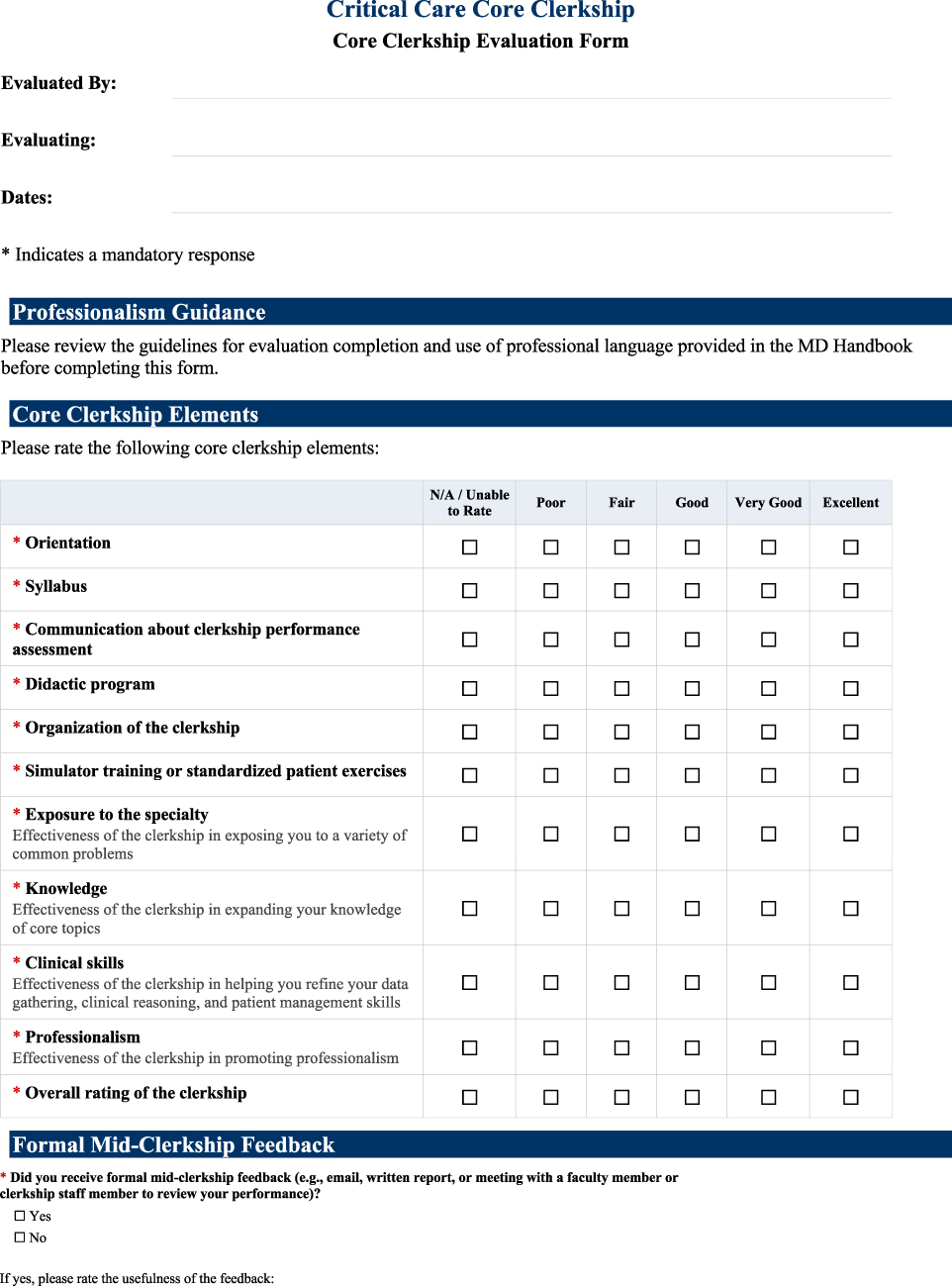 |
Figure 3 Student evaluation form of core clerkship. Form provided to students following completion of the 4-week clerkship for evaluation. Must be completed within three weeks following completion of the clerkship. |
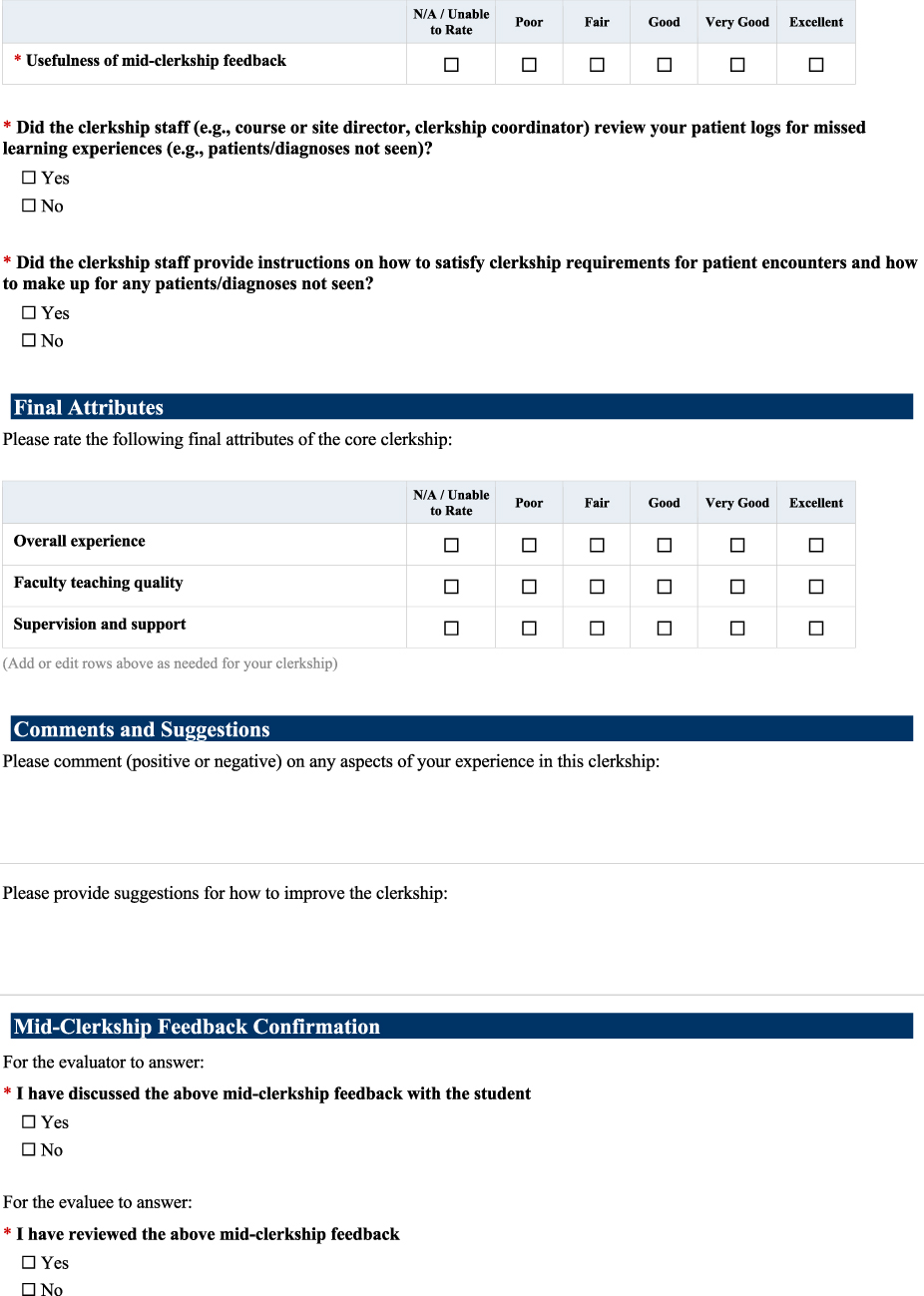 |
Figure 3 continued. |
Implementation Considerations and Challenges
The critical care clerkship was designed as a multidisciplinary experience, with faculty from anesthesiology, surgery, pediatrics, and internal medicine including community and academic sites. This structure reflects the reality that critical care has far-reaching relevance across the medical landscape. The clerkship has been administratively housed within a single department, relying on strong cross-departmental relationships.
Feasibility was also shaped by historical timing. The clerkship emerged during a period of curriculum reform in the year 2000, when institutional leadership and students were advocating for change. Without this broader climate of curricular openness, launching a new, multidisciplinary clerkship would have been far more challenging, limiting generalizability to schools not engaged in active curriculum redesign.
A major logistical barrier has been the need for protected leadership time. Successful implementation required a clerkship director and a small group of faculty with concentrated educational responsibility. Ideally, site directors would have protected time, but this has not always been possible. As the clerkship expanded in parallel with the national growth of critical care services, coordination across multiple clinical sites increased administrative and educational complexity.
Sustaining effective didactic teaching has also been difficult. The original in-person lecture-based models were highly valued but logistically unsustainable. Asynchronous standardized modules improved scalability but were limited by poor learner engagement, technical constraints, and slow update cycles. Students consistently preferred in-person, interactive learning, highlighting the tension between feasibility and educational quality.
The transition from an elective to a required clerkship also introduced new challenges. When the rotation was elective, students self-selected based on interest in critical care. As a core clerkship, learning objectives were reframed to be broadly relevant to students entering all specialties. This required iterative refinement of content and assessment to ensure broad relevance beyond students pursuing careers in critical care.
Results
Each academic year, 90–100 medical students are enrolled in the rotation and complete a 4-week rotation in their assigned clinical site. Prerequisite clerkships in pediatrics, medicine, or surgery prior to the critical care rotation ensures baseline familiarity with inpatient care and disease processes within the specific specialty.
We first examined alignment between our didactic content and published Delphi-derived undergraduate ICU competencies. As summarized in Table 1, our reorganized curriculum covered all “highly recommended” topics identified in the Delphi study except status epilepticus, which remained housed in the neurology core clerkship. Table 2 outlines additional topics that were incorporated to reflect institutional strengths and post-pandemic needs, including expanded content in sedation and delirium, renal replacement modalities, shock subtypes, transfusion reactions, critical care nutrition, and pediatric/neonatal resuscitation. Table 3 presents the weekly structure of didactics, simulation, health-equity rounds, and palliative care debriefing, showing that each core domain is addressed in a deliberate sequence over the four-week clerkship.
We compared clerkship evaluation ratings from a historical pre-redesign period (July 1, 2022- June 30, 2024) with ratings from the first academic year following a comprehensive curriculum redesign (July 1, 2024- June 30, 2025). Evaluation data were obtained from institutionally generated One45 and MedHub (evaluation platforms used by the medical school) summary reports, which provide item-level means, standard deviations, and response counts for each clerkship evaluation question. We compared pre- and post-redesign ratings using Welch two-sample t-tests. All ratings were collected on a 5-point Likert scale, with higher scores indicating more favorable evaluations.
Structural and organizational components of the clerkship demonstrated the largest improvements following the redesign (Table 4). Mean ratings for orientation increased from 3.67 in the pre-redesign period to 4.61 post-redesign (mean difference +0.94, p < 0.001). Similarly, ratings for the syllabus improved from 3.48 to 4.43 (+0.95, p < 0.001), and overall organization of the clerkship increased from 3.67 to 4.43 (+0.76, p < 0.001).
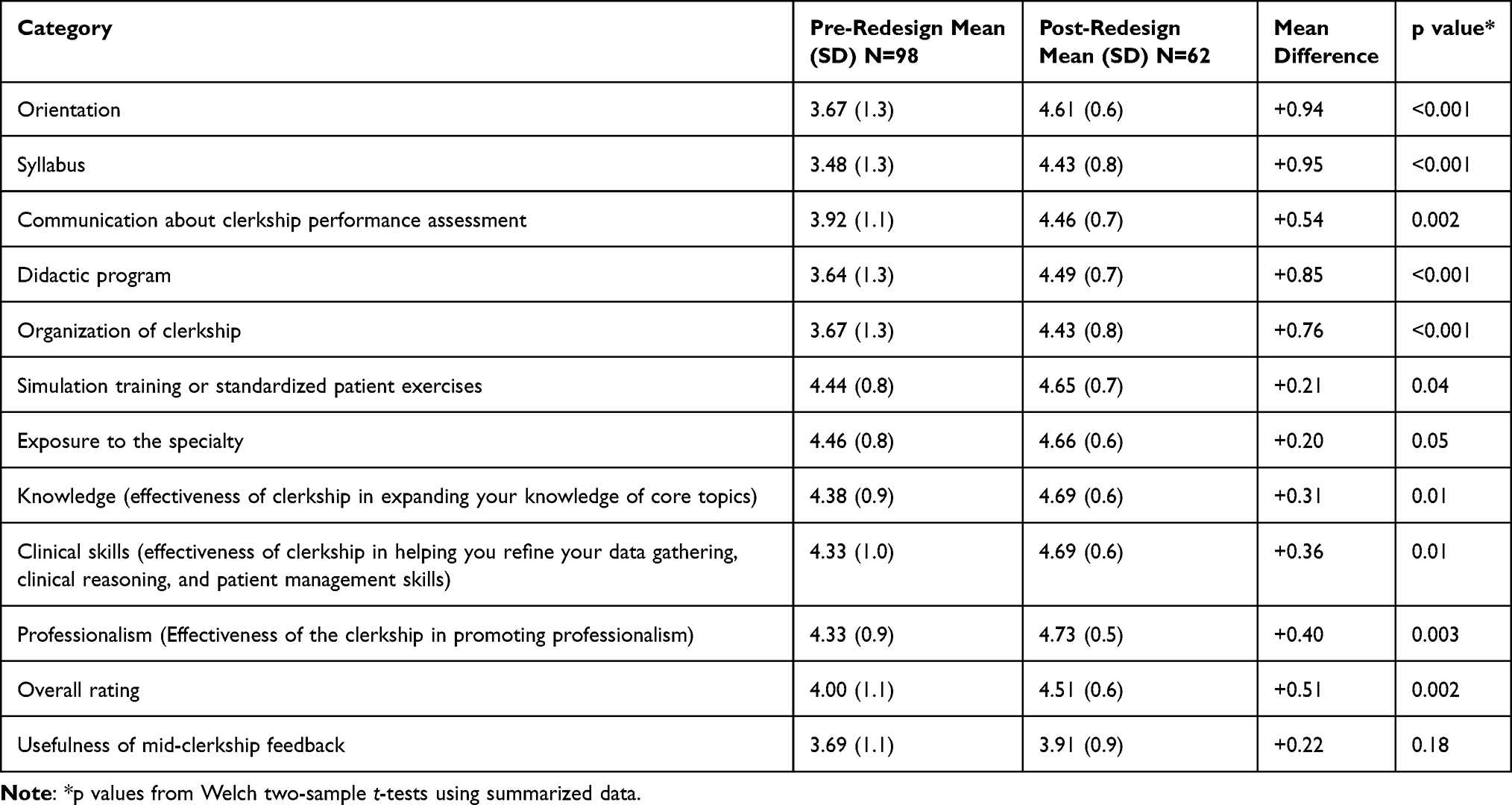 |
Table 4 Clerkship Evaluation Ratings Before and After Curriculum Redesign |
The didactic program increased from a mean of 3.64 pre-redesign to 4.49 post-redesign (+0.85, p < 0.001). Ratings for communication about clerkship performance assessment also improved significantly, rising from 3.92 to 4.46 (+0.54, p = 0.002). Ratings for clinical skills and knowledge acquisition were high in both periods and increased modestly following the redesign. Mean ratings for clinical skills increased from 4.33 to 4.69 (+0.36, p = 0.01), while ratings for knowledge of core critical care topics increased from 4.38 to 4.69 (+0.31, p = 0.01).
Perceived effectiveness of the clerkship in promoting professionalism improved from 4.33 pre-redesign to 4.73 post-redesign (+0.40, p = 0.003). Ratings for simulation-based learning remained high across both periods, increasing slightly from 4.44 to 4.65 (+0.21, p = 0.04). Similarly, ratings for exposure to the specialty were consistently favorable and increased modestly from 4.46 to 4.66 (+0.20, p = 0.05).
The overall rating of the clerkship increased from 4.00 in the pre-redesign period to 4.51 post-redesign (+0.51, p = 0.002), reflecting cumulative improvements across multiple domains. In contrast, ratings for the usefulness of mid-clerkship feedback showed a smaller, non-significant increase from 3.69 to 3.91 (+0.22, p = 0.18).
Discussion
This report describes the design, implementation, and evaluation of a stand-alone, four-week core ICU clerkship for medical students, designed for replication and implementation. The curriculum consolidates Delphi-derived competencies mapped to AAMC EPAs, protected multimodal didactics, multidisciplinary clinical sites, a high-fidelity simulation sequence, and structured assessment. Across cohorts, clerkship ratings in structural domains (orientation, syllabus, didactics, communication about assessment) improved meaningfully in the post-pandemic redesign period, while clinical and professional domains remained stably high. These findings suggest the model is feasible and that targeted structural changes can raise learner satisfaction and perceived learning.
Cognitive Load Theory may provide a useful framework for interpreting these findings.20 Improvements in orientation, organization, and communication may have reduced extraneous cognitive load by clarifying expectations and creating a more structured learning environment. The redesign also incorporated intentional sequencing of educational activities, with foundational didactics preceding simulation and simulation occurring after initial clinical exposure. This progression may have allowed learners to build upon developing clinical schemas while minimizing unnecessary cognitive burden associated with unfamiliar content and environments. As a result, learners may have been better positioned to focus on the integration and application of critical care knowledge and skills.
Several features of the redesigned curriculum may explain the observed improvements in learner evaluations. First, explicitly mapped learning objectives anchored all educational activities, including clinical experiences, didactics, simulation, and assessment, improving alignment and transparency. Second, simulation was intentionally positioned after initial clinical exposure and before summative assessment, allowing learners to apply developing clinical knowledge in a psychologically safe environment while receiving structured feedback. Third, standardization of simulation cases and close collaboration with simulation technologists enhanced consistency and reproducibility across instructors and training periods. Finally, the curriculum incorporated content that is often underrepresented in undergraduate medical education, including health equity, bias-aware clinical reasoning, and structured reflection on death and dying. Together, these elements may have contributed to improvements in learner experience while preserving the strengths of the clinical training environment.
Beyond curricular content, program infrastructure likely contributed to successful implementation. Regular meetings with site directors helped align expectations across diverse clinical settings and provided a mechanism for continuous quality improvement. Standardized assessment processes, including a mid-clerkship feedback meeting, an internally developed shelf examination aligned with clerkship objectives, and use of a centralized learning-management platform, supported consistency across sites while maintaining flexibility for individual clinical experiences. These operational elements may be particularly important for institutions seeking to implement multidisciplinary clerkships spanning multiple clinical environments.
Lessons for adoption include starting with a concise, shared set of competency-based objectives, protecting time for core didactics and simulation, partnering closely with simulation teams to co-develop facilitation guides and reproducible case templates, and using standardized evaluation processes across sites, such as required mid-clerkship feedback and RIME-based assessments. Institutions without access to high-fidelity simulation can adapt the sequence using low-fidelity task trainers, tabletop exercises, or case-based team discussions while preserving the emphasis on recognition, decision-making, and communication in critical illness.
Future work will focus on iterative refinement and stronger evaluation. We will use learner and faculty feedback to improve site-specific orientation and clarify expectations across ICU settings. We will study the simulation curriculum in greater depth, including reproducibility of cases across instructors, the specific effects of crisis resource management teaching, and examining extended reality modalities as an adjust to traditional simulation.
In summary, a structured, four-week ICU clerkship represents one approach to support the transition from undergraduate to graduate medical education. This modular critical care curriculum provides a practical pathway for medical schools to ensure that all physicians are prepared to recognize and respond to critical illness.
Limitations
Our work has several limitations. It is a single-institution experience with resources that may not be uniformly available, including simulation center access, technologist support, and protected time for students and clerkship faculty. The study relies on subjective student evaluation ratings rather than objective assessments of knowledge or procedural competency. Formal inter-rater reliability procedures were not implemented, and consistency in how evaluators across training levels rate students has not been empirically verified. Importantly, the outcomes reported here are based primarily on learner perceptions and clerkship evaluation ratings. Objective competency measures and long-term educational effectiveness were not directly assessed, and conclusions should be interpreted accordingly.
Data Sharing Statement
Raw data were generated at Stanford University School of Medicine. Derived data supporting the findings of this study are available from the corresponding author NA on request.
Ethics Approval
This project was reviewed by the Stanford University Institutional Review Board (Protocol # 83221) and was determined not to meet the definition of human subjects’ research. As such, the IRB concluded that no further review was required. Informed consent was determined to not be necessary and was not obtained.
Acknowledgments
We would like to acknowledge the contributions of several individuals, without whom this curriculum, and subsequent publication, would not be a success. We would like to thank Dr. Tracy Rydel, Associate Dean for Clerkship Education, for her support of the Critical Care Core Clerkship and publishing this work. We also want to acknowledge the contributions of those who developed the clerkship assessments tools in use, including the work of Dr. Elizabeth Stuart to develop our internal framework and those of our assessment team including, Dr. Holly Caretta-Weyer, Associate Dean for Admissions and Assessment, and Kiran Brar, Director of Evaluation and Instructional Development.
Funding
There is no funding to report.
Disclosure
Dr Saraswati Kache reports grants for a device design from Stanford BioDesign; honoraria for lecture from American Academy of Pediatrics; meeting/travel support from American Academy of Pediatrics, outside the submitted work. Dr Erin Hennessey reports grants from AMA ChangeMedEd Grant: PACE, ACGME B2B Grant 2024-2026; honoraria from Stanford University Grand Rounds; meeting/travel support from ASA, IARS and SOCCA; leadership or fiduciary roles from SOCCA BOD, outside the submitted work. Dr Juliana Barr reports consulting fees from Ceribell; meeting/travel support from Society of Critical Care Medicine, ASA Anesthesia Quality Institute; leadership or fiduciary roles from ASA Anesthesia Quality Institute Board Member, SCCM ICU Liberation Centers of Excellence Oversight Committee Member, outside the submitted work. The authors report no other conflicts of interest in this work.
References
1. Schell CO, Kayambankadzanja RK, Beane A, et al. Hospital burden of critical illness across global settings: a point prevalence and cohort study in Malawi, Sri Lanka and Sweden. BMJ Global Health. 2025;10(3):e017119. doi:10.1136/bmjgh-2024-017119
2. Sweigart JR, Aymond D, Burger A, et al. Characterizing hospitalist practice and perceptions of critical care delivery. J Hosp Med. 2017;13(1):6–17. doi:10.12788/jhm.2886
3. Engberg M, Bonde J, Sigurdsson ST, et al. Training non-intensivist doctors to work with COVID-19 patients in intensive care units. Acta Anaesthesiologica Scandinavica. 2021;65(5):664–673. doi:10.1111/aas.13789
4. Buchman TG, Dellinger RP, Raphaely RC, Todres ID. Undergraduate education in critical care medicine. Crit Care Med. 1992;20(11):1588–1603. doi:10.1097/00003246-199211000-00019
5. Fessler HE. Undergraduate medical education in critical care. Crit Care Med. 2012;40(11):3065–3069. doi:10.1097/ccm.0b013e31826ab360
6. Gergen DJ, Kommaraju K, Stewart NH, Shah NG, Neumeier AT. Reimagining undergraduate critical care medical education: a path for the next decade. ATS Scholar. 2024;5(3):375–385. doi:10.34197/ats-scholar.2023-0136ps
7. Clerkship requirements by discipline. AAMC; 2023. Available from: https://www.aamc.org/data-reports/curriculum-reports/data/clerkship-requirements-discipline.
8. The core Entrustable Professional Activities (EPAs) for entering residency. AAMC. Available from: https://www.aamc.org/what-we-do/mission-areas/medical-education/cbme/core-epas.
9. Smith AG, Brainard JC, Campbell KA. Development of an undergraduate medical education critical care content outline utilizing the delphi method. Crit Care Med. 2020;48(1):98–103. doi:10.1097/ccm.0000000000004086
10. AAMC, AACOM, ACGME. Foundational competencies for undergraduate medical education. AAMC, AACOM, ACGME; 2024.
11. Richards CJ, Mukamal KJ, DeMelo N, Smith CC. Fourth-year medical school course load and success as a medical intern. J Graduate Med Educ. 2017;9(1):58–63. doi:10.4300/jgme-d-16-00043.1
12. Rogers PL, Jacob H, Thomas EA, Harwell M, Willenkin RL, Pinsky MR. Medical students can learn the basic application, analytic, evaluative, and psychomotor skills of critical care medicine. Crit Care Med. 2000;28(2):550–554. doi:10.1097/00003246-200002000-00043
13. Gergen D, Raines J, Lublin B, Neumeier A, Quach B, King C. Integrated critical care curriculum for the third-year internal medicine clerkship. MedEdPORTAL. 2020. doi:10.15766/mep_2374-8265.11032
14. Lembo D, Abate Daga F, Calì C, et al. Early introduction of simulation in the medical curriculum: the MedInTo perspective. Front Med. 2024;10:1280592. doi:10.3389/fmed.2023.1280592
15. Young JQ, Ranji SR, Wachter RM, Lee CM, Niehaus B, Auerbach AD. “July effect”: impact of the academic year-end changeover on patient outcomes: a systematic review. Ann Intern Med. 2011;155(5):309–315. doi:10.7326/0003-4819-155-5-201109060-00354
16. Atwa H, Shehata MH, Al-Ansari A, et al. Online, face-to-face, or blended learning? Faculty and medical students’ perceptions during the COVID-19 pandemic: a mixed-method study. Front Med. 2022;9:791352. doi:10.3389/fmed.2022.791352
17. Alrajaby S. Perceptions of medical students on the transition to and impact of online learning during the COVID-19 pandemic: a qualitative study. Cureus. 2024;16(5):e59872. doi:10.7759/cureus.59872
18. Oddiri U, Chong G. Pediatric intensive care unit resident educational curriculum. MedEdPORTAL. 2020. doi:10.15766/mep_2374-8265.10999
19. Eppich W, Cheng A. Promoting excellence and reflective learning in simulation (PEARLS). simulation in healthcare. J Soc Simul Healthc. 2015;10(2):106–115. doi:10.1097/sih.0000000000000072
20. van Merriënboer JJG, Sweller J. Cognitive load theory in health professional education: design principles and strategies. Med Educ. 2010;44(1):85–93. doi:10.1111/j.1365-2923.2009.03498.x
 © 2026 The Author(s). This work is published and licensed by Dove Medical Press Limited. The
full terms of this license are available at https://www.dovepress.com/terms
and incorporate the Creative Commons Attribution
- Non Commercial (unported, 4.0) License.
By accessing the work you hereby accept the Terms. Non-commercial uses of the work are permitted
without any further permission from Dove Medical Press Limited, provided the work is properly
attributed. For permission for commercial use of this work, please see paragraphs 4.2 and 5 of our Terms.
© 2026 The Author(s). This work is published and licensed by Dove Medical Press Limited. The
full terms of this license are available at https://www.dovepress.com/terms
and incorporate the Creative Commons Attribution
- Non Commercial (unported, 4.0) License.
By accessing the work you hereby accept the Terms. Non-commercial uses of the work are permitted
without any further permission from Dove Medical Press Limited, provided the work is properly
attributed. For permission for commercial use of this work, please see paragraphs 4.2 and 5 of our Terms.