
Back to Journals » Patient Preference and Adherence » Volume 19
User Experience and Acceptability of a Digital Educational Game for Self-Management Health Education Among People Living with HIV
Authors Tian M  , Xie L, Wei W, Chen Y, Tang J
Received 28 May 2025
Accepted for publication 31 July 2025
Published 20 August 2025 Volume 2025:19 Pages 2593—2608
DOI https://doi.org/10.2147/PPA.S538527
Checked for plagiarism Yes
Review by Single anonymous peer review
Peer reviewer comments 2
Editor who approved publication: Dr Emma Veale
Min Tian,1,2 Longsheng Xie,3 Wei Wei,2 Yanhua Chen,1,2 Jian Tang4
1Department of Nursing, The Affiliated Hospital, Southwest Medical University, Luzhou, People’s Republic of China; 2School of Nursing, Southwest Medical University, Luzhou, People’s Republic of China; 3Department of Nephrology, The Affiliated Hospital, Southwest Medical University, Luzhou, People’s Republic of China; 4Department of Infectious Diseases, The Affiliated Hospital, Southwest Medical University, Luzhou, People’s Republic of China
Correspondence: Jian Tang, Email [email protected]
Background: The self-management of people living with HIV plays a pivotal role in enhancing their health quality of life. However, the self-management practices within this population are suboptimal. Therefore, it is imperative to reinforce HIV self-management education interventions to improve self-management ability among people living with HIV. The advent of digital educational games presents an unparalleled opportunity for innovative educational methods.
Objective: This study aimed to evaluate the user experience and acceptability of a digital educational game as a novel health education intervention to support self-management for people living with HIV.
Methods: A mixed-method study with explanatory sequential design was conducted to evaluate the user experience and acceptability of a digital educational game for self-management health education among people living with HIV. Fifty people living with HIV participated in this study and completed a questionnaire to investigate their user experience after playing the game. Nine participants were interviewed face-to-face to evaluate the acceptability of the game. Categorical data are presented as percentages. Qualitative data were analyzed via thematic analysis.
Results: The overall user evaluation of the “Cute Pet Butler” by the 50 participants (28 males and 22females with an average age of 33.64 years) was excellent or good at 90.91%, medium at 8.64%, and poor at 0.45%. The interviewees included 5 males and 4 females, with ages ranging from 23--51 years. After analyzing the interview data, the acceptability evaluation of the “Cute Pet Butler” with five themes were extracted, that are: perceived usefulness, perceived ease of use, positive user attitudes, the intention of game playing, and modification suggestions.
Conclusion: Cute Pet Butler had a good user experience and acceptance among people living with HIV. These results support further evaluation of its effectiveness as a new method to improve self-management health education interventions for people living with HIV.
Keywords: people living with HIV, self-management, health education, digital educational games, user experience, acceptability
Introduction
Background
Health education is an important approach for improving the self-management of people living with HIV (PLHIV), and effective self-management is the key to controlling the progression of HIV.1 In medicine, the term “Self-management” was initially defined as the active involvement of patients in disease treatment.2 Chronic disease self-management refers to the individual’s ability to manage the symptoms, treatment, physical and psychosocial consequences and life style changes inherent in living with a chronic condition.3 Efficacious self-management encompasses the ability to monitor one’s condition and to effect the cognitive, behavioural and emotional responses necessary to maintain a satisfactory quality of life. In this study, HIV self-management was defined as a series of health behaviors in which people with HIV actively accept treatment, establish cooperative relationships with healthcare providers, and change lifestyles to reduce the impact of the disease on physical, psychological, and social functions.
With the development of science and technology, health education has tended to be conducted online. Digital educational games could provide interesting and immersive user experiences through diverse game scenarios and situational settings, thereby stimulating players’ emotional participation.4 Compelling storylines and narrative gaming universes have the potential to enhance immersion, long-term engagement, and enactment of the user.5 It has been shown to be an effective way to improve the effectiveness of health education.6 Good educational games need to maintain a balance between education and playability and achieve educational goals through game interaction.7 The interactive process of the educational game is generally implemented in an intuitive, profound and easy-to-understand way, allowing players to intuitively feel the behaviors and their consequences of the game characters.4 Interactions with positive meanings often have a significant promoting effect on the behavior of participants.8 By increasing the players’ engagement, digital educational games, which also enhance knowledge, satisfaction, and skills,8 can help promote adequate behaviors.9,10 How to maintain patients’ participation in online health education and improve the effectiveness of education has become an important research topic.11
Currently, educational games are used to provide self-management-related health education for patients with chronic diseases such as diabetes, asthma, stroke, and cancer. Sarasmita et al12 developed an educational game based on the elements of asthma self-management to enhance self-management among asthmatic children in Indonesia. A randomized controlled trial conducted by Radhakrishnan et al13 in elderly people with heart failure revealed that educational games can motivate patients to adhere to self-management behaviors such as weight monitoring and physical activity, thereby improving patients’ health outcomes and quality of life. Nørlev et al14 developed a smartphone-based educational game for children with diabetes to teach self-management via remote communication technology, which received positive feedback from the subjects and their parents. However, most of the educational games currently developed for HIV education are dedicated to preventing HIV, receiving HIV-related medical services, and improving medication adherence15–17 There is still a lack of educational games for self-management health education for PLHIV to promote their health behaviors.
To fill this gap, we developed the self-management educational game “Cute Pet Butler” for PLHIV and evaluated the user experience and acceptability of the game among PLHIV.
We Propose the Following Two Hypotheses
H1: PLHIV will have a good experience with this game. H2: PLHIV will have good acceptance of this game.
Overview of the Self-Management Educational Game
Theoretical Framework
The game system of Cute Pet Butler was constructed by using empowerment theories as the theoretical framework. The fundamental principle of empowerment theories is consistent with the objectives of HIV self-management education in this study, namely, facilitating patients in clarifying their responsibilities for HIV self-management, fostering intrinsic motivation, and unleashing the potential for behavioral transformation.18,19 Successful empowerment consists of three components: (1) an emotional (intrapersonal) component referring to self perceptions of one’s competence in exerting influence, (2) a cognitive (interactional) component referring to the skills and critical understandings necessary, and (3) a behavioral component referring directly to the actions taken to exert influence. We developed storyline and functional gameplay designs on the basis of empowerment theory. For instance, in the emotional component, the educational goal is to enhance self-efficacy and perceptual control, and strengthen the motivation for self-management.The form of the game is that the game character will give different game reactions based on the completion of the game task, and the player will also receive the corresponding game reward or punishment. Additionally, we sought guidance and input from experts in diverse fields, such as medicine, psychology, and software engineering, to enhance and refine our game narratives.
Game System
The game revolves around a pet infected with an incurable virus that causes its energy to be continuously drained (Figure 1). The indelible virus is a metaphor for HIV, and the pet is a metaphor for PLHIV. Players are tasked with assisting the pet in managing daily challenges related to HIV self-management, completing objectives to acquire energy and replenish the pet’s energy levels. The pet will exhibit varying reactions, and granting corresponding rewards or penalties depends on the player’s task completion. The game can be accessed by players through their mobile phones, tablets, or computers by clicking on the network link or scanning the QR code. No registration is needed, and it is free to play. The game does not require sharing of personal information.
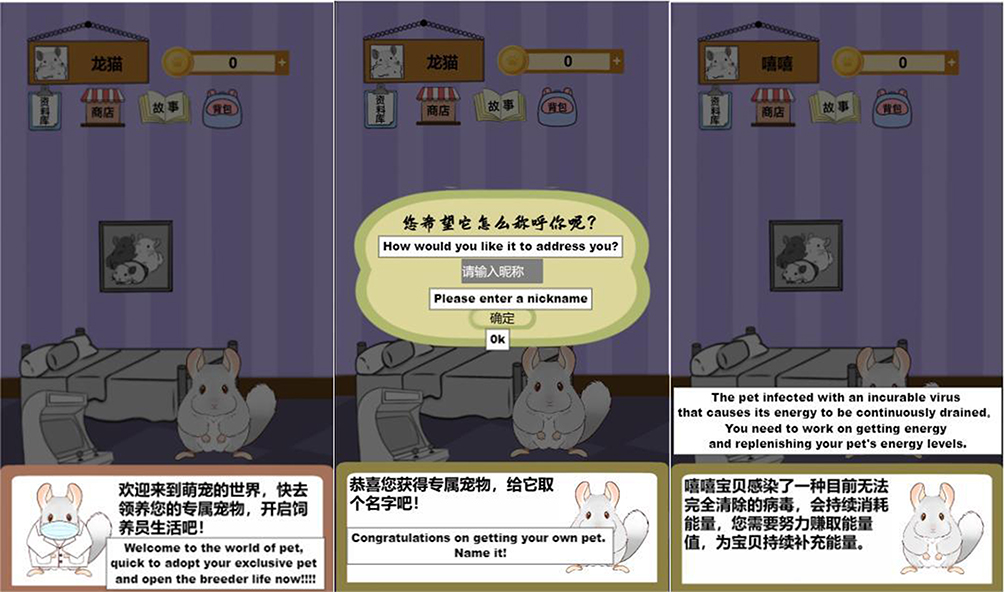 |
Figure 1 The game of the Cute Pet Butler. |
This game comprises three themes and 14 stories. The stories clearly showcases the current self-management problems faced by the game pet, portraying the pet’s responses to those problems to evoke empathy from players. The script for Story 1 is as follows:
Story 1: Disease and Health
Identify the Problem
As a qualified pet keeper, it is essential to ensure that pets maintain good physical health. Let us examine the specific issues your pet may be facing today.
Day One: Understanding the Framework of Disease and Health
Currently, the pets are infected with various viruses, which continue to multiply rapidly.
Emotional Expression
Pet Dialogue: “These viruses are damaging my body, and I feel very unwell. Please help me, dear keeper!” The image shows a visibly distressed pet.
Goal Setting
Antiretroviral therapy can reduce the viral load to an undetectable level.
As a pet keeper, you should administer antiviral medications to eliminate the virus from your pet’s system.
Confirm the Plan
An image of a pill appears on the game interface labeled “antiviral medication.” Players click on the pill to initiate virus removal.
Reminder: When individuals begin antiretroviral treatment, their viral load typically decreases significantly. For most people who take their prescribed medication daily, the viral load becomes undetectable within six months or less.
Behavioral Evaluation
Case A: Virus Fully Eliminated
Players receive in-game rewards and witness a joyful scene of a healthy, energetic pet.
Well done! Thanks to your dedicated care, the pet has fully recovered and is now full of vitality.
Case B: Virus Not Fully Eliminated
Players face in-game penalties and see an image of a visibly weakened pet.
Apologies! Due to insufficient management, your pet’s condition has deteriorated. Please review the information provided in the database to gain knowledge and improve your pet’s health.
Additional information regarding disease and health can be accessed through the database section. When the player clicks “OK” the interface redirects to the database page.
This game provides players with tasks aimed at assisting the pet solve HIV self-management problems, guides them to complete these tasks, and gives timely feedback. Players can earn gold rewards by completing game tasks within the stories, and a deduction is given if the task is unsuccessful. Unlocking the subsequent story is contingent upon successful completion of the previous game task, whereas unlocking a new theme requires completion of all story tasks within the given theme. It is hoped that such game tasks could help cultivate the self-management behavior of ALHIV. Table 1 outlines the main goals of the themes and stories. Figure 2 illustrates the interface for the story module.
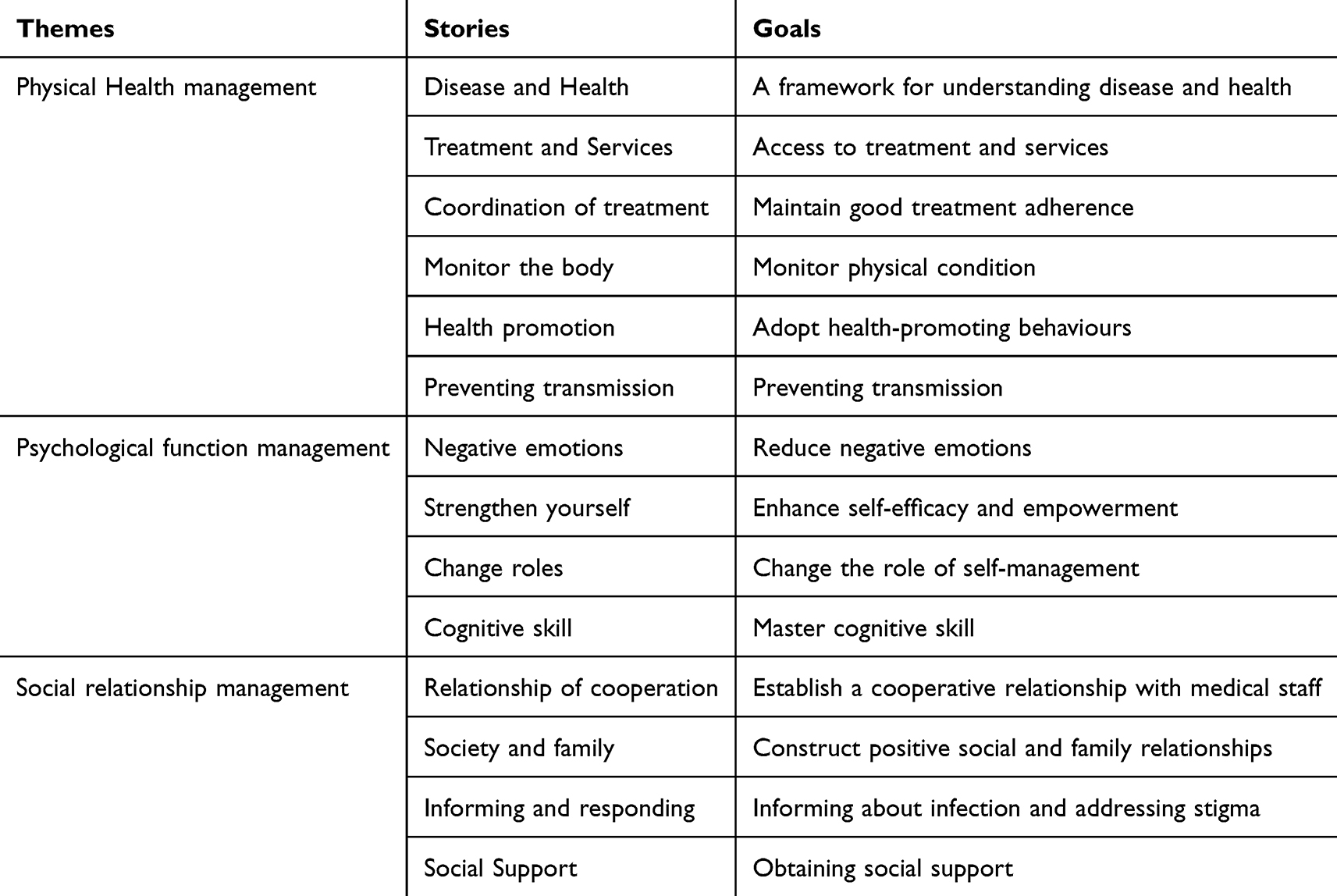 |
Table 1 The Goals of the Themes and Stories |
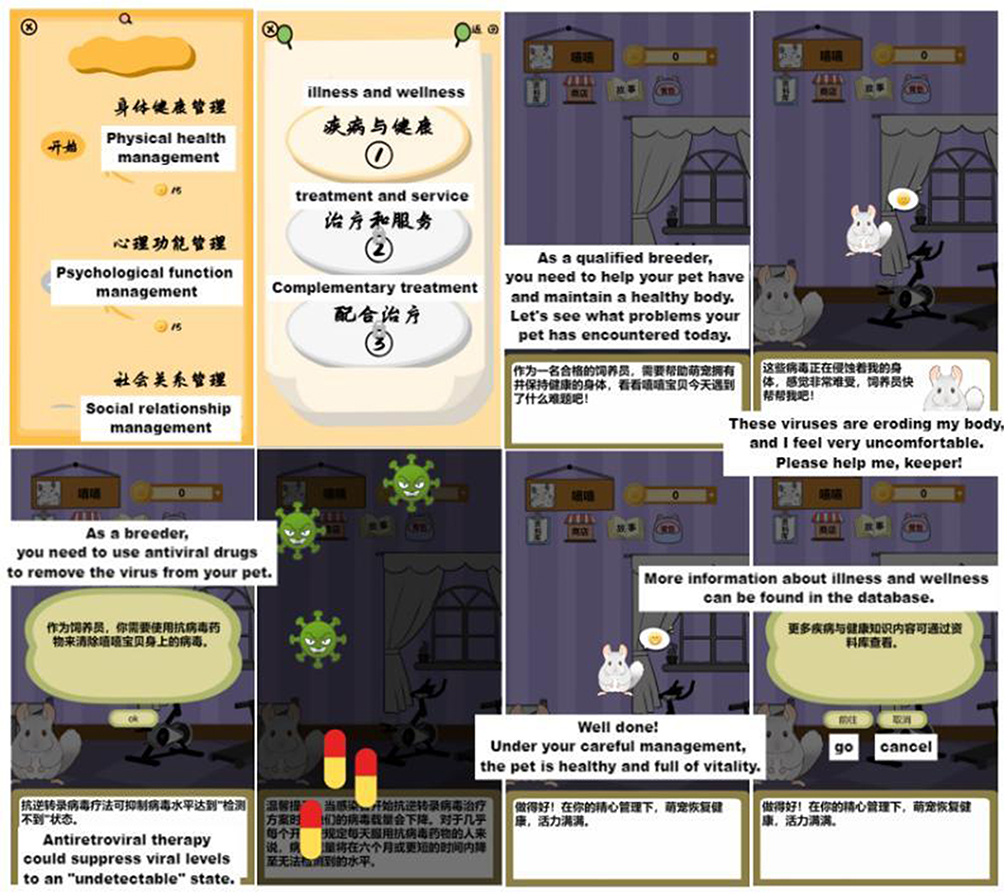 |
Figure 2 Interface diagram of the story module. |
Methods
Study Design
A mixed-method study with explanatory sequential design was conducted to evaluating the user experience and acceptability of a digital educational game for self-management health education among people living with HIV.
Participants
The participants of this study were PLHIV and were selected purposively. The research setting is the HIV clinics of five hospitals in Sichuan Province, China. The study period was from November 2023 to December 2023. The inclusion criteria consisted of being diagnosed with HIV infection, being proficient in using smartphones, being able to communicate, and providing informed consent. Participants who have played similar digital educational games with the theme of HIV will be excluded.
Procedure
First, the participants entered a separate room and learned about the purpose and content of this study. Then, the participants used the game to try it out on their own and were required to browse all the content in the game as much as possible, understand the game functions and gameplay, complete game tasks, and watch articles and videos in the database. Finally, evaluation questionnaires were distributed on site, and PLHIV who completed the questionnaire were randomly selected as interview subjects. Before the interviews, the researchers explained the research content in detail. After providing informed consent, the interviews were conducted in a separate, quiet room and recorded for 20--40 minutes. The data collection was terminated when the interview information was saturated and when no new content emerged. At the end of the game experience, participants would receive a small gift worth 10–20 yuan and were allowed to continue accessing the app following the test.
Measures
Demographic Questionnaire
The demographic questionnaire included questions about participants’ age, sex, education level, relationship with their cohabitant, duration of HIV infection, and ways of obtaining information related to HIV self-management. The questionnaire only contained closed-ended questions.
Educational Game User Experience Evaluation Scale
This scale was constructed by Dong et al20 and has been widely used in the evaluation of educational games in China. The scale has 22 items and comprehensively evaluates educational games from five aspects: perceived aesthetics, usability, educationality, playability, and the satisfaction of learning needs. After using the game, users can evaluate each item on the basis of their actual experience with four options: excellent, good, medium, and poor.
Interview Outline
For research purposes, the researchers initially drafted the interview outline after the literature review and group discussion. Two participants were selected for preinterviews to revise and improve the interview outline (as shown in Box 1).
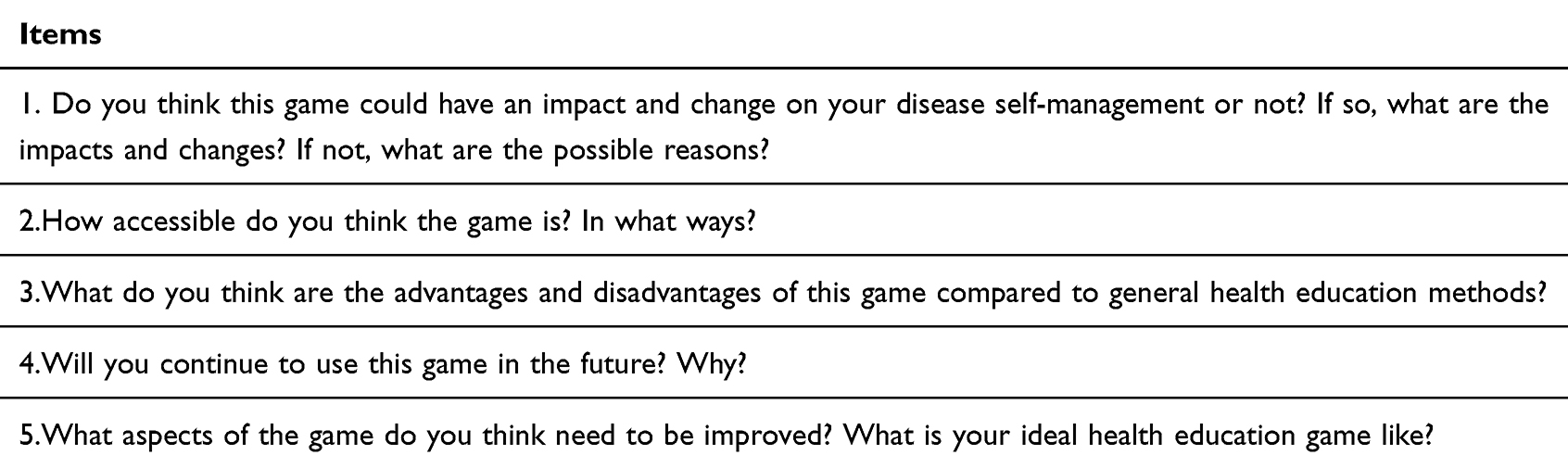 |
Box 1 Interview Outline |
Data Analysis
Excel 2019 and SPSS 25.0 statistical software were used to organize and analyse the data, and percentages were used for the statistical description of categorical data. The thematic analysis method was used to analyse the qualitative data. NVIVO software was used for qualitative analysis.
Ethical Considerations
The study was conducted in accordance with the Declaration of Helsinki and was approved by the Ethics Committee of Clinical Trials, Affiliated Hospital of Southwest Medical University (KY2023037) in China. This study followed the principle of voluntary participation, and the participants were informed in detail of the research background, purpose and content, as well as the possible risks and benefits. The participants voluntarily chose whether to participate in this study and could withdraw at any time during the study without being treated unfairly. The personal information and research results in this study were kept confidential. The participants in this study were given a small gift reward after completing the research content and related measures. After the participants fully understood and agreed to participate in this study, an informed consent form was signed, and the whole process was witnessed by a third party who was not involved in the study. The participants informed consent included publication of anonymized responses/direct quotes.
Results
Descriptive Statistics
A total of 50 PLHIV participated in this study, of whom 56.00% were male and 44.00% were female, with an average age of 33.64 years. The main sources of information related to HIV self-management were medical staff and the internet, as shown in Table 2.
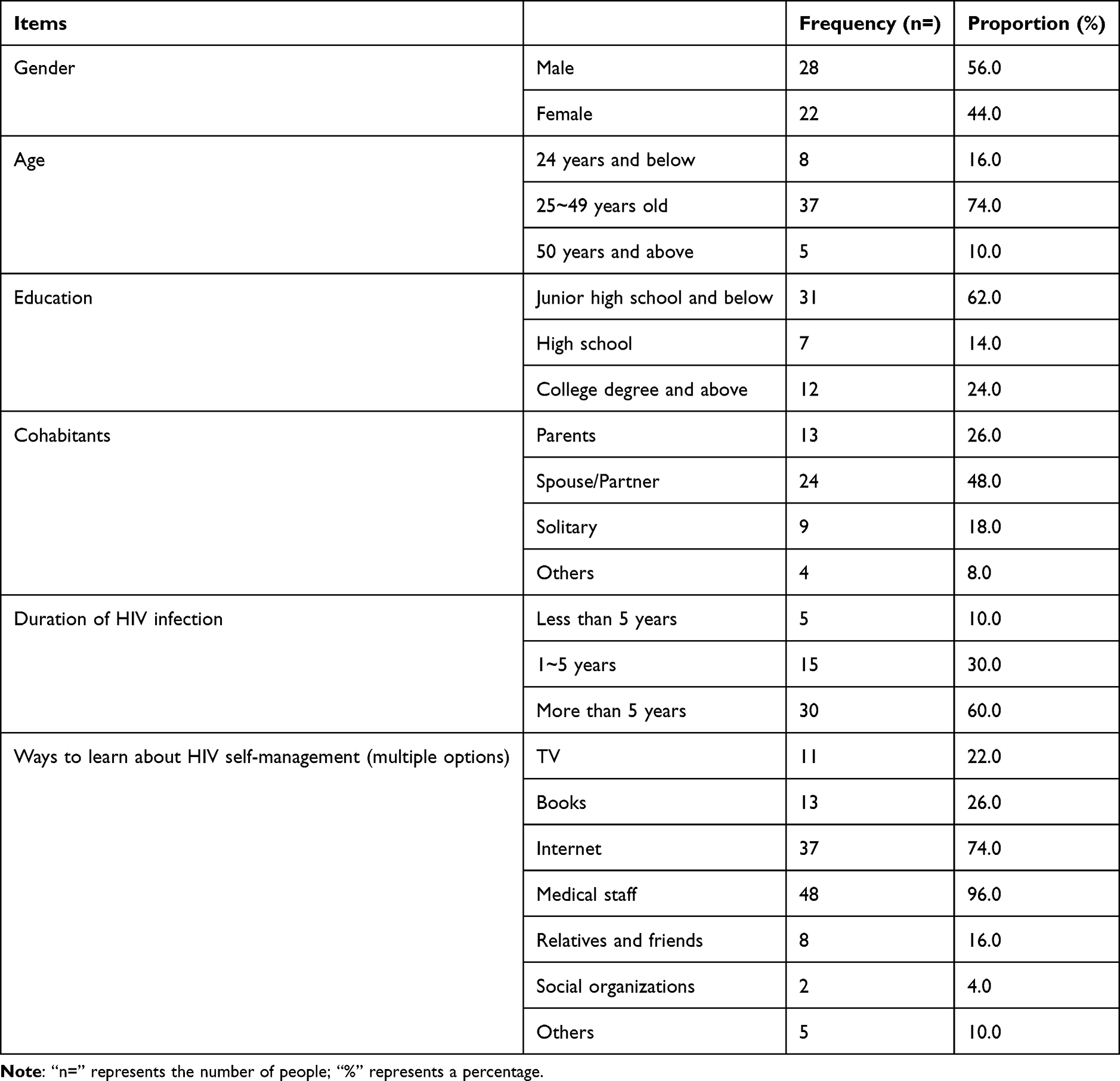 |
Table 2 Information of the Participants |
Results of the User Experience
The evaluation of the game was divided into four options: excellent, good, medium and poor. The excellent rate was 56.36%, the good rate was 34.55%, the medium rate was 8.64% and the poor rate was 0.45%. The top three indicators rated as “excellent” were as follows: the interface was pleasant (78%), the knowledge feedback was clear and timely (72%), and the learning objectives were clear (72%). The indicators rated as “poor” were as follows: novel and interesting interface elements (4%), easy to remember (2%), easy to learn (2%), and optional (2%). The details are shown in Table 3.
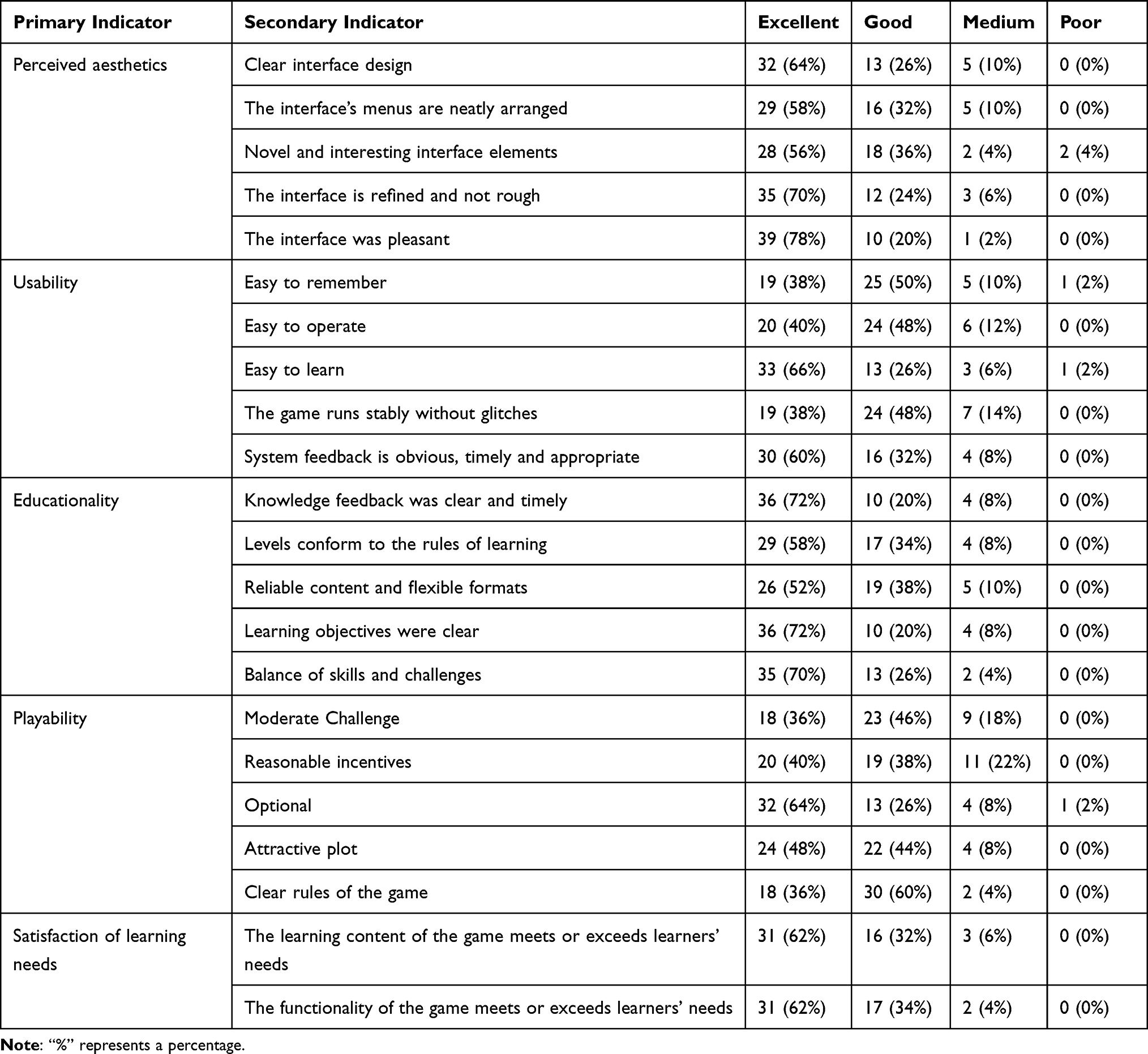 |
Table 3 Results of the Game Evaluation |
Results of the Interviews
This study interviewed nine PLHIV. Each participant was assigned a de-identified study ID (N1-9) to maintain confidentiality. Median age of participants was 32 years (range: 23–51 years). 55% (n=5) were male. The median duration of HIV infection of the interviewees was 5 years (range: <1 to 13 years). Education was varied, reflecting diverse socioeconomic backgrounds of the sample.
After analyzing the interview data, the acceptability evaluation of the interviewees on “Cute Pet Butler” in five themes were extracted, that are perceived usefulness, perceived ease of use, positive user attitudes, the intention of game playing, and modification suggestions.
Theme 1: Perceived Usefulness
Subtheme 1: Enhancing Knowledge and Improving Self-Management Awareness
Seven interviewees indicated that they had learned a large amount of HIV self-management knowledge that they had not known or misunderstood before while using the app and that they consciously performed self-management in their daily lives.
N4: I like this way of learning while playing. I can learn while raising pets. The knowledge enters my head invisibly. Ha ha ha.
N5: I used to think that people like me should visit a specialized hospital for treatment. Regular hospitals are not enough, and I was afraid that doctors would not treat me. After playing this game, I realized that we can still go to them for treatment if we have any other illnesses.
N7: I think it is great that there’s a database in this game; I can learn a lot of things. I did not realize I needed to take care of myself before; I just thought taking medicine every day would be enough.
N1: The game does have an influence. For example, I can still remember the cat (the pet in the game) telling me that jogging for half an hour every day is good for health. I jogged slowly today and exercised at the same time.
Subtheme 2: Releasing Stress and Providing Spiritual Comfort
Four interviewees said that “Cute Pet Butler” allows people to immerse themselves in a relaxing and enjoyable gaming atmosphere, which can help relieve stress. Female and older believe that interacting with soft and cute electronic pets is similar to a kind of spiritual comfort.
N1: I think the pets are cute, the game atmosphere is relaxing and enjoyable, and the background music is cheerful, which is relaxing and stress-relieving.
N3: I can feel that I am needed and feel a sense of responsibility and accomplishment. During the game, my anxious and exhausted heart is comforted.
N1: That cat (the pet in the game) looks pretty good, a bit like the cat I had before, gray and plump. I do not have much to do, so I liked to keep a cat before, but I missed it. This (the pet in the game) is a kind of comfort, just like a real cat, it helps to entertain, and do not have to worry about losing it one day.
Theme 2: Perceived Ease of Use
Subtheme 1: Convenient Game Access
Three interviewees said that they could access the game by scanning the QR code without searching, downloading or registering, which was very convenient and fast.
N2: It is very convenient to just scan and play; there is no need to search in the app and store myself. I do not like to download too many apps on my phone.
N3: It does not require registration, inputting a mobile phone number, or verification code like some other apps do. I think it is more convenient.
N4: This kind of game can be used at any time; it is quite convenient to use.
Subtheme 2: Simple System Operation
Two interviewees said that the game rules of “Cute Pet Butler” are relatively simple and easy to operate.
N4: The game is relatively simple, and the idea is similar to other pet-raising games. The rules are easy to understand, and it could be easy to get started, whether you have played this type of game before or not.
N7: Just tap on each place and take a look. After playing around a bit, you will know how to play.
Subtheme 3: Clear Module Classification
One interviewee said that the classification of each module in “Cute Pet Butler” is clear and concise and that the function and content of each module can be understood through icons and titles.
N3: The modules in the upper left corner of this game are quite clear, the contents are clearly categorized, and the functions of each part are also very clear.
Subtheme 4: Hard to Understand the Professional Vocabularies
One interviewee said that there are some disease-related terms and some overly formal narrative contents in “Cute Pet Butler”, which makes it difficult to understand.
N5: I do not understand the meaning of some words. I cannot remember many of them. There are also long strings of words that are too professional. They seem very difficult to pronounce, and I am scratching my head to understand it.
Theme 3: Positive User Attitudes
Subtheme 1: Acceptable Knowledge
Two interviewees thought that the game atmosphere was relaxing and that the content was easy to understand. Health education in the form of games is easier to accept than face-to-face education from doctors or educational manuals.
N4: The atmosphere of this game is relaxing and easier to accept. When the doctor talks about this knowledge, I feel more psychological pressure and cannot listen to what the doctor says. This game is so cute and I do not feel scared to understand the knowledge.
N7: The content is relatively simple and easy to understand. There are pictures and videos in it, and there are explanations. I can understand it.
Subtheme 2: Practical Educational Content
Two interviewees believed that the self-management education content for PLHIV involved in “Cute Pet Butler” is relatively practical and provides clearer learning goals in the game story and database modules.
N3: Each short story begins with a description of the problem the pet encountered today and how to solve it. Each subheading in the database is quite clear, and it is easy to find what you want to read.
N4: I am concerned about self-management. The game contains many suggestions for daily life, which are very practical.
Subtheme 3: Attractive but Limited Application
Four interviewees believe that the game “Cute Pet Butler” has beautiful graphics, cute characters, and a warm and relaxing storyline, which makes it attractive. However, it is relatively difficult for older who are not familiar with electronic products and game operations to use. For male who pursue high-difficulty and high-standard gaming experience, the style and subject matter of the game may be relatively simple. However, one male interviewee believes that the systematic, complete, and accurate HIV self-management knowledge content in the “Cute Pet Butler” is still attractive.
N3: The whole game is warm, the pets are very cute, and some of the interactions are relaxing. It is also rewarding to earn money to keep the pets fit and eat. I like this game very much.
N8: If you let the elderly play this game, since not all old people could use smartphones, I’m afraid they will not be able to play it. It is hard to read because there are too many words. This game may be more suitable for children and girls who like to keep pets. Boys like us are more interested in challenging games, and generally like military shooting games.
N4: I think as long as it is a reasonable and logical game, if someone wants to learn about self-management, they are willing to play it, as they want to learn more knowledge. The content of this game seems to be very rich. Compared with the miscellaneous things on the internet, it is more organized and more complete. What you search online may not be accurate. I don’t truly trust things like Baidu now.
Subtheme 4: Private but Lacking Excitement and Challenges
Two interviewees believe that “Cute Pet Butler” does not require the submission of personal information, does not involve other people, and has a certain degree of privacy. However, game tasks and gameplay are relatively simple and lack excitement and challenges for male and younger player.
N5: When you look for a doctor on Baidu and ask questions, you are asked to provide some detailed medical history information. I am afraid of disclosing my personal information. When I came to the hospital to ask a doctor and another person came in a little while later. That would make me feel a little embarrassed. When I play this game, I am not afraid of others knowing it, so it is more private.
N8: I have higher requirements for games. I prefer challenging games with more intense and stimulating graphics, which give me a better gaming experience. In comparison, raising pets is not that interesting.
Theme 4: Intention of Game Playing
Subtheme 1: Intent to Continue Playing the Game
Three interviewees said that “Cute Pet Butler” does not require too much time and energy investment and is suitable for spending spare time. Some interviewees believe that the database module is a very useful tool when encountering self-management problems in reality; they can find relevant methods and suggestions through the database to better understand and solve these problems.
N2: It can be used to kill time, and I learned knowledge in the process. The game is not complicated and does not require too much time and energy.
N3: I do not play this game with the same mentality as before, that want to play it every day. However, it is still okay to kill time.
N5: This database is good, and some of the suggestions are good. I used to like to search the internet for any problems I encountered, but all I found were advertisements.
Subtheme 2: Intent to Not Play the Game
Two interviewees said that the game content of “Cute Pet Butler” is childish and lacks playability. A few interviewees had doubts about the educational content and preferred to seek answers from professional medical staff.
N7: I do not like playing this game. It is very childish and is better for kids.
N9: I think this game is a bit unnecessary. It’s not fun to play and doesn’t solve many problems. If you have any questions, you might ask the doctor directly. It is not certain whether the content of your game is correct or not.
Theme 5: Modification Suggestions
Subtheme 1: Voice Broadcast Function Was Recommended
Two interviewees said that there is too much text in the game. The addition of a voice broadcast function to the game is suggested to relieve players’ eye fatigue and increase the application rate for older people.
N1: There are too many words. It would be better if there were a voice when I click on the words, such as the blind mode in mobile phones. This would be more friendly to the older people.
N6: I understand that this game is mainly for education, so it is inevitable that there are many texts, but you do not have to read them; you can listen to them.
Subtheme 2: More Gameplay Was Recommended
Two interviewees said that the game “Cute Pet Butler” is a pet-raising game with limited users. It is recommended that more gameplay be added to increase the appeal of the game.
N3: I hope there will be more pets and different scenes to choose from, more story lines, and even family and friendship lines to create a richer game world. Now, there is only one pet and one scene, which is too monotonous.
N4: If there are some different types of mini-games in this game, it may be more attractive.
Subtheme 3: The Q&A Function Was Recommended
One interviewee said that the content of the “Cute Pet Butler” database is relatively fixed and cannot provide accurate answers to individual situations. They suggested adding a question-and-answer function to allow professional medical staff to provide more accurate and personalized solutions online.
N9: The knowledge you provide is too fixed. I prefer to be able to search for answers to any questions I have. Everyone’s situation is different. If there are professional doctors online in this game, just like chatting on WeChat, I can ask them any questions I have. It would be much more valuable.
Discussion
In this study, PLHIV who participated in the experience had a good acceptance and evaluation of “Cute Pet Butler”. Moreover, we found that even for male and younger users who are seeking for a difficult and highly manipulable game experience, this game could still attract them through the theme of HIV self-management, indicating that there is a desire and demand for HIV self-management health education among PLHIV.
The contents that need to be determined in educational game development include game type, game rules, game content, visual effects, and the selection and development of a user interface.21 This study sets the game type as pet raising, with the aim of making players feel healed, relieving stress and feeling happy. Compared with the excitement brought by action games and the sense of accomplishment brought by role-playing games, pet-raising games bring players more relaxation and pleasure. User stickiness refers to the willingness of users to visit a website regularly and for a long period of time,22 and is an important indicator of the performance of online services.23 Pets can establish and cultivate relationships with players and help increase user stickiness to the game.
This study sets the game rules such that the pet is infected with a virus that cannot be completely eliminated at present, which will continue to consume the pet’s energy. This reflects that players infected with HIV cannot be cured. Players help pets solve the problem of HIV self-management in the game from a third-person perspective, changing from “parties involved” to “bystanders”, which helps players correctly and objectively address the problem of HIV self-management and reduces their resistance to HIV treatment and management.
Previous studies have shown that the educational content concerning HIV self-management is inconsistent, incomplete, and not targeted enough.24–26 This study added a database module to the game content to provide players with a rich variety of HIV self-management information, which can provide players with systematic and comprehensive HIV self-management guidance and help standardize their self-management behavior.
The warm and healing visual style could soothe the hearts of players, bring the game closer to players, and enhance the user experience.27 Therefore, in terms of visual effects and user interfaces, this study focused on the quality of art and the presentation of game images. Through warm, friendly and comfortable visual effects and an atmosphere, players can relieve stress, anxiety or sadness and then heal and relax. The use of the UI interface also follows the overall tone unity and color balance to coordinate the player’s psychology and guide the player’s operation.28
Notably, this study found that 96% of participants obtained HIV self-management information from medical staff and 74% from the internet, reflecting the main channels relied on by PLHIV for such information. Medical staff, as authoritative sources, are trusted, but the limited time in clinical consultations makes it difficult to provide continuous and detailed guidance on daily self-management. The internet, while highly accessible, is often plagued by fragmented or inaccurate information, as some interviewees mentioned that online searches frequently yield unhelpful content like advertisements.
This situation indicates that PLHIV have a clear interest in self-management, as evidenced by their engagement with the “Cute Pet Butler” game and its educational content, but they need more effective guidance. The game’s database module, which was positively received by participants, offers structured, professional knowledge in an accessible format, supplementing the limitations of existing information channels. It provides a way to deliver systematic self-management guidance in an engaging manner, helping PLHIV better apply relevant knowledge in daily life and enhancing their confidence in self-management.
The user experience evaluation results of the participants indicate that users have a high overall evaluation of the “Cute Pet Butler”, which can meet or exceed the needs of learners and is conducive to achieving better educational results. However, “Cute Pet Butler” also has several problems, such as the game elements being not novel enough, the content being difficult to remember and the learning process being insufficient. The reason for these problems may be that the game type is pet raising, and the game style is relatively limited, which is not attractive to players who pursue high difficulty and exciting game experience. Moreover, this game is positioned as an educational game for PLHIV to self-manage. However, the educational content of HIV self-management is complex and difficult to learn, which requires a high level of learning ability from players. This suggests that we should innovate in the game’s functions and gameplay in the future to increase the audience of “Cute Pet Butler”. In addition, we could set up different difficulty selection modes in the game, and players can choose the content they are interested in to learn in the game to improve learning efficiency and educational effects.
The interview results revealed that PLHIV have a high degree of recognition and acceptance of the “Cute Pet Butler”. The participants believed that the game was relaxing and enjoyable, that the operation was simple and convenient, and that they could release stress while learning relevant knowledge, which could trigger and improve their self-management awareness. Compared with traditional health education, game-based education is more attractive, more acceptable and more private.29 Traditional health education often just imparts knowledge and skills directly to patients, and patients are usually in a passive state of acceptance. However, educational games start with the psychological needs of patients in entertaining ways.28 Educational games can provide demonstrative education and projective immersive experiences, which can better promote the formation of healthy behaviors in patients.30 However, some participants thought that the game is childish and lacks appeal to players who pursue high-difficulty and high-standard game experiences, especially male players. Moreover, the educational content cannot provide accurate answers to individual situations. This suggests that we could add a question-and-answer module led by artificial intelligence in the future while increasing the fun of gameplay to provide personalized solutions to HIV self-management problems.
The difficulty in understanding professional terminology and formal narrative content reported by some participants (eg, N5) is closely related to their demographic characteristics, which highlights the necessity of optimizing health education content based on the population’s traits. Specifically, N5, a 47-year-old participant with only primary school education, explicitly stated that “some professional terms are incomprehensible” and “lengthy formal expressions are hard to grasp.” This situation is consistent with the overall demographic features of the sample: 62% of the participants had an educational level of junior high school or below, and 10% were aged 50 years or older. Such characteristics—lower educational attainment and older age—often correlate with limited familiarity with medical jargon and reduced ability to process complex textual information, which may directly hinder the effective absorption of HIV self-management knowledge.
This correlation is further reflected in the user experience evaluation results. Indicators such as “novel and interesting interface elements” and “easy to remember” received relatively low ratings (with 4% and 2% of poor evaluations, respectively), which may partially stem from the mismatch between the complexity of the game’s textual content and the cognitive abilities of participants with lower education levels or older age. Notably, the modification suggestions put forward by interviewees, such as adding a voice broadcast function, directly respond to this issue. For example, N1, a 51-year-old participant with a high school education, proposed that “a voice prompt when clicking on text would be more friendly to older people” which provides a feasible direction for improving the accessibility of the game.
These findings indicate that the acceptability and effectiveness of digital educational games for people living with HIV are significantly affected by the alignment between content design and the demographic characteristics of the target population. Therefore, in subsequent iterations of “Cute Pet Butler” it is crucial to simplify professional terminology, introduce audio explanations, and increase visual and interactive elements. Such adjustments can better adapt to the educational background and age-related needs of the target population, thereby enhancing the comprehension and application of health knowledge. We believe that further modifying and improving “Cute Pet Butler” on the basis of the interview results can effectively improve its acceptability, applicability and feasibility for self-management health education for PLHIV.
This self-management education game for people living with HIV may have important implications for clinical medical work and HIV management. As a new type of health education tool, educational games have attracted attention for their advantages, such as diverse forms, strong interactivity and wide application range.31 They can standardize and homogenize health education content and compensate for the shortcomings of traditional health education.32 The self-management educational game for people living with HIV developed in this study could provide an innovative and convenient health education auxiliary tool for HIV education, which will help promote large-scale and homogenized self-management health education for people living with HIV.
Limitations
One significant limitation of this study is that the reliance on digital tools may have excluded some patient groups, especially those who do not have access to smartphones, stable networks, or lack digital literacy. This is particularly worthy of attention in the context of HIV research. Such groups (such as low-income individuals, residents in remote areas, the elderly, etc.) are often those with a heavy burden of HIV. However, due to the digital divide, they are difficult to be covered by existing intervention measures, which may affect the applicability of research results in this group of people and also highlight the challenges of promoting health equity in HIV prevention and control. The self-management educational game for people living with HIV developed in this study was only pilot tested with 50 PLHIV, and nine participants were interviewed. There may be regional and individual differences in the views of the game. In the future, the regional scope and sample size of the study can be expanded to improve the representativeness of the sample.
Conclusions
This study developed an HIV self-management educational game, and the primary evaluation of this game revealed a good user experience and acceptance among people living with HIV. It is helpful to further modify and improve the game design and content. These results support further evaluation of its effectiveness as a new method to improve self-management health education interventions for people living with HIV. In the next step, randomized controlled trial will be used to evaluate the application effect of the game.
Abbreviations
HIV, Human immunodeficiency virus; ART, antiretroviral therapy; PLHIV, people living with HIV.
Funding
This research was supported by the National Natural Science Foundation of China (82304256).
Disclosure
The authors report no conflicts of interest in this work.
References
1. Bernardin KN, Toews DN, Restall GJ, et al. Self-management interventions for people living with human immunodeficiency virus: a scoping review. Can J Occup Ther. 2013;80(5):314–327. doi:10.1177/0008417413512792
2. Creer TL, Renne CM, Christian WP. Behavioral contributions to rehabilitation and childhood asthma. Rehabil Lit. 1976;37(8):226–32,247.
3. Barlow J, Wright C, Sheasby J, et al. Self-management approaches for people with chronic conditions: a review. Patient Educ Couns. 2002;48(2):177–187. doi:10.1016/s0738-3991(02)00032-0
4. Gorbanev I, Agudelo-Londoño S, González RA, et al. A systematic review of serious games in medical education: quality of evidence and pedagogical strategy. Med Educ Online. 2018;23(1):1438718. doi:10.1080/10872981.2018.1438718
5. Bodi B, Thon J. Playing stories?: narrative-dramatic agency in Disco Elysium (2019) and Astroneer (2019. Front Narrative Studies. 2020;6(2):157–190. doi:10.1515/fns-2020-0012
6. Chenais N, Görgen A. Immersive interfaces for clinical applications: current status and future perspective. Front Neurorobot. 2024;18:1362444. doi:10.3389/fnbot.2024.1362444
7. Nussbaum M, Beserra VDS. Educational video game design. In:
8. Luo Y, Li M, Tang J, et al. Design of a virtual reality interactive training system for public health emergency preparedness for major emerging infectious diseases: theory and framework. JMIR Serious Games. 2021;9(4):e29956. doi:10.2196/29956
9. Esmaeilzadeh P. The influence of gamification and information technology identity on postadoption behaviors of health and fitness app users: empirical study in the United States. JMIR Serious Games. 2021;9(3):e28282. doi:10.2196/28282
10. Epstein DS, Zemski A, Enticott J, et al. Tabletop board game elements and gamification interventions for health behavior change: realist review and proposal of a game design framework. JMIR Serious Games. 2021;9(1):e23302. doi:10.2196/23302
11. Sinclair P, Kable A, Levett-Jones T. The effectiveness of internet-based e-learning on clinician behavior and patient outcomes: a systematic review protocol. JBI Database Syst Rev Implement Rep. 2015;13(1):52–64. doi:10.11124/jbisrir-2015-1919
12. Sarasmita MA, Larasanty LPF, Kuo LN, et al. A computer-based interactive narrative and a serious game for children with asthma: development and content validity analysis. J Med Internet Res. 2021;23(9):e28796. doi:10.2196/28796
13. Radhakrishnan K, Julien C, Baranowski T, et al. Feasibility of a sensor-controlled digital game for heart failure self-management: randomized controlled trial. JMIR Serious Games. 2021;9(4):e29044. doi:10.2196/29044
14. Nørlev J, Derosche C, Sondrup K, et al. Using distance communication for the user-centered development of a smartphone-based serious game for children with type 1 diabetes: participatory design approach. JMIR Serious Games. 2022;10(1):e33955. doi:10.2196/33955
15. Tang J, Zheng Y, Zhang D, et al. Evaluation of an AIDS educational mobile game (AIDS fighter · health defense) for young students to improve AIDS-related knowledge, stigma, and attitude linked to high-risk behaviors in China: randomized controlled trial. JMIR Serious Games. 2022;10(1):e32400. doi:10.2196/32400
16. Hemingway C, Baja ES, Dalmacion GV, et al. Development of a mobile game to influence behavior determinants of HIV service uptake among key populations in the Philippines: user-centered design process. JMIR Serious Games. 2019;7(4):e13695. doi:10.2196/13695
17. Castel AD, Qasmieh S, Greenberg D, et al. Digital gaming to improve adherence among adolescents and young adults living with HIV: mixed-methods study to test feasibility and acceptability. JMIR Serious Games. 2018;6(4):e10213. doi:10.2196/10213
18. Zimmerman MA. Psychological empowerment: issues and illustrations. Am J Community Psychol. 1995;23(5):581–599. doi:10.1007/BF02506983
19. Christens BD. Toward relational empowerment. Am J Community Psychol. 2012;50(1–2):114–128. doi:10.1007/s10464-011-9483-5
20. Dong Z. Research on the construction of user experience evaluation system for educational games. Nanjing: Normal University; 2013. Available from: https://kns.cnki.net/kcms2/article/abstract?v=sgrnXhMyarYOY73vWJrzY6Kiy_nlD_SnB2Cvmmqb5B6kEibmcKj3yGxFN8eH3jlmbok8PxtNZHeDE0QlvlgPhJsBTa6wRKrbbKn62cuTs4F_Y3VWY7tDy0NtWHSjppp_3DWM7JJAC-KPu37C_jANIcdA29PjmnO1fdzpK68QXHKr8g8nPl2ZGY8idTWbOMeH3piTdJZfW4I=&uniplatform=NZKPT&language=CHS.
21. Verschueren S, Buffel C, Vander Stichele G. Developing theory-driven, evidence-based serious games for health: framework based on research community insights. JMIR Serious Games. 2019;7(2):e11565. doi:10.2196/11565
22. Li DH, Browne GJ, Wetherbe JC. Why do internet users stick with a specific web site? A relationship perspective. Int J Electron Commer. 2026;10(4):105–141. doi:10.2753/JEC1086-4415100404
23. Rong K, Xiao F, Zhang XY, et al. Platform strategies and user stickiness in the online video industry. Technol Forecasting Soc Change. 2019;143:249–259. doi:10.1016/j.techfore.2019.01.023
24. Wang H, Chen AC, Wan S, et al. Status and associated factors of self-management in people living with HIV/AIDS in Liangshan area, China: a cross-sectional study. Patient Prefer Adherence. 2019;13:863–870. doi:10.2147/PPA.S203799
25. Dong N, Chen WT, Lu H, et al. Unmet needs of symptom management and associated factors among the HIV-positive population in Shanghai, China: a cross-sectional study. Appl Nurs Res. 2020;54:151283. doi:10.1016/j.apnr.2020.151283
26. Wong CS, Wei L, Kim YS. HIV late presenters in Asia: management and public health challenges. AIDS Res Treat. 2023;2023:9488051. doi:10.1155/2023/9488051
27. Knez I, Niedenthal S. Lighting in digital game worlds: effects on affect and play performance. Cyberpsychol Behav. 2008;11(2):129–137. doi:10.1089/cpb.2007.0006
28. Caserman P, Hoffmann K, Müller P, et al. Quality criteria for serious games: serious part, game part, and balance. JMIR Serious Games. 2020;8(3):e19037. doi:10.2196/19037
29. Haruna H, Hu X, Chu SKW, et al. Improving sexual health education programs for adolescent students through game-based learning and gamification. Int J Environ Res Public Health. 2018;15(9):2027. doi:10.3390/ijerph15092027
30. Höchsmann C, Infanger D, Klenk C, et al. Effectiveness of a behavior change technique-based smartphone game to improve intrinsic motivation and physical activity adherence in patients with type 2 diabetes: randomized controlled trial. JMIR Serious Games. 2019;7(1):e11444. doi:10.2196/11444
31. Tolks D, Lampert C, Dadaczynski K, et al. Spielerische Ansätze in Prävention und Gesundheitsförderung: serious Games und Gamification [Game-based approaches to prevention and health promotion: serious games and gamification]. Bundesgesundheitsblatt Gesundheitsforschung Gesundheitsschutz. 2020;63(6):698–707. German. doi:10.1007/s00103-020-03156-1
32. Aster A, Scheithauer S, Middeke AC, et al. Use of a serious game to teach infectious disease management in medical school: effectiveness and transfer to a clinical examination. Front Med. 2022;9:863764. doi:10.3389/fmed.2022.863764
 © 2025 The Author(s). This work is published and licensed by Dove Medical Press Limited. The
full terms of this license are available at https://www.dovepress.com/terms
and incorporate the Creative Commons Attribution
- Non Commercial (unported, 4.0) License.
By accessing the work you hereby accept the Terms. Non-commercial uses of the work are permitted
without any further permission from Dove Medical Press Limited, provided the work is properly
attributed. For permission for commercial use of this work, please see paragraphs 4.2 and 5 of our Terms.
© 2025 The Author(s). This work is published and licensed by Dove Medical Press Limited. The
full terms of this license are available at https://www.dovepress.com/terms
and incorporate the Creative Commons Attribution
- Non Commercial (unported, 4.0) License.
By accessing the work you hereby accept the Terms. Non-commercial uses of the work are permitted
without any further permission from Dove Medical Press Limited, provided the work is properly
attributed. For permission for commercial use of this work, please see paragraphs 4.2 and 5 of our Terms.