
Back to Journals » Open Access Journal of Contraception » Volume 16

Understanding Contraceptive Preferences Across Generations: Insights from Indonesian Millennials and Zillennials
Authors Syahbuddin Arsyad S, Rahayuwati L  , Rahmadewi, Nurhayati S, Nugraha A, Nugroho DNA, Oktriyanto, Rahardja MB , Prasetyo YE , Purba YA, Meilianna R, Surbakti IM, Utomo W, Amelia V
Received 24 July 2025
Accepted for publication 8 October 2025
Published 31 October 2025 Volume 2025:16 Pages 159—170
DOI https://doi.org/10.2147/OAJC.S555967
Checked for plagiarism Yes
Review by Single anonymous peer review
Peer reviewer comments 2
Editor who approved publication: Professor Igal Wolman
Syahmida Syahbuddin Arsyad,1 Laili Rahayuwati,2 Rahmadewi,1 Septi Nurhayati,1 Arga Nugraha,3 Darojad Nurjono Agung Nugroho,4 Oktriyanto,1 Mugia Bayu Rahardja,1 Yanu Endar Prasetyo,1 Yanti Astrelina Purba,1 Ruth Meilianna,1 Indra Murty Surbakti,5 Wahyu Utomo,3 Vira Amelia6,7
1Research Centre for Population, National Research and Innovation Agency, South Jakarta, Indonesia; 2Department of Community Nursing, Faculty of Nursing, Universitas Padjadjaran, Sumedang, Indonesia; 3Directorate of Research, Technology and Innovation Measurements and Indicators, National Research and Innovation Agency, South Jakarta, Indonesia; 4Regional Development Planning and Research Agency, Brebes Regency, Central Java Province, Indonesia; 5National Population and Family Planning Board, East Jakarta, Indonesia; 6Faculty of Nursing, Universitas Padjadjaran, Sumedang, Indonesia; 7Department of Professional Nursing Education, Stikes Bhakti Mulia, Kediri, Indonesia
Correspondence: Laili Rahayuwati, Department of Community Nursing, Faculty of Nursing, Universitas Padjadjaran, Sumedang, 45363, Indonesia, Tel +62 812 2138 385, Email [email protected]
Purpose: To find out the differences in the use of contraceptive methods in millennials and zillennials.
Methods: This study employed a cross-sectional comparative design using secondary data from the National Socio-Economic Survey 2012 and 2022. A total of 31,345 women (2012) and 23,942 women (2022) were included. Generations were defined as follows: Millennials (born 1981– 1996) and Zillennials (born 1997– 2012). Descriptive statistics, chi-square and multinomial logistic regression were used to assess differences in contraceptive use between the two generations.
Results: Age, residence, education, household expenditure, age at first marriage, number of living children, and internet access were significantly associated with contraceptive preferences. Among Millennials, education and internet access were most associated with SARC use. Among Zillennials, education and fewer living children were most associated with SARC use. Regarding traditional methods, among Millennials, age group and internet access were most associated with use, and among Zillennials, residence and education were most associated with traditional method use.
Conclusion: Strengthening communication, information dissemination, and education tailored to the characteristics of the generation is essential to address their specific needs and preferences.
Plain Language Summary: This study looked at whether there are differences in contraceptive use between millennials and zillennials. It used data from Indonesia’s National Socio-Economic Survey in 2012 and 2022, analyzing information from over 55,000 women. Age, residence, education, household expenditure, age at first marriage, number of living children, and internet access were all significantly associated with contraceptive choice. Among Millennials, SARCs were most strongly associated with education and internet access, while traditional methods were associated with age and education. Among Zillennials, SARC use was associated with education and fewer living children, whereas traditional methods were associated with residence area and education. Although both generations commonly used injections and pills, the likelihood of using each method varied by generation and sociodemographic factors, highlighting the importance of tailored family planning interventions.
Keywords: contraceptive, family planning, generational differences, millennial, zillennial
Introduction
The world’s population currently stands at 8.2 billion, with 23% belonging to the millennial generation and 22% to the zillennial generation. Meanwhile, out of Asia’s population of 4.8 billion, 24% are millennials.1–3 Indonesia has the fourth-largest population density in the world, with a total population of 271,349,889 people.4 Reflecting the global trend, Indonesia’s population structure is also dominated by these two generations, comprising more than half (53%) of the nation’s total population. A more detailed breakdown of Indonesia’s population by generational groups is as follows: zillennials (27.94%), millennials (25.87%), Gen X (21.88%), the baby boomer generation (11.56%), the post-zillennials generation (10.88%), and the pre-boomer generation (1.87%).5 The Pre-Boomer generation includes those born before 1945, while the Baby Boomer generation spans 1946 to 1964. Gen X consists of those born from 1965 to 1980, Gen Y from 1980 to 1996, and zillennial from 1997 to 2012. The Post-Gen Z generation refers to individuals born between 2013 and 2022.3
In terms of demographics, millennials and zillennials represent the population currently and in the coming years at a productive age. The success or failure of development is closely tied to population dynamics, which need to be managed appropriately. In order to be more optimal on target, various population policies need to be adjusted to the characteristics of the two generations. Meanwhile, the total fertility rate (TFR) has reached 2.18.5 This means that only about two children are born to women during their reproductive years. Although direct evidence on millennials is limited, existing studies indicate that TFR increased for women born between 1958 and 1970 but then decreased for those born after 1970, which includes early millennials.6 For instance, in Spain, the birth rate among zillennials is one of the lowest globally at 1.16 children per woman in 2023.7 The family planning programme is considered effective in the process of sustainable development and improving the welfare of Indonesian families. Through the family planning programme, a planned and prosperous family will give birth to a generation that is more secure in care, health, and education.
These two generations, which dominate Indonesia’s population structure, have distinct characteristics. Millennials are creative, progressive and value intrinsic and moral principles. They are quick to embrace change, enjoy collaboration, and are known for their multitasking abilities.8 Zillennials, having grown up in the tech era, are even more advanced, independent, open-minded, and less bound by norms. They value job satisfaction and prefer independence.9 While social media influences both generations, zillennials are more adept at using technology for decision-making.10,11 The differences in the characteristics of these two generations provide different perspectives on family planning. Their desire to have children is influenced by rational choices regarding economic, social, and health factors, and a desire for personal freedom.12–15
The usage of contraception methods by women between the ages of 15 and 49 tends to increase according to the Indonesian Demographic and Health Survey (IDHS) from 1991 to 2017.16 (Figure 1).
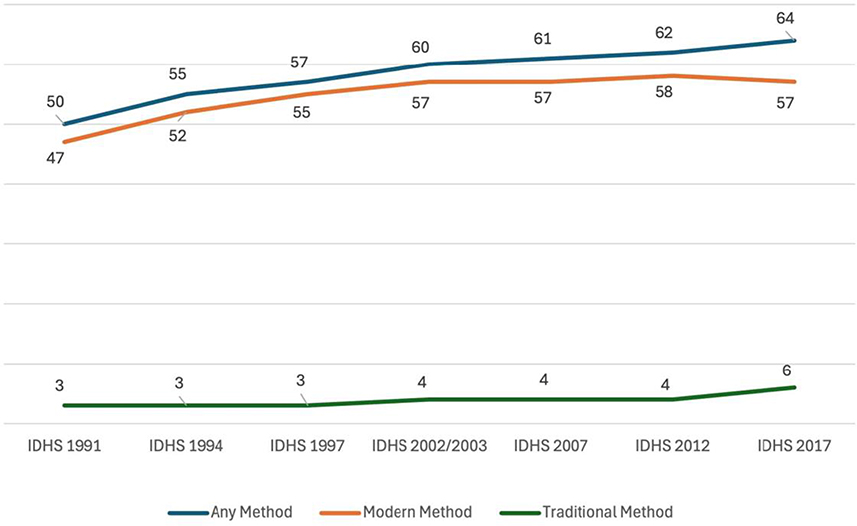 |
Figure 1 Trends in contraceptive method use among women aged 15–49 years in Indonesia, 1991–2017. |
Family planning for these two generations will determine the structure, quantity, and quality of Indonesia’s population in the future. Therefore, the main purpose of this study is to find out the differences in the use of contraceptive methods in millennials and zillennials, both in terms of prevalence and types of methods used, and the determinants of contraceptive use among the two generations.
Materials and Methods
Study Design and Setting
This cross-sectional comparative study analysed secondary data from the National Socioeconomic Survey data sources in 2012 and 2022 were used because one of the objectives of this study was to compare the characteristics of the two generations of millennials and zillennials in terms of contraceptive use and reasons for not using contraception with the same age category at the time the two surveys were conducted (15–24 years old).
Respondents
Millennials are defined as the generation born in the period 1981–1996, while zillennials, in this case, are the generation born in the period 1997–2012. The unit of analysis in this study is millennials and zillennials married women aged 15–24 years at the time of the survey. The number of analysis units in 2012 was 31345 women, and in 2022 was 23942 women.
Statistical Analysis
Frequency distribution table analysis was used to see the distribution of each respondent’s characteristic variable observed in this study. The chi-square test was used to determine whether there was a difference in the proportion of the observed variable, namely the use of contraceptives by married women based on the two data sources used. Furthermore, each variable that has been selected (p <0.05) will be included in a multivariate analysis (multinomial logistic regression) to know the factors that influence contraceptive use among Millennials and Zillennials with Adjusted Odds Ratio values with 95%confidence intervals (CI) in significance p<0.05. Multivariate analysis used LARCs as the reference standard.
Results
Table 1 presents the sociodemographic profiles of young women aged 15–24 years from millennials and zillennials. The age distribution indicates that the majority of respondents in both were within the 20–24 age group, with a slightly higher proportion in zillennials (90.3%) compared to millennials (85.0%). A modest increase in urban residency was observed in Zillennials (42.2%), reflecting a shift from the predominantly rural distribution in millennials (60.5%).
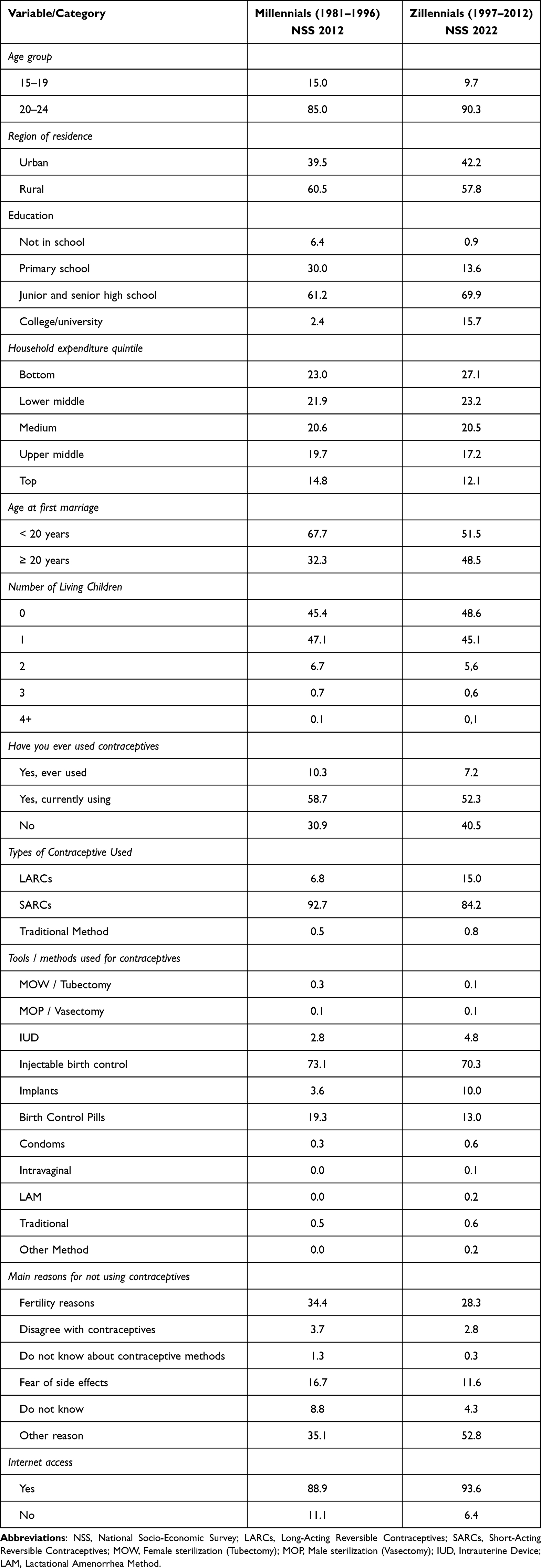 |
Table 1 Demographic and Socioeconomic Characteristics of Millennial and Zillennial Married Women in Indonesia, 2012 and 2022 |
The proportion of respondents with tertiary education increased markedly from 2.4% in millennials to 15.7% in zillennials. In terms of household economic status, a larger proportion of zillennials belonged to the lower quintiles, while the proportion in the highest quintile decreased. A generational shift in marital patterns was evident, with the prevalence of marriage before the age of 20 decreasing from 67.7% in millennials to 51.5% in zillennials. Fertility patterns remained relatively consistent, though a slight increase was observed in the proportion of respondents with no children in zillennials. Furthermore, access to the internet increased from 88.9% in millennials to 93.6% in zillennials.
Table 2 shows significant generational differences in contraceptive use among women. A higher proportion of millennials reported currently using contraceptives (58.7%) compared to zillennials (52.3%). In comparison, non-contraceptive use was notably higher in zillennials (40.5%) than in millennials (30.9%). Hormonal contraceptive methods remained the most used across both generations, with injectable contraceptives being the predominant method (millennials: 73.1%; zillennials: 70.3%). However, the difference in method choice was not statistically significant (p = 0.08). Regarding reasons for non-contraceptive use, both generations cited “other reasons” most often, including being currently pregnant, lack of access, or cost barriers (zillennials: 52.8%; millennials: 35.1%). Fertility-related reasons were the second most common, slightly higher in millennials (34.4%) than zillennials (28.3%).
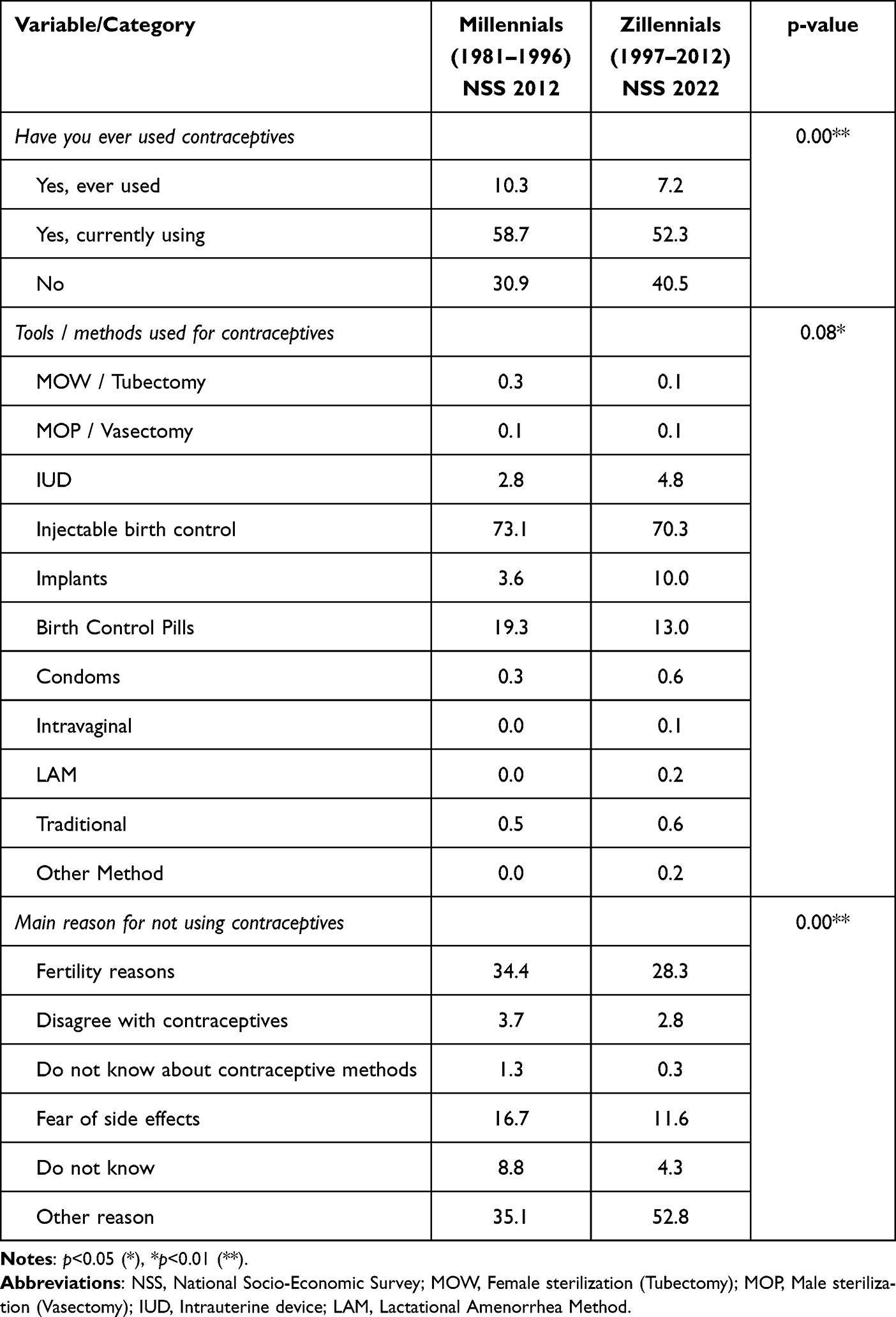 |
Table 2 Contraceptive Method Use Among Millennial and Zillennial Married Women in Indonesia, 2012 and 2022 |
Table 3 shows that multinomial logistic regression showed age, education, residence, household expenditure, age at first marriage, number of living children, and internet access were all significantly associated with using SARCs compared with LARCs in both Millennials and Zillennials. Among Millennials, lower education and internet access were the strongest predictors of SARC use. Among Zillennials, lower education also emerged as the dominant factor, and fewer living children, which increased the likelihood of choosing SARCs.
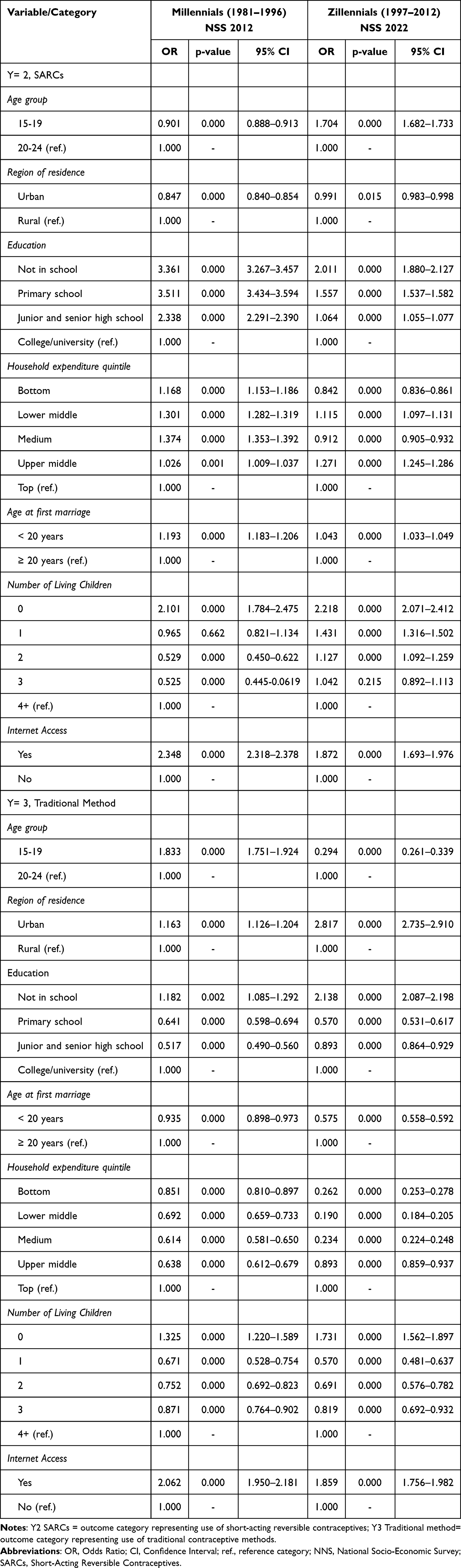 |
Table 3 Multinomial Logistic Regression of Factors Associated with Contraceptive Use by Method Type Among Millennials (1981–1996) and Zillennials (1997–2012) |
The same sociodemographic, economic, and digital access factors were also significant for traditional methods. Among Millennials, age and internet access were the strongest determinants, with younger women and those having internet access being more likely to use traditional methods. Among Zillennials, residence and education emerged as the dominant factors, as women living in urban areas and those with lower educational attainment were more likely to adopt traditional methods.
Discussion
This study shows there is a difference in contraceptive use between millennials and zillennials. Age is one of the factors that influences contraceptive use in women.17 This means that there is a difference in the percentage of contraceptive use between the two generations of the same age. This study demonstrated that various sociodemographic, economic, and digital access factors influence contraceptive choice among Millennials and Zillennials. While age, education, residence, household expenditure, age at first marriage, number of living children, and internet access were all significantly associated with contraceptive use, the dominant predictors differed by generation and method type.
Millennials’ preferences for SARCs influenced by education and internet access were the strongest determinants. In contrast, among Zillennials, education remained the strongest determinant, and having fewer children further increased the likelihood of SARC use. This aligns with a previous study in Indonesia, which found that women with lower education levels are associated with short-term methods like injectables and pills, which are seen as practical and easy to remember.18 Women often prefer short-acting contraceptives despite barriers like cost and insurance.19 Having fewer children also increases the likelihood of using SARCs, as observed among Zillennials. This is consistent with previous research showing that women with only one child are more likely to discontinue LARCs due to the desire to get pregnant or method-specific side effects.20 Indicates that having fewer children can lead to a preference for SARCs, which can be easily stopped when planning for another child.
Regarding traditional methods compared with LARCs, age group and internet access were most influential among Millennials, while residence and education were more decisive among Zillennials. Younger married women, particularly those aged 15–24, prefer traditional methods. This trend is influenced by education level, socioeconomic status, and cultural norms.21–23 Although urban areas generally have better access to modern contraceptive methods, participants in our study still tended to prefer traditional methods than LARCs. This is in line with previous studies in Pakistan, urban women showed higher contraceptive use overall, but traditional methods were still significant among less-educated and poorer women.24 Similarly, in Uttar Pradesh, India, despite increased availability of modern methods, traditional methods like rhythm and withdrawal remained popular due to their ease of use and lack of side effects.25
Contraceptive use is associated with greater empowerment, allowing women to control their reproduction and fertility, leading to improved financial stability and social standing.26 In addition, the preference for simpler contraceptives is based on the rational needs of both millennials and zillennials. This is important for millennials and zillennials because they need financial security that supports their family and individual lives. Financial support is important for millennials and zillennials, and they also have the same fears in terms of having a family, children, which is the high cost of raising a child.27 As is known, millennials and zillennials grew up in a social environment with developing digital technology conditions. This condition also affects the mindset of the two generations in terms of decisions to use certain types of contraceptive methods.
A rational mindset is one of the defining characteristics of both millennials and zillennials. This perspective supports the notion that using contraception is a rational and informed choice.27 The second most common reason for contraceptive use relates to concerns about side effects. These concerns influence individuals’ knowledge and decision-making processes regarding the selection of modern contraceptive methods.28 Zillennials choose contraceptives based on personal preferences such as convenience, effectiveness, and menstrual regulation, while millennials make their decisions based on family considerations. The results show that millennials are slightly more likely to use contraception than zillennials.
A limitation of the study is that it included only married women since fewer millennials are married compared to millennials. Consequently, generational differences in contraceptive use should be interpreted with caution. Another limitation is that this study does not explore the impact of social media as a source of information. A significant number of married women aged 15–24 obtain information about population, family planning, and family development through platforms like Facebook, Instagram, and Twitter. The study does not address how this online information affects their knowledge, attitudes, or decision-making. Moreover, the study does not explore the potential differences in how social media and traditional sources, such as family planning officers, cadres, and midwives/nurses, contribute to shaping individuals’ understanding and use of contraception. This limitation in the exploration of information sources limits a comprehensive understanding of how various media and channels influence contraceptive behaviours and decisions.
Conclusion
This study highlights generational differences in contraceptive use between Millennials and Zillennials. While injectables remain the most widely used method, a gradual shift toward LARCs is evident among Zillennials. Among Millennials, education and internet access were most associated with SARC use, while age and internet access were associated with traditional method use. Among Zillennials, education and fewer living children were associated with SARC use, whereas residence area and education were associated with traditional method use. These findings underscore the importance of ensuring equitable access to various contraceptive options. Strengthening counseling services and addressing concerns about side effects while leveraging family support and digital platforms are essential to promote informed decision-making and increase the uptake of effective methods across generations.
Data Sharing Statement
The data used in this study are secondary data accessed through a formal request and with permission from the Central Bureau of Statistics (Badan Pusat Statistik, BPS). Due to data use agreements and confidentiality considerations, these data are not publicly available. Interested researchers may request access by contacting BPS through its official data request platform or regional offices.
Ethics Approval and Informed Consent
This study utilized secondary data provided by Statistics Indonesia (Badan Pusat Statistik; BPS) in collaboration with the National Research and Innovation Agency) under a formal license agreement (No. 67/LADU/0000/01/2024). The research was conducted by ten authors (S.S.A., Y.E.P.,S.N., A.N., M.B.R., W.U., R., O., Y.A.P., R.M) as part of the research and development of the National Research and Innovation Agency. SUSENAS is a national survey conducted by BPS under the authority of the National Statistics Law (Law No. 16/1997). In accordance with Article 21 of this law, BPS ensures strict confidentiality and anonymization of all individual-level data, which serves as the ethical safeguard for data collection. Therefore, no separate Institutional Review Board (IRB) approval number is applicable for this study, as secondary analysis of anonymized SUSENAS data is exempt from additional ethical review under Indonesian national research guidelines.
Acknowledgments
We would like to express sincere gratitude to Statistics Indonesia for providing the data that served as the foundation for this research. Appreciation is also extended to the National Research and Innovation Agency, the National Population and Family Planning Board, and Universitas Padjadjaran for their valuable support and contributions throughout this study. Their assistance and encouragement have been instrumental in the completion of this research.
Author Contributions
All authors made a significant contribution to the work reported, whether that is in the conception, study design, execution, acquisition of data, analysis, and interpretation, or all these areas; took part in drafting, revising, or critically reviewing the article; gave final approval of the version to be published; have agreed on the journal to which the article has been submitted; and agree to be accountable for all aspects of the work.
Funding
This research did not receive any specific grant from funding agencies in the public, commercial, or not-for-profit sectors.
Disclosure
The authors report no conflicts of interest in this work.
References
1. Neufeld D. A regional breakdown of Millennials around the World; 2021. Available from: https://www.visualcapitalist.com/sp/a-regional-breakdown-of-millennials-around-the-world/.
2. Neufeld D. There are 1.8 billion millennials on earth. Here’s where they live; 2021. Available from: https://www.weforum.org/stories/2021/11/millennials-world-regional-breakdown/.
3. MSCI. Demographic change and the impact of generation; 2020.
4. World Population Review. World population by country 2024; 2024. Available from: https://worldpopulationreview.com.
5. Statistics Indonesia. A Portrait of the 2020 Population Census Towards One Indonesian Population Data. Statistics Indonesia; 2021.
6. Lindahl-Jacobsen R, Beck AL, Priskorn L, et al. Changes in the comprehensive unassisted pregnancy rate as a possible marker of declining human fecundity. Sci Rep. 2025;15(1):23916. doi:10.1038/s41598-025-08332-4
7. Ditta G, Campbell B, Ahmadouche N. Spain’s youth and housing: redefining homeownership. In:
8. Schäffer B. A Legifjabb Titánok/The Youngest Titans; 2015.
9. Ozkan M, Solmaz B. The changing face of the employees–generation Z and their perceptions of work (a study applied to university students). Procedia Econ Finance. 2015;26:476–483. doi:10.1016/S2212-5671(15)00876-X
10. Jose KA, Thomas S, Kumar PA, Syama S. Post-millennials: psychosocial characteristics, determinants of health and well-being, preventive and promotive strategies. In: Handbook of Health and Well-Being. Springer Nature Singapore; 2022:257–275. doi:10.1007/978-981-16-8263-6_11
11. Owens A, Beattie E, Irvine T. The impact of social media use among Millennial couples. Family J. 2024. doi:10.1177/10664807241286804
12. Daniels K, Daugherty JD, Mosher WD. Current contraceptive use and variation by selected characteristics among women aged 15–44: United States, 2011–2013; 2015.
13. Bijlsma MJ, Wilson B. Modelling the socio-economic determinants of fertility: a mediation analysis using the parametric g-formula. J R Stat Soc Ser a Stat Soc. 2020;183(2):493–513. doi:10.1111/rssa.12520
14. Crosignani PG. Influence of lifestyle factors on fertility rate. Expert Rev Obstet Gynecol. 2009;4(6):635–646. doi:10.1586/eog.09.52
15. Trepczyk P, Szablewska AW. The influence of socioeconomic factors on the procreative plans of Poles of reproductive age. Pielegniarstwo XXI wieku / Nursing in the 21st Century. 2024. doi:10.2478/pielxxiw-2024-0030
16. Bertrand JT, Ross JA, Sauter SR. Trends in contraceptive method mix among adolescents and youth aged 15–24 in low- and middle-income countries. Front Glob Womens Health. 2023;3:1–13. doi:10.3389/fgwh.2022.1061648
17. Ozturk R, Guner O, Gumussoy S, Kavlak O. Investigating generation differences in the use of family planning method: a cross-sectional study. J Basic Clin Health Sci. 2020;4(3):335–341. doi:10.30621/jbachs.2020.1252
18. Ekwanda MFG, Marlina U, Primadina N. Differences in the characteristics of long-term contraceptive device acceptors compared to short-term ones. Gac Med Caracas. 2021;129(s2). doi:10.47307/GMC.2021.129.s2.19
19. Hopkins K, Hubert C, Coleman-Minahan K, et al. Unmet demand for short-acting hormonal and long-acting reversible contraception among community college students in Texas. J Am College Health. 2018;66(5):360–368. doi:10.1080/07448481.2018.1431901
20. Bereku T, Habtu Y, Abreham B, Ayele M, Eliso M. Magnitude and factors for method discontinuation and switching among long acting reversible contraceptive users in health facilities of Southern Ethiopia. Reprod Health. 2022;19(1):47. doi:10.1186/s12978-022-01357-2
21. Abdu Yesuf K. Modern contraceptive utilization and associated factors among younger and older married youth women in Ethiopia: evidence from Ethiopia Mini Demographic and Health Survey 2019. PLoS One. 2024;19(5):e0300151. doi:10.1371/journal.pone.0300151
22. Rabiu A, Rufa’i A. The role of traditional contraceptive methods in family planning among women attending primary health care centers in Kano. Ann Afr Med. 2018;17(4):189. doi:10.4103/aam.aam_60_17
23. Bertrand JT, Ross J, Glover AL. Declining yet persistent use of traditional contraceptive methods in low- and middle-income countries. J Biosoc Sci. 2022;54(5):742–759. doi:10.1017/S0021932021000341
24. Khan A, Zehrh MG, Arshad C. Fertility patterns in Pakistan: a comparative analysis of family planning trends across different geographic regions. Rural Remote Health. 2024. doi:10.22605/RRH8835
25. Namasivayam V, Dehury B, Prakash R, et al. Understanding the rise in traditional contraceptive methods use in Uttar Pradesh, India. Reprod Health. 2023;20(1):8. doi:10.1186/s12978-022-01547-y
26. Alano A, Hanson L. Women’s perception about contraceptive use benefits towards empowerment: a phenomenological study in Southern Ethiopia. PLoS One. 2018;13(9):e0203432. doi:10.1371/journal.pone.0203432
27. Subramanian L, Simon C, Daniel EE. Increasing contraceptive use among young married couples in Bihar, India: evidence from a decade of implementation of the PRACHAR project. Glob Health Sci Pract. 2018;6(2):330–344. doi:10.9745/GHSP-D-17-00440
28. de Vargas Nunes Coll C, Ewerling F, Hellwig F, de Barros AJD. Contraception in adolescence: the influence of parity and marital status on contraceptive use in 73 low-and middle-income countries. Reprod Health. 2019;16(1):21. doi:10.1186/s12978-019-0686-9
 © 2025 The Author(s). This work is published and licensed by Dove Medical Press Limited. The
full terms of this license are available at https://www.dovepress.com/terms
and incorporate the Creative Commons Attribution
- Non Commercial (unported, 4.0) License.
By accessing the work you hereby accept the Terms. Non-commercial uses of the work are permitted
without any further permission from Dove Medical Press Limited, provided the work is properly
attributed. For permission for commercial use of this work, please see paragraphs 4.2 and 5 of our Terms.
© 2025 The Author(s). This work is published and licensed by Dove Medical Press Limited. The
full terms of this license are available at https://www.dovepress.com/terms
and incorporate the Creative Commons Attribution
- Non Commercial (unported, 4.0) License.
By accessing the work you hereby accept the Terms. Non-commercial uses of the work are permitted
without any further permission from Dove Medical Press Limited, provided the work is properly
attributed. For permission for commercial use of this work, please see paragraphs 4.2 and 5 of our Terms.