
Back to Journals » Journal of Healthcare Leadership » Volume 17
Transforming Health in Post-Conflict Somalia: Priorities from a Multi-Stakeholder Roundtable on the 2025–2029 National Plan
Authors Dirie NI  , Ahmed MM , Abdullahi YB , Hassan J, Garba B , Mohamed AA, Hassan AH, Naleye Ali A , Abubakar AHA
Received 21 May 2025
Accepted for publication 8 September 2025
Published 12 September 2025 Volume 2025:17 Pages 459—468
DOI https://doi.org/10.2147/JHL.S541966
Checked for plagiarism Yes
Review by Single anonymous peer review
Peer reviewer comments 4
Editor who approved publication: Professor Zhanming Liang
Najib Isse Dirie,1,2 Mohamed Mustaf Ahmed,2,3 Yakub Burhan Abdullahi,4 Jihaan Hassan,2,5 Bashiru Garba,2,6 Ahmed Adam Mohamed,7 Abdirazak Hersi Hassan,7 Amal Naleye Ali,7 Ali Haji Adam Abubakar8
1Department of Urology, Dr. Sumait Hospital, Faculty of Medicine and Health Sciences, SIMAD University, Mogadishu, Somalia; 2SIMAD Institute for Global Health (SIGHt), SIMAD University, Mogadishu, Somalia; 3Faculty of Medicine and Health Sciences, SIMAD University, Mogadishu, Somalia; 4Faculty of Health Sciences and Tropical Medicine, Somali National University, Mogadishu, Somalia; 5Department of Pediatrics, Dr. Sumait Hospital, Faculty of Medicine and Health Sciences, SIMAD University, Mogadishu, Somalia; 6Department of Public Health, Faculty of Medicine and Health Sciences, SIMAD University, Mogadishu, Somalia; 7Department of Research, eHealth Somalia, Mogadishu, Somalia; 8Ministry of Health and Human Services, Mogadishu, Somalia
Correspondence: Najib Isse Dirie, Email [email protected]
Background: Somalia’s health system remains among the world’s most fragile, with a Universal Health Coverage index of only 25% and a critical health workforce density of 0.11 clinicians per 1000 population. While previous national strategies such as NDP-9 and HSSP III provided broad frameworks, the National Transformation Plan (NTP) 2025– 2029 represents a paradigm shift toward multi-stakeholder engagement and evidence-based priority-setting for health system transformation.
Aim: This roundtable aimed to identify priority areas and implementation strategies for the NTP health pillar through structured stakeholder consultation, moving beyond traditional top-down planning approaches to incorporate diverse perspectives from Somalia’s fragmented health landscape.
Methods: A qualitative multi-stakeholder roundtable was conducted in Mogadishu with 30 purposively sampled participants representing federal and state ministries, universities, public and private providers, non-governmental organizations, and civil society. Ethical approval was waived, and informed consent was obtained. Audio-recorded discussions were transcribed, translated, and analyzed thematically according to the four NTP health domains.
Results: Thematic analysis identified four critical priorities. Participants emphasized that primary health care expansion should prioritize female community health workers and rural facility rehabilitation to increase service coverage beyond the current 25%. Participants emphasized that health workforce constraints, with only 0.11 clinicians per 1000 population, require regional training hubs and rural deployment incentives. Participants emphasized that regulation and governance through the newly established National Health Professionals Council need sustainable funding and federal-state accountability frameworks. Participants emphasized that public-private partnerships and digital health integration could leverage telemedicine and private sector capacity for underserved areas.
Conclusion: The roundtable produced actionable strategies linking community-centered primary care, workforce development, regulatory strengthening, and technology-enabled partnerships. However, implementation faces significant constraints, including limited domestic financing, weak governance coordination, and ongoing fragility. Success will require sustained political commitment and innovative approaches adapted to Somalia’s unique post-conflict context.
Keywords: national transformation plan, primary health care, health workforce, governance, public-private partnership, Somalia
Introduction
Somalia’s health system stands at a critical juncture as it transitions from decades of conflict to sustainable development. The National Transformation Plan (NTP) 2025–2029, launched in March 2025, represents a paradigmatic shift from previous development frameworks, introducing a comprehensive approach that transcends the traditional sector-specific interventions of its predecessors.1–3 Unlike the National Development Plan-9 (NDP-9), which focused primarily on poverty reduction and state-building through sectoral approaches, the NTP adopts an integrated transformational framework centered on four key pillars: transformational governance, sustainable economic transformation, social and human capital transformation, and environment and climate resilience.3,4 Similarly, while the Health Sector Strategic Plan III (HSSP III) 2022–2026 concentrated on expanding the Essential Package of Health Services and advancing Universal Health Coverage within existing health system constraints,5,6 the NTP’s health pillar envisions fundamental system transformation through enhanced governance, workforce development, regulatory frameworks, and innovative public-private partnerships.
The research gap necessitating this roundtable discussion emerges from the persistent disconnect between policy formulation and practical implementation in Somalia’s post-conflict health sector. Despite extensive documentation of health system challenges and strategic planning efforts,7 there remains limited understanding of how diverse stakeholders perceive implementation barriers and opportunities within the NTP’s transformational framework. Previous health sector analyses have predominantly focused on technical assessments conducted by development partners and government officials,8,9 while multi-stakeholder perspectives—particularly those integrating government officials, healthcare providers, private sector representatives, and regulatory bodies—remain underexplored. This gap is particularly significant given Somalia’s fragmented health landscape, where coordination between federal and state-level authorities, multiple development partner interventions, and diverse service delivery modalities creates complex implementation dynamics that cannot be adequately captured through conventional research approaches.8,10
The roundtable format was strategically selected over alternative methodologies such as individual interviews or structured surveys based on its proven effectiveness in generating consensus-building dialogue and cross-sectoral understanding in post-conflict settings.11,12 Unlike individual interviews, which capture isolated perspectives, roundtables facilitate dynamic interaction between stakeholders, enabling the identification of shared priorities and the negotiation of implementation strategies through collective deliberation.13,14 This interactive format is particularly valuable in fragile contexts where stakeholder alignment and trust-building are essential for policy success.10,15 Furthermore, roundtable discussions allow for real-time clarification of complex policy issues and the exploration of implementation trade-offs that emerge through stakeholder interaction, processes that are difficult to achieve through static survey instruments.16 The multi-stakeholder nature of this approach also addresses the recognized need for inclusive health system strengthening in post-conflict Somalia, where effective coordination between diverse actors is crucial for sustainable health sector transformation.8,17
The analytical approach adopted recognizes that health system transformation in post-conflict settings requires understanding both the technical dimensions of policy implementation and the political economy factors that influence stakeholder behavior and institutional change.18,19 Somalia’s health sector operates within a complex federal system where authority is distributed across multiple governance levels, while service delivery involves extensive non-state actor participation.8 This complexity demands research approaches that can capture the nuanced perspectives of different stakeholder groups and their interactions within the broader health system architecture. The roundtable methodology enables the systematic exploration of how the NTP’s health pillar components—primary health care expansion, workforce development, regulatory strengthening, and public-private partnerships—are perceived and prioritized by key implementation actors, providing insights that are essential for evidence-based policy refinement.
This study provides stakeholder-derived, practical, and policy-relevant insights that address the critical knowledge gap between the NTP’s transformational vision and its operational realities. By systematically capturing multi-stakeholder perspectives on implementation priorities, barriers, and opportunities, the research generates evidence that can inform adaptive management approaches and enhance coordination mechanisms across Somalia’s complex health sector landscape. The findings contribute to the broader literature on health system strengthening in post-conflict settings while providing actionable recommendations for policymakers, development partners, and implementing organizations engaged in Somalia’s health sector transformation efforts.
Methods
This qualitative study used a multi-stakeholder round-table discussion to explore the priorities and barriers to implementing the health pillar of Somalia’s National Transformation Plan 2025–2029. By convening key actors in a focused workshop, we aimed to generate context-specific insights into actionable strategies for widening primary-health-care access, strengthening the workforce, improving governance, and fostering partnerships. The roundtable was held in Mogadishu on 1 March 2025. Thirty individuals were invited through the Ministry of Health and partner networks using purposive sampling to ensure representation of all major stakeholder groups. This approach was chosen to include participants directly involved in, or affected by, NTP implementation. Participants included representatives from government, academia, health services, NGOs, and civil society, ensuring a mix of perspectives across policy, service delivery, and community levels. Before the event, attendees received a brief overview of the NTP health objectives and its four-pillar framework. The day-long workshop followed these pillars, with open-ended prompts encouraging reflection on progress, gaps, and solutions. Facilitators from the research team and the Ministry of Health guided the discussion, while notes and reflexive observations were kept to support interpretation. With participants’ verbal consent, discussions were audio-recorded, transcribed verbatim in Somali, translated into English, and imported into Dedoose software for analysis. Two members of the research team coded the data, identifying themes that were then grouped under the four NTP pillars while allowing new ideas to emerge. Preliminary findings were shared with participants for feedback to ensure accuracy, and minor clarifications were incorporated. The SIMAD University Institutional Review Board considered the activity a policy consultation and waived formal review; all participants gave verbal consent for recording and anonymous quotation, and data were stored securely.
Results
Thematic analysis of the roundtable data identified four major themes aligned with the four pillars of the NTP health component: (1) Primary Health Care Expansion, (2) Health Workforce and Institutional Capacity, (3) Regulation and Governance, and (4) Public-Private Partnerships and Digital Health. These four themes, along with the enabling conditions identified by stakeholders, are summarized visually in Figure 1.
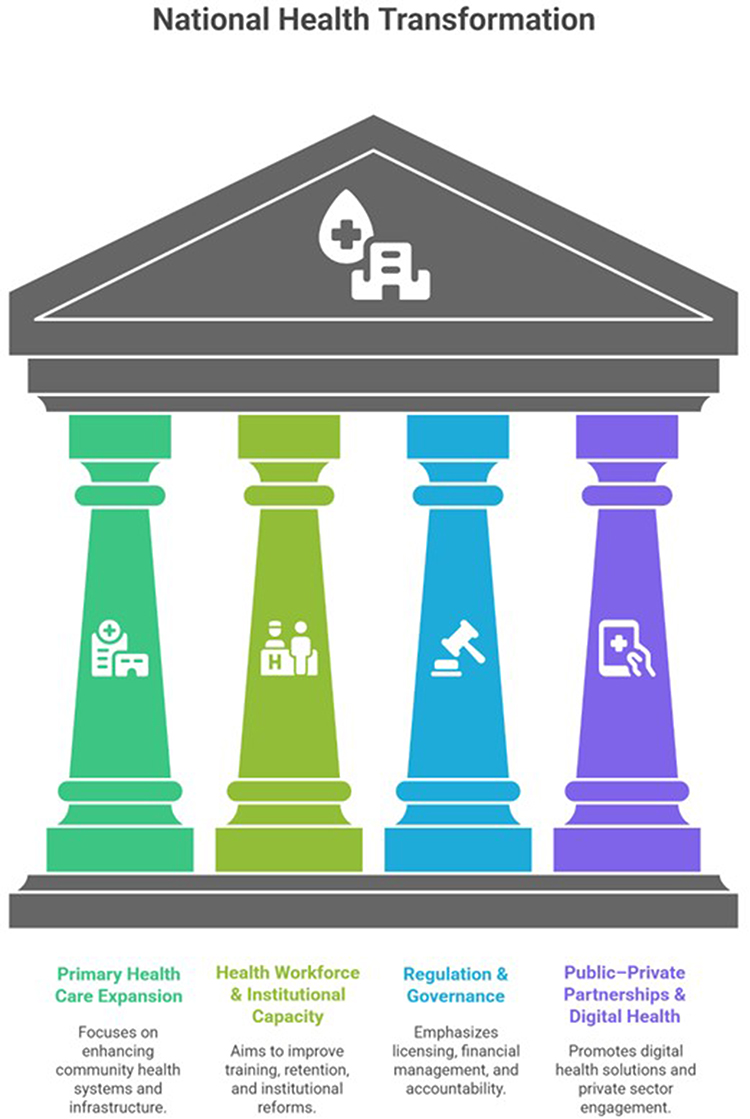 |
Figure 1 Roundtable Framework for Implementing the NTP Health Pillar. |
The results presented below synthesize perspectives from 30 multi-sectoral stakeholders who deliberated for a full day in Mogadishu. Verbatim quotations—translated from Somali where necessary—illustrate salient points and are attributed to speakers’ institutional roles to preserve confidentiality while conveying positional nuance. The analytic narrative is structured by pillar, with cross-cutting insights on accountability integrated where discussed.
Pillar 1: Primary Health Care Expansion
Participants emphasized that inadequate geographic coverage of basic services remains the most urgent barrier to universal health in Somalia. A senior Ministry of Health (MoH) advisor underscored the stark reality: “Currently, less than one-third of our population can reach a functional primary facility within a reasonable distance”. Stakeholders from federal and state levels converged on the need to scale up Female Community Health Workers (FCHWs) as the fastest route to extending immunization, antenatal, and health-promotion services to remote settlements. An academic leader noted that FCHWs also “bridge cultural gaps that often discourage women from seeking skilled care”.
Infrastructure deficits compounded the coverage gap. A regional hospital director illustrated the transformative potential of decentralization: “If a citizen in Baidoa can access kidney dialysis locally, that is transformation”. Participants stressed that such upgrades should prioritize district hospitals and health posts rather than solely tertiary centers, ensuring referral continuity. Although financing constraints were acknowledged, several discussants argued that targeted rehabilitation, coupled with community-based outreach, could rapidly reduce maternal and under-five mortality, which remain among the highest globally (Table 1).
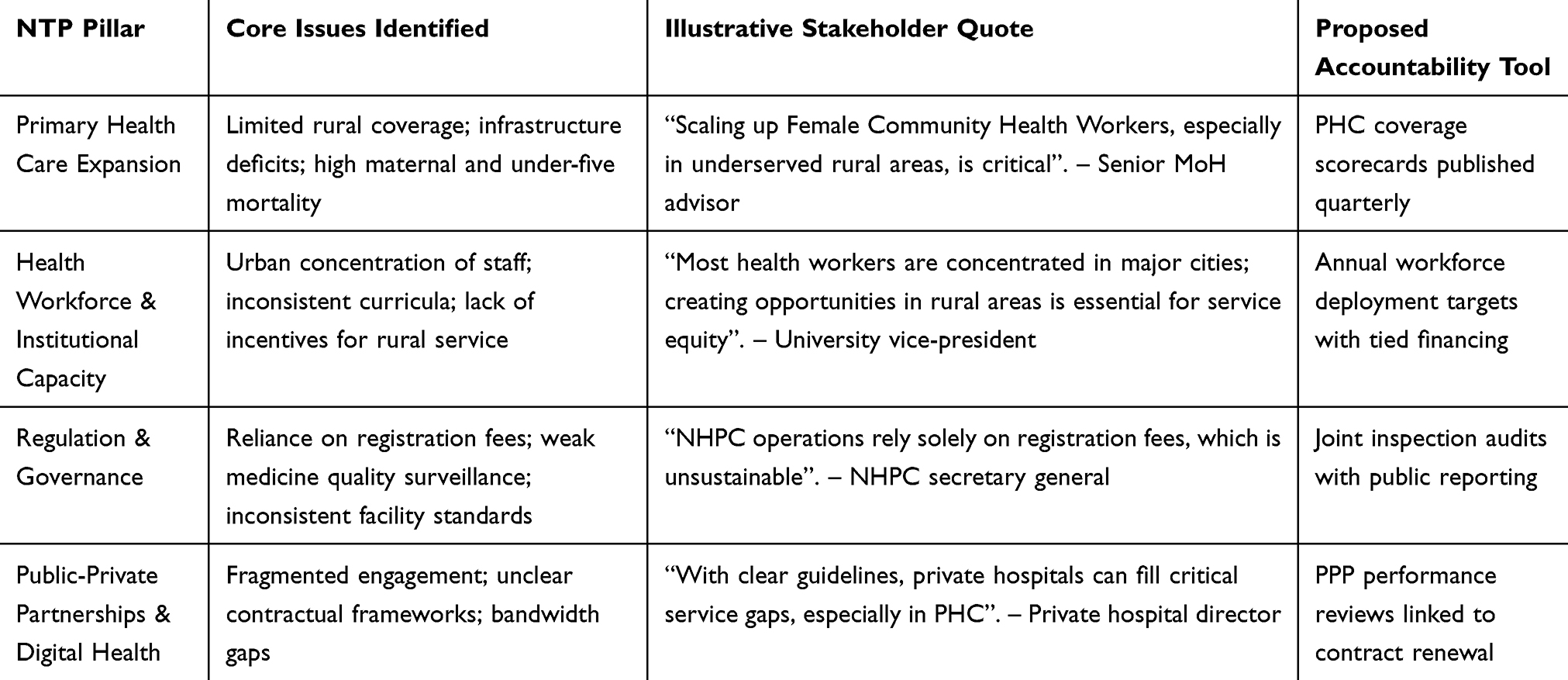 |
Table 1 Consolidated Thematic Area |
Pillar 2: Health Workforce and Institutional Capacity
Participants emphasized that workforce shortages—especially in rural districts—threaten to undermine any expansion in physical infrastructure. A university vice-president observed that “most clinicians gravitate toward Mogadishu and a few regional capitals, leaving vast areas underserved” (Table 1). Stakeholders proposed decentralized pre-service training hubs and bonded scholarships that require graduates to serve peripheral facilities for a defined period.
Beyond numbers, quality emerged as a central concern. An academic coordinator critiqued variable curricula: “Without harmonized standards, we risk graduating technicians rather than competent professionals” (Table 1). Participants therefore recommended fast-tracking the National Health Professionals Council’s (NHPC) planned licensure examinations (scheduled for 2025) to establish a uniform competency baseline. Several speakers also called for continuous professional development tied to licensure renewal to sustain skills in rapidly evolving clinical fields.
Pillar 3: Regulation and Governance
Regulatory discussions coalesced around the NHPC’s early achievements and persistent resource constraints. Participants emphasized that the Council successfully launched an online registration portal in August 2023, registering more than 12,000 practitioners to date. However, maintenance of the system depends almost exclusively on registration fees, a model that speakers agreed is “unsustainable without dedicated government budgetary support”.
Stakeholders further highlighted gaps in medicine quality surveillance and facility accreditation. A National Medicines Regulatory Authority representative warned of “unchecked substandard imports that erode public trust” (Table 1). To bolster oversight, participants proposed integrated inspection teams combining NHPC, pharmacy board, and state regulators, as well as public scorecards that publish facility compliance ratings each quarter. Such transparency mechanisms, coupled with annual performance reviews for regulatory agencies, were viewed as essential for sustaining accountability.
Pillar 4: Public-Private Partnerships and Digital Health
A recurring theme in this pillar was the historic disconnect between public and private actors. Participants emphasized that harnessing private capacity—particularly in diagnostics and specialist services—requires clear contractual frameworks and mutual accountability. An MoH policy advisor argued that “with the right incentives, private hospitals can fill critical service gaps, especially in primary care” (Table 1).
Digital health surfaced as a cross-cutting enabler. Several tech entrepreneurs outlined pilot telemedicine platforms connecting urban specialists to rural clinics. A private hospital director reported that early trials reduced referral delays for maternal emergencies and improved adherence to treatment protocols. Yet integration challenges persist, including bandwidth limitations and the absence of national e-health standards. To address these gaps, stakeholders recommended developing an interoperable digital health architecture under MoH leadership, coupled with a performance scorecard tracking system uptime, referral completion rates, and user satisfaction.
Cross-Cutting Accountability Mechanisms
Across pillars, participants repeatedly emphasized that robust accountability structures are indispensable to translating the NTP’s vision into measurable progress. Two interlinked mechanisms gained consensus support. First, quarterly scorecards disaggregated by state and facility level would publicly display indicators such as service coverage, staffing ratios, and regulatory compliance. Second, annual performance reviews—tied to budget disbursements for both public agencies and PPP contractors—would incentivize results-oriented management and discourage complacency.
Table 1 summarizes the specific accountability tools proposed for each pillar, along with the core issues identified and illustrative stakeholder quotes.
Synthesis
Collectively, the four thematic pillars reveal an intertwined reform agenda: expanding PHC must be matched by equitable workforce distribution, underpinned by strong regulatory institutions, and catalyzed through accountable PPPs and digital innovations. The articulated accountability mechanisms—scorecards and performance reviews—emerged as the linchpin for aligning diverse actors toward measurable health gains. By integrating these insights, the NTP 2025–2029 positions Somalia to make a decisive leap from fragmented interventions to a coherent, accountable, and people-centered health system.
Discussion
The perpetual cycle of ambitious health strategies followed by implementation failures in Somalia reflects broader systemic challenges that have plagued health system reform in fragile and conflict-affected states (FCAS). The persistence of low service coverage and poor health indicators despite multiple well-intentioned strategic frameworks—including the Ninth National Development Plan (NDP-9, 2020–2024) and the Health Sector Strategic Plan (HSSP III, 2022–2026)—demonstrates fundamental gaps between policy formulation and operational realities.20,21
Evidence from the NDP-9 mid-term review reveals that implementation challenges stem from structural deficiencies that transcend individual plans.20,21 The lack of clear roles and responsibilities between governmental institutions, limited public awareness, and inadequate coordination mechanisms created an environment where even well-designed strategies could not achieve their intended outcomes. These failures align with broader patterns observed in health system reform across FCAS, where institutional capacity constraints, political instability, and weak governance structures systematically undermine policy implementation.22,23
The international literature on health system reform in fragile settings identifies recurring themes that resonate with Somalia’s experience. Research demonstrates that implementation failures often result from overambitious objectives, insufficient attention to contextual factors, weak participatory approaches, and inadequate political support.24 In Somalia’s case, these factors manifested as duplicate projects with conflicting mandates, insufficient coordination between federal and state levels, and heavy reliance on off-budget donor support that bypassed national systems.20,24
This roundtable represents a critical departure from traditional top-down planning approaches that have characterized previous health strategies in Somalia. By systematically capturing perspectives from 30 multi-sectoral stakeholders, including government officials, academic institutions, private sector representatives, and civil society organizations, the study provides evidence-based insights into the operational realities that determine implementation success or failure.
The added value of this stakeholder engagement lies in its ability to bridge the gap between strategic vision and operational feasibility. Unlike previous plans that relied primarily on technocratic assessments, this approach incorporates the perspectives of implementers who understand ground-level constraints and opportunities. The identification of specific accountability tools—such as PHC coverage scorecards, annual workforce deployment targets, and joint inspection audits—demonstrates how stakeholder dialogue can translate broad strategic objectives into actionable implementation mechanisms.
International evidence supports the importance of participatory approaches in health system reform. Research from other FCAS demonstrates that engaging diverse stakeholders enhances policy relevance, builds ownership, and identifies context-specific solutions that may not be apparent through conventional planning processes.25,26 The roundtable methodology employed in this study represents an application of evidence-based management principles, which emphasize the systematic use of stakeholder perspectives and local knowledge in decision-making processes.25,27
A fundamental weakness in Somalia’s previous health strategies has been inadequate attention to fiscal space creation and public financial management (PFM) reform. The concept of fiscal space for health—defined as the capacity to increase public spending on health without jeopardizing financial stability—is particularly critical in FCAS where resource constraints are severe and competing priorities numerous.28–30 Somalia’s health sector faces a dual challenge: limited absolute fiscal resources and weak PFM systems that constrain effective utilization of available funds. Research demonstrates that PFM processes influence health system efficiency through their impact on resource alignment, input costs, health worker motivation, and optimal input mix.31 The roundtable findings highlighting funding instability and weak financial management reflect broader patterns observed across fragile states, where poor PFM systems can render even increased allocations ineffective.31,32
Creating fiscal space for health in Somalia requires a multi-pronged approach that addresses both revenue generation and expenditure efficiency. International experience suggests that FCAS can expand fiscal space through improved tax collection, reduced informality, elimination of inefficient subsidies, and enhanced aid coordination.28,29,33 However, these efforts must be accompanied by PFM reforms that ensure resources reach their intended destinations and achieve their stated objectives.
Applying the WHO health system building blocks framework to Somalia’s context reveals critical governance deficiencies that have undermined previous reform efforts. The six building blocks—service delivery, health workforce, health information systems, medical products and technologies, financing, and leadership/governance—are interconnected components that require coordinated strengthening.34,35 The roundtable findings highlight particular weaknesses in the governance building block, including regulatory capacity gaps, coordination challenges between federal and state levels, and insufficient accountability mechanisms. These deficiencies cascade across other building blocks, affecting workforce distribution (urban concentration), service delivery (limited rural coverage), and information systems (fragmented reporting). This pattern aligns with international evidence showing that governance failures in FCAS often serve as binding constraints that limit the effectiveness of investments in other health system components.22,36
While the roundtable identified public-private partnerships (PPPs) as a potential mechanism for expanding service coverage, international evidence reveals significant risks when regulatory frameworks are weak. Research demonstrates that PPPs in health can exacerbate inequities, compromise service quality, and divert resources from public goods when appropriate oversight mechanisms are absent.37–39
In contexts like Somalia, where regulatory capacity is limited and accountability mechanisms are weak, PPPs may create perverse incentives that prioritize profitable services over population health needs. Studies from Mexico and other developing countries show that PPPs often result in private partners dictating program design and implementation while promoting their commercial interests.37 The absence of independent evaluation mechanisms and transparency requirements can lead to partnerships that benefit private actors while providing minimal public health gains.
The roundtable’s emphasis on “clear guidelines” and “contractual frameworks” for PPPs reflects awareness of these risks. However, developing effective PPP governance requires substantial regulatory capacity that may not exist in the short term. International experience suggests that FCAS should prioritize strengthening public sector capacity before pursuing extensive private partnerships, ensuring that regulatory frameworks can adequately protect public interests.38,40
The roundtable methodology exemplifies evidence-based management (EBM) principles by systematically gathering and analyzing stakeholder perspectives to inform decision-making. EBM requires the conscientious use of best available evidence from multiple sources, including research findings, organizational data, stakeholder expertise, and contextual factors.25,27 The barriers to EBM implementation identified in international research, including limited research capacity, inadequate data systems, and weak analytical skills, are particularly pronounced in FCAS like Somalia.25,41 The roundtable findings, highlighting weak health information systems and limited use of data for decision-making, reflect these broader challenges. Strengthening EBM capacity requires investments in information systems, analytical capabilities, and organizational cultures that value evidence-based decision-making.
This analysis acknowledges several limitations that may affect generalizability. The one-day roundtable format, while intensive, may not have captured all relevant perspectives or allowed for complete exploration of complex issues. The focus on Mogadishu-based stakeholders may have limited rural and peripheral viewpoints. Additionally, the rapidly evolving nature of Somalia’s political and security environment means that findings may require regular updating. Despite these limitations, the study provides valuable insights into the translation of strategic health objectives into operational realities. The integration of multiple stakeholder perspectives, grounding in international evidence, and focus on practical implementation mechanisms offer important contributions to the literature on health system strengthening in FCAS. Future research should explore the effectiveness of proposed accountability mechanisms, assess the impact of federal-state coordination improvements, and evaluate the outcomes of enhanced stakeholder engagement in policy implementation. Longitudinal studies tracking the implementation of NTP health objectives will provide crucial evidence on whether this more participatory approach can overcome the implementation challenges that have constrained previous reform efforts.
The persistence of health system challenges in Somalia despite multiple strategic frameworks underscores the complexity of reform in post-conflict settings. However, the systematic engagement of diverse stakeholders and attention to operational realities demonstrated in this roundtable offer important lessons for translating ambitious health visions into achievable implementation strategies. Success will ultimately depend on sustained political commitment, adequate resource mobilization, and the development of institutional capacity that can navigate the complex governance environment that characterizes Somalia’s federal system.
Conclusion
This study highlights the potential of multi-stakeholder engagement to shape a more actionable and inclusive health agenda for Somalia’s National Transformation Plan (2025–2029). Drawing from a participatory roundtable process, four interrelated priorities emerged: the urgent expansion of primary health care, the need to strengthen the health workforce and institutional capacity, the importance of reinforcing governance and regulatory systems, and the growing role of public–private partnerships and digital health innovations. These priorities reflect the lived experiences and institutional insights of frontline implementers, policymakers, academic experts, and community representatives.
However, the path to realizing these ambitions is neither straightforward nor guaranteed. Implementation faces significant constraints—including political fragmentation, weak intergovernmental coordination, limited domestic health financing, and persistent insecurity—that have historically undermined health sector reform in Somalia. Without addressing these systemic barriers, even the most technically sound plans risk stalling.
To activate the proposed enablers, progress will require deliberate actions: sustained government commitment, greater alignment between federal and state-level actors, improved public financial management, and investment in regulatory capacity. International partners and civil society actors must also play a role in supporting transparency and accountability mechanisms that ensure policy momentum is maintained beyond planning stages. Despite these challenges, the roundtable provided a rare and timely platform for building consensus on what implementation should look like in practice. The resulting insights offer a grounded, context-sensitive contribution to Somalia’s health system transformation. Achieving Universal Health Coverage by 2029 remains an ambitious goal—but one that is within reach if it is anchored in inclusive governance, sustained political will, and evidence-informed policymaking.
Data Sharing Statement
Data used in this study is available from the corresponding author upon reasonable request.
Ethics Statement
As an informal policy roundtable convened for stakeholder consultation rather than human subjects research, the activity did not meet the definition of research requiring formal ethical review. However, core ethical principles, including informed consent and confidentiality, were upheld. All participants were informed of the purpose of the discussion and the intent to publish a summary, and verbal consent was obtained for the use of anonymized contributions. The roundtable was conducted in partnership with the Ministry of Health, aligning with national standards for ethical engagement. Ethical review and approval were formally waived by the Institutional Review Board (IRB) at SIMAD University.
Funding
The authors have not received any funding for this study.
Disclosure
The authors declare that they have no conflicts of interest.
References
1. Mohamed A. Somalia’s national transformation plan: a vision for progress and resilience – Somali National News Agency. SonnaSo; 2025. Available from: https://sonna.so/en/somalias-national-transformation-plan-a-vision-for-progress-and-resilience/.
2. Okash M. Somalia’s NTP 2025–2029 Explained! - Somali Business Review (SBR). SbrSimadEduSo; n.d. Available from: https://sbr.simad.edu.so/2025/06/19/somalias-ntp2025-2029-explained/.
3. National Transformation Plan (NTP). MopGovSo; 2025. Available from: https://mop.gov.so/wp-content/uploads/2025/pdf/NTP%20Report%202025-2029%20All.pdf.
4. National development plan - ministry of planning. MopGovSo; n.d. Available from: https://mop.gov.so/national-development-plan/.
5. Somalia health sector strategic plan –HSSP III (HSSP) 2022–2026. 2021. Available from: https://moh.gov.so/en/wp-content/uploads/2020/07/Final-HSSP_Presentation_30.11.2021-1.pdf.
6. Ministry of Health and Human Services Federal Government of Somalia. Somalia health sector strategic plan 2022–2026 (HSSP III). Ministry of Health and Human Services Federal Government of Somalia; 2021. Available from: https://moh.gov.so/so/wp-content/uploads/2022/11/Health-Sector-Strategy-Plan-III.pdf.
7. Jama M, Majdzadeh R, Reynolds T, et al. Revising the essential package of health services through stakeholder alignment, Somalia. Bull World Health Organ. 2023;101:738–742. doi:10.2471/BLT.23.289733
8. Said AS, Kicha DI. Implementing health system and the new federalism in Somalia: challenges and opportunities. Front Public Health. 2024;12:1205327. doi:10.3389/fpubh.2024.1205327
9. Ssendagire S, Mohamoud SA, Bashir F, et al. Health research prioritization in Somalia: setting the agenda for context specific knowledge to advance universal health coverage. Front Public Health. 2023;11:1202034. doi:10.3389/fpubh.2023.1202034
10. Tran NT, Meyers J, Malilo B, et al. Strengthening health systems in humanitarian settings: multi-stakeholder insights on contraception and postabortion care programs in the Democratic Republic of Congo and Somalia. Front Glob Womens Health. 2021;2:671058. doi:10.3389/fgwh.2021.671058
11. Pistollato F, Burkhart G, Deceuninck P, et al. What public health challenges and unmet medical needs would benefit from interdisciplinary collaboration in the EU? A survey and multi-stakeholder debate. Front Public Health. 2024;12:1417684. doi:10.3389/fpubh.2024.1417684
12. Multi-stakeholder processes for conflict prevention & peacebuilding: a manual. 2017. Available from: https://gppac.net/files/2018-11/GPPAC%20MSPmanual_Interactive%20version_febr2018.pdf.
13. Spencer-Tansley R, Meade N, Ali F, Simpson A, Hunter A. Mental health care for rare disease in the UK – recommendations from a quantitative survey and multi-stakeholder workshop. BMC Health Serv Res. 2022;22:648. doi:10.1186/s12913-022-08060-9
14. Cresswell K, Coleman J, Smith P, Swainson C, Slee A, Sheikh A. Qualitative analysis of multi-disciplinary round-table discussions on the acceleration of benefits and data analytics through hospital electronic prescribing (ePrescribing) systems. J Innov Health Inform. 2016;23:501. doi:10.14236/jhi.v23i2.178
15. Durrance-Bagale A, Marzouk M, Tung LS, et al. Community engagement in health systems interventions and research in conflict-affected countries: a scoping review of approaches. Glob Health Action. 2022;15. doi:10.1080/16549716.2022.2074131
16. Tausch AP, Menold N. Methodological aspects of focus groups in health research. Glob Qual Nurs Res. 2016;3. doi:10.1177/2333393616630466
17. Moses Ongom OS. Post-conflict health system recovery efforts in South Sudan. HlhWhoInt; n.d. Available from: https://hlh.who.int/ab-detail/post-conflict-health-system-recovery-efforts-in-south-sudan.
18. Rutherford S, Saleh S. Rebuilding health post-conflict: case studies, reflections and a revised framework. Health Policy Plan. 2019;34:230–245. doi:10.1093/heapol/czz018
19. Health systems during and after crisis: evidence for better policy and practice - Rebuild ConsortiumRebuild Consortium. Rebuildconsortium; n.d. Available from: https://www.rebuildconsortium.com/resources/health-systems-during-and-after-crisis-evidence-for-better-policy-and-practice/.
20. Ministry of Planning, Investment and Ecconomic Development. Monitoring and evaluation department mid-term review of the national development plan-9 (2020–2024). MopGovSo; 2023. Available from: https://mop.gov.so/wp-content/uploads/2023/09/Mid-Term-Review-Report-NDP-92020-2024.pdf.
21. IMF. Somalia: poverty Reduction Strategy Paper-Joint Staff Advisory Note. IMF Staff Country Reports; 2023:1. doi:10.5089/9798400264702.002.
22. Bogale B, Scambler S, Mohd Khairuddin AN, Gallagher JE. Health system strengthening in fragile and conflict-affected states: a review of systematic reviews. PLoS One. 2024;19:e0305234. doi:10.1371/journal.pone.0305234
23. Management Sciences for Health. Rebuilding health systems and providing health services in Fragile States. Management Sciences for Health; 2007. Available from: https://msh.org/wp-content/uploads/2013/07/rebuilding-health-systems-and-providing-health-services-in-fragile-states.pdf.
24. Bayat M, Kashkalani T, Khodadost M, et al. Factors associated with failure of health system reform: a systematic review and meta-synthesis. J Preventive Med Public Health. 2023;56:128–144. doi:10.3961/jpmph.22.394
25. Shafaghat T, Imani Nasab MH, Bahrami MA, et al. A mapping of facilitators and barriers to evidence-based management in health systems: a scoping review study. Syst Rev. 2021;10:42. doi:10.1186/s13643-021-01595-8
26. Greaves DE. Evidence-based management of Caribbean health systems: barriers and opportunities. Int J Health Governance. 2017;22:104–117. doi:10.1108/IJHG-01-2017-0001
27. Hasanpoor E, Bahadori M, Yaghoubi M, Haghgoshayie E, Mahboub-Ahari A. Evidence-based management as a basis for evidence-based medical consultation. BMJ Evid Based Med. 2020;25:83–84. doi:10.1136/bmjebm-2018-111104
28. Matus-López M, Prieto Toledo L, Cid Pedraza C. An assessment of fiscal space for health in Peru. Rev Panam Salud Publica. 2019;40:1–6. doi:10.26633/RPSP.2019.315
29. Pedraza CC, Pagano JP, Pescetto C, Prieto L. Fiscal space for sustainable financing of health systems and universal health. Rev Panam Salud Publica. 2018;42. doi:10.26633/RPSP.2018.197
30. Tandon A, Cashin C. Assesing public expenditure on health from a fiscal space perspective. World Bank; 2010. Available from: https://documents1.worldbank.org/curated/en/333671468330890417/pdf/560530WP0Box341penditureFiscalSpace.pdf.
31. Musiega A, Tsofa B, Barasa E. How does Public Financial Management (PFM) influence health system efficiency: a scoping review. Wellcome Open Res. 2024;9:566. doi:10.12688/wellcomeopenres.22533.1
32. World Health Organization. Health Financing and Economics. WhoInt; n.d. Available from: https://www.who.int/teams/health-systems-governance-and-financing/health-financing/policy/public-financial-management.
33. Matus-López M, Pozo DC, Pedraza CC, Romero WV. Evaluation of fiscal space for health in Bolivia. Rev Panam Salud Publica. 2018;42. doi:10.26633/RPSP.2018.4
34. World Health Organization. Monitoring the building blocks of health systems: a handbook of indicators and their measurement strategies. IrisWhoInt; 2010. Available from: https://iris.who.int/bitstream/handle/10665/258734/9789241564052-eng.pdf.
35. Manyazewal T. Using the World Health Organization health system building blocks through survey of healthcare professionals to determine the performance of public healthcare facilities. Arch Public Health. 2017;75:50. doi:10.1186/s13690-017-0221-9
36. Mapanga A. Impediments to healthcare governance in fragile states. J Leg Ethical Regul Issues. 2020;23:1.
37. Carriedo A, Ojeda E, Crosbie E, Mialon M. Public-private partnerships in Mexico: implications of engaging with the food and beverage industry for public health nutrition. Int J Health Policy Manag. 2024;13:8008. doi:10.34172/ijhpm.2024.8008
38. Basabih M, Prasojo E, Rahayu AYS. Hospital services under public-private partnerships, outcomes and, challenges: a literature review. J Public Health Res. 2022;11:22799036221115781. doi:10.1177/22799036221115781
39. Mitchell M. An overview of public private partnerships in health. n.d. Available from: https://content.sph.harvard.edu/wwwhsph/sites/1989/2020/04/PPP-final-MDM.pdf.
40. Fabre A, Straub S. The impact of Public–Private Partnerships (PPPs) in infrastructure, health, and education. J Econ Lit. 2023;61:655–715. doi:10.1257/jel.20211607
41. Liang Z, Blackstock FC, Howard PF, et al. An evidence-based approach to understanding the competency development needs of the health service management workforce in Australia. BMC Health Serv Res. 2018;18:976. doi:10.1186/s12913-018-3760-z
 © 2025 The Author(s). This work is published and licensed by Dove Medical Press Limited. The
full terms of this license are available at https://www.dovepress.com/terms
and incorporate the Creative Commons Attribution
- Non Commercial (unported, 4.0) License.
By accessing the work you hereby accept the Terms. Non-commercial uses of the work are permitted
without any further permission from Dove Medical Press Limited, provided the work is properly
attributed. For permission for commercial use of this work, please see paragraphs 4.2 and 5 of our Terms.
© 2025 The Author(s). This work is published and licensed by Dove Medical Press Limited. The
full terms of this license are available at https://www.dovepress.com/terms
and incorporate the Creative Commons Attribution
- Non Commercial (unported, 4.0) License.
By accessing the work you hereby accept the Terms. Non-commercial uses of the work are permitted
without any further permission from Dove Medical Press Limited, provided the work is properly
attributed. For permission for commercial use of this work, please see paragraphs 4.2 and 5 of our Terms.