
Back to Journals » Journal of Asthma and Allergy » Volume 18
Toward Precision Modeling of Cough-Variant Asthma: Standardized Murine Models, Multidimensional Evaluation, and Translational Applications
Authors Ma X, Ma X, Li X, Ma L  , Peng X, Zhou X
Received 13 October 2025
Accepted for publication 7 December 2025
Published 13 December 2025 Volume 2025:18 Pages 1743—1760
DOI https://doi.org/10.2147/JAA.S574008
Checked for plagiarism Yes
Review by Single anonymous peer review
Peer reviewer comments 2
Editor who approved publication: Dr Amrita Dosanjh
Xin Ma,1,2 Xizhi Ma,1 Xiaopo Li,1 Long Ma,1 Xuezhen Peng,1 Xiaotao Zhou1
1School of Basic Medical Sciences, Xinjiang Medical University, Urumqi, Xinjiang Uygur Autonomous Region, People’s Republic of China; 2Department of Clinical Laboratory, Urumqi Friendship Hospital, Urumqi, Xinjiang Uygur Autonomous Region, People’s Republic of China
Correspondence: Xiaotao Zhou, Xinjiang Key Laboratory of Molecular Biology for Endemic Disease, School of Basic Medical Sciences, Xinjiang Medical University, 567 Shangde North Road, Shuimogou District, Urumqi, Xinjiang Uygur Autonomous Region, 830000, People’s Republic of China, Email [email protected]
Abstract: Cough-variant asthma (CVA), a distinct asthma phenotype characterized by chronic cough as the predominant symptom, presents unique clinical and pathophysiological features. The development of accurate murine models is essential for elucidating its underlying mechanisms and evaluating therapeutic interventions. While animal models remain indispensable tools for studying human disease pathogenesis, current bronchial asthma models inadequately recapitulate CVA-specific pathology. Notably, CVA represents the most common etiology of chronic cough in children and shares core pathogenic mechanisms with classic asthma—including chronic airway inflammation, airway hyperresponsiveness (AHR), and remodeling. Despite established protocols for typical asthma modeling, standardized CVA-specific models are lacking. This review synthesizes current methodologies for establishing CVA murine models, evaluates modeling success criteria, and analyzes commonly employed sensitizers/induction approaches. We further examine physiological, immunological, and molecular assessment parameters, proposing a comprehensive evaluation framework based on inflammatory cell profiles, AHR, and cytokine expression. Such standardization is critical for advancing precision in CVA model development.
Keywords: cough-variant asthma, murine models, model development, assessment criteria
Introduction
Cough-variant asthma (CVA), a clinically significant asthma phenotype, has garnered increasing research attention due to its distinct pathophysiology. Characterized by a predominant symptom of persistent cough – often accompanied by other respiratory manifestations – CVA differs clinically from classic asthma. Murine models, leveraging well-defined genetic backgrounds and experimental tractability, have emerged as essential tools for CVA investigation. Nevertheless, the reliability and reproducibility of research outcomes critically depend on standardized model establishment and evaluation criteria. Recent years have witnessed substantial refinements in CVA murine modeling methodologies and assessment frameworks, particularly regarding inflammatory mechanisms and gene regulatory networks. Notably, airway epithelial cell-derived exosomes play pivotal roles in CVA pathogenesis, with their cargo (including mRNA, microRNA [miRNA], and long non-coding RNA [lncRNA]) critically modulating airway inflammation.1 Currently, the diagnosis of CVA poses clinical challenges due to the complex and heterogeneous nature of various allergic and non-allergic factors, while its prolonged treatment course adversely affects patients’ quality of life. Recent advances in molecular biology and immunology have expanded CVA research beyond conventional pharmacotherapy to encompass gene regulatory networks and exogenous interventions. Long non-coding RNA PCGEM1 demonstrates therapeutic potential in pediatric CVA by enhancing anti-inflammatory responses and preserving lung function, highlighting its value as an emerging therapeutic target.2
This review synthesizes current methodologies for establishing murine CVA models, standardized evaluation metrics, and recent research advances to facilitate model standardization and application. Emerging technologies will increasingly align CVA research with precision medicine paradigms, driving the development of individualized therapeutic strategies. Deepening our understanding of murine models not only elucidates the pathophysiological mechanisms underlying CVA but also provides a robust experimental foundation for novel therapeutic candidates.
Establishment and Evaluation of Murine Cough-Variant Asthma Models
Standardized Methodologies for Establishing Murine CVA Models
Selection and Application of Classical Sensitizing Agents
The choice of classical sensitizing agents is pivotal in establishing murine CVA models. Commonly employed agents include ovalbumin (OVA), house dust mite (HDM), pollen, Ascaris antigens, cockroach allergens, platelet-activating factor (PAF), and occupational sensitizers. Among these, OVA remains the most frequently utilized sensitizer in CVA experimental models. Critical protocol parameters—including dosage, administration route, and temporal scheduling—significantly impact airway inflammation and immune responses. Standardized protocols typically employ: OVA concentration: 1–5% (w/v), Sensitization routes: Subcutaneous injection or chronic exposure. Primary sensitization: Day 0, Secondary sensitization: Day 7, Aerosol challenge: Day 14 (to induce asthmatic phenotypes).3,4 This sensitization-challenge protocol drives Th2-polarized immune responses characterized by: Production of OVA-specific IgE antibodies, Eosinophil-dominated airway inflammation, Elevated Th2 cytokines (IL-4, IL-5, IL-13).5,6 These pathological features closely mirror human CVA, validating OVA’s utility in disease modeling. Notably, agent interactions require careful consideration. Co-exposure to adjuvants like lipopolysaccharide (LPS) may synergistically exacerbate: Airway hyperresponsiveness (AHR), Inflammatory cell infiltration, Cytokine dysregulation. Such combinatorial effects necessitate comprehensive experimental design to accurately recapitulate asthma pathogenesis.7,8
The selection and application of classical sensitizing agents are pivotal for establishing pathologically relevant murine CVA models. Through strategic optimization of sensitizer choice, concentration, and administration routes, researchers can recapitulate core pathophysiological features of CVA, thereby establishing a robust experimental foundation for subsequent therapeutic investigations.
The Diversity of Induction Methods
Researchers employ diverse induction approaches—including intratracheal instillation, inhalation exposure, intraperitoneal injection, and cigarette smoke exposure (CSE)—each presenting distinct strengths and limitations:
Intratracheal Instillation (See Figure 1)
Advantages
Precise and controllable: The dose of the antigen (eg, OVA) and the instillation site are accurate, ensuring high model consistency.
 |
Figure 1 Flowchart of endotracheal drip procedure. |
Direct and efficient: Can rapidly establish airway inflammation and airway hyperresponsiveness (AHR).
Classic and reliable: One of the most classic and widely used methods in asthma research.
Limitations
Invasive procedure: Requires anesthesia and surgery, causing significant trauma to the mice and potentially introducing procedure-related infections or injuries.
Non-physiological: Bypasses the upper airways, failing to simulate the natural process of inhalation sensitization.
Requires high technical skill: Needs a skilled operator to avoid tracheal damage.
Inhalation Exposure (See Figure 2)
Advantages
More physiologically relevant: Sensitization and challenge occur through natural airway inhalation, which more closely mimics the human disease process.
 |
Figure 2 Flowchart of the inhalation exposure procedure. |
Non-invasive/Minimally invasive: Typically uses a nebulization chamber, causing less stress to the animals.
Uniform distribution: Better simulates the diffuse distribution of allergens in the airways.
Limitations
Difficult to control dosage: The antigen concentration in the chamber and the actual amount inhaled by each animal are difficult to quantify precisely.
Time-consuming: Usually requires a longer period for sensitization and challenge.
Requires specialized equipment: Requires a nebulizer and airtight exposure system.
Intraperitoneal Sensitization + Inhalation Challenge (See Figure 3)
Advantages
Potent sensitization: Intraperitoneal injection of an adjuvant (eg, aluminum hydroxide) and antigen induces a strong systemic immune response.
 |
Figure 3 Flowchart of the intraperitoneal sensitization + inhalation challenge procedure. |
Stable model: The inflammatory and AHR phenotypes are typically very pronounced and stable
Extensively validated: One of the gold standard methods for inducing a Th2-type immune response.
Limitations
Overly systemic: May trigger an excessively strong systemic immune response, which is not entirely consistent with the primarily airway-localized characteristics of CVA.
Non-natural route: The sensitization phase does not occur via the mucosa, differing from the human respiratory sensitization pathway.
Cigarette Smoke Exposure (CSE) (See Figure 4)
Advantages
High clinical relevance: Particularly suitable for studying CVA induced or exacerbated by smoking or environmental pollutants.
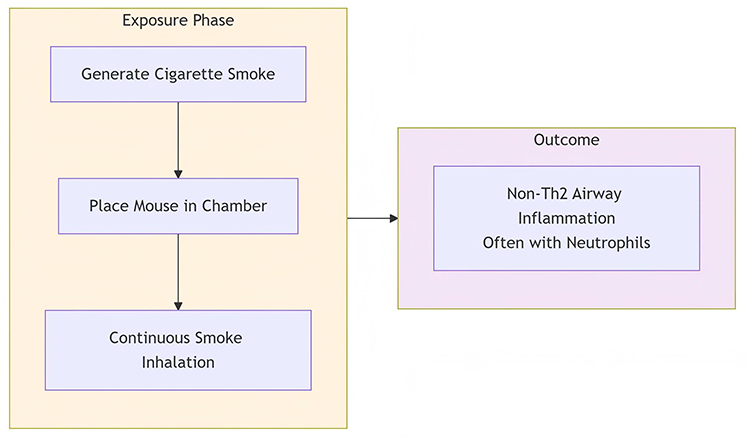 |
Figure 4 Flowchart of cigarette smoke exposure (CSE) procedure. |
Simulates complex etiology: Allows for the study of the role of non-allergic factors in CVA.
Limitations
Complex mechanism: Smoke has complex components, and the induced inflammation may not be exclusively Th2-type but also involve neutrophils, leading to high model heterogeneity.
Phenotype May differ: The resulting phenotype may be closer to chronic bronchitis or COPD, requiring careful definition as a CVA model.
Aspergillus Fumigatus-Induced (Figure 5)
Advantages
High Clinical Relevance: Aspergillus fumigatus is a common respiratory allergen. This model effectively mimics the features of human fungal allergic asthma, including a strong mixed Th2 and Th17 immune response.
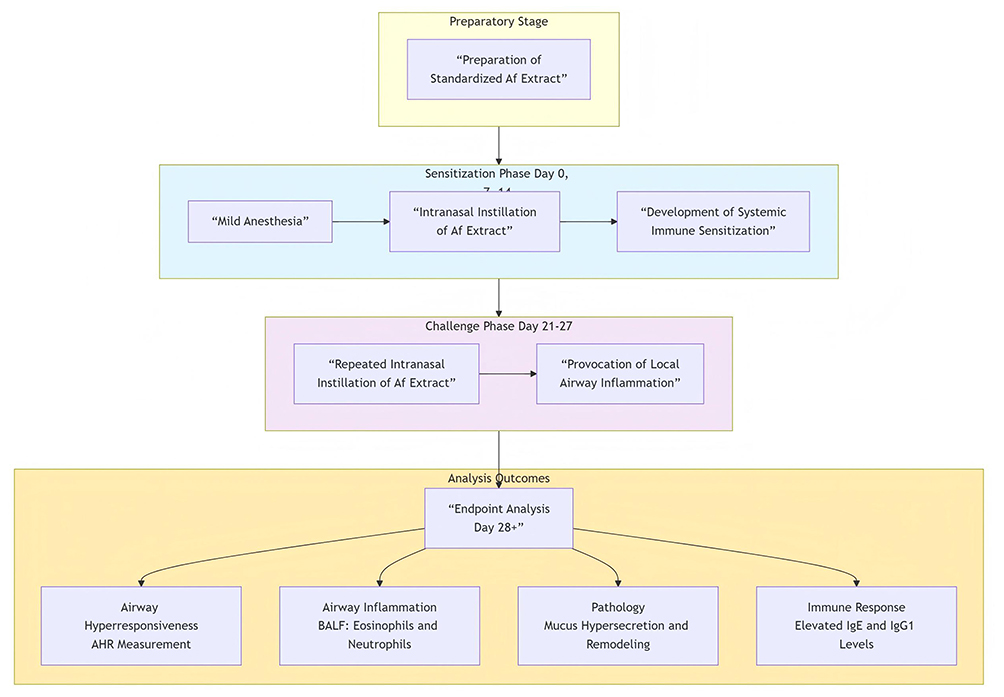 |
Figure 5 Flow chart of aspergillus fumigatus-induced process. |
Induces Strong and Complex Airway Inflammation: Not only can it trigger typical eosinophil infiltration, but it also significantly induces neutrophil infiltration, more closely resembling the pathological features of some patients with refractory asthma.
Effectively Induces Airway Hyperresponsiveness (AHR) and Remodeling: It reliably induces AHR and may be accompanied by airway remodeling manifestations such as mucus hypersecretion and airway smooth muscle thickening.
Ideal for Studying Specific Immune Responses: It serves as an excellent tool for investigating the sensitization, immune memory, and response to a specific allergen.
Limitations
Biosafety Risks: Aspergillus fumigatus is an opportunistic pathogen. Working with its live cultures or extracts requires appropriate biosafety level laboratories to prevent contamination of personnel or the environment.
Significant Model Variability: The activity of A. fumigatus extracts may vary between batches, and the mouse strain and individual immune status can affect modeling consistency, requiring precise control of experimental conditions.
Cost and Technical Barrier: Preparing standardized A. fumigatus extracts is costly, and the entire experimental process requires professional skills and protective facilities.
Clinical Application: Challenges and Advantages
Advantages
Irreplaceable for Mechanistic Exploration: Mouse models enable in-depth investigations that are not feasible in humans, such as gene knockout and tissue-specific interventions, thereby elucidating drug mechanisms of action at the molecular and cellular levels.
Early-Stage Efficacy Screening Platform: They provide crucial preclinical evidence on the efficacy and safety of a drug or its active components, guiding the design of subsequent human trials.
Challenges
Species Differences: Significant disparities exist between mice and humans in terms of respiratory system anatomy, immune system, and cough reflex. Mice do not “cough” actively like humans; their cough models primarily study “cough-like reflexes.”
Standardization of Phenotypic Assessment: Accurately and objectively counting cough frequency in mice remains a technical challenge, and the comparability of data between different laboratories needs improvement.
The choice of induction method significantly impacts model stability and pathological characteristics. Studies demonstrate that intratracheal instillation effectively induces airway hyperresponsiveness and inflammatory responses in mice, which is crucial for investigating the pathogenesis of CVA.9 Furthermore, the selected adjuvant and challenge agent play pivotal roles in model establishment. Research indicates that different types of adjuvants, such as methacholine, aluminum hydroxide, and lipopolysaccharide (LPS), can elicit varying degrees of airway inflammation, thereby influencing the pathological features of the model. LPS, a potent immunostimulant, significantly increases inflammatory cell infiltration and mucus hypersecretion in murine airways, closely resembling the clinical manifestations observed in human asthma patients.10 When choosing the stimulus, researchers must consider their physiological effects on mice and their relevance to human asthma pathology. Current research shows that combinations of multiple induction methods can more comprehensively mimic the pathological characteristics of CVA. Researchers have successfully induced airway hyperresponsiveness and inflammation in mice using a combination of intratracheal inhalation and intraperitoneal injection, demonstrating excellent model stability and reproducibility.11,12 These studies provide deeper insights into how different induction methods influence the establishment of murine models, thereby offering more reliable experimental foundations for CVA research.
Applications of Gene Knockout or Transgenic Technology in Murine Models (Show in Figure 6)
Gene knockout and transgenic murine models have played a crucial role in investigating the mechanisms underlying CVA. These models enable researchers to directly observe the impact of specific gene deletion or altered expression on the pathophysiology of CVA. Transgenic murine models, generated by inserting exogenous genes, recapitulate pathological features of human disease, thereby facilitating our understanding of the relationship between genes and disease pathogenesis. Researchers have utilized transgenic technology to establish various asthma-associated models, which effectively evaluate the roles of specific genes in airway inflammation, airway hyperresponsiveness, and airway remodeling.13,14 Concurrently, gene knockout mice are employed to validate the specific functions of target genes in CVA pathogenesis. Studies demonstrate that deletion of certain key genes results in pronounced wheezing and allergic responses in mice, further supporting the importance of these genes in asthma development.15,16
 |
Figure 6 Gene Knockout and Transgenic Technologies in CVA Murine Model Research. |
Furthermore, long non-coding RNAs (lncRNAs), as emerging regulatory factors, have garnered significant attention in recent research on CVA. Studies indicate that lncRNAs play crucial roles in airway inflammation and immune responses. By constructing murine models featuring lncRNA-related gene regulation, researchers can deeply investigate the functions of these lncRNAs and their mechanistic contributions to CVA. Targeted knockout of specific lncRNAs leads to significant alterations in airway inflammation levels in mice, indicating their potential regulatory role in immune responses.13 Such research not only enhances our understanding of CVA pathogenesis but also identifies novel therapeutic targets. Gene knockout and transgenic murine models hold an indispensable position in mechanistic CVA research. The application of these technologies enables more precise dissection of disease mechanisms, discovery of novel therapeutic targets, and provides an experimental foundation for developing new interventions.
Selection of Adjuvants and Challenge Agents
During the sensitization phase of CVA animal models, adjuvants are commonly co-administered to prevent tolerance development. Adjuvants are broadly categorized into immunogenic and non-immunogenic types.17 Domestically, frequently used non-immunogenic adjuvants include aluminum hydroxide and alum, while immunogenic adjuvants often involve Bordetella pertussis. Notably, alum can further promote the polarization of Th0 cells towards a Th2 phenotype during sensitization.18 Currently, aluminum hydroxide is the primarily employed adjuvant in CVA animal models, with its dosage regimen being well-established.
During the challenge phase, the selection of challenge agents and their concentrations must be determined based on the cough reflex mechanism to assess cough responsiveness. Cough receptors are categorized into two primary types:
Mechanosensitive Cough Receptors
These include rapidly adapting receptors (RARs) and slowly SARs, which are myelinated vagal afferents. They are typically activated by direct mechanical stimulation from inhaled foreign bodies, airway secretions, or inflammation, or by dynamic changes in airway diameter or pressure, triggering the cough reflex.
Chemosensitive Cough Receptors
Primarily unmyelinated C-fiber afferents, these receptors are stimulated directly or indirectly by various chemical irritants, such as noxious gases and smoke, capsaicin, citric acid, sulfur dioxide (SO2), and cinnamaldehyde, eliciting the cough reflex.19
Capsaicin is the Most Widely Utilized Challenge Agent for Cough Provocation
It is typically administered as a solution at a concentration of 10−4 mol/L.20 Alternative challenge agents include citric acid and cinnamaldehyde.21–23
Evaluation Metrics for Murine Cough Variant Asthma Models
Cough variant asthma shares pathophysiological features with, yet remains distinct from, classic asthma. CVA exhibits hallmark features of asthma, including eosinophilic airway inflammation, airway hyperresponsiveness (AHR), and airway remodeling. However, unlike classic asthma, CVA typically lacks episodic dyspnea, and most patients do not demonstrate significant reversible airflow limitation.24,25 Similar to clinical diagnosis, there are no strict criteria to definitively differentiate CVA from classic asthma, nor are there universally established evaluation standards to distinguish CVA animal models from classic asthma models. Consequently, developing CVA animal models with higher clinical relevance and establishing appropriate model evaluation criteria represent crucial challenges in advancing CVA research. Specific criteria proposed to differentiate CVA models from classic asthma models include:
Airway Responsiveness: During bronchial challenge testing, airway resistance should be less pronounced than in classic asthma models and should increase progressively with escalating challenge concentrations. Eosinophilic Inflammation: Bronchoalveolar lavage fluid (BALF) eosinophil counts should be lower than those typically observed in classic asthma models. Behavioral Phenotype: Absence of significant wheezing symptoms.26 Therefore, the successful establishment of a murine CVA model, building upon the fundamental understanding of asthma, should demonstrate the following characteristics:
Assessment of Airway Hyperresponsiveness (AHR)
The diagnostic criteria for CVA established by the Respiratory Group of the Pediatrics Branch of the Chinese Medical Association emphasize normal pulmonary function in children alongside a positive bronchial challenge test indicating AHR.27 Consequently, incorporating small animal pulmonary function testing into the evaluation metrics is essential. Within murine CVA models, AHR serves as a critical physiological endpoint, and its assessment is paramount for elucidating underlying pathophysiological mechanisms and developing targeted therapeutic strategies. AHR quantification typically employs pulmonary function measurement techniques. The FlexiVent system, widely utilized in murine studies, enables precise measurement of key parameters such as airway resistance (R) and dynamic compliance (C). During experimentation, anesthetized and intubated mice undergo mechanical ventilation. Bronchoconstrictive agents are administered via the ventilator to induce airway constriction, while pulmonary function parameters are recorded for subsequent AHR analysis.28,29 In CVA models, heightened AHR correlates strongly with clinical manifestations. Enhanced AHR is frequently associated with airway inflammation, bronchoconstriction, and respiratory distress. Studies demonstrate that CVA murine models exhibit significantly increased airway reactivity following methacholine challenge, manifesting as markedly elevated lung resistance. This response closely correlates with pathological features such as inflammatory cell infiltration, elevated specific IgE levels, and airway remodeling.30,31 Furthermore, AHR assessment not only validates the efficacy of murine CVA models but also provides crucial data for clinical research. This facilitates a deeper understanding of patient pathophysiology and informs the development of patient-specific therapeutic approaches.32
Airway hyperresponsiveness can also be assessed non-invasively using whole-body plethysmography (WBP). This method allows testing in unrestrained, freely moving mice and evaluates airway reactivity by recording parameters such as enhanced pause (Penh). Although the accuracy and sensitivity of WBP may be lower than invasive techniques, its key advantage lies in minimizing animal stress, potentially providing a better reflection of airway function under more natural conditions.28,29 Consequently, the assessment of AHR holds significant importance in murine CVA models. By integrating diverse measurement techniques, researchers can achieve a more comprehensive evaluation of airway functional status, thereby establishing a solid foundation for subsequent therapeutic investigations.
Behavioral Assessment of Respiratory Symptoms
Murine cough variant asthma models lack established behavioral criteria. Applying behavioral grading standards derived from classic asthma animal models is inaccurate for CVA assessment. Consistent with the clinical presentation of CVA, cough should serve as the primary behavioral endpoint. Guidelines recommend characterizing cough sensitivity using the lowest concentration of capsaicin eliciting ≥5 coughs.33 However, many animal studies employ a fixed concentration of capsaicin, utilizing cough frequency as the index of sensitivity. This approach is well-suited for guinea pig CVA models, where cough episodes are readily observable. In murine CVA models, successful induction is indicated by manifestations such as restlessness, tachypnea, nose scratching, piloerection, hunched posture, and reduced activity following challenge. With repeated provocations, signs like lethargy and significantly reduced food intake further corroborate successful model establishment.34 For rat CVA models, positive indicators include pronounced abdominal muscle contraction. Successful induction is further evidenced by the development of respiratory distress symptoms, such as deepened and accelerated breathing, indicative of airway spasm.35,36
Within the behavioral assessment of respiratory symptoms, monitoring cough frequency and respiratory patterns constitutes a critical component for evaluating model validity, primarily relying on high-sensitivity instrumentation and behavioral analysis. Common methodologies include the use of automated animal behavior observation systems, which enable real-time recording of murine activity and respiratory rate. By meticulously monitoring respiratory patterns, researchers can precisely quantify the frequency, duration, and intensity of cough events. Furthermore, the integration of video monitoring with specialized image analysis software facilitates the quantitative assessment of murine respiratory behaviors. This approach provides robust objective data to substantiate the occurrence of cough episodes.
Immunological Evaluation Criteria
Analysis of Inflammatory Cell Infiltration
Eosinophils represent the most significant cell type in airway allergic inflammation within murine CVA models. Driven by eosinophil chemotactic activity, these cells migrate and accumulate locally, exacerbating the inflammatory response at the lesion site.37 Consequently, quantification of inflammatory cells in bronchoalveolar lavage fluid (BALF) is the predominant method employed in CVA experiments. However, BALF specimens are inherently dilute, and cell recovery is highly susceptible to procedural variations during lavage. To address this, Tan Jiejun et al38 refined the conventional Wright-Giemsa staining protocol by implementing liquid-based cytology (LBC) slide preparation. This modification significantly improved cell visualization and counting accuracy under microscopy. The inclusion of detection of inflammatory cells and lymphocyte subsets in other lymphoid organs has enhanced our understanding of the systemic immune response in asthma and its association with comorbidities and hypersensitivity.
Detection of Cytokines and Immunoregulatory Factors
In murine CVA models, the detection of cytokines and immunoregulatory factors serves as a critical tool for assessing inflammatory responses. Particularly, the expression profile and balance of Th1/Th2 cytokines hold significant importance for understanding asthma pathogenesis and devising therapeutic strategies. Studies demonstrate that cytokines such as IL-4, IL-5, and IFN-γ play pivotal roles in asthma pathogenesis. Specifically, IL-4 and IL-5 are primarily associated with Th2-type immune responses, while IFN-γ serves as a hallmark cytokine of Th1-type responses. The Th1/Th2 cytokine balance directly influences the airway inflammatory state and the progression of airway remodeling.39,40 Expression of IFN-γ reflects the activity level of Th1-type cells. Importantly, an imbalance in Th1/Th2 cytokines may exacerbate asthma symptoms and contribute to disease severity in specific contexts.41,42
Reverse transcription quantitative polymerase chain reaction (RT-qPCR) enables quantitative analysis of mRNA levels for cytokines such as IL-4, IL-5, and IFN-γ. This technique not only provides high-sensitivity detection of cytokine expression but also reveals dynamic changes in their expression profiles across different pathological states. Studies utilizing RT-qPCR have demonstrated significantly elevated mRNA levels of IL-4 and IL-5 in murine CVA models compared to controls. Conversely, IFN-γ levels may exhibit context-dependent variations associated with specific immune response states. These data provide crucial molecular insights into the immune mechanisms underlying asthma.43,44
Flow cytometry represents a powerful alternative for cytokine detection, particularly when analyzing specific cellular subsets. Flow cytometry analysis is used to identify and characterize inflammatory cells in various tissues, including bronchoalveolar lavage fluid (BALF) and lymphoid organs. This technique enables precise quantification of dynamic changes in ratios between immunoregulatory cell populations (eg, regulatory T cells [Tregs]) and effector T cells (Teffs). Through this approach, researchers gain deeper mechanistic insights into how cytokines mediate immune regulation, including their critical influence on immune cell differentiation and functional modulation within asthma models.45,46
Molecular Biological Evaluation Metrics
Expression and Function of Long Non-Coding RNAs (lncRNAs)
Long non-coding RNAs play pivotal regulatory roles in murine CVA models, with the expression and function of specific lncRNAs such as lnc-TRPM2-AS1 and lncRNA PCGEM1 warranting in-depth investigation. Research demonstrates that lnc-TRPM2-AS1 contributes critically to CVA pathogenesis by modulating T-cell balance and participating in airway inflammatory responses. Specifically, lnc-TRPM2-AS1 expression is significantly upregulated in allergic murine models. It influences the Th1/Th2 cell balance by regulating cytokine release, thereby promoting further exacerbation of airway inflammation. This discovery provides a novel perspective for elucidating the role of lncRNAs in immune regulation.1
Simultaneously, PCGEM1, a tumor-associated lncRNA, has demonstrated potential pro-inflammatory roles in various cancers and in CVA. Studies have revealed that PCGEM1 expression is significantly elevated in children with CVA and correlates with the response to anti-inflammatory therapy. Through overexpression experiments, PCGEM1 was found to enhance the therapeutic efficacy of anti-inflammatory drugs, such as montelukast, consequently improving airway function and reducing inflammation in murine models. This indicates that PCGEM1 not only plays a significant role in the pathogenesis of CVA but may also emerge as a novel therapeutic target for CVA in the future.3 The influence of lncRNAs on inflammatory responses and drug mechanisms has garnered widespread attention. LncRNAs mediate cellular inflammatory responses by regulating multiple signaling pathways, particularly the NF-κB pathway. In murine models, overexpression of PCGEM1 was shown to suppress the activation of the NF-κB pathway, thereby alleviating airway inflammation and further confirming its potential as an anti-inflammatory target. This mechanism provides a theoretical foundation for the clinical treatment of CVA and may underpin the development of new therapeutic strategies.47
In summary, the expression and regulatory mechanisms of lncRNAs, such as lnc-TRPM2-AS1 and PCGEM1, and their impact on inflammatory responses within murine models of CVA represent critical factors for understanding the pathogenesis of CVA and the development of pharmacological therapies. Future research should further elucidate the roles of these lncRNAs in distinct immune cell populations to uncover their potential therapeutic implications for airway inflammation and asthma management.
Activation Status of Key Signaling Pathways
In murine models of CVA, the activation status of key signaling pathways such as PI3K/AKT/NF-κB plays a crucial role in the pathological processes. These pathways are not only pivotal for cellular proliferation, survival, and inflammatory responses but also are closely associated with the initiation, progression, and clinical manifestations of CVA.48,49 Studies demonstrate that activation of the PI3K/AKT signaling pathway in CVA models is directly correlated with airway hyperresponsiveness, inflammatory cell infiltration, and airway remodeling. Specifically, the activation of the PI3K/AKT/NF-κB signaling pathway is recognized as a significant regulator of inflammatory responses in CVA murine models. Utilizing techniques such as Western blot and immunofluorescence, a marked increase in NF-κB phosphorylation levels can be observed in these models, indicating pathway activation in CVA. Furthermore, research has revealed that NF-κB activation in CVA murine models leads to elevated levels of pro-inflammatory cytokines, such as IL-6 and TNF-α, which subsequently exacerbate airway inflammation and remodeling.50
In experimental settings, pharmacological interventions can effectively modulate these signaling pathways. For instance, Shuang anti-cough capsules significantly ameliorated airway inflammation, reduced inflammatory cell infiltration, and attenuated airway remodeling in CVA murine models by inhibiting the TLR4/MyD88/NF-κB and p38 MAPK signaling pathways.51,52 Concurrently, components such as β-hydroxybutyrate have demonstrated the potential to alleviate oxidative stress and inflammation by modulating the GSK3β/AMPK signaling axis to regulate Nrf2.2 Integrating these findings, it becomes evident that the activation status of signaling pathways, including PI3K/AKT/NF-κB, significantly influences pathological alterations in CVA murine models. These pathways not only play a pivotal role in the pathogenesis of CVA but also hold promise as novel targets and strategies for clinical therapy. Future research should further elucidate the functions of these signaling pathways to advance the treatment of cough variant asthma. Further exploration of their specific mechanisms may open new avenues for the therapeutic management of CVA.
Pathological Evaluation in Murine Models
Morphological Alterations in Airway Tissue
Morphological changes in airway tissue represent a prominent characteristic of CVA and other respiratory diseases. These alterations primarily manifest as pathological phenomena including airway epithelial injury, mucous cell hyperplasia, and fibrosis. Airway epithelial injury is frequently accompanied by cellular apoptosis and disruption of intercellular adhesion, leading to compromised airway barrier function. This impairment subsequently facilitates the initiation of inflammatory responses by external stimuli. Studies have demonstrated significantly elevated concentrations of cytokines, such as interleukin-4 (IL-4), interleukin-5 (IL-5), and interleukin-13 (IL-13), in the airways of asthma patients. These cytokines promote the proliferation of airway smooth muscle and contribute to fibrosis.30
Histologically, hyperplasia of mucous cells within the airways constitutes a significant pathological feature of CVA. Numerous studies have demonstrated a close association between mucous cell hyperplasia in the airways and both airway inflammation and airway remodeling. Periodic acid-Schiff (PAS) staining effectively visualizes changes in the number and distribution of airway mucous cells, revealing a significant increase in mucus secretion within the airways of CVA patients. This heightened mucus production is directly linked to the occurrence of airway hypersensitivity reactions.2,53 Research indicates that collagen deposition in the airway wall and the activation of fibroblasts play crucial roles in CVA progression, leading to airway narrowing and airflow limitation.54,55 Common histological techniques for evaluating airway morphological changes include hematoxylin and eosin (HE) staining, PAS staining, and Masson’s trichrome staining. HE staining allows for the assessment of overall tissue architecture and cellular morphology, enabling the identification of airway epithelial integrity and inflammatory cell infiltration. PAS staining is primarily employed to detect mucous cell hyperplasia and clearly demonstrates mucus accumulation within the airways. Masson’s trichrome staining effectively evaluates the extent of airway wall fibrosis by visualizing collagen fiber deposition, thereby elucidating the degree of airway remodeling.56,57 The integrated application of these histological evaluation methods not only facilitates a deeper understanding of the pathological mechanisms underlying CVA but also provides critical diagnostic information for clinical practice. This information guides the formulation of treatment strategies and the assessment of therapeutic efficacy.
Histological Analysis of Inflammatory Cell Infiltration
Histological analysis of inflammatory cell infiltration plays a crucial role in the investigation of CVA. Immunohistochemical techniques enable the precise localization of specific types of inflammatory cells, thereby providing vital histological evidence for understanding the pathogenesis of CVA. Inflammatory cells exert pivotal functions in airway inflammatory responses, and both their quantity and activity exhibit a positive correlation with the severity of CVA.58,59 Assessing the relationship between the degree of inflammation and pathological alterations is central to comprehending the pathophysiology of CVA. In our preliminary studies, comparative analysis of tissue sections from control mice and CVA model mice revealed significantly increased infiltration of eosinophils and lymphocytes within the CVA model group. This was accompanied by thickening of the airway epithelium and hyperplasia of mucous glands. These alterations not only reflect the severity of local inflammation but also may be associated with systemic inflammatory responses. Studies have indicated that levels of pro-inflammatory cytokines, such as interleukin-1β (IL-1β) and interleukin-6 (IL-6), are markedly elevated in the lung tissue of CVA mice. This elevation underscores the significance of systemic inflammation in the pathogenesis of CVA.60,61
Furthermore, histological analysis reveals a link between cellular infiltration and the decline in pulmonary function. Under chronic inflammatory conditions, airway remodeling and persistent inflammatory cell infiltration likely contribute to airway hyperresponsiveness and airflow limitation, which are common clinical manifestations in CVA patients. These histological features not only enhance our understanding of the pathogenesis of CVA but also identify potential therapeutic targets for novel treatment strategies. Targeting specific inflammatory cells or the cytokines they secrete may improve the clinical outcomes of CVA patients.4,62 Consequently, histological analysis of inflammatory cell infiltration holds significant implications for CVA research. Techniques such as immunohistochemistry enable not only the identification and quantification of inflammatory cell infiltration but also the assessment of its correlation with clinical symptoms and pathological alterations, thus providing crucial histological evidence for the investigation of cough variant asthma.
Application of Murine Models in Drug Mechanism Research
Validation of Traditional Chinese Medicine Formulas in Models
Murine models are gaining increasing prominence in CVA research, particularly for validating traditional Chinese medicine (TCM) formulas. The mechanism by which the Baihe Qingfei Formula alleviates inflammation through inhibition of the PI3K/AKT/NF-κB pathway has been extensively investigated. Studies demonstrate that this formula not only ameliorates cough symptoms in patients but also effectively reduces airway inflammation.2 Specifically, the Baihe Qingfei Formula combats CVA-associated inflammation by modulating immune cell activity and cytokine secretion, significantly lowering levels of pro-inflammatory factors such as IL-4 and tumor necrosis factor-alpha (TNF-α). These effects are closely associated with its suppression of the PI3K/AKT/NF-κB signaling pathway.50
Utilizing network pharmacology approaches, researchers employed computational biology tools to screen for the primary active constituents of the Baihe Qingfei Formula. Molecular docking simulations were subsequently performed to validate the binding affinity of these constituents to target proteins. This approach offers the advantage of identifying bioactive components within the formula that interact with disease-relevant targets, thereby elucidating its potential therapeutic mechanisms.2,63 In vivo experiments further substantiated the efficacy of the Baihe Qingfei Formula in murine models. Studies demonstrated that the formula effectively reduced cough frequency, improved pulmonary function, and diminished airway inflammatory cell infiltration in mice.64 Furthermore, experimental results indicated that the inhibitory effect of the Baihe Qingfei Formula on the PI3K/AKT/NF-κB signaling pathway represents a key mechanism underlying its anti-inflammatory action, providing theoretical support for its clinical application. Collectively, these findings open new perspectives for the application of TCM within modern medical practice. They also underscore the advantage of TCM formulas in treating complex diseases through multi-target and multi-pathway mechanisms.
Exploration of Mechanisms Underlying Modern Anti-Inflammatory Drugs
In the investigation of modern anti-inflammatory drugs, agents such as ephedrine and montelukast sodium exhibit significant therapeutic potential. Ephedrine not only alleviates asthma symptoms by promoting airway dilation but also modulates lncRNAs within airway epithelial cell-derived exosomes. This modulation influences the local inflammatory milieu and immune responses, contributing to the reduction of chronic airway inflammation. On the other hand, montelukast sodium, a leukotriene receptor antagonist, has garnered widespread attention for its mechanism in ameliorating CVA through the regulation of the PCGEM1/NF-κB axis. Studies have demonstrated that its administration significantly enhances PCGEM1 expression while suppressing the activation of the NF-κB signaling pathway. Consequently, this leads to a reduction in the release of pro-inflammatory factors, effectively alleviating CVA symptoms and improving pulmonary function.65,66 Exploration of these mechanisms provides a theoretical foundation for clinical treatment and lays the scientific groundwork for the development of novel anti-inflammatory agents.
Advances in modern technologies have enabled in-depth investigation into the mechanisms of action of these drugs. The application of genomic and transcriptomic approaches facilitates the identification of genetic variations associated with drug responses. This knowledge further optimizes the use of anti-inflammatory agents and provides a scientific basis for personalized therapeutic regimens, ultimately enhancing the quality of life and treatment efficacy for patients with CVA.67,68
Impact of Pharmacological Interventions on Immune Cell Balance
Pharmacological agents play a pivotal role in modulating immune cell balance, particularly under specific disease states. The choice of therapeutic agent can significantly influence the ratio of Th1 to Th2 cells, thereby impacting the severity of airway inflammation. Th1 cells primarily produce interferon-gamma (IFN-γ), mediating cellular immune responses, whereas Th2 cells secrete IL-4, IL-5, and IL-13, which predominantly drive immune responses associated with allergy and asthma.69 In murine models of CVA, pharmacological interventions can regulate this cellular balance through various mechanisms. Studies indicate that certain immunomodulatory agents significantly reduce levels of IL-4 and IL-5, consequently attenuating allergic airway inflammation.70 Furthermore, corticosteroids promote Th1 cell activity by directly suppressing the release of inflammatory mediators and reducing the number of Th2 cells. This dual action not only alleviates allergic reactions but also enhances more effective antiviral immune responses.71
Pharmacological agents targeting immune cell balance can also influence other cell types, such as regulatory T cells (Treg) and T helper 17 (Th17) cells. Treg cells maintain immune tolerance by suppressing excessive immune responses, whereas Th17 cells play a significant role in promoting inflammatory reactions. Pharmacological interventions can alter the overall immune status by modulating the ratio of these cell populations. Certain natural compounds have been shown to enhance Treg cell differentiation while concurrently suppressing Th17 cell activity, thereby controlling allergic disorders and reducing airway inflammation. This modulation of the Th17/Treg balance influences the severity of airway inflammation through pharmacological intervention. The underlying process involves not only the regulation of cytokine profiles but also potential alterations in immune cell metabolic reprogramming and microenvironmental cues. A deeper understanding of these mechanisms is crucial for developing more effective therapeutic strategies for CVA.
Standardization and Challenges in Murine Model Evaluation Criteria
Multidimensional Integration of Evaluation Metrics
The establishment of standardized evaluation criteria for murine models in CVA research is receiving increasing emphasis. To comprehensively assess model validity and reliability, researchers are exploring the integrated application of physiological, immunological, and molecular biological metrics. This multidimensional integration not only enhances model accuracy but also better reflects underlying pathophysiological mechanisms. Within this framework, physiological parameters, such as respiratory frequency and pulmonary function tests, provide fundamental assessment of the model. Immunological metrics, including eosinophil counts in serum and cytokine levels, facilitate a deeper understanding of inflammatory response mechanisms.72 The detection of inflammatory cells and lymphocyte subsets in the lymphoid tissue has advanced our understanding of the systemic immune response in asthma and its association with comorbidities and hypersensitivity. Furthermore, molecular biological indicators, such as gene expression profiles and the activation status of specific signaling pathways, reveal subtler pathological alterations. Evaluating the expression of immune response-related genes elucidates the biological responses of murine models to diverse stimuli. This multi-tiered evaluation strategy enables researchers to capture more complex biological phenomena, thereby improving the biological relevance and translational potential of the models.73 The emphasis on enhancing model accuracy through combined metrics aligns with the broader pursuit of individualized and precision medicine. By synthesizing multiple indicators, researchers can more holistically characterize CVA murine models, providing a more robust foundation for optimizing clinical research and therapeutic regimens. For instance, the combined use of fractional exhaled nitric oxide (FeNO) measurements and pulmonary function test results allows for more precise identification and classification of CVA patients, aiding clinicians in developing tailored therapeutic plans.74 Data analysis methodologies are also critically important within this multidimensional integration process. The application of machine learning and statistical techniques enables researchers to extract meaningful insights from complex datasets, thereby providing a more scientific basis for model construction and evaluation.75 This approach not only increases data processing efficiency but also renders the model validation process more objective and reproducible, establishing a solid foundation for future investigations.
In conclusion, the integration of multidimensional evaluation metrics enables researchers to comprehensively investigate the characteristics and underlying mechanisms of CVA murine models across different levels. This approach is of significant importance for enhancing the biological relevance of these models and improving their utility in clinical applications.
Challenges in Model Reproducibility and Stability
During the development of murine models for CVA, the issues of inter-laboratory reproducibility and model stability present critical challenges requiring urgent resolution. Studies indicate that variations in model construction may stem from multiple factors, including variations in laboratory equipment, operator technical proficiency, sources of experimental materials, and environmental conditions. These variables not only compromise model reproducibility but can also lead to divergent experimental outcomes. For instance, differences in the purity, concentration, and administration protocols of antigens or inducing agents used across laboratories may significantly impact the pathophysiological characteristics of the murine models.62 To enhance model reproducibility and stability, the implementation of standardized operating procedures (SOPs) and evaluation frameworks is strongly recommended. Firstly, unified model development standards encompassing animal selection criteria, inducing agent specifications, and controlled experimental conditions should be established to minimize inter-experimental variability. Furthermore, employing standardized assessment metrics to evaluate model validity and stability is paramount. Incorporating quantification of biomarkers, pulmonary function testing, and histopathological analysis as core evaluation criteria is essential to ensure model consistency across different laboratories.72
Regarding the evaluation framework, the adoption of multitiered assessment criteria encompassing biological manifestations, pathophysiological features, and translational relevance of the models is recommended. These criteria facilitate a more robust identification of model strengths and limitations, providing a reliable reference for future research. Furthermore, regular interlaboratory comparative studies and collaborative exchanges should be conducted to promote the sharing of best practices and methodological refinement. Such initiatives are instrumental in enhancing the research quality and reproducibility of the models. Addressing the challenges of reproducibility and stability in murine CVA models necessitates a systematic approach focused on standardized operating procedures and comprehensive evaluation frameworks. By holistically addressing multiple contributing factors, this strategy enhances model consistency and robustness, thereby enabling the generation of more reliable experimental data and facilitating the development of more effective therapeutic strategies for cough variant asthma.
Application of High-Throughput Sequencing (HTS) Technology in Model Construction and Evaluation
High-throughput sequencing technology has emerged as a powerful tool in biomedical research, particularly in the realm of transcriptome sequencing. Transcriptome sequencing enables researchers to comprehensively analyze the expression profiles of all RNA molecules within cells, thereby providing crucial support for uncovering alterations in lncRNA expression and gene expression dynamics. lncRNAs play pivotal regulatory roles in numerous biological processes, including gene expression, cellular proliferation, and differentiation. Relevant studies demonstrate that transcriptome sequencing effectively identifies lncRNAs exhibiting significant differential expression under distinct physiological or pathological conditions. These differentially expressed lncRNAs hold potential as disease biomarkers or therapeutic targets, further advancing the development of personalized medicine.
In the construction of murine models for CVA, transcriptome sequencing technology has demonstrated its potential for elucidating underlying disease mechanisms. Research has revealed significant differences in gene expression profiles between CVA and other asthma subtypes. The identification of these differential expression patterns lays the foundation for understanding the pathological basis of CVA. For instance, transcriptome sequencing can reveal the activation of specific inflammatory mediators and signaling pathways within CVA models, thereby providing a theoretical basis for subsequent targeted therapeutic interventions.75 Furthermore, advances in HTS technology enable researchers to simultaneously analyze the expression of thousands of genes. This capability facilitates the identification of potential regulatory networks and key driver genes within complex biological systems, fostering deeper insights into the pathogenesis of CVA.
Future Research Directions and Perspectives
Personalization and Precision in Model Construction
With advancements in medical research, personalized and precision therapeutic approaches have become pivotal research directions, particularly in the construction of CVA models. The potential to develop individualized CVA models utilizing gene-editing technologies could significantly enhance their biological relevance and clinical applicability. Gene-editing technologies, such as CRISPR/Cas9, enable researchers to precisely modify specific genes within murine models, thereby mimicking the genetic background of human diseases. The application of this technology facilitates a deeper understanding of the pathogenesis of CVA and provides a foundation for developing targeted therapeutic interventions.
Existing research indicates that CVA exhibits significant clinical heterogeneity across individuals, potentially attributable to variations in genetic background, environmental factors, and immune responses. Consequently, employing gene-editing technologies to construct individualized murine models targeting specific genetic markers allows for the simulation of diverse patient pathophysiological states. Such personalized models not only enhance research precision but also yield more reliable experimental data for drug screening and therapeutic efficacy evaluation. Furthermore, the development of personalized models necessitates the integration of bioinformatics and big data analytics. Comprehensive analysis of patient-derived genomic, transcriptomic, and metabolomic data enables researchers to identify key biomarkers associated with CVA. These biomarkers can subsequently be utilized to select appropriate models and predict their responses to different treatment modalities. This data-driven personalized approach is instrumental in enhancing the biological relevance of CVA models, ensuring they more accurately reflect patient-specific disease manifestations. Research focused on constructing personalized CVA models based on gene-editing technology signifies the further advancement of precision medicine within the field of respiratory diseases. As technologies continue to evolve, the future is expected to enable the creation of increasingly sophisticated and individualized animal models, providing substantial support for CVA research and therapeutic development.
Dynamic Monitoring and Real-Time Feedback in Evaluation Standards
The application of dynamic monitoring and real-time feedback within evaluation criteria is particularly crucial in murine model research for CVA. Advances in biosensing technologies have rendered the dynamic monitoring of murine models using these tools a feasible prospect. Biosensors can continuously collect physiological data from mice, including respiratory rate, heart rate, and blood oxygen saturation. This real-time data stream enables researchers to promptly assess the physiological status of the animals and the progression of experiments. Simultaneously, integrating dynamic monitoring and real-time feedback via biosensing technologies allows researchers to establish more comprehensive evaluation standards. These standards extend beyond conventional physiological parameters. They leverage the analysis of big data acquired from biosensors to identify novel biomarkers and detect subtle physiological alterations. Consequently, this approach enriches the information available for CVA research. The implementation of biosensing technologies provides a novel evaluation methodology for the dynamic monitoring and real-time feedback of murine CVA models. This methodology not only enhances experimental precision but also facilitates data-driven therapeutic design, thereby further advancing research in cough variant asthma. Establishing more comprehensive evaluation criteria through dynamic monitoring is another critical link bridging basic research and clinical translation. These criteria extend beyond traditional endpoint physiological and pathological indicators. By analyzing the high-dimensional big data acquired from biosensors—such as respiratory variability and nocturnal heart rate changes—it is possible to discover novel digital biomarkers relevant to the progression of human disease. For instance, specific breathing patterns have been clinically associated with acute asthma exacerbations.76 Similarly, identifying analogous premonitory digital phenotypes in murine models can help predict the onset or severity of CVA, thereby providing crucial clues for understanding the disease patterns of human CVA.
Conclusion
The primary distinction between CVA models and conventional asthma models lies in their differential cough reactivity. CVA animal models are derived from asthma models, with their primary sensitization target focused on the large airways. Essentially, CVA models represent a modified, attenuated version of established asthma models. Methods for achieving this attenuation vary considerably across published studies. Some protocols utilize a reduced dose of the sensitizing agent, OVA, though no consensus exists regarding the optimal dosage. Others employ immunosuppressants administered prior to sensitization to diminish the sensitized state. Alternatively, some researchers enhance cough sensitivity in classic asthma models using additional stimuli, such as cigarette smoke exposure. Furthermore, significant variations exist in the duration and frequency of OVA nebulization challenges used to induce airway injury. Similarly, the selection of appropriate stimuli and their concentrations lacks widespread validation or standardization. The standardization of these critical factors is paramount for developing CVA animal models that accurately recapitulate the core clinical features of CVA: cough symptomatology, AHR, and characteristic pathological findings. Further experimental research and refinement are essential to deepen the mechanistic understanding of CVA and ultimately provide patients with more effective therapeutic options.
Funding
This work was supported by the “Tianshan Talents” Medical and Health High-level Personnel Training Plan of the Xinjiang Uygur Autonomous Region (Grant No. TSYC202301B149).
Disclosure
The authors declare no conflict of interest.
References
1. Hu Y, Wang M, Xie J, Jiao L, Ding Y, Luo Y. Exposure to ephedrine attenuates Th1/Th2 imbalance underlying OVA-induced asthma through airway epithelial cell-derived exosomal lnc-TRPM2-AS. Chin J Nat Med. 2024;22:530–540. doi:10.1016/S1875-5364(24)60554-6
2. Xu Z, Meng L, Xie Y, Guo W. lncRNA PCGEM1 strengthens anti-inflammatory and lung protective effects of montelukast sodium in children with cough-variant asthma. Braz J Med Biol Res. 2020;53:e9271. doi:10.1590/1414-431x20209271
3. Aquino A, Conte-Junior CA. A systematic review of food allergy: nanobiosensor and food allergen detection. Biosensors. 2020;10:194. doi:10.3390/bios10120194
4. Durham SR, Shamji MH. Allergen immunotherapy: past, present and future. Nat Rev Immunol. 2023;23:317–328. doi:10.1038/s41577-022-00786-1
5. Weitoft M, Kadefors M, Stenberg H, et al. Plasma proteome changes linked to late phase response after inhaled allergen challenge in asthmatics. Respir Res. 2022;23:50. doi:10.1186/s12931-022-01968-0
6. Kamath SD, Bublin M, Kitamura K, Matsui T, Ito K, Lopata AL. Cross-reactive epitopes and their role in food allergy. J Allergy Clin Immunol. 2023;151:1178–1190. doi:10.1016/j.jaci.2022.12.827
7. Heine S, Aguilar-Pimentel A, Russkamp D, et al. Thermosensitive PLGA-PEG-PLGA hydrogel as depot matrix for allergen-specific immunotherapy. Pharmaceutics. 2022;14:1527. doi:10.3390/pharmaceutics14081527
8. Matatia PR, Christian E, Sokol CL. Sensory sentinels: neuroimmune detection and food allergy. Immunol Rev. 2024;326:83–101. doi:10.1111/imr.13375
9. Gao J, Wu H, Wu F. Small airway dysfunction in patients with cough variant asthma: a retrospective cohort study. BMC Pulm Med. 2021;21:49. doi:10.1186/s12890-021-01419-4
10. Leal APF, Nieto Marín V, Cabistany VV, Morales J, Buccini DF, Franco OL. Applicability of mouse models for induction of severe acute lung injury. Pulm Pharmacol Ther. 2024;86:102316. doi:10.1016/j.pupt.2024.102316
11. Gilhar A, Reich K, Keren A, Kabashima K, Steinhoff M, Paus R. Mouse models of atopic dermatitis: a critical reappraisal. Exp Dermatol. 2021;30:319–336. doi:10.1111/exd.14270
12. Dienel A, Hong SH, Guzman J, Peeyush KT, Blackburn SL, McBride DW. Confirming subarachnoid hemorrhage induction in the endovascular puncture mouse model. Brain Hemorrhages. 2022;3:111–116. doi:10.1016/j.hest.2022.02.001
13. Matsuzaki H, Kimura M, Morihashi M, Tanimoto K. Imprinted DNA methylation of the H19 ICR is established and maintained in vivo in the absence of Kaiso. Epigenet Chromatin. 2024;17:20. doi:10.1186/s13072-024-00544-8
14. Zhou H, Wang Y, Liu LP, Li YM, Zheng YW. Gene editing in pluripotent stem cells and their derived organoids. Stem Cells Int. 2021;2021:8130828. doi:10.1155/2021/8130828
15. Li WX, Bian YC, Ren JJ, Xiao R. Male infertility - related gene knockout mouse models. Zhonghua Nan Ke Xue. 2020;26:357–363.
16. Shen Y, Zhao X, Zheng C, Chen Q. CRISPR-mediated construction of gene-knockout mice for investigating antiviral innate immunity. Methods Mol Biol. 2025;2854:61–74.
17. Zhou YL, Ruan YS, Lao WY, et al. Research progress on establishment methods of asthmatic animal models. J Environ Health. 2017;34:931–936.
18. Zhong WQ, Tan JX. Effects of different adjuvants and challenge methods on pulmonary inflammatory response in asthmatic mice. Chongqing Med J. 2013;42:4433–4435.
19. Deng WE. Mechanisms and clinical aspects of cough. J Intern Med Concepts Pract. 2006;2006(1):50–53.
20. Meng QL, Jiang JS, Li LC, et al. Mahuang Dingchuan Decoction ameliorates airway inflammation in cough variant asthma Guinea pigs by regulating NLRP3 inflammasome. Chin J Immunol. 2023;39:566–571.
21. Biringerova Z, Gavliakova S, Brozmanova M, et al. The effects of nasal irritant induced responses on breathing and cough in anaesthetized and conscious animal models. Respir Physiol Neurobiol. 2013;189:588–593. doi:10.1016/j.resp.2013.08.003
22. Smith JA, Hilton ECY, Saulsberry L, Canning BJ. Antitussive effects of memantine in Guinea pigs. Chest. 2012;141:996–1002. doi:10.1378/chest.11-0554
23. Andrè E, Gatti R, Trevisani M, et al. Transient receptor potential ankyrin receptor 1 is a novel target for pro-tussive agents. Br J Pharmacol. 2009;158:1621–1628. doi:10.1111/j.1476-5381.2009.00438.x
24. Niimi A, Amitani R, Suzuki K, Tanaka E, Murayama T, Kuze F. Eosinophilic inflammation in cough variant asthma. Eur Respir J. 1998;11:1064–1069. doi:10.1183/09031936.98.11051064
25. Niimi A, Chung KF. Airway inflammation and remodelling changes in patients with chronic cough: do they tell us about the cause of cough? Pulm Pharmacol Ther. 2004;17:441–446. doi:10.1016/j.pupt.2004.09.004
26. Xu FW, Chen HP, Huo JW, et al. Comparative study on Guinea pig models of cough variant asthma. Hebei Med J. 2021;27:353–358.
27. Hou AC, Sha L. Differences in diagnostic criteria for cough variant asthma: an analysis. J Clin Exp Med. 2016;15:198–201.
28. Takeda K. Measurement of airway hyperresponsiveness in mice. Methods Mol Biol. 2022;2506:95–109.
29. Cui L, Qin X, Fu T, et al. Attenuated airways inflammation and remodeling in IL-37a and IL-37b transgenic mice with an ovalbumin-induced chronic asthma. Cell Immunol. 2023;391–392:104759. doi:10.1016/j.cellimm.2023.104759
30. Liu S, Liu M, Zhong J, et al. Anti-S100A4 antibody administration alleviates bronchial epithelial-mesenchymal transition in asthmatic mice. Open Med. 2023;18:20220622. doi:10.1515/med-2022-0622
31. Balkrishna A, Sinha S, Karumuri S, Maity M, Dev R, Varshney A. Bronchom assuages airway hyperresponsiveness in house dust mite-induced mouse model of allergic asthma and moderates goblet cell metaplasia, sub-epithelial fibrosis along with changes in Th2 cytokines and chemokines. Front Immunol. 2024;15:1384697. doi:10.3389/fimmu.2024.1384697
32. Womble JT, Ihrie MD, McQuade VL, et al. Vertical sleeve gastrectomy associates with airway hyperresponsiveness in a murine model of allergic airway disease and obesity. Front Endocrinol. 2023;14:1092277. doi:10.3389/fendo.2023.1092277
33. Zhang SN, Liu J. Interpretation of “Traditional Chinese Medicine Section” in guideline for diagnosis and treatment of Cough in China (2015). Global Tradit Chin Med. 2016;9(6):699–701.
34. Han Y. Expression of MDSCs and iNOS in Lung Tissue of Asthmatic Mice and Interventional Effect of Budesonide. Zhengzhou University; 2014.
35. Huo JW, Wei LN, Gou XL, et al. Effect of modified Liu’an decoction on TNF-α and IL-5 in rats with cough variant asthma. Global Tradit Chin Med. 2016;9(1):6–9.
36. Zhu WX, Tong J, Ge ZY, et al. Effects of Qingning Zhike Granules on pulmonary pathology and ultrastructure in cough variant asthma model rats. Chin J Tradit Chin Med Pharm. 2014;29(6):1960–1963.
37. Tian WH. Experimental Study on the Effect of Eosinophils on Lymphocyte and Tumor Cell Activity. Lanzhou University; 2008.
38. Tan JJ. Experimental Study on Kangzhi Syrup Inhibiting Airway Inflammation in Cough Variant Asthma. Heilongjiang Univ Chin Med; 2016.
39. Fuchs T, Zlamy M, Zöggeler T, et al. Detection of cytokines in nasal lavage samples of patients with cystic fibrosis: comparison of two different cytokine detection assays. BMC Pulm Med. 2024;24:286. doi:10.1186/s12890-024-03103-9
40. Liu G, Jiang C, Lin X, Yang Y. Point-of-care detection of cytokines in cytokine storm management and beyond: significance and challenges. View. 2021;2:20210003. doi:10.1002/VIW.20210003
41. Kim J, Noh S, Park JA, et al. Recent Advances in Aptasensor for Cytokine Detection: a Review. Sensors. 2021;21:8491. doi:10.3390/s21248491
42. Boss K, Hagen J, Constans M, Goetz C, Kalyuzhny AE. Comparing flow cytometry and ELISpot for detection of IL-10, IL-6, and TNF alpha on human PBMCs. Methods Mol Biol. 2024;2768:87–103.
43. Lohcharoenkal W, Abbas Z, Rojanasakul Y. Advances in nanotechnology-based biosensing of immunoregulatory cytokines. Biosensors. 2021;11:364. doi:10.3390/bios11100364
44. Tan Y, Liu H, OuYang L, et al. Impact of cerebrospinal fluid sample handling on cytokine detection results. Ann Clin Lab Sci. 2022;52:470–474.
45. Li N, Chinthalapally M, Holden VK, et al. Profiling plasma cytokines by A CRISPR-ELISA assay for early detection of lung cancer. J Clin Med. 2022;11:6923. doi:10.3390/jcm11236923
46. Maes M, Almulla AF, Zhou B, Algon AAA, Sodsai P. In major dysmood disorder, physiosomatic, chronic fatigue and fibromyalgia symptoms are driven by immune activation and increased immune-associated neurotoxicity. Sci Rep. 2024;14:7344. doi:10.1038/s41598-024-57350-1
47. Lv X, Zhang M, Xu W. The value of emerging prostate cancer-associated lncRNA PCGEM1 in various tumors. Mini Rev Med Chem. 2023;23:2090–2096. doi:10.2174/1389557523666230313144742
48. Wang Y, Sui Y, Yao J, et al. Herb-CMap: a multimodal fusion framework for deciphering the mechanisms of action in traditional Chinese medicine using Suhuang antitussive capsule as a case study. Brief Bioinform. 2024;25:bbae362. doi:10.1093/bib/bbae362
49. Sarkar R, Santra I, Basu U. Stationary states of activity-driven harmonic chains. Phys Rev E. 2023;107:014123. doi:10.1103/PhysRevE.107.014123
50. Helena GA, Watanabe T, Kato Y, Shiraki N, Kume S. Activation of cAMP (EPAC2) signaling pathway promotes hepatocyte attachment. Sci Rep. 2023;13:12352. doi:10.1038/s41598-023-39712-3
51. Jiang H, Bai Z, Ou Y, et al. β-Hydroxybutyric acid upregulated by Suhuang antitussive capsule ameliorates cough variant asthma through GSK3β/AMPK-Nrf2 signal axis. J Ethnopharmacol. 2023;307:116013. doi:10.1016/j.jep.2022.116013
52. Fu ZH, Zhou L, Nie AZ. Effect and mechanism of Maxing Shigan Decoction on reducing inflammatory response in rats with cough variant asthma via TLR4/MyD88/NF-κB and p38 MAPK signaling pathways. Zhongguo Zhong Yao Za Zhi. 2024;49:1000–1006. doi:10.19540/j.cnki.cjcmm.20230921.406
53. Ramos-Ramírez P, Liu J, Mogren S, et al. House dust mite and cat dander extract induce asthma-like histopathology with an increase of mucosal mast cells in a guinea pig model. J Immunol Res. 2023;2023:9393497. doi:10.1155/2023/9393497
54. Tan L, Yang X, Zhang J, Zhou K. Correlation Between HIF1-A Expression and Airway Remodeling in COPD. Int J Chron Obstruct Pulmon Dis. 2024;19:921–931. doi:10.2147/COPD.S447256
55. Waxman S, Schilpp H, Linton A, Jakobs TC, Sigal IA. Morphological comparison of astrocytes in the Lamina Cribrosa and Glial Lamina. Invest Ophthalmol Vis Sci. 2025;66:1. doi:10.1167/iovs.66.3.1
56. Wang CJ, Noble PB, Elliot JG, Choi YS, James AL, Wang KCW. Distribution, composition, and activity of airway-associated adipose tissue in the porcine lung. Am J Physiol Lung Cell Mol Physiol. 2023;324:L179–L189. doi:10.1152/ajplung.00288.2022
57. Krimsky WS, VanderLaan PA, Iding JS, et al. A quantitative method for assessing treatment-related changes within the airway mucosa in patients with chronic bronchitis. Respir Med. 2025;236:107889. doi:10.1016/j.rmed.2024.107889
58. Castner J, Jungquist CR, Mammen MJ, Pender JJ, Licata O, Sethi S. Prediction model development of women’s daily asthma control using fitness tracker sleep disruption. Heart Lung. 2020;49:548–555. doi:10.1016/j.hrtlng.2020.01.013
59. Rekabi M, Raad N, Abedini A, Darougar S, Velayati AA. Allergic shiners in a patient with cough-variant asthma: a case report. J Med Case Rep. 2022;16:208. doi:10.1186/s13256-022-03423-6
60. Zhan W, Wu F, Zhang Y, et al. Identification of cough-variant asthma phenotypes based on clinical and pathophysiologic data. J Allergy Clin Immunol. 2023;152:622–632. doi:10.1016/j.jaci.2023.04.017
61. Eaker AR, Baldwin KT. Analysis of astrocyte territory volume and tiling in thick free-floating tissue sections. J Vis Exp. 2022;(182). doi:10.3791/63804
62. Nakajima T, Nagano T, Nishimura Y. Retrospective analysis of the starting dose of combined ICS/LABA for cough-variant asthma and cough-predominant asthma. In Vivo. 2022;36:949–953. doi:10.21873/invivo.12785
63. Li HJ, Ye XC, Jia HM, Liu Y, Yu M, Zou ZM. Identification of antidepressant constituents from Xiangfu-chuanxiong herbal medicine pair via spectrum-effect relationship analyses, molecular docking and corticosterone-induced PC12 cells. Fitoterapia. 2024;177:106087. doi:10.1016/j.fitote.2024.106087
64. Ibrahim Arif S, Amer YS, Adnan Alkamal T, et al. Patient response to the management during the acute presentation of cough variant Asthma: retrospective cohort study. Saudi J Biol Sci. 2023;30:103875. doi:10.1016/j.sjbs.2023.103875
65. Haimerl P, Bernhardt U, Schindela S, et al. Inflammatory macrophage memory in nonsteroidal anti-inflammatory drug-exacerbated respiratory disease. J Allergy Clin Immunol. 2021;147:587–599. doi:10.1016/j.jaci.2020.04.064
66. Miao Y, Liang Y, Zhang Z, Cai B. Therapeutic efficacy of montelukast sodium combined with budesonide in children with cough variant asthma: impact on FEV1 and FVC levels. Medicine. 2025;104:e41371. doi:10.1097/MD.0000000000041371
67. Turner RD, Birring SS. Chronic cough as a disease. ERJ Open Res. 2024;10:00459–2024. doi:10.1183/23120541.00459-2024
68. Sharma R, Tiwari A, McGeachie MJ. Recent miRNA research in asthma. Curr Allergy Asthma Rep. 2022;22:231–258. doi:10.1007/s11882-022-01050-1
69. Norris GT, Ames JM, Ziegler SF, Oberst A. Oligodendrocyte-derived IL-33 functions as a microglial survival factor during neuroinvasive flavivirus infection. PLoS Pathog. 2023;19:e1011350. doi:10.1371/journal.ppat.1011350
70. Tan Z, Sun J, Zhao Z, Li X, Zou Z. Evolutionary dynamics-driven learning of optimal decisions for nonlinear system: extend-policy iterative algorithm. IEEE Trans Cybern. 2024;54:6583–6592. doi:10.1109/TCYB.2024.3378390
71. Zhang M, Lu Q, Bai J, et al. Evaluation of the potential anti-soybean allergic activity of different forms of Lactobacillus delbrueckii subsp. Bulgarianicus based on cell model in vitro. Food Funct. 2023;14:746–758. doi:10.1039/D2FO02189G
72. Sun X, Yang W, Gong S, et al. Diagnostic value of volumetric capnography in patients with chronic cough variant asthma. Clinics. 2020;75:e1662. doi:10.6061/clinics/2020/e1662
73. Ishiura Y, Fujimura M, Ogawa H, et al. Prevalence and causes of subacute cough in Japan. Respir Investig. 2025;63:74–80. doi:10.1016/j.resinv.2024.11.007
74. Zhou X, Zhang Y, Liu L, Feng X, Zhang H. Therapeutic effect of acupuncture combined montelukast sodium on cough variant asthma in children: a protocol for systematic review and meta-analysis. Medicine. 2021;100:e28048. doi:10.1097/MD.0000000000028048
75. Cox JK, Lockey R, Cardet JC. Cough-variant asthma: a review of clinical characteristics, diagnosis, and pathophysiology. J Allergy Clin Immunol Pract. 2025;13:490–498. doi:10.1016/j.jaip.2024.11.005
76. Thomas D, McDonald VM, Stevens S, et al. Effect of azithromycin on asthma remission in adults with persistent uncontrolled asthma: a secondary analysis of a randomized, double-anonymized, placebo-controlled trial. Chest. 2024;166(2):262–270. doi:10.1016/j.chest.2024.02.048
 © 2025 The Author(s). This work is published and licensed by Dove Medical Press Limited. The
full terms of this license are available at https://www.dovepress.com/terms
and incorporate the Creative Commons Attribution
- Non Commercial (unported, 4.0) License.
By accessing the work you hereby accept the Terms. Non-commercial uses of the work are permitted
without any further permission from Dove Medical Press Limited, provided the work is properly
attributed. For permission for commercial use of this work, please see paragraphs 4.2 and 5 of our Terms.
© 2025 The Author(s). This work is published and licensed by Dove Medical Press Limited. The
full terms of this license are available at https://www.dovepress.com/terms
and incorporate the Creative Commons Attribution
- Non Commercial (unported, 4.0) License.
By accessing the work you hereby accept the Terms. Non-commercial uses of the work are permitted
without any further permission from Dove Medical Press Limited, provided the work is properly
attributed. For permission for commercial use of this work, please see paragraphs 4.2 and 5 of our Terms.