
Back to Journals » Drug Design, Development and Therapy » Volume 19
Therapeutic Potential of Tocopherol and Tocotrienol in Glaucoma Management
Authors Latib F, Zafendi MAI, Mohd Lazaldin MA 
Received 29 July 2025
Accepted for publication 14 November 2025
Published 19 November 2025 Volume 2025:19 Pages 10175—10194
DOI https://doi.org/10.2147/DDDT.S556831
Checked for plagiarism Yes
Review by Single anonymous peer review
Peer reviewer comments 3
Editor who approved publication: Professor Anastasios Lymperopoulos
Fazira Latib, Muhamad Arif Irfan Zafendi, Mohd Aizuddin Mohd Lazaldin
Department of Biosciences, Faculty of Science, Universiti Teknologi Malaysia, Johor Bahru, Malaysia
Correspondence: Mohd Aizuddin Mohd Lazaldin, Department of Biosciences, Faculty of Science, Universiti Teknologi Malaysia, Johor Bahru, Johor, 81310, Malaysia, Email [email protected]
Abstract: Glaucoma is a leading cause of irreversible blindness worldwide, primarily driven by progressive optic nerve damage often associated with elevated intraocular pressure (IOP). While conventional treatments aim to reduce IOP, they fail to address the neurodegenerative mechanisms and oxidative stress underlying disease progression. This review evaluates the therapeutic potential of vitamin E isoforms which mainly focuses on tocopherol and tocotrienol. A comprehensive literature search on PUBMED following PRISMA guidelines identified 35 relevant studies published between 1950 and October 2024. These studies include clinical trials, in vivo, and in vitro investigations focusing on the antioxidant, neuroprotective, and IOP-modulating effects of tocopherol and tocotrienol. Tocopherol, especially α-tocopherol, has shown mixed clinical efficacy but consistent support for enhancing ocular blood flow and retinal ganglion cell survival. Tocotrienol, despite lower bioavailability, demonstrates superior antioxidant activity and potential for targeted neuroprotection. Advancements in drug delivery systems, including nanoliposomes, nanoparticles, and contact lenses, have further enhanced the ocular bioavailability of these compounds. However, the current evidence remains limited, with only a small number of clinical studies and inconsistent outcomes reported. This highlights an important opportunity for future research to focus on well-designed, longitudinal clinical trials that can better elucidate the therapeutic potential and clinical relevance of tocopherol and tocotrienol in glaucoma management. This review may provide an initial brief idea on the integration of vitamin E derivatives as adjunctive therapies in glaucoma management toward neuroprotection and oxidative stress mitigation.
Keywords: vitamin E, tocopherol, tocotrienol, glaucoma, antioxidants, intraocular pressure
Introduction
Glaucoma is a leading cause of irreversible blindness worldwide, characterized by progressive optic nerve damage that often results from elevated intraocular pressure (IOP). The underlying pathology of glaucoma is largely attributed to impaired aqueous humor drainage, primarily through the trabecular meshwork and Schlemm’s canal, leading to increased IOP.1 This elevated pressure exerts mechanical stress on the optic nerve, compromising its blood supply and resulting in retinal ganglion cell (RGC) apoptosis, a hallmark of glaucoma-induced vision loss.2
Global projections of glaucoma prevalence have been reported in two landmark studies,3,4 both demonstrating a steady increase over time (Figure 1). Global projections indicate a steady rise in glaucoma prevalence worldwide (Table 1). In 2010, approximately 60 million individuals were affected, increasing to nearly 80 million by 2020, with estimates suggesting more than 110 million cases by 2040.4 The burden is highest in Africa and Asia, where limited access to early detection and treatment contributes to late-stage diagnosis. Primary open-angle glaucoma (POAG) remains the predominant form globally,1,5 whereas primary angle-closure glaucoma (PACG) is more prevalent in Asian populations due to anatomical predisposition.6 Despite IOP-lowering therapy, disease progression may persist in certain patients, as reported by Naik et al7 who observed that a subset of individuals continued to worsen despite treatment. This therapeutic gap underscores the need for adjunctive approaches targeting neurodegeneration and oxidative stress, the two molecular pathways through vitamin E derivatives, particularly tocopherols and tocotrienols, may exert beneficial effects.
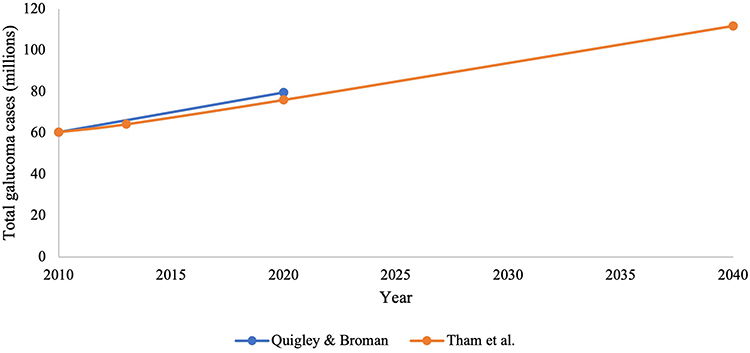 |
Figure 1 Worldwide Glaucoma Projection. |
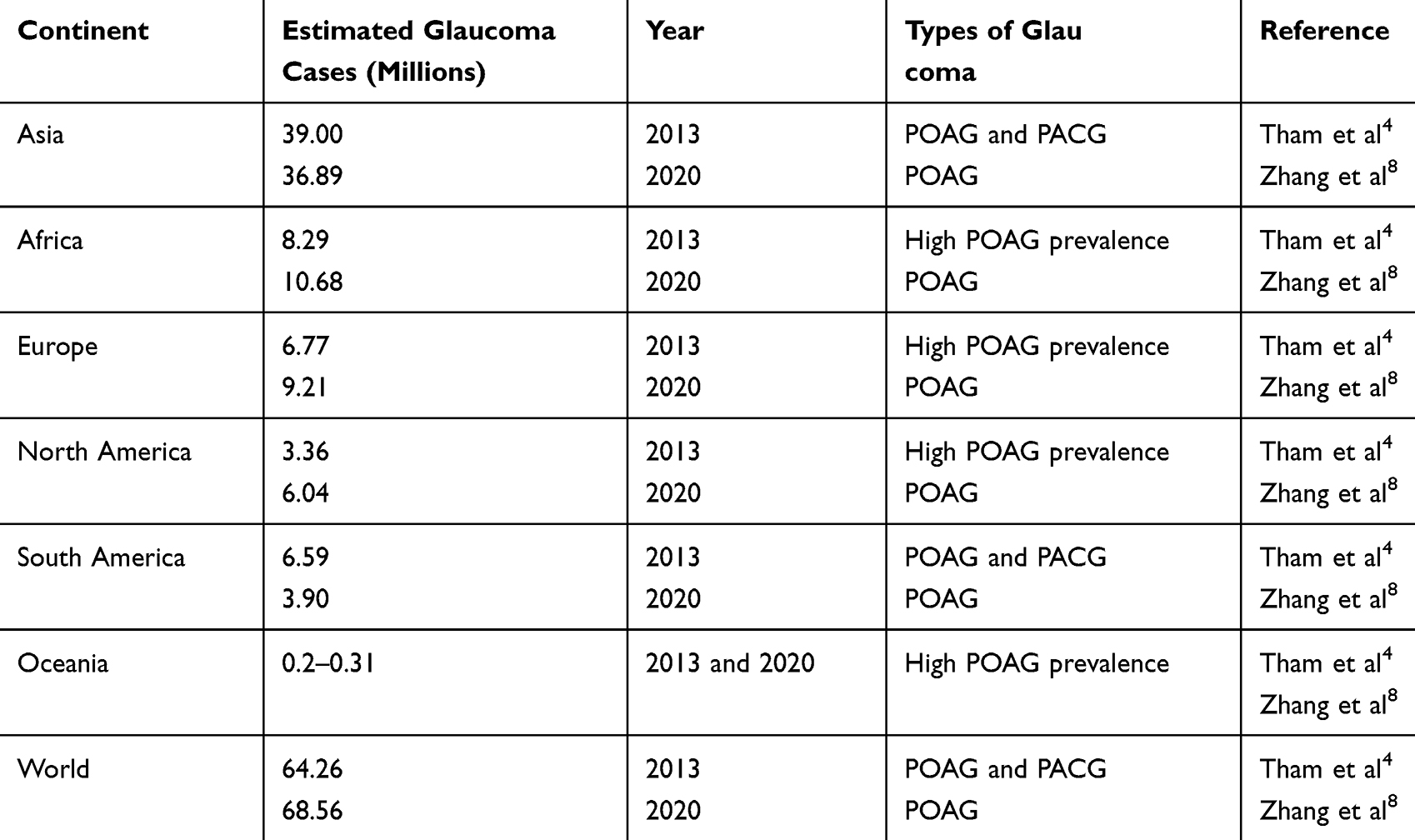 |
Table 1 Estimated Glaucoma Cases |
The socioeconomic impact of glaucoma is profound Figure 2, as vision impairment leads to reduced quality of life, increased healthcare costs, and a growing burden on caregivers and public health systems.9 Current glaucoma management primarily focuses on lowering IOP through pharmacological agents, laser therapy, or surgical interventions. However, these approaches do not directly address the neurodegenerative aspect of the disease or the oxidative stress-induced damage to RGCs, which ultimately leads to vision loss.10 A significant limitation of this IOP-centric approach is that glaucomatous damage can continue even when IOP is within the normal range, indicating the involvement of additional pathological mechanisms. One of the most critical of these mechanisms is oxidative stress, which plays a key role in the pathophysiology of glaucoma.
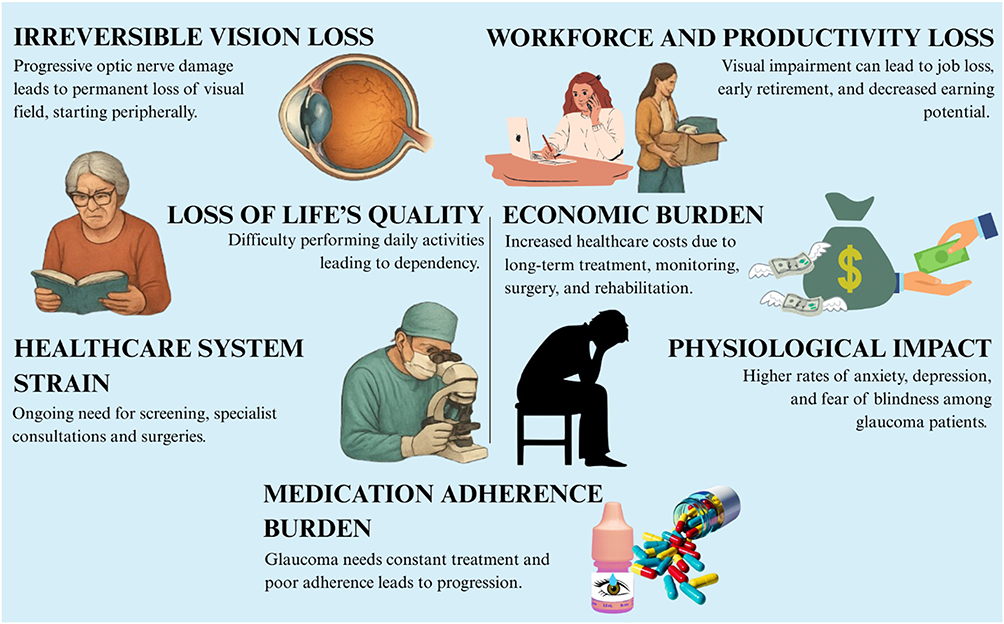 |
Figure 2 Burden and effects of Glaucoma.11 Note: Figure created using Canva. |
Oxidative stress plays a central role in the cascade of molecular events leading to axonal degeneration and RGCs loss in glaucoma, as illustrated in Figure 3. It disrupts mitochondrial function, triggers neuroinflammation, and promotes the apoptosis of RGCs. While IOP control remains a fundamental aspect of treatment, the persistent progression of glaucoma highlights a pressing need to explore complementary therapeutic strategies that target these underlying neurodegenerative processes. In this context, antioxidants have emerged as promising candidates due to their ability to counteract oxidative stress, a critical factor in the pathophysiology of glaucoma.12 Among the various antioxidants explored, vitamin E, comprising tocopherols and tocotrienols, has gained considerable attention for its potential therapeutic role in neuroprotection and ocular health.
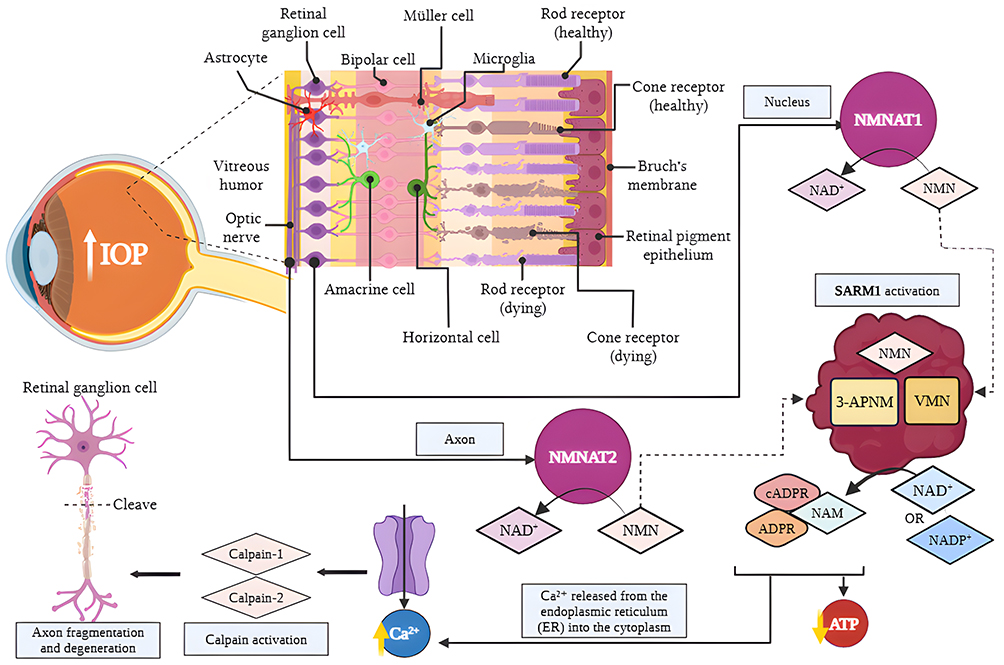 |
Figure 3 This figure illustrates the sequential molecular events leading to axonal degeneration and retinal ganglion cell (RGC) loss in glaucoma. Notes: Elevated intraocular pressure (IOP) induces mechanical stress at the optic nerve head (ONH) and lamina cribrosa, disrupting axonal transport in RGC axons. Loss of axonal NMNAT2 (Nicotinamide Mononucleotide Adenylyltransferase 2) results in NAD⁺ depletion and NMN (Nicotinamide Mononucleotide) accumulation, leading to activation of the pro-degenerative enzyme SARM1. While NMNAT1 (Nicotinamide Mononucleotide Adenylyltransferase 1), located in the nucleus, continues to synthesize NAD⁺, it lacks the capacity to protect axons due to its nuclear localization and absence of axonal projections (short axon). NMNAT1 also become insufficient to support nuclear NAD⁺ demand, especially under prolonged stress, contributing to nuclear dysfunction or degeneration. As NMN accumulates, it activates SARM1, which degrades NAD⁺ into NAM (Nicotinamide), ADP-ribose (ADPR), and cyclic ADP-ribose (cADPR). These metabolites (cADPR and ADPR) triggers calcium (Ca2⁺) release from the endoplasmic reticulum (ER). Elevated cytosolic Ca2⁺ levels activate calpains, which cleave the axonal structural proteins. As a result, causes cytoskeletal destabilization, degrade axonal structural proteins, disrupt mitochondrial function, and irreversible axon fragmentation. Symbols: yellow arrow ↑ = elevation/increase; yellow arrow ↓ = reduction/decrease; black arrow → = process flow or signalling direction. This figure adapted from Loreto, Merlini & Coleman13 and Tarasiuk et al14 and recreated using BioRender.com. |
Emerging evidence suggests that vitamin E supplementation may play a crucial role in preserving RGCs, reducing oxidative stress, and potentially lowering IOP.15 Tocopherols and tocotrienols, the two major forms of vitamin E (Figure 4), are lipid-soluble compounds with potent antioxidant properties. Tocopherol, particularly α-tocopherol, has been extensively studied for its ability to inhibit lipid peroxidation, stabilize cell membranes, and modulate inflammatory pathways.16
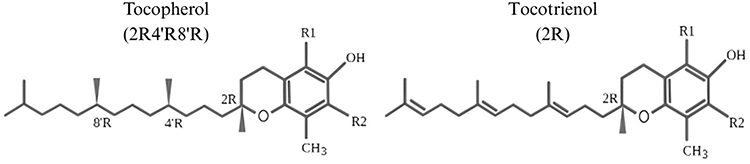 |
Figure 4 Structures of tocopherol and tocotrienol and their metabolites retrieved from Brigelius-Flohé.17 Note: Recreated with BioRender.com. |
Based on Figure 5, Tocopherols have been shown to protect retinal tissues by neutralizing free radicals, preventing lipid peroxidation, and maintaining mitochondrial integrity.18 Tocotrienols, on the other hand, demonstrate superior neuroprotective effects by modulating key signaling pathways involved in neuronal survival and apoptosis.19 Meanwhile, tocotrienols exhibit superior antioxidant activity due to their unsaturated isoprenoid side chains, allowing for better membrane penetration and free radical scavenging.20 This structural advantage endows tocotrienols with enhanced neuroprotective, anti-inflammatory, and anti-angiogenic properties, making them promising candidates for glaucoma management.21,22
 |
Figure 5 (a) The role of vitamin E as an antioxidant in cell membranes. (b) The vitamin E structure relationship in scavenging free radicals by donating hydrogen atoms. Notes: (a) Recreated from Knight et al23 (b) adapted from Rungratanawanich et al24 and reconstructed using BioRender.com. |
Beyond glaucoma, vitamin E has been implicated in the management of other ocular degenerative conditions, such as cataracts and diabetic retinopathy. Both tocopherols and tocotrienols have demonstrated protective effects against cataractogenesis by reducing oxidative and nitrosative stress, inhibiting NF-κB activation, and preventing glucocorticoid-induced cataract formation.25,26 In diabetic retinopathy, tocopherols mitigate oxidative stress and inhibit angiogenesis, while tocotrienols suppress inflammatory pathways by downregulating vascular endothelial growth factor (VEGF) and insulin-like growth factor 1 (IGF-1), thereby preserving retinal structure and function.27,28
This review aims to critically evaluate existing literature on the role of vitamin E in glaucoma, with a specific focus on its therapeutic potential in mitigating oxidative stress, preserving RGCs, and regulating IOP. By synthesizing current findings, this review will highlight the potential clinical applications of tocopherols and tocotrienols, providing a foundation for future research and therapeutic advancements in glaucoma care.
Method of Literature Search
The review was conducted in accordance with a predefined protocol and the standardized guidelines outlined by the Preferred Reporting Items for Systematic Reviews and Meta-Analyses (PRISMA).29
Inclusion and Exclusion Criteria
The inclusion criteria for the studies were established as follows: (1) article published in English language, (2) Only studies published from 1950 onward, and October 2024 were considered, (3) Evaluating the association between glaucoma and vitamin E (Tocopherol and Tocotrienol) in a clinical study, preclinical study, prospective study, randomized controlled trial, case-control study, or cross-sectional study.
The inclusion criteria were established to ensure the relevance, reliability, and comprehensiveness of the selected studies. Only articles published in the English language were included to maintain consistency in interpretation and to avoid potential inaccuracies due to translation issues. The publication range from 1950 to October 2024 was selected to encompass both foundational and contemporary research, as studies on vitamin E particularly tocopherol, the first form of vitamin E to be discovered, became more prominent in scientific literature from the early 1950s onward. Furthermore, the inclusion of various study designs such as clinical studies, preclinical studies, prospective studies, randomized controlled trials, case-control studies, and cross-sectional studies allowed for a comprehensive evaluation of the association between glaucoma and vitamin E (Tocopherol and Tocotrienol), integrating both mechanistic insights and clinical relevance.
In contrast, studies or papers that are irrelevant with the predefined inclusion criteria were systematically excluded. The criteria of exclusion studies were: (1) Study protocols, literature review, methodological papers or conference abstracts were excluded, (2) Article review, mini-review, meta-analysis, systematic review, (3) Published studies in other than English language. In contrast, studies or papers that did not meet the predefined inclusion criteria were systematically excluded to ensure the relevance and quality of the review.
Search Strategy
The systematic search on this literature was conducted up to October 1st, 2024. Additionally, reference lists of identified articles were reviewed to include studies that contain relevant keywords or keyword combinations. The PubMed database search employed the following keywords or MeSH (Medical Subject Headings) terms: Tocopherol AND glaucoma; Tocotrienol AND glaucoma; Tocopherol AND retina; Tocotrienol AND retina; Vitamin E AND glaucoma. PubMed was chosen as it is a free resource for searching and retrieving literature focused on biomedical and life sciences.
The search results were exported into Endnote X9 for effective citation management and deduplication. The subsequent screening process was conducted using Rayyan QCRI (Qatar Computing Research Institute) Intelligent Systematic Review, a web-based tool designed to facilitate systematic reviews. This platform enabled the screening of abstracts and full-text articles based on pre-established inclusion and exclusion criteria. After removing duplicates, studies were screened by title and abstract based on the predefined inclusion and exclusion criteria. Articles with uncertain eligibility underwent full-text evaluation, and the reference lists of included studies were manually reviewed to identify additional relevant publications. Three independent reviewers conducted the screening, and any discrepancies were resolved through discussion and consensus.
Data Extraction
The following details were extracted from each study included in the review:
- Citation information (title of the article, first author name and the year of publication)
- Study design
- Sample size
- Type of compound(s)
- Route of administration
- Main findings.
Result
The PubMed database yielded 274 articles in total during the initial search process. After the removal of duplicate entries, 246 articles remained, which were subsequently screened and evaluated against the predetermined inclusion and exclusion criteria. From these, 199 were excluded (Article review, mini-review, meta-analysis, systematic review; Published studies in languages other than English; irrelevant to glaucoma background studies; wrong compound used). Figure 6 shows the study selection process.
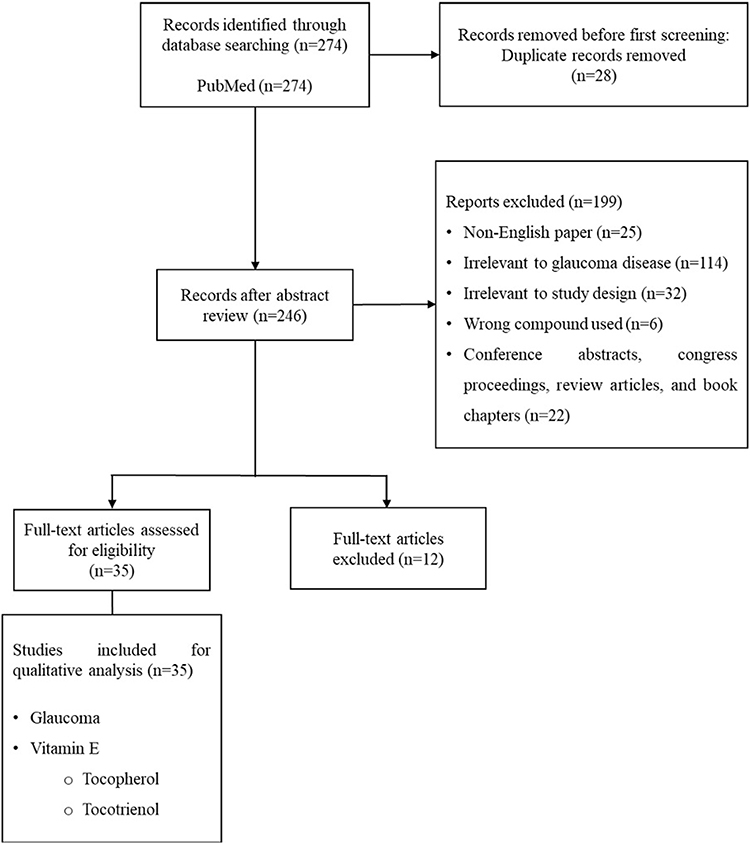 |
Figure 6 Review flow diagram. |
Following the abstract screening, a full-text evaluation was performed for 47 studies. After a thorough analysis, 12 studies were excluded due to the fact that, they did not specifically address the association between glaucoma and vitamin E treatment. Instead, these studies focused on biomarkers of vitamin E in glaucoma and other related conditions. As a result, this review consists of 35 studies that were considered relevant according to the predetermined criteria.
Figure 6 provides an overview of the main characteristics of the included studies. It was observed that most of the research investigating the relationship between vitamin E and glaucoma were published in 2007, followed by a smaller peak in the 90s. The included studies utilized a variety of study designs, with in vivo (n = 9) and in vitro (n = 9) being the most common. Additionally, two studies incorporated a combination of in vivo, in vitro, and ex vivo approaches, while three studies employed both in vivo and in vitro methods. A total of 12 studies were clinical, randomized trials, case studies and observational studies.
Regarding the forms of vitamin E assessed, 80% of the studies focused on Tocopherol alone and 20% investigated both Tocopherol and Tocotrienol (vitamin E). Out of the 35 included studies, 17 (47.22%) directly addressed the management of glaucoma, while the remaining 18 studies (51.43%) primarily investigated neuroprotection (Table 2). Although these neuroprotection studies did not directly target glaucoma, they provided valuable insights into retinal health preservation, a critical factor in preventing and managing glaucoma.
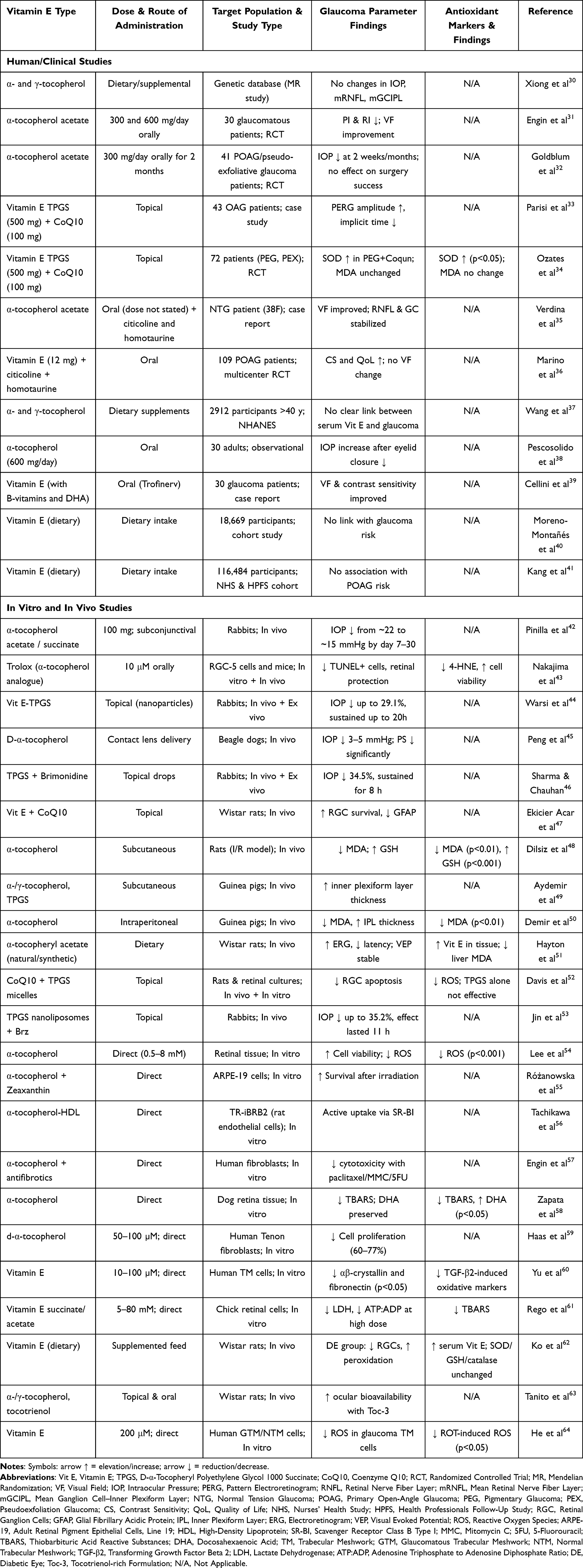 |
Table 2 Compilations of Clinical, Prospective, Case Studies, or Reports, In Vitro and In Vivo Studies of Tocopherol and Tocotrienol |
As this work is a narrative systematic review, no new experimental data were generated, and therefore, no statistical or meta-analytical analysis was performed. The findings presented herein are based on a qualitative synthesis of relevant published studies, focusing on summarizing current evidence and identifying research gaps related to the therapeutic potential of tocopherol and tocotrienol in glaucoma management.
Tocopherol: Clinical, Prospective, Case Studies, or Reports
A study by Xiong et al30 used Mendelian randomization to assess the genetic predisposition to tocopherol levels and their association with glaucoma-related traits. The findings showed no significant relationship between α-tocopherol or γ-tocopherol intake and changes in IOP, macular retinal nerve fiber layer (mRNFL) thickness, or macular ganglion cell–inner plexiform layer (mGCIPL) thickness. Similarly, a large-scale population-based study by Wang et al37 found no conclusive association between supplemental Vitamin E intake and glaucoma prevalence. While unadjusted models suggested some protective effects at specific serum tocopherol levels, these effects disappeared after adjusting for confounding factors.
Several randomized controlled trials (RCTs) have explored the effects of oral tocopherol supplementation on IOP and ocular blood flow. Engin et al31 conducted an RCT in glaucomatous patients, where oral α-tocopherol acetate at doses of 300 mg/day and 600 mg/day significantly improved ocular hemodynamics, reducing the pulsatility index (PI) and resistivity index (RI) in the ophthalmic and posterior ciliary arteries. Additionally, mean deviations in visual fields were significantly lower in supplemented groups compared to controls.
However, Goldblum et al32 found no significant effect of oral α-tocopherol (300 mg/day for two months) on trabeculectomy or phacotrabeculectomy success rates, IOP reduction, or postoperative complications. These results suggest that while tocopherol may enhance ocular blood flow, its direct impact on surgical outcomes and long-term IOP regulation remains uncertain. An observational study by Pescosolido et al38 supported the notion that Vitamin E supplementation (600 mg/day) could mitigate IOP spikes caused by the closed eyelid test (CET), indicating potential short-term benefits in IOP modulation.
Neuroprotective strategies in glaucoma management have also gained interest, with several studies examining topical formulations containing tocopherol. Parisi et al33 investigated the combination of coenzyme Q10 and Vitamin E (Coqun) in patients with open-angle glaucoma (OAG). Their findings revealed significant improvements in pattern electroretinogram (PERG) amplitudes and implicit times, suggesting enhanced retinal ganglion cell function. Similarly, Ozates et al34 reported that Coqun-treated pseudo-exfoliative glaucoma (PEG) patients had significantly lower aqueous humor superoxide dismutase (SOD) levels, indicating an antioxidant effect, although malondialdehyde (MDA) levels remained unchanged.
Case studies have further explored tocopherol’s potential role in glaucoma management. Verdina et al35 reported that Vitamin E supplementation, combined with citicoline and homotaurine, improved visual field parameters and stabilized retinal nerve fiber layer (RNFL) thickness over a 30-month follow-up in a patient with normal-tension glaucoma (NTG). Similarly, Marino et al36 conducted a multicenter pilot study on primary open-angle glaucoma (POAG) patients, examining a combination of Vitamin E, citicoline, and homotaurine. The study found improvements in contrast sensitivity and quality of life but no significant changes in visual field outcomes, suggesting a supportive rather than primary therapeutic role.
Tocopherol: in vivo and in vitro Studies
Several studies underscore the effectiveness of tocopherols in reducing IOP, a key factor in glaucoma management. Pinilla et al42 demonstrated that α-tocopherol acetate (ATA) and α-tocopherol acid succinate (ATS) significantly reduced IOP in pigmented rabbits following subconjunctival injections. Similarly, Warsi et al44 reported that vitamin E-TPGS nanoparticles enhanced the sustained release of dorzolamide, prolonging IOP reduction for up to 20 hours. These findings suggest that tocopherol-based formulations may offer more prolonged and effective therapeutic outcomes compared to conventional treatments.
Peng et al45 further investigated vitamin E’s role in enhancing drug delivery via contact lenses, demonstrating significant IOP reductions in beagle dogs. The incorporation of vitamin E into these lenses facilitated controlled and sustained drug release, which could be beneficial for glaucoma patients who struggle with frequent eye drop administration.
In addition to their role in IOP reduction, the neuroprotective properties of tocopherols have been well-documented. Nakajima et al43 examined Trolox, a water-soluble derivative of α-tocopherol, in both in vitro and in vivo settings. Their study showed that Trolox effectively mitigated oxidative stress-induced retinal damage and improved cell viability, particularly when combined with coenzyme Q10 (CoQ10).
Ekicier Acar et al47 provided further support for vitamin E’s neuroprotective effects when co-administered with CoQ10 in Wistar rats with optic nerve injuries. The treatment significantly preserved Brn-3a-positive retinal ganglion cells (RGCs) and reduced glial fibrillary acidic protein (GFAP) expression, indicating lower neuroinflammation. These findings align with those of Davis et al52 who observed that CoQ10/TPGS micelles reduced apoptosis and preserved RGC density in retinal cell cultures and rat models.
Ischemia-reperfusion (IR) injury is a major contributor to optic neuropathies, and several studies have investigated its mitigation through tocopherol treatment. Aydemir et al49 found that α-tocopherol, γ-tocopherol, and TPGS significantly reduced lipid peroxidation while increasing glutathione (GSH) levels, suggesting enhanced antioxidant defense mechanisms. Similarly, Dilsiz et al48 reported that vitamin E supplementation lowered MDA levels and restored GSH levels in IR-induced retinal damage models. Interestingly, study done by Demir et al50 in a guinea pig model of experimental uveitis, α-tocopherol was shown to mitigated retinal oxidative injury induced by intravitreal injection of bovine serum albumin. Findings showed that α-tocopherol significantly reduced MDA levels and decreased the thickness of the inner plexiform layer, indicating reduced retinal edema and oxidative damage. Mechanistically, alpha-tocopherol acts as a free radical scavenger that interrupts lipid peroxidation chains in photoreceptor membranes, thereby stabilizing cell membranes and preserving retinal structure.
Hayton et al51 examined the impact of dietary vitamin E intake on visual function and oxidative stress in Wistar rats. Their findings indicated that a vitamin E-deficient diet led to prolonged visual evoked potential (VEP) latencies and decreased electroretinogram (ERG) amplitudes, while supplementation preserved these visual responses. This highlights the systemic benefits of vitamin E beyond localized ocular administration.
Recent advancements in nanoformulations have significantly improved the bioavailability and efficacy of tocopherol-based treatments. Sharma & Chauhan46 demonstrated that brimonidine tartrate (BRT) nanoparticles formulated with PLGA-TPGS achieved greater IOP reduction compared to commercially available formulations. Similarly, Jin et al53 observed superior IOP-lowering effects with TPGS nanoliposomes compared to conventional AZOPT® eye drops, emphasizing the potential of nanotechnology in ophthalmic drug delivery.
Lee et al54 found that pretreatment with α-tocopherol significantly improved cell viability in retinal tissues exposed to oxidative injury, achieving neuroprotection at concentrations as low as 0.5 mM. Similarly, Różanowska et al55 reported that α-tocopherol enhanced the survival of ARPE-19 cells under irradiation-induced stress, with even greater efficacy when combined with zeaxanthin. These findings suggest that tocopherol is a potent antioxidant capable of counteracting oxidative damage in the retina.
Understanding tocopherol’s cellular uptake is crucial for determining its efficacy in retinal health. Tachikawa et al56 investigated the uptake mechanisms of [14C]α-tocopherol-HDL by retinal capillary endothelial cells and found that uptake was temperature-dependent and mediated by the scavenger receptor SR-BI. This study underscored SR-BI’s essential role in maintaining tocopherol levels in the neural retina, a mechanism vital for its neuroprotective function.
The combination of tocopherol with other therapeutic agents has shown promising results. Engin et al57 examined its synergistic effects with paclitaxel, mitomycin C, and 5-FU, demonstrating reduced cytotoxicity and enhanced antifibrotic efficacy in human Tenon’s fibroblasts. These findings suggest potential clinical applications of tocopherol in post-surgical ocular treatments to prevent fibrosis and improve healing outcomes.
Tocopherol’s impact on lipid peroxidation was evident in a study by Zapata et al58 which demonstrated its effectiveness in reducing lipid peroxidation in dog retinal tissues. The reduction in TBARS content and preservation of docosahexaenoic acid (DHA) further highlight tocopherol’s role in maintaining retinal lipid integrity, which is crucial for photoreceptor function.
Yu et al60 investigated vitamin E’s role in modulating fibrotic markers in human trabecular meshwork cells, showing a significant reduction in TGF-β2-induced α-crystallin and fibronectin expression. These results suggest that tocopherol may help prevent fibrotic changes associated with glaucoma progression, offering a potential therapeutic avenue.
Tocopherol and Tocotrienol: Prospective and Case Studies
A large-scale prospective cohort study by Moreno-Montañés et al40 investigated the dietary intake of vitamin E among 18,669 participants and found no significant association between vitamin E consumption and glaucoma risk (HR: 1.13, 95% CI: 0.84–1.52). Similarly, another extensive cohort study by Kang et al41 which analyzed data from the Nurses’ Health Study (n = 76,200) and the Health Professionals Follow-up Study (n = 40,284), reported no significant correlation between dietary vitamin E intake and POAG incidence (rate ratio: 0.97, 95% CI: 0.62–1.52). These findings suggest that dietary vitamin E alone may not be a key factor in glaucoma prevention, highlighting the need for further exploration of different formulations, dosages, and delivery mechanisms.
Although large-scale cohort studies did not establish a protective role for dietary vitamin E against glaucoma, a case study with long-term follow-up by Cellini et al39 presented a contrasting perspective. In this study, 30 patients (aged 58–74 years) were given TROFINERV, a formulation containing polyunsaturated fatty acids (DHA and EPA), vitamin E, and B vitamins. After three months of therapy, all perimetric indices showed significant improvement (p<0.05 for mean defect [MD] and p<0.05 for corrected pattern standard deviation [CPSD]). Retinal contrast sensitivity (RCS) at medium-high frequencies improved after one month and extended to medium-low frequencies by the third month. These findings suggest that combining vitamin E with other neuroprotective compounds may enhance its therapeutic effects on glaucomatous optic neuropathy.
Tocopherol and Tocotrienol: in vivo and in vitro Studies
Ko et al62 explored the effects of dietary vitamin E supplementation in Wistar rats, focusing on serum vitamin E levels, RGC density, and oxidative stress markers. The findings indicated that rats receiving a vitamin E-enriched diet exhibited significantly higher serum tocopherol levels compared to the standard diet group. However, despite this elevation, RGC density remained statistically unchanged between the standard and supplemented groups. Notably, the vitamin E-deficient group exhibited a significant reduction in RGC counts, emphasizing the importance of adequate vitamin E intake in maintaining retinal integrity.
Furthermore, oxidative stress markers, including SOD, GSH, and catalase, showed no significant alterations in the standard and deficient diet groups following IOP elevations. However, lipid peroxidation levels were markedly higher in the deficient group, reinforcing the hypothesis that vitamin E plays a protective role against oxidative stress in ocular tissues.
The study by Tanito et al63 provided a complementary perspective, investigating the intraocular penetration of tocopherols and tocotrienols when administered via topical and oral routes. Interestingly, their findings revealed that topical application of α-tocotrienol (α-Toc-3) led to a more pronounced increase in ocular tissue concentrations compared to α-tocopherol (α-Toc). Similarly, γ-tocotrienol (γ-Toc-3) exhibited a significantly greater intraocular accumulation when administered topically rather than orally. This suggests that tocotrienols, particularly in topical formulations, may serve as a superior delivery mechanism for ocular bioavailability, a crucial factor for therapeutic applications.
The study by Rego et al61 provides crucial insights into the dual role of vitamin E succinate in retinal cells derived from chick embryos. At low concentrations (10–20 mM), vitamin E succinate was found to enhance plasma membrane integrity by reducing lactate dehydrogenase (LDH) release. This suggests that moderate supplementation may confer protective effects against cellular damage, possibly by stabilizing membrane phospholipids and mitigating oxidative stress.
However, at higher concentrations (80 mM), vitamin E succinate exhibited cytotoxic properties, leading to increased LDH release and mitochondrial dysfunction. This was evidenced by decreased mitochondrial activity (only 36% of control levels in the MTT assay) and a dose-dependent reduction in the ATP: ADP ratio. Such findings highlight the importance of dosage optimization when considering vitamin E supplementation in therapeutic applications. Furthermore, vitamin E succinate demonstrated superior intracellular uptake and oxidative stress mitigation (reduced TBARS levels) compared to vitamin E acetate, indicating that specific vitamin E derivatives may exhibit varying degrees of bioactivity.
The study conducted by He et al64 explored the effects of vitamin E on TM cells, which are crucial in regulating intraocular pressure (IOP) and are often compromised in primary open-angle glaucoma (POAG). The findings demonstrate that vitamin E at a concentration of 200 µM effectively reduced endogenous reactive oxygen species (ROS) levels in glaucomatous TM (GTM) cells (p<0.05). Furthermore, pretreatment with vitamin E significantly attenuated ROT-induced ROS production in GTM cells, although no significant effect was observed in normal TM (NTM) cells. This suggests that vitamin E selectively benefits diseased or stressed cells rather than exerting a blanket effect on all TM cell populations.
While the current evidence highlights the antioxidant and neuroprotective potential of tocopherol and tocotrienol in glaucoma management, it is essential to acknowledge that the overall findings remain heterogeneous and occasionally inconsistent. Several large-scale cohort and Mendelian randomization studies30,37,40,41 reported no significant association between dietary or serum vitamin E levels and glaucoma risk or progression. These findings suggest that the observed benefits of vitamin E derivatives in experimental settings may not consistently translate into measurable clinical outcomes. Furthermore, differences in dosage, formulation, bioavailability, and study design contribute to variability in the reported effects. Therefore, although preclinical studies consistently demonstrate the neuroprotective and IOP-lowering potential of vitamin E isoforms, clinical evidence remains limited and inconclusive. Future investigations should aim to bridge this translational gap through well-controlled, longitudinal trials that compare tocopherol and tocotrienol efficacy while considering confounding factors such as age, diet, and comorbidities. A balanced interpretation of both positive and null findings is crucial to avoid overstating clinical benefit and to guide realistic therapeutic expectations for vitamin E in glaucoma management.
Challenges and Limitations in Managing Glaucoma
Tocotrienol and Tocopherol: Bioavailability and Synergy
Tocopherol and tocotrienol, two primary isoforms of vitamin E, have shown significant potential in addressing the pathophysiological mechanisms underlying glaucoma, a progressive optic neuropathy that leads to irreversible blindness. However, their therapeutic application is hindered by challenges in drug delivery, particularly in achieving effective bioavailability and targeted delivery to ocular tissues. Drug delivery systems face significant obstacles in navigating the complex anatomy and physiology of the eye, including barriers like the tear film, cornea, and blood-retinal barrier.65 It is due to the human eye being an intricate organ, featuring millions of cones, rods and ganglion cells.66 Topical administration, the most common route for glaucoma treatment, is limited by low bioavailability, as only a small fraction of the administered dose reaches the intraocular tissues.67 Despite this limitation, it remains the primary therapy for glaucoma due to its ability to deliver drugs directly to the targeted site, ensuring greater localization and minimal systemic absorption compared to oral supplementation.
Among the vitamin E isoforms, tocopherol, particularly α-tocopherol, is better suited in our ocular due to its structural properties. It is assumed that its saturated isoprenoid side chain allows strong binding to tear lipocalin (TL), a hydrophobic molecule transporter in the tear film. This interaction enhances its stability and facilitates penetration through the cornea, making it more effective in protecting and stabilizing the tear film against oxidative damage.68,69 Tocopherol is relatively higher bioavailability in ocular tissues, combined with its antioxidant activity, supports its role as a promising therapeutic candidate for glaucoma management.
In contrast, tocotrienol faces greater delivery challenges due to its possibility of the unsaturated side chain, which reduces its compatibility with TL and weakens its corneal penetration capabilities. The hydrophobic nature of tocotrienol limits its solubility in the tear film, further restricting its ability to reach the posterior segment of the eye where neurodegeneration occurs.70 Systemically, previous study showed that tocotrienol is also disadvantaged by lower oral bioavailability,71 rapid clearance with a half-life of 2.3 to 4.4 hours, and dependence on specific transport proteins for absorption.72,73 Study by Mohamad,74 proposed that tocotrienol requires synergy with α-tocopherol, as well as optimal fat levels and suitable conditions, to achieve its full therapeutic potential.
Moreover, study showed that the formulation of microemulsion and liposomal tocotrienol has demonstrated an anticataract effect, which can be attributed to reduced lenticular oxidative stress and attenuation of nitrosative stress.70 Most of the treatments associated with tocotrienol has been combined with other compounds. Despite these limitations, tocotrienol exhibits stronger antioxidant activity than tocopherol,75 which could be leveraged with advanced drug delivery systems to overcome its bioavailability issues.
Current Advancements in Novel Vitamin-E-Based Drug Delivery System in Managing Glaucoma
Traditional treatment methods, including eye drops and oral medications, have limitations such as poor bioavailability, limited efficacy, and poor patient adherence. However, various innovative interventions aimed at enhancing drug delivery, targeting affected tissues more efficiently.
Contact Lens
Contact lenses have emerged as an innovative ocular drug delivery system, significantly improving drug bioavailability compared to traditional eye drops. Designed to fit the cornea, contact lenses are made from hydrophilic or hydrophobic polymers, with soft contact lenses composed of hydrogel or silicone hydrogel being more popular due to their biocompatibility, comfort, and hydrophilic properties.76 Unlike eye drops, which have low bioavailability (1%–5%) and require multiple daily instillations leading to poor patient compliance, contact lenses provide prolonged and controlled drug release directly to the cornea, achieving bioavailability exceeding 50% under ideal conditions.77
A study found that over 60% of patients preferred contact lenses for glaucoma treatment due to reduced drug administration frequency, particularly those aged 30–49.78 Moreover, while improper instillation of eye drops is common and can cause suboptimal treatment or side effects, contact lenses eliminate these challenges, offering better drug absorption and improved therapeutic outcomes.79 The physical properties of drug-releasing contact lenses, including transparency, oxygen permeability, and water content, are critical in ensuring effective drug loading, sustained release, and user safety, making them a superior alternative to conventional eye drop therapies.76
Nanotechnology
Current advancements in glaucoma eye drop delivery include nanoliposomes and nanoparticles (Figure 7), which aims to enhance drug retention and controlled release.
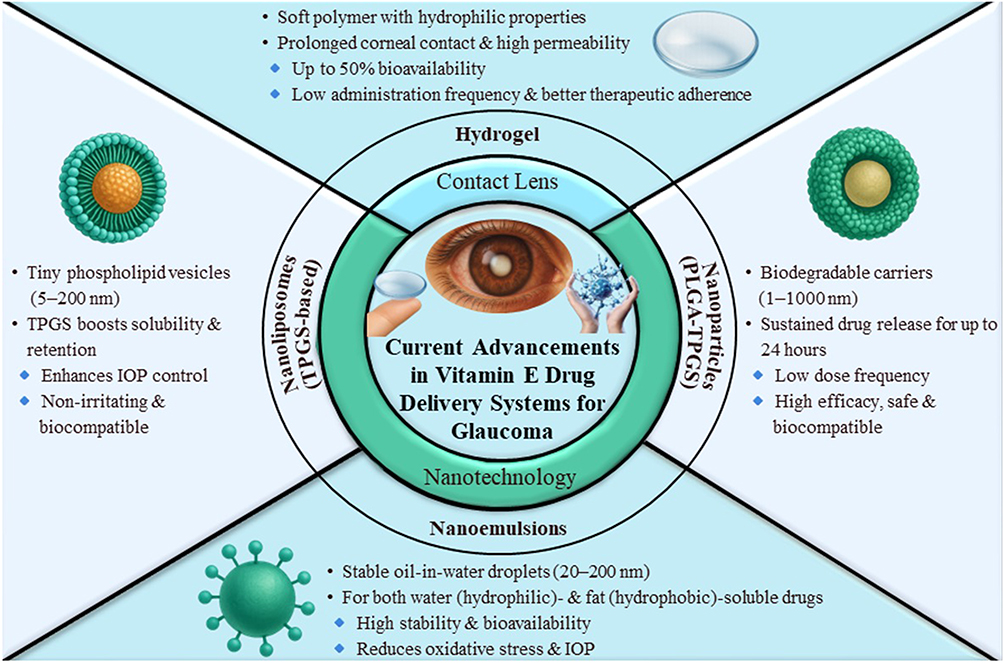 |
Figure 7 Current advancements in vitamin E drug delivery systems for glaucoma.26,45,46,77,80–83 Note: Figure created using Canva. |
Nanoliposomes (TPGS)
Nanoliposomes, the first nano-drug delivery system approved by the United States Food and Drug Administration (FDA) in 1995, are versatile nanocarriers capable of solubilizing hydrophobic drugs by embedding them in their lipid bilayer.80,84 Novel liposomes for eye drop improve corneal permeability through close contact with ocular tissues and prolonged retention time on the cornea.85–87
Nanoemulsion
Nanoemulsions (NE), heterogeneous dispersions with droplet sizes of 20–200 nm,81 provide an effective platform for solubilizing both hydrophilic and hydrophobic drugs, improving the eye drop bioavailability, and protect from enzymatic degradation. Their high stability against flocculation and phase separation ensures a long shelf life.88 α-Tocopherol with the combination of latanoprost in NE have demonstrated the ability to prevent fundus cell apoptosis, clear reactive oxygen species (ROS) in the fundus, and reduce IOP both in vitro and in vivo study.82 Their biodegradable and biocompatible nature further supports their use in glaucoma therapy, making them a promising intervention.
Nanoparticles (PLGA-TPGS)
Nanoparticles, submicron-sized carriers typically ranging from 1–1000 nm, represent a promising advancement in ocular drug delivery due to their ability to encapsulate hydrophilic drugs within a lipophilic matrix.80 This approach enhances ocular drug retention, transcorneal transport, and intraocular bioavailability. A study employing PLGA, a biodegradable, biocompatible, and FDA-approved polymer, combined with vitamin E TPGS as an emulsifier, demonstrated the potential of nanoparticles for topical glaucoma therapy. TPGS, being 77 times more effective than traditional PVA as an emulsifier, ensures superior drug encapsulation and acts as a P-glycoprotein inhibitor to enhance drug delivery.44,45,88,89
Furthermore, the incorporation of PLGA-TPGS nanoparticles into a thermosensitive in situ gel matrix improves precorneal residence time, prevents rapid drainage, and enables sustained drug release for up to 24 hours without causing ocular irritation in glaucoma-induced white New Zealand rabbits.46
A Paradigm Shift from Tocopherol to Tocotrienol in Glaucoma Management
Tocopherols have long been recognized for their antioxidant properties, primarily sourced from soybeans, olive oil, and leafy greens.90 However, recent research trends indicate a growing interest in tocotrienols as a superior alternative, particularly in managing neurodegenerative diseases like glaucoma. According to Ranasinghe et al19 and Szewczyk et al91 the increasing focus on tocotrienols stems from their distinct biochemical properties and potential therapeutic benefits, unlike tocopherols, tocotrienols exhibit stronger antioxidant capabilities, enhanced anti-inflammatory effects, and superior neuroprotective mechanisms. These unique attributes make them particularly attractive for addressing the oxidative stress and neurodegeneration associated with glaucoma.92 Tocotrienols have emerged as a promising candidate due to their ability to modulate cellular pathways implicated in retinal health and vision preservation.20
Emerging hypotheses suggest that tocotrienols may be more effective in glaucoma management due to their enhanced ability to penetrate lipid membranes and modulate key pathways implicated in oxidative stress and neurodegeneration.20 Comparative studies indicate that tocotrienols exhibit stronger inhibition of retinal ganglion cell apoptosis, making them a promising alternative to conventional Vitamin E forms.12,93 Although tocotrienols have a shorter half-life and lower bioavailability than tocopherols, these characteristics may contribute to their targeted efficacy in ocular tissues, reducing oxidative damage and apoptosis of retinal ganglion cells.94 In line with that, Tocotrienols have been reported to regulate lipid metabolism and inflammatory pathways more effectively than tocopherols, further reinforcing their potential therapeutic benefits.19
Despite tocotrienols’ promising potential, tocopherols remain the most extensively studied Vitamin E compounds.95 However, as the understanding of glaucoma advances, the unique attributes of tocotrienols warrant further investigation, positioning them as a compelling candidate for future therapeutic applications.12 With increasing evidence supporting their benefits, tocotrienols could pave the way for new and improved treatments for glaucoma, offering hope to millions affected by this debilitating condition.18 As scientific exploration continues, tocotrienols may ultimately redefine the role of Vitamin E in neurodegenerative disease management, solidifying their place in ophthalmic and neurological research.
Conclusion and Future Directions
Despite encouraging preclinical and limited clinical evidence supporting the neuroprotective role of vitamin E isoforms, the current body of research remains insufficient to justify its recommendation as a therapeutic option for glaucoma. Considerable challenges persist in improving vitamin E ocular bioavailability, stability, and targeted delivery to the posterior segment of the eye. A more definitive understanding of its therapeutic efficacy will require well designed, adequately powered randomized controlled trials that can validate the translational potential observed in laboratory and early clinical studies. Such trials should also consider pharmacokinetic variability, optimal dosage forms, and potential interactions with current glaucoma medications. Tocopherol continues to hold clinical promise due to its established antioxidant profile and safety, while tocotrienol offers additional mechanistic advantages that merit further exploration. Future studies investigating the synergistic combination of tocopherol and tocotrienol with other neuroprotective agents, including omega-3 fatty acids, polyphenols, or existing intraocular pressure-lowering drugs, may open new avenues for multimodal glaucoma therapy. With the advancement in nanotechnology-based delivery systems, such as biodegradable nanoparticles, nanoemulsions, and sustained-release ocular inserts, present an exciting opportunity to enhance the localized delivery and therapeutic efficacy of vitamin E compounds. Collectively, by addressing these gaps and pursuing more rigorous clinical validation, vitamin E derivatives may eventually emerge as valuable adjunctive agents in glaucoma management, contributing to improved neuroprotection, visual preservation, and overall patient outcomes.
Declaration of Generative AI and AI-Assisted Technologies in the Writing Process
During the preparation of this work, the author(s) used ChatGPT 4.0 to improve language and readability. After using this tool/service, the author(s) reviewed and edited the content as needed and take(s) full responsibility for the content of the publication.
Acknowledgments
We acknowledge the administrative and facility support from the Department of Biosciences, Faculty of Science, Universiti Teknologi Malaysia. The authors acknowledge the financial support provided by the Universiti Teknologi Malaysia under the Encouragement Grant (UTMER) (Q.J130000.3854.31J36).
Disclosure
The authors declare that they have no known competing financial interests or personal relationships that could have appeared to influence the work reported in this publication.
References
1. Mahabadi N, Zeppieri M, Tripathy K. Open-angle glaucoma. In: StatPearls. Treasure Island (FL): StatPearls Publishing; 2024.
2. Lambuk L, Mohd Lazaldin MA, Ahmad S, et al. Brain-derived neurotrophic factor-mediated neuroprotection in glaucoma: a review of current state of the art. Front Pharmacol. 2022;13:875662. doi:10.3389/fphar.2022.875662
3. Quigley HA, Broman AT. The number of people with glaucoma worldwide in 2010 and 2020. Br J Ophthalmol. 2006;90(3):262–267. doi:10.1136/bjo.2005.081224
4. Tham YC, Li X, Wong TY, Quigley HA, Aung T, Cheng CY. Global prevalence of glaucoma and projections of glaucoma burden through 2040: a systematic review and meta-analysis. Ophthalmology. 2014;121(11):2081–2090. doi:10.1016/j.ophtha.2014.05.013
5. Sheybani A, Scott R, Samuelson TW, et al. Open-angle glaucoma: burden of illness, current therapies, and the management of nocturnal IOP variation. Ophthalmol Ther. 2020;9(1):1–14. doi:10.1007/s40123-019-00222-z
6. Belamkar A, Harris A, Oddone F, Verticchio Vercellin A, Fabczak-Kubicka A, Siesky B. Asian race and primary open-angle glaucoma: where do we stand? J Clin Med. 2022;11(9):2486. doi:10.3390/jcm11092486
7. Naik V, Ohri S, Fernandez E, Mwanza J-C, Fleischman D. Changes in individuals’ glaucoma progression velocity after IOP-lowering therapy: a systematic review. PLoS One. 2025;20(5):e0324806. doi:10.1371/journal.pone.0324806
8. Zhang N, Wang J, Liu X, He M. Prevalence of primary glaucoma: a systematic review and meta-analysis. Sci Rep. 2021;11(1):13717. doi:10.1038/s41598-021-92766-z
9. Kjærsgaard M, Grauslund J, Vestergaard AH, Subhi Y. Relationship between diabetic retinopathy and primary open-angle glaucoma: a systematic review and meta-analysis. Ophthalmic Res. 2022;65(4):377–386. doi:10.1159/000523940
10. Chavez MP, Guedes GB, Pasqualotto E, et al. Selective laser trabeculoplasty versus medical therapy for the treatment of open angle glaucoma or ocular hypertension: a systematic review and meta-analysis of randomized controlled trials. J Glaucoma. 2024;33(12):973–986. doi:10.1097/IJG.0000000000002466
11. Inayat H, Abdul-Nabi M, Leung B, Jiang J, Robertson S, Malvankar-Mehta MS. Detrimental impact on work productivity in patients with glaucoma: a systematic review. JFO Open Ophthalmol. 2024;8:100142. doi:10.1016/j.jfop.2024.100142
12. Edwards G, Olson CG, Euritt CP, Koulen P. Molecular mechanisms underlying the therapeutic role of vitamin E in age-related macular degeneration. Front Neurosci. 2022;16:890021. doi:10.3389/fnins.2022.890021
13. Loreto A, Merlini E, Coleman MP. Programmed axon death: a promising target for treating retinal and optic nerve disorders. Eye. 2024;38(10):1802–1809. doi:10.1038/s41433-024-03025-0
14. Tarasiuk O, Molteni L, Malacrida A, Nicolini G. The role of NMNAT2/SARM1 in neuropathy development. Biology. 2024;13(1):61. doi:10.3390/biology13010061
15. Tanito M. Evidence of vitamin E protection against cataract and glaucoma. Free Radic Biol Med. 2021;177:100–119. doi:10.1016/j.freeradbiomed.2021.10.027
16. Razali RA, Ngah WZW, Makpol S, Yanagisawa D, Kato T, Tooyama I. Shifting perspectives on the role of tocotrienol vs. tocopherol in brain health: a scoping review. Int J Mol Sci. 2025;26(13):6339. doi:10.3390/ijms26136339
17. Brigelius-Flohé R. Bioactivity of vitamin E. Nutr Res Rev. 2006;19(2):174–186. doi:10.1017/S0954422407202938
18. Rather BA, Sehar Z, Majid A, Jahan B, Mir IR, Anjum NA. Ethylene and cellular redox management in plants. In Khan NA, Ferrante A, Munné-Bosch S, et al. editors, The Plant Hormone Ethylene; 2023: 141–170
19. Ranasinghe R, Mathai M, Zulli A. Revisiting the therapeutic potential of tocotrienol. Biofactors. 2022;48(4):813–856. doi:10.1002/biof.1873
20. Latib F, Zafendi MAI, Mohd Lazaldin MA. The use of vitamin E in ocular health: bridging omics approaches with tocopherol and tocotrienol in the management of glaucoma. Food Chem Mol Sci. 2024;9:100224. doi:10.1016/j.fochms.2024.100224
21. Sen CK, Khanna S, Rink C, Roy S. Tocotrienols: the emerging face of natural vitamin E. Vitam Horm. 2007;76:203–261.
22. Shrum SA, Nukala U, Shrimali S, et al. Tocotrienols provide radioprotection to multiple organ systems through complementary mechanisms of antioxidant and signaling effects. Antioxidants. 2023;12(11):1987. doi:10.3390/antiox12111987
23. Knight J, Andrade M, Bayram-Weston Z. Vitamins E and K: their role and the effects of deficiency. Nurs Times. 2024;120(5):39–43.
24. Rungratanawanich W, Memo M, Uberti D. Redox homeostasis and natural dietary compounds: focusing on antioxidants of rice (Oryza sativa L.). Nutrients. 2018;10(11):1776. doi:10.3390/nu10111605
25. Vurmaz A, Ertekin A, Sabaner MC, Atay E, Bozkurt E, Bilir A. Effects of vitamin E in a glucocorticoid-induced cataract model in chicken embryos. Biotech Histochem. 2021;96(6):431–438. doi:10.1080/10520295.2020.1818284
26. Sharma PK, Sharma HP, Chakole CM, Pandey J, Chauhan MK. Application of vitamin E TPGS in ocular therapeutics: attributes beyond excipient. J Indian Chem Soc. 2022;99(7):100387. doi:10.1016/j.jics.2022.100387
27. Sadikan MZ, Nasir NAA, Iezhitsa I, Agarwal R. Antioxidant and antiapoptotic effects of tocotrienol-rich fraction against streptozotocin-induced diabetic retinopathy in rats. Biomed Pharmacother. 2022;153:113533. doi:10.1016/j.biopha.2022.113533
28. Sadikan MZ, Abdul Nasir NA, Bakar NS, Iezhitsa I, Agarwal R. Tocotrienol-rich fraction reduces retinal inflammation and angiogenesis in rats with streptozotocin-induced diabetes. BMC Complement Med Ther. 2023;23(1):19. doi:10.1186/s12906-023-04005-9
29. Page MJ, McKenzie JE, Bossuyt PM, et al. The PRISMA 2020 statement: an updated guideline for reporting systematic reviews. BMJ. 2021;372:n71. doi:10.1136/bmj.n71
30. Xiong K, Zhang Q, Mao H, Congdon N, Liang Y. Assessment of causality between diet-derived antioxidants and primary open-angle glaucoma: a Mendelian randomization study. Transl Vis Sci Technol. 2024;13(2):20. doi:10.1167/tvst.13.2.20
31. Engin KN, Engin G, Kucuksahin H, Oncu M, Engin G, Guvener B. Clinical evaluation of the neuroprotective effect of alpha-tocopherol against glaucomatous damage. Eur J Ophthalmol. 2007;17(4):528–533. doi:10.1177/112067210701700408
32. Goldblum D, Meyenberg A, Mojon D, Tappeiner C, Frueh BE. Dietary tocopherol supplementation after trabeculectomy and phacotrabeculectomy: double-blind randomized placebo-controlled trial. Ophthalmologica. 2009;223(4):228–232. doi:10.1159/000203367
33. Parisi V, Centofanti M, Gandolfi S, et al. Effects of coenzyme Q10 in conjunction with vitamin E on retinal-evoked and cortical-evoked responses in patients with open-angle glaucoma. J Glaucoma. 2014;23(6):391–404. doi:10.1097/IJG.0b013e318279b836
34. Ozates S, Elgin KU, Yilmaz NS, Demirel OO, Sen E, Yilmazbas P. Evaluation of oxidative stress in pseudo-exfoliative glaucoma patients treated with and without topical coenzyme Q10 and vitamin E. Eur J Ophthalmol. 2019;29(2):196–201. doi:10.1177/1120672118779486
35. Verdina T, Passarelli N, Carlini A, Chemello F, Mastropasqua RM, Cavallini GM. Association of ultrapure citicoline, homotaurine and vitamin E in the management of normotensive glaucoma: a case report. Case Rep Ophthalmol. 2020;11(2):222–228. doi:10.1159/000507881
36. Marino PF, Rossi GCM, Campagna G, Capobianco D, Costagliola C; Qualicos Study Group. Effects of citicoline, homotaurine, and vitamin E on contrast sensitivity and visual-related quality of life in patients with primary open-angle glaucoma: a preliminary study. Molecules. 2020;25(23):5614. doi:10.3390/molecules25235614
37. Wang SY, Singh K, Lin SC. Glaucoma and vitamins A, C, and E supplement intake and serum levels in a population-based sample of the United States. Eye. 2013;27(4):487–494. doi:10.1038/eye.2013.10
38. Pescosolido N, Malagola R, Scarsella G, Lenarduzzi F, Dapoto L, Nebbioso M. Oxidative stress in the closed-eyelid test: management of glaucoma. Eur Rev Med Pharmacol Sci. 2012;16(10):1453–1457.
39. Cellini M, Caramazza N, Mangiafico P, Possati GL, Caramazza R. Fatty acid use in glaucomatous optic neuropathy treatment. Acta Ophthalmol Scand Suppl. 1998;227(S227):41–42. doi:10.1111/j.1600-0420.1998.tb00880.x
40. Moreno-Montañés J, Gándara E, Moreno-Galarraga L, et al. ACE-vitamin index and risk of glaucoma: the SUN Project. Nutrients. 2022;14(23):5129. doi:10.3390/nu14235129
41. Kang JH, Pasquale LR, Willett W, et al. Antioxidant intake and primary open-angle glaucoma: a prospective study. Am J Epidemiol. 2003;158(4):337–346. doi:10.1093/aje/kwg167
42. Pinilla I, Larrosa JM, Polo V, Honrubia FM. Alpha-tocopherol derivatives in an experimental model of filtering surgery. Ophthalmic Res. 1999;31(6):440–445. doi:10.1159/000055569
43. Nakajima Y, Inokuchi Y, Nishi M, Shimazawa M, Otsubo K, Hara H. Coenzyme Q10 protects retinal cells against oxidative stress in vitro and in vivo. Brain Res. 2008;1226:226–233. doi:10.1016/j.brainres.2008.06.026
44. Warsi MH, Anwar M, Garg V, et al. Dorzolamide-loaded PLGA/vitamin E TPGS nanoparticles for glaucoma therapy: pharmacoscintigraphy study and evaluation of extended ocular hypotensive effect in rabbits. Colloids Surf B Biointerfaces. 2014;122:423–431. doi:10.1016/j.colsurfb.2014.07.004
45. Peng CC, Ben-Shlomo A, Mackay EO, Plummer CE, Chauhan A. Drug delivery by contact lens in spontaneously glaucomatous dogs. Curr Eye Res. 2012;37(3):204–211. doi:10.3109/02713683.2011.630154
46. Sharma PK, Chauhan MK. Optimization and characterization of brimonidine tartrate nanoparticles-loaded in situ gel for the treatment of glaucoma. Curr Eye Res. 2021;46(11):1703–1711. doi:10.1080/02713683.2021.1916037
47. Ekicier Acar S, Sarıcaoğlu MS, Çolak A, Aktaş Z, Sepici Dinçel A. Neuroprotective effects of topical coenzyme Q10 + vitamin E in mechanic optic nerve injury model. Eur J Ophthalmol. 2020;30(4):714–722. doi:10.1177/1120672119833271
48. Dilsiz N, Sahaboglu A, Yildiz MZ, Reichenbach A. Protective effects of various antioxidants during ischemia-reperfusion in the rat retina. Graefes Arch Clin Exp Ophthalmol. 2006;244(5):627–633. doi:10.1007/s00417-005-0084-6
49. Aydemir O, Nazıroğlu M, Celebi S, Yılmaz T, Kükner AS. Antioxidant effects of alpha-, gamma-, and succinate-tocopherols in Guinea pig retina during ischemia-reperfusion injury. Pathophysiology. 2004;11(3):167–171. doi:10.1016/j.pathophys.2004.08.001
50. Demir D, Yılmaz T, Ilhan N, Yekeler H, Aydemir O, Kükner AS. Protective role of alpha-tocopherol on retinal injury in experimental uveitis in Guinea pigs. Pathophysiology. 2006;13(2):75–79. doi:10.1016/j.pathophys.2005.12.002
51. Hayton SM, Kriss A, Wade A, Muller DP. The effects of different levels of all-rac- and RRR-alpha-tocopheryl acetate (vitamin E) on visual function in rats. Clin Neurophysiol. 2003;114(11):2124–2131. doi:10.1016/S1388-2457(03)00214-1
52. Davis BM, Tian K, Pahlitzsch M, et al. Topical coenzyme Q10 demonstrates mitochondrial-mediated neuroprotection in a rodent model of ocular hypertension. Mitochondrion. 2017;36:114–123. doi:10.1016/j.mito.2017.05.010
53. Jin Q, Li H, Jin Z, et al. TPGS-modified nanoliposomes as an effective ocular delivery system to treat glaucoma. Int J Pharm. 2018;553(1–2):21–28. doi:10.1016/j.ijpharm.2018.10.033
54. Lee MC, Chung YT, Lee JH, Jung JJ, Kim HS, Kim SU. Antioxidant effect of melatonin in human retinal neuron cultures. Exp Neurol. 2001;172(2):407–415. doi:10.1006/exnr.2001.7793
55. Różanowska M, Bakker L, Boulton ME, Różanowski B. Concentration dependence of vitamin C in combinations with vitamin E and zeaxanthin on light-induced toxicity to retinal pigment epithelial cells. Photochem Photobiol. 2012;88(6):1408–1417. doi:10.1111/j.1751-1097.2012.01228.x
56. Tachikawa M, Okayasu S, Hosoya K. Functional involvement of scavenger receptor class B, type I, in the uptake of alpha-tocopherol using cultured rat retinal capillary endothelial cells. Mol Vis. 2007;13:2041–2047.
57. Engin KN, Erdem-Kuruca S, Akgün-Dar K, et al. The evaluation of human Tenon’s fibroblasts and endothelial cell responses to antifibrotics alone and in combination with α-tocopherol. Curr Eye Res. 2015;40(1):19–29. doi:10.3109/02713683.2014.909496
58. Zapata GL, Guajardo MH, Terrasa AM. The in vitro protective effect of alpha-tocopherol on oxidative injury in the dog retina. Vet J. 2008;177(2):266–272. doi:10.1016/j.tvjl.2007.04.005
59. Haas AL, Boscoboinik D, Mojon DS, Böhnke M, Azzi A. Vitamin E inhibits proliferation of human Tenon’s capsule fibroblasts in vitro. Ophthalmic Res. 1996;28(3):171–175. doi:10.1159/000267899
60. Yu AL, Moriniere J, Welge-Lussen U. Vitamin E reduces TGF-β2-induced changes in human trabecular meshwork cells. Curr Eye Res. 2013;38(9):952–958. doi:10.3109/02713683.2013.793360
61. Rego AC, Santos MS, Proença MT, Oliveira CR. Influence of vitamin E succinate on retinal cell survival. Toxicology. 1998;128(2):113–124. doi:10.1016/S0300-483X(98)00054-7
62. Ko ML, Peng PH, Hsu SY, Chen CF. Dietary deficiency of vitamin E aggravates retinal ganglion cell death in experimental glaucoma of rats. Curr Eye Res. 2010;35(9):842–849. doi:10.3109/02713683.2010.489728
63. Tanito M, Itoh N, Yoshida Y, Hayakawa M, Ohira A, Niki E. Distribution of tocopherols and tocotrienols to rat ocular tissues after topical ophthalmic administration. Lipids. 2004;39(5):469–474. doi:10.1007/s11745-004-1252-0
64. He Y, Leung KW, Zhang YH, et al. Mitochondrial complex I defect induces ROS release and degeneration in trabecular meshwork cells of POAG patients: protection by antioxidants. Invest Ophthalmol Vis Sci. 2008;49(4):1447–1458. doi:10.1167/iovs.07-1361
65. Nayak K, Misra M. Triamcinolone acetonide-loaded PEGylated microemulsion for the posterior segment of eye. ACS Omega. 2020;5(14):7928–7939. doi:10.1021/acsomega.9b04244
66. de Nava ASL, Somani AN, Salini B. Physiology, vision. In: StatPearls. Treasure Island (FL): StatPearls Publishing; 2023.
67. Januleviciene I, Siaudvytyte L, Barsauskaite R. Ophthalmic drug delivery in glaucoma—a review. Pharmaceutics. 2012;4(1):243–251. doi:10.3390/pharmaceutics4010243
68. Glasgow BJ, Abduragimov AR, Gasymov OK, Yusifov TN, Ruth EC, Faull KF. Vitamin E is associated with the lipocalin fraction of human tears. Adv Exp Med Biol. 2002;506 Pt A:567–572.
69. Gasymov OK, Abduragimov AR, Prasher P, Yusifov TN, Glasgow BJ. Tear lipocalin: evidence for a scavenging function to remove lipids from the human corneal surface. Invest Ophthalmol Vis Sci. 2005;46(10):3589–3596. doi:10.1167/iovs.05-0569
70. Abdul Nasir NA, Agarwal R, Vasudevan S, Tripathy M, Alyautdin R, Ismail NM. Effects of topically applied tocotrienol on cataractogenesis and lens redox status in galactosemic rats. Mol Vis. 2014;20:822–835.
71. Yuen KH, Ng BH, Wong JW. Absorption and disposition of tocotrienols. Tocotrienols. 2008;297–316.
72. Qureshi AA, Khan DA, Saleem S, Silswal N, Trias AM, Tan B. Pharmacokinetics and bioavailability of annatto δ-tocotrienol in healthy fed subjects. J Clin Exp Cardiol. 2015;6:2155–9880.
73. Qureshi AA, Khan DA, Silswal N, Saleem S, Qureshi N. Evaluation of pharmacokinetics and bioavailability of higher doses of tocotrienols in healthy fed humans. J Clin Exp Cardiol. 2016;7(4):434.
74. Mohamad NV. Strategies to enhance the solubility and bioavailability of tocotrienols using self-emulsifying drug delivery system. Pharmaceuticals. 2023;16(10):1403. doi:10.3390/ph16101403
75. Maniam S, Mohamed N, Shuid AN, Soelaiman IN. Palm tocotrienol exerted better antioxidant activities in bone than α-tocopherol. Basic Clin Pharmacol Toxicol. 2008;103(1):55–60. doi:10.1111/j.1742-7843.2008.00241.x
76. Rykowska I, Nowak I, Nowak R. Soft contact lenses as drug delivery systems: a review. Molecules. 2021;26(18):5388. doi:10.3390/molecules26185577
77. Yang H, Zhao M, Xing D, et al. Contact lens as an emerging platform for ophthalmic drug delivery: a systematic review. Asian J Pharm Sci. 2023;18(5):100847. doi:10.1016/j.ajps.2023.100847
78. Ghazal H, Ahmadouk J, Dhanji S, El-Bushra A, Kayyali R, ElShaer A. Patients’ and prescribers’ perception of contact lenses as a potential ocular drug delivery system. Cont Lens Anterior Eye. 2019;42(2):190–195. doi:10.1016/j.clae.2018.10.023
79. Gote V, Sikder S, Sicotte J, Pal D. Ocular drug delivery: present innovations and future challenges. J Pharmacol Exp Ther. 2019;370(3):602–624. doi:10.1124/jpet.119.256933
80. Liu LC, Chen YH, Lu DW. Overview of recent advances in nano-based ocular drug delivery. Int J Mol Sci. 2023;24(20):15352. doi:10.3390/ijms242015352
81. Mehanna MM, Mneimneh AT. Formulation and applications of lipid-based nanovehicles: spotlight on self-emulsifying systems. Adv Pharm Bull. 2021;11(1):56–67. doi:10.34172/apb.2021.006
82. Guo X, Zhang J, Liu X, et al. Antioxidant nanoemulsion loaded with latanoprost enables highly effective glaucoma treatment. J Control Release. 2023;361:534–546. doi:10.1016/j.jconrel.2023.08.004
83. Andra VVSNL, Pammi S, Bhatraju LVKP, Ruddaraju LK. A comprehensive review on novel liposomal methodologies, commercial formulations, clinical trials and patents. Bionanoscience. 2022;12(1):274–291. doi:10.1007/s12668-022-00941-x
84. Beltrán-Gracia E, López-Camacho A, Higuera-Ciapara I, Velázquez-Fernández JB, Vallejo-Cardona AA. Nanomedicine review: clinical developments in liposomal applications. Cancer Nanotechnol. 2019;10(1):1–40. doi:10.1186/s12645-019-0055-y
85. Agarwal R, Iezhitsa I, Agarwal P, et al. Liposomes in topical ophthalmic drug delivery: an update. Drug Deliv. 2016;23(4):1075–1091. doi:10.3109/10717544.2014.943336
86. Honda M, Asai T, Oku N, Araki Y, Tanaka M, Ebihara N. Liposomes and nanotechnology in drug development: focus on ocular targets. Int J Nanomed. 2013;8:495–503. doi:10.2147/IJN.S30725
87. Rathod S, Deshpande SG. Design and evaluation of liposomal formulation of pilocarpine nitrate. Indian J Pharm Sci. 2010;72(2):155–160. doi:10.4103/0250-474X.65014
88. McClements DJ. Edible nanoemulsions: fabrication, properties, and functional performance. Soft Matter. 2011;7(6):2297–2316. doi:10.1039/C0SM00549E
89. Mu L, Feng SS. Vitamin E TPGS used as emulsifier in the solvent evaporation/extraction technique for fabrication of polymeric nanospheres for controlled release of paclitaxel (Taxol). J Control Release. 2002;80(1–3):129–144. doi:10.1016/S0168-3659(02)00025-1
90. Poudel P, Petropoulos SA, Di Gioia F. Plant tocopherols and phytosterols and their bioactive properties. In: Khan NA, Ferrante A, Munné-Bosch S, editors. The Plant Hormone Ethylene. 2023:285–319.
91. Szewczyk K, Chojnacka A, Górnicka M. Tocopherols and tocotrienols: bioactive dietary compounds; what is certain, what is doubt? Int J Mol Sci. 2021;22(12):6222. doi:10.3390/ijms22126222
92. Buonfiglio F, Böhm EW, Pfeiffer N, Gericke A. Oxidative stress: a suitable therapeutic target for optic nerve diseases? Antioxidants. 2023;12(7):1465. doi:10.3390/antiox12071465
93. Sadikan MZ, Lambuk L, Reshidan N, et al. Molecular mechanisms of vitamin E in ocular neurodegenerative disorders: an update on the emerging evidence and therapeutic implications. J Ocul Pharmacol Ther. 2025;41(3):89–100. doi:10.1089/jop.2024.0125
94. Rusciano D, Bagnoli P. Pharmacotherapy and nutritional supplements for neovascular eye diseases. Medicina. 2023;59(7):1334. doi:10.3390/medicina59071334
95. Yang CS, Luo P, Zeng Z, Wang H, Malafa M, Suh N. Vitamin E and cancer prevention: studies with different forms of tocopherols and tocotrienols. Mol Carcinog. 2020;59(4):365–389. doi:10.1002/mc.23160
 © 2025 The Author(s). This work is published and licensed by Dove Medical Press Limited. The
full terms of this license are available at https://www.dovepress.com/terms
and incorporate the Creative Commons Attribution
- Non Commercial (unported, 4.0) License.
By accessing the work you hereby accept the Terms. Non-commercial uses of the work are permitted
without any further permission from Dove Medical Press Limited, provided the work is properly
attributed. For permission for commercial use of this work, please see paragraphs 4.2 and 5 of our Terms.
© 2025 The Author(s). This work is published and licensed by Dove Medical Press Limited. The
full terms of this license are available at https://www.dovepress.com/terms
and incorporate the Creative Commons Attribution
- Non Commercial (unported, 4.0) License.
By accessing the work you hereby accept the Terms. Non-commercial uses of the work are permitted
without any further permission from Dove Medical Press Limited, provided the work is properly
attributed. For permission for commercial use of this work, please see paragraphs 4.2 and 5 of our Terms.