
Back to Journals » International Journal of Women's Health » Volume 17
The Prevalence and Factors Associated with Complete Tooth Loss and Dental Visits in Menopausal and Non-Menopausal Women: Insights from the CHARLS
Received 11 August 2025
Accepted for publication 13 November 2025
Published 25 November 2025 Volume 2025:17 Pages 4867—4878
DOI https://doi.org/10.2147/IJWH.S559545
Checked for plagiarism Yes
Review by Single anonymous peer review
Peer reviewer comments 2
Editor who approved publication: Dr Matteo Frigerio
Huiyan Gong, Meihua Li
Department of Stomatology, The Second Hospital of Jilin University, Changchun, Jilin Province, People’s Republic of China
Correspondence: Meihua Li, Email [email protected]; [email protected]
Purpose: To assess the incidence of complete tooth loss and dental visits in menopausal women and to identify relevant influencing factors in China.
Methods: This study analyzed data of 5,602 women sourced from the China Health and Retirement Longitudinal Study (CHARLS) during 2015. The incidence of complete tooth loss and dental visits in menopausal and non-menopausal women was explored. Univariate and multivariate logistic regression models evaluated the relationships between demographic background, health status and function, health care and insurance, blood data and complete tooth loss and dental visits in menopausal women. The results were expressed as odds ratios (OR) of 95% confidence intervals (CI).
Results: Risk factors for complete tooth loss in menopausal women included age (OR=1.09, 95% CI: 1.08– 1.11), living in villages (OR=1.58, 95% CI: 1.29– 1.93), smoke (OR=1.29, 95% CI: 1.01– 1.65). Factors for dental visits in menopausal women included age (OR=0.99, 95% CI: 0.98– 1.00), living in villages (OR=0.75, 95% CI: 0.64– 0.88).
Conclusion: This study found that menopausal women have higher rates of complete tooth loss and dental visits. Age, place of residence, and smoking are major risk factors for complete tooth loss, while age and place of residence influence dental visits, indicating that menopausal women should pay more attention to their dental health, improve compliance with dental visits, and actively intervene to prevent tooth loss.
Keywords: complete tooth loss, dental visits, menopause, risk factors, CHARLS
Introduction
Menopause is the permanent cessation of menstruation in women, usually occurring between the ages of 45 and 56. Its essence is the loss of activity of ovarian follicles without any other pathological or physiological causes.1 During the menopausal transition period, due to changes in the reproductive hormone environment, it can cause disease processes such as vasomotor symptoms, emotional disorders, temporary cognitive dysfunction, and urogenital system symptoms.2 In addition, as the oral mucosa contains estrogen receptors, changes in hormone levels directly affect the oral cavity, leading to candidiasis, burning mouth syndrome, oral lichen planus, idiopathic neuropathy, dental caries, osteoporosis, periodontal disease and tooth loss.3–5 Oral health is closely related to overall health. The burden of oral diseases increases with age, often leading to a decline in the quality of life of the elderly.6 Menopausal women have a higher risk of oral health problems, and there is a close relationship between the two.7 Studies show that the rate of tooth loss among postmenopausal women is significantly higher than that among women with normal menstruation.8,9 Periodontal disease, hypertension, osteoporosis, etc. are all risk factors for tooth loss in postmenopausal women.10–13 Regular dental visits and dental treatment over time can reduce the incidence of tooth loss,14–16 It can play an important role in preventing tooth loss for menopausal women.
At present, the exploration of the risk relationship between total tooth loss and dental visits between menopausal and non-menopausal women is not thorough. This study analyzed the prevalence of complete tooth loss and dental visits among menopausal and non-menopausal women and related risk factors of complete tooth loss among menopausal women in China. It provides a basis for clinical prevention and treatment and has important clinical significance.
Materials and Methods
Study Participants
This study utilizes data from the China Health and Retirement Longitudinal Study (CHARLS) for analysis.17 It was initiated by Peking University’s National Development Research Institute (NDRI) and implemented by Peking University’s China Social Science Survey Center (CSSSC) and the Peking University Mission Committee (PUMLC). The national baseline survey began in 2011, with follow-up surveys in 2013, 2015 and 2018. The survey used a strict random sampling method to obtain comprehensive, high-quality data on the health status of people aged 45 years and older.
This study is based on the 2015 CHARLS database survey of total tooth loss and dental visit rates. It is a secondary analysis of CHARLS data. We first analyzed the incidence of complete tooth loss and dental visits among menopausal and non-menopausal women, and then further focused on identifying factors associated with complete tooth loss and dental visits specifically in menopausal women. The data for this study included demographic background, health status and function, health care and insurance and blood data.18 The dataset is available at http://charls.pku.edu.cn/. All individuals who agreed to participate in the CHARLS survey signed an informed consent form, and ethical authorization was obtained from the BGSU Institutional Review Board (IRB) for all CHARLS surveys (authorization number: IRB00001052-11,015). An independent IRB license was obtained for all biomarker collection (IRB00001052-11,014). After review by the Ethics Committee of the Second Hospital of Jilin University, this study has been determined to meet the criteria outlined in item 1 and 2 of Article 32 of the Measures for Ethical Review of Life Science and Medical Research Involving Human Subjects dated February 18, 2023, China, obtained exemption from ethics review (Approval No.: 2,025,015).
Definition of Menopause in This Study
Menopausal status was determined through self-reporting by respondents, based on their response to the questionnaire item: “Have you started menopause?” Respondents who answered “Yes” were classified as menopausal.
Investigation Content Relevant to This Study
The information collected from all study participants includes demographic backgrounds (age, residence, marital status), health status and functioning (sleep time, nap time, pain, smoking status), and blood data (white blood cell, hemoglobin, hematocrit, mean corpuscular volume, platelets, triglycerides, creatinine, blood urea nitrogen, high-density lipoprotein cholesterol, low-density lipoprotein cholesterol, total cholesterol, glucose, uric acid, cystatin C, C-reactive protein, glycated hemoglobin). To ensure the accuracy and completeness of the study, sample sizes with missing values for any variables were excluded in this study.
Pain status was determined through self-reporting by respondents, based on their response to the questionnaire item: “Are you often troubled with any body pains?” Respondents who answered “Yes” were classified as experiencing pain. Smoking status was determined through self-reporting by respondents, based on their response to the questionnaire item: “Have you ever chewed tobacco, smoked a pipe, smoked self-rolled cigarettes, or smoked cigarettes/cigars?” Respondents who answered “Yes” were classified as having a history of smoking. Complete tooth loss was determined through self-reporting by respondents, based on their response to the questionnaire item: “Have you lost all of your teeth?” Respondents who answered “Yes” were classified as having complete tooth loss. Dental visit was determined through self-reporting by respondents, based on their response to the questionnaire item: “In the past year, have you seen a dentist for dental care, including dentures?” Respondents who answered “Yes” were classified as having had a dental visit in the past year.
Statistical Analyses
In this study, continuous variables were expressed as medians and interquartile ranges, and rank-sum tests were used to compare between groups. Categorical variables were expressed as percentages, and χ2-tests or Fisher’s exact tests were used for group comparisons. Demographic characteristics and covariates were compared for the presence or absence of complete tooth loss and for the presence or absence of dental visit in menopausal women and non-menopausal women. The test level α=0.05, P<0.05 indicates that the difference is statistically significant. A univariate logistic regression analysis was initially used to determine the factors associated with complete tooth loss and dental visit in menopausal women. Variables with p-values <0.05 in the univariate logistic regression analysis were then included in the multivariate logistic regression analysis. The significance level was set at 0.05 to examine the factors associated with complete tooth loss and dental visit in menopausal women. Odds ratios (OR) and corresponding 95% confidence intervals (CI) were calculated. R software (version 4.2.3) was used for all analyses in this study.
Results
Participants Characteristics
In total 5602 patients were included after excluding covariates with missing values in this study, 4724 were menopausal women, and 878 were non-menopausal women (Figure 1). Detailed information is provided in Table 1.
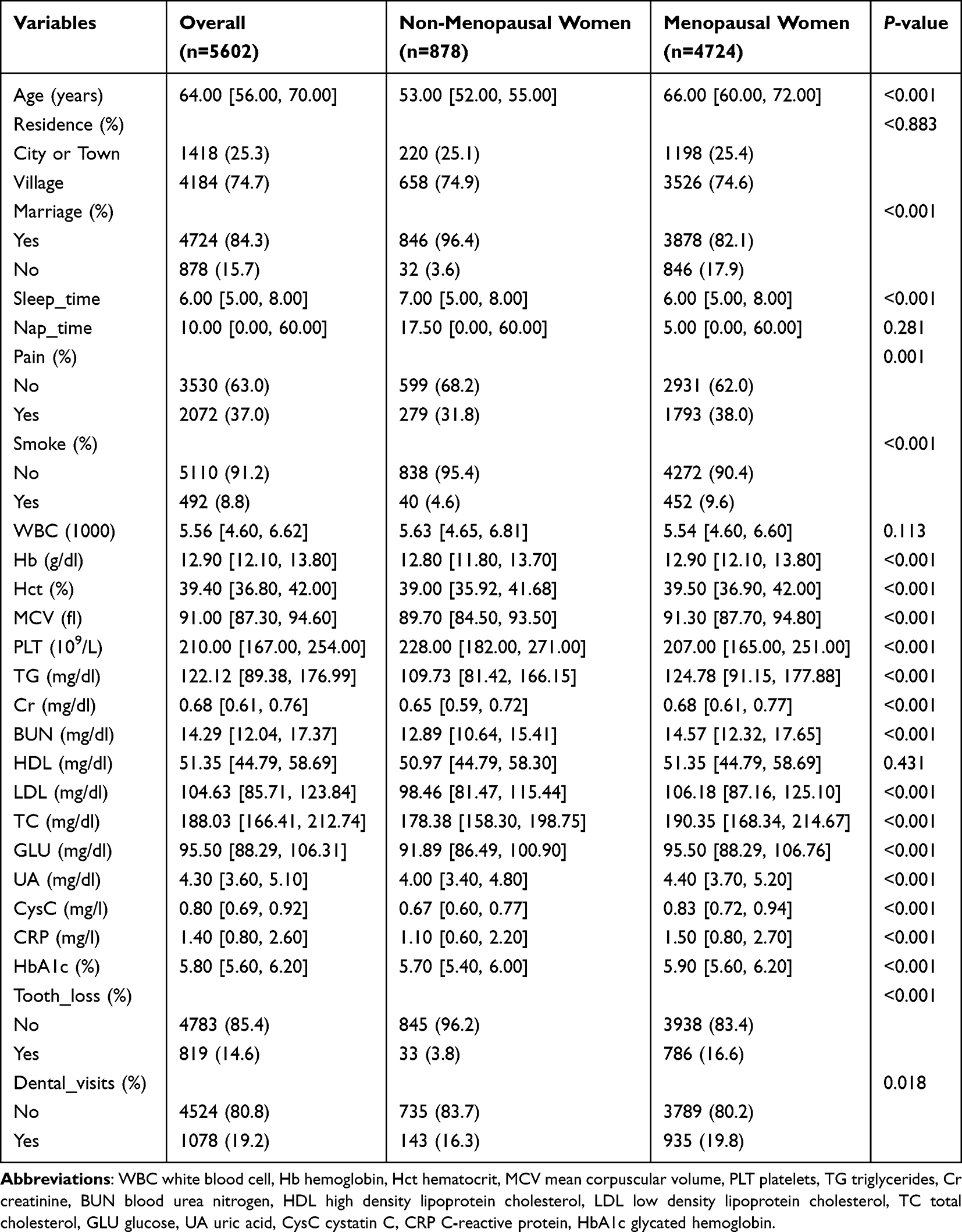 |
Table 1 Demographic and Clinical Characteristics of Participants |
 |
Figure 1 Study flowchart. |
Prevalence of Complete Tooth Loss in Menopausal Women
Table S1 shows the prevalence of complete tooth loss in menopausal women. The incidence of complete tooth loss in menopausal women is 16.6% (786/4724). The two groups of participants in terms of age, place of residence, marital status, pain, smoke, hemoglobin, hematocrit, triglycerides, creatinine, blood urea nitrogen, cystatin C showed statistical differences (P<0.05).
Prevalence of Dental Visits in Menopausal Women
Table S2 shows the prevalence of dental visits in menopausal women. The incidence of dental visits in menopausal women is 19.8% (935/4724). The two groups of participants in terms of age, place of residence, cystatin C showed statistical differences (P<0.05).
Prevalence of Complete Tooth Loss in Non-Menopausal Women
Table S3 shows the prevalence of complete tooth loss in non-menopausal women. The incidence of complete tooth loss in non-menopausal women is 3.8% (33/878). The two groups of patients in terms of age, place of residence, cystatin C showed statistical differences (P<0.05).
Prevalence of Dental Visits in Non-Menopausal Women
Table S4 shows the prevalence of dental visits in non-menopausal women. The incidence of dental visits in non-menopausal women is 16.3% (143/878). The two groups of patients in terms of pain, blood urea nitrogen showed statistical differences (P<0.05).
Influencing Factors of Complete Tooth Loss in Menopausal Women
Logistic regression analysis (Table 2) shows the influencing factors on complete tooth loss in menopausal women. Risk factors for complete tooth loss in menopausal women in the univariate regression analysis included age (OR=1.10, 95% CI: 1.09–1.11), living in villages (OR=1.52, 95% CI: 1.26–1.84), unmarried (OR=2.20, 95% CI: 1.84–2.62), pain (OR=1.20, 95% CI: 1.03–1.40), smoke (OR=1.62, 95% CI:1.28–2.04), triglycerides (OR=1.00, 95% CI: 1.00–1.00), creatinine (OR=1.54, 95% CI:1.17–2.03), blood urea nitrogen (OR=1.03, 95% CI:1.02–1.05), cystatin C (OR=2.64, 95% CI: 1.93–3.61). Protective factors for complete tooth loss in menopausal women in the univariate regression analysis included hemoglobin (OR=0.91, 95% CI: 0.86–0.95), hematocrit (OR=0.97, 95% CI:0.96–0.99). Risk factors for complete tooth loss in menopausal women in the multivariate regression analysis included age (OR=1.09, 95% CI: 1.08–1.11), living in villages (OR=1.58, 95% CI: 1.29–1.93), smoke (OR=1.29, 95% CI: 1.01–1.65). Detailed information is shown in Figure 2.
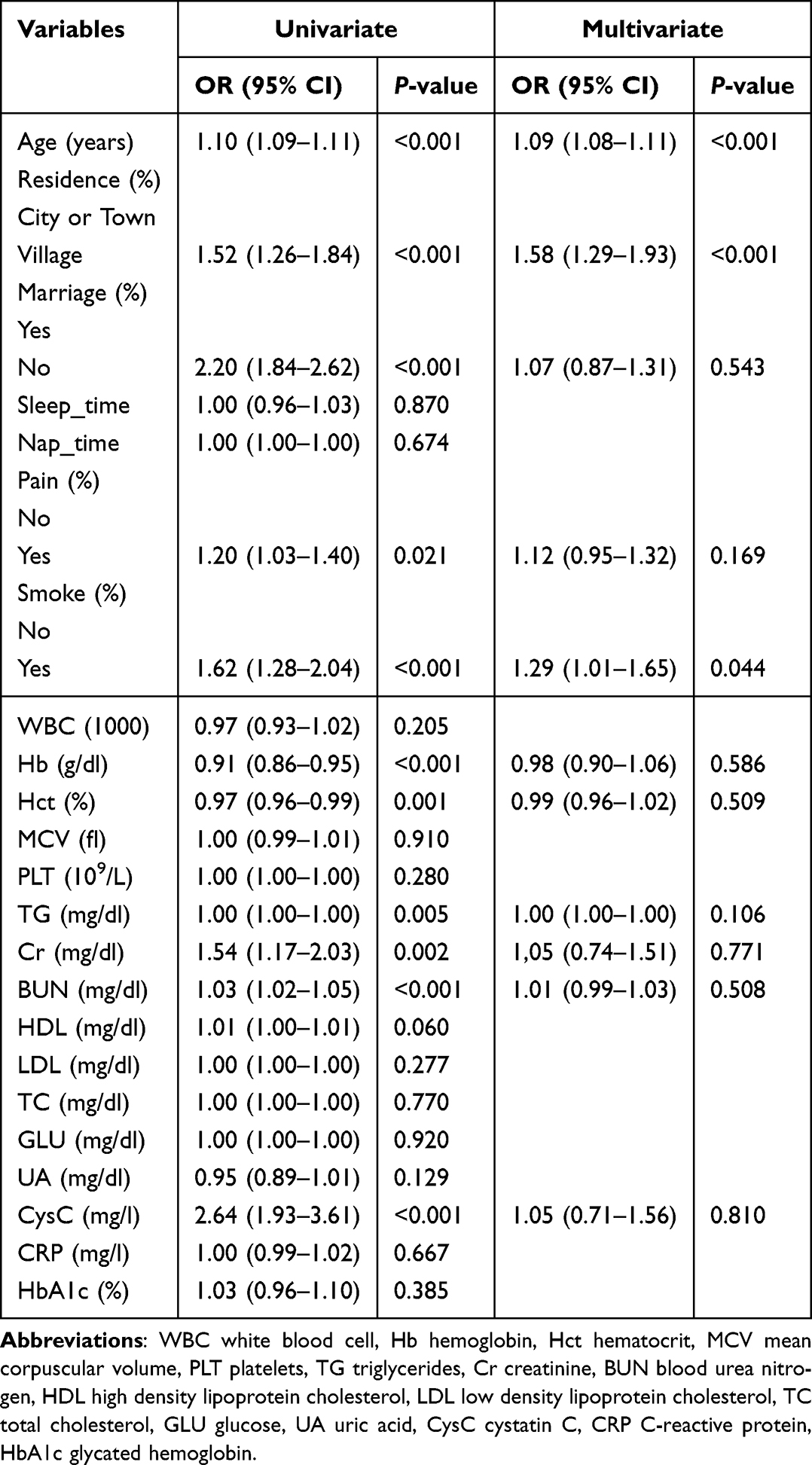 |
Table 2 Univariate and Multivariate Logistic Regression Analysis of Risk Factors for Complete Tooth Loss in Menopausal Women |
 |
Figure 2 The univariate and multivariate logistic regression analysis of risk factors for complete tooth loss in menopausal women. Abbreviations: WBC, white blood cell; Hb, haemoglobin; Hct, haematocrit; MCV, mean corpuscular volume; PLT, platelets; TG, triglycerides; Cr, creatinine; BUN, blood urea nitrogen; HDL, high density lipoprotein cholesterol; LDL, low density lipoprotein cholesterol; TC, total cholesterol; GLU, glucose; UA, uric acid; CysC, cystatin C; CRP, C-reactive protein; HbA1c, glycated hemoglobin. |
Influencing Factors of Dental Visits in Menopausal Women
Logistic regression analysis (Table 3) shows the influencing factors on dental visits in menopausal women. Factors for dental visits in menopausal women in the univariate regression analysis included age (OR=0.99, 95% CI: 0.98–0.99), living in villages (OR=0.75, 95% CI: 0.64–0.88), cystatin C (OR=0.65, 95% CI: 0.46–0.93). Factors for dental visits in menopausal women in the multivariate regression analysis included age (OR=0.99, 95% CI: 0.98–1.00), living in villages (OR=0.75, 95% CI: 0.64–0.88). Detailed information is shown in Figure 3.
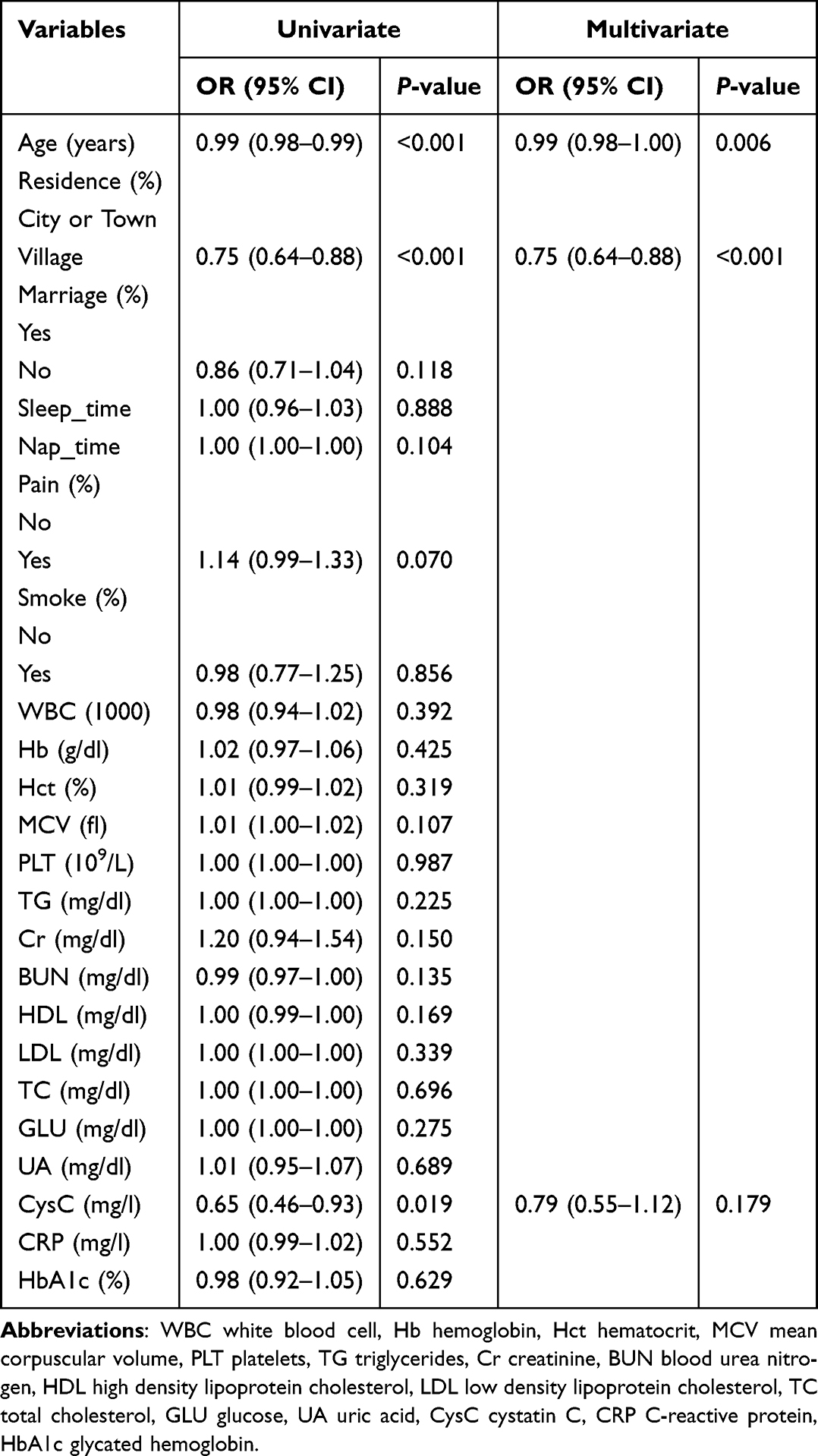 |
Table 3 Univariate and Multivariate Logistic Regression Analysis of Risk Factors for Dental Visits in Menopausal Women |
 |
Figure 3 The univariate and multivariate logistic regression analysis of risk factors for dental visits in menopausal women. Abbreviations: WBC, white blood cell; Hb, haemoglobin; Hct, haematocrit; MCV, mean corpuscular volume; PLT, platelets; TG, triglycerides; Cr, creatinine; BUN, blood urea nitrogen; HDL, high density lipoprotein cholesterol; LDL, low density lipoprotein cholesterol; TC, total cholesterol; GLU, glucose; UA, uric acid; CysC, cystatin C; CRP, C-reactive protein; HbA1c, glycated hemoglobin. |
Discussion
This study observed a significantly higher of complete tooth loss and dental visits in menopausal women than in non-menopausal women, and therefore we further explored complete tooth loss and dental visits in menopausal women. Notably, by consulting relevant literature, we found that this is the latest study based on the CHARLS database to investigate the prevalence of complete tooth loss and dental visits in menopausal women, as well as related risk factors. Based on multivariate logistic regression, risk factors affecting complete tooth loss in menopausal women included age, place of residence, and smoking. Age and place of residence were also major risk factors for dental visits among menopausal women. The risk factors of complete tooth loss and dental visits interact with each other. The risk factors for complete tooth loss may directly increase the probability of dental visits by inducing tooth loss, and regular and long-term dental check-ups and treatments can reduce the incidence of tooth loss. This is also reflected in this study.
Age is an important factor influencing complete tooth loss and dental visits in menopausal women. As age increases menopausal women are more likely to experience tooth loss and are less likely to visit the dentist. Another study19 also confirmed that menopausal symptoms worsen as menopause progresses. Consider that as age increases, estrogen levels decline in menopausal women. Imbalances in hormone levels can affect the activation of bone cells and immune cells, causing a decrease in bone density throughout the body and affecting alveolar bone loss leading to tooth loss.20 A cross-sectional study also confirms that clinical oral bone loss is age-related, especially in women over 70 years of age.21 It has also been certified that postmenopausal age is a related factor leading to periodontal attachment loss.22 Although age is an unmodifiable factor, the findings highlight that older menopausal women should receive greater attention for oral health management and preventive interventions. Furthermore, our research has found that menopausal women living in rural areas have a higher risk of complete tooth loss and visit the doctor less frequently. The utilization of dental services in urban and rural areas is unfair. The number of health care units in rural areas is small and the distance to access health care services is long, making dental visits difficult in rural areas and resulting in a higher rate of tooth loss than in urban areas.23–25 The quality of life in rural areas is lower than that in urban areas. National and international studies have confirmed that a lower quality of life is associated with more severe menopausal symptoms.26–28 Menopausal women with a better socioeconomic background have the least number of missing teeth.29 Being unmarried is a risk factor for complete tooth loss in menopausal women. A series of studies30–32 have found that married women have a more positive attitude towards menopause and a better quality of life. And a 25-year follow-up on oral health in Sweden also proved that unmarried women were more prone to tooth loss than married women.33
This study confirmed that pain is a risk factor for tooth loss in menopausal women. Pain during menopause may include musculoskeletal discomfort, headaches or migraines, vulvar and vaginal pain, as well as mouth pain.34,35 There is a bidirectional relationship between chronic pain and tooth loss. A study36 has shown that pain is a risk factor for tooth loss, and severe tooth loss has a higher rate of chronic pain. Periodontal disease can activate the systemic host immune response and chronic low-grade inflammation, generating neuropeptides, which further leads to chronic pain throughout the body.37 Furthermore, our research also found that smoking is a serious risk factor for tooth loss in menopausal women. The view that smoking affects overall health has become a consensus. The related diseases include lung diseases, cardiovascular diseases, endocrine diseases, oral diseases, etc. A study has shown that smoking in postmenopausal women is associated with tooth loss, and those who do not smoke are more likely to retain their teeth.38
Hemoglobin, hematocrit, creatinine and blood urea nitrogen can affect tooth loss in menopausal women. Low levels of hemoglobin and hematocrit may indicate anemia. Anemia is a global health issue that affects a large number of women of all ages.39 The number of natural teeth is negatively correlated with anemia and can be regarded as an independent risk indicator of anemia.40 Serum creatinine and blood urea nitrogen levels are important indicators for determining clinical renal function.41 Studies9,42 show that chronic kidney disease and tooth loss may be related, and this association is particularly significant among postmenopausal women. Furthermore, in this study, cystatin C was found to be associated with total tooth loss and dental visits in menopausal women, who have relatively high levels, tend to have a higher probability of tooth loss, and are reluctant to make dental visits. Related studies43,44 have investigated that serum cystatin C may be a realistic surrogate for osteoporosis in postmenopausal women, and serum cystatin C is significantly elevated in osteoporosis. Another study42 also confirmed that serum cystatin C levels were associated with the number of remaining teeth in postmenopausal women. This is consistent with the results of the present study. This study has significant strengths. First, this work utilized data from CHARLS with a large sample size. Secondly, the objective of this study was to assess the prevalence and risk factors of complete tooth loss and dental visits in menopausal women. Relevant research is scarce. This study also had limitations. The study did not delve into the specifics of complete tooth loss and dental visits, such as whether dental implants were present and the reasons for the visits. Considering these limitations, future studies should include more comprehensive variables to improve the generalizability and accuracy of the study.
Conclusion
This study systematically analyzed the prevalence of complete tooth loss and dental visits among menopausal women and their associated risk factors. Menopausal women had a higher prevalence of complete tooth loss and dental visits compared to non-menopausal women. Age, place of residence, and smoking significantly increase the risk of complete tooth loss, while age and place of residence are important predictors of dental visits. Menopause is positively correlated with the risk of complete tooth loss, indicating that menopausal women should pay more attention to their dental health, improve compliance with dental visits, and actively intervene to prevent tooth loss. The results of this study provide a theoretical basis for menopausal women to intervene in complete tooth loss and dental visits. In addition, Future studies will focus on assessing the prevalence and risk factors for complete tooth loss and dental visits in different populations.
Data Sharing Statement
The data that support the findings of this study are available from the China Health and Retirement Longitudinal Study (CHARLS) website, subject to the registration and application process. Further details can be found at http://charls.pku.edu.cn/.
Ethics
Ethics approval and consent to participate All CHARLS surveys received ethical authorization from the Institutional Review Board (IRB) at Peking University (IRB00001052-11015). Furthermore, the protocol of the blood-based biomarker sample collection study was approved by the ethical review committee of Peking University (IRB00001052-11014). All participants completed the informed consent forms. This study has been determined to meet the criteria outlined in item 1 and 2 of Article 32 of the Measures for Ethical Review of Life Science and Medical Research Involving Human Subjects dated February 18, 2023, China, obtained exemption from ethics review (Approval No.: 2025015).
Consent for Publication
All authors agree to publish.
Acknowledgments
This study was conducted using data from the China Longitudinal Study of Health and Retirement (CHARLS). The authors express their gratitude to the CHARLS team for providing the data. We also extend our heartfelt appreciation to the staff of the CHARLS database and the survey respondents.
Author Contributions
All authors made a significant contribution to the work reported, whether that is in the conception, study design, execution, acquisition of data, analysis and interpretation, or in all these areas; took part in drafting, revising or critically reviewing the article; gave final approval of the version to be published; have agreed on the journal to which the article has been submitted; and agree to be accountable for all aspects of the work.
Funding
This research did not receive any specific grant from funding agencies in the public, commercial, or not-for-profit sectors.
Disclosure
The authors have no relevant financial or non-financial interests to disclose.
References
1. Crandall CJ, Mehta JM, Manson JE. Management of menopausal symptoms: a review. JAMA. 2023;329:405–420. doi:10.1001/jama.2022.24140
2. Santoro N, Roeca C, Peters BA, et al. The menopause transition: signs, symptoms, and management options. J Clin Endocrinol Metab. 2021;106:1–15. doi:10.1210/clinem/dgaa764
3. Ciesielska A, Kusiak A, Ossowska A, et al. Changes in the oral cavity in menopausal women-a narrative review. Int J Environ Res Public Health. 2021;19:19. doi:10.3390/ijerph19010019
4. Suri V, Suri V. Menopause and oral health. J Midlife Health. 2014;5:115–120. doi:10.4103/0976-7800.141187
5. Buencamino MC, Palomo L, Thacker HL. How menopause affects oral health, and what we can do about it. Cleve Clin J Med. 2009;76:467–475.
6. Huang J, Zhang Y, Xv M, et al. Association between oral health status and frailty in older adults: a systematic review and meta-analysis. Front Public Health. 2025;13:1514623.
7. Thomas N, Peters K, Reilly KO, et al. Oral health care among women in perimenopause or menopause: an integrative review. J Midwifery Womens Health. 2025;70:17–31. doi:10.1111/jmwh.13668
8. Yakar N, Turedi A, Emingil G, et al. Oral health and emotional well-being in premenopausal and postmenopausal women: a cross-sectional cohort study. BMC Womens Health. 2021;21:338. doi:10.1186/s12905-021-01480-5
9. Kim NY, Kim JE, Choi CH, et al. Chronic kidney disease in postmenopausal women is associated with tooth loss. Menopause. 2024;31:663–668.
10. Tezal M, Wactawski-Wende J, Grossi SG, et al. Periodontal disease and the incidence of tooth loss in postmenopausal women. J Periodontol. 2005;76:1123–1128. doi:10.1902/jop.2005.76.7.1123
11. Taguchi A, Sanada M, Suei Y, et al. Tooth loss is associated with an increased risk of hypertension in postmenopausal women. Hypertension. 2004;43:1297–1300. doi:10.1161/01.HYP.0000128335.45571.ce
12. Kim CS, Kim EK, Lee KS, et al. Relationship between bone mineral density, its associated physiological factors, and tooth loss in postmenopausal Korean women. BMC Womens Health. 2015;15:65. doi:10.1186/s12905-015-0218-x
13. Haas AN, Rosing CK, Oppermann RV, et al. Association among menopause, hormone replacement therapy, and periodontal attachment loss in southern Brazilian women. J Periodontol. 2009;80:1380–1387. doi:10.1902/jop.2009.090082
14. Adachi N, Sugimoto K, Shinada K. Association between tooth loss and adherence to oral maintenance in a dental clinic: a retrospective study of more than 20 years. Int J Dent Hyg. 2024;22:596–603. doi:10.1111/idh.12719
15. Carvalho R, Botelho J, Machado V, et al. Predictors of tooth loss during long-term periodontal maintenance: an updated systematic review. J Clin Periodontol. 2021;48:1019–1036. doi:10.1111/jcpe.13488
16. Maia FB, de Sousa ET, Sampaio FC, et al. Tooth loss in middle-aged adults with diabetes and hypertension: social determinants, health perceptions, oral impact on daily performance (OIDP) and treatment need. Med Oral Patol Oral Cir Bucal. 2018;23:e203–e210. doi:10.4317/medoral.22176
17. Zhao Y, Hu Y, Smith JP, et al. Cohort profile: the China health and retirement longitudinal study (CHARLS). Int J Epidemiol. 2014;43:61–68. doi:10.1093/ije/dys203
18. Chen X, Crimmins E, Hu PP, et al. Venous blood-based biomarkers in the china health and retirement longitudinal study: rationale, design, and results from the 2015 wave. Am J Epidemiol. 2019;188:1871–1877. doi:10.1093/aje/kwz170
19. Park J, Chang Y, Kim JH, et al. Menopausal stages and overactive bladder symptoms in middle-aged women: a cross-sectional study. BJOG. 2024;131:1805–1814. doi:10.1111/1471-0528.17912
20. Pan MY, Hsieh TC, Chen PH, et al. Factors associated with tooth loss in postmenopausal women: a community-based cross-sectional study. Int J Environ Res Public Health. 2019;16:3945. doi:10.3390/ijerph16203945
21. Brennan-Calanan RM, Genco RJ, Wilding GE, et al. Osteoporosis and oral infection: independent risk factors for oral bone loss. J Dent Res. 2008;87:323–327. doi:10.1177/154405910808700403
22. Hildebolt CF, Pilgram TK, Dotson M, et al. Attachment loss with postmenopausal age and smoking. J Periodontal Res. 1997;32:619–625. doi:10.1111/j.1600-0765.1997.tb00940.x
23. Qi X, Qu X, Wu B. Urban-rural disparities in dental services utilization among adults in china’s megacities. Front Oral Health. 2021;2:673296. doi:10.3389/froh.2021.673296
24. Singh AK. “Risk assessment for periodontal disease associated tooth loss among rural and urban population of 35-44, 45-54, 55-64 and 65-74 years age groups of Barabanki district, Uttar Pradesh, India: an epidemiological study. Natl J Maxillofac Surg. 2022;13:S70–S75.
25. Panasiuk L, Kosiniak-Kamysz W, Horoch A, et al. Tooth loss among adult rural and urban inhabitants of the Lublin Region. Ann Agric Environ Med. 2013;20:637–641.
26. Bien A, Rzonca E, Iwanowicz-Palus G, et al. The influence of climacteric symptoms on women’s lives and activities. Int J Environ Res Public Health. 2015;12:3835–3846. doi:10.3390/ijerph120403835
27. Wieder-Huszla S, Szkup M, Jurczak A, et al. Effects of socio-demographic, personality and medical factors on quality of life of postmenopausal women. Int J Environ Res Public Health. 2014;11:6692–6708. doi:10.3390/ijerph110706692
28. KP G, Arounassalame B. The quality of life during and after menopause among rural women. J Clin Diagn Res. 2013;7:135–139. doi:10.7860/JCDR/2012/4910.2688
29. Viale-Garrone A, Tavitian P, Tardivo D, et al. Relationship between menopause and tooth loss. Odontostomatol Trop. 2013;36:56–64.
30. Li S, Ho SC, Sham A. Relationship between menopause status, attitude toward menopause, and quality of life in Chinese midlife women in Hong Kong. Menopause. 2016;23:67–73. doi:10.1097/GME.0000000000000566
31. Avis NE, Assmann SF, Kravitz HM, et al. Quality of life in diverse groups of midlife women: assessing the influence of menopause, health status and psychosocial and demographic factors. Qual Life Res. 2004;13:933–946. doi:10.1023/B:QURE.0000025582.91310.9f
32. Koundi KL, Christodoulakos GE, Lambrinoudaki IV, et al. Quality of life and psychological symptoms in Greek postmenopausal women: association with hormone therapy. Gynecol Endocrinol. 2006;22:660–668. doi:10.1080/09513590601010557
33. Astrom AN, Mastrovito B, Sannevik J, et al. Oral health inequalities in Swedish older adults over 25 years of follow-up. Gerodontology. 2024;41:17–27. doi:10.1111/ger.12680
34. Strand NH, D’Souza RS, Gomez DA, et al. Pain during menopause. Maturitas. 2025;191:108135. doi:10.1016/j.maturitas.2024.108135
35. Madrid C, Bouferrache K, Biollaz B, et al. Primary and secondary stomatodynia: a difficult diagnosis. Ann Otolaryngol Chir Cervicofac. 2007;124(Suppl 1):S56–67.
36. Ma KS, Chan SY, Van Dyke TE, et al. Tooth loss and chronic pain: a population-based analysis of the national health and nutrition examination survey. J Pain. 2024;25:104529. doi:10.1016/j.jpain.2024.104529
37. Ma KS, Lai JN, Veeravalli JJ, et al. Fibromyalgia and periodontitis: bidirectional associations in population-based 15-year retrospective cohorts. J Periodontol. 2022;93:877–887. doi:10.1002/JPER.21-0256
38. Daniell HW. Postmenopausal tooth loss. Contributions to edentulism by osteoporosis and cigarette smoking. Arch Intern Med. 1983;143:1678–1682. doi:10.1001/archinte.1983.00350090044007
39. Friedman AJ, Chen Z, Ford P, et al. Iron deficiency anemia in women across the life span. J Womens Health. 2012;21:1282–1289. doi:10.1089/jwh.2012.3713
40. Han K, Park JB. Evaluation of the association between the number of natural teeth and anemia among Korean adults using nationally representative data. J Periodontol. 2018;89:1184–1192. doi:10.1002/JPER.17-0440
41. Lyman JL. Blood urea nitrogen and creatinine. Emerg Med Clin North Am. 1986;4:223–233. doi:10.1016/S0733-8627(20)30997-4
42. Yoshihara A, Nakamura K, Miyazaki H. The association between renal function and tooth loss in Japanese community-dwelling postmenopausal women. Gerodontology. 2012;29:e363–367. doi:10.1111/j.1741-2358.2011.00481.x
43. Yoshii I, Chijiwa T, Sawada N. Screening osteoporotic femoral neck without measuring bone mineral density with the use of tartrate resistant acid phosphatase-5b and serum-creatinine-to-cystatin C ratio in Japanese postmenopausal women. J Orthop Sci. 2020;25:671–676. doi:10.1016/j.jos.2019.07.002
44. Tanaka S, Ando K, Kobayashi K, et al. Utility of the serum cystatin c level for diagnosis of osteoporosis among middle-aged and elderly people. Biomed Res Int. 2019;2019:5046852. doi:10.1155/2019/5046852
 © 2025 The Author(s). This work is published and licensed by Dove Medical Press Limited. The
full terms of this license are available at https://www.dovepress.com/terms
and incorporate the Creative Commons Attribution
- Non Commercial (unported, 4.0) License.
By accessing the work you hereby accept the Terms. Non-commercial uses of the work are permitted
without any further permission from Dove Medical Press Limited, provided the work is properly
attributed. For permission for commercial use of this work, please see paragraphs 4.2 and 5 of our Terms.
© 2025 The Author(s). This work is published and licensed by Dove Medical Press Limited. The
full terms of this license are available at https://www.dovepress.com/terms
and incorporate the Creative Commons Attribution
- Non Commercial (unported, 4.0) License.
By accessing the work you hereby accept the Terms. Non-commercial uses of the work are permitted
without any further permission from Dove Medical Press Limited, provided the work is properly
attributed. For permission for commercial use of this work, please see paragraphs 4.2 and 5 of our Terms.