
Back to Journals » International Journal of Women's Health » Volume 18
The Mediating Effect of Body Appreciation on the Association Between Undiagnosed Polycystic Ovary Syndrome (PCOS) and Eating Disorders: A Cross-Sectional Study Among Lebanese Women
Authors El Achkar N  , Moubarak V, Obeid S, Malaeb D, Sakr F , Dabbous M , Zaarour P, Hallit S , Fekih-Romdhane F
Received 12 November 2025
Accepted for publication 17 January 2026
Published 29 January 2026 Volume 2026:18 580988
DOI https://doi.org/10.2147/IJWH.S580988
Checked for plagiarism Yes
Review by Single anonymous peer review
Peer reviewer comments 2
Editor who approved publication: Dr Everett Magann
Nour El Achkar,1 Verginia Moubarak,1 Sahar Obeid,2 Diana Malaeb,3 Fouad Sakr,4 Mariam Dabbous,4 Patrick Zaarour,1,5 Souheil Hallit,1,6 Feten Fekih-Romdhane7,8
1School of Medicine and Medical Sciences, Holy Spirit University of Kaslik, Jounieh, Lebanon; 2Social and Education Sciences Department, School of Arts and Sciences, Lebanese American University, Jbeil, Lebanon; 3College of Pharmacy, Gulf Medical University, Ajman, United Arab Emirates; 4School of Pharmacy, Lebanese International University, Beirut, Lebanon; 5Department of Obstetrics and Gynecology, Notre Dame Des Secours University Hospital, Byblos, Lebanon; 6Applied Science Research Center, Applied Science Private University, Amman, Jordan; 7The Tunisian Center of Early Intervention in Psychosis, Department of Psychiatry “ibn Omrane”, Razi Hospital, Manouba, Tunisia; 8Tunis El Manar University, Faculty of Medicine of Tunis, Tunis, Tunisia
Correspondence: Souheil Hallit, Email [email protected]
Background: Polycystic Ovary Syndrome (PCOS) is a prevalent endocrine disorder affecting women of reproductive age who are more prone to be affected by psychological and eating disorders. Despite evidence linking PCOS to certain disordering eating patterns, research remains insufficient in this field where the majority of affected women remain undiagnosed. This study aims to investigate the association between undiagnosed PCOS and two disordered eating phenotypes (binge eating, night eating) among Lebanese women, and to evaluate whether body appreciation acts as a mediator.
Methods: This is a cross-sectional study conducted among 975 Lebanese women aged 28.10 ± 8.45 years, recruited between February and September 2025. Data was procured via an online survey made with Google Forms and data was analyzed by using SPSS version 27.
Results: The mediation analysis results showed that body appreciation partially mediated the association between undiagnosed PCOS and binge eating and night eating. Undiagnosed PCOS was associated with lower body appreciation, which was associated in turn with more binge and night eating. Finally, undiagnosed PCOS was significantly associated with more binge and night eating.
Conclusion: In our study, body appreciation emerged as a promising psychological mechanism linking undiagnosed PCOS to binge eating and night eating. These findings suggest that body appreciation is a promising psychological goal to improve adaptive eating and reduce disordered eating features in women with undiagnosed PCOS.
Keywords: undiagnosed polycystic ovary syndrome, eating disorders, binge eating, night eating, body appreciation
Introduction
Polycystic Ovary Syndrome (PCOS), formerly referred to as Stein-Leventhal syndrome,1 is one of the most common endocrine disorders among women of reproductive age.2 PCOS has a prevalence of 7 to 13% globally, though actual rates are most likely higher depending on diagnostic criteria and population characteristics.3 Its classic manifestations include irregular menstrual cycle, hyperandrogenism manifested by hirsutism and acne, obesity, polycystic ovaries on ultrasound and infertility. As per the new Rotterdam criteria, women presenting two out of the three following features, oligomenorrhea, hyperandrogenism and/or polycystic appearing ovaries on ultrasound, are highly suspected to be diagnosed with PCOS.4 However, PCOS remains underdiagnosed in many parts of the world with a prevalence of 70% of affected PCOS women undiagnosed according to the WHO.5 Women with PCOS are more prone to be affected by psychological disorders such as low self-esteem, depression and anxiety, and body image dissatisfaction, all of which can significantly compromise quality of life.6 Emerging evidence also indicates a substantial association between PCOS and eating disorders (EDs).7
Disordered eating patterns are severe, possibly life-threatening conditions affecting individuals across their lifespan with implications for both physical and psychological well-being.8 They are characterized by constant disruptions of eating-related behaviors that lead to altered consumption of food. Several types of eating disorders exist, such as binge eating disorder (BED) consisting of recurrent episodes of consumption of large quantities of food without compensatory practices to prevent gaining weight,9 and night eating syndrome (NES) defined as hyperphagia throughout the evening.10 Studies indicated that women with PCOS present higher rates of night eating syndrome and binge eating disorder compared to women without PCOS. To illustrate, a study found that 17.6% of participants with PCOS were classified as having BED and 12.9% as having NES according to diagnostic guidelines.11 Moreover, a large meta-analysis found that the odds of having any eating disorder were 1.5 times higher among those with PCOS, while the odds of BED specifically were nearly doubled.12 Early recognition of disordered eating in individuals with PCOS has important clinical implications.7 Routine screening allows adjustable patient-centered interventions that address both physiological and psychological risk.12 This can possibly prevent improper weight-focused care, any exacerbation of the symptoms, long-term morbidity and progression to clinically significant eating disorders.7,12 These findings indicate that the hormonal, metabolic and psychological consequences of PCOS may collectively influence disordered eating behaviors, independent of body mass index. Many factors play a major role in the association between PCOS and disordered eating patterns, such as age, BMI, marital status, hormonal contraception, socioeconomic status, level of physical activity and psychological distress.12 Another important factor that might play a key role in this relationship is low body appreciation.
Body image research previously focused mainly on body dissatisfaction and negative appraisals. However, scholars have recently shifted attention toward positive body image with body appreciation being its core construct. Body appreciation is defined as the acceptance, respect and favorable regard towards one’s body accompanied by the rejection of narrow sociocultural ideals and unrealistic body standards.13 Body appreciation has emerged as a buffering factor against eating disorders.14 Furthermore, women with PCOS reported significantly lower self-esteem and body satisfaction.15 Evidence indicates that these body image disturbances persist even after adjusting for body mass index, suggesting that the syndrome itself, and not just body weight alone, contributes to decreased body appreciation.16,17 Furthermore, low body appreciation has been linked with higher levels of emotional and restrained eating and body surveillance indicating that women with PCOS may experience diminished body appreciation as a consequence of visible or metabolic symptoms, which could in turn increase vulnerability to maladaptive eating behaviors.13 Thus, it is plausible that low body appreciation functions as a psychological mediator in the trajectory from PCOS burden to disordered eating.
The Present Study
Self-reported prevalence in Middle Eastern studies has been as high as 27%, accentuating the likelihood of underdiagnosis and underreporting of symptoms.15 In Lebanon, PCOS remains insufficiently investigated and data regarding its prevalence, psychological and behavioral features are extremely limited. Most existing studies focus on specific populations, such as healthcare workers, without providing representation of the general population. A study among female nurses in Lebanon showed that nearly half of the participants (47.2%) were considered at risk of developing PCOS, also, 8.5% were diagnosed predicated on their signs and symptoms.18 Disordered eating problems are also highly prevalent in the Lebanese population, especially in women, with a prevalence of 88.5%.19 In Lebanon reproductive and mental health are still considered a taboo and women find it difficult to discuss their problems related to those fields.20 Cultural and ethnic variations focus severely on appearance21 increasing obesity rates which impact how women perceive and seek treatment for reproductive and mental disorders. Limited public awareness of reproductive health may intensify the psychological burden associated with undiagnosed PCOS. Addressing these gaps is essential, as undiagnosed PCOS may lead to delayed intervention and greater risk of developing eating disorders and body image disturbances. Therefore, this study focused on investigating the mediating effect of body appreciation on the link of undiagnosed PCOS to binge eating and night eating among Lebanese women.
Methods
Study Design and Sampling
A cross-sectional study was conducted between February and September 2025 over all the Lebanese governorates. Non-pregnant women who were aged 18 years and above were eligible to participate. Data collection was carried out by distributing an online survey made with Google Forms via a link and a QR code. Each participant accorded their online consent after a detailed clarification of our study’s goal and the anonymity of their answers. The self-reported questionnaire, which was in Arabic, took an average of 15 minutes to complete. Refusal of completion of the survey was considered an exclusion criterion. No monetary remuneration was offered. Participants were also encouraged to disseminate the survey with their cohort to enable the snowball sampling strategy.
Minimum Sample Size Calculation
We applied the formula of Fritz for the calculation of the minimum sample size needed:  ; with f taken as 0.14 assuming a small effect, L = 7.85, a type 1 error of 5%, a type 2 error of 20%, and k = 9 variables taken as confounders, the minimum sample was estimated at 411.
Scales and Measurements
Sociodemographic Data
Sociodemographic data, such as age, sex, marital status, hormonal method to prevent pregnancy and previously diagnosed PCOS. The Household Crowding Index (HCI), reflecting the socioeconomic circumstances, is defined as the ratio of household residents, excluding newborns, to the total number of rooms, excluding the kitchen and bathrooms.22 Financial burden level was measured by the Single-Item Financial Stress Scale (SIFis), which is a brief tool adapted from the InCharge Financial distress and Financial Well-Being Scale that helps assessing the level of stress to financial challenges,23 proving to be also useful and valid in a sample of Lebanese adults.24 Height and weight were collected to determine the Body Mass Index (BMI). Physical activity was evaluated through the Physical Activity Index (PAI), which is a questionnaire validated in Arabic, evaluating the intensity, duration and frequency of physical activity: a higher score reflects a more active lifestyle.25
The PCOS Questionnaire
Initially developed and validated in Canada, the PCOS questionnaire is a clinical tool for diagnosis of PCOS without the ultrasound. Participants were invited to answer 4 questions related to: their menstrual cycle duration (<25 days, 25–34 days, 35–60 days, more than 60 days or totally variable), their tendency to hirsutism and the different locations (upper arms, upper thighs, belly, back, breasts, chest between the breasts, chin, upper lip), their obesity history (either yes or no), also if they have ever had nipple discharge (either yes scored −1, or no scored 0). If the participant indicated any of the following: for the first question 35–60 days or more than 60 days or totally variable, for the second question 3 or more sites of hair and for the third question presence of obesity history, the score value was considered 1 for each answer respectively. A total score equal or higher than 2 is considered consistent with the possible diagnosis of undiagnosed PCOS.26 The PCOS questionnaire was translated using the back-and-forth technique. A Lebanese translator, independent of the study, translated the original English version into Arabic. Following this, a Lebanese gynecologist proficient in English translated the Arabic version back into English. The study team then reviewed the retranslated version against the original.
The Binge Eating Scale (BES)
The Binge Eating Scale (BES), originated in the United States, is a 16-item self-report instrument used to evaluate the occurrence and severity of binge eating behaviors.27 Each item presents 3 or 4 descriptive statements that incorporate behavioral features (eg excessive eating, speed, control) and emotional/cognitive features (eg guilt, shame, dread of loss of control) that accompany binge episodes, and each participant selects the statement that best matches their experience. The BES has been translated and validated in Arabic, demonstrating good psychometric properties.27,28 In the present study, Cronbach’s alpha was of 0.91.
The Night Eating Questionnaire (NEQ)
The Night Eating Questionnaire (NEQ), designed in the United States, is a self-assessment tool to explore the severity of night eating syndrome.29 It is translated and psychometrically validated in Arabic. It comprises 14 items scored on a Likert scale, covering four key domains such as evening hyperphagia, nocturnal ingestions, morning anorexia, and mood/sleep disturbances.29 In the present study, Cronbach’s alpha was of 0.70.
The Body Appreciation Scale-2 (BAS-2)
The Body Appreciation Scale (BAS), originally introduced in the United States, is a scale meant to assess positive body image instead of body dissatisfaction. The original scale comprised 13 items focusing on body esteem, psychological well-being, and negative body image constructs.30 This tool was later refined into BAS-2, 10-item version that has been translated and validated in Arabic,31,32 showing good psychometric properties. Items are scored according to a Likert scale capturing positive perspective of the body, acknowledging and accepting one’s body, irrespective of weight, shape, or flaws, while displaying respect and protection of body image by rejecting unrealistic standards. In the present study, Cronbach’s alpha was of 0.97.
Analytic Strategy
Data analysis was performed using SPSS software version 27. The normality of the binge eating, night eating and intuitive eating scores were considered normally distributed since the skewness and kurtosis values varied between −1 and +1. Student’s t-test was used to compare two means, ANOVA test to compare three or more means, and Pearson’s test to correlate two continuous variables. The mediation analysis was performed using PROCESS MACRO (a SPSS add-on) v.4.2 Model 4. Four pathways were computed; Pathway A from undiagnosed polycystic ovary syndrome and body appreciation, Pathway B from body appreciation and binge eating/night eating/intuitive eating, and Pathways C and C’ reflecting the total and direct association of undiagnosed polycystic ovary on binge eating/night eating/intuitive eating respectively. Covariates entered in the model were those that showed a p < 0.25 in the bivariate analysis. Significance was considered for a p value < 0.05.
Results
In total, 975 participants completed the questionnaire, with 67.1% single, widowed or divorced participants and a mean age of 28.10 years. The full description of the sample is in Table 1.
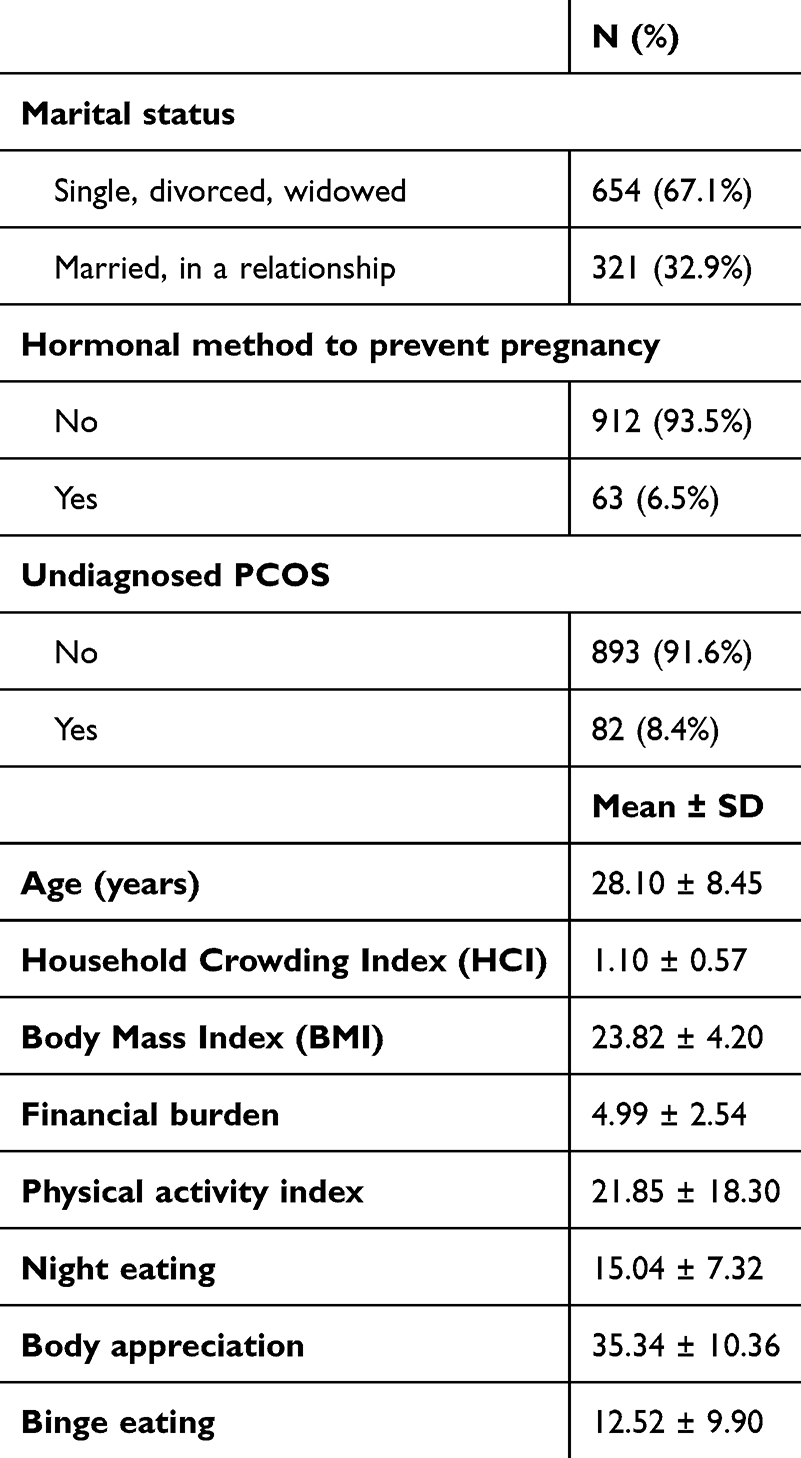 |
Table 1 Sociodemographic and Other Characteristics of Participants (N=975) |
Bivariate Analysis
Being single, divorced, widowed vs married was significantly associated with higher binge eating and night eating, whereas having possible undiagnosed PCOS was significantly associated with higher binge and night eating (Table 2). Furthermore, higher body appreciation and physical activity were significantly associated with lower binge eating scores. Conversely, greater financial burden, BMI and HCI were significantly associated with higher binge eating scores. In addition, greater body appreciation and higher physical activity were significantly associated with lower night eating scores, whereas higher BMI and HCI were significantly associated with higher night eating scores (Table 3).
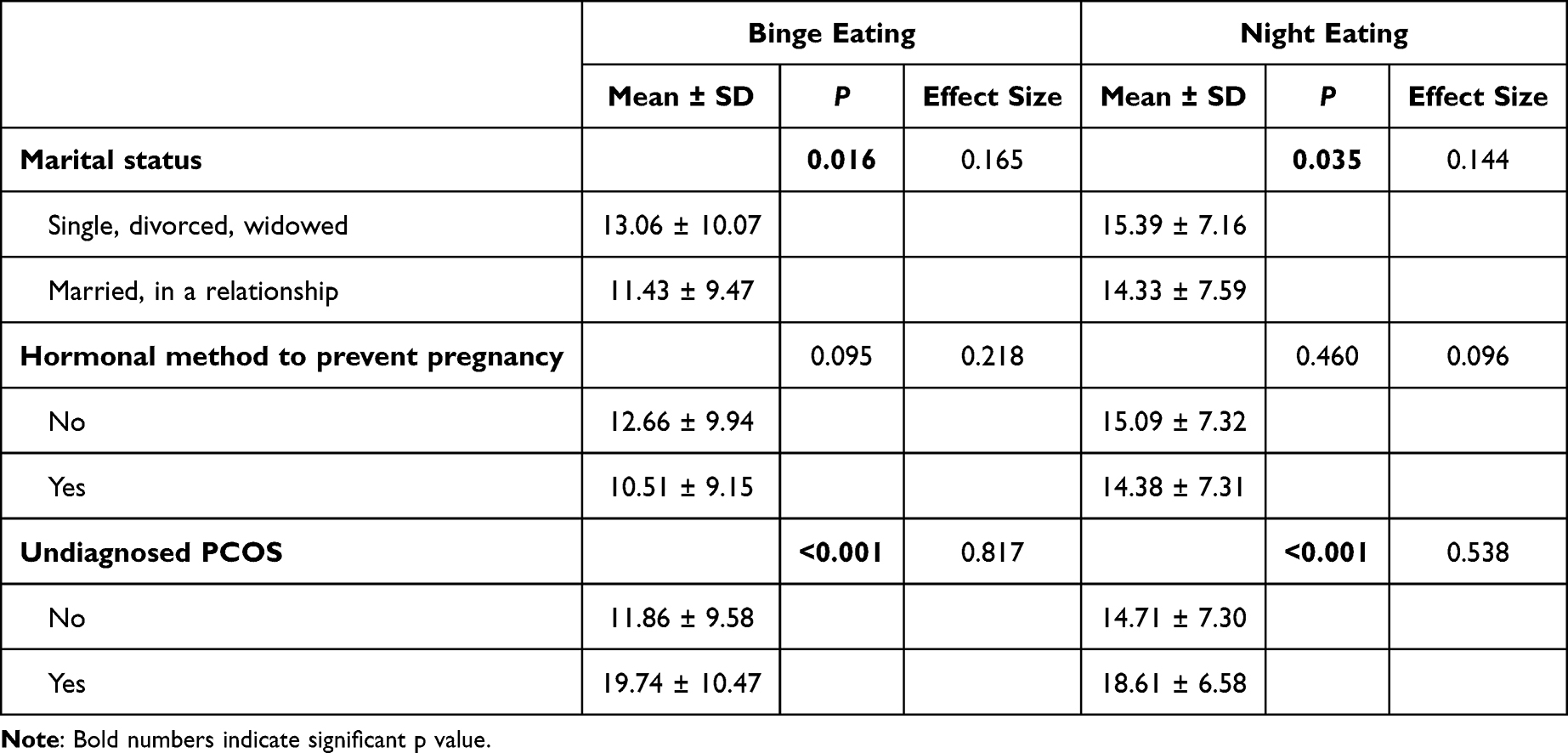 |
Table 2 Bivariate Analysis of Factors Associated with Binge Eating and Night Eating Scores |
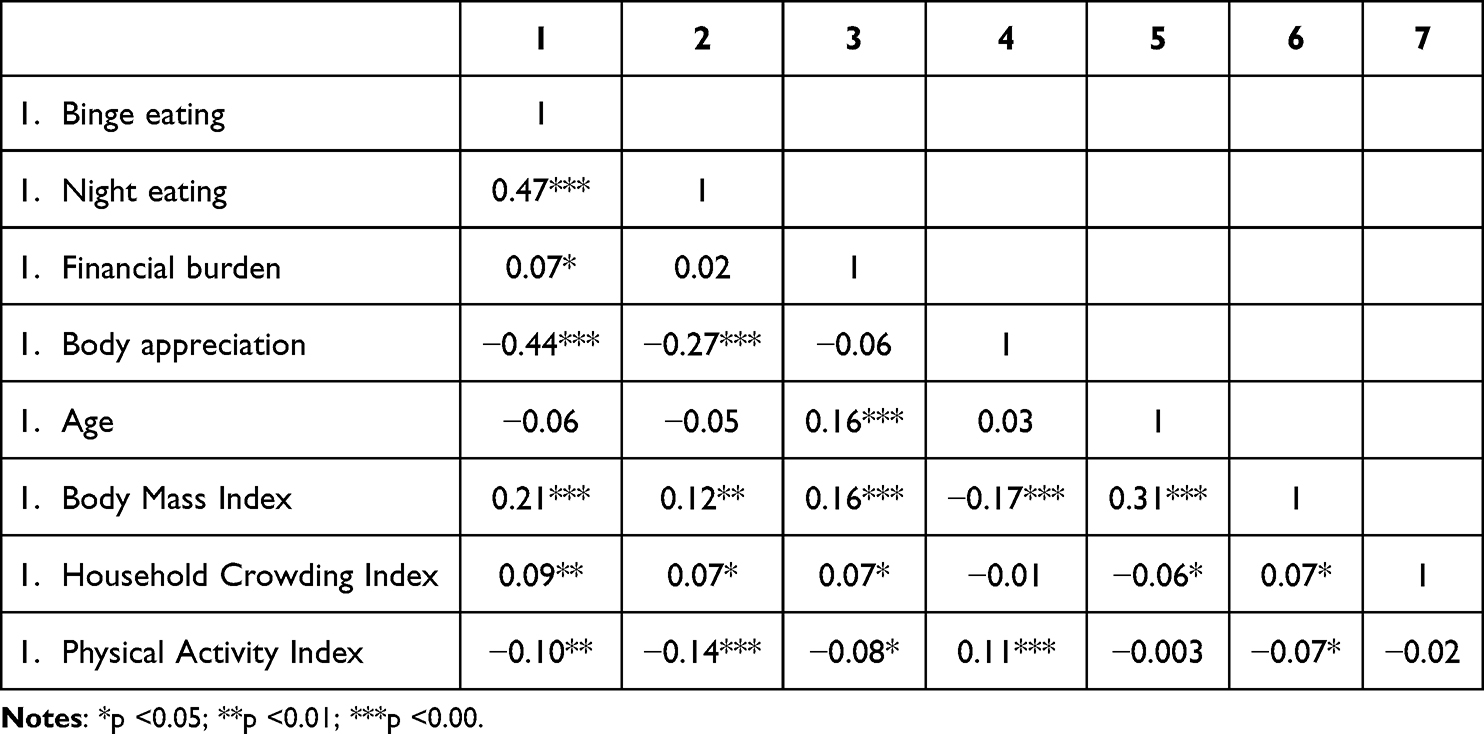 |
Table 3 Pearson Correlation Matrix |
Analysis of Mediation
The mediation analysis taking the binge eating score as the dependent variable was adjusted over the following covariates: age, body mass index, physical activity, marital status, financial burden, hormonal method to prevent pregnancy and household crowding index. Body appreciation partially mediated the relationship between undiagnosed PCOS and binge eating (indirect effect: Beta = 1.45; Boot SE = 0.34; Boot CI 0.82; 2.19). Having undiagnosed PCOS was significantly associated with lower levels of body appreciation, which in turn was associated with higher binge eating. Undiagnosed PCOS was significantly and directly associated with greater binge eating (Figure 1). The overall mediation model explained 22.5% of the variance in binge eating symptoms (R2 = 0.225), with an effect size of 0.290 (medium-to-large).
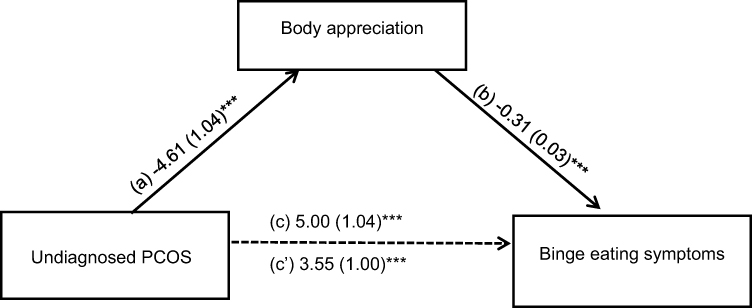 |
Figure 1 Mediating effect of body appreciation between undiagnosed PCOS and binge eating symptoms. (a) Relation between undiagnosed PCOS and body appreciation (R2= 0.292); (b) Relation between body appreciation and binge eating (R2= 0.302); (c) Total effect of undiagnosed PCOS on binge eating (R2= 0.225); (c’) Direct effect of undiagnosed PCOS on binge eating. The numbers represent regression coefficients and their standard errors. ***p < 0.001. |
The mediation analysis taking the night eating score as the dependent variable was adjusted over the following covariates: marital status, age, body mass index, physical activity, marital status and household crowding index. Body appreciation partially mediated the relationship between undiagnosed PCOS and night eating (indirect effect: Beta = 0.56; Boot SE = 0.17; Boot CI 0.27; 0.92). Having undiagnosed PCOS was significantly associated with lower body appreciation, which in turn was significantly associated with higher night eating. Finally, undiagnosed PCOS was significantly and directly associated with higher night eating (Figure 2). The overall mediation model explained 17.6% of the variance in night eating symptoms (R2 = 0.176), with an effect size of 0.214 (medium).
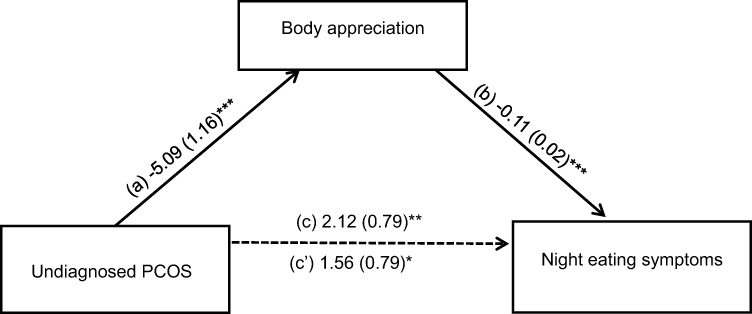 |
Figure 2 Mediating effect of body appreciation between undiagnosed PCOS and night eating symptoms. (a) Relation between undiagnosed PCOS and body appreciation (R2= 0.124); (b) Relation between body appreciation and night eating (R2= 0.197); (c) Total effect of undiagnosed PCOS on night eating (R2= 0.176); (c’) Direct effect of undiagnosed PCOS on night eating. The numbers represent regression coefficients and their standard errors. *p < 0.05; **p < 0.01; ***p < 0.001. |
Discussion
This study aimed to examine the association between undiagnosed PCOS and certain eating disordered patterns, that are binge eating and night eating, while taking into consideration body appreciation as a mediator among Lebanese women. In the mediation analysis, body appreciation partially mediated the association between undiagnosed PCOS and binge eating/night eating. This mediation indicates that negative body self-perception explains a substantial, but not absolute, part of the relationship between undiagnosed PCOS and these two different eating patterns.
This study found that undiagnosed PCOS was significantly and directly associated with higher levels of binge and night eating. Although research on PCOS and night eating is sparser than for binge eating, recent studies emphasize on sleep-related comorbidities and disordered eating patterns including night eating in PCOS samples, supporting our interpretation.33,34 Moreover, our findings align with systematic reviews documenting higher incidence and severity of binge eating particularly in women with PCOS compared to controls.12,35 In addition, psychological comorbidities such as depression and anxiety36 and higher BMI value are well-documented correlates in the literature of eating disorders in PCOS samples, both taking the role on one hand of contributors and on the other hand of consequences of metabolic stress related to PCOS and disordered eating habits.35
As for the indirect effects, our findings showed that women with undiagnosed PCOS demonstrated significantly lower levels of body appreciation. This association highlights the complex interplay between PCOS and negative body perception. In agreement with the literature, we found that PCOS-related symptoms such as hirsutism, acne, menstrual irregularities, weight fluctuations and obesity are in conflict with accepted societal impressions of femininity, and these elements contribute to emotional distress and reduce positive body acceptance and self-worth.12 Similar observations have been reported in Middle Eastern samples, where women with PCOS displayed distinctly lower body satisfaction compared to women without PCOS.15,16 This psychosocial distress may occur even before formal diagnosis of PCOS, as undiagnosed women often deal with unexplained symptoms that disrupt their control over their body.14 Furthermore, PCOS is known to be associated with anxiety, depression and perceived stigma, all of which influence body image negatively.37 Supporting the concept that reduced body appreciation promotes psychopathology, our results suggested that undiagnosed PCOS influences negatively the constructive mindset of self-image, leaving women more vulnerable to emotional distress and maladaptive behaviors.13
In our study, lower body appreciation was associated with higher binge and night eating scores. These results mirror findings from previous literature indicating that positive body image promotes healthier eating patterns and protects against emotional or compensatory eating.38,39 Another study also showed that reduced positive body acceptance may lead to disordered food consumptions to cope.40 Therefore, it is not unexpected that women, especially in the context of PCOS where physical symptoms may heighten body dissatisfaction resulting from body-related shame, independent of their BMI, may feel vulnerability and psychological pressure to lose weight, and this promotes the development of an eating disorder.12 Concerning the association between body appreciation and binge eating specifically, our findings are consistent with a systematic review showing elevated rates of binge and emotional eating in PCOS and highlighting body image dissatisfaction as a significant psychological correlate.33,36 In addition, night eating is a complex disorder involving circadian, metabolic, and psychological features. Its association with lower body appreciation implies that negative body self-image takes part in night eating habits through emotional pathways such as comfort eating or behavioral disengagement from daytime restrictions.33 Along with that, the observed eating-related behaviors and body image disturbances in PCOS may be linked to underlying pathways, mainly metabolic and endocrine dysregulation.41,42 Previous studies showed that insulin resistance is considered a hallmark of PCOS, implicated in uncontrolled appetite and craving patterns which may predispose women, even if undiagnosed, to binge eating and night-time hyperphagia.34,43 These findings are reinforced by research indicating that insulin resistance has been associated with increased ovarian volume and polycystic ovary morphology severity in PCOS patients, suggesting that these metabolic abnormalities may contribute to psychological distress, maladaptive eating habits and long-term metabolic diseases.41,42
Clinical Implications
Undiagnosed PCOS in our study showed associations with unfavorable eating patterns and self-image attitude. Our results highlight multiple clinical and public health implications. Firstly, screening routinely for eating disorders and for body image disturbances should be integrated into PCOS assessment and diagnosis, even when PCOS is not yet formally diagnosed. In addition, clinical treatment for women with PCOS should combine metabolic and lifestyle interventions with psychological and sociocultural support that promote body appreciation training. Current guidelines for PCOS accentuate the critical role of weight control and dietary modifications. These latter factors are also central to eating and self-image disorders, hence shedding light on these associations is in favor of the personalization of treatment tailored to the specific needs of Lebanese women. These outcomes should serve as a tool for gynecologists, endocrinologists, dermatologists, psychiatrists, psychologists and dieticians to suspect and early recognize an undiagnosed PCOS associated with eating disorders and body image dissatisfaction. Understanding the overlap between these conditions is critical and would help in early detection and intervention of a multidisciplinary individualized management of their disorders. Future studies should utilize longitudinal designs to clarify the causal pathways linking undiagnosed PCOS to disordered eating while taking into consideration the effect of body appreciation. Research should also examine factors such as BMI, age, and sociocultural body ideals to better understand variability across populations. Integrating hormonal markers of PCOS, for example androgens, insulin, LH, FSH, with validated measures of positive body image may define how body appreciation mediates psychological and metabolic risk. Also, interventions focusing on positive body image and self-compassion could evaluate their potential to reduce disordered eating behaviors among individuals with undiagnosed PCOS. In other words, future longitudinal studies including metabolic markers could clarify the causal mechanisms linking PCOS, disordered eating and psychological stress. By prospectively measuring metabolic parameters, such as fasting insulin, glucose level, androgen profiles and adipokines, alongside validated assessments of eating behaviors and body image over time, researchers could determine the temporal sequence of these associations. This approach would allow evaluation of whether metabolic dysregulation precedes maladaptive eating and body dissatisfaction or comes out as a consequence of psychological disturbances and altered eating habits.
Limitations
The first limitation in our study is that the cross-sectional design prevents establishing causality, thus future research implementing a longitudinal approach is recommended to explore these associations more profoundly. Second, a bias might be present related to BMI due to possible self-reported weight and height. Third, data collection via Google Forms may have introduced selection bias, however this was attenuated by including participants from multiple governorates. Additionally, this study can be limited by confounding bias, as only some of conventional confounding variables were taken into consideration. Finally, the use of a translated but not yet validated version of the PCOS Questionnaire represents another limitation. Subsequent studies should aim to validate this tool within Arabic-speaking populations to improve reliability and generalizability across various cultural backgrounds.
Conclusion
In this cross-sectional study, undiagnosed PCOS was directly associated with higher binge and night eating among Lebanese women. Body appreciation partially mediated these associations. Finally, undiagnosed PCOS was significantly associated with more binge eating and night eating. These findings suggest that body appreciation is a promising psychological goal to improve adaptive eating and reduce disordered eating features in women with undiagnosed PCOS. The latter represents a population which is at elevated risk for metabolic, reproductive and mental health complications. Recognizing early undiagnosed PCOS associated with eating disorders and body image dissatisfaction and targeting body appreciation may reduce internal stigma and barriers to encourage earlier healthcare consultation and promote participation in prevention and multidisciplinary individualized management strategies of PCOS and its drawbacks. Our study design prevents proving causality between all these factors, hence future research applying a longitudinal method would explore these associations more thoroughly.
Data Sharing Statement
All data generated or analyzed during this study are not publicly available due to restrictions from the ethics committee but are available upon a reasonable request from the corresponding author.
Ethics Approval and Consent to Participate
Ethics approval for this study was obtained from the ethics committee of the School of Pharmacy at the Lebanese International University (2025ERC-027-LIUSOP). Written informed consent was obtained from all subjects; the online submission of the soft copy was considered equivalent to receiving a written informed consent. All methods were performed in accordance with the relevant guidelines and regulations and the study complies with the Declaration of Helsinki.
Acknowledgments
Patrick Zaarour, Feten Fekih-Romdhane and Souheil Hallit are co-last authors for this study. The authors would like to thank all participants.
Author Contributions
All authors made a significant contribution to the work reported, whether that is in the conception, study design, execution, acquisition of data, analysis and interpretation, or in all these areas; took part in drafting, revising or critically reviewing the article; gave final approval of the version to be published; have agreed on the journal to which the article has been submitted; and agree to be accountable for all aspects of the work.
Funding
There is no funding to report.
Disclosure
The authors report no conflicts of interest in this work.
References
1. Singh S, Pal N, Shubham S, et al. Polycystic ovary syndrome: etiology, current management, and future therapeutics. J Clin Med. 2023;12(4):1454. doi:10.3390/jcm12041454
2. Asdaq SMB, Jomah S, Hasan R, et al. Impact of polycystic ovary syndrome on eating behavior, depression and health related quality of life: a cross-sectional study in Riyadh. Saudi J Biol Sci. 2020;27(12):3342–11. doi:10.1016/j.sjbs.2020.08.039
3. Salari N, Nankali A, Ghanbari A, et al. Global prevalence of polycystic ovary syndrome in women worldwide: a comprehensive systematic review and meta-analysis. Arch Gynecol Obstet. 2024;310(3):1303–1314. doi:10.1007/s00404-024-07607-x
4. Lizneva D, Suturina L, Walker W, Brakta S, Gavrilova-Jordan L, Azziz R. Criteria, prevalence, and phenotypes of polycystic ovary syndrome. Fertil Steril. 2016;106(1):6–15. doi:10.1016/j.fertnstert.2016.05.003
5. World Health Organization. Polycystic ovary syndrome. 2025. Available from: https://www.who.int/news-room/fact-sheets/detail/polycystic-ovary-syndrome.
6. Cooney LG, Dokras A. Depression and anxiety in polycystic ovary syndrome: etiology and treatment. Curr Psychiatry Rep. 2017;19(11):83. doi:10.1007/s11920-017-0834-2
7. Yüksel S, Gencer FK, Alptekin FB, Saglam NGU. Disordered eating in young women with polycystic ovary syndrome. Reprod Sci. 2024;31(5):1303–1310. doi:10.1007/s43032-023-01435-1
8. Hornberger LL, Lane MA, Hornberger LL. Identification and management of eating disorders in children and adolescents. Pediatrics. 2021;147(1):e2020040279. doi:10.1542/peds.2020-040279
9. Hilbert A. Binge-eating disorder. Psychiatr Clin North Am. 2019;42(1):33–43. doi:10.1016/j.psc.2018.10.011
10. Salman EJ, Kabir R. Night eating syndrome. In: StatPearls. Treasure Island (FL): StatPearls Publishing; 2025. Available from http://www.ncbi.nlm.nih.gov/books/NBK585047/.
11. Lee I, Cooney LG, Saini S, et al. Increased risk of disordered eating in polycystic ovary syndrome. Fertil Steril. 2017;107(3):796–802. doi:10.1016/j.fertnstert.2016.12.014
12. Lalonde-Bester S, Malik M, Masoumi R, et al. Prevalence and etiology of eating disorders in polycystic ovary syndrome: a scoping review. Adv Nutr. 2024;15(4):100193. doi:10.1016/j.advnut.2024.100193
13. Linardon J, McClure Z, Tylka TL, Fuller-Tyszkiewicz M. Body appreciation and its psychological correlates: a systematic review and meta-analysis. Body Image. 2022;42:287–296. doi:10.1016/j.bodyim.2022.07.003
14. Geller S, Levy S, Avitsur R. Body image, illness perception, and psychological distress in women coping with polycystic ovary syndrome (PCOS). Health Psychol Open. 2025;12:20551029251327441. doi:10.1177/20551029251327441
15. Alkheyr Z, Murad M, Das P, et al. Self-esteem and body image satisfaction in women with PCOS in the Middle East: cross-sectional social media study. PLoS One. 2024;19(4):e0301707. doi:10.1371/journal.pone.0301707
16. Davitadze M, Malhotra K, Khalil H, et al. Body image concerns in women with polycystic ovary syndrome: a systematic review and meta-analysis. Eur J Endocrinol. 2023;189(2):R1–R9. doi:10.1093/ejendo/lvad110
17. Tylka TL, Wood-Barcalow NL. What is and what is not positive body image? Conceptual foundations and construct definition. Body Image. 2015;14:118–129. doi:10.1016/j.bodyim.2015.04.001
18. Srour I, Salhab S, Skaiki H, Sakr S, Sheet I. Assessment of prevalence, knowledge of polycystic ovary syndrome and health-related practices among female nurses in Lebanon. Open Public Health J. 2024;17(1). doi: 10.2174/0118749445299594240430054249.
19. Zeeni N, Safieddine H, Doumit R. Eating disorders in Lebanon: directions for public health action. Community Ment Health J. 2017;53(1):117–125. doi:10.1007/s10597-015-9917-x
20. Hamdanieh M, Ftouni L, Al Jardali B, et al. Assessment of sexual and reproductive health knowledge and awareness among single unmarried women living in Lebanon: a cross-sectional study. Reprod Health. 2021;18(1):24. doi:10.1186/s12978-021-01079-x
21. Yahia N, El-Ghazale H, Achkar A, Rizk S. Dieting practices and body image perception among Lebanese university students. Asia Pac J Clin Nutr. 2011;20(1):21–28.
22. Melki IS, Beydoun HA, Khogali M, Tamim H, Yunis KA. Household crowding index: a correlate of socioeconomic status and inter-pregnancy spacing in an urban setting. J Epidemiol Community Health. 2004;58(6):476–480. doi:10.1136/jech.2003.012690
23. Prawitz A, Garman ET, Sorhaindo B, O’Neill B, Kim J, Drentea P. Incharge financial distress/financial well-being scale: development, administration, and score interpretation. 2006. Available from: https://papers.ssrn.com/abstract=2239338.
24. El Zouki C, Chahine A, Hallit R, et al. Arabic validation of the incharge financial distress/financial well-being scale and the new single-item financial stress scale. Front Public Health. 2025;13:1570404. doi:10.3389/fpubh.2025.1570404
25. Assaf M, Hallit R, Fawaz M, et al. Arabic translation and psychometric testing of the physical activity index (PAI). Lifeestyle Med. 2026, 7, doi:10.1002/lim2.70052.
26. Pedersen SD, Brar S, Faris P, Corenblum B. Polycystic ovary syndrome: validated questionnaire for use in diagnosis. Can Fam Physician. 2007;53(6):1042–1047,1041.
27. Zeidan RK, Haddad C, Hallit R, et al. Validation of the arabic version of the binge eating scale and correlates of binge eating disorder among a sample of the Lebanese population. J Eat Disord. 2019;7(1):40. doi:10.1186/s40337-019-0270-2
28. Mina A, Hallit S, Rogoza R, Obeid S, Soufia M Binge eating behavior in a sample of Lebanese adolescents: correlates and binge eating scale validation. J Eat Disord. 2021;9(1):134. doi:10.1186/s40337-021-00493-7.
29. Allison KC, Lundgren JD, O’Reardon JP, et al. The night eating questionnaire (NEQ): psychometric properties of a measure of severity of the night eating syndrome. Eat Behav. 2008;9(1):62–72. doi:10.1016/j.eatbeh.2007.03.007
30. Avalos L, Tylka TL, Wood-Barcalow N. The body appreciation scale: development and psychometric evaluation. Body Image. 2005;2(3):285–297. doi:10.1016/j.bodyim.2005.06.002
31. Fekih-Romdhane F, Azzi V, Malaeb D, Sarray El Dine A, Obeid S, Hallit S. Psychometric properties of an arabic translation of the body appreciation scale (BAS-2) and its short forms (BAS-2SF) in a community sample of Lebanese adults. J Eat Disord. 2023;11(1):160. doi:10.1186/s40337-023-00885-x
32. Swami V, Tran US, Stieger S, et al. Body appreciation around the world: measurement invariance of the body appreciation scale-2 (BAS-2) across 65 nations, 40 languages, gender identities, and age. Body Image. 2023;46:449–466. doi:10.1016/j.bodyim.2023.07.010
33. Burnatowska E, Wikarek A, Oboza P, et al. Emotional eating and binge eating disorders and night eating syndrome in polycystic ovary syndrome-A vicious circle of disease: a systematic review. Nutrients. 2023;15(2):295. doi:10.3390/nu15020295
34. Thannickal A, Brutocao C, Alsawas M, et al. Eating, sleeping and sexual function disorders in women with polycystic ovary syndrome (PCOS): a systematic review and meta-analysis. Clin Endocrinol. 2020;92(4):338–349. doi:10.1111/cen.14153
35. Cooney LG, Gyorfi K, Sanneh A, et al. Increased prevalence of binge eating disorder and bulimia nervosa in women with polycystic ovary syndrome: a systematic review and meta-analysis. J Clin Endocrinol Metab. 2024;109(12):3293–3305. doi:10.1210/clinem/dgae462
36. Yin X, Ji Y, Chan CLW, Chan CHY. The mental health of women with polycystic ovary syndrome: a systematic review and meta-analysis. Arch Womens Ment Health. 2021;24(1):11–27. doi:10.1007/s00737-020-01043-x
37. Hofmann K, Decrinis C, Bitterlich N, Tropschuh K, Stute P, Bachmann A. Body image and mental health in women with polycystic ovary syndrome–a cross-sectional study. Arch Gynecol Obstet. 2025;312(1):177–190. doi:10.1007/s00404-024-07913-4
38. Linardon J. Reciprocal associations between intuitive eating and positive body image components: a multi-wave, cross-lagged study. Appetite. 2022;178:106184. doi:10.1016/j.appet.2022.106184
39. Batchelor R, O’Leary B, Egan SJ, Thøgersen-Ntoumani C. Self-compassion, body appreciation, and eating disorder symptoms among young adults with weight loss goals: a diary study. Eat Weight Disord. 2025;30(1):31. doi:10.1007/s40519-025-01735-2
40. Eck KM, Quick V, Byrd-Bredbenner C. Body dissatisfaction, eating styles, weight-related behaviors, and health among young women in the United States. Nutrients. 2022;14(18):3876. doi:10.3390/nu14183876
41. Huang R, Yue J, Sun Y, et al. Increased serum chemerin concentrations in patients with polycystic ovary syndrome: relationship between insulin resistance and ovarian volume. Clin Chim Acta. 2015;450:366–369. doi:10.1016/j.cca.2015.09.015
42. Gencer G, Serin AN, Gencer K. Analysis of the effect of hashimoto’s thyroiditis and insulin resistance on ovarian volume in patients with polycystic ovary syndrome. BMC Womens Health. 2023;23(1):86. doi:10.1186/s12905-023-02200-x
43. Stefanaki K, Karagiannakis DS, Peppa M, et al. Food cravings and obesity in women with polycystic ovary syndrome: pathophysiological and therapeutic considerations. Nutrients. 2024;16(7):1049. doi:10.3390/nu16071049
 © 2026 The Author(s). This work is published and licensed by Dove Medical Press Limited. The
full terms of this license are available at https://www.dovepress.com/terms
and incorporate the Creative Commons Attribution
- Non Commercial (unported, 4.0) License.
By accessing the work you hereby accept the Terms. Non-commercial uses of the work are permitted
without any further permission from Dove Medical Press Limited, provided the work is properly
attributed. For permission for commercial use of this work, please see paragraphs 4.2 and 5 of our Terms.
© 2026 The Author(s). This work is published and licensed by Dove Medical Press Limited. The
full terms of this license are available at https://www.dovepress.com/terms
and incorporate the Creative Commons Attribution
- Non Commercial (unported, 4.0) License.
By accessing the work you hereby accept the Terms. Non-commercial uses of the work are permitted
without any further permission from Dove Medical Press Limited, provided the work is properly
attributed. For permission for commercial use of this work, please see paragraphs 4.2 and 5 of our Terms.