
Back to Journals » Medical Devices: Evidence and Research » Volume 18
The Balance Tracking System (BTrackS) for Postural Control Assessment/Training – a Decade of Research
Authors Goble DJ  , Baweja HS, Haworth JL
Received 13 August 2025
Accepted for publication 12 November 2025
Published 22 November 2025 Volume 2025:18 Pages 579—593
DOI https://doi.org/10.2147/MDER.S560337
Checked for plagiarism Yes
Review by Single anonymous peer review
Peer reviewer comments 2
Editor who approved publication: Dr Scott Fraser
Daniel J Goble,1 Harsimran S Baweja,2 Joshua L Haworth1
1Department of Human Movement Science, Oakland University, Rochester, MI, USA; 2College of Education, Auburn University, Auburn, AL, USA
Correspondence: Daniel J Goble, Department of Human Movement Science, Oakland University, 433 Meadow Brook Road, Rochester, MI, 48309, USA, Email [email protected]
Abstract: The Balance Tracking System (BTrackS) is a medical device developed over a decade ago as a low-cost and portable solution to expensive and cumbersome force plate balance measurement instruments. Consisting of the BTrackS Balance Plate and Assess Balance software, this technology is now employed worldwide by thousands of practitioners. An evidence base of more than 80 research studies had been published using BTrackS technology. This includes the positive establishment of device/protocol validity and reliability, normative data, as well as translational work comparing balance amongst a variety of sample populations. In addition, BTrackS has been successfully used for both evaluating the efficacy of balance interventions, manipulations, and devices, including several BTrackS bio-feedback-based training protocols themselves. The present narrative review compiles and summarizes this research in single source as a repository for BTrackS practitioners, and as a guide for informing future research efforts.
Keywords: postural stability, force plate, center of pressure, intervention, evaluation, rehabilitation technology
Introduction
The Balance Tracking System (BTrackS) is a medical device consisting of a force plate and user-friendly software that facilitates objective assessment and training of postural control. Over the past decade, BTrackS has provided thousands of healthcare practitioners with a low-cost alternative to traditional, expensive force plate systems1 that outperforms the accuracy of inexpensive “toys” like the Nintendo Wii Balance Board.2 Indeed, BTrackS is a registered medical device with the United States Food and Drug Association that meets the compliance standards set by the International Organization for Standardization.
Since the first BTrackS research was published in 2016, substantial evidence has been accumulated supporting its growing use worldwide. This is demonstrated in Figure 1, where the number of published BTrackS research papers has seen a clear increase year over year.1,3–84. Such research has spanned many topics, including the establishment of device validity, protocol reliability and direct applications of BTrackS with clinical and non-clinical populations. The aim of the present narrative literature review is to compile and summarize this work up to, and including, the year 2024. This was accomplished by conducting a comprehensive, non-systematic search of relevant databases and sources using a set of predefined keywords and inclusion criteria to identify, interpret and synthesize existing research. This important effort serves as a repository of BTrackS findings to guide future research investigations.
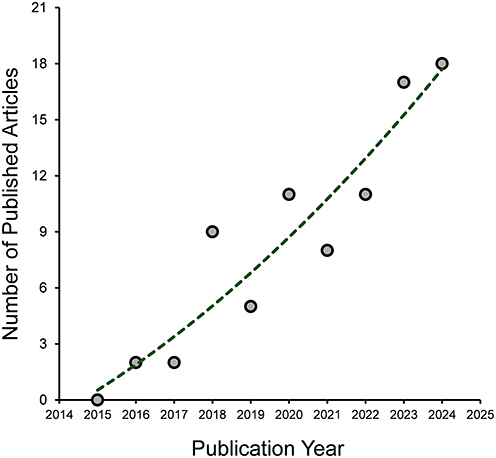 |
Figure 1 Depiction of the rapidly increasing number of research publications involving the Balance Tracking System (BTrackS) in the decade from 2015 until 2024. Dashed line represents exponential trend of the data. |
BTrackS Validity and Accuracy
Depicted in the forefront of Figure 2 is the force plate component of BTrackS, known as the BTrackS Balance Plate. This device has a 40 x 60 cm rectangular platform surface with enclosed strain gauge sensors on the underside of each corner. These four sensors interface with the ground below the plate via spin-adjustable foot/leg complexes and transduce vertical ground reaction forces into voltage signals in conjunction with a bridge-type circuit board. Sensor information is relayed via a Universal Serial Bus cord to a Windows computing device running the BTrackS software, shown in background of Figure 2.
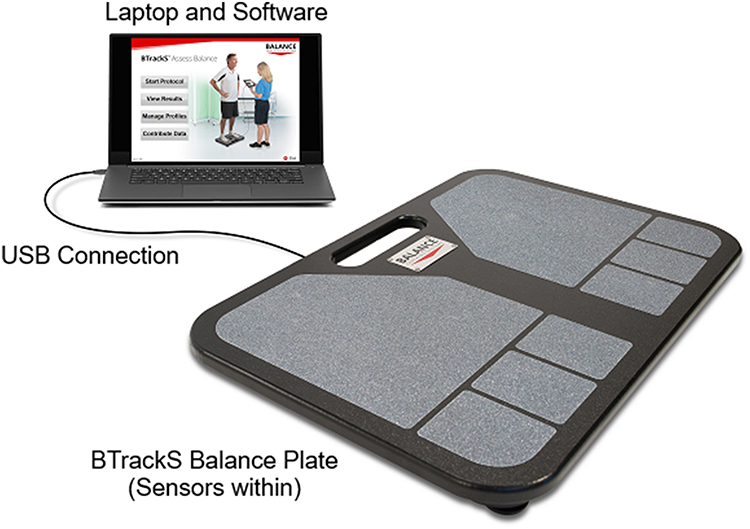 |
Figure 2 The Balance Tracking System (BTrackS) Balance Plate and software running on a laptop computer. |
The main function of the BTrackS software is to calculate, display and analyze a key balance parameter known as Center of Pressure (CoP). CoP is the two-dimensional, weighted average of forces generated by a person while standing on the BTrackS Balance Plate, calculated as follows:


When viewed from above the BTrackS Balance Plate, CoPX and CoPY are the medial-lateral and anterior-posterior coordinates of CoP location respectively. TL, TR, BL and BR are the force values for the Top Left, Top Right, Bottom Left and Bottom Right corners.
CoP is a valuable and widely utilized balance parameter, given its close relationship to a person’s center of mass location during static and quasi-static standing.84 Gross changes in CoP over time offer a biomechanical marker of postural instability and/or related disruptions in body sway.85,86 To this extent, increased CoP displacement during balance activities has been found to be consistent with poorer postural control and increased body sway, as well as a higher likelihood of losing balance (ie falling).87
Validation of CoP measurements made by the BTrackS Balance Plate in comparison to traditional force plate devices has been undertaken on several occasions. An initial study using a human-like inverted pendulum to generate controlled sway found that two BTrackS Balance Plates and an expensive, laboratory grade force plate had near perfect agreement for CoP.1 This included both a very high measurement accuracy (<1% error) and excellent precision (<0.2 mm residuals). These findings held for both the medial-lateral (CoPX) and anterior-posterior (CoPY) directions, as well as when comparing a new versus moderately used BTrackS Balance Plate.
Extending the inverted pendulum results, two additional investigations of concurrent CoP measured from BTrackS Balance Plate and traditional force plate devices were made involving human participants. In one study, 30 different CoP metrics were quantified from static standing trials.14 For all metrics, excellent correlations (r > 0.93) were found between devices, regardless of whether the person being tested stood on a compliant foam cushion or not. These findings were affirmed in another study where participants stood still with feet together under eyes open and eyes closed conditions.13 In this case, all four analyzed CoP metrics had excellent correlations (r > 0.80) between the BTrackS Balance Plate and a traditional force plate device.
Beyond comparisons with traditional force plates, CoP for the BTrackS Balance Plate has also been validated using a “point of application” approach.9 Specifically, a computer numerical control device fitted with a hex-nose plunger precisely applied ~155 N of force to 21 different points on the surface of five different BTrackS Balance Plates. Study intraclass correlation (ICC) results showed near perfect agreement (ICC > 0.99), with a very high accuracy (<1% error) and precision (<0.1 residuals), between the actual application point and the sensed CoP location by each BTrackS Balance Plate. Additionally, inter-device reliability among devices was found to be essentially perfect (ICC > 0.99).
BTrackS Protocols, Reliability and Normative Data
The primary software application for performing balance protocols with the BTrackS Balance Plate is called BTrackS Assess Balance. In Figure 3, a list of the BTrackS Assess Balance protocols currently available (version 8.5.x) is displayed on the right-hand side, which includes seven testing and seven training options. With respect to testing, most of the available protocols are designed to evaluate aspects of static balance, where the person being tested is instructed to be as “still as possible” during the test conditions. Alternatively, there is one protocol (ie Limits of Stability) that aims to evaluate dynamic balance by having individuals “lean as far as possible in all directions” while keeping their feet flat on the plate.
 |
Figure 3 Overview of testing and training protocols included on the protocol screen within the most current Balance Tracking System (BTrackS) software alongside published reliability results based on intra-class correlations (ICC) for the Balance and Fall Risk test, modified Clinical Test of Sensory Integration and Balance (mCTSIB) and Limits of Stability (LOS) test. Categories for ICCs results were based on the following ranges: 0.00–0.39 = Poor, 0.40–0.59 = Fair, 0.60–0.74 = Good and 0.75–1.00 = Excellent. |
All seven BTrackS Assess Balance training protocols use biofeedback regarding CoP location on the BTrackS Balance Plate to enhance an individual’s ability to make controlled changes in body posture. An example of a typical training setup is shown in Figure 4, where the person being trained stands on the BTrackS Balance Plate while looking at a BTrackS Assess Balance software interface on a computer screen in front of them. The interface has an image of the BTrackS Balance Plate surface with the real-time location of CoP superimposed on top of it as a yellow dot. The goal of each training protocol is to make changes in body posture that shift the yellow dot location into targets that appear on the BTrackS Balance Plate image. Each protocol provides targets in different manner that achieves a specific training goal, such as requiring unidirectional (ie Left/Right, Front/Back), bidirectional (ie Diagonal) or multidirectional (ie Random, Tracking) control. Two of the training protocols (ie Cognitive Motor: Go No-Go and Stroop) were developed to provide secondary cognitive challenges that allow concurrent training of executive brain processes such as inhibitory control.
 |
Figure 4 Exemplar of the setup for Balance Tracking System (BTrackS) training protocols being performed. Model participant using body sway to control movement of a yellow dot on the screen in front of them to “hit” targets on the plate surface below them. Time on task and real-time results are provided on the screen during training. |
The most widely utilized BTrackS test is the Balance and Fall Risk protocol. This static balance assessment consists of four, 20 s eyes closed standing trials with feet shoulder width apart on the BTrackS Balance Plate, and hands on the hips. The first trial is for familiarization, and the remaining three trials are used to calculate an average CoP Path Length, representing the typical amount of body sway exhibited during standing. This test result is then compared to a large set of published normative data,7,8,17 overviewed in Table 1, to determine an age and sex matched percentile ranking, as well as a Fall Risk categorization (ie Low, Moderate, High). The test-retest reliability of the Balance and Fall Risk protocol in terms of ICC is provided on the left side of Figure 3. Results show the protocol has excellent reliability across testing days and throughout the lifespan.10,12
 |
Table 1 Normative Data for Center of Pressure (CoP) Path Length (in cm), Based on Sex and Age, on the Balance Tracking System (BTrackS) Balance and Fall Risk Test, as Adapted from Previous Published Work.7,8 |
The second most implemented BTrackS protocol is the modified Clinical Test of Sensory Integration and Balance (mCTSIB). Like the Balance and Fall Risk test, the mCTSIB involves four, 20 s trial with feet shoulder width apart and hands of the hips. However, the mCTSIB differs in that each trial utilizes a different combination of eyes open/closed and firm versus foam surface conditions to manipulate three important balance senses (ie proprioception, vision, vestibular). The “Standard” condition has eyes open while standing on the firm surface of the BTrackS Balance Plate, such that all three balance senses are uncompromised. The “Proprioception” condition has closed eyes to remove vision while standing on the firm surface of the plate to increase proprioceptive reliance, based on studies showing a preference for proprioception versus vestibular information when both are available.88 The “Vision” condition of the BTrackS mCTSIB has eyes open with the individual being tested standing on a foam cushion to reduce the reliability of proprioception. It has been shown that vision is the dominant uncompromised sense utilized in this situation over vestibular feedback.89 The “Vestibular” condition has vision removed (ie eyes closed) and proprioception rendered less reliable via a foam cushion. This manipulation shifts reliance to the uncompromised vestibular system.
For each BTrackS mCTSIB condition (ie Standard, Proprioception, Vision Vestibular), CoP Path Length is first determined as an indicator of total body sway. This value is then translated into a sex-matched percentile ranking, based on published normative data from over 1000 healthy adults aged, 20−5916,22 which is overviewed in Table 2. Bottom quartile performance in any condition is “flagged” by the software as a potential deficit in the utilization of that sensory system for the maintenance of balance. As shown in Figure 3, the ICC-based test-retest reliability of the BTrackS mCTSIB protocol ranges from “Fair” to “Excellent” depending on the time between tests (ie Days, Weeks, Months).33
 |
Table 2 Normative Data for Center of Pressure (CoP) Path Length (in cm), Based on Sex and Age, on the Balance Tracking System (BTrackS) Modified Clinical Test of Sensory Integration and Balance (mCTSIB) Test, as Adapted from Previously Published Work.16,22 |
A third testing protocol that has received particular attention is the BTrackS Limits of Stability Test. This protocol is an evaluation of dynamic balance whereby the participant uses biofeedback of CoP over an image of the BTrackS Balance Plate surface on a computer screen to demonstrate the largest area within which center of mass can be displaced. This “unconstrained” approach differs from the one implemented by traditional force plates, which impose limits on performance by using targets at theoretical maxima. Normative data for the Limits of Stability test were recently published for young adults,81 as over-viewed in Table 3. Test-retest reliability ICC data have also been determined for the BTrackS Limits of Stability protocol23 showing fair to excellent reliability when compared across short (ie Minutes) and longer (ie Days) duration time frames in healthy adults (Figure 3).
 |
Table 3 Normative Data for Center of Pressure (CoP) Area (in cm2), Based on Sex and Height, on the Balance Tracking System (BTrackS) Limits of Stability Test, as Adapted from Previously Published Work.81 |
Determining Group Balance Differences with BTrackS
One of the most prevalent research uses of BTrackS in the scientific literature is as a means of evaluating and comparing the balance abilities of different participant populations or sub-groups. An overview of these efforts is provided in Table 4, consisting of 15 studies across a variety of non-clinical and clinical conditions. Non-clinically, BTrackS has been used to differentiate the balance ability of persons who have or have not been exposed to cannabis use,38,49 residents of different geographical locations,46 self-selected slow versus fast walkers,50 individuals of differing activity levels53 and athletes participating in different sport types.84 On the clinical side, populations investigated include Chikungunya chronic arthralgia,6 multiple sclerosis,11 diabetes,44,79 neurological soft signs,51 pre-clinical Alzheimer’s disease,68 Huntington’s disease,70 migraines73 and amblyopia.75
 |
Table 4 Overview of Studies Utilizing the Balance Tracking System (BTrackS) to Determine Group Balance Differences |
When comparing different groups of individuals, a variety of standard and custom BTrackS protocols have been utilized. Of the standard assessments, the BTrackS Balance and Fall Risk test has most commonly been implemented,6,46,53,84 with only two studies measuring balance performance via the mCTSIB protocol.44,79 Interestingly, the majority of researchers opted for a custom protocol to determine group differences.11,38,49–51,68,70,73,75 However, none of these nine studies followed the exact same testing parameters. Rather, many variations of testing conditions were utilized including manipulations of stance type, trial duration, sensory feedback condition and cognitive load.
Despite the protocol variety, the principal metric underlying most determinations of group differences with BTrackS was CoP Path Length, calculated as the total displacement of CoP over time. This included both direct comparisons of CoP Path Length across groups and calculated derivatives of CoP Path Length, such as performance ratios and change across conditions (eg Dual Task Cost).68,70 A smaller number of studies have determined group balance differences using alternative measures of CoP that quantified aspects of postural control such as sway velocity50 and entropy-derived irregularity.49
Balance Intervention Efficacy Evaluated with BTrackS
Beyond providing one-time “snapshots” of balance status in various sample populations, a key feature of BTrackS is its ability to track long-term changes in balance performance. This is particularly important for the purpose of establishing the efficacy of various balance interventions. In Table 5, a dozen studies are detailed that have sought to quantify balance using BTrackS before and after implementing training or rehabilitation regimens. While early work in this area focused on improving balance in healthy young and older adults,5,24,26,27,29,42,52,54,60 more recent intervention studies looked at clinical populations such as individuals with acquired brain injuries72 and chiropractic patients.82,83
 |
Table 5 Overview of Studies Utilizing the Balance Tracking System (BTrackS) to Evaluate Intervention Efficacy |
A wide variety of intervention types have been explored for their efficacy using BTrackS protocols. In young adult athletes, for example, participation in a season of colligate athletics has been evaluated using the Balance and Fall Risk test.24 This research revealed that body sway was reduced from pre- to post-season assessment. Similarly, non-athlete young adults have also shown improvement in balance following intervention.54 Specifically, 12-weeks of training were performed on the BTrackS Target Tracking protocol, which required participants to spend three minutes a day, five days a week, controlling CoP location within a target using biofeedback on a computer screen. Participants in this study improved dynamic balance by an average of 30%, as measured by the BTrackS Limits of Stability test.
In older adults, two types of balance intervention have been evaluated for effectiveness using BTrackS assessment protocols. First, a novel Physio-fEedback Exercise pRo-gram (PEER) has been studied that relies on the BTrackS Balance and Fall Risk test to provide a physiological measure of balance status.26,27,29 This objective result, combined with subjective measures of balance confidence, is used to guide cognitive reframing efforts while older adults participate in combined group- and home-based exercises by a trained PEER coach. Based on pre- to post-intervention BTrackS Balance and Fall Risk values, research indicates that PEER is effective in maintaining or even reducing in body sway.
The second intervention validated by BTrackS for improving older adult balance has been resistance exercise training. In one study, 90 days of an accredited program called Geri-Fit was completed with a certified trainer in a community setting.5 While all participants on average showed an improvement in balance on the BTrackS Balance and Fall Risk protocol, older adults with the worst balance prior to intervention showed the greatest improvement. In two additional resistance training studies using custom BTrackS protocols for validation, one did not show balance benefits following resistance training targeting only the hip and ankle.52 In contrast, a second study reported positive balance results with resistance exercise,42 but only when a simultaneous Pilates breathing technique was employed.
For clinical populations, several intervention types have been tested for efficacy using the BTrackS mCTSIB protocol, or a custom variation of it. Specifically, in a study involving individuals with acquired brain injury, the impact of both yoga and group exercise training on balance was assessed with BTrackS.72 Results showed that both interventions were capable of reducing CoP path length and, therefore, improving balance. Positive results were also reported in two chiropractic case studies looking at individuals with spinal deformity82 and chronic hip/back pain,83 respectively. Large BTrackS mCTSIB improvements in CoP Path Length for various sensory conditions were found in both cases following a course of chiropractic biophysics, gait/balance exercise and/or power plate exposure.
Research on Novel BTrackS Uses and Methods
Beyond cross-sectional balance comparisons and intervention studies, BTrackS has been leveraged for a wide array of alternative research purposes. For example, in some of the earliest BTrackS research, an attempt was made to look at the diagnostic efficacy of the Balance and Fall Risk test as a tool for concussion evaluation.3 Balance testing is part of the recommended guidelines for determining whether an athlete can return to sport following a head injury, and typically involves an assessment known as the Balance Error Scoring System or BESS.90 Although the BESS is widely utilized in the field of athletic training, it suffers from a lack of sensitivity to concussion due to poor test-retest reliability. In comparison, a series of BTrackS studies were conducted to show that it was both valid and reliable for concussion assessment and had twice the diagnostic sensitivity of the BESS.3,4,10
Another use of BTrackS has been for determining a broader picture of older adult fall risk by combining self-reported falls efficacy measures with an objective assessment of balance using the BTrackS Balance and Fall Risk test.20,28,35,64,65 This approach allows the identification individuals with a misalignment between their perceived and physiological balance status. Importantly, individuals who underestimate their balance and, therefore, have an unwarranted fear of falling, tend to display unnecessary reductions in physical activity, social isolation, and decreased independence. Alternatively, individuals who overestimate their balance are also potentially problematic, as they were shown to be more vulnerable to catastrophic balance events due to a lack of fall risk awareness.
Virtual reality (VR) technology has evolved from simple environments to highly immersive, interactive simulations. Postural control is critical to ensuring users wearing VR headsets can move, interact, and engage with virtual environments without losing balance or experiencing physical strain. VR is also increasingly being used in rehabilitation programs to help patients improve their postural control and balance through virtual exercises and interactive environments. In a pair of studies, healthy young adults wore a VR headset and were presented a “moving wall” simulation, such that the walls in a virtual room appeared to be moving towards or away from the participant.40,55 Continuous CoP capture from a BTrackS custom protocol showed decreased sway magnitude with in-creased velocity in both studies when the walls were “closing in” and/or moving unpredictably.
Another use of BTrackS for basic research has been determining the presence or absence of relationships between balance and/or balance associated factors. While one study failed to show a correlation between BTrackS CoP data on a custom, eyes open balance protocol and medical imaging results,36 research on end-stage renal disease found a correlation between a custom BTrackS mCTSIB protocol and diabetes. A number of other studies with large samples of healthy adults across the lifespan have shown complementary findings. This includes a significant relationship between age and the results from both BTrackS mCTSIB and Balance and Fall Risk protocols.7,8,17,22,81
One primary characteristic that has shown very consistent relationships to BTrackS results is birth assigned sex. Specifically, the influence of sex on balance performance has been looked at across both static (ie Balance and Fall Risk, mCTSIB, Single Leg Stance) and dynamic (ie Limits of Stability) protocols.7,8,17,22 Interestingly, results show that females have better static balance based on CoP magnitude metrics, while males outperform females in dynamic balance tests measured by the total area of CoP excursion. Future work is necessary to determine the genesis of these sex effects, although sensory feedback and strength differences have been hypothesized. It should be noted that estrogen fluctuations during the menstrual cycle do not appear to have any influence on BTrackS results.61
While postural control is largely mediated at the subconscious level, higher level cognition also appears to play a role in BTrackS balance performance.76 One means of demonstrating this phenomenon has been using dual task paradigms, which combine performance of a cognitive task during the sensorimotor task of maintaining one’s balance. For example, a recent study found that inclusion of a paced, serial addition cognitive task during standing was able to differentiate between disease state in individuals who were healthy, had prodromal Huntington’s disease or who fully expressed Huntington’s disease. Specifically, sway was demonstrably greater in prodromal compared to healthy adults, and in Huntington’s compared to prodromal adults, only in the dual task versus single task test condition.
The remaining research studies that have utilized CoP information from BTrackS are quite diverse and largely exploratory. These studies range from efforts to determine the existence of placebo/nocebo effects on balance,56 exploration of advanced CoP metrics,25 to testing balance-related factors/methods/devices. In the latter case, examples include establishing the ideal gaze direction during squat lifting,43 assessment of back carrying techniques on balance,63 evaluation of postural sway during compression sock use,41 transcutaneous electrical nerve stimulation,48 post-activation potentiation,31 chiropractic extremity manipulation,34 lysergic acid diethylamide ingestion,21 cerebellar transcranial direct current stimulation,30 exercise-induced fatigue4 and prism lens corrections.57 Many of these studies have shown positive results supporting translation in real-world settings.
Conclusion
A little more than a decade into its existence, it is clear that a critical mass of research now exists supporting use of BTrackS as a valid, reliable and versatile tool for balance assessment and training. This evidence base can both help inform future assessment and intervention work with BTrackS, as well as support its growing use amongst clinicians and researchers worldwide. Future work will no doubt continue to develop existing theoretical models of balance and create new application-based approaches to improving balance in both healthy and vulnerable populations. This includes the careful deployment of new custom protocols, further expansion of existing normative databases and clinically driven application of balance training regimens.
Disclosure
DJG is eligible for royalties from a patent (US Patent 10,660,558,2020) related to the technology that is the focus of this review. In addition, DJG has an equity stake in Balance Tracking Systems, Inc, the company that sells the BTrackS Balance Plate and Assess Balance Software. This financial conflict of interest is mitigated by a management plan put in place by his academic institution to ensure the integrity of research. The authors report no other conflicts of interest in this work.
References
1. O’Connor SM, Baweja HS, Goble DJ. Validating the BTrackS balance plate as a low cost alternative for the measurement of sway-induced center of pressure. J Biomech. 2016;49:4142–4145. doi:10.1016/j.jbiomech.2016.10.020
2. Goble DJ, Cone BL, Fling BW. Using the Wii Fit as a tool for balance assessment and neurorehabilitation: the first half decade of “Wii-search”. J Neuroeng Rehabil. 2014;11:12. doi:10.1186/1743-0003-11-12
3. Goble DJ, Manyak KA, Abdenour TE, Rauh MJ, Baweja HS. An initial evaluation of the BTrackS balance plate and sports balance software for concussion diagnosis. Int J Sports Phys Ther. 2016;11:149–155.
4. Benedict SE, Hinshaw JW, Byron-Fields R, Baweja HS, Goble DJ. Effects of fatigue on the BTrackS balance test for concussion management. Int J Athl Ther Train. 2017;22:23–28. doi:10.1123/ijatt.2016-0086
5. Goble DJ, Hearn MC, Baweja HS. Combination of BTrackS and Geri-Fit as a targeted approach for assessing and reducing the postural sway of older adults with high fall risk. Clin Interv Aging. 2017;12:351–357. doi:10.2147/CIA.S131047
6. Forechi L, Silveira-Nunes G, Barbosa MA, et al. Pain, balance, grip strength and gait parameters of older adults with and without post-chikungunya chronic arthralgia. Trop Med Int Health. 2018;23:1394–1400. doi:10.1111/tmi.13154
7. Goble DJ, Baweja HS. Normative data for the BTrackS balance test of postural sway: results from 16,357 community-dwelling individuals who were 5 to 100 years old. Phys Ther. 2018;98:779–785. doi:10.1093/ptj/pzy062
8. Goble DJ, Baweja HS. Postural sway normative data across the adult lifespan: results from 6280 individuals on the balance tracking system balance test. Geriatr Gerontol Int. 2018;18:1225–1229. doi:10.1111/ggi.13452
9. Goble DJ, Khan E, Baweja HS, O’Connor SM. A point of application study to determine the accuracy, precision and reliability of a low-cost balance plate for center of pressure measurement. J Biomech. 2018;71:277–280. doi:10.1016/j.jbiomech.2018.01.040
10. Hearn MC, Levy SS, Baweja HS, Goble DJ. BTrackS balance test for concussion management is resistant to practice effects. Clin J Sport Med. 2018;28:177–179. doi:10.1097/JSM.0000000000000435
11. Kindred JH, Honce JM, Kwak JJ, Rudroff T. Multiple sclerosis, cannabis use, and clinical disability: a preliminary 18f-fluorodeoxyglucose positron emission tomography study. Cannabis Cannabinoid Res. 2018;3:213–218. doi:10.1089/can.2018.0019
12. Levy SS, Thralls KJ, Kviatkovsky SA. Validity and reliability of a portable balance tracking system, BTrackS, in older adults. J Geriatr Phys Ther. 2018;41:102–107. doi:10.1519/JPT.0000000000000111
13. Murray NG, Grotewold C, Szekely B, Powell D, Muckasy B. Validity and reliability of the Balance Tracking System during feet together stance. Measurement. 2018;126:96–101. doi:10.1016/j.measurement.2018.05.039
14. Richmond SB, Dames KD, Goble DJ, Fling BW. Leveling the playing field: evaluation of a portable instrument for quantifying balance performance. J Biomech. 2018;75:102–107. doi:10.1016/j.jbiomech.2018.05.008
15. Goble DJ, Baweja N, Baweja HS. BTrackS: a low-cost, portable force plate for objectively measuring balance deficits and fall risk. Home Healthc Now. 2019;37(6):355–356. doi:10.1097/NHH.0000000000000823
16. Goble DJ, Brar H, Brown EC, Marks CR, Baweja HS. normative data for the balance tracking system modified clinical test of sensory integration and Balance protocol. Med Devices. 2019;12:183–191. doi:10.2147/MDER.S206530
17. Goble DJ, Rauh MJ, Baweja HS. Normative data for the BTrackS balance test concussion-management tool: results from 10 045 athletes aged 8 to 21 years. J Athl Train. 2019;54:439–444. doi:10.4085/1062-6050-178-18
18. O’Neil J, Egan M, Marshall S, et al. Remotely supervised home-based intensive exercise intervention to improve balance, functional mobility, and physical activity in survivors of moderate or severe traumatic brain injury: protocol for a mixed methods study. JMIR Res Protoc. 2019;
19. Rhea CK, Schleich KN, Washington L, et al. Neuromotor and neurocognitive performance in female American football players. Athl Train Sport Health Care. 2019;11:224–233. doi:10.3928/19425864-20181101-01
20. Cappleman AS, Thiamwong L. Fear of falling assessment and interventions in community-dwelling older adults: a mixed methods case-series. Clin Gerontol. 2020;43:471–482. doi:10.1080/07317115.2019.1701169
21. Family N, Maillet EL, Williams LTJ, et al. Safety, tolerability, pharmacokinetics, and pharmacodynamics of low dose lysergic acid diethylamide (LSD) in healthy older volunteers. Psychopharmacology. 2020;237:841–853. doi:10.1007/s00213-019-05417-7
22. Goble DJ, Brown EC, Marks CR, Baweja HS. Expanded normative data for the balance tracking system modified clinical test of sensory integration and balance protocol. Med Devices Sensors. 2020;3:1–9. doi:10.1002/mds3.10084
23. Haworth J, Goble D, Pile M, Kendall B. BTrackS limits of stability test is a reliable assessment of volitional dynamic postural control. Gait Posture. 2020;80:298–301. doi:10.1016/j.gaitpost.2020.06.024
24. Morrison R, Petit KM, Kuenze C, Moran RN, Covassin T. Preseason to postseason changes on the BTrackS force plate in a sample of college athletes. J Sport Rehabil. 2020;29:134–136. doi:10.1123/jsr.2018-0304
25. Richmond SB, Dames KD, Shad JM, Sutherlin MA, Fling BW. Setting boundaries: utilization of time to boundary for objective evaluation of the balance error scoring system. J Sports Sci. 2020;38:21–28. doi:10.1080/02640414.2019.1677378
26. Thiamwong L, Decker VB. Overcoming an irrational fear of falling: a case study. Clin Case Studies. 2020;19:1–15. doi:10.1177/1534650120942322
27. Thiamwong L, Huang HJ, Ng BP, et al. Shifting maladaptive fall risk appraisal in older adults through an in-home physio-feedback and exercise program (PEER): a pilot study. Clin Gerontol. 2020;43:378–390. doi:10.1080/07317115.2019.1692120
28. Thiamwong L, Sole ML, Ng BP, et al. Assessing fall risk appraisal through combined physiological and perceived fall risk measures using innovative technology. J Gerontol Nurs. 2020;46:41–47. doi:10.3928/00989134-20200302-01
29. Thiamwong L, Stout JR, Sole ML, et al. Physio-Feedback and Exercise Program (PEER) improves balance, muscle strength, and fall risk in older adults. Res Gerontol Nurs. 2020;13:289–296. doi:10.3928/19404921-20200324-01
30. Workman CD, Fietsam AC, Uc EY, Rudroff T. cerebellar transcranial direct current stimulation in people with parkinson’s disease: a pilot study. Brain Sci. 2020;10:96. doi:10.3390/brainsci10020096
31. Fernandes IG, Souza MA, Oliveira ML, et al. Acute effects of single- versus double-leg postactivation potentiation on postural balance of older women: an age-matched controlled study. J Aging Phys Act. 2021;29:200–206. doi:10.1123/japa.2019-0314
32. Gleeson M, Boright L, Haworth J. The effects of chemotherapy-induced polyneuropathy on postural balance. Cureus. 2021;
33. Goble DJ, Conner NO, Nolff MR, Haworth JL, Kendall BJ. Test-retest reliability of the balance tracking system modified clinical test of sensory integration and balance protocol across multiple time durations. Med Devices. 2021;14:355–361. doi:10.2147/MDER.S339187
34. Malaya CA, Haworth J, Pohlman KA, Smith DL. Immediate impact of extremity manipulation on dual task performance: a randomized, crossover clinical trial. Chiropr Man Therap. 2021;29:6. doi:10.1186/s12998-021-00366-5
35. McCarty K, Kennedy W, Logan S, Levy S. Examining the relationship between falls self-efficacy and postural sway in com-munity-dwelling older adults. J Kinesiol Wellness. 2021;10:21–30. doi:10.56980/jkw.v10i.85
36. Sanders AM, Richard G, Kolskår K, et al. Linking objective measures of physical activity and capability with brain structure in healthy community dwelling older adults. Neuroimage Clin. 2021;31:102767. doi:10.1016/j.nicl.2021.102767
37. Thiamwong L, Stout JR, Park JH, Yan X. Technology-based fall risk assessments for older adults in low-income settings: protocol for a cross-sectional study. JMIR Res Protoc. 2021;10:e27381. doi:10.2196/27381
38. Workman CD, Fietsam AC, Sosnoff J, Rudroff T. Increased likelihood of falling in older cannabis users vs. non-users. Brain Sci. 2021;11:134. doi:10.3390/brainsci11020134
39. Carzoli JP, Koger K, Amato A, Enoka RM. Tempo-controlled resistance training of the Hip abductors and ankle dorsiflexors with light loads does not improve postural sway in older adults. Exp Brain Res. 2022;240:3049–3060. doi:10.1007/s00221-022-06477-6
40. Chander H, Freeman HR, Hill CM, et al. The walls are closing in: postural responses to a virtual reality claustrophobic simulation. Clin Translat Neurosci. 2022;6(2):15. doi:10.3390/ctn6020015
41. Derby H, Conner NO, Talukder A, et al. Impact of sub-clinical and clinical compression socks on postural stability tasks among individuals with ankle instability. Healthcare. 2022;10:1271. doi:10.3390/healthcare10071271
42. Fernandes IG, Macedo MCGS, Souza MA, et al. Does 8-week resistance training with slow movement cadenced by pilates breathing affect muscle strength and balance of older adults? an age-matched controlled trial. Int J Environ Res Public Health. 2022;19:10849. doi:10.3390/ijerph191710849
43. Kohn MA, Smith MC, Goble DJ. Upward gaze direction increases center of pressure displacement and decreases squat stability. Int J Sport Sci. 2022;17:197–201.
44. Lopatin T, Ko M, Brown E, Goble D, Haworth J. Balance testing for patients with type 2 diabetes. J Diabetes Sci Technol. 2022;16:1582–1583. doi:10.1177/19322968221121679
45. Smith DL, Olding K, Malaya CA, McCarty M, Haworth J, Pohlman KA. The influence of flexion distraction spinal manipulation on patients with lumbar spinal stenosis: a prospective, open-label, single-arm, pilot study. J Bodywork Move Therapies. 2022;32:60–67. doi:10.1016/j.jbmt.2022.05.012
46. Souza MA, Goble D, Arney P, et al. balance differences between North and South American older adults: a cross-sectional, age and sex matched study. Healthcare. 2022;10:499. doi:10.3390/healthcare10030499
47. Tsang T, Shidlofsky C, Mora V. The efficacy of neuro-optometric visual rehabilitation therapy in patients with visual snow syndrome. Front Neurol. 2022;13:999336. doi:10.3389/fneur.2022.999336
48. Whittier TT, Weller ZD, Fling BW. I can step clearly now, the tens is on: transcutaneous electric nerve stimulation decreases sensorimotor uncertainty during stepping movements. Sensors. 2022;22:5442. doi:10.3390/s22145442
49. Workman CD, Sosnoff JJ, Rudroff T. Sample entropy discriminates balance performance of older cannabis users from non-users. Clin Biomech. 2022;93:1055934. doi:10.1016/j.clinbiomech.2022.105593
50. Alenazy MS, Al-Jaafari R, Folkesson-Dey A, Enoka RM. Influence of transcutaneous electrical nerve stimulation on walking kinematics and standing balance of older adults who differ in walking speed. Exp Brain Res. 2023;241:1861–1872. doi:10.1007/s00221-023-06615-8
51. Bonke EM, Clauwaert A, Hillmann SM, et al. Neurological soft signs are associated with reduced medial-lateral postural control in adolescent athletes. J Neurol Sci. 2023;445:120516. doi:10.1016/j.jns.2022.120516
52. Carzoli RP, Enoka RM. Predicting balance and quantifying romberg quotient reference ranges in older adults. J Phys Ed and Sport. 2023;23:2963–2971.
53. Choudhury R, Park JH, Banarjee C, Thiamwong L, Xie R, Stout JR. Associations of mutually exclusive categories of physical activity and sedentary behavior with body composition and fall risk in older women: a cross-sectional study. Int J Environ Res Public Health. 2023;20:3595. doi:10.3390/ijerph20043595
54. Conner NO, Haworth JL, Nolff MR, Chander H, Goble DJ. Six weeks of at home BTrackS target tracking training induces sustained dynamic balance improvement in healthy young adults. Med Devices. 2023;16:81–89. doi:10.2147/MDER.S404536
55. Freeman HR, Chander H, Kodithuwakku Arachchige SNK, et al. Postural control behavior in a virtual moving room paradigm. JACC. Asia. 2023;3:539–551. doi:10.1016/j.jacasi.2023.06.001
56. Horváth Á, Szabo A, Gál V, et al. Are there placebo or nocebo effects in balancing performance? Cogn Res Princ Implic. 2023;8:25. doi:10.1186/s41235-023-00476-z
57. Hwang M, Moon B, Yu D, Cho H, Kim S. Changes in postural stability depending on prism corrections for exophoria. J Korean Opthalmic Opt Soc. 2023;28:325–331. doi:10.14479/jkoos.2023.28.4.325
58. Jesus LADSD, Pinheiro BV, Lucinda LMF, et al. Factors associated with postural balance in patients with end-stage renal disease on hemodialysis. Clin Biomech. 2023;107:106033. doi:10.1016/j.clinbiomech.2023.106033
59. Nolff MR, Conner NO, Haworth JL, Goble DJ. Lower limb asymmetry evaluation using the balance tracking system (BTrackS) single leg stance protocol. J Mot Behav. 2023;55:493–498. doi:10.1080/00222895.2022.2163222
60. Pan Y, Thiamwong L, Xie R. The effects of nurse driven mobility intervention (NDMI) on activities of daily living, mobility, fear of falling, and balance performance in hospitalized older patients: a pilot study. Geriatr Nurs. 2023;49:193–198. doi:10.1016/j.gerinurse.2022.12.006
61. Reschechtko S, Nguyen TN, Tsang M, et al. Postural sway is not affected by estrogen fluctuations during the menstrual cycle. Physiol Rep. 2023;11:e15693. doi:10.14814/phy2.15693
62. Rossler A, Wheeler J, Thiamwong L. A multidimensional approach for nurse practitioners to screen fall risk and fear of falling in community-dwelling older adults. J Nurse Pract. 2023;19:104436. doi:10.1016/j.nurpra.2022.08.019
63. Smith DL, Walsh MS. Relationship between backpack load location, sex, anthropometric and body composition factors with postural sway in healthy young adults. J Can Chiropr Assoc. 2023;67:117–126.
64. Thiamwong L, Xie R, Conner NE, Renziehausen JM, Ojo EO, Stout JR. Body composition, fear of falling and balance perfor-mance in community-dwelling older adults. Transl Med Aging. 2023;7:80–86. doi:10.1016/j.tma.2023.06.002
65. Thiamwong L, Xie R, Park JH, et al. Levels of accelerometer-based physical activity in older adults with a mismatch between physiological fall risk and fear of falling. J Gerontol Nurs. 2023;49:41–49. doi:10.3928/00989134-20230512-06
66. Wilson CM, Boright L, Louie WG, et al. Effect of Ro-botic Delivery of Physical Activity and Fall Prevention Exercise in Older Adults: a Pilot Cohort Study. Cureus. 2023;
67. Banarjee C, Choudhury R, Park JH, et al. Common physical performance tests for evaluating health in older adults: cross- sectional study. Interact J Med Res. 2024;
68. Bollinger RM, Chen SW, Krauss MJ, et al. The association between postural sway and preclinical alzheimer disease among community-dwelling older adults. J Gerontol a Biol Sci Med Sci. 2024;
69. Choudhury R, Park JH, Banarjee C, et al. Associations between monitor-independent movement summary (MIMS) and fall risk appraisal combining fear of falling and physiological fall risk in community-dwelling older adults. Front Aging. 2024;5:1284694. doi:10.3389/fragi.2024.1284694
70. Churchill E, Hughes S, Hall A, et al. A useful cognitive motor dual task paradigm in prodromal and manifest Huntington’s disease. Parkinsonism Relat Disord. 2024;128:107119. doi:10.1016/j.parkreldis.2024.107119
71. Haworth J, Lopatin T, Daniels E, et al. Verbal encouragement provokes significant increases in maximal volitional dynamic postural sway. J Mot Behav. 2024;56:322–329. doi:10.1080/00222895.2023.2297884
72. Hernandez-Sarabia JA, Schmid AA, Sharp JL, Stephens JA. Intervention-induced changes in balance and task-dependent neural activity in adults with acquired brain injury: a pilot randomized control trial. Sensors. 2024;24:4047. doi:10.3390/s24134047
73. Imaz F, Barone M, Lassaga I, et al. Analysis of the center of pressure variables in women with migraine does not reflect differences in balance: a cross-sectional study. J Body Mov Ther. 2024;40:1852–1858. doi:10.1016/j.jbmt.2024.10.047
74. Jeong G, Kang H, Kim S. Dependence of body stability on optical conditions during VR viewing.Electronics. 2024;13:1812. doi:10.3390/electronics13101812
75. Kim R, Cho H, Yu D, et al. The Impact of Amblyopia on Postural Control Abilities. J Korean Ophthalmic Opt Soc. 2024;29:73–80. doi:10.14479/jkoos.2024.29.2.73
76. Komalasari R, Mpofu E, Chen Rita Chang H, et al. Higher dynamic balance performance was associated with cognitive function among u.s. community-dwelling low-income older adults. SAGE Open Nurs. 2024;10:23779608241296629. doi:10.1177/23779608241296629
77. Koncz A, Egri D, Yildirim M, et al. Postural Responses in Trauma-Experienced Individuals. Biomedicines. 2024;12:2766. doi:10.3390/biomedicines12122766
78. Lafontant K, Blount A, Suarez JRM, et al. Comparing sensitivity, specificity, and accuracy of fall risk assessments in community-dwelling older adults. Clin Interv Aging. 2024;19:581–588. doi:10.2147/CIA.S453966
79. Lopatin T, Ko M, Brown E, Goble DJ. Normative percentile ranking best reveals sensorimotor impairments of postural sway in type 2 diabetes. Res Methods Med Health Sci. 2024;6:1–7.
80. Nguyen T, Thiamwong L, Lou Q, Xie R. Unveiling fall triggers in older adults: a machine learning graphical model analysis. Mathematics. 2024;12:1271. doi:10.3390/math12091271
81. Nolff MR, Kapur S, Kendall BJ, et al. An initial set of reference values for the balance tracking system (BTrackS) limits of stability protocol. Gait Posture. 2024;107:67–71. doi:10.1016/j.gaitpost.2023.09.008
82. Oakley PA, Gage WH, Harrison DE, Mochizuki G. Non-surgical reduction in thoracolumbar kyphosis and sagittal vertical axis corresponding with improved sensorimotor control in an older adult with spinal deformity: a Chiropractic Biophysics case report. J Phys Ther Sci. 2024;36:756–764. doi:10.1589/jpts.36.756
83. Oakley PA, Haas JW, Harrison DE. Improved postural control in a patient having adult spinal deformity and previous thora-co-lumbar scoliosis surgery: a Chiropractic Biophysics case report. AME Case Rep. 2024;8:58. doi:10.21037/acr-23-183
84. Palazzolo JM, Goble DJ, Labban JD, et al. Differences in pre-season balance among student athletes based on level of contact, age, and sex. Gait Posture. 2024;110:35–40. doi:10.1016/j.gaitpost.2024.02.016
85. Winter DA, Patla AE, Ishac M, Gage WH. Motor mechanisms of balance during quiet standing. J Electromyogr Kinesiol. 2003;13:49–56. doi:10.1016/S1050-6411(02)00085-8
86. Richmond SB, Fling BW, Lee H, Peterson DS. The assessment of center of mass and center of pressure during quiet stance: current applications and future directions. J Biomech. 2021;123:110485. doi:10.1016/j.jbiomech.2021.110485
87. Qiu H, Xiong S. Center-of-pressure based postural sway measures: reliability and ability to distinguish between age, fear of falling and fall history. Int J indust Ergo. 2015;47:37–44. doi:10.1016/j.ergon.2015.02.004
88. Lord SR, Clark RD, Webster IW. Postural stability and associated physiological factors in a population of aged persons. J Gerontol. 1991;46:M69–76.
89. Simoneau GG, Leibowitz HW, Ulbrecht JS, Tyrrell RA, Cavanagh PR. The effects of visual factors and head orientation on postural steadiness in women 55 to 70 years of age. J Gerontol. 1992;47:M151–8.
90. Munro D, Greenspan S, Nicholas J, Stuckey MI. Circus-specific extension of the 6th international consensus statement on concussion in sport. BMJ Open Sport Exerc Med. 2025;
 © 2025 The Author(s). This work is published and licensed by Dove Medical Press Limited. The
full terms of this license are available at https://www.dovepress.com/terms
and incorporate the Creative Commons Attribution
- Non Commercial (unported, 4.0) License.
By accessing the work you hereby accept the Terms. Non-commercial uses of the work are permitted
without any further permission from Dove Medical Press Limited, provided the work is properly
attributed. For permission for commercial use of this work, please see paragraphs 4.2 and 5 of our Terms.
© 2025 The Author(s). This work is published and licensed by Dove Medical Press Limited. The
full terms of this license are available at https://www.dovepress.com/terms
and incorporate the Creative Commons Attribution
- Non Commercial (unported, 4.0) License.
By accessing the work you hereby accept the Terms. Non-commercial uses of the work are permitted
without any further permission from Dove Medical Press Limited, provided the work is properly
attributed. For permission for commercial use of this work, please see paragraphs 4.2 and 5 of our Terms.
Recommended articles

Six Weeks of at Home BTrackS Target Tracking Training Induces Sustained Dynamic Balance Improvement in Healthy Young Adults
Conner NO, Haworth JL, Nolff MR, Chander H, Goble DJ
Medical Devices: Evidence and Research 2023, 16:81-89
Published Date: 8 April 2023