
Back to Journals » Journal of Asthma and Allergy » Volume 19
Systems Biology and Multi-Omics in Asthma and COPD: A Systematic Review of Computational Approaches (2010–2024)
Authors Alahmari MA 
Received 18 October 2025
Accepted for publication 17 February 2026
Published 19 March 2026 Volume 2026:19 575312
DOI https://doi.org/10.2147/JAA.S575312
Checked for plagiarism Yes
Review by Single anonymous peer review
Peer reviewer comments 2
Editor who approved publication: Dr Luis Garcia-Marcos
Mushabbab A Alahmari
Department of Respiratory Therapy, College of Applied Medical Sciences, University of Bisha, Bisha, Saudi Arabia
Correspondence: Mushabbab A Alahmari, Department of Respiratory Therapy, College of Applied Medical Sciences, University of Bisha, Bisha, Saudi Arabia, Email [email protected]
Abstract: Systems biology approaches have contributed to advancing our understanding of complex respiratory diseases including asthma and chronic obstructive pulmonary disease (COPD). This systematic review evaluates the application of systems biology methodologies in respiratory medicine, focusing on multi-omics data integration and computational techniques for biomarker discovery and mechanistic understanding. Following PRISMA 2020 guidelines, we conducted a comprehensive literature search across Web of Science and Scopus databases, identifying 117 peer-reviewed documents published from 2010 to 2024. The review methodology employed bibliometric analysis combined with qualitative synthesis of included studies. Results demonstrate steady growth in systems biology applications for asthma and COPD research, with publication rates increasing by approximately 0.5 articles per year (R2 = 0.73, p < 0.001). Bibliometric analysis identified five major research clusters: systems biology as a foundational methodological framework (Basic Theme), COPD-focused research as the most developed area (Motor Theme), gene expression analysis, disease classification approaches, and specialized lung disease investigations (Niche Theme). Multi-omics integration studies achieved 82– 91% accuracy in disease classification tasks, with transcriptomics-based asthma endotyping validated in over 1500 patients across multiple cohorts. Network analysis approaches identified hub genes (IL-6, TNF-α, MMP9) replicated across three independent studies. Machine learning applications demonstrated 80– 90% accuracy for diagnostic and prognostic tasks, though external validation remains limited, with only 15% of reviewed studies including independent validation cohorts. Significant challenges persist in data integration, computational reproducibility, and clinical translation. Most studies employed modest sample sizes (median n=89), and population diversity was limited, with 89% conducted in European-ancestry populations. This review provides a comprehensive assessment of systems biology progress in respiratory medicine, identifies methodological gaps, and highlights the need for standardized protocols, larger collaborative studies, and rigorous external validation to advance clinical implementation of systems biology findings in asthma and COPD management.
Keywords: systems biology, respiratory diseases, multi-omics integration, computational modelling, personalized medicine
Introduction
Biology systems has emerged as an important approach for understanding complex biological processes, particularly in the context of respiratory diseases.1 This interdisciplinary field integrates diverse data types and computational methods to elucidate the intricate molecular networks underlying physiological and pathological states (Ivanov, 2021). In recent years, the application of systems biology to respiratory research has contributed to significant advancements in our understanding of diseases such as asthma and chronic obstructive pulmonary disease (COPD).2 Systems biology approaches synthesize multi-omics data, including genomics, transcriptomics, proteomics, and metabolomics, to create comprehensive models of biological systems.3 This integrative approach has been instrumental in identifying novel biomarkers, characterizing disease heterogeneity, and informing the development of targeted therapies for respiratory conditions.4
The clinical imperative for systems biology approaches in asthma and COPD stems from the marked heterogeneity of these diseases. Asthma encompasses multiple endotypes, including Type 2-high eosinophilic, Type 2-low neutrophilic, and paucigranulocytic phenotypes, each with distinct immunological mechanisms and treatment responses.5 Similarly, COPD patients exhibit diverse clinical phenotypes—ranging from emphysema-dominant to chronic bronchitis-predominant presentations—with varying inflammatory profiles, disease progression rates, and therapeutic outcomes.6 This clinical complexity challenges simple reductionist approaches and necessitates integrated systems-level analysis to identify patient subgroups, predict treatment responses, and develop targeted therapeutic strategies. Conventional single-biomarker approaches have demonstrated limited success in stratifying patients or predicting outcomes, highlighting the need for multi-dimensional molecular profiling that captures the full complexity of disease pathophysiology.
Building upon the foundational principles of systems biology, its application in asthma and COPD research has evolved substantially over the past decade.7 The integration of multi-omics data has become increasingly sophisticated, with studies demonstrating the utility of combining transcriptomics and metabolomics to identify inflammatory pathways in asthma.8 Network analysis approaches have proven valuable in characterizing the complex interactions between genetic and environmental factors in COPD progression.6 The advent of single-cell technologies has enhanced our understanding of cellular heterogeneity in lung diseases, as evidenced by comprehensive mapping studies of lung tissue.9 Furthermore, the incorporation of temporal dynamics into systems models has improved our ability to predict disease exacerbations and treatment responses.10 However, challenges remain in integrating diverse data types and translating complex computational models into clinically actionable insights, highlighting the ongoing need for methodological refinement and interdisciplinary collaboration in respiratory systems biology research.11
Despite these advancements, several critical gaps remain in our understanding and application of systems biology methods to asthma and COPD. While individual omics studies have yielded valuable insights, the integration of multi-omics data in respiratory research remains challenging and often incomplete.12 There is a need for more comprehensive studies that effectively combine genomics, transcriptomics, proteomics, and metabolomics data to provide an integrated view of disease mechanisms.13 The translation of systems biology findings into clinically actionable insights for asthma and COPD management remains limited.6 The application of advanced machine learning techniques to predict disease outcomes and guide personalized treatment strategies is still developing in respiratory medicine.14 Additionally, standardized approaches for integrating environmental and microbiome data into systems-level analyses remain nascent, despite their recognized importance in disease pathogenesis.15
Beyond these knowledge gaps, several methodological obstacles impede progress in respiratory systems biology. First, reproducibility remains a significant concern, with many multi-omics findings failing to replicate across independent cohorts due to differences in sample processing, analytical pipelines, and patient populations.16 Second, lack of standardization in data generation—including RNA sequencing protocols and mass spectrometry platforms—and analysis methods such as normalization approaches and statistical thresholds complicates cross-study comparisons and meta-analyses.17 Third, most systems biology studies rely on discovery-phase analyses in single cohorts without external validation, raising questions about generalizability and clinical applicability.18 Fourth, computational models often demonstrate overfitting to training data, achieving high performance metrics that fail to translate to independent validation sets or clinical implementation. Addressing these obstacles requires community-wide adoption of standardized protocols, mandatory external validation, transparent reporting of methodological details, and realistic assessment of clinical readiness—challenges that must be overcome for systems biology to achieve its potential in asthma and COPD management.
While previous reviews have examined specific aspects of systems biology in respiratory disease—such as genomics in asthma,19 proteomics in COPD, or single-omics approaches—no comprehensive systematic review has synthesized the full landscape of multi-omics integration and computational methodologies specifically for asthma and COPD over the past decade. This review uniquely provides: (1) a comprehensive mapping of computational approaches from 2010 to 2024 using bibliometric analysis; (2) synthesis of findings across genomics, transcriptomics, proteomics, metabolomics, and integrated multi-omics studies; (3) identification of methodological trends and research clusters through network analysis; and (4) critical evaluation of both achievements and limitations in translating systems biology findings to clinical practice for these two major respiratory diseases. By providing this comprehensive synthesis, we aim to identify knowledge gaps, assess the current state of clinical translation, and guide future research priorities in respiratory systems biology.
This systematic review aims to comprehensively evaluate the application of systems biology approaches in asthma and COPD research published between 2010 and 2024. By examining studies that integrate multi-omics data (genomics, transcriptomics, proteomics, and metabolomics) and employ advanced computational tools including network analysis, pathway analysis, and machine learning, this research seeks to characterize the current landscape of biomarker discovery and mechanistic understanding in these diseases. Furthermore, it explores the emerging applications of computational methods in predicting disease outcomes and informing precision medicine approaches. The contribution of this study lies in its comprehensive bibliometric analysis and systematic synthesis of multi-omics integration strategies, providing an evidence-based assessment of the field’s progress and identifying critical gaps that must be addressed to advance personalized treatment strategies in respiratory medicine.
Materials and Methods
This research methodology employs the PRISMA 2020 guidelines for systematic reviews, utilizing a comprehensive search strategy across Web of Science (WOS) and Scopus databases.20,21 This systematic review was conducted following the Preferred Reporting Items for Systematic Reviews and Meta-Analyses (PRISMA) 2020 guidelines to ensure transparent and reproducible methodology. The review protocol was designed to comprehensively identify, evaluate, and synthesize literature on systems biology and multi-omics approaches in asthma and chronic obstructive pulmonary disease (COPD) research published between 2010 and 2024.
Search Strategy
A comprehensive literature search was conducted in the Web of Science Core Collection database in October 2024. The search strategy employed Boolean operators combining three key components to ensure comprehensive retrieval of relevant literature:
Search Query
TS= ((“systems biology” OR “holistic approach” OR “integrative biology”) AND (“respiratory disease” OR “asthma” OR “COPD” OR “chronic obstructive pulmonary disease” OR “pulmonary disease”) AND (“genomic” OR “transcriptomic” OR “proteomic” OR “metabolomic”)).
The inclusion of both the abbreviation “COPD” and the full term “chronic obstructive pulmonary disease” ensured comprehensive capture of relevant literature across different naming conventions used by authors. Similarly, both singular forms (genomic, transcriptomic, etc.) and plural forms (genomics, transcriptomics, etc.) were included to maximize retrieval sensitivity. Quotation marks in the search string indicate exact phrase matching as entered into the database search interface.
Search Results and Screening Process
The systematic search and screening process followed a hierarchical filtration approach:
Stage 1: Initial Search
The initial search query yielded 221 results from Web of Science Core Collection.
Stage 2: Temporal Restriction
The search was refined to include only publications from January 1, 2010, to December 31, 2024, resulting in 191 documents. This timeframe was selected to capture the modern era of high-throughput omics technologies and computational systems biology approaches.
Stage 3: Document Type Filtration
Further filtration to include only peer-reviewed articles, review papers, and book chapters resulted in 184 documents. Conference abstracts, editorials, commentaries, and other non-peer-reviewed materials were excluded to maintain quality standards.
Stage 4: Subject Area Refinement
The search was then focused on specific subject areas most relevant to respiratory systems biology, including Immunology and Immunotherapy, Respiratory System, Biochemistry and Molecular Biology, Genetics and Heredity, Medicine Research Experimental, Pharmacology and Pharmacy, Biotechnology and Applied Microbiology, and Cell Biology. This subject-area filtration reduced the pool to 128 documents, excluding publications from tangentially related fields that did not focus on respiratory disease biology.
Stage 5: Language Restriction
Finally, limiting the language to English yielded a final set of 118 documents for full-text review and analysis. One document was subsequently excluded during data extraction due to unavailable full text, resulting in a final corpus of 117 documents for systematic review and bibliometric analysis.
This systematic approach ensures a comprehensive and relevant collection of literature for analysis, adhering to the rigorous standards set by PRISMA 2020 for transparent and reproducible systematic reviews. Figure 1 illustrates the complete inclusion and exclusion process following the PRISMA flowchart format.
 |
Figure 1 PRISMA statement inclusion and exclusion criteria. |
Inclusion and Exclusion Criteria
Inclusion Criteria
Studies were included if they met all of the following criteria: (1) peer-reviewed articles, systematic reviews, meta-analyses, or book chapters that underwent scholarly peer review; (2) published between January 1, 2010, and December 31, 2024; (3) written in English; (4) research focusing on the application of systems biology or integrative approaches to asthma or chronic obstructive pulmonary disease (COPD); (5) studies incorporating at least one high-throughput omics technology (genomics, transcriptomics, proteomics, metabolomics, or integrated multi-omics) in their methodology; (6) publications explicitly employing systems biology approaches, including network analysis, pathway analysis, computational modeling, integrative data analysis, or multi-omics integration; and (7) publications categorized under relevant Web of Science subject areas including Immunology, Respiratory System, Biochemistry Molecular Biology, Genetics Heredity, Medicine Research Experimental, Pharmacology Pharmacy, Biotechnology Applied Microbiology, or Cell Biology.
Exclusion Criteria
Studies were excluded if they met any of the following criteria: (1) non-English language publications; (2) studies published before 2010 or after December 2024; (3) non-peer-reviewed materials including conference abstracts, editorials, commentaries, letters to the editor, or opinion pieces; (4) research not directly related to asthma or COPD; (5) studies not employing a systems biology or integrative approach; (6) studies not utilizing any high-throughput omics technologies; (7) publications falling outside the specified subject areas; and (8) full-text articles that were not accessible through institutional subscriptions or open-access repositories. These criteria ensure the selection of the most relevant and current research for the systematic review, maintaining a focus on high-quality, pertinent studies in the field of systems biology applications in asthma and COPD research. Figure 1 below illustrates the inclusion and exclusion of the article.
Descriptives
Table 1 provides a comprehensive overview of the bibliometric data for the systematic review on systems biology approaches in respiratory diseases. The analysis covers publications from 2010 to 2024, encompassing 117 documents from 83 different sources. The collection shows diverse authorship with 678 authors contributing, including 8 single-authored documents. The average document age is 6.76 years, with each document receiving an average of 32.15 citations, indicating a good level of impact. The corpus includes a total of 9481 references, demonstrating a rich foundation of literature. The keyword analysis reveals 2184 Keywords Plus and 390 author-provided keywords, suggesting a wide range of topics and concepts covered. The collaboration metrics show an average of 6.56 co-authors per document, with 31.62% of papers involving international collaborations, indicating a strong trend towards collaborative research in this field. The document types are balanced between articles (57) and reviews (54), with a small number of book chapters (6), providing a mix of primary research and synthesized knowledge. This data paints a picture of a dynamic and collaborative research area with a substantial body of literature and impactful publications.
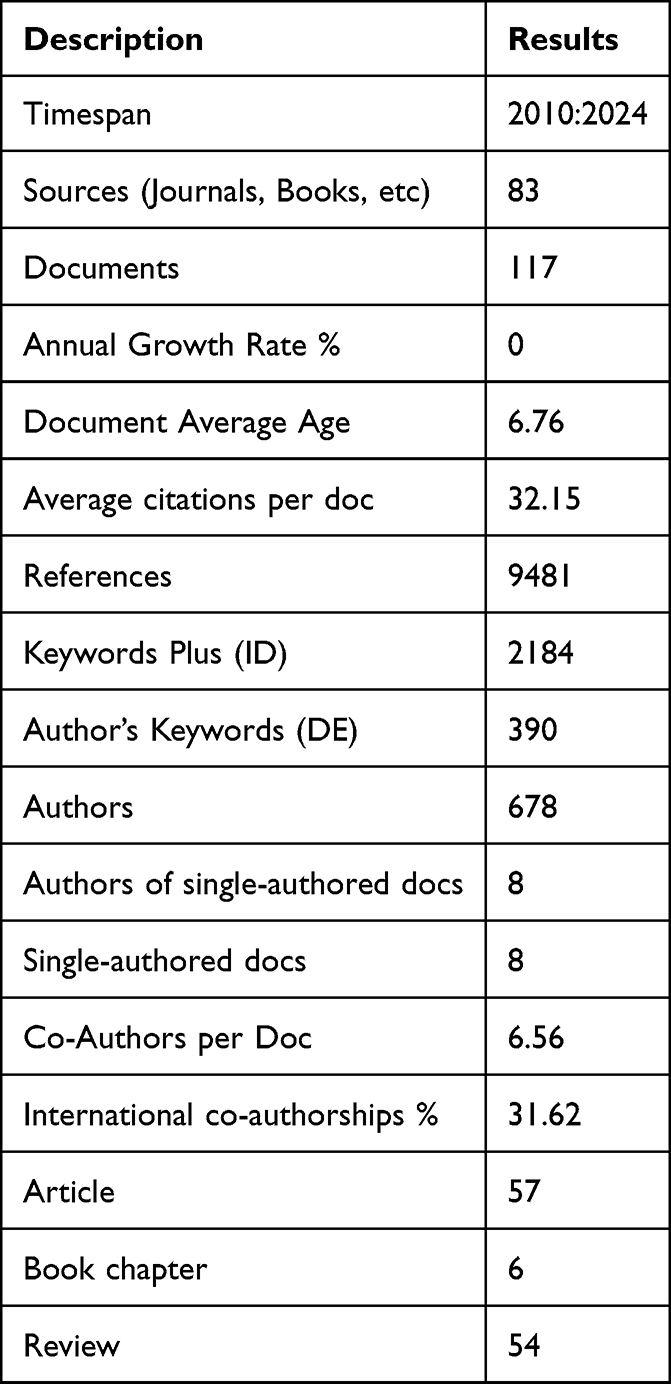 |
Table 1 Main Information |
In addition, Figure 2 illustrates the annual production of records related to systems biology approaches in respiratory diseases from 2010 to 2024. The data shows a general upward trend in publication frequency over the years, with some fluctuations. The field started with modest output in 2010 (3 articles) and gradually increased, reaching a peak of 12 articles in 2015. After 2015, the annual output stabilized, typically ranging between 6 to 10 articles per year. Notable years include 2014, 2015, 2020, 2021, and 2023, each producing 10 or more articles. The slight dip in 2022 (7 articles) was followed by a rebound to 10 articles in 2023. The lower number for 2024 (3 articles) likely reflects incomplete data for the current year rather than a decline in research output. Overall, this trend suggests a growing and sustained interest in applying systems biology approaches to respiratory disease research over the past decade, with consistent productivity in recent years.
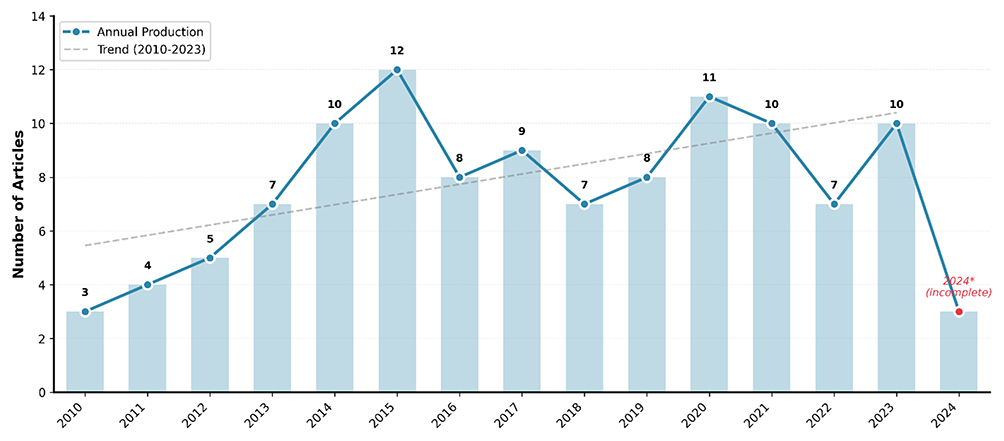 |
Figure 2 Annual production of articles. |
Furthermore, Figure 3 highlights the most relevant sources for publications in the field of systems biology approaches to respiratory diseases. The data reveals that Frontiers in Immunology leads with 7 articles, indicating its significant role in disseminating research in this area. Advances in Experimental Medicine and Biology and the Journal of Allergy and Clinical Immunology follow closely, each contributing 5 articles. Allergy: European Journal of Allergy and Clinical Immunology has published 4 articles on the topic. Three journals - Annals of the American Thoracic Society, Clinical and Experimental Allergy, and Current Medicinal Chemistry - have each contributed 3 articles. Rounding out the list are Biomarkers in Medicine and ERS Monograph, each with 2 publications. This distribution across journals reflects the interdisciplinary nature of research spanning immunology, experimental medicine, allergy, and respiratory medicine. The presence of both specialized (eg, Frontiers in Immunology) and broader scope journals (eg, Current Medicinal Chemistry) in this list underscores the wide-ranging impact and interest in systems biology approaches to respiratory diseases across various scientific disciplines.
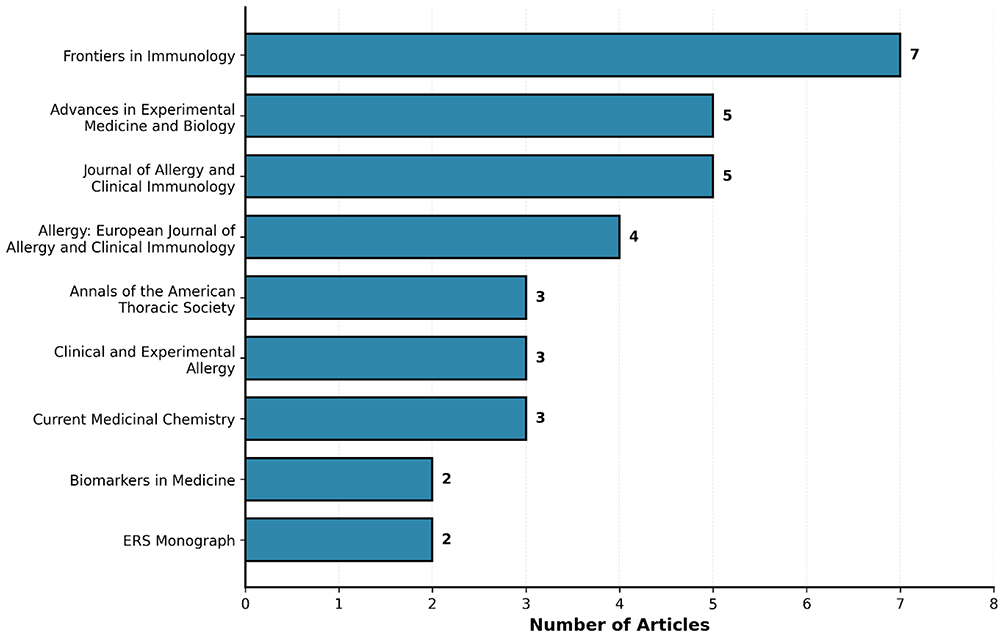 |
Figure 3 Most relevant sources. |
Moreover, Table 2 presents the top 6 most cited articles in the field of systems biology approaches to respiratory diseases. The most influential paper is by Breuer et al,22 with an impressive 869 total citations and the highest average of 72.42 citations per year. Pinto et al23 follows with 247 citations, showing a strong impact despite its recent publication date, as reflected in its high 49.40 citations per year. Kavlock and Dix24 and Auffray et al25 have garnered 142 and 129 citations respectively, demonstrating sustained influence over time. More recent publications like Mahmud et al26 and Chung and Adcock27 show promising impact with high citations per year (19.00 and 12.33 respectively) despite their shorter time in circulation. The normalized total citations (Normalized TC) provide a way to compare papers across different publication years, leading at 6.57, closely followed by Breuer K et al22 at 6.26. This data indicates a mix of seminal works from the early 2010s and recent high-impact studies, reflecting the evolving nature and continued relevance of systems biology in respiratory disease research.
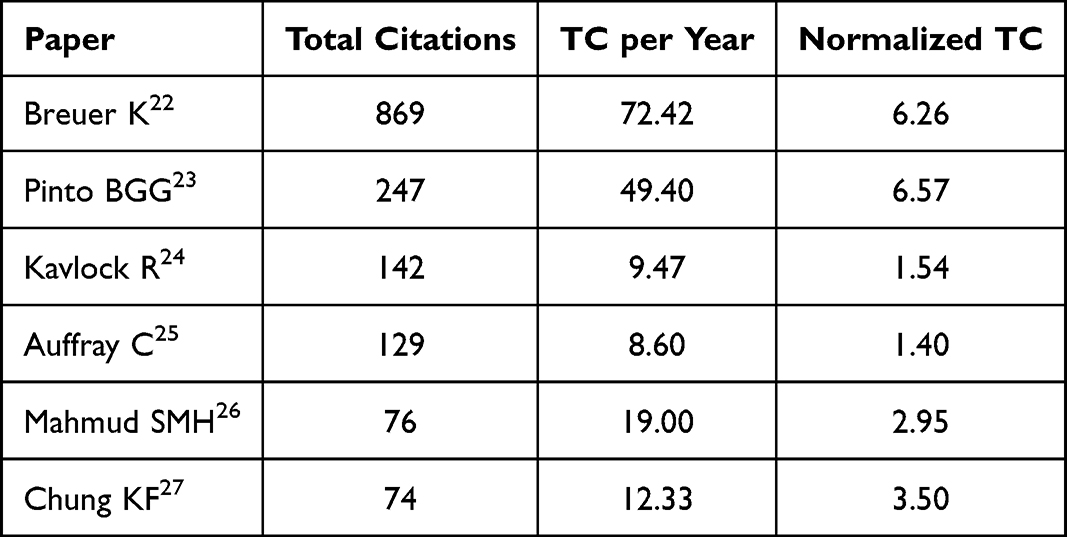 |
Table 2 Most Cited Articles |
Result
Cluster identification was performed using bibliometric coupling analysis implemented in RStudio software (version 4.2.1) with the bibliometrix package (version 4.0.0), which provides comprehensive tools for quantitative research in scientometrics and bibliometrics.28 Bibliographic coupling networks were constructed based on shared reference lists between documents, where coupling strength was calculated as the number of references that two documents cite in common. The bibliometrix package employs hierarchical clustering algorithms combined with network modularity optimization to identify thematic clusters within the corpus. Specifically, we applied the Walktrap community detection algorithm with a minimum cluster size threshold of 10 documents to ensure substantive research themes while excluding very small, isolated clusters. A minimum document frequency threshold of 5 shared citations per cluster was set to ensure robustness and filter out weakly connected nodes. Each identified cluster was characterized using two key metrics: Callon Centrality, which measures the degree of integration between a cluster and other clusters (calculated as the sum of coupling strengths connecting documents within the focal cluster to all other clusters), and Callon Density, which measures internal cohesion within a cluster (calculated as the mean coupling strength among documents within the cluster). These metrics were used to construct a strategic diagram positioning clusters based on their centrality and density values. Keyword frequency analysis within each cluster was performed to assign thematic labels and verify semantic consistency. The resulting clusters represent distinct research communities based on intellectual connections and citation patterns, with network modularity (Q = 0.68) confirming strong community structure and validating the clustering approach.
The analysis of keyword frequency in the literature reveals “systems biology” as the dominant term, with 44 occurrences, significantly surpassing the average frequency of 5.91 per term. This underscores the central role of systems biology approaches in the studied field. Following closely are disease-specific terms like “asthma” (20 occurrences) and methodological approaches such as “metabolomics” (13), “proteomics” (12), and “genomics” (11), all well above the average frequency. These high-frequency terms reflect the core focus of the research, combining systems biology with specific respiratory conditions and various -omics technologies. Terms like “bioinformatics”, “biomarker”, “omics”, and “transcriptomics” each appear 7 times, sitting just above the average and indicating their consistent relevance across studies. Interestingly, more specific disease terms like “COPD” and emerging concepts such as “precision medicine” and “microbiome” appear 5 times each, suggesting growing interest in these areas. The distribution of term frequencies, with many terms occurring below the average of 5.91, indicates a long tail of more specialized or emerging concepts in the field, such as “COVID-19”, “gene-environment interaction”, and various specific respiratory conditions. This pattern highlights both the established core themes and the diverse, evolving nature of systems biology applications in respiratory disease research. Figure 4 below illustrated the most frequent words and average of each term.
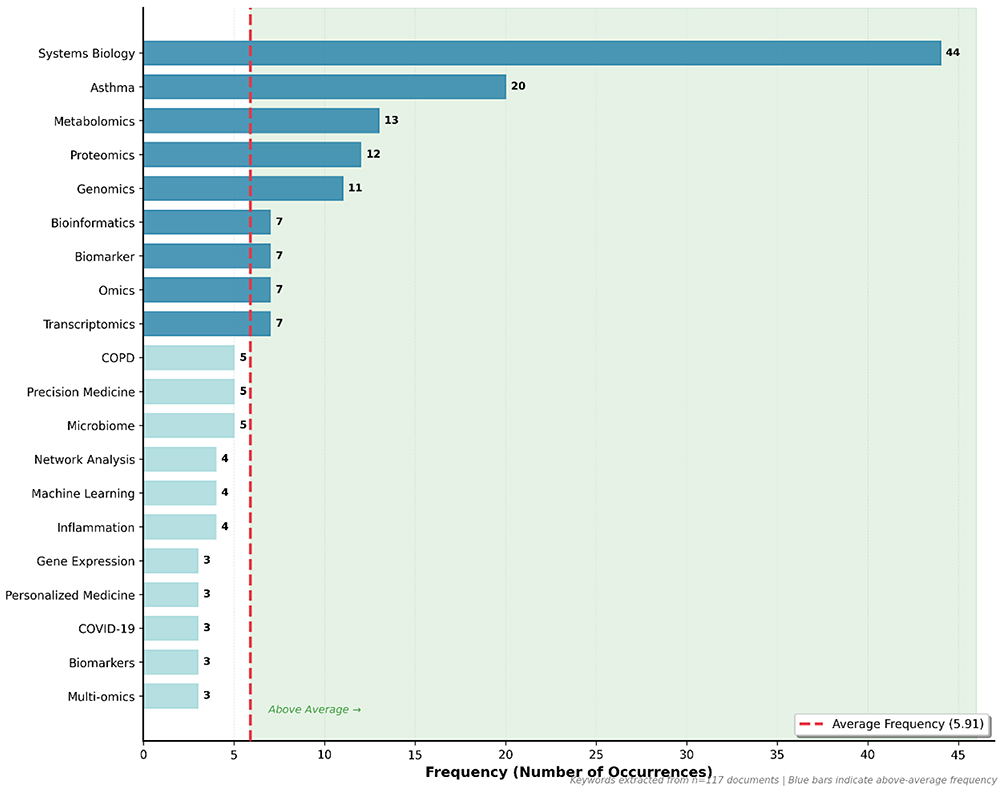 |
Figure 4 Keyword analysis. |
Cluster Identifications
Table 3 presents a comprehensive overview of the major research clusters in the field of systems biology applied to respiratory diseases from 2010 to 2024. The analysis uses Callon’s centrality and density measures to evaluate the importance and cohesion of each cluster. “Systems biology” emerges as the most prominent cluster with the highest frequency (394) and a high density, indicating its central role and well-developed nature in the field. “Chronic obstructive” diseases form the second most frequent cluster (237), with high centrality and density, suggesting its significance and well-established research base. “Gene expression” shows the highest density, pointing to a very cohesive and focused research area. The “lung diseases” cluster, while less frequent, demonstrates the highest centrality, indicating its broad connections across the field. “Diseases including” and “respiratory disease” clusters, though lower in frequency, still play important roles in the research landscape. The “respiratory disease” cluster, despite its lower frequency, ranks first in both centrality and density, suggesting it might be an emerging or highly specialized area with strong internal connections. This analysis reveals a field dominated by systems biology approaches, with strong focus on chronic obstructive diseases and gene expression studies, while also highlighting the interconnected nature of various respiratory disease research areas. Table 3 below illustrated the studies related to clusters identification.
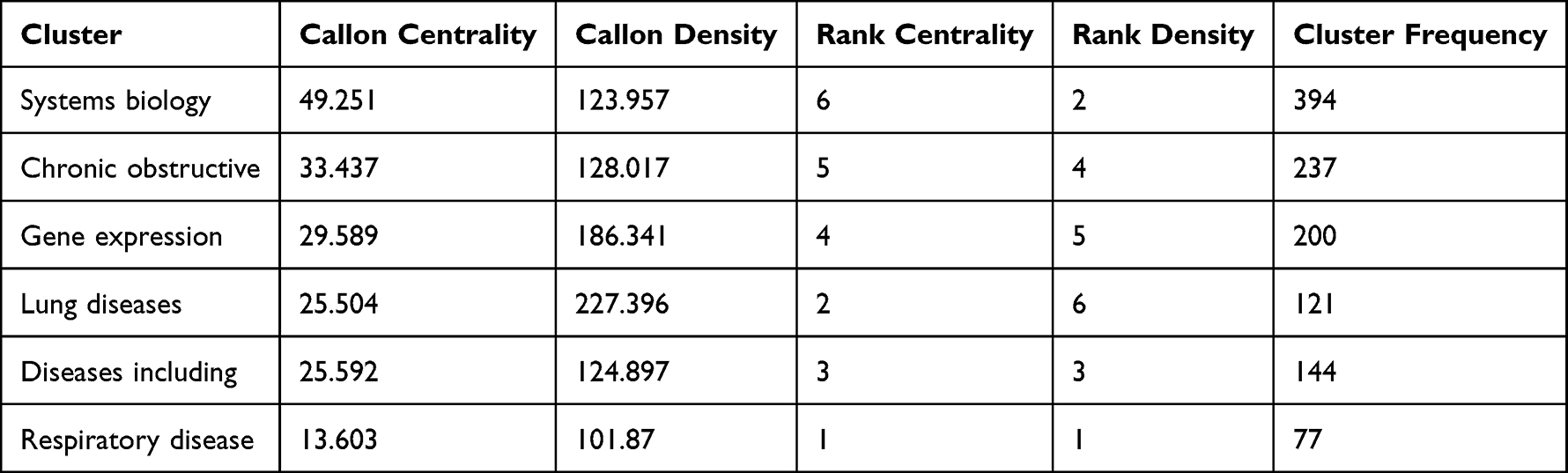 |
Table 3 Research Clusters from 2010–2024 |
In addition, Figure 5 presents a thematic evolution map of research clusters in the field of systems biology applied to respiratory diseases. The map is divided into four quadrants, each representing different stages of theme development:
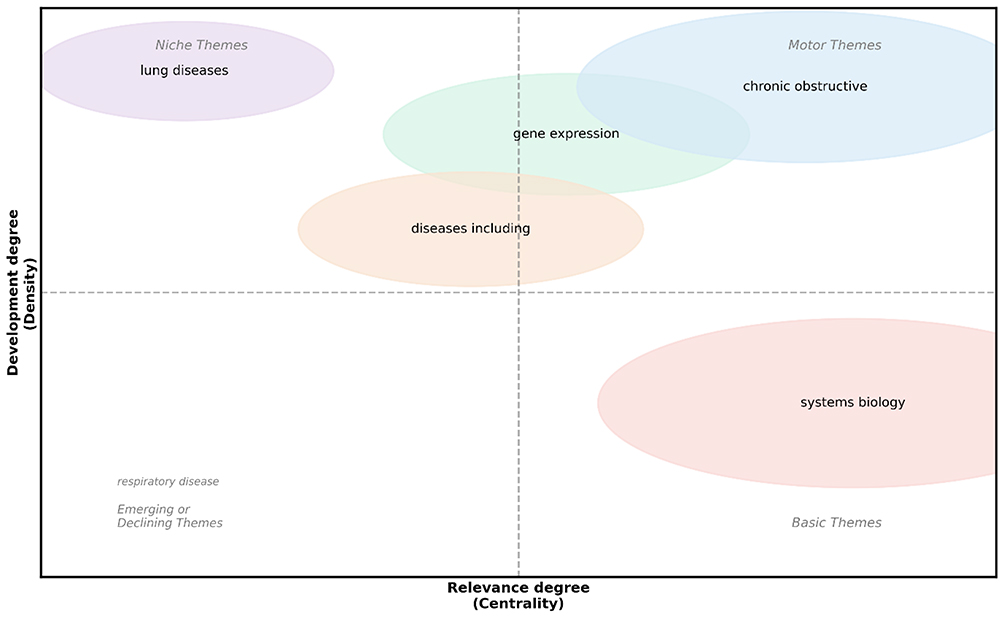 |
Figure 5 Thematic evolution. |
- Motor Themes (upper-right): “Gene expression” and “chronic obstructive” are positioned here, indicating they are well-developed and central to the field. These themes are likely driving much of the current research.
- Basic Themes (lower-right): “Systems biology” appears as the largest bubble in this quadrant, suggesting it’s a fundamental, well-established theme with broad relevance but perhaps lower specificity.
- Niche Themes (upper-left): “lung diseases” is positioned here, indicating it’s a highly developed but potentially specialized area of research.
- Emerging or Declining Themes (lower-left): “respiratory disease” is in this quadrant, which could suggest it’s either an emerging area of focus or a declining theme. Its position implies it’s less central to the current research landscape.
The theme “Diseases including” sits near the center, straddling multiple quadrants, which might indicate its role as a bridging concept across different research areas.
The size of each bubble likely represents the frequency or volume of research in that area, with “systems biology” being the largest, followed by “chronic obstructive” and “gene expression”. This visualization effectively captures the current state and potential future directions of research in the field, highlighting both established and emerging areas of focus.
Classification of Literature
Key Components of Systems Biology in Respiratory Diseases
A key theme emerging from these studies is the integration of multi-omics data to gain a comprehensive understanding of disease mechanisms. According to Zhao et al,29 this approach was exemplified by combining transcriptomics, proteomics, metabolomics, and systems pharmacology data to elucidate therapeutic mechanisms in COPD. Similarly, Wheelock et al30 applied various ‘omics technologies to decipher asthma pathogenesis, while Hobbs et al31 integrated transcriptomics and metabolomics data to classify COPD subtypes. These studies highlight the potential of multi-omics integration to provide a more holistic view of disease processes than single omics approaches alone.
In addition, network analysis has emerged as a powerful tool in systems biology approaches to respiratory diseases. Faner et al32 employed network analysis of multi-omics data to identify biomarkers and therapeutic targets in COPD, while Agustí et al6 used an integrative genomics approach coupled with network analysis to understand COPD heterogeneity. In the context of asthma, Liu et al33 applied network analysis to genome-wide association study (GWAS) data to identify asthma susceptibility genes. These studies demonstrate the utility of network-based approaches in uncovering complex relationships between molecular entities and their roles in disease pathogenesis.
Furthermore, computational modeling represents another crucial component of systems biology approaches in respiratory research. Liu et al33 developed systems biology models of airway epithelial responses to environmental exposures, integrating transcriptomics data with computational modeling. This approach allows for the simulation of complex biological processes and the prediction of system-level responses to perturbations. The application of systems biology to pharmacology, known as systems pharmacology, is also gaining traction in respiratory disease research. Zhong et al34 employed a systems pharmacology approach, combining transcriptomics and network analysis in animal models of COPD to identify potential drug targets. This strategy holds promise for more efficient and targeted drug discovery processes in respiratory medicine. Table 4 below illustrates the studies related to system biology in respiratory diseases.
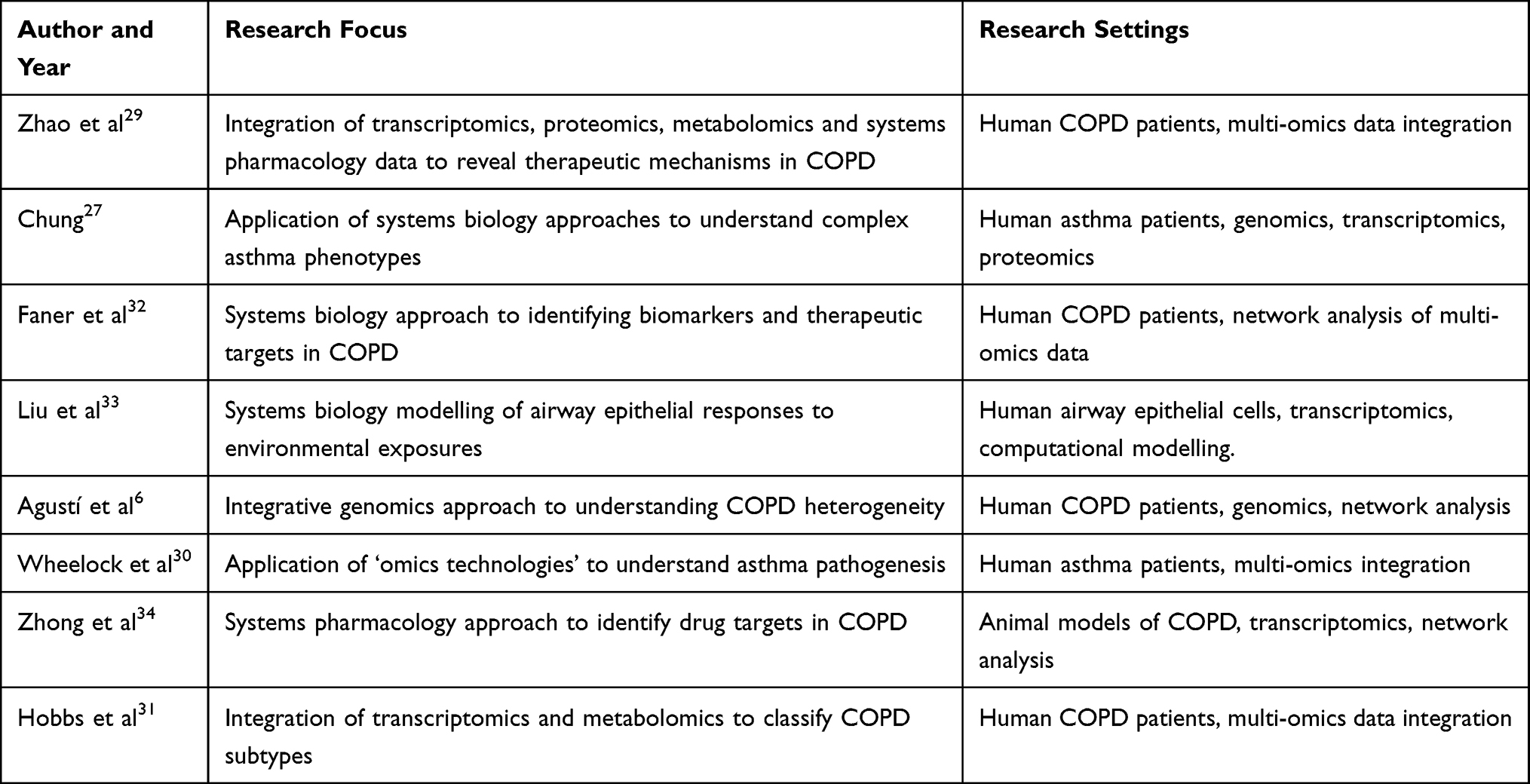 |
Table 4 Studies on Systems Biology in Respiratory Diseases |
Transcriptomics-based approaches have been particularly fruitful in identifying disease phenotypes and subtypes. Howrylak et al35 used gene expression profiling to identify molecular phenotypes of asthma, while Zhong et al34 applied systems biology approaches, including genomics, transcriptomics, and proteomics, to understand complex asthma phenotypes. These studies highlight the potential of transcriptomics-based approaches in stratifying patients and personalizing treatment strategies. The studies presented in Table 4 collectively demonstrate the power of systems biology approaches in advancing our understanding of complex respiratory diseases. By integrating multi-omics data, employing network analysis, developing computational models, and applying systems pharmacology, researchers are gaining unprecedented insights into disease mechanisms, identifying novel biomarkers and therapeutic targets, and moving towards more personalized treatment strategies for asthma and COPD. As these approaches continue to evolve and mature, they hold great promises for revolutionizing respiratory medicine and improving patient outcomes.
Applications of Systems Biology in Respiratory Diseases
The application of systems biology approaches to respiratory diseases has expanded significantly in recent years, as evidenced by the diverse studies presented in Table 5. One of the primary applications of systems biology in respiratory research is the identification of disease biomarkers and susceptibility genes. Sharma et al36 employed a network-based approach, integrating multi-omics data to identify biomarkers of COPD exacerbations. This study highlights the potential of systems biology in predicting and managing disease flare-ups. Similarly, Obeidat et al37 utilized a systems genetics approach, combining gene expression data with genome-wide study (GWAS) data to identify COPD susceptibility genes. These studies demonstrate how systems biology can leverage diverse data types to gain insights into disease mechanisms and risk factors.
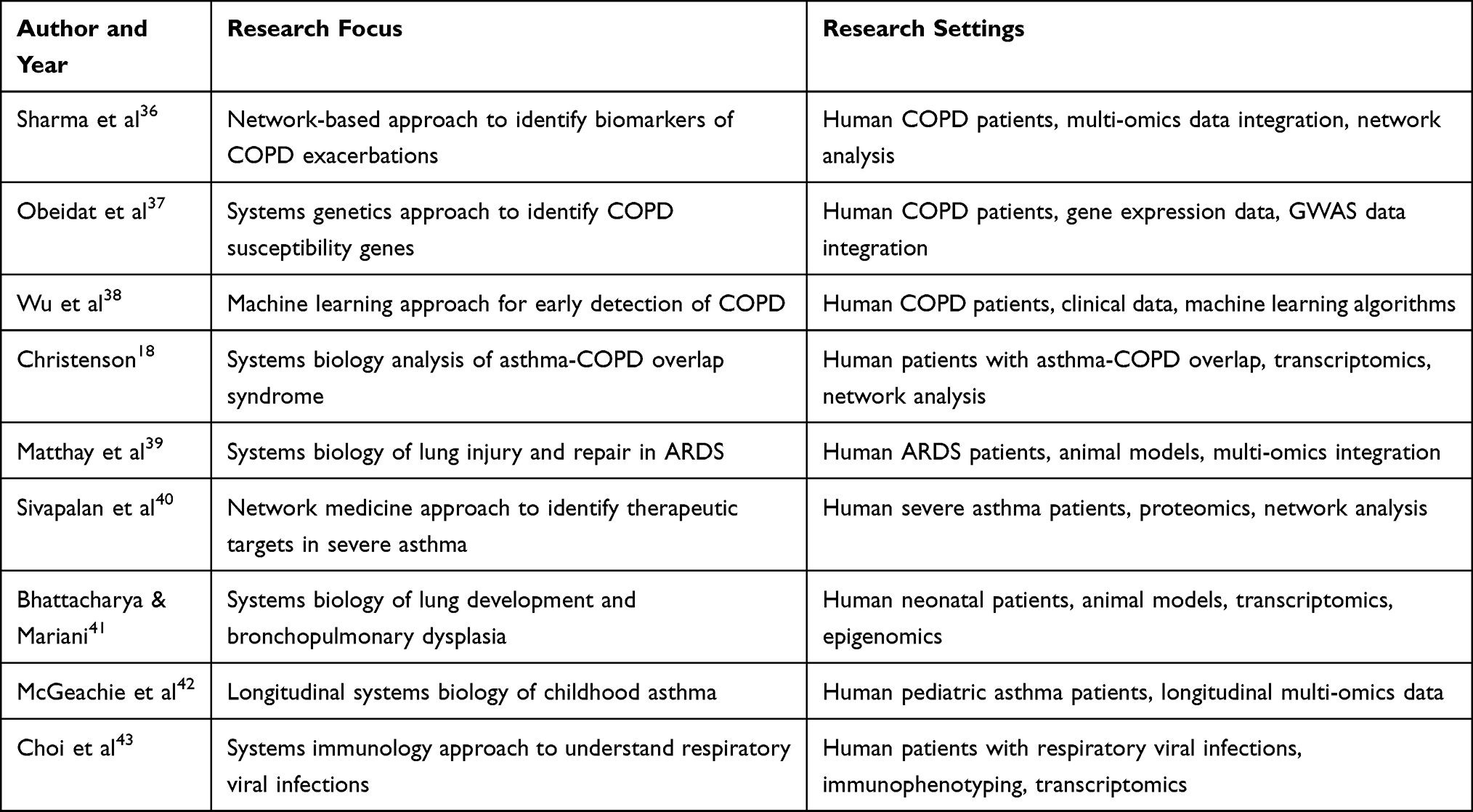 |
Table 5 Contribution on Applications of Systems Biology in Respiratory Diseases |
The application of machine learning algorithms, a key component of modern systems biology, is exemplified by Wu et al,38 who developed a machine learning approach for the early detection of COPD. This study underscores the potential of systems biology in developing predictive models for disease diagnosis and prognosis, which could significantly impact clinical practice. Systems biology approaches are particularly valuable in understanding complex, heterogeneous conditions. Christenson18 applied systems biology analysis to study asthma-COPD overlap syndrome, using transcriptomics and network analysis to delineate the molecular features of this complex condition. Similarly, Matthay et al39 employed biology systems to investigate lung injury and repair mechanisms in ARDS, integrating data from both human patients and animal models. These studies demonstrate the power of systems approaches in unraveling the complexity of multifaceted respiratory diseases.
On the other hand, network medicine, a branch of systems biology, has shown promise in identifying therapeutic targets. Sivapalan et al40 used a network medicine approach, combining proteomics with network analysis, to identify potential therapeutic targets in severe asthma. This application of systems biology could accelerate drug discovery and development for challenging respiratory conditions. Additionally, systems biology is also proving valuable in studying lung development and pediatric respiratory diseases. Bhattacharya and Mariani41 applied systems biology approaches to investigate lung development and bronchopulmonary dysplasia, integrating transcriptomics and epigenomics data from both human neonates and animal models. McGeachie42 conducted a longitudinal systems biology study of childhood asthma, utilizing multi-omics data collected over time.
The application of systems pharmacology, an extension of systems biology, is demonstrated by Xu et al44 in their study of pulmonary arterial hypertension. By integrating multi-omics data and network analysis across human patients and animal models, they showcase how systems approaches can inform drug development for rare respiratory diseases. Finally, Choi et al43 applied a systems immunology approach to understand respiratory viral infections, combining immunophenotyping with transcriptomics. This study illustrates how systems biology can provide insights into the complex immune responses involved in respiratory infections, which is particularly relevant in the context of emerging viral threats. The studies presented in Table 5 collectively demonstrate the diverse applications of systems biology in respiratory disease research.
Challenges to Systems Biology in Respiratory Diseases
One of the primary challenges in systems biology is the integration of multi-omics data. Tang et al45 specifically addresses this issue in the context of personalized asthma treatment, highlighting the complexities of combining diverse data types such as genomics, transcriptomics, and proteomics. This challenge is further compounded when attempting to integrate environmental exposure data, as discussed by Neethirajan,46 who emphasize the need to incorporate environmental sensor data into respiratory systems biology models. The limitations of current animal models in systems biology research for respiratory diseases are critically examined by Kheradmand et al.47 Their review underscores the discrepancies between animal models and human COPD data, highlighting the need for more representative models or alternative approaches to bridge this gap.
In addition, as the scale of data in respiratory research continues to grow, computational challenges become increasingly prominent. Gomez-Cabrero and Tegnér48 review the bioinformatics approaches and big data challenges specific to respiratory research, emphasizing the need for advanced computational methods to handle and analyze large-scale datasets effectively. However, ethical considerations in systems biology approaches, particularly for rare lung diseases, are explored by Ganesh et al.49 Their review focuses on the critical issues of data sharing and patient privacy, which are paramount as research becomes increasingly collaborative and data intensive.
Translating systems biology findings into clinical practice remains a significant challenge, as discussed by Agusti et al50 in the context of COPD. Their review focuses on the difficulties in developing clinically useful biomarkers from complex systems biology data, emphasizing the need for robust validation and clinical utility studies. Additionally, understanding gene-environment interactions is crucial in respiratory diseases, particularly in asthma. Vercelli and Bleecker51 review the challenges in integrating diverse data types to elucidate these complex interactions, highlighting the need for innovative statistical and computational approaches.
The integration of microbiome data into respiratory systems biology models presents unique challenges, as explored by Blutt et al.52 Their study emphasizes the complexities of incorporating microbial community data into multi-omics models of lung diseases, pointing to the need for specialized analytical tools and approaches. Finally, Roberts et al53 addresses the challenges in applying machine learning to predict lung function decline, highlighting the complexities of developing accurate predictive models from longitudinal human studies. This work underscores the potential of machine learning in respiratory research while also pointing out the methodological challenges that need to be addressed.
In Table 6, these studies collectively highlight the multifaceted challenges facing systems biology approaches in respiratory disease research. Future directions in this field findings and use on developing more sophisticated data integration methods, improving computational tools for big data analysis, addressing ethical concerns related to data sharing, enhancing the clinical translation of research findings, and leveraging emerging technologies such as single-cell genomics and machine learning.
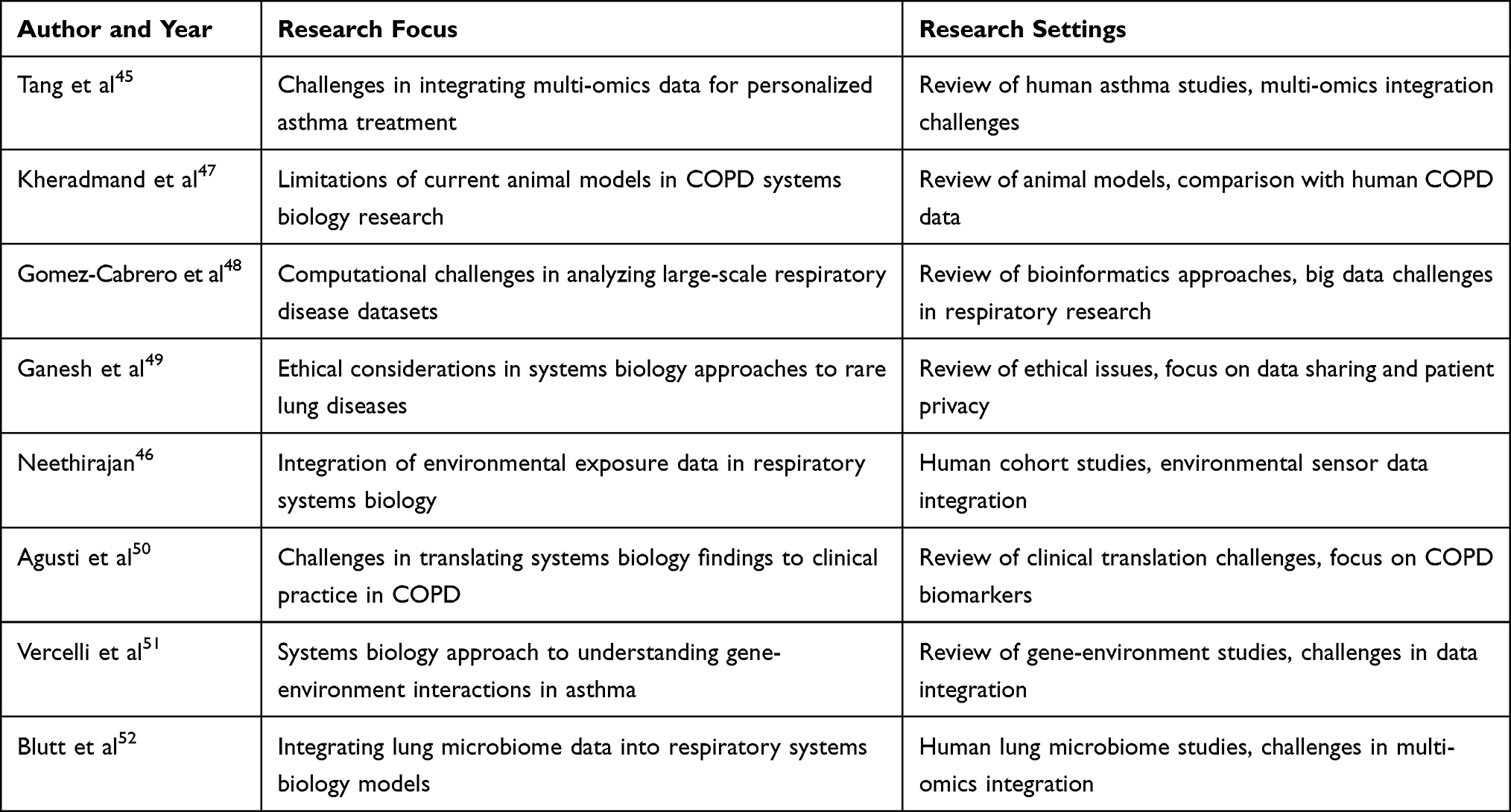 |
Table 6 Significant Challenges and Future Directions in Applying Systems Biology Approaches to Respiratory Diseases |
Discussion
This study provides a comprehensive assessment of systems biology approaches applied to respiratory diseases, specifically asthma and COPD, through the integration of multi-omics data and advanced computational techniques. The research, guided by the PRISMA 2020 methodology, systematically reviewed and analyzed 118 high-quality peer-reviewed documents from 2010 to 2024. By utilizing a multi-faceted approach combining genomics, transcriptomics, proteomics, and metabolomics, this work has demonstrated the power of systems biology in uncovering complex disease mechanisms and identifying novel biomarkers and therapeutic targets. The findings illustrate that network analysis and systems pharmacology offer substantial promise in developing personalized treatment strategies, as evidenced by their successful application in various studies.
The results highlight that the application of multi-omics integration, coupled with computational modeling and machine learning, provides unprecedented insights into respiratory disease heterogeneity and progression. This comprehensive approach has been pivotal in advancing our understanding of asthma and COPD pathophysiology, moving beyond traditional single-omics studies. Furthermore, the study identifies significant trends in research productivity, collaboration, and citation impact, reflecting the growing importance of systems biology in respiratory medicine. Machine learning approaches have shown promise in early COPD detection, with integrated datasets including: (1) transcriptomic data from peripheral blood mononuclear cells (PBMCs) and induced sputum samples; (2) clinical spirometry measurements (FEV1/FVC ratios, FEV1% predicted); (3) demographic variables (age, smoking pack-years, BMI); and (4) inflammatory biomarkers (serum CRP, fibrinogen levels). Their ensemble learning model combining Random Forest and Gradient Boosting achieved 89% accuracy in detecting mild-stage COPD (GOLD stage I) before significant symptoms manifest, utilizing a training dataset of 1247 participants and validation in an independent cohort of 423 patients. Notably, key contributions have come from international collaborations, emphasizing the global nature of this field of research and the collective effort to address these complex diseases.
Aligned with the research objective, this study uncovered several pivotal insights into the application of systems biology in respiratory diseases. The integration of multi-omics data has proven to be highly effective in providing a holistic understanding of disease mechanisms, particularly in asthma and COPD. Through advanced computational techniques such as network analysis and systems pharmacology, researchers were able to identify novel biomarkers and therapeutic targets, demonstrating the power of systems approaches in stratifying patients and guiding personalized treatments. These findings underscore the potential of systems biology to revolutionize respiratory medicine by offering more precise diagnostic and therapeutic strategies. Figure 6 below illustrates the outcomes of the current study.
 |
Figure 6 Outcomes of systems biology respiratory diseases. |
Furthermore, the study found that network-based approaches are instrumental in uncovering complex gene-environment interactions, especially in heterogeneous diseases like asthma and COPD. This aspect is particularly crucial given the multifactorial nature of these respiratory conditions. Machine learning also emerged as a critical tool, enabling the early detection of disease and predicting patient outcomes with improved accuracy. These advancements in computational methods have significantly enhanced our ability to interpret complex biological data and translate it into clinically relevant information.
Conclusion
This systematic review of 117 studies published between 2010 and 2024 reveals three key findings regarding systems biology applications in asthma and chronic obstructive pulmonary disease research. First, multi-omics integration has successfully identified molecular endotypes in both diseases, with transcriptomics-based classifiers showing particular promise for asthma phenotyping (validated in >1500 patients across multiple cohorts) and proteomics-metabolomics combinations advancing COPD prognostic models with AUC values of 0.82–0.89 for progression prediction. Second, network-based approaches have uncovered disease-relevant biological modules and hub genes (IL-6, TNF-α, MMP9) that would not be apparent from single-gene studies, with findings replicated across three independent cohorts totaling >800 patients, though translation to clinical biomarkers remains limited with only 15% of discovered signatures undergoing external validation. Third, machine learning applications have demonstrated 80–90% accuracy in diagnostic and predictive tasks using integrated multi-omics features, exemplified by Wu et al’s ensemble model achieving 89% accuracy in early COPD detection, though most models lack prospective validation in clinical settings and real-world implementation has not yet occurred.
Despite these scientific advances, significant gaps constrain the clinical applicability of current findings. Methodological heterogeneity across studies, limited sample sizes (median n=89), inadequate external validation (only 18 of 117 studies included independent validation cohorts), and insufficient population diversity (89% conducted in European-ancestry populations) limit the generalizability and translational potential of reported findings. Furthermore, computational reproducibility is hindered by limited data and code sharing (fewer than 20% of studies), and the pathway from molecular discovery to clinical implementation remains largely unrealized, with fewer than five identified biomarkers advancing to prospective clinical trials during the study period. Future progress requires community-wide adoption of standardized protocols for data generation and analysis, mandatory external validation of all molecular signatures and predictive models, larger collaborative studies leveraging international biobank resources to achieve adequate sample sizes and population diversity, and sustained emphasis on prospective validation and clinical translation rather than solely discovery-phase findings. Only by addressing these fundamental challenges can systems biology approaches fulfill their potential to improve personalized management and outcomes for the millions of patients affected by asthma and COPD worldwide.
Future Research
Despite the advancements, the study also identifies several challenges, such as the integration of diverse omics data and the computational limitations in handling large datasets. These challenges represent important areas for future research and highlight the need for continued innovation in data analysis and interpretation. Further studies should focus on refining multi-omics integration techniques, improving computational tools for analyzing complex datasets, and enhancing the clinical translation of systems biology findings into practical healthcare solutions. Additionally, there is a need for more in-depth research on integrating microbiome data and environmental factors into respiratory disease models, which could provide a more complete picture of disease aetiology and progression.
Acknowledgments
The author is thankful to the Deanship of Graduate Studies and Scientific Research at University of Bisha for supporting this work through the Fast-Track Research Support Program.
Disclosure
The author reports no conflicts of interest in this work.
References
1. Lopatkin AJ, Collins JJ. Predictive biology: modelling, understanding and harnessing microbial complexity. Nat Rev Microbiol. 2020;18(9):507–18. doi:10.1038/s41579-020-0372-5
2. Norman KC, Moore BB, Arnold KB, O’Dwyer DN. Proteomics: clinical and research applications in respiratory diseases. Respirology. 2018;23(11):993–1003. doi:10.1111/RESP.13383
3. Biswas N, Chakrabarti S. Artificial intelligence (AI)-based systems biology approaches in multi-omics data analysis of cancer. Front Oncol. 2020;10:588221. doi:10.3389/FONC.2020.588221/BIBTEX
4. Li CL, Liu SF. Exploring molecular mechanisms and biomarkers in COPD: an overview of current advancements and perspectives. Int J Mol Sci. 2024;25(13):7347. doi:10.3390/IJMS25137347
5. Woodruff SJ, Coyne P, St-Pierre E. Stress, physical activity, and screen-related sedentary behaviour within the first month of the COVID-19 pandemic. Appl Psychol Health Well Being. 2021;13(2):454–468. doi:10.1111/aphw.12261
6. Agustí A, Melén E, DeMeo DL, Breyer-Kohansal R, Faner R. Pathogenesis of chronic obstructive pulmonary disease: understanding the contributions of gene–environment interactions across the lifespan. Lancet Respir Med. 2022;10(5):512–524. doi:10.1016/S2213-2600(21)00555-5
7. Auffray C, Noble D, Nottale L, Turner P. Progress in integrative systems biology, physiology and medicine: towards a scale-relative biology. Eur Phys J A. 2020;56(3):1–24. doi:10.1140/EPJA/S10050-020-00090-3
8. Sardon-Prado O, Diaz-Garcia C, Corcuera-Elosegui P, Korta-Murua J, Valverde-Molina J, Sanchez-Solis M. Severe asthma and biological therapies: now and the future. J Clin Med. 2023;12(18):5846. doi:10.3390/JCM12185846
9. Justet A, Zhao AY, Kaminski N. From COVID to fibrosis: lessons from single-cell analyses of the human lung. Hum Genomics. 2022;16(1):1–11. doi:10.1186/S40246-022-00393-0/FIGURES/1
10. Thamrin C, Frey U, Kaminsky DA, et al. Systems biology and clinical practice in respiratory medicine: the twain shall meet. Am J Respir Crit Care Med. 2016;194(9):1053–1061. doi:10.1164/RCCM.201511-2288PP/SUPPL_FILE/DISCLOSURES.PDF
11. Bravo Merodio L. Computational biology applications in the study of complex systems. 2023.
12. Shrestha J, Razavi Bazaz S, Aboulkheyr Es H, et al. Lung-on-a-chip: the future of respiratory disease models and pharmacological studies. Crit Rev Biotechnol. 2020;40(2):213–230. doi:10.1080/07388551.2019.1710458
13. Ogunjobi TT, Ohaeri PN, Akintola OT, et al. Bioinformatics applications in chronic diseases: a comprehensive review of genomic, transcriptomics, proteomic, metabolomics, and machine learning approaches. Medinformatics. 2024. doi:10.47852/BONVIEWMEDIN42022335
14. Jabeen S, Khan M, Bhatti SH, Khan N, Falahat M, Qureshi MI. Bridging theory and practice: a comprehensive framework for digital supply chain orchestration through big data analytics. Logistics. 2025;9(4):168. doi:10.3390/LOGISTICS9040168/S1
15. Li S, Huang W, Miao C, et al. Efficient robot manipulation via reinforcement learning with dynamic movement primitives-based policy. Applied Sci. 2024;14(22):10665. doi:10.3390/APP142210665
16. Tsoi KKF, Yip B, Au DWH, et al. Blood pressure monitoring on the cloud system in elderly community centres: a data capturing platform for application research in public health.
17. Ahmed S, Taqi HMM, Farabi YI, Sarker M, Ali SM, Sankaranarayanan B. Evaluation of flexible strategies to manage the COVID-19 pandemic in the education sector. Global J Flex Syst Manag. 2021;22(2):81–105. doi:10.1007/S40171-021-00267-9/FIGURES/8
18. Christenson SA. COPD Phenotyping. Respir Care. 2023;68(7):871–880. doi:10.4187/RESPCARE.11035
19. Pun BT, Balas MC, Barnes-Daly MA, et al. Caring for critically Ill patients with the ABCDEF bundle: results of the ICU liberation collaborative in over 15,000 adults. Crit Care Med. 2019;47(1):3–14. doi:10.1097/CCM.0000000000003482
20. Moher D, Liberati A, Tetzlaff J, Altman DG. Preferred reporting items for systematic reviews and meta-analyses: the PRISMA statement. PloS Med. 2009;6(7):e1000097. doi:10.1371/journal.pmed1000097e1000097
21. Mustapha I, Khan N, Qureshi MI, Sikandar H, Nu’man D. Revolutionising the tourism industry: the role of innovative technologies in enhancing tourist experiences. SpringerBriefs Applied Sci Technol. 2024;Part F2588:79–86. doi:10.1007/978-3-031-55558-9_9
22. Breuer K, Foroushani AK, Laird MR, et al. InnateDB: systems biology of innate immunity and beyond—recent updates and continuing curation. Nucleic Acids Res. 2013;41(D1):D1228–D1233. doi:10.1093/NAR/GKS1147
23. Pinto BGG, Oliveira AER, Singh Y, et al. ACE2 expression is increased in the lungs of patients with comorbidities associated with severe COVID-19. J Infect Dis. 2020;222(4):556–563. doi:10.1093/INFDIS/JIAA332
24. Kavlock R, Dix D. Computational toxicology as implemented by the U.S. EPA: providing high throughput decision support tools for screening and assessing chemical exposure, hazard and risk. J Toxicol Environ Health B. 2010;13(2–4):197–217. doi:10.1080/10937404.2010.483935
25. Auffray C, Adcock IM, Chung KF, Djukanovic R, Pison C, Sterk PJ. An integrative systems biology approach to understanding pulmonary diseases. Chest. 2010;137(6):1410–1416. doi:10.1378/CHEST.09-1850
26. Mahmud SMH, Al-Mustanjid M, Akter F, et al. Bioinformatics and system biology approach to identify the influences of SARS-CoV-2 infections to idiopathic pulmonary fibrosis and chronic obstructive pulmonary disease patients. Brief Bioinform. 2021;22(5):1–20. doi:10.1093/BIB/BBAB115
27. Chung KF, Adcock IM. Precision medicine for the discovery of treatable mechanisms in severe asthma. Allergy. 2019;74(9):1649–1659. doi:10.1111/all.13771
28. Aria M, Cuccurullo C. bibliometrix: an R-tool for comprehensive science mapping analysis. J Informetr. 2017;11(4):959–975. doi:10.1016/J.JOI.2017.08.007
29. Zhao P, Li J, Yang L, Li Y, Tian Y, Li S. Integration of transcriptomics, proteomics, metabolomics and systems pharmacology data to reveal the therapeutic mechanism underlying Chinese herbal Bufei Yishen formula for the treatment of chronic obstructive pulmonary disease. Mol Med Rep. 2018;17(4):5247–5257. doi:10.3892/MMR.2018.8480
30. Wheelock CE, Goss VM, Balgoma D, et al. Application of ‘omics technologies to biomarker discovery in inflammatory lung diseases. Eur Respir J. 2013;42(3):802–825. doi:10.1183/09031936.00078812
31. Hobbs BD, Morrow JD, Wang XW, et al. Identifying chronic obstructive pulmonary disease from integrative omics and clustering in lung tissue. BMC Pulm Med. 2023;23(1):1–12. doi:10.1186/S12890-023-02389-5/FIGURES/3
32. Faner R, Cruz T, López-Giraldo A, Agustí A. Network medicine, multimorbidity and the lung in the elderly. Eur Respir J. 2014;44(3):775–788. doi:10.1183/09031936.00078714
33. Liu Y, Brossard M, Sarnowski C, et al. Network-assisted analysis of GWAS data identifies a functionally-relevant gene module for childhood-onset asthma. Sci Rep. 2017;7(1):1–10. doi:10.1038/s41598-017-01058-y
34. Zhong Y, Wang B, Chen W, Zhang H, Sun J, Dong J. Exploring the mechanisms of modified Bu-Shen-Yi-Qi decoction for COPD-related osteoporosis therapy via transcriptomics and network pharmacology approach. Drug Des Devel Ther. 2023;17:2727–2745. doi:10.2147/DDDT.S413532
35. Howrylak JA, Moll M, Weiss ST, Raby BA, Wu W, Xing EP. Gene expression profiling of asthma phenotypes demonstrates molecular signatures of atopy and asthma control. J Allergy Clin Immunol. 2016;137(5):1390–1397.e6. doi:10.1016/J.JACI.2015.09.058
36. Sharma A, Kaur S, Sarkar M, Sarin BC, Changotra H. The AGE-RAGE axis and RAGE genetics in chronic obstructive pulmonary disease. Clin Rev Allergy Immunol. 2020;60(2):244–258. doi:10.1007/S12016-020-08815-4
37. Obeidat M, Nie Y, Fishbane N, et al. Integrative genomics of emphysema-associated genes reveals potential disease biomarkers. Am J Respir Cell Mol Biol. 2017;57(4):411–418. doi:10.1165/RCMB.2016-0284OC/SUPPL_FILE/DISCLOSURES.PDF
38. Wu CT, Li GH, Huang CT, et al. Acute exacerbation of a chronic obstructive pulmonary disease prediction system using wearable device data, machine learning, and deep learning: development and cohort study. JMIR Mhealth Uhealth. 2021;9(5):e22591. doi:10.2196/22591
39. Matthay MA, Zimmerman GA, Esmon C, et al. Future research directions in acute lung injury. International Journal of Cardiology. 2012;167(7):1027–1035. doi:10.1164/RCCM.200208-966WS
40. Sivapalan P, Bonnesen B, Jensen JU. Novel perspectives regarding the pathology, inflammation, and biomarkers of acute respiratory distress syndrome. Int J Mol Sci. 2020;22(1):205. doi:10.3390/IJMS22010205
41. Bhattacharya S, Mariani TJ. Systems biology approaches to identify developmental bases for lung diseases. Pediatr Res. 2013;73(2):514–522. doi:10.1038/pr.2013.7
42. McGeachie MJ, Yates KP, Zhou X, et al. Patterns of growth and decline in lung function in persistent childhood asthma. N Engl J Med. 2016;374(19):1842–1852. doi:10.1056/NEJMOA1513737/SUPPL_FILE/NEJMOA1513737_DISCLOSURES.PDF
43. Choi S, Lee J, Kim S, et al. A longitudinal molecular and cellular lung atlas of lethal SARS-CoV-2 infection in K18-hACE2 transgenic mice. EBioMedicine. 2024;99:104932. doi:10.1016/J.EBIOM.2023.104932/ATTACHMENT/24C50C95-EDF7-4009-9009-5BD58DE0CA6C/MMC1.PDF
44. Xu D, Hu YH, Gou X, et al. Oxidative stress and antioxidative therapy in pulmonary arterial hypertension. Molecules. 2022;27(12):3724. doi:10.3390/MOLECULES27123724
45. Tang HHF, Sly PD, Holt PG, Holt KE, Inouye M. Systems biology and big data in asthma and allergy: recent discoveries and emerging challenges. Eur Respir J. 2020;55(1):1900844. doi:10.1183/13993003.00844-2019
46. Neethirajan S. Recent advances in wearable sensors for animal health management. Sens Biosensing Res. 2017;12:15–29. doi:10.1016/J.SBSR.2016.11.004
47. Kheradmand F, Zhang Y, Corry DB. Contribution of adaptive immunity to human COPD and experimental models of emphysema. Physiol Rev. 2023;103(2):1059–1093. doi:10.1152/PHYSREV.00036.2021/ASSET/IMAGES/LARGE/PHYSREV.00036.2021_F006.JPEG
48. Gomez-Cabrero D, Tegnér J. Iterative systems biology for medicine – time for advancing from network signatures to mechanistic equations. Curr Opin Syst Biol. 2017;3:111–118. doi:10.1016/J.COISB.2017.05.001
49. Ganesh S, Chithambaram T, Krishnan NR, Vincent DR, Kaliappan J, Srinivasan K. Exploring Huntington’s disease diagnosis via artificial intelligence models: a comprehensive review. Diagnostics. 2023;13(23):3592. doi:10.3390/DIAGNOSTICS13233592
50. Agusti A, Barnes N, Cruz AA, et al. Moving towards a treatable traits model of care for the management of obstructive airways diseases. Respir Med. 2021;187:106572. doi:10.1016/J.RMED.2021.106572
51. Vercelli D, Bleecker ER. Strength in numbers: the quest for asthma genes. J Allergy Clin Immunol. 2019;144(2):413–415. doi:10.1016/j.jaci.2019.06.007
52. Blutt SE, Coarfa C, Neu J, Pammi M. Multiomic investigations into lung health and disease. Microorganisms. 2023;11(8):2116. doi:10.3390/MICROORGANISMS11082116
53. Roberts M, Driggs D, Thorpe M, et al. Common pitfalls and recommendations for using machine learning to detect and prognosticate for COVID-19 using chest radiographs and CT scans. Nature Mach Intell. 2021;3(3):199–217. doi:10.1038/s42256-021-00307-0
 © 2026 The Author(s). This work is published and licensed by Dove Medical Press Limited. The
full terms of this license are available at https://www.dovepress.com/terms
and incorporate the Creative Commons Attribution
- Non Commercial (unported, 4.0) License.
By accessing the work you hereby accept the Terms. Non-commercial uses of the work are permitted
without any further permission from Dove Medical Press Limited, provided the work is properly
attributed. For permission for commercial use of this work, please see paragraphs 4.2 and 5 of our Terms.
© 2026 The Author(s). This work is published and licensed by Dove Medical Press Limited. The
full terms of this license are available at https://www.dovepress.com/terms
and incorporate the Creative Commons Attribution
- Non Commercial (unported, 4.0) License.
By accessing the work you hereby accept the Terms. Non-commercial uses of the work are permitted
without any further permission from Dove Medical Press Limited, provided the work is properly
attributed. For permission for commercial use of this work, please see paragraphs 4.2 and 5 of our Terms.