
Back to Journals » Clinical, Cosmetic and Investigational Dermatology » Volume 19
Sonidegib Therapy for Locally Advanced Basal Cell Carcinoma in an Elderly Patient: A Case Report
Authors Deng Y  , He P, Li C, Li G, Tao X
Received 1 December 2025
Accepted for publication 25 January 2026
Published 30 January 2026 Volume 2026:19 584651
DOI https://doi.org/10.2147/CCID.S584651
Checked for plagiarism Yes
Review by Single anonymous peer review
Peer reviewer comments 2
Editor who approved publication: Dr Jeffrey Weinberg
Yuyu Deng,1– 5 Pingxiu He,1– 5 Changxia Li,1– 5 Guolan Li,1– 5 Xiaohua Tao1– 5
1Dermatology Department, Dermatology Hospital of Jiangxi Province, Nanchang, Jiangxi, People’s Republic of China; 2Dermatology Department, Jiangxi Provincial Clinical Research Center for Skin Diseases, Nanchang, Jiangxi, People’s Republic of China; 3Dermatology Department, Candidate Branch of National Clinical Research Center for Skin Diseases, Nanchang, Jiangxi, People’s Republic of China; 4Dermatology Department, Dermatology Institute of Jiangxi Province, Nanchang, Jiangxi, People’s Republic of China; 5Dermatology Department, The Affiliated Dermatology Hospital of Nanchang University, Nanchang, Jiangxi, People’s Republic of China
Correspondence: Xiaohua Tao, Email [email protected]
Abstract: We report a case of locally advanced basal cell carcinoma (BCC) of the nose successfully treated with oral sonidegib. An 87-year-old man presented with a pruritic brown papule in the right nasolabial fold, progressively enlarging for > 10 years and ulcerated for 7 years. Histopathology confirmed nodular BCC with tumor thickness ≥ 6 mm. Sonidegib (200 mg daily) was initiated, and a complete resolution was achieved after 5 months. No recurrence or significant adverse effects were observed 4 months post-treatment.
Keywords: Sonidegib, therapy, locally advanced, basal cell carcinoma
Introduction
Basal cell carcinoma (BCC) is the most common cutaneous malignancy and represents the predominant subtype of non-melanoma skin cancer.1 Its incidence has continued to rise over recent decades. This upward trend may be attributable to population ageing, increased ultraviolet exposure, and improved public awareness with higher detection rates for skin tumors.1
At the molecular level, the development and progression of BCC are closely linked to aberrant activation of the Hedgehog signaling pathway, most commonly through inactivating alterations in PTCH1 or activating changes in SMO; accordingly, this pathway is constitutively activated in the vast majority of BCCs.2 Therefore, for patients with locally advanced BCC (laBCC)—particularly when lesions arise in functionally and cosmetically sensitive sites such as the nose or nasolabial fold, and when large size, deep invasion, or ill-defined margins make surgery likely to result in substantial functional impairment or disfiguring defects—Hedgehog pathway inhibitors (HHIs) represent an important systemic treatment option.3 We present an elderly patient with nasal laBCC successfully treated with short-term oral sonidegib.
Case
An 87-year-old man presented with a >10-year history of a pruritic brown papule in the right nasolabial fold, ulcerated for 7 years. Concerned about malignant transformation, he attended our outpatient clinic. Clinical history did not indicate medications, prior radiation exposure, trauma, or sexually transmitted diseases that would increase risk for BCC, and no family history of similar disease.
Physical examinations revealed no remarkable findings from cardiac, pulmonary, and abdominal scans. Dermatologic examination revealed a brown plaque in the right nasolabial fold extending to the right nasal ala, with surface ulceration, serous exudation, and oozing of blood. The borders were relatively well demarcated, and the lesion was mobile over underlying tissues. No lymphadenopathy was noted (Figure 1).
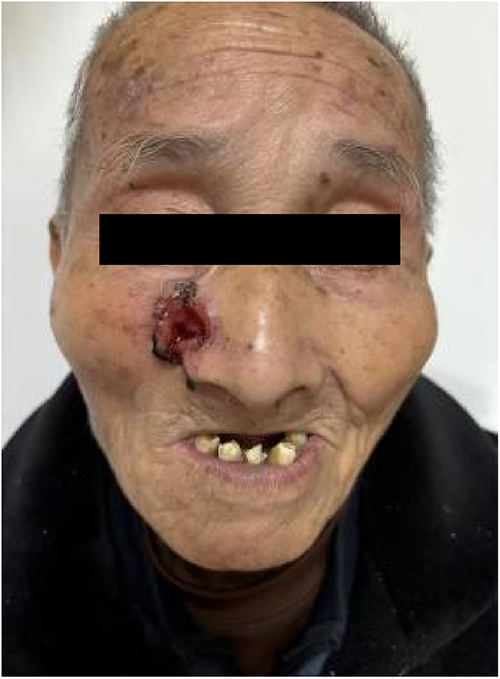 |
Figure 1 Pretreatment lesion. |
Routine laboratory studies, including complete blood count and serum biochemistry, revealed no significant abnormalities. Electrocardiogram demonstrated sinus rhythm and left anterior fascicular block. Histopathologic findings were consistent with nodular basal cell carcinoma, with a tumor thickness of at least 6 mm. The biopsy obtained was a shave biopsy.
Oral treatment of sonidegib phosphate capsules (200 mg, q.d.) was initiated. After 4 weeks, the ulcer area and depth had decreased, with a residual depth of 2–3 mm. Aspartate aminotransferase (AST) rose to 41.9 U/L (0–40 normal range), but patient reported no other adverse symptoms. By week 8, tumor volume had decreased by ~50% (Figure 2), although AST increased to 53.4 U/, and creatine kinase (CK) to 249 U/L (24–195 normal range), but no complaints by the patient were reported. Between weeks 8–12, adverse effects included leg cramps, alopecia, and reduced appetite. By week 12, tumor volume reduced by ~80% (Figure 3), AST 51.8 U/L, CK 114 U/L. Due to age and appetite loss, dosing was adjusted to 200 mg every other day (200 mg q.o.d). By week 16, the tumor continued reached 95% reduction from baseline (Figure 4). Because decreased appetite and quality of life due to persisted, treatment discontinuation was considered at this point. A repeat biopsy from the center of the lesion revealed no tumor cells, effectively indicating clinical cure. Out of concern for recurrence, the patient continued sonidegib (200 mg q.o.d) until week 20, at which time treatment ended given that clinical manifestations of the tumor had completely disappeared (Figure 5). At 4-month follow-up, no recurrence was observed (Figure 6).
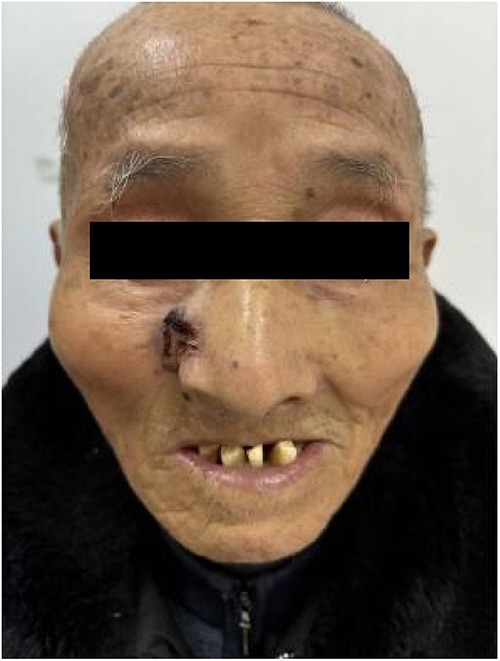 |
Figure 2 Week 8 of sonidegib treatment. |
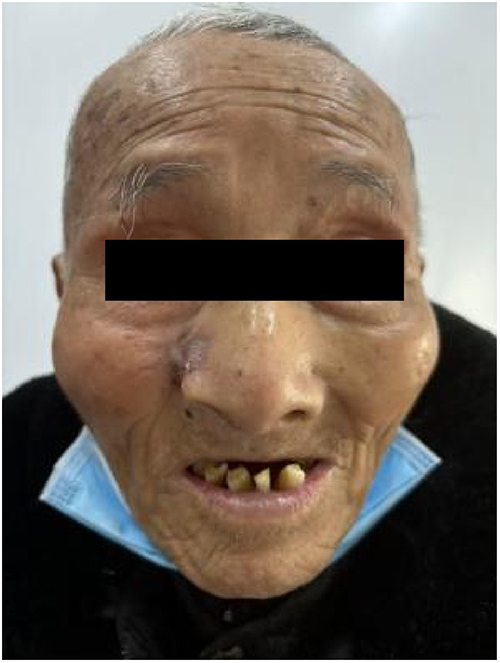 |
Figure 3 Week 12 of sonidegib treatment. |
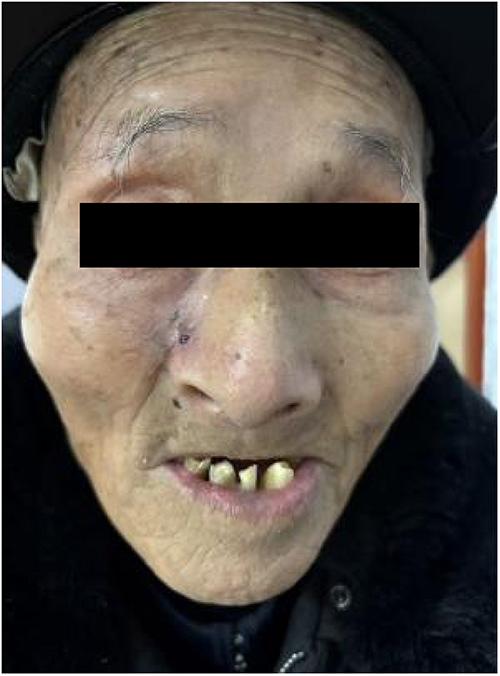 |
Figure 4 Week 16 of sonidegib treatment. |
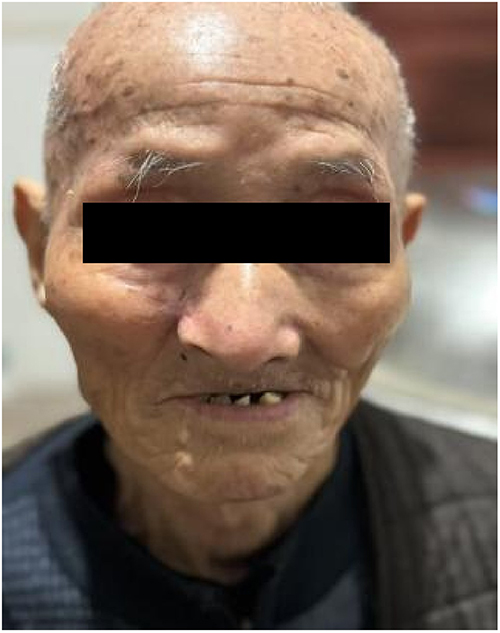 |
Figure 5 Week 20 of sonidegib treatment. |
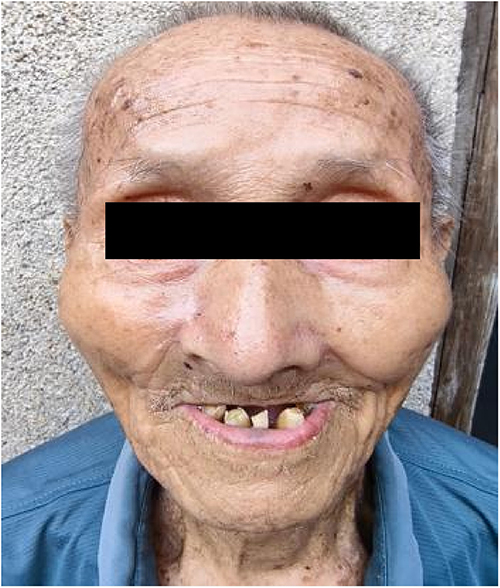 |
Figure 6 Four months after treatment discontinuation. |
Discussion
BCC is the most common cutaneous malignancy, closely associated with ultraviolet exposure, skin phototype, and genetic factors. Elderly men and individuals with lifestyles that predispose them to chronic sun exposure in facial sites (eg, nasal ala, nasolabial fold) constitute high-risk groups.1 This 87-year-old had laBCC recurring after photodynamic therapy, consistent with indolent infiltrative growth in sun-exposed facial areas.
Aberrant activation of the Hedgehog (Hh) signaling pathway is the central pathway implicated in the pathogenesis of BCC. Mutations in patch 1 (PTCH1) or smoothened Hh (SMO) lead to sustained activation of downstream GLI transcription factors, driving tumor cell proliferation.4 Development of Hh pathway inhibitors such as vismodegib and sonidegib has enabled pharmacotherapeutic options for surgically challenging or recurrent/locally advanced BCC.5,6 Vismodegib and sonidegib share a highly similar profile of key adverse events—most notably muscle spasms/musculoskeletal discomfort, alopecia, dysgeusia, fatigue, and weight loss—and their overall efficacy appears broadly comparable. However, they differ in dosing management strategies and pharmacokinetic characteristics, which may influence individualized treatment selection. According to the vismodegib prescribing information, intolerable adverse events are primarily managed by temporary treatment interruption or discontinuation, and a routine dose-reduction strategy is not provided. In contrast, some sonidegib product labels permit dose modification beyond treatment interruption, allowing reduction to 200 mg every other day.7 Thereby offering a practical option for elderly patients or those undergoing a short treatment course who may benefit from more flexible toxicity management. Accordingly, sonidegib was selected for the present case.
Sonidegib is an oral SMO inhibitor approved for laBCC lesions that are not amenable to surgery or radiotherapy. In this patient, surgery risked positive margins, recurrence, and disfigurement. As such, sonidegib therapy was strongly indicated. After a 4-week treatment of 200 mg q.d., marked ulcer reduction was evident. Tumor volume was further decreased by ~50% after 8 weeks, and a complete response was achieved by 16 weeks. These findings are consistent with the BOLT Phase III study, which reported a 24-week objective response rate of 56% across all cases, with complete responses in a subset of cases.5,8
The noteworthy adverse effects of sonidegib in this case were mild elevations in plasma AST and transient increases in CK, along with leg cramps, alopecia, and reduced appetite. These effects are concordant with commonly reported events in other sonidegib studies.5,8,9 Close monitoring of liver function and CK levels, and dose adjustments when intolerance occurs (as in the present case, which necessitated a switch to alternate-day dosing), can improve tolerability while maintaining efficacy.
For elderly patients, surgical resection risks inadequate margins, tissue defects, and functional/aesthetic compromise. In an 87-year-old with a midfacial lesion, complete surgical clearance is difficult, recurrence risk is substantial, and radiotherapy may pose even higher risks. In contrast, oral sonidegib offers a noninvasive and effective therapy with favorable systemic tolerability, making it particularly suitable for such patients.6,10 Flexible dose modulation during treatment (eg, alternate-day dosing) coupled with dynamic histopathologic assessment to guide discontinuation, can preserve efficacy while optimizing quality of life.
Although metastatic BCC is rare, recurrence rates are fairly high for this malignancy (10%–20%).1 Relapse after discontinuation of Hh inhibitors has been reported, likely owing to residual tumor clones or resistance mutations that persist in the primary site.11 Regular dermoscopic surveillance and biopsy when indicated are essential steps to mitigate recurrence. In this case, no recurrence was detected 4 months after discontinuing treatment, although long-term monitoring will remain necessary.
In summary, sonidegib is an effective, relatively safe option for elderly patients with recurrent/unresectable laBCC. Individualized dosing, laboratory monitoring, and repeat histopathology are key to ensuring efficacy and safety.
Conclusion
The outcome of this case suggests that Hh pathway inhibitors provide an effective therapeutic option that balances oncologic control with preservation of facial function and cosmesis in patients with facial tumors who are ineligible for or decline surgery/radiation. Rigorous baseline assessment and attentive monitoring of adverse effects are essential to ensure efficacy and tolerability of these therapies. Although limited by short follow-up and a single-case design, this report adds direct evidence for a “short-course therapy achieving complete response with successful discontinuation”. Moreover, it underscores the importance of individualizing treatment duration and maintaining vigilant surveillance for post-treatment recurrence. These findings warrant confirmation in larger cohorts with longer follow-up.
Ethical Statement
Written informed consent was obtained from the patient for publication of this case report and any accompanying clinical images. According to the policy of Dermatology Hospital of Jiangxi Province, ethics approval was not required for a single anonymized case report. Publication of case details does not require institutional approval.
Disclosure
The authors report no conflicts of interest in this work.
References
1. Cameron MC, Lee E, Hibler BP, et al. Basal cell carcinoma: epidemiology; pathophysiology;clinical and histological subtypes;and disease associations. J Am Acad Dermatol. 2019;80(2):303–7. doi:10.1016/j.jaad.2018.03.060
2. Bakshi A, Chaudhary SC, Rana M, et al. Basal cell carcinoma pathogenesis and therapy involving hedgehog signaling and beyond. Mol, Carcinog. 2017;56(12):2543–2557. doi:10.1002/mc.22690
3. Puig S, Berrocal A. Management of high-risk and advanced basal cell carcinoma. Clin Transl Oncol. 2015;17(7):497–503. doi:10.1007/s12094-014-1272-9
4. Epstein EH. Basal cell carcinomas: attack of the hedgehog. Nat Rev Cancer. 2008;8(10):743–754. doi:10.1038/nrc2503
5. Migden MR, Guminski A, Gutzmer R, et al. Treatment with two different doses of sonidegib in patients with locally advanced or metastatic basal cell carcinoma (BOLT): a multicentre, randomised, double-blind Phase 2 trial. Lancet Oncol. 2015;16(6):716–728. doi:10.1016/S1470-2045(15)70100-2
6. Lear JT, Migden MR, Lewis KD, et al. Long-term efficacy and safety of sonidegib in patients with advanced basal cell carcinoma: 42-month analysis of the BOLT study. Br J Dermatol. 2019;181(6):1176–1184.
7. De Giorgi V, Scarfì F, Trane L, et al. Treatment of Advanced Basal Cell Carcinoma with Hedgehog Pathway Inhibitors: a Multidisciplinary Expert Meeting. Cancers (Basel). 2021;13(22):5706. doi:10.3390/cancers13225706
8. Dummer R, Ascierto PA, Basset-Seguin N, et al. Sonidegib in patients with advanced basal cell carcinoma: long-term efficacy and safety results from the randomized phase 2 BOLT study. J Eur Acad Dermatol Venereol. 2020;34(3):558–566. doi:10.1111/jdv.16103
9. Tang JY, Mackay-Wiggan JM, Aszterbaum M, et al. Inhibiting the hedgehog pathway in patients with basal-cell nevus syndrome. N Engl J Med. 2012;366(23):2180–2188. doi:10.1056/NEJMoa1113538
10. Basset-Seguin N, Hauschild A, Grob JJ, et al. Vismodegib in patients with advanced basal cell carcinoma: primary analysis of STEVIE, an international, open-label trial. Eur J Cancer. 2017;86:334–348. doi:10.1016/j.ejca.2017.08.022
11. Sharpe HJ, Pau G, Dijkgraaf GJ, et al. Genomic analysis of smoothened inhibitor resistance in basal cell carcinoma. Cancer Cell. 2015;27(3):327–341. doi:10.1016/j.ccell.2015.02.001
 © 2026 The Author(s). This work is published and licensed by Dove Medical Press Limited. The
full terms of this license are available at https://www.dovepress.com/terms
and incorporate the Creative Commons Attribution
- Non Commercial (unported, 4.0) License.
By accessing the work you hereby accept the Terms. Non-commercial uses of the work are permitted
without any further permission from Dove Medical Press Limited, provided the work is properly
attributed. For permission for commercial use of this work, please see paragraphs 4.2 and 5 of our Terms.
© 2026 The Author(s). This work is published and licensed by Dove Medical Press Limited. The
full terms of this license are available at https://www.dovepress.com/terms
and incorporate the Creative Commons Attribution
- Non Commercial (unported, 4.0) License.
By accessing the work you hereby accept the Terms. Non-commercial uses of the work are permitted
without any further permission from Dove Medical Press Limited, provided the work is properly
attributed. For permission for commercial use of this work, please see paragraphs 4.2 and 5 of our Terms.
Recommended articles
A Sonidegib Experience in the Treatment of Basal Cell Carcinoma with Systemic Lupus Erythematosus: A Case Report
Shi L, Liu B, Gao P, Cao X, Wan C
Clinical, Cosmetic and Investigational Dermatology 2025, 18:3127-3132
Published Date: 21 November 2025
Refractory Morpheaform Basal Cell Carcinoma Successfully Treated with Oral Sonidegib
Zhang Y, Zheng J, Li X, Wang Y, Fang F, Wang Z, Bu W
Clinical, Cosmetic and Investigational Dermatology 2026, 19:591343
Published Date: 27 March 2026