
Back to Journals » International Journal of Nanomedicine » Volume 21
Research Progress on Nano-Drug Delivery Systems for Photothermal Cancer Therapy
Authors Li T, Xiao D, Yin Y, Hu L
Received 14 September 2025
Accepted for publication 20 January 2026
Published 30 January 2026 Volume 2026:21 567551
DOI https://doi.org/10.2147/IJN.S567551
Checked for plagiarism Yes
Review by Single anonymous peer review
Peer reviewer comments 3
Editor who approved publication: Professor Eng San Thian
Tao Li,1 Dan Xiao,2 Yanlong Yin,3 Liwen Hu4
1Department of Pharmacy, West China Hospital, Sichuan University, Chengdu, People’s Republic of China; 2Department of Pharmacy, Jiu Xing Nephrotic Hospital of Chengdu Wuhou, Chengdu, People’s Republic of China; 3Department of Pharmacy, Jinniu District Hospital of Traditional Chinese Medicine, Chengdu, People’s Republic of China; 4Department of Research and Development, Sichuan Baili Pharmaceutical Co., Ltd, Chengdu, People’s Republic of China
Correspondence: Liwen Hu, Email [email protected] Yanlong Yin, Email [email protected]
Abstract: Cancer remains one of the most formidable challenges in modern medicine. To mitigate the systemic toxicity associated with conventional therapies such as radiotherapy and chemotherapy, photothermal therapy (PTT) has emerged as a highly promising adjuvant modality. The efficacy of PTT hinges on photothermal agents (PTAs), typically nanomaterials that convert light energy into localized hyperthermia to ablate cancer cells. The convergence of nanotechnology and drug delivery has provided a robust platform for PTT, enabling its integration with other therapeutic modalities to enhance efficacy and reduce side effects. This review constructs a three-dimensional analytical framework based on the “carrier-function-application” paradigm, systematically evaluating four major nanocarrier families: lipids, polymers, proteins, and biomimetics. We critically analyze the unique advantages and challenges of each carrier type when delivering various PTAs and further explore multimodal combination therapy strategies. By synthesizing cutting-edge research, we distill key design principles: the core of an efficient photothermal nanosystem lies in overcoming bottlenecks such as poor tumor targeting and heterogeneous tumor microenvironments through intelligent responsive design and biomimetic modification. This framework provides a clear theoretical basis and practical pathway for developing next-generation PTT platforms characterized by high efficiency, safety, and strong clinical translation potential.
Keywords: cancer therapy, photothermal therapy, drug delivery, combination therapy
Introduction
Cancer continues to be a leading cause of mortality worldwide. While traditional modalities, including surgery, radiotherapy, and chemotherapy, form the cornerstone of cancer management, they are often associated with inevitable side effects that significantly compromise patients’ quality of life. To overcome these limitations, numerous novel auxiliary strategies have been developed, such as photothermal therapy (PTT), photodynamic therapy (PDT), and immunotherapy. Among these, PTT has garnered significant attention due to its minimal invasiveness, high spatial selectivity, and favorable safety profile.1,2 As an emerging therapeutic modality, PTT employs photothermal agents (PTAs) to convert light energy into localized hyperthermia, leading to tumor ablation and vascular disruption, which effectively inhibits tumor blood supply. Moreover, the generated heat can induce irreversible damage to cancer cells through mechanisms such as protein denaturation and cell membrane disruption.3
The therapeutic outcome of PTT is contingent upon the performance of PTAs and the precise application of exogenous laser irradiation. Ideal PTAs should exhibit strong absorption in the NIR region, high photothermal conversion efficiency, excellent photostability, and good biocompatibility. The excitation light must penetrate healthy tissues with minimal side effects. Unlike ultraviolet or visible light, NIR light possesses a lower absorption coefficient and deeper penetration in biological tissues, earning it the designation of a “biological window”.4 Most PTT applications utilize the first NIR window (NIR-I, 700–1000 nm). In comparison, the second NIR window (NIR-II, 1000–1700 nm) offers superior tissue penetration depth and imaging sensitivity, making it increasingly attractive for advanced PTT.5,6 Despite its promise, the clinical translation of PTT faces challenges, including the inadequate tumor-specific targeting of PTAs and the propensity for tumor recurrence and metastasis with monotherapy. Consequently, achieving precise delivery of PTAs to tumor sites and enhancing the overall anticancer efficacy of PTT represent critical research priorities.
The advent of nanotechnology has revolutionized drug delivery, enabling the precise transport of PTAs and facilitating multimodal antitumor strategies.7 Nano-drug delivery systems offer distinct advantages: ① Their high specific surface area allows for efficient loading of PTAs;8 ② They can leverage the enhanced permeability and retention (EPR) effect for passive tumor targeting, promoting the accumulation of PTAs at the tumor site;9 ③ The presence of diverse functional groups on nanomaterials permits surface modification with biomolecules (eg, peptides, antibodies) to evade clearance by the reticuloendothelial system (RES) and achieve active tumor targeting;10,11 ④ These systems can be engineered for stimuli-responsive drug release, tailored to the demands of PTT, including NIR-, pH-, or enzyme-triggered mechanisms.12,13
Photothermal therapy operates through a mechanism fundamentally distinct from conventional cancer treatments such as surgery, chemotherapy, and radiotherapy. While conventional modalities often depend on physical resection, systemic cytotoxicity, or radiation-induced DNA damage—approaches frequently hampered by limited specificity and collateral damage to healthy tissues—PTT is characterized by its spatially controlled, energy-triggered nature. The efficacy of PTT hinges on the localized accumulation of PTAs and the precise application of NIR laser irradiation. By adjusting parameters such as irradiation site, duration, and power, both the treatment zone and thermal intensity can be precisely regulated.
Upon NIR laser exposure, PTAs efficiently convert light energy into heat, leading to a rapid temperature increase that induces tumor cell death primarily through protein denaturation and membrane disruption—a necrotic mechanism different from the apoptosis-dominated cell death caused by many chemotherapeutics. Additionally, PTT can damage the tumor vasculature, thereby impairing nutrient supply and promoting tumor ablation. Since the therapeutic effect is confined to the laser-irradiated area containing PTAs, PTT significantly reduces off-target toxicity and embodies a minimally invasive and highly selective anticancer strategy.
This review provides a systematic analysis of the latest advancements in nano-drug delivery systems for PTT. A key challenge in the field is the rational selection of nanocarriers for diverse therapeutic scenarios. In response, this article constructs a novel three-dimensional analytical framework centered on the “carrier-function-application” paradigm. This framework enables a comparative analysis of the four primary nanocarrier families—lipids, polymers, proteins, and biomimetics—critically examining their respective advantages and challenges in photothermal agent delivery, targeted accumulation, and controlled drug release. Subsequently, the review explores synergistic strategies for combining PTT with other treatment modalities, such as chemotherapy and photodynamic therapy. The discussion concludes with an outlook on future research directions and translational challenges. To guide the reader, the review is structured as follows: Application of Figurethermal Agents in Figurethermal Therapy details the classification and properties of photothermal agents; Application of Nano-Drug Delivery Systems in Figurethermal Therapy elaborates on the four nanocarrier systems as the core content; Combination of Figurethermal Therapy and Other Treatment Modes discusses combination therapies; and the final section summarizes challenges and future perspectives.
Application of Photothermal Agents in Photothermal Therapy
In the photothermal treatment of tumors, photothermal agents are the key to achieving satisfactory therapeutic effects. According to existing reports, photothermal agents can be mainly divided into two categories: precious metal nanomaterials and organic small molecule dyes.
Precious Metal Nanomaterials
Precious metal nanomaterials (eg, gold, silver, platinum) hold significant potential as PTAs owing to their distinctive surface plasmon resonance (SPR) properties and strong near-infrared absorption. Precious metal nanomaterials function as efficient photothermal transducers, converting photon energy into localized hyperthermia for tumor ablation and photoacoustic imaging. Crucially, they offer a distinct advantage over organic dyes by exhibiting exceptional resistance to photobleaching, a degradation phenomenon to which organic agents are notably susceptible.14
Gold Nanoparticles
Gold nanoparticles (AuNPs) represent one of the most extensively investigated PTAs, prized for their high photothermal conversion efficiency and tunable optical properties.15 Their utility stems from several key advantages: ① high biocompatibility; ② ease of surface functionalization; ③ exceptional photostability (resistance to photobleaching); and ④ controllable morphology. These parameters—size, shape, and surface architecture—critically govern their photothermal performance.16 For instance, silica-encapsulated, self-assembled gold nanochains (AuNCs@SiO2) demonstrate deep tissue penetration, strong photoacoustic imaging capability, and effective photothermal conversion within the second near-infrared (NIR-II) window, achieving a remarkable photothermal conversion efficiency of 82.2% under 1064 nm laser irradiation, which translates to potent tumor cell killing and suppression efficacy.17 Similarly, gold nanoprisms functionalized with the near-infrared dye IR780 and the tumor-homing peptide LyP-1 (GNPs/IR780-LyP-1) leverage their triangular structure to exhibit enhanced surface-enhanced Raman scattering (SERS) and surface plasmon resonance (SPR), thereby boosting the conversion of photon energy into localized hyperthermia.18
Despite these advantages, the clinical translation of AuNPs is hampered by several significant challenges. As inorganic materials, they are non-biodegradable, leading to potential long-term accumulation in organs such as the liver and spleen, which raises concerns about chronic toxicity.19 This toxicity is also size-dependent, with smaller AuNPs posing a risk of direct cellular DNA damage. Furthermore, AuNPs typically suffer from low targeting efficiency, resulting in a minimal fraction of the administered dose reaching the tumor site. Their complex pharmacokinetics and the disparities between preclinical models and human physiology further complicate accurate prediction of their in vivo fate.19,20 The design of multifunctional AuNPs for targeting or theranostics often introduces synthetic complexity, leading to cumbersome production processes, high costs, and challenges in ensuring batch-to-batch reproducibility. Based on existing reports, this article summarizes different types of gold nanoparticles (Table 1).
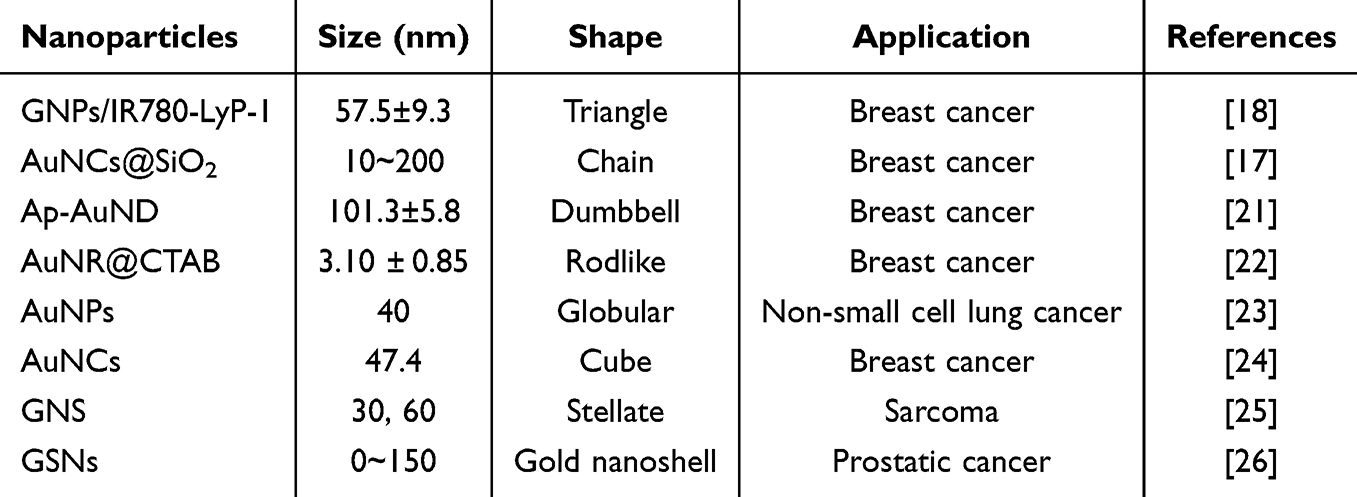 |
Table 1 Various Types of Gold Nanoparticles Based on Photothermal Therapy |
Platinum Nanoparticles
Platinum, characterized by its high biocompatibility, holds promise as a photothermal agent. Its nanostructures, fabricated via a selective etching strategy, exhibit a high extinction coefficient and SPR, making them well-suited for applications in photothermal therapy guided by X-ray computed tomography (CT) imaging.27 The antitumor effect of platinum nanoparticles is size-dependent, with smaller particles showing greater potency, likely attributable to their more efficient cellular uptake. This finding implies that reducing particle size is a potential strategy to improve tumor-targeting efficacy.28
Organic Small Molecule Dyes
Despite demonstrating excellent therapeutic efficacy in animal studies, the clinical translation of precious metal nanomaterials has been significantly hindered by their slow metabolism and propensity for long-term retention in the body, raising concerns about potential chronic toxicity. To address the safety limitations associated with traditional inorganic PTAs, significant research efforts have been directed toward developing organic small-molecule dyes renowned for their superior biocompatibility. Representative examples include anthocyanins, porphyrins, and their structural analogues.29
A key advantage of many organic dyes is their inherent NIR fluorescence, which makes them ideal candidates for multimodal imaging-guided photothermal therapy, functioning simultaneously as PTAs and NIR imaging probes.30–33 A prominent example is indocyanine green (ICG), an FDA-approved NIR imaging agent. With a maximum absorption wavelength around 820 nm, which affords deep tissue penetration, ICG is also widely utilized as a photothermal agent for PTT.31 The success of ICG has spurred the development of numerous analogues—such as IR780, IR770, IR820, and IR808—which often exhibit improved characteristics, including red-shifted absorption wavelengths and enhanced preferential accumulation in tumor tissues.34–38 Notably, the clinical potential of this approach is underscored by the advancement of photothermal therapy strategies employing monoclonal antibodies conjugated to photoactivatable phthalocyanine-derived dyes into clinical trials.39,40
Despite their favorable biocompatibility, organic small-molecule dyes face significant challenges compared to precious metal nanoparticles, most notably rapid photobleaching. The majority of these dyes, including ICG, exhibit pronounced photochemical instability and low fluorescence quantum yield in aqueous environments, frequently resulting in substantial fluorescence quenching.14 Furthermore, their short circulation half-life in vivo, due to rapid systemic clearance, leads to suboptimal accumulation at the tumor site.
To overcome these limitations, a common strategy involves nano-encapsulation or formulation into nanoparticle-based delivery systems. This approach effectively enhances the photostability of the dyes by shielding them from the aqueous environment and optimizes their pharmacokinetic profile, thereby improving their therapeutic potential.32,41,42
Application of Nano-Drug Delivery Systems in Photothermal Therapy
The limitations associated with noble metal nanomaterials and small-molecule dyes, as previously discussed, pose significant challenges for their direct application in PTT. Nano-drug delivery systems (NDDSs) offer a viable strategy to overcome these hurdles. By encapsulating photothermal agents, NDDSs can enhance their stability, improve tumor-specific targeting, and facilitate controlled release. The principal classes of nanocarriers explored for PTT applications include lipid-based, polymer-based, protein-based, and biomimetic delivery systems.
Lipid Nanodelivery Systems
Lipid-based nanodelivery systems have demonstrated transformative potential in PTT, with their principal advantage lying in the synergistic integration of efficient photothermal conversion and precision drug delivery, thereby enabling advanced theranostic applications. Preclinical studies indicate that these systems significantly enhance NIR light absorption (780–850 nm). For instance, the incorporation of gold nanomaterials (eg, Au nanoshells, Au-liposomes) with organic photosensitizers (eg, ICG, Cypate, IR-820) has been shown to achieve drug release rates up to 97.3% and tumor inhibition rates of approximately 95.7%.43,44
Gold-lipid composite systems (eg, Au-Lipos-Cur NPs, AuNS-Wed-Lip) leverage the SPR effect to convert light energy into heat. This process not only induces lipid membrane destabilization to promote drug release (eg, increasing the release efficiency of curcumin by up to 70%) but also directly mediates thermal ablation of tumor cells. Conversely, systems loaded with organic photosensitizers (eg, Lipo-Cy, IR-820@Lipo NPs) exploit the lipid bilayer’s confinement effect to enhance π-π stacking of the dyes, which can increase the photothermal conversion efficiency by more than tenfold while concurrently improving water solubility and tumor-targeting capabilities.45,46
Multifunctional design strategies further expand their utility. Temperature-limited systems like RFE@PD utilize metal-phenol complexes to dynamically control the therapeutic temperature below 45°C, simultaneously achieving P-glycoprotein (P-gp) degradation and chemosensitization, resulting in a tumor inhibition rate of about 82.4%.47 Moreover, active-targeting systems such as FA-DOX-ICG-PFP@Lip, which target folate receptors, combine the enhanced permeability and retention (EPR) effect with dual-mode photoacoustic/ultrasound imaging, significantly improving tumor accumulation and reducing systemic toxicity.48
The application of lipid nanodelivery systems in PTT has evolved beyond monotherapy towards sophisticated combination strategies, primarily including: ① chemo-photothermal therapy (eg, synergistic enhancement between doxorubicin (DOX) and gold nanoshells (AuNS));49 ② immune-PTT combinations (eg, inducing immunogenic cell death (ICD) using immune checkpoint blockers (ICB) and oxaliplatin (OXA));50 and ③ photodynamic/photothermal therapy (PDT/PTT) synergy (eg, Lipo-Cy concurrently generating reactive oxygen species (ROS) and hyperthermia).45
Future research directions for lipid nanodelivery systems in PTT are likely to focus on: ① developing novel smart-responsive materials (eg, phase-change materials, metal chelators) for precise temperature and release control;50 ② optimizing multimodal imaging-guided combination therapy protocols;51 and ③ overcoming the stability limitations of photosensitizers via advanced molecular engineering strategies, such as guided self-assembly.52 These concerted advances lay a solid foundation for the clinical translation of lipid-based nanoplatforms in precision oncology.
Despite their considerable promise, lipid-based nanodelivery systems face several critical challenges in the context of PTT, which impose more stringent demands on their pharmacokinetic performance. Effective PTT requires not only the accumulation of nanocarriers at the tumor site but also the attainment of a local concentration sufficiently high to generate effective hyperthermia upon laser irradiation. The primary bottleneck remains the notoriously low tumor targeting efficiency, which typically hovers around 0.7% of the administered dose, severely limiting the therapeutic index.20 Furthermore, achieving a uniform intratumoral distribution of the photothermal agents is essential for homogeneous heating and complete tumor ablation, yet this ideal distribution profile is difficult to attain in practice due to heterogeneous tumor vasculature and interstitial pressure.53
The application of advanced biomimetic strategies, such as cell membrane-coated liposomes, introduces another layer of complexity: immunogenicity risk. While coatings derived from cancer cell membranes or bacterial membranes are designed to enhance targeting and prolong circulation, their complex biological components carry the potential to trigger unintended immune recognition and accelerated clearance, which could counteract their intended benefits.54,55
From a translational perspective, the incorporation of photothermal agents—particularly inorganic nanomaterials—into liposomal formulations adds significant complexity to the manufacturing process compared to the encapsulation of conventional small-molecule drugs. This complexity places heightened demands on batch-to-batch consistency, long-term stability, and scalability, posing substantial challenges for commercial production and regulatory approval.56,57
Polymer Nanodelivery Systems
Innovative applications of polymer nanodelivery systems in PTT are driving the development of precision cancer treatment, with core breakthroughs in multifunctional integration, stimulus responsiveness, and synergistic therapy. Conjugated polymer-based nanomaterials, due to their excellent near-infrared absorption and modifiability, serve as the foundation for building integrated diagnostic and therapeutic platforms.58 Amphiphilic biodegradable polymers (such as PLGA, PEtOx) significantly improve the water solubility, stability, and tumor targeting of photothermal agents by encapsulating near-infrared dyes (IR780, Cypate) and small molecule drugs (DOX, paclitaxel).59–62 In terms of material design, researchers have developed various innovative strategies: ① Novel nano coordination polymers reduce dye leakage risk through the coordination between Gd3+ and Cypate, realizing multimodal imaging-guided PTT;60 ② Polydopamine mesoporous nanosystems (PPMD@GA/si) achieve gene/drug co-delivery via phase change material solidification, to inhibit tumor metastasis combining photothermal and RNA interference;63 ③ Semiconductor polymer-CuS hybrid systems (SCP-CS) use single laser triggering to simultaneously generate thermal therapy and chemodynamic effects, reducing treatment time by over 50%.64 In functional optimization, gold-based hybrid systems achieve near-infrared controlled release through polymer-induced self-assembly (such as PSar-b-PCL), increasing DOX release by 1.7 times,65 in besides of the PSMA targeting system utilizes the liquid-gas phase transition of perfluoropentane (PFP) to simultaneously enhance ultrasound imaging and drug release.48 Currently, Polymer Nanodelivery systems in PTT research have formed three typical research models: Chemical-photothermal synergy (such as BID liposomes achieving complete regression of 4T1 tumors), photodynamic-photothermal combination (DOX/PEtOx-IRNPs reducing breast cancer cell survival to 4%),62,66 and immune-PTT integration (MPDA systems combined with siRNA inhibiting metastasis).
Future development directions for polymer nanodelivery systems in PTT research may focus on: ① Developing smart-responsive materials (such as temperature-sensitive systems for PCM curing) to achieve zero-leakage delivery;65 ② Optimizing multi-effect synergistic mechanisms activated by a single laser (such as SCP-CS synchronously generating heat/ROS);64 ③ Promoting simplified preparation processes for clinical translation (such as FL-PEG one-pot method replacing fluorescence labeling).67 These advancements provide new solutions for the precise, personalized, and minimally invasive application of polymer nanodelivery systems in tumor photothermal therapy.
Polymer-based nanodelivery systems exhibit considerable promise in PTT owing to their excellent biocompatibility, tunable biodegradability, and ease of functionalization.68,69 Nonetheless, their translation from laboratory research to widespread clinical application is impeded by several significant challenges. Although polymeric materials are generally regarded as biodegradable and safe, their long-term in vivo fate and potential for cumulative toxicity require careful evaluation. For instance, polyamidoamine (PAMAM) dendrimer-based nanoplatforms—although successfully engineered for the co-delivery of photothermal agents and chemotherapeutic drugs—still necessitate systematic assessment of their chronic biosafety profile.70 The metabolic pathways and potential organ accumulation of degradation products remain critical points of investigation. A fundamental challenge shared with most nanomedicines is their extremely low tumor targeting efficiency, which severely restricts therapeutic efficacy and may increase off-target risks.20 While biomimetic strategies—such as coating polymer nanoparticles with cell membranes—aim to enhance targeting and immune evasion, they introduce new complexities. The inherent immunogenicity of these natural biological coatings (eg, derived from cell membranes or viral proteins) can trigger unpredictable immune recognition and clearance mechanisms. Their complex composition may carry immune stimuli, leading to unintended immune responses and attracting stricter regulatory scrutiny.54,55
The synthesis of advanced polymer nanodelivery systems—particularly multifunctional, stimulus-responsive platforms (eg, temperature- or pH-sensitive polymers)—involves considerable complexity. This complexity poses substantial challenges in ensuring batch-to-batch reproducibility and stringent quality control.69 Furthermore, issues related to physical and chemical stability, such as drug leakage and polymer degradation, directly impact shelf life and therapeutic performance, presenting major obstacles to industrial-scale production. The sophisticated manufacturing processes required often result in high costs, severely limiting scalability and commercial viability.56 Collectively, these factors contribute to significant regulatory barriers. The intricate composition and unpredictable in vivo behavior of these systems complicate the standardization of pharmacokinetic and toxicological evaluations, inevitably leading to prolonged and stringent approval processes.57
In summary, the advancement of polymer-based nanodelivery systems as effective PTT platforms is constrained by several interconnected challenges: an incomplete understanding of their long-term biosafety, inherently low tumor targeting efficiency, potential immunogenic risks associated with surface modifications, and the critical hurdles of manufacturing reproducibility, stability, and cost-effectiveness that must be overcome for clinical translation. Future research must strategically balance the pursuit of advanced functionality with the imperative of addressing these translational barriers. Prioritizing the development of polymers with optimized degradation profiles, smarter targeting strategies that minimize immunogenicity, and scalable, reproducible manufacturing processes will be crucial to unlocking the full clinical potential of these versatile nanoplatforms.
Protein Nanodelivery Systems
Protein-based nanodelivery systems hold significant promise in PTT due to their exceptional biocompatibility, long circulation half-life, and abundant functionalization sites. Natural proteins, particularly serum albumin, serve as ideal building blocks for constructing integrated theranostic nanoplatforms. Studies demonstrate that albumin not only acts as an effective stabilizer for inorganic nanomaterials—such as gold (AuNPs) and platinum nanoparticles—enhancing their biocompatibility and tumor-targeting capabilities,71,72 but also self-assembles into multifunctional carriers. Examples include HSA/ICG/TOS nanoparticles (HIT-NPs) and IR780-DOX@Albumin NPs, which enable the co-delivery of chemotherapeutic agents (eg, doxorubicin, DOX) and photothermal dyes (eg, ICG, IR780) for synergistic therapy.73,74
Material design innovations continue to advance the field. For instance, human serum albumin-templated iron phthalocyanine nanoparticles (HSA-FePc NPs) and BSA-stabilized Ag2S nanoparticles exhibit high photothermal conversion efficiencies (44.4% and 18.89%, respectively) and possess blood-brain barrier penetration capabilities, offering new avenues for glioma treatment.75,76 Additionally, albumin-based nanopore reactors have been used to construct Gd2O3/CuS hybrid systems, allowing precise PTT under the guidance of magnetic resonance and near-infrared fluorescence dual-mode imaging.77
Several strategic approaches have been established in protein-based PTT research: ① Protein Corona Engineering: Systems such as gold nanorod-albumin nanoparticles (AuNRs-Alb NPs) optimize tumor accumulation by adjusting the nanoparticle’s aspect ratio and size, enabling local temperatures up to 57°C for complete tumor ablation.78 ② Supramolecular Assembly: Metal-coordinated protein nanomedicines enhance photothermal conversion efficiency by more than twofold through coordinated heating effects.79 ③ Stimuli-Responsive Release: Nanoplatforms like IR780-DOX@Albumin NPs utilize near-infrared light to trigger IR780 degradation, boosting DOX release threefold.74
These systems also enable effective combination therapies. The PPy@BSA-Ce6 system, which stabilizes polypyrrole with BSA, facilitates simultaneous photodynamic/photothermal therapy (PDT/PTT) and dual-mode fluorescence/MRI imaging.80 Further, folate-decorated albumin nanoparticles (FA-DINPs) promote receptor-mediated endocytosis, increasing the tumor inhibition rate by 80% without detectable systemic toxicity.81
Despite the favorable biocompatibility of natural proteins, the performance of protein-based—and indeed most synthetic—nanosystems in vivo is significantly influenced by the nonspecific formation of a protein corona. Upon entering the bloodstream, nanoparticles are rapidly coated by a dynamic layer of biomolecules. This corona often masks pre-engineered targeting ligands (eg, RGD peptides, antibodies), effectively converting actively targeted systems into passive carriers reliant on the EPR effect, which is highly variable and inefficient.82 This phenomenon is a major factor underlying the persistently low tumor targeting efficiency of nanomedicines, with typically less than 1% of the injected dose reaching the tumor site.20
The protein corona also introduces immunogenicity risks. Even when nanoparticles are crafted from biocompatible materials, the adsorbed protein layer can confer immunogenicity, potentially triggering unintended immune responses.54 While bio-inspired coatings (eg, cell membranes) are designed to minimize immunogenicity, the protein corona can obscure these surfaces, interfering with their “self” recognition and introducing new uncertainties.55
From a clinical translation perspective, the protein corona represents a severe and uncontrollable variable. Its composition is highly dynamic and varies significantly between individuals, depending on physiological and pathological conditions. This variability makes it extremely difficult to reproduce pharmacokinetic and therapeutic outcomes across different production batches and patients, posing substantial obstacles to quality control, consistent efficacy, and reliable safety assessment.56,83 This inherent unpredictability is a fundamental regulatory hurdle for the clinical approval of nanomedicines.
The nonspecific formation of the protein corona constitutes a core challenge that fundamentally limits the efficacy and clinical translation of photothermal nanosystems. It undermines targeting precision, introduces immunogenic risks, and complicates pharmacokinetic and toxicological predictability. For protein-based nanosystems to succeed, learning to control or exploit the protein corona will be critical. Future development should therefore focus on: ① designing subcellular targeting systems (eg, mitochondrial-specific carriers); ② optimizing real-time treatment monitoring guided by multimodal imaging; and ③ advancing large-scale, GMP-compliant manufacturing processes (eg, improved desolvation methods). These breakthroughs will solidify the position of protein-based nanosystems as one of the most clinically translatable platforms for photothermal therapy.
Bionic Nanodelivery Systems
Bionic nanodelivery systems represent an innovative strategy in PTT, integrating natural biological components with synthetic nanomaterials to create advanced platforms with enhanced tumor targeting and immune evasion capabilities. These systems, which include cell membrane-coated nanoparticles and bioinspired liposomes, leverage the unique properties of natural membranes—such as low immunogenicity, innate targeting ability, and biocompatibility—while maintaining the controllability and multifunctionality of engineered nanocarriers.84,85 The core principle involves functionalizing nanoparticle surfaces with naturally derived cell membranes through biomimetic camouflage technology, thereby conferring biological recognition properties.
Among various membrane sources, red blood cell (RBC) membranes have emerged as particularly promising coating materials due to their inherent immune evasion mechanism (mediated by the CD47-SIRPα signaling pathway) and extended circulation half-life (reaching 30–40 days).86–88 Experimental studies demonstrate that RBC membrane-coated nanoparticles, such as gold nanoparticles (RBC-AuNPs) and superparamagnetic nanoclusters (Cyp-MNC@RBCs), enhance tumor accumulation by 3–5 fold and reduce macrophage phagocytosis by over 80%, primarily through the preservation of membrane proteins like CD47.89,90 Functional expansion through hybrid membrane technologies—such as RBC-cancer cell (B16) fusion membranes—further integrates long circulation properties with homologous targeting capabilities, enabling systems like hollow copper sulfide nanoparticles (DCuS@[RBC-B16]NPs) to achieve complete tumor inhibition in melanoma models.91
Current research on bionic nanodelivery systems in PTT focuses on three primary directions: ① Immunomodulatory types (such as Fe3O4@RBCNP), which mimic natural red blood cells to avoid IgM/lgG activation of;92 ② Integrated diagnosis and therapy (such as Cyp-MNC@RBCs) achieving fluorescence/MRI dual-mode imaging-guided PTT;90 ③ Synergistic therapy (such as DOX-loaded systems) combining chemotherapy with photothermal ablation. These advancements signify the evolution of bionic nanodelivery systems from simple carriers to multifunctional platforms capable of intelligent drug delivery, precise imaging, and combination therapy, representing a new class of therapeutic agents, sometimes termed “nanobiologics”.93
Despite their promising capabilities, bionic nanodelivery systems face significant challenges in clinical translation. Pharmacokinetic limitations remain a fundamental constraint; although biomimetic strategies improve tumor accumulation, the overall targeting efficiency following intravenous administration remains extremely low.20 Furthermore, achieving uniform intratumoral distribution of photothermal agents—essential for effective thermal ablation—proves difficult in practice, and current biomimetic approaches have not fully resolved this heterogeneity.53 The immunogenicity of bionic systems presents a particular paradox. While designed to exploit “self” recognition mechanisms (eg, using RBC or cancer cell membranes) to minimize immune activation,55 the complex composition of biological materials introduces unforeseen risks. Foreign membrane components (eg, from bacteria, viruses, or heterologous cells) may contain pathogen-associated molecular patterns that trigger unpredictable immune responses, potentially leading to accelerated clearance and complicating regulatory approval.54 Manufacturing challenges also impede clinical application. Ensuring batch-to-batch reproducibility, long-term stability, and scalable production of these complex systems remains difficult, while satisfying regulatory requirements for consistent quality and safety presents additional hurdles.
In summary, the development of bionic nanodelivery systems for PTT is constrained by several interconnected factors: uncertain long-term safety profiles, limited pharmacokinetic efficiency, the dual nature of immunogenicity, and challenges in manufacturing reproducibility and regulatory compliance. Future research must carefully balance the benefits of bioinspired functionalities against the complexities and potential risks they introduce. Overcoming these challenges will require innovative approaches to optimize biological material selection, enhance tumor targeting uniformity, and establish scalable manufacturing processes—ultimately paving the way for clinically viable bionic nanoplatforms for cancer therapy.
Combination of Photothermal Therapy and Other Treatment Modes
Despite its promise as a minimally invasive adjuvant modality in oncology, PTT faces inherent physical and biological limitations that constrain its efficacy as a monotherapy. A primary physical constraint is the attenuation of NIR laser energy with increasing tissue depth, which can lead to a subtherapeutic photothermal dose in deeper tumor regions and compromise treatment outcomes. Biologically, the application of hyperthermia alone is often insufficient to achieve complete tumor eradication, frequently resulting in residual viable cells that contribute to tumor recurrence and poor prognosis.94
To address these challenges, the strategic combination of PTT with other anticancer modalities has emerged as a critical approach to enhance therapeutic efficacy. Combination regimens allow for a reduction in the required dose of each individual therapeutic agent, thereby mitigating systemic toxicity and side effects. Moreover, the localized hyperthermia generated by PTT can directly induce tumor ablation through thermal effects while simultaneously acting as a potent sensitizer for co-administered therapies. This synergistic interaction can enhance drug delivery and efficacy, for instance, by increasing tumor vascular permeability and improving intratumoral drug distribution, ultimately leading to a superior anticancer effect compared to any single modality.
Photothermal Therapy Combined with Chemotherapy
Chemotherapy has become one of the most important tumor treatment methods in clinical practice, but there are still shortcomings in its susceptibility to adverse reactions to normal tissues. Especially with the emergence of issues such as tumor recurrence, metastasis, and drug resistance, chemotherapy will face more challenges and it is difficult to achieve satisfactory treatment results. In recent years, the photochemotherapy treatment model has become one of the most effective anti-tumor strategies, which can effectively overcome the shortcomings of chemotherapy and enhance the therapeutic effect. For example, DOX/Au@Pt-cRGD nanoparticles have high photothermal conversion efficiency and the ability to perform in vivo photoacoustic imaging, making it very suitable as a carrier for photothermal therapy. It can not only enhance the anticancer therapeutic efficacy of the chemotherapy drug doxorubicin, but more importantly, it can serve as a reactive oxygen species scavenger to alleviate oxidative stress damage caused by doxorubicin during the treatment process (Figure 1).95 As an auxiliary means, mild hyperthermia generated by photothermal therapy can increase vascular permeability, thereby enhancing the transport of chemotherapy drugs and drug accumulation at the tumor site, thereby reducing the toxic response of chemotherapy drugs.96–98 On the other hand, nanomaterials with photothermal effects can serve as a thermally triggered drug delivery system to control the release of chemotherapy drugs at specific sites. According to reports, a type of NIR laser responsive nanoparticles (FBPD NPs) have both targeted treatment and diagnostic functions. With the assistance of folic acid, nanoparticles can be highly enriched in ovarian tumor tissue, making them a precise strategy for treating ovarian cancer.99 Integrating ICG and the anti-tumor drug paclitaxel PTX into hybrid nanoparticles of Gd2O3 and human albumin can achieve anti-tumor therapy guided by magnetic resonance imaging (MRI) and NIR fluorescence dual mode imaging, thereby effectively ablating tumors.100
 |
Figure 1 (A) Schematic illustration of chemo-photothermal combinational therapy for tumors by the multifunctional Au@Pt nanoparticles. (B) Schematic illustration of DOX/Au@Pt-cRGD based PTT and chemotherapy to inhibit MDA-MB-231 tumor xenograft models. (C) Relative tumor volume and body weight variation of the mice in different groups during treatment. Error bars were based on standard deviations of five mice per group (** P <0.01). (D) Photographs of subcutaneous tumors and the tumor-bearing mice taken 3 weeks after different treatments. Reproduced with permission from Ref.95 Copyright 2018, American Chemical Society. |
Despite the compelling theoretical advantages, the clinical translation of chemo-photothermal therapy faces significant challenges. Similar to other nanomedicine-based combinations, it introduces concerns regarding potential long-term toxicity of both chemotherapeutic agents and nanocarriers. Pharmacokinetically, the extremely low tumor targeting efficiency (often below 1%) remains a fundamental bottleneck.20 From a clinical implementation perspective, the requirement for precise integration of nanomedicine administration with controlled laser irradiation increases procedural complexity, operational difficulty, and dependence on specialized medical infrastructure.57
These challenges underscore the necessity for future development to focus on creating more intelligent, safer, and simplified nanocarrier systems. Advances in stimuli-responsive materials, improved targeting strategies, and standardized treatment protocols will be crucial for overcoming the current limitations and fully realizing the clinical potential of chemo-photothermal combination therapy.
Photothermal Therapy Combined with Photodynamic Therapy
Photothermal therapy and photodynamic therapy (PDT) represent two emerging minimally invasive modalities for cancer treatment. Compared to conventional therapies like chemotherapy and radiotherapy, they offer significant advantages, including precise spatiotemporal selectivity, minimal invasiveness, and reduced systemic side effects.88 PTT employs photothermal agents to generate localized hyperthermia upon NIR laser irradiation, inducing thermal ablation of tumor cells. In contrast, PDT utilizes photosensitizers that, upon light activation, transfer energy to molecular oxygen, generating cytotoxic reactive oxygen species (ROS)—such as singlet oxygen (1O2), superoxide anions (O2−), and hydroxyl radicals. (OH)—leading to cellular apoptosis and necrosis.101,102
Despite its promise, the efficacy of PDT is often constrained by several factors, including tumor hypoxia (low O2 concentration), limited light penetration depth, and the suboptimal pharmacokinetics of conventional photosensitizers.103,104 The combination of PTT and PDT within a single nanoplatform presents a compelling strategy to overcome these limitations through synergistic interactions.105 The localized hyperthermia from PTT can enhance PDT efficacy by improving intratumoral blood flow, thereby increasing oxygen supply, and by increasing cell membrane permeability, which facilitates the cellular uptake of photosensitizers.106 Furthermore, nanoparticle-based oxygen delivery systems can be co-administered to alleviate tumor hypoxia specifically, thereby potentiating the ROS-mediated cytotoxicity of PDT.107 This dual-mode action, involving simultaneous thermal damage and oxidative stress, effectively targets cancer cells and significantly reduces the likelihood of tumor recurrence.108
Nanotechnology provides sophisticated tools for the co-delivery of PTAs and PSs. For instance, docetaxel (DTX) and IR820-loaded nanomicelles have been shown to effectively inhibit the growth and metastasis of murine breast cancer by combining PTT and PDT effects.109 A prominent example is a functionalized covalent organic framework (COF) nanocarrier co-loaded with a vanadyl phthalocyanine photothermal agent (VONc) and a porphyrin-based photosensitizer (Por). The resulting nanoparticle, VONc@COF-Por, demonstrated a high photothermal conversion efficiency (55.9%) and potent singlet oxygen generation under 808 nm laser irradiation, leading to significant inhibition of MCF-7 breast cancer cells both in vitro and in vivo (Figure 2).110
 |
Figure 2 (A) Mind mapping for designing nanotherapeutic systems. (B) The preparation of VONc@COF-Por (3). (i) 1,3,5-tris (4-aminophenyl) benzene, 2,5-dimethoxyterephthaldehyde, PVP, acetic acid, CH3CN, 25 °C; (ii) COF (1), Por, acetic acid solution (3M), 1,4-dioxane, reflux; (iii) COF-Por (2), VONc, N,N-dimethylacetamide (DMAC), 25 °C. (C) Detection of cellular oxidative stress using MitoTracker Red CM-H2Xros. (D and E) Antitumor therapy in vivo. (D) Grouping situation and the treatment plan. (E) Photographs of tumor tissue, tumor weight and tumor volume of the nude mice invarious groups during the treatment. All data are presented as the mean ± SD (n = 5). ***p < 0.001; **p < 0.01; *p < 0.05; ns, no significance (p > 0.05). Reproduced with permission from Ref.110 Copyright 2019, American Chemical Society. |
The PTT-PDT combination strategy, which simultaneously generates localized hyperthermia and cytotoxic ROS, demonstrates a synergistically enhanced antitumor effect. However, its clinical translation is hampered by significant challenges arising from mechanistic complexities and formulation intricacies. On one hand, long-term safety remains a primary concern. While individually considered safe, the potential for interactive toxicity between co-delivered PTAs and PSs is not fully understood. Some inorganic PTAs may be non-biodegradable, posing risks of long-term accumulation, while residual photosensitizers in normal tissues could lead to prolonged phototoxicity.111 On the other hand, pharmacokinetic inefficiency and tumor microenvironment (TME) constraints present fundamental hurdles. Like most nanomedicines, PTT-PDT systems suffer from extremely low tumor targeting efficiency (<1% of the injected dose).20 Moreover, the efficacy of PDT is critically dependent on oxygen availability, which is scarce in the hypoxic TME. Paradoxically, the oxygen consumption during PTT can exacerbate this hypoxia, potentially counteracting the benefits of PDT.112
Manufacturing and clinical implementation barriers are substantial. Co-encapsulating both agents within a single nanocarrier drastically increases production complexity, challenging batch-to-batch reproducibility, stability (photothermal and photochemical), and precise control over drug loading ratios, ultimately leading to high costs.56 Clinically, the therapy requires the precise coordination of two distinct laser systems (often at different wavelengths) and optimization of irradiation parameters, increasing operational complexity and making treatment standardization difficult.57 These factors collectively create formidable regulatory hurdles, as the “drug-device” combination necessitates compliance with stringent standards for both components, resulting in a prolonged approval process.54
In conclusion, while PTT-PDT combination therapy holds great theoretical promise, its clinical advancement is constrained by unresolved issues regarding long-term safety, low pharmacokinetic efficiency, TME limitations, and the compounded complexities of manufacturing, treatment standardization, and regulatory approval. Future progress hinges on the development of smarter, simplified multifunctional nanoplatforms designed to overcome these integration challenges.
Photothermal Therapy Combined with Chemodynamic Therapy
Chemodynamic therapy (CDT) has emerged as a promising anticancer strategy that exploits the unique tumor microenvironment (TME). It utilizes transition metal ions (eg, Fe2⁺, Co2⁺, Cu2⁺, Mn2⁺) to catalyze the decomposition of endogenous hydrogen peroxide (H2O2) via Fenton or Fenton-like reactions, generating highly cytotoxic hydroxyl radicals (·OH) that induce tumor-specific cell death.113–115 Despite its potential, CDT still faces significant translational challenges: (1) the low concentration of metal ions at the tumor site often fails to generate sufficient ·OH for effective therapy; (2) the elevated levels of glutathione (GSH) in the TME scavenge the produced ·OH, diminishing the therapeutic outcome; and (3) the suboptimal pH in the TME frequently hinders the efficiency of Fenton reactions. These limitations collectively restrict the ability of CDT to achieve complete tumor eradication.116
Photothermal therapy (PTT) offers a compelling strategy to potentiate CDT. The localized hyperthermia generated by PTT can accelerate the release of metal ions from nanocarriers and enhance the kinetics of Fenton reactions. Moreover, mild heating can deplete intracellular GSH levels and improve the catalytic activity of metal ions, thereby amplifying ·OH production and overcoming the key limitations of CDT.117,118 For instance, a system combining glucose oxidase (GOx)-mediated Fenton reaction (using Fe3O4) with the photothermal effect of multi-walled carbon nanotubes (MWNTs) demonstrated that PTT-generated heat significantly boosted ·OH generation and enhanced the efficacy against breast cancer cells.119 Similarly, a ferrous sulfide-based nanocube (FeS2-PEG) promoted the release of Fe2⁺ under 808 nm laser irradiation, maintained high intracellular Fe2⁺ levels, and effectively catalyzed the Fenton reaction to produce abundant ·OH for potent tumor cell killing (Figure 3).120,121
 |
Figure 3 (A) (a) Schematic of typical Fe(II) catalyzed Fenton reaction; (b) Schematic of the photothermal therapy nanomaterials boosting transformation of Fe(III) into Fe(II) in tumor cells for highly improving chemodynamic therapy. (B) Intracellular ROS image HeLa cells after treating with Fe@polymer, CuS@polymer/NIR, CuS−Fe@polymer, and CuS−Fe@polymer/NIR. (C) (a) In vivo experimental results. Biodistribution after the mice was administered intravenously 100 μL CuS(FITC)−Fe@polymer, 2.0 mg/kg. (b) Body weight changes during the treatment. (c) Tumor volume changes in the treatment. (d and e) Picture of tumors (e) and the tumor weights (d) at the end of the treatment. The numbers 1, 2, 3, 4, 5, and 6, respectively, represent the group of PBS, CuS@polymer/808, Fe@polymer, CuS−Fe@polymer, CuS−Fe@polymer/808, and CuS−Fe@polymer/980, and the power of NIR light is 1.2 W/cm2. (f) Tumor picture of mice in the CuS−Fe@polymer/808 group. Reproduced with permission from Ref.121 Copyright 2019, American Chemical Society. |
The clinical translation of the combined strategy of PTT and chemodynamic CDT faces a series of inherent and overlapping challenges. In terms of long-term toxicity, the core risk is focused on the biosafety of the metal catalysts relied upon by CDT. Most CDT reagents (such as copper based and iron-based nanomaterials) may undergo non-specific degradation and ion release in vivo, and the long-term accumulation of these metal ions may cause organ toxicity or interfere with normal metal ion metabolism balance. Although PTT itself has spatial selectivity under ideal conditions, the long-term in vivo fate and potential toxicity of metal catalysts in combination therapy need to be evaluated as a key issue.122,123 In terms of pharmacokinetics, combination therapy faces a dual challenge. Firstly, like all nanomedicines, the delivery system has extremely low tumor targeting efficiency, resulting in most drugs being unable to reach the lesion.20 Secondly, the efficacy of CDT is highly dependent on the deficiency of H2O2 in the tumor microenvironment and the overexpression of GSH. Although the high temperature generated by PTT can accelerate catalytic reactions and consume GSH, thereby enhancing the effectiveness of CDT,57 the background level of H2O2 in tumors is usually insufficient to generate a sufficiently strong therapeutic response, which constitutes the fundamental bottleneck of CDT efficacy. Therefore, the effectiveness of combination therapy is largely limited by the inherent. Due to the extremely complex process of constructing a multifunctional nanoplatform capable of efficiently loading both photothermal agents and CDT metal catalysts (such as CuS nanoparticles), high requirements are placed on batch uniformity, stability, and proportional control of each component, which directly leads to high production costs and poor scalability.70 At the therapeutic level, the efficacy of PTT and CDT depends on the effective accumulation of nanomedicine within the tumor and precise laser irradiation. The treatment process is complex and the repeatability is difficult to guarantee. In addition, this new combination therapy involving active metal components and physical energy has a more complex biosafety evaluation system and faces severe regulatory approval barriers.124
The joint strategy of PTT and CDT can enhance catalytic reactions through thermal effects, but its clinical translation is deeply constrained by multiple challenges such as the potential long-term toxicity of metal ions, inherent defects in the tumor microenvironment, complex production processes, and regulatory standards of multifunctional nanomaterials. Future breakthroughs rely on the development of new nano platforms that can intelligently regulate TME, while also possessing high safety and simple processes.
Photothermal Therapy Combined with Immunotherapy
Unlike conventional therapies such as radiotherapy and chemotherapy, cancer immunotherapy aims to stimulate the host’s immune system to recognize and eliminate malignant cells. This is achieved through various modalities, including cancer vaccines, monoclonal antibodies, immune checkpoint inhibitors (eg, anti-PD-1/PD-L1), and chimeric antigen receptor T-cell (CAR-T) therapy, establishing it as a cornerstone of targeted oncology.125 However, the efficacy of immunotherapy is often limited by the highly immunosuppressive tumor microenvironment and insufficient infiltration of cytotoxic T lymphocytes into tumor beds.
Photothermal therapy has emerged as a powerful strategy to overcome these limitations and potentiate immunotherapy. The localized hyperthermia generated by PTT can induce immunogenic cell death, a form of cell death that triggers an adaptive immune response against tumor-associated antigens. Key damage-associated molecular patterns (DAMPs), such as high-mobility group box 1 (HMGB1) protein, calreticulin, and adenosine triphosphate (ATP), are released or exposed on the surface of dying cancer cells during PTT-induced ICD. This process effectively enhances the immunogenicity of tumor cells and promotes the maturation and cross-presentation of antigens by dendritic cells, leading to the activation and tumor infiltration of T lymphocytes.126 Furthermore, PTT-induced hyperthermia can upregulate heat shock proteins (HSPs), which facilitate antigen presentation, and increase tumor vascular permeability, thereby improving the infiltration of effector immune cells into both primary and distant tumor sites.127–129 This combination strategy can inhibit the growth of both localized and metastatic lesions, demonstrating a potent abscopal effect.
Nano-drug delivery systems provide an ideal platform for co-delivering photothermal agents and immunomodulators, enabling precise and synergistic PTT-immunotherapy.130 A notable example involves integrating polymer-coated carbon dots (CDs) into a mesoporous silica nanoparticle framework. This system can capture tumor-associated antigens released from cells killed by PTT, subsequently promoting the proliferation and activation of natural killer (NK) cells and macrophages, and stimulating the secretion of key cytokines like interferon-gamma (IFN-γ) and granzyme B, thereby achieving synergistic suppression of tumor metastasis.131 Gold nanoparticles (AuNPs), renowned for their high photothermal conversion efficiency and stability, are excellent PTT agents in the second near-infrared window (NIR-II). When combined with immune checkpoint blockade (eg, anti-PD-L1 antibodies), AuNP-based PTT effectively triggers robust anti-tumor immunity and potently inhibits breast cancer metastasis.21,132 Stimuli-responsive hydrogels also offer a versatile platform for local combination therapy.133 For instance, an IR820-coupled hydrogel loaded with cytosine-phosphate-guanine (CpG) oligodeoxynucleotide nanoparticles can eradicate primary tumors via PTT. Meanwhile, the tumor antigens released by PTT act as an in situ vaccine, synergizing with the immunostimulatory CpG to enhance anti-tumor immunity against melanoma. The proposed mechanism for this synergy involves: ① PTT-induced ICD releasing tumor antigens to recruit and activate antigen-presenting dendritic cells more effectively; and ② the combination of PTT and CpG adjuvant leading to significantly enhanced CD8⁺ T cell infiltration within tumors.134 A particularly innovative approach involves the development of a nanovaccine platform based on black phosphorus (BP). By functionalizing BP nanosheets with maleimide-polyethylene glycol (PEG-MAL), tumor antigen proteins can be efficiently conjugated to the surface, forming BP-PEG-MAL@Antigen nanovaccines. This strategy has demonstrated significant efficacy in mouse models of orthotopic and bilateral tumors, effectively promoting tumor ablation and prolonging survival. Remarkably, the combination of PTT and immunotherapy using this nanovaccine enabled mice to generate a potent anti-tumor immune memory response, protecting them from tumor rechallenge even 151 days after initial treatment (Figure 4).135
 |
Figure 4 (A) Schematic Illustration of the preparation of BP-PEG-MAL@Antigen nanovaccines and the antitumor mechanism induced by the nanovaccines under NIR laser irradiation. (B) CD 11c and CD8 immunofluorescence staining of tumors after different treatments. (C) Schematic illustration of construction and treatment of an 4T1 orthotopic breast tumor in mice (a). (b and c) Photothermal images (b) and heating curves (c) of tumor-bearing mice treated with PBS, BP-PEG, BP-PEG-MAL, or BP-PEG-MAL@antigen under NIR laser irradiation. (d) H&E staining of tumors in mice after different treatments. (e and f) Tumor volumes (e) and survival rates (f) of tumor-bearing mice after different treatments. All data are presented as the mean ± SD (n = 8).****p < 0.0001; ***p < 0.001; **p < 0.01; *p < 0.05; ns, no significance (p > 0.05). Reproduced with permission from Ref.135 Copyright 2025, American Chemical Society. |
In summary, the integration of photothermal therapy with immunotherapy represents a transformative strategy for cancer treatment. By converting localized thermal ablation into a systemic immune response, this combination approach effectively addresses the limitations of monotherapies. Nanotechnology plays a pivotal role in realizing this synergy, offering sophisticated platforms for the co-delivery of therapeutic agents and enabling spatiotemporal control over immune activation. Future efforts should focus on optimizing nanovaccine designs and combination regimens to fully harness the abscopal effect for durable and systemic tumor control.
Conclusions and Prospects
Photothermal therapy has emerged as a highly promising modality in cancer treatment, distinguished by its minimal invasiveness, high spatiotemporal selectivity, and precision. This review has systematically synthesized the application of PTT as an adjuvant therapy in combination with various anticancer modalities. Departing from conventional discussions that often focus on individual materials or monotherapies, we have constructed a novel analytical framework centered on four major nanocarrier families: lipid-based, polymer-based, protein-based, and biomimetic systems. This framework has enabled a comparative analysis of the unique advantages and inherent challenges associated with each carrier type when delivering diverse photothermal agents, ranging from noble metal nanomaterials to organic small-molecule dyes.
Our analysis delineates the distinctive potential of each carrier platform. Biomimetic nanosystems, for instance, excel in achieving long circulation and active targeting, while protein-based platforms demonstrate superior biocompatibility, facilitating their clinical translation. A critical synthesis of the literature reveals that the core design principle for effective photothermal nanosystems lies in overcoming fundamental bottlenecks—such as low tumor targeting efficiency and heterogeneous tumor microenvironments—through intelligent responsive designs (eg, pH-, enzyme-, or near-infrared light-triggered mechanisms) and sophisticated biomimetic functionalization.136,137
Among the various combination strategies explored, the synergy between PTT and chemotherapy, alongside the potentiation of immunotherapy via PTT-induced immunogenic cell death, have matured into well-established research avenues with demonstrated robust antitumor efficacy. These systematic insights provide a clear roadmap for guiding future research and accelerating clinical translation.
Looking ahead, several pivotal challenges demand focused attention. Foremost is the need to overcome the physical limitation imposed by the finite tissue penetration depth of near-infrared light. This may be addressed by developing novel photothermal agents operating in the second near-infrared window (NIR-II, 1000–1700 nm) or by devising more efficient strategies for in vivo light delivery. To enhance readability, Table 2 provides a concise overview of the key nanostructures discussed in the text, summarizing their absorption wavelength ranges, photothermal conversion efficiencies, and applications in photothermal therapy. Secondly, the establishment of standardized methodologies for quantifying in vivo thermal effects and conducting comprehensive biosafety assessments is urgently required to accurately evaluate therapeutic efficacy and potential long-term risks.
 |
Table 2 Explanations for the Key Nanostructures Discussed in the Text |
Finally, the inherent complexity of multifunctional nanomedicines presents significant regulatory hurdles. Accelerating their clinical translation will necessitate close collaboration among academic, industrial, and clinical stakeholders to jointly establish rigorous evaluation standards encompassing quality control, batch-to-batch reproducibility, and long-term toxicity profiles. Addressing these challenges is paramount for advancing the next generation of intelligent, safe, and effective photothermal nanomedicines from laboratory innovation to clinical reality.
Abbreviations
PTT, Photothermal therapy; PTAs, Photothermal agents; PDT, Photodynamic therapy; NIR, Near Infrared; RES, Reticuloendothelial system; SPR, surface plasmon resonance; AuNPs, Gold nanoparticles; NIR-II, the second near-infrared window; SERS, surface-enhanced Raman scattering; CT, computed tomography; ICG, indocyanine green; NDDSs, Nano-drug delivery systems; P-gp, P-glycoprotein; EPR, the enhanced permeability and retention effect; DOX, Doxorubicin; AuNS, Gold nanoshells; ICD, Immunogenic cell death; ICB, Immune checkpoint blockers; OXA, Oxaliplatin; PDT/PTT, Photodynamic/photothermal therapy; ROS, Reactive oxygen species; PFR, Perfluoropentane; PAMAM, Polyamidoamine; RBC, Red blood cell; MRI, Magnetic resonance imaging; DTX, Docetaxel; COF, Covalent organic framework; Por, Porphyrin-based photosensitizer; TME, Tumor microenvironment; CDT, Chemodynamic therapy; ·OH, Cytotoxic hydroxyl radicals; H2O2, Endogenous hydrogen peroxide; GSH, Glutathione; MWNTs, Multi-walled carbon nanotubes; CAR-T, Chimeric antigen receptor T-cell; DAMPs, Damage-associated molecular patterns; HMGB1, high-mobility group box 1 protein; ATP, Adenosine triphosphate; HSPs, Heat shock proteins; CDs, Carbon dots; NK, Natural killer cells; IFN-γ, Interferon-gamma; CpG, Cytosine-phosphate-guanine; BP, Black phosphorus; PEG-MAL, Maleimide-polyethylene glycol.
Disclosure
The authors reports no conflicts of interest in this work.
References
1. Li Q, Chen K, Huang W, et al. Minimally invasive photothermal ablation assisted by laparoscopy as an effective preoperative neoadjuvant treatment for orthotopic hepatocellular carcinoma. Cancer Lett. 2021;496:169–24. doi:10.1016/j.canlet.2020.08.041
2. Ito A, Shinkai M, Honda H, et al. Heat shock protein 70 expression induces antitumor immunity during intracellular hyperthermia using magnetite nanoparticles. Cancer Immunol Immunother. 2003;52:80–88. doi:10.1007/s00262-002-0363-6
3. Melamed JR, Edelstein RS, Day ES. Elucidating the fundamental mechanisms of cell death triggered by photothermal therapy. ACS Nano. 2015;9(1):6–11. doi:10.1021/acsnano.5b00021
4. Maestro LM, Ramirez-Hernandez JE, Bogdan N, et al. Deep tissue bio-imaging using two-photon excited CdTe fluorescent quantum dots working within the biological window. Nanoscale. 2012;4(1):298–302. doi:10.1039/C1NR11259K
5. Tsai MF, Chang SHG, Cheng FY, et al. Au nanorod design as light-absorber in the first and second biological near-infrared windows for in vivo photothermal therapy. ACS Nano. 2013;7(6):5330–5342. doi:10.1021/nn401202c
6. Lian W, Tu D, Hu P, et al. Broadband excitable NIR-II luminescent nano-bioprobes based on CuInSe2 quantum dots for the detection of circulating tumor cells. Nano Today. 2020;35:100943. doi:10.1016/j.nantod.2020.100943
7. Li C, Wang J, Wang Y, et al. Recent progress in drug delivery. Acta Pharm Sin B. 2019;9(6):1145–1162. doi:10.1016/j.apsb.2019.08.003
8. Xia B, Wang B, Chen Z, et al. Near-infrared light-triggered intracellular delivery of anticancer drugs using porous silicon nanoparticles conjugated with IR820 dyes. Adv Mater Interfaces. 2016;3(4):1500715. doi:10.1002/admi.201500715
9. Fang J, Islam W, Maeda H. Exploiting the dynamics of the EPR effect and strategies to improve the therapeutic effects of nanomedicines by using EPR effect enhancers. Adv Drug Deliv Rev. 2020;157:142–160. doi:10.1016/j.addr.2020.07.007
10. Li Z, Wang Y, Zhu J, et al. Emerging well-tailored nanoparticulate delivery system based on in situ regulation of the protein Corona. J Control Release. 2020;320:1–18. doi:10.1016/j.jconrel.2020.01.007
11. Chen S, Li D, Du X, et al. Carrier-free nanoassembly of doxorubicin prodrug and siRNA for combinationally inducing immunogenic cell death and reversing immunosuppression. Nano Today. 2020;35:100924. doi:10.1016/j.nantod.2020.100924
12. Yu Y, Zhang Z, Wang Y, et al. A new NIR-triggered doxorubicin and photosensitizer indocyanine green co-delivery system for enhanced multidrug resistant cancer treatment through simultaneous chemo/photothermal/photodynamic therapy. Acta Biomater. 2017;59:170–180. doi:10.1016/j.actbio.2017.06.036
13. Zhang D, Zhang J, Li Q, et al. pH-and enzyme-sensitive IR820-paclitaxel conjugate self-assembled nanovehicles for near-infrared fluorescence imaging-guided chemo-photothermal therapy. ACS Appl Mater Interfaces. 2018;10(36):30092–30102. doi:10.1021/acsami.8b09101
14. Jiang S, Cheng S, Shao L, et al. Mass-based photothermal comparison among gold nanocrystals, PbS nanocrystals, organic dyes, and carbon black. J Phys Chem C. 2013;117(17):8909–8915. doi:10.1021/jp312304u
15. Yang W, Liang H, Ma S, et al. Gold nanoparticle based photothermal therapy development and application for effective cancer treatment. Sustainable Mater Technol. 2019;22:e00109. doi:10.1016/j.susmat.2019.e00109
16. Li X, Montague EC, Pollinzi A, et al. Design of smart size-, surface-, and shape-switching nanoparticles to improve therapeutic efficacy. Small. 2021;17(31):2104632. doi:10.1002/smll.202104632
17. Zhou C, Zhang L, Sun T, et al. Activatable NIR-II plasmonic nanotheranostics for efficient photoacoustic imaging and photothermal cancer therapy. Adv Mater. 2021;33(3):e2006532. doi:10.1002/adma.202006532
18. Huang X, Yin Y, Wu M, et al. LyP-1 peptide-functionalized gold nanoprisms for SERRS imaging and tumor growth suppressing by PTT induced-hyperthermia. Chin Chem Lett. 2019;30(6):1335–1340. doi:10.1016/j.cclet.2019.02.029
19. Chen S, Wu Z. Targeting tumor microenvironments with gold nanoparticles for enhanced photothermal therapy. Oncologie. 2024;26:899–912. doi:10.32604/oncologie.2024.058432
20. Oudjedi F, Kirk AG. Near-infrared nanoparticle-mediated photothermal cancer therapy: a comprehensive review of advances in monitoring and controlling thermal effects for effective cancer treatment. Nano Select. 2025;6:e202400107. doi:10.1002/nano.202400107
21. Zhang Y, Song T, Feng T, et al. Plasmonic modulation of gold nanotheranostics for targeted NIR-II photothermal-augmented immunotherapy. Nano Today. 2020;35:100987. doi:10.1016/j.nantod.2020.100987
22. Zhao S, Luo Y, Chang Z, et al. BSA-coated gold nanorods for NIR-II photothermal therapy. Nanoscale Res Lett. 2021;16:170. doi:10.1186/s11671-021-03622-z
23. Cryer AM, Chan A, Eftychidou C, et al. Tyrosine kinase inhibitor gold nanoconjugates for the treatment of non-small cell lung cancer. ACS Appl Mater Interfaces. 2019;11(18):16336–16346. doi:10.1021/acsami.9b02522
24. Feng Y, Cheng Y, Chang Y, et al. Time-staggered delivery of erlotinib and doxorubicin by gold nanocages with two smart polymers for reprogrammable release and synergistic with photothermal therapy. Biomaterials. 2019;217:119327. doi:10.1016/j.biomaterials.2019.119327
25. Liu Y, Ashton JR, Moding EJ, et al. A plasmonic gold nanostar theranostic probe for in vivo tumor imaging and photothermal therapy. Theranostics. 2015;5(9):946–960. doi:10.7150/thno.11974
26. Rastinehad AR, Anastos H, Wajswol E, et al. Gold nanoshell-localized photothermal ablation of prostate tumors in a clinical pilot device study. Proc Natl Acad Sci U S A. 2019;116(37):18590–18596. doi:10.1073/pnas.1906929116
27. Wang Q, Wang H, Yang L, et al. Plasmonic Pt superstructures with boosted near-infrared absorption and photothermal conversion efficiency in the second biowindow for cancer therapy. Adv Mater. 2019;31(46):e1904836. doi:10.1002/adma.201904836
28. Manikandan M, Hasan N, Wu HF. Platinum nanoparticles for the photothermal treatment of Neuro 2A cancer cells. Biomaterials. 2013;34(23):5833–5842. doi:10.1016/j.biomaterials.2013.04.007
29. Lv S, Miao Y, Liu D, et al. Recent development of photothermal agents (PTAs) based on small organic molecular dyes. Chembiochem. 2020;21(15):2098–2110. doi:10.1002/cbic.202000120
30. Zhao J, Chen J, Ma S, et al. Recent developments in multimodality fluorescence imaging probes. Acta Pharm Sin B. 2018;8(3):320–338. doi:10.1016/j.apsb.2018.03.010
31. Zheng X, Xing D, Zhou F, et al. Indocyanine green-containing nanostructure as near infrared dual-functional targeting probes for optical imaging and photothermal therapy. Mol Pharm. 2011;8(2):447–456. doi:10.1021/mp100301t
32. Duan S, Hu Y, Zhao Y, et al. Nanomaterials for photothermal cancer therapy. RSC Adv. 2023;13(21):14443–14460. doi:10.1039/D3RA02545A
33. Chen Z, Zhao P, Luo Z, et al. Cancer cell membrane-biomimetic nanoparticles for homologous-targeting dual-modal imaging and photothermal therapy. ACS Nano. 2016;10(11):10049–10057. doi:10.1021/acsnano.6b04695
34. Chen S, Huang B, Pei W, et al. Mitochondria-targeting oxygen-sufficient perfluorocarbon nanoparticles for imaging-guided tumor phototherapy. Int J Nanomed. 2020;15:8641–8658. doi:10.2147/IJN.S270050
35. Valcourt DM, Dang MN, Day ES. IR820-loaded PLGA nanoparticles for photothermal therapy of triple-negative breast cancer. J Biomed Mater Res Part A. 2019;107(8):1702–1712. doi:10.1002/jbm.a.36676
36. Gou S, Yang J, Ma Y, et al. Multi-responsive nanococktails with programmable targeting capacity for imaging-guided phototherapy combined with chemotherapy. J Control Release. 2020;327:371–383. doi:10.1016/j.jconrel.2020.08.023
37. Nakamura M, Hayashi K, Nakamura J, et al. Near-infrared fluorescent thiol-organosilica nanoparticles that are functionalized with IR-820 and their applications for long-term imaging of in situ labeled cells and depth-dependent tumor in vivo imaging. Chem Mater. 2020;32(17):7201–7214. doi:10.1021/acs.chemmater.0c02333
38. Xu J, Gulzar A, Liu Y, et al. Integration of IR-808 sensitized upconversion nanostructure and MoS2 nanosheet for 808 nm NIR light triggered phototherapy and bioimaging. Small. 2017;13(36):1701841. doi:10.1002/smll.201701841
39. Kato T, Wakiyama H, Furusawa A, et al. Near infrared photoimmunotherapy; a review of targets for cancer therapy. Cancers. 2021;13(11):2535. doi:10.3390/cancers13112535
40. Wakiyama H, Kato T, Furusawa A, et al. Near infrared photoimmunotherapy of cancer; possible clinical applications. Nanophotonics. 2021;10(12):3135–3151. doi:10.1515/nanoph-2021-0377
41. Yong GY, Kamkaew A, Kue CS. Synergistic approach of PEGylated photothermal agent and immunomodulator in cancer immunotherapy. Nanomedicine. 2025;20(9):967–983. doi:10.2217/nnm-2024-0288
42. Bera A, Bagchi D, Pal SK. Improvement of photostability and NIR activity of cyanine dye through nanohybrid formation: key information from ultrafast dynamical studies. J Phys Chem C. 2019;123(35):7550–7557. doi:10.1021/acs.jpca.9b05789
43. Li RT, Zhu YD, Li WY, et al. Synergistic photothermal-photodynamic-chemotherapy toward breast cancer based on a liposome-coated core-shell AuNS@NMOFs nanocomposite encapsulated with gambogic acid. J Nanobiotechnol. 2022;20(1):212. doi:10.1186/s12951-022-01425-6
44. Zhang X, Liu Y, Luo L, et al. A chemo-photothermal synergetic antitumor drug delivery system: gold nanoshell coated wedelolactone liposome. Mat Sci Eng C. 2019;101:505–512. doi:10.1016/j.msec.2019.04.012
45. Wang Y, Liu D, You M, et al. Liposomal cyanine dyes with enhanced nonradiative transition for the synergistic phototherapy of tumors. J Mater Chem B. 2022;10(16):3016–3022. doi:10.1039/D1TB02789A
46. Yan T, Alimu G, Zhu L, et al. PpIX/IR-820 dual-modal therapeutic agents for enhanced PDT/PTT synergistic therapy in cervical cancer. ACS Omega. 2022;7:44643–44656. doi:10.1021/acsomega.2c05454
47. Zhou J, Shen W, Feng W, et al. Temperature self-limited intelligent thermo-chemotherapeutic lipid nanosystem for P-gp reversal time window matched pulse treatment of MDR tumor. Nano Lett. 2024;24:10631–10641. doi:10.1021/acs.nanolett.4c02942
48. Li M, Bian X, Chen X, et al. Multifunctional liposome for photoacoustic/ultrasound imaging-guided chemo/photothermal retinoblastoma therapy. Drug Deliv. 2022;29(1):519–533. doi:10.1080/10717544.2022.2036875
49. Wu C, Yu C, Chu M. A gold nanoshell with a silica inner shell synthesized using liposome templates for doxorubicin loading and near-infrared photothermal therapy. Int J Nanomed. 2011;6:807–813. doi:10.2147/IJN.S18201
50. Yu J, He X, Wang Z, et al. Combining PD-L1 inhibitors with immunogenic cell death triggered by chemo-photothermal therapy via a thermosensitive liposome system to stimulate tumor-specific immunological response. Nanoscale. 2021;13(30):12966–12978. doi:10.1039/D1NR02833G
51. Lei Y, Zeng L, Xie S, et al. Sertraline/ICG-loaded liposome for dual-modality imaging and effective chemo-photothermal combination therapy against metastatic clear cell renal cell carcinoma. Chem Biol Drug Des. 2020;95(3):320–331. doi:10.1111/cbdd.13647
52. Xiong C, Wang P, Ma Y, et al. Stabilizing the excited states of organic phosphorescent photosensitizers via self-assembly for CO2 photoreduction. Nat Commun. 2025;16:6140. doi:10.1038/s41467-025-61451-4
53. Shen S, Qiu J, Huo D, et al. Nanomaterial-enabled photothermal heating and its use for cancer therapy via localized hyperthermia. Small. 2024;20(7):e2305426.
54. Gallo J, Villasante A. Recent Advances in Biomimetic Nanocarrier-Based Photothermal Therapy for Cancer Treatment. Int J Mol Sci. 2023;24(20):15484. doi:10.3390/ijms242015484
55. Han X, Gong C, Yang Q, et al. Biomimetic nano-drug delivery system: an emerging platform for promoting tumor treatment. Int J Nanomed. 2024;19:571–608. doi:10.2147/IJN.S448886
56. Samad M, Ahmad I, Zughaibi TA, et al. Nanotechnology-based drug delivery for breast cancer treatment: current applications and future directions. Eur J Med Chem. 2025;14:100268. doi:10.1016/j.ejmcr.2025.100268
57. Xu R, Wang S, Guo Q, et al. Anti-Tumor strategies of photothermal therapy combined with other therapies using nanoplatforms. Pharmaceutics. 2025;17(3):306. doi:10.3390/pharmaceutics17030306
58. Wang Y, Meng HM, Song G, et al. Conjugated-polymer-based nanomaterials for photothermal therapy. ACS Appl Polym Mater. 2020;2(10):4258–4272. doi:10.1021/acsapm.0c00680
59. Singh SP, Appidi T, Rengan AK. Biodegradable/disintegrable nanohybrids for photothermal theranostics. Proc Indian Natl Sci Acad. 2021;87(1):94–106. doi:10.1007/s43538-021-00010-z
60. Chen M, Li R, Liu Y, et al. Near infrared and pH dual-activated coordination polymer nanosystem for imaging-guided chemo-photothermal therapy. Chem Eng J. 2021;406:126745. doi:10.1016/j.cej.2020.126745
61. Theune LE, Buchmann J, Wedepohl S, et al. NIR- and thermo-responsive semi-interpenetrated polypyrrole nanogels for imaging guided combinational photothermal and chemotherapy. J Control Release. 2019;311:147–161. doi:10.1016/j.jconrel.2019.08.032
62. Nave M, Costa FJP, Alves CG, et al. Simple preparation of POxylated nanomaterials for cancer chemo-PDT/PTT. Eur J Pharm Biopharm. 2023;184:7–15. doi:10.1016/j.ejpb.2022.12.006
63. Yang J, Zeng W, Fu X, et al. Targeted intelligent mesoporous polydopamine nanosystems for multimodal synergistic tumor treatment. J Mater Chem B. 2022;10:5644–5654. doi:10.1039/D2TB01123F
64. Bindra AK, Wang D, Zheng Z, et al. Self-assembled semiconducting polymer based hybrid nanoagents for synergistic tumor treatment. Biomaterials. 2021;279:121188. doi:10.1016/j.biomaterials.2021.121188
65. Lv R, Qian Z, Zhao X, et al. Self-assembly of polysarcosine amphiphilic polymers-tethered gold nanoparticles for precise photo-controlled synergistic therapy. Nano Res. 2023;16(4):5685–5694. doi:10.1007/s12274-022-5277-3
66. Liu H, Zhuang F, Zhang C, et al. Functionalized organic-inorganic liposome nanocomposites for the effective photo-thermal therapy of breast cancer. Front Mater. 2021;8:710187. doi:10.3389/fmats.2021.710187
67. Thomas A, Appidi T, Jogdand AB, et al. Facile synthesis of fluorescent polymer encapsulated metal (PoeM) nanoparticles for imaging and therapeutic applications. ACS Appl Polym Mater. 2020;2(3):1388–1397. doi:10.1021/acsapm.9b01225
68. Li J, Yu X, Shi X, et al. Cancer nanomedicine based on polyethylenimine-mediated multifunctional nanosystems. Prog Mater Sci. 2022;124:100871. doi:10.1016/j.pmatsci.2021.100871
69. Li RL, Liu CJ, Zhang XZ. Polymer materials for constructing therapeutical nanoparticles in photothermal therapy. J Polym Sci. 2024;62:324–337. doi:10.1002/pol.20230655
70. Lu B, Yang Y, Li X, et al. PEGylated PAMAM dendrimer nanoplatform for co-delivery of chemotherapeutic agents and inorganic nanoparticles enhancing chemo-photothermal combination therapy. Colloids Surf B. 2025;252:114688. doi:10.1016/j.colsurfb.2025.114688
71. Bolafios K, Kogan MJ, Araya E. Capping gold nanoparticles with albumin to improve their biomedical properties. Int J Nanomed. 2019;14:6387–6406. doi:10.2147/IJN.S210057
72. Chang C, Wang C, Zhang C, et al. Albumin-encapsulated platinum nanoparticles for targeted photothermal treatment of glioma. J Biomed Nanotechnol. 2019;15(8):1744–1753. doi:10.1166/jbn.2019.2815
73. Shen H, Gao Q, Liu T, et al. Self-assembled tocopherol-albumin nanoparticles with full biocompatibility for chemo-photothermal therapy against breast cancer. Curr Drug Delivery. 2022;19(1):49–63. doi:10.2174/1567201818666210708123542
74. Zhu G, Zhang Q, Zhao X, et al. NIR molecule induced self-assembled nanoparticles for synergistic in vivo chemo-photothermal therapy of bladder cancer. Mater Res Express. 2021;8(4):045017. doi:10.1088/2053-1591/abf1a5
75. Jia Q, Ge J, Liu W, et al. Biocompatible iron phthalocyanine-albumin assemblies as photoacoustic and thermal theranostics in living mice. ACS Appl Mater Interfaces. 2017;9(25):21124–21132. doi:10.1021/acsami.7b04368
76. Zhao J, Zhang Q, Liu W, et al. Biocompatible BSA-Ag2S nanoparticles for photothermal therapy of cancer. Colloids Surf B. 2022;211:112295. doi:10.1016/j.colsurfb.2021.112295
77. Wen R, Lv X, Yang T, et al. Albumin nanoreactor-templated synthesis of Gd2O3/CuS hybrid nanodots for cancer theranostics. Sci China Mater. 2017;60(6):554–562. doi:10.1007/s40843-017-9036-9
78. Seo B, Lim K, Kim SS, et al. Small gold nanorods-loaded hybrid albumin nanoparticles with high photothermal efficacy for tumor ablation. Colloids Surf B. 2019;179:340–351. doi:10.1016/j.colsurfb.2019.04.011
79. Sun H, Chang R, Zou Q, et al. Supramolecular protein nanodrugs with coordination- and heating-enhanced photothermal effects for antitumor therapy. Small. 2019;15(52):1905326. doi:10.1002/smll.201905326
80. Song X, Liang C, Gong H, et al. Photosensitizer-conjugated albumin-polypyrrole nanoparticles for imaging-guided in vivo photodynamic/photothermal therapy. Small. 2015;11(32):3932–3941. doi:10.1002/smll.201500550
81. Li Y, Wang T, Liu Y, et al. NIR-laser-triggered drug release from folate decorated albumin nanoparticles for synergistic chemo-photothermal tumor therapy. J Drug Delivery Sci Technol. 2019;53:101156. doi:10.1016/j.jddst.2019.101156
82. Ma T, Tran TB, Lin E, et al. Size-transformable nanotherapeutics for cancer therapy. Acta Pharm Sin B. 2025;15(2):834–851. doi:10.1016/j.apsb.2024.11.015
83. Zhuang L, Lian Y, Zhu T. Multifunctional gold nanoparticles: bridging detection, diagnosis, and targeted therapy in cancer. Mol Cancer. 2025;24(1):228. doi:10.1186/s12943-025-02431-6
84. Fang RH, Kroll AV, Gao W, et al. Cell membrane coating nanotechnology. Adv Mater. 2018;30(23):1706759. doi:10.1002/adma.201706759
85. Zhen X, Cheng P, Pu K. Recent advances in cell membrane-camouflaged nanoparticles for cancer phototherapy. Small. 2019;15(1):1804105. doi:10.1002/smll.201804105
86. Jiang Q, Luo Z, Men Y, et al. Red blood cell membrane-camouflaged melanin nanoparticles for enhanced photothermal therapy. Biomaterials. 2017;143:29–45. doi:10.1016/j.biomaterials.2017.07.027
87. Wang H, Liu Y, He R, et al. Cell membrane biomimetic nanoparticles for inflammation and cancer targeting in drug delivery. Biomater Sci. 2020;8(2):552–568. doi:10.1039/C9BM01392J
88. Han X, Wang C, Liu Z. Red blood cells as smart delivery systems. Bioconjugate Chem. 2018;29(4):852–860. doi:10.1021/acs.bioconjchem.7b00758
89. Gao W, Hu CM, Fang RH, et al. Surface functionalization of gold nanoparticles with red blood cell membranes. Adv Mater. 2013;25(26):3549–3553. doi:10.1002/adma.201300638
90. Wang S, Yin Y, Song W, et al. Red-blood-cell-membrane-enveloped magnetic nanoclusters as a biomimetic theranostic nanoplatform for bimodal imaging-guided cancer photothermal therapy. J Mater Chem B. 2020;8(4):803–812. doi:10.1039/C9TB02566A
91. Wang D, Dong H, Li M, et al. Erythrocyte-cancer hybrid membrane camouflaged hollow copper sulfide nanoparticles for prolonged circulation life and homotypic-targeting photothermal/chemotherapy of melanoma. ACS Nano. 2018;12(6):5241–5252. doi:10.1021/acsnano.7b08360
92. Rao L, Bu LL, Xu JH, et al. Red blood cell membrane as a biomimetic nanocoating for prolonged circulation time and reduced accelerated blood clearance. Small. 2015;11(46):6225–6236. doi:10.1002/smll.201502388
93. Luk BT, Zhang L. Cell membrane-camouflaged nanoparticles for drug delivery. J Control Release. 2015;220:600–607. doi:10.1016/j.jconrel.2015.07.019
94. Pham PTT, Le XT, Kim H, et al. Indocyanine green and curcumin co-loaded nano-fireball-like albumin nanoparticles based on near-infrared-induced hyperthermia for tumor ablation. Int J Nanomed. 2020;15:6469–6484. doi:10.2147/IJN.S270051
95. Yang Q, Peng J, Xiao Y, et al. Porous Au@Pt nanoparticles: therapeutic platform for tumor chemo-photothermal co-therapy and alleviating doxorubicin-induced oxidative damage. ACS Appl Mater Interfaces. 2018;10(1):150–164. doi:10.1021/acsami.7b15114
96. Kirui DK, Koay EJ, Guo X, et al. Tumor vascular permeabilization using localized mild hyperthermia to improve macromolecule transport. Nanomed Nanotechnol. 2014;10(7):1487–1496. doi:10.1016/j.nano.2014.03.015
97. He C, Yu L, Ding L, et al. Self-assembled/drug-composed nanomedicine for synergistic photonic hyperthermia and targeted therapy of breast cancer by inhibiting ERK, AKT, and STAT3 signaling cascades. Adv Funct Mater. 2020;30(10):1908907. doi:10.1002/adfm.201908907
98. Hua S, He J, Zhang F, et al. Multistage-responsive clustered nanosystem to improve tumor accumulation and penetration for photothermal/enhanced radiation synergistic therapy. Biomaterials. 2021;268:120590. doi:10.1016/j.biomaterials.2021.120590
99. Zhao J, Zhang L, Qi Y, et al. NIR nanoparticles for ovarian cancer targeted combination therapy guidance. Int J Nanomed. 2021;16:4351–4369. doi:10.2147/IJN.S313456
100. Hao T, Chen Q, Qi Y, et al. Biomineralized Gd2O3@HSA nanoparticles as a versatile platform for dual-modal imaging and chemo-phototherapy-synergized tumor ablation. Adv Healthcare Mater. 2019;8(24):e1901005. doi:10.1002/adhm.201901005
101. Zhang J, Jiang C, Figueiro Longo JP, et al. An updated overview on the development of new photosensitizers for anticancer photodynamic therapy. Acta Pharm Sin B. 2018;8(2):137–146. doi:10.1016/j.apsb.2018.01.003
102. Wu W, Mao D, Hu F, et al. A highly efficient and photostable photosensitizer with near-infrared aggregation-induced emission for image-guided photodynamic anticancer therapy. Adv Mater. 2017;29(33):1700548. doi:10.1002/adma.201700548
103. Zhou Z, Song J, Nie L, et al. Reactive oxygen species generating systems meeting challenges of photodynamic cancer therapy. Chem Soc Rev. 2016;45(23):6597–6626. doi:10.1039/C6CS00271D
104. Fan W, Huang P, Chen X. Overcoming the Achilles’ heel of photodynamic therapy. Chem Soc Rev. 2016;45(23):6488–6519. doi:10.1039/C6CS00616G
105. Zhu H, Cheng P, Chen P, et al. Recent progress in the development of near-infrared organic photothermal and photodynamic nanotherapeutics. Biomater Sci. 2018;6(4):746–765. doi:10.1039/C7BM01067A
106. Fan W, Yung B, Huang P, et al. Nanotechnology for multimodal synergistic cancer therapy. Chem Rev. 2017;117(22):13566–13638. doi:10.1021/acs.chemrev.7b00258
107. Wang D, Xue B, Ohulchanskyy TY, et al. Inhibiting tumor oxygen metabolism and simultaneously generating oxygen by intelligent upconversion nanotherapeutics for enhanced photodynamic therapy. Biomaterials. 2020;251:120088. doi:10.1016/j.biomaterials.2020.120088
108. Wang Y, Luo S, Wu Y, et al. Highly penetrable and on-demand oxygen release with tumor activity composite nanosystem for photothermal/photodynamic synergetic therapy. ACS Nano. 2020;14(12):17046–17062. doi:10.1021/acsnano.0c06452
109. Li W, Peng J, Tan L, et al. Mild photothermal therapy/photodynamic therapy/chemotherapy of breast cancer by Lyp-1 modified Docetaxel/IR820 co-loaded micelles. Biomaterials. 2016;106:119–133. doi:10.1016/j.biomaterials.2016.08.016
110. Guan Q, Zhou LL, Li WY, et al. Nanoscale covalent organic framework for combinatorial antitumor photodynamic and photothermal therapy. ACS Nano. 2019;13(11):13304–13316. doi:10.1021/acsnano.9b06467
111. Bravo M, Fortuni B, Mulvaney P, et al. Nanoparticle-mediated thermal cancer therapies: strategies to improve clinical translatability. J Control Release. 2024;372:751–777. doi:10.1016/j.jconrel.2024.07.015
112. Cai Y, Chai T, Nguyen W, et al. Pototherapy in cancer treatment: strategies and challenges. Signal Transduction Targeted Ther. 2025;10(1):115. doi:10.1038/s41392-025-02049-4
113. Hwang E, Jung HS. Metal-organic complex-based chemodynamic therapy agents for cancer therapy. Chem Commun. 2020;56(69):8332–8341. doi:10.1039/D0CC03114K
114. Bokare AD, Choi W. Review of iron-free Fenton-like systems for activating H2O2 in advanced oxidation processes. J Hazard Mater. 2014;275:121–135. doi:10.1016/j.jhazmat.2014.04.054
115. Dixon SJ, Stockwell BR. The role of iron and reactive oxygen species in cell death. Nat Chem Biol. 2014;10(1):9–17. doi:10.1038/nchembio.1416
116. Tang Z, Liu Y, He M, et al. Chemodynamic therapy: tumour microenvironment-mediated Fenton and Fenton-like reactions. Angew Chem Int Ed. 2019;58(4):946–956. doi:10.1002/anie.201805664
117. Zhao Y, Chen BQ, Kankala RK, et al. Recent advances in combination of copper chalcogenide-based photothermal and reactive oxygen species-related therapies. ACS Biomater Sci Eng. 2020;6(9):4799–4815. doi:10.1021/acsbiomaterials.0c00852
118. Wang X, Zhong X, Liu Z, et al. Recent progress of chemodynamic therapy-induced combination cancer therapy. Nano Today. 2020;35:100946. doi:10.1016/j.nantod.2020.100946
119. Liu X, Liu Y, Wang J, et al. Mild hyperthermia-enhanced enzyme-mediated tumor cell chemodynamic therapy. ACS Appl Mater Interfaces. 2019;11(26):23065–23071. doi:10.1021/acsami.9b07066
120. Tang Z, Zhang H, Liu Y, et al. Antiferromagnetic pyrite as the tumor microenvironment-mediated nanoplatform for self-enhanced tumor imaging and therapy. Adv Mater. 2017;29(47):1701683. doi:10.1002/adma.201701683
121. Nie X, Xia L, Wang HL, et al. Photothermal therapy nanomaterials boosting transformation of Fe(III) into Fe(II) in tumor cells for highly improving chemodynamic therapy. ACS Appl Mater Interfaces. 2019;11(35):31735–31742. doi:10.1021/acsami.9b10132
122. Wang Y, Feng R, Shi M, et al. Composites of graphene oxide and gold nanospheres: a dual-targeted recognition and dual-responsive release chemophotothermal therapeutic platform. Adv Powder Technol. 2025;36:104874. doi:10.1016/j.apt.2025.104874
123. Ding JY, He ZJ, Zhai YJ, et al. Advances in metal-based nano drugs and diagnostic probes for tumor. Coord Chem Rev. 2024;501:215594. doi:10.1016/j.ccr.2023.215594
124. Guo Z, Xiao Y, Wu W, et al. Metal-organic framework-based smart stimuli-responsive drug delivery systems for cancer therapy: advances, challenges, and future perspectives. J Nanobiotechnol. 2025;23:157. doi:10.1186/s12951-025-02897-6
125. Abbott M, Ustoyev Y. Cancer and the immune system: the history and background of immunotherapy. Semin Oncol Nurs. 2019;35(5):150923. doi:10.1016/j.soncn.2019.08.002
126. Wen Y, Chen X, Zhu X, et al. Photothermal-chemotherapy integrated nanoparticles with tumor microenvironment response enhanced the induction of immunogenic cell death for colorectal cancer efficient treatment. ACS Appl Mater Interfaces. 2019;11(46):43393–43408. doi:10.1021/acsami.9b15743
127. Wang J, Chang Y, Luo H, et al. Designing nanotherapeutics for photothermal-triggered immunotherapy to overcome immunosuppression and activate systemic antitumor responses. Biomaterials. 2020;255:120153. doi:10.1016/j.biomaterials.2020.120153
128. Liu J, Chen Q, Feng L, et al. Nanomedicine for tumor microenvironment modulation and cancer treatment enhancement. Nano Today. 2018;21:55–73. doi:10.1016/j.nantod.2018.06.008
129. Zhang D, Zhang J, Li Q, et al. Cold to hot: rational minimalist multifunctional photo-immunotherapy nanoplatform toward boosting immunotherapy capability. ACS Appl Mater Interfaces. 2019;11(36):32633–32646. doi:10.1021/acsami.9b10233
130. Zhao B, Li X, Kong Y, et al. Recent advances in nano-drug delivery systems for synergistic antitumor immunotherapy. Front Bioeng Biotechnol. 2022;10:1010724. doi:10.3389/fbioe.2022.1010724
131. Qian M, Chen L, Du Y, et al. Biodegradable mesoporous silica achieved via carbon nanodots-incorporated framework swelling for debris-mediated photothermal synergistic immunotherapy. Nano Lett. 2019;19(12):8409–8417. doi:10.1021/acs.nanolett.9b03011
132. Ma Y, Zhang Y, Li X, et al. Near-infrared II phototherapy induces deep tissue immunogenic cell death and potentiates cancer immunotherapy. ACS Nano. 2019;13(10):11967–11980. doi:10.1021/acsnano.9b06047
133. Jia YP, Shi K, Yang F, et al. Multifunctional nanoparticle loaded injectable thermoresponsive hydrogel as NIR controlled release platform for local photothermal immunotherapy to prevent breast cancer postoperative recurrence and metastases. Adv Funct Mater. 2020;30(25):2001059. doi:10.1002/adfm.202001059
134. Dong X, Liang J, Yang A, et al. Fluorescence imaging guided CpG nanoparticles-loaded IR820-hydrogel for synergistic photothermal immunotherapy. Biomaterials. 2019;209:111–125. doi:10.1016/j.biomaterials.2019.04.012
135. Liang X, Wu G, Chen R, et al. Tumor antigen-coated two-dimensional black phosphorus as a nanovaccine for synergistic cancer photothermal therapy and immunotherapy. ACS Appl Bio Mater. 2025;8:3473–3482. doi:10.1021/acsabm.5c00012
136. Deng P, Ling Z, Fang F, et al. Stimuli-responsive MXene nanomaterials for advanced antitumor drug delivery systems. Int J Nanomed. 2025;20:13317–13332. doi:10.2147/IJN.S123457
137. Ma Z, Han Z, Wan M, et al. Development of a pH/NIR/temperature-responsive drug delivery system using AuNRs@ZnO@mPDA nanoparticles for synergistic cancer therapy. Surf Interfaces. 2025;61:106153. doi:10.1016/j.surfin.2025.106153
 © 2026 The Author(s). This work is published and licensed by Dove Medical Press Limited. The
full terms of this license are available at https://www.dovepress.com/terms
and incorporate the Creative Commons Attribution
- Non Commercial (unported, 4.0) License.
By accessing the work you hereby accept the Terms. Non-commercial uses of the work are permitted
without any further permission from Dove Medical Press Limited, provided the work is properly
attributed. For permission for commercial use of this work, please see paragraphs 4.2 and 5 of our Terms.
© 2026 The Author(s). This work is published and licensed by Dove Medical Press Limited. The
full terms of this license are available at https://www.dovepress.com/terms
and incorporate the Creative Commons Attribution
- Non Commercial (unported, 4.0) License.
By accessing the work you hereby accept the Terms. Non-commercial uses of the work are permitted
without any further permission from Dove Medical Press Limited, provided the work is properly
attributed. For permission for commercial use of this work, please see paragraphs 4.2 and 5 of our Terms.
Recommended articles

Multifunctional Nanoparticles Codelivering Doxorubicin and Amorphous Calcium Carbonate Preloaded with Indocyanine Green for Enhanced Chemo-Photothermal Cancer Therapy

Yu J, Wang L, Xie X, Zhu W, Lei Z, Lv L, Yu H, Xu J, Ren J
International Journal of Nanomedicine 2023, 18:323-337
Published Date: 18 January 2023
Mitochondrial Reactive Oxygen Species (mROS) Generation and Cancer: Emerging Nanoparticle Therapeutic Approaches

Wang X, Xiong X
International Journal of Nanomedicine 2025, 20:6085-6119
Published Date: 13 May 2025
Lipid-Coated Ag@MnO2 Core-Shell Nanoparticles for Co-Delivery of Survivin siRNA in Breast Tumor Therapy
Zhang J, Zha M, Xiao S, Filipczak N, Yalamarty SSK, Wu X, Gong C, Li X
International Journal of Nanomedicine 2025, 20:6515-6531
Published Date: 22 May 2025
The Effect of Myc Inhibition Combined with the Synergistic Effect of Photothermal, Photodynamic and Radiotherapy in Tumor Treatment

Cui Y, Yang W, Liu W, Li Y, Yu C, Yu C, Liu Y, Xu D, Zhu X
International Journal of Nanomedicine 2025, 20:12413-12430
Published Date: 11 October 2025
Nanomaterials for Theranostic Management of Oral Cancer: Advances in Imaging, Biosensing, Targeted Delivery, and Multimodal Synergistic Therapy
Zhu X, Chen J, Zhao J, Zhang Z, Wang C
International Journal of Nanomedicine 2025, 20:13689-13719
Published Date: 13 November 2025