
Back to Journals » Patient Preference and Adherence » Volume 19
Reasons for First Dental Visit in Saudi Arabia: A Systematic Review
Authors Aljohani K, Alqarni A, Alshammari AF  , Hassan AAA, AlDehlawi H , Al-Hazmi NA , Mourad S, Binalajadm T, Alsharif AT
Received 11 August 2025
Accepted for publication 6 December 2025
Published 22 December 2025 Volume 2025:19 Pages 4207—4217
DOI https://doi.org/10.2147/PPA.S559984
Checked for plagiarism Yes
Review by Single anonymous peer review
Peer reviewer comments 4
Editor who approved publication: Dr Johnny Chen
Khalid Aljohani,1 Ali Alqarni,2 Abdullah F Alshammari,3 Ahmed Abdel Aziz Hassan,1 Hebah AlDehlawi,1 Nadia A Al-Hazmi,4 Samah Mourad,5 Tahni Binalajadm,6 Alla T Alsharif7
1Department of Oral Diagnostic Sciences, Faculty of Dentistry, King Abdulaziz University, Jeddah, Saudi Arabia; 2Department of Oral & Maxillofacial Surgery and Diagnostic Sciences, Faculty of Dentistry, Taif University, Taif, Saudi Arabia; 3Department of Basic Dental and Medical Science, College of Dentistry, University of Ha’il, Ha’il, Saudi Arabia; 4Oral Biology Department, Faculty of Dentistry, King Abdulaziz University, Jeddah, Saudi Arabia; 5Department of Oral & Maxillofacial Diagnostic Sciences, College of Dentistry, Taibah University, Al Madinah, Saudi Arabia; 6Department of Substitutive Dental Science, College of Dentistry, Taibah University Al Madinah Saudi Arabia; 7Department of Preventive Dental Sciences, College of Dentistry, Taibah University, Al Madinah, Saudi Arabia
Correspondence: Khalid Aljohani, Department of Oral Diagnostic Sciences, Faculty of Dentistry, King Abdulaziz University, Jeddah, Saudi Arabia, Email [email protected]
Background: Reasons for First Dental Visit (RFV) represent patients’ subjective motives for seeking dental care and often reflect their most urgent needs. These complaints, frequently related to pain, directly influence diagnosis and treatment planning. Addressing RFV is crucial for patient satisfaction and the delivery of quality oral health care. This systematic review aimed to identify the most commonly reported RFVs at initial dental visits in Saudi Arabia (SA) and to explore the underlying motivations for seeking dental care.
Methods: Following a PRISMA-guided protocol, a systematic online search was conducted through PubMed, EMBASE, OVID and Web of Science databases, supplemented by manual searches in regional journals, to identify studies reporting dental RFVs in SA published between 2002 and June 2025. Eligible cross-sectional studies in English and Arabic were screened independently by two reviewers. Data were extracted on study characteristics, demographics, and RFV prevalence/types. Study quality was assessed using the Joanna Briggs Institute (JBI) Critical Appraisal Checklist for Analytical Cross-Sectional Studies.
Results: Ten cross-sectional studies met the inclusion criteria. The JBI appraisal revealed that 2(20%) were at low risk of bias, 7(70%) were at moderate risk (of which 3 were classified as low–to–moderate), and 1(10%) was high–to–moderate risk. First-visit attendance was largely symptom-driven—pain/emergency (19.8– 71.5%) and caries (17.9– 45.2%)—while preventive motives were less frequent (check-up 10.5– 27.3%; one outlier 40.3%; fluoride/cleaning 3.2– 20.5%). Other indications were infrequent (generally ≤ 10%; eg, trauma 0– 9.2%, extraction 2.4– 10.6%, malocclusion ~8.8%, discoloration ~5.1%, referral 0.8– 0.9%), indicating predominance of restorative or endodontic demand over preventive care.
Conclusion: Initial dental visits in SA are predominantly symptom-driven, led by pain and caries, while preventive and elective reasons remain limited. Strengthening public health and clinical initiatives that encourage early, routine attendance through education and recalls is vital to shift dental care utilization toward prevention.
Keywords: reasons for first dental visit, chief complaint, dental pain, oral health, preventive care, dental visits, Saudi Arabia
Introduction
A Reason for First Dental Visit (RFV) is the patients’ own, concise statement of why they seek dental care.1,2 Recording the RFV verbatim can significantly impact the diagnosis decisions and/or treatment sequencing.1–4 Although some oral conditions are asymptomatic (eg, early carious lesions), patient tend to prioritize what they feel – pain, swelling, or aesthetic issues – over subclinical finding.5–7 If a dentist postpones a patient’s primary concern (eg, postponing relief of pain until after lengthy restorative or orthodontic procedure), patient satisfaction and compliance may decline.1,2,8,9
Globally, epidemiological studies show that dental pain and discomfort are the most frequently cited dental chief complaints, followed by concerns such as caries, malocclusion, or routine check-ups.6,7,10–14 However, the prevalence of RFV varies across different geographical regions worldwide. A significant proportion of children were presented with dental pain and/or dental caries vary from 27% to 36%.6 For example, in India, a study of 1014 patients (mean age 28.1 years) found “toothache” to be the top complaint (32.5%).15 Another analysis in Pakistan reported sensitivity and food lodgment as the primary reasons (40.7%).16
In SA, various cross-sectional and retrospective studies across Riyadh, Jazan, Makkah, Abha, the Eastern Province, Taif and other regions have consistently identified pain as leading RFV (7.1% to 58.2%).1–3,16–19 Routine checkups also rank high (6.6%–35.3%).1,2 Variation in RFV prevalence reflect differences in study design, sample demographics, and inconsistent terminology – patients often describe their complaints in lay terms, which may not align with standardized medical terminology, then later recorded by researchers. Consequently, this inconsistency impacts the accuracy and comparability of the findings.
A clear understanding of these RFV patterns is essential, which allows dentists to tailor the treatment plan effectively and ensure that the patient’s primary concerns are resolved promptly. Addressing the RFV is fundamental to delivering quality oral health care and improving patient trust and adherence.20–22 Similarly, knowing that a substantial fraction of adult visits solely for prevention (cleaning, check-ups) can guide public health initiatives to reinforce routine visits, especially for groups less likely to seek care (eg, women managing professional careers alongside family responsibilities).2,23
This systematic review aims to identify the most common RFV reported during initial dental visits in SA and explores the underlying motivations for seeking dental care. Our findings will inform targeted prevention strategies and optimize clinical workflow in SA dental practices.
Material and Methods
The protocol was not prospectively registered (eg, PROSPERO) given the descriptive, cross-sectional scope of the included evidence. This review was conducted in accordance with the Preferred Reporting Items for Systematic Review and Meta-analysis (PRISMA) guidelines19 and followed the methodology of other systematic reviews.24,25
Outcome Definition
Outcome definition: We use “reasons for first dental visit (RFV)” as the overarching construct. Within RFV, “chief complaint” denotes the problem‑oriented subset (eg, pain/emergency, caries concern, swelling/infection, trauma, aesthetics/eruption issues), distinguished from non‑problem reasons (routine check‑up, fluoride/prophylaxis/sealants, referral/administrative). When primary studies reported only “chief complaint”, we mapped those categories to RFV accordingly and noted this in our synthesis.
Eligibility Criteria
The following eligibility criteria were applied: 1) study design: cross-sectional studies, 2) language: studies published in Arabic and English, 3) timeframe: published up to June 2025, 4) the PICos (Patients, Interest, Context, and Study design) framework was used to guide the inclusion criteria and focused research question:
- Population: Patient presenting for their first dental visit at clinics in SA.
- Interest: Reasons for first dental visits reported during initial dental attendance.
- Context: Dental care setting in Saudi Arabia, including both private and public dental clinics.
- Study design: Only cross-sectional studies were included in this review because such designs are most appropriate for estimating the prevalence and distribution of dental chief complaints at a single point in time. Other study types (eg, longitudinal, interventional, qualitative, or case series) were excluded to maintain methodological consistency, reduce heterogeneity, and ensure comparability of results across studies.
Research question: What is the prevalence and what are the common types of RFV reported during initial dental attendance in Saudi Arabia?
The exclusion criteria for the review were as follows: Articles that were not specifically focused on the RFV of dental patients in Saudi Arabia were excluded. Additionally, studies published in languages other than English were not considered. Articles that lacked sufficient data on the RFV of dental patients were excluded from the review. Reviews, editorials, commentaries, and non-peer-reviewed articles were also excluded.
Information Sources and Search Strategy
A comprehensive electronic search in PubMed/MEDLINE, EMBASE, OVID, and Web of Science databases were carried out to identify all relevant published studies up to 2025. A combination of the following MeSH terms and free text keywords were used:
(“First dental visit” OR “initial dental visit” OR “dental care [MeSH]”) AND (“complaint” OR “reason” OR “reason for seeking dental care” OR “reason for dental attendance” OR “dental visit reason”) AND (“Saudi Arabia [MeSH]” OR Kingdom of Saudi Arabia).
Filters applied to refine the search included language (English and Arabic), publication date (up to June 2025), species (humans), and article type (cross-sectional studies only). Moreover, an adaptation of search terms according to each database was considered.
A hand search of the reference lists of the retrieved studies was also conducted to identify any additional studies. Additionally, a manual search was performed in the latest issues of prominent Saudi dental journals, including The Saudi Dental Journal, The Journal of Contemporary Dental Practice, The Saudi Journal of Oral Sciences, and The Saudi Journal for Dental Research.
The review protocol was designed by an investigative team including a lead reviewer and two independent investigators. Initially, the titles and abstracts of all retrieved studies were cross-checked by two independent investigators (A.A. and K.A.) for inclusion. Full texts of all potentially eligible studies were obtained and read independently by two investigators.
Quality Assessment
Risk of bias for each included cross-sectional study was evaluated with the Joanna Briggs Institute (JBI) Critical Appraisal Checklist for Analytical Cross-Sectional Studies (8 items, 2017 version).26 Two investigators (AA and KA) independently applied the checklist after an initial calibration exercise on a random 10% sample of articles (Cohen’s κ = 0.82 for overall agreement). For every domain (eg, clarity of inclusion criteria, strategies to address confounding) items were rated “Yes,” “No,” or “Unclear”. Discrepancies were resolved through discussion or, when necessary, by a third investigator (ATA). Following JBI guidance, an article was deemed low risk when ≥7 items scored “Yes”, moderate risk with 4–6 “Yes”, and high risk with ≤3 “Yes”. Domain-level judgments and overall risk ratings were recorded in a standardized extraction spreadsheet and informed the sensitivity analyses described below.
Data Extraction and Synthesis
Data extraction was then conducted independently by the two reviewers. For each included study, the following information was recorded: authors and publication year, study design, sample size and demographics, prevalence and types of RFV reported.
To manage inconsistency in terminology, the revised text explains that RFV (Reasons for First Visit) and chief complaint categories were standardized during data extraction by grouping conceptually similar terms (eg, “pain,” “toothache,” “discomfort”) under unified analytic categories. Then, a structured narrative summary was used to present comparable findings by theme (eg, pain/emergency, dental caries, trauma, routine check-up/regular treatment or other preventive visits).
Ethical Considerations
Since this review involved previously published literature, ethical approval was not required. Nevertheless, principles of ethical research, such as transparency, accuracy, and integrity, were strictly followed throughout the review process.
Results
The systematic review was conducted in accordance with the (PRISMA) guidelines and was designed following established methodological frameworks applied in prior systematic reviews. Key aspects of the protocol are summarized in Figure 1. The database search initially identified 416 records through electronic databases and 5 additional records through manual searching. After removing 32 duplicates, 384 records remained for title and abstract screening. Of these, 35 full-text articles were assessed for eligibility, and 25 were excluded for not meeting the inclusion criteria. Following the removal of duplicates and studies that did not meet the inclusion criteria, a total of 10 studies were included in the review.16–18,27–33
 |
Figure 1 Flowchart of the search strategy. |
Quality Assessment results (Risk of Bias)
Ten cross-sectional studies met the inclusion criteria, and JBI appraisal revealed that 2 (20%) were low risk, 7 (70%) were moderate risk—including 3 classified as “low–moderate”—and 1 (10%) was high–moderate risk (Table 1).
 |
Table 1 Risk of Bias Assessments results of the Included Studies |
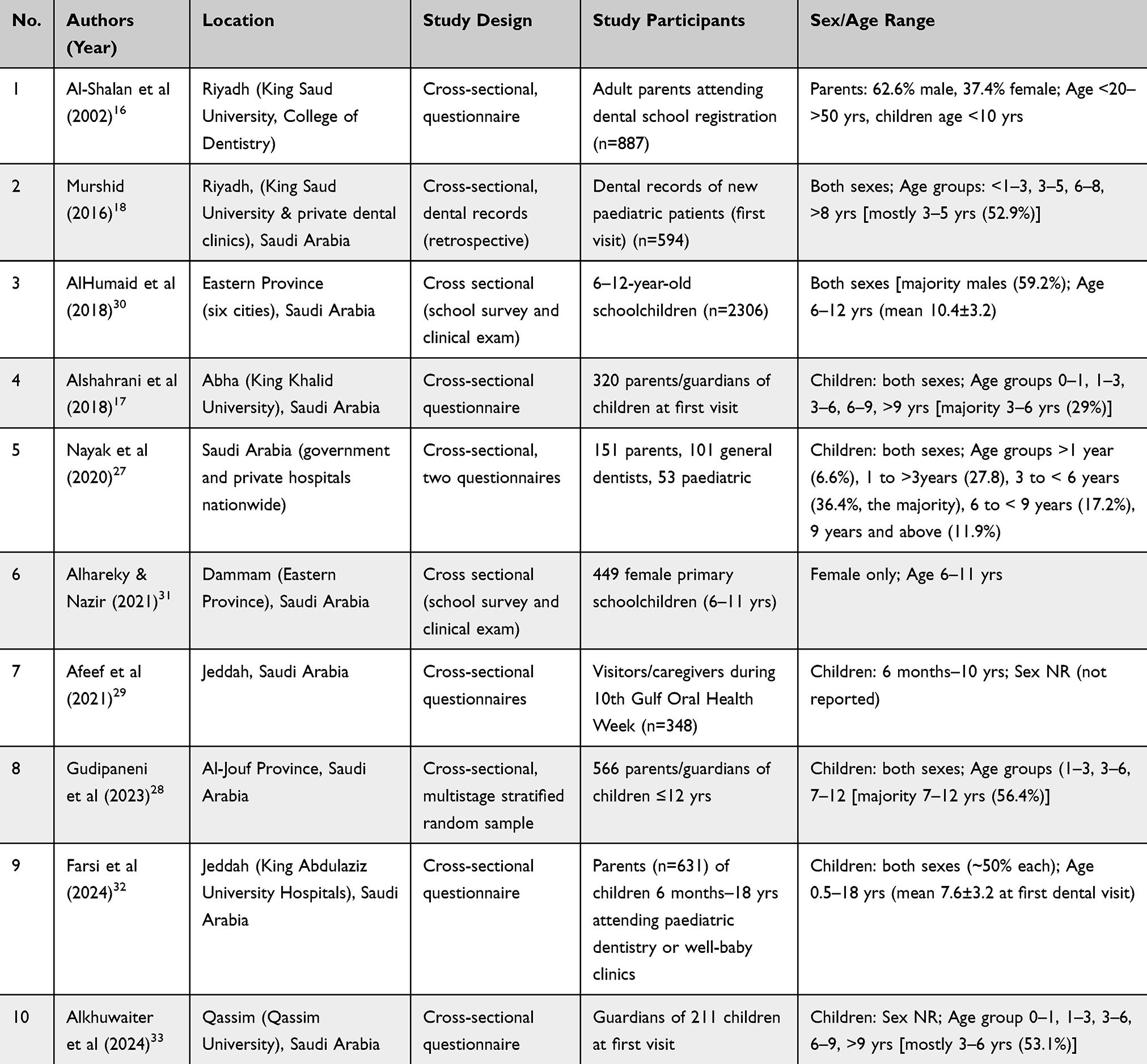 |
Table 2 General Characteristics of the Included Studies |
Characteristics of the Included Studies
Ten cross-sectional studies fulfilled the inclusion criteria for this systematic review (Table 2). A total of ≥5099 participants—4205 children and 894 adults (parents, guardians or dentists); the total is underestimated because two studies did not report sample size. Publication dates spanned 2002 – 2024. Regional distribution was comprehensive: central (Riyadh X 2, Qassim, Al Jouf), western (Jeddah X 2), eastern (Dammam and Eastern province), south-western (Abha), and one multi-centre study spanning multiple provinces.
Sample sizes ranged from 151 to 2,306 respondents. All cross-sectional studies relied on self-administered questionnaires, occasionally paired with brief school-based oral examinations, whereas Murshid (2016) analysed dental records of 594 paediatric patients. Children’s age clustered in the preschool to early-primary years (6 months – 10 years extending to 18 years in one study); parents cohorts ranged from <20 to >50 years. Both sexes were generally represented, although one survey included only girls and another reported a predominantly male parent sample (~63%).
 |
Table 3 Prevalence of Reason for First Dental Visit in the Initial Dental Attendance in Saudi Arabia |
Distribution of RFV in Saudi Arabia
Across ten studies (Table 3), the predominant presenting complaint at the first dental visit was pain/emergency, reported in 19.8–71.5% of cases (with 44.7% of first visits classified as emergencies in one study). Dental caries accounted for 17.9–45.2%. Preventive attendance was comparatively limited: routine checkup/“regular treatment” comprised 10.5–27.3% across most reports (one outlier at 40.3%), while fluoride/cleaning was uncommon (3.2–20.5%). Trauma was generally infrequent (0–9.2%), though single-study estimates reached 14.4% and 26.5%. Other indications were rare: abscess/swelling ~10.5%, extraction of retained primary teeth 2.4–10.6%, malocclusion/alignment concerns ~8.8%, tooth discoloration ~5.1%, and referral 0.8–0.9%.
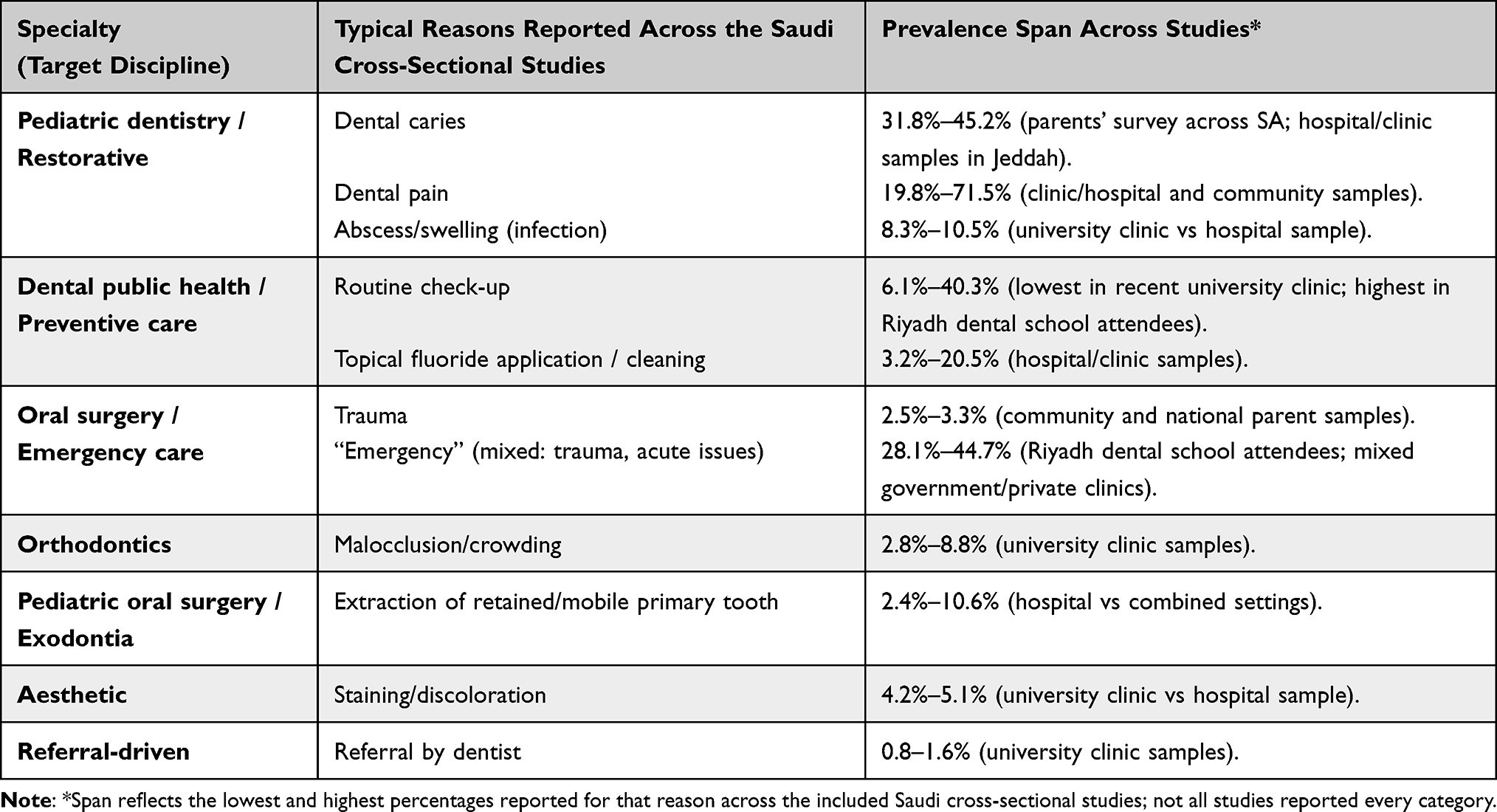 |
Table 4 Reason for First Dental Visit for Saudi’s Initial Dental Attendance, by Dental Specialty/Discipline |
Distribution of RFV by Dental Clinical Specialty
Across the included Saudi cross-sectional studies, first visit attendance was predominantly symptom driven (Table 4). Within paediatric dentistry/restorative care, dental pain accounted for 19.8–71.5% of presentations and dental caries for 31.8–45.2%, with abscess/swelling (infection) contributing 8.3–10.5%. Preventive indications were less frequent: routine check ups comprised 6.1–40.3% (upper bound from a dental school sample), and topical fluoride/cleaning 3.2–20.5%. Surgical/emergency pathways were uncommon overall—trauma 2.5–3.3%—although broader “emergency” categories (mixed acute issues) reached 28.1–44.7% in clinic-based reports. Orthodontic concerns were reported at about 2.8%; exodontia for retained/mobile primary teeth at 2.4–10.6%; aesthetic complaints (staining/discoloration) at 4.2–5.1%; and referral driven visits at approximately 0.8%.
Discussion
Understanding the RFV that motivate patients’ first dental visits is crucial for improving oral health outcomes, as these concerns emphasize the complex interactions between patients’ cultural beliefs and personal perceptions, and how these influence the timing of dental visit.33 Pain and other dental emergencies (eg abscesses and swelling) were the most common reasons for seeking dental care, followed by untreated dental caries. Chronic obstacles including expense, dental anxiety, time restraints, and transportation difficulties together contribute to patients seeking care only when their pain becomes intolerable.34
Analysis also indicates that first dental visits differ noticeably across age groups and are predominantly symptom-driven rather than preventive. Among children, the predominant motives were pain, dental caries, and emergency conditions such as abscess or swelling, reflecting a reactive pattern of care-seeking behavior.16,18,28 Adolescents and young adults, on the other hand, more frequently attended for routine check-ups, orthodontic assessments, and aesthetic concerns, such as malalignment or tooth discoloration.27,32 In contrast, adult and parental cohorts often reported restorative or preventive reasons, including scaling, follow-up care, and examinations for their children.30 These findings collectively suggest that age influences both the perceived need for care and the type of services sought, with younger age groups presenting primarily for symptom relief, whereas older individuals demonstrate a gradual shift toward maintenance and preventive care.
The American Academy of Pediatric Dentistry recommends scheduling a child’s first dental examination at the eruption of the first primary tooth and no later than 12 months of age.35 Finding from this systematic review demonstrates a consistent and substantial deviation from these guidelines, with the majority of first dental visits occurring between three and six years of age, and noticeably fewer visits taking place before the age of three. This delay reflects a global trend, supported by several Saudi and international studies,6,27,36 which consistently link delayed attendance to a combination of parental misconceptions (eg, perceiving very young children as uncooperative or believing dental care is unnecessary until symptoms emerge), limited awareness of the recommended timing for the first visit, insufficient understanding of the preventive services provided at this stage, and persistent fear of dental procedures.1,16,18,28 Other studies indicate that mothers with higher education levels have more positive attitudes toward oral health and adopt better oral hygiene practices, both of which have a good impact on their children’s dental health.37,38 Collectively, these findings from diverse setting suggests that these barriers are deeply rooted and not context-specific, highlighting a systemic gap in parental education and public health messaging. Addressing this gap will require multi-level strategies—integrating anticipatory guidance into pediatric and primary healthcare encounters, improving communication about the value of the first dental visit, and normalizing preventive attendance in early childhood—to shift entrenched behaviors and align practice with established guidelines.
Preventive visits—such as routine examinations, fluoride application, or prophylactic cleaning—were comparatively uncommon, with higher uptake observed only in specific settings, such as dental school clinics. Multiple Saudi investigations have documented a low prevalence of routine check-ups among both adolescents and adults.1,2,39 This pattern is likely influenced by a combination of structural, social, and psychosocial barriers that limit preventive dental attendance in Saudi Arabia. Structural factors such as the cost of treatment, limited insurance coverage, and unequal distribution of dental services across regions have been consistently identified as major constraints.30,32,40 Moreover, socio-behavioral determinants, including limited oral-health literacy, misconceptions about the necessity of preventive visits, and the tendency to seek care only when symptoms arise, further reinforce a reactive rather than preventive care pattern.1,2,41 Cultural norms and family influences also play an important role, as parents often prioritize symptom relief over routine check-ups for their children.18,28 Additionally, psychological factors—notably dental anxiety and low perceived need for regular care—contribute to postponement of visits until pain becomes severe.38 Collectively, these findings underscore the need for targeted health-promotion strategies and system-level interventions to improve access, awareness, and motivation for early preventive attendance in the Saudi population.41 They also emphasize the necessity to reshape recall systems and addressing structural barriers to preventive care in Saudi population to shift from emergency management toward sustained health.41
Other reasons for attendance, including trauma, tooth discolouration, and referral-based appointments, were reported infrequently. These findings align with national and global evidence indicating that early dental visits are predominantly driven by pain and untreated caries, reflecting a curative rather than preventive care pattern and underscoring a substantial gap in anticipatory oral healthcare.42–45
Although the public’s demand for teeth alignment correction is steadily rising, orthodontic presentations were rarer, most likely due to length of treatment, cost, and limited specialist availability; these trends support the need to shift evidence-based practice from curative to preventive priorities.46–48
The review included several limitations. The evidence was restricted to cross-sectional studies and, on JBI appraisal, was dominated by moderate-risk articles, which limits causal inference and may introduce bias. Most included studies relied on self-administered questionnaires (with limited record-based analyses), raising concerns about recall and reporting bias, and two studies did not report their sample size, yielding an underestimated total sample. A quantitative meta-analysis of pooled prevalence was not performed due to substantial heterogeneity in study populations, outcome definitions, and data reporting formats across the included studies. Instead, the findings were organized and presented thematically using a structured narrative approach was considered the most appropriate approach to accurately present the available evidence. Moreover, variability and inconsistent terminology related to RFV across studies likely reduced precision and comparability, further limiting the feasibility of conducting a quantitative meta-analysis. Finally, inclusion was limited to English and Arabic publications and to the Saudi context by design, which may restrict generalizability and introduce language bias.
Practical Relevance and Recommendations
The study results suggest an immediate need to rebalance services toward prevention in both policy and practice. In the clinic, adopting RFV-based triage and documentation (with a standardized taxonomy in the electronic record) can streamline care, and ensure the patient’s primary concern is addressed promptly. At the system level, integrating “age-one” preventive guidance into pediatric and primary-care encounters, activating recall systems tied to early childhood milestones, and strengthening physician–dentist referral pathways can shift demand toward timely preventive visits. Community-level actions—brief caregiver education, school-linked fluoride/cleaning programs, and culturally tailored outreach—can reduce misconceptions and access barriers, improving satisfaction, adherence, and oral-health outcomes while easing avoidable emergency load.
Conclusion
This review highlights that initial dental attendance in SA is predominantly symptom-driven, with pain/emergency and dental caries constituting the most common RFV, while preventive motives (routine check-ups, fluoride/cleaning) are comparatively infrequent; trauma and other indications are rare. These patterns suggest that motivations for seeking care are largely reactive (symptom relief) rather than preventive. Accordingly, this study analysed RFV reported in dental visits across multiple studies conducted in Saudi Arabia to provide insights on oral-health behaviours and attitudes. This study provides key findings that can directly focused interventions and educational initiatives and enhance patient satisfaction and compliance. Moreover, offering treatment planning and sequencing guidelines that will influence workflow efficiency and resource allocation.
Disclosure
This research received no external funding, and the authors declare no conflicts of interest.
We used ChatGPT-4o (OpenAI) solely for English language editing of grammar and style; no content generation, data analysis, or interpretation was performed, and the authors reviewed all edits and take full responsibility for the paper.
References
1. Alqarni A, AlHarthi S, Felemban M, et al. The prevalence and patterns of common chief complaints among patients at Taif University Dental Hospital, Saudi Arabia. Saudi J Health Sci. 2024;13(1):49–55. doi:10.4103/sjhs.sjhs_136_23
2. Al-Johani K, Lamfon H, Abed H, Beyari M. Common chief complaints of dental patients at Umm Al-Qura University, Makkah City, Saudi Arabia. Oral Health Dent Manag. 2017;31:29.
3. Hasan-Ansari S, Al-Saffan A, Al-Dhubaiban D, et al. Prevalence of chief complaints among pediatric dental patients in Saudi population; study done in Riyadh Colleges of Dentistry and Pharmacy, Saudi Arabia. Res Rev J Dent Sci. 2016;4:58–62.
4. Noble LM. Doctor–patient communication and adherence to treatment. In: Adherence to Treatment in Medical Conditions. Boca Raton, FL: CRC Press; 2020:51–82.
5. Ashour AA, Alqarni AA. Prevalence of dental abnormalities, soft tissue pathologies and occlusion disorders in patients with high BMI: a cross-sectional study. Oral Health Prev Dent. 2024;22:373–380. doi:10.3290/j.ohpd.b5656148
6. Bulut G, Bulut H. Zero to five years: first dental visit. Eur J Paediatr Dent. 2020;21(4):326–330. doi:10.23804/ejpd.2020.21.04.13
7. Rajeev A, Patthi B, Janakiram C, et al. Influence of the previous dental visit experience in seeking dental care among young adults. J Fam Med Prim Care. 2020;9(2):609–613. doi:10.4103/jfmpc.jfmpc_1109_19
8. Afrashtehfar KI, Assery MKA, Bryant SR. Patient satisfaction in medicine and dentistry. Int J Dent. 2020;2020:6621848. doi:10.1155/2020/6621848
9. Klaassen H, Dukes K, Marchini L. Patient satisfaction with dental treatment at a university dental clinic: a qualitative analysis. J Dent Educ. 2021;85(3):311–321. doi:10.1002/jdd.12428
10. Maheswaran T, Ramesh V, Krishnan A, Joseph J. Common chief complaints of patients seeking treatment in the government dental institution of Puducherry, India. J Indian Acad Dent Spec Res. 2015;2(2):55–58. doi:10.4103/2229-3019.177921
11. Siddiqui MI, Iqbal MJ, Idrees A, et al. The most common presenting complaints of the patients attending Department of Operative Dentistry, Nishtar Institute of Dentistry, Multan. Pak J Med Health Sci. 2015;9:642–645.
12. Fomete B, Agbara R, Nzomiwu L, et al. Reasons and pattern of teeth extraction in a maxillofacial clinic in northern Nigeria. Niger J Basic Clin Sci. 2021;18(1):42–45. doi:10.4103/njbcs.njbcs_1_21
13. Ogbebor OG, Azodo CC. Reasons for seeking dental healthcare services in a Nigerian missionary hospital. Sahel Med J. 2016;19(1):38–43. doi:10.4103/1118-8561.181901
14. Azodo CC, Ogordi PU. Pain-related pediatric dental attendance in a Nigerian dental clinic. J Oral Res Rev. 2016;8(1):6–11. doi:10.4103/2249-4987.182489
15. Aljohani K, Shanab H, Alqarni A, Merdad K. Dental anomalies in Saudi Arabia: a systematic review. Healthcare. 2024;12:2323.
16. Al-Shalan TA, Al-Musa BA, Al-Khamis AM. Parents’ attitude towards children’s first dental visit in the College of Dentistry, Riyadh, Saudi Arabia. Saudi Med J. 2002;23(9):1110–1114.
17. Alshahrani NF, Alshahrani ANA, Alahmari MA, et al. First dental visit: age, reason, and experiences of Saudi children. Eur J Dent. 2018;12:579–584. doi:10.4103/ejd.ejd_426_17
18. Murshid EZ. Children’s ages and reasons for receiving their first dental visit in a Saudi community. Saudi Dent J. 2016;28(3):142–147. doi:10.1016/j.sdentj.2015.12.003
19. Moher D, Liberati A, Tetzlaff J, Altman DG, Group PRISMA. Preferred reporting items for systematic reviews and meta-analyses: the PRISMA statement. Int J Surg. 2010;8(5):336–341. doi:10.1016/j.ijsu.2010.02.007
20. Mohd Khairuddin AN, Bogale B, Kang J, Gallagher JE. Impact of dental visiting patterns on oral health: a systematic review of longitudinal studies. BDJ Open. 2024;10(1):18. doi:10.1038/s41405-024-00195-7
21. Williams L. What is the ethical course of action for a dentist whose patient’s previous dentist may have treated the wrong tooth? J Am Dent Assoc. 2012;143(8):917–918. doi:10.14219/jada.archive.2012.0298
22. Wilson R. Ethical issues in teledentistry: following the American Dental Association principles of ethics and code of professional conduct. J Am Dent Assoc. 2021;152(2):176–177. doi:10.1016/j.adaj.2020.12.001
23. Masiga MA. Presenting chief complaints and clinical characteristics among patients attending the Department of Paediatric Dentistry Clinic at the University of Nairobi Dental Hospital. East Afr Med J. 2005;82(12):652–655. doi:10.4314/eamj.v82i12.9372
24. Hendrik YC, Langit KS, Auerkari EI. The genetic, epigenetic, and environmental factors of dental abnormalities development: literature review. J Phys Conf Ser. 2021;1943(1):012084. doi:10.1088/1742-6596/1943/1/012084
25. Khalaf K, Brook AH, Smith RN. Genetic, epigenetic and environmental factors influence the phenotype of tooth number, size and shape: anterior maxillary supernumeraries and the morphology of mandibular incisors. Genes. 2022;13(12):2232. doi:10.3390/genes13122232
26. Joanna Briggs Institute. JBI critical appraisal checklist for analytical cross-sectional studies (2017). Adelaide: JBI. 2017. Available from: https://jbi.global/critical-appraisal-tools.
27. Nayak UA, AlQahtani AF, Alturkistani RF, et al. First dental visit of a child—perspectives of parents/guardians and dentists/paediatric dentists in Saudi Arabia. J Evol Med Dent Sci. 2020;9(42):3086–3091. doi:10.14260/jemds/2020/678
28. Gudipaneni RK, Alsirhani MAR, Alruwaili MRS, et al. Socio-behavioural determinants associated with the first dental visit in Saudi children: a cross-sectional study. Int J Paediatr Dent. 2024;34(1):85–93. doi:10.1111/ipd.13100
29. Afeef M, Felemban N, Alhazmi N, Natto ZS. Factors associated with a late visit to dentists by children: a cross-sectional community-based study in Saudi Arabia. J Taibah Univ Med Sci. 2021;16(4):513–520. doi:10.1016/j.jtumed.2021.02.005
30. AlHumaid J, El Tantawi M, AlAgl A, et al. Dental visit patterns and oral health outcomes in Saudi children. Saudi J Med Med Sci. 2018;6(2):89–94. doi:10.4103/sjmms.sjmms_103_17
31. Alhareky M, Nazir MA. Dental visits and predictors of regular attendance among female schoolchildren in Dammam, Saudi Arabia. Clin Cosmet Investig Dent. 2021;13:97–104. doi:10.2147/CCIDE.S300108
32. Farsi D, Farsi N, Albadawi G, et al. Timing, reasons, and predictors for first dental visits among children seen at two university hospitals. Int J Paediatr Dent. 2024;34(5):524–533. doi:10.1111/ipd.13153
33. Alkhuwaiter SS, Almutairi M, Alfuraih N, Al-Haj Ali SN. Children’s ages, reasons, and experiences for first dental visit and barriers of a late visit: a cross-sectional community-based study in Saudi Arabia. Cureus. 2024;16(5):e60942. doi:10.7759/cureus.60942
34. Almutlaqah MA, Baseer MA, Ingle NA, et al. Factors affecting access to oral health care among adults in Abha City, Saudi Arabia. J Int Soc Prev Community Dent. 2018;8(5):431–438. doi:10.4103/jispcd.JISPCD_205_18
35. American Academy of Pediatric Dentistry. Guideline on infant oral health care. Pediatr Dent. 2014;36:1141–1145.
36. Nainar SMH, Straffon LH. Targeting of the year one dental visit for United States children. Int J Paediatr Dent. 2003;13(4):258–263. doi:10.1046/j.1365-263X.2003.04602.x
37. Nourijelyani K, Yekaninejad MS, Eshraghian MR, et al. The influence of mothers’ lifestyle and health behavior on their children: an exploration for oral health. Iran Red Crescent Med J. 2014;16(2):e16051. doi:10.5812/ircmj.16051
38. Camargo MB, Barros AJ, Frazão P, et al. Predictors of dental visits for routine check-ups and for the resolution of problems among preschool children. Rev Saude Publica. 2012;46(1):87–97. doi:10.1590/S0034-89102012005000004
39. El Bcheraoui C, Tuffaha M, Daoud F, et al. Use of dental clinics and oral hygiene practices in the Kingdom of Saudi Arabia, 2013. Int Dent J. 2016;66(2):99–104. doi:10.1111/idj.12210
40. Aqeeli A, Alsharif AT, Kruger E, Tennant M. Factors influencing children’s regular attendance at dental clinics in Al Madinah, Saudi Arabia. Saudi J Health Syst Res. 2021;1(4):140–146. doi:10.1159/000518640
41. Alsharif AT, Kassim S. Exploring adolescents’ indirect financial and non-financial barriers to dental care non-attendance: the role of payment methods. Front Public Health. 2025;13:1554171. doi:10.3389/fpubh.2025.1554171
42. Baghdadi ZD. Improving oral health status of children in Tabuk, Saudi Arabia. Dent J. 2014;2(1):22–40. doi:10.3390/dj2010022
43. Ghimire N, Kayastha B, Nepal P. The first dental visit. J Chitwan Med Coll. 2013;3(4):30–33. doi:10.3126/jcmc.v3i4.9551
44. Soxman JA. The first dental visit. Gen Dent. 2002;50(2):148–155.
45. Baker SD, Lee J, Wright R. The Importance of the Age One Dental Visit. Chicago, IL: Pediatric Oral Health Research and Policy Center, American Academy of Pediatric Dentistry; 2019.
46. Hassan AH. Orthodontic treatment needs in the western region of Saudi Arabia: a research report. Head Face Med. 2006;2(1):2. doi:10.1186/1746-160X-2-2
47. Peeran SA, Al Sanabani F, Al Makramani BM, Elamin EI. Dental prosthetic status and treatment needs of adult population in Jizan, Saudi Arabia: a survey report. Eur J Dent. 2016;10:459–463. doi:10.4103/1305-7456.195173
48. Balhaddad A, Alshammari A, Alqadi A, Nazir MA. Patient satisfaction with dental services and associated factors in a Saudi dental institution. J Clin Diagn Res. 2018;12:101–107.
 © 2025 The Author(s). This work is published and licensed by Dove Medical Press Limited. The
full terms of this license are available at https://www.dovepress.com/terms
and incorporate the Creative Commons Attribution
- Non Commercial (unported, 4.0) License.
By accessing the work you hereby accept the Terms. Non-commercial uses of the work are permitted
without any further permission from Dove Medical Press Limited, provided the work is properly
attributed. For permission for commercial use of this work, please see paragraphs 4.2 and 5 of our Terms.
© 2025 The Author(s). This work is published and licensed by Dove Medical Press Limited. The
full terms of this license are available at https://www.dovepress.com/terms
and incorporate the Creative Commons Attribution
- Non Commercial (unported, 4.0) License.
By accessing the work you hereby accept the Terms. Non-commercial uses of the work are permitted
without any further permission from Dove Medical Press Limited, provided the work is properly
attributed. For permission for commercial use of this work, please see paragraphs 4.2 and 5 of our Terms.