
Back to Journals » Patient Preference and Adherence » Volume 19

Press-Through Packaging versus Bold and Slim Bottle-Type Containers: A Comparative Evaluation of Drug Packaging Usability in Patients with Rheumatic Diseases
Authors Sadamoto K  , Morio Y, Ura H, Kubota K
Received 19 August 2025
Accepted for publication 14 November 2025
Published 22 November 2025 Volume 2025:19 Pages 3743—3753
DOI https://doi.org/10.2147/PPA.S561772
Checked for plagiarism Yes
Review by Single anonymous peer review
Peer reviewer comments 2
Editor who approved publication: Dr Emma Veale
Kiyomi Sadamoto,1,2 Yuji Morio,3 Hiroyuki Ura,1 Kiyoshi Kubota1
1Department of Internal Medicine, Rheumatology Sadamoto Clinic, Ninomiya, Kanagawa, Japan; 2Department of Clinical Pharmacy, Shonan University of Medical Science, Yokohama, Kanagawa, Japan; 3Department of Physical Therapy, Shonan University of Medical Science, Yokohama, Kanagawa, Japan
Correspondence: Kiyomi Sadamoto, Sadamoto Clinic, 821-10 Ninomiya, Nakagunn, Ninomiya, Kanagawa, Japan, Tel +81-463-72-5737, Fax +81-463-72-5738, Email [email protected]
Background: Improved drug adherence and usability over the long term are urgent issues in Japan. Press-through packaging (PTP) is commonly used for prescription and over-the-counter drugs; however, some patients, particularly those with finger deformities or weak functional pinch strength in their hands, have difficulty opening and removing pills from PTP. The present study aimed to investigate whether alternative ways to distribute drugs could be a practical solution for such individuals.
Methods: We prepared three types of drug packages/containers, including PTP and “Bold” and “Slim” bottle types, and then conducted evaluations of their usability and preferences among 26 outpatients (22 women, 4 men; mean age: 72.6 years). We also measured the functional pinch and grip strength of the participants and investigated the related usability and preferences.
Results: Some patients could not open PTP. On the other hand, every patient, even those with no prior experience, could easily use the Bold and Slim bottle-type containers. The release times (ie, the time it takes to dispense two pills from a container) for PTP and Slim were almost the same. Regarding Bold, the difference between the minimum and maximum release times was the smallest among all three types (Bold mean extraction time = 5.4 ± 2.2 s, p < 0.05). Even among the participants who were able to remove the pills from all three types of packages/containers without any difficulties, Bold required the least amount of time. Regarding the relationship between pinch strength and usability, Bold had a positive correlation with the key pinch position and was preferred by the participants.
Conclusion: In the present study, Bold showed faster extraction times and slightly higher preference scores, although these differences were not statistically significant. Although the sample size was small, the participants preferred the Bold bottle-type container, which they found easy to use. These findings suggest that individuals with impaired hand and finger function prefer Bold bottle-type containers as drug packaging. Thus, the use of such packaging could help improve drug adherence and usability for some users over the long term.
Plain Language Summary: Many patients with rheumatoid arthritis, especially older patients, have difficulty handling drugs. Most patients on medication in Japan, including prescription and over-the-counter drugs, are older adults who frequently live alone or with a partner; therefore, designing drug packages for easier handling is an urgent issue in terms of promoting better drug adherence, such as for osteoporosis drugs. In the present study, we compared new packaging designs with existing ones to examine objective and subjective differences in terms of ease of use. The results showed that a new bottle-type design was favorably evaluated and preferred among patients with functional hand limitations. For older patients who take medication every day, drug packaging that is easier to use could help reduce stress in their daily lives. The present findings suggest that the use of new drug packaging could help improve drug adherence and usability over the long term, promote the further implementation of cost-effective therapies, and provide more sustainable support for older patients.
Keywords: PTP, bottle-type container, rheumatology patients, pinch strength, finger function
Introduction
In outpatient clinics, many older adults complain about the difficulties of drug adherence, partly because they must take a variety of drugs, often on different schedules.1–3 They also express concerns about not being strong enough to handle drug packages. Based on national statistics on households in Japan, about half of such outpatients consist of older adults (age > 65 years) living alone, followed by older couples.4–6 This suggests that the level of drug adherence in Japan is unclear and thus receives inadequate support; it also suggests that in many cases, drug therapy is neither appropriate nor cost-effective. In fact, the expense incurred from leftover drugs in Japan is becoming a serious problem.7–10 Many patients need to take drugs for a long time because of chronic diseases such as diabetes mellitus and high blood pressure, and the numbers of aging patients with chronic diseases are increasing around the world.11–13 If such patients also have impaired hand and finger function, drug packaging and devices with better usability can be essential for everyday life. In fact, usability affects not only drug adherence, but also the effectiveness (and cost-effectiveness) of therapy.14,15 Among patients with rheumatoid arthritis (RA), one such chronic disease, appropriate drug adherence has been shown to have direct effects on therapeutic outcomes.16,17 In addition, the number of older patients with RA is increasing based on national statistics from Japan.18,19 Moreover, older patients with RA tend to have more complicated disease backgrounds, which makes adherence even more difficult.20,21 In previous questionnaire surveys, patients with RA have described the difficulty of handing packages and how the use of self-made devices helps them cope with everyday drug adherence.22–24 Of particular concern are patients with early-stage dementia, who tend to skip essential drugs because of such difficulties. In addition, actual data on drug adherence can only be collected if someone constantly stays at home with the older adult. In Japan, press-through packaging (PTP) is the most commonly used type of drug package for every generation, including older adults.25–27 However, problems such as difficulties in opening and using single-dose packages, the tendency to drop pills, and a lack of necessary support for taking important drugs punctually are frequently observed.28–30 In addition, the actual status of drug adherence in the home is mostly only known by visitors. As such, the actual situation regarding how older patients usually handle drugs needs to be clarified.
Objectives
In the present study, we conducted objective and subjective studies to evaluate patients’ drug adherence with PTP and conduct comparisons of usability with two new bottle-type design pill containers (Bold and Slim) (Figure 1). We also aimed to clarify the relationship between functional grip and pinch strength and usability (ie, removing pills from packages/containers). In addition, we also investigated the preferences of patients with auto-immune diseases (Table 1).
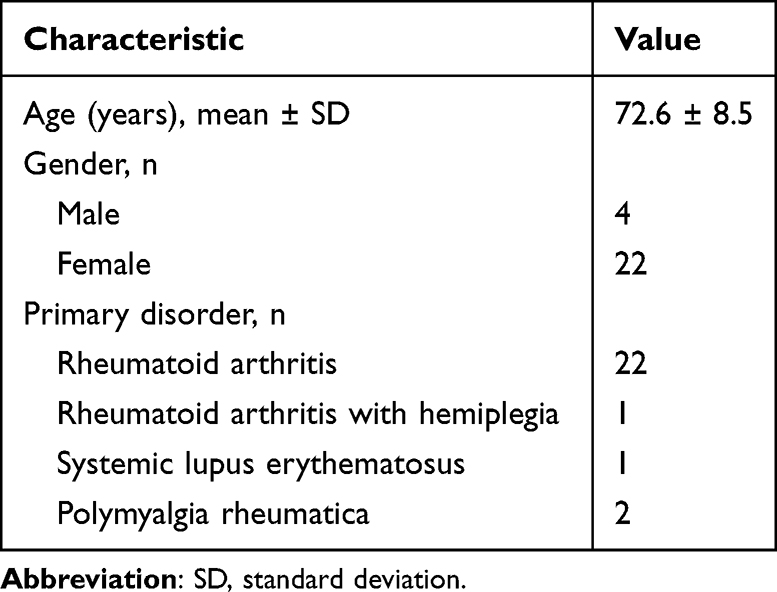 |
Table 1 Characteristics of the Study Participants |
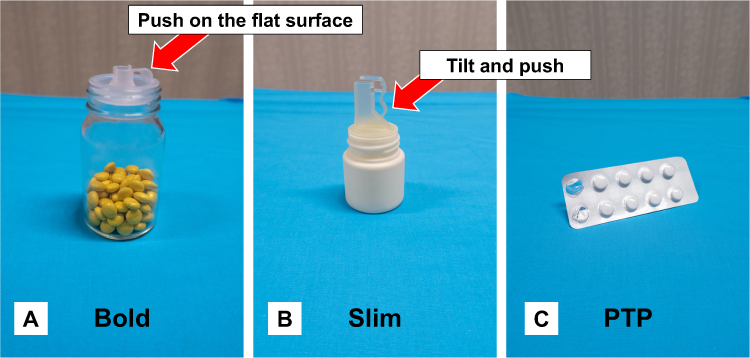 |
Figure 1 The three types of packages/containers investigated in the present study. (A) Bold bottle-type dispenser; (B) Slim bottle-type dispenser. For operation, Bold is placed on a flat surface and pressed down, while Slim is tilted and pressed at the indicated point to dispense a tablet; (C) Press-through packaging (PTP). |
Materials and Methods
This study was approved by the Sadamoto Clinic Institutional Review Board (approval No. 2302) and conducted in accordance with the Declaration of Helsinki. Written informed consent was obtained from all participating outpatients with rheumatology before the study began.
Popular PTP and newly designed bottle-type pill containers (bold bottle-type, Bold; slim bottle-type, Slim) were prepared (Figure 1). The two new design types were fabricated by Kitano Co., Ltd. (Toyama, Japan). The same two examiners (a rheumatologist and a physical therapist) conducted the practical study in the same room from November 2023 to January 2024. Pinch strength was measured using the three standard positions: 1) two-point pinch (between the tip of the thumb and the index finger); 2) three-point pinch (between the pad of the thumb and the pads of the index and middle fingers); and 3) key pinch (between the pad of the thumb and the medial–lateral surface of the index finger). Grip strength was measured using hand-held grip dynamometers (MT-100W and MT-130; SAKAI Medical, Tokyo, Japan), and pinch strength using a pinch dynamometer (MT-140; SAKAI Medical) (Figure 2).
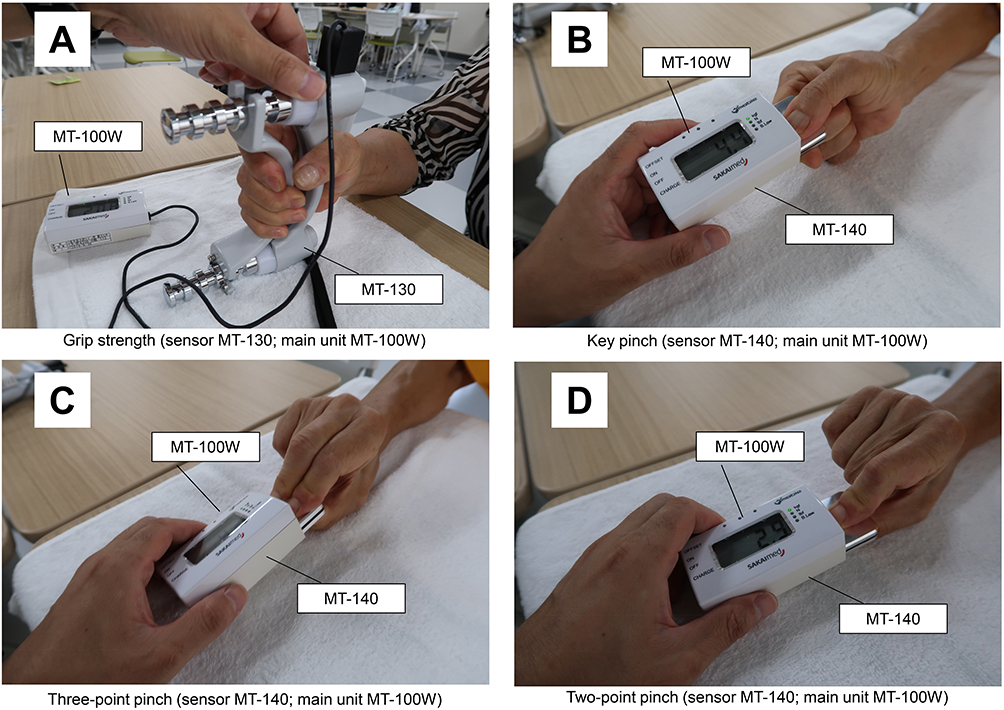 |
Figure 2 Measurement apparatus and hand strength tests in the present study. Hand-held grip dynamometer with grip and pinch sensors. (A) Grip; (B) Key pinch; (C) Two-point pinch; (D) Three-point pinch. Testing followed the American Society of Hand Therapists protocol: seated posture with the shoulder adducted, elbow flexed at 90°, forearm neutral, and wrist in 0–30° extension and 0–15° ulnar deviation. |
The participants were given the following instructions for use of the two new bottle-type pill dispensers; For the Bold type, push down on a flat surface (eg, palm, plate, table) to dispense a pill. For the Slim type, tilt and press a specific point on the bottle to dispense a pill. Both types can be operated with one hand. After confirming that the participants understood the instructions, they were asked to dispense two pills each from all three types of packages/containers. The time it took to complete this task was measured.
The opening status of every patient was observed and recorded using a numeric rating scale (NRS) (Table 2). Every patient provided their preference using quadratic voting (QV; 25 credits) (Table 3), which is a voting system that encourages voters to express their true relative intensity of preference between multiple options By doing so, QV seeks to mitigate the tyranny of the majority by enabling participants to trade influence over issues they do not care about for influence over issues that they do.31–33 The usefulness of QV for evaluating preferences has been reported elsewhere.33 In the present study, we used toy coins to demonstrate counting to aid the participants’ understanding of QV.
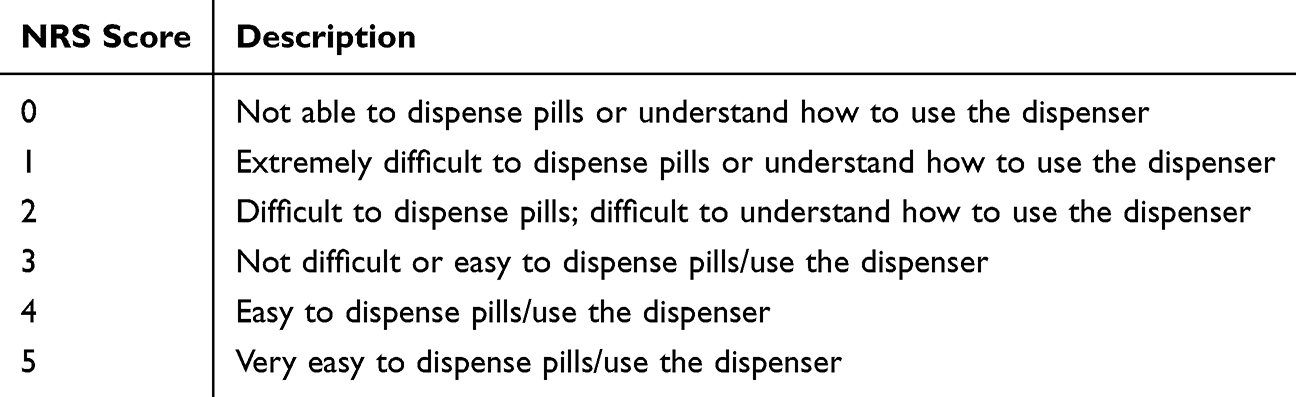 |
Table 2 Numeric Rating Scale (NRS) Used in the Present Study |
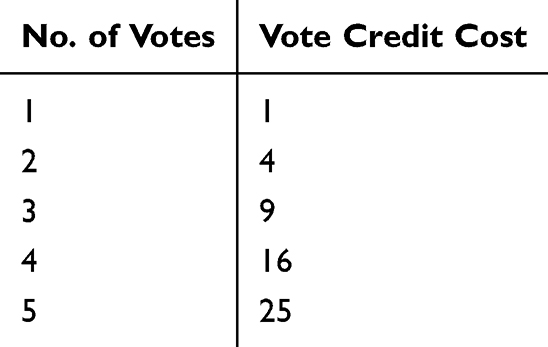 |
Table 3 Example of Quadratic Voting Pricing |
Statistical Analysis
All statistical analyses were performed using IBM SPSS Statistics (Version 25.0; IBM Corp., Armonk, NY, USA). Owing to the small sample size (n = 26) and the ordinal/discrete nature of some variables (eg, NRS, QV), nonparametric procedures were prespecified. Extraction times across PTP, Bold, and Slim were compared using the Friedman test (repeated measures), followed by Wilcoxon signed-rank tests for the planned pairwise comparisons (Bold vs PTP, Bold vs Slim) with Holm’s correction for multiplicity. Correlations between strength measures (grip, key pinch, three-point pinch, two-point pinch) and outcomes (extraction time, QV, NRS) were summarized using Spearman’s rank correlation coefficient (ρ) with exact two-sided p-values. Unless otherwise stated, data are presented as mean ± standard deviation, with the level of statistical significance set at α = 0.05. For time outcomes, negative ρ values indicate shorter (faster) extraction times.
Results
Table 4 shows the results for all 26 participants (22 women, 4 men; mean age: 72.6 ± 8.5 years; age range: 52–85 years). All participants had comorbid conditions. Among the participants with RA, hand impairment was graded as mild in 10, moderate in 9, severe in 4, and other disease in 2. The mean grip strength of all participants was 20.4 ± 7.5 kgf; six participants had a grip strength < 15 kgf. Among the pinch measures, the two-point pinch had the lowest mean value (3.6 kgf). Regarding extraction times, Bold had the shortest mean time (Bold: 5.4 ± 2.2 s; PTP: 6.6 ± 3.9 s; Slim: 6.8 ± 4.0 s), but pairwise differences were not statistically significant after adjustment. Regarding QV and NRS, no significant differences were observed among the three containers; the mean NRS values were similar (PTP: 3.8, Bold: 3.8, Slim: 3.7).
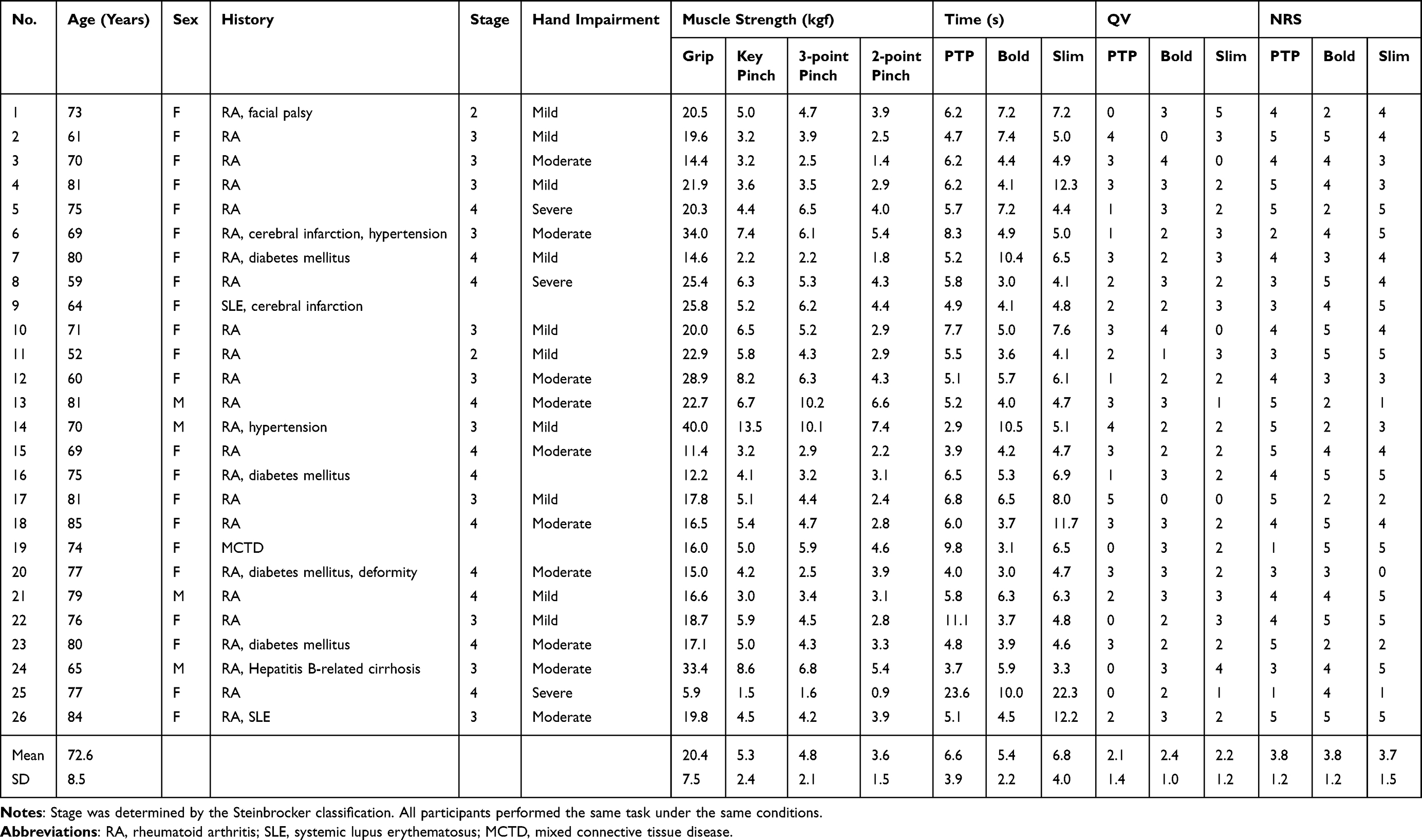 |
Table 4 Results of Comparisons Among All 26 Participants |
Table 5 shows the correlations between grip/pinch strength and extraction time, QV, and NRS for all participants. Greater strength was associated with shorter extraction times for PTP and Slim (negative correlations), while correlations with Bold time were small. No relation was found between extraction time and grip/pinch strength for Bold. Correlations with QV and NRS were generally weak, and any nominal associations were not consistent after accounting for multiple testing.
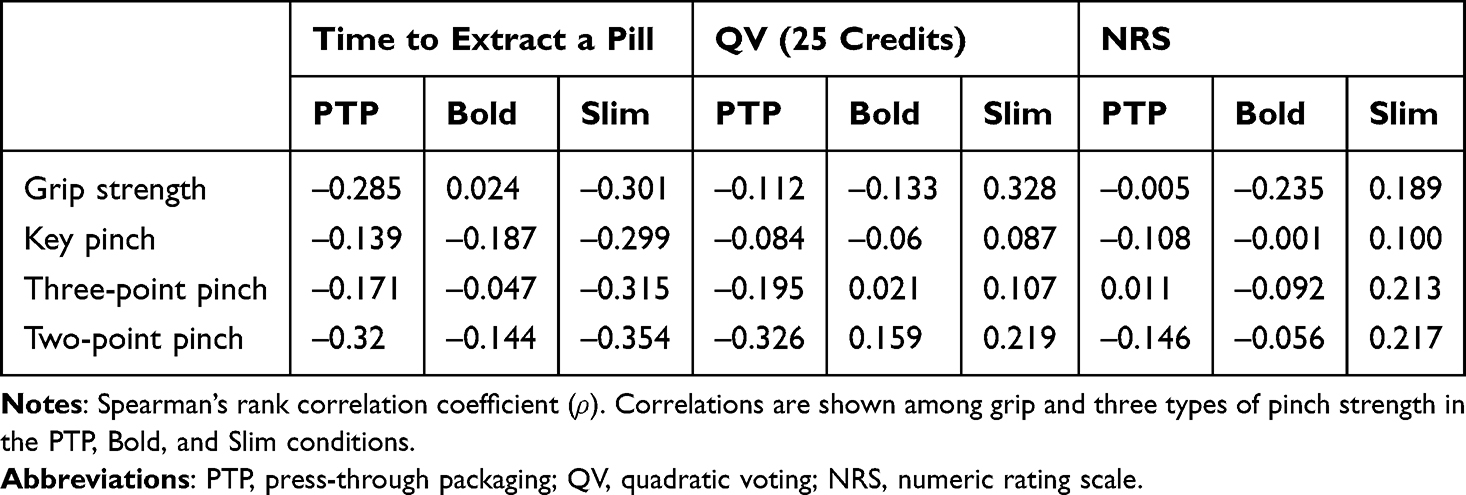 |
Table 5 Spearman’s Rank Correlations Between Strength Measures and Outcomes |
Comparison of Time Across Different Age Groups
Table 6 shows comparisons of mean pill extraction times for participants aged ≤ 70 and ≥ 71 years. In the ≥ 71 group, Bold had a significantly shorter extraction time (p < 0.05). No significant differences in the three items were seen in the group of participants aged ≤ 70 years.
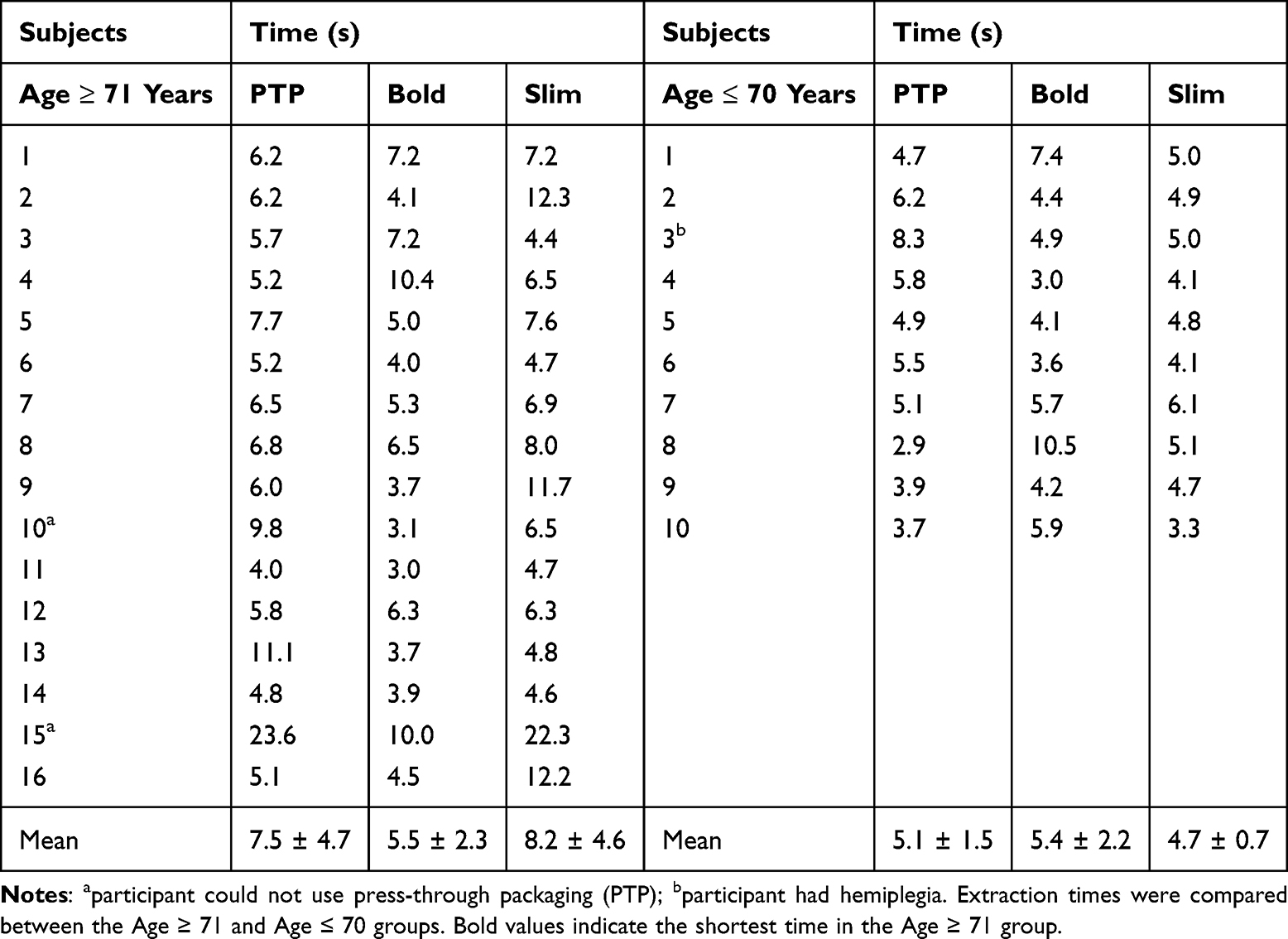 |
Table 6 Comparison of Extraction Times Between Age Groups |
Comparison of QV Across Different Age Groups
As shown in Table 4, no significant difference in QV was observed for PTP, Bold, or Slim (2.2, 2.3, and 2.2, respectively; p < 0.05). Among participants aged ≥ 71 years, Bold tended to be easier to dispense, whereas among those aged ≥ 70 years, Slim tended to be easier; however, none of these differences reached the level of statistical significance (Table 7).
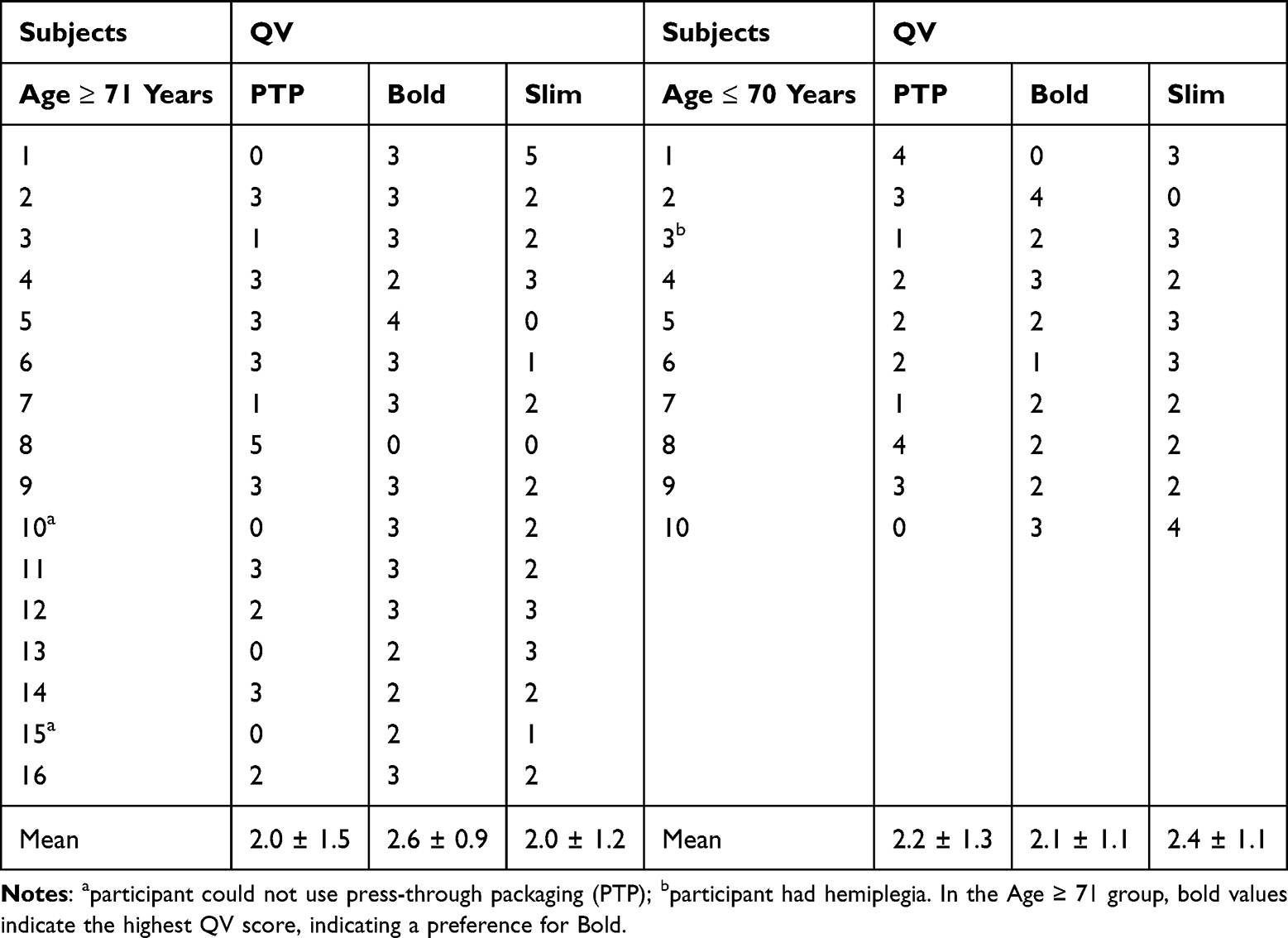 |
Table 7 Comparison of Quadratic Voting (QV) Between Age Groups |
Comparison of NRS Across Different Age Groups
Table 8 shows a comparison of mean NRS scores between the ≤ 70 and ≥ 71 groups and the mean for all participants. Regarding the NRS for all participants, Bold was the highest (3.9). However, no significant difference was seen in the ≥ 71 group. In addition, Bold (3.8) and Slim (4.3) were higher than PTP (3.2) in the ≤ 70 group, and Slim was highest in ≤ 70 group.
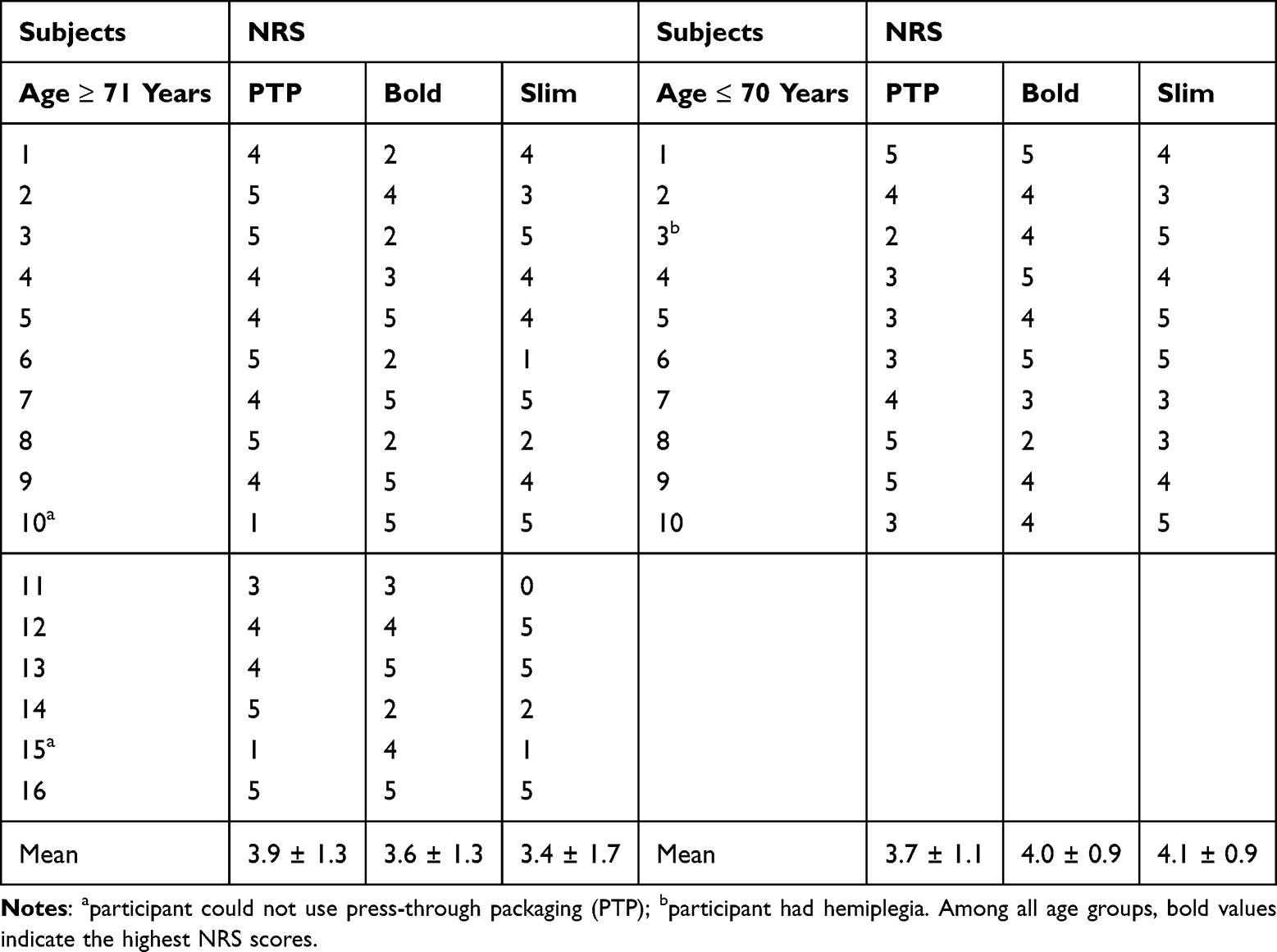 |
Table 8 Comparison of Numeric Rating Scale (NRS) Scores Between Age Groups |
Discussion
Considering the rapid aging of the global population,34,35 problems associated with drug adherence are only expected to become more serious.8,36–38 In addition, many people use over-the-counter drugs (OTC) and supplements in everyday life. The development of alternative methods that can help older adults take their medication could provide a stress-free way for users who struggle with this challenge.
This study analyzed alternative types of pill dispensers and conducted a comparison with PTP. As shown in Table 4, the average grip strength for all participants was 20.4 ± 7.5 kgf; however, six of the participants, all of whom had some level of impaired hand and finger function, had a grip strength < 15 kgf, which means that they tend to have some difficulties in handling their drug packaging in everyday life. Obviously, most such individuals require more time to dispense pills from PTP. One participant in the present study (No. 25) could not use PTP at all. Because she lives alone, she is always mindful of her drug taking and uses single-dose packaging. As shown in Figure 1, the Bold and Slim dispensers make repeat use easier. In addition, both types can be operated using only one hand and require little pinch or grip strength. Moreover, their simple instructions can be understood by any user.
Regarding the time needed to extract the pills, Bold had the shortest average time (Table 4). A comparison of average extraction times between two different age groups indicated that even when using the Bold type for the first time, extraction times were faster compared with PTP. Regarding the Slim type, although it was a little difficult for some older users in the ≥ 71 group to identify where to push on the packaging, those in the ≤ 70 group could use it appropriately, and thus had the fastest times; therefore, the Slim type could be used by all age groups.
No significant difference in average QV, which reflects user preferences, was observed among the three package types (Table 4). However, Bold was significantly higher than the other types in the ≥ 71 group, and Slim was the highest in the ≤ 70 group (Table 8). The older users in the ≥ 71 group may have preferred Bold because it can easily be used with one hand, regardless of grip or pinch strength, whereas those in the ≤ 70 group may have preferred Slim because of its ease of use and convenience.
Regarding the NRS, which reflects the usability of pill taking, no significant differences were observed; however, Bold had the highest score compared with the others (Table 4). Looking at different age groups, in the ≥ 71 group, no significant difference was seen among the three items. In the ≤ 70 group, Bold and Slim had higher scores than PTP (Table 7). These findings indicate that all of the participants rated the new types of dispensers higher than PTP, even though they were not previously familiar with them.
As shown in Table 5, correlations between PTP and Slim were found with grip and pinch strength and time. No relation was observed between Bold and strength, which indicates that even the participants with weak grip and pinch strength could use Bold. Regarding QV and NRS, no strong correlations were found. These results indicate that there were no significant differences in these measures. The differences in the results could have been due to individual differences in hand and finger strength. In fact, 57.6% of the participants had less than average grip strength, 42.3% less than average pinch strength, and 61.5% less than average two- and three-point pinch. In addition, most of the study participants had some type of functional disorder in terms of handling the dispenser, and about half had more serious difficulties (Table 4); therefore, many such individuals could have difficulties in handling packages because of weakness, which can affect opening status in various ways and necessitate some level of support.
In the present study, difficulties in extracting pills from packages/containers were observed. However, such difficulties are seldom noticed in society. Older patients who experience difficulties in taking various medications at several different time points every day, particularly essential medications such as those for diabetes and high blood pressure, poor drug adherence can lead to serious adverse outcomes.39–41 In the area of rheumatology, even expensive drugs such as Janus Kinase inhibitors need to be taken punctually without skipping.42
Although most prescription drugs in Japan are covered by a universal health care insurance system, poor adherence affects the results of therapy and wastes money; therefore, additional efforts are needed to reduce leftover drugs. If patients can use a preferred pill container, it could improve drug adherence. In addition, individuals have numerous opportunities to take OTC drugs, and convenient containers such as the Bold bottle-type dispenser could be even more useful in everyday life. As the pharmaceutical industry needs to consider safe and effective drug delivery in regard to drug packaging, some alternative containers such as those described in the present study could be beneficial for some users.
This study was limited by its small sample size. Larger studies with more patients are needed to validate the present results. In addition, it would be interesting to investigate patient preferences among a more diverse population of users, including healthy adults, in a wider variety of settings.
Conclusion
In the present study, we evaluated the usability and patient preferences associated with three types of drug packages/containers. We also measured the functional pinch and grip strength of the participants. Because daily medication use is the primary therapeutic method for patients, personal preferences for drug dispensers could be highly important for improving drug adherence. Although PTP is effective for many patients, alternative container types may improve usability for some patients. In addition, patient-preferred drug dispensers could improve adherence to OTC drugs and supplements.
Abbreviations
PTP, press-through packaging; QV, quadratic voting; NRS, numeric rating scale; RA, rheumatoid arthritis; OTC, over-the-counter; Bold, bold bottle-type; Slim, slim bottle-type.
Data Sharing Statement
All data analyzed in this study are available from the corresponding author on reasonable request.
Acknowledgments
We thank all the study participants and research staff for their cooperation in the present study. We also thank KITAMURA MACHINE WORKS for manufacturing the sample containers.
Author Contributions
All authors made a significant contribution to the work reported, whether that is in the conception, study design, execution, acquisition of data, analysis and interpretation, or in all these areas; took part in drafting, revising or critically reviewing the article; gave final approval of the version to be published; have agreed on the journal to which the article has been submitted; and agree to be accountable for all aspects of the work.
Funding
This study was supported by a Grant‐in‐Aid for Scientific Research in Japan (19K12904).
Disclosure
The authors report no conflicts of interest.
References
1. Seung KJ, Keshavjee S, Rich ML. Multidrug-resistant tuberculosis and extensively drug-resistant tuberculosis. Cold Spring Harb Perspect Med. 2015;5(9):a017863. doi:10.1101/cshperspect.a017863
2. Munger MA. Polypharmacy and combination therapy in the management of hypertension in elderly patients with co-morbid diabetes mellitus. Drugs Aging. 2010;27(11):871–883. doi:10.2165/11538650-000000000-00000
3. Nishtala PS, Salahudeen MS. Temporal trends in polypharmacy and hyper polypharmacy in older New Zealanders over a 9-year period: 2005-2013. Gerontology. 2015;61(3):195–202. doi:10.1159/000368191
4. Kobayashi E, Harada K, Okamoto S, Liang J. Living alone and depressive symptoms among older Japanese: do urbanization and time period matter? J Gerontol B Psychol Sci Soc Sci. 2023;78(4):718–729. doi:10.1093/geronb/gbac195
5. Ministry of Internal Affairs and Communications, Japan. Current status of depopulation measures in 2015 (summary version). Available from: http://www.soumu.go.jp/main_content/000473003.pdf.
6. Koketsu T, Ishihara T, Nishimoto Y, et al. Challenges in introducing an IT-based model project for monitoring elderly people in the community. J Japan Soc Early Stage Dementia. 2016;9(2):43–48.
7. Koyanagi K, Kubota T, Kobayashi D, et al. Prescription factors associated with medication non-adherence in Japan assessed from leftover drugs in the SETSUYAKU-BAG campaign: focus on oral antidiabetic drugs. Front Pharmacol. 2016;7:212. doi:10.3389/fphar.2016.00212
8. Hatanaka N, Itoh T, Ishihara M, et al. Analysis of background factors influencing in-home patient adherence: comparison between true adherence and predicted adherence by home-helpers. Yakugaku Zasshi. 2009;129(6):727–734. doi:10.1248/yakushi.129.727
9. Kutsuma N, Yamaura K, Nakayama M, et al. Practice for promoting proper use of reusing the leftover medicines in the outpatients of the chronic disease. Yakugaku Zasshi. 2004;124(6):355–364. doi:10.1248/yakushi.124.355
10. Koyanagi K, Kubota T, Kobayashi D, et al. SETSUYAKU-BAG campaign–investigation of outpatient’s leftover drugs and promotion of proper reuse of leftover drugs to reduce medical expenses. Yakugaku Zasshi. 2013;133(11):1215–1221. doi:10.1248/yakushi.13-00181
11. Agarwal A, Lubet A, Mitgang E, Mohanty S, Bloom DE. Population aging in India: facts, issues, and options. In: Poot J, Roskruge M, editors. Population Change and Impacts in Asia and the Pacific. New Frontiers in Regional Science: Asian Perspectives. Singapore: Springer; 2020:289–311. doi:10.1007/978-981-10-0230-4_13
12. Beard JR, Officer A, De Carvalho IA, et al. The world report on ageing and health: a policy framework for healthy ageing. Lancet. 2016;387(10033):2145–2154. doi:10.1016/S0140-6736(15)00516-4
13. Barberie M, Wilmoth JR, Shkolnikov VM, et al. Data resource profile: the human mortality database (HMD). Int J Epidemiol. 2015;44(5):1549–1556. doi:10.1093/ije/dyv105
14. Cruz Rivera S, Aiyegbusi OL, Ives J, et al. Ethical considerations for the inclusion of patient-reported outcomes in clinical research: the PRO Ethics guidelines. JAMA. 2022;327(19):1910–1919. doi:10.1001/jama.2022.6421
15. Restrepo RD, Alvarez MT, Wittnebel LD, et al. Medication adherence issues in patients treated for COPD. Int J Chron Obstruct Pulmon Dis. 2008;3(3):371–384. doi:10.2147/COPD.S3036
16. Sweeney E, Harris ED, Firestein GA, et al. Clinical features of rheumatoid arthritis. In: Firestein GS, Budd RC, Gabriel SE, editors. Kelley’s Textbook of Rheumatology. Philadelphia: Elsevier Saunders; 2013:1109–1136.
17. Wolfe AM, Kellgren JH, Masi AT. The epidemiology of rheumatoid arthritis: a review. II. Incidence and diagnostic criteria. Bull Rheum Dis. 1968;19(3):524–529.
18. Kato E, Sawada T, Tahara K, et al. The age at onset of rheumatoid arthritis is increasing in Japan: a nationwide database study. Int J Rheum Dis. 2017;20(7):839–845. doi:10.1111/1756-185X.12998
19. Yamada H, Jinno S, Maeda T, et al. Trends of disease activity in Japanese patients over 75 years with rheumatoid arthritis from 2014 to 2021: the ANSWER cohort study. Rheumatology. 2024;63(8):2147–2151. doi:10.1093/rheumatology/kead539
20. Kawatkar AA, Gabriel SE, Jacobsen SJ. Secular trends in the incidence and prevalence of rheumatoid arthritis within members of an integrated health care delivery system. Rheumatol Int. 2019;39(3):541–549. doi:10.1007/s00296-018-04235-y
21. Minichiello E, Semerano L, Boissier MC. Time trends in the incidence, prevalence, and severity of rheumatoid arthritis: a systematic literature review. Joint Bone Spine. 2016;83(6):625–630. doi:10.1016/j.jbspin.2016.07.007
22. Sadamoto K, Murata M, Hayashi M, Ura H, Kubota K. Evaluation of newly designed blister packs for easier handling to prevent pill dropping. Patient Prefer Adherence. 2022;16:179–188. doi:10.2147/PPA.S346923
23. Sormunen E, Nevala N, Sipilä S. Critical factors in opening pharmaceutical packages: a usability study among healthcare workers, women with rheumatoid arthritis and elderly women. Package Technol Sci. 2014;27(7):559–576. doi:10.1002/pts.2048
24. Sadamoto K, Takamori H, Sadamoto T, Kubota K. Impact of push-through-packages with electric devices for accurate drug taking. J Sci Inno Res. 2014;3(3):1–7.
25. Nakata H, Owaki T. Device to make medicine easy to ingest; difficulty of picking. J Practical Pharm. 2000;51(5):1393–1400.
26. Hiraoka O, Ando N, Suemune Y, Shimada K, Akamatsu M. Scientific study on ease of taking tablets out of PTP sheets. J Community Pharm Pharm Sci. 2017;9(2):219–226.
27. Yamatani A, Fukushima S, Hayashi M, Mori Y, Suzuki T. Studies on measurement of pushing out strength and opening of the press through package. Jpn J Pharm Health Care Sci. 2001;27(6):576–582. doi:10.5649/jjphcs.27.576
28. Martin LR, Williams SL, Haskard KB, Dimatteo MR. The challenge of patient adherence. Ther Clin Risk Manag. 2005;1(3):189–199.
29. Lugtenberg M, Burgers JS, Besters CF, Han D, Westert GP. Perceived barriers to guideline adherence: a survey among general practitioners. BMC Fam Pract. 2011;12(1):98. doi:10.1186/1471-2296-12-98
30. Holt EW, Muntner P, Joyce CJ, Webber L, Krousel-Wood MA. Health-related quality of life and antihypertensive medication adherence among older adults. Age Ageing. 2010;39(4):481–487. doi:10.1093/ageing/afq040
31. Weyl EG. The robustness of quadratic voting. Public Choice. 2017;172(1):75–107. doi:10.1007/s11127-017-0405-4
32. Posner EA, Weyl EG. Quadratic voting and the public good: introduction. Public Choice. 2017;172(1–2):1–22. doi:10.1007/s11127-017-0404-5
33. Quarfoot D, von Kohorn D, Slavin K, et al. Quadratic voting in the wild: real people, real votes. Public Choice. 2017;172(1–2):283–303. doi:10.1007/s11127-017-0416-1
34. Alter G, Cliggett L, Urbiel A. Household patterns of the elderly and the proximity of children in a nineteenth century city: verviers, Belgium, 1831–1846. In: Hareven TK, editor. Aging and Generational Relations Over the Life Course: A Historical and Cross-Cultural Perspective. Berlin: de Gruyter; 1996:30–42.
35. Andorka R. Household systems and the lives of the old in eighteenth- and nineteenth- century Hungary. In: Kertzer DI, Laslett P, editors. Aging in the Past: Demography, Society and Old Age. Berkeley: University of California Press; 1995:129–155.
36. Kirkman MS, Rowan-Martin MT, Levin R, et al. Determinants of adherence to diabetes medications: findings from a large pharmacy claims database. Diabetes Care. 2015;38(4):604–609. doi:10.2337/dc14-2098
37. Malmenäs M, Bouchard JR, Langer J. Retrospective real-world adherence in patients with type 2 diabetes initiating once-daily liraglutide 1.8 mg or twice-daily exenatide 10 μg. Clin Ther. 2013;35(6):795–807. doi:10.1016/j.clinthera.2013.03.021
38. Juarez DT, Tan C, Davis J, Mau M. Factors affecting sustained medication adherence and its impact on health care utilization in patients with diabetes. J Pharm Health Serv Res. 2013;4(2):89–94. doi:10.1111/jphs.12016
39. Chowdhury R, Khan H, Heydon E, et al. Adherence to cardiovascular therapy: a meta-analysis of prevalence and clinical consequences. Eur Heart J. 2013;34(38):2940–2948. doi:10.1093/eurheartj/eht295
40. Egede LE, Gebregziabher M, Dismuke CE, et al. Medication nonadherence in diabetes: longitudinal effects on costs and potential cost savings from improvement. Diabetes Care. 2012;35(12):2533–2539. doi:10.2337/dc12-0572
41. Guénette L, Moisan J, Breton MC, Sirois C, Grégoire JP. Difficulty adhering to antidiabetic treatment: factors associated with persistence and compliance. Diabetes Metab. 2013;39(3):250–257. doi:10.1016/j.diabet.2012.12.005
42. Calvo-Garcia A, Ramírez Herráiz E, Llorente Cubas IM, et al. The real-world effectiveness, persistence, adherence, and safety of Janus kinase inhibitor baricitinib in rheumatoid arthritis: a long-term study. J Clin Med. 2024;13(9):2517. doi:10.3390/jcm13092517
 © 2025 The Author(s). This work is published and licensed by Dove Medical Press Limited. The
full terms of this license are available at https://www.dovepress.com/terms
and incorporate the Creative Commons Attribution
- Non Commercial (unported, 4.0) License.
By accessing the work you hereby accept the Terms. Non-commercial uses of the work are permitted
without any further permission from Dove Medical Press Limited, provided the work is properly
attributed. For permission for commercial use of this work, please see paragraphs 4.2 and 5 of our Terms.
© 2025 The Author(s). This work is published and licensed by Dove Medical Press Limited. The
full terms of this license are available at https://www.dovepress.com/terms
and incorporate the Creative Commons Attribution
- Non Commercial (unported, 4.0) License.
By accessing the work you hereby accept the Terms. Non-commercial uses of the work are permitted
without any further permission from Dove Medical Press Limited, provided the work is properly
attributed. For permission for commercial use of this work, please see paragraphs 4.2 and 5 of our Terms.