
Back to Journals » Patient Preference and Adherence » Volume 20
Pharmaceutical Care Through Women’s Eyes: Insights from a Cross-Sectional Study in Jordan
Authors Naser AY  , Al-Azzam S, Alsharif AA
Received 13 November 2025
Accepted for publication 5 February 2026
Published 13 February 2026 Volume 2026:20 581246
DOI https://doi.org/10.2147/PPA.S581246
Checked for plagiarism Yes
Review by Single anonymous peer review
Peer reviewer comments 2
Editor who approved publication: Dr Johnny Chen
Abdallah Y Naser,1 Sayer Al-Azzam,2 Alaa A Alsharif3
1Department of Applied Pharmaceutical Sciences and Clinical Pharmacy, Faculty of Pharmacy, Isra University, Amman, Jordan; 2Department of Clinical Pharmacy, Faculty of Pharmacy, Jordan University of Science and Technology, Irbid, Jordan; 3Department of Pharmacy Practice, College of Pharmacy, Princess Nourah bint Abdulrahman University, Riyadh, 11671, Saudi Arabia
Correspondence: Abdallah Y Naser, Department of Applied Pharmaceutical Sciences and Clinical Pharmacy, Faculty of Pharmacy, Isra University, Amman, Jordan, Tel +962795285555, Email [email protected]
Purpose: Females play a central role in health-related decision-making for their families. This study aims to evaluate the satisfaction of female patients with pharmaceutical services in Jordan.
Patients and Methods: This is an online cross-sectional survey study that was conducted in Jordan between February 13th and April 04th 2025. This study utilized the Arabic version of a previously developed questionnaire tool focused on patient satisfaction with pharmaceutical services. Multivariable logistic regression analysis was used to identify significant predictors of satisfaction level.
Results: A total of 637 females participated in this study. Overall, patients’ satisfaction with pharmaceutical services was positive. Moreover, 36.1% expressed excellent satisfaction with pharmacy services overall. Some areas showed room for improvement, only 14.8% rated the pharmacists’ frequency of checking on medication effectiveness as excellent, and 20.3% rated the pharmacists’ interest in their health as excellent. Participants with monthly income of 1000– 1500 Jordanian dinars were more than twice as likely to report higher satisfaction compared to those earning less than 500 (adjusted odds ratio (aOR) = 2.23, 95% confidence interval (CI): 1.25– 3.99, p = 0.006). Visiting government center pharmacies (aOR = 0.44, 95% CI: 0.24– 0.82, p = 0.009) or government hospitals (aOR = 0.42, 95% CI: 0.21– 0.84; p = 0.014) was associated with significantly lower odds of satisfaction compared to those visiting community pharmacy.
Conclusion: This study indicates that female patients in Jordan have a positive overall satisfaction with pharmaceutical services. However, training Jordanian pharmacists on updated medication information, pharmaceutical services, communications, and follow-up with patients during their treatment is required to increase satisfaction with pharmacy services and patients’ health specifically in governmental healthcare settings; which warrant targeted policy.
Keywords: females, Jordan, pharmacy, satisfaction, services
Introduction
Healthcare services are now focused on enhancing patient satisfaction by providing high-quality care.1 Pharmacists, whether they work in hospitals, health centers, or community pharmacies, are increasingly recognized as integral components of healthcare frameworks.2–5 In recent decades, there has been significant evolution and growth in the pharmacy field, particularly a shift from medication dispensing and compounding toward more patient-focused pharmaceutical care services.6–9 These include patient medication counseling, which is defined as providing patients with non-verbal or verbal information regarding medication, lifestyle changes, dietary considerations, proper storage, necessary precautions, potential side effects, and usage instructions.10 Indeed, comprehensive patient education and effective consultation are considered professional pharmaceutical interventions that pharmacists can offer.11
Patient satisfaction is crucial in evaluating healthcare services, including pharmaceutical services,12–16 since it reflects the clinical outcomes and effectiveness of treatment.17,18 Hence, to optimize healthcare resources, it is essential to enhance and ensure the quality of pharmaceutical services by reviewing patient satisfaction.19 Furthermore, a prior study found an association between patients’ perception of pharmaceutical care and levels of satisfaction with this care.20 The perception of healthcare is also affected by patients’ gender;21 the perception and expectations regarding pharmaceutical care services are higher among females than males.22
Females play a central role in health-related decision-making for their families.23 Previous research in Jordan demonstrated that females have considerable delay between the onset of their medical conditions and actual healthcare seeking.24 Previous research in Jordan showed that female patients face multiple barriers that restrict their access to healthcare services such as the lack of confidence in the skills of the healthcare providers, availability of female healthcare professionals, and a perceived inadequate quality of services.25 Therefore, studying satisfaction with pharmaceutical care services among females is necessary to understand their perceptions and expectations about these services, improve the services provided, and enhance the satisfaction of female patients. Nevertheless, no previous research has assessed satisfaction with pharmaceutical services among female patients in Jordan. Therefore, our study aims to evaluate the satisfaction of female patients with pharmaceutical services in Jordan.
Materials and Methods
Study Design and Setting
This is an online cross-sectional survey study that was conducted in Jordan between February 13th and April 04th 2025.
Study Population and Sampling Procedure
Participation in the investigation was restricted to females who satisfied the inclusion criteria. The study’s participants were females aged 18 years and older. This investigation employed the convenience sampling technique to invite eligible individuals to participate. Social media platforms (WhatsApp, Snapchat, and Facebook) were employed to solicit research participants.
Study Instrument
This study utilized the Arabic version of a previously developed questionnaire tool.26 The original questionnaire was designed based on previous literature that assessed patient satisfaction with pharmaceutical care.12,27–29
Our study instrument is comprised of two sections. The first section focused on participants’ demographic and socioeconomic characteristics utilizing multiple choice question (MCQ) format (age, marital status, education level, income, occupation, comorbidities, the frequency of visiting the pharmacy, type of pharmacy being visit, and type of drugs being used). The second section focused on patient satisfaction with pharmaceutical services. This section evaluated the pharmacist’s effectiveness in explaining potential side effects, medication usage, time allocated for patient interaction, identifying medication-related issues, gathering patient-specific details, resolving said issues, the waiting area ambiance, service swiftness, tracking outcomes, and medication availability. In addition, this section evaluated the convenience of pharmacy location, comfort of the waiting area, medication quantity adequacy, medication availability, pharmacy cleanliness, and packaging quality.
Instrument Validation
The validity of the original instrument was checked using pilot testing on a group of 30 patients. The outcome of the piloting phase was used to rephrase items, shortening the length of the instrument, and making some modifications. The internal consistency for the survey tool in the current study sample was examined and demonstrated excellent internal consistency with Cronbach’s alpha measure value of 0.974.
Sample Size
The minimum required sample size was 383 females, with a confidence interval of 95%, a standard deviation of 0.5, and a margin of error of 5%.
Ethical Considerations
The scientific research ethics committee granted ethical approval for this study (SREC/25/02/127).
Data Analysis
Demographic variables such as age group, marital status and income were presented using frequency and percentages. Continuous variables, including the total scale and the four subscales, were summarized using mean and standard deviation (SD). The Kolmogorov–Smirnov test was used to assess the normality of the continuous variables. The total score was calculated as summation of the four subscales. To compare groups such as type of drugs, independent t test was utilized. For comparisons across more than two demographic groups, one-way ANOVA was performed, followed by Tukey post hoc test for pairwise comparisons. Furthermore, multivariable logistic regression analysis was used to identify significant predictors of satisfaction level. Before conducting the regression, the total score was dichotomized based on the median value of 103. All statistical analysis were performed using SPSS version 31, with significance level set at p < 0.05.
Results
A total of 637 females participated in this study. The majority of female participants were aged 18–23 years (n = 435, 68.3%), followed by those aged 24–30 years (n = 158, 24.8%). Most were single (n = 501, 78.6%) and held a bachelor’s degree (n = 404, 63.4%). A large portion reported a monthly income of less than 500 (n = 327, 51.3%). Regarding employment, 227 (43.5%) were not working and 247 (38.8%) were students. Most respondents had no comorbidities (n = 576, 90.4%) and used medication on as needed basis (n = 579, 90.9%), Table 1.
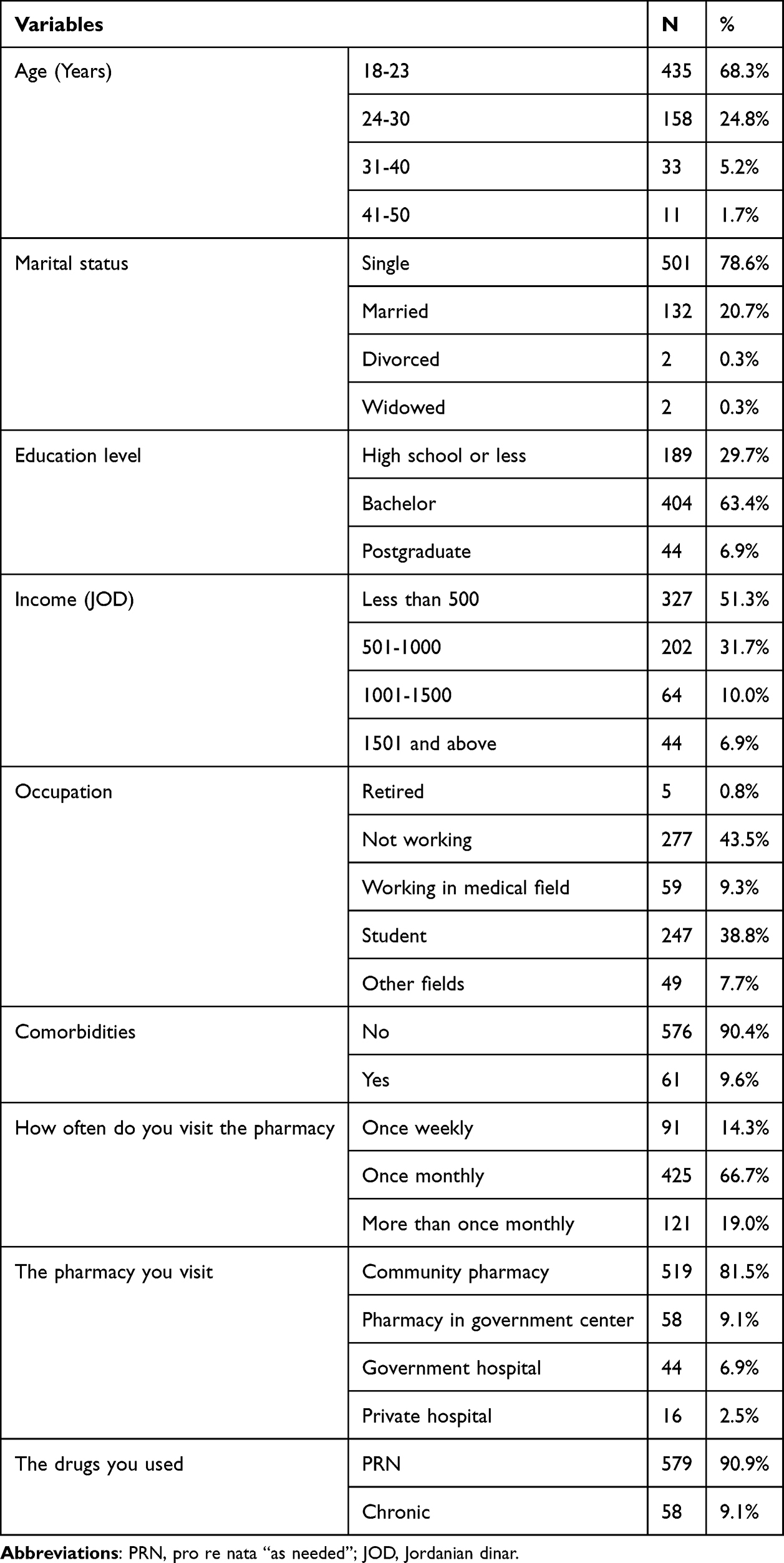 |
Table 1 Demographic Characteristics of Participants |
Overall, patients’ satisfaction with pharmaceutical services was positive. For instance, 237 participants (37.2%) rated the courtesy and respect shown by pharmacy staff as excellent, while 221 (34.7%) gave excellent ratings for pharmacist’s instructions on medication use. Moreover, 224 (38.3%) rated the pharmacy’s professional appearance as excellent, and 230 (36.1%) expressed excellent satisfaction with pharmacy services overall. However, some areas showed room for improvement, only 94 (14.8%) rated the pharmacists’ frequency of checking on medication effectiveness as excellent, and 129 (20.3%) rated the pharmacists’ interest in their health as excellent, Table 2.
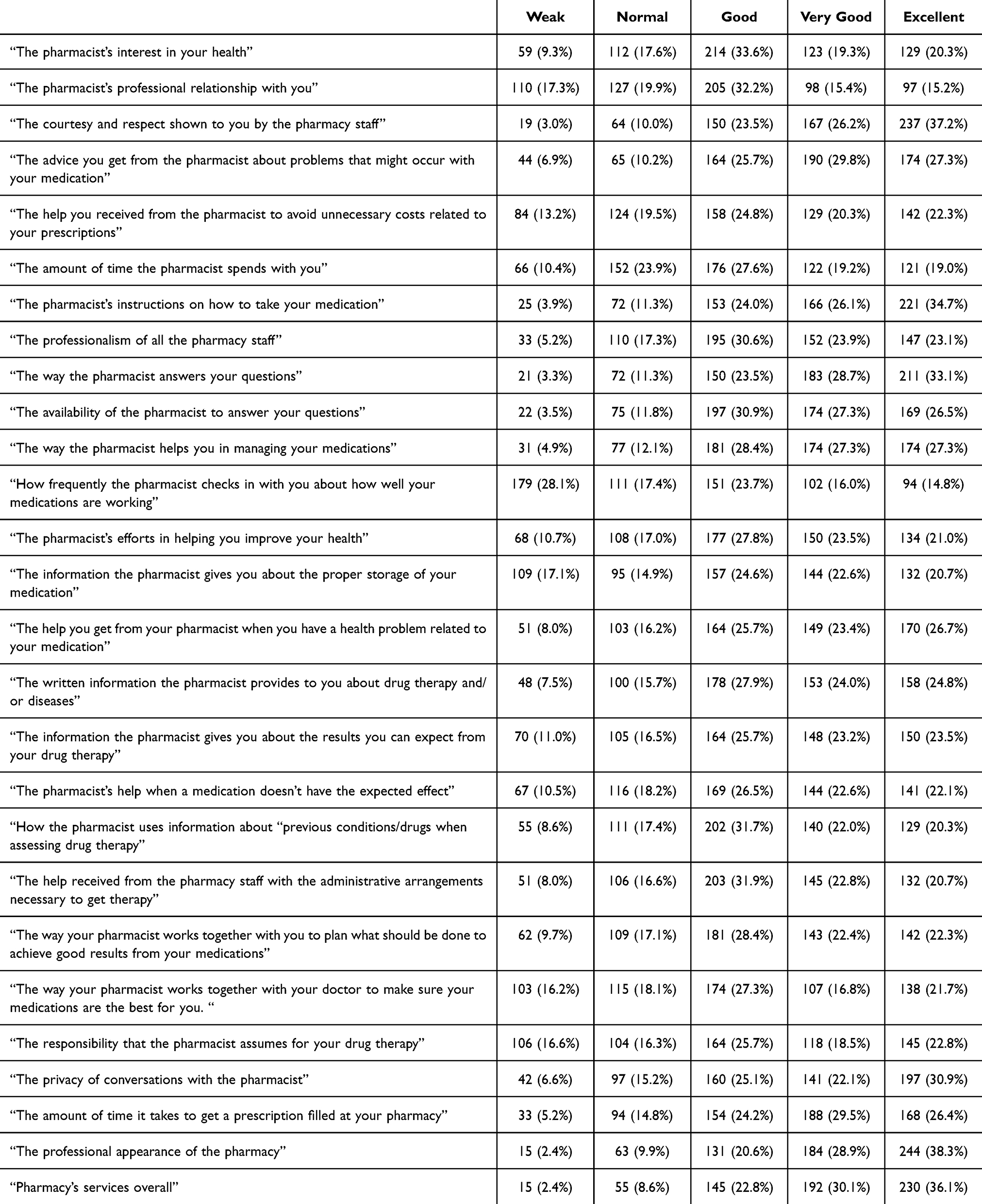 |
Table 2 Patient’s’ Perception of Pharmaceutical Service Quality at Primary Healthcare Centers |
Patients with a monthly income between 1000 and 1500 reported higher overall satisfaction (111.81 ± 24.58) compared to those earning less than 500 (99.80 ± 27.89) (p = 0.003). Those visiting community pharmacies also had higher satisfaction scores (104.74 ± 24.48) than patients visiting government centers pharmacies (93.98 ± 30.21) (p = 0.002). Furthermore, patients using PRN medications reported greater satisfaction in other parameters (11.23 ± 1.14) compared to those on chronic medications (10.71 ± 1.86) (p = 0.002). Additional differences were seen across occupational groups, particular in other parameters (10.00 ± 2.55) than those in other employment fields. More details are provided in Table 3.
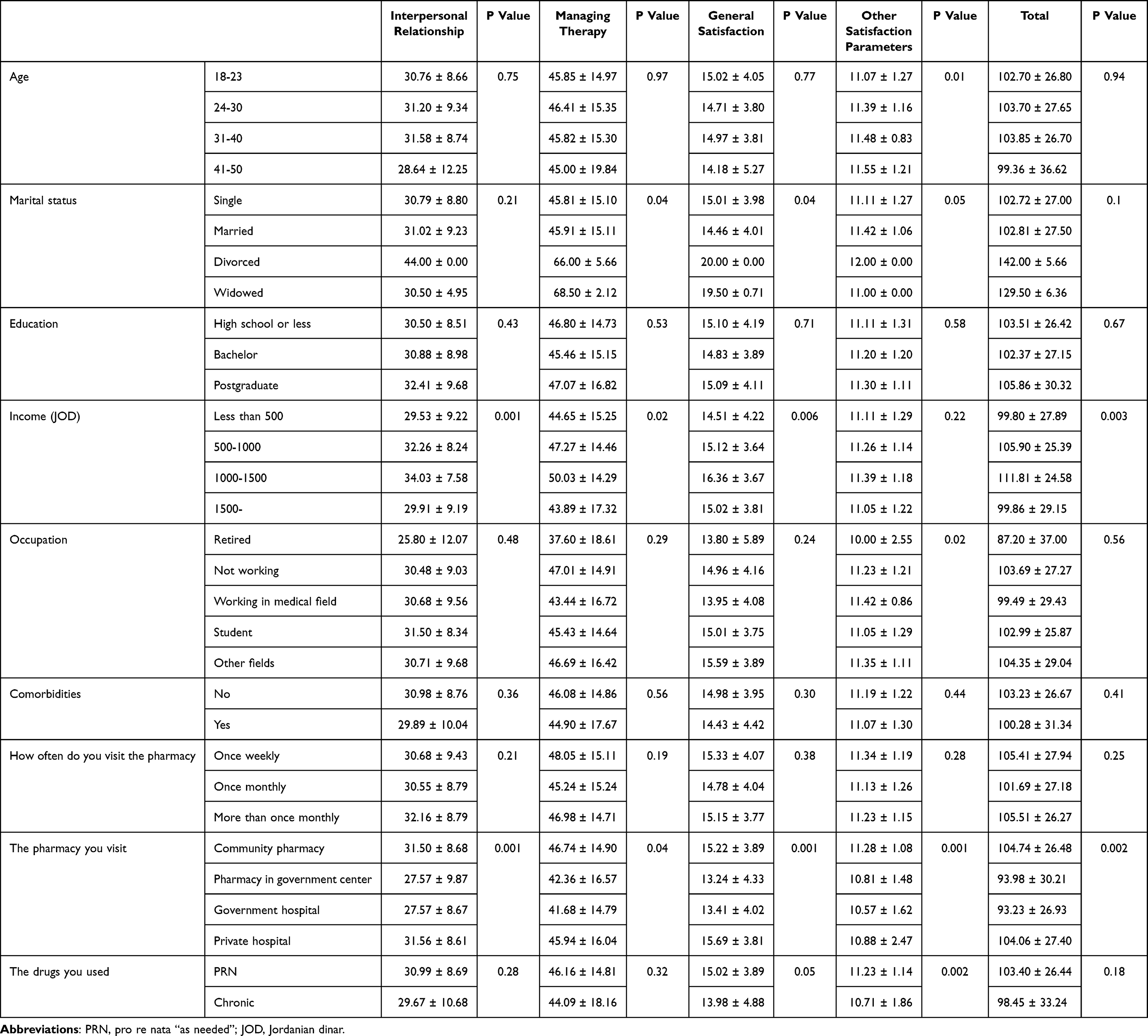 |
Table 3 Sociodemographic and Clinical Determinants of Patient Satisfaction with Pharmacy Services |
Patients with monthly income of 1000–1500 were more than twice as likely to report higher satisfaction compared to those earning less than 500 (OR = 2.23, 95% CI: 1.25–3.99, p = 0.006). Additionally, visiting government center pharmacies (OR = 0.44, 95% CI: 0.24–0.82, p = 0.009) or government hospitals (OR = 0.42, 95% CI: 0.21–0.84; p = 0.014) was associated with significantly lower odds of satisfaction compared to those visiting community pharmacy, Table 4.
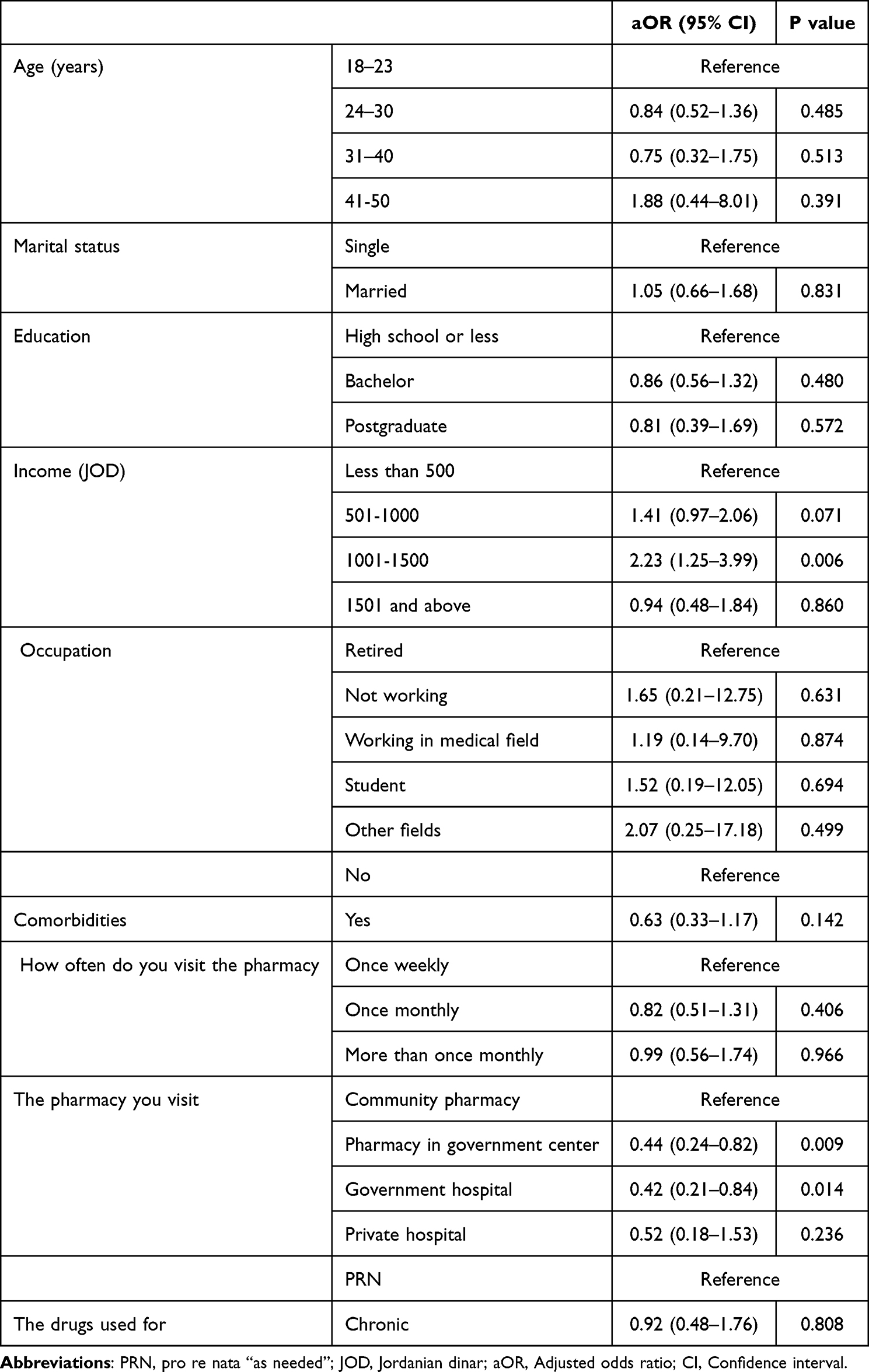 |
Table 4 Multivariable Logistic Regression of Factors Associated with Pharmacy Service Satisfaction |
Discussion
Our study found that overall patient satisfaction with pharmaceutical services was positive. For example, 37.2% of participants rated the courtesy and respect shown by pharmacy staff as excellent. Likewise, 34.7% of participants gave excellent ratings for the pharmacist’s instructions on using their medications. Additionally, 38.3% of patients rated the pharmacy’s professional appearance as excellent, and 36.1% expressed excellent satisfaction with the pharmacy’s overall services. Similarly, the overall satisfaction with the pharmacy services in Pakistan was 39.6%.30 However, the overall satisfaction with the pharmacy services in our study was lower than that of the bulk of prior studies, as the overall satisfaction with the pharmacy services was 46.2% in Eastern Ethiopia,31 49% in Nigeria,32 52.6% in Ethiopia,33 62.5% in Saudi Arabia,34 64.8% in Nablus,35 72.5% in Jordan,36 and 74.6% in South Korea.37 Additionally, earlier investigations found that participants from Romania,38 Nablus,35 Jordan,39 and India40 reported higher satisfaction with the courtesy and respect shown by pharmacy staff, the pharmacist’s instructions on using their medications, and/or the pharmacy’s professional appearance than our participants did. A previous systematic review that involved 59 studies in the Middle East region identified multiple factors that affect Middle Eastern women’s utilization of healthcare services such as their sociodemographic characteristics, education, sources of their health information, risk factors, personal factors, service access and quality levels, and organizational factors.41 Other research in the Middle East reported that cultural and religious factors strongly influence females’ perception and utilization of healthcare services.42,43 This underscored the need for culturally sensitive healthcare services.41 Previous research in Saudi Arabia found that female patients delay their emergency medical care due to gender preferences and religious rules concerned with cross-gender interactions.44 Indeed, positive pharmacists’ attitude, excellent consultation, and clear explanation of pharmaceutical services and products are associated positively with patients’ satisfaction.29,45–48 Thus, training Jordanian pharmacists on updated roles of pharmacists and medication information may aid in improving their professionalism and consultation skills, thereby increasing satisfaction with pharmacy services. These may also enhance patients’ health outcomes and medication regimen adherence, as patients with high levels of satisfaction are anticipated to have elevated levels of medication regimen adherence and more favorable health outcomes.49
Other areas in the current investigation also showed room for improvement; only 14.8% rated the pharmacists’ frequency of checking medication effectiveness as excellent, and 20.3% rated the pharmacists’ interest in their health as excellent. Consistent with these, in Nablus, patients rated the effort of pharmacists to check medication effectiveness and pharmacists’ interest in their health as moderate.35 Besides, approximately 50% of participants in a prior study from Jordan indicated that during their treatment with medications, they required follow-up with their pharmacist.50 Now, the pharmaceutical care vision encompasses a wide range of responsibilities for pharmacists, extending beyond the management of patient medications to include providing patients with the most cost-effective, safe, and effective medications, checking medication effectiveness, and offering comprehensive patient consultations.6 Thus, pharmacists must spend more consultation time to ensure they deliver comprehensive information to patients.51 Research documented that both non-verbal and verbal communication-related consultations enhanced the level of patient satisfaction.52 However, satisfaction with pharmacist communication is low among many participants, such as in Qatar.53 The literature underscores that the deficiency of professional pharmacists and privacy concerns are among other barriers to consultation.54 Consequently, training pharmacists on pharmaceutical services and checking their consultations and communications is recommended.35 Furthermore, pharmacists must follow up with patients during their treatment.55
In this study, patients with a monthly income of 1000–1500 were more than twice as likely to report higher satisfaction compared to those earning less than 500 (OR = 2.23, 95% CI: 1.25–3.99, p = 0.006). Although several prior studies are consistent with this finding, other studies find no significant association, no association, or even a negative association between income and satisfaction with pharmaceutical services. For instance, in Ethiopia, the level of expectation towards pharmaceutical services was higher among individuals with higher incomes.56,57 Moreover, Ethiopian patients were dissatisfied with pharmacy services due to high medication prices and other socioeconomic factors.58 Similarly, satisfaction with pharmacy services was higher among US patients with higher socioeconomic status.59 On the contrary, another earlier investigation from Romania did not find an association between patients’ income and satisfaction with services provided by community pharmacies.60 Even a significant negative association was reported between income and satisfaction with primary healthcare services in Saudi Arabia.61 These results suggest an inconsistent and intricate association between income and satisfaction with pharmaceutical services. Besides, this association may be influenced by other factors that are documented to impact patients’ satisfaction, such as differences in healthcare settings, region, and service delivery.62 In line with this, although the level of financial satisfaction was higher with postal pharmacy services than with community pharmacy services in South Africa, the level of satisfaction with community pharmacy services was higher due to less medication wastage and better counseling.63 Hence, it is essential to implement strategies that ensure all patients receive equitable and adequate pharmaceutical services.
This study showed that visiting government center pharmacies (aOR = 0.44, 95% CI: 0.24–0.82, p = 0.009) or government hospitals (aOR = 0.42, 95% CI: 0.21–0.84; p = 0.014) was associated with significantly lower odds of satisfaction compared to those visiting community pharmacies. Consistent with this, levels of patient satisfaction with community pharmacy services in Spain64 and Pakistan65 were higher than those with hospital pharmacy services. These findings also align with observations from Saudi Arabia and South Africa, which indicate that participants have higher satisfaction levels with community pharmacy services compared to primary healthcare center pharmacies in Saudi Arabia66 and postal pharmacies in South Africa.63 These significantly higher satisfactions with community pharmacy services reflect better counseling and an increased interest in patients’ health, as well as lower waiting times.63,64,66 The low satisfaction with hospital pharmacy services may also be a result of poor interaction with patients due to the hospital pharmacists’ workload.65 The literature also highlights that patients’ expectations and satisfaction are affected by the location of the pharmacy, waiting zone, knowledge and availability of pharmacists, and prior experience.34,67 Therefore, educational and counseling interventions for pharmacists at government pharmacies are necessary to enhance their knowledge and skills, thereby enabling them to interact effectively with patients, reduce patient waiting times, improve their experience, and increase their satisfaction levels.
Decision makers in the healthcare sector are advised to decrease workload on the pharmacists, which might cause medication errors.68 Besides, increasing the number of pharmacists at the dispensing window, can enhance patient throughput time. Furthermore, continuous training and knowledge assessment are recommended on regular basis to maintain up to date knowledge and skills.
This research is not free from limitations. The online cross-sectional survey research utilizing convenience sampling technique through social media platforms has limited generalizability and ability to examine causality across the study variables. Survey-based research utilizing self-reported measures is prone to reporting bias and social desirability bias. Therefore, the study findings should be interpreted carefully. Future research should target the implementation of longitudinal study design utilizing probability sampling techniques. Furthermore, female patients’ satisfaction could be further examined utilizing other objective healthcare measures such as improved medication adherence rate, improved medication awareness, adverse drug monitoring, and frequency of follow-up contacts.
Conclusion
This study indicates that female patients in Jordan generally have a positive overall satisfaction with pharmaceutical services. However, many areas showed room for improvement. Moreover, patients with a high monthly income and those visiting community pharmacies report higher satisfaction. Thus, training Jordanian pharmacists on updated medication information, pharmaceutical services, consultations, communications, and follow-up with patients during their treatment is required to increase satisfaction with pharmacy services and patients’ health. Furthermore, it is crucial to develop strategies that ensure all patients receive equitable and satisfactory pharmaceutical services.
Data Sharing Statement
The datasets used and/or analysed during the current study are available from the corresponding author on reasonable request.
Ethical Approval and Consent to Participate
The research ethics committee at Isra University, Amman, Jordan, approved the study protocol (SREC/25/02/127). Informed consent was obtained from the study participants prior to study commencement. This study was conducted in accordance with the World Medical Association (WMA) Declaration of Helsinki.
Acknowledgment
We would like to acknowledge Princess Nourah bint Abdulrahman University Researchers Supporting Project number (PNURSP2026R483), Princess Nourah bint Abdulrahman University, Riyadh, Saudi Arabia.
Author Contributions
All authors made a significant contribution to the work reported, whether that is in the conception, study design, execution, acquisition of data, analysis and interpretation, or in all these areas; took part in drafting, revising or critically reviewing the article; gave final approval of the version to be published; have agreed on the journal to which the article has been submitted; and agree to be accountable for all aspects of the work.
Funding
This research was supported by Princess Nourah bint Abdulrahman University Researchers Supporting Project number (PNURSP2026R483), Princess Nourah bint Abdulrahman University, Riyadh, Saudi Arabia.
Disclosure
The authors declare no conflict of interest.
References
1. Manzoor F, Wei L, Hussain A, Asif M, Shah SIA. Patient satisfaction with health care services; an application of physician’s behavior as a moderator. Int J Environ Res Public Health. 2019;16(18). doi:10.3390/ijerph16183318
2. WHO D. The role of the pharmacist in self-care and self-medication. In: Report of the 4th WHO Consultative Group on the Role of the Pharmacist. Geneva: World Health Organisation; 1998:26–13.
3. Ghani K, Gillani W, Ghani M. Pharmacy teaching and practices problems in developing countries: review. Int J Pharm Teach Pract. 2010;1(1):11–17.
4. Almomani HY, Taybeh EO, Ali TB. Community pharmacists’ knowledge, practices and barriers in diabetes mellitus management during Ramadan in Jordan: a cross-sectional study. BMJ Open. 2025;15(9):e103170. doi:10.1136/bmjopen-2025-103170
5. Almomani HY, Almomani EY, Qablan A, Al-Momany A. Pharmacists’ perspectives and perceived barriers to counselling patients with kidney stones. Res Social Adm Pharm. 2024;20(6):123–133. doi:10.1016/j.sapharm.2024.02.018
6. Hepler CD, Strand LM. Opportunities and responsibilities in pharmaceutical care. Am J Hosp Pharm. 1990;47(3):533–543.
7. Pearson GJ. Evolution in the practice of pharmacy--not a revolution! Cmaj. 2007;176(9):1295–1296. doi:10.1503/cmaj.070041
8. Almomani EY, Jarrar W, Alhadid A, Hamadneh L, Qablan A, Almomani HY. Shedding light on pharmacists’ knowledge of kidney stones’ etiology and treatment. Pharm Pract. 2022;20(3):2712. doi:10.18549/PharmPract.2022.3.2712
9. Jalil B, Naser AY, MP J, Heinrich M. Herbal supplements in Jordan: a cross-sectional survey of pharmacists’ perspectives and knowledge. BMJ Open. 2022;12(7):e057405. doi:10.1136/bmjopen-2021-057405
10. MFsA O, Nanara A, Ffg A, et al. Role of pharmacist towards medication counselling services related to medication therapy management. Migration Lett. 2022;19(S5):705–744.
11. Eldooma I, Maatoug M, Yousif M. Outcomes of pharmacist-led pharmaceutical care interventions within community pharmacies: narrative review. Integr Pharm Res Pract. 2023;12:113–126. doi:10.2147/iprp.S408340
12. Traverso ML, Salamano M, Botta C, Colautti M, Palchik V, Pérez B. Questionnaire to assess patient satisfaction with pharmaceutical care in Spanish language. Int J Qual Health Care. 2007;19(4):217–224. doi:10.1093/intqhc/mzm014
13. Aga TB, Ferede YM, Mekonen EG. Satisfaction and associated factors towards inpatient health care services among adult patients at Pawie General Hospital, West Ethiopia. PLoS One. 2021;16(4):e0249168. doi:10.1371/journal.pone.0249168
14. Gu NY, Gai Y, Hay JW. The effect of patient satisfaction with pharmacist consultation on medication adherence: an instrumental variable approach. Pharm Pract. 2008;6(4):201–210. doi:10.4321/s1886-36552008000400006
15. Umoke M, Umoke PCI, Nwimo IO, et al. Patients’ satisfaction with quality of care in general hospitals in Ebonyi State, Nigeria, using SERVQUAL theory. SAGE Open Med. 2020;8:2050312120945129. doi:10.1177/2050312120945129
16. Xesfingi S, Vozikis A. Patient satisfaction with the healthcare system: assessing the impact of socio-economic and healthcare provision factors. BMC Health Serv Res. 2016;16:94. doi:10.1186/s12913-016-1327-4
17. Agu KA, Oqua D, Agada P, et al. Assessment of satisfaction with pharmaceutical services in patients receiving antiretroviral therapy in outpatient HIV treatment setting. Int J Clin Pharm. 2014;36(3):636–647. doi:10.1007/s11096-014-9948-3
18. Prakash B. Patient satisfaction. J Cutan Aesthet Surg. 2010;3(3):151–155. doi:10.4103/0974-2077.74491
19. Lima TM, Aguiar PM, Storpirtis S. Evaluation of quality indicator instruments for pharmaceutical care services: a systematic review and psychometric properties analysis. Res Social Adm Pharm. 2018;14(5):405–412. doi:10.1016/j.sapharm.2017.05.011
20. Ried LD, Wang F, Young H, Awiphan R. Patients’ satisfaction and their perception of the pharmacist. J Am Pharm Assoc. 1999;39(6):835–42;quiz882–4. doi:10.1016/S1086-5802(15)30375-2
21. Mularczyk-Tomczewska P, Gujski M, Koperdowska JM, Wójcik J, Silczuk A. Factors influencing patient satisfaction with healthcare services in Poland. Med Sci Monit. 2025;31e948225. doi:10.12659/msm.948225
22. Awad AI, Al-Rasheedi A, Lemay J. Public perceptions, expectations, and views of community pharmacy practice in Kuwait. Med Princ Pract. 2017;26(5):438–446. doi:10.1159/000481662
23. Chance EA, Sardi Abdoul I. The roles and contributions of women to the health of their families and household economics in rural areas in the district of Mbe, Cameroon. Soc Sci Humanities Open. 2025;11:101456. doi:10.1016/j.ssaho.2025.101456
24. Mahfouz IA, Blanker MH, Asali F, et al. Seeking consultation for urinary incontinence: behaviours and barriers among Jordanian women. Neurourol Urodyn. 2023;42(6):1299–1310. doi:10.1002/nau.25189
25. Alyahya MS, Khader YS, Batieha A, Asad M. The quality of maternal-fetal and newborn care services in Jordan: a qualitative focus group study. BMC Health Serv Res. 2019;19(1):425. doi:10.1186/s12913-019-4232-9
26. Altarifi D, Harb T, Abualhasan M. Patient satisfaction with pharmaceutical services at primary healthcare centers under the Palestinian Ministry of Health. BMC Health Serv Res. 2024;24(1):514. doi:10.1186/s12913-024-10983-4
27. Larson LN, Rovers JP, MacKeigan LD. Patient satisfaction with pharmaceutical care: update of a validated instrument. J Am Pharm Assoc. 2002;42(1):44–50. doi:10.1331/108658002763538062
28. Alomi Y. Patient satisfaction of pharmaceutical care system at ministry of health in Saudi Arabia. BAOJ Pharm Sci. 2016;2:2–4. doi:10.24947/2380-5552/2/1/119
29. Khudair IF, Raza SA. Measuring patients’ satisfaction with pharmaceutical services at a public hospital in Qatar. Int J Health Care Qual Assur. 2013;26(5):398–419. doi:10.1108/ijhcqa-03-2011-0025
30. Aziz MM, Ji W, Masood I, et al. Patient satisfaction with community pharmacies services: a cross-sectional survey from punjab; Pakistan. Int J Environ Res Public Health. 2018;15(12):2914. doi:10.3390/ijerph15122914
31. Ayele Y, Hawulte B, Feto T, Basker GV, Bacha YD. Assessment of patient satisfaction with pharmacy service and associated factors in public hospitals, Eastern Ethiopia. SAGE Open Med. 2020;8:2050312120922659. doi:10.1177/2050312120922659
32. Oparah AC, Enato EF, Akoria OA. Assessment of patient satisfaction with pharmaceutical services in a Nigerian teaching hospital. Int J Pharm Pract. 2004;12(1):7–12. doi:10.1211/0022357023204
33. Teshome Kefale A, Hagos atsebah G, Ayele Mega T. Clients’ perception and satisfaction toward service provided by pharmacy professionals at a teaching hospital in Ethiopia. Integr Pharm Res Pract. 2016;5:85–94. doi:10.2147/iprp.S118657
34. El-Kholy AA, Abdelaal K, Alqhtani H, Abdel-Wahab BA, Abdel-Latif MMM. Publics’ perceptions of community pharmacists and satisfaction with pharmacy services in Al-Madinah City, Saudi Arabia: a cross sectional study. Medicina. 2022;58(3). doi:10.3390/medicina58030432
35. Shraim R. Assessment of Patients’ Satisfaction with Pharmaceutical Services in Nablus City Hospitals: A Cross Sectional Study. An-Najah National University; 2019.
36. Naser AY, Abu Sbeat BS. Satisfaction with community pharmacies services in Jordan: a cross-sectional study. Saudi Pharm J. 2022;30(11):1646–1651. doi:10.1016/j.jsps.2022.09.007
37. Lee S, Godwin OP, Kim K, Lee E. Predictive factors of patient satisfaction with pharmacy services in south korea: a cross-sectional study of national level data. PLoS One. 2015;10(11):e0142269. doi:10.1371/journal.pone.0142269
38. Manoliu-Hamwi EM, Dascălu CG, Zegan G, et al. Patient’s satisfaction level with community pharmacies services in Romania: a questionnaire-based study. J Pharm Policy Pract. 2024;17(1):2381104. doi:10.1080/20523211.2024.2381104
39. Amara N, Naser AY, Esra’O T. Patient satisfaction with pharmaceutical services in Jordan: a cross-sectional study. Jordan J Pharmaceut Sci. 2023;16(1):1–10. doi:10.35516/jjps.v16i1.1030
40. Baptist RD, Dcunha S, Suresh S. Patient experience and satisfaction of pharmaceutical services in a tertiary care hospital. RGUHS J Allied Health Sci. 2023;3(3):1.
41. Khosravi M, Mojtabaeian SM, Aghamaleki Sarvestani M. A systematic review on factors influencing Middle Eastern women’s utilization of healthcare services: the promise of mHealth. SAGE Open Med. 2024;12:20503121241276678. doi:10.1177/20503121241276678
42. Alkhaibari RA, Smith-Merry J, Forsyth R, Raymundo GM. Patient-centered care in the Middle East and North African region: a systematic literature review. BMC Health Serv Res. 2023;23(1):135. doi:10.1186/s12913-023-09132-0
43. Elbarazi I, Devlin NJ, Katsaiti MS, Papadimitropoulos EA, Shah KK, Blair I. The effect of religion on the perception of health states among adults in the United Arab Emirates: a qualitative study. BMJ Open. 2017;7(10):e016969. doi:10.1136/bmjopen-2017-016969
44. Alqufly AE, Alharbi BM, Alhatlany KK, Alhajjaj FS. Muslim female gender preference in delaying the medical care at emergency department in Qassim Region, Saudi Arabia. J Family Med Prim Care. 2019;8(5):1658–1663. doi:10.4103/jfmpc.jfmpc_141_19
45. Barghouth D, Al-Abdallah GM, Abdallah AB. Pharmacy service factors and pharmacy performance: the role of patient satisfaction in community pharmacies. Int J Pharmaceut Healthcare Market. 2021;15(3):410–428. doi:10.1108/IJPHM-03-2020-0017
46. Mahmoud AAE, Mahmoud E. Patients’ perspectives on the quality of pharmaceutical services in Saudi hospitals. Int J Res Pharm Sci. 2016;6(3):36–40.
47. Nuritasari A, S KY, H T. Patient satisfaction analysis of pharmaceutical service quality in UMP dispensary. APSP J Case Rep. 2015;6:27–28.
48. Oparah AC, Kikanme LC. Consumer satisfaction with community pharmacies in Warri, Nigeria. Res Social Adm Pharm. 2006;2(4):499–511. doi:10.1016/j.sapharm.2006.02.004
49. Malewski DF, Ream A, Gaither CA. Patient satisfaction with community pharmacy: comparing urban and suburban chain-pharmacy populations. Res Social Adm Pharm. 2015;11(1):121–128. doi:10.1016/j.sapharm.2014.05.001
50. Mukattash TL, Bazzi NH, Nuseir KQ, Jarab AS, Abu-Farha RK, Khdour MR. Pharmaceutical care in community pharmacies in Jordan: a public survey. Pharm Pract. 2018;16(2):1126. doi:10.18549/PharmPract.2018.02.1126
51. Chou YC, Dang VT, Yen HY, Lai KM. Influence of risk of drug−drug interactions and time availability on patient trust, satisfaction, and cooperation with clinical pharmacists. Int J Environ Res Public Health. 2019;16(9):1566. doi:10.3390/ijerph16091566
52. Fesharaki F. Nonverbal communication of pharmacists during counseling leading to patient satisfaction: evidence from Iranian retail market. Atlantic J Commun. 2019;27(1):62–73. doi:10.1080/15456870.2019.1540241
53. Al Zaidan M, Mohammed AM, Mohamed Ibrahim MI, Al Mahmoud M, Al Abdulla S, Al-Kuwari MG. Pharmaceutical care service at primary health care centers: an insight on patient satisfaction. Int J Clin Pract. 2022;2022:6170062. doi:10.1155/2022/6170062
54. Al-Arifi MN. Patients’ perception, views and satisfaction with pharmacists’ role as health care provider in community pharmacy setting at Riyadh, Saudi Arabia. Saudi Pharm J. 2012;20(4):323–330. doi:10.1016/j.jsps.2012.05.007
55. Rayes IK, Hassali MA, Abduelkarem AR. The role of pharmacists in developing countries: the current scenario in the United Arab Emirates. Saudi Pharm J. 2015;23(5):470–474. doi:10.1016/j.jsps.2014.02.004
56. Ayalew MB, Taye K, Asfaw D, et al. Patients’/clients’ expectation toward and satisfaction from pharmacy services. J Res Pharm Pract. 2017;6(1):21–26. doi:10.4103/2279-042x.200995
57. Workye M, Admasu S, Abura T, et al. Clients’ expectations from and satisfaction with medicine retail outlets in Gondar town, northwestern Ethiopia: a cross-sectional study. Integr Pharm Res Pract. 2015;4:1–12. doi:10.2147/iprp.S75819
58. Molla S, Moges G, Toleha HN, Bayked EM, Workneh BD. Patient satisfaction with pharmacy services and associated factors in Ethiopia: a systematic review and meta-analysis. BMC Health Serv Res. 2025;25(1):971. doi:10.1186/s12913-025-12980-7
59. Hall JA, Milburn MA, Epstein AM. A causal model of health status and satisfaction with medical care. Med Care. 1993;31(1):84–94. doi:10.1097/00005650-199301000-00007
60. Druică E, Ianole-Călin R, Băicuș C, Dinescu R. Determinants of satisfaction with services, and trust in the information received in community pharmacies: a comparative analysis to foster pharmaceutical care adoption. Healthcare. 2021;9(5). doi:10.3390/healthcare9050562
61. Albaqami NM, Alshagrawi S. Patient satisfaction with primary health care services in Riyadh, Saudi Arabia. Int J Gen Med. 2025;18:835–845. doi:10.2147/ijgm.S506595
62. Noorsaeed SMW, Alshammari H, Weir N, Kurdi A. Exploring community pharmacy services in Gulf Cooperation Council countries: a scoping review. Int J Pharm Pract. 2025;33:458–476. doi:10.1093/ijpp/riaf041
63. Govender N, Suleman F. Comparison of patient satisfaction with pharmaceutical services of postal pharmacy and community pharmacy. Health SA. 2019;24:1105. doi:10.4102/hsag.v24i0.1105
64. Ferrández O, Grau S, Colominas-González E, et al. Dispensation of outpatient hospital medicines by hospital only versus hospital-community pharmacies collaboration: a cross-sectional study and survey of patient’s satisfaction. Front Public Health. 2024;12:1335265. doi:10.3389/fpubh.2024.1335265
65. Ali SM, Afaq S, Ali Mehdi M, et al. Comparing patient satisfaction in hospital vs. Retail pharmacies: insights from a cross-sectional survey in Lahore, Pakistan. J Population Therapeut Clin Pharmacol. 2024;2024:1.
66. Alzahrani AM, Alzhrani AA, Felix HC, et al. Patient satisfaction with private community pharmacies versus pharmacies in primary health care centers in Saudi Arabia. Saudi Pharm J. 2024;32(6):102091. doi:10.1016/j.jsps.2024.102091
67. Melton BL, Lai Z. Review of community pharmacy services: what is being performed, and where are the opportunities for improvement? Integr Pharm Res Pract. 2017;6:79–89. doi:10.2147/iprp.S107612
68. Thang DX, Tuan HA, Nguyen CTT, Phuong DT, Thuy LT, Duc TN. A cross-sectional study of patients satisfaction with the pharmacy services at the 108 military central hospital: determinants and implications. Health Sci Rep. 2025;8(5):e70868. doi:10.1002/hsr2.70868
 © 2026 The Author(s). This work is published and licensed by Dove Medical Press Limited. The
full terms of this license are available at https://www.dovepress.com/terms
and incorporate the Creative Commons Attribution
- Non Commercial (unported, 4.0) License.
By accessing the work you hereby accept the Terms. Non-commercial uses of the work are permitted
without any further permission from Dove Medical Press Limited, provided the work is properly
attributed. For permission for commercial use of this work, please see paragraphs 4.2 and 5 of our Terms.
© 2026 The Author(s). This work is published and licensed by Dove Medical Press Limited. The
full terms of this license are available at https://www.dovepress.com/terms
and incorporate the Creative Commons Attribution
- Non Commercial (unported, 4.0) License.
By accessing the work you hereby accept the Terms. Non-commercial uses of the work are permitted
without any further permission from Dove Medical Press Limited, provided the work is properly
attributed. For permission for commercial use of this work, please see paragraphs 4.2 and 5 of our Terms.
Recommended articles

Assessing Patient Satisfaction with Community Pharmacy Services: A Large Regional Study at Punjab, Pakistan
Alanazi AS, Shah S, Abbas G, Hussain M, Saleem A, Khurram H, Chand UR, Mallhi TH, Khan YH, Ilyas K, Tariq S, Jamil A, Alzarea AI, Alzarea SI
Patient Preference and Adherence 2023, 17:13-22
Published Date: 5 January 2023