
Back to Journals » Clinical Ophthalmology » Volume 19
Patient Perspectives on Handling Single-Dose versus Multi-Dose Eye Drops: A Cross-Over Study
Authors Dias JA, Silva JF, Lopes N, Cruz M, Margarido P
Received 6 February 2025
Accepted for publication 4 November 2025
Published 6 December 2025 Volume 2025:19 Pages 4469—4477
DOI https://doi.org/10.2147/OPTH.S521148
Checked for plagiarism Yes
Review by Single anonymous peer review
Peer reviewer comments 2
Editor who approved publication: Dr Scott Fraser
José António Dias,1 João Filipe Silva,2 Nuno Lopes,3 Mário Cruz,4 Paulo Margarido5
1Department of Ophthalmology, Joaquim Chaves Saúde, Lisbon, Portugal; 2Department of Ophthalmology, Coimbra University Hospital Centre, Coimbra, Portugal; 3Department of Ophthalmology, Braga Hospital Centre, Braga, Portugal; 4Department of Ophthalmology, Tondela-Viseu Hospitalar Centre, Viseu, Portugal; 5Egas Moniz School of Health & Science, Almada, Portugal
Correspondence: José António Dias, Joaquim Chaves Saúde, Lisbon, Portugal, Email [email protected]
Background: There is a lack of data evaluating the relative usability of single-dose and multi-dose containers for delivery of eye drops. This study aimed to evaluate the usability, convenience and patient preferences of eye drops in single- versus multi-dose containers.
Methods: A prospective, open-label, multicentre, cross-over study was conducted in Portugal between April and June 2017. Participants aged 50 years or older and had indications for eye lubricant use were included. The participants were allocated to use either multi-dose or single-dose containers followed by switching during the study period. The usability, convenience and patient preferences of each eye drop containers were collected using a novel questionnaire developed by the authors of this study. Descriptive statistical analyses were performed for all outcomes.
Results: A total of 114 participants completed the study. Overall, participants found the use of multi-dose containers easier than single-dose containers based on ease of container opening and ease of eye drop application. Multi-dose containers were less likely to have drops remaining in the container at disposal and had improved legibility of labels versus single-dose containers.
Conclusion: The findings suggest that multi-dose eye drop containers were associated with better handling and use compared with single-dose containers.
Keywords: Eye drops, usability, handling, single-dose, multi-dose, containers
Introduction
Eye drops are the most commonly used application method for ocular drugs.1 The use of eye drops is indicated in a range of ophthalmological conditions, including allergy, dry eye, glaucoma, inflammation and infections.2 The common chronic anterior segment diseases are considered particularly amenable to topical application of eye drops by patients,3 facilitating patient-delivered treatment for these conditions in the long term. With an ageing population, chronic ocular disease burden is increasing.4 Importantly, both old age and fragility are factors that have been linked to poor eye drop use.4,5 Imprecision in the use of eye drops may reduce the dose delivered, thereby reducing treatment efficacy.6 Hence, optimising the use of eye drops is important in ensuring the effectiveness of treatment.
Medication use and adherence are linked to many factors in old people, including the ease of use and simple administration methods.7 The use of single dose or multi-dose containers for administration of eye drops may have an impact on its usability and adherence among patients. There is limited data regarding the influence of patient perspectives on using different delivery devices for the instillation of eye drops, especially in older patients. This includes perspectives such as handling, convenience and preference of using single-dose or multi-dose devices. It has been reported that the type of delivery device can influence patient satisfaction and adherence to treatment. This suggests the need to explore the role of single-dose and multi-dose devices for a better and effective handling and delivery of eye drops.7 Assessing these factors may help in optimising patients’ experience of eye drop instillation, their ability to use the medications appropriately and adhere to recommended usage, which in turn may contribute to the effectiveness of ocular medications. The objective of this survey was to assess the usability, convenience and patient preference towards the use of single-dose containers versus multi-dose containers for administering eye drops.
Methods
Study Participants and Procedures
Study participants were selected from the cities of Lisbon, Braga, Viseu and Viana do Castelo in Portugal. Potential participants were identified by the investigators (ophthalmologists) in clinics during day-to-day clinical practice. Participants aged 50 years and older, with an indication for the use of eye lubricants but with no other eye conditions, with no contraindications or allergy to components of the eye drops, and those with no physical conditions that may limit the use of eye drops, were included.
All participants provided their written, informed consent to participate in the study and could withdraw their participation at any time. The study protocol follows the principles of the Declaration of Helsinki and was approved by the local ethics board, Comissão de Etica da Joaquim Chaves Saúde (JCS1216).
Study Design
This was a prospective, open-label, multicentre, cross-over study conducted in Portugal between April and June 2017. Study participants were divided into two groups. Each group commenced with one treatment or intervention and then switched over to the other treatment, reflecting the cross-over design. Group 1 participants (N = 59) began the study with multi-dose containers and Group 2 participants (N = 55) with single-dose containers, for 15 days each. On Day 15, Group 1 participants switched over to single-dose containers and Group 2 participants switched over to multi-dose containers, respectively (Figure 1).
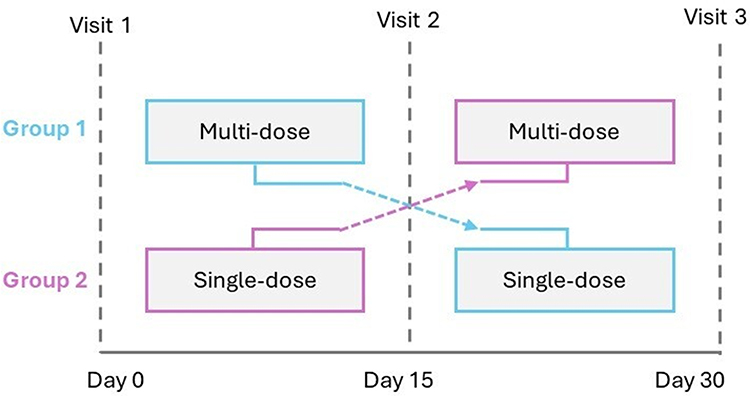 |
Figure 1 Schematic illustration of the study design. Notes: Group 1 (N = 59) began the study using multi-dose containers for 15 days, switching on Day 15 to single-dose containers. Group 2 (N = 55) began the study using single-dose containers, switching on Day 15 to multi-dose containers. Questionnaire 1 was administered on Day 0 and Questionnaire 2 on Days 15 and 30, to both Groups 1 and 2. |
The participants were instructed to self-administer the eye drops and the frequency of application of the eye drops was set at a minimum of 1 drop twice daily and no maximum limit was defined. The application regimen depended on the clinical observations by the investigator. At baseline (Day 0; visit 1), an ophthalmological assessment was conducted to confirm the suitability of study commencement. Throughout the study, ophthalmological health was monitored and when adverse reactions occurred, the eye drops were discontinued, and appropriate management was initiated. When participants were unable to use the device successfully, device use was suspended, and participants were excluded from the remainder of the study. Non-compliance to the protocol did not render participants to be excluded from the study.
The multi-dose formulation consisted of sodium hyaluronate 0.15%, boric acid, ProtectorTM (filmogenous polymer), sodium chloride, potassium chloride, calcium chloride dihydrate, magnesium chloride hexahydrate, Oxyd 0.06% (vanishing preservative), and purified water, in a bottle containing 10 mL of ophthalmic solution. The single-dose formulation consisted of the same ingredients in 0.35 mL single-dose ampoules. The type of bottle packaging for the multi-dose eye drop containers (vials) was the Novelia system.
Instrument and Variables
Questionnaires were developed in Portuguese in collaboration with a psychologist. The first questionnaire was intended to capture participant demographic data and prior use of any eye drops at baseline (Day 0; visit 1). The second questionnaire was intended to evaluate key topics related to the usability and experience of eye drop administration with single- and multi-dose containers. The second questionnaire was used for both the second visit (Day 15) and third visit (Day 30). The questionnaire content was devised based on evaluation of the background scientific literature and selection of key topics linked to eye drop use in practice, determined by five ophthalmologists in collaboration with a psychologist and approved and validated by the study working group.
The following categories of questions were included in the questionnaire 2: ease of container opening, ease of eye drop administration, force required to administer eye drops, ease of correct administration, frequency of containers touching the eye, unused drops in the container at the point of disposal, ease of storage of the container once opened, and ease of reading the container label. All questions were evaluated using the 7-point Likert scale. Questionnaire 1 was administered on paper by ophthalmologists on Day 0 (visit 1) to capture baseline demographic data, and then Questionnaire 2 on Days 15 (visit 2) and 30 (visit 3) of the study to capture experiences of use of single- and multi-dose containers following crossover periods.
Statistical Analyses
Data derived from questionnaire 2 on Day 15 (visit 2) and Day 30 (visit 3) were pooled to assess the overall experience of participants using the 2 different types of eye drop containers. Descriptive statistics were used to evaluate the differences in the responses between single- and multi-dose container use among all participants.
The statistical evaluation was performed by the psychology department at the Egas Moniz School of Health & Science, Portugal, in collaboration with an external, independent and certified authority. The Spearman correlation test was used to measure the monotonic relationship between the treatment groups and the responses to the questionnaires provided by the participants, which assessed if there is a consistent pattern of agreement or disagreement between them, even if the relationship is not perfectly linear. The predetermined threshold for statistical significance (P value) was an alpha value of less than 0.05. SPSS 28.0 software (IBM, New York, USA) was used for the statistical analysis.
The minimum sample size was calculated as 80 participants for completion of the study, which was based on the total number of questions and types of questions in the survey. Statistical power was set at 80%.
For the purpose of data analysis, the Likert scores ranged from 1 to 7, with the following description: 1 to 3 (“strongly disagree”, “disagree”, “slightly disagree”); score of 4 (“neutral”); and 5 to 7 (“slightly agree”, “agree”, “strongly agree”). These scores were pooled to create three categories: “disagree” (score of 1–3), “neutral” (score of 4), and “agree” (score of 5–7).
Results
Participant Characteristics
A total of 114 participants completed the study. A summary of the baseline characteristics of the participants is presented in Table 1. Most of the participants were females (61.4%, n = 70). About 73.7% of the participants were 50 to 70 years of age. Many participants (68.4%) had their education below degree level. At baseline, 12.3% of participants had no experience of using eye drops, 49.1% had the experience of using multi-dose eye drop containers, 1.8% had the experience of using single-dose eye drop containers, and 33.3% of the participants had the experience of using both multi-dose and single-dose eye drop containers. Many of the participants who had never used any eye drops were less than 70 years of age.
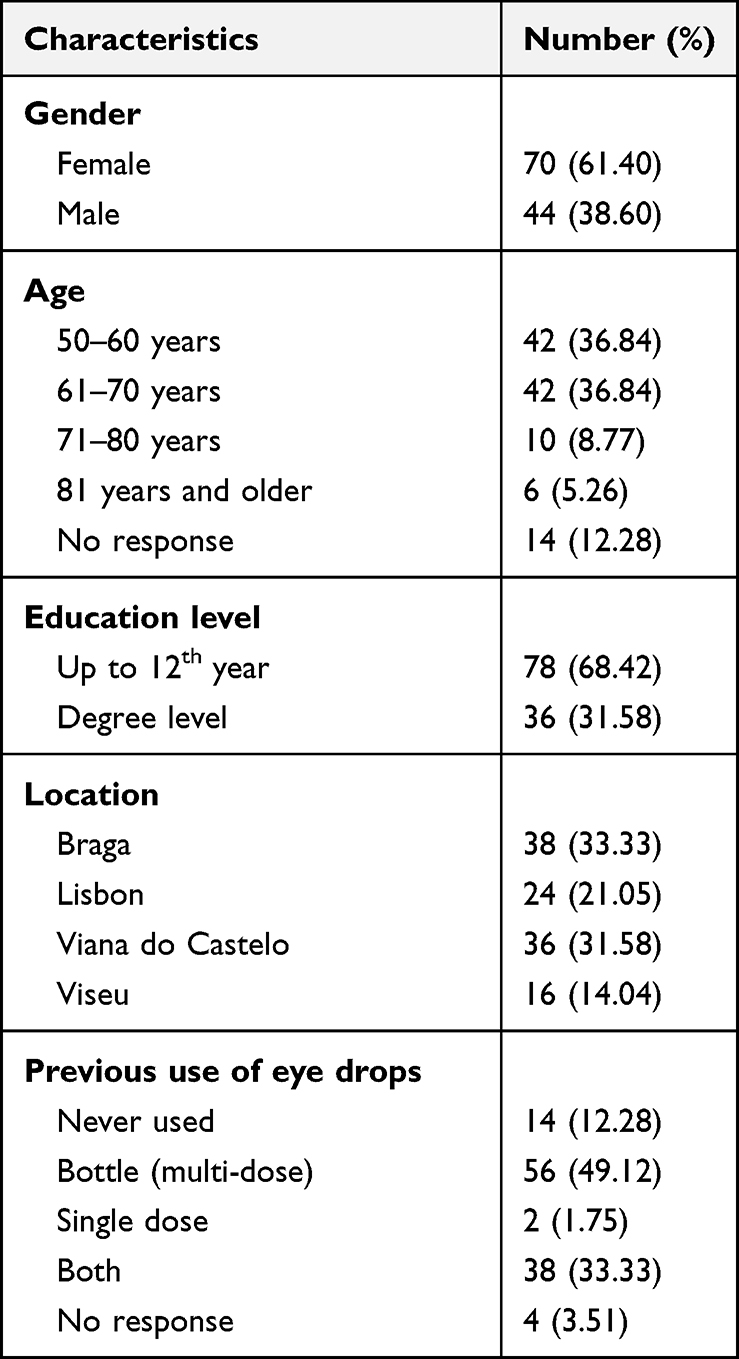 |
Table 1 Baseline Participant Characteristics |
At the end of each treatment period, the overall use of the containers by the participants was evaluated. The results are detailed in Figure 2.
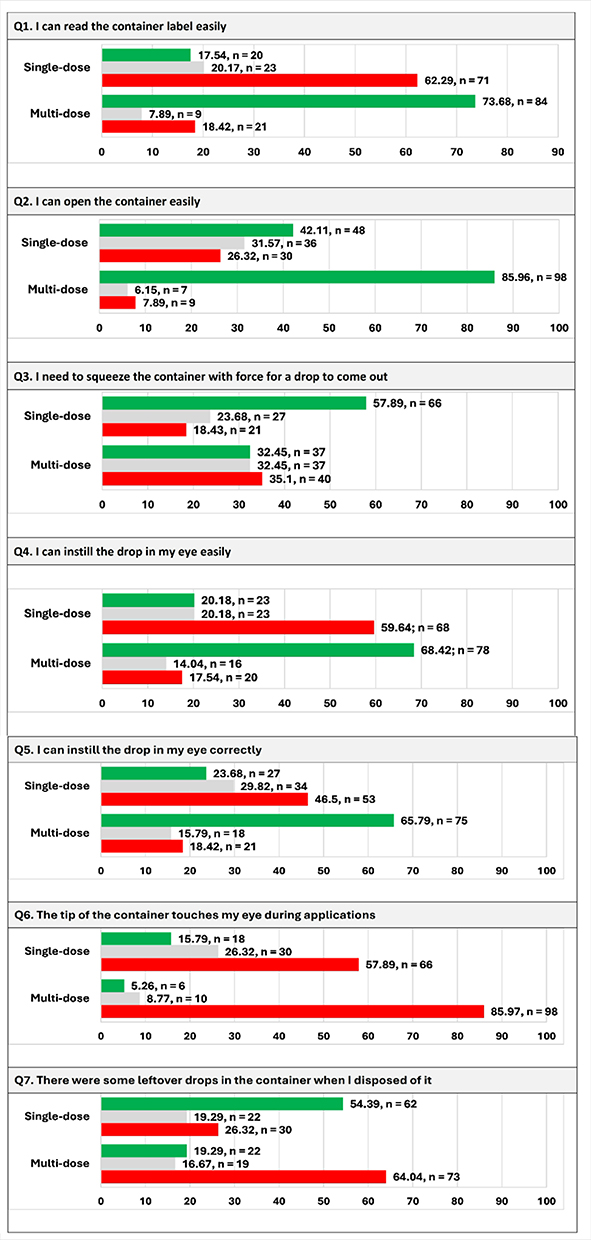 |
Figure 2 Participant responses to questionnaires 1 to 7. Notes: X-axis: Patient response in %. Color code: Green: Agree; Grey: Neutral; Red: Disagree. |
Statement: I Can Read the Container Label Easily
The ease of reading the label on the container showed that participants on multi-dose containers (n = 84) found it easy to read the label compared to those on single-dose containers (n = 20) (73.68% vs 17.54%; P < 0.005), respectively. The proportion of participants experiencing difficulty in reading the label was higher with single-dose containers (n = 71) compared to multi-dose containers (n = 21) (62.29% vs 18.42%). Some participants did not show any specific preference either to the multi-dose (7.89%, n = 9) or single-dose containers (20.17%, n = 23) and provided a neutral response.
Statement: I Can Open the Container Easily
The ease of opening the container was found to be higher in participants using multi-dose containers (n = 98) than those using the single-dose containers (n = 48) (85.96% vs 42.11%; P < 0.005). The proportion of participants experiencing difficulty in opening the container was higher with single-dose containers (n = 30) than with multi-dose containers (n = 9) (26.32% vs 7.89%). Some of the participants did not indicate any specific preference either to the multi-dose (6.15%, n = 7) or single-dose containers (31.57%, n = 36) and provided a neutral response.
Statement: I Need to Squeeze the Container with Force for a Drop to Come Out
Lower proportion of participants using multi-dose containers (n = 37) reported the need to squeeze the container with force for the drop to come out compared to those on single-dose containers (n = 66) (32.45% vs 57.89%; P < 0.005). Lesser participants on single-dose containers (n = 21) reported disagreement to this statement compared to those on multi-dose containers (n = 40) (18.43% vs 35.10%). Some of the participants provided a neutral response not showing any specific preference either to the multi-dose (32.45%; n = 37) or single-dose containers (23.68%, n = 27).
Statement: I Can Instill the Drop in My Eye Easily
Participants using multi-dose containers (n = 78) reported ease in instilling the drop in their eye compared to those on single-dose containers (n = 23) (68.42% vs 20.18%; P < 0.005). A higher proportion of participants on single-dose containers experienced difficulty (n = 68) in instilling the drop in their eye compared to those on multi-dose containers (n = 20) (59.64% vs 17.54%). A small percentage of participants on multi-dose containers (14.04%, n = 16) and single-dose containers (20.18%, n = 23) provided a neutral response to this statement.
Statement: I Can Instill the Drop in My Eye Correctly
Participants on multi-dose containers (n = 75) reported ease in instilling the drop in their eye correctly compared to those on single-dose containers (n = 27) (65.79% vs 23.68%; P < 0.005). Higher proportion of participants on single-dose containers (n = 53) experienced difficulty in instilling the drop in their eye correctly compared to those on multi-dose containers (n = 21) (46.50% vs 18.42%). Certain participants on multi-dose containers (15.79%, n = 18) and single-dose containers provided a neutral response to this statement (29.82%, n = 34).
Statement: The Tip of the Container Touches My Eye During Applications
A lesser proportion of participants on multi-dose containers (n = 6) reported that the tip of the container touches their eye during application compared to those on single-dose containers (n = 18) (5.26% vs 15.79%; P > 0.005). Majority of the participants on multi-dose containers (n = 98) did not complain about the tip of the container touching their eye during application compared to those on single-dose containers (n = 66) (85.97% vs 57.89%). Certain participants on multi-dose containers (8.77%, n = 10) and single-dose containers (26.32%, n = 30) provided a neutral response to this statement.
Statement: There Were Some Leftover Drops in the Container When I Disposed of It
Fewer participants on multi-dose containers (n = 22) reported the presence of leftover drops in the container at the time of its disposal compared to those on single-dose containers (n = 62) (19.29% vs 54.39%; P < 0.005). More than 50% participants on multi-dose containers (n = 73) disagreed on the presence of leftover drops in the container during disposal compared to those on single-dose containers (n = 30) (64.04% vs 26.32%). Certain participants on multi-dose containers (16.67%, n = 19) and single-dose containers (19.29%, n = 22) responded neutrally to this statement.
Discussion
The results of this study showed that a number of attributes of the multi-dose containers may be favourable compared with single-use containers for use as devices for eye drops. Participants expressed that multi-dose containers were more user-friendly. It is easy to read the label, open, squeeze, apply the drops correctly, with less effort, less wastage, and less likely touching the eye. These findings suggest that multi-dose containers may be beneficial in facilitating better instillation of eye drops compared with single-dose containers.
Optimising adherence to eye drops is crucial in chronic ophthalmological conditions.8 Adherence to eye drops is associated with a range of factors, including the ease of use of the eye drops, its delivery method, and successful application to the eye. Patients using eye drops tend to value their ease of use, effectiveness, potential to be self-administered, and comfort.8 Therefore, containers or delivery devices that optimise these factors may be associated with greater patient preference and therefore the potential for increased adherence. Few studies have evaluated the relative features and use of single-dose and multi-dose eye drop delivery devices and may not have a focus on comparing the usability or handling of these devices from the perspective of the user.9 A small study of patients with visual or manual impairment comparing the application of eye drops using single-dose or multi-dose containers found that the convenience of opening, ease of application of eye drops and number of drops retrieved was high with multi-dose containers compared with a single-dose tube system.10 More recently, it has been reported that patients with glaucoma show a high level of acceptance of multi-dose delivery systems for eye drops, rating the system as good or better than single-dose containers, particularly in people with dexterity or visual problems.7 The findings of this study substantiate the findings of the published studies, indicating that participants favour multi-dose containers for eye drops due to better handling.
When considering the practical handling and use of eye drop containers, a number of limitations associated with advancing age might mean that multi-use containers are a more suitable option. For instance, loss of grip strength, reduction in manual coordination, and visual deficits could contribute towards greater difficulty in using small and single-use containers effectively.10 In contrast, multi-dose containers may have a better usability, and can lead to high success rates in instilling drops in older people. This may provide a basis for more consistent and effective delivery of eye drops, improved adherence secondary to favourable usability and a reduction in adverse events due to poor application technique or potential injury.6
The benefits and limitations of single- and multi-dose containers for eye drops have been discussed in the literature. One factor driving the use of single-dose containers is the potential for reducing the risk of contamination and infection with repeated use of the same delivery device.11 Data suggest that the risk of contamination of multi-dose containers may be low12 and that the implementation of safety protocols and standard procedures can be effective in mitigating safety risks for multi-dose containers.13 Conversely, there is a risk of ocular infection if a patient reuses single-dose containers, against label advice,14,15 particularly as these containers do not contain preservatives that protect against bacterial and fungal infections.
Other factors that may favour the use of multi-dose containers over single-dose containers include increased uniformity of the size of the eye drop delivered. With single-dose containers possibility of variation in the drop size may occur between the ampoules.16 Drop size uniformity increases the reliability of the delivery method and effectiveness of dosing.17,18 Multi-dose containers may also have a reduced risk of scratching or injuring the cornea due to the smoothness of the tip, and the design of single-dose ampoules may be associated with the risk of a plastic shard or sharp edge.16,19 In this study, the risk of single-dose container touching the eye was probably greater compared to multi-dose container, with a possible risk of ocular injury in some patients. Multi-dose devices also have less environmental impact than single-dose devices, due to reduction in the amount of plastic waste generated with single-dose devices.20,21 Also, multi-dose devices can be cost-effective than single-dose devices, because of potential lower manufacturing costs and lesser medicine wastage.22
This study has limitations and includes the following. The generalisation of the findings is limited due to the sample size and geographical setting. Ocular conditions may reduce visual acuity, leading to challenges in handling eye drop containers,10 which may affect the use of single-dose or multi-dose containers theoretically; a possibility that could not be explored in the present study. In this study, the sample administration was non-randomised, which may have introduced bias.23 This study did not assess the eye drop spillage during the instillation. The study did not evaluate irritation or adverse events noted during the use of eye drops, limiting the extent to which patient safety was assessed.13
This study did not consider the medicine wastage due to spillage of the eye drops by the participants using both single and multi-dose containers. Some of the participants did not reveal their age and this is one of the limitations of the study that may impact the study outcomes. Multi-dose eye drop containers are usually proprietary in design and user experience or usability can vary with each design, which may influence participant responses and outcomes. The multi-dose eye drop containers used in this study had Novelia packaging system, and this is most frequently used in Portugal. Therefore, studies comparing various types of multi-dose eye drop container packaging systems are required to understand and have a broader insight about their applicability and usability in ophthalmological care.
Despite these limitations, the study provides an important contribution to knowledge of patient use and perspectives on the handling of eye drop containers. To our knowledge, this is one of the studies directly comparing the patient perspectives of single-dose and multi-dose containers for eye drop instillation. This study involved the cross-over design, which provides the benefit of reducing the influence of confounding factors and allows for a level of precision similar to that of a parallel group study, but with a smaller sample size.24 This study also benefits from including a range of features that characterise the user experience of eye drops, providing a comprehensive insight into factors that may influence the use of eye drops in practice.
Conclusions
This study compared the usability of single-dose and multi-dose containers for instillation of eye drops in patients aged 50 years and older, which showed that participants had better experience with multi-dose devices due to its ease of use and effectiveness in delivering the eye drops. These findings suggest that multi-dose devices may have better label legibility, may reduce medicine wastage, and require less application force compared to single-dose containers.
Data Sharing Statement
The original contributions presented in the study are included in the article, further inquiries can be directed to the corresponding author.
Ethical Clearance
All participants provided their written, informed consent to participate in the study and could withdraw their participation at any time. The study protocol follows the principles of the Declaration of Helsinki and was approved by the local ethics board, Comissão de Etica da Joaquim Chaves Saúde (JCS1216).
Acknowledgment
Authors acknowledge Sérgio Azevedo, Ophthalmologist, Viana do Castelo Hospital Centre for his support provided in conceptualization of the idea, expert guidance on the content and critical review of the manuscript. The authors acknowledge the medical writing support provided by Catarina Cani and Gregory Philp at Innovaacom LLC, and this support was funded by Viatris. Additional writing support and editorial assistance were provided by Dr. Mamatha K, Ph D, Dr. Shantha Kumar V, Ph D, and Shruthi VB, MSc, from Viatris.
Author Contributions
All authors made a significant contribution to the work reported, whether that is in the conception, study design, execution, acquisition of data, analysis and interpretation, or in all these areas; took part in drafting, revising or critically reviewing the article; gave final approval of the version to be published; have agreed on the journal to which the article has been submitted; and agree to be accountable for all aspects of the work.
Funding
This study was funded by Viatris Inc.
Disclosure
José António Dias is a paid consultant and speaker for pharmaceutical companies including Davi and Viatris. Nuno Lopes is a paid consultant of pharmaceutical companies like Alcon, Elios. He is also a paid speaker for pharmaceutical companies including Abbvie, Alcon, Allergan, Davi, Santen and Théa. João Filipe Silva, Mário Cruz and Paulo Margarido have no conflict of interest. The authors report no other conflicts of interest in this work.
References
1. Jumelle C, Gholizadeh S, Annabi N, et al. Advances and limitations of drug delivery systems formulated as eye drops. J Control Release. 2020;321:1–22. doi:10.1016/j.jconrel.2020.01.057
2. Awwad S, Mohamed Ahmed AHA, Sharma G, et al. Principles of pharmacology in the eye. Br J Pharmacol. 2017;174(23):4205–4223. doi:10.1111/bph.14024
3. Loscher M, Seiz C, Hurst J, et al. Topical drug delivery to the posterior segment of the eye. Pharmaceutics. 2022;14(1):134. doi:10.3390/pharmaceutics14010134
4. Choy BNK, Zhu MM, Pang JCS, et al. Factors associated with poor eye drop administration technique and the role of patient education among Hong Kong elderly population. J Ophthalmol. 2019;2019(1):5962065. doi:10.1155/2019/5962065
5. Dietlein TS, Jordan JF, Luke C, et al. Self-application of single-use eyedrop containers in an elderly population: comparisons with standard eyedrop bottle and with younger patients. Acta Ophthalmol. 2008;86(8):856–859. doi:10.1111/j.1755-3768.2007.01155.x
6. Bott D, Subramanian A, Edgar D, et al. Barriers and enablers to medication adherence in glaucoma: a systematic review of modifiable factors using the theoretical domains framework. Ophthalmic Physiol Opt. 2024;44(1):96–114. doi:10.1111/opo.13245
7. Denis P, Duch S, Chen E, et al. European real-world data about the use of a new delivery system containing a preservative-free multi-dose glaucoma treatment. Eur J Ophthalmol. 2021;31(3):1056–1063. doi:10.1177/1120672120919342
8. Jacobs B, Palmer N, Shetty T, et al. Patient preferences in retinal drug delivery. Sci Rep. 2021;11(1):18996. doi:10.1038/s41598-021-98568-7
9. Easty DL, Nemeth-Wasmer G, Vounatsos JP, et al. Comparison of a non-preserved 0.1% T-Gel eye gel (single dose unit) with a preserved 0.1% T-Gel eye gel (multidose) in ocular hypertension and glaucomatous patients. Br J Ophthalmol. 2006;90(5):574–578. doi:10.1136/bjo.2005.080424
10. Spaniol K, Koerschgen L, Sander O, et al. Comparison of application systems for autologous serum eye drops. Curr Eye Res. 2014;39(6):571–579. doi:10.3109/02713683.2013.855237
11. Lebron Gutierrez K, Thomas S, Martin JL, et al. Usability of an eye drop delivery aid for single-dose instillation: results from a Market Research Study. Clin Ophthalmol. 2023;17:3675–3684. doi:10.2147/OPTH.S435467
12. Nentwich MM, Kollmann KH, Meshack J, et al. Microbial contamination of multi-use ophthalmic solutions in Kenya. Br J Ophthalmol. 2007;91(10):1265–1268. doi:10.1136/bjo.2007.116897
13. Jensen MK, Nahoopii R, Johnson B. Using multidose eyedrops in a health care setting: a policy and procedural approach to safe and effective treatment of patients. JAMA Ophthalmol. 2014;132(12):1476–1479. doi:10.1001/jamaophthalmol.2014.3248
14. Rautenbach P, Wilson A, Gouws P. The reuse of opthalmic Minims: an unacceptable cross-infection risk? Eye. 2010;24(1):50–52. doi:10.1038/eye.2009.39
15. Somner J, Cavanagh D, Wong K, et al. The precautionary principle: what is the risk of reusing disposable drops in routine ophthalmology consultations and what are the costs of reducing this risk to zero? Eye. 2010;24(2):361–363. doi:10.1038/eye.2009.129
16. Van Santvliet L, Ludwig A. Determinants of eye drop size. Surv Ophthalmol. 2004;49(2):197–213. doi:10.1016/j.survophthal.2003.12.009
17. Costa AXD, Cristovam PC, Covre JL, et al. Mass variability in drops of multidose eyedrops: a quality and reliability study. Arq Bras Oftalmol. 2021;84(6):582–586. doi:10.5935/0004-2749.20210096
18. German EJ, Hurst MA, Wood D. Reliability of drop size from multi-dose eye drop bottles: is it cause for concern? Eye. 1999;13(1):93–100. doi:10.1038/eye.1999.17
19. Loeffler M, Hornblass A. Hazards of unit dose artificial tear preparations. Arch Ophthalmol. 1990;108(5):639–640. doi:10.1001/archopht.1990.01070070025012
20. Rahemtulla KA, Cheema MK, Nickonchuk T, et al. Quantifying the cost of single-use minims and multidose bottles for eye drops in routine ophthalmic practice: a multicentre study. Can J Ophthalmol. 2022;57(5):312–318. doi:10.1016/j.jcjo.2021.06.005
21. Sherry B, Lee S, Cadena MDLAR, et al. How ophthalmologists can decarbonize eye care: a review of existing sustainability strategies and steps ophthalmologists can take. Ophthalmology. 2023;130(7):702–714. doi:10.1016/j.ophtha.2023.02.028
22. Tauber J, Chinwuba I, Kleyn D, et al. Quantification of the cost and potential environmental effects of unused pharmaceutical products in cataract surgery. JAMA Ophthalmol. 2019;137(10):1156–1163. doi:10.1001/jamaophthalmol.2019.2901
23. Reeves BC, Higgins JP, Ramsay C, et al. An introduction to methodological issues when including non‐randomised studies in systematic reviews on the effects of interventions. Res Synth Methods. 2013;4(1):1–11. doi:10.1002/jrsm.1068
24. Gómez-Aguayo F, Paczka JA, Leñero-Córdova R, et al. A Phase III randomized clinical trial of a 0.5% Timolol+ 0.2% Brimonidine+ 2.0% Dorzolamide fixed combination, preservative-free ophthalmic solution vs. 0.5% Timolol+ 0.2% Brimonidine+ 2.0% Dorzolamide fixed combination in patients with controlled primary open-angle glaucoma. Ophthalmol Ther. 2018;7:145–156. doi:10.1007/s40123-018-0128-8
 © 2025 The Author(s). This work is published and licensed by Dove Medical Press Limited. The
full terms of this license are available at https://www.dovepress.com/terms
and incorporate the Creative Commons Attribution
- Non Commercial (unported, 4.0) License.
By accessing the work you hereby accept the Terms. Non-commercial uses of the work are permitted
without any further permission from Dove Medical Press Limited, provided the work is properly
attributed. For permission for commercial use of this work, please see paragraphs 4.2 and 5 of our Terms.
© 2025 The Author(s). This work is published and licensed by Dove Medical Press Limited. The
full terms of this license are available at https://www.dovepress.com/terms
and incorporate the Creative Commons Attribution
- Non Commercial (unported, 4.0) License.
By accessing the work you hereby accept the Terms. Non-commercial uses of the work are permitted
without any further permission from Dove Medical Press Limited, provided the work is properly
attributed. For permission for commercial use of this work, please see paragraphs 4.2 and 5 of our Terms.