
Back to Journals » Drug Design, Development and Therapy » Volume 20
Oliceridine versus Sufentanil for Postoperative Recovery and Opioid-Related Adverse Events in Patients Undergoing Thoracoscopic Lobectomy: A Randomized Double-Blind Controlled Trial
Authors Hu N  , Wang C, Zhang QQ, Zhang ZJ, Ding X, Zhang Y
Received 18 November 2025
Accepted for publication 11 March 2026
Published 19 March 2026 Volume 2026:20 582482
DOI https://doi.org/10.2147/DDDT.S582482
Checked for plagiarism Yes
Review by Single anonymous peer review
Peer reviewer comments 4
Editor who approved publication: Dr Tuo Deng
Na Hu,1,2,* Chong Wang,1,3,* Qi-Qi Zhang,1,3 Zhong-Jun Zhang,1,3,4 Xian Ding,1 Yu Zhang1
1Department of Anesthesiology, Affiliated Hospital of Jiangnan University, Wuxi, Jiangsu, 214000, People’s Republic of China; 2Medical School of Yangzhou University, Yangzhou, Jiangsu, 225000, People’s Republic of China; 3Wuxi School of Medicine, Jiangnan University, Wuxi, Jiangsu, 214000, People’s Republic of China; 4Jiangsu Province Key Laboratory of Anesthesiology, Xuzhou Medical University, Xuzhou, Jiangsu, 221004, People’s Republic of China
*These authors contributed equally to this work
Correspondence: Yu Zhang, Department of Anesthesiology, Affiliated Hospital of Jiangnan University, Wuxi, Jiangsu, 214000, People’s Republic of China, Tel +86-15961843066, Email [email protected] Xian Ding, Department of Anesthesiology, Affiliated Hospital of Jiangnan University, Wuxi, Jiangsu, 214000, People’s Republic of China, Tel +86-15301516705, Email [email protected]
Purpose: To investigate the efficacy and safety of oliceridine for anesthesia induction, maintenance and analgesia in patients undergoing thoracoscopic lobectomy.
Patients and Methods: In this single-center, prospective, double-blind, randomized controlled trial, patients scheduled for surgery between October 2024 and August 2025 were divided into two groups: oliceridine group (Group O) and sufentanil group (Group S). Study drugs were used for anesthesia induction, maintenance and postoperative analgesia. The primary outcome was the incidence of postoperative opioid-related adverse events within the first 48 hours, including PONV, respiratory depression, dizziness, pruritus, and constipation. Secondary outcomes included hemodynamic parameters, NRS and Ramsay Sedation Scale at multiple time points of post-surgery (2h, 6h, 12h, 24h, and 48h), the usage of postoperative analgesia drugs, rescue treatments, and Quality of Recovery-15 (QoR-15) scores.
Results: A total of 166 patients were enrolled (Group O: n=83, Group S: n=83). Compared to Group S, Group O showed significantly lower rates of PONV and respiratory depression (P< 0.05) and higher QoR-15 scores at 24h and 48h (P< 0.05). No significant differences were found in hemodynamics, NRS scores, or Ramsay scores between the two groups (P > 0.05).
Conclusion: Oliceridine provides safe and effective perioperative analgesia for patients undergoing thoracoscopic lobectomy. It maintains stable hemodynamics, achieves analgesic efficacy comparable to sufentanil, and demonstrates a superior profile in reducing opioid-related adverse events while promoting postoperative recovery.
Keywords: oliceridine, sufentanil, thoracoscopic lobectomy, perioperative analgesia, opioid-related adverse events, quality of recovery-15
A Letter to the Editor has been published for this article.
Introduction
Lung cancer, attributed to environmental pollution and occupational exposure, ranks among the malignancies with the highest incidence and mortality in China.1 Video-assisted thoracoscopic surgery (VATS), an effective treatment for early-stage lung cancer, achieves a five-year survival rate of up to 90%. Despite being minimally invasive,2 VATS frequently induces moderate-to-severe acute pain due to pleural irritation, muscular and intercostal nerve injury, and chest tube placement. Inadequate postoperative analgesia can restrict mobility, impair respiratory function, and hinder secretion clearance,3 predisposing patients to atelectasis, pulmonary infection, and embolism, thereby increasing risks of impaired recovery and chronic pain. Thus, effective analgesia is essential in lung cancer surgery.
Opioids form the cornerstone of perioperative analgesia. Opioid-based patient-controlled intravenous analgesia (PCIA) remains the standard after lung surgery. However, conventional opioids such as morphine cause dose-dependent adverse effects-including respiratory depression, nausea, vomiting, and constipation-that impede recovery and limit utility in thoracic procedures. The incidence of opioid-related adverse events (ORAE) reaches 10.6%,4 contributing to prolonged hospitalization, elevated mortality, increased costs, and higher 30-day readmission rates. Within the Enhanced Recovery After Surgery (ERAS) framework, developing improved opioid analgesics is urgently needed.
Oliceridine, as the world’s first G protein-biased μ-opioid receptor agonist,5 selectively activates the G-protein signaling pathway while significantly reducing activation of the β-arrestin pathway.6 This distinctive mechanism offers potent analgesia with reduced postoperative respiratory adverse events. Previous studies support its safety and tolerability in high-risk populations, including the elderly, obese, and comorbid patients,7,8 with low potential for withdrawal symptoms. Nevertheless, evidence regarding its dosing, efficacy, and safety for anesthesia induction, maintenance, and postoperative analgesia in thoracoscopic surgery remains scarce. Existing literature has predominantly focused on the use of oliceridine for PCIA after thoracoscopic surgery,3,9 lacking comprehensive research on its role in overall perioperative pain management. This highlights the novelty of the present study, which warrants further investigation.
This study addresses the critical research gap of limited evidence regarding the integrated perioperative application of oliceridine in thoracoscopic lobectomy. We aim to evaluate the efficacy and safety for the rational use of this drug by systematically evaluating its appropriate dosing regimen, analgesic efficacy, and safety profile across the entire perioperative period, including anesthesia induction, maintenance, and postoperative analgesia. To our knowledge, this is the first investigation to comprehensively assess perioperative oliceridine administration, with the goal of formulating safer analgesic strategies that maintain hemodynamic stability and optimize postoperative recovery in patients undergoing thoracoscopic lobectomy.
Materials and Methods
Study Design and Ethical Declaration
This single-center, prospective, randomized, double-blind clinical trial was conducted in strict accordance with ethical standards. This study was conducted in accordance with the Declaration of Helsinki and was approved by the Ethics Committee of the Affiliated Hospital of Jiangnan University (Approval No.: LS2024050). The trial protocol was prospectively registered with the National Medical Products Administration’s Clinical Trial Registry (Registration No.: ChiCTR2400084600; Principal Investigator: Na Hu; Registration Date: May 21, 2024) before participant enrollment. All participants provided written informed consent prior to any study procedures. The study adhered to the Consolidated Standards of Reporting Trials (CONSORT) guidelines10 to ensure complete and transparent reporting of all trial methods and results.
Inclusion and Exclusion Criteria
Eligible patients were ASA physical status I–III, aged 18–80 years, scheduled for elective thoracoscopic lobectomy, with a BMI of 18–28 kg/m2, and having provided written informed consent. Exclusion criteria included: (1) severe diabetes, cardiac disease, or hypertension; (2) significant hepatic or renal dysfunction; (3) central nervous system, psychiatric, immune, or coagulation disorders, or chronic pain conditions; (4) history of long-term analgesic/sedative use, substance abuse, or drug allergies; (5) severe preoperative anemia; (6) neurocognitive impairment; (7) moderate-to-severe sleep apnea. Patients meeting any of the following criteria were excluded from analysis: (1) significant intraoperative hemorrhage; (2) conversion to open thoracotomy; (3) postoperative ICU admission; (4) refusal of follow-up; (5) other conditions deemed to preclude continued trial participation.
Randomization and Blinding
Patients were randomized 1:1 to either the Oliceridine group (Group O) or the Sufentanil group (Group S) using a computer-generated sequence (IBM SPSS Statistics, Version 26.0). An independent staff member managed the concealed allocation sequence. Opaque, sequentially numbered envelopes containing group assignments were prepared. A designated anesthesia nurse, uninvolved in subsequent care or assessment, opened the envelope before anesthesia induction and prepared the study drugs. Both oliceridine and sufentanil were prepared identically in appearance and syringes. Anesthesiologists, outcome assessors, and patients were blinded to group assignment throughout the study. Statisticians involved in data analysis were also kept blinded to group assignments throughout the entire statistical analysis process to minimizepotential bias.
Preoperative Education
A separate anesthesiologist, blinded to randomization, conducted preoperative visits 24 hours before surgery to explain the protocol and train patients in using the Numerical Rating Scale (NRS, 0=no pain to 10=worst pain) to quantify pain intensity standards and Quality of Recovery-15 (QoR-15) scores.
Standardized Anesthesia Protocol
No preoperative medication was administered. Patients were fasted for 8–12 hours and prohibited from drinking for at least 2 hours. After entering the operating room, both groups of patients were closely monitored for blood oxygen saturation (SpO2), electrocardiogram (ECG), electroencephalogram bispectral index (BIS), and non-invasive cuff blood pressure (NIBP), and underwent internal jugular vein and radial artery puncture under B-ultrasound guidance.
Anesthesia induction included midazolam (2–3 mg, #TMZ24L07, Jiangsu Nhwa Pharmaceutical Co., Ltd)., etomidate (0.2–0.4 mg/kg, #TYT25C21, Jiangsu Nhwa Pharmaceutical Co., Ltd)., and rocuronium (0.8–1.0 mg/kg, #H20213778, Guangdong Sunho Pharmaceutical Co Ltd). Group S received sufentanil (0.3–0.5 μg/kg, #AB41001111, Yichang Humanwell Pharmaceutical Co Ltd.) and Group O received oliceridine (0.06–0.10 mg/kg, #TAA25C04, Jiangsu Nhwa Pharmaceutical Co., Ltd). After patient’s bispectral index (BIS) reached 45–55, double-lumen endotracheal intubation was performed. Ventilation parameters were adjusted for one-lung ventilation. Two minutes before skin incision, Group S received an additional 5 μg sufentanil and Group O received 1 mg oliceridine.
Anesthesia was maintained with propofol (2–6 mg·kg−1·h−1), dexmedetomidine (0.2–0.4 μg·kg−1·h−1), and sevoflurane (1–2%). Group S received continuous sufentanil (0.25–1.0 μg·kg−1·h−1) and Group O received oliceridine (0.05–0.2 mg·kg−1·h−1). The BIS was maintained between 40–60. Hemodynamic management included ephedrine for hypotension, urapidil for hypertension, and atropine for bradycardia. Ondansetron (4 mg) and parecoxib sodium (40 mg) were administered at the end of surgery. Patients were extubated upon meeting standard criteria in the Post-Anesthesia Care Unit (PACU).
Postoperative Analgesia
PCIA was initiated with: Group O – oliceridine 0.6 mg/kg; Group S – sufentanil 3 μg/kg; both with azasetron in 150 mL normal saline. The PCIA settings were: background infusion 3 mL/h, bolus dose 3 mL, lockout interval 15 min, maximum hourly dose 15 mL. Rescue analgesia (parecoxib sodium 40 mg) was given for NRS ≥4. Rescue antiemetic (ondansetron 4 mg) was administered for severe nausea/vomiting.
Outcome Measures
Primary outcomes were the incidence of adverse events within 48 hours (nausea/vomiting, dizziness, respiratory depression [SpO2<90% or respiratory rate (RR)<8 bpm], pruritus, constipation). Detection of respiratory depression involved continuous pulse oximetry monitoring in PACU and ward. Additionally, nurse-verified spot checks were performed every 2 hours during the first 24h, followed by every 4 hours thereafter. All events were recorded by blinded nurses and subsequently confirmed by an independent outcome assessor. Secondary outcomes included: (1) QoR-15 scores at 24 and 48 hours postoperatively; (2) Intraoperative hemodynamic parameters, including heart rate (HR), systolic blood pressure (SBP), and diastolic blood pressure (DBP); (3) NRS and Ramsay Sedation Scale scores at 2, 6, 12, 24, and 48 hours postoperatively.
Sample Size Calculation
Based on preliminary data (adverse event rates: 19% in Group O vs. 43% in Group S), with α=0.05 and 90% power (PASS 15 statistical software, NCSS company), 73 patients per group were required. Considering a 20% dropout rate (including follow-up loss, withdrawal of informed consent, and missing data), the final sample size was adjusted to 92 cases per group, with a total of 184 patients included.
Statistical Analysis
Statistical analyses were conducted utilizing SPSS version 27.0. The normality of data was evaluated through the Shapiro–Wilk test. Continuous variables exhibiting a normal distribution were expressed as mean ± standard deviation and analyzed via independent t-tests; non-normally distributed data were reported as median [interquartile range] and assessed using Mann–Whitney U-tests. Categorical variables were presented as frequencies (percentages) and compared using Chi-square or Fisher’s exact tests. Ordinal data underwent evaluation with rank-sum tests. NRS scores were analyzed using Generalized Estimating Equations (GEE) to model longitudinal data, with adjustment for key baseline covariates. Effects were tested with Wald χ2-tests, and post-hoc comparisons of estimated marginal means were adjusted using the Bonferroni-corrected method. A p-value of less than 0.05 was deemed statistically significant.
Results
Participant Flow
After screening 184 patients (3 ineligible, 4 declined), 177 were included. Six patients were excluded due to protocol deviations (eg., anesthetic plan change), and 5 were lost to follow-up after discontinuing the intervention. Consequently, a total of 166 patients (83 patients per group) were included in the final analysis. The participant flow is detailed in the CONSORT diagram (Figure 1).
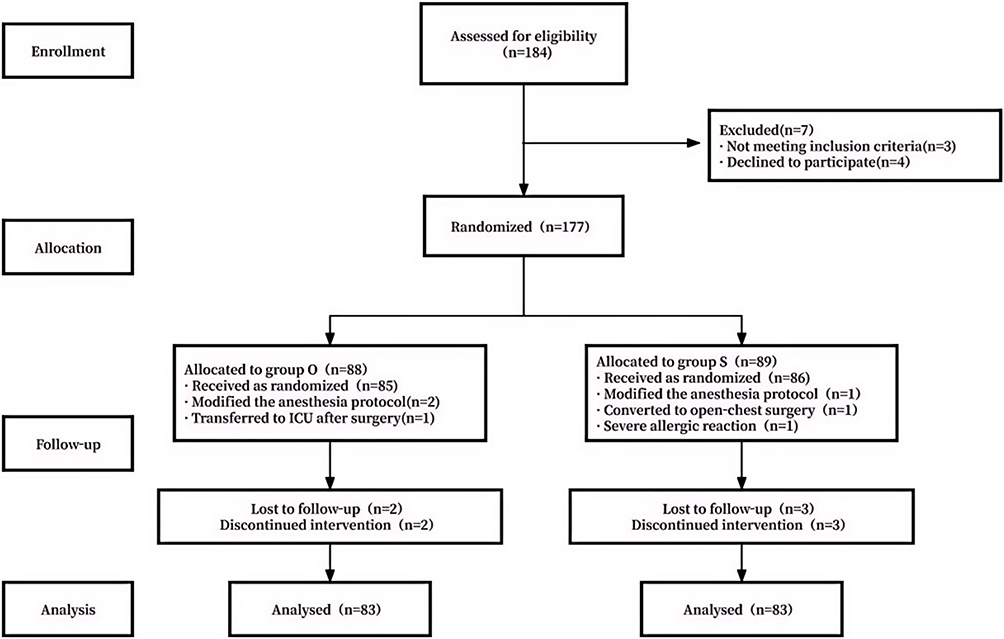 |
Figure 1 Consolidated standards of reporting trials flow diagram. Abbreviations: Group O, Oliceridine group; Group S, Sufentanil group. |
Baseline characteristics, including age, sex, BMI, ASA classification, comorbidities (hypertension, diabetes), and smoking history, were balanced between the Group O and Group S. No significant differences were observed in operative duration, anesthesia duration, or emergence time (P > 0.05), indicating good comparability (Table 1).
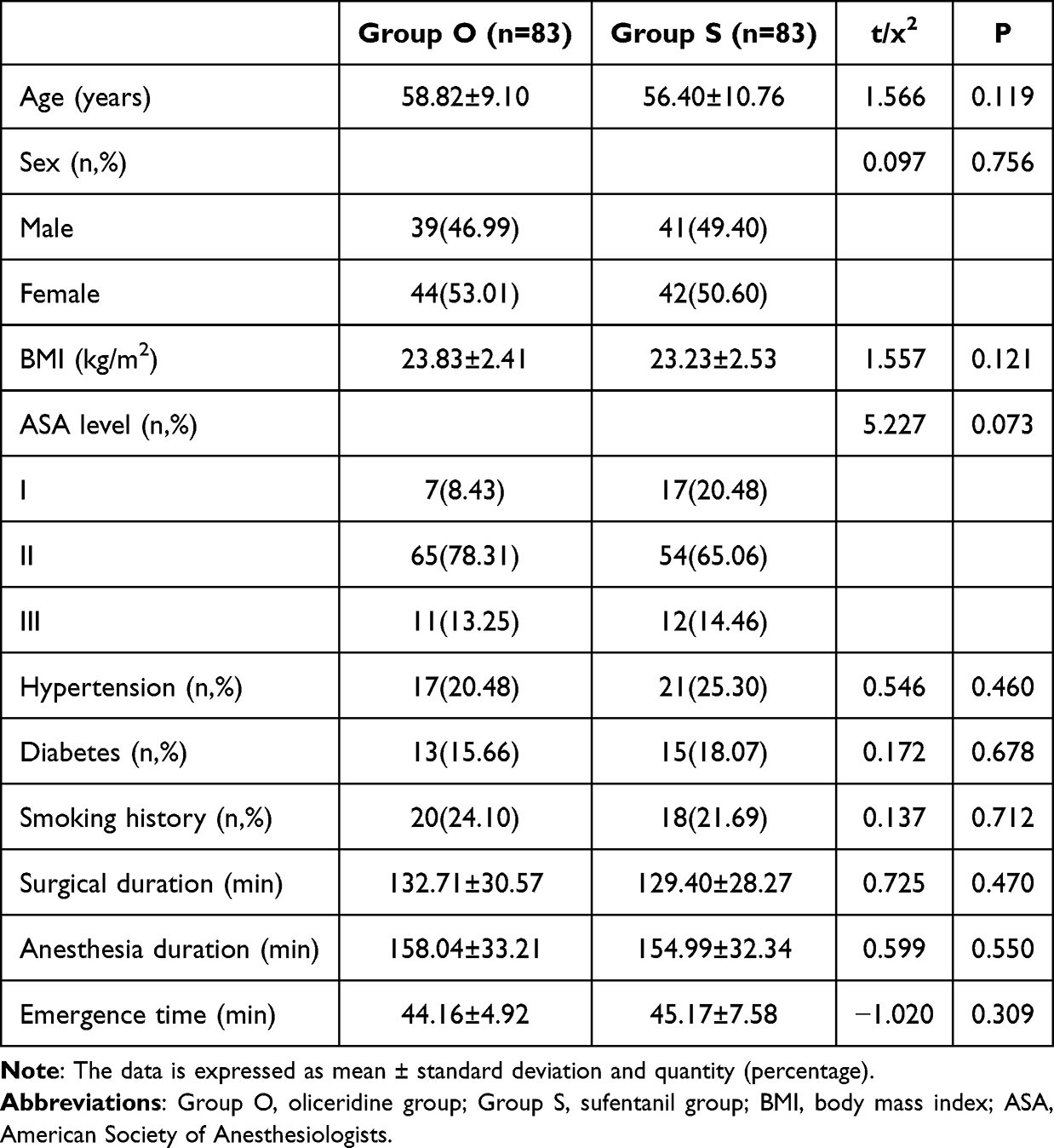 |
Table 1 Baseline Data of Research Subjects |
Primary Outcome: Incidence of Postoperative Adverse Events
The overall incidence of adverse events was significantly higher in Group S compared to Group O (77.11% vs. 57.83%; χ2 = 7.027, P = 0.008). Specifically, Group S had significantly higher rates of nausea/vomiting (43.37% vs. 26.51%; χ2 = 5.194, P = 0.023) and respiratory depression (18.07% vs. 7.23%; χ2 = 4.416, P = 0.036). No significant differences were found in dizziness, pruritus, constipation, hypotension, or somnolence between the groups (Table 2).
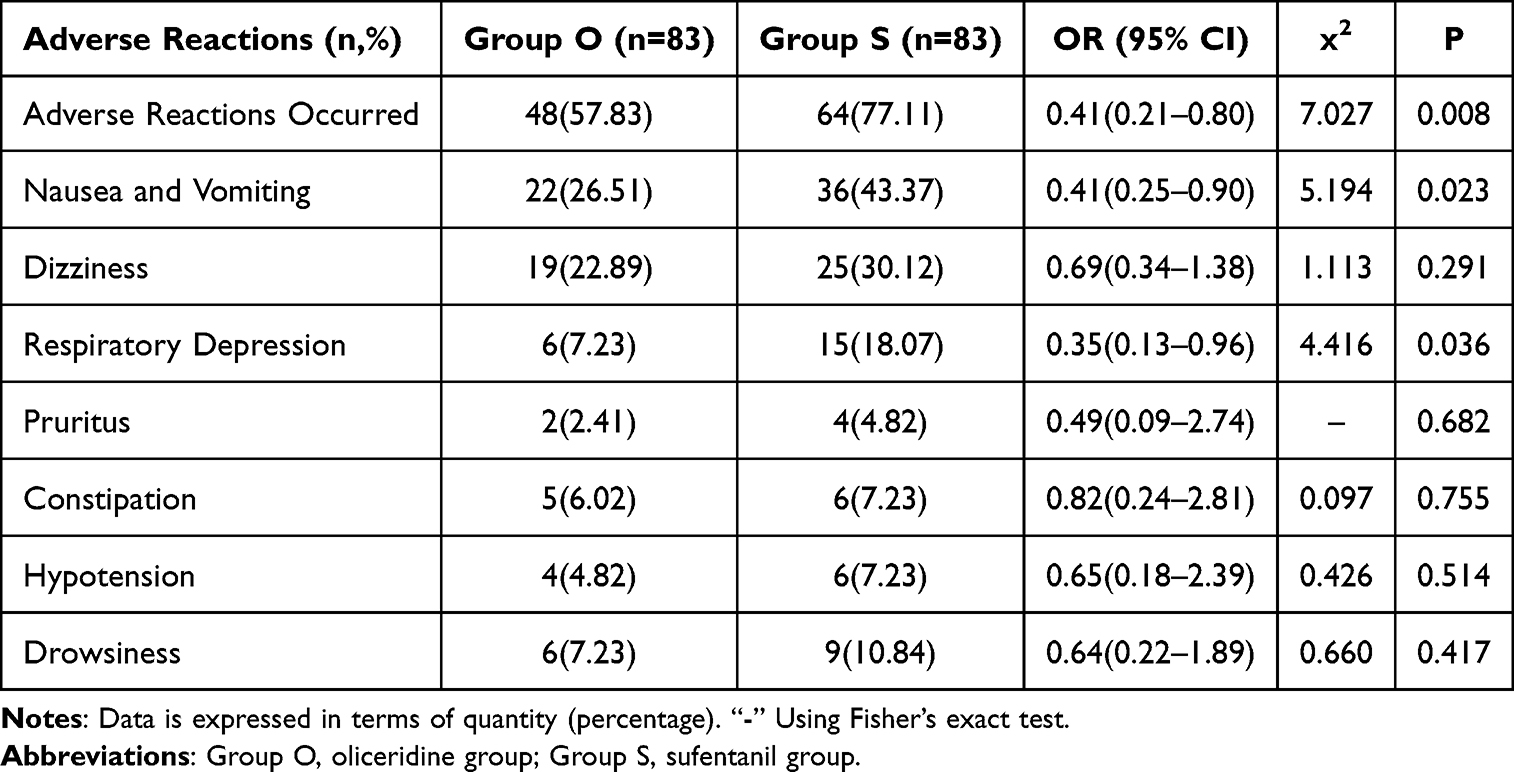 |
Table 2 Comparison of Two Groups of Adverse Reactions |
Secondary Outcomes
Postoperative NRS and Ramsay Sedation Scale
Postoperative NRS scores were analyzed using generalized estimating equations (GEE). The analysis showed a marginally significant group effect (Wald χ2 = 3.820, P = 0.051), a highly significant time effect (Wald χ2 = 760.909, P < 0.001), and no significant group-by-time interaction (Wald χ2 = 2.325, P = 0.676). While the between-group difference approached statistical significance, the time effect indicated significant pain reduction over the postoperative period in both groups, with similar temporal trends observed between treatments (Table 3). Wilcoxon rank-sum tests revealed no significant differences in Ramsay Sedation Scale between groups at any postoperative time point (P > 0.05) (Table 4).
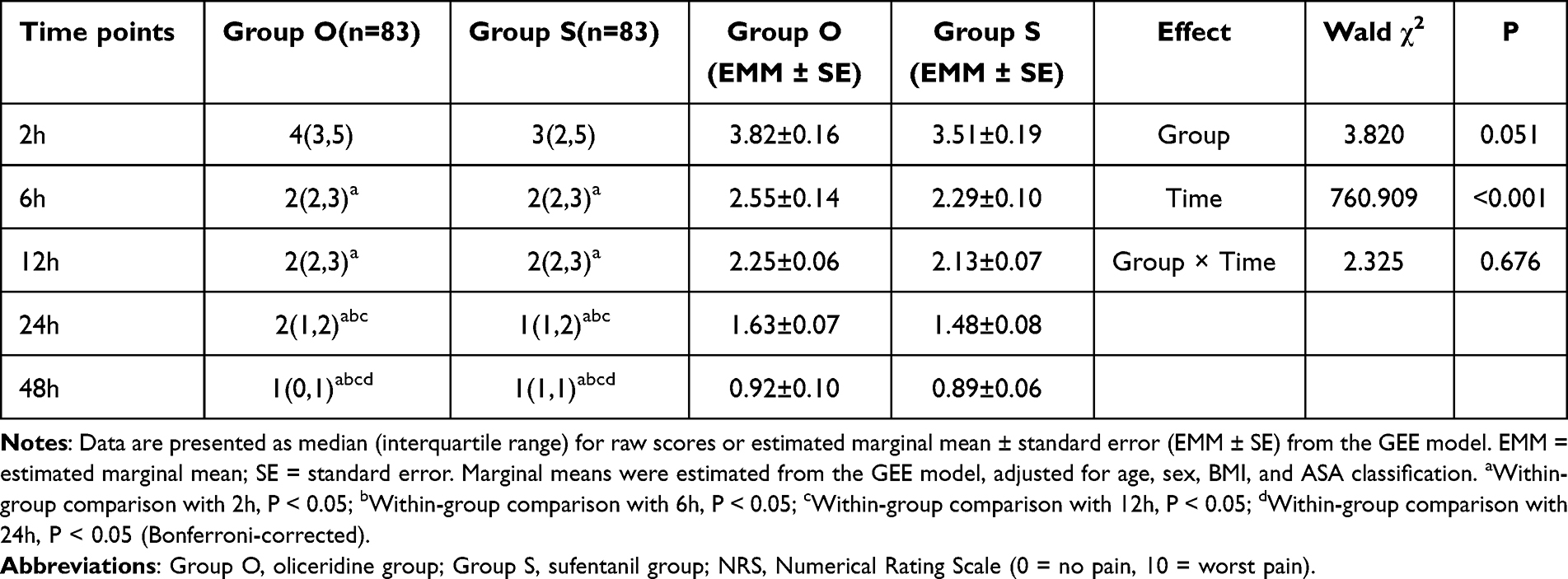 |
Table 3 Comparison of NRS at Different Postoperative Time Points Between Two Groups |
 |
Table 4 Comparison of Ramsay Sedation Scale at Different Postoperative Time Points Between Two Groups |
Intraoperative Hemodynamics
Intraoperative hemodynamics (including HR, SBP, DBP) exhibited no significant between-group differences at any of the assessed time points (Figure 2).
 |
Figure 2 Trends in intraoperative Hemodynamics of patients in Group O and Group S at different time points. Abbreviations: HR, heart rate; SBP, systolic blood pressure; DBP, diastolic blood pressure; Baseline, preoperative baseline time point; T1-T7, T1, Before tracheal intubation; T2, Immediately after tracheal intubation; T3, Immediately after skin incision; T4, During skin suture; T5, On admission to the PACU; T6, At tracheal extubation; T7, On discharge from the PACU. |
QoR-15 Scores
Group O demonstrated significantly higher total QoR-15 scores than Group S at both 24h (113 [109, 119] vs. 104 [101, 110], P < 0.001) and 48h (134 [132, 138] vs. 132 [128, 135], P < 0.001) postoperatively. Subgroup analysis showed Group O scored significantly higher in specific domains: “feeling comfortable and in control,” “having a general sense of well-being,” and “experiencing nausea or vomiting” at both 24h and 48h (all P < 0.001). Other domains showed no significant differences (Table 5).
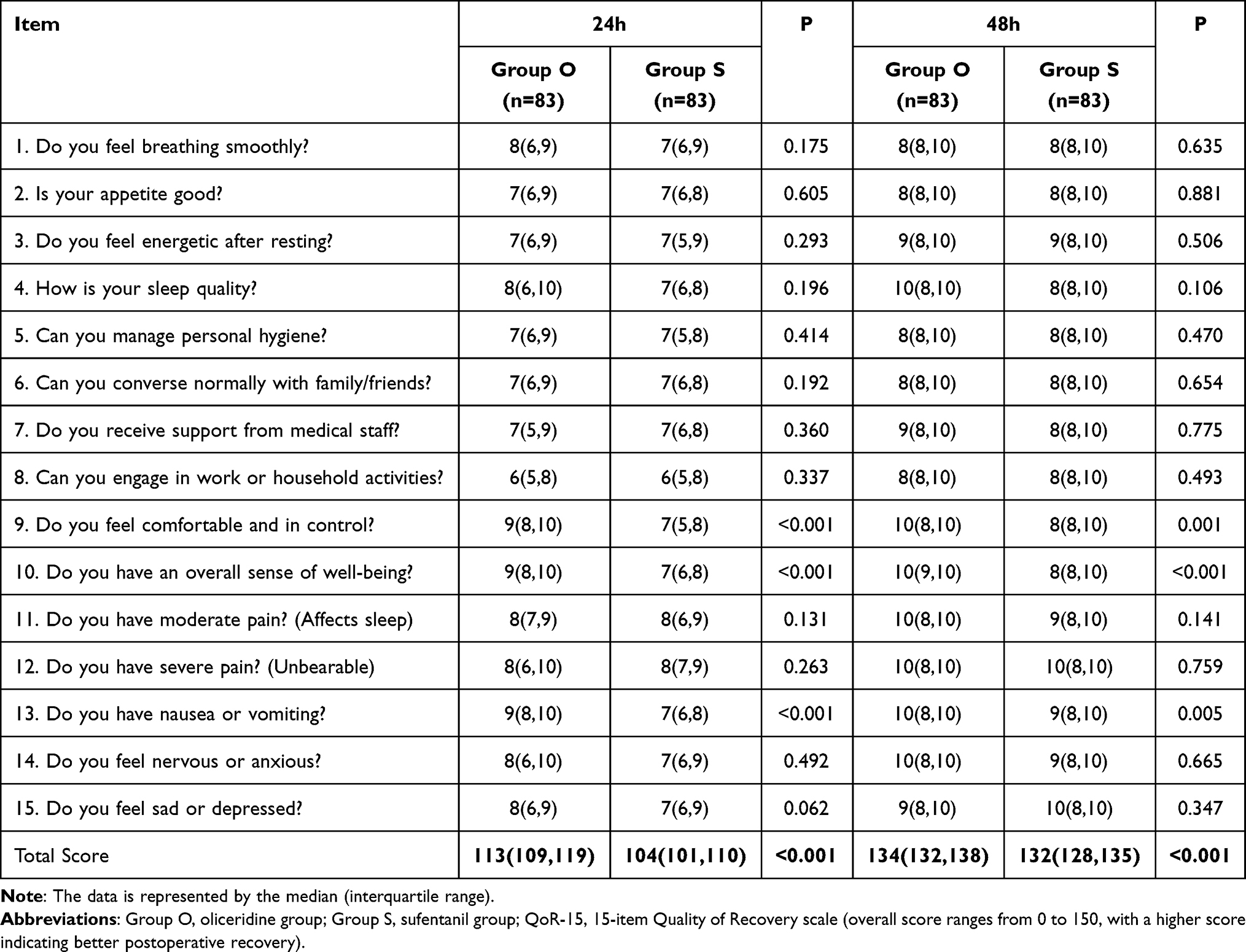 |
Table 5 Comparison of Postoperative QoR-15 Scores Between Two Groups |
PCIA Pump and Rescue Medication Usage
No significant differences were found between groups regarding the number of effective PCIA presses and total PCIA presses, total opioid consumption (morphine equivalent), or rescue analgesic use (all P > 0.05). However, Group O required significantly fewer rescue antiemetic administrations than Group S (0.38 ± 0.69 vs. 0.65 ± 0.96, t = −2.427, P = 0.016) (Table 6).
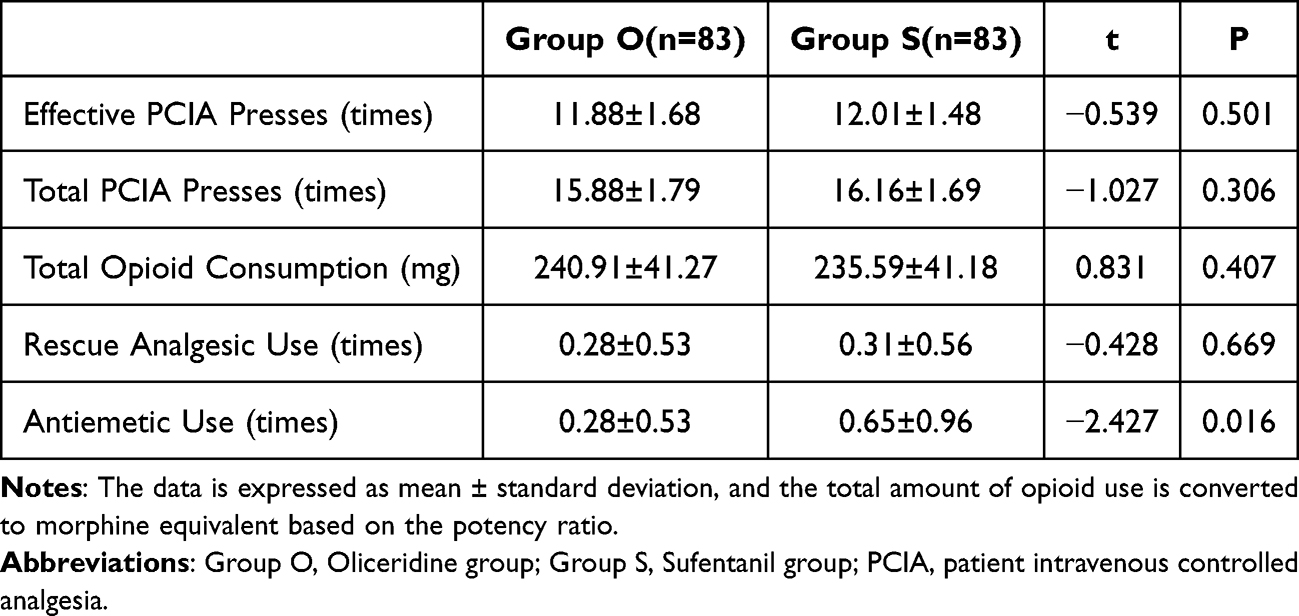 |
Table 6 Comparison of the Usage and Remedial Measures of Two Groups of Analgesic Pumps |
Discussion
Postoperative acute pain is highly prevalent following lung surgery.11 Incisional and drain-related pain can restrict mobility, impair respiration, and hinder secretion clearance, predisposing patients to hypoxemia, atelectasis, pulmonary infection, and thromboembolism. Severe pain may progress to chronic pain, delay recovery, and prolong hospitalization.12 Thus, effective analgesia is crucial. While regional techniques like paravertebral or intercostal nerve blocks are used, they carry risks of failure, infection, and hemorrhage. Consequently, opioid-based PCIA remains the primary analgesic method.
Opioids primarily exert their effects via central μ-opioid receptors (MOR). MOR activation signals through G proteins and β-arrestin pathways. The G-protein pathway mediates analgesia, while β-arrestin recruitment is linked to adverse effects like nausea, respiratory depression, dizziness, and constipation.13 Oliceridine, the first G protein-biased MOR agonist, preferentially activates G-protein signaling with minimal β-arrestin engagement.5 This mechanism provides potent analgesia with a reduced incidence of traditional opioid-related adverse events (ORAEs), making it suitable for acute pain management.14,15 It also offers a wider therapeutic window, benefiting high-risk patients. Oliceridine has no significant active metabolites,16 contributing to its favorable pharmacokinetics. It is more potent than morphine with a superior neurocognitive side effect profile. Its rapid onset, short context-sensitive half-life, lack of active metabolites, and minimal neurocognitive impact facilitate early recovery, aligning with ERAS principles.17
This is the first study to investigate the comprehensive perioperative application of oliceridine in patients undergoing thoracoscopic lobectomy. At present, no standardized dosing protocol is available for this clinical scenario, and the package insert specifies a maximum single intravenous dose of 3 mg. However, our pilot study demonstrated that a single 3-mg dose of oliceridine during anesthesia induction was inadequate to effectively attenuate the hemodynamic response to tracheal intubation. Furthermore, the relative analgesic potency ratios of oliceridine and sufentanil relative to morphine are as follows: oliceridine:morphine = 5:1; sufentanil:morphine = 1000:1. Consequently, we selected an induction dose of oliceridine at 0.06–0.1 mg/kg. Hemodynamics remained stable at T1 and T2 in Group O. Advantages observed included rapid induction without opioid-induced cough or rocuronium-induced injection pain in all 83 patients. Administering an initial 3 mg bolus followed by the remainder for induction provided effective analgesia while adhering to the recommended single-dose limit.
Studies support oliceridine’s utility in various settings: hysteroscopy,18 gastroscopy,19 burn care,20 and ICU sedation,21 confirming its efficacy and hemodynamic stability, consistent with our findings. Hemodynamic parameters at T3-T7 were comparable between groups, indicating stable intraoperative conditions with oliceridine. Similar emergence times further support its safety and controllability for perioperative use.
For PCIA, oliceridine resulted in a significantly lower overall incidence of adverse events (P<0.05), particularly nausea/vomiting and respiratory depression, compared to sufentanil. PCA usage, rescue analgesia demands, and postoperative NRS and Ramsay scores were equivalent, demonstrating non-inferior analgesia. This aligns with Meng et al9 who reported improved recovery and sleep quality with oliceridine PCIA. Using QoR-15,22 a tool sensitive to the MCID of 6 points,23 Group O showed significantly higher scores at 24h and 48h. Subgroup analysis confirmed superior scores in comfort, well-being, and nausea/vomiting domains, indicating enhanced early recovery.
PONV, a common adverse event (30–80%), delays recovery and increases complications. Opioids like sufentanil are key risk factors. Consistent with studies in orthopedic24 and hysteroscopic surgery,25 oliceridine significantly reduced PONV incidence and antiemetic requirements. Opioid-induced respiratory depression (OIRD) is a serious concern.26 Up to 46% of patients receiving traditional opioids experience OIRD.27 The lower incidence of respiratory depression with oliceridine is consistent with its mechanism of biased activation of G protein signaling pathway, while the higher incidence rate of sufentanil may be related to β-arrestin activation and required analgesic.
Opioid-free anesthesia (OFA) has emerged as an attractive strategy to avoid opioid-related adverse events by using multimodal non-opioid analgesic combinations.28 However, complete elimination of opioids may not always be feasible or optimal, especially in patients undergoing thoracoscopic lobectomy,29 where adequate analgesia, intraoperative hemodynamic stability, and high-quality postoperative recovery remain essential. In this context, opioid-sparing anesthesia (OSA) represents a more balanced and practical perioperative approach,30 focusing on minimizing rather than completely avoiding opioid use. Oliceridine functions as an optimized opioid agent that preserves potent analgesic efficacy while significantly reducing the incidence of typical opioid-related adverse events (ORAEs). Therefore, oliceridine serves as a valuable pharmacological option within an opioid-sparing regimen, particularly for patients in whom full OFA is impractical or contraindicated.
Future research should focus on integrating oliceridine with opioid-sparing anesthesia components within “Opioid-Optimized Anesthesia” strategies, developing personalized dosing models based on genomics and BMI, investigating long-term impacts on chronic pain and quality of life, exploring its application in special populations (eg., OSA, COPD, chronic cancer pain), and conducting cost-effectiveness analyses within enhanced recovery after surgery pathways.
Study Limitations
This study has several limitations. First, the single-center design and small sample size limit the generalizability of the findings. Second, the dosing regimen was primarily based on extrapolation, and the appropriate dosage may vary depending on the type of surgery and individual patient characteristics. Furthermore, the drug’s half-life of 1–3 hours necessitates further evaluation of its safety for intraoperative use. Fourth, the study lacks long-term follow-up data on chronic pain outcomes. In addition, the composite safety endpoint used in this study includes adverse events of varying clinical significance and is underpowered for the analysis of individual serious adverse events, which may restrict the precise interpretation of between-group safety differences. As a clinical efficacy trial, we prioritized patient-centered outcomes. Future studies should include multidimensional objective biomarkers to further explore the underlying mechanisms.
Conclusion
When used for induction and maintenance of general anesthesia, as well as postoperative analgesia in patients undergoing thoracoscopic lobectomy, oliceridine provides analgesic efficacy comparable to that of sufentanil while maintaining hemodynamic stability. It demonstrates particularly prominent advantages in reducing the incidence of postoperative nausea and vomiting (PONV) and respiratory depression, which facilitates early postoperative recovery and offers a novel opioid regimen for the perioperative management of thoracoscopic surgery. Given its promising clinical prospects, further studies involving a wider range of surgical types and high-risk populations are warranted to promote the standardized and individualized application of oliceridine in perioperative analgesia.
Data Sharing Statement
The relevant raw data are not publicly available due to restrictions imposed by the ethical and privacy policies of our research institution, but can be obtained from the corresponding authors (Yu Zhang, [email protected]) upon reasonable request.
Author Contributions
All authors made a significant contribution to the work reported, whether that is in the conception, study design, execution, acquisition of data, analysis and interpretation, or in all these areas; took part in drafting, revising or critically reviewing the article; gave final approval of the version to be published; have agreed on the journal to which the article has been submitted; and agree to be accountable for all aspects of the work.
Funding
This research was supported by the WU JIEPING MEDICAL FOUNDATION Project (320.6750.2024-5-62).
Disclosure
The authors report no conflicts of interest in this work.
References
1. Han B, Zheng R, Zeng H, et al. Cancer incidence and mortality in China, 2022. J Natl Cancer Cent. 2024;4(1):47–12. doi:10.1016/j.jncc.2024.01.006
2. Bendixen M, Jørgensen OD, Kronborg C, Andersen C, Licht PB. Postoperative pain and quality of life after lobectomy via video-assisted thoracoscopic surgery or anterolateral thoracotomy for early stage lung cancer: a randomised controlled trial. Lancet Oncol. 2016;17(6):836–844. doi:10.1016/s1470-2045(16)00173-x
3. Huang C, Liu B, Xie S, et al. Evaluating the opioid-related adverse events of oliceridine versus conventional opioids in patient-controlled analgesia after thoracoscopic lung resection: a retrospective cohort study. Drug Des Devel Ther. 2025;19:5929–5939. doi:10.2147/dddt.S532778
4. Shafi S, Collinsworth AW, Copeland LA, et al. Association of opioid-related adverse drug events with clinical and cost outcomes among surgical patients in a large integrated health care delivery system. JAMA Surg. 2018;153(8):757–763. doi:10.1001/jamasurg.2018.1039
5. Markham A. Oliceridine: first Approval. Drugs. 2020;80(16):1739–1744. doi:10.1007/s40265-020-01414-9
6. DeWire SM, Yamashita DS, Rominger DH, et al. A G protein-biased ligand at the μ-opioid receptor is potently analgesic with reduced gastrointestinal and respiratory dysfunction compared with morphine. J Pharmacol Exp Ther. 2013;344(3):708–717. doi:10.1124/jpet.112.201616
7. Singla NK, Skobieranda F, Soergel DG, et al. APOLLO-2: a randomized, placebo and active-controlled Phase III Study Investigating Oliceridine (TRV130), a G protein-biased ligand at the μ-opioid receptor, for management of moderate to severe acute pain following abdominoplasty. Pain Pract. 2019;19(7):715–731. doi:10.1111/papr.12801
8. Goudra B, Singh PM. Oliceridine and its potential to revolutionize GI endoscopy sedation. Saudi J Anaesth. 2020;14(3):349–354. doi:10.4103/sja.SJA_813_19
9. Meng Y, Yuan S, Zhang H, et al. Comparison of oliceridine and sufentanil in patient - controlled intravenous analgesia for post - thoracoscopic nausea and vomiting: a prospective, double - blind, randomized controlled trial. Front Pharmacol. 2025;16:1576154. doi:10.3389/fphar.2025.1576154
10. Butcher NJ, Monsour A, Mew EJ, et al. Guidelines for reporting outcomes in trial reports: the CONSORT-outcomes 2022 extension. JAMA. 2022;328(22):2252–2264. doi:10.1001/jama.2022.21022
11. Liu Y, Xiao S, Yang H, et al. Postoperative pain-related outcomes and perioperative pain management in China: a population-based study. Lancet Reg Health West Pac. 2023;39:100822. doi:10.1016/j.lanwpc.2023.100822
12. Glare P, Aubrey KR, Myles PS. Transition from acute to chronic pain after surgery. Lancet. 2019;393(10180):1537–1546. doi:10.1016/s0140-6736(19)30352-6
13. Breault É, Brouillette RL, Hébert TE, Sarret P, Besserer-Offroy É. Opioid analgesics: rise and fall of ligand biased signaling and future perspectives in the quest for the holy grail. CNS Drugs. 2025;39(6):565–581. doi:10.1007/s40263-025-01172-w
14. Niu J, Hu W, Lu Y, Tang H. Efficacy and safety of oliceridine treatment in patients with postoperative pain: a systematic review and meta-analysis of randomized controlled trials. Expert Rev Clin Pharmacol. 2023;16(6):589–599. doi:10.1080/17512433.2023.2213889
15. Liu Y, Zhu Y, Fu H. Tolerability of different doses of oliceridine versus traditional opioids in acute pain management: a systematic review and meta-analysis. Sci Rep. 2025;15(1):11470. doi:10.1038/s41598-025-95978-9
16. Moss L, Hijma H, Demitrack M, et al. Neurocognitive effect of biased µ-opioid receptor agonist oliceridine, a utility function analysis and comparison with morphine. Anesthesiology. 2023;139(6):746–756. doi:10.1097/aln.0000000000004758
17. Joshi GP, Kehlet H. Postoperative pain management in the era of ERAS: an overview. Best Pract Res Clin Anaesthesiol. 2019;33(3):259–267. doi:10.1016/j.bpa.2019.07.016
18. Song CZ, Xu Y, Mei Z, et al. Determination of the 90% effective dose of oliceridine combined with propofol for day-case hysteroscopy. Drug Des Devel Ther. 2025;19:9343–9351. doi:10.2147/dddt.S546489
19. Tang Z, Yin G, Yu Y, et al. Determination of ED(90) and ED(99) of Oliceridine combined with Propofol in inhibiting responses to gastroscope insertion: a biased coin up-and-down design. BMC Anesthesiol. 2025;25(1):175. doi:10.1186/s12871-025-03052-8
20. Hill DM, Todor LA. A prospective, historical-controlled evaluation of oliceridine for moderate or severe pain in patients with acute burn injuries (RELIEVE). Burns. 2025;51(2):107343. doi:10.1016/j.burns.2024.107343
21. Luo JC, Lu S, Fu XL, et al. Comparison of oliceridine to remifentanil for optimal analgesia in mechanical ventilation (CO-ROAM): study protocol for a multicenter randomized controlled trial. Pain Ther. 2024;13(6):1695–1704. doi:10.1007/s40122-024-00669-4
22. Stark PA, Myles PS, Burke JA. Development and psychometric evaluation of a postoperative quality of recovery score: the QoR-15. Anesthesiology. 2013;118(6):1332–1340. doi:10.1097/ALN.0b013e318289b84b
23. Myles PS, Myles DB. An updated minimal clinically important difference for the QoR-15 scale. Anesthesiology. 2021;135(5):934–935. doi:10.1097/aln.0000000000003977
24. Biskupiak J, Oderda G, Brixner D, Wandstrat TL. Gastrointestinal adverse effects associated with the use of intravenous oliceridine compared with intravenous hydromorphone or fentanyl in acute pain management utilizing adjusted indirect treatment comparison methods. J Comp Eff Res. 2024;13(5):e230041. doi:10.57264/cer-2023-0041
25. Ke Z, He Y, Hu Q, Zheng D, Yao Z, Zhou W. A comparison of the effects of oliceridine and sufentanil on the quality of recovery after hysteroscopic surgery: a prospective double-blind randomized controlled trial. J Anesth. 2025. doi:10.1007/s00540-025-03578-8
26. Horlocker TT, Burton AW, Connis RT, et al. Practice guidelines for the prevention, detection, and management of respiratory depression associated with neuraxial opioid administration. Anesthesiology. 2009;110(2):218–230. doi:10.1097/ALN.0b013e31818ec946
27. Khanna AK, Bergese SD, Jungquist CR, et al. Prediction of opioid-induced respiratory depression on inpatient wards using continuous capnography and oximetry: an international prospective, observational trial. Anesth Analg. 2020;131(4):1012–1024. doi:10.1213/ane.0000000000004788
28. Shanthanna H, Joshi GP. Opioid-free anesthesia and analgesia in clinical practice: considerations, techniques, and limitations. Anesthesiology. 2025. doi:10.1097/aln.0000000000005601
29. Feng CD, Xu Y, Chen S, et al. Opioid-free anaesthesia reduces postoperative nausea and vomiting after thoracoscopic lung resection: a randomised controlled trial. Br J Anaesth. 2024;132(2):267–276. doi:10.1016/j.bja.2023.11.008
30. Chassery C, Atthar V, Marty P, et al. Opioid-free versus opioid-sparing anaesthesia in ambulatory total Hip arthroplasty: a randomised controlled trial. Br J Anaesth. 2024;132(2):352–358. doi:10.1016/j.bja.2023.10.031
 © 2026 The Author(s). This work is published and licensed by Dove Medical Press Limited. The
full terms of this license are available at https://www.dovepress.com/terms
and incorporate the Creative Commons Attribution
- Non Commercial (unported, 4.0) License.
By accessing the work you hereby accept the Terms. Non-commercial uses of the work are permitted
without any further permission from Dove Medical Press Limited, provided the work is properly
attributed. For permission for commercial use of this work, please see paragraphs 4.2 and 5 of our Terms.
© 2026 The Author(s). This work is published and licensed by Dove Medical Press Limited. The
full terms of this license are available at https://www.dovepress.com/terms
and incorporate the Creative Commons Attribution
- Non Commercial (unported, 4.0) License.
By accessing the work you hereby accept the Terms. Non-commercial uses of the work are permitted
without any further permission from Dove Medical Press Limited, provided the work is properly
attributed. For permission for commercial use of this work, please see paragraphs 4.2 and 5 of our Terms.