
Back to Journals » Drug Design, Development and Therapy » Volume 20
Nutraceuticals of Phoenix dactylifera L.: Physicochemistry, Nutritional Value and Therapeutic Potential
Authors Lani MN, Fazel MF  , Razali MR, Rajak MAA , Krishnan A, Ismail AA, Mohd Lazaldin MA , Lambuk L, Mohamud R, Yahaya MAF, Abu IF
Received 23 November 2025
Accepted for publication 10 April 2026
Published 15 April 2026 Volume 2026:20 583862
DOI https://doi.org/10.2147/DDDT.S583862
Checked for plagiarism Yes
Review by Single anonymous peer review
Peer reviewer comments 2
Editor who approved publication: Prof. Dr. Georgios Panos
Mohd Nizam Lani,1 Muhammad Fattah Fazel,2 Muhamad Razin Razali,2 Mohd Azrul Abdul Rajak,3 Abiramy Krishnan,4 Arashidatul Akmar Ismail,4 Mohd Aizuddin Mohd Lazaldin,5 Lidawani Lambuk,6 Rohimah Mohamud,6 Muhamad Afiq Faisal Yahaya,7 Izuddin Fahmy Abu8
1Faculty of Food Science and Agrotechnology, Universiti Malaysia Terengganu, Kuala Nerus, TRG, Malaysia; 2Research Management Department, KPJ Healthcare University, Nilai, NSN, Malaysia; 3Preparatory Centre for Science and Technology, Universiti Malaysia Sabah, Kota Kinabalu, SBH, Malaysia; 4Faculty of Pharmacy and Biomedical Science, MAHSA University, Jenjarom, SGR, Malaysia; 5Faculty of Science, Universiti Teknologi Malaysia, Johor Bahru, JHR, Malaysia; 6Department of Immunology, School of Medical Sciences, Universiti Sains Malaysia, Kota Bharu, KTN, Malaysia; 7Department of Human Anatomy, Faculty of Medicine and Health Sciences, Universiti Putra Malaysia, Serdang, SGR, Malaysia; 8Institute of Medical Science Technology, Universiti Kuala Lumpur, Kajang, SGR, Malaysia
Correspondence: Muhammad Fattah Fazel, Research Management Department, KPJ Healthcare University, Nilai, NSN, Malaysia, Email [email protected] Mohd Nizam Lani, Faculty of Food Science and Agrotechnology, Universiti Malaysia Terengganu, Kuala Nerus, TRG, Malaysia, Email [email protected]
Abstract: Phoenix dactylifera L. (date palm) is a widely cultivated fruit tree valued for its nutritional richness and diverse bioactive profile. This review aimed to critically synthesize current evidence of physicochemical characteristics, nutrient composition, and pharmacological potential of date palm fruits, seeds, and leaves. Relevant literature was retrieved from PubMed, Scopus, ScienceDirect, and Google Scholar, with emphasis on extraction methodologies, nutritional attributes, phytochemical constituents, therapeutics properties, and translational relevance. Date palm products are rich in carbohydrates, dietary fiber, essential minerals, and phenolic and flavonoid compounds, such as gallic acid, catechin, quercetin, and ferulic acid, which underpin their antioxidant and anti-inflammatory properties. Experimental studies further suggest potential antimicrobial, antihyperlipidemic, antidiabetic, anticancer, anti-arthritic, neuroprotective, hepatoprotective, and gastroprotective effects. Notably, date seeds, often discarded as agricultural by-products, also exhibit substantial polyphenol content and antioxidant capacity, supporting their potential value in nutraceutical applications. However, the majority of reported biological effects are derived from in vitro and in vivo models, with limited and heterogeneous clinical evidence. Although accumulating preclinical findings highlight the functional and therapeutic promise of P. dactylifera L. important gaps remain regarding extract standardization, bioavailability, dose-response relationships, safety profiling, and clinical efficacy. Addressing these challenges is essential to facilitate evidence-based development of sustainable date palm-derived functional foods, dietary supplements, and potential pharmaceutical applications.
Keywords: Phoenix dactylifera L., date palm, nutraceutical, therapeutic potential, bioactive compounds
Introduction
Phoenix dactylifera L. (date palm) belongs to the Arecaceae family and is one of the oldest cultivated fruit trees, with cultivation dating back over 5000 years to Mesopotamia (present-day Iraq), from where it later spread to North Africa. Today, date palms are cultivated worldwide, particularly in Australia, South America, and the United States, demonstrating their adaptability to diverse climates.1 In many cultures, particularly in the Middle East, date palms symbolize prosperity and fertility and are often mentioned in ancient texts, including the Bible and the Quran. The species is dioecious, with fruit production restricted to female palms following wind-assisted or manual pollination. Date fruits are nutritionally dense, providing carbohydrates, dietary fiber, vitamins, minerals, and bioactive compounds, making them a traditional functional food and natural energy source. Numerous cultivars exist, each exhibiting distinct sensory attributes and physicochemical properties. The nutritional composition of Phoenix dactylifera L., including proximate components, energy value, and selected micronutrients relevant to human health, is listed in Table 1.2
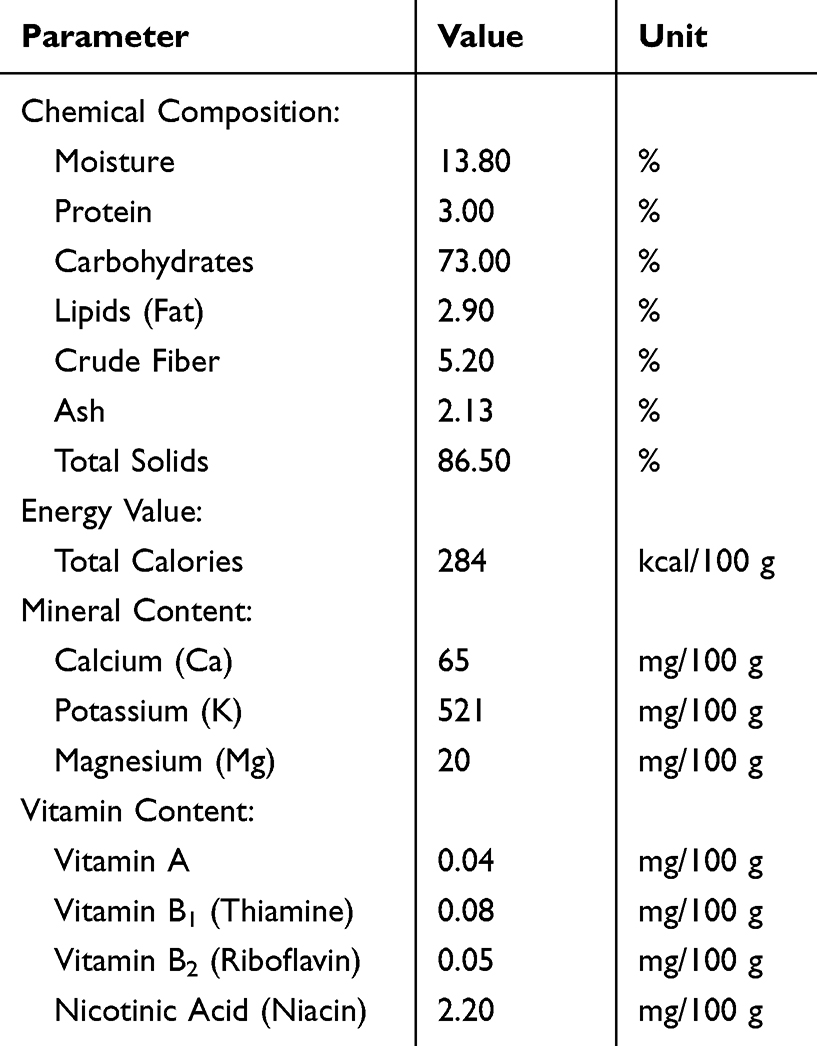 |
Table 1 Nutritional Composition and Micronutrient Profile of Phoenix dactylifera L. Date Palm Extract2 |
Botanically, Phoenix dactylifera L. is a monocotyledonous perennial characterized by a fibrous root system, a cylindrical trunk (stipe), and a crown of large pinnate leaves. These anatomical features underpin the plant’s adaptability and productivity; the detailed descriptions of root architecture, leaf morphology, and trunk structure are summarized in Figure 1. Importantly, the fruit undergoes five well-defined developmental stages (Hababouk, Kimri, Khalal, Rutab, and Tamar), each associated with dynamic changes in moisture content, sugar composition, and phytochemical profile, which are relevant to its nutritional and bioactive properties.1
 |
Figure 1 Anatomical features and root zone stratification of the Phoenix dactylifera L. date palm. Schematic representation of the mature date palm architecture, illustrating the aerial components, including the crown of leaves, fruit bunch, and offshoot types, and the organized subterranean root system. The root zone is divided into four distinct physiological and depth-related layers (Zones I–IV), which facilitate moisture absorption and structural stability in arid environments. |
Despite extensive reporting on the phytochemical composition and in vitro bioactivities of Phoenix dactylifera L., significant gaps remain in translating these findings into nutraceutical development and clinical application. Key challenges include heterogeneity in extraction methods, lack of standardized formulations, limited dose-response and bioavailability data, and a paucity of well-designed clinical studies. Consequently, the therapeutic relevance of many reported biological effects remains largely preclinical.
This review aims to critically evaluate current evidence on the physicochemical properties, nutritional value, and biological activities of Phoenix dactylifera L., with particular emphasis on distinguishing exploratory and preclinical findings from clinically relevant outcomes. The review is structured to first summarize extraction approaches and phytochemical profiles, followed by nutritional composition and biological activities, and concludes with a critical appraisal of limitations and future research priorities needed to advance translational and clinical applications.
Methodology
This review was developed through a comprehensive and structured literature search across several major databases, including PubMed, ScienceDirect, Scopus, and Google Scholar. Studies related to Phoenix dactylifera L. published from 2004 onwards were primarily considered. Literature were identified using the following search terms: “Phoenix dactylifera” OR “ Phoenix dactylifera L.” OR “date palm” AND (“chemistry” OR “in vitro” OR “in vivo” OR “biological properties” OR “extracts” OR “toxicity studies” OR “phytochemistry” OR “pharmacodynamics” OR “pharmacokinetics” OR “pharmaceuticals” OR “therapeutics” OR “nutritional value”).
To provide historical, botanical, and theoretical context, selected references published prior to 2004 were also included when they addressed definitions, origin, initial discovery, traditional uses, early phytochemical characterization, or foundational biological concepts of Phoenix dactylifera L.
As this work was designed as a narrative review rather than a systematic review, formal risk-of-bias assessment and meta-analytic procedures were not performed. Instead, emphasis was placed on thematic synthesis, mechanistic relevance, and translational significance. To minimize selection bias, multiple databases were searched, and studies were evaluated based on scientific rigor and relevance to the stated objectives. Literature not published in English or lacking abstracts was excluded during the initial screening.
In total, this narrative review includes 145 relevant sources. Key findings related to Phoenix dactylifera L.’s extraction methods, nutritional values, phytochemistry, and therapeutic potential (Figure 2), with in-depth analysis in the latter (Figure 3), were synthesized and integrated into the review to support contextual discussion and recommendations.
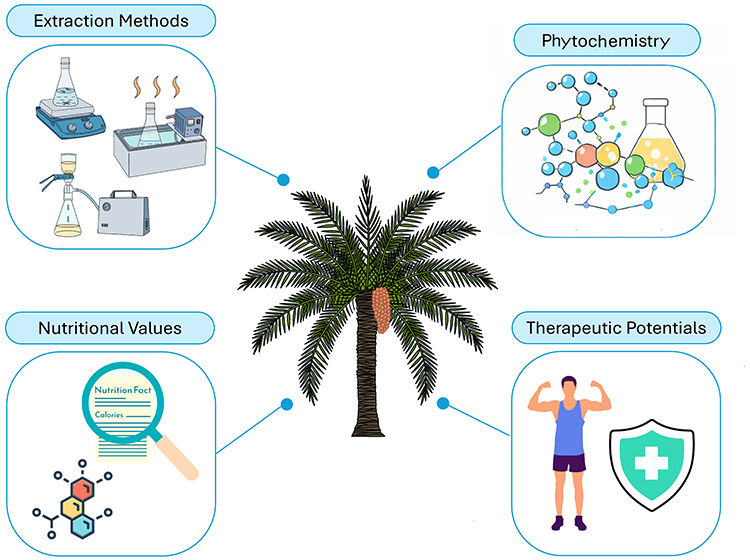 |
Figure 2 Conceptual framework of the review paper focusing on the extraction, nutritional, phytochemical, and therapeutic profile of Phoenix dactylifera L. The review integrates the technical aspects of extraction methods with the biological outcomes, including nutritional values and phytochemistry. These elements collectively underpin the therapeutic potentials of the species, ranging from antioxidant and anti-inflammatory activities to more complex metabolic protections. |
 |
Figure 3 Schematic summary of the reported therapeutic and pharmacological potential of Phoenix dactylifera L. based on the currently available literature. Bioactive constituents and extracts of P. dactylifera have shown antioxidant and anti-inflammatory activities, which may contribute to a range of reported biological effects in experimental models. Preclinical studies suggest potential anticancer, anti-arthritic, neuroprotective, antiseizure, cardiometabolic, antidiabetic, gastrohepatic, and antimicrobial-related effects; however, much of this evidence remains derived from in vitro, in vivo, or in silico studies, with limited clinical validation. Therefore, these proposed benefits should be interpreted cautiously until supported by standardized human studies. |
Discussion
Extraction of Phoenix dactylifera L
Several extraction approaches have been employed to isolate bioactive constituents from Phoenix dactylifera L., with considerable variability in solvents, extraction duration, and plant parts being analyzed. Biglari et al reported a methanol-water extraction protocol in which the edible part of the date palm fruits was pitted, homogenized, and extracted using aqueous methanol under agitation, followed by filtration, centrifugation, and solvent removal under reduced pressure to yield a crude extract.3 This approach is widely adopted for profiling total phenolics and flavonoids but primarily targets polar compounds, potentially underrepresenting lipophilic constituents.
Seed-derived extracts have been obtained using distinct protocols. Soni et al described the extraction of finely ground date seeds (powder) of Phoenix dactylifera using ethanoic acid, followed by prolonged agitation, concentration by boiling, and centrifugation.4 However, the lack of standardized extraction duration, solvent concentration, and temperature control limits inter-study reproducibility and quantitative comparison of bioactive yields.
In contrast, Önder et al focused on seed oil extraction using Soxhlet extraction with n-hexane, yielding lipid-rich fractions enriched in fatty acids and other nonpolar constituents.5 While suitable for nutritional and cosmetic applications, Soxhlet-based methods are energy-intensive and less compatible with large-scale food or nutraceutical production unless modified to greener extraction technologies.
Collectively, these extraction strategies have been employed primarily for phytochemical characterization and in vitro bioactivity screening. However, the substantial heterogeneity in extraction protocols, solvent systems, and plant matrices remains a major limitation for reproducibility, standardization, and downstream translational development into functional foods, dietary supplements, or pharmaceutical formulations.
Phytochemistry of Phoenix dactylifera L
Phytochemistry involves exploring phytochemicals derived from plants and elucidating the structures of the numerous secondary metabolites present in plants. Phytochemical investigations of Phoenix dactylifera L. date palm predominantly focused on phenolic compounds, which represent one of the most abundant classes of secondary metabolites in this plant.
Phenolic compounds are categorized as chemicals containing at least one phenol unit (hydroxyl group attached to an aromatic ring) in their structure.1,6 These compounds are broadly divided into different subgroups, including phenolic acids, flavonoids, and tannins, all of which have been discovered in date palm fruits.1,6–10 Phenolic acids contain a phenolic ring with one or more carboxylic groups, and can be classified into two principal subgroups: hydroxybenzoic acids (benzoic acid derivatives with seven carbon atoms), and hydroxycinnamic acids (cinnamic acid derivatives with nine carbon atoms).1,11 The basic flavonoid structure consists of a 15-carbon skeleton with two aromatic benzene rings linked by a heterocyclic pyran ring.12,13 Tannins are high-molecular-weight polyphenols, with structures divided into hydrolysable tannins (derived from gallic or ellagic acid) and condensed tannins (polymers of flavan-3-ol units).14 Numerous bioactive compounds, such as gallic acid, catechin, epicatechin, p-coumaric acid, ferulic acid, syringic acid, vanillic acid, and quercetin, have been identified across different cultivars.9,15–17 The chemical structures are illustrated in Figure 4.
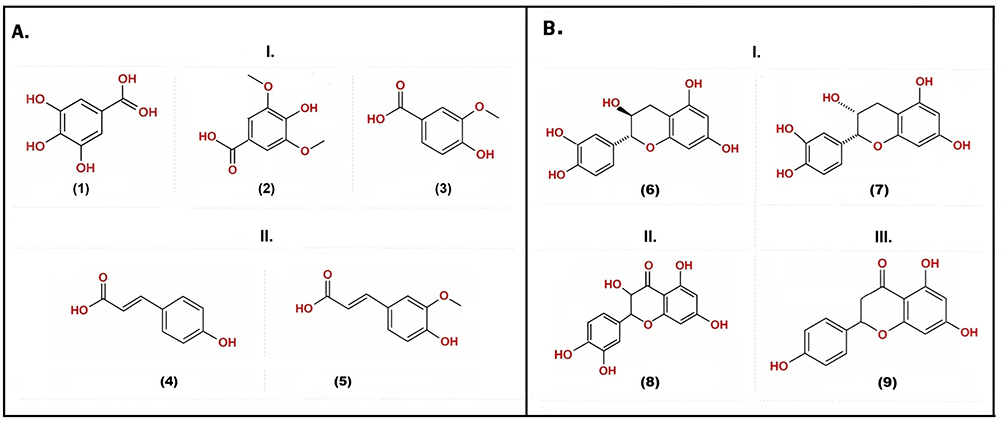 |
Figure 4 Chemical structures of the principal phenolic and flavonoid constituents identified in Phoenix dactylifera L. (A). Phenolic acids include I. hydroxybenzoic acids (1: gallic acid; 2: syringic acid; 3: vanillic acid) and II. hydroxycinnamic acids (4: p-coumaric acid; 5: ferulic acid), while (B) Flavonoids are comprised of I. flavan-3-ols (6: catechin; 7: epicatechin), II. flavonols (8: quercetin), and III. flavones (9: apigenin). |
Table 2 summarizes the reported values for the total phenolic content (TPC), total flavonoid content (TFC), and condensed tannin content (CTC) in the date palm cultivars, while Table 3 presents the content of various phenolic acids and flavonoid compounds identified in the date palm fruits. The seeds of date fruits, often discarded as waste, also contain remarkably high levels of polyphenols. A study analyzing seven Phoenix dactylifera L. seed cultivars reported TPC ranging from 135.9 ± 12.1 to 284.9 ± 21.9 mg gallic acid equivalents (GAE)/g dry matter (DM), and TFC ranging from 34.2 ± 0.3 to 94.5 ± 1.0 mg rutin equivalents (RE)/g DM.18 Phloroglucinolysis of seed extracts further revealed depolymerized flavan-3-ols reaching up to 72.4 g/kg, highlighting its rich polyphenolic composition and antioxidant potential.18
 |
Table 2 Reported Total Phenolic, Flavonoid, and Condensed Tannin Content of Phoenix dactylifera Date Palm Fruits From Different Studies |
 |
Table 3 Comparative Composition of Phenolic Acids (Hydroxybenzoic Acid [3A], Hydroxycinnamic Acid [3B]) and Flavonoids (3C) in Different Phoenix dactylifera Date Cultivars |
These phenolic constituents are frequently associated with antioxidant properties, forming the mechanistic basis for proposed roles in the prevention of cancer, cardiovascular disease, and neurological disorders, and metabolic dysfunction.10,19,21,25,26,29–31 Multiple studies have also reported other biological activities such as anti-inflammatory,32,33 antibacterial,34,35 antiviral,36 and antimutagenic effects.35,37 Nevertheless, most evidence derives from in vitro assays or short-term animal studies, with limited validation in physiologically relevant models. Direct comparison across studies is also constrained by differences in extraction solvents, analytical assays, and reference standards. The variability in phenolic profile is influenced by factors such as growth stage, genotype, harvest timing, post-harvest storage conditions, diseases, and environmental parameters, including water availability, geographic origin, temperature, fertilizer type, and soil composition.10,19,21,32.
Nutritional Value of Phoenix dactylifera L
The proximate compositions of the date palm fruits from previous studies are summarized in Table 4. Nutritional analysis consistently indicates high carbohydrate content, with comparatively lower proportions of fat, protein, and fiber.31,38,39 The carbohydrate content in date palm fruits varies between 40% to 80% and is influenced by factors such as cultivar and ripening stage. The carbohydrate composition includes both reducing sugars (glucose, fructose, maltose, and mannose) and non-reducing sugars (sucrose and polysaccharides),40,41, with Table 5 highlighting the predominance of glucose and fructose in date palm fruits.31,39,42
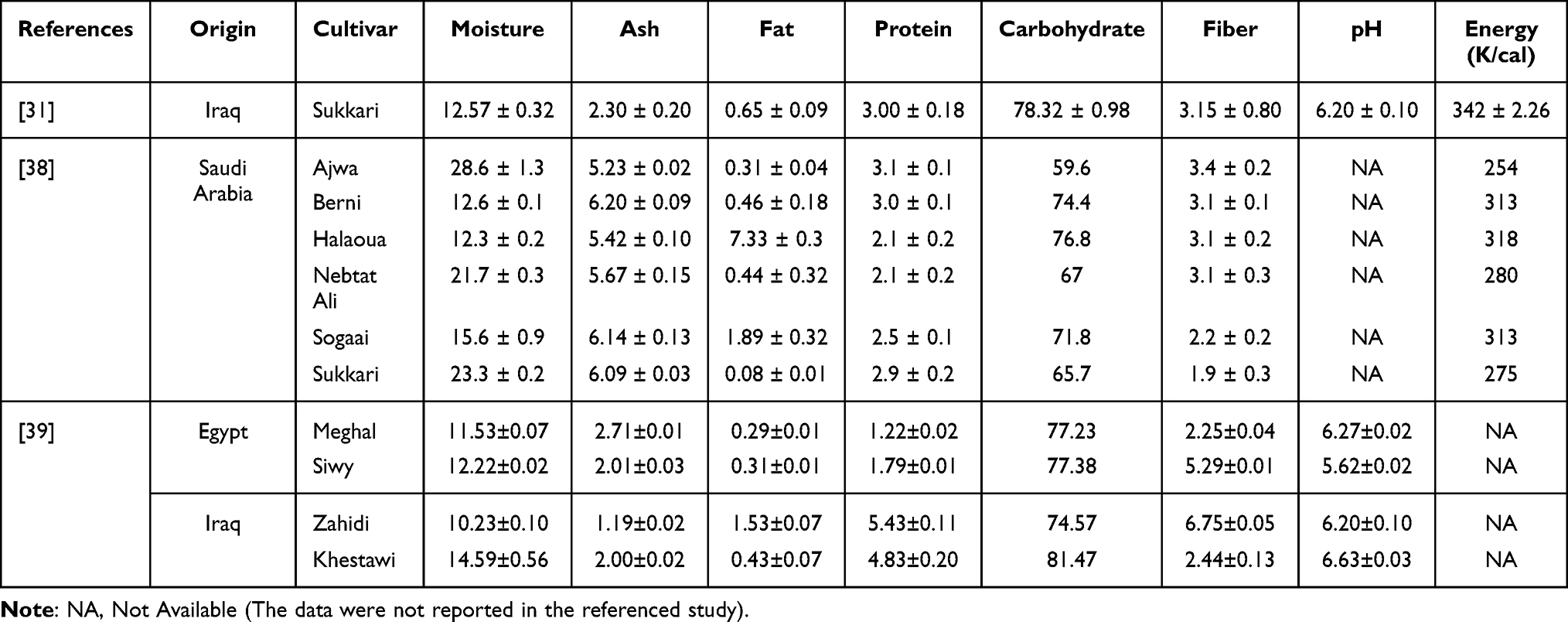 |
Table 4 Proximate Nutritional Composition (in g/100g) of Different Phoenix dactylifera Date Cultivars |
 |
Table 5 Sugar Composition (in g/100g) of Different Phoenix dactylifera Date Cultivars |
The mineral composition of date palm fruits (Table 6) reveals potassium as the most abundant mineral, followed by magnesium, calcium, and phosphorus.34,43,44 This mineral profile supports the use of date palm fruit as a functional food for cardiovascular health, particularly in individuals with hypertension, due to its high potassium and low sodium content.40,43 Additionally, the substantial potassium content in dates may serve as a valuable nutritional supplement for vulnerable populations, including pregnant women, the elderly, and children.31 Owing to their balanced potassium and phosphorus content, together with magnesium and calcium, studies supports the use of date palm fruits as functional dietary component for promoting metabolic and bone health.31,42
 |
Table 6 Mineral Composition (in mg/Kg) of Phoenix dactylifera Date Fruits From Different Cultivars |
Therapeutic Potential of Phoenix dactylifera L
The therapeutic potential of Phoenix dactylifera L. is largely attributed to its phenolic and flavonoid content, which underpins the antioxidant and free radical-scavenging activities.45 Multiple preclinical studies provided evidence that these compounds may enhance brain health and cognitive performance by mitigating oxidative stress and modulating inflammatory mediators, thus alleviating memory impairments and inflammation.46,47
In addition to antioxidant effects, dates provide readily bioavailable energy via naturally occurring carbohydrates as well as essential minerals. Dates have also been used traditionally for the management of digestive disorders and inflammatory conditions.33 Studies also reported improvements in lipid profiles and blood pressure regulation following consumption of dates, supporting the potential role of date-based products in functional foods or dietary supplements for cardiovascular and metabolic health.48–50 The following subsections examine the evidence supporting its proposed roles in specific conditions, including neurodegeneration, inflammatory disorders, cancer, arthritis, microbial infections, metabolic diseases, digestive conditions, and cardiovascular dysfunction.
Antioxidant Properties
Both the fruit and seed components of Phoenix dactylifera L. demonstrate significant antioxidant activity, largely attributed to their rich polyphenolic profile.7,27 Antioxidant assays, such as DPPH (2,2-diphenyl-1-picrylhydrazyl), ABTS (2,2′-azino-bis(3-ethylbenzothiazoline-6-sulfonic acid), and FRAP (Ferric Reducing Antioxidant Power), have consistently demonstrated their free radical-scavenging activity, which varies considerably depending on cultivar, geographical origin, the stage of fruit ripening, as well as extraction methods.51 For example, analysis on four cultivars (Zahidi, Aseel, Halawi, and Dhaki) across different ripening stages demonstrated the highest DPPH and FRAP antioxidant activities, alongside TPC and TFC, at the unripe (kimri) stage, particularly in the Dhaki cultivar, and decreased significantly as the fruit matured.52,53 This heterogeneity complicates cross-study comparisons and highlights the need for standardized phytochemical profiling and extraction protocols to enhance reproducibility. It is also important to note that the chemical assays used primarily measure electron-donating capacity under artificial conditions and do not necessarily reflect in vivo bioavailability, metabolism, or biological efficacy.
Date seed oil has also been shown to exhibit moderate antioxidant activity, with reported ABTS and DPPH IC50 values of 746 and 318 µg/mL, respectively, attributed to phenolic constituents and unsaturated fatty acids.54 Due to its potent antioxidant properties, numerous literature have reported that both date fruit and seed extracts may alleviate oxidative stress, subsequently exerting anti-inflammatory, cardioprotective, and metabolic regulatory effects through modulation of related signaling pathways.18,21,55,56 For example, an aqueous extract of date fruits has been shown to scavenge hydroxyl and superoxide radicals, and consequently prevent DNA and protein oxidative damage in vitro.3 Date fruit extract treatment was also found to restore antioxidant enzyme activities including superoxide dismutase (SOD) and catalase (CAT), and elevated glutathione (GSH) levels, further strengthening its proposed protective role against oxidative stress.57
Collectively, current findings support Phoenix dactylifera L. as a promising natural source of dietary antioxidants with potential applications in functional foods, nutraceuticals, and adjunctive preventive medicine against oxidative stress-associated disorders. However, future research should prioritize standardized extract characterization and mechanistic studies to substantiate translational potential.
Anti-Inflammatory Properties
Inflammation is a fundamental component of the immune response; however, persistent or dysregulated inflammation contributes to the pathogenesis of numerous chronic diseases, including cardiovascular disorders, diabetes, autoimmune conditions, cancer, and neurodegenerative diseases.58,59 Chronic inflammation is characterized by sustained production of reactive oxygen and nitrogen species, activation of cyclooxygenase (COX) pathways, and elevated levels of pro-inflammatory cytokines.60 Although nonsteroidal anti-inflammatory drugs (NSAIDs) effectively target these pathways, their long-term use is limited by adverse effects and cost, prompting growing interest in plant-derived alternatives.
Phoenix dactylifera L. is rich in phenolic acids and flavonoids, such as gallic acid, catechin, epicatechin, p-coumaric acid, ferulic acid, syringic acid, vanillic acid, quercetin, apigenin, caffeic acid, rutin, and lutein, which provide a mechanistic basis for its reported antioxidant and anti-inflammatory activities.9,25,61–64 Multiple preclinical studies have demonstrated that extracts from date fruits, seeds, and pulp significantly reduce inflammation in carrageenan-, croton oil-, formalin-, and egg albumin-induced edema models, likely through modulation of oxidative stress, cytokine release, and inflammatory mediators such as COX, and C-reactive protein (CRP).25,32,65–70
Additional animal studies have reported anti-inflammatory effects of Phoenix dactylifera L. fruit extracts in models of gastric ulceration, burn-induced systemic inflammatory response syndrome, aluminum-induced toxicity, and others.57,69,71–73 These effects were associated with modulation of key inflammatory parameters such as tumor necrosis factor (TNF)-α, interleukin (IL)-6, IL-1β, nuclear factor kappa B (NF-κB), and lipid peroxidation, alongside restoration of endogenous antioxidant defenses.25,57,67,69,71,72,74
Phoenix dactylifera L. extracts have also been reported to enhance immune function. The high polyphenol content in Phoenix dactylifera L. has been shown to stimulate immune responses in broiler chickens, potentially through increased production of immune cells such as T and B lymphocytes.75 Similarly, administration of the seed extract in male rats with carbon tetrachloride (CCl4)-induced inflammation lowered TNF-α and increased glutathione levels, likely mediated by flavonoid constituents.74 These findings collectively indicate consistent anti-inflammatory activity at the experimental level, predominantly mediated through antioxidant and immunomodulatory mechanisms.
Human evidence remains limited but emerging. Phoenix dactylifera L immunotherapy in allergic rhinitis patients resulted in clinical improvement, reduction in inflammation parameters, and markedly increased serum and nasal IL-10 following treatment.76 Another study reported downregulation of pro-inflammatory mediators, including IL-1β, tumor growth factor (TGF)-β, COX-1, and COX-2, in middle-aged women following chronic consumption of date seed.77 While these observations suggest potential immunomodulatory benefits, the current evidence base is dominated by preclinical studies, with substantial heterogeneity in extract composition, dosage, and study design. Consequently, well-controlled human trials using standardized preparations are required before Phoenix dactylifera L. can be considered a clinically validated anti-inflammatory intervention.
Anticancer and Chemopreventive Properties
Chronic inflammation and oxidative stress are well-recognized contributors to carcinogenesis, providing a strong rationale for investigating antioxidant-rich plant products as potential chemopreventive or adjunct anticancer agents. In this context, Phoenix dactylifera L. has been increasingly explored for its cytotoxic, antiproliferative, anti-angiogenic, and antimutagenic properties.
Date palm fruit has been associated with anti-inflammatory effects, which may delay cancer progression, potentially through anti-angiogenic mechanisms. Hence, the use of date-based herbal remedies is reported among breast cancer patients in certain regions, including Palestine.78 Experimentally, parthenocarpic (seedless) Phoenix dactylifera L. aqueous-ethanolic extract demonstrated antiproliferative and anti-inflammatory activities against human breast cancer cell lines (MDA-MB-231 and MCF-7).79 Methanolic extracts from cultivars such as Ajwa, Siwi, and Sukkari have shown notable cytotoxic effects across multiple human carcinoma cell lines, with Siwi extract showing IC50 (half-maximal inhibitory concentration) of 99 µg/mL against MDA‑MB‑231 cells, followed by the Sukkari extract (IC50=119 µg/mL).80
Mechanistically, seed extracts demonstrated pro-apoptotic effects via caspase-3 activation in MDA‑MB‑231 cells.81 Moreover, the seed, fruit, and leaf fractions have been shown to suppress pancreatic and prostate cancer cell proliferation, likely attributable to their polyphenolic and flavonoid constituents.82,83, Date fruits were also found to attenuate oxidative damage and reduce inflammatory cytokine TNF-α and angiogenic markers, such as vascular endothelial growth factor (VEGF) and CD31,33 suggesting potential interference with tumor-promoting inflammatory and angiogenic pathways. The methanolic leaf extracts from cultivars such as Deglet Noor, Barhee, and Khunezi, have also exhibited antiproliferative effects against U87 glioblastoma and MDA‑MB‑231 cells, along with significant inhibition of cell adhesion and migration, indicating potential anti-metastatic properties.84
Beyond crude extracts, innovative formulations have been explored. Silver nanoparticles (AgNPs) synthesized from date seed extracts exhibited promising antiproliferative activity against lung cancer cell lines.85 Additionally, date palm pollen suspension demonstrated anti-inflammatory effects in an atypical prostatic hypertrophy rat model, likely by the modulation of cytokine expression and/or upregulation of autocrine/paracrine receptors.61
The antimutagenic potential of Phoenix dactylifera L. has also been investigated. Gallic acid isolated from Ajwa date pit extract demonstrated significant antimutagenic activity against Salmonella typhimurium strains TA98 and TA100, reducing mutagenicity in both strains with minimal associated toxicity.35 Date palm fruit aqueous extract has been shown to demonstrate strong antimutagenic activity against UV radiation and mitomycin C–induced mutagenesis, and further purification of a phenolic-rich bioactive compound exerted antimutagenic effects across all systems.37 An in vivo murine studies have also shown anti-genotoxic effects of date seed extracts against chemically-induced DNA damage.86
These findings suggest that Phoenix dactylifera L. extracts exhibit noteworthy cytotoxic, antiproliferative, anti-angiogenic and antimutagenic activities in experimental models, supporting its potential candidate for further translational investigations in cancer prevention and adjunctive therapy.
Anti-Arthritic Properties
Arthritis encompasses numerous heterogeneous musculoskeletal disorders, among which rheumatoid arthritis (RA) is a chronic autoimmune disease characterized by progressive joint destruction, cartilage degradation, and persistent synovial inflammation.87 Although numerous conventional treatments are available, long-term use is frequently associated with adverse effects, high cost, and incomplete remission,88 thereby sustaining interest in adjunctive nutraceuticals and functional foods rich in antioxidants and polyphenols.
Several studies have highlighted the potential of P. dactylifera L. in alleviating inflammation and managing symptoms in RA.89 A preclinical study demonstrated that orally administered date fruit extracts reduced paw edema inflammation and swelling triggered by an immune response.73 Notably, inflammation biomarkers such as erythrocyte sedimentation rate (ESR) and fibrinogen also decreased, whereas antioxidant levels (vitamins C, E, A, and β-carotene) increased.73 Subsequent studies reported improvements in biochemical parameters, food intake, and body weight in arthritic rats supplemented with date fruit-based functional foods.90 The prepared functional foods were sensorially accepted, highlighting the potential of P. dactylifera L. as a dietary supplement.91
Additionally, a biosynthesized AgNPs derived from date seed extracts has been reported to exhibit anti-arthritic activity in experimental models.86 In order to improve bioavailability and therapeutic delivery, a study developed a nanoemulsion formulation of Phoenix dactylifera L. seed extract, which demonstrated enhanced drug release and displayed potent in vitro antioxidant activity compared to conventional suspensions.17 While clinical trials are necessary to definitively confirm the therapeutic benefits of date palm interventions in patients, currently available evidence supports the anti-inflammatory and potential disease-modifying effects of P. dactylifera L., with improved delivery systems in experimental models of arthritis.
Neuroprotective Effects
A systematic review examining the clinical and preclinical literature on Phoenix dactylifera L. reported potential health-related benefits, including observations relevant to neurodegenerative disorders such as Alzheimer’s Disease (AD).92 The putative neuroprotective properties of Phoenix dactylifera L. are primarily attributed to its rich phytochemical content, including flavonoids, phenolic compounds, and other bioactive compounds, which have been extensively investigated in in vitro and in vivo models.46,47,90,92 These compounds have been shown to exhibit antioxidant, anti-inflammatory, and neurotransmitter modulatory effects, which may contribute to the plant’s potential for treating neurodegenerative conditions.69,92 To date, most evidence supporting neuroprotective effects is preclinical, and translation to clinical efficacy has not been established.
Alzheimer’s Disease (AD)
AD is a neurodegenerative disorder characterized by cognitive decline, memory impairment, and behavioral changes. Despite extensive research, effective disease-modifying therapies remain limited. In recent years, there has been a growing interest in natural products as potential neuroprotective agents, including Phoenix dactylifera L., particularly due to its antioxidant and anti-inflammatory properties.69
Several preclinical studies have investigated the effects of Phoenix dactylifera L. in experimental models relevant to AD. In vivo animal studies have reported that date palm extracts were associated with improvements in memory performance, antioxidant enzyme activity, and preservation of neuronal morphology, particularly in the CA1 region of the hippocampus.47,93 An in vivo study demonstrated that the administration of Phoenix dactylifera L. seed extract in rats elicited antioxidant responses, which restored memory and learning deficiencies induced by β-amyloid.47
An in silico analysis demonstrated that flavonoids present in date palm extract may inhibit Aβ1-40 amyloid formation, indicating potential anti-amyloidogenic activity.90 Additionally, a study in streptozotocin-aluminum chloride-induced AD rats demonstrated that the date seed supplementation improved memory patterns and enhanced antioxidant enzyme and neurotransmitter levels in brain tissues.69
Parkinson’s Disease (PD)
PD is a neurodegenerative disorder characterized by motor impairments including bradykinesia, resting tremor, rigidity, and postural instability, primarily resulting from dopaminergic neuron degeneration in the substantia nigra.46 Although current therapies alleviate symptoms, they do not halt disease progression, prompting interest in neuroprotective strategies.
In a 1-methyl-4-phenyl-1,2,3,6-tetrahydropyridine (MPTP)-induced PD mouse model to assess the neuroprotective properties of Phoenix dactylifera L., the administration of seed extract significantly alleviated memory impairment and exhibited anti-inflammatory effects.47 Additionally, an in vitro study showed that phenolic compounds from the methanolic extract of Phoenix dactylifera L. possess antioxidant properties and may protect dopaminergic neurons against oxidative stress.47 These effects are attributed to flavonoids and phenolic compounds known to modulate oxidative stress, inflammation, and neurotransmitter pathways.46,47,92
Amyotrophic Lateral Sclerosis (ALS)
ALS is a fatal motor neuron disease characterized by progressive loss of upper and lower motor neurons, leading to muscle weakness, paralysis, and eventual respiratory failure.94 Despite advances in understanding disease mechanisms, including oxidative stress, mitochondrial dysfunction, neuroinflammation, and glutamate-mediated excitotoxicity, effective disease-modifying treatments remain elusive.94–96
Currently approved therapies for ALS provide only modest benefits in survival or symptom management and are frequently associated with adverse effects.97–99 These limitations have driven interest in adjunctive or supportive approaches, including antioxidant-rich dietary and nutraceutical interventions such as Phoenix dactylifera L. Previous reviews have highlighted the broader potential of plant-derived compounds as adjunctive agents in ALS management,100,101 however, data for Phoenix dactylifera L. remains confined to the preclinical level, with no clinical studies to date evaluating its efficacy or safety.
Glaucoma
Glaucoma is a major cause of blindness and is characterized by progressive degeneration of retinal ganglion cells (RGC) and their axons, which culminate in visual loss.102,103 Current standard therapies primarily aim to lower intraocular pressure (IOP);104 however, glaucoma progression may continue in certain patients despite IOP control,102,103 highlighting the need for adjunctive neuroprotective strategies.
In this context, Phoenix dactylifera L. is an attractive candidate for glaucoma management because of its antioxidant and putative neuroprotective phytochemical profile, although no animal or comparative studies have examined its effects on glaucomatous neurodegeneration. In relevance to ocular conditions, a study by Khathija et al using a naphthalene-induced cataract model to assess antioxidant levels across different rat groups, suggests that β-sitosterol, the active phytoconstituent in Phoenix dactylifera L., may contribute to its anticataract effect through antioxidant activity.105 Although untreated cataracts may lead to secondary ocular complications, including glaucoma and uveitis,106 cataract models do not recapitulate the key pathological features of glaucoma, such as RGC loss and optic nerve damage. As such, these findings cannot be directly extrapolated to glaucomatous neurodegeneration and require substantial disease-specific exploration for consideration as an adjunctive nutraceutical or supportive intervention in glaucoma management.
Antiseizure and Anticonvulsant Properties
Epilepsy and seizure disorders are characterized by recurrent, unprovoked neuronal hyperexcitability, often associated with oxidative stress, neuroinflammation, and neurotransmitter imbalance.107 Given the antioxidant and neuroprotective properties of Phoenix dactylifera L., its potential anticonvulsant effects have attracted increasing research interest in experimental models. A study documented the anticonvulsant effects of the primary component of date palm spathes, 3,4-dimethoxy toluene (DMT), which delayed the onset of seizures and death (by 50 to 100%) in chemically-induced epileptic models.108 This finding is strongly supported by Hashmi et al; in a pentylenetetrazole (PTZ)-induced mouse model, hydroalcoholic Ajwa date extracts also delayed the onset of myoclonic and tonic-clonic seizures and reduced their duration with comparable effects to diazepam.109 Mechanistically, hydroalcoholic date extract resulted in elevated gamma-aminobutyric acid (GABA) neurotransmitter levels and reduced lipid peroxidation in PTZ-induced seizure, suggesting neuroprotective modulation of inhibitory tone against seizures.110 However, an earlier study reported the lack of efficacy of methanolic date fruit extract in the maximal electroshock seizure (MES) model.111 These mixed results underscore the need for standardized seizure models, dose optimization, and mechanistic clarification before anticonvulsant claims can be substantiated.
Antimicrobial, Antiviral and Antiparasitic Properties
Given the increasing global burden of infectious diseases and antimicrobial resistance, plant-derived bioactive compounds have gained attention as potential complementary antimicrobial agents. In this context, Phoenix dactylifera L. has been investigated for its antibacterial, antiviral, and antiparasitic activities. A review by Taleb et al reported multiple in vitro studies demonstrating the antibacterial activities of Phoenix dactylifera L. fruit extracts.33
Ethanolic and methanolic extracts of Phoenix dactylifera L. date fruits and seeds have demonstrated broad-spectrum antimicrobial activities against both Gram-positive and Gram-negative bacteria.112 Methanolic pulp extracts of the Ajwa cultivar exhibited strong antibacterial effects, with inhibition zones ranging from 27.7 mm to 34.0 mm against Escherichia coli, Salmonella typhi, Shigella flexneri, and Vibrio cholerae, outperforming aqueous extracts at equivalent concentrations, highlighting solvent-dependent extraction efficiency.112 One study evaluated date extracts against six clinically relevant human pathogenic bacterial strains; Escherichia coli, Bacillus subtilis, and Staphylococcus aureus were highly sensitive to most extracts, whereas Streptococcus pyogenes and Shigella flexneri clinical isolates showed moderate sensitivity.34 In addition, purified gallic acid isolated from date pits demonstrated inhibitory activity against both Gram-positive and Gram-negative bacteria. Notably, Staphylococcus aureus cell viability was completely inhibited following exposure to 200 µg/mL gallic acid for 6 hours.35
Date-derived products, particularly seed oil and essential oil, were also shown to demonstrate notable antibacterial activity against both Gram-negative and Gram-positive bacteria. A study showed that date seed oil exerted strong activity against Gram-negative bacteria and Staphylococcus aureus, as evidenced by structural damage observed under microscopy.113 Similarly, date seed essential oil exhibited concentration-dependent antibacterial effects against clinically relevant pathogens such as Staphylococcus aureus, Escherichia coli, and Klebsiella pneumoniae, with some activity comparable to conventional antibiotics against Gram-positive bacteria, although Pseudomonas aeruginosa showed resistance.114 Cultivar-specific studies further demonstrated that fresh fruit extracts, particularly from the Egyptian Hayany cultivar, possess strong antimicrobial activity correlated with high phenolic, flavonoid, and tannin content. Moreover, nanoformulation of Hayany fruit extract significantly enhanced antimicrobial efficacy, achieving rapid microbial eradication and highlighting the potential of formulation enhancements.115
Date palm extracts have shown promising antiviral potential in in vitro studies. Acetone extracts of date pits inhibited bacteriophage-induced lysis, with a minimum inhibitory concentration below 10 µg/mL, suggesting direct interaction with viral particles.116 Ajwa extract demonstrated antiviral activity against herpes simplex virus type 1 (HSV-1) in a 3-(4,5-dimethylthiazol-2-yl)-2,5-diphenyltetrazolium bromide (MTT) assay (IC50 = 113.99 ± 4.67 µg/mL), primarily by preventing viral attachment to host cells (IC50 = 57.82 ± 1.37 µg/mL), although limited activity was observed against coxsackievirus B4 (CVB4).117 Date pit extract showed moderate antiviral activity with a CC50 (half-maximal cytotoxic concentration) value of 123.0 µg/mL.118 Molecular docking analysis identified chlorogenic acid as a key contributor due to its strong binding affinity to viral glycoprotein D, suggesting inhibition of viral entry.117 Another in silico analysis revealed that phytochemicals such as apigenin, diosmetin, and luteolin exhibited strong predicted antiviral potential, with binding affinities surpassing those of reference antiviral drugs such as nirmatrelvir and ritonavir.119 Phytochemicals from Phoenix dactylifera also demonstrate strong in silico binding affinity to key dengue virus and Aedes aegypti protein targets, suggesting potential antiviral and vector-targeting activity.37
Phoenix dactylifera L. date extract also demonstrated protective effects against coccidiosis-induced infection, evidenced by a significant reduction in parasitic stages within the intestinal villi of Eimeria papillate-infected mice following treatment.120 Collectively, available evidence indicates that Phoenix dactylifera L. exhibits broad-spectrum antimicrobial, antiviral, and antiparasitic activities in experimental models, largely attributed to its phenolic and bioactive constituents. However, most findings are derived from in vitro, in silico, or animal studies with considerable variability in extract preparation, concentrations, and test systems. Therefore, standardized formulations, mechanistic validation, and well-designed clinical studies are required to substantiate its translational potential as an adjunct antimicrobial agent.
Cardiometabolic Effects
Cardiovascular disease remains a leading cause of global morbidity and mortality, with dyslipidemia, oxidative stress, endothelial dysfunction, and chronic inflammation recognized as key contributors to its pathogenesis. Given the rich polyphenolic composition of Phoenix dactylifera L., its potential cardiometabolic benefits have been increasingly investigated in experimental and limited clinical settings.
Consumption of date products or their polyphenol-rich fractions has been shown to favorably regulate lipid levels and vascular function.49 Flavonoids present in dates are reported to exert antiatherogenic, antithrombotic, and antioxidant properties, thereby contributing to cardiovascular health.121 An in vivo study demonstrated that administration of date palm extract significantly reduced body and liver weights, as well as total hepatic cholesterol, LDL-C, VLDL-C, and triglycerides, with an increase in HDL-C levels and antioxidant enzyme activity.50 These findings indicate a potential hypolipidemic effect, although extrapolation to humans requires further validation.
Mechanistically, in vitro studies have shown that freeze-dried extract from California-grown dates can act as a strong co-agonist ligand of the farnesoid X receptor (FXR), a nuclear receptor involved in cholesterol and triglyceride homeostasis.122 The extract contained approximately 13% proanthocyanidin content (PAC) (131.3 mg PACs/g dry weight of date palm extract).122 Additionally, high levels of flavonoids such as epicatechin and procyanidin B2 identified in date seeds123,124 have been associated with enhanced nitric oxide bioavailability and reduced expression of glycoprotein IIB/IIIa, thereby potentially inhibiting platelet aggregation.124 These mechanistic observations provide biological plausibility but remain largely confined to experimental models.
The hypocholesterolemic effects of Phoenix dactylifera L. have also been explored in both animal and human studies. Hypocholesterolemic and hypolipidemic refer to conditions, substances, or interventions that can reduce or lower lipid levels in the blood, particularly cholesterol and triglycerides.125,126 An in vivo study showed that date seed extract significantly increased serum paraoxonase and arylesterase activities in hypercholesterolemic rats, despite no increase in total antioxidant capacity.127 Another study conducted in an obese rat model demonstrated that the date palm fruit supplementation mitigated hypercholesterolemic-induced damage to the endometrium.128
Collectively, current evidence suggests that Phoenix dactylifera L. exhibits lipid-modulatory and vascular-protective effects in experimental settings. The exhibited cardiometabolic properties support its potential incorporation into functional foods, polyphenol-enriched extracts, or nutraceutical formulations aimed at cardiovascular risk reduction.
Antidiabetic Properties
Type 2 diabetes mellitus (T2DM) is characterized by chronic hyperglycemia, insulin resistance, and progressive metabolic dysfunction. Severe hypoglycemia, particularly in intensively treated patients, may precipitate adverse cardiovascular consequences, including myocardial ischemia, cardiac arrhythmias, cardiac death, and ischemic brain injury.129,130 Thus, dietary interventions that support glycemic stability without exacerbating cardiovascular risk are of considerable clinical interest.
Traditionally, dates have been consumed as part of a balanced diet and proposed to contribute antioxidant effects in individuals with metabolic disorders such as diabetes.27 A human study reported that moderate date consumption in individuals with T2DM did not significantly alter HbA1c, as well as LDL-C, triglycerides, and BMI.131 Importantly, this suggests that low-to-moderate intake does not adversely affect glycemic control, supporting the safe inclusion of dates within balanced diets.
Preclinical studies demonstrate antidiabetic potential. Oral administration of Phoenix dactylifera L. seed extract in streptozotocin-induced diabetic rats significantly reduced blood glucose levels, with enhanced effects observed when combined with insulin therapy.132 The combination treatment also attenuated hepatic and renal toxicity, suggesting potential adjunctive benefits.132 Similarly, oral administration of an aqueous seed suspension in experimental rats significantly reduced blood glucose levels and mitigated diabetic nephrotoxicity and hepatotoxicity.133
A study on the effects of a hydroalcoholic leaf extract (20 mg/kg) in an alloxan-induced type 2 diabetes mouse model demonstrated reduced postprandial plasma glucose levels, with effects comparable to or better than acarbose (50 mg/kg) assessed at different timepoints.134 In a similar diabetic-induction model using rats, ethanolic leaf extracts (100–400 mg/kg) increased plasma insulin levels and significantly reduced blood glucose, as well as serum triacylglycerol and cholesterol levels.135 From a translational perspective, these findings suggest that date seed or leaf extracts may hold potential as adjunct nutraceuticals or functional food ingredients targeting glycemic control and metabolic syndrome.
Gastrohepatic Protective Properties
Given the close interplay between metabolic health, gut microbiota, and liver function, the gastrointestinal and hepatoprotective properties of Phoenix dactylifera L. are particularly relevant. Date fruits are rich in dietary fiber and polyphenols, both of which have been shown to promote beneficial bacterial growth. In vitro studies demonstrated that date fruit extracts increased the growth of Bifidobacteria and enhanced short-chain fatty acids (SFCA) production.136 It was suggested that daily consumption of dates may provide fermentable substrates for gut microbiota, thereby reducing toxic protein-derived metabolites.136
When consumed, polyphenols, which are rich in Phoenix dactylifera L. are metabolized by the resident microbiota, directly influencing gut microbial composition.137 This interaction may contribute to improved colonic epithelial health and modulation of bacterial enzymatic activities, potentially reducing genotoxic metabolites such as secondary bile acids, N-nitroso compounds, and ammonia.136–139
The hepatoprotective effect of Phoenix dactylifera L. has also been demonstrated in a CCl4-induced hepatotoxicity model. Nanoemulsion formulations of Phoenix dactylifera L. seed extracts significantly improved antioxidant enzyme levels and reduced inflammatory markers in a CCl4-induced rat model of liver fibrosis. These treatments also restored liver function parameters toward near-normal levels compared with untreated groups.140 Collectively, Phoenix dactylifera L. demonstrates gut-modulatory, and hepatoprotective effects in experimental settings, primarily mediated through antioxidant, anti-inflammatory, and microbiota-related mechanisms.
Study Limitations and Future Recommendations
It is critical to conduct comprehensive studies to thoroughly understand the mechanisms underlying the therapeutic benefits of Phoenix dactylifera L. While bioactive compounds and crude extracts have shown promising activity in preclinical settings, the current literature is constrained by heterogeneity in study design and extract characteristics, which limits comparability and clinical translation. Specifically, studies vary widely in cultivar selection, ripening stage, plant part (fruit, seed, leaf, pollen), extraction solvent and conditions, phytochemical standardization, administered dose, duration, and outcome measures. Such variability contributes to inconsistent effect sizes and prevents reliable dose-response inference. Although bioactive compounds have shown efficacy in various preclinical settings, further clinical trials are essential to evaluate their safety, optimal dosages, and potential side effects in humans. Studies should also focus on the toxicity profile of different extracts, as insufficient data on their adverse effects could hinder their integration into clinical practice.141,142
Moreover, exploring the role of Phoenix dactylifera L. derivatives in cosmetic applications could offer substantial benefits, particularly in terms of skin health and anti-aging properties. The incorporation of date palm extracts into skincare formulations should be pursued, with an emphasis on their biological efficacy and safety profiles based on rigorous research.143 There should be a concerted effort in the scientific community to leverage the nutritional value of date seeds and other byproducts of the date palm to enhance their utility not only in medicinal contexts but also in general health and nutrition, potentially reducing waste in food processing industries.4 Furthermore, ongoing investigations into its gastrointestinal and liver-protective benefits may reveal additional therapeutic applications, signifying a broader scope of medicinal uses of this ancient fruit. Accessible and sustainable sourcing of these compounds will facilitate research and applications across various fields.
Conclusion
Phoenix dactylifera L. represents a nutritionally rich and chemically diverse plant with substantial preclinical evidence supporting its antioxidant, anti-inflammatory, metabolic, and cellular defense mechanisms. Despite accumulating evidence from in vitro and animal studies demonstrating its biological activities, current clinical data remains limited. Its adjunctive or synergistic effects alongside conventional therapies remain speculative in the absence of well-designed clinical trials.
Due to the current limitations in existing studies, future research should prioritize the standardization and phytochemical profiling, systematic dose-response and toxicity studies, pharmacokinetic and bioavailability assessments, and well-designed clinical trials targeting clearly defined health outcomes. Addressing these priorities will be essential to determine whether Phoenix dactylifera L. can transition from a promising nutraceutical candidate to an evidence-based therapeutic agent or functional food.
AI Statement
ChatGPT has been used throughout the manuscript for proofreading and grammar checks, and Notebook LM was used to generate infographics.
Acknowledgments
The authors thank the KPJ Healthcare University for providing the facilities and resources necessary for the completion of this study.
Disclosure
The authors report no conflicts of interest in this work.
References
1. Al-Alawi RA, Al-Mashiqri JH, Al-Nadabi JSM, Al-Shihi BI, Baqi Y. Date palm tree (Phoenix dactylifera L.): natural products and therapeutic options. Front Plant Sci. 2017;8:845. doi:10.3389/fpls.2017.00845
2. El Sohaimy SA, Hafez EE. Biochemical and nutritional characterization of date palm fruits (Phoenix dactylifera L.). J Appl Sci Res. 2010;6(8):1060–22.
3. Biglari F, AlKarkhi AFM, Easa AM. Antioxidant activity and phenolic content of various date palm (Phoenix dactylifera) fruits from Iran. Food Chem. 2008;107:1636–1641. doi:10.1016/j.foodchem.2007.10.033
4. Soni J, Selvam S, Rajeshkumar S, Ramadoss R, Sundar S. Quantification of the bioactivity of ethanolic extract from Phoenix dactylifera. Cureus. 2024;16:e56391. doi:10.7759/cureus.56391
5. Önder S, Önder D, Erdoğan Ü, Khalid SWK, Tonguç M. Composition and antioxidant activity of seed oil of date palm (Phoenix dactylifera L.) cultivars from Iraq. Genet Resour Crop Evol. 2025;72(4):3939–3952. doi:10.1007/s10722-024-02319-2
6. Zhang Y, Cai P, Cheng G, Zhang Y. A brief review of phenolic compounds identified from plants: their extraction, analysis, and biological activity. Nat Prod Commun. 2022;17(1):1–13. doi:10.1177/1934578X211069721
7. AlFaris NA, AlTamimi JZ, AlGhamdi FA, et al. Total phenolic content in ripe date fruits (Phoenix dactylifera L.): a systematic review and meta-analysis. Saudi J Biol Sci. 2021;28(6):3566–3577. doi:10.1016/j.sjbs.2021.03.033
8. Alu’datt MH, Rababah T, Alhamad MN, et al. A review of phenolic compounds in oil-bearing plants: distribution, identification and occurrence of phenolic compounds. Food Chem. 2017;218:99–106. doi:10.1016/j.foodchem.2016.09.057
9. Hussain MI, Farooq M, Syed QA. Nutritional and biological characteristics of the date palm fruit (Phoenix dactylifera L.) – a review. Food Biosci. 2020;34:100509. doi:10.1016/j.fbio.2019.100509
10. Zihad SMNK, Uddin SJ, Sifat N, et al. Antioxidant properties and phenolic profiling by UPLC-QTOF-MS of Ajwah, Safawy and Sukkari cultivars of date palm. Biochem Biophys Rep. 2021;25:100909. doi:10.1016/j.bbrep.2021.100909
11. Kumar N, Goel N. Phenolic acids: natural versatile molecules with promising therapeutic applications. Biotechnol Rep. 2019;24e00370. doi:10.1016/j.btre.2019.e00370
12. Dias MC, Pinto DCGA, Silva AMS. Plant flavonoids: chemical characteristics and biological activity. Molecules. 2021;26(17):5377. doi:10.3390/molecules26175377
13. Kumar S, Pandey AK. Chemistry and biological activities of flavonoids: an overview. Sci World J. 2013;2013(1):162750. doi:10.1155/2013/162750
14. Hoque MB, Ayman U, Sheikh MS, et al. An in-depth review on tannin sources, extraction methods, and industrial applications. Discov Food. 2025;5:401. doi:10.1007/s44187-025-00689-9
15. Tengberg M. Beginnings and early history of date palm garden cultivation in the Middle East. J Arid Environ. 2012;86:139–147. doi:10.1016/j.jaridenv.2011.11.022
16. Habib HM, Platat C, Meudec E, Cheynier V, Ibrahim WH. Polyphenolic compounds in date fruit seed (Phoenix dactylifera): characterisation and quantification by using UPLC-DAD-ESI-MS. J Sci Food Agric. 2014;94(6):1084–1089. doi:10.1002/jsfa.6387
17. Qadir A, Aqil M, Ahmad U, et al. Date seed extract-loaded oil-in-water nanoemulsion: development, characterization, and antioxidant activity as a delivery model for rheumatoid arthritis. J Pharm Bioallied Sci. 2020;12(3):308–316. doi:10.4103/jpbs.JPBS_268_20
18. Bettaieb I, Ali Benabderrahim M, Rodríguez Arcos R, Jose Jiménez Araujo A, Elfalleh W. Date seeds (Phoenix dactylifera): antioxidant potential and profile of free and bound polyphenols from different cultivars. Chem Biodivers. 2023;20(6):e202300179. doi:10.1002/cbdv.202300179
19. Alahyane A, Harrak H, Ayour J, Elateri I, Ait-Oubahou A, Benichou M. Bioactive compounds and antioxidant activity of seventeen Moroccan date varieties and clones (Phoenix dactylifera L.). S Afr J Bot. 2019;121:402–409. doi:10.1016/j.sajb.2018.12.004
20. Bentebba F, Ghiaba Z, Saidi M, Bensasi C. Effect of development and ripening stage on phytochemical compositions, antioxidant and antibacterial activities of date palm fruits. Asian J Chem. 2020;32(2):415–419. doi:10.1016/j.foodchem.2006.03.043
21. Bettaieb I, Kilani A, Ben Othman K, Benabderrahim MA, Elfalleh W. Phenolic profile, sugar composition, and antioxidant capacities of some common date palm (Phoenix dactylifera L.) cultivars as a potential nutraceutical and functional food ingredients. J Food Qual. 2023;2023(1):2474900. doi:10.1155/2023/2474900
22. Chamkouri N, Koolivand Z, Niazvand F, Mojaddami A. Phytochemical analysis, characterization, and biosynthesis of gold nanoparticles, zinc oxide nanoparticles, and gold-zinc oxide nanocomposites from Phoenix dactylifera L. seeds: biological evaluation. Inorg Chem Commun. 2023;156. doi:10.1016/j.inoche.2023.111146
23. Khallouki F, Ricarte I, Breuer A, Owen RW. Characterization of phenolic compounds in mature Moroccan Medjool date palm fruits (Phoenix dactylifera) by HPLC-DAD-ESI-MS. J Food Compos Anal. 2018;70:63–71. doi:10.1016/j.jfca.2018.03.005
24. Saleh E, Tawfik M, Abu-Tarboush H. Phenolic contents and antioxidant activity of various date palm (Phoenix dactylifera L.) fruits from Saudi Arabia. Food Nutr Sci. 2011;2(10):1134–1141. doi:10.4236/fns.2011.210152
25. Bouhlali EDT, Hmidani A, Bourkhis B, et al. Phenolic profile and anti-inflammatory activity of four Moroccan date (Phoenix dactylifera L.) seed varieties. Heliyon. 2020;6(2):e03436. doi:10.1016/j.heliyon.2020.e03436
26. Majid A, Naz F, Bhatti S, Phull AR. Phenolic profile and antioxidant activities of three date seeds varieties (Phoenix Dactylifera L.) of Pakistan. Explor Res Hypothesis Med. 2023;8(3):195–201. doi:10.14218/ERHM.2022.00118
27. Siddiqi SA, Rahman S, Khan MM, et al. Potential of dates (Phoenix dactylifera L.) as natural antioxidant source and functional food for healthy diet. Sci Total Environ. 2020;748:141234. doi:10.1016/j.scitotenv.2020.141234
28. Al Harthi SS, Mavazhe A, Al Mahroqi H, Khan SA. Quantification of phenolic compounds, evaluation of physicochemical properties and antioxidant activity of four date (Phoenix dactylifera L.) varieties of Oman. J Taibah Univ Med Sci. 2015;10(3):346–352. doi:10.1016/j.jtumed.2014.12.006
29. El-Beltagi HS, Shah ST, Mohamed HI, et al. Physiological response, phytochemicals, antioxidant, and enzymatic activity of date palm (Phoenix dactylifera L.) cultivated under different storage time, harvesting Stages, and temperatures. Saudi J Biolo Sci. 2015;30(11). doi:10.1016/j.sjbs.2023.103818
30. Ourradi H, Ennahli S, Viuda Martos M, et al. Proximate composition of polyphenolic, phytochemical, antioxidant activity content and lipid profiles of date palm seeds oils (Phoenix dactylifera L.). J Agric Food Res. 2021;6. doi:10.1016/j.jafr.2021.100217
31. Siddeeg A, Zeng XA, Ammar AF, Han Z. Sugar profile, volatile compounds, composition and antioxidant activity of Sukkari date palm fruit. J Food Sci Technol. 2019;56(2):754–762. doi:10.1007/s13197-018-3534-y
32. Bouhlali E, El Hilaly J, Ennassir J, et al. Anti-inflammatory properties and phenolic profile of six Moroccan date fruit (Phoenix dactylifera L.) varieties. J King Saud Univ Sci. 2018;30(4):519–526. doi:10.1016/j.jksus.2017.08.011
33. Taleb H, Maddocks SE, Morris RK, Kanekanian AD. Chemical characterisation and the anti-inflammatory, anti-angiogenic and antibacterial properties of date fruit (Phoenix dactylifera L.). J Ethnopharmacol. 2016;194:457–468. doi:10.1016/j.jep.2016.10.032
34. Perveen K, Bokahri NA. Comparative analysis of chemical, mineral and in-vitro antibacterial activity of different varieties of date fruits from Saudi Arabia. Saudi J Biol Sci. 2020;27(7):1886–1891. doi:10.1016/j.sjbs.2019.11.029
35. Selim S, Abdel-Mawgoud M, Al-sharary T, et al. Pits of date palm: bioactive composition, antibacterial activity and antimutagenicity potentials. Agronomy. 2022;12(1):54. doi:10.3390/agronomy12010054
36. Al-Keridis LA, Abutaha N, AL-Mekhlafi FA, Rady AM, Al-Khalifa MS. Larvicidal and antiviral nature of Phoenix dactylifera L. natural products by targeting dengue virus and Aedes aegypti L. Proteins through molecular docking. J King Saud Univ Sci. 2022;34:102274. doi:10.1016/j.jksus.2022.102274
37. Verma J, Gautam S. Antimutagenic potential of date palm (Phoenix dactylifera) fruit aqueous extract in suppressing induced mutagenesis and purification of its bioactive constituent. MOJFPT. 2016;2(5):179–185. doi:10.15406/mojfpt.2016.02.00053
38. Abdul-Hamid NA, Mustaffer NH, Maulidiani M, et al. Quality evaluation of the physical properties, phytochemicals, biological activities and proximate analysis of nine Saudi date palm fruit varieties. J Saudi Soc Agric Sci. 2020;19(2):151–160. doi:10.1016/j.jssas.2018.08.004
39. Mahdi ZI, El-Sharnouby GA, Sharoba AM. Physicochemical properties and microbiological quality of dates syrup prepared from some Egyptian and Iraqi dates palm (Phoenix dactylifera L.) fruits. Egypt J Chem. 2022;65(13):175–184. doi:10.21608/EJCHEM.2022.150877.6535
40. Barakat H, Alfheeaid HA. Date palm fruit (Phoenix dactylifera) and its promising potential in developing functional energy bars: review of chemical, nutritional, functional, and sensory attributes. Nutrients. 2023;15(9):2134. doi:10.3390/nu15092134
41. Bentrad N, Hamida-Ferhat A. Date palm fruit (Phoenix dactylifera): nutritional values and potential benefits on health. In: Preedy VR, Watson RR, editors. The Mediterranean Diet.
42. Rambabu K, Bharath G, Hai A, et al. Nutritional quality and physico-chemical characteristics of selected date fruit varieties of the United Arab Emirates. Processes. 2020;8(3):256. doi:10.3390/pr8030256
43. Uras MJ, Zielińska-Pisklak M, Duszyńska J, et al. Determination of the elemental composition and antioxidant properties of dates (Phoenix dactyliferia) originated from different regions. J Food Sci Technol. 2020;57:2828–2839. doi:10.1007/s13197-020-04314-8
44. Sarraf M, Jemni M, Kahramanoğlu I, et al. Commercial techniques for preserving date palm (Phoenix dactylifera) fruit quality and safety: a review. Saudi J Biol Sci. 2021;28(8):4408–4420. doi:10.1016/j.sjbs.2021.04.035
45. Rahmani AH, Aly SM, Ali H, Babiker AY, Srikar S, Khan AA. Therapeutic effects of date fruits (Phoenix dactylifera L.) in the prevention of diseases via modulation of anti-inflammatory, antioxidant, and anti-tumor activity. Int J Clin Exp Med. 2014;7(3):483–491.
46. Edobor HD, Musa SA, Umana UE, Oderinde GP, Agbon AN. Neuroprotective effect of Phoenix dactylifer (Date palm) on paraquat triggered cortico-nigral neurotoxicity. J Neuro Behav Sci. 2021;8(3):199–208. doi:10.4103/jnbs.jnbs_28_21
47. Duarte GM, de Araújo FEA, da Rocha JMC, et al. Neuroprotective potential of seed extracts: review of in vitro and in vivo studies. Nutrients. 2023;15(11):2502. doi:10.3390/nu15112502
48. Arshad MS, Batool SM, Khan MK, et al. Bio-evaluation of functional date bars using rats as model organism against hypercholesterolemia. Lipids Health Dis. 2019;18:148. doi:10.1186/s12944-019-1087-3
49. Al-Dashti YA, Holt RR, Keen CL, Hackman RM. Date palm fruit (Phoenix dactylifera): effects on vascular health and future research directions. Int J Mol Sci. 2021;22(9):4665. doi:10.3390/ijms22094665
50. Alqarni MMM, Osman MA, Al-Tamimi DS, et al. Antioxidant and antihyperlipidemic effects of Ajwa date (Phoenix dactylifera L.) extract in rats fed a cholesterol-rich diet. J Food Biochem. 2019;43(8):e12933. doi:10.1111/jfbc.12933
51. Banadka A, Srinivas K, Bhavsar R. et al. Genetic diversity of date palm (Phoenix dactylifera L.) and sustainable utilization.In: Genetic Diversity of Fruits and Nuts.
52. Samad MA, Hashim SH, Simarani K, Yaacob JS. Antibacterial properties and effects of fruit chilling and extract storage on antioxidant activity, total phenolic and anthocyanin content of four date palm (Phoenix dactylifera) cultivars. Molecules. 2016;21(4):419. doi:10.3390/molecules21040419
53. Shi L, Sejpal M, Ghafoor K, et al. Ripening stage and phenolic composition characterization of fruit from different date (Phoenix dactylifera L.) cultivars in Australia. Food Sci Nutr. 2025;13(5):e70221. doi:10.1002/fsn3.70221
54. Hammami B, Ghannay S, Arraouadi S, et al. Fatty acid profiling and bioactive potential of date palm (Phoenix dactylifera) seed oil: antioxidant, antimicrobial, and α-glucosidase inhibitory activities. Discov Appl Sci. 2025;7(318). doi:10.1007/s42452-025-06780-1
55. Alkhoori MA, Kong AS, Aljaafari MN, et al. Biochemical composition and biological activities of date palm (Phoenix dactylifera L.) seeds: a review. Biomolecules. 2022;12(11):1626. doi:10.3390/biom12111626
56. Moslemi E, Dehghan P, Khani M. The effect of date seed (Phoenix dactylifera) supplementation on inflammation, oxidative stress biomarkers, and performance in active people: a blinded randomized controlled trial protocol. Contemp Clin Trials Commun. 2022;28:100951. doi:10.1016/j.conctc.2022.100951
57. Osman NN, Al-Shubailly F. Anti-inflammatory, immune-modulatory and antioxidant effects of date fruit (Phoenix dactylifera) extract in rats treated with AlCl3. Int J Pharm Res Allied Sci. 2017;6(2):255–262.
58. Sharma GN, Dubey SK, Nitin S, Jyotsana S. Anti-inflammatory activity and total flavonoid content of Aegle marmelos seeds. Int J Pharm Sci Drug Res. 2011;3(3):214–218. doi:10.25004/IJPSDR.2011.030310
59. Furman D, Campisi J, Verdin E, et al. Chronic inflammation in the etiology of disease across the life span. Nat Med. 2019;25:1822–1832. doi:10.1038/s41591-019-0675-0
60. Bindu S, Mazumder S, Bandyopadhyay U. Non-steroidal anti-inflammatory drugs (NSAIDs) and organ damage: a current perspective. Biochem Pharmacol. 2020;180:114147. doi:10.1016/j.bcp.2020.114147
61. Elberry AA, Mufti ST, Al-Maghrabi JA, et al. Anti-inflammatory and antiproliferative activities of date palm pollen (Phoenix dactylifera) on experimentally-induced atypical prostatic hyperplasia in rats. J Inflamm. 2011;8(1):40. doi:10.1186/1476-9255-8-40
62. John JA, Shahidi F. Phenolic content, antioxidant and anti-inflammatory activities of seeds and leaves of date palm (Phoenix dactylifera L.). J Food Bioact. 2019;5:120–130. doi:10.31665/JFB.2019.5179
63. Fernández-López J, Viuda-Martos M, Sayas-Barberá E, Navarro-Rodríguez de Vera C, Pérez-álvarez JÁ. Biological, nutritive, functional and healthy potential of date palm fruit (Phoenix dactylifera L.): current research and future prospects. Agronomy. 2022;12(4):876. doi:10.3390/agronomy12040876
64. Zhang C-R, Aldosari SA, Vidyasagar PS, Nair KM, Nair MG. Antioxidant and anti-inflammatory assays confirm bioactive compounds in Ajwa date fruit. J Agric Food Chem. 2013;61(24):5834–5840. doi:10.1021/jf401371v
65. Kehili HE, Zerizer S, Beladjila KA, Kabouche Z. Anti-inflammatory effect of Algerian date fruit (Phoenix dactylifera). Food Agric Immunol. 2016;27(6):820–829. doi:10.1080/09540105.2016.1183597
66. Yunusa IO, Musa BB, Asmau AN, Ruqaya YS, Unekwu HR. In vivo anti-inflammatory and analgesic activities of methanol and n-hexane extracts of Phoenix dactylifera fruits. Ghana J Sci. 2022;62(2):1–15. doi:10.4314/gjs.v62i2.1
67. Bendiab HC, Djebli N, Kara Y, Uçar M, Kolayli S. An investigation of Algerian dates (Phoenix dactylifera L.): antioxidant, anti-inflammatory properties and phenolic compositions. Emirates J Food Agric. 2021;33(8). doi:10.9755/ejfa.2021.v33.i8.2737
68. Ali Haimoud S, Allem R, Merouane A. Antioxidant and anti-inflammatory properties of widely consumed date palm (Phoenix dactylifera L.) fruit varieties in Algerian oases. J Food Biochem. 2016;40(4):463–471. doi:10.1111/jfbc.12227
69. Ismail H, Khalid D, Ayub SB, et al. Effects of Phoenix dactylifera against streptozotocin-aluminium chloride–induced Alzheimer’s rats and their in silico study. Biomed Res Int. 2023;2023:1725638. doi:10.1155/2023/1725638
70. Arzi A, Azarbani S, Aghel N, Nazari Z, Rezaei M. The preventive effect of date palm (Phoenix dactylifera) seed and fruit hydroalcoholic extracts on carrageenan-induced inflammation in male rat’s hind paw. Jundishapur Sci Med J. 2014;13(5):495–502.
71. Mauludiyana S, Aryati, Dachlan YP, Saputro ID. Anti-inflammatory and antibacterial potential of Ajwa date (Phoenix dactylifera L.) extract in burn infection. J Adv Pharm Technol Res. 2023;14(3):161–165. doi:10.4103/japtr.japtr_138_23
72. Al-Qarawi AA, Abdel-Rahman H, Ali BH, Mousa HM, El-Mougy SA. The ameliorative effect of dates (Phoenix dactylifera L.) on ethanol-induced gastric ulcer in rats. J Ethnopharmacol. 2005;98(3):313–317. doi:10.1016/j.jep.2005.01.023
73. Mohamed DA, Al-Okbi SY. In vivo evaluation of antioxidant and anti-inflammatory activity of different extracts of date fruits in adjuvant arthritis. Pol J Food Nutr Sci. 2004;54(4):397–402.
74. Saryono S, Taufik A, Proverawati A, Efendi F. Dietary supplementation of Phoenix dactylifera L. seeds decreases pro-inflammatory mediators in CCl4-induced rats. J Herbmed Pharmacol. 2019;8(3):212–217. doi:10.15171/jhp.2019.31
75. El-Far AH, Ahmed HA, Shaheen HM. Dietary supplementation of Phoenix dactylifera seeds enhances performance, immune response, and antioxidant status in broilers. Oxid Med Cell Longev. 2016;2016:5454963. doi:10.1155/2016/5454963
76. Boghdadi G, Marei A, Ali A, et al. Immunological markers in allergic rhinitis patients treated with date palm immunotherapy. Inflamm Res. 2012;61:719–724. doi:10.1007/s00011-012-0464-4
77. Saryono, Warsinah, Isworo A, Sarmoko. Anti-inflammatory activity of date palm seed by downregulating interleukin-1β, TGF-β, cyclooxygenase-1 and −2: a study among middle age women. Saudi Pharm J. 2020;28(8):1014–1018. doi:10.1016/j.jsps.2020.06.024
78. Jaradat NA, Shawahna R, Eid AM, Al-Ramahi R, Asma MK, Zaid AN. Herbal remedies use by breast cancer patients in the West Bank of Palestine. J Ethnopharmacol. 2016;178:1–8. doi:10.1016/j.jep.2015.11.050
79. El Abed H, Chakroun M, Abdelkafi-Koubaa Z, et al. Antioxidant, anti-inflammatory, and antitumoral effects of aqueous ethanolic extract from Phoenix dactylifera L. parthenocarpic dates. Biomed Res Int. 2018;2018:1542602. doi:10.1155/2018/1542602
80. Abdelbaky AS, Tammam MA, Ali MY, et al. Antioxidant and anticancer assessment and phytochemical investigation of three varieties of date fruits. Metabolites. 2023;13(7):816. doi:10.3390/metabo13070816
81. Khan MA, Singh R, Siddiqui S, et al. Anticancer potential of Phoenix dactylifera L. seed extract in human cancer cells and pro-apoptotic effects mediated through caspase-3 dependent pathway in human breast cancer MDA-MB-231 cells: an in vitro and in silico investigation. BMC Complement Med Ther. 2022;22(1):68. doi:10.1186/s12906-022-03533-0
82. Al Alawi RA, Hoheisel JD, Alhamdani MSS, Baqi Y. Phoenix dactylifera L. (date palm) fruit extracts and fractions exhibit anti-proliferative activity against human pancreatic cancer cell lines. Heliyon. 2025;11(3):e42274. doi:10.1016/j.heliyon.2025.e42274
83. Ghazzawy HS, Gouda MM, Awad NS, et al. Potential bioactivity of Phoenix dactylifera fruits, leaves, and seeds against prostate and pancreatic cancer cells. Front Nutr. 2022;9:998929. doi:10.3389/fnut.2022.998929
84. Chakroun M, Morjen M, Mabrouk HB, et al. Anticancer properties of different varieties of date palm (Phoenix dactylifera L.) leaf extracts in human tumor cells: a comparative study. Plant Foods Hum Nutr. 2024;79(2):518–525. doi:10.1007/s11130-024-01162-1
85. Hader SZ, Syed Z, Mahboob MR, et al. In vitro anti-inflammatory, anti-arthritic and antiproliferative activity of green synthesized silver nanoparticles – phoenix dactylifera (Rothan dates). Braz J Pharm Sci. 2022;58:e18594. doi:10.1590/s2175-97902022e18594
86. Diab KA, Aboul-Ela EI. In vivo comparative studies on antigenotoxicity of date palm (Phoenix Dactylifera L.) pits extract against DNA damage induced by N-Nitroso-N-methylurea in mice. Toxicol Int. 2012;19(3):279–286. doi:10.4103/0971-6580.103669
87. Maya-Amaya J, Rojas-Villarraga A, Mantilla RD, et al. Rheumatoid arthritis. In: Anaya JM, Shoenfeld Y, Rojas-Villarraga A, et al. editors. Autoimmunity: From Bench to Bedside. Bogota, Colombia: El Rosario University Press; 2013. Available from: https://www.ncbi.nlm.nih.gov/books/NBK459454/.
88. Mody GM, Cardiel MH. Challenges in the management of rheumatoid arthritis in developing countries. Best Pract Res Clin Rheumatol. 2008;22(4):621–641. doi:10.1016/j.berh.2008.04.003
89. Al-Okbi SY. Date palm as source of nutraceuticals for health promotion: a review. Curr Nutr Rep. 2022;11(4):574–591. doi:10.1007/s13668-022-00437-w
90. Zia Q, Rehman MT, Hashmi MA, et al. Effect of date palm (Phoenix dactylifera) phytochemicals on Aβ1-40 amyloid formation: an in-silico analysis. Front Neurosci. 2022;16:915122. doi:10.3389/fnins.2022.915122
91. Al-Okbi SY, Mohamed DA. Preparation and evaluation of functional foods in adjuvant arthritis. Grasas Aceites. 2012;63(4):394–402. doi:10.3989/gya.130811
92. Marintan E, Wasita B, Magna A. Effect of date fruit (Phoenix dactylifera L.) extract on TNFα levels and brain weight of Alzheimer’s model rats. Malang Neurol J. 2022;8(1). doi:10.21776/ub.mnj.2022.008.01.6
93. Bagherzadeh Karimi A, Elmi A, Zargaran A, et al. Clinical effects of date palm (Phoenix dactylifera L.): a systematic review on clinical trials. Complement Ther Med. 2020;51:102429. doi:10.1016/j.ctim.2020
94. Ovsepian SV, O’Leary VB, Martinez S. Selective vulnerability of motor neuron types and functional groups to degeneration in amyotrophic lateral sclerosis: review of the neurobiological mechanisms and functional correlates. Brain Struct Funct. 2024;229:1–14. doi:10.1007/s00429-023-02728-6
95. Ferraiuolo L, Kirby J, Grierson A, et al. Molecular pathways of motor neuron injury in amyotrophic lateral sclerosis. Nat Rev Neurol. 2011;7:616–630. doi:10.1038/nrneurol.2011.152
96. Shaw PJ. Molecular and cellular pathways of neurodegeneration in motor neurone disease. J Neurol Neurosurg Psychiatry. 2005;76:1046–1057. doi:10.1136/jnnp.2004.048652
97. Aschenbrenner DS. New Drug Approved For ALS. Am J Nurs. 2023;123(1):22–23. doi:10.1097/01.NAJ.0000911516.31267.67
98. Cho H, Shukla S. Role of edaravone as a treatment option for patients with amyotrophic lateral sclerosis. Pharmaceuticals. 2020;14(1):29. doi:10.3390/ph14010029
99. Jaiswal MK. Riluzole and edaravone: a tale of two amyotrophic lateral sclerosis drugs. Med Res Rev. 2019;39(2):733–748. doi:10.1002/med.21528
100. Mucha P, Skoczyńska A, Małecka M, Hikisz P, Budzisz E. Overview of the antioxidant and anti-inflammatory activities of selected plant compounds and their metal ions complexes. Molecules. 2021;26(16):4886. doi:10.3390/molecules26164886
101. Mohi-ud-din R, Mir RH, Shah AJ, et al. Plant-derived natural compounds for the treatment of amyotrophic lateral sclerosis: an update. Curr Neuropharmacol. 2022;20(1):179–193. doi:10.2174/1570159X19666210428120514
102. Mohamad MHN, Abu IF, Fazel MF, et al. Neuroprotection against NMDA-induced retinal damage by philanthotoxin-343 involves reduced nitrosative stress. Front Pharmacol. 2021;12:798794. doi:10.3389/fphar.2021.798794
103. Fazel MF, Abu IF, Mohamad MHN, et al. Philanthotoxin-343 attenuates retinal and optic nerve injury, and protects visual function in rats with N-methyl-D-aspartate-induced excitotoxicity. PLoS One. 2020;15(7):e0236450. doi:10.1371/journal.pone.0236450
104. Cvenkel B, Kolko M. Current medical therapy and future trends in the management of glaucoma treatment. J Ophthalmol. 2020;2020:6138132. doi:10.1155/2020/6138132
105. Khathija S, Rajani E, Latha CM, Chandra YP. In vitro studies on anti-cataract activity of Phoenix dactylifera L. seed. Asian J Med Pharm Sci. 2023;11(1):40–42.
106. Ling JD, Bell NP. Role of cataract surgery in the management of glaucoma. Int Ophthalmol Clin. 2018;58(3):87–100. doi:10.1097/IIO.0000000000000234
107. Aguiar CC, Almeida AB, Araújo PV, et al. Oxidative stress and epilepsy: literature review. Oxid Med Cell Longev. 2012;2012:795259. doi:10.1155/2012/795259
108. Al-Taher AY. Anticonvulsant effects of 3,4-dimethoxy toluene, the major constituent of Phoenix dactylifera L. spathe in mice. Sci J King Faisal Univ. 2008;9(2):En115–En123.
109. Hashmi H, Abbas M, Miana GA, Afridi F. Anticonvulsant effect of the hydroalcoholic extract of Ajwa dates (Phoenix dactylifera) in animal model. Indo Am J Pharm Sci. 2018;5(12):16160–16164. doi:10.5281/zenodo.2268553
110. El-Nabtity SM, Abdelaziz AS, Moselhi MS, Giorgi M. Anticonvulsant activity of hydroalcoholic Phoenix dactylifera fruit extract and Pimpinella anisum oil in mice. Am J Anim Vet Sci. 2019;14(2):127–138. doi:10.3844/ajavsp.2019.127.138
111. Vyawahare NS, Pujari RR, Rajendran R, Khsirsagar AD, Ingawale DK, Patil MN. Neurobehavioral effects of Phoenix dactylifera in mice. J Young Pharm. 2009;1(3):225–232. doi:10.4103/0975-1483.57069
112. Abdullah N, Ishak NFM, Shahida WS. In-vitro antibacterial activities of Ajwa date fruit (Phoenix dactylifera L.) extract against selected Gram-negative bacteria causing gastroenteritis. Int J Pharm Sci Res. 2019;10(6):2951–2955. doi:10.13040/IJPSR.0975-8232.10(6).2951-55
113. Alkhalidy H, Al-Nabulsi AA, Al-Taher M, Osaili T, Olaimat AN, Liu D. Date (Phoenix dactylifera L.) seed oil is an agro-industrial waste with biopreservative effects and antimicrobial activity. Sci Rep. 2023;13(1):17142. doi:10.1038/s41598-023-44251-y
114. Attitalla IH, Gaballa MF, ALraaydi NSA, Abid AMDM. Exploring the antimicrobial capabilities of date palm seed essential oil. Microbiol Arch. 2024;6(1):49. doi:10.51470/MA.2024.6.1.49
115. Halabi AA, Elwakil BH, Hagar M, Olama ZA. Date fruit (Phoenix dactylifera L.) cultivar extracts: nanoparticle synthesis: antimicrobial and antioxidant activities Molecules. 2022;27(16):5165. doi:10.3390/molecules27165165
116. Jassim SA, Naji MA. In vitro evaluation of the antiviral activity of an extract of date palm (Phoenix dactylifera L.) pits on a pseudomonas phage. Evid Based Complement Alternat Med. 2010;7(1):57–62. doi:10.1093/ecam/nem160
117. Aljohani AK, Maghrabi NA, Alrehili OM, et al. Ajwa date extract (Phoenix dactylifera L.): phytochemical analysis, antiviral activity against herpes simplex virus-I and coxsackie B4 virus, and in silico study. Saudi Med J. 2025;46(1):26–35. doi:10.15537/smj.2025.46.1.20240780
118. Gomaa HH, Amin DY, Ahmed AR, et al. Antimicrobial, antibiofilm, and antiviral investigations using Egyptian Phoenix dactylifera L. pits extract. AMB Expr. 2024;14:44. doi:10.1186/s13568-024-01695-3
119. Arifin NH, Febriansah R. Exploration of date palm (Phoenix dactylifera) bioactivity as anti–SARS-CoV-2: in silico study. Pharm Rep. 2022;2(3). doi:10.51511/pr.50
120. Metwaly MS, Dkhil MA, Al-Quraishy S. The potential role of Phoenix dactylifera on Eimeria papillata-induced infection in mice. Parasitol Res. 2012;111:681–687. doi:10.1007/s00436-012-2887-9
121. Russo P, Prinzi G, Lamonaca P, Cardaci V, Fini M. Flavonoids and reduction of cardiovascular disease (CVD) in chronic obstructive pulmonary disease (COPD). Curr Med Chem. 2019;26(39):7048–7058. doi:10.2174/0929867325666180514100640
122. Alfaro-Viquez E, Roling BF, Krueger CG, Rainey CJ, Reed JD, Ricketts M-L. An extract from date palm fruit (Phoenix dactylifera) acts as a co-agonist ligand for the nuclear receptor FXR and differentially modulates FXR target-gene expression in vitro. PLoS One. 2018;13(1):e0190210. doi:10.1371/journal.pone.0190210
123. Alsuhaymi S, Singh U, Al-Younis I, et al. Untargeted metabolomics analysis of four date palm (Phoenix dactylifera L.) cultivars using MS and NMR. Nat Prod Bioprospect. 2023;13:44. doi:10.1007/s13659-023-00406-y
124. Ciumărnean L, Milaciu MV, Runcan O, et al. The effects of flavonoids in cardiovascular diseases. Molecules. 2020;25(18):4320. doi:10.3390/molecules25184320
125. Trapani L, Segatto M, Pallottini V. Regulation and deregulation of cholesterol homeostasis: the liver as a metabolic “power station”. World J Hepatol. 2012;4(6):184–190. doi:10.4254/wjh.v4.i6.184
126. Duan Y, Gong K, Xu S, Zhang F, Meng X, Han J. Regulation of cholesterol homeostasis in health and diseases: from mechanisms to targeted therapeutics. Signal Transduct Target Ther. 2022;7(1):265. doi:10.1038/s41392-022-01125-5
127. Takaeidi MR, Jahangiri A, Khodayar MJ, et al. The effect of date seed (Phoenix dactylifera) extract on paraoxonase and arylesterase activities in hypercholesterolemic rats. Jundishapur J Nat Pharm Prod. 2014;9(1):30–34. doi:10.17795/jjnpp-10368
128. El-Mansi AA, ElSayyad HI, Elshershaby EM, Al-Ashry NE. Dietary supplementation of barley and/or dates attenuate hypercholesterolemic-induced endometrial dysfunction in Wistar albino rats via alleviation of apoptotic pathways and enhancing oxidative capacity. J Food Biochem. 2019;43(11):e13001. doi:10.1111/jfbc.13001
129. Christou MA, Christou PA, Kyriakopoulos C, Christou GA, Tigas S. Effects of hypoglycemia on cardiovascular function in patients with diabetes. Int J Mol Sci. 2023;24(11):9357. doi:10.3390/ijms24119357
130. Snell-Bergeon JK, Wadwa RP. Hypoglycemia, diabetes, and cardiovascular disease. Diabetes Technol Ther. 2012;14(S1):S13–S18. doi:10.1089/dia.2012.0031
131. Alalwan TA, Perna S, Mandeel QA, et al. Effects of daily low-dose date consumption on glycemic control, lipid profile, and quality of life in adults with pre- and type 2 diabetes: a randomized controlled trial. Nutrients. 2020;12(1):217. doi:10.3390/nu12010217
132. Khaliq T, Sarfraz M, Ashraf MA. Recent progress for the utilization of Curcuma longa, Piper nigrum, and Phoenix dactylifera seeds against type 2 diabetes. West Indian Med J. 2015;64(5):527–532. doi:10.7727/wimj.2016.176
133. Abdelaziz DHA, Ali SA, Mostafa MMA. Phoenix dactylifera seeds ameliorate early diabetic complications in streptozotocin-induced diabetic rats. Pharm Biol. 2015;53(6):792–799. doi:10.3109/13880209.2014.942790
134. Hakroun M, Khemakhem B, Ben Mabrouk H, et al. Evaluation of anti-diabetic and anti-tumoral activities of bioactive compounds from Phoenix dactylifera L’s leaf: in vitro and in vivo approach. Biomed Pharmacother. 2016;84:415–422. doi:10.1016/j.biopha.2016.09.062
135. Mard SA, Jalalvand K, Jafarinejad M, Balochi H, Naseri MK. Evaluation of the antidiabetic and antilipaemic activities of the hydroalcoholic extract of Phoenix dactylifera palm leaves and its fractions in alloxan-induced diabetic rats. Malays J Med Sci. 2010;17(4):4–13.
136. Eid N, Enani S, Walton G, et al. The impact of date palm fruits and their component polyphenols, on gut microbial ecology, bacterial metabolites and colon cancer cell proliferation. J Nutr Sci. 2014;3:e46. doi:10.1017/jns.2014.16
137. Plamada D, Vodnar DC. Polyphenols—gut microbiota interrelationship: a transition to a new generation of prebiotics. Nutrients. 2022;14(1):137. doi:10.3390/nu14010137
138. Corrêa TAF, Rogero MM, Hassimotto NMA, Lajolo FM. The two-way polyphenols-microbiota interactions and their effects on obesity and related metabolic diseases. Front Nutr. 2019;6:188. doi:10.3389/fnut.2019.00188
139. Makarewicz M, Drożdż I, Tarko T, Duda-Chodak A. The interactions between polyphenols and microorganisms, especially gut microbiota. Antioxidants. 2021;10(2):188. doi:10.3390/antiox10020188
140. Alamri ES, Bayomy HM, Hussein MAM, et al. Nanoemulsions of Phoenix dactylifera L. (Decaffeinated) and Coffea arabica L. extracts as a novel approach for the treatment of carbon tetrachloride-mediated liver fibrosis. Antioxidants. 2024;13(3):355. doi:10.3390/antiox13030355
141. Abuelgassim A. Towards the utilization of date palm (Phoenix dactylifera) leaves as a rich source of antioxidants. J Food Nutr Res. 2020;8(11):632–637. doi:10.12691/jfnr-8-11-3
142. AbouZeid EM, Afifi AH, Hussei RA, et al. Phoenix dactylifera L.: an overview of phytochemical constituents and impact on women’s health. Chem Biodivers. 2024;21(7):e202400456. doi:10.1002/cbdv.202400456
143. Meer S, Akhtar N, Mahmood T, Igielska-Kalwat J. Efficacy of Phoenix dactylifera L. (date palm) creams on healthy skin. Cosmetics. 2017;4(2):13. doi:10.3390/cosmetics4020013
 © 2026 The Author(s). This work is published and licensed by Dove Medical Press Limited. The
full terms of this license are available at https://www.dovepress.com/terms
and incorporate the Creative Commons Attribution
- Non Commercial (unported, 4.0) License.
By accessing the work you hereby accept the Terms. Non-commercial uses of the work are permitted
without any further permission from Dove Medical Press Limited, provided the work is properly
attributed. For permission for commercial use of this work, please see paragraphs 4.2 and 5 of our Terms.
© 2026 The Author(s). This work is published and licensed by Dove Medical Press Limited. The
full terms of this license are available at https://www.dovepress.com/terms
and incorporate the Creative Commons Attribution
- Non Commercial (unported, 4.0) License.
By accessing the work you hereby accept the Terms. Non-commercial uses of the work are permitted
without any further permission from Dove Medical Press Limited, provided the work is properly
attributed. For permission for commercial use of this work, please see paragraphs 4.2 and 5 of our Terms.